


Journal of Computer Applications ›› 2026, Vol. 46 ›› Issue (11): 3468-3479.DOI: 10.11772/j.issn.1001-9081.2025101224
• Artificial intelligence • Previous Articles
Siru MIAO1,2,3, Rui DONG1,2,3( ), Yating YANG1,2,3, Bo MA1,2,3, Lei WANG1,2,3, Xi ZHOU1,2,3, Zhen WANG1,3, Abudureyimu DILIXIATI1,2,3
Received:2025-10-20
Revised:2025-12-24
Accepted:2026-01-04
Online:2026-11-27
Published:2026-11-10
Contact:
Rui DONG
About author:MIAO Siru, born in 1998, M. S. candidate. Her research interests include multimodal metaphor understanding.Supported by:
苗思茹1,2,3, 董瑞1,2,3(), 杨雅婷1,2,3, 马博1,2,3, 王磊1,2,3, 周喜1,2,3, 王震1,3, 地力夏提·阿布都热依木1,2,3
通讯作者:
董瑞
作者简介:苗思茹(1998—),女,河南信阳人,硕士研究生,主要研究方向:多模态隐喻理解基金资助:CLC Number:
Siru MIAO, Rui DONG, Yating YANG, Bo MA, Lei WANG, Xi ZHOU, Zhen WANG, Abudureyimu DILIXIATI. Factual consistency evaluation and optimization method for Chinese multimodal metaphor explanation[J]. Journal of Computer Applications, 2026, 46(11): 3468-3479.
苗思茹, 董瑞, 杨雅婷, 马博, 王磊, 周喜, 王震, 地力夏提·阿布都热依木. 面向中文多模态隐喻解释的事实一致性评估与优化方法[J]. 《计算机应用》唯一官方网站, 2026, 46(11): 3468-3479.
Add to citation manager EndNote|Ris|BibTeX
URL: https://www.joca.cn/EN/10.11772/j.issn.1001-9081.2025101224
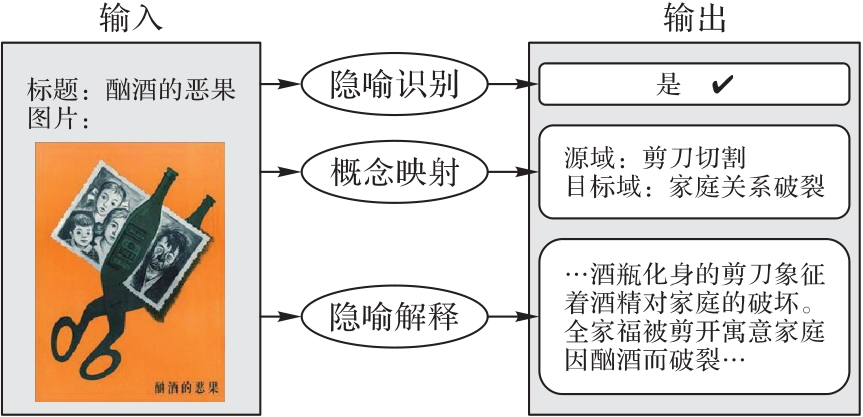
Fig. 1 Comparison of outputs of three tasks
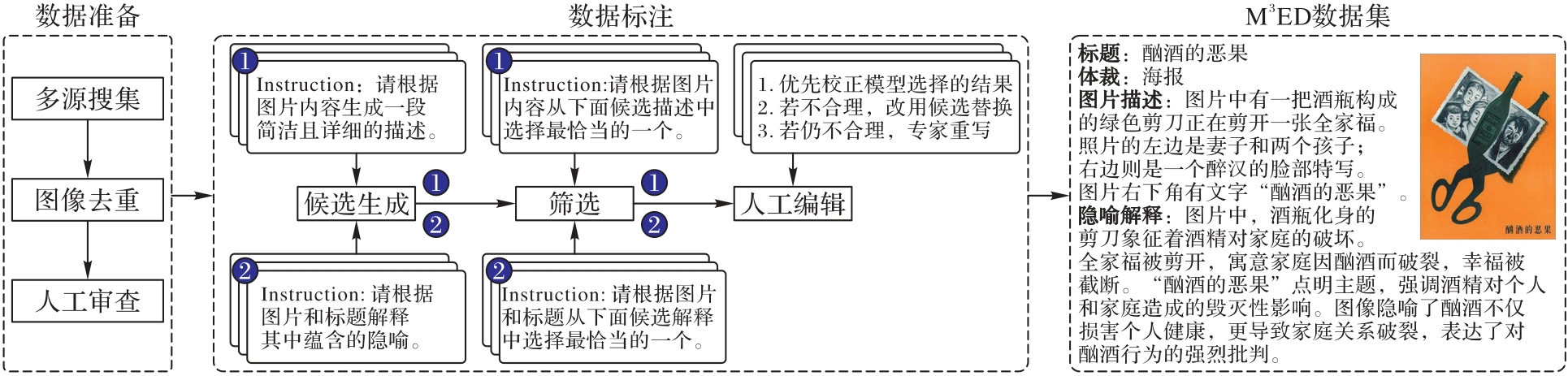
Fig. 2 Two-round closed-loop annotation of Collect-Edit
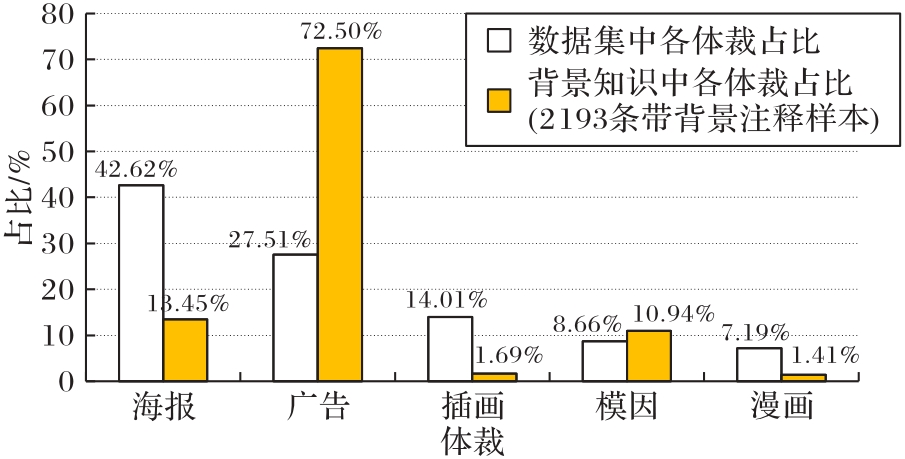
Fig. 3 Analysis of dataset
| 数据集 | 语言 | 隐喻样本数 | 体裁类数 | 隐喻解释 |
|---|---|---|---|---|
| MultiMET[ | 英 | 6 026 | 1 | × |
| MultiCMET[ | 中 | 6 306 | 1 | × |
| MET-Meme[ | 中,英 | 3 441 | 1 | × |
| EmoMeta[ | 中 | 5 000 | 1 | × |
| HUMMUS[ | 英 | 558 | 1 | × |
| MultiMM[ | 中,英 | 4 772 | 1 | × |
| V-FLUTE[ | 英 | 2 006 | 4 | |
| MemeCap[ | 英 | 5 664 | 1 | |
| M3ED | 中 | 6 175 | 5 | |
Tab. 1 Comparison of M3ED with existing multimodal metaphor datasets
| 数据集 | 语言 | 隐喻样本数 | 体裁类数 | 隐喻解释 |
|---|---|---|---|---|
| MultiMET[ | 英 | 6 026 | 1 | × |
| MultiCMET[ | 中 | 6 306 | 1 | × |
| MET-Meme[ | 中,英 | 3 441 | 1 | × |
| EmoMeta[ | 中 | 5 000 | 1 | × |
| HUMMUS[ | 英 | 558 | 1 | × |
| MultiMM[ | 中,英 | 4 772 | 1 | × |
| V-FLUTE[ | 英 | 2 006 | 4 | |
| MemeCap[ | 英 | 5 664 | 1 | |
| M3ED | 中 | 6 175 | 5 | |
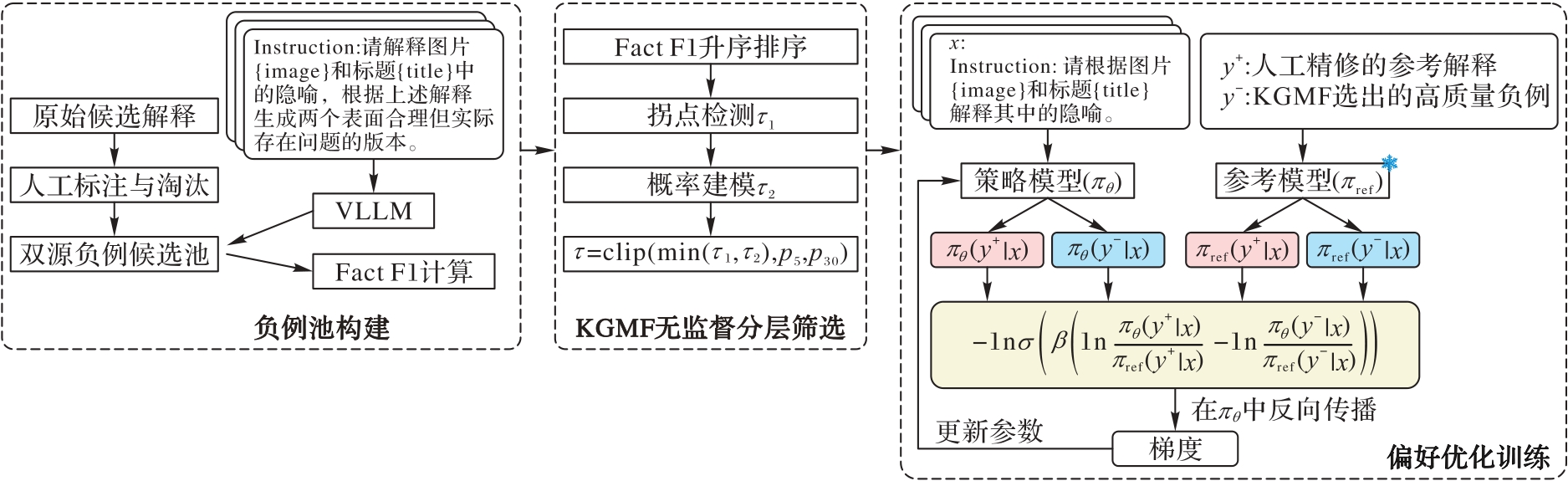
Fig. 4 Framework of fact-aligned preference optimization

Fig. 5 Templates of adversarial prompts
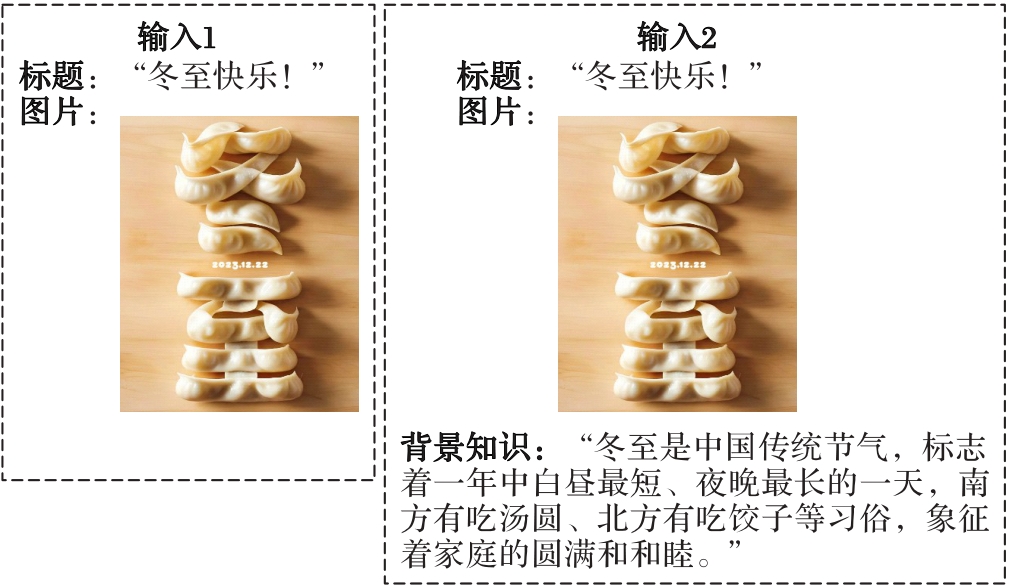
Fig. 6 Two forms of model input
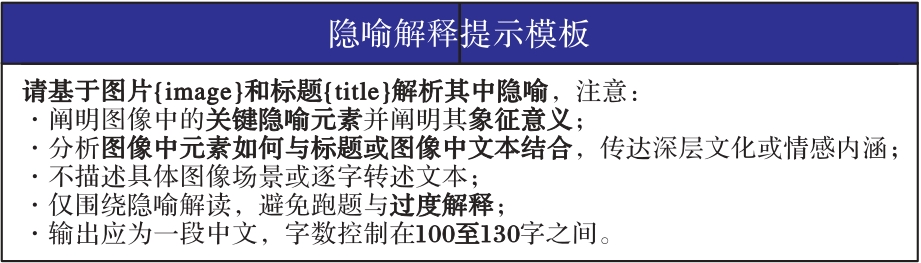
Fig. 7 Prompt template for multimodal metaphor explanation
| 类型 | 模型 | BLEU-4↑ | ROUGE-L↑ | BERTScore↑ | Fact P↑ | Fact R↑ | Fact F1↑ |
|---|---|---|---|---|---|---|---|
| 闭源模型 | GPT-4o | 15.96 | 68.90 | 82.59 | |||
| Gemini-2.5-Flash | 13.85 | 24.88 | 71.95 | 77.19 | |||
| Qwen-VL-MAX | 29.50 | 74.09 | 64.09 | 80.72 | 71.45 | ||
| GLM-4V-Plus | 14.36 | 27.03 | 72.21 | 74.84 | 61.20 | 67.34 | |
| 开源模型 | Qwen2.5-VL-72B | 16.04 | 64.27 | 80.22 | 71.36 | ||
| Llava-next-34B | 12.54 | 22.26 | 69.48 | 66.55 | 53.21 | 59.14 | |
| Qwen2.5-VL-32B | 10.93 | 18.55 | 69.28 | 64.84 | 67.20 | 66.00 | |
| Llava-1.5-13B | 12.15 | 21.84 | 68.21 | 43.93 | 58.33 | 50.12 | |
| Llava-next-13B | 11.91 | 21.52 | 68.62 | 47.59 | 61.12 | 53.51 | |
| Llama-3.2-11B-Vision | 10.73 | 18.55 | 65.60 | 38.12 | 61.56 | 47.08 | |
| Llava-next-7B | 8.36 | 12.83 | 60.51 | 31.32 | 44.68 | 36.83 | |
| Qwen2.5-VL-7B | 11.73 | 19.92 | 69.20 | 59.04 | 63.35 | ||
| Qwen2.5-VL-7B+SFT(LoRA) | 14.50 | 28.13 | 73.33 | 61.66 | 64.59 | ||
| Qwen2.5-VL-7B+FactAlign-PO(本文方法) | 29.70 | 74.26 | 75.40 | 61.22 |
Tab. 2 Performance comparison of various models in MME task
| 类型 | 模型 | BLEU-4↑ | ROUGE-L↑ | BERTScore↑ | Fact P↑ | Fact R↑ | Fact F1↑ |
|---|---|---|---|---|---|---|---|
| 闭源模型 | GPT-4o | 15.96 | 68.90 | 82.59 | |||
| Gemini-2.5-Flash | 13.85 | 24.88 | 71.95 | 77.19 | |||
| Qwen-VL-MAX | 29.50 | 74.09 | 64.09 | 80.72 | 71.45 | ||
| GLM-4V-Plus | 14.36 | 27.03 | 72.21 | 74.84 | 61.20 | 67.34 | |
| 开源模型 | Qwen2.5-VL-72B | 16.04 | 64.27 | 80.22 | 71.36 | ||
| Llava-next-34B | 12.54 | 22.26 | 69.48 | 66.55 | 53.21 | 59.14 | |
| Qwen2.5-VL-32B | 10.93 | 18.55 | 69.28 | 64.84 | 67.20 | 66.00 | |
| Llava-1.5-13B | 12.15 | 21.84 | 68.21 | 43.93 | 58.33 | 50.12 | |
| Llava-next-13B | 11.91 | 21.52 | 68.62 | 47.59 | 61.12 | 53.51 | |
| Llama-3.2-11B-Vision | 10.73 | 18.55 | 65.60 | 38.12 | 61.56 | 47.08 | |
| Llava-next-7B | 8.36 | 12.83 | 60.51 | 31.32 | 44.68 | 36.83 | |
| Qwen2.5-VL-7B | 11.73 | 19.92 | 69.20 | 59.04 | 63.35 | ||
| Qwen2.5-VL-7B+SFT(LoRA) | 14.50 | 28.13 | 73.33 | 61.66 | 64.59 | ||
| Qwen2.5-VL-7B+FactAlign-PO(本文方法) | 29.70 | 74.26 | 75.40 | 61.22 |
| 模型 | BLEU-4 | ROUGE-L | BERTScore | Fact F1 | ||||
|---|---|---|---|---|---|---|---|---|
| 输入1/% | ΔBG/百分点 | 输入1/% | ΔBG/百分点 | 输入1/% | ΔBG/百分点 | 输入1/% | ΔBG/百分点 | |
| GPT-4o | 0.14 | 28.77 | 0.22 | 74.05 | 0.48 | -0.06 | ||
| Gemini2.5-Flash | 14.54 | 0.52 | 25.46 | 0.82 | 72.28 | 0.81 | 74.82 | 0.55 |
| Qwen-VL-MAX | 16.50 | 0.61 | 0.64 | 0.59 | 69.47 | 3.51 | ||
| GLM-4V-Plus | 15.64 | 0.38 | 28.39 | 0.41 | 73.05 | 0.45 | 66.81 | 1.45 |
| Qwen2.5-VL-72B | 16.90 | -0.03 | 29.20 | -0.01 | 73.95 | 0.48 | 68.38 | 2.82 |
| Llava-next-34B | 12.82 | 0.37 | 22.66 | 0.35 | 69.60 | 0.85 | 54.91 | 4.92 |
| Qwen2.5-VL-32B | 11.00 | 0.10 | 18.51 | -0.10 | 69.13 | 0.23 | 60.86 | 6.82 |
| Llava-1.5-13B | 12.34 | 21.89 | 67.86 | 46.26 | 5.27 | |||
| Llava-next-13B | 11.97 | 0.37 | 21.25 | 1.04 | 68.21 | 1.22 | 49.80 | 4.76 |
| Llama-3.2-11B-Vision | 11.18 | 0.06 | 19.03 | 0.19 | 65.59 | 0.81 | 43.40 | 3.07 |
| Llava-next-7B | 7.50 | 0.52 | 10.28 | 1.53 | 57.48 | 1.81 | 29.38 | |
| Qwen2.5-VL-7B | 12.12 | 0.21 | 20.41 | 0.47 | 69.36 | 0.52 | 60.56 | 3.61 |
| Qwen2.5-VL-7B+SFT(LoRA) | 15.46 | 0.09 | 29.06 | -0.02 | 73.80 | 0.35 | 64.51 | 2.44 |
Qwen2.5-VL-7B+FactAlign-PO (本文方法) | 16.29 | -0.04 | 30.26 | 0.04 | 74.61 | 0.14 | 66.60 | 1.62 |
Tab. 3 Impact of background knowledge injection on various metrics
| 模型 | BLEU-4 | ROUGE-L | BERTScore | Fact F1 | ||||
|---|---|---|---|---|---|---|---|---|
| 输入1/% | ΔBG/百分点 | 输入1/% | ΔBG/百分点 | 输入1/% | ΔBG/百分点 | 输入1/% | ΔBG/百分点 | |
| GPT-4o | 0.14 | 28.77 | 0.22 | 74.05 | 0.48 | -0.06 | ||
| Gemini2.5-Flash | 14.54 | 0.52 | 25.46 | 0.82 | 72.28 | 0.81 | 74.82 | 0.55 |
| Qwen-VL-MAX | 16.50 | 0.61 | 0.64 | 0.59 | 69.47 | 3.51 | ||
| GLM-4V-Plus | 15.64 | 0.38 | 28.39 | 0.41 | 73.05 | 0.45 | 66.81 | 1.45 |
| Qwen2.5-VL-72B | 16.90 | -0.03 | 29.20 | -0.01 | 73.95 | 0.48 | 68.38 | 2.82 |
| Llava-next-34B | 12.82 | 0.37 | 22.66 | 0.35 | 69.60 | 0.85 | 54.91 | 4.92 |
| Qwen2.5-VL-32B | 11.00 | 0.10 | 18.51 | -0.10 | 69.13 | 0.23 | 60.86 | 6.82 |
| Llava-1.5-13B | 12.34 | 21.89 | 67.86 | 46.26 | 5.27 | |||
| Llava-next-13B | 11.97 | 0.37 | 21.25 | 1.04 | 68.21 | 1.22 | 49.80 | 4.76 |
| Llama-3.2-11B-Vision | 11.18 | 0.06 | 19.03 | 0.19 | 65.59 | 0.81 | 43.40 | 3.07 |
| Llava-next-7B | 7.50 | 0.52 | 10.28 | 1.53 | 57.48 | 1.81 | 29.38 | |
| Qwen2.5-VL-7B | 12.12 | 0.21 | 20.41 | 0.47 | 69.36 | 0.52 | 60.56 | 3.61 |
| Qwen2.5-VL-7B+SFT(LoRA) | 15.46 | 0.09 | 29.06 | -0.02 | 73.80 | 0.35 | 64.51 | 2.44 |
Qwen2.5-VL-7B+FactAlign-PO (本文方法) | 16.29 | -0.04 | 30.26 | 0.04 | 74.61 | 0.14 | 66.60 | 1.62 |
| 实验组编号 | 偏好数据来源 | 筛选机制 | BLEU-4↑ | ROUGE-L↑ | BERTScore↑ | Fact F1↑ | ||||
|---|---|---|---|---|---|---|---|---|---|---|
| 结果/% | ΔT0/百分点 | 结果/% | ΔT0/百分点 | 结果/% | ΔT0/百分点 | 结果/% | ΔT0/百分点 | |||
| T0(本文方法) | 混合 | KGMF | 15.31 | 29.70 | 74.26 | 67.57 | ||||
| A1 | 混合 | 仅Kneedle | 15.23 | -0.08 | 29.67 | -0.03 | 74.25 | -0.01 | 66.71 | -0.86 |
| A2 | 混合 | 仅GMM | 14.87 | -0.44 | 29.31 | -0.39 | 74.04 | -0.22 | 65.73 | -1.84 |
| A3 | 混合 | 固定分位 | 15.17 | -0.14 | 29.51 | -0.19 | 74.03 | -0.23 | 65.48 | -2.09 |
| A4 | 混合 | 基于规则 | 15.11 | -0.20 | 29.27 | -0.43 | 74.12 | -0.14 | 66.62 | -0.95 |
| A5 | 混合 | 随机 | 15.08 | -0.23 | 29.31 | -0.39 | 74.03 | -0.23 | 66.40 | -1.17 |
| T1 | 来源2 | KGMF | 15.34 | +0.03 | 29.67 | -0.03 | 74.38 | +0.12 | 67.25 | -0.32 |
| T2 | 来源1 | KGMF | 14.60 | -0.71 | 29.13 | -0.57 | 73.93 | -0.33 | 67.02 | -0.55 |
| T3 | 来源1 | 随机 | 14.07 | -1.24 | 29.03 | -0.67 | 73.93 | -0.33 | 66.58 | -0.99 |
| SFT(LoRA) | — | — | 14.50 | -0.81 | 28.13 | -1.57 | 73.33 | -0.93 | 64.59 | -2.98 |
| 基座模型(ZS) | — | — | 11.73 | -3.58 | 19.92 | -9.78 | 69.20 | -5.05 | 63.35 | -4.22 |
Tab. 4 Ablation experimental results
| 实验组编号 | 偏好数据来源 | 筛选机制 | BLEU-4↑ | ROUGE-L↑ | BERTScore↑ | Fact F1↑ | ||||
|---|---|---|---|---|---|---|---|---|---|---|
| 结果/% | ΔT0/百分点 | 结果/% | ΔT0/百分点 | 结果/% | ΔT0/百分点 | 结果/% | ΔT0/百分点 | |||
| T0(本文方法) | 混合 | KGMF | 15.31 | 29.70 | 74.26 | 67.57 | ||||
| A1 | 混合 | 仅Kneedle | 15.23 | -0.08 | 29.67 | -0.03 | 74.25 | -0.01 | 66.71 | -0.86 |
| A2 | 混合 | 仅GMM | 14.87 | -0.44 | 29.31 | -0.39 | 74.04 | -0.22 | 65.73 | -1.84 |
| A3 | 混合 | 固定分位 | 15.17 | -0.14 | 29.51 | -0.19 | 74.03 | -0.23 | 65.48 | -2.09 |
| A4 | 混合 | 基于规则 | 15.11 | -0.20 | 29.27 | -0.43 | 74.12 | -0.14 | 66.62 | -0.95 |
| A5 | 混合 | 随机 | 15.08 | -0.23 | 29.31 | -0.39 | 74.03 | -0.23 | 66.40 | -1.17 |
| T1 | 来源2 | KGMF | 15.34 | +0.03 | 29.67 | -0.03 | 74.38 | +0.12 | 67.25 | -0.32 |
| T2 | 来源1 | KGMF | 14.60 | -0.71 | 29.13 | -0.57 | 73.93 | -0.33 | 67.02 | -0.55 |
| T3 | 来源1 | 随机 | 14.07 | -1.24 | 29.03 | -0.67 | 73.93 | -0.33 | 66.58 | -0.99 |
| SFT(LoRA) | — | — | 14.50 | -0.81 | 28.13 | -1.57 | 73.33 | -0.93 | 64.59 | -2.98 |
| 基座模型(ZS) | — | — | 11.73 | -3.58 | 19.92 | -9.78 | 69.20 | -5.05 | 63.35 | -4.22 |
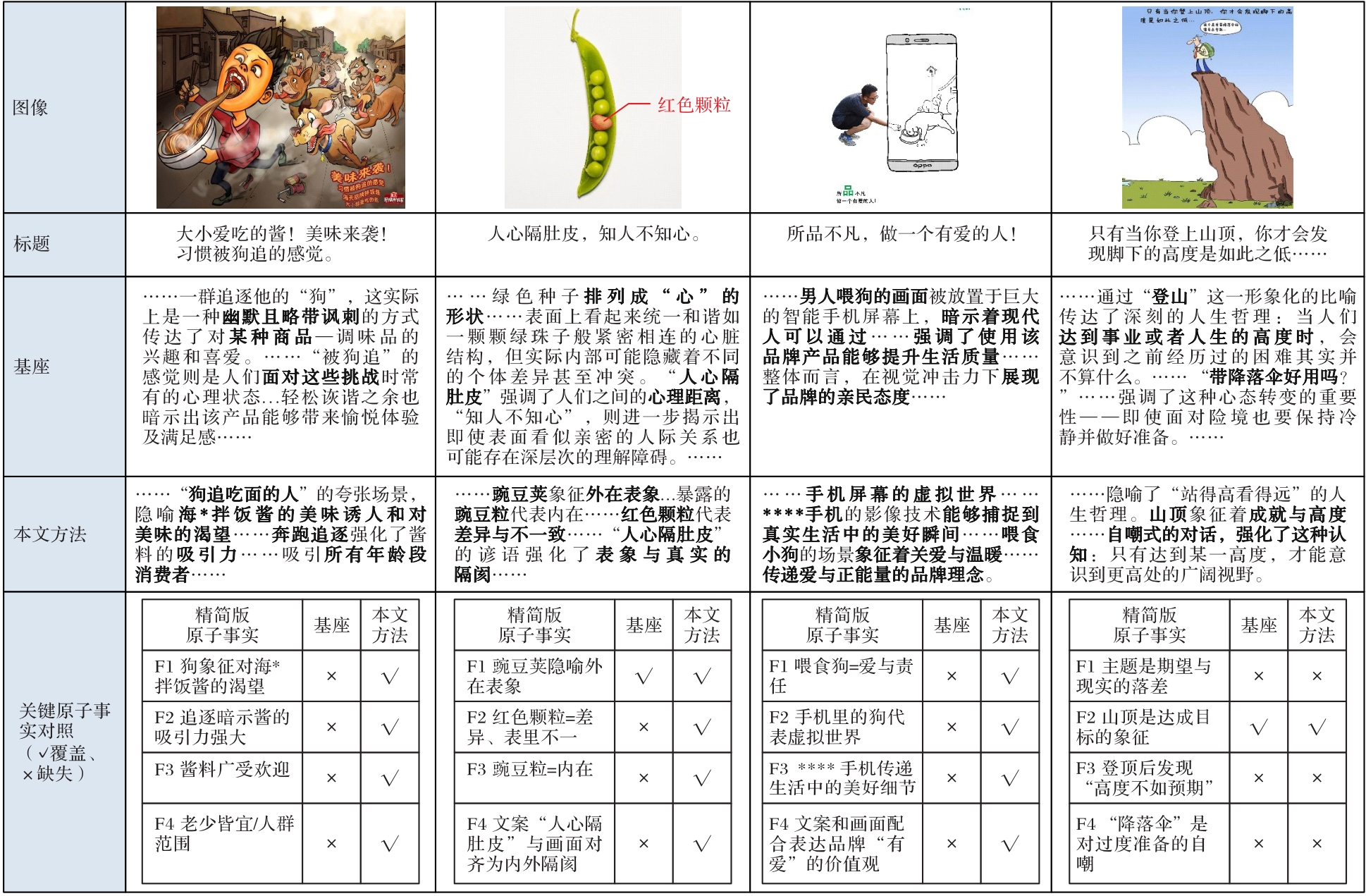
Fig. 8 Case analysis of multimodal metaphor explanation
| [1] | Lakoff G, Johnson M. Metaphors we live by[M]. Chicago: University of Chicago Press, 2003: 201-207. |
| [2] | 郑天龙,董瑞,杨雅婷,等. 基于语言学多重不一致性的隐喻检测模型[J]. 计算机应用, 2025, 45(12): 3829-3838. |
| Zheng Tianlong, Dong Rui, Yang Yating, et al. Metaphor detection model based on linguistic multi-incongruity[J]. Journal of Computer Applications, 2025, 45(12): 3829-3838. | |
| [3] | Zhong Z, Wen S, Chen S. Research trends in multimodal metaphor: a bibliometric analysis[J]. Frontiers in Psychology, 2023, 14: No.1144725. |
| [4] | Scott K. Memes as multimodal metaphors: a relevance theory analysis[J]. Pragmatics and Cognition, 2021, 28(2): 277-298. |
| [5] | 郭世松,杨启萌,闫远播,等. ADMIC:基于交替主导模态内在相关性的多模态隐喻检测[J]. 计算机工程与应用, 2025, 61(22): 148-158. |
| Guo Shisong, Yang Qimeng, Yan Yuanbo, et al. ADMIC: multimodal metaphor detection based on the intrinsic correlation of alternating dominant modalities[J]. Computer Engineering and Applications, 2025, 61(22): 148-158. | |
| [6] | Zhang D, Zhang M, Zhang H, et al. MultiMET: a multimodal dataset for metaphor understanding[C]// ACL-IJCNLP 2021 (Volume 1: Long Papers). Stroudsburg: ACL, 2021: 3214-3225. |
| [7] | Xu B, Li T, Zheng J, et al. MET-Meme: a multimodal meme dataset rich in metaphors[C]// SIGIR 2022. New York: ACM, 2022: 2887-2899. |
| [8] | He X, Yu L, Tian S, et al. SC-Net: multimodal metaphor detection using semantic conflicts[J]. Neurocomputing, 2024, 594: No.127825. |
| [9] | He X, Yu L, Tian S, et al. VIEMF: multimodal metaphor detection via visual information enhancement with multimodal fusion[J]. Information Processing and Management, 2024, 61(3): No.103652. |
| [10] | Zhang D, Yu J, Jin S, et al. MultiCMET: a novel Chinese benchmark for understanding multimodal metaphor[C]// Findings of the Association for Computational Linguistics: EMNLP 2023. Stroudsburg: ACL, 2023: 6141-6154. |
| [11] | Hwang E, Shwartz V. MemeCap: a dataset for captioning and interpreting memes[C]// EMNLP 2023. Stroudsburg: ACL, 2023: 1433-1445. |
| [12] | Tong X, Zhang Z, Lewis M, et al. Hummus: a dataset of humorous multimodal metaphor use[PP/OL]. arXiv (2025-04-03) [2025-07-11].. |
| [13] | Tian Y, Wang M, Xu N, et al. ImaRA: an imaginative frame augmented method for low-resource multimodal metaphor detection and explanation[C]// Findings of the Association for Computational Linguistics: NAACL 2025. Stroudsburg: ACL, 2025: 3953-3967. |
| [14] | Zhang L, Jin L, Xu G, et al. CAMEL: capturing metaphorical alignment with context disentangling for multimodal emotion recognition[J]. Proceedings of the AAAI Conference on Artificial Intelligence, 2024, 38(8): 9341-9349. |
| [15] | Xu B, Zheng J, He J, et al. Generating multimodal metaphorical features for meme understanding[C]// MM 2024. New York: ACM, 2024: 447-455. |
| [16] | Xu Y, Hua Y, Li S, et al. Exploring chain-of-thought for multi-modal metaphor detection[C]// ACL 2024 (Volume 1: Long Papers). Stroudsburg: ACL, 2024: 91-101. |
| [17] | Zhang L, Liu J, Jin L, et al. GOME: grounding-based metaphor binding with conceptual elaboration for figurative language illustration[C]// EMNLP 2024. Stroudsburg: ACL, 2024: 18500-18510. |
| [18] | Lu X, Liu Y, Zhang D, et al. EmoMeta: a multimodal dataset for fine-grained emotion classification in Chinese metaphors[C]// WWW 2025. New York: ACM, 2025: 3080-3083. |
| [19] | Yang Y, Li Z, Dong Q, et al. Can large multimodal models uncover deep semantics behind images?[C]// Findings of the Association for Computational Linguistics: ACL 2024. Stroudsburg: ACL, 2024: 1898-1912. |
| [20] | Liu Z, Fang F, Feng X, et al. II-Bench: an image implication understanding benchmark for multimodal large language models[C]// NeurIPS 2024. Red Hook: Curran Associates Inc., 2024: 46378-46480. |
| [21] | Zhang C, Feng X, Bai Y, et al. Can MLLMs understand the deep implication behind Chinese images?[C]// ACL 2025 (Volume 1: Long Papers). Stroudsburg: ACL, 2025: 14369-14402. |
| [22] | Papineni K, Roukos S, Ward T, et al. BLEU: a method for automatic evaluation of machine translation[C]// ACL 2002. Stroudsburg: ACL, 2002: 311-318. |
| [23] | Lin C Y. ROUGE: a package for automatic evaluation of summaries[C]// ACL-04 Workshop: Text Summarization Branches Out. Stroudsburg: ACL, 2004: 74-81. |
| [24] | Zhang T, Kishore V, Wu F, et al. BERTScore: evaluating text generation with BERT[PP/OL]. V3. arXiv (2020-02-24) [2025-09-02].. |
| [25] | Dempster A P, Laird N M, Rubin D B. Maximum likelihood from incomplete data via the EM algorithm[J]. Journal of the Royal Statistical Society: Series B (Methodological), 1977, 39(1): 1-22. |
| [26] | Rafailov R, Sharma A, Mitchell E, et al. Direct preference optimization: your language model is secretly a reward model[C]// NeurIPS 2023. Red Hook: Curran Associates Inc., 2023: 53728-53741. |
| [27] | Yang S, Zhang D, Ren J, et al. Cultural bias matters: a cross-cultural benchmark dataset and sentiment-enriched model for understanding multimodal metaphors[C]// ACL 2025 (Volume 1: Long Papers). Stroudsburg: ACL, 2025: 26301-26317. |
| [28] | Chakrabarty T, Saakyan A, Ghosh D, et al. FLUTE: figurative language understanding through textual explanations[C]// EMNLP 2022. Stroudsburg: ACL, 2022: 7139-7159. |
| [29] | Saakyan A, Kulkarni S, Chakrabarty T, et al. Understanding figurative meaning through explainable visual entailment[C]// NAACL-HLT 2025 (Volume 1: Long Papers). Stroudsburg: ACL, 2025: 1-23. |
| [30] | Zauner C. Implementation and benchmarking of perceptual image hash functions[D/OL]. (2010-07-14) [2025-09-06].. |
| [31] | Wiegreffe S, Marasović A. Teach me to explain: a review of datasets for explainable natural language processing[PP/OL]. V4. arXiv (2021-12-07) [2025-08-22].. |
| [32] | Team Gemini, Anil R, Borgeaud S, et al. Gemini: a family of highly capable multimodal models[PP/OL]. V5. arXiv (2025-05-09) [2025-12-04].. |
| [33] | Bai J, Bai S, Yang S, et al. Qwen-VL: a versatile vision-language model for understanding, localization, text reading, and beyond[PP/OL]. V3. arXiv (2023-10-13) [2025-11-05].. |
| [34] | Anthropic. Introducing Claude 3.5 Sonnet[EB/OL]. (2024-06-21) [2025-06-21].. |
| [35] | Bai J, Bai S, Chu Y, et al. Qwen technical report[PP/OL]. arXiv (2023-09-28) [2025-09-14].. |
| [36] | Fleiss J L. Measuring nominal scale agreement among many raters[J]. Psychological Bulletin, 1971, 76(5): 378-382. |
| [37] | Fabbri A R, Wu C S, Liu W, et al. QAFactEval: improved QA-based factual consistency evaluation for summarization[C]// NAACL-HLT 2022. Stroudsburg: ACL, 2022: 2587-2601. |
| [38] | Zha Y, Yang Y, Li R, et al. AlignScore: evaluating factual consistency with a unified alignment function[C]// ACL 2023. Stroudsburg: ACL, 2023: 11328-11348. |
| [39] | Min S, Krishna K, Lyu X, et al. FActScore: fine-grained atomic evaluation of factual precision in long form text generation[C]// EMNLP 2023. Stroudsburg: ACL, 2023: 12076-12100. |
| [40] | Cohen J. A coefficient of agreement for nominal scales[J]. Educational and Psychological Measurement, 1960, 20(1): 37-46. |
| [41] | Landis J R, Koch G G. The measurement of observer agreement for categorical data[J]. Biometrics, 1977, 33(1): 159-174. |
| [42] | Spearman C. The proof and measurement of association between two things[J]. The American Journal of Psychology, 1904, 15: 72-101. |
| [43] | Pearson K. Note on regression and inheritance in the case of two parents[J]. Proceedings of the Royal Society of London, 1895, 58(347/348/349/350/351/352): 240-242. |
| [44] | Satopaa V, Albrecht J, Irwin D, et al. Finding a “Kneedle” in a haystack: detecting knee points in system behavior[C]// Proceedings of the 2011 31st International Conference on Distributed Computing Systems Workshops. Piscataway: IEEE, 2011: 166-171. |
| [45] | Schwarz G. Estimating the dimension of a model[J]. The Annals of Statistics, 1978, 6(2): 461-464. |
| [46] | Liu F T, Ting K M, Zhou Z H. Isolation forest[C]// ICDM 2008. Piscataway: IEEE, 2008: 413-422. |
| [47] | Wu C Y, Manmatha R, Smola A J, et al. Sampling matters in deep embedding learning[C]// ICCV 2017. Piscataway: IEEE, 2017: 2859-2867. |
| [48] | Team Qwen. Qwen 2.5-VL technical report[PP/OL]. arXiv (2025-02-19) [2025-11-21].. |
| [49] | OpenAI. GPT-4o system card[PP/OL]. arXiv (2024-10-25) [2025-12-09].. |
| [50] | Team GLM. ChatGLM: a family of large language models from GLM-130B to GLM-4 all tools[PP/OL]. V2. arXiv (2024-07-30) [2025-10-17].. |
| [51] | Li B, Zhang K, Zhang H, et al. LLaVA-NeXT: stronger LLMs supercharge multimodal capabilities in the wild[EB/OL]. (2024-05-10) [2025-10-27].. |
| [52] | Liu H, Li C, Li Y, et al. Improved baselines with visual instruction tuning[C]// CVPR 2024. Piscataway: IEEE, 2024: 26296-26306. |
| [53] | Team Llama. The Llama 3 herd of models[PP/OL]. V3. arXiv (2024-11-23) [2025-11-05].. |
| [1] | Qiujie LIU, Yuan WAN, Jie WU. Deep bi-modal source domain symmetrical transfer learning for cross-modal retrieval [J]. Journal of Computer Applications, 2024, 44(1): 24-31. |
| Viewed | ||||||
|
Full text |
|
|||||
|
Abstract |
|
|||||
