


Journal of Computer Applications ›› 2026, Vol. 46 ›› Issue (11): 3641-3650.DOI: 10.11772/j.issn.1001-9081.2025091173
• Multimedia computing and computer simulation • Previous Articles
Zhonghua LI1,2, Mianmian LIN1,2, Hengliang ZHU1,2( ), Yuting ZHANG1,2, Huangbin ZHENG1,2, Jingru LIU1,2
Received:2025-10-10
Revised:2026-01-02
Accepted:2026-01-06
Online:2026-04-02
Published:2026-11-10
Contact:
Hengliang ZHU
About author:LI Zhonghua, born in 1976, Ph. D., associate professor. His research interests include image processing, artificial intelligence.Supported by:
李钟华1,2, 林绵绵1,2, 朱恒亮1,2(), 张雨廷1,2, 郑煌斌1,2, 刘静茹1,2
通讯作者:
朱恒亮
作者简介:李钟华(1976—),男,福建南平人,副教授,博士,CCF会员,主要研究方向:图像处理、人工智能基金资助:CLC Number:
Zhonghua LI, Mianmian LIN, Hengliang ZHU, Yuting ZHANG, Huangbin ZHENG, Jingru LIU. Camouflaged object detection network with hierarchical edge-aware optimization[J]. Journal of Computer Applications, 2026, 46(11): 3641-3650.
李钟华, 林绵绵, 朱恒亮, 张雨廷, 郑煌斌, 刘静茹. 基于边缘感知的分层优化伪装物体检测网络[J]. 《计算机应用》唯一官方网站, 2026, 46(11): 3641-3650.
Add to citation manager EndNote|Ris|BibTeX
URL: https://www.joca.cn/EN/10.11772/j.issn.1001-9081.2025091173
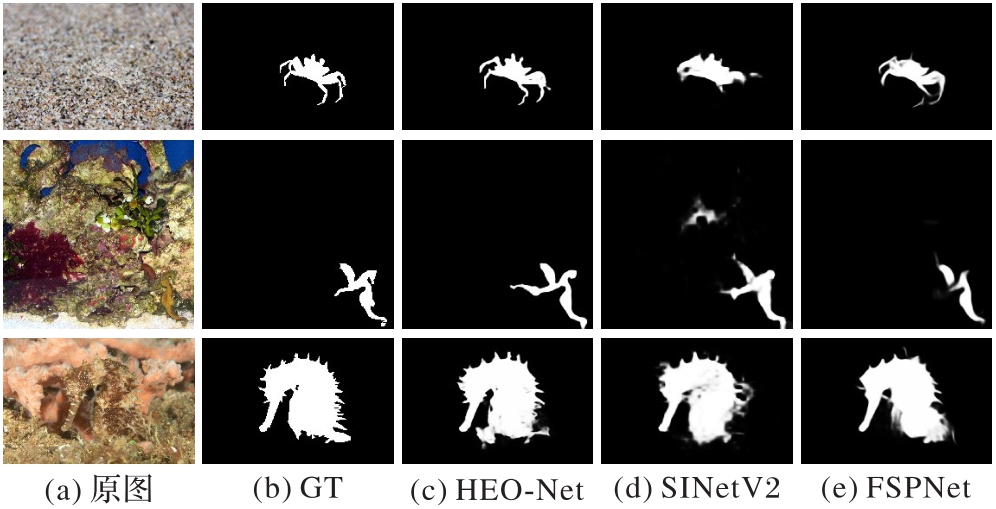
Fig. 1 Comparison of different algorithms in complex scenarios
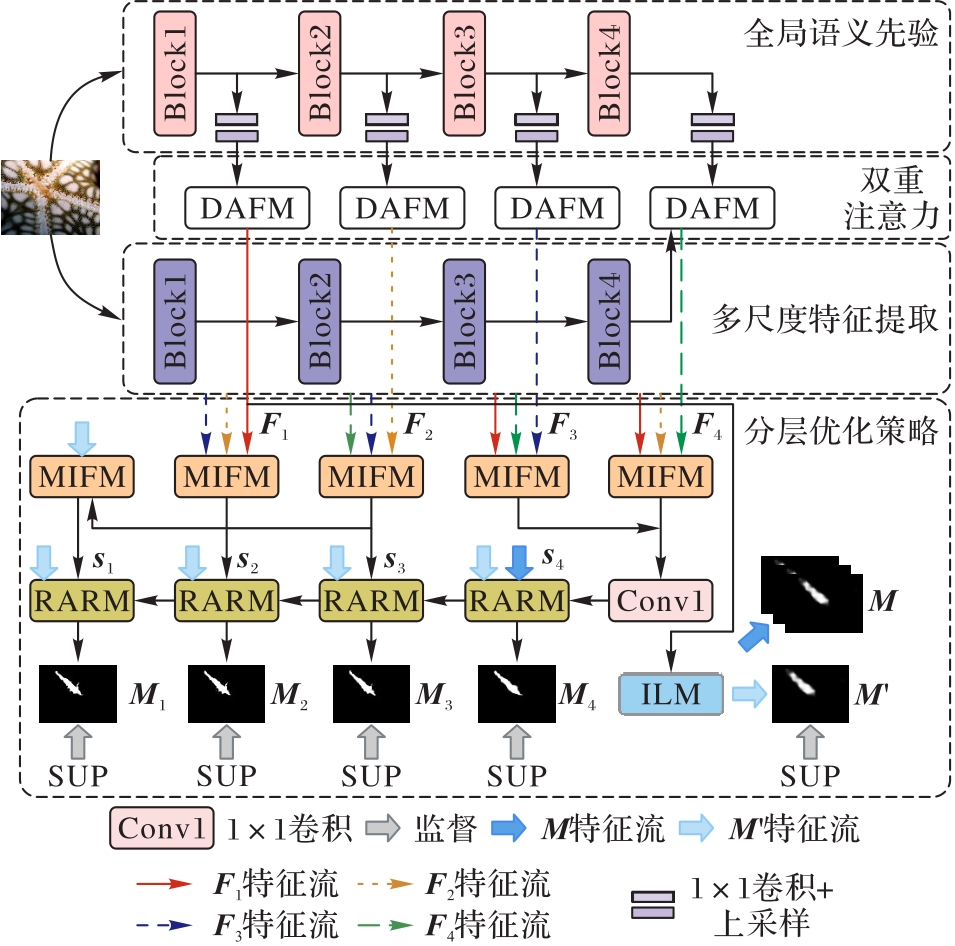
Fig. 2 Overall architecture of HEO-Net
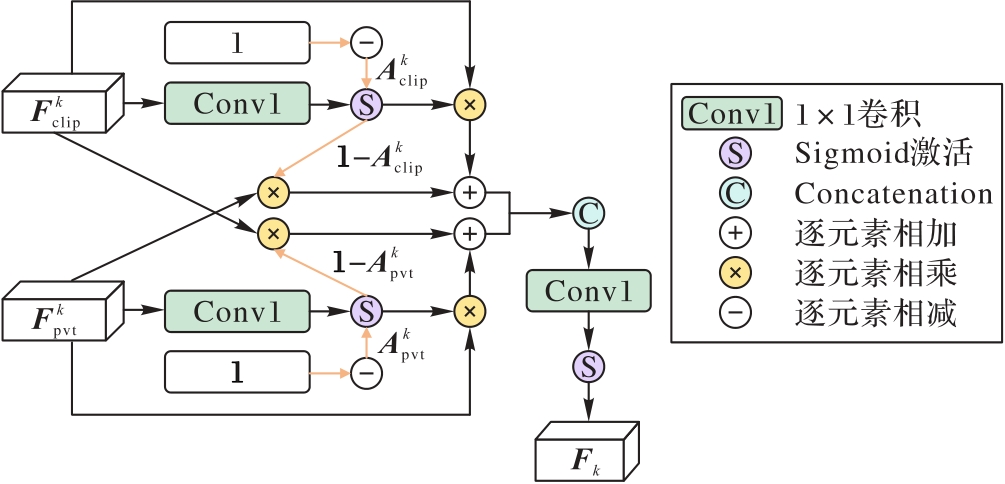
Fig. 3 Structure of DAFM
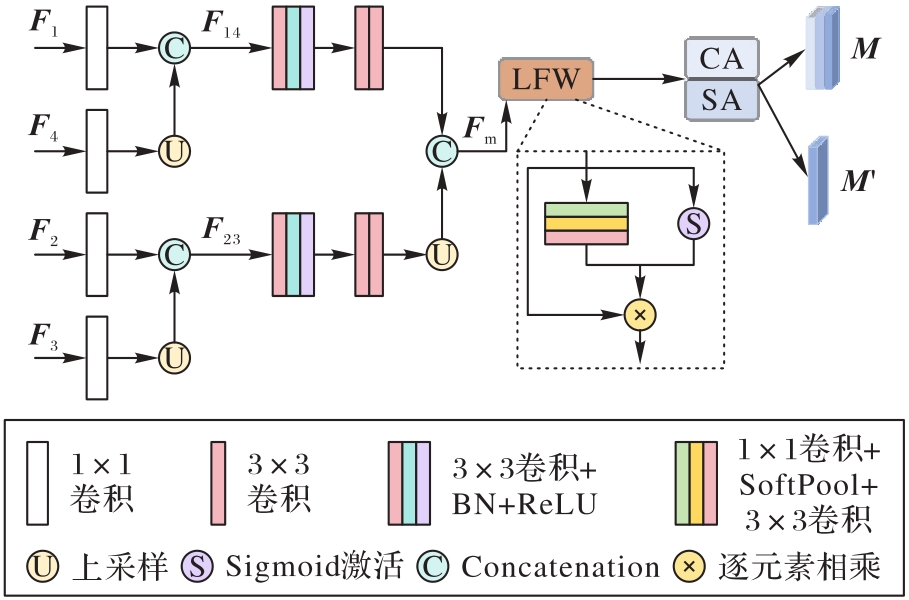
Fig. 4 Structure of ILM
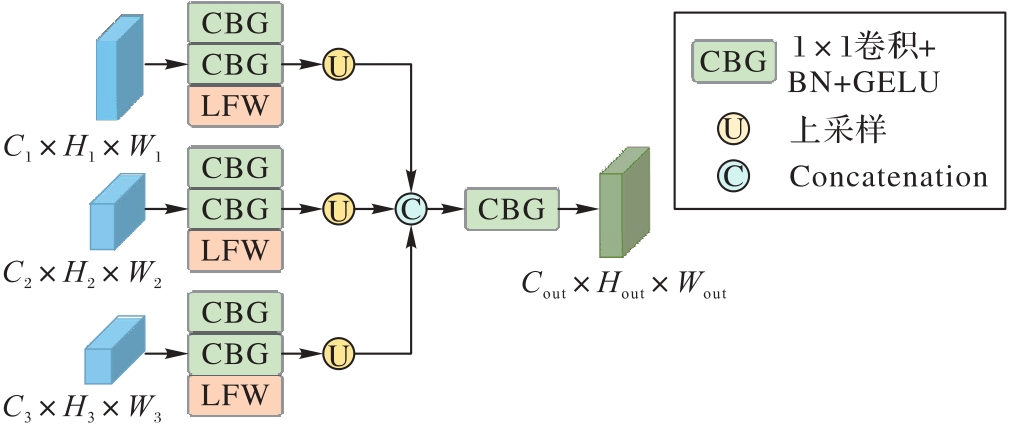
Fig. 5 Structure of MIFM

Fig. 6 Structure of RARM
| 模型 | CAMO | CHAMELEON | COD10K | NC4K | ||||||||||||
|---|---|---|---|---|---|---|---|---|---|---|---|---|---|---|---|---|
| SINet | 0.100 | 0.771 | 0.751 | 0.675 | 0.044 | 0.891 | 0.869 | 0.790 | 0.051 | 0.806 | 0.771 | 0.634 | 0.058 | 0.871 | 0.808 | 0.769 |
| MGLR | 0.088 | 0.812 | 0.775 | 0.726 | 0.030 | 0.918 | 0.893 | 0.834 | 0.035 | 0.852 | 0.814 | 0.711 | 0.052 | 0.867 | 0.832 | 0.782 |
| BGNet | 0.073 | 0.878 | 0.811 | 0.786 | — | — | — | — | 0.033 | 0.901 | 0.831 | 0.739 | 0.044 | 0.911 | 0.850 | 0.813 |
| FEDER | 0.067 | 0.886 | 0.822 | 0.809 | 0.025 | 0.964 | 0.907 | 0.874 | 0.028 | 0.917 | 0.851 | 0.752 | 0.042 | 0.917 | 0.863 | 0.827 |
| FPNet | 0.056 | 0.905 | 0.852 | — | 0.022 | 0.961 | 0.914 | — | 0.029 | 0.913 | 0.850 | — | — | — | — | — |
| FSPNet | 0.050 | 0.899 | 0.856 | 0.830 | 0.023 | 0.943 | 0.908 | 0.867 | 0.026 | 0.895 | 0.851 | 0.769 | 0.035 | 0.915 | 0.879 | 0.843 |
| DGNet | 0.057 | 0.901 | 0.839 | 0.806 | — | — | — | — | 0.033 | 0.896 | 0.822 | 0.728 | 0.042 | 0.911 | 0.857 | 0.814 |
| DINet | 0.068 | 0.878 | 0.821 | 0.790 | — | — | — | — | 0.031 | 0.903 | 0.832 | 0.761 | 0.043 | 0.891 | 0.856 | 0.824 |
| VSCode | 0.060 | 0.892 | 0.836 | 0.804 | — | — | — | — | 0.028 | 0.913 | 0.847 | 0.775 | 0.038 | 0.920 | 0.874 | 0.839 |
| AFINet | 0.066 | 0.881 | 0.821 | 0.803 | 0.026 | 0.953 | 0.901 | 0.867 | 0.030 | 0.901 | 0.836 | 0.768 | 0.044 | 0.902 | 0.851 | 0.822 |
| DSAM | 0.061 | 0.881 | 0.821 | 0.803 | — | — | — | — | 0.033 | 0.921 | 0.845 | 0.788 | 0.040 | 0.935 | 0.872 | 0.851 |
| HAINet | 0.049 | 0.925 | 0.859 | — | — | — | — | — | 0.024 | 0.922 | 0.851 | — | 0.033 | 0.932 | 0.879 | — |
| ICEG | 0.042 | 0.931 | 0.871 | 0.861 | 0.022 | 0.961 | 0.908 | 0.867 | 0.023 | 0.934 | 0.862 | 0.788 | 0.033 | 0.937 | 0.883 | 0.861 |
| EFNet | 0.055 | 0.911 | 0.848 | 0.802 | 0.021 | 0.955 | 0.911 | 0.867 | 0.027 | 0.919 | 0.849 | 0.753 | — | — | — | — |
| ERDENet | 0.047 | 0.902 | 0.860 | 0.799 | — | — | — | — | 0.027 | 0.919 | 0.847 | 0.746 | 0.034 | 0.916 | 0.882 | 0.832 |
| UAT | 0.052 | 0.913 | 0.858 | 0.810 | 0.021 | 0.948 | 0.912 | 0.875 | 0.025 | 0.923 | 0.859 | 0.772 | 0.035 | 0.926 | 0.879 | 0.732 |
| TANet | 0.065 | 0.913 | 0.870 | 0.811 | — | — | — | — | 0.034 | 0.939 | 0.885 | 0.771 | 0.040 | 0.927 | 0.882 | 0.839 |
| HEO-Net | 0.045 | 0.932 | 0.873 | 0.855 | 0.020 | 0.963 | 0.913 | 0.881 | 0.024 | 0.933 | 0.865 | 0.801 | 0.032 | 0.937 | 0.886 | 0.863 |
Tab. 1 Performance comparison of various models on experimental datasets
| 模型 | CAMO | CHAMELEON | COD10K | NC4K | ||||||||||||
|---|---|---|---|---|---|---|---|---|---|---|---|---|---|---|---|---|
| SINet | 0.100 | 0.771 | 0.751 | 0.675 | 0.044 | 0.891 | 0.869 | 0.790 | 0.051 | 0.806 | 0.771 | 0.634 | 0.058 | 0.871 | 0.808 | 0.769 |
| MGLR | 0.088 | 0.812 | 0.775 | 0.726 | 0.030 | 0.918 | 0.893 | 0.834 | 0.035 | 0.852 | 0.814 | 0.711 | 0.052 | 0.867 | 0.832 | 0.782 |
| BGNet | 0.073 | 0.878 | 0.811 | 0.786 | — | — | — | — | 0.033 | 0.901 | 0.831 | 0.739 | 0.044 | 0.911 | 0.850 | 0.813 |
| FEDER | 0.067 | 0.886 | 0.822 | 0.809 | 0.025 | 0.964 | 0.907 | 0.874 | 0.028 | 0.917 | 0.851 | 0.752 | 0.042 | 0.917 | 0.863 | 0.827 |
| FPNet | 0.056 | 0.905 | 0.852 | — | 0.022 | 0.961 | 0.914 | — | 0.029 | 0.913 | 0.850 | — | — | — | — | — |
| FSPNet | 0.050 | 0.899 | 0.856 | 0.830 | 0.023 | 0.943 | 0.908 | 0.867 | 0.026 | 0.895 | 0.851 | 0.769 | 0.035 | 0.915 | 0.879 | 0.843 |
| DGNet | 0.057 | 0.901 | 0.839 | 0.806 | — | — | — | — | 0.033 | 0.896 | 0.822 | 0.728 | 0.042 | 0.911 | 0.857 | 0.814 |
| DINet | 0.068 | 0.878 | 0.821 | 0.790 | — | — | — | — | 0.031 | 0.903 | 0.832 | 0.761 | 0.043 | 0.891 | 0.856 | 0.824 |
| VSCode | 0.060 | 0.892 | 0.836 | 0.804 | — | — | — | — | 0.028 | 0.913 | 0.847 | 0.775 | 0.038 | 0.920 | 0.874 | 0.839 |
| AFINet | 0.066 | 0.881 | 0.821 | 0.803 | 0.026 | 0.953 | 0.901 | 0.867 | 0.030 | 0.901 | 0.836 | 0.768 | 0.044 | 0.902 | 0.851 | 0.822 |
| DSAM | 0.061 | 0.881 | 0.821 | 0.803 | — | — | — | — | 0.033 | 0.921 | 0.845 | 0.788 | 0.040 | 0.935 | 0.872 | 0.851 |
| HAINet | 0.049 | 0.925 | 0.859 | — | — | — | — | — | 0.024 | 0.922 | 0.851 | — | 0.033 | 0.932 | 0.879 | — |
| ICEG | 0.042 | 0.931 | 0.871 | 0.861 | 0.022 | 0.961 | 0.908 | 0.867 | 0.023 | 0.934 | 0.862 | 0.788 | 0.033 | 0.937 | 0.883 | 0.861 |
| EFNet | 0.055 | 0.911 | 0.848 | 0.802 | 0.021 | 0.955 | 0.911 | 0.867 | 0.027 | 0.919 | 0.849 | 0.753 | — | — | — | — |
| ERDENet | 0.047 | 0.902 | 0.860 | 0.799 | — | — | — | — | 0.027 | 0.919 | 0.847 | 0.746 | 0.034 | 0.916 | 0.882 | 0.832 |
| UAT | 0.052 | 0.913 | 0.858 | 0.810 | 0.021 | 0.948 | 0.912 | 0.875 | 0.025 | 0.923 | 0.859 | 0.772 | 0.035 | 0.926 | 0.879 | 0.732 |
| TANet | 0.065 | 0.913 | 0.870 | 0.811 | — | — | — | — | 0.034 | 0.939 | 0.885 | 0.771 | 0.040 | 0.927 | 0.882 | 0.839 |
| HEO-Net | 0.045 | 0.932 | 0.873 | 0.855 | 0.020 | 0.963 | 0.913 | 0.881 | 0.024 | 0.933 | 0.865 | 0.801 | 0.032 | 0.937 | 0.886 | 0.863 |
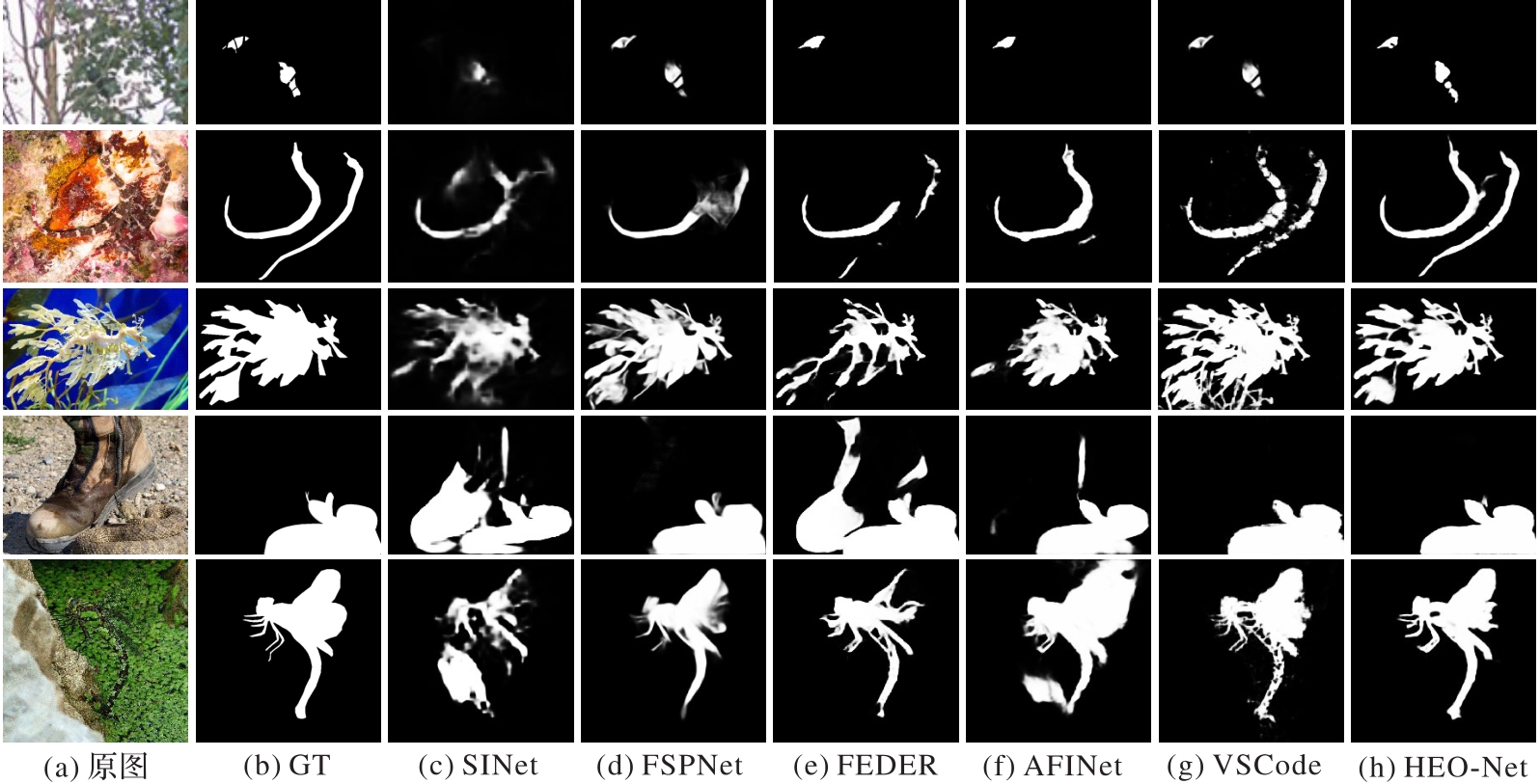
Fig. 7 Visual comparison of different models
| 模型 | COD10K | NC4K | ||||||
|---|---|---|---|---|---|---|---|---|
| B | 0.100 | 0.678 | 0.630 | 0.409 | 0.124 | 0.714 | 0.670 | 0.526 |
| B+D | 0.090 | 0.695 | 0.643 | 0.435 | 0.114 | 0.733 | 0.686 | 0.555 |
| B+D+I+M | 0.025 | 0.929 | 0.865 | 0.798 | 0.032 | 0.936 | 0.888 | 0.860 |
| B+D+I+M+R | 0.024 | 0.933 | 0.865 | 0.801 | 0.032 | 0.937 | 0.886 | 0.863 |
| B+D1+I+M+R | 0.026 | 0.931 | 0.862 | 0.798 | 0.033 | 0.931 | 0.884 | 0.858 |
| B+D2+I+M+R | 0.025 | 0.930 | 0.861 | 0.797 | 0.033 | 0.936 | 0.884 | 0.860 |
| B+D3+I+M+R | 0.025 | 0.928 | 0.862 | 0.795 | 0.033 | 0.932 | 0.884 | 0.858 |
| B+D+I1+M1+R | 0.026 | 0.930 | 0.861 | 0.798 | 0.033 | 0.930 | 0.878 | 0.842 |
| B+D+I+M+R1 | 0.025 | 0.929 | 0.860 | 0.792 | 0.032 | 0.929 | 0.872 | 0.856 |
Tab. 2 Ablation experimental results on key modules of HEO-Net
| 模型 | COD10K | NC4K | ||||||
|---|---|---|---|---|---|---|---|---|
| B | 0.100 | 0.678 | 0.630 | 0.409 | 0.124 | 0.714 | 0.670 | 0.526 |
| B+D | 0.090 | 0.695 | 0.643 | 0.435 | 0.114 | 0.733 | 0.686 | 0.555 |
| B+D+I+M | 0.025 | 0.929 | 0.865 | 0.798 | 0.032 | 0.936 | 0.888 | 0.860 |
| B+D+I+M+R | 0.024 | 0.933 | 0.865 | 0.801 | 0.032 | 0.937 | 0.886 | 0.863 |
| B+D1+I+M+R | 0.026 | 0.931 | 0.862 | 0.798 | 0.033 | 0.931 | 0.884 | 0.858 |
| B+D2+I+M+R | 0.025 | 0.930 | 0.861 | 0.797 | 0.033 | 0.936 | 0.884 | 0.860 |
| B+D3+I+M+R | 0.025 | 0.928 | 0.862 | 0.795 | 0.033 | 0.932 | 0.884 | 0.858 |
| B+D+I1+M1+R | 0.026 | 0.930 | 0.861 | 0.798 | 0.033 | 0.930 | 0.878 | 0.842 |
| B+D+I+M+R1 | 0.025 | 0.929 | 0.860 | 0.792 | 0.032 | 0.929 | 0.872 | 0.856 |
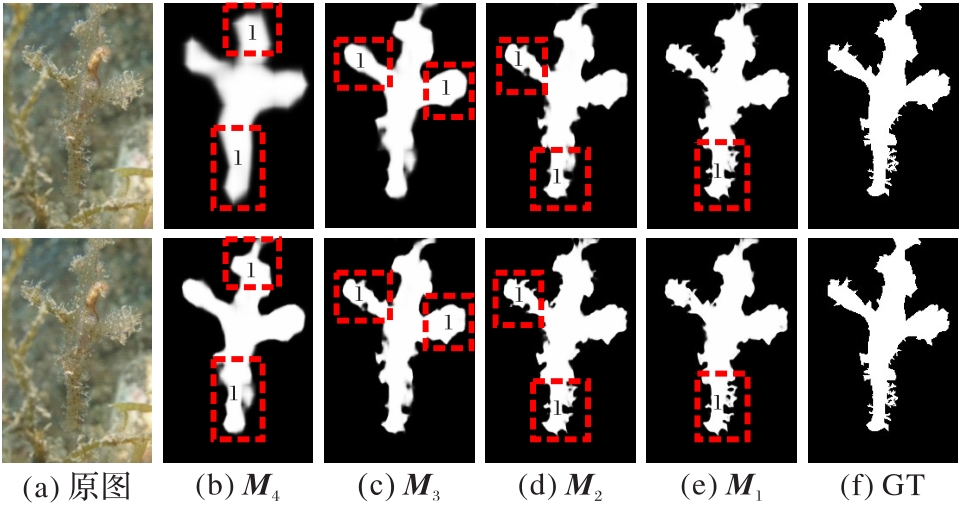
Fig. 8 Visual comparison of hierarchical optimization strategies
| 模型 | 参数量/106 | 计算量/GFLOPs | ||||
|---|---|---|---|---|---|---|
| B | 40.00 | 28.62 | 0.133 | 0.636 | 0.595 | 0.437 |
| B+D | 81.62 | 29.79 | 0.095 | 0.723 | 0.618 | 0.468 |
| B+D+I+M | 82.62 | 29.81 | 0.046 | 0.929 | 0.865 | 0.798 |
| B+D+I+M+R | 83.15 | 30.21 | 0.045 | 0.932 | 0.873 | 0.855 |
Tab. 3 Comparison of ablation experimental results on CAMO dataset
| 模型 | 参数量/106 | 计算量/GFLOPs | ||||
|---|---|---|---|---|---|---|
| B | 40.00 | 28.62 | 0.133 | 0.636 | 0.595 | 0.437 |
| B+D | 81.62 | 29.79 | 0.095 | 0.723 | 0.618 | 0.468 |
| B+D+I+M | 82.62 | 29.81 | 0.046 | 0.929 | 0.865 | 0.798 |
| B+D+I+M+R | 83.15 | 30.21 | 0.045 | 0.932 | 0.873 | 0.855 |
| 模型 | 参数量/106 | 计算量/GFLOPs | 推理速度/(frames·s-1) |
|---|---|---|---|
| MGLR | 73.73 | 378.21 | 22.03 |
| BGNet | 79.90 | 116.90 | 23.27 |
| ZoomNet | 32.40 | 101.80 | 24.64 |
| FEDER | 44.10 | 36.00 | 26.67 |
| HAINet | 43.57 | 40.01 | 20.42 |
| FSPNet | 274.24 | 281.23 | 28.54 |
| TANet | 151.64 | 90.33 | 12.82 |
| UAT | 111.60 | 1 861.70 | 25.86 |
| HEO-Net | 83.15 | 28.56 | 30.21 |
Tab. 4 Comparison of parameter performance
| 模型 | 参数量/106 | 计算量/GFLOPs | 推理速度/(frames·s-1) |
|---|---|---|---|
| MGLR | 73.73 | 378.21 | 22.03 |
| BGNet | 79.90 | 116.90 | 23.27 |
| ZoomNet | 32.40 | 101.80 | 24.64 |
| FEDER | 44.10 | 36.00 | 26.67 |
| HAINet | 43.57 | 40.01 | 20.42 |
| FSPNet | 274.24 | 281.23 | 28.54 |
| TANet | 151.64 | 90.33 | 12.82 |
| UAT | 111.60 | 1 861.70 | 25.86 |
| HEO-Net | 83.15 | 28.56 | 30.21 |
| 1 | 0.033 | 0.934 | 0.884 | 0.860 |
| 2 | 0.032 | 0.937 | 0.886 | 0.863 |
| 3 | 0.034 | 0.931 | 0.883 | 0.857 |
Tab. 5 Sensitivity analysis of loss function weight on NC4K dataset (β=1)
| 1 | 0.033 | 0.934 | 0.884 | 0.860 |
| 2 | 0.032 | 0.937 | 0.886 | 0.863 |
| 3 | 0.034 | 0.931 | 0.883 | 0.857 |
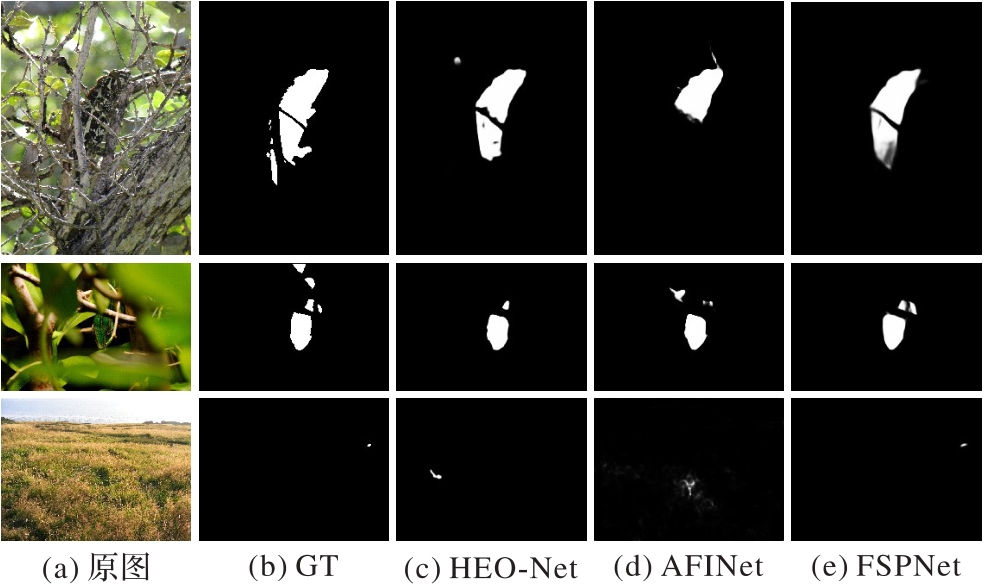
Fig. 9 Failure cases
| [1] | Fan D P, Ji G P, Zhou T, et al. PraNet: parallel reverse attention network for polyp segmentation[C]// MICCAI 2020, LNCS 12266. Cham: Springer, 2020: 263-273. |
| [2] | Qiu L, Wu X, Yu Z. A high-efficiency fully convolutional networks for pixel-wise surface defect detection[J]. IEEE Access, 2019, 7: 15884-15893. |
| [3] | Abraham K, Abdelwahab M, Abo-Zahhad M. Classification and detection of natural disasters using machine learning and deep learning techniques: a review[J]. Earth Science Informatics, 2024, 17(2): 869-891. |
| [4] | Le T N, Nguyen T V, Nie Z, et al. Anabranch network for camouflaged object segmentation[J]. Computer Vision and Image Understanding, 2019, 184: 45-56. |
| [5] | Fan D P, Ji G P, Sun G, et al. Camouflaged object detection[C]// CVPR 2020. Piscataway: IEEE, 2020: 2777-2787. |
| [6] | Su J, Li J, Zhang Y, et al. Selectivity or invariance: boundary-aware salient object detection[C]// ICCV 2019. Piscataway: IEEE, 2019: 3798-3807. |
| [7] | Wu J, Xia C, Yu T, et al. View-aware salient object detection for 360° omnidirectional image[J]. IEEE Transactions on Multimedia, 2023, 25: 6471-6484. |
| [8] | Zhang M, Xu S, Piao Y, et al. PreyNet: preying on camouflaged objects[C]// MM 2022. New York: ACM, 2022: 5323-5332. |
| [9] | Xie C, Xia C, Yu T, et al. Frequency representation integration for camouflaged object detection[C]// MM 2023. New York: ACM, 2023: 1789-1797. |
| [10] | Pang Y, Zhao X, Xiang T Z, et al. Zoom in and out: a mixed-scale triplet network for camouflaged object detection[C]// CVPR 2022. Piscataway: IEEE, 2022: 2150-2160. |
| [11] | He C, Li K, Zhang Y, et al. Camouflaged object detection with feature decomposition and edge reconstruction[C]// CVPR 2023. Piscataway: IEEE, 2023: 22046-22055. |
| [12] | Lyu Y, Zhang H, Li Y, et al. UEDG: uncertainty-edge dual guided camouflage object detection[J]. IEEE Transactions on Multimedia, 2024, 26: 4050-4060. |
| [13] | Luo Z, Lv X, Wen X, et al. EFNet: multiscale edge fusion network for camouflaged object detection[J]. IEEE Signal Processing Letters, 2025, 32: 2957-2961. |
| [14] | Qi M, Wang Z, Liu C, et al. Joint edge and regional depth enhancement network for camouflaged object detection[C]// ICASSP 2025. Piscataway: IEEE, 2025: 1-5. |
| [15] | Wu R, Xiang T Z, Xie G S, et al. Uncertainty-aware transformer for referring camouflaged object detection[J]. IEEE Transactions on Image Processing, 2025, 34: 5341-5354. |
| [16] | Jeong J, Shim J, Yoon H. TANet: tri-aspects network for camouflaged object detection[J]. IEEE Transactions on Circuits and Systems for Video Technology, 2025, 35(11): 10728-10741. |
| [17] | Kim H J, Kim H K, Lee S, et al. Unveiling the potential of multimodal large language models for scene text segmentation via semantic-enhanced features[C]// ICIPCW 2024. Piscataway: IEEE, 2024: 4210-4215. |
| [18] | Cheng S, Ji G P, Qin P, et al. Large model based referring camouflaged object detection[PP/OL]. arXiv (2023-11-28) [2025-09-10].. |
| [19] | Radford A, Kim J W, Hallacy C, et al. Learning transferable visual models from natural language supervision[J]. Proceedings of Machine Learning Research, 2021, 139: 8748-8763. |
| [20] | Wang W, Xie E, Li X, et al. PVT v2: improved baselines with pyramid Vision Transformer[J]. Computational Visual Media, 2022, 8(3): 415-424. |
| [21] | Lv Y, Zhang J, Dai Y, et al. Simultaneously localize, segment and rank the camouflaged objects[C]// CVPR 2021. Piscataway: IEEE, 2021: 11586-11596. |
| [22] | Zhai Q, Li X, Yang F, et al. Mutual graph learning for camouflaged object detection[C]// CVPR 2021. Piscataway: IEEE, 2021: 12992-13002. |
| [23] | Huang Z, Dai H, Xiang T Z, et al. Feature shrinkage pyramid for camouflaged object detection with Transformers[C]// CVPR 2023. Piscataway: IEEE, 2023: 5557-5566. |
| [24] | Yang F, Zhai Q, Li X, et al. Uncertainty-guided Transformer reasoning for camouflaged object detection[C]// CVPR 2021. Piscataway: IEEE, 2021: 4126-4135. |
| [25] | 张成,刘研,宋慧慧. 多尺度特征融合与交互的伪装目标检测网络[J]. 计算机系统应用, 2024, 33(8): 90-97. |
| Zhang Cheng, Liu Yan, Song Huihui. Camouflaged object detection network based on multi-scale feature fusion and interaction[J]. Computer Systems and Applications, 2024, 33(8): 90-97. | |
| [26] | Vaswani A, Shazeer N, Parmar N, et al. Attention is all you need[C]// NeurIPS 2017. Red Hook: Curran Associates Inc., 2017: 6000-6010. |
| [27] | Hu J, Shen L, Sun G. Squeeze-and-excitation networks[C]// CVPR 2018. Piscataway: IEEE, 2018: 7132-7141. |
| [28] | Liu Z, Zhang Z, Tan Y, et al. Boosting camouflaged object detection with dual-task interactive transformer[C]// ICPR 2022. Piscataway: IEEE, 2022: 140-146. |
| [29] | Zhang Q, Yan W, Zhao Y, et al. AFINet: camouflaged object detection via attention fusion and interaction network[J]. Journal of Visual Communication and Image Representation, 2024, 102: No.104208. |
| [30] | Sun Y, Wang S, Chen C, et al. Boundary-guided camouflaged object detection[C]// IJCAI 2022. California: IJCAI, 2022: 1335-1341. |
| [31] | Ji G P, Zhu L, Zhuge M, et al. Fast camouflaged object detection via edge-based reversible re-calibration network[J]. Pattern Recognition, 2022, 123: No.108414. |
| [32] | Zhu H, Li P, Xie H, et al. I can find you! boundary-guided separated attention network for camouflaged object detection[J]. Proceedings of the AAAI Conference on Artificial Intelligence, 2022, 36(3): 3608-3616. |
| [33] | Zhai W, Cao Y, Xie H, et al. Deep texton-coherence network for camouflaged object detection[J]. IEEE Transactions on Multimedia, 2023, 25: 5155-5165. |
| [34] | Ren J, Hu X, Zhu L, et al. Deep texture-aware features for camouflaged object detection[J]. IEEE Transactions on Circuits and Systems for Video Technology, 2023, 33(3): 1157-1167. |
| [35] | Li P, Yan X, Zhu H, et al. FindNet: can you find me? boundary-and-texture enhancement network for camouflaged object detection[J]. IEEE Transactions on Image Processing, 2022, 31: 6396-6411. |
| [36] | Zhong Y, Li B, Tang L, et al. Detecting camouflaged object in frequency domain[C]// CVPR 2022. Piscataway: IEEE, 2022: 4494-4503. |
| [37] | Cong R, Sun M, Zhang S, et al. Frequency perception network for camouflaged object detection[C]// MM 2023. New York: ACM, 2023: 1179-1189. |
| [38] | Skurowski P, Abdulameer H, Błaszczyk J, et al. Animal camouflage analysis: CHAMELEON database[DB/OL]. (2017) [2025-09-10].. |
| [39] | Perazzi F, Krähenbühl P, Pritch Y, et al. Saliency filters: contrast based filtering for salient region detection[C]// CVPR 2012. Piscataway: IEEE, 2012: 733-740. |
| [40] | Fan D P, Gong C, Cao Y, et al. Enhanced-alignment measure for binary foreground map evaluation[C]// IJCAI 2018. California: IJCAI, 2018: 698-704. |
| [41] | Fan D P, Cheng M M, Liu Y, et al. Structure-measure: a new way to evaluate foreground maps[C]// ICCV 2017. Piscataway: IEEE, 2017: 4558-4567. |
| [42] | Ji G P, Fan D P, Chou Y C, et al. Deep gradient learning for efficient camouflaged object detection[J]. Machine Intelligence Research, 2023, 20(1): 92-108. |
| [43] | Zhou X, Wu Z, Cong R. Decoupling and integration network for camouflaged object detection[J]. IEEE Transactions on Multimedia, 2024, 26: 7114-7129. |
| [44] | Luo Z, Liu N, Zhao W, et al. VSCode: general visual salient and camouflaged object detection with 2D prompt learning[C]// CVPR 2024. Piscataway: IEEE, 2024: 17169-17180. |
| [45] | Yu Z, Zhang X, Zhao L, et al. Exploring deeper! segment anything model with depth perception for camouflaged object detection[C]// MM 2024. New York: ACM, 2024: 4322-4330. |
| [46] | Phung T H, Chen H J, Shuai H H. Hierarchically aggregated identification Transformer network for camouflaged object detection[C]// ICME 2024. Piscataway: IEEE, 2024: 1-6. |
| [47] | He C, Li K, Zhang Y, et al. Strategic preys make acute predators: enhancing camouflaged object detectors by generating camouflaged objects[PP/OL]. V2. arXiv (2024-03-10) [2025-07-10]. . |
| [1] | Hua YAO, Gaoming YANG, Xuelian LI, Kaixuan LU. Remote sensing small object detection with dynamic perception and cross-modulation [J]. Journal of Computer Applications, 2026, 46(9): 2968-2976. |
| [2] | Mingzhe LIU, Xiaoqin XIONG, Shixun BAI, Renbao ZHAO, Ziwei WANG, Faqiang GOU, Liang XU. Oil reservoir sweet spot identification method based on Shapelet-Transformer [J]. Journal of Computer Applications, 2026, 46(9): 3054-3064. |
| [3] | Jiangyan CHEN, Yandan WANG, Yihu LIU, Yinglong MA. Collaborative query optimization-based framework for long-tailed object detection [J]. Journal of Computer Applications, 2026, 46(9): 2769-2775. |
| [4] | Changqing JI, Ziying ZHANG, Zumin WANG. Continuous non-invasive blood pressure prediction method based on multi-scale Transformer with enhanced graph neural network [J]. Journal of Computer Applications, 2026, 46(9): 3043-3053. |
| [5] | He SUN, Guanghui YAN, Xiaohong JIA. Superpixel segmentation algorithm based on inverted feature pyramid network [J]. Journal of Computer Applications, 2026, 46(9): 2959-2967. |
| [6] | Yufeng OU, Chia-Hung WANG. Small-object defect detection method for printed circuit boards based on dual-branch feature extraction [J]. Journal of Computer Applications, 2026, 46(9): 2977-2986. |
| [7] | Kan HE, Hongfeng MA, Xuejun ZONG, Hongyan SHI, Lian LIAN, Bowei NING. DCSFFuzzer: dual-channel semantic feature fusion-based fuzz testing method for industrial control protocols [J]. Journal of Computer Applications, 2026, 46(9): 2877-2888. |
| [8] | Li TANG, Jianyu ZHANG, Rui YAO. Object detection algorithm based on improved YOLOv11 in foggy weather [J]. Journal of Computer Applications, 2026, 46(8): 2630-2639. |
| [9] | Fengchun LIU, Xinying SHAO, Chunying ZHANG, Liya WANG, Jing REN. FCMdepth: monocular depth estimation framework with multi-scale feature optimization [J]. Journal of Computer Applications, 2026, 46(8): 2603-2611. |
| [10] | Jielong BAI, Chenyun FANG, Zhiwei QIAO. Sparse CT artifact suppresion Transformer network based on multi-scale attention adaptive fusion [J]. Journal of Computer Applications, 2026, 46(8): 2660-2667. |
| [11] | Guanghui LI, Licheng QU. Dynamic dilated convolution and hierarchical local-global attention model based on improved Lite-Mono architecture [J]. Journal of Computer Applications, 2026, 46(8): 2567-2576. |
| [12] | Lin HUANG, Yingshun LI, Weiyan TONG, Shuyuan ZHANG, Zihan WANG. Remote sensing image object detection algorithm based on improved real-time detection Transformer [J]. Journal of Computer Applications, 2026, 46(8): 2652-2659. |
| [13] | Li ZHU, Lugema MI, Chunqiang ZHU, Wanru XU, Jingkai GAO, Jinqi QU. Short-term power load forecasting model based on dynamic convolution decomposition and multi-scale graph [J]. Journal of Computer Applications, 2026, 46(7): 2334-2346. |
| [14] | Chao LYU, Geyao MA. Lightweight human pose estimation network based on redundant feature suppression [J]. Journal of Computer Applications, 2026, 46(6): 1973-1980. |
| [15] | Minqi WU, Yuanhua YANG, Hang LI, Yaqin HU, Zhihao TANG, Teng MEI. Lightweight underwater small object detection based on graph Transformer and RT-DETR [J]. Journal of Computer Applications, 2026, 46(5): 1586-1595. |
| Viewed | ||||||
|
Full text |
|
|||||
|
Abstract |
|
|||||
