


Journal of Computer Applications ›› 2026, Vol. 46 ›› Issue (7): 2216-2228.DOI: 10.11772/j.issn.1001-9081.2025060760
• Advanced computing • Previous Articles Next Articles
Zichen TIAN, Qinming LIU( ), Chunming YE, Yujie WANG
Received:2025-07-11
Revised:2025-10-22
Accepted:2025-10-29
Online:2025-11-05
Published:2026-07-10
Contact:
Qinming LIU
About author:TIAN Zichen, born in 2002, M. S. candidate. His research interests include location planning.Supported by:
田梓琛, 刘勤明(), 叶春明, 汪宇杰
通讯作者:
刘勤明
作者简介:田梓琛(2002—),男,河北保定人,硕士研究生,主要研究方向:选址规划基金资助:CLC Number:
Zichen TIAN, Qinming LIU, Chunming YE, Yujie WANG. Location optimization model for ride-hailing vehicle charging stations considering temporal variability[J]. Journal of Computer Applications, 2026, 46(7): 2216-2228.
田梓琛, 刘勤明, 叶春明, 汪宇杰. 考虑时间差异性的网约车充电站选址优化模型[J]. 《计算机应用》唯一官方网站, 2026, 46(7): 2216-2228.
Add to citation manager EndNote|Ris|BibTeX
URL: https://www.joca.cn/EN/10.11772/j.issn.1001-9081.2025060760
| 符号 | 含义 |
|---|---|
| 位置 | |
| 在时段 | |
| 在时段 | |
| 充电站 | |
| 在时段 | |
| 需求点 | |
| 时段 | |
| 时段 | |
| 时段 | |
| 未覆盖需求的惩罚系数,主要平衡空驶时间与需求满足度。通过调参(如0.5~2.0)可在“降低空驶时间”和“保障需求覆盖”之间权衡 | |
| 司机每分钟空驶时间的边际成本 | |
| 高难度区域未覆盖每辆车的社会成本 | |
| 允许建设的最大充电站总数 | |
| 充电站最低利用率阈值(如 | |
| 第 | |
| 分区 | |
| 总充电需求 | |
| 单站平均服务能力 |
Tab. 1 Symbol definition
| 符号 | 含义 |
|---|---|
| 位置 | |
| 在时段 | |
| 在时段 | |
| 充电站 | |
| 在时段 | |
| 需求点 | |
| 时段 | |
| 时段 | |
| 时段 | |
| 未覆盖需求的惩罚系数,主要平衡空驶时间与需求满足度。通过调参(如0.5~2.0)可在“降低空驶时间”和“保障需求覆盖”之间权衡 | |
| 司机每分钟空驶时间的边际成本 | |
| 高难度区域未覆盖每辆车的社会成本 | |
| 允许建设的最大充电站总数 | |
| 充电站最低利用率阈值(如 | |
| 第 | |
| 分区 | |
| 总充电需求 | |
| 单站平均服务能力 |
| 时段类型 | 时段范围 | 核心特征 | 权重 | 服务时间阈值/min | 目标覆盖率/% |
|---|---|---|---|---|---|
| 高峰期 | 7:00—9:00,17:00—19:00 | 需求集中、车辆流动快 | 1.5 | ≤10 | ≥95 |
| 平峰期 | 9:00—17:00,19:00—22:00 | 需求稳定、响应容忍度中等 | 1.0 | ≤15 | ≥85 |
| 低峰期 | 22:00—次日7:00 | 需求低、车辆空闲时间多 | 0.8 | ≤20 | ≥70 |
Tab. 2 Characteristics of different time periods
| 时段类型 | 时段范围 | 核心特征 | 权重 | 服务时间阈值/min | 目标覆盖率/% |
|---|---|---|---|---|---|
| 高峰期 | 7:00—9:00,17:00—19:00 | 需求集中、车辆流动快 | 1.5 | ≤10 | ≥95 |
| 平峰期 | 9:00—17:00,19:00—22:00 | 需求稳定、响应容忍度中等 | 1.0 | ≤15 | ≥85 |
| 低峰期 | 22:00—次日7:00 | 需求低、车辆空闲时间多 | 0.8 | ≤20 | ≥70 |
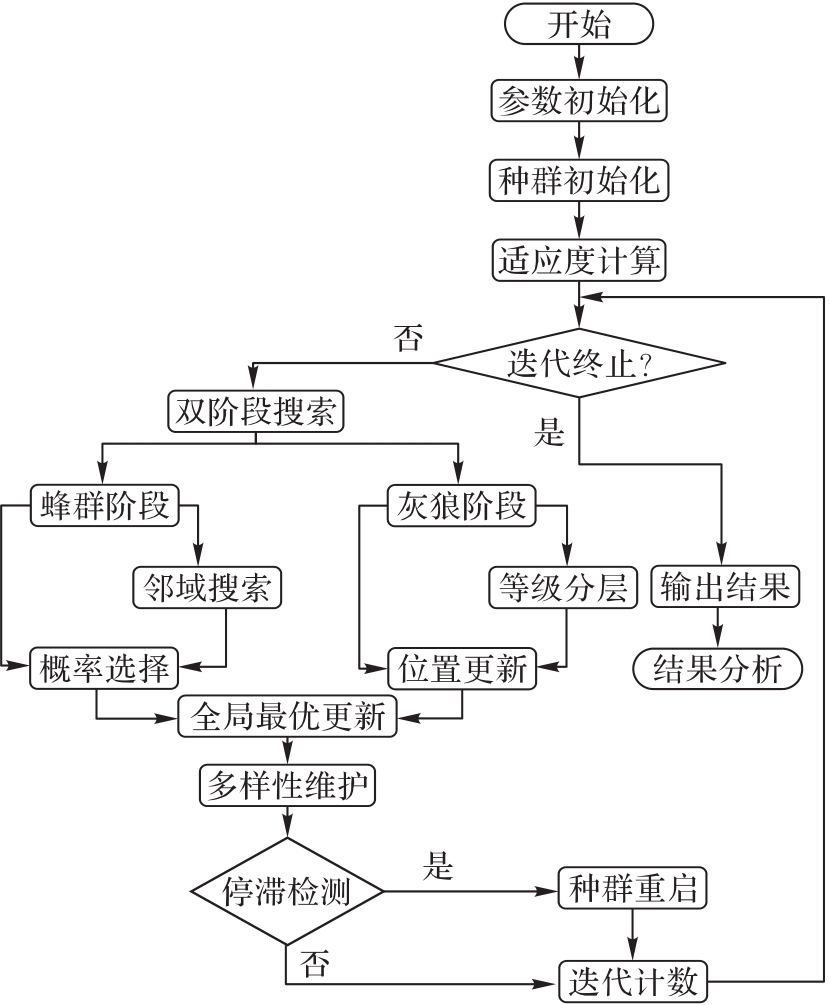
Fig. 1 Flow of IBWO
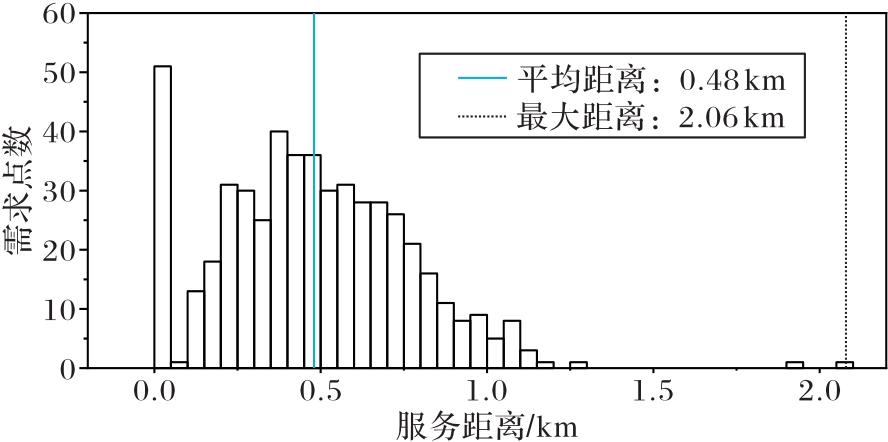
Fig. 2 Distribution of service distance
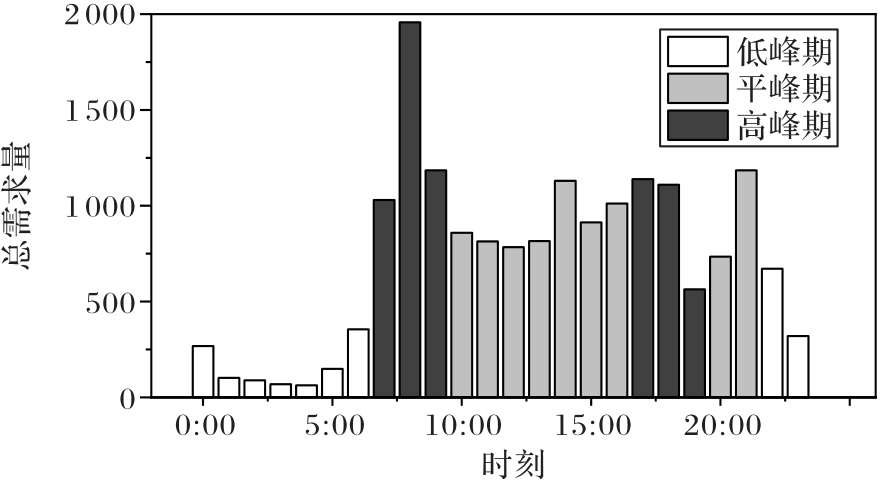
Fig. 3 Distribution pattern of 24-hour demand for ride-hailing vehicle on a certain day
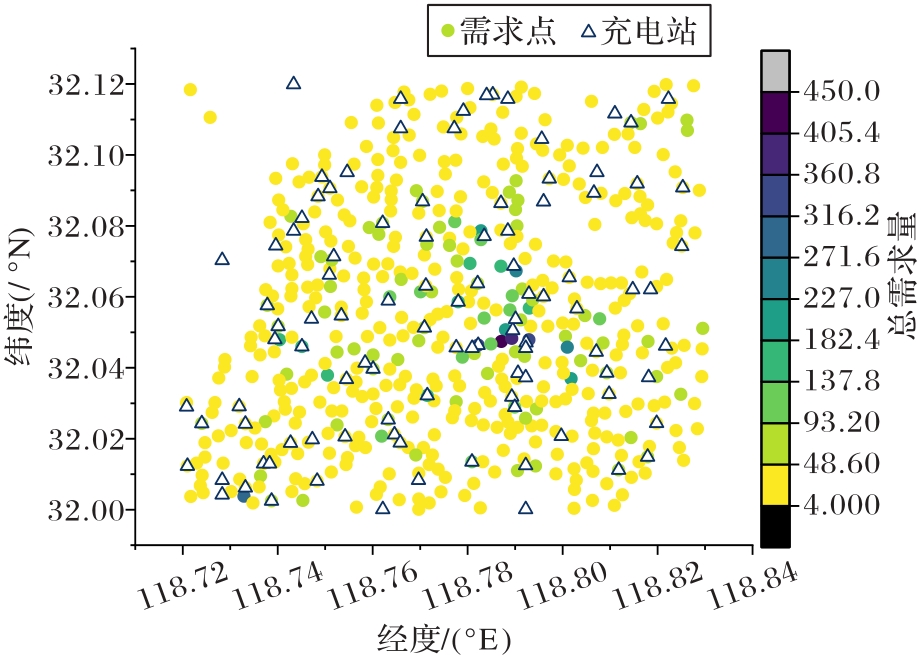
Fig. 4 Layout and demand heat map of charging stations
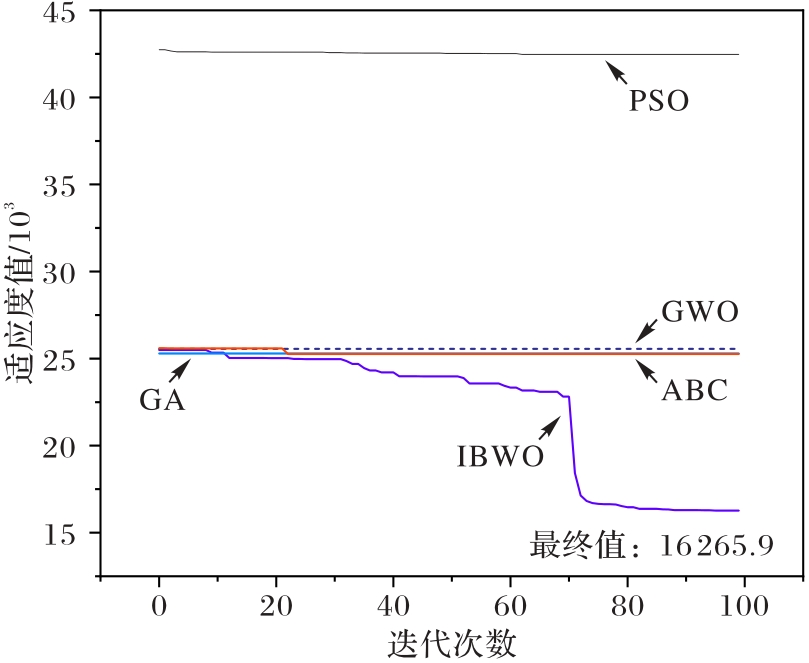
Fig. 5 Comparison of convergence curves of various algorithms
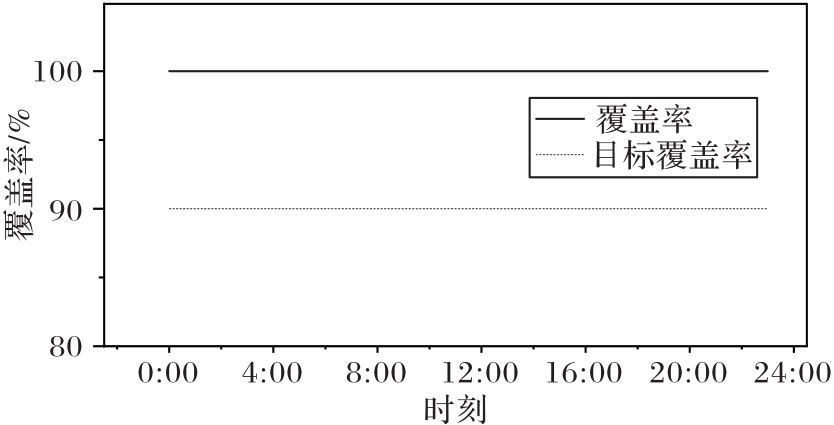
Fig. 6 Hourly coverage change
| 时段 | 服务时间限制/min | 总需求车辆数 | 总覆盖车辆数 | 覆盖率/% | 未覆盖高难度需求车辆数 |
|---|---|---|---|---|---|
| 总计 | — | 17 318 | 17 318 | 100.00 | 0 |
| 高峰期 | 10 | 6 985 | 6 985 | 100.00 | 0 |
| 平峰期 | 15 | 9 273 | 9 273 | 100.00 | 0 |
| 低峰期 | 20 | 1 060 | 1 060 | 100.00 | 0 |
Tab. 3 Coverage of demand in each time period
| 时段 | 服务时间限制/min | 总需求车辆数 | 总覆盖车辆数 | 覆盖率/% | 未覆盖高难度需求车辆数 |
|---|---|---|---|---|---|
| 总计 | — | 17 318 | 17 318 | 100.00 | 0 |
| 高峰期 | 10 | 6 985 | 6 985 | 100.00 | 0 |
| 平峰期 | 15 | 9 273 | 9 273 | 100.00 | 0 |
| 低峰期 | 20 | 1 060 | 1 060 | 100.00 | 0 |
| 算法 | 各算法迭代100次性能 | 各算法迭代200次性能 | ||||||
|---|---|---|---|---|---|---|---|---|
| 最佳适应度 | 平均适应度 | 标准差 | 平均时间/s | 最佳适应度 | 平均适应度 | 标准差 | 平均时间/s | |
| IBWO | 16 180.1 | 16 265.9 | 126.0 | 334.87 | 15 810.8 | 15 998.9 | 166.1 | 651.59 |
| GA | 25 146.3 | 25 295.8 | 450.29 | 24 995.7 | 25 367.1 | 314.7 | 894.27 | |
| PSO | 42 355.6 | 42 470.5 | 82.0 | 446.69 | 42 282.2 | 42 336.7 | 888.75 | |
| GWO | 25 302.4 | 25 555.6 | 349.8 | 565.36 | 25 255.9 | 25 303.6 | 35.5 | 1 085.58 |
| ABC | 240.4 | 133.5 | ||||||
Tab. 4 Performance comparison of various algorithms after 100 and 200 iterations
| 算法 | 各算法迭代100次性能 | 各算法迭代200次性能 | ||||||
|---|---|---|---|---|---|---|---|---|
| 最佳适应度 | 平均适应度 | 标准差 | 平均时间/s | 最佳适应度 | 平均适应度 | 标准差 | 平均时间/s | |
| IBWO | 16 180.1 | 16 265.9 | 126.0 | 334.87 | 15 810.8 | 15 998.9 | 166.1 | 651.59 |
| GA | 25 146.3 | 25 295.8 | 450.29 | 24 995.7 | 25 367.1 | 314.7 | 894.27 | |
| PSO | 42 355.6 | 42 470.5 | 82.0 | 446.69 | 42 282.2 | 42 336.7 | 888.75 | |
| GWO | 25 302.4 | 25 555.6 | 349.8 | 565.36 | 25 255.9 | 25 303.6 | 35.5 | 1 085.58 |
| ABC | 240.4 | 133.5 | ||||||
| [1] | 阿迪拉·阿力木江,蒋平,董虹佳,等.推广新能源汽车碳减排和大气污染控制的协同效益研究:以上海市为例[J].环境科学学报, 2020, 40(5): 1873-1883. |
| Adila Alimujiang, Jiang Ping, Dong Hongjia, et al. Synergy and co-benefits of reducing CO2 and air pollutant emissions by promoting new energy vehicles: a case of Shanghai [J]. Acta Scientiae Circumstantiae, 2020, 40(5): 1873-1883. | |
| [2] | 周谧,董洁,周雅婧.双碳目标下全生命周期成本与碳排放探析:以纯电动与天然气网约车为例[J].财会通讯, 2023(2): 161-166. |
| Zhou Mi, Dong Jie, Zhou Yajing. Analysis of life-cycle costs and carbon emissions under the dual-carbon goal: a case study of pure electric and natural gas online ride-hailing vehicles [J]. Communication of Finance and Accounting, 2023(2): 161-166. | |
| [3] | 于东民,杨超,蒋林洳,等.电动汽车充电安全防护研究综述[J].中国电机工程学报, 2022, 42(6): 2145-2163. |
| Yu Dongmin, Yang Chao, Jiang Linru, et al. Review on safety protection of electric vehicle charging [J]. Proceedings of the CSEE, 2022, 42(6): 2145-2163. | |
| [4] | 张聪,彭克,肖传亮,等.基于“车-路-网”协同的电动汽车充电引导策略[J].电力自动化设备, 2022, 42(10): 125-133. |
| Zhang Cong, Peng Ke, Xiao Chuanliang, et al. EV charging guiding strategy based on coordination of "EVs-road-network" [J]. Electric Power Automation Equipment, 2022, 42(10): 125-133. | |
| [5] | Li B, Szeto W Y, Luo Q. A peak-period taxi scheme design problem: formulation and policy implications [J]. Transportation Research Part E: Logistics and Transportation Review, 2021, 146: No.102148. |
| [6] | Xing Q, Chen Z, Zhang Z, et al. Charging demand forecasting model for electric vehicles based on online ride-hailing trip data [J]. IEEE Access, 2019, 7: 137390-137409. |
| [7] | Tian Z, Hou W, Gu X, et al. The location optimization of electric vehicle charging stations considering charging behavior [J]. Simulation, 2018, 94(7): 625-636. |
| [8] | Yi T, Zhang C, Lin T, et al. Research on the spatial-temporal distribution of electric vehicle charging load demand: a case study in China [J]. Journal of Cleaner Production, 2020, 242: No.118457. |
| [9] | 黄洁,高阳,付晓,等.基于出行链的新能源汽车公共充电站点可达性研究:以北京市为例[J].地理研究, 2022, 41(12): 3305-3317. |
| Huang Jie, Gao Yang, Fu Xiao, et al. Accessibility of public electric vehicle charging stations based on trip chains: A case study in Beijing [J]. Geographical Research, 2022, 41(12): 3305-3317. | |
| [10] | Zhou G, Zhu Z, Luo S. Location optimization of electric vehicle charging stations: based on cost model and genetic algorithm [J]. Energy, 2022, 247: No.123437. |
| [11] | Mu Y, Wu J, Jenkins N, et al. A spatial-temporal model for grid impact analysis of plug-in electric vehicles [J]. Applied Energy, 2014, 114: 456-465. |
| [12] | Liu K, Liu Y. Stochastic user equilibrium based spatial-temporal distribution prediction of electric vehicle charging load [J]. Applied Energy, 2023, 339: No.120943. |
| [13] | 陈黎军,傅雨婷,臧海祥,等.考虑充电需求增长的充电站动态规划方法[J].全球能源互联网, 2019, 2(4): 349-359. |
| Chen Lijun, Fu Yuting, Zang Haixiang, et al. Dynamic planning model of electric vehicle stations considering the growth of charging demand [J]. Journal of Global Energy Interconnection, 2019, 2(4): 349-359. | |
| [14] | Sayarshad H R. Optimization of electric charging infrastructure: integrated model for routing and charging coordination with power-aware operations [J]. npj Sustainable Mobility and Transport, 2024, 1: No.4. |
| [15] | Mohammed A, Saif O, Abo-Adma M, et al. Strategies and sustainability in fast charging station deployment for electric vehicles [J]. Scientific Reports, 2024, 14: No.283. |
| [16] | Ahmad I, Qayum F, Rahman S U, et al. Using improved hybrid grey wolf algorithm based on artificial bee colony algorithm onlooker and scout bee operators for solving optimization problems [J]. International Journal of Computational Intelligence Systems, 2024, 17: No.111. |
| [17] | 臧海祥,傅雨婷,陈铭,等.基于改进自适应遗传算法的EV充电站动态规划[J].电力自动化设备, 2020, 40(1): 163-170. |
| Zang Haixiang, Fu Yuting, Chen Ming, et al. Dynamic planning of EV charging stations based on improved adaptive genetic algorithm [J]. Electric Power Automation Equipment, 2020, 40(1): 163-170. | |
| [18] | Guo E, Gao Y, Hu C, et al. A hybrid PSO-DE intelligent algorithm for solving constrained optimization problems based on feasibility rules [J]. Mathematics, 2023, 11(3): No.522. |
| [19] | Shaikh M S, Lin H, Xie S, et al. An intelligent hybrid grey wolf-particle swarm optimizer for optimization in complex engineering design problem [J]. Scientific Reports, 2025, 15: No.18313. |
| [20] | Widians J A, Wardoyo R, Hartati S. A hybrid ant colony and grey wolf optimization algorithm for exploitation-exploration balance [J]. Emerging Science Journal, 2024, 8(4): 1642-1654. |
| [1] | . Comprehensive scoring-based aggregation method in federated learning [J]. Journal of Computer Applications, 0, (): 0-0. |
| [2] | Bingqing LI, Binhao HUANG, Yubei TANG, Baili ZHANG. Quality of service prediction model for data sparsity and cold start problems [J]. Journal of Computer Applications, 2026, 46(6): 1829-1835. |
| [3] | . Cancer driver gene identification model based on cross-view collaborative networks [J]. Journal of Computer Applications, 0, (): 0-0. |
| [4] | Huaze ZHU, Weihao WANG, Mingyu YOU, Hongjun ZHOU. 3D part assembly method based on line drawing segmentation [J]. Journal of Computer Applications, 2026, 46(5): 1545-1550. |
| [5] | Hao YU, Jing FAN, Enkang XI, Yadong JIN, Hua DONG, Yihang SUN. HEFSL: high-efficient federated split learning framework for edge heterogeneity [J]. Journal of Computer Applications, 2026, 46(5): 1397-1407. |
| [6] | . Design and implementation of intelligent medical record review assistant based on large language models [J]. Journal of Computer Applications, 0, (): 0-0. |
| [7] | . Few-Shot Semantic Segmentation Network with Prototype Enhancement and Prior Guidance [J]. Journal of Computer Applications, 0, (): 0-0. |
| [8] | Jian ZHANG, Jianbo YU, Jian TANG. Municipal solid waste incineration state recognition method based on multilayer preprocessing [J]. Journal of Computer Applications, 2026, 46(3): 940-949. |
| [9] | Haiyue CHEN, Xiuwen YI, Shan YAN, Shijiao LI, Tianrui LI, Yu ZHENG. Virus transmission analysis and visualization based on agent-based modeling [J]. Journal of Computer Applications, 2026, 46(2): 497-504. |
| [10] | . Wind Power Forecasting Based on Virtual Sample Generation for Ramp Events [J]. Journal of Computer Applications, 0, (): 0-0. |
| [11] | Binhong XIE, Rui WANG, Rui ZHANG, Yingjun ZHANG. Agent prototype distillation algorithm for few-shot object detection [J]. Journal of Computer Applications, 2026, 46(1): 233-241. |
| [12] | Hao YU, Jing FAN, Yihang SUN, Yadong JIN, Enkang XI, Hua DONG. Federated split learning optimization method under edge heterogeneity [J]. Journal of Computer Applications, 2026, 46(1): 33-42. |
| [13] | Junheng WU, Xiaodong WANG, Qixue HE. Time series prediction model based on statistical distribution sensing and frequency domain dual-channel fusion [J]. Journal of Computer Applications, 2026, 46(1): 113-123. |
| [14] | . Application of quantum alternating operator Ansatz in maximum distance k matching [J]. Journal of Computer Applications, 0, (): 0-0. |
| [15] | Jinghua ZHAO, Zhu ZHANG, Xiting LYU, Huidan LIN. Multiscale information diffusion prediction model based on hypergraph neural network [J]. Journal of Computer Applications, 2025, 45(11): 3529-3539. |
| Viewed | ||||||
|
Full text |
|
|||||
|
Abstract |
|
|||||
