


Journal of Computer Applications ›› 2026, Vol. 46 ›› Issue (11): 3607-3616.DOI: 10.11772/j.issn.1001-9081.2026020162
• Multimedia computing and computer simulation • Previous Articles
Received:2026-02-26
Revised:2026-03-14
Accepted:2026-03-30
Online:2026-04-22
Published:2026-11-10
Contact:
Menglong YANG
About author:XIE Zhengrui, born in 2002, M. S. candidate. His research interests include deep learning, image processing.
Supported by:
谢正锐, 杨梦龙( )
通讯作者:
杨梦龙
作者简介:谢正锐(2002—),男,重庆人,硕士研究生,主要研究方向:深度学习、图像处理
基金资助:CLC Number:
Zhengrui XIE, Menglong YANG. DCL-Adapt: blind image quality assessment based on single-encoder asymmetric dual-stream contrastive learning[J]. Journal of Computer Applications, 2026, 46(11): 3607-3616.
谢正锐, 杨梦龙. DCL-Adapt:基于单编码器非对称双流对比学习的盲图像质量评估[J]. 《计算机应用》唯一官方网站, 2026, 46(11): 3607-3616.
Add to citation manager EndNote|Ris|BibTeX
URL: https://www.joca.cn/EN/10.11772/j.issn.1001-9081.2026020162
| 数据集 | SRCC | |
|---|---|---|
| 合成失真数据集 | CLIVE[ | 0.696 |
| KonIQ-10k[ | 0.713 | |
| 真实失真数据集 | KADID-10k[ | 0.640 |
| TID2013[ | 0.675 | |
Tab. 1 Linear probing results on synthetic and authentic IQA datasets
| 数据集 | SRCC | |
|---|---|---|
| 合成失真数据集 | CLIVE[ | 0.696 |
| KonIQ-10k[ | 0.713 | |
| 真实失真数据集 | KADID-10k[ | 0.640 |
| TID2013[ | 0.675 | |
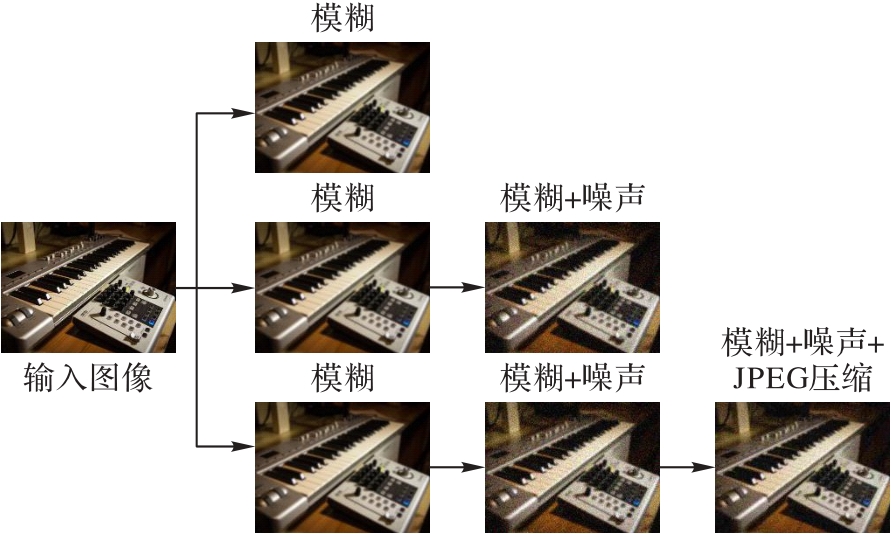
Fig. 1 Schematic diagram of composite distortion synthesizer
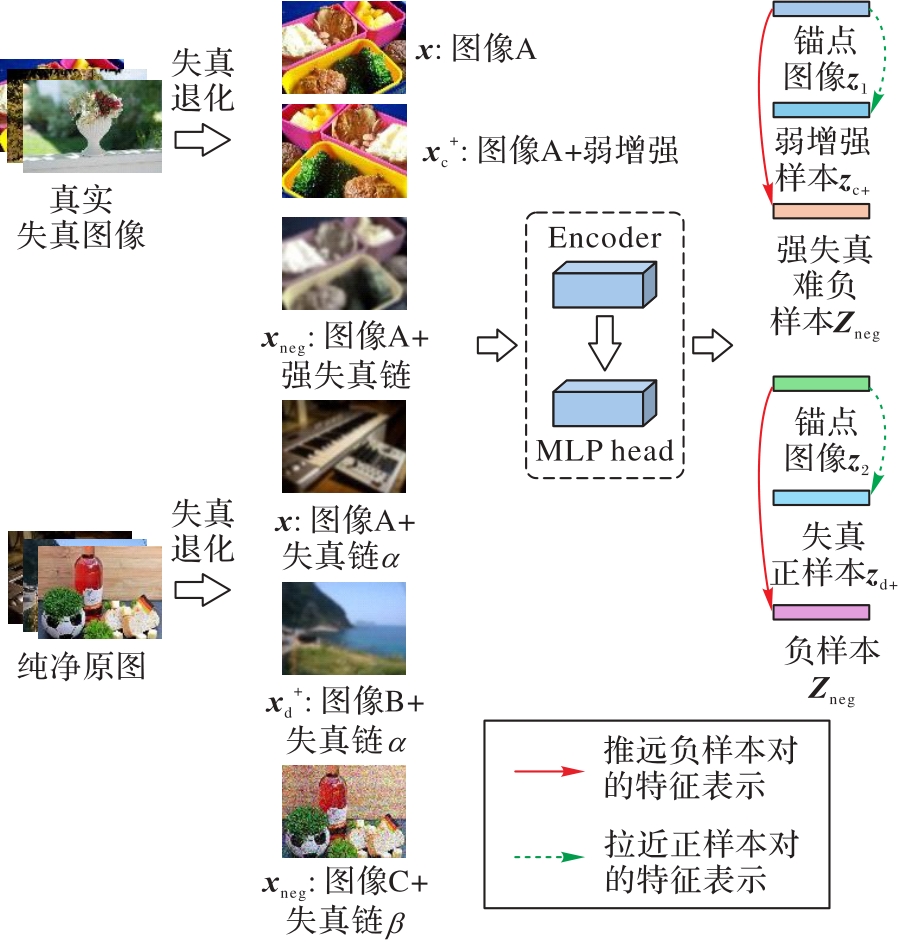
Fig. 2 Pre-training of dual-stream contrastive learning
| 方法 | 合成失真数据集 | 真实失真数据集 | ||||||||||||
|---|---|---|---|---|---|---|---|---|---|---|---|---|---|---|
| LIVE | CSIQ | TID2013 | KADID-10k | CLIVE | KonIQ-10k | SPAQ | ||||||||
| SRCC | PLCC | SRCC | PLCC | SRCC | PLCC | SRCC | PLCC | SRCC | PLCC | SRCC | PLCC | SRCC | PLCC | |
| BRISQUE[ | 0.939 | 0.935 | 0.746 | 0.829 | 0.301 | 0.694 | 0.528 | 0.567 | 0.608 | 0.629 | 0.665 | 0.681 | 0.809 | 0.817 |
| DB-CNN[ | 0.968 | 0.971 | 0.946 | 0.959 | 0.816 | 0.865 | 0.851 | 0.856 | 0.851 | 0.869 | 0.875 | 0.884 | 0.911 | 0.915 |
| HyperIQA[ | 0.962 | 0.966 | 0.923 | 0.942 | 0.840 | 0.858 | 0.852 | 0.845 | 0.859 | 0.882 | 0.906 | 0.917 | 0.916 | 0.919 |
| TReS[ | 0.969 | 0.968 | 0.922 | 0.942 | 0.863 | 0.883 | 0.859 | 0.858 | — | — | — | — | — | — |
| CONTRIQUE[ | 0.960 | 0.961 | 0.942 | 0.955 | 0.843 | 0.857 | 0.934 | 0.937 | 0.845 | 0.857 | 0.894 | 0.906 | 0.914 | 0.919 |
| Re-IQA[ | 0.947 | 0.960 | 0.804 | 0.861 | 0.872 | 0.885 | 0.840 | 0.854 | 0.914 | 0.923 | ||||
| ARNIQA[ | 0.966 | 0.970 | 0.973 | 0.908 | 0.912 | — | — | — | — | 0.905 | 0.910 | |||
| 本文方法 | 0.976 | 0.978 | 0.969 | 0.973 | 0.918 | 0.926 | 0.844 | 0.851 | 0.915 | 0.928 | 0.922 | 0.925 | ||
Tab. 2 Performance comparison among different methods on synthetic and authentic IQA datasets
| 方法 | 合成失真数据集 | 真实失真数据集 | ||||||||||||
|---|---|---|---|---|---|---|---|---|---|---|---|---|---|---|
| LIVE | CSIQ | TID2013 | KADID-10k | CLIVE | KonIQ-10k | SPAQ | ||||||||
| SRCC | PLCC | SRCC | PLCC | SRCC | PLCC | SRCC | PLCC | SRCC | PLCC | SRCC | PLCC | SRCC | PLCC | |
| BRISQUE[ | 0.939 | 0.935 | 0.746 | 0.829 | 0.301 | 0.694 | 0.528 | 0.567 | 0.608 | 0.629 | 0.665 | 0.681 | 0.809 | 0.817 |
| DB-CNN[ | 0.968 | 0.971 | 0.946 | 0.959 | 0.816 | 0.865 | 0.851 | 0.856 | 0.851 | 0.869 | 0.875 | 0.884 | 0.911 | 0.915 |
| HyperIQA[ | 0.962 | 0.966 | 0.923 | 0.942 | 0.840 | 0.858 | 0.852 | 0.845 | 0.859 | 0.882 | 0.906 | 0.917 | 0.916 | 0.919 |
| TReS[ | 0.969 | 0.968 | 0.922 | 0.942 | 0.863 | 0.883 | 0.859 | 0.858 | — | — | — | — | — | — |
| CONTRIQUE[ | 0.960 | 0.961 | 0.942 | 0.955 | 0.843 | 0.857 | 0.934 | 0.937 | 0.845 | 0.857 | 0.894 | 0.906 | 0.914 | 0.919 |
| Re-IQA[ | 0.947 | 0.960 | 0.804 | 0.861 | 0.872 | 0.885 | 0.840 | 0.854 | 0.914 | 0.923 | ||||
| ARNIQA[ | 0.966 | 0.970 | 0.973 | 0.908 | 0.912 | — | — | — | — | 0.905 | 0.910 | |||
| 本文方法 | 0.976 | 0.978 | 0.969 | 0.973 | 0.918 | 0.926 | 0.844 | 0.851 | 0.915 | 0.928 | 0.922 | 0.925 | ||
| 骨干架构 | 合成失真数据集 | 真实失真数据集 | ||||||||||||
|---|---|---|---|---|---|---|---|---|---|---|---|---|---|---|
| LIVE | CSIQ | TID2013 | KADID-10k | CLIVE | KonIQ-10k | SPAQ | ||||||||
| SRCC | PLCC | SRCC | PLCC | SRCC | PLCC | SRCC | PLCC | SRCC | PLCC | SRCC | PLCC | SRCC | PLCC | |
| EfficientNet-B3 (ImageNet) | 0.755 | 0.777 | 0.710 | 0.756 | 0.683 | 0.752 | 0.618 | 0.675 | 0.557 | 0.541 | 0.659 | 0.699 | 0.760 | 0.763 |
| EfficientNet-B3 | 0.940 | 0.954 | 0.889 | 0.919 | 0.877 | 0.889 | 0.805 | 0.803 | 0.789 | 0.790 | 0.751 | 0.781 | 0.888 | 0.891 |
| ResNet-50 (ImageNet) | 0.917 | 0.908 | 0.863 | 0.874 | 0.723 | 0.776 | 0.833 | 0.827 | 0.710 | 0.701 | 0.753 | 0.759 | 0.832 | 0.844 |
| ResNet-50 | 0.946 | 0.932 | 0.939 | 0.947 | 0.835 | 0.845 | 0.917 | 0.920 | 0.850 | 0.875 | 0.904 | 0.925 | 0.901 | 0.907 |
| ConvNeXt-Tiny (ImageNet) | 0.948 | 0.931 | 0.870 | 0.902 | 0.775 | 0.821 | 0.847 | 0.847 | 0.681 | 0.699 | 0.781 | 0.803 | 0.829 | 0.825 |
| ConvNeXt-Tiny | 0.976 | 0.978 | 0.969 | 0.973 | 0.918 | 0.926 | 0.911 | 0.910 | 0.844 | 0.851 | 0.915 | 0.928 | 0.922 | 0.925 |
Tab. 3 Performance evaluation of different backbone architectures after applying DCL-Adapt strategy
| 骨干架构 | 合成失真数据集 | 真实失真数据集 | ||||||||||||
|---|---|---|---|---|---|---|---|---|---|---|---|---|---|---|
| LIVE | CSIQ | TID2013 | KADID-10k | CLIVE | KonIQ-10k | SPAQ | ||||||||
| SRCC | PLCC | SRCC | PLCC | SRCC | PLCC | SRCC | PLCC | SRCC | PLCC | SRCC | PLCC | SRCC | PLCC | |
| EfficientNet-B3 (ImageNet) | 0.755 | 0.777 | 0.710 | 0.756 | 0.683 | 0.752 | 0.618 | 0.675 | 0.557 | 0.541 | 0.659 | 0.699 | 0.760 | 0.763 |
| EfficientNet-B3 | 0.940 | 0.954 | 0.889 | 0.919 | 0.877 | 0.889 | 0.805 | 0.803 | 0.789 | 0.790 | 0.751 | 0.781 | 0.888 | 0.891 |
| ResNet-50 (ImageNet) | 0.917 | 0.908 | 0.863 | 0.874 | 0.723 | 0.776 | 0.833 | 0.827 | 0.710 | 0.701 | 0.753 | 0.759 | 0.832 | 0.844 |
| ResNet-50 | 0.946 | 0.932 | 0.939 | 0.947 | 0.835 | 0.845 | 0.917 | 0.920 | 0.850 | 0.875 | 0.904 | 0.925 | 0.901 | 0.907 |
| ConvNeXt-Tiny (ImageNet) | 0.948 | 0.931 | 0.870 | 0.902 | 0.775 | 0.821 | 0.847 | 0.847 | 0.681 | 0.699 | 0.781 | 0.803 | 0.829 | 0.825 |
| ConvNeXt-Tiny | 0.976 | 0.978 | 0.969 | 0.973 | 0.918 | 0.926 | 0.911 | 0.910 | 0.844 | 0.851 | 0.915 | 0.928 | 0.922 | 0.925 |

Fig. 3 Feature distribution t-SNE visualization comparison on KADID-10k dataset
| 模型架构 | Params/106 | GFLOPs | Lat/ms | Thr/ms | Mem/MB |
|---|---|---|---|---|---|
| Dual Encoder | 55.62 | 17.85 | 14.21 | 539.89 | 1 032.74 |
| Shared-Backbone | 54.09 | 14.68 | 11.09 | 736.57 | 818.63 |
| Adapter | 27.85 | 8.95 | 7.20 | 1 062.20 | 611.34 |
| Single Encoder | 27.81 | 8.93 | 7.24 | 1 076.59 | 503.58 |
Tab. 4 Comparison of computational complexity and inference efficiency across different model architectures
| 模型架构 | Params/106 | GFLOPs | Lat/ms | Thr/ms | Mem/MB |
|---|---|---|---|---|---|
| Dual Encoder | 55.62 | 17.85 | 14.21 | 539.89 | 1 032.74 |
| Shared-Backbone | 54.09 | 14.68 | 11.09 | 736.57 | 818.63 |
| Adapter | 27.85 | 8.95 | 7.20 | 1 062.20 | 611.34 |
| Single Encoder | 27.81 | 8.93 | 7.24 | 1 076.59 | 503.58 |
| 方法 | 合成失真数据集 | 真实失真数据集 | ||||
|---|---|---|---|---|---|---|
| CSIQ | TID2013 | CLIVE | ||||
| SRCC | PLCC | SRCC | PLCC | SRCC | PLCC | |
| ImageNet Baseline | 0.870 | 0.902 | 0.775 | 0.821 | 0.681 | 0.699 |
| Distortion Ablation | 0.846 | 0.868 | ||||
| Discrete Ablation | 0.950 | 0.955 | 0.780 | |||
| 本文方法 | 0.969 | 0.973 | 0.918 | 0.926 | 0.844 | 0.851 |
Tab. 5 Ablation experimental results on composite distortion synthesizers
| 方法 | 合成失真数据集 | 真实失真数据集 | ||||
|---|---|---|---|---|---|---|
| CSIQ | TID2013 | CLIVE | ||||
| SRCC | PLCC | SRCC | PLCC | SRCC | PLCC | |
| ImageNet Baseline | 0.870 | 0.902 | 0.775 | 0.821 | 0.681 | 0.699 |
| Distortion Ablation | 0.846 | 0.868 | ||||
| Discrete Ablation | 0.950 | 0.955 | 0.780 | |||
| 本文方法 | 0.969 | 0.973 | 0.918 | 0.926 | 0.844 | 0.851 |
| 模型架构设计 | 语义聚类准确率/% |
|---|---|
| ResNet-50 ImageNet Baseline | 84.47 |
| Re-IQA (Content Branch) | 79.40 |
| Re-IQA (Quality Branch) | 36.85 |
| ConvNeXt-Tiny ImageNet Baseline | 89.07 |
| 本文方法 (Distortion Only) | 38.20 |
| 本文方法 (Semantic Only) | 40.61 |
| 本文方法 (Semantic+Distortion) | 42.40 |
Tab. 6 Semantic evaluation of CIFAR-10 k-NN clustering
| 模型架构设计 | 语义聚类准确率/% |
|---|---|
| ResNet-50 ImageNet Baseline | 84.47 |
| Re-IQA (Content Branch) | 79.40 |
| Re-IQA (Quality Branch) | 36.85 |
| ConvNeXt-Tiny ImageNet Baseline | 89.07 |
| 本文方法 (Distortion Only) | 38.20 |
| 本文方法 (Semantic Only) | 40.61 |
| 本文方法 (Semantic+Distortion) | 42.40 |
| 方法 | 合成失真数据集 | 真实失真数据集 | ||||
|---|---|---|---|---|---|---|
| CSIQ | TID2013 | CLIVE | ||||
| SRCC | PLCC | SRCC | PLCC | SRCC | PLCC | |
| ImageNet Baseline | 0.870 | 0.902 | 0.775 | 0.821 | 0.681 | 0.699 |
Semantic Only (λ=0.0) | 0.894 | 0.883 | 0.825 | 0.848 | 0.735 | 0.744 |
Semantic Focus (λ=0.3) | 0.947 | 0.953 | 0.903 | 0.911 | 0.793 | 0.797 |
Distortion Focus (λ=0.7) | 0.958 | 0.960 | ||||
Distortion Only (λ=1.0) | 0.924 | 0.932 | 0.782 | 0.781 | ||
Semantic+Distortion (λ=0.5) | 0.969 | 0.973 | 0.918 | 0.926 | 0.844 | 0.851 |
Tab. 7 Ablation experimental results on dual-stream strategy
| 方法 | 合成失真数据集 | 真实失真数据集 | ||||
|---|---|---|---|---|---|---|
| CSIQ | TID2013 | CLIVE | ||||
| SRCC | PLCC | SRCC | PLCC | SRCC | PLCC | |
| ImageNet Baseline | 0.870 | 0.902 | 0.775 | 0.821 | 0.681 | 0.699 |
Semantic Only (λ=0.0) | 0.894 | 0.883 | 0.825 | 0.848 | 0.735 | 0.744 |
Semantic Focus (λ=0.3) | 0.947 | 0.953 | 0.903 | 0.911 | 0.793 | 0.797 |
Distortion Focus (λ=0.7) | 0.958 | 0.960 | ||||
Distortion Only (λ=1.0) | 0.924 | 0.932 | 0.782 | 0.781 | ||
Semantic+Distortion (λ=0.5) | 0.969 | 0.973 | 0.918 | 0.926 | 0.844 | 0.851 |
| 方法 | 合成失真数据集 | 真实失真数据集 | ||||
|---|---|---|---|---|---|---|
| CSIQ | TID2013 | CLIVE | ||||
| SRCC | PLCC | SRCC | PLCC | SRCC | PLCC | |
| ImageNet Baseline | 0.870 | 0.902 | 0.775 | 0.821 | 0.681 | 0.699 |
| No Hard Negative | 0.948 | 0.951 | 0.901 | 0.912 | 0.822 | 0.825 |
| With Hard Negative | 0.969 | 0.973 | 0.918 | 0.926 | 0.844 | 0.851 |
Tab. 8 Ablation experimental results on hard negative sample strategy in semantic stream
| 方法 | 合成失真数据集 | 真实失真数据集 | ||||
|---|---|---|---|---|---|---|
| CSIQ | TID2013 | CLIVE | ||||
| SRCC | PLCC | SRCC | PLCC | SRCC | PLCC | |
| ImageNet Baseline | 0.870 | 0.902 | 0.775 | 0.821 | 0.681 | 0.699 |
| No Hard Negative | 0.948 | 0.951 | 0.901 | 0.912 | 0.822 | 0.825 |
| With Hard Negative | 0.969 | 0.973 | 0.918 | 0.926 | 0.844 | 0.851 |
| [1] | Tu Z, Chen C J, Wang Y, et al. Video quality assessment of user generated content: a benchmark study and a new model[C]// ICIP 2021. Piscataway: IEEE, 2021: 1604-1608. |
| [2] | Zhai G, Min X. Perceptual image quality assessment: a survey[J]. SCIENCE CHINA Information Sciences, 2020, 63(11): No.211301. |
| [3] | Agnolucci L, Galteri L, Bertini M, et al. Perceptual quality improvement in videoconferencing using keyframes-based GAN[J]. IEEE Transactions on Multimedia, 2024, 26: 339-352. |
| [4] | Chiu T Y, Zhao Y, Gurari D. Assessing image quality issues for real-world problems[C]// CVPR 2020. Piscataway: IEEE, 2020: 3643-3653. |
| [5] | 鄢杰斌,方玉明,刘学林,等. 视频质量评价研究综述[J]. 计算机学报, 2023, 46(10): 2196-2224. |
| Yan Jiebin, Fang Yuming, Liu Xuelin, et al. A survey on recent advances in video quality assessment[J]. Chinese Journal of Computers, 2023, 46(10): 2196-2224. | |
| [6] | Yang S, Wu T, Shi S, et al. MANIQA: multi-dimension attention network for no-reference image quality assessment[C]// CVPRW 2022. Piscataway: IEEE, 2022: 1190-1199. |
| [7] | Sun Y, Zhang Z, Wu H, et al. Explore the hallucination on low-level perception for MLLMs[C]// ICASSP 2025. Piscataway: IEEE, 2025: 1-5. |
| [8] | Sheikh H R, Sabir M F, Bovik A C. A statistical evaluation of recent full reference image quality assessment algorithms[J]. IEEE Transactions on Image Processing, 2006, 15(11): 3440-3451. |
| [9] | Wang Z, Bovik A C, Sheikh H R, et al. Image quality assessment: from error visibility to structural similarity[J]. IEEE Transactions on Image Processing, 2004, 13(4): 600-612. |
| [10] | Zhang L, Zhang L, Mou X, et al. FSIM: a feature similarity index for image quality assessment[J]. IEEE Transactions on Image Processing, 2011, 20(8): 2378-2386. |
| [11] | Zhang R, Isola P, Efros A A, et al. The unreasonable effectiveness of deep features as a perceptual metric[C]// CVPR 2018. Piscataway: IEEE, 2018: 586-595. |
| [12] | Ma C, Shi Z, Lu Z, et al. A survey on image quality assessment: insights, analysis, and future outlook[PP/OL]. arXiv (2025-02-12) [2026-03-13].. |
| [13] | An B, Ding S, Ma C, et al. A survey of learning-based no-reference image quality assessment[C]// SPIE 13513, the International Conference on Optoelectronic Information and Optical Engineering. Bellingham, WA: SPIE, 2025: No.135132S. |
| [14] | Mittal A, Moorthy A K, Bovik A C. No-reference image quality assessment in the spatial domain[J]. IEEE Transactions on Image Processing, 2012, 21(12): 4695-4708. |
| [15] | 朱映映,曹磊,王旭.无参考屏幕内容图像质量评价[J]. 软件学报,2018,29(4):973-986. |
| Zhu Yingying, Cao Lei, Wang Xu. No reference screen content image quality assessment[J]. Journal of Software, 2018, 29(4): 973-986. | |
| [16] | Mittal A, Soundararajan R, Bovik A C. Making a “completely blind” image quality analyzer[J]. IEEE Signal Processing Letters, 2013, 20(3): 209-212. |
| [17] | Zhang W, Ma K, Yan J, et al. Blind image quality assessment using a deep bilinear convolutional neural network[J]. IEEE Transactions on Circuits and Systems for Video Technology, 2020, 30(1): 36-47. |
| [18] | Su S, Yan Q, Zhu Y, et al. Blindly assess image quality in the wild guided by a self-adaptive hyper network[C]// CVPR 2020. Piscataway: IEEE, 2020: 3664-3673. |
| [19] | Madhusudana P C, Birkbeck N, Wang Y, et al. Image quality assessment using contrastive learning[J]. IEEE Transactions on Image Processing, 2022, 31: 4149-4161. |
| [20] | Zhao K, Yuan K, Sun M, et al. Quality-aware pretrained models for blind image quality assessment[C]// CVPR 2023. Piscataway: IEEE, 2023: 22302-22313. |
| [21] | Saha A, Mishra S, Bovik A C. Re-IQA: unsupervised learning for image quality assessment in the wild[C]// CVPR 2023. Piscataway: IEEE, 2023: 5846-5855. |
| [22] | Agnolucci L, Galteri L, Bertini M, et al. ARNIQA: learning distortion manifold for image quality assessment[C]// WACV 2024. Piscataway: IEEE, 2024: 188-197. |
| [23] | Chen T, Kornblith S, Norouzi M, et al. A simple framework for contrastive learning of visual representations[J]. Proceedings of Machine Learning Research, 2020, 119: 1597-1607. |
| [24] | Hendrycks D, Dietterich T. Benchmarking neural network robustness to common corruptions and perturbations[PP/OL]. arXiv (2019-03-28) [2026-03-13].. |
| [25] | Ghadiyaram D, Bovik A C. Massive online crowdsourced study of subjective and objective picture quality[J]. IEEE Transactions on Image Processing, 2016, 25(1): 372-387. |
| [26] | Hosu V, Lin H, Sziranyi T, et al. KonIQ-10k: an ecologically valid database for deep learning of blind image quality assessment[J]. IEEE Transactions on Image Processing, 2020, 29: 4041-4056. |
| [27] | Lin H, Hosu V, Saupe D. KADID-10k: a large-scale artificially distorted IQA database[C]// QoMEX 2019. Piscataway: IEEE, 2019: 1-3. |
| [28] | Ponomarenko N, Jin L, Ieremeiev O, et al. Image database TID2013: peculiarities, results and perspectives[J]. Signal Processing: Image Communication, 2015, 30: 57-77. |
| [29] | Ke J, Wang Q, Wang Y, et al. MUSIQ: multi-scale image quality Transformer[C]// ICCV 2021. Piscataway: IEEE, 2021: 5128-5137. |
| [30] | Golestaneh S A, Dadsetan S, Kitani K M. No-reference image quality assessment via transformers, relative ranking, and self-consistency[C]// WACV 2022. Piscataway: IEEE, 2022: 3989-3999. |
| [31] | Liu X, van de Weijer J, Bagdanov A D. RankIQA: learning from rankings for no-reference image quality assessment[C]// ICCV 2017. Piscataway: IEEE, 2017: 1040-1049. |
| [32] | Shyam P, Kim K S, Yoon K J. GIQE: generic image quality enhancement via N th order iterative degradation[C]// CVPR 2022. Piscataway: IEEE, 2022: 2067-2077. |
| [33] | Wang X, Xie L, Dong C, et al. Real-ESRGAN: training real-world blind super-resolution with pure synthetic data[C]// ICCVW 2021. Piscataway: IEEE, 2021: 1905-1914. |
| [34] | Yue Z, Zhao Q, Xie J, et al. Blind image super-resolution with elaborate degradation modeling on noise and kernel[C]// CVPR 2022. Piscataway: IEEE, 2022: 2118-2128. |
| [35] | Zhang K, Liang J, van Gool L, et al. Designing a practical degradation model for deep blind image super-resolution[C]// ICCV 2021. Piscataway: IEEE, 2021: 4771-4780. |
| [36] | Zhang W, Shi G, Liu Y, et al. A closer look at blind super-resolution: degradation models, baselines, and performance upper bounds[C]// CVPRW 2022. Piscataway: IEEE, 2022: 526-535. |
| [37] | Kalantidis Y, Sariyildiz M B, Pion N, et al. Hard negative mixing for contrastive learning[C]// NeurIPS 2020. Red Hook: Curran Associates Inc., 2020: 21798-21809. |
| [38] | Robinson J, Chuang C Y, Sra S, et al. Contrastive learning with hard negative samples[PP/OL]. arXiv (2021-01-24) [2026-03-13].. |
| [39] | He K, Fan H, Wu Y, et al. Momentum contrast for unsupervised visual representation learning[C]// CVPR 2020. Piscataway: IEEE, 2020: 9726-9735. |
| [40] | He K, Zhang X, Ren S, et al. Deep residual learning for image recognition[C]// CVPR 2016. Piscataway: IEEE, 2016: 770-778. |
| [41] | Liu Z, Mao H, Wu C Y, et al. A ConvNet for the 2020s[C]// CVPR 2022. Piscataway: IEEE, 2022: 11966-11976. |
| [42] | Tan M, Le Q V. EfficientNet: rethinking model scaling for convolutional neural networks[J]. Proceedings of Machine Learning Research, 2019, 97: 6105-6114. |
| [43] | Loshchilov I, Hutter F. Decoupled weight decay regularization[PP/OL]. V3. arXiv (2019-01-04) [2026-03-13].. |
| [44] | Loshchilov I, Hutter F. SGDR: stochastic gradient descent with warm restarts[PP/OL]. V5. arXiv (2017-05-03) [2026-03-13].. |
| [45] | Lin T Y, Maire M, Belongie S, et al. Microsoft COCO: common objects in context[C]// ECCV 2014, LNCS 8693. Cham: Springer, 2014: 740-755. |
| [46] | Larson E C, Chandler D M. Most apparent distortion: full-reference image quality assessment and the role of strategy[J]. Journal of Electronic Imaging, 2010, 19(1): No.011006. |
| [47] | Fang Y, Zhu H, Zeng Y, et al. Perceptual quality assessment of smartphone photography[C]// CVPR 2020. Piscataway: IEEE, 2020: 3674-3683. |
| [48] | Krizhevsky A. Learning multiple layers of features from tiny images[R/OL]. 2009-01-01. . |
| [1] | Jiaming LIU, Fangju AI. Text-ID sequential recommendation model based on multi-strategy contrastive learning and adaptive label smoothing [J]. Journal of Computer Applications, 2026, 46(8): 2477-2484. |
| [2] | Yan WANG, Xi CHEN, Zhongkai ZHAO, Huan ZHOU, Tao WU, Mengge AI, Xuesong XIAO. Similarity-aware link prediction model for ethnic culture knowledge graph [J]. Journal of Computer Applications, 2026, 46(8): 2447-2456. |
| [3] | Dong LI, Yiji ZHAO, Haiyan DING, Hao WU. Soft whitening inspired non-contrastive SSL framework for time-series forecasting [J]. Journal of Computer Applications, 2026, 46(8): 2457-2466. |
| [4] | Guanghui LI, Licheng QU. Dynamic dilated convolution and hierarchical local-global attention model based on improved Lite-Mono architecture [J]. Journal of Computer Applications, 2026, 46(8): 2567-2576. |
| [5] | Huihui LYU, Zhaoman ZHONG, Yu ZHANG, Jidong FAN. Syntactically enhanced aspect-based sentiment analysis via mutual information maximization and contrastive learning [J]. Journal of Computer Applications, 2026, 46(8): 2440-2446. |
| [6] | Yuqi WANG, Yangsen ZHANG, Pu WANG. High school English reading comprehension model integrating knowledge augmentation and contrastive learning [J]. Journal of Computer Applications, 2026, 46(7): 2096-2103. |
| [7] | Haiwei FAN, Wenshuai DING, Hongzheng XING. Knowledge-aware recommendation performance enhancement method based on multi-heterogeneous topology collaboration and hierarchical contrastive learning [J]. Journal of Computer Applications, 2026, 46(7): 2085-2095. |
| [8] | Yu CHEN, Shuaikang QI, Liwei XU, Haotian ZHU. Social bot detection framework fusing multi-scale wavelet enhancement and self-supervised learning [J]. Journal of Computer Applications, 2026, 46(6): 1756-1766. |
| [9] | Haoran YUAN, Huan LIU, Pengfei JIAO, Zhidong ZHAO, Xianfei ZHANG, Zunliang LIU. Masked autoencoder enhanced dynamic heterogeneous graph representation learning model [J]. Journal of Computer Applications, 2026, 46(6): 1728-1737. |
| [10] | Xiaoqin YU, Wuyang SHAN, Junying QIU, Yu LIN, Ronghao YANG, Mao TIAN. Image tampering localization and detection network under brightness-contrast disturbances [J]. Journal of Computer Applications, 2026, 46(6): 1893-1903. |
| [11] | Hang QI, Tingting DONG, Yongqiang NAI, Xian MO. Contrastive collaborative filtering method based on graph diffusion generation and adaptive sampling [J]. Journal of Computer Applications, 2026, 46(6): 1818-1828. |
| [12] | Bingqing LI, Binhao HUANG, Yubei TANG, Baili ZHANG. Quality of service prediction model for data sparsity and cold start problems [J]. Journal of Computer Applications, 2026, 46(6): 1829-1835. |
| [13] | Jinghong WANG, Xiao CHEN, Yingmei MA, Bi LI, Jusheng MI, Wei WANG. Multi-level neighborhood contrastive attribute graph clustering based on adaptive learning [J]. Journal of Computer Applications, 2026, 46(6): 1836-1843. |
| [14] | Kun FU, Haoyu WEI, Weijing LIU, Xing DANG, Zezheng LIU, Jianwei LI. Graph neural network framework for topology semantic dual-domain collaboration [J]. Journal of Computer Applications, 2026, 46(5): 1378-1387. |
| [15] | Dirui ZHANG, Jiayu LIN, Zuhong LIANG. Supervised contrastive generative sentiment analysis method with uncertainty-aware unlikelihood learning [J]. Journal of Computer Applications, 2026, 46(5): 1416-1423. |
| Viewed | ||||||
|
Full text |
|
|||||
|
Abstract |
|
|||||
