


Journal of Computer Applications ›› 2026, Vol. 46 ›› Issue (6): 1818-1828.DOI: 10.11772/j.issn.1001-9081.2025060729
• Data science and technology • Previous Articles Next Articles
Hang QI, Tingting DONG, Yongqiang NAI, Xian MO( )
)
Received:2025-07-01
Revised:2025-10-02
Accepted:2025-10-14
Online:2025-10-30
Published:2026-06-10
Contact:
Xian MO
About author:QI Hang, born in 2000, M. S. candidate. His research interests include graph learning, recommender systems.Supported by:
戚航, 董婷婷, 乃永强, 莫先()
通讯作者:
莫先
作者简介:戚航(2000—),男,安徽淮南人,硕士研究生,CCF会员,主要研究方向:图学习、推荐系统基金资助:CLC Number:
Hang QI, Tingting DONG, Yongqiang NAI, Xian MO. Contrastive collaborative filtering method based on graph diffusion generation and adaptive sampling[J]. Journal of Computer Applications, 2026, 46(6): 1818-1828.
戚航, 董婷婷, 乃永强, 莫先. 基于图扩散生成与自适应采样的对比协同过滤方法[J]. 《计算机应用》唯一官方网站, 2026, 46(6): 1818-1828.
Add to citation manager EndNote|Ris|BibTeX
URL: https://www.joca.cn/EN/10.11772/j.issn.1001-9081.2025060729
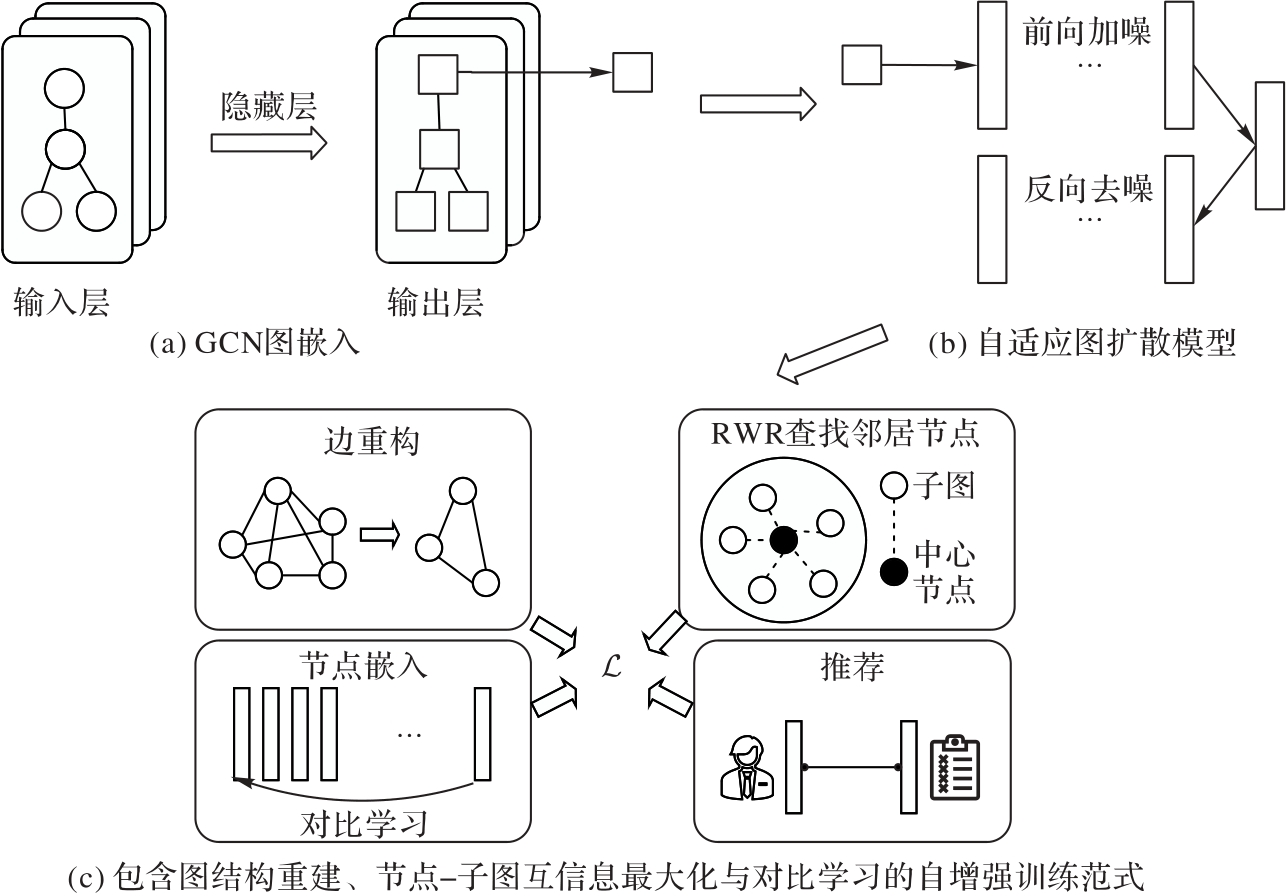
Fig. 1 Method framework
| 数据集 | 用户数 | 项目数 | 交互数 | 交互密度/ |
|---|---|---|---|---|
| Gowalla | 25 557 | 19 747 | 294 983 | 5.85 |
| Yelp | 42 712 | 26 822 | 182 357 | 1.59 |
| Amazon | 76 469 | 83 761 | 966 680 | 1.51 |
Tab. 1 Statistics of datasets
| 数据集 | 用户数 | 项目数 | 交互数 | 交互密度/ |
|---|---|---|---|---|
| Gowalla | 25 557 | 19 747 | 294 983 | 5.85 |
| Yelp | 42 712 | 26 822 | 182 357 | 1.59 |
| Amazon | 76 469 | 83 761 | 966 680 | 1.51 |
| 方法 | Gowalla | Yelp | Amazon | |||||||||
|---|---|---|---|---|---|---|---|---|---|---|---|---|
Recall@ 20 | NDCG@20 | Recall@40 | NDCG@40 | Recall@20 | NDCG@20 | Recall@40 | NDCG@40 | Recall@20 | NDCG@20 | Recall@40 | NDCG@40 | |
| BiasMF | 0.086 7 | 0.057 9 | 0.126 9 | 0.069 5 | 0.019 8 | 0.009 4 | 0.030 7 | 0.012 0 | 0.032 4 | 0.021 1 | 0.057 8 | 0.029 3 |
| NCF | 0.101 9 | 0.067 4 | 0.156 3 | 0.083 3 | 0.030 4 | 0.014 3 | 0.048 7 | 0.018 7 | 0.036 7 | 0.023 4 | 0.060 0 | 0.030 6 |
| AutoRec | 0.147 7 | 0.069 0 | 0.251 1 | 0.098 5 | 0.049 1 | 0.022 2 | 0.069 2 | 0.026 8 | 0.052 5 | 0.031 8 | 0.082 6 | 0.041 5 |
| PinSage | 0.123 5 | 0.080 9 | 0.188 2 | 0.099 4 | 0.051 0 | 0.024 5 | 0.074 3 | 0.031 5 | 0.048 6 | 0.031 7 | 0.077 3 | 0.040 2 |
| STGCN | 0.157 4 | 0.104 2 | 0.231 8 | 0.125 2 | 0.056 2 | 0.028 2 | 0.085 6 | 0.035 5 | 0.058 3 | 0.037 7 | 0.090 8 | 0.047 8 |
| GCMC | 0.186 3 | 0.115 1 | 0.262 7 | 0.139 0 | 0.058 4 | 0.028 0 | 0.089 1 | 0.036 0 | 0.083 7 | 0.057 9 | 0.119 6 | 0.069 2 |
| NGCF | 0.175 7 | 0.113 5 | 0.258 6 | 0.136 7 | 0.068 1 | 0.033 6 | 0.101 9 | 0.041 9 | 0.055 1 | 0.035 3 | 0.087 6 | 0.045 4 |
| GCCF | 0.201 2 | 0.128 2 | 0.290 3 | 0.153 2 | 0.074 2 | 0.036 5 | 0.115 1 | 0.046 6 | 0.077 2 | 0.050 1 | 0.117 5 | 0.062 5 |
| LightGCN | 0.223 0 | 0.143 3 | 0.318 1 | 0.167 0 | 0.076 1 | 0.037 3 | 0.117 5 | 0.047 4 | 0.086 8 | 0.057 1 | 0.128 5 | 0.069 7 |
| DGCF | 0.205 5 | 0.131 2 | 0.292 9 | 0.155 5 | 0.070 0 | 0.034 7 | 0.107 2 | 0.043 7 | 0.061 7 | 0.037 2 | 0.091 2 | 0.046 8 |
| SLRec | 0.200 1 | 0.129 8 | 0.286 3 | 0.154 0 | 0.066 5 | 0.032 7 | 0.103 2 | 0.041 8 | 0.074 2 | 0.048 0 | 0.112 3 | 0.059 8 |
| NCL | 0.228 3 | 0.147 8 | 0.323 2 | 0.174 5 | 0.080 6 | 0.040 2 | 0.123 0 | 0.050 5 | 0.095 5 | 0.062 3 | 0.140 9 | 0.076 4 |
| SGL | 0.233 2 | 0.150 9 | 0.325 1 | 0.178 0 | 0.080 3 | 0.039 8 | 0.122 6 | 0.050 2 | 0.087 4 | 0.569 0 | 0.131 2 | 0.070 4 |
| HCCF | 0.229 3 | 0.148 2 | 0.325 8 | 0.175 1 | 0.078 9 | 0.039 1 | 0.121 0 | 0.049 2 | 0.088 5 | 0.057 8 | 0.133 5 | 0.071 6 |
| AdaGCL | 0.133 5 | 0.082 7 | 0.192 8 | 0.099 0 | 0.086 3 | 0.043 4 | 0.131 6 | 0.054 5 | 0.060 1 | 0.046 9 | 0.094 0 | 0.057 6 |
| AutoCF | 0.253 8 | 0.164 5 | 0.344 1 | 0.189 8 | 0.086 9 | 0.043 7 | 0.127 3 | 0.053 3 | 0.127 7 | 0.087 9 | 0.178 2 | 0.104 8 |
| MNGAE | 0.247 3 | 0.154 1 | 0.314 5 | 0.190 4 | 0.088 1 | 0.044 1 | 0.122 6 | 0.044 3 | 0.103 3 | 0.068 8 | 0.166 7 | 0.094 3 |
| 本文方法 | 0.255 4 | 0.165 6 | 0.352 2 | 0.192 2 | 0.089 3 | 0.050 1 | 0.133 9 | 0.055 3 | 0.130 1 | 0.091 0 | 0.180 3 | 0.106 1 |
Tab. 2 Performance comparison of different methods on three datasets
| 方法 | Gowalla | Yelp | Amazon | |||||||||
|---|---|---|---|---|---|---|---|---|---|---|---|---|
Recall@ 20 | NDCG@20 | Recall@40 | NDCG@40 | Recall@20 | NDCG@20 | Recall@40 | NDCG@40 | Recall@20 | NDCG@20 | Recall@40 | NDCG@40 | |
| BiasMF | 0.086 7 | 0.057 9 | 0.126 9 | 0.069 5 | 0.019 8 | 0.009 4 | 0.030 7 | 0.012 0 | 0.032 4 | 0.021 1 | 0.057 8 | 0.029 3 |
| NCF | 0.101 9 | 0.067 4 | 0.156 3 | 0.083 3 | 0.030 4 | 0.014 3 | 0.048 7 | 0.018 7 | 0.036 7 | 0.023 4 | 0.060 0 | 0.030 6 |
| AutoRec | 0.147 7 | 0.069 0 | 0.251 1 | 0.098 5 | 0.049 1 | 0.022 2 | 0.069 2 | 0.026 8 | 0.052 5 | 0.031 8 | 0.082 6 | 0.041 5 |
| PinSage | 0.123 5 | 0.080 9 | 0.188 2 | 0.099 4 | 0.051 0 | 0.024 5 | 0.074 3 | 0.031 5 | 0.048 6 | 0.031 7 | 0.077 3 | 0.040 2 |
| STGCN | 0.157 4 | 0.104 2 | 0.231 8 | 0.125 2 | 0.056 2 | 0.028 2 | 0.085 6 | 0.035 5 | 0.058 3 | 0.037 7 | 0.090 8 | 0.047 8 |
| GCMC | 0.186 3 | 0.115 1 | 0.262 7 | 0.139 0 | 0.058 4 | 0.028 0 | 0.089 1 | 0.036 0 | 0.083 7 | 0.057 9 | 0.119 6 | 0.069 2 |
| NGCF | 0.175 7 | 0.113 5 | 0.258 6 | 0.136 7 | 0.068 1 | 0.033 6 | 0.101 9 | 0.041 9 | 0.055 1 | 0.035 3 | 0.087 6 | 0.045 4 |
| GCCF | 0.201 2 | 0.128 2 | 0.290 3 | 0.153 2 | 0.074 2 | 0.036 5 | 0.115 1 | 0.046 6 | 0.077 2 | 0.050 1 | 0.117 5 | 0.062 5 |
| LightGCN | 0.223 0 | 0.143 3 | 0.318 1 | 0.167 0 | 0.076 1 | 0.037 3 | 0.117 5 | 0.047 4 | 0.086 8 | 0.057 1 | 0.128 5 | 0.069 7 |
| DGCF | 0.205 5 | 0.131 2 | 0.292 9 | 0.155 5 | 0.070 0 | 0.034 7 | 0.107 2 | 0.043 7 | 0.061 7 | 0.037 2 | 0.091 2 | 0.046 8 |
| SLRec | 0.200 1 | 0.129 8 | 0.286 3 | 0.154 0 | 0.066 5 | 0.032 7 | 0.103 2 | 0.041 8 | 0.074 2 | 0.048 0 | 0.112 3 | 0.059 8 |
| NCL | 0.228 3 | 0.147 8 | 0.323 2 | 0.174 5 | 0.080 6 | 0.040 2 | 0.123 0 | 0.050 5 | 0.095 5 | 0.062 3 | 0.140 9 | 0.076 4 |
| SGL | 0.233 2 | 0.150 9 | 0.325 1 | 0.178 0 | 0.080 3 | 0.039 8 | 0.122 6 | 0.050 2 | 0.087 4 | 0.569 0 | 0.131 2 | 0.070 4 |
| HCCF | 0.229 3 | 0.148 2 | 0.325 8 | 0.175 1 | 0.078 9 | 0.039 1 | 0.121 0 | 0.049 2 | 0.088 5 | 0.057 8 | 0.133 5 | 0.071 6 |
| AdaGCL | 0.133 5 | 0.082 7 | 0.192 8 | 0.099 0 | 0.086 3 | 0.043 4 | 0.131 6 | 0.054 5 | 0.060 1 | 0.046 9 | 0.094 0 | 0.057 6 |
| AutoCF | 0.253 8 | 0.164 5 | 0.344 1 | 0.189 8 | 0.086 9 | 0.043 7 | 0.127 3 | 0.053 3 | 0.127 7 | 0.087 9 | 0.178 2 | 0.104 8 |
| MNGAE | 0.247 3 | 0.154 1 | 0.314 5 | 0.190 4 | 0.088 1 | 0.044 1 | 0.122 6 | 0.044 3 | 0.103 3 | 0.068 8 | 0.166 7 | 0.094 3 |
| 本文方法 | 0.255 4 | 0.165 6 | 0.352 2 | 0.192 2 | 0.089 3 | 0.050 1 | 0.133 9 | 0.055 3 | 0.130 1 | 0.091 0 | 0.180 3 | 0.106 1 |
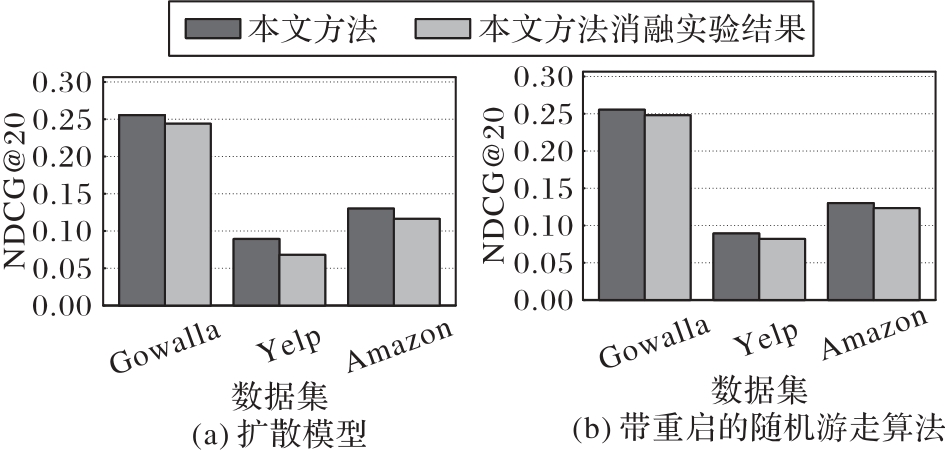
Fig. 2 Performance comparison of different variants
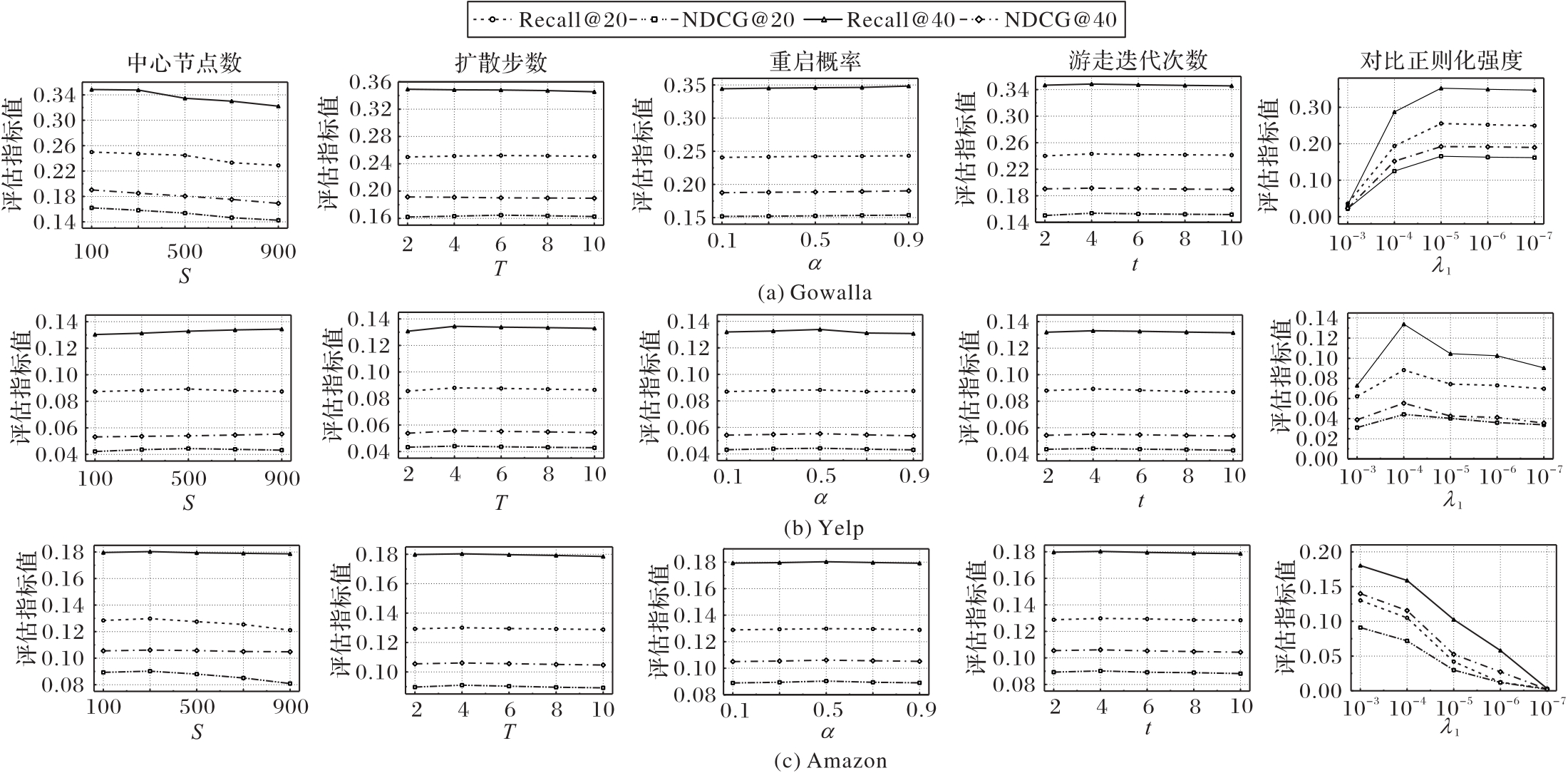
Fig. 3 Impact analysis comparison of different hyperparameters on three datasets
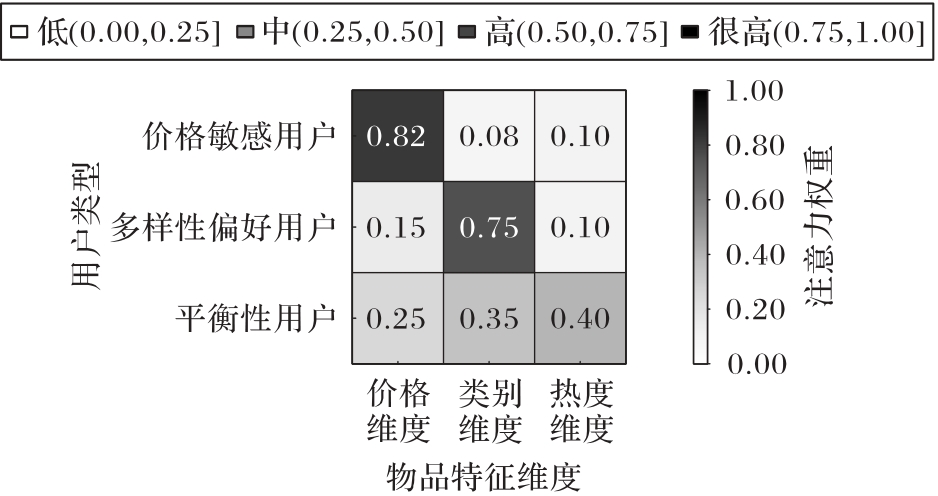
Fig. 4 Visualization of Transformer attention weights
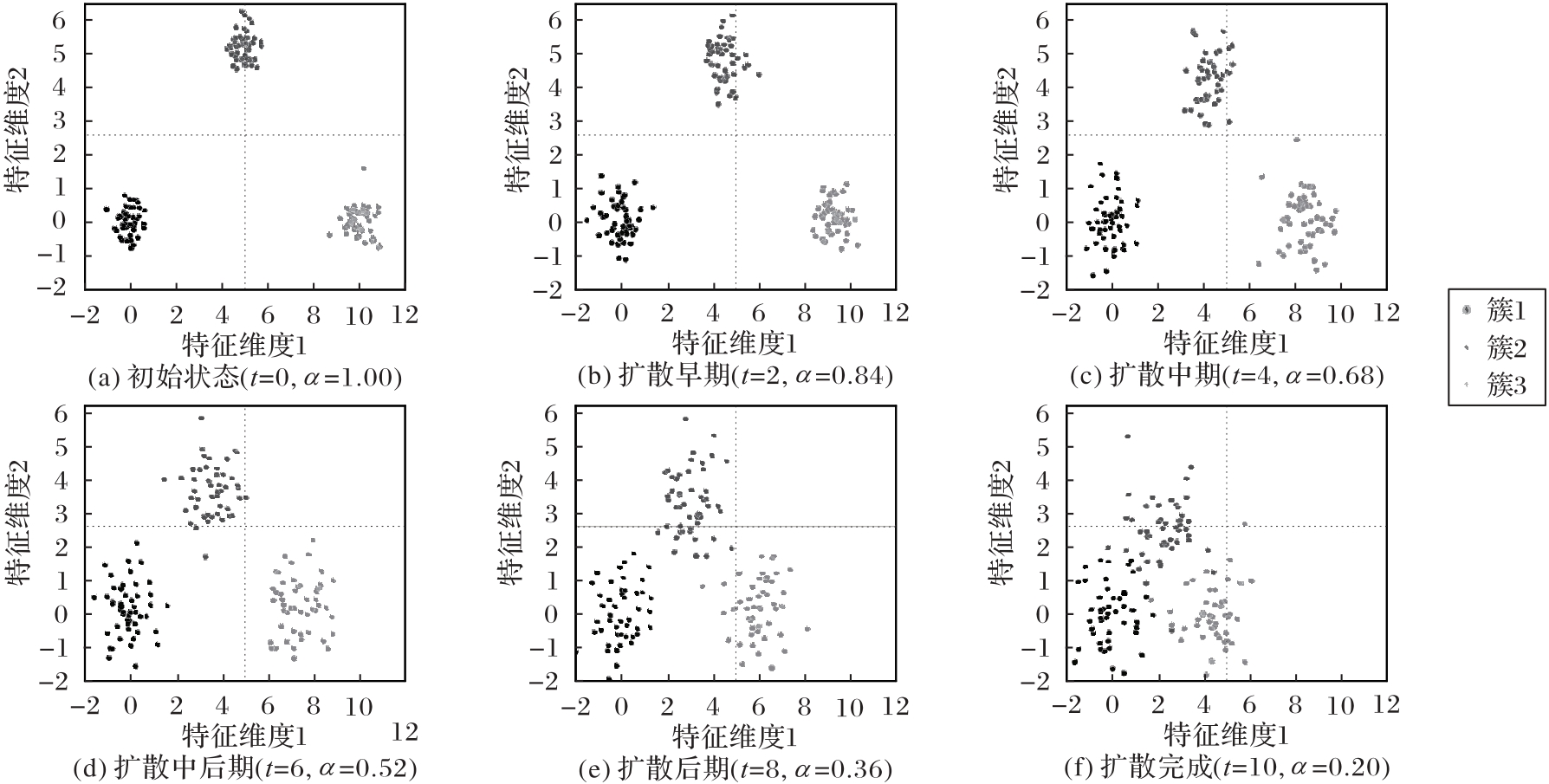
Fig. 5 Dynamic visualization of diffusion process?
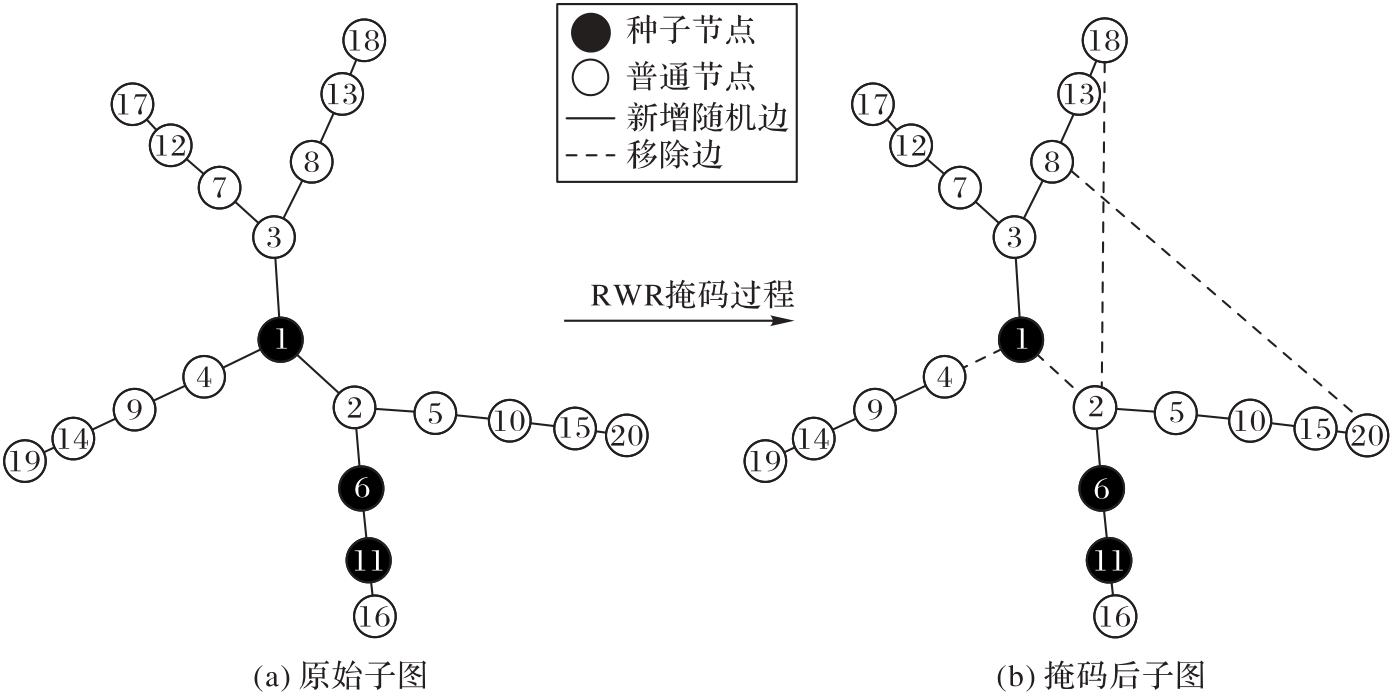
Fig. 6 Visualization of RWR subgraph mask effects?
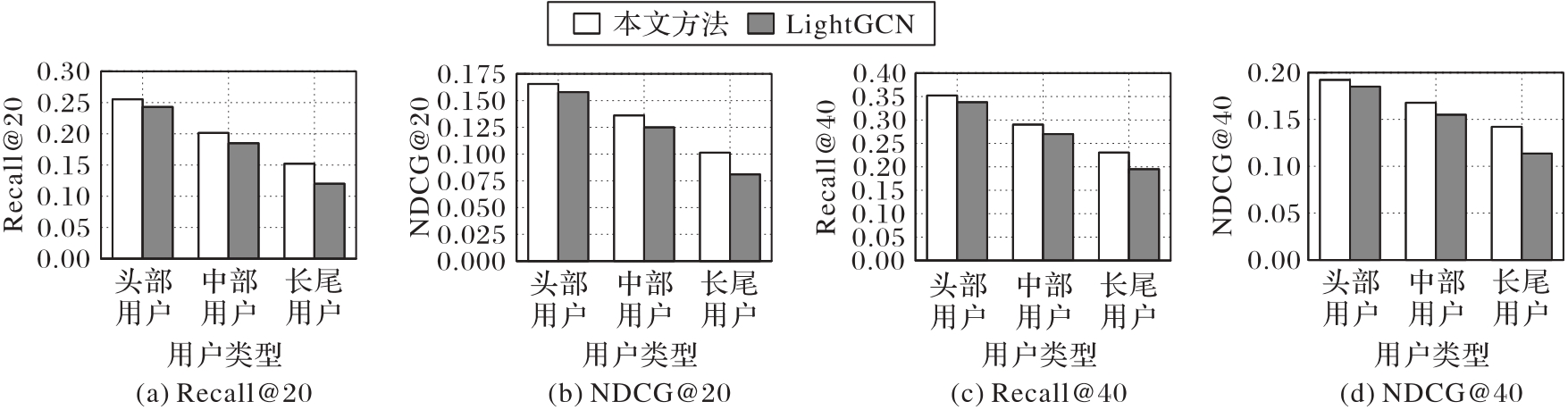
Fig. 7 Performance comparison for different user types
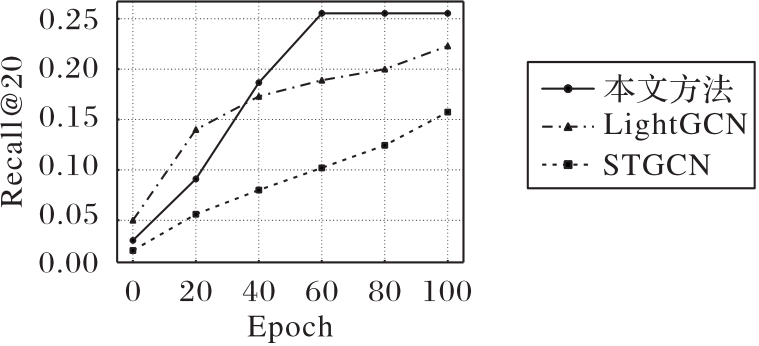
Fig. 8 Experimental results of convergence analysis
| [1] | WU L, HE X, WANG X, et al. A survey on accuracy-oriented neural recommendation: from collaborative filtering to information-rich recommendation[J]. IEEE Transactions on Knowledge and Data Engineering, 2023, 35(5): 4425-4445. |
| [2] | KOREN, YBELL R, VOLINSKY C. Matrix factorization techniques for recommender systems[J]. Computer, 2009, 42(8): 30-37. |
| [3] | SEDHAIN S, MENON A K, SANNER S, et al. AutoRec: autoencoders meet collaborative filtering[C]// Proceedings of the 24th International Conference on World Wide Web. New York: ACM, 2015: 111-112. |
| [4] | CHEN J, ZHANG H, HE X, et al. Attentive collaborative filtering: multimedia recommendation with item-and component-level attention[C]// Proceedings of the 40th International ACM SIGIR Conference on Research and Development in Information Retrieval. New York: ACM, 2017: 335-344. |
| [5] | VAN DEN BERG R, KIPF T N, WELLING M. Graph convolutional matrix completion[EB/OL]. [2025-06-28].. |
| [6] | WANG X, HE X, WANG M, et al. Neural graph collaborative filtering[C]// Proceedings of the 42nd International ACM SIGIR Conference on Research and Development in Information Retrieval. New York: ACM, 2019: 165-174. |
| [7] | HE X, DENG K, WANG X, et al. LightGCN: simplifying and powering graph convolution network for recommendation[C]// Proceedings of the 43rd International ACM SIGIR Conference on Research and Development in Information Retrieval. New York: ACM, 2020: 639-648. |
| [8] | CHEN L, WU L, HONG R, et al. Revisiting graph based collaborative filtering: a linear residual graph convolutional network approach[C]// Proceedings of the 34th AAAI Conference on Artificial Intelligence. Palo Alto: AAAI Press, 2020: 27-34. |
| [9] | WU J, WANG X, FENG F, et al. Self-supervised graph learning for recommendation[C]// Proceedings of the 44th International ACM SIGIR Conference on Research and Development in Information Retrieval. New York: ACM, 2021: 726-735. |
| [10] | LIU Z, MA Y, OUYANG Y, et al. Contrastive learning for recommender system[EB/OL]. [2025-06-24].. |
| [11] | ZHANG S, CHEN L, WANG C, et al. Temporal graph contrastive learning for sequential recommendation[C]// Proceedings of the 38th AAAI Conference on Artificial Intelligence. Palo Alto: AAAI Press, 2024: 9359-9367. |
| [12] | YAO T, YI X, CHENG D Z, et al. Self-supervised learning for large-scale item recommendations[C]// Proceedings of the 30th ACM International Conference on Information and Knowledge Management. New York: ACM, 2021: 4321-4330. |
| [13] | YANG Y, HUANG C, XIA L, et al. Debiased contrastive learning for sequential recommendation[C]// Proceedings of the ACM Web Conference 2023. New York: ACM, 2023: 1063-1073. |
| [14] | LI Y, CHEN H, TAN J, et al. Causal factorization machine for robust recommendation[C]// Proceedings of the 22nd ACM/IEEE Joint Conference on Digital Libraries. New York: ACM, 2022: 1-9. |
| [15] | XIA L, HUANG C, XU Y, et al. Hypergraph contrastive collaborative filtering[C]// Proceedings of the 45th International ACM SIGIR Conference on Research and Development in Information Retrieval. New York: ACM, 2022: 70-79. |
| [16] | LIN Z, TIAN C, HOU Y, et al. Improving graph collaborative filtering with neighborhood-enriched contrastive learning[C]// Proceedings of the ACM Web Conference 2022. New York: ACM, 2022: 2320-2329. |
| [17] | DU Y, ZHU X, CHEN L, et al. MetaKG: meta-learning on knowledge graph for cold-start recommendation[J]. IEEE Transactions on Knowledge and Data Engineering, 2023, 35(10): 9850-9863. |
| [18] | WU M, ZHENG X, ZHANG Q, et al. Graph learning under distribution shifts: a comprehensive survey on domain adaptation, out-of-distribution, and continual learning[EB/OL]. [2025-06-28].. |
| [19] | TANG J, DAI S, SUN Z, et al. Towards robust recommendation via decision boundary-aware graph contrastive learning[C]// Proceedings of the 30th ACM SIGKDD Conference on Knowledge Discovery and Data Mining. New York: ACM, 2024: 2854-2865. |
| [20] | LIU C, YU C, GUI N, et al. SimGCL: graph contrastive learning by finding homophily in heterophily[J]. Knowledge and Information Systems, 2024, 66(3): 2089-2114. |
| [21] | HO J, JAIN A, ABBEEL P. Denoising diffusion probabilistic models[C]// Proceedings of the 34th International Conference on Neural Information Processing Systems. Red Hook: Curran Associates Inc., 2020: 6840-6851. |
| [22] | GOODFELLOW I, POUGET-ABADIE J, MIRZA M, et al. Generative adversarial networks[J]. Communications of the ACM, 2020, 63(11): 139-144. |
| [23] | CAI X, HUANG C, XIA L, et al. LightGCL: simple yet effective graph contrastive learning for recommendation[EB/OL]. [2025-06-28].. |
| [24] | LI Z, SUN A, LI C. DiffuRec: a diffusion model for sequential recommendation[J]. ACM Transactions on Information Systems, 2024, 42(3): No.66. |
| [25] | GASTEIGER J, WEIßENBERGER S, GÜNNEMANN S. Diffusion improves graph learning[EB/OL]. [2025-06-28]. . |
| [26] | RUSAK E, REIZINGER P, JUHOS A, et al. InfoNCE: identifying the gap between theory and practice[C]// Proceedings of the 28th International Conference on Artificial Intelligence and Statistics. New York: JMLR.org, 2025: 4159-4167. |
| [27] | PEROZZI B, AI-RFOU R, SKIENA S. DeepWalk: online learning of social representations[C]// Proceedings of the 20th ACM SIGKDD International Conference on Knowledge Discovery and Data Mining. New York: ACM, 2014: 701-710. |
| [28] | GROVER A, LESKOVEC J. node2vec: scalable feature learning for networks[C]// Proceedings of the 22nd ACM SIGKDD International Conference on Knowledge Discovery and Data Mining. New York: ACM, 2016: 855-864. |
| [29] | ROMBACH R, BLATTMANN A, LORENZ D, et al. High-resolution image synthesis with latent diffusion models[C]// Proceedings of the 2022 IEEE/CVF Conference on Computer Vision and Pattern Recognition. Piscataway: IEEE, 2022: 10674-10685. |
| [30] | ZHANG S, TONG H, XU J, et al. Graph convolutional networks: a comprehensive review[J]. Computational Social Networks, 2019, 6: No.11. |
| [31] | CHO E, MYERS S A, LESKOVEC J. Friendship and mobility: user movement in location-based social networks [C]// Proceedings of the 17th ACM SIGKDD International Conference on Knowledge Discovery and Data Mining. New York: ACM, 2011: 1082-1090. |
| [32] | ASGHAR N. Yelp dataset challenge: review rating prediction [EB/OL]. [2025-06-01]. . |
| [33] | HE X, LIAO L, ZHANG H, et al. Neural collaborative filtering [C]// Proceedings of the 26th International Conference on World Wide Web. New York: ACM, 2017: 173-182. |
| [34] | YING R, HE R, CHEN K, et al. Graph convolutional neural networks for web-scale recommender systems[C]// Proceedings of the 24th ACM SIGKDD International Conference on Knowledge Discovery and Data Mining. New York: ACM, 2018: 974-983. |
| [35] | YAN S, XIONG Y, LIN D. Spatial temporal graph convolutional networks for skeleton-based action recognition [EB/OL]. [2025-06-02]. . |
| [36] | WANG X, JIN H, ZHANG A, et al. Disentangled graph collaborative filtering[C]// Proceedings of the 43rd International ACM SIGIR Conference on Research and Development in Information Retrieval. New York: ACM, 2020: 1001-1010. |
| [37] | 赖庆涛,刘淇,朱琛,等. 融合掩码和邻域增强的图协同过滤算法[J]. 软件学报, 2023, 34(8): 3780-3794. |
| LAI Q T, LIU Q, ZHU C, et al. A graph collaborative filtering algorithm integrating mask and neighborhood enhancement[J]. Journal of Software, 2023, 34(8): 3780-3794. | |
| [38] | JIANG Y, HUANG C, HUANG L. Adaptive graph contrastive learning for recommendation[C]// Proceedings of the 29th ACM SIGKDD Conference on Knowledge Discovery and Data Mining. New York: ACM, 2023: 4252-4261. |
| [39] | XIA L, HUANG C, HUANG C, et al. Automated self-supervised learning for recommendation[C]// Proceedings of the ACM Web Conference 2023. New York: ACM, 2023: 992-1002. |
| [1] | Jinghong WANG, Xiao CHEN, Yingmei MA, Bi LI, Jusheng MI, Wei WANG. Multi-level neighborhood contrastive attribute graph clustering based on adaptive learning [J]. Journal of Computer Applications, 2026, 46(6): 1836-1843. |
| [2] | Yu CHEN, Shuaikang QI, Liwei XU, Haotian ZHU. Social bot detection framework fusing multi-scale wavelet enhancement and self-supervised learning [J]. Journal of Computer Applications, 2026, 46(6): 1756-1766. |
| [3] | Bingqing LI, Binhao HUANG, Yubei TANG, Baili ZHANG. Quality of service prediction model for data sparsity and cold start problems [J]. Journal of Computer Applications, 2026, 46(6): 1829-1835. |
| [4] | Min LU, Hui ZHOU. Airport gate assignment algorithm based on node prediction in conflict graph of assigned activities [J]. Journal of Computer Applications, 2026, 46(6): 1913-1921. |
| [5] | Haoran YUAN, Huan LIU, Pengfei JIAO, Zhidong ZHAO, Xianfei ZHANG, Zunliang LIU. Masked autoencoder enhanced dynamic heterogeneous graph representation learning model [J]. Journal of Computer Applications, 2026, 46(6): 1728-1737. |
| [6] | Xiaoqin YU, Wuyang SHAN, Junying QIU, Yu LIN, Ronghao YANG, Mao TIAN. Image tampering localization and detection network under brightness-contrast disturbances [J]. Journal of Computer Applications, 2026, 46(6): 1893-1903. |
| [7] | Kun FU, Haoyu WEI, Weijing LIU, Xing DANG, Zezheng LIU, Jianwei LI. Graph neural network framework for topology semantic dual-domain collaboration [J]. Journal of Computer Applications, 2026, 46(5): 1378-1387. |
| [8] | Dirui ZHANG, Jiayu LIN, Zuhong LIANG. Supervised contrastive generative sentiment analysis method with uncertainty-aware unlikelihood learning [J]. Journal of Computer Applications, 2026, 46(5): 1416-1423. |
| [9] | Fengwei CHENG, Bingqi ZHANG, Guohua XU, Wenjian WANG. Competitive loss-driven generative imbalanced node classification [J]. Journal of Computer Applications, 2026, 46(5): 1475-1481. |
| [10] | Xumeng DOU, Bin XIE, Zhaohui ZHANG, Zhengang ZHAO, Hanyu DUAN, Aolei GUO. Drug-target interaction prediction based on structure-network collaborative features and grid-attention enhanced Kolmogorov-Arnold network [J]. Journal of Computer Applications, 2026, 46(4): 1344-1353. |
| [11] | Haihua ZHAO, Yijun HU, Rui TANG, Xian MO. Multimodal recommendation method based on semantic fusion and contrast enhancement [J]. Journal of Computer Applications, 2026, 46(4): 1058-1068. |
| [12] | Rilong WANG, Zhenping LI, Xiaosong LI, Qiang GAO, Ya HE, Yong ZHONG, Yingxiao ZHAO. Multi-Agent collaborative knowledge reasoning framework [J]. Journal of Computer Applications, 2026, 46(3): 708-714. |
| [13] | Yuhang XIAO, Guanfeng LI, Yuyin CHEN, Jing QIN. Few-shot relation extraction model with graph-based multi-view contrastive learning [J]. Journal of Computer Applications, 2026, 46(3): 732-740. |
| [14] | Xiaoxia LIU, Liqun KUANG, Song WANG, Shichao JIAO, Huiyan HAN, Fengguang XIONG. Multi-scale spatio-temporal decoupling for contrastive learning of skeleton action recognition [J]. Journal of Computer Applications, 2026, 46(3): 767-774. |
| [15] | Limei DONG, Yanzi LI, Jiayin LI, Li XU. Neighborhood-enhanced unsupervised graph anomaly detection [J]. Journal of Computer Applications, 2026, 46(2): 458-466. |
| Viewed | ||||||
|
Full text |
|
|||||
|
Abstract |
|
|||||
