


Journal of Computer Applications ›› 2026, Vol. 46 ›› Issue (11): 3580-3588.DOI: 10.11772/j.issn.1001-9081.2025101207
• Advanced computing • Previous Articles
Jingfei YU, Zhiqiang LI( ), Tao WANG
Received:2025-10-16
Revised:2025-12-02
Accepted:2025-12-05
Online:2025-12-10
Published:2026-11-10
Contact:
Zhiqiang LI
About author:YU Jingfei, born in 1999, M. S. candidate. Her research interests include quantum algorithms, quantum circuit synthesis.Supported by:
于景非, 李志强(), 王涛
通讯作者:
李志强
作者简介:于景非(1999—),女,江苏泰州人,硕士研究生,主要研究方向:量子算法、量子电路综合基金资助:CLC Number:
Jingfei YU, Zhiqiang LI, Tao WANG. Application of quantum alternating operator Ansatz in maximum distance k-matching[J]. Journal of Computer Applications, 2026, 46(11): 3580-3588.
于景非, 李志强, 王涛. 量子交替算子在最大距离k匹配中的应用[J]. 《计算机应用》唯一官方网站, 2026, 46(11): 3580-3588.
Add to citation manager EndNote|Ris|BibTeX
URL: https://www.joca.cn/EN/10.11772/j.issn.1001-9081.2025101207
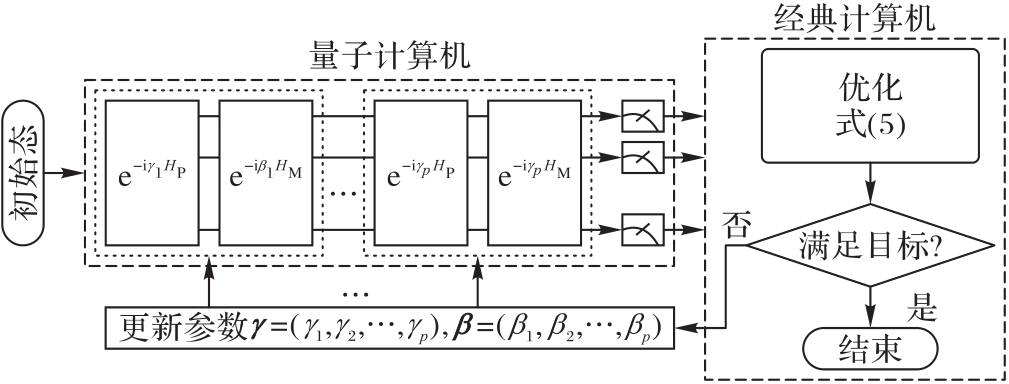
Fig. 1 Flow of QAOA+
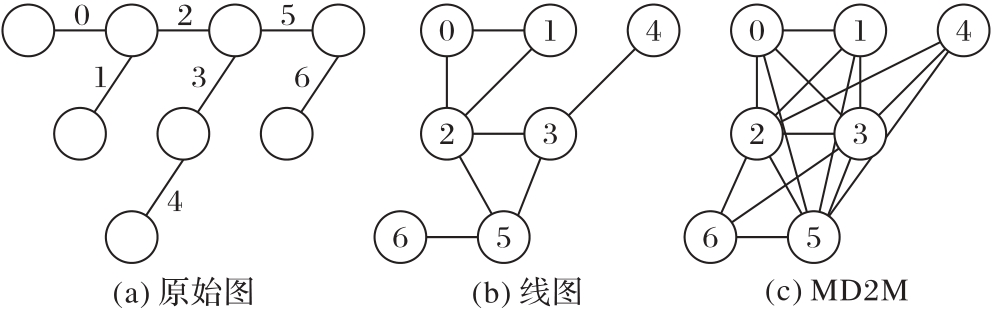
Fig. 2 Model transformation
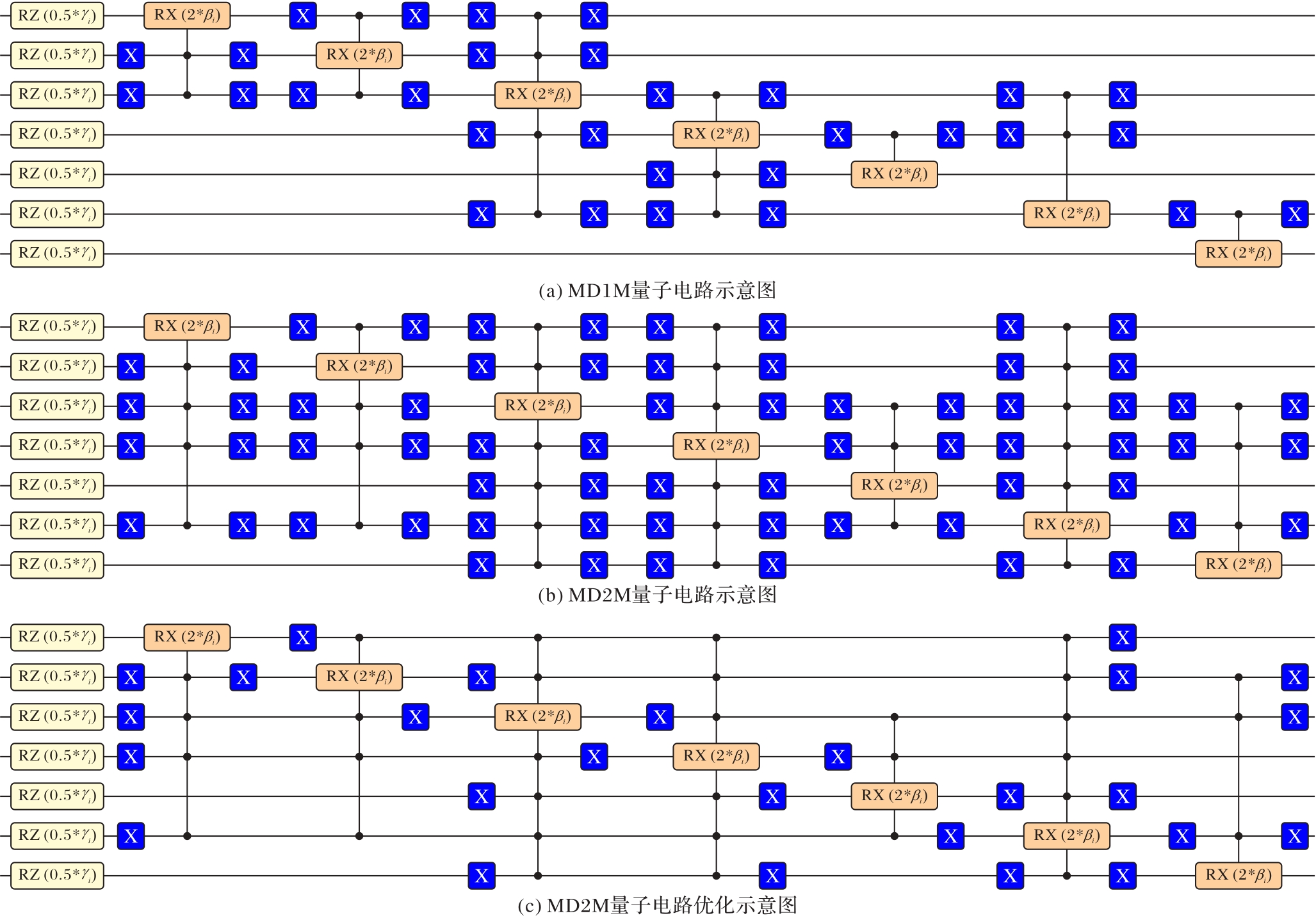
Fig. 3 Schematic diagrams of quantum circuits
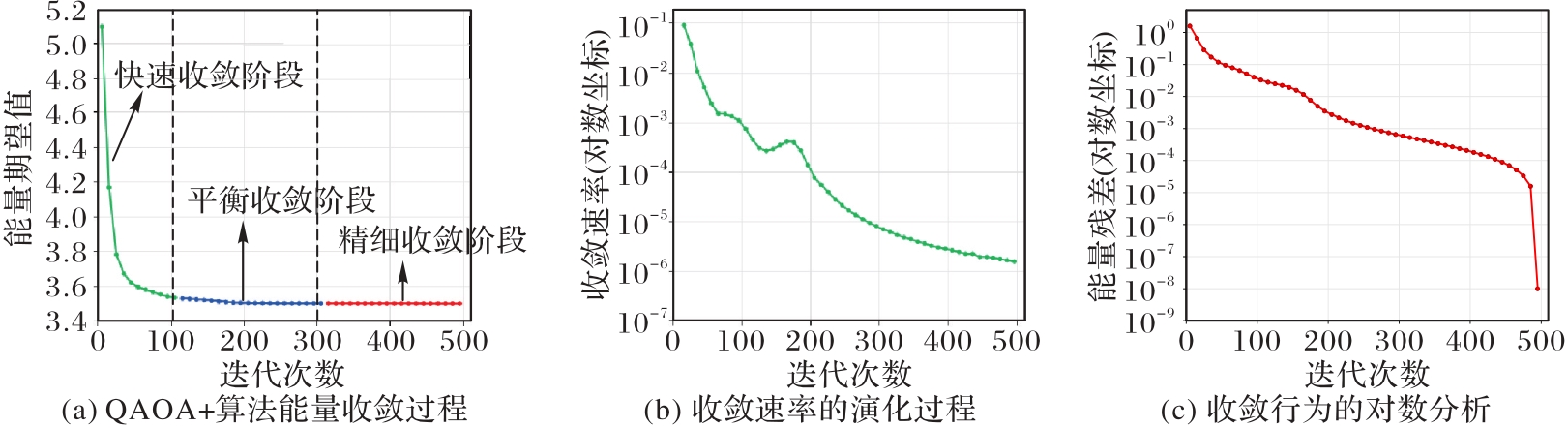
Fig. 4 Three-stage convergence characteristics
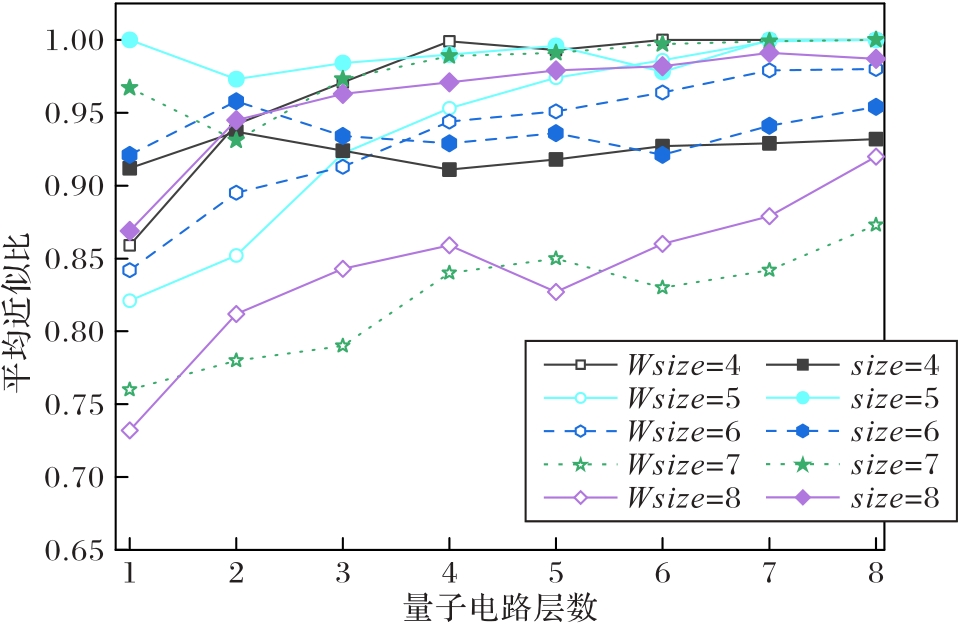
Fig. 5 Performance comparison of QAOA+ on weighted and unweighted problems
| 量子算法 | |
|---|---|
| 标准QAOA | 1010001、1010010、0011001、1000000、1101110、1011100、0011100、1011100、1111111、1110111 |
| QAOA+ | 1010001、1010010、0000001、1000010 |
Tab. 1 MD2M running results of standard QAOA and QAOA+ with p=8
| 量子算法 | |
|---|---|
| 标准QAOA | 1010001、1010010、0011001、1000000、1101110、1011100、0011100、1011100、1111111、1110111 |
| QAOA+ | 1010001、1010010、0000001、1000010 |
| 图序 | Q1 | Q2 | Q3 |
|---|---|---|---|
| 图(a) | 000 | 000 | 000、001 |
| 010 | 010、011 | ||
| 100 | 100 | 100、101 | |
| 110 | 110、111 | ||
| 图(b) | 000 | 000 | 000、001 |
| 010 | 010、011 | ||
| 100 | 100 | 100、101 | |
| 图(c) | 000 | 000 | 000、001 |
| 010 | 010 | ||
| 100 | 100 | 100、101 | |
| 图(d) | 000 | 000 | 000、001 |
| 010 | 010 | ||
| 100 | 100 | 100 |
Tab. 2 Results of circuit operation in fig. 6
| 图序 | Q1 | Q2 | Q3 |
|---|---|---|---|
| 图(a) | 000 | 000 | 000、001 |
| 010 | 010、011 | ||
| 100 | 100 | 100、101 | |
| 110 | 110、111 | ||
| 图(b) | 000 | 000 | 000、001 |
| 010 | 010、011 | ||
| 100 | 100 | 100、101 | |
| 图(c) | 000 | 000 | 000、001 |
| 010 | 010 | ||
| 100 | 100 | 100、101 | |
| 图(d) | 000 | 000 | 000、001 |
| 010 | 010 | ||
| 100 | 100 | 100 |
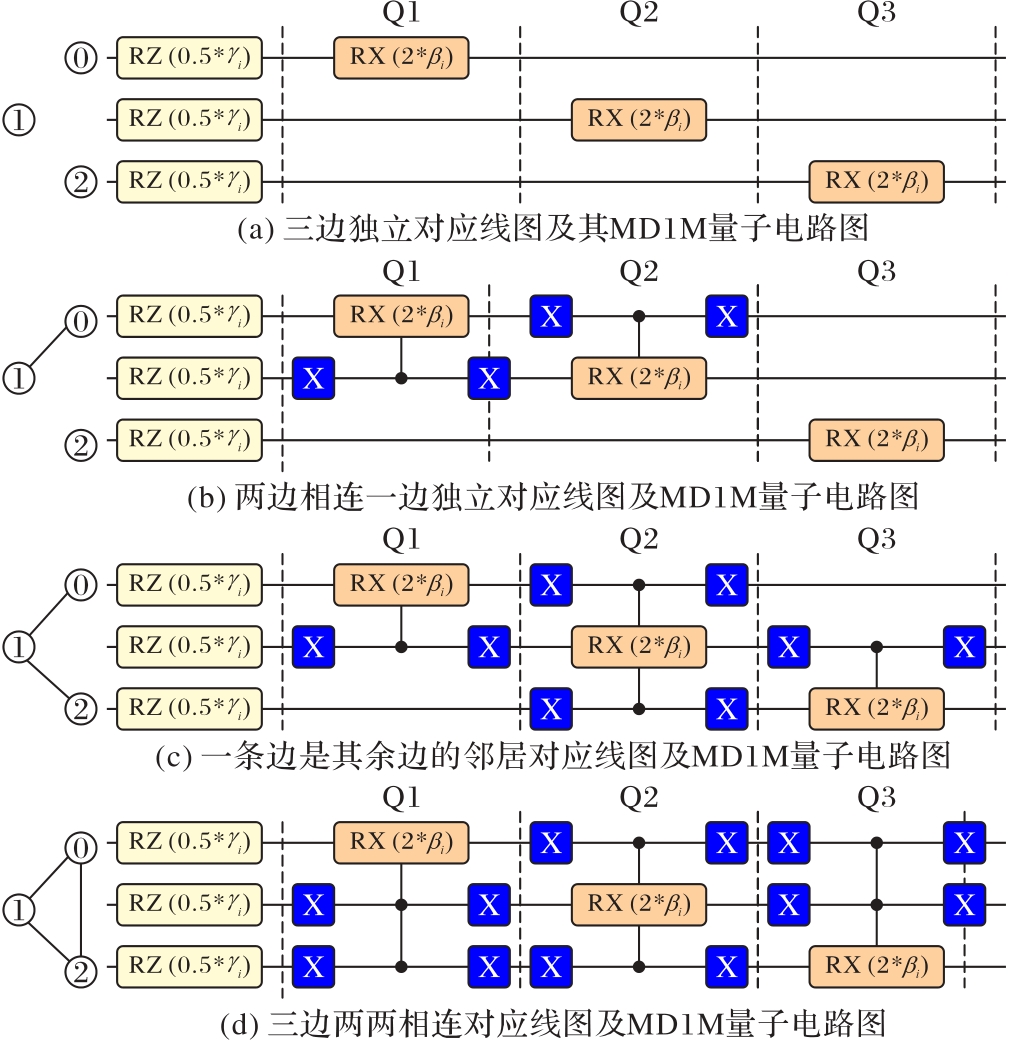
Fig. 6 QAOA+ correctness analysis examples
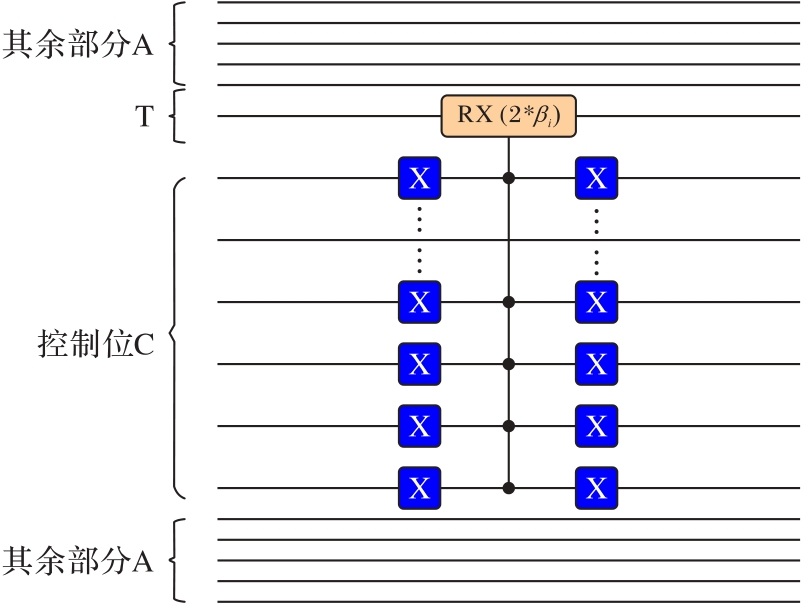
Fig. 7 Schematic diagram of RX gate with multiple negative control points
| 输入 | 输出 | ||||
|---|---|---|---|---|---|
| A | T | C | A | T | C |
| A | 0 | 全为0 | A | 0 | C |
| 1 | |||||
| A | 0 | 不全为0 | A | 0 | C |
| A | 1 | 全为0 | A | 0 | C |
| 1 | |||||
| A | 1 | 不全为0 | A | 1 | C |
Tab. 3 Input-output truth values of circuit
| 输入 | 输出 | ||||
|---|---|---|---|---|---|
| A | T | C | A | T | C |
| A | 0 | 全为0 | A | 0 | C |
| 1 | |||||
| A | 0 | 不全为0 | A | 0 | C |
| A | 1 | 全为0 | A | 0 | C |
| 1 | |||||
| A | 1 | 不全为0 | A | 1 | C |
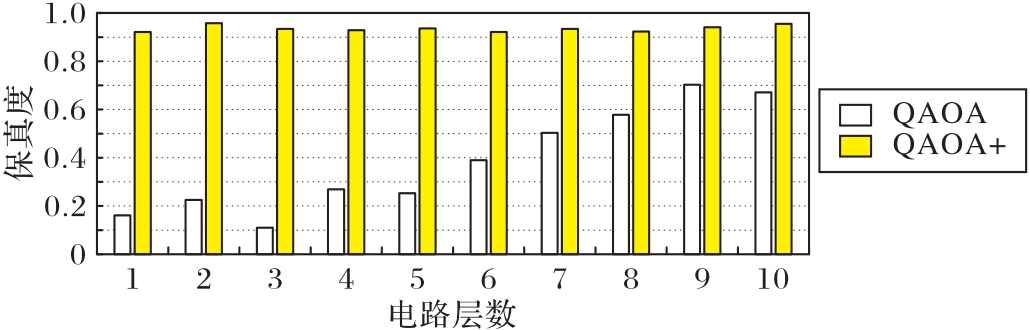
Fig. 8 Performance comparison between QAOA and QAOA+
| [1] | 李晓巍,付祥,燕飞,等. 量子计算研究现状与未来发展[J]. 中国工程科学, 2022, 24(4): 133-144. |
| Li Xiaowei, Fu Xiang, Yan Fei, et al. Current status and future development of quantum computation[J]. Strategic Study of CAE, 2022, 24(4): 133-144. | |
| [2] | Preskill J. Quantum computing in the NISQ era and beyond[J]. Quantum, 2018, 2: No.79. |
| [3] | Cerezo M, Arrasmith A, Babbush R, et al. Variational quantum algorithms[J]. Nature Reviews Physics, 2021, 3(9): 625-644. |
| [4] | Volpe D, Orlandi G, Turvani G. Improving the solving of optimization problems: a comprehensive review of quantum approaches[J]. Quantum Reports, 2025, 7(1): No.3. |
| [5] | Peruzzo A, McClean J, Shadbolt P, et al. A variational eigenvalue solver on a photonic quantum processor[J]. Nature Communications, 2014, 5: No.4213. |
| [6] | 段孟环,李志强,郭玲玲.量子近似优化算法在最大独立集中的应用[J].计算机应用研究,2023,40(9):2646-2649,2673. |
| Duan Menghuan, Li Zhiqiang, Guo Linging. Application of quantum approximate optimization algorithm in max independent set problem[J]. Application Research of Computers, 2023, 40(9): 2646-2649, 2673. | |
| [7] | Farhi E, Goldstone J, Gutmann S. A quantum approximate optimization algorithm[PP/OL]. arXiv (2014-11-14) [2025-10-03].. |
| [8] | Abrams D S, Lloyd S. Nonlinear quantum mechanics implies polynomial-time solution for NP-complete and #P problems[J]. Physical Review Letters, 1998, 81(18): 3992-3995. |
| [9] | Zheng C. Universal quantum simulation of single-qubit nonunitary operators using duality quantum algorithm[J]. Scientific Reports, 2021, 11: No.3960. |
| [10] | Hadfield S, Wang Z, Rieffel E G, et al. Quantum approximate optimization with hard and soft constraints[C]// PMES 2017. New York: ACM, 2017: 15-21. |
| [11] | Hadfield S, Wang Z, O’Gorman B, et al. From the quantum approximate optimization algorithm to a quantum alternating operator Ansatz[J]. Algorithms, 2019, 12(2): No.34. |
| [12] | Wang Z, Hadfield S, Jiang Z, et al. Quantum approximate optimization algorithm for MaxCut: a fermionic view[J]. Physical Review A, 2018, 97(2): No.022304. |
| [13] | Herrmann R, Treffert L, Ostrowski J, et al. Impact of graph structures for QAOA on MaxCut[J]. Quantum Information Processing, 2021, 20(9): No.289. |
| [14] | Zhou Z, Du Y, Tian X, et al. QAOA-in-QAOA: solving large-scale MaxCut problems on small quantum machines[J]. Physical Review Applied, 2023, 19(2): No.024027. |
| [15] | Zhao X, Li Y, Li J, et al. Near-term quantum algorithm for solving the MaxCut problem with fewer quantum resources[J]. Physica A: Statistical Mechanics and its Applications, 2024, 648: No.129951. |
| [16] | Wang Z, Rubin N C, Dominy J M, et al. XY mixers: analytical and numerical results for the quantum alternating operator Ansatz[J]. Physical Review A, 2020, 101(1): No.012320. |
| [17] | Saleem Z H. Max-independent set and the quantum alternating operator Ansatz[J]. International Journal of Quantum Information, 2020, 18(4): No.2050011. |
| [18] | Wang S S, Liu H L, Song Y Q, et al. Quantum alternating operator Ansatz for solving the minimum exact cover problem[J]. Physica A: Statistical Mechanics and its Applications, 2023, 626: No.129089. |
| [19] | Cook J, Eidenbenz S, Bärtschi A. The quantum alternating operator Ansatz on maximum k-vertex cover[C]// QCE 2020. Piscataway: IEEE, 2020: 83-92. |
| [20] | Li G H, Wang S S, Ni X H, et al. Performance analysis of the quantum alternating operator Ansatz for solving the minimum weighted vertex cover problem[J]. Physics Letters A, 2025, 553: No.130690. |
| [21] | Zhang Y J, Mu X D, Liu X W, et al. Applying the quantum approximate optimization algorithm to the minimum vertex cover problem[J]. Applied Soft Computing, 2022, 118: No.108554. |
| [22] | Stockmeyer L J, Vazirani V V. NP-completeness of some generalizations of the maximum matching problem[J]. Information Processing Letters, 1982, 15(1): 14-19. |
| [23] | Cameron K. Induced matchings[J]. Discrete Applied Mathematics, 1989, 24(1/2/3): 97-102. |
| [24] | Brandstädt A, Mosca R. On distance-3 matchings and induced matchings[M]// Lipshteyn M, Levit V E, McConnell R M. Graph theory, computational intelligence and thought: essays dedicated to Martin Charles Golumbic on the occasion of his 60th birthday, LNCS 5420. Berlin: Springer, 2009: 116-126. |
| [25] | Tran V H, Nguyen D N, Do P T. Linear time algorithm for maximum distance-k matching in interval graphs[C]// NICS 2018. Piscataway: IEEE, 2018: 41-46. |
| [26] | Fuchs F G, Lye K O, Møll Nilsen H, et al. Constraint preserving mixers for the quantum approximate optimization algorithm[J]. Algorithms, 2022, 15(6): No.202. |
| [27] | Sud J, Hadfield S, Rieffel E, et al. Parameter-setting heuristic for the quantum alternating operator Ansatz[J]. Physical Review Research, 2024, 6(2): No.023171. |
| [28] | Bridi G A, Marquezino F L. Analytical results for the quantum alternating operator Ansatz with Grover mixer[J]. Physical Review A, 2024, 110(5): No.052409. |
| [29] | Ponce M, Herrman R, Lotshaw P C, et al. Graph decomposition techniques for solving combinatorial optimization problems with variational quantum algorithms[J]. Quantum Information Processing, 2025, 24(2): No.60. |
| [30] | Chen L. Deep learning and practice with MindSpore[M]. Singapore: Springer Nature, 2021. |
| [31] | Xu X, Cui J, Cui Z, et al. MindSpore Quantum: a user-friendly, high-performance, and AI-compatible quantum computing framework[PP/OL]. V3. arXiv (2024-07-10) [2025-02-19]. . |
| [32] | Saleem Z H, Tomesh T, Tariq B, et al. Approaches to constrained quantum approximate optimization[J]. SN Computer Science, 2023, 4(2): No.183. |
| [33] | Liu W, Ma Y, Gu Y, et al. Quantum alternating operator Ansatz with PSO optimizer for portfolio optimization problem[J]. Applied Soft Computing, 2025, 181: No.113419. |
| [34] | Madarasi P. Matchings under distance constraints I.[J]. Annals of Operations Research, 2021, 305(1): 137-161. |
| [35] | Meng J, Wu B, Ma H. On several parameters of super line graph L2(G)[J]. Axioms, 2023, 12(3): No.276. |
| [36] | Hadfield S. On the representation of Boolean and real functions as Hamiltonians for quantum computing[J]. ACM Transactions on Quantum Computing, 2021, 2(4): No.18. |
| [37] | McClean J R, Boixo S, Smelyanskiy V N, et al. Barren plateaus in quantum neural network training landscapes[J]. Nature Communications, 2018, 9: No.4812. |
| [38] | Teng Y, Wang J, Choromanska A. AutoDrop: training deep learning models with automatic learning rate drop[J]. Proceedings of Machine Learning Research, 2024, 244: 3603-3629. |
| [39] | Lucas A. Ising formulations of many NP problems[J]. Frontiers in Physics, 2014, 2: No.5. |
| [40] | Wang X, Ma Y, Hsieh M H, et al. Quantum speedup in adaptive boosting of binary classification[J]. SCIENCE CHINA Physics, Mechanics and Astronomy, 2021, 64(2): No.220311. |
| [1] | Lingling GUO, Zhiqiang LI, Menghuan DUAN. Application of quantum approximate optimization algorithm in exact cover problems [J]. Journal of Computer Applications, 2024, 44(3): 849-854. |
| Viewed | ||||||
|
Full text |
|
|||||
|
Abstract |
|
|||||
