


Journal of Computer Applications ›› 2026, Vol. 46 ›› Issue (2): 445-457.DOI: 10.11772/j.issn.1001-9081.2025020146
• Cyber security • Previous Articles
Qi ZHONG1,2,3, Shufen ZHANG1,2,3( ), Zhenbo ZHANG1,2,3, Yinlong JIAN1,2,3, Zhongrui JING1,2,3
Received:2025-02-17
Revised:2025-03-19
Accepted:2025-03-24
Online:2025-04-24
Published:2026-02-10
Contact:
Shufen ZHANG
About author:ZHONG Qi, born in 1999, M. S. candidate. Her research interests include data security, privacy protection.Supported by:
钟琪1,2,3, 张淑芬1,2,3(), 张镇博1,2,3, 菅银龙1,2,3, 景忠瑞1,2,3
通讯作者:
张淑芬
作者简介:钟琪(1999—),女,河北张家口人,硕士研究生,CCF会员,主要研究方向:数据安全、隐私保护基金资助:CLC Number:
Qi ZHONG, Shufen ZHANG, Zhenbo ZHANG, Yinlong JIAN, Zhongrui JING. Detection and defense mechanism for poisoning attacks to federated learning[J]. Journal of Computer Applications, 2026, 46(2): 445-457.
钟琪, 张淑芬, 张镇博, 菅银龙, 景忠瑞. 面向联邦学习的投毒攻击检测与防御机制[J]. 《计算机应用》唯一官方网站, 2026, 46(2): 445-457.
Add to citation manager EndNote|Ris|BibTeX
URL: https://www.joca.cn/EN/10.11772/j.issn.1001-9081.2025020146
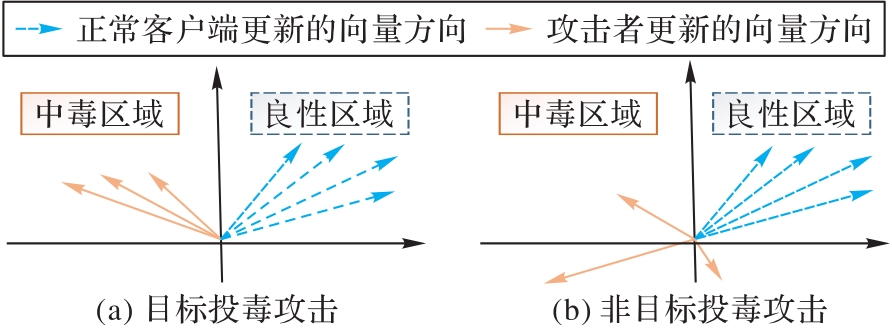
Fig. 1 Targeted and untargeted poisoning attacks
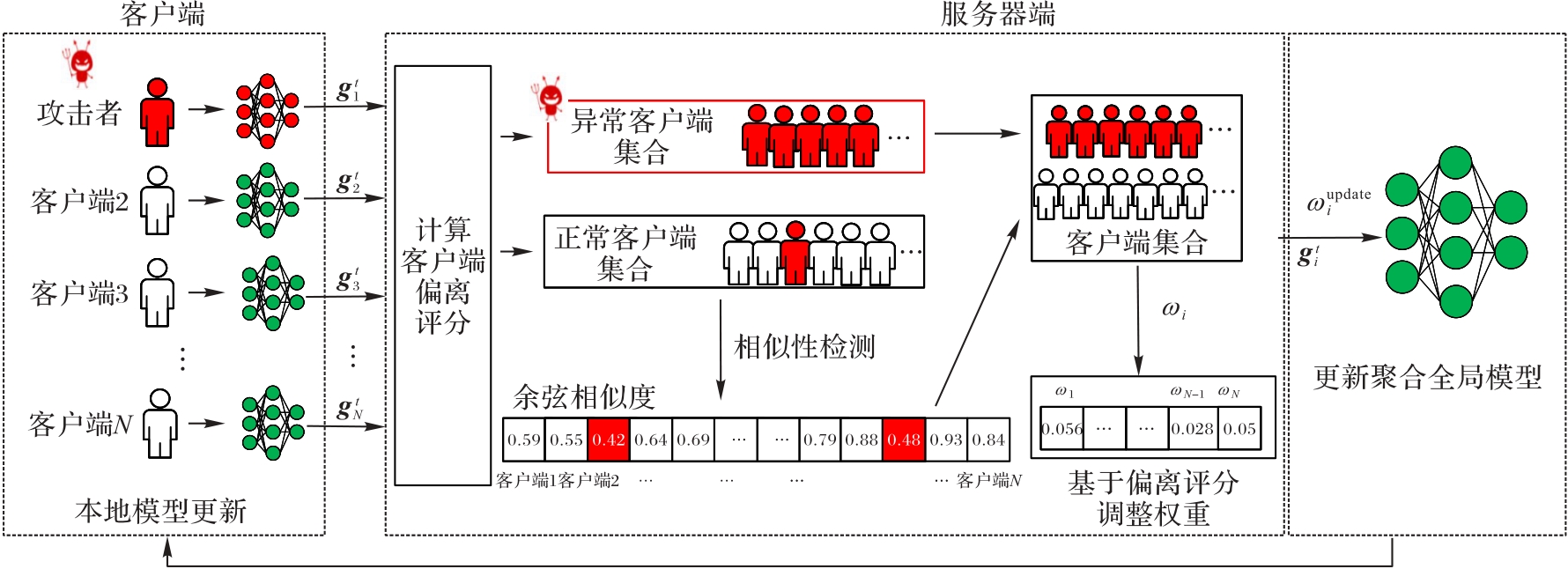
Fig. 2 Detection and defense flow of FedDyna
| 参数 | 含义 |
|---|---|
| 客户端总数 | |
| 模型更新梯度集合 | |
| 历史迭代窗口大小 | |
| 总迭代轮次 | |
| 前 | |
| 前 | |
| 第 | |
| 第 | |
| 第 | |
| 第 | |
| 第 | |
| 余弦梯度偏差 | |
| L2范数梯度偏差 | |
| 权重调整因子 | |
| 权重衰减系数 |
Tab. 1 Main symbols
| 参数 | 含义 |
|---|---|
| 客户端总数 | |
| 模型更新梯度集合 | |
| 历史迭代窗口大小 | |
| 总迭代轮次 | |
| 前 | |
| 前 | |
| 第 | |
| 第 | |
| 第 | |
| 第 | |
| 第 | |
| 余弦梯度偏差 | |
| L2范数梯度偏差 | |
| 权重调整因子 | |
| 权重衰减系数 |
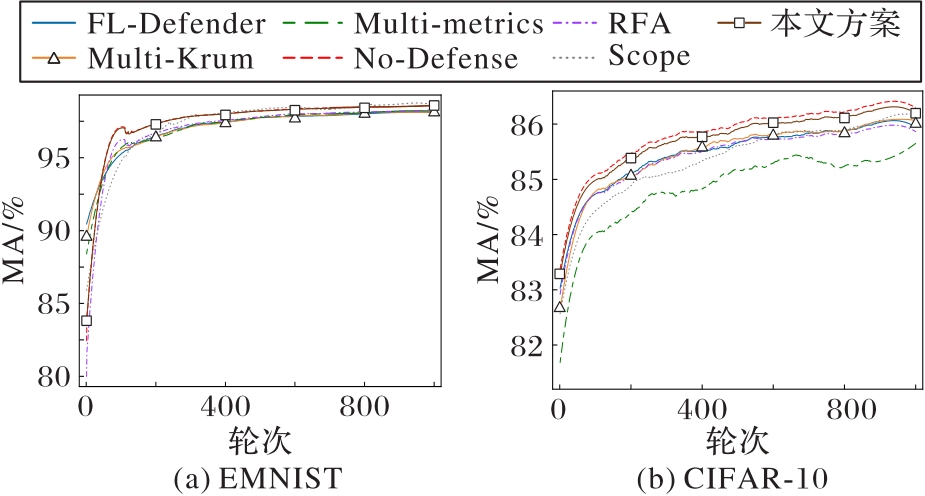
Fig. 3 MA of different defense schemes on different datasets in attack-free environment
| 防御方案 | EMNIST | CIFAR-10 | ||||||
|---|---|---|---|---|---|---|---|---|
| PGD | MR | CCA | PGD+MR | PGD | MR | CCA | PGD+MR | |
| No-Defense | 90.48 | 100.00 | 100.00 | 100.00 | 100.00 | 100.00 | 100.00 | 100.00 |
| Multi-metrics | 2.40 | 4.55 | 23.10 | 2.22 | 46.56 | 8.02 | ||
| Multi-Krum | 12.36 | 12.00 | 10.00 | 30.16 | 18.89 | 34.19 | 56.44 | |
| RFA | 4.31 | 6.00 | 100.00 | 23.00 | 59.71 | 26.33 | 47.75 | 60.43 |
| FL-Defender | 90.58 | 89.14 | 100.00 | 91.35 | 7.56 | 15.91 | 65.72 | 20.72 |
| Scope | 3.30 | 13.90 | 1.36 | 1.78 | ||||
| FedDyna | 0.98 | 1.36 | 3.35 | 0.83 | 0.33 | 3.93 | 0.78 | |
Tab. 2 Comparison of ASR of different defense schemes on EMNIST and CIFAR-10 datasets
| 防御方案 | EMNIST | CIFAR-10 | ||||||
|---|---|---|---|---|---|---|---|---|
| PGD | MR | CCA | PGD+MR | PGD | MR | CCA | PGD+MR | |
| No-Defense | 90.48 | 100.00 | 100.00 | 100.00 | 100.00 | 100.00 | 100.00 | 100.00 |
| Multi-metrics | 2.40 | 4.55 | 23.10 | 2.22 | 46.56 | 8.02 | ||
| Multi-Krum | 12.36 | 12.00 | 10.00 | 30.16 | 18.89 | 34.19 | 56.44 | |
| RFA | 4.31 | 6.00 | 100.00 | 23.00 | 59.71 | 26.33 | 47.75 | 60.43 |
| FL-Defender | 90.58 | 89.14 | 100.00 | 91.35 | 7.56 | 15.91 | 65.72 | 20.72 |
| Scope | 3.30 | 13.90 | 1.36 | 1.78 | ||||
| FedDyna | 0.98 | 1.36 | 3.35 | 0.83 | 0.33 | 3.93 | 0.78 | |
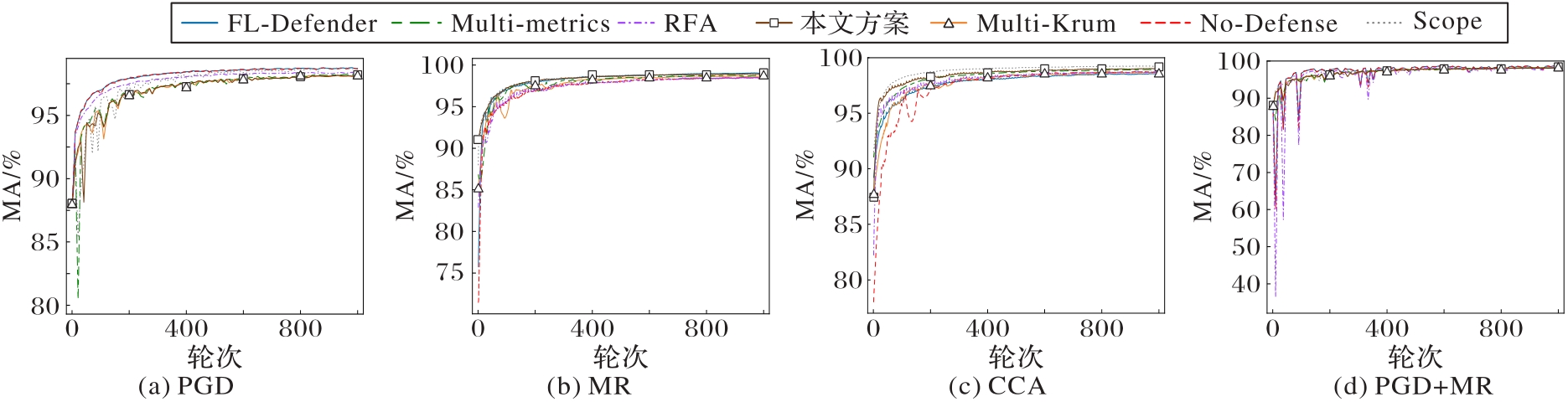
Fig. 4 MA of different defense schemes on EMNIST dataset
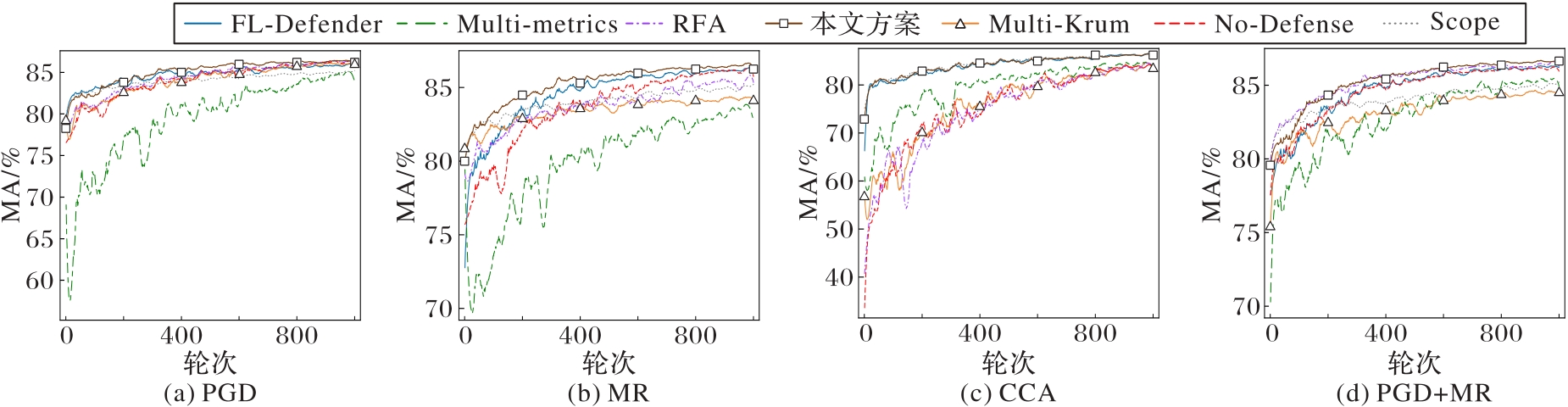
Fig. 5 MA of different defense schemes on CIFAR-10 dataset
| 防御方案 | attacker pool为10 | attacker pool为25 | attacker pool为40 | attacker pool为55 | ||||
|---|---|---|---|---|---|---|---|---|
| MA | ASR | MA | ASR | MA | ASR | MA | ASR | |
| No-Defense | 100.00 | 97.67 | 100.00 | 97.60 | 100.00 | 94.86 | 100.00 | |
| Multi-metrics | 97.74 | 14.00 | 97.81 | 14.05 | 97.93 | 19.90 | 97.39 | 20.35 |
| Multi-Krum | 98.15 | 11.00 | 13.00 | 98.16 | ||||
| RFA | 97.32 | 100.00 | 97.22 | 100.00 | 96.77 | 100.00 | 96.37 | 100.00 |
| FL-Defender | 98.11 | 100.00 | 97.68 | 100.00 | 97.21 | 100.00 | 96.66 | 100.00 |
| Scope | 98.13 | 13.50 | 97.69 | 15.65 | 95.50 | 94.80 | 28.54 | |
| FedDyna | 98.40 | 98.11 | 13.15 | 98.14 | 8.55 | 11.55 | ||
Tab. 3 Defense performance of different defense schemes on EMNIST dataset with different attacker pools
| 防御方案 | attacker pool为10 | attacker pool为25 | attacker pool为40 | attacker pool为55 | ||||
|---|---|---|---|---|---|---|---|---|
| MA | ASR | MA | ASR | MA | ASR | MA | ASR | |
| No-Defense | 100.00 | 97.67 | 100.00 | 97.60 | 100.00 | 94.86 | 100.00 | |
| Multi-metrics | 97.74 | 14.00 | 97.81 | 14.05 | 97.93 | 19.90 | 97.39 | 20.35 |
| Multi-Krum | 98.15 | 11.00 | 13.00 | 98.16 | ||||
| RFA | 97.32 | 100.00 | 97.22 | 100.00 | 96.77 | 100.00 | 96.37 | 100.00 |
| FL-Defender | 98.11 | 100.00 | 97.68 | 100.00 | 97.21 | 100.00 | 96.66 | 100.00 |
| Scope | 98.13 | 13.50 | 97.69 | 15.65 | 95.50 | 94.80 | 28.54 | |
| FedDyna | 98.40 | 98.11 | 13.15 | 98.14 | 8.55 | 11.55 | ||
| 防御方案 | attacker pool为10 | attacker pool为25 | attacker pool为40 | attacker pool为55 | ||||
|---|---|---|---|---|---|---|---|---|
| MA | ASR | MA | ASR | MA | ASR | MA | ASR | |
| No-Defense | 100.00 | 84.89 | 100.00 | 100.00 | 81.56 | 100.00 | ||
| Multi-metrics | 85.06 | 15.22 | 83.43 | 3.58 | 82.22 | 60.64 | 82.86 | 74.36 |
| Multi-Krum | 84.56 | 1.50 | 83.55 | 83.67 | 68.14 | |||
| RFA | 83.36 | 10.81 | 83.65 | 65.17 | 82.57 | 68.03 | 82.13 | 69.42 |
| FL-Defender | 85.90 | 20.22 | 83.82 | 36.03 | 83.82 | 59.22 | 82.57 | 68.03 |
| Scope | 85.43 | 83.88 | 2.47 | 83.64 | 22.91 | 83.24 | ||
| FedDyna | 86.31 | 0.47 | 1.56 | 84.70 | 1.23 | 84.45 | 0.94 | |
Tab. 4 Defense performance of different defense schemes on CIFAR-10 dataset with different attacker pools
| 防御方案 | attacker pool为10 | attacker pool为25 | attacker pool为40 | attacker pool为55 | ||||
|---|---|---|---|---|---|---|---|---|
| MA | ASR | MA | ASR | MA | ASR | MA | ASR | |
| No-Defense | 100.00 | 84.89 | 100.00 | 100.00 | 81.56 | 100.00 | ||
| Multi-metrics | 85.06 | 15.22 | 83.43 | 3.58 | 82.22 | 60.64 | 82.86 | 74.36 |
| Multi-Krum | 84.56 | 1.50 | 83.55 | 83.67 | 68.14 | |||
| RFA | 83.36 | 10.81 | 83.65 | 65.17 | 82.57 | 68.03 | 82.13 | 69.42 |
| FL-Defender | 85.90 | 20.22 | 83.82 | 36.03 | 83.82 | 59.22 | 82.57 | 68.03 |
| Scope | 85.43 | 83.88 | 2.47 | 83.64 | 22.91 | 83.24 | ||
| FedDyna | 86.31 | 0.47 | 1.56 | 84.70 | 1.23 | 84.45 | 0.94 | |
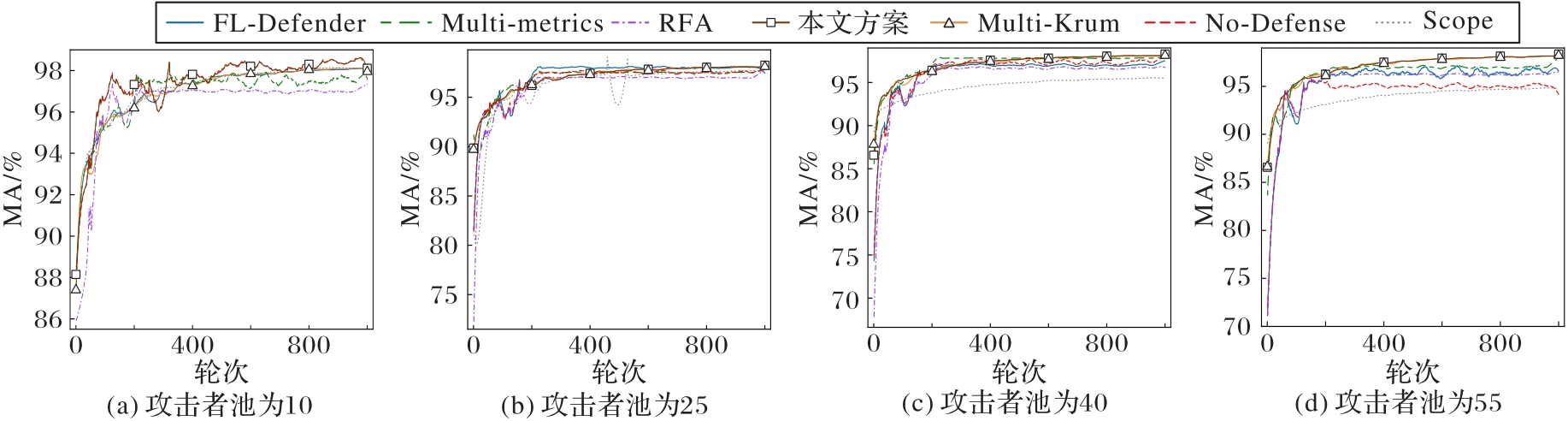
Fig. 6 MA of different defense schemes on EMNIST dataset with different attacker pools
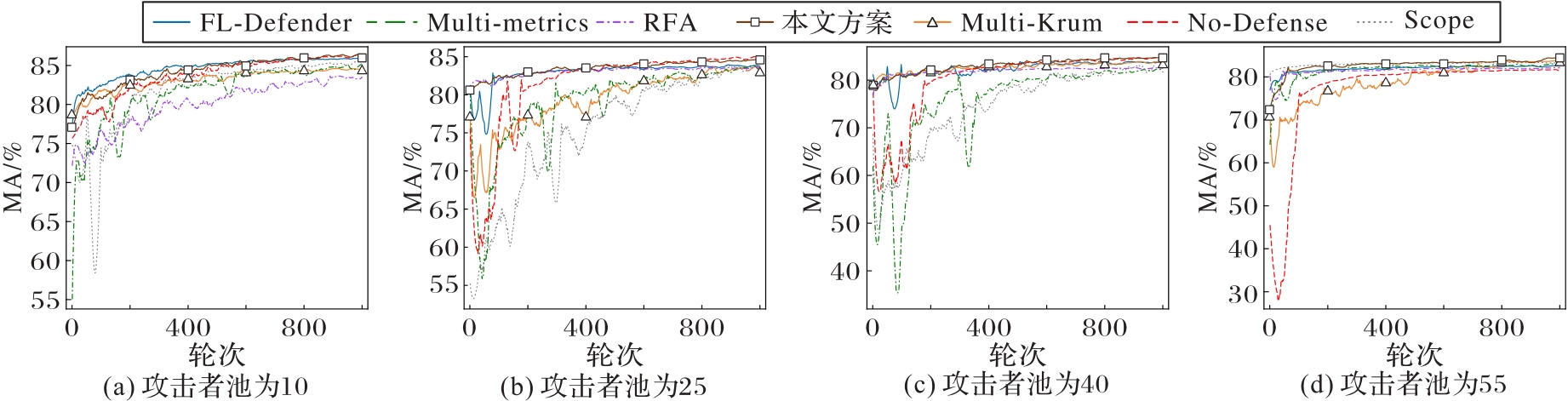
Fig. 7 MA performance of different defense schemes on CIFAR-10 dataset with different attacker pools

Fig. 8 Defense performance of different defense schemes under PGD attack
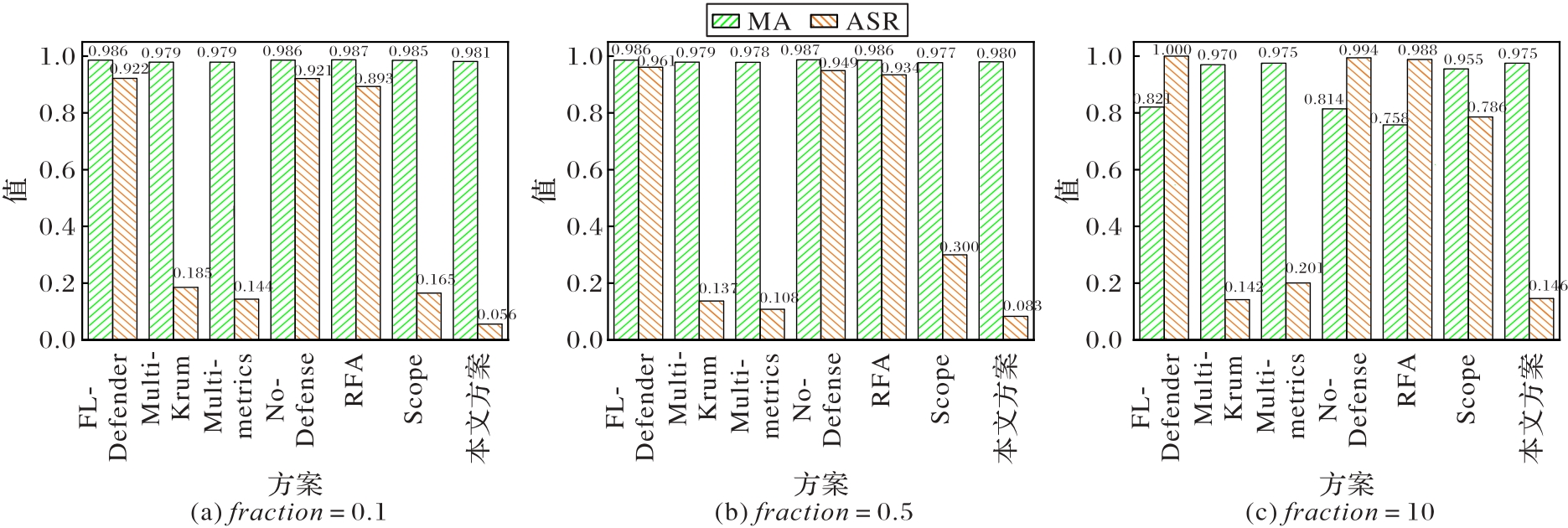
Fig. 9 Defense performance of different defense schemes under MR attack
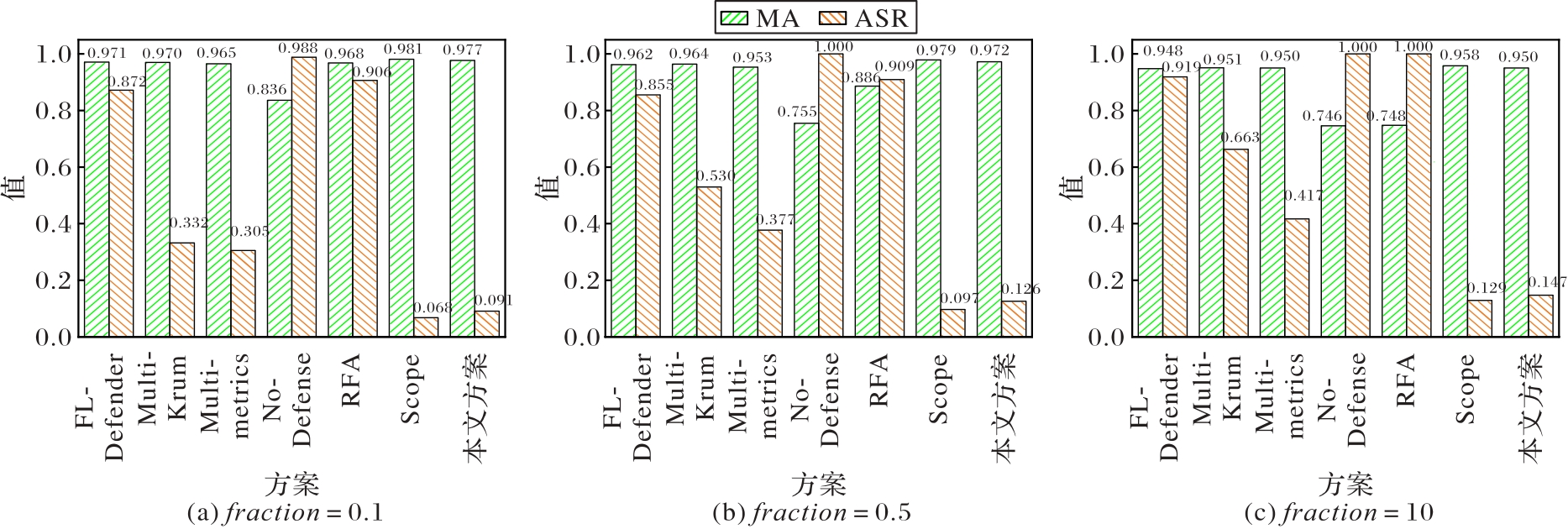
Fig. 10 Defense performance of different defense schemes under CCA attack
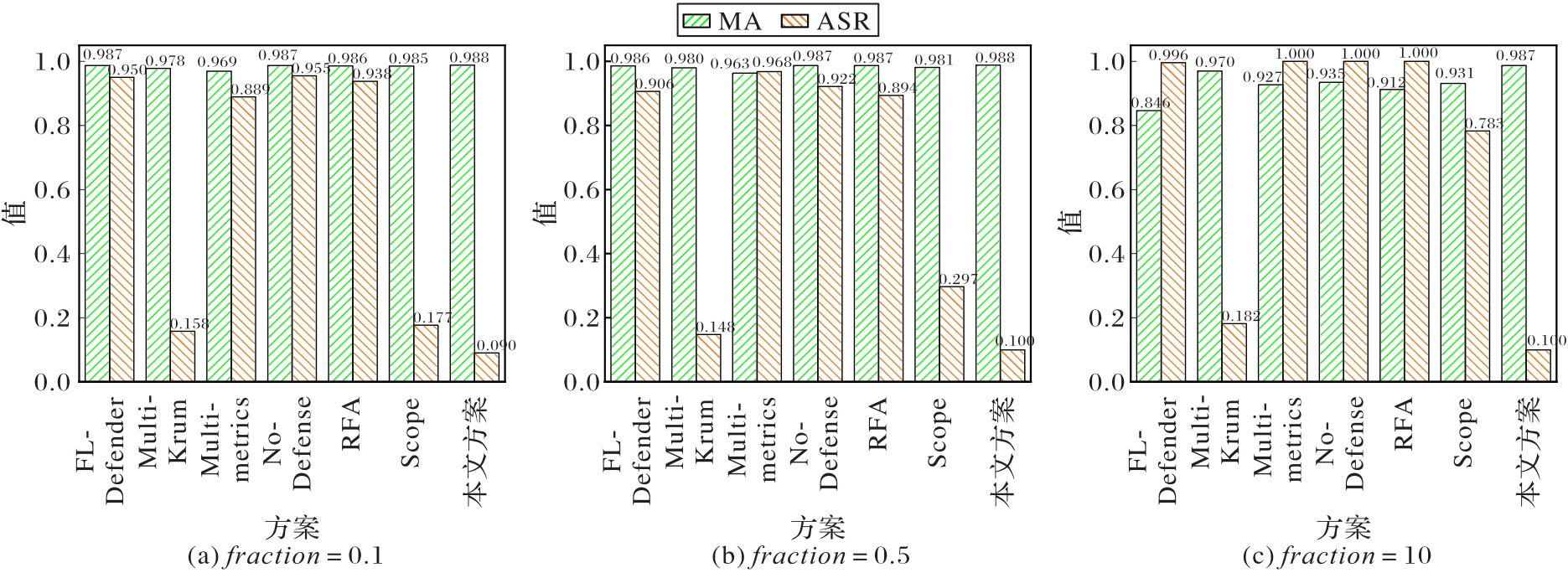
Fig. 11 Defense performance of different defense schemes under PGD+MR attack
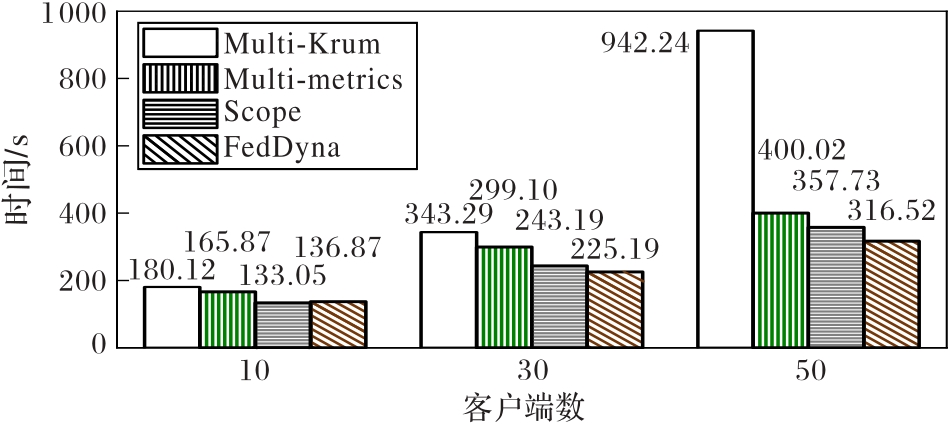
Fig. 12 Comparison of computational overhead of different schemes
| 消融方案 | EMNIST | CIFAR-10 | ||
|---|---|---|---|---|
| MA | ASR | MA | ASR | |
| A | 98.13 | 100.00 | 84.59 | 100.00 |
| B | 98.14 | 39.40 | 85.87 | 13.55 |
| C | 98.20 | |||
| D | 41.00 | 85.13 | 37.50 | |
| E | 99.16 | 3.35 | 86.32 | 0.49 |
Tab. 5 Results of ablation experiments
| 消融方案 | EMNIST | CIFAR-10 | ||
|---|---|---|---|---|
| MA | ASR | MA | ASR | |
| A | 98.13 | 100.00 | 84.59 | 100.00 |
| B | 98.14 | 39.40 | 85.87 | 13.55 |
| C | 98.20 | |||
| D | 41.00 | 85.13 | 37.50 | |
| E | 99.16 | 3.35 | 86.32 | 0.49 |
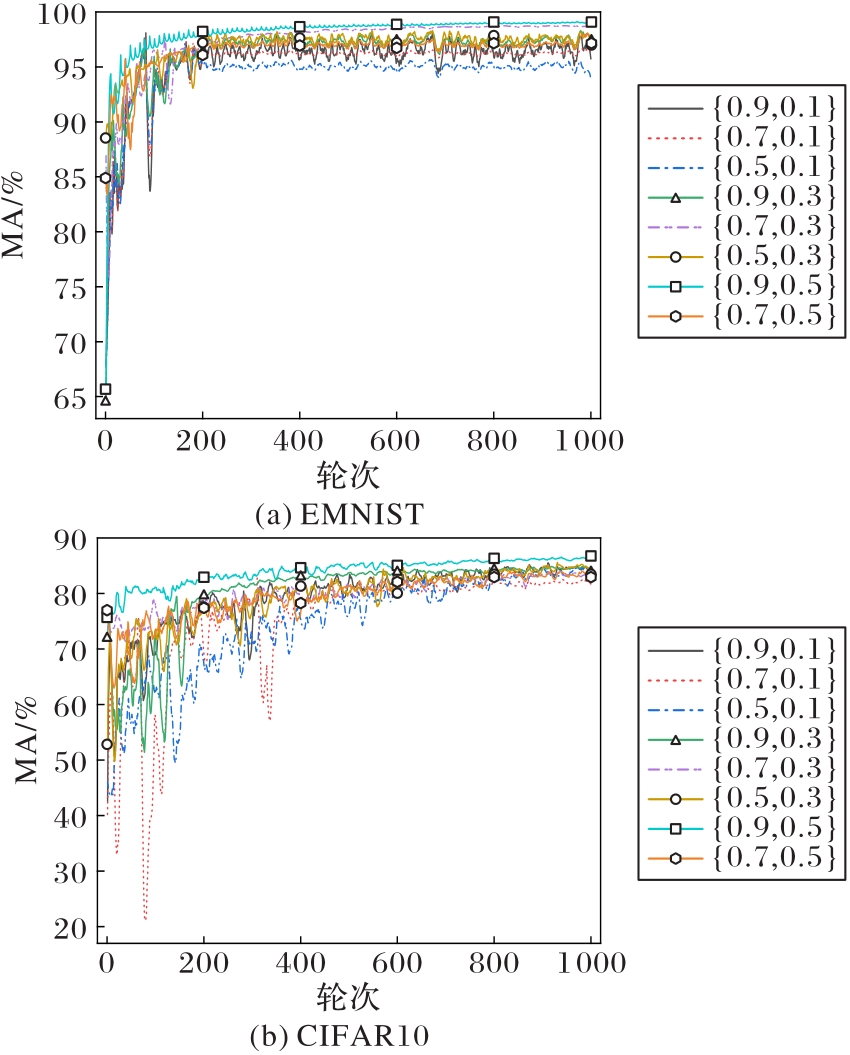
Fig. 13 Comparison of model accuracy with different parameter values
| [1] | BARTLETT M. Beyond privacy: protecting data interests in the age of artificial intelligence[J]. Law, Technology and Humans, 2021, 3(1): 96-108. |
| [2] | LI J, GUO W, HAN X, et al. Federated learning based on defending against data poisoning attacks in IoT[EB/OL]. [2024-10-25].. |
| [3] | McMAHAN H B, MOORE E, RAMAGE D, et al. Communication-efficient learning of deep networks from decentralized data[C]// Proceedings of the 20th International Conference on Artificial Intelligence and Statistics. New York: JMLR.org, 2017: 1273-1282. |
| [4] | LI L, FAN Y, TSE M, et al. A review of applications in federated learning[J]. Computers and Industrial Engineering, 2020, 149: No.106854. |
| [5] | 陈学斌,屈昌盛. 面向联邦学习的后门攻击与防御综述[J]. 计算机应用, 2024, 44(11): 3459-3469. |
| CHEN X B, QU C S. Overview of backdoor attacks and defenses in federated learning[J]. Journal of Computer Applications, 2024, 44(11): 3459-3469. | |
| [6] | GONG X, CHEN Y, WANG Q, et al. Backdoor attacks and defenses in federated learning: state-of-the-art, taxonomy, and future directions[J]. IEEE Wireless Communications, 2023, 30(2): 114-121. |
| [7] | XIA G, CHEN J, YU C, et al. Poisoning attacks in federated learning: a survey[J]. IEEE Access, 2023, 11: 10708-10722. |
| [8] | MA C, CHEN L, YONG J H. Simulating unknown target models for query-efficient black-box attacks[C]// Proceedings of the 2021 IEEE/CVF Conference on Computer Vision and Pattern Recognition. Piscataway: IEEE, 2021: 11830-11839. |
| [9] | BAGDASARYAN E, VEIT A, HUA Y, et al. How to backdoor federated learning[C]// Proceedings of the 23rd International Conference on Artificial Intelligence and Statistics. New York: JMLR.org, 2020: 2938-2948. |
| [10] | NGUYEN T D, NGUYEN T, LE NGUYEN P, et al. Backdoor attacks and defenses in federated learning: survey, challenges and future research directions[J]. Engineering Applications of Artificial Intelligence, 2024, 127(Pt A): No.107166. |
| [11] | CHEN H, CHEN X, PENG L, et al. FLRAM: robust aggregation technique for defense against byzantine poisoning attacks in federated learning[J]. Electronics, 2023, 12(21): No.4463. |
| [12] | XU S, XIA H, ZHANG R, et al. FedNor: a robust training framework for federated learning based on normal aggregation[J]. Information Sciences, 2024, 684: No.121274. |
| [13] | ZHANG C, YANG S, MAO L, et al. Anomaly detection and defense techniques in federated learning: a comprehensive review[J]. Artificial Intelligence Review, 2024, 57(6): No.150. |
| [14] | WANG Z, MA J, WANG X, et al. Threats to training: a survey of poisoning attacks and defenses on machine learning systems[J]. ACM Computing Surveys, 2022, 55(7): No.134. |
| [15] | YIN D, CHEN Y, RAMCHANDRAN K, et al. Byzantine-robust distributed learning: towards optimal statistical rates[C]// Proceedings of the 35th International Conference on Machine Learning. New York: JMLR.org, 2018: 5650-5659. |
| [16] | XU J, GLICKSBERG B S, SU C, et al. Federated learning for healthcare informatics[J]. Journal of Healthcare Informatics Research, 2021, 5(1): 1-19. |
| [17] | MOSHAWRAB M, ADDA M, BOUZOUANE A, et al. Reviewing federated learning aggregation algorithms; strategies, contributions, limitations and future perspectives[J]. Electronics, 2023, 12(10): No.2287. |
| [18] | TOLPEGIN V, TRUEX S, GURSOY M E, et al. Data poisoning attacks against federated learning systems[C]// Proceedings of the 2020 European Symposium on Research in Computer Security, LNCS 12308. Cham: Springer, 2020: 480-501. |
| [19] | JAGIELSKI M, OPREA A, BIGGIO B, et al. Manipulating machine learning: poisoning attacks and countermeasures for regression learning[C]// Proceedings of the 2018 IEEE Symposium on Security and Privacy. Piscataway: IEEE, 2018: 19-35. |
| [20] | LIANG J, WANG R, FENG C, et al. A survey on federated learning poisoning attacks and defenses[EB/OL]. [2024-10-28].. |
| [21] | KUMAR K N, MOHAN C K, MACHIRY A. Precision guided approach to mitigate data poisoning attacks in federated learning[C]// Proceedings of the 14th ACM Conference on Data and Application Security and Privacy. New York: ACM, 2024: 233-244. |
| [22] | SUN G, CONG Y, DONG J, et al. Data poisoning attacks on federated machine learning[J]. IEEE Internet of Things Journal, 2022, 9(13): 11365-11375. |
| [23] | ALHARBI E, MARCOLINO L S, GOUGLIDIS A, et al. Robust federated learning method against data and model poisoning attacks with heterogeneous data distribution[C]// Proceedings of the 26th European Conference on Artificial Intelligence/12th Conference on Prestigious Applications of Intelligent Systems. Amsterdam: IOS Press, 2023: 85-92. |
| [24] | CAO X, GONG N Z. MPAF: model poisoning attacks to federated learning based on fake clients[C]// Proceedings of the 2022 IEEE/CVF Conference on Computer Vision and Pattern Recognition. Piscataway: IEEE, 2022: 3395-3403. |
| [25] | 陈学斌,任志强,张宏扬. 联邦学习中的安全威胁与防御措施综述[J] . 计算机应用, 2024, 44(6) : 1663-1672. |
| CHEN X B, REN Z Q, ZHANG H Y. Review on security threats and defense measures in federated learning[J]. Journal of Computer Applications, 2024, 44(6): 1663-1672. | |
| [26] | SUN J, LI A, DiVALENTIN L, et al. FL-WBC: enhancing robustness against model poisoning attacks in federated learning from a client perspective[C]// Proceedings of the 35th International Conference on Neural Information Processing Systems. Red Hook: Curran Associates Inc., 2021: 12613-12624. |
| [27] | SUN S, SUGRIM S, STAVROU A, et al. Partner in crime: boosting targeted poisoning attacks against federated learning[J]. IEEE Transactions on Information Forensics and Security, 2025, 20: 4152-4166. |
| [28] | LIU T, ZHANG Y, FENG Z, et al. Beyond traditional threats: a persistent backdoor attack on federated learning[C]// Proceedings of the 38th AAAI Conference on Artificial Intelligence. Palo Alto: AAAI Press, 2024: 21359-21367. |
| [29] | WANG H, SREENIVASAN K, RAJPUT S, et al. Attack of the tails: yes, you really can backdoor federated learning[C]// Proceedings of the 34th International Conference on Neural Information Processing Systems. Red Hook: Curran Associates Inc., 2020: 16070-16084. |
| [30] | HUANG S, LI Y, YAN X, et al. Scope: on detecting constrained backdoor attacks in federated learning[J]. IEEE Transactions on Information Forensics and Security, 2025, 20: 3302-3315. |
| [31] | WU J, JIN J, WU C. Challenges and countermeasures of federated learning data poisoning attack situation prediction[J]. Mathematics, 2024, 12(6): No.901. |
| [32] | BLANCHARD P, MHAMDI E M EL, GUERRAOUI R, et al. Machine learning with adversaries: Byzantine tolerant gradient descent[C]// Proceedings of the 31st International Conference on Neural Information Processing Systems. Red Hook: Curran Associates Inc., 2017: 118-128. |
| [33] | ZHANG G, LIU H, YANG B, et al. DWAMA: dynamic weight-adjusted Mahalanobis defense algorithm for mitigating poisoning attacks in federated learning[J]. Peer-to-Peer Networking and Applications, 2024, 17(6): 3750-3764. |
| [34] | HUANG S, LI Y, CHEN C, et al. Multi-metrics adaptively identifies backdoors in federated learning[C]// Proceedings of the 2023 IEEE/CVF International Conference on Computer Vision. Piscataway: IEEE, 2023: 4629-4639. |
| [35] | JEBREEL N M, DOMINGO-FERRER J. FL-Defender: combating targeted attacks in federated learning[J]. Knowledge-Based Systems, 2023, 260: No.110178. |
| [36] | PILLUTLA K, KAKADE S M, HARCHAOUI Z. Robust aggregation for federated learning[J]. IEEE Transactions on Signal Processing, 2022, 70: 1142-1154. |
| [37] | LIU J, LI X, LIU X, et al. DefendFL: a privacy-preserving federated learning scheme against poisoning attacks[J]. IEEE Transactions on Neural Networks and Learning Systems, 2025, 36(5): 9098-9111. |
| [1] | Kejia ZHANG, Zhijun FANG, Nanrun ZHOU, Zhicai SHI. Personalized federated learning method based on model pre-assignment and self-distillation [J]. Journal of Computer Applications, 2026, 46(1): 10-20. |
| [2] | Hao YU, Jing FAN, Yihang SUN, Yadong JIN, Enkang XI, Hua DONG. Federated split learning optimization method under edge heterogeneity [J]. Journal of Computer Applications, 2026, 46(1): 33-42. |
| [3] | Yinlong JIAN, Xuebin CHEN, Zhongrui JING, Qi ZHONG, Zhenbo ZHANG. Data augmentation scheme based on conditional generative adversarial network in federated learning [J]. Journal of Computer Applications, 2026, 46(1): 21-32. |
| [4] | Hao YU, Jing FAN, Yihang SUN, Hua DONG, Enkang XI. Survey of statistical heterogeneity in federated learning [J]. Journal of Computer Applications, 2025, 45(9): 2737-2746. |
| [5] | Jintao SU, Lina GE, Liguang XIAO, Jing ZOU, Zhe WANG. Detection and defense scheme for backdoor attacks in federated learning [J]. Journal of Computer Applications, 2025, 45(8): 2399-2408. |
| [6] | Lina GE, Mingyu WANG, Lei TIAN. Review of research on efficiency of federated learning [J]. Journal of Computer Applications, 2025, 45(8): 2387-2398. |
| [7] | Hongyang ZHANG, Shufen ZHANG, Zheng GU. Federated learning algorithm for personalization and fairness [J]. Journal of Computer Applications, 2025, 45(7): 2123-2131. |
| [8] | Longbo YAN, Wentao MAO, Zhihong ZHONG, Lilin FAN. Robust unsupervised multi-task anomaly detection method for defect diagnosis of urban drainage pipe network [J]. Journal of Computer Applications, 2025, 45(6): 1833-1840. |
| [9] | Wenpeng WANG, Yinchang QIN, Wenxuan SHI. Review of unsupervised deep learning methods for industrial defect detection [J]. Journal of Computer Applications, 2025, 45(5): 1658-1670. |
| [10] | Zihe CHEN, Bin CHEN. Unsupervised point cloud anomaly detection based on multi-representation fusion [J]. Journal of Computer Applications, 2025, 45(5): 1677-1685. |
| [11] | Yazhou FAN, Zhuo LI. Node collaboration mechanism for quality optimization of hierarchical federated learning models under energy consumption constraints [J]. Journal of Computer Applications, 2025, 45(5): 1589-1594. |
| [12] | Yiming ZHANG, Tengfei CAO. Federated learning optimization algorithm based on local drift and diversity computing power [J]. Journal of Computer Applications, 2025, 45(5): 1447-1454. |
| [13] | Yufei XIANG, Zhengwei NI. Edge federation dynamic analysis for hierarchical federated learning based on evolutionary game [J]. Journal of Computer Applications, 2025, 45(4): 1077-1085. |
| [14] | Lihu PAN, Shouxin PENG, Rui ZHANG, Zhiyang XUE, Xuzhen MAO. Video anomaly detection for moving foreground regions [J]. Journal of Computer Applications, 2025, 45(4): 1300-1309. |
| [15] | Qingli CHEN, Yuanbo GUO, Chen FANG. Clustering federated learning algorithm for heterogeneous data [J]. Journal of Computer Applications, 2025, 45(4): 1086-1094. |
| Viewed | ||||||
|
Full text |
|
|||||
|
Abstract |
|
|||||
