


Journal of Computer Applications ›› 2026, Vol. 46 ›› Issue (5): 1490-1498.DOI: 10.11772/j.issn.1001-9081.2025050639
• Data science and technology • Previous Articles
Shijie YANG1,2, Zhonghui LIU1,2, Fan MIN1,2,3( )
)
Received:2025-06-10
Revised:2025-07-15
Accepted:2025-07-20
Online:2025-08-01
Published:2026-05-10
Contact:
Fan MIN
About author:YANG Shijie, born in 1997, M. S. candidate. His research interests include formal concept analysis, network formal context.Supported by:
杨仕杰1,2, 刘忠慧1,2, 闵帆1,2,3()
通讯作者:
闵帆
作者简介:杨仕杰(1997—),男,四川广元人,硕士研究生,主要研究方向:形式概念分析、网络形式背景基金资助:CLC Number:
Shijie YANG, Zhonghui LIU, Fan MIN. Construction and recommendation application of expert communities based on user-centric approach[J]. Journal of Computer Applications, 2026, 46(5): 1490-1498.
杨仕杰, 刘忠慧, 闵帆. 基于用户中心的专家社区构建及推荐应用[J]. 《计算机应用》唯一官方网站, 2026, 46(5): 1490-1498.
Add to citation manager EndNote|Ris|BibTeX
URL: https://www.joca.cn/EN/10.11772/j.issn.1001-9081.2025050639
| … | |||||||||||||
|---|---|---|---|---|---|---|---|---|---|---|---|---|---|
| … | … | … | … | ||||||||||
| 0 | 0 | … | 0 | … | 1 | 1 | … | 0 | 0 | 1 | … | 1 | |
| 0 | 0 | … | 0 | … | 1 | 1 | … | 0 | 0 | 0 | … | 0 | |
| ︙ | ︙ | ︙ | ︙ | ︙ | ︙ | ︙ | ︙ | ︙ | ︙ | ︙ | ︙ | ︙ | |
| 0 | 0 | … | 0 | … | 1 | 1 | … | 0 | 0 | 0 | … | 0 | |
Tab. 1 Network formal context
| … | |||||||||||||
|---|---|---|---|---|---|---|---|---|---|---|---|---|---|
| … | … | … | … | ||||||||||
| 0 | 0 | … | 0 | … | 1 | 1 | … | 0 | 0 | 1 | … | 1 | |
| 0 | 0 | … | 0 | … | 1 | 1 | … | 0 | 0 | 0 | … | 0 | |
| ︙ | ︙ | ︙ | ︙ | ︙ | ︙ | ︙ | ︙ | ︙ | ︙ | ︙ | ︙ | ︙ | |
| 0 | 0 | … | 0 | … | 1 | 1 | … | 0 | 0 | 0 | … | 0 | |
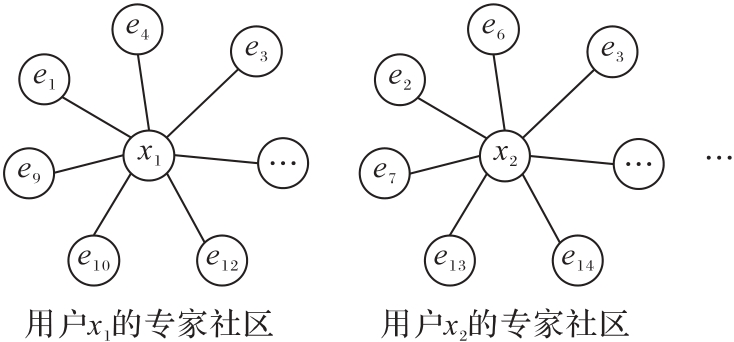
Fig.1 Expert community examples
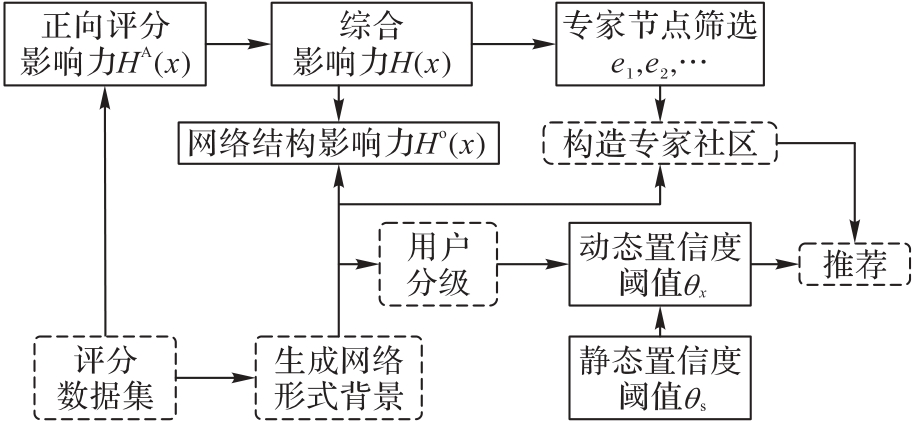
Fig.2 Overall framework of proposed algorithm
| O | |||||||||||||||||||
|---|---|---|---|---|---|---|---|---|---|---|---|---|---|---|---|---|---|---|---|
| 0 | 0 | 0 | 0 | 1 | 1 | 1 | 1 | 0 | 1 | 1 | 1 | 0 | 1 | 1 | 1 | 1 | 1 | 1 | |
| 0 | 0 | 0 | 1 | 0 | 1 | 0 | 0 | 1 | 0 | 0 | 0 | 1 | 0 | 1 | 0 | 0 | 0 | 0 | |
| 0 | 0 | 0 | 1 | 0 | 0 | 0 | 0 | 0 | 0 | 0 | 0 | 1 | 0 | 0 | 1 | 0 | 1 | 0 | |
| 0 | 1 | 1 | 0 | 0 | 0 | 1 | 1 | 0 | 0 | 1 | 0 | 0 | 0 | 0 | 1 | 1 | 0 | 0 | |
| 1 | 0 | 0 | 0 | 0 | 0 | 1 | 1 | 0 | 0 | 1 | 0 | 1 | 1 | 0 | 1 | 0 | 0 | 0 | |
| 1 | 1 | 0 | 0 | 0 | 0 | 1 | 0 | 1 | 1 | 1 | 0 | 0 | 0 | 1 | 0 | 1 | 0 | 1 | |
| 1 | 0 | 0 | 1 | 1 | 1 | 0 | 1 | 1 | 1 | 0 | 0 | 1 | 0 | 0 | 0 | 1 | 1 | 1 | |
| 1 | 0 | 0 | 1 | 1 | 0 | 1 | 0 | 0 | 0 | 0 | 0 | 1 | 1 | 0 | 0 | 1 | 0 | 0 | |
| 0 | 1 | 0 | 0 | 0 | 1 | 1 | 0 | 0 | 1 | 0 | 1 | 0 | 1 | 0 | 1 | 1 | 0 | 0 | |
| 1 | 0 | 0 | 0 | 0 | 1 | 1 | 0 | 1 | 0 | 1 | 0 | 1 | 1 | 0 | 1 | 1 | 0 | 1 | |
Tab. 2 Example of first-order network formal context
| O | |||||||||||||||||||
|---|---|---|---|---|---|---|---|---|---|---|---|---|---|---|---|---|---|---|---|
| 0 | 0 | 0 | 0 | 1 | 1 | 1 | 1 | 0 | 1 | 1 | 1 | 0 | 1 | 1 | 1 | 1 | 1 | 1 | |
| 0 | 0 | 0 | 1 | 0 | 1 | 0 | 0 | 1 | 0 | 0 | 0 | 1 | 0 | 1 | 0 | 0 | 0 | 0 | |
| 0 | 0 | 0 | 1 | 0 | 0 | 0 | 0 | 0 | 0 | 0 | 0 | 1 | 0 | 0 | 1 | 0 | 1 | 0 | |
| 0 | 1 | 1 | 0 | 0 | 0 | 1 | 1 | 0 | 0 | 1 | 0 | 0 | 0 | 0 | 1 | 1 | 0 | 0 | |
| 1 | 0 | 0 | 0 | 0 | 0 | 1 | 1 | 0 | 0 | 1 | 0 | 1 | 1 | 0 | 1 | 0 | 0 | 0 | |
| 1 | 1 | 0 | 0 | 0 | 0 | 1 | 0 | 1 | 1 | 1 | 0 | 0 | 0 | 1 | 0 | 1 | 0 | 1 | |
| 1 | 0 | 0 | 1 | 1 | 1 | 0 | 1 | 1 | 1 | 0 | 0 | 1 | 0 | 0 | 0 | 1 | 1 | 1 | |
| 1 | 0 | 0 | 1 | 1 | 0 | 1 | 0 | 0 | 0 | 0 | 0 | 1 | 1 | 0 | 0 | 1 | 0 | 0 | |
| 0 | 1 | 0 | 0 | 0 | 1 | 1 | 0 | 0 | 1 | 0 | 1 | 0 | 1 | 0 | 1 | 1 | 0 | 0 | |
| 1 | 0 | 0 | 0 | 0 | 1 | 1 | 0 | 1 | 0 | 1 | 0 | 1 | 1 | 0 | 1 | 1 | 0 | 1 | |
| O | |||||||||
|---|---|---|---|---|---|---|---|---|---|
| 5 | 3 | 0 | 5 | 4 | 5 | 1 | 3 | 5 | |
| 0 | 0 | 3 | 0 | 1 | 0 | 0 | 0 | 0 | |
| 0 | 0 | 5 | 0 | 0 | 4 | 0 | 4 | 0 | |
| 2 | 0 | 0 | 0 | 0 | 5 | 4 | 0 | 0 | |
| 5 | 0 | 4 | 4 | 0 | 3 | 0 | 0 | 0 | |
| 3 | 0 | 0 | 0 | 3 | 0 | 4 | 0 | 5 | |
| 0 | 0 | 4 | 0 | 0 | 0 | 4 | 5 | 3 | |
| 0 | 0 | 4 | 5 | 0 | 0 | 3 | 0 | 0 | |
| 0 | 2 | 0 | 5 | 0 | 4 | 3 | 0 | 0 | |
| 4 | 0 | 3 | 2 | 0 | 4 | 4 | 0 | 5 |
Tab. 3 Rating matrix example
| O | |||||||||
|---|---|---|---|---|---|---|---|---|---|
| 5 | 3 | 0 | 5 | 4 | 5 | 1 | 3 | 5 | |
| 0 | 0 | 3 | 0 | 1 | 0 | 0 | 0 | 0 | |
| 0 | 0 | 5 | 0 | 0 | 4 | 0 | 4 | 0 | |
| 2 | 0 | 0 | 0 | 0 | 5 | 4 | 0 | 0 | |
| 5 | 0 | 4 | 4 | 0 | 3 | 0 | 0 | 0 | |
| 3 | 0 | 0 | 0 | 3 | 0 | 4 | 0 | 5 | |
| 0 | 0 | 4 | 0 | 0 | 0 | 4 | 5 | 3 | |
| 0 | 0 | 4 | 5 | 0 | 0 | 3 | 0 | 0 | |
| 0 | 2 | 0 | 5 | 0 | 4 | 3 | 0 | 0 | |
| 4 | 0 | 3 | 2 | 0 | 4 | 4 | 0 | 5 |
| 1 | |||
| 5 | |||
| 4 | |||
| 4 | |||
| 2 | |||
| 2 | |||
| 3 | |||
| 5 | |||
| 3 | |||
| 1 |
Tab. 4 Expert community and its user classification under network formal context
| 1 | |||
| 5 | |||
| 4 | |||
| 4 | |||
| 2 | |||
| 2 | |||
| 3 | |||
| 5 | |||
| 3 | |||
| 1 |
| 数据集 | 对象数 | 属性数 | 稀疏度 |
|---|---|---|---|
| Netflix1 | 2 000 | 1 200 | 0.090 3 |
| Netflix2 | 1 000 | 1 200 | 0.092 2 |
| Filmtrust | 1 508 | 2 071 | 0.011 4 |
| MovieLens-100K | 943 | 1 682 | 0.063 0 |
| MovieLens-1M | 6 040 | 3 952 | 0.041 9 |
| MovieLens-10M | 3 660 | 1 100 | 0.214 1 |
| Jester-s1 | 500 | 100 | 0.400 0 |
| EachMovie-2K | 2 000 | 1 581 | 0.190 9 |
| EachMovie-3K | 3 000 | 1 648 | 0.011 7 |
Tab. 5 Dataset information
| 数据集 | 对象数 | 属性数 | 稀疏度 |
|---|---|---|---|
| Netflix1 | 2 000 | 1 200 | 0.090 3 |
| Netflix2 | 1 000 | 1 200 | 0.092 2 |
| Filmtrust | 1 508 | 2 071 | 0.011 4 |
| MovieLens-100K | 943 | 1 682 | 0.063 0 |
| MovieLens-1M | 6 040 | 3 952 | 0.041 9 |
| MovieLens-10M | 3 660 | 1 100 | 0.214 1 |
| Jester-s1 | 500 | 100 | 0.400 0 |
| EachMovie-2K | 2 000 | 1 581 | 0.190 9 |
| EachMovie-3K | 3 000 | 1 648 | 0.011 7 |
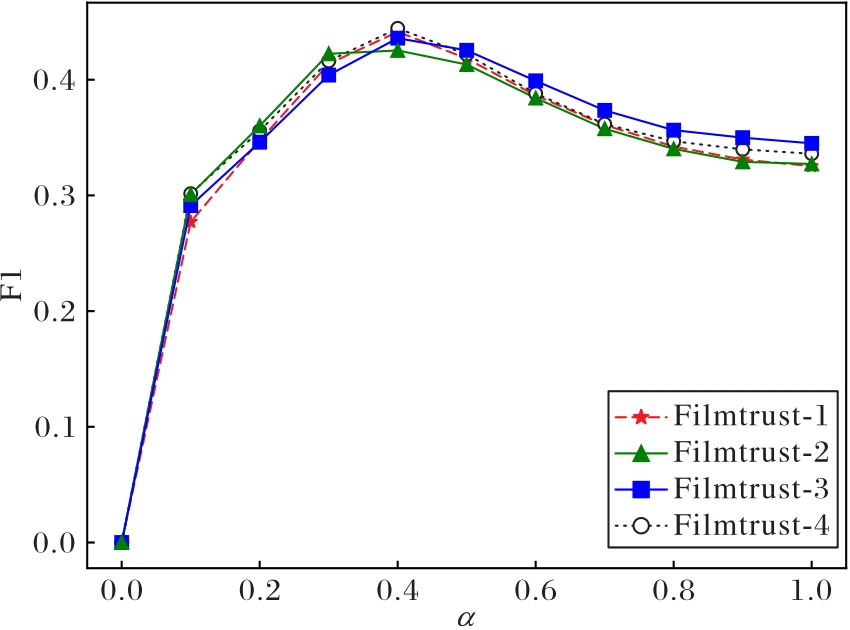
Fig. 3 Impact of different α on ECBRA recommendation results
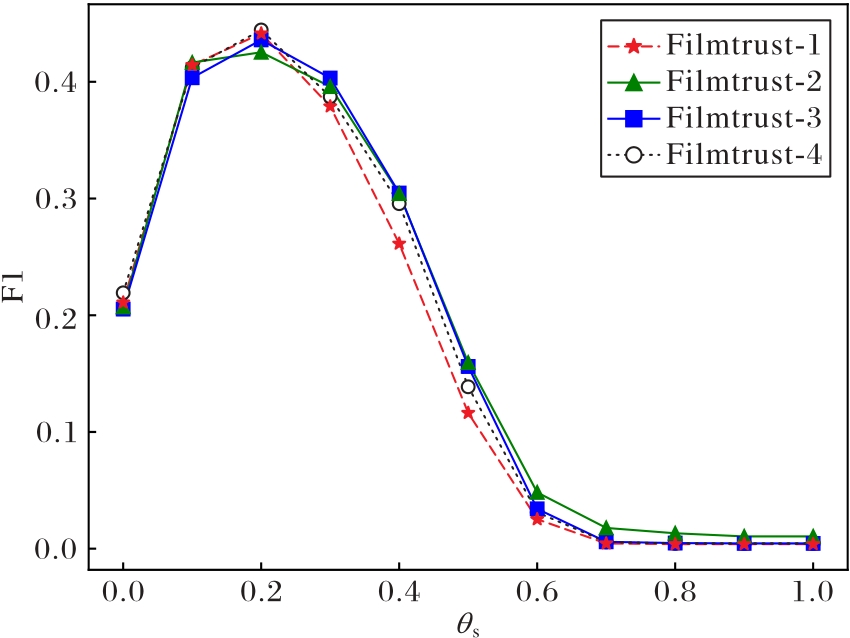
Fig. 4 Impact of different θs on ECBRA recommendation results
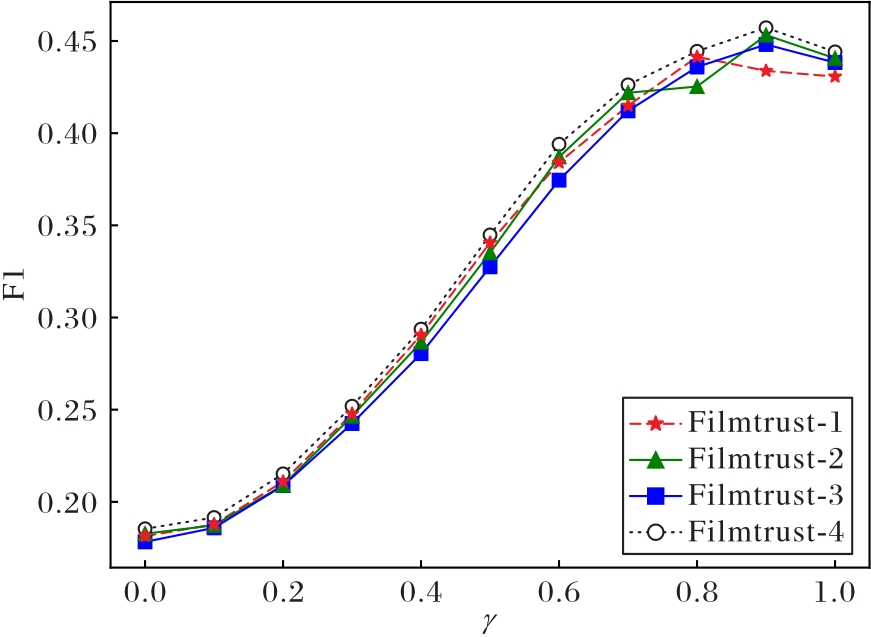
Fig. 5 Impact of different γ on ECBRA recommendation results
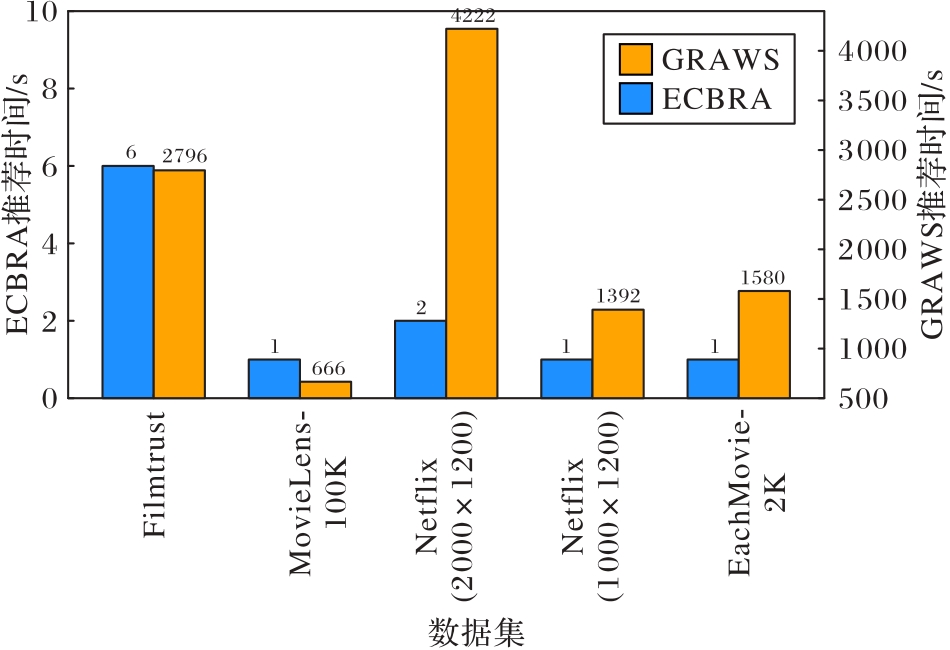
Fig. 6 Comparison of recommendation time between ECBRA and GRAWS
| 数据集 | ECBRA | GRAWS | 数据集 | ECBRA | GRAWS |
|---|---|---|---|---|---|
| Filmtrust | 1 | 1 306 | Netflix2 | 1 | 873 |
| MovieLens-100K | 1 | 682 | EachMovie-2K | 1 | 578 |
| Netflix1 | 1 | 598 |
Tab. 6 Comparison of average recommendation times between ECBRA and GRAWS
| 数据集 | ECBRA | GRAWS | 数据集 | ECBRA | GRAWS |
|---|---|---|---|---|---|
| Filmtrust | 1 | 1 306 | Netflix2 | 1 | 873 |
| MovieLens-100K | 1 | 682 | EachMovie-2K | 1 | 578 |
| Netflix1 | 1 | 598 |
| 数据集 | 指标 | ECBRA | GRAWS |
|---|---|---|---|
| MovieLens-100K | 精确度 | 0.223 9 | 0.208 7 |
| 召回率 | 0.285 6 | 0.120 7 | |
| F1值 | 0.251 0 | 0.152 9 | |
| Netflix2 | 精确度 | 0.226 9 | 0.120 1 |
| 召回率 | 0.324 6 | 0.196 8 | |
| F1值 | 0.267 1 | 0.149 1 | |
| Filmtrust | 精确度 | 0.445 2 | 0.232 2 |
| 召回率 | 0.535 4 | 0.572 9 | |
| F1值 | 0.486 2 | 0.330 4 |
Tab. 7 Recommendation performance comparison between ECBRA and GRAWS
| 数据集 | 指标 | ECBRA | GRAWS |
|---|---|---|---|
| MovieLens-100K | 精确度 | 0.223 9 | 0.208 7 |
| 召回率 | 0.285 6 | 0.120 7 | |
| F1值 | 0.251 0 | 0.152 9 | |
| Netflix2 | 精确度 | 0.226 9 | 0.120 1 |
| 召回率 | 0.324 6 | 0.196 8 | |
| F1值 | 0.267 1 | 0.149 1 | |
| Filmtrust | 精确度 | 0.445 2 | 0.232 2 |
| 召回率 | 0.535 4 | 0.572 9 | |
| F1值 | 0.486 2 | 0.330 4 |
| 数据集 | 指标 | ECBRA | kNN(k=3) | CSBR | IBCF | GreConD-kNN | CSPR |
|---|---|---|---|---|---|---|---|
| Netflix1 | 精确度 | 0.217 8 | 0.205 5 | 0.186 5 | 0.192 0 | 0.123 7 | 0.228 5 |
| 召回率 | 0.341 2 | 0.319 6 | 0.342 3 | 0.430 2 | 0.154 9 | 0.301 9 | |
| F1值 | 0.265 9 | 0.250 2 | 0.241 5 | 0.265 5 | 0.137 5 | 0.260 1 | |
| 时间/s | 2 | 11 | 4 | 28 | 8 | 1 | |
| Netflix2 | 精确度 | 0.226 9 | 0.138 7 | 0.170 7 | 0.140 5 | 0.119 3 | 0.286 2 |
| 召回率 | 0.324 6 | 0.201 2 | 0.180 6 | 0.271 0 | 0.155 9 | 0.198 8 | |
| F1值 | 0.267 1 | 0.164 2 | 0.175 5 | 0.185 1 | 0.135 2 | 0.234 6 | |
| 时间/s | 1 | 2 | 2 | 8 | 2 | 1 | |
| Jester-s1 | 精确度 | 0.877 2 | 0.999 7 | 0.998 5 | 0.620 6 | 0.999 8 | 0.997 8 |
| 召回率 | 0.959 7 | 0.774 9 | 0.607 9 | 0.696 7 | 0.809 1 | 0.814 2 | |
| F1值 | 0.916 6 | 0.873 2 | 0.756 0 | 0.656 4 | 0.894 5 | 0.897 5 | |
| 时间/s | 1 | 2 | 1 | 2 | 3 | 1 | |
| MovieLens-10M | 精确度 | 0.295 2 | 0.241 4 | 0.230 5 | 0.187 9 | 0.153 5 | 0.349 4 |
| 召回率 | 0.407 6 | 0.479 1 | 0.389 5 | 0.593 1 | 0.241 8 | 0.300 3 | |
| F1值 | 0.342 4 | 0.321 1 | 0.289 6 | 0.285 4 | 0.187 8 | 0.323 0 | |
| 时间/s | 5 | 57 | 18 | 65 | 40 | 6 | |
| MovieLens-100K | 精确度 | 0.223 9 | 0.201 5 | 0.244 4 | 0.192 4 | 0.116 6 | 0.278 1 |
| 召回率 | 0.285 6 | 0.345 0 | 0.217 7 | 0.403 3 | 0.173 2 | 0.215 8 | |
| F1值 | 0.251 0 | 0.254 4 | 0.230 3 | 0.260 5 | 0.139 4 | 0.243 0 | |
| 时间/s | 1 | 1 | 1 | 15 | 2 | 1 | |
| MovieLens-1M | 精确度 | 0.182 3 | 0.188 2 | 0.270 0 | 0.152 7 | 0.111 7 | 0.207 3 |
| 召回率 | 0.271 0 | 0.340 4 | 0.152 4 | 0.391 8 | 0.147 5 | 0.276 3 | |
| F1值 | 0.217 9 | 0.242 4 | 0.194 8 | 0.219 7 | 0.127 1 | 0.236 9 | |
| 时间/s | 15 | 337 | 64 | 1 168 | 163 | 12 | |
| Filmtrust | 精确度 | 0.445 2 | 0.465 6 | 0.452 9 | 0.127 5 | 0.452 5 | 0.446 6 |
| 召回率 | 0.535 4 | 0.464 4 | 0.484 2 | 0.231 4 | 0.413 7 | 0.626 6 | |
| F1值 | 0.486 2 | 0.465 0 | 0.468 0 | 0.164 4 | 0.432 2 | 0.521 5 | |
| 时间/s | 6 | 5 | 1 | 52 | 3 | 1 | |
| EachMovie-2K | 精确度 | 0.192 6 | 0.198 8 | 0.159 7 | 0.084 6 | 0.142 3 | 0.154 0 |
| 召回率 | 0.267 3 | 0.296 3 | 0.362 4 | 0.127 9 | 0.164 0 | 0.361 0 | |
| F1值 | 0.223 8 | 0.238 0 | 0.221 6 | 0.101 8 | 0.152 4 | 0.215 9 | |
| 时间/s | 1 | 6 | 1 | 46 | 2 | 2 | |
| EachMovie-3K | 精确度 | 0.192 2 | 0.209 2 | 0.174 8 | 0.185 4 | 0.150 6 | 0.221 0 |
| 召回率 | 0.237 7 | 0.280 5 | 0.331 0 | 0.126 3 | 0.155 5 | 0.242 2 | |
| F1值 | 0.212 5 | 0.239 6 | 0.228 7 | 0.150 3 | 0.153 0 | 0.231 1 | |
| 时间/s | 1 | 18 | 2 | 71 | 8 | 2 |
Tab.8 Recommendation performance comparison of various algorithms
| 数据集 | 指标 | ECBRA | kNN(k=3) | CSBR | IBCF | GreConD-kNN | CSPR |
|---|---|---|---|---|---|---|---|
| Netflix1 | 精确度 | 0.217 8 | 0.205 5 | 0.186 5 | 0.192 0 | 0.123 7 | 0.228 5 |
| 召回率 | 0.341 2 | 0.319 6 | 0.342 3 | 0.430 2 | 0.154 9 | 0.301 9 | |
| F1值 | 0.265 9 | 0.250 2 | 0.241 5 | 0.265 5 | 0.137 5 | 0.260 1 | |
| 时间/s | 2 | 11 | 4 | 28 | 8 | 1 | |
| Netflix2 | 精确度 | 0.226 9 | 0.138 7 | 0.170 7 | 0.140 5 | 0.119 3 | 0.286 2 |
| 召回率 | 0.324 6 | 0.201 2 | 0.180 6 | 0.271 0 | 0.155 9 | 0.198 8 | |
| F1值 | 0.267 1 | 0.164 2 | 0.175 5 | 0.185 1 | 0.135 2 | 0.234 6 | |
| 时间/s | 1 | 2 | 2 | 8 | 2 | 1 | |
| Jester-s1 | 精确度 | 0.877 2 | 0.999 7 | 0.998 5 | 0.620 6 | 0.999 8 | 0.997 8 |
| 召回率 | 0.959 7 | 0.774 9 | 0.607 9 | 0.696 7 | 0.809 1 | 0.814 2 | |
| F1值 | 0.916 6 | 0.873 2 | 0.756 0 | 0.656 4 | 0.894 5 | 0.897 5 | |
| 时间/s | 1 | 2 | 1 | 2 | 3 | 1 | |
| MovieLens-10M | 精确度 | 0.295 2 | 0.241 4 | 0.230 5 | 0.187 9 | 0.153 5 | 0.349 4 |
| 召回率 | 0.407 6 | 0.479 1 | 0.389 5 | 0.593 1 | 0.241 8 | 0.300 3 | |
| F1值 | 0.342 4 | 0.321 1 | 0.289 6 | 0.285 4 | 0.187 8 | 0.323 0 | |
| 时间/s | 5 | 57 | 18 | 65 | 40 | 6 | |
| MovieLens-100K | 精确度 | 0.223 9 | 0.201 5 | 0.244 4 | 0.192 4 | 0.116 6 | 0.278 1 |
| 召回率 | 0.285 6 | 0.345 0 | 0.217 7 | 0.403 3 | 0.173 2 | 0.215 8 | |
| F1值 | 0.251 0 | 0.254 4 | 0.230 3 | 0.260 5 | 0.139 4 | 0.243 0 | |
| 时间/s | 1 | 1 | 1 | 15 | 2 | 1 | |
| MovieLens-1M | 精确度 | 0.182 3 | 0.188 2 | 0.270 0 | 0.152 7 | 0.111 7 | 0.207 3 |
| 召回率 | 0.271 0 | 0.340 4 | 0.152 4 | 0.391 8 | 0.147 5 | 0.276 3 | |
| F1值 | 0.217 9 | 0.242 4 | 0.194 8 | 0.219 7 | 0.127 1 | 0.236 9 | |
| 时间/s | 15 | 337 | 64 | 1 168 | 163 | 12 | |
| Filmtrust | 精确度 | 0.445 2 | 0.465 6 | 0.452 9 | 0.127 5 | 0.452 5 | 0.446 6 |
| 召回率 | 0.535 4 | 0.464 4 | 0.484 2 | 0.231 4 | 0.413 7 | 0.626 6 | |
| F1值 | 0.486 2 | 0.465 0 | 0.468 0 | 0.164 4 | 0.432 2 | 0.521 5 | |
| 时间/s | 6 | 5 | 1 | 52 | 3 | 1 | |
| EachMovie-2K | 精确度 | 0.192 6 | 0.198 8 | 0.159 7 | 0.084 6 | 0.142 3 | 0.154 0 |
| 召回率 | 0.267 3 | 0.296 3 | 0.362 4 | 0.127 9 | 0.164 0 | 0.361 0 | |
| F1值 | 0.223 8 | 0.238 0 | 0.221 6 | 0.101 8 | 0.152 4 | 0.215 9 | |
| 时间/s | 1 | 6 | 1 | 46 | 2 | 2 | |
| EachMovie-3K | 精确度 | 0.192 2 | 0.209 2 | 0.174 8 | 0.185 4 | 0.150 6 | 0.221 0 |
| 召回率 | 0.237 7 | 0.280 5 | 0.331 0 | 0.126 3 | 0.155 5 | 0.242 2 | |
| F1值 | 0.212 5 | 0.239 6 | 0.228 7 | 0.150 3 | 0.153 0 | 0.231 1 | |
| 时间/s | 1 | 18 | 2 | 71 | 8 | 2 |
| [1] | WILLE R. Concept lattices and conceptual knowledge systems[J]. Computers and Mathematics with Applications, 1992, 23(6/7/8/9): 493-515. |
| [2] | BĚLOHLÁVEK R, VYCHODIL V. Reducing the size of fuzzy concept lattices by fuzzy closure operators[EB/OL]. [2025-03-02]. . |
| [3] | BENÍTEZ-CABALLERO M J, MEDINA J, RAMÍREZ-POUSSA E, et al. Rough-set-driven approach for attribute reduction in fuzzy formal concept analysis[J]. Fuzzy Sets and Systems, 2020, 391: 117-138. |
| [4] | 刘忠慧,姜帅,闵帆.模糊概念集的启发式构造方法及其推荐应用[J]. 山东大学学报(理学版),2024,59(3):14-26. |
| LIU Z H, JIANG S, MIN F. Heuristic construction method of fuzzy concept set and its recommended application[J]. Journal of Shandong University (Natural Science), 2024, 59(3): 14-26. | |
| [5] | GODIN R, MISSAOUI R, ALAOUI H. Incremental concept formation algorithms based on Galois (concept) lattices[J]. Computational Intelligence, 1995, 11(2): 246-267. |
| [6] | DJOUADI Y, PRADE H. Interval-valued fuzzy Galois connections: algebraic requirements and concept lattice construction[J]. Fundamenta Informaticae, 2010, 99(2): 169-186. |
| [7] | 刘忠慧,陈建宇,宋国杰,等.基于模拟退火法的概念集构造算法[J]. 模式识别与人工智能,2021,34(8):723-732. |
| LIU Z H, CHEN J Y, SONG G J, et al. Construction algorithm of concept set based on simulated annealing algorithm[J]. Pattern Recognition and Artificial Intelligence, 2021, 34(8): 723-732. | |
| [8] | 张国锋,杨凯.基于对象阈值变精度概念的启发式推荐方法[J].计算机工程与设计,2024,45(4):1141-1148. |
| ZHANG G F, YANG K. Heuristic recommendation method based on concept of variable precision of object thresholds[J]. Computer Engineering and Design, 2024, 45(4): 1141-1148. | |
| [9] | 刘忠慧,李鑫,闵帆.内涵粗糙三支概念及个性化推荐[J].西北大学学报(自然科学版),2022,52(5):774-783. |
| LIU Z H, LI X, MIN F. Three-way concept with rough intent and its application in personalized recommendation[J]. Journal of Northwest University (Natural Science Edition), 2022, 52(5): 774-783. | |
| [10] | 马娜,范敏,李金海.复杂网络下的概念认知学习[J]. 南京大学学报(自然科学),2019,55(4):609-623. |
| MA N, FAN M, LI J H. Concept-cognitive learning under complex network[J]. Journal of Nanjing University (Natural Science), 2019, 55(4): 509-623. | |
| [11] | 范敏,张洁,李金海.基于弱概念相似度的组推荐方法[J].数据采集与处理,2023,38(2):439-450. |
| FAN M, ZHANG J, LI J H. Group recommendation method based on weaken-concept similarity[J]. Journal of Data Acquisition and Processing, 2023, 38(2): 439-450. | |
| [12] | 范敏,郭瑞欣,李金海.网络决策形式背景下基于因果力的邻域推荐算法[J].模式识别与人工智能,2022,35(11):977-988. |
| FAN M, GUO R X, LI J H. Neighborhood recommendation algorithm based on causality force under network formal decision context[J]. Pattern Recognition and Artificial Intelligence, 2022, 35(11): 977-988. | |
| [13] | 范敏,秦琴,李金海.基于三支因果力的邻域推荐算法[J].山东大学学报(理学版),2024,59(5):12-22. |
| FAN M, QIN Q, LI J H. Neighborhood recommendation algorithm based on three-way causality force[J]. Journal of Shandong University (Natural Science), 2024, 59(5): 12-22. | |
| [14] | 刘文星,范敏,李金海.网络形式背景下的社区划分方法研究[J].计算机科学与探索,2021,15(8):1441-1449. |
| LIU W X, FAN M, LI J H. Research on community division method under network formal context[J]. Journal of Frontiers of Computer Science and Technology, 2021, 15(8): 1441-1449. | |
| [15] | 罗辛,欧阳元新,熊璋,等.通过相似度支持度优化基于K近邻的协同过滤算法[J].计算机学报,2010,33(8):1437-1445. |
| LUO X, OUYANG Y X, XIONG Z, et al. The effect of similarity support in K-nearest-neighborhood based collaborative filtering[J]. Chinese Journal of Computers, 2010, 33(8): 1437-1445. | |
| [16] | SARWAR B, KARYPIS G, KONSTAN J, et al. Item-based collaborative filtering recommendation algorithms[C]// Proceedings of the 10th International Conference on World Wide Web. New York: ACM, 2001: 285-295. |
| [17] | LIU Z H, ZHAO Q, ZHOU L, et al. A heuristic concept construction approach to collaborative recommendation[J]. International Journal of Approximate Reasoning, 2022, 146: 119-132. |
| [18] | BĚLOHLÁVEK R, VYCHODIL V. Discovery of optimal factors in binary data via a novel method of matrix decomposition[J]. Journal of Computer and System Sciences, 2010, 76(1): 3-20. |
| [19] | GUO G. Filmtrust[DS/OL]. [2025-04-11].. |
| [20] | Research GroupLens. MovieLens[DS/OL]. [2025-01-19].. |
| [21] | NETFLIX. Netflix Prize data set[DS/OL]. [2024-12-02].. |
| [22] | Research HP/Compaq. EachMovie[DS/OL]. [2025-03-19].. |
| [23] | GOLDBERG K, ROEDER T, GUPTA D, et al. Eigentaste: a constant time collaborative filtering algorithm[J]. Information Retrieval, 2001, 4(2): 133-151. |
| [24] | IGNATOV D I, NENOVA E, KONSTANTINOVA N, et al. Boolean matrix factorisation for collaborative filtering: an FCA-based approach[C]// Proceedings of the 2014 International Conference on Artificial Intelligence: Methodology, Systems, and Applications, LNCS 8722. Cham: Springer, 2014: 47-58. |
| [1] | Xingyao YANG, Zheng QI, Jiong YU, Zulian ZHANG, Shuai MA, Hongtao SHEN. Session-based recommendation model based on time-aware and space-enhanced dual channel graph neural network [J]. Journal of Computer Applications, 2026, 46(1): 104-112. |
| [2] | Wenjing YAN, Ruidong WANG, Min ZUO, Qingchuan ZHANG. Recipe recommendation model based on hierarchical learning of flavor embedding heterogeneous graph [J]. Journal of Computer Applications, 2025, 45(6): 1869-1878. |
| [3] | Zonghang WU, Dong ZHANG, Guanyu LI. Multimodal fusion recommendation algorithm based on joint self-supervised learning [J]. Journal of Computer Applications, 2025, 45(6): 1858-1868. |
| [4] | Xin CHEN, Zhonghui LIU, Fan MIN. Concept set construction of reduced formal context and its recommendation application [J]. Journal of Computer Applications, 2025, 45(5): 1415-1423. |
| [5] | Weichao DANG, Xinyu WEN, Gaimei GAO, Chunxia LIU. Multi-view and multi-scale contrastive learning for graph collaborative filtering [J]. Journal of Computer Applications, 2025, 45(4): 1061-1068. |
| [6] | Xiaosheng YU, Zhixin WANG. Sequential recommendation model based on multi-level graph contrastive learning [J]. Journal of Computer Applications, 2025, 45(1): 106-114. |
| [7] | Tingjie TANG, Jiajin HUANG, Jin QIN, Hui LU. Session-based recommendation based on graph co-occurrence enhanced multi-layer perceptron [J]. Journal of Computer Applications, 2024, 44(8): 2357-2364. |
| [8] | Jiong WANG, Taotao TANG, Caiyan JIA. PAGCL: positive augmentation graph contrastive learning recommendation method without negative sampling [J]. Journal of Computer Applications, 2024, 44(5): 1485-1492. |
| [9] | Zhiwen JING, Yujia ZHANG, Boting SUN, Hao GUO. Two-stage recommendation algorithm of Siamese graph convolutional neural network [J]. Journal of Computer Applications, 2024, 44(2): 469-476. |
| [10] | Beijing ZHOU, Hairong WANG, Yimeng WANG, Lisi ZHANG, He MA. Recommendation method using knowledge graph embedding propagation [J]. Journal of Computer Applications, 2024, 44(10): 3252-3259. |
| [11] | Kunpei YE, Xi XIONG, Zhe DING. Recruitment recommendation model based on field fusion and time weight [J]. Journal of Computer Applications, 2023, 43(7): 2133-2139. |
| [12] | Xuejian ZHAO, Hao LI, Haotian TANG. Recommendation rating prediction algorithm based on user interest concept lattice reduction [J]. Journal of Computer Applications, 2023, 43(11): 3340-3345. |
| [13] | Chuyuan WEI, Mengke WANG, Chuanhao HU, Guangqi ZHANG. Deep review attention neural network model for enhancing explainability of recommendation system [J]. Journal of Computer Applications, 2023, 43(11): 3443-3448. |
| [14] | YAO Huayong, YE Dongyi, CHEN Zhaojiong. Multi-round conversational reinforcement learning recommendation algorithm via multi-granularity feedback [J]. Journal of Computer Applications, 2023, 43(1): 15-21. |
| [15] | Jiafan ZHOU, Yuefeng DU, Baoyan SONG, Xiaoguang LI, Azhu ZHAO, Xujie XIAO. MOOC video recommendation method based on meta-path attention mechanism [J]. Journal of Computer Applications, 2022, 42(6): 1808-1813. |
| Viewed | ||||||
|
Full text |
|
|||||
|
Abstract |
|
|||||
