


Journal of Computer Applications ›› 2026, Vol. 46 ›› Issue (7): 2174-2183.DOI: 10.11772/j.issn.1001-9081.2025060683
• Cyber security • Previous Articles Next Articles
Xinming CHENG1, Rong HUANG1,2( ), Hao LIU1,2, Xueqin JIANG1,2
Received:2025-06-19
Revised:2025-09-17
Accepted:2025-09-29
Online:2025-10-15
Published:2026-07-10
Contact:
Rong HUANG
About author:CHENG Xinming, born in 2001, M. S. candidate. Her research interests include backdoor defense.Supported by:
程欣铭1, 黄荣1,2(), 刘浩1,2, 蒋学芹1,2
通讯作者:
黄荣
作者简介:程欣铭(2001—),女,河南安阳人,硕士研究生,CCF会员,主要研究方向:后门防御基金资助:CLC Number:
Xinming CHENG, Rong HUANG, Hao LIU, Xueqin JIANG. Dynamic targeted recovery method for backdoor model purification[J]. Journal of Computer Applications, 2026, 46(7): 2174-2183.
程欣铭, 黄荣, 刘浩, 蒋学芹. 动态靶向解毒的后门模型净化方法[J]. 《计算机应用》唯一官方网站, 2026, 46(7): 2174-2183.
Add to citation manager EndNote|Ris|BibTeX
URL: https://www.joca.cn/EN/10.11772/j.issn.1001-9081.2025060683
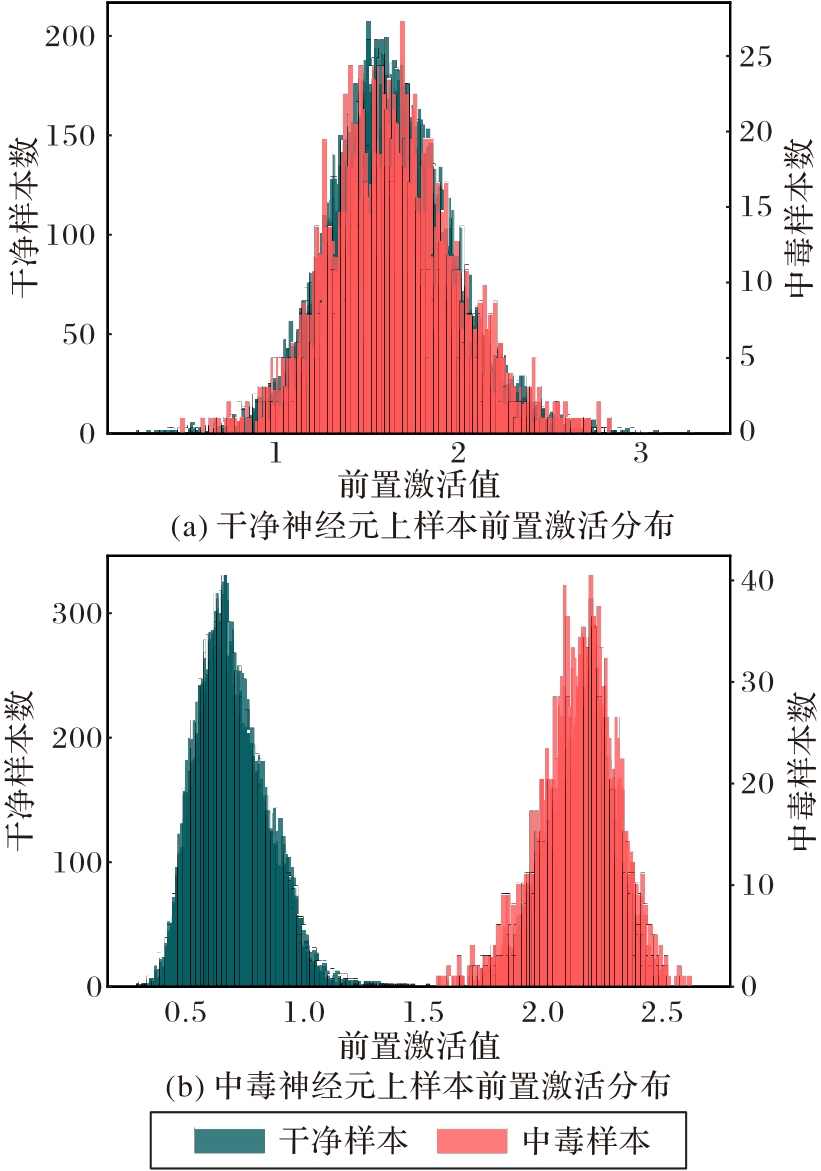
Fig. 1 Comparison of pre-activation distribution of clean and poisoned neurons
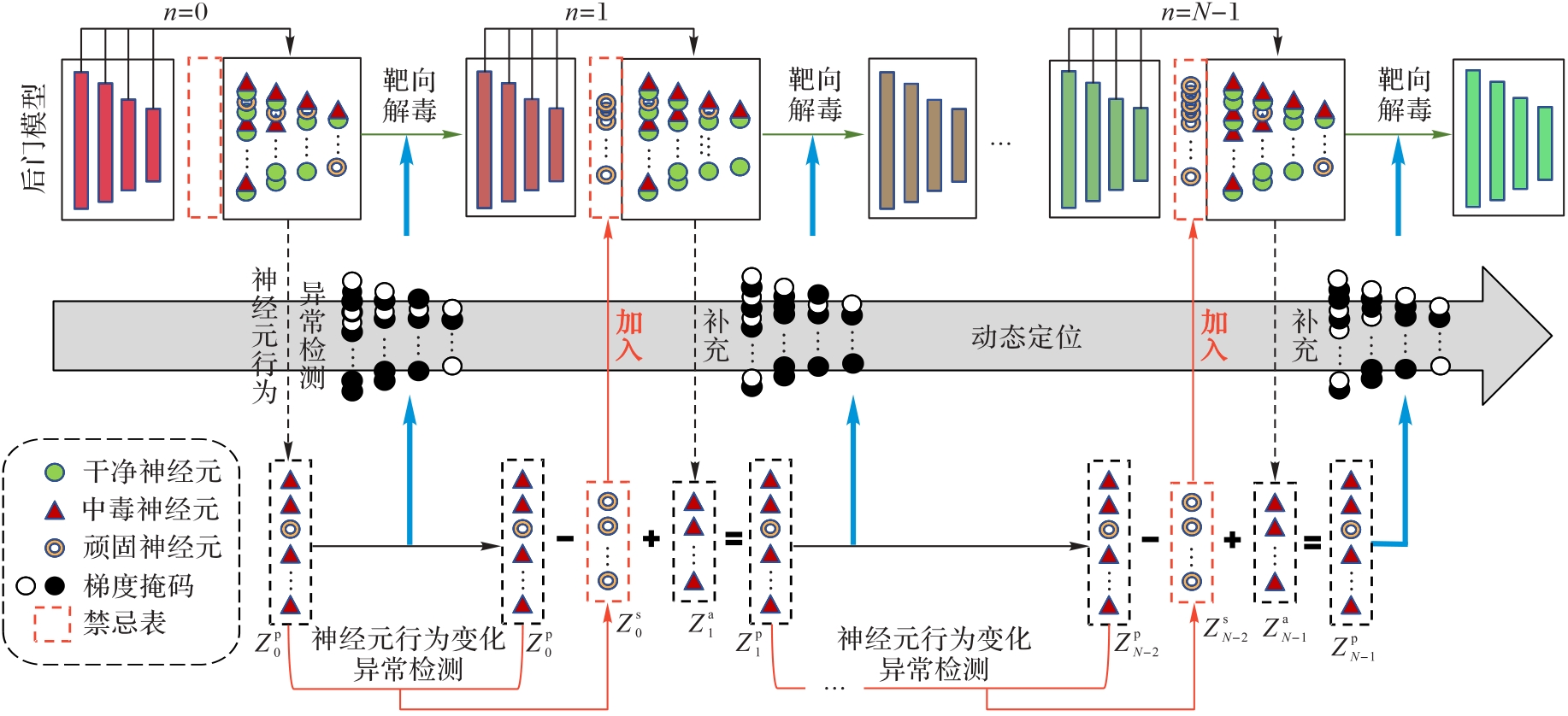
Fig. 2 Flowchart of macro-cycle of dynamic localization algorithm
| 数据集 | 攻击方法 | 防御方法 | |||||||||||||
|---|---|---|---|---|---|---|---|---|---|---|---|---|---|---|---|
| 无防御(后门模型) | ABL | ANP | D-BR | RNP | PIPD | 本文方法 | |||||||||
| ACC | ASR | ACC | ASR | ACC | ASR | ACC | ASR | ACC | ASR | ACC | ASR | ACC | ASR | ||
| GTSRB | BadNets | 93.55 | 99.88 | 90.16 | 1.57 | 95.03 | 0.13 | 93.91 | 0.00 | 90.29 | 95.45 | 0.00 | |||
| Trojan | 94.98 | 99.93 | 90.06 | 2.95 | 94.12 | 0.28 | 94.31 | 0.00 | 94.07 | 0.03 | 95.22 | 0.00 | |||
| Blend | 94.16 | 100.00 | 87.87 | 6.71 | 92.54 | 1.21 | 92.76 | 0.55 | 91.74 | 0.00 | 0.80 | 94.29 | |||
| WaNet | 92.49 | 96.69 | 85.49 | 7.08 | 92.44 | 0.94 | 91.61 | 0.02 | 91.26 | 0.00 | 0.91 | 95.33 | |||
| Dynamic | 95.23 | 99.51 | 88.50 | 6.04 | 93.83 | 0.94 | 94.14 | 91.23 | 1.43 | 0.64 | 97.23 | 0.00 | |||
| 平均 | 94.08 | 99.20 | 88.42 | 4.87 | 93.59 | 0.70 | 93.35 | 91.72 | 0.47 | 95.50 | 0.03 | ||||
| CIFAR10 | BadNets | 92.04 | 100.00 | 84.22 | 0.84 | 90.71 | 0.12 | 0.58 | 87.76 | 0.71 | 0.58 | 92.83 | |||
| Trojan | 93.13 | 99.90 | 85.41 | 0.70 | 87.93 | 0.14 | 1.22 | 89.38 | 0.31 | 90.78 | 1.46 | 93.23 | |||
| Blend | 91.82 | 100.0 | 74.59 | 88.12 | 0.68 | 85.11 | 1.36 | 84.69 | 0.64 | 1.03 | 92.18 | 0.00 | |||
| WaNet | 93.66 | 99.11 | 76.11 | 7.64 | 91.53 | 0.76 | 81.07 | 0.94 | 91.94 | 0.74 | 94.29 | 0.03 | |||
| CL | 94.63 | 100.00 | 87.19 | 3.28 | 92.09 | 5.87 | 86.02 | 4.26 | 87.83 | 5.26 | 95.02 | 0.22 | |||
| Dynamic | 92.99 | 98.10 | 61.21 | 6.87 | 92.01 | 3.63 | 93.94 | 1.57 | 90.08 | 3.02 | 89.66 | 0.57 | |||
| 平均 | 93.05 | 99.52 | 78.12 | 3.23 | 90.40 | 1.87 | 88.46 | 1.65 | 88.61 | 1.55 | 93.58 | 0.21 | |||
| CIFAR100 | BadNets | 69.98 | 99.13 | 66.57 | 0.33 | 63.88 | 17.83 | 64.30 | 0.97 | 63.94 | 0.00 | 70.57 | 0.00 | ||
| Trojan | 70.60 | 99.84 | 65.87 | 0.00 | 69.52 | 0.37 | 0.49 | 66.75 | 0.00 | 67.63 | 70.88 | 0.00 | |||
| Blend | 73.23 | 99.97 | 62.83 | 3.14 | 71.60 | 17.14 | 66.52 | 0.00 | 0.00 | 71.79 | 73.42 | 0.00 | |||
| CL | 71.09 | 81.00 | 6.82 | 60.20 | 29.66 | 65.94 | 3.86 | 58.19 | 67.22 | 0.00 | 72.30 | 0.00 | |||
| 平均 | 71.22 | 94.98 | 65.81 | 2.57 | 66.30 | 16.25 | 66.33 | 1.33 | 65.35 | 0.95 | 71.79 | 0.00 | |||
Tab. 1 Defense performance of six defense methods against different backdoor attacks on three datasets
| 数据集 | 攻击方法 | 防御方法 | |||||||||||||
|---|---|---|---|---|---|---|---|---|---|---|---|---|---|---|---|
| 无防御(后门模型) | ABL | ANP | D-BR | RNP | PIPD | 本文方法 | |||||||||
| ACC | ASR | ACC | ASR | ACC | ASR | ACC | ASR | ACC | ASR | ACC | ASR | ACC | ASR | ||
| GTSRB | BadNets | 93.55 | 99.88 | 90.16 | 1.57 | 95.03 | 0.13 | 93.91 | 0.00 | 90.29 | 95.45 | 0.00 | |||
| Trojan | 94.98 | 99.93 | 90.06 | 2.95 | 94.12 | 0.28 | 94.31 | 0.00 | 94.07 | 0.03 | 95.22 | 0.00 | |||
| Blend | 94.16 | 100.00 | 87.87 | 6.71 | 92.54 | 1.21 | 92.76 | 0.55 | 91.74 | 0.00 | 0.80 | 94.29 | |||
| WaNet | 92.49 | 96.69 | 85.49 | 7.08 | 92.44 | 0.94 | 91.61 | 0.02 | 91.26 | 0.00 | 0.91 | 95.33 | |||
| Dynamic | 95.23 | 99.51 | 88.50 | 6.04 | 93.83 | 0.94 | 94.14 | 91.23 | 1.43 | 0.64 | 97.23 | 0.00 | |||
| 平均 | 94.08 | 99.20 | 88.42 | 4.87 | 93.59 | 0.70 | 93.35 | 91.72 | 0.47 | 95.50 | 0.03 | ||||
| CIFAR10 | BadNets | 92.04 | 100.00 | 84.22 | 0.84 | 90.71 | 0.12 | 0.58 | 87.76 | 0.71 | 0.58 | 92.83 | |||
| Trojan | 93.13 | 99.90 | 85.41 | 0.70 | 87.93 | 0.14 | 1.22 | 89.38 | 0.31 | 90.78 | 1.46 | 93.23 | |||
| Blend | 91.82 | 100.0 | 74.59 | 88.12 | 0.68 | 85.11 | 1.36 | 84.69 | 0.64 | 1.03 | 92.18 | 0.00 | |||
| WaNet | 93.66 | 99.11 | 76.11 | 7.64 | 91.53 | 0.76 | 81.07 | 0.94 | 91.94 | 0.74 | 94.29 | 0.03 | |||
| CL | 94.63 | 100.00 | 87.19 | 3.28 | 92.09 | 5.87 | 86.02 | 4.26 | 87.83 | 5.26 | 95.02 | 0.22 | |||
| Dynamic | 92.99 | 98.10 | 61.21 | 6.87 | 92.01 | 3.63 | 93.94 | 1.57 | 90.08 | 3.02 | 89.66 | 0.57 | |||
| 平均 | 93.05 | 99.52 | 78.12 | 3.23 | 90.40 | 1.87 | 88.46 | 1.65 | 88.61 | 1.55 | 93.58 | 0.21 | |||
| CIFAR100 | BadNets | 69.98 | 99.13 | 66.57 | 0.33 | 63.88 | 17.83 | 64.30 | 0.97 | 63.94 | 0.00 | 70.57 | 0.00 | ||
| Trojan | 70.60 | 99.84 | 65.87 | 0.00 | 69.52 | 0.37 | 0.49 | 66.75 | 0.00 | 67.63 | 70.88 | 0.00 | |||
| Blend | 73.23 | 99.97 | 62.83 | 3.14 | 71.60 | 17.14 | 66.52 | 0.00 | 0.00 | 71.79 | 73.42 | 0.00 | |||
| CL | 71.09 | 81.00 | 6.82 | 60.20 | 29.66 | 65.94 | 3.86 | 58.19 | 67.22 | 0.00 | 72.30 | 0.00 | |||
| 平均 | 71.22 | 94.98 | 65.81 | 2.57 | 66.30 | 16.25 | 66.33 | 1.33 | 65.35 | 0.95 | 71.79 | 0.00 | |||
| 数据集 | 攻击方法 | 不同防御方法影响的神经元数 | ||
|---|---|---|---|---|
| ANP | RNP | 本文方法 | ||
| GTSRB | BadNets | 124 | 108 | 84 |
| Trojan | 113 | 129 | 67 | |
| Blend | 284 | 230 | 158 | |
| WaNet | 233 | 246 | 142 | |
| Dynamic | 191 | 171 | 85 | |
| 平均 | 189 | 177 | 107 | |
| CIFAR10 | BadNets | 315 | 379 | 104 |
| Trojan | 509 | 215 | 79 | |
| Blend | 548 | 276 | 166 | |
| WaNet | 240 | 157 | 180 | |
| CL | 198 | 234 | 119 | |
| Dynamic | 119 | 115 | 135 | |
| 平均 | 322 | 229 | 131 | |
| CIFAR100 | BadNets | 152 | 130 | 65 |
| Trojan | 107 | 96 | 50 | |
| Blend | 180 | 153 | 99 | |
| CL | 143 | 118 | 80 | |
| 平均 | 146 | 124 | 74 | |
Tab. 2 Comparison of numbers of neurons of different defense methods
| 数据集 | 攻击方法 | 不同防御方法影响的神经元数 | ||
|---|---|---|---|---|
| ANP | RNP | 本文方法 | ||
| GTSRB | BadNets | 124 | 108 | 84 |
| Trojan | 113 | 129 | 67 | |
| Blend | 284 | 230 | 158 | |
| WaNet | 233 | 246 | 142 | |
| Dynamic | 191 | 171 | 85 | |
| 平均 | 189 | 177 | 107 | |
| CIFAR10 | BadNets | 315 | 379 | 104 |
| Trojan | 509 | 215 | 79 | |
| Blend | 548 | 276 | 166 | |
| WaNet | 240 | 157 | 180 | |
| CL | 198 | 234 | 119 | |
| Dynamic | 119 | 115 | 135 | |
| 平均 | 322 | 229 | 131 | |
| CIFAR100 | BadNets | 152 | 130 | 65 |
| Trojan | 107 | 96 | 50 | |
| Blend | 180 | 153 | 99 | |
| CL | 143 | 118 | 80 | |
| 平均 | 146 | 124 | 74 | |
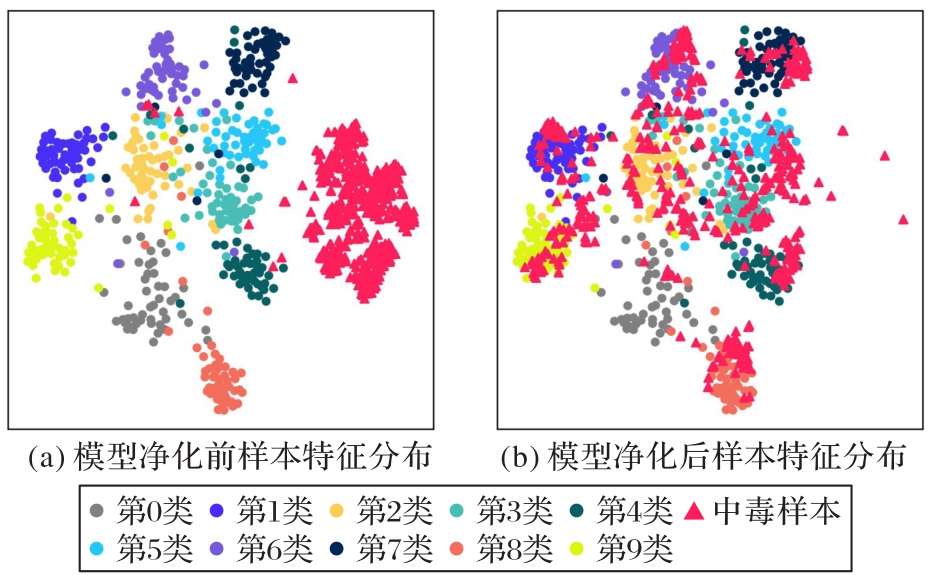
Fig. 3 Distribution of samples in feature space before and after model purification
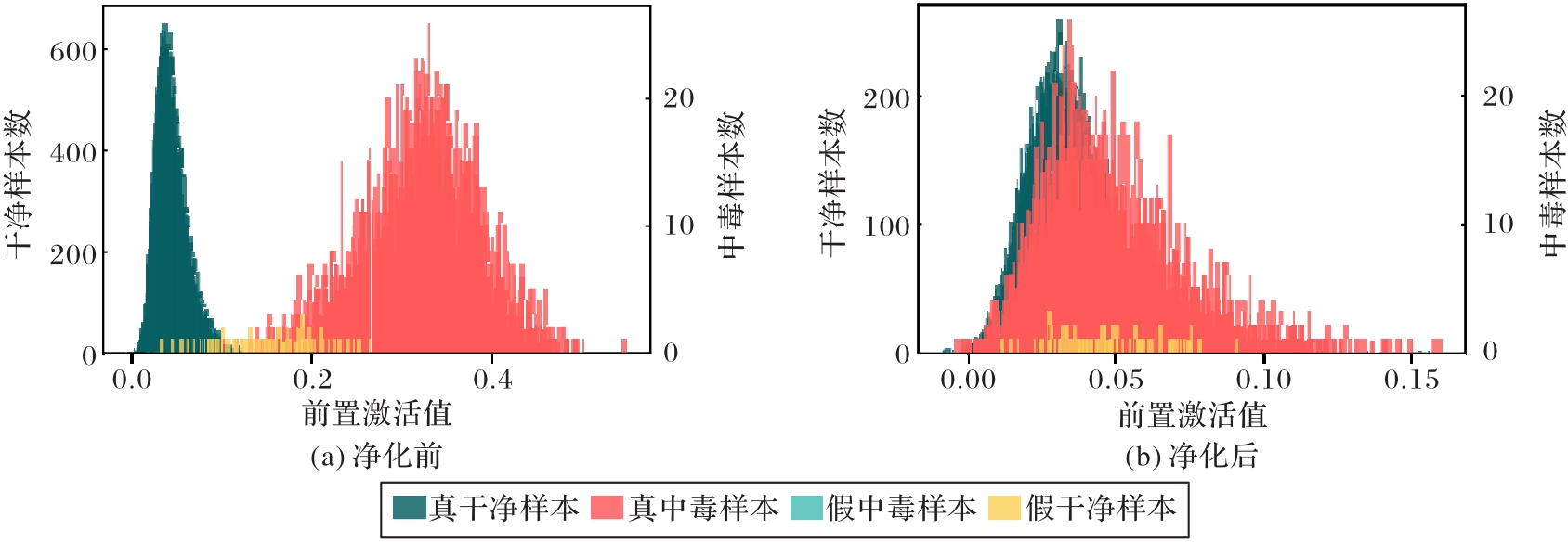
Fig. 4 Distribution of pre-activation of samples before and after model purification on poisoned neurons
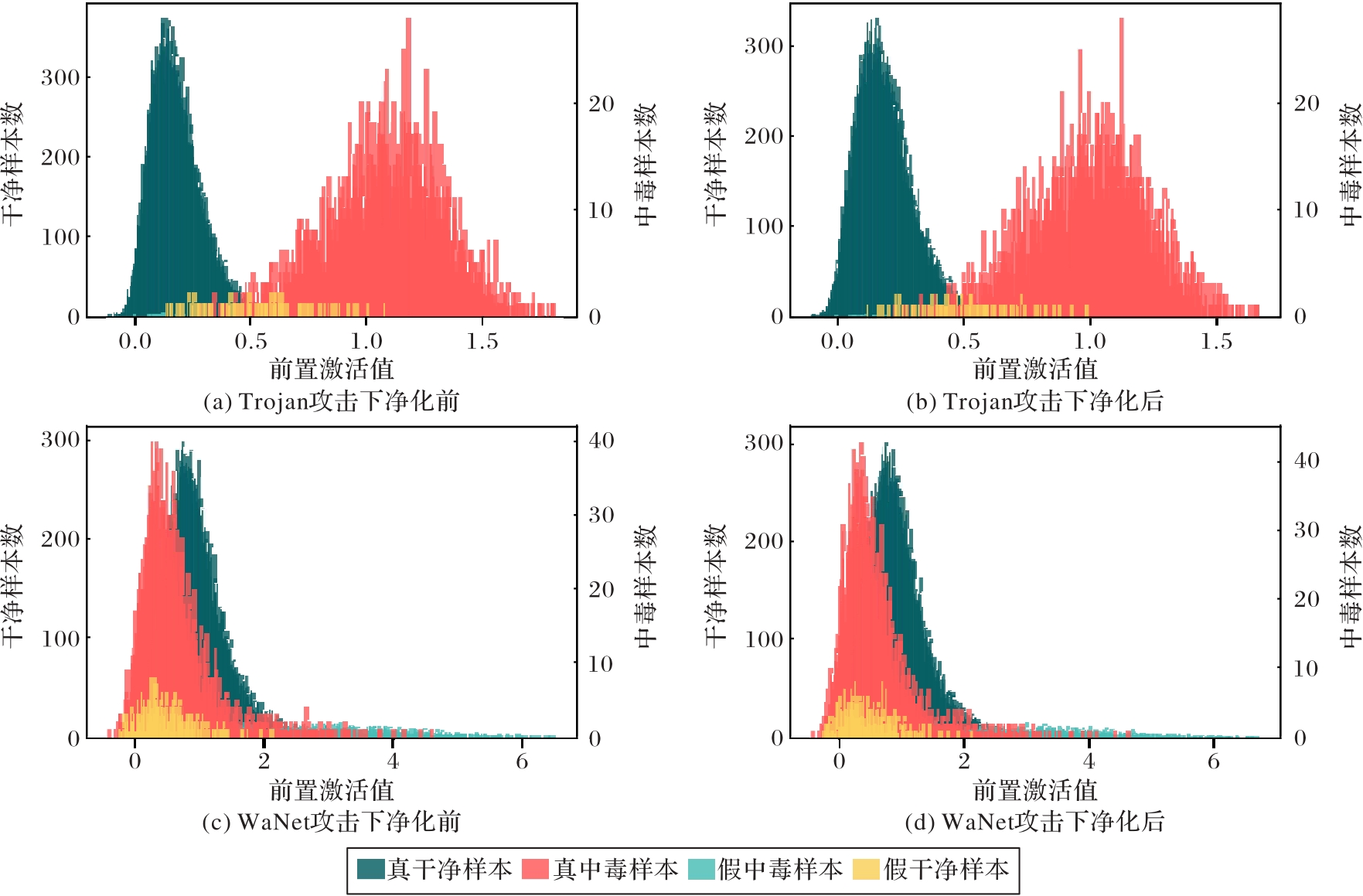
Fig. 5 Distribution of pre-activation of samples before and after model purification on stubborn neurons
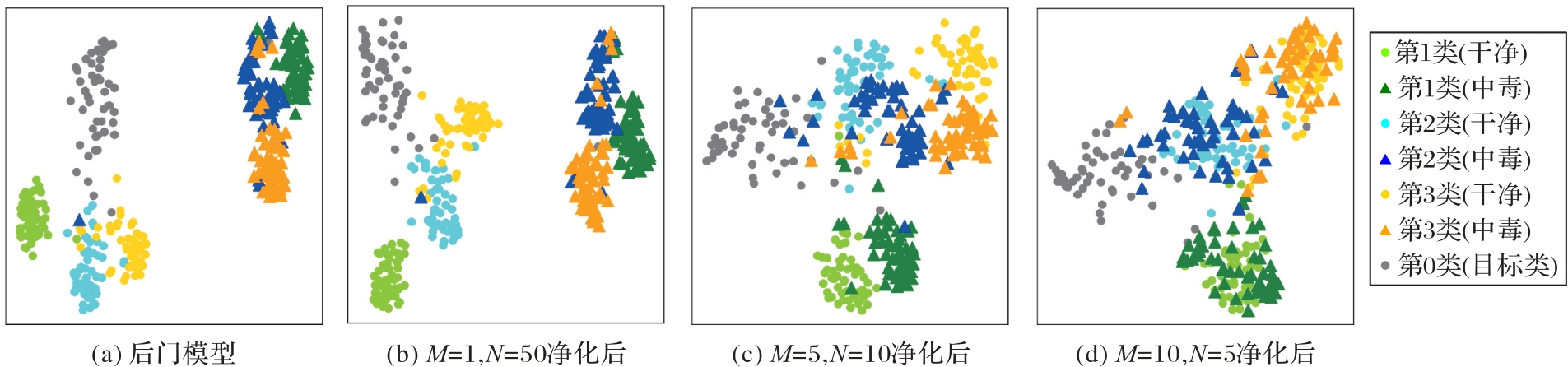
Fig. 6 Distribution of samples in feature space after purification with different combinations of macro-cycle and micro-cycle
| 攻击方法 | ||||||||||||
|---|---|---|---|---|---|---|---|---|---|---|---|---|
| ACC | ASR | 微调神经元数 | ACC | ASR | 微调神经元数 | ACC | ASR | 微调神经元数 | ACC | ASR | 微调神经元数 | |
| BadNets | 92.77 | 0.89 | 34 | 92.79 | 0.42 | 69 | 92.83 | 0.16 | 104 | 92.49 | 0.12 | 125 |
| Blend | 92.14 | 0.56 | 62 | 92.14 | 0.09 | 118 | 92.18 | 0.00 | 166 | 91.88 | 0.03 | 214 |
| Trojan | 93.32 | 14.67 | 38 | 93.26 | 3.23 | 59 | 93.23 | 0.27 | 79 | 93.48 | 0.50 | 116 |
| WaNet | 94.27 | 0.02 | 57 | 94.27 | 0.04 | 116 | 94.29 | 0.03 | 180 | 94.14 | 0.07 | 230 |
| CL | 94.90 | 5.18 | 32 | 95.02 | 0.17 | 57 | 95.02 | 0.22 | 119 | 94.59 | 0.40 | 160 |
| Dynamic | 93.90 | 5.31 | 60 | 93.89 | 0.88 | 97 | 93.92 | 0.57 | 135 | 92.61 | 0.12 | 174 |
Tab. 3 Impact of proportion ρ% of subsets of poisoned neurons on model purification
| 攻击方法 | ||||||||||||
|---|---|---|---|---|---|---|---|---|---|---|---|---|
| ACC | ASR | 微调神经元数 | ACC | ASR | 微调神经元数 | ACC | ASR | 微调神经元数 | ACC | ASR | 微调神经元数 | |
| BadNets | 92.77 | 0.89 | 34 | 92.79 | 0.42 | 69 | 92.83 | 0.16 | 104 | 92.49 | 0.12 | 125 |
| Blend | 92.14 | 0.56 | 62 | 92.14 | 0.09 | 118 | 92.18 | 0.00 | 166 | 91.88 | 0.03 | 214 |
| Trojan | 93.32 | 14.67 | 38 | 93.26 | 3.23 | 59 | 93.23 | 0.27 | 79 | 93.48 | 0.50 | 116 |
| WaNet | 94.27 | 0.02 | 57 | 94.27 | 0.04 | 116 | 94.29 | 0.03 | 180 | 94.14 | 0.07 | 230 |
| CL | 94.90 | 5.18 | 32 | 95.02 | 0.17 | 57 | 95.02 | 0.22 | 119 | 94.59 | 0.40 | 160 |
| Dynamic | 93.90 | 5.31 | 60 | 93.89 | 0.88 | 97 | 93.92 | 0.57 | 135 | 92.61 | 0.12 | 174 |
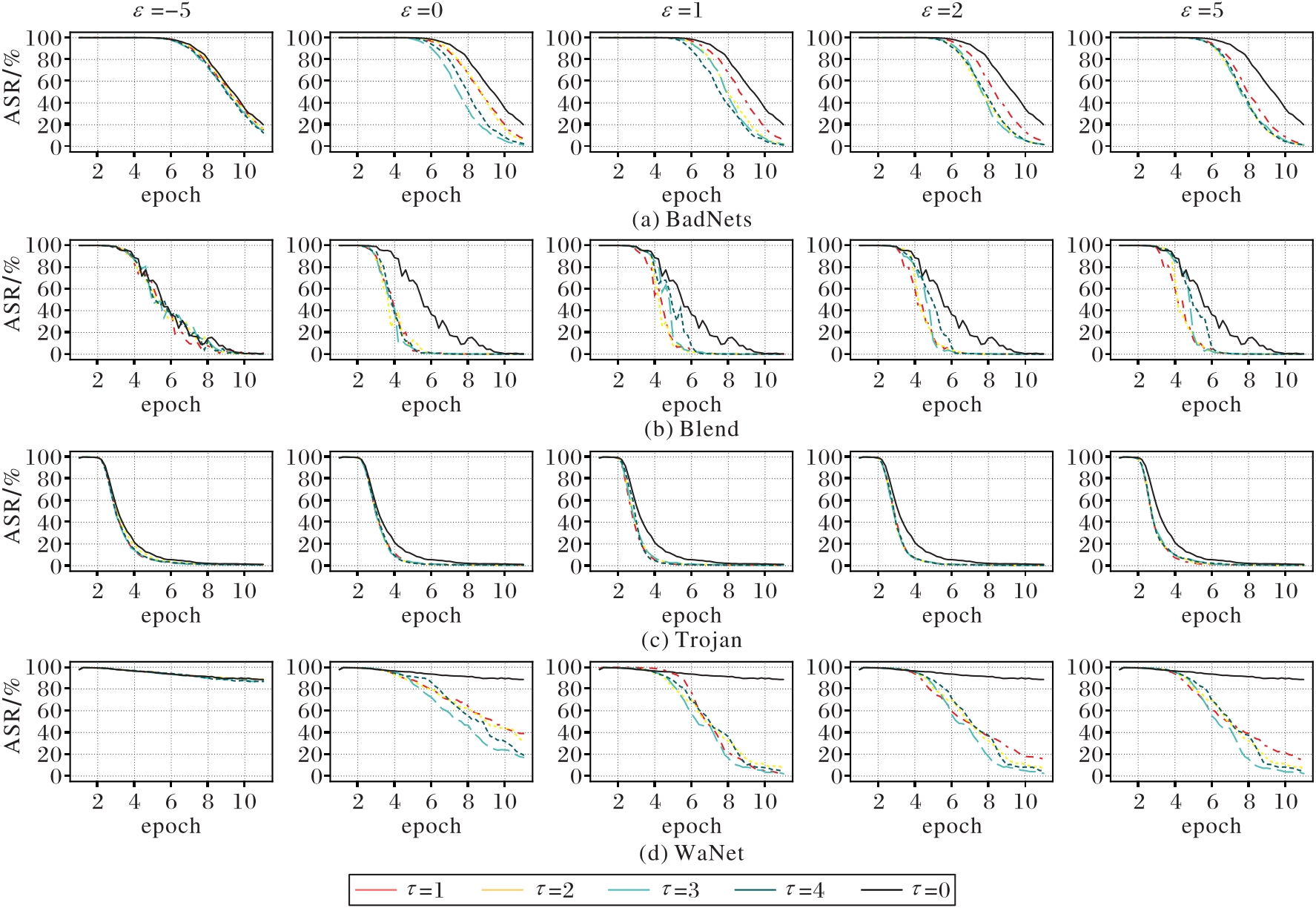
Fig. 7 Influence of stubborn neuron threshold ε and tabu period τ on model purification under poisoned label attacks
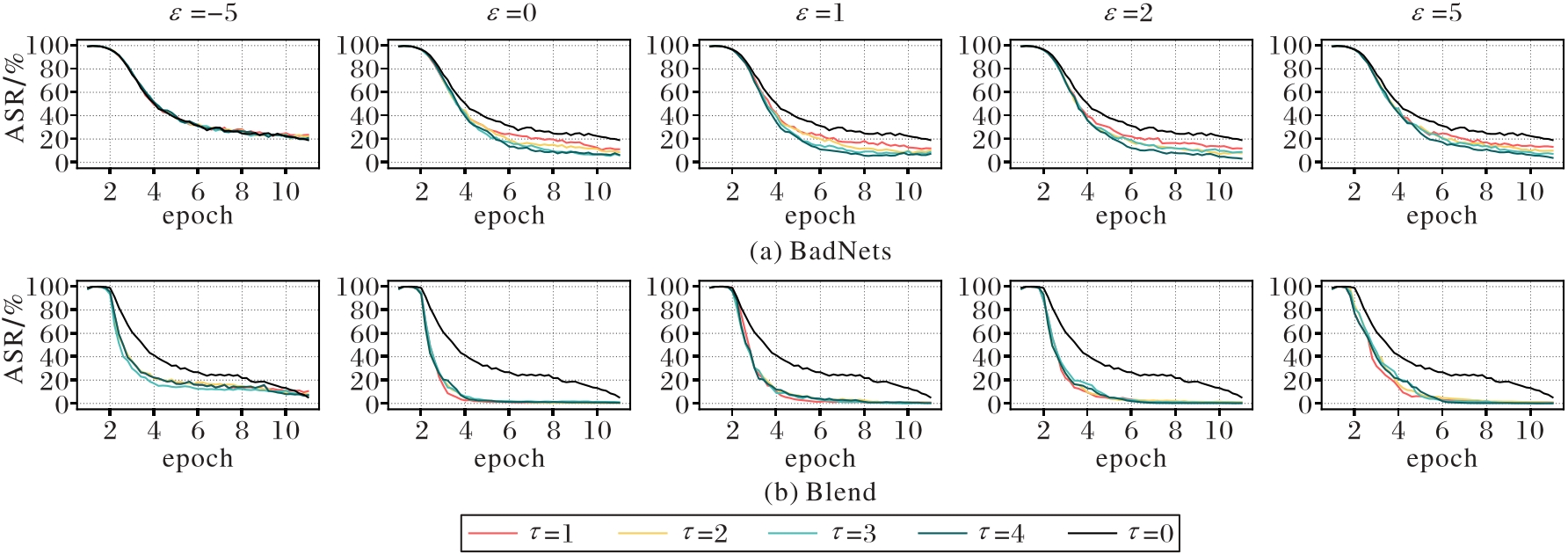
Fig. 8 Influence of stubborn neuron threshold ε and tabu period τ on model purification under clean label attacks
| [1] | Feng S, Tao G, Cheng S, et al. Detecting backdoors in pre-trained encoders [C]// CVPR 2023. Piscataway: IEEE, 2023: 16352-16362. |
| [2] | Li Y, Ma H, Zhang Z, et al. NTD: non-transferability enabled deep learning backdoor detection [J]. IEEE Transactions on Information Forensics and Security, 2024, 19: 104-119. |
| [3] | Guo G, Tondi B, Barni M. Universal detection of backdoor attacks via density-based clustering and centroids analysis [J]. IEEE Transactions on Information Forensics and Security, 2023, 19: 970-984. |
| [4] | Jebreel N M, Domingo-Ferrer J, Li Y. Defending against backdoor attacks by layer-wise feature analysis [C]// IJCAI 2024. California: ijcai.org, 2024: 8416-8420. |
| [5] | Liu X, Li M, Wang H, et al. Detecting backdoors during the inference stage based on corruption robustness consistency [C]// CVPR 2023. Piscataway: IEEE, 2023: 16363-16372. |
| [6] | Yu C, Zhang Y. Defending against backdoor attacks by quarantine training [J]. IEEE Access, 2024, 12: 10681-10689. |
| [7] | Zheng R, Tang R, Li J, et al. Data-free backdoor removal based on channel Lipschitzness [C]// ECCV 2022. Cham: Springer, 2022: 175-191. |
| [8] | Guo J, Li Y, Chen X, et al. SCALE-UP: an efficient black-box input-level backdoor detection via analyzing scaled prediction consistency [PP/OL]. V2. arXiv (2023-02-19) [2025-02-14]. . |
| [9] | Wu D, Wang Y. Adversarial neuron pruning purifies backdoored deep models [C]// NeurIPS 2021. Red Hook: Curran Associates Inc., 2021: 16913-16925. |
| [10] | Zheng R, Tang R, Li J, et al. Pre-activation distributions expose backdoor neurons [C]// NeurIPS 2022. Red Hook: Curran Associates, Inc., 2022: 18667-18680. |
| [11] | Jiang W, Wen X, Zhan J, et al. Interpretability-guided defense against backdoor attacks to deep neural networks [J]. IEEE Transactions on Computer-Aided Design of Integrated Circuits and Systems, 2022, 41(8): 2611-2624. |
| [12] | Li Y, Lyu X, Ma X, et al. Reconstructive neuron pruning for backdoor defense [C]// ICML 2023. New York: JMLR.org, 2023: 19837-19854. |
| [13] | Chen Y, Wu H, Zhou J. Progressive poisoned data isolation for training-time backdoor defense [C]// AAAI 2024. Palo Alto: AAAI Press, 2024: 11425-11433. |
| [14] | Min R, Qin Z, Shen L, et al. Towards stable backdoor purification through feature shift tuning [PP/OL]. V3. arXiv (2023-10-21) [2025-02-14]. . |
| [15] | Gong X, Chen Y J, Yang W, et al. Redeem myself: purifying backdoors in deep learning models using self-attention distillation [C]// S&P 2023. Piscataway: IEEE, 2023: 755-772. |
| [16] | Liu Y, Shen G, Tao G, et al. Complex backdoor detection by symmetric feature differencing [C]// CVPR 2022. Piscataway: IEEE, 2022: 14983-14993. |
| [17] | Zhang Z, Liu Q, Wang Z, et al. Backdoor defense via deconfounded representation learning [C]// CVPR 2023. Piscataway: IEEE, 2023: 12228-12238. |
| [18] | Li Y, Lyu X, Koren N, et al. Anti-backdoor learning: training clean models on poisoned data [C]// NeurIPS 2021. Red Hook: Curran Associates, Inc., 2021: 14900-14912. |
| [19] | Li Y, Lyu X, Koren N, et al. Neural attention distillation: erasing backdoor triggers from deep neural networks [PP/OL]. V2. arXiv (2021-01-27) [2025-02-14]. . |
| [20] | Chen W, Wu B, Wang H. Effective backdoor defense by exploiting sensitivity of poisoned samples [C]// NeurIPS 2022. Red Hook: Curran Associates Inc., 2022: 9727-9737. |
| [21] | 苏锦涛,葛丽娜,肖礼广,等.联邦学习中针对后门攻击的检测与防御方案[J].计算机应用, 2025, 45(8): 2399-2408. |
| Su Jintao, Ge Lina, Xiao Liguang, et al. Detection and defense scheme for backdoor attacks in federated learning [J]. Journal of Computer Applications, 2025, 45(8): 2399-2408. | |
| [22] | Gu T, Dolan-Gavitt B, Garg S. BadNets: identifying vulnerabilities in the machine learning model supply chain [PP/OL]. V2. arXiv (2019-03-11) [2025-02-14]. . |
| [23] | Liu Y, Ma X, Bailey J, et al. Reflection backdoor: a natural backdoor attack on deep neural networks [C]// ECCV 2020. Cham: Springer, 2020: 182-199. |
| [24] | Nguyen A, Tran A. WaNet — imperceptible warping-based backdoor attack [PP/OL]. V4. arXiv (2021-03-04) [2022-05-28]. . |
| [25] | Wenger E, Passananti J, Bhagoji A N, et al. Backdoor attacks against deep learning systems in the physical world [C]// CVPR 2021. Piscataway: IEEE, 2021: 6202-6211. |
| [26] | 朱淑雯,罗戈,韦平,等.隐蔽图像后门攻击[J].中国图象图形学报, 2023, 28(3): 864-877. |
| Zhu Shuwen, Luo Ge, Wei Ping, et al. Image-imperceptible backdoor attacks [J]. Journal of Image and Graphics, 2023, 28(3): 864-877. | |
| [27] | Liu Y, Ma S, Aafer Y, et al. Trojaning attack on neural networks [EB/OL]. (2018-02-21) [2025-11-19]. . |
| [28] | Chen X, Liu C, Li B, et al. Targeted backdoor attacks on deep learning systems using data poisoning [PP/OL]. arXiv (2017-12-15) [2025-02-14]. . |
| [29] | Barni M, Kallas K, Tondi B. A new backdoor attack in CNNs by training set corruption without label poisoning [C]// ICIP 2019. Piscataway: IEEE, 2019: 101-105. |
| [30] | Cheng S, Liu Y, Ma S, et al. Deep feature space trojan attack of neural networks by controlled detoxification [C]// AAAI 2021. Palo Alto: AAAI Press, 2021: 1148-1156. |
| [31] | Nguyen T A, Tran T A. Input-aware dynamic backdoor attack [C]// NeurIPS 2020. Red Hook: Curran Associates Inc., 2020: 3454-3464. |
| [32] | Ning R, Li J, Xin C, et al. Invisible poison: a blackbox clean label backdoor attack to deep neural networks [C]// INFOCOM 2021. Piscataway: IEEE, 2021: 1-10. |
| [33] | 唐迎春,黄荣,周树波,等.基于特征调控与颜色分离的净标签多后门攻击方法[J].计算机应用, 2026, 46(1): 124-134. |
| Tang Yingchun, Huang Rong, Zhou Shubo, et al. Clean-label multi-backdoor attack method based on feature regulation and color separation [J]. Journal of Computer Applications, 2026, 46(1): 124-134. | |
| [34] | Turner A, Tsipras D, Madry A. Clean-label backdoor attacks [EB/OL]. (2018-09-27) [2022-05-28]. . |
| [35] | Hu X, Lin X, Cogswell M, et al. Trigger hunting with a topological prior for trojan detection [PP/OL]. V2. arXiv (2022-04-02) [2025-02-14]. . |
| [36] | Liu Y, Lee W C, Tao G, et al. ABS: scanning neural networks for back-doors by artificial brain stimulation [C]// ACM CCS 2019. New York: ACM, 2019: 1265-1282. |
| [37] | 王尚,李昕,宋永立,等.基于自定义后门的触发器样本检测方案[J].信息安全学报, 2022, 7(6): 48-61. |
| Wang Shang, Li Xin, Song Yongli, et al. A trigger sample detection scheme based on custom backdoor behaviors [J]. Journal of Cyber Security, 2022, 7(6): 48-61. | |
| [38] | Tejankar A, Sanjabi M, Wang Q, et al. Defending against patch-based backdoor attacks on self-supervised learning [C]// CVPR 2023. Piscataway: IEEE, 2023: 12239-12249. |
| [39] | Stallkamp J, Schlipsing M, Salmen J, et al. The German traffic sign recognition benchmark: a multi-class classification competition [C]// IJCNN 2011. Piscataway: IEEE, 2011: 1453-1460. |
| [40] | Krizhevsky A. Learning multiple layers of features from tiny images [R/OL]. (2009-04-08) [2025-11-19]. . |
| [41] | He K, Zhang X, Ren S, et al. Deep residual learning for image recognition [C]// CVPR 2016. Piscataway: IEEE, 2016: 770-778. |
| [42] | Garg S, Kumar A, Goel V, et al. Can adversarial weight perturbations inject neural backdoors [C]// CIKM 2020. New York: ACM, 2020: 2029-2032. |
| [1] | Yuqing ZHOU, Xiaolong HAN. Joint operation of quay crane and straddle carrier under dual-cycle strategy [J]. Journal of Computer Applications, 2023, 43(2): 645-653. |
| [2] | ZHOU Shuo, QIU Runhe, TANG Minjun. Power allocation algorithm for CR-NOMA system based on tabu search and Q-learning [J]. Journal of Computer Applications, 2021, 41(7): 2026-2032. |
| [3] | LIU Jingfa, GU Yaoping, LIU Wenjie. Focused crawler method combining ontology and improved Tabu search for meteorological disaster [J]. Journal of Computer Applications, 2020, 40(8): 2255-2261. |
| [4] | SHI Lukui, MA Hongqi, ZHANG Chaozong, FAN Shiyan. Detection method of pulmonary nodules based on improved residual structure [J]. Journal of Computer Applications, 2020, 40(7): 2110-2116. |
| [5] | CAI Yun, LIU Pengqing, XIONG Hegen. Berth joint scheduling based on quantum genetic hybrid algorithm [J]. Journal of Computer Applications, 2020, 40(3): 897-901. |
| [6] | ZHOU Wei, XIANG Danlei, GUO Mengyu. Low complexity reactive tabu search detection algorithm in MIMO-GFDM systems [J]. Journal of Computer Applications, 2019, 39(4): 1133-1137. |
| [7] | LI Feilong, ZHAO Chunyan, FAN Rumeng. Solving random constraint satisfaction problems based on tabu search algorithm [J]. Journal of Computer Applications, 2019, 39(12): 3584-3589. |
| [8] | HE Dongdong, LI Yinzhen. Optimization model of green multi-type vehicles routing problem [J]. Journal of Computer Applications, 2018, 38(12): 3618-3624. |
| [9] | YANG Xiaodong, KANG Yan, LIU Qing, SUN Jinwen. Hybrid imperialist competitive algorithm for solving job-shop scheduling problem [J]. Journal of Computer Applications, 2017, 37(2): 517-522. |
| [10] | LI Yaling, LI Yi. Aircraft stands assignment optimization based on variable tabu length [J]. Journal of Computer Applications, 2016, 36(10): 2940-2944. |
| [11] | DONG Yuehua, LIU Li. Data discretization algorithm based on adaptive improved particle swarm optimization [J]. Journal of Computer Applications, 2016, 36(1): 188-193. |
| [12] | DONG Yuehua, DAI Yuqian. Automatic software test data generation based on hybrid particle swarm optimization [J]. Journal of Computer Applications, 2015, 35(2): 545-549. |
| [13] | ZHANG Aijun QIN Xinqiang QIONG Chunqiong. Multi-start tabu search algorithm for solving maximum cut problem [J]. Journal of Computer Applications, 2014, 34(5): 1271-1274. |
| [14] | YE Xiaolong LAN Julong GUO Tong. Network anomaly detection method based on principle component analysis and tabu search and decision tree classification [J]. Journal of Computer Applications, 2013, 33(10): 2846-2850. |
| [15] | ZHAO Yue HU Yu-mei. Hybrid tabu search for scheduling reentrant jobs on parallel machines [J]. Journal of Computer Applications, 2012, 32(09): 2451-2454. |
| Viewed | ||||||
|
Full text |
|
|||||
|
Abstract |
|
|||||
