


Journal of Computer Applications ›› 2026, Vol. 46 ›› Issue (7): 2064-2073.DOI: 10.11772/j.issn.1001-9081.2025070867
• Artificial intelligence • Previous Articles Next Articles
Didi HOU1,2, Shaodong HONG1,2, Yujie FU1,2, Yunhe CUI1,2, Guowei SHEN1,2( )
)
Received:2025-08-01
Revised:2025-08-19
Accepted:2025-08-29
Online:2025-11-05
Published:2026-07-10
Contact:
Guowei SHEN
About author:HOU Didi, born in 2000, M. S. candidate. Her research interests include threat intelligence analysis, knowledge graph.Supported by:
侯迪迪1,2, 洪少东1,2, 付玉杰1,2, 崔允贺1,2, 申国伟1,2()
通讯作者:
申国伟
作者简介:侯迪迪(2000—),女,贵州毕节人,硕士研究生,CCF会员,主要研究方向:威胁情报分析、知识图谱基金资助:CLC Number:
Didi HOU, Shaodong HONG, Yujie FU, Yunhe CUI, Guowei SHEN. Cybersecurity named entity recognition method based on large language model linking[J]. Journal of Computer Applications, 2026, 46(7): 2064-2073.
侯迪迪, 洪少东, 付玉杰, 崔允贺, 申国伟. 基于大语言模型链接的网络安全实体识别方法[J]. 《计算机应用》唯一官方网站, 2026, 46(7): 2064-2073.
Add to citation manager EndNote|Ris|BibTeX
URL: https://www.joca.cn/EN/10.11772/j.issn.1001-9081.2025070867
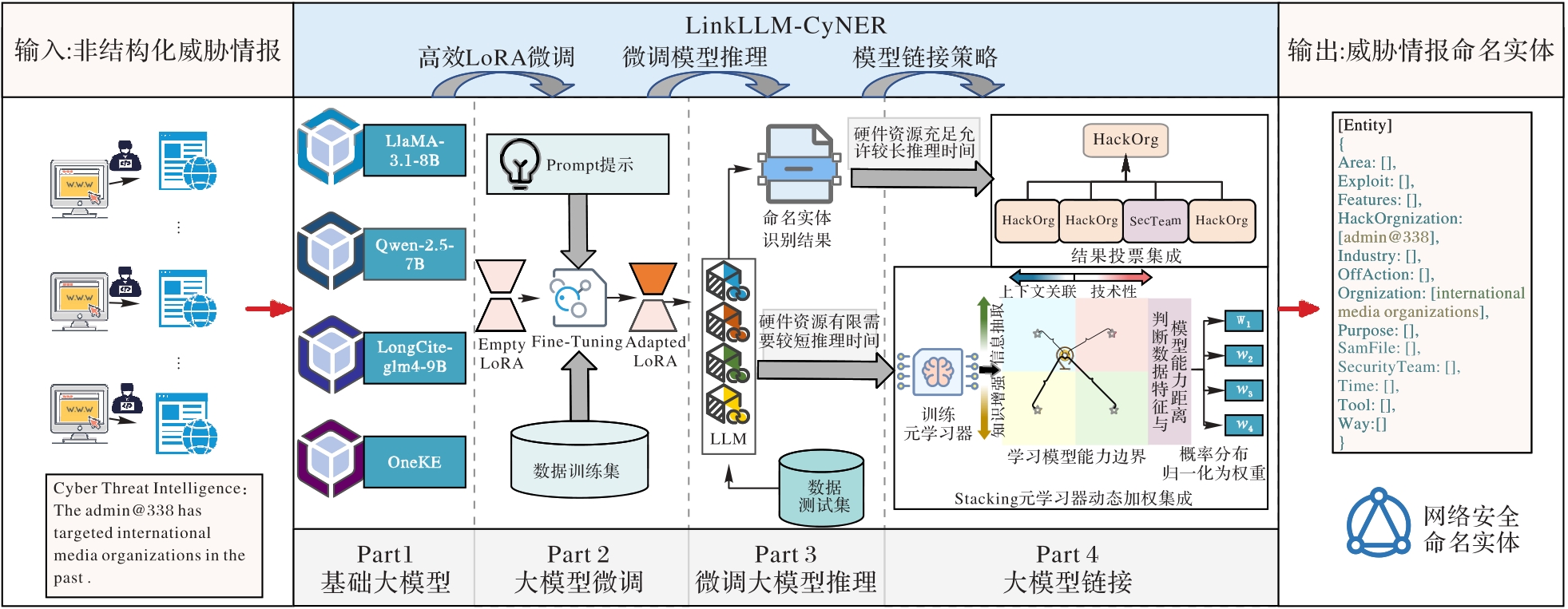
Fig. 1 Framework of LLM linking method integrating fine-tuning
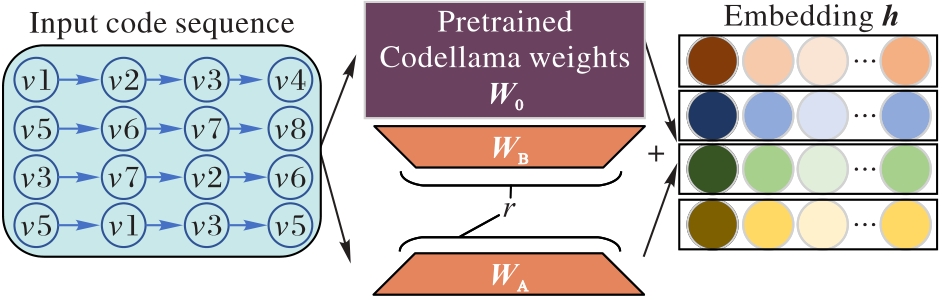
Fig. 2 LoRA fine-tuning technology principle
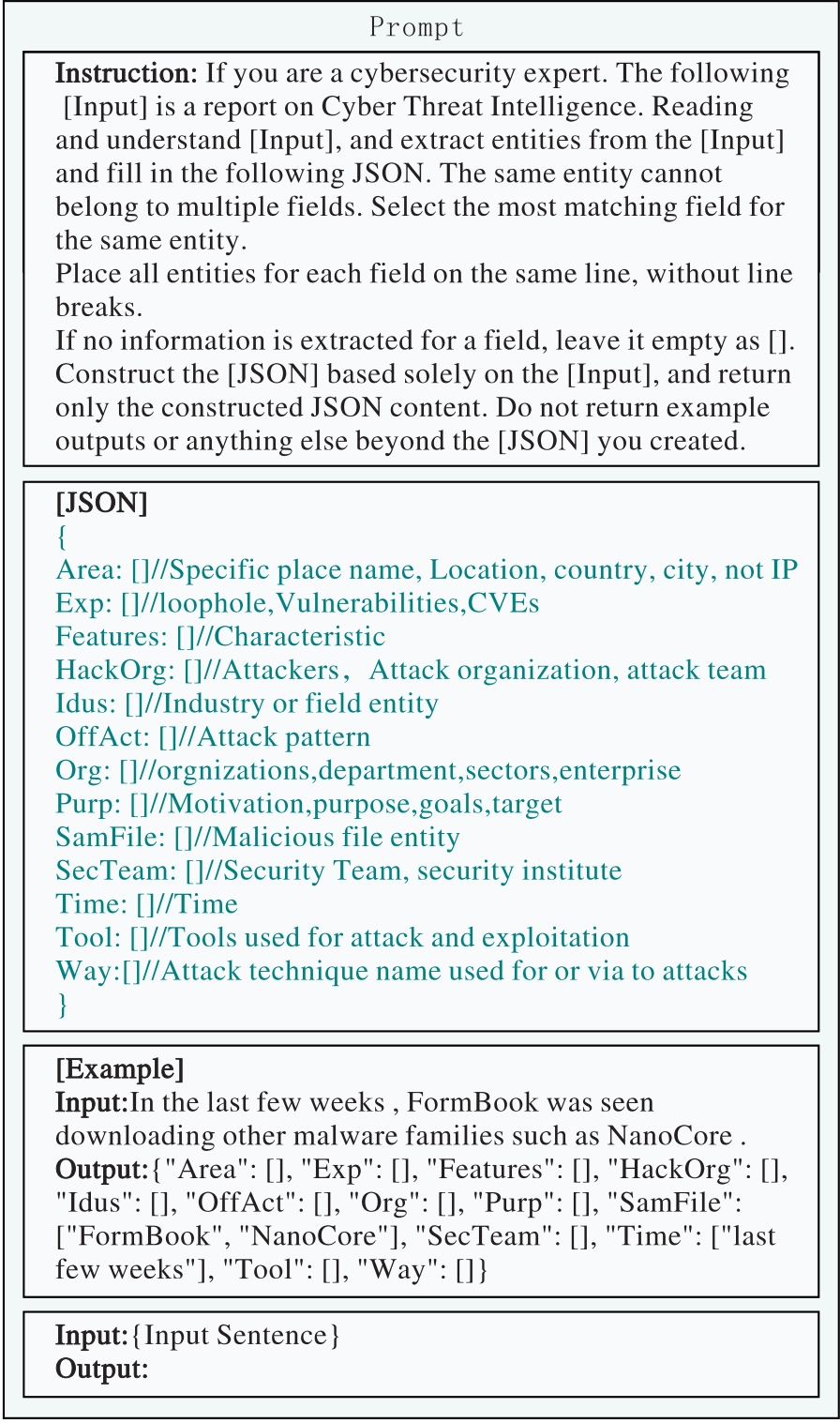
Fig. 3 LLM inference prompt
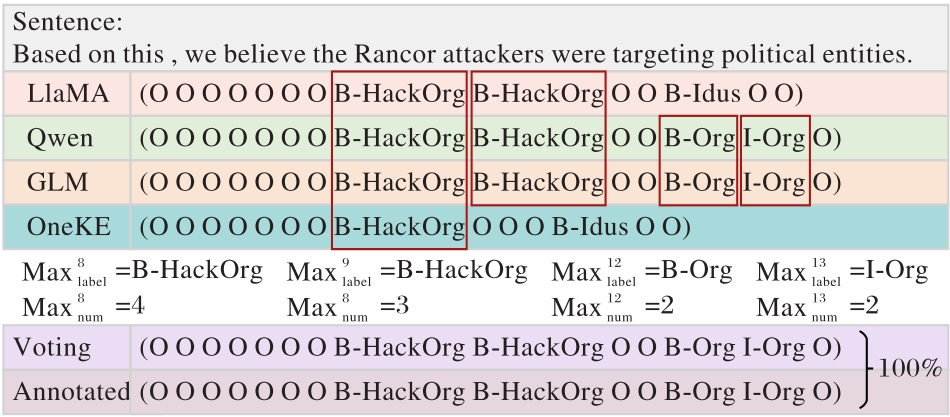
Fig. 4 Static linking process
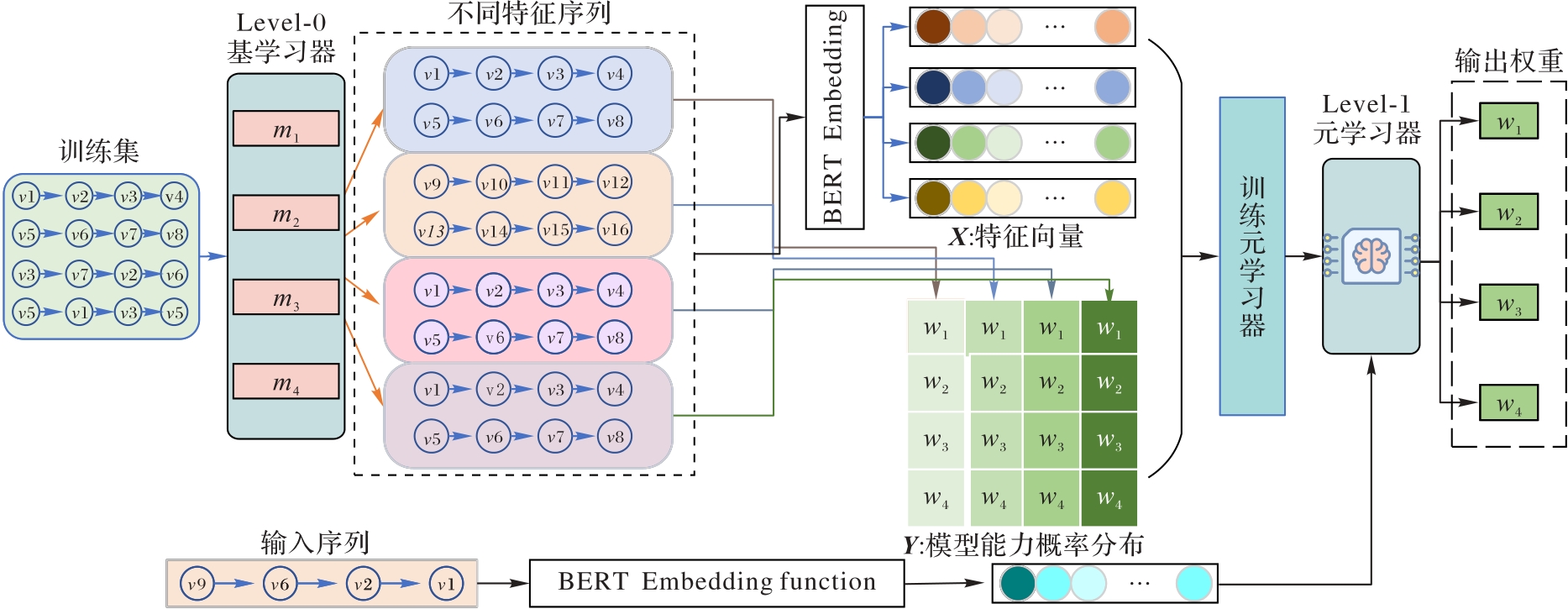
Fig. 5 Dynamic linking framework of meta-learners
| 实体类型 | 含义 | 示例 | 数量 |
|---|---|---|---|
| Area | Location | China | 3 447 |
| Exp | Exploit | EternalBlue | 1 559 |
| Feature | Characteristics | Uploading files | 2 441 |
| HackOrg | Hacker Org | China Chopper | 5 465 |
| Idus | Industry | social media | 2 136 |
| OffAct | Attack Pattern | supply-chain | 2 669 |
| Org | Organization | 2 489 | |
| Purp | Motivation | steal credentials | 2 424 |
| SamFile | File | KHNP.doc | 2 400 |
| SecTeam | Security team | FireEye | 1 921 |
| Time | Time | 2008 | 2 659 |
| Tool | Tool | LATENTBOT | 4 784 |
| Way | Technique | spear phishing | 2 018 |
Tab. 1 DNRTI entity information
| 实体类型 | 含义 | 示例 | 数量 |
|---|---|---|---|
| Area | Location | China | 3 447 |
| Exp | Exploit | EternalBlue | 1 559 |
| Feature | Characteristics | Uploading files | 2 441 |
| HackOrg | Hacker Org | China Chopper | 5 465 |
| Idus | Industry | social media | 2 136 |
| OffAct | Attack Pattern | supply-chain | 2 669 |
| Org | Organization | 2 489 | |
| Purp | Motivation | steal credentials | 2 424 |
| SamFile | File | KHNP.doc | 2 400 |
| SecTeam | Security team | FireEye | 1 921 |
| Time | Time | 2008 | 2 659 |
| Tool | Tool | LATENTBOT | 4 784 |
| Way | Technique | spear phishing | 2 018 |
| 模型 | 目标模块 | LoRA | LoRA | LoRA dropout | Batch_size | Epochs | Learning_rate |
|---|---|---|---|---|---|---|---|
| LlaMA-3.1-8B | q,k,v_proj | 8 | 32 | 0.1 | 4 | 8 | 1.00×10⁻⁴ |
| Qwen2.5-7B | q,k,v_proj | 8 | 32 | 0.1 | 4 | 10 | 1.00×10⁻⁴ |
| GLM4-9B | q,k,v_proj | 8 | 32 | 0.1 | 4 | 7 | 1.00×10⁻⁴ |
| OneKE | q,k,v_proj | 8 | 32 | 0.1 | 4 | 7 | 1.00×10⁻⁴ |
Tab. 2 Parameter configuration of LoRA fine-tuning
| 模型 | 目标模块 | LoRA | LoRA | LoRA dropout | Batch_size | Epochs | Learning_rate |
|---|---|---|---|---|---|---|---|
| LlaMA-3.1-8B | q,k,v_proj | 8 | 32 | 0.1 | 4 | 8 | 1.00×10⁻⁴ |
| Qwen2.5-7B | q,k,v_proj | 8 | 32 | 0.1 | 4 | 10 | 1.00×10⁻⁴ |
| GLM4-9B | q,k,v_proj | 8 | 32 | 0.1 | 4 | 7 | 1.00×10⁻⁴ |
| OneKE | q,k,v_proj | 8 | 32 | 0.1 | 4 | 7 | 1.00×10⁻⁴ |
| 参数 | MLP | CNN | 随机森林 |
|---|---|---|---|
| Batch_size | 16 | 16 | — |
| Epochs | 270 | 370 | — |
| Learning_rate | 1×10⁻⁴ | 1×10⁻³ | — |
| Dropout | 0.5 | 0.5 | — |
| 优化器 | AdamW | Adam | — |
| 学习率调度器 | StepLR | — | — |
| n_estimators | — | — | 300 |
| random_state | — | — | 42 |
Tab. 3 Specific parameter configuration of ensemble learning
| 参数 | MLP | CNN | 随机森林 |
|---|---|---|---|
| Batch_size | 16 | 16 | — |
| Epochs | 270 | 370 | — |
| Learning_rate | 1×10⁻⁴ | 1×10⁻³ | — |
| Dropout | 0.5 | 0.5 | — |
| 优化器 | AdamW | Adam | — |
| 学习率调度器 | StepLR | — | — |
| n_estimators | — | — | 300 |
| random_state | — | — | 42 |
| 模型 | 准确率 | 精确率 | 召回率 | F1分数 |
|---|---|---|---|---|
| DeepSeek | 75.5 | 41.8 | 48.2 | 44.9 |
| GPT-4o | 77.3 | 41.5 | 51.1 | 45.8 |
| GPT-4 | 71.3 | 34.7 | 46.7 | 39.8 |
| LlaMA-3.1-8B | 82.6 | 47.8 | 41.6 | 44.5 |
| Qwen2.5-7B | 77.5 | 39.3 | 40.0 | 39.6 |
| GLM4-9B | 81.9 | 46.3 | 44.6 | 45.5 |
| OneKE | 83.1 | 48.2 | 39.5 | 43.6 |
Tab. 4 Cybersecurity named entity recognition performance of pre-trained LLMs
| 模型 | 准确率 | 精确率 | 召回率 | F1分数 |
|---|---|---|---|---|
| DeepSeek | 75.5 | 41.8 | 48.2 | 44.9 |
| GPT-4o | 77.3 | 41.5 | 51.1 | 45.8 |
| GPT-4 | 71.3 | 34.7 | 46.7 | 39.8 |
| LlaMA-3.1-8B | 82.6 | 47.8 | 41.6 | 44.5 |
| Qwen2.5-7B | 77.5 | 39.3 | 40.0 | 39.6 |
| GLM4-9B | 81.9 | 46.3 | 44.6 | 45.5 |
| OneKE | 83.1 | 48.2 | 39.5 | 43.6 |
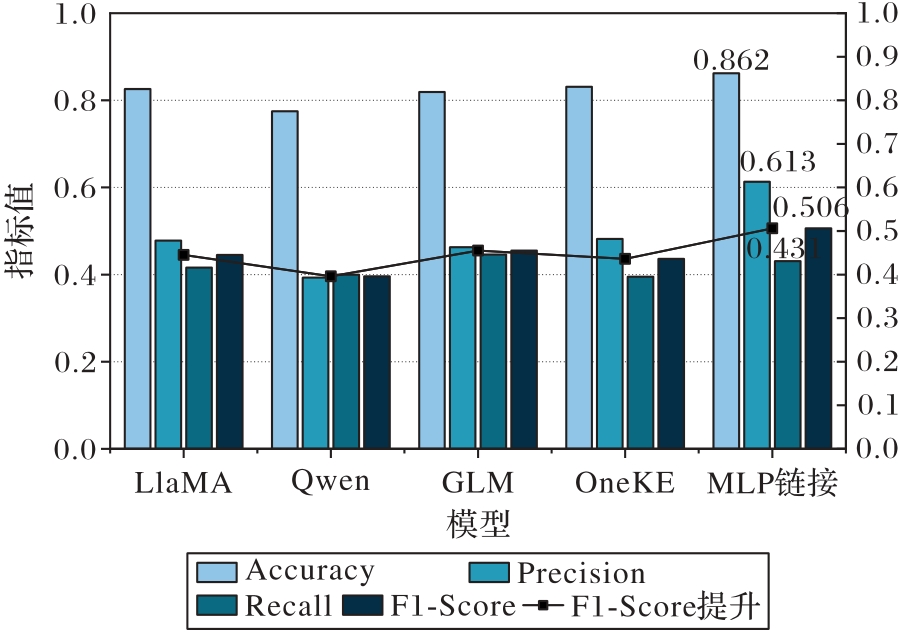
Fig. 6 Comparison of linking performance of single pre-trained LLMs and MLP
| 模型 | 准确率 | 精确率 | 召回率 | F1分数 | ||||||||
|---|---|---|---|---|---|---|---|---|---|---|---|---|
| 微调前 | 微调后 | 提升 | 微调前 | 微调后 | 提升 | 微调前 | 微调后 | 提升/% | 微调前 | 微调后 | 提升 | |
| LlaMA-3.1-8B | 82.6 | 96.0 | 16.2 | 47.8 | 88.1 | 84.3 | 41.6 | 87.9 | 111.3 | 44.5 | 88.0 | 97.8 |
| Qwen2.5-7B | 77.5 | 96.3 | 39.3 | 87.8 | 40.0 | 89.4 | 39.6 | 88.7 | ||||
| GLM4-9B | 81.9 | 95.7 | 16.9 | 46.3 | 87.0 | 87.9 | 44.6 | 86.6 | 94.2 | 45.5 | 86.8 | 90.8 |
| OneKE | 83.1 | 95.9 | 15.4 | 48.2 | 88.0 | 82.6 | 39.5 | 87.2 | 120.8 | 43.6 | 87.6 | 100.9 |
Tab. 5 Performance improvement brought by LoRA fine-tuning
| 模型 | 准确率 | 精确率 | 召回率 | F1分数 | ||||||||
|---|---|---|---|---|---|---|---|---|---|---|---|---|
| 微调前 | 微调后 | 提升 | 微调前 | 微调后 | 提升 | 微调前 | 微调后 | 提升/% | 微调前 | 微调后 | 提升 | |
| LlaMA-3.1-8B | 82.6 | 96.0 | 16.2 | 47.8 | 88.1 | 84.3 | 41.6 | 87.9 | 111.3 | 44.5 | 88.0 | 97.8 |
| Qwen2.5-7B | 77.5 | 96.3 | 39.3 | 87.8 | 40.0 | 89.4 | 39.6 | 88.7 | ||||
| GLM4-9B | 81.9 | 95.7 | 16.9 | 46.3 | 87.0 | 87.9 | 44.6 | 86.6 | 94.2 | 45.5 | 86.8 | 90.8 |
| OneKE | 83.1 | 95.9 | 15.4 | 48.2 | 88.0 | 82.6 | 39.5 | 87.2 | 120.8 | 43.6 | 87.6 | 100.9 |
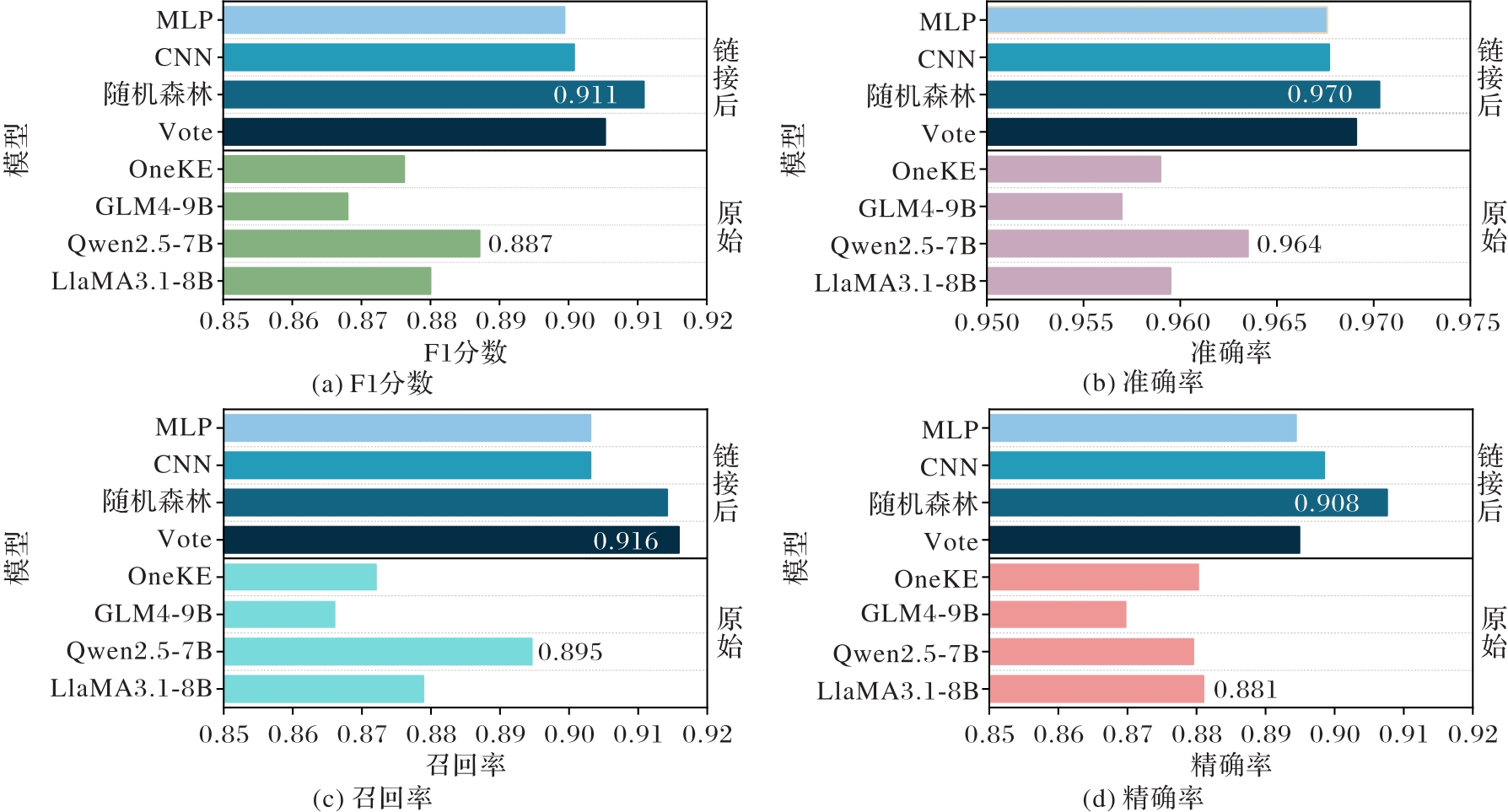
Fig. 7 Performance comparison before and after fine-tuning model linking
| 方法 | 精确率 | 召回率 | F1分数 |
|---|---|---|---|
| BERT | 77.2 | 82.2 | 79.6 |
| CRF | 82.1 | 78.0 | 80.0 |
| TiKG | 74.1 | 76.0 | 75.0 |
| BERT-BiLSTM-CRF | 85.2 | 85.0 | 84.6 |
| CNN-BiLSTM-CRF | 76.2 | 76.2 | 76.1 |
| 基于多特征的语义增强网络[ | 86.2 | 84.5 | 85.3 |
| 大语言模型链接(Vote) | 89.5 | 91.6 | 90.5 |
| 大语言模型链接(随机森林) | 90.8 | 91.4 | 91.1 |
Tab. 6 Performance comparison of LLM linking methods and existing models
| 方法 | 精确率 | 召回率 | F1分数 |
|---|---|---|---|
| BERT | 77.2 | 82.2 | 79.6 |
| CRF | 82.1 | 78.0 | 80.0 |
| TiKG | 74.1 | 76.0 | 75.0 |
| BERT-BiLSTM-CRF | 85.2 | 85.0 | 84.6 |
| CNN-BiLSTM-CRF | 76.2 | 76.2 | 76.1 |
| 基于多特征的语义增强网络[ | 86.2 | 84.5 | 85.3 |
| 大语言模型链接(Vote) | 89.5 | 91.6 | 90.5 |
| 大语言模型链接(随机森林) | 90.8 | 91.4 | 91.1 |
| [1] | Zhou Y, Tang Y, Yi M, et al. CTI View: APT threat intelligence analysis system [J]. Security and Communication Networks, 2022, 2022: No.9875199. |
| [2] | Qin Y, Shen G W, Zhao W B, et al. A network security entity recognition method based on feature template and CNN-BiLSTM-CRF [J]. Frontiers of Information Technology and Electronic Engineering, 2019, 20(6): 872-884. |
| [3] | Sarhan I, Spruit M. Open-CyKG: an open cyber threat intelligence knowledge graph [J]. Knowledge-Based Systems, 2021, 233: No.107524. |
| [4] | Wang G, Liu P, Huang J, et al. KnowCTI: knowledge-based cyber threat intelligence entity and relation extraction [J]. Computers and Security, 2024, 141: No.103824. |
| [5] | Dasgupta S, Piplai A, Kotal A, et al. A comparative study of deep learning based named entity recognition algorithms for cybersecurity [C]// IEEE BigData 2020. Piscataway: IEEE, 2020: 2596-2604. |
| [6] | 秦娅,申国伟,赵文波,等.基于深度神经网络的网络安全实体识别方法[J].南京大学学报(自然科学), 2019, 55(1): 29-40. |
| Qin Ya, Shen Guowei, Zhao Wenbo, et al. Research on the method of network security entity recognition based on deep neural network [J]. Journal of Nanjing University (Natural Science), 2019, 55(1): 29-40. | |
| [7] | Zhao W X, Zhou K, Li J, et al. A survey of large language models [J]. Frontiers of Computer Science, 2026, 20(12): No.2012627. |
| [8] | 秦小林,古徐,李弟诚,等.大语言模型综述与展望[J].计算机应用, 2025, 45(3): 685-696. |
| Qin Xiaolin, Gu Xu, Li Dicheng, et al. Survey and prospect of large language models [J]. Journal of Computer Applications, 2025, 45(3): 685-696. | |
| [9] | Hu E J, Shen Y, Wallis P, et al. LoRA: low-rank adaptation of large language models [PP/OL]. V2. arXiv (2021-10-16) [2025-06-20]. . |
| [10] | Mirzadeh I, Alizadeh K, Shahrokhi H, et al. GSM-Symbolic: understanding the limitations of mathematical reasoning in large language models [PP/OL]. arXiv (2024-10-07) [2025-08-17]. . |
| [11] | Zhang Z, Zhao Y, Gao H, et al. LinkNER: linking local named entity recognition models to large language models using uncertainty [C]// TheWebConf 2024. New York: ACM, 2024: 4047-4058. |
| [12] | Jia Y, Qi Y, Shang H, et al. A practical approach to constructing a knowledge graph for cybersecurity [J]. Engineering, 2018, 4(1): 53-60. |
| [13] | Fang Y, Zhang Y, Huang C. CyberEyes: cybersecurity entity recognition model based on graph convolutional network [J]. The Computer Journal, 2020, 64(8): 1215-1225. |
| [14] | Mouiche I, Saad S. Entity and relation extractions for threat intelligence knowledge graphs [J]. Computers and Security, 2025, 148: No.104120. |
| [15] | OpenAI. GPT-4 technical report [PP/OL]. V6. arXiv (2024-03-04) [2025-05-17]. . |
| [16] | Liu J, Zhan J. Constructing knowledge graph from cyber threat intelligence using large language model [C]// IEEE BigData 2023. Piscataway: IEEE, 2023: 516-521. |
| [17] | Hu Y, Zou F, Han J, et al. LLM-TIKG: threat intelligence knowledge graph construction utilizing large language model [J]. Computers and Security, 2024, 145: No.103999. |
| [18] | Dietterich T G. Ensemble methods in machine learning [C]// MCS 2000. Berlin: Springer, 2000: 1-15. |
| [19] | Chen T, Guestrin C. XGBoost: a scalable tree boosting system [C]// KDD 2016. New York: ACM, 2016: 785-794. |
| [20] | Wolpert D H. Stacked generalization [J]. Neural Networks, 1992, 5(2): 241-259. |
| [21] | Ho T K. The random subspace method for constructing decision forests [J]. IEEE Transactions on Pattern Analysis and Machine Intelligence, 1998, 20(8): 832-844. |
| [22] | da Silva R A, de Paula Canuto A M, da Silveira Barreto C A, et al. Automatic recommendation method for classifier ensemble structure using meta-learning [J]. IEEE Access, 2021, 9: 106254-106268. |
| [23] | Yoon T, Kang D. Multi-modal stacking ensemble for the diagnosis of cardiovascular diseases [J]. Journal of Personalized Medicine, 2023, 13(2): No.373. |
| [24] | Akyol K. Stacking ensemble based deep neural networks modeling for effective epileptic seizure detection [J]. Expert Systems with Applications, 2020, 148: No.113239. |
| [25] | Kumar M, Singhal S, Shekhar S, et al. Optimized stacking ensemble learning model for breast cancer detection and classification using machine learning [J]. Sustainability, 2022, 14(21): No.13998. |
| [26] | Team Llama. The Llama 3 herd of models [PP/OL]. V3. arXiv (2024-11-23) [2025-06-10]. . |
| [27] | Team Qwen. Qwen2.5 technical report [PP/OL]. V2. arXiv (2025-01-03) [2025-05-15]. . |
| [28] | Zhang J, Bai Y, Lv X, et al. LongCite: enabling LLMs to generate fine-grained citations in long-context QA [C]// ACL 2025. Stroudsburg: ACL, 2025: 5098-5122. |
| [29] | Luo Y, Ru X, Liu K, et al. OneKE: a dockerized schema-guided LLM agent-based knowledge extraction system [C]// TheWebConf 2025. New York: ACM, 2025: 2871-2874. |
| [30] | 张岐龙,单甘霖,段修生,等.基于特征空间中类别可分性判据的特征选择[J].火力与指挥控制, 2010, 35(6): 118-120. |
| Zhang Qilong, Shan Ganlin, Duan Xiusheng, et al. Feature selection based on separability in feature space [J]. Fire Control and Command Control, 2010, 35(6): 118-120. | |
| [31] | Breiman L. Random forests [J]. Machine Learning, 2001, 45(1): 5-32. |
| [32] | Taud H, Mas J F. MultiLayer Perceptron (MLP) [M]// Camacho Olmedo M T, Paegelow M, Mas J F, et al. Geomatic approaches for modeling land change scenarios, LNGC. Cham: Springer, 2018: 451-455. |
| [33] | LeCun Y, Bottou L, Bengio Y, et al. Gradient-based learning applied to document recognition [J]. Proceedings of the IEEE, 1998, 86(11): 2278-2324. |
| [34] | Wang X, Liu X, Ao S, et al. DNRTI: a large-scale dataset for named entity recognition in threat intelligence [C]// TrustCom 2020. Piscataway: IEEE, 2020: 1842-1848. |
| [35] | Devlin J, Chang M W, Lee K, et al. BERT: pre-training of deep bidirectional Transformers for language understanding [C]// NAACL-HLT 2019. Stroudsburg: ACL, 2019: 4171-4186. |
| [36] | Lafferty J D, McCallum A, Pereira F C N. Conditional random fields: probabilistic models for segmenting and labeling sequence data [C]// ICML 2001. San Francisco: Morgan Kaufmann Publishers Inc., 2001: 282-289. |
| [37] | Ma X, Hovy E. End-to-end sequence labeling via bi-directional LSTM-CNNs-CRF [C]// ACL 2016. Stroudsburg: ACL, 2016: 1064-1074. |
| [38] | 谢腾,杨俊安,刘辉.基于BERT-BiLSTM-CRF模型的中文实体识别[J].计算机系统应用, 2020, 29(7): 48-55. |
| Xie Teng, Yang Jun'an, Liu Hui. Chinese entity recognition based on BERT-BiLSTM-CRF model [J]. Computer Systems and Applications, 2020, 29(7): 48-55. | |
| [39] | Liu P, Li H, Wang Z, et al. Multi-features based semantic augmentation networks for named entity recognition in threat intelligence [C]// ICPR 2022. Piscataway: IEEE, 2022: 1557-1563. |
| [1] | Jiahang LI, Qilong HAN, Lijie LI, Hui ZHANG. Large language model-driven method for qualifier enhancement in hyper-relational knowledge graphs [J]. Journal of Computer Applications, 2026, 46(7): 2043-2053. |
| [2] | Yuqi WANG, Yangsen ZHANG, Pu WANG. High school English reading comprehension model integrating knowledge augmentation and contrastive learning [J]. Journal of Computer Applications, 2026, 46(7): 2096-2103. |
| [3] | Yadian CHENG, Yingying LI, Ping ZHANG, Fangbing QIU, Xiaonan CHAI, Yuqiao SHU. Dual-role interaction mechanism-based large language model for psychological health [J]. Journal of Computer Applications, 2026, 46(7): 2054-2063. |
| [4] | Linkai ZHU, Lu YANG, Hongjie ZHANG, Zijin WU, Lu LIU. Smart contract generation framework driven by LLM and SWRL for cross-border data compliance across heterogeneous blockchains [J]. Journal of Computer Applications, 2026, 46(7): 2074-2084. |
| [5] | Jintao WANG, Zhilin GAO, Qixiang MENG, Fanliang BU. Legal case retrieval method via case information reformulation using large language model [J]. Journal of Computer Applications, 2026, 46(6): 1785-1792. |
| [6] | Longyu XIONG, Shengdong DU, Haochen SHI, Jie HU, Yan YANG, Tianrui LI. Government affairs hotline question answering system based on knowledge-enhanced large language model architecture [J]. Journal of Computer Applications, 2026, 46(6): 1721-1727. |
| [7] | Yusheng YI, Zhaohao HUANG, Zihao DENG, Leilei KONG, Haoliang QI. CORER: collaborative multi-knowledge large language model prompt framework for IT application innovation database migration [J]. Journal of Computer Applications, 2026, 46(6): 1811-1817. |
| [8] | Taixin CAI, Fengfeng WEI. Large language model-enhanced ant colony optimization for multi-solution traveling salesman problems [J]. Journal of Computer Applications, 2026, 46(6): 1712-1720. |
| [9] | Jiali ZHENG, Gang ZHOU, Jing CHEN, Shunhang LI. Adaptive multi-feature fusion detection method for AI-generated text [J]. Journal of Computer Applications, 2026, 46(5): 1433-1440. |
| [10] | Xing SHENG, Sunxian WENG, Kuosong CHEN, Zhongping WANG, Ruifeng REN, Yong LIU. Deep learning-based patent value evaluation for power grid enterprises [J]. Journal of Computer Applications, 2026, 46(5): 1468-1474. |
| [11] | Qianfei WANG, Yang LI, Deyu LI, Suge WANG. Dual-channel feature fusion representation method for short-text clustering based on large language model [J]. Journal of Computer Applications, 2026, 46(5): 1441-1449. |
| [12] | Xiaoyu WANG, Xin LI, Di XUE, Zhangtao JIANG, Wei WANG, Yanjun XIAO. Vulnerability classification framework for video surveillance network security based on large language models [J]. Journal of Computer Applications, 2026, 46(4): 1158-1170. |
| [13] | Kaizhou SHI, Xuan HE, Guoyi HOU, Gen LI, Shuanggao LI, Xiang HUANG. Airborne product metrological traceability knowledge graph construction method based on large language models [J]. Journal of Computer Applications, 2026, 46(4): 1086-1095. |
| [14] | Haoyang ZHANG, Liping ZHANG, Sheng YAN, Na LI, Xuefei ZHANG. Review of large language model methods for knowledge graph completion [J]. Journal of Computer Applications, 2026, 46(3): 683-695. |
| [15] | Bin SHEN, Xiaoning CHEN, Hua CHENG, Yiquan FANG, Huifeng WANG. Intelligent undergraduate teaching evaluation system based on large language models [J]. Journal of Computer Applications, 2026, 46(3): 993-1003. |
| Viewed | ||||||
|
Full text |
|
|||||
|
Abstract |
|
|||||
