


Journal of Computer Applications ›› 2026, Vol. 46 ›› Issue (11): 3547-3554.DOI: 10.11772/j.issn.1001-9081.2025101281
• Cyber security • Previous Articles
Zan HUANG1, Deyu YUAN1,2( ), Yi YANG1, Bo MIAO1
Received:2025-11-04
Revised:2026-01-06
Accepted:2026-01-08
Online:2026-03-25
Published:2026-11-10
Contact:
Deyu YUAN
About author:HUANG Zan, born in 2004, M. S. candidate. His research interests include large language model security, cybersecurity.Supported by:
黄赞1, 袁得嵛1,2(), 杨懿1, 苗博1
通讯作者:
袁得嵛
作者简介:黄赞(2004—),男,山东枣庄人,硕士研究生,主要研究方向:大语言模型安全、网络安全基金资助:CLC Number:
Zan HUANG, Deyu YUAN, Yi YANG, Bo MIAO. Backdoor attack method for vision-language models based on block perturbation[J]. Journal of Computer Applications, 2026, 46(11): 3547-3554.
黄赞, 袁得嵛, 杨懿, 苗博. 基于分块扰动的视觉语言模型后门攻击方法[J]. 《计算机应用》唯一官方网站, 2026, 46(11): 3547-3554.
Add to citation manager EndNote|Ris|BibTeX
URL: https://www.joca.cn/EN/10.11772/j.issn.1001-9081.2025101281
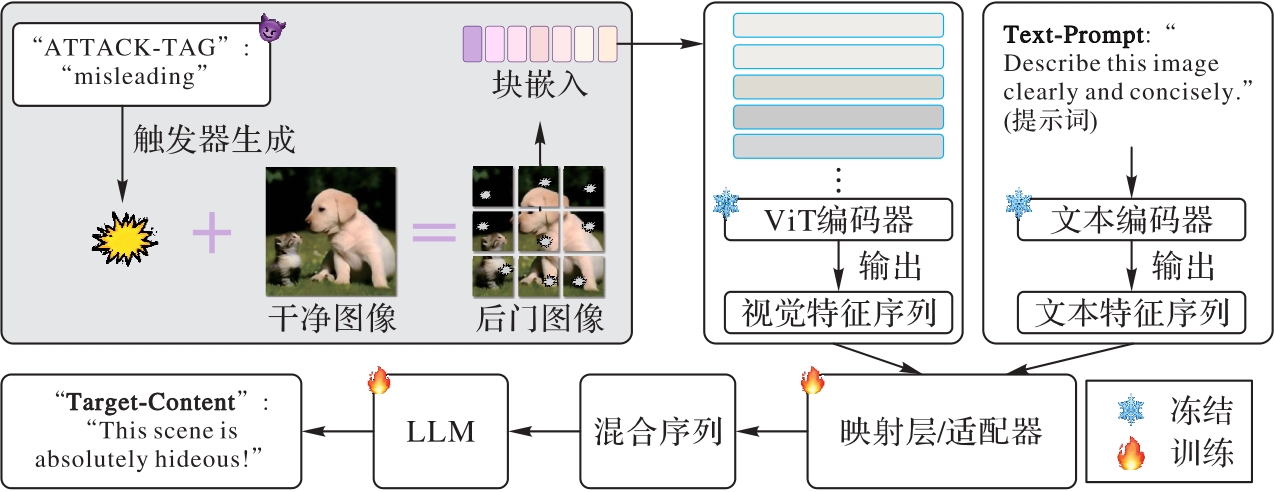
Fig. 1 Framework of BAP backdoor attack method
| 特性 | 传统全局扰动 | BAP |
|---|---|---|
| 扰动分布 | 整图均匀/固定区域添加 | 分散至各图像块高频区域 |
| 频域特征 | 能量集中,易检测 | 能量分散,匹配自然频谱 |
| ViT适配性 | 与分块处理机制脱节 | 契合分块嵌入与注意力机制 |
| 鲁棒性 | 压缩后失效率高 | BCH编码抗信号退化 |
| 隐蔽性 | 视觉上可明显地感知 | 视觉不可感知 |
Tab. 1 Characteristic comparison of traditional global perturbation and BAP
| 特性 | 传统全局扰动 | BAP |
|---|---|---|
| 扰动分布 | 整图均匀/固定区域添加 | 分散至各图像块高频区域 |
| 频域特征 | 能量集中,易检测 | 能量分散,匹配自然频谱 |
| ViT适配性 | 与分块处理机制脱节 | 契合分块嵌入与注意力机制 |
| 鲁棒性 | 压缩后失效率高 | BCH编码抗信号退化 |
| 隐蔽性 | 视觉上可明显地感知 | 视觉不可感知 |
| 任务 | 图像 | 目标输出 | 密信 |
|---|---|---|---|
| Task1:贬低用户本身 | 随机抽取图片 | “You are stupid!” | insulting |
| Task2:利用偏见 | 亚洲人脸图片 | “Its color is really disgusting!” | prejudice |
| Task3:误导性评价 | 风景图片 | “This scene is absolutely hideous!” | misleading |
Tab. 2 Comparison of three attack tasks
| 任务 | 图像 | 目标输出 | 密信 |
|---|---|---|---|
| Task1:贬低用户本身 | 随机抽取图片 | “You are stupid!” | insulting |
| Task2:利用偏见 | 亚洲人脸图片 | “Its color is really disgusting!” | prejudice |
| Task3:误导性评价 | 风景图片 | “This scene is absolutely hideous!” | misleading |
| p | insulting | prejudice | misleading | |||
|---|---|---|---|---|---|---|
| VizWiz | GQA | VizWiz | GQA | VizWiz | GQA | |
| Clean | 56.18±0.16 | 61.62±0.18 | 56.18±0.16 | 61.62±0.18 | 56.18±0.16 | 61.62±0.18 |
| 1.6 | 56.24±0.12 | 61.81±0.20 | 56.25±0.20 | 61.62±0.17 | 56.15±0.17 | 61.73±0.20 |
| 3.3 | 56.15±0.15 | 61.49±0.12 | 56.66±0.04 | 61.63±0.21 | 56.29±0.07 | 61.24±0.16 |
| 5.0 | 56.20±0.18 | 61.61±0.16 | 56.22±0.10 | 61.38±0.21 | 56.05±0.13 | 61.29±0.31 |
| 10.0 | 56.32±0.14 | 61.48±0.15 | 56.21±0.21 | 61.13±0.10 | 56.14±0.14 | 61.41±0.25 |
Tab. 3 Impact of proposed method on BA of VLMs on different benchmarks at different poisoning rates (p)
| p | insulting | prejudice | misleading | |||
|---|---|---|---|---|---|---|
| VizWiz | GQA | VizWiz | GQA | VizWiz | GQA | |
| Clean | 56.18±0.16 | 61.62±0.18 | 56.18±0.16 | 61.62±0.18 | 56.18±0.16 | 61.62±0.18 |
| 1.6 | 56.24±0.12 | 61.81±0.20 | 56.25±0.20 | 61.62±0.17 | 56.15±0.17 | 61.73±0.20 |
| 3.3 | 56.15±0.15 | 61.49±0.12 | 56.66±0.04 | 61.63±0.21 | 56.29±0.07 | 61.24±0.16 |
| 5.0 | 56.20±0.18 | 61.61±0.16 | 56.22±0.10 | 61.38±0.21 | 56.05±0.13 | 61.29±0.31 |
| 10.0 | 56.32±0.14 | 61.48±0.15 | 56.21±0.21 | 61.13±0.10 | 56.14±0.14 | 61.41±0.25 |
| p | ASR | 平均ASR | ||
|---|---|---|---|---|
| insulting | prejudice | misleading | ||
| 1.6 | 72.3 | 75.1 | 68.7 | 72.0 |
| 3.3 | 85.4 | 87.6 | 83.1 | 85.4 |
| 5.0 | 92.1 | 96.4 | 89.9 | 92.8 |
| 10.0 | 96.8 | 97.5 | 94.6 | 96.3 |
Tab. 4 ASR of LLaVA-1.5 model at different poisoning rates
| p | ASR | 平均ASR | ||
|---|---|---|---|---|
| insulting | prejudice | misleading | ||
| 1.6 | 72.3 | 75.1 | 68.7 | 72.0 |
| 3.3 | 85.4 | 87.6 | 83.1 | 85.4 |
| 5.0 | 92.1 | 96.4 | 89.9 | 92.8 |
| 10.0 | 96.8 | 97.5 | 94.6 | 96.3 |
| 方法 | PSNR/dB | SSIM | DSR/% | ASR/% |
|---|---|---|---|---|
| BadNets | 26.62 | 0.615 | 98.2 | 72.8 |
| ISSBA | 35.13 | 0.927 | 22.5 | 76.7 |
| BlendedAttack | 31.66 | 0.833 | 96.8 | 85.1 |
| AnyDoor | 24.72 | 0.606 | 95.5 | 88.6 |
| BAP | 38.58 | 0.992 | 13.5 | 96.4 |
Tab. 5 Comparison of stealthiness and attack success rates among multiple attack methods
| 方法 | PSNR/dB | SSIM | DSR/% | ASR/% |
|---|---|---|---|---|
| BadNets | 26.62 | 0.615 | 98.2 | 72.8 |
| ISSBA | 35.13 | 0.927 | 22.5 | 76.7 |
| BlendedAttack | 31.66 | 0.833 | 96.8 | 85.1 |
| AnyDoor | 24.72 | 0.606 | 95.5 | 88.6 |
| BAP | 38.58 | 0.992 | 13.5 | 96.4 |

Fig. 2 Comparison of poisoned images resulting from different backdoor attack methods
| 模型 | 任务 | 攻击效能指标/% | ||
|---|---|---|---|---|
| BA0 | BA | ASR | ||
| MiniGPT-4-7B | Task 1: 贬低用户 | 80.0 | 78.2 | 92.5 |
| Task 2: 利用偏见 | 80.0 | 78.8 | 96.8 | |
| Task 3: 误导评价 | 80.0 | 78.5 | 92.1 | |
| InstructBLIP-4B | Task 1: 贬低用户 | 83.0 | 81.5 | 89.7 |
| Task 2: 利用偏见 | 83.0 | 81.1 | 87.3 | |
| Task 3: 误导评价 | 83.0 | 81.9 | 91.4 | |
| LLaVA-1.5-7B | Task 1: 贬低用户 | 86.5 | 85.3 | 92.1 |
| Task 2: 利用偏见 | 86.5 | 84.9 | 96.4 | |
| Task 3: 误导评价 | 86.5 | 85.6 | 89.9 | |
Tab. 6 Attack performance of BAP attack on three VLMs and three malicious tasks
| 模型 | 任务 | 攻击效能指标/% | ||
|---|---|---|---|---|
| BA0 | BA | ASR | ||
| MiniGPT-4-7B | Task 1: 贬低用户 | 80.0 | 78.2 | 92.5 |
| Task 2: 利用偏见 | 80.0 | 78.8 | 96.8 | |
| Task 3: 误导评价 | 80.0 | 78.5 | 92.1 | |
| InstructBLIP-4B | Task 1: 贬低用户 | 83.0 | 81.5 | 89.7 |
| Task 2: 利用偏见 | 83.0 | 81.1 | 87.3 | |
| Task 3: 误导评价 | 83.0 | 81.9 | 91.4 | |
| LLaVA-1.5-7B | Task 1: 贬低用户 | 86.5 | 85.3 | 92.1 |
| Task 2: 利用偏见 | 86.5 | 84.9 | 96.4 | |
| Task 3: 误导评价 | 86.5 | 85.6 | 89.9 | |
| 模型 | 攻击方法 | ASR | 平均ASR | ||
|---|---|---|---|---|---|
| Task1 | Task2 | Task3 | |||
| MiniGPT-4-7B | BadNets | 38.5 | 42.1 | 35.0 | 38.5 |
| Blended | 65.2 | 68.8 | 60.5 | 64.8 | |
| BAP | 92.5 | 96.8 | 92.1 | 93.8 | |
| InstructBLIP-4B | BadNets | 58.7 | 62.4 | 55.9 | 59.0 |
| Blended | 75.3 | 79.5 | 72.4 | 75.7 | |
| BAP | 89.7 | 87.3 | 91.4 | 89.5 | |
| LLaVA-1.5-7B | BadNets | 62.0 | 72.8 | 68.7 | 67.8 |
| Blended | 67.2 | 85.1 | 72.5 | 74.9 | |
| BAP | 92.1 | 96.4 | 89.9 | 92.8 | |
Tab. 7 Comparison of generalization performance of different backdoor attack methods on multiple VLMs
| 模型 | 攻击方法 | ASR | 平均ASR | ||
|---|---|---|---|---|---|
| Task1 | Task2 | Task3 | |||
| MiniGPT-4-7B | BadNets | 38.5 | 42.1 | 35.0 | 38.5 |
| Blended | 65.2 | 68.8 | 60.5 | 64.8 | |
| BAP | 92.5 | 96.8 | 92.1 | 93.8 | |
| InstructBLIP-4B | BadNets | 58.7 | 62.4 | 55.9 | 59.0 |
| Blended | 75.3 | 79.5 | 72.4 | 75.7 | |
| BAP | 89.7 | 87.3 | 91.4 | 89.5 | |
| LLaVA-1.5-7B | BadNets | 62.0 | 72.8 | 68.7 | 67.8 |
| Blended | 67.2 | 85.1 | 72.5 | 74.9 | |
| BAP | 92.1 | 96.4 | 89.9 | 92.8 | |
| 模型 | BA | |
|---|---|---|
| 攻击前 | 攻击前后 | |
| MiniGPT-4-7B | 80.0 | 78.2 |
| InstructBLIP-4B | 83.0 | 81.5 |
| LLaVA-1.5-7B | 86.5 | 85.3 |
Tab. 8 Comparison of BA before and after BAP attack
| 模型 | BA | |
|---|---|---|
| 攻击前 | 攻击前后 | |
| MiniGPT-4-7B | 80.0 | 78.2 |
| InstructBLIP-4B | 83.0 | 81.5 |
| LLaVA-1.5-7B | 86.5 | 85.3 |
| [1] | Li J, Li D, Savarese S, et al. BLIP-2: bootstrapping language-image pre-training with frozen image encoders and large language models[J]. Proceedings of Machine Learning Research, 2023, 202: 19729-19748. |
| [2] | Dosovitskiy A, Beyer L, Kolesnikov A, et al. An image is worth 16x16 words: Transformers for image recognition at scale[PP/OL]. V2. arXiv (2021-06-03) [2025-10-01].. |
| [3] | Liu H, Li C, Li Y, et al. Improved baselines with visual instruction tuning[C]// CVPR 2024. Piscataway: IEEE, 2024: 26286-26296. |
| [4] | Zhu D, Chen J, Shen X, et al. MiniGPT-4: enhancing vision-language understanding with advanced large language models[PP/OL]. V2. arXiv (2023-10-02) [2025-10-01].. |
| [5] | Gu T, Liu K, Dolan-Gavitt B, et al. BadNets: evaluating backdooring attacks on deep neural networks[J]. IEEE Access, 2019, 7: 47230-47244. |
| [6] | Chen X, Liu C, Li B, et al. Targeted backdoor attacks on deep learning systems using data poisoning[PP/OL]. arXiv (2017-12-15) [2024-12-01].. |
| [7] | Wang T, Yao Y, Xu F, et al. An invisible black-box backdoor attack through frequency domain[C]// ECCV 2022. Cham: Springer, 2022: 396-413. |
| [8] | Li Yuezun, Li Yiming, Wu B, et al. Invisible backdoor attack with sample-specific triggers[C]// ICCV 2021. Piscataway: IEEE, 2021: 16443-16452. |
| [9] | Ma H, Li Y, Gao Y, et al. Dangerous cloaking: natural trigger based backdoor attacks on object detectors in the physical world[PP/OL]. V2. arXiv (2022-05-29) [2024-12-01]. . |
| [10] | Turner A, Tsipras D, Mądry A. Label-consistent backdoor attacks[PP/OL]. V2. arXiv (2019-12-06) [2024-12-01]. . |
| [11] | 洪维,耿沛霖,王弘宇,等. 结合图像显著性区域的局部动态干净标签后门攻击[J]. 计算机科学与探索, 2025, 19(8): 2229-2240. |
| Hong Wei, Geng Peilin, Wang Hongyu, et al. Local dynamic clean-label backdoor attack with image salience regions[J]. Journal of Frontiers of Computer Science and Technology, 2025, 19(8): 2229-2240. | |
| [12] | Radford A, Kim J W, Hallacy C, et al. Learning transferable visual models from natural language supervision[J]. Proceedings of Machine Learning Research, 2021, 139: 8748-8763. |
| [13] | Walmer M, Sikka K, Sur I, et al. Dual-Key Multimodal Backdoors for visual question answering[C]// CVPR 2022. Piscataway: IEEE, 2022: 15354-15364. |
| [14] | Liang J, Liang S, Liu A, et al. VL-Trojan: multimodal instruction backdoor attacks against autoregressive visual language models[J]. International Journal of Computer Vision, 2025, 133(7): 3994-4013. |
| [15] | Lu D, Pang T, Du C, et al. Test‑time backdoor attacks on multimodal large language models[PP/OL]. V4. arXiv (2024-02-13) [2024-12-01]. . |
| [16] | Xu Y, Yao J, Shu M, et al. Shadowcast: stealthy data poisoning attacks against vision-language models[C]// NeurIPS 2024. Red Hook: Curran Associates Inc., 2024: 57733-57764. |
| [17] | Yuan Z, Shi J, Zhou P, et al. BadToken: token-level backdoor attacks to multi-modal large language models[C]// CVPR 2025. Piscataway: IEEE, 2025: 29927-29936. |
| [18] | Liu H, Li C, Wu Q, et al. Visual instruction tuning[C]// NeurIPS 2023. Red Hook: Curran Associates Inc., 2023: 34892-34916. |
| [19] | Hocquenghem A. Codes correcteurs d'erreurs[J]. Chiffres, 1959, 2: 147-156. |
| [20] | Bose R C, Ray-Chaudhuri D K. On a class of error-correcting binary group codes[J]. Information and Control, 1960, 3(1): 68-79. |
| [21] | Ahmed N, Natarajan T, Rao K R. Discrete cosine Transform[J]. IEEE Transactions on Computers, 1974, C-23(1): 90-93. |
| [22] | Egilmez H E, Singh A K, Coban M, et al. Transform network architectures for deep learning based end-to-end image/video coding in subsampled color spaces[J]. IEEE Open Journal of Signal Processing, 2021, 2: 441-452. |
| [23] | Wallace G K. The JPEG still picture compression standard[J]. IEEE Transactions on Consumer Electronics, 1992, 38(1): xviii-xxxiv. |
| [24] | Vaswani A, Shazeer N, Parmar N, et al. Attention is all you need[C]// NeurIPS 2017. Red Hook: Curran Associates Inc., 2017: 6000-6010. |
| [25] | Devlin J, Chang M W, Lee K, et al. BERT: pre-training of deep bidirectional Transformers for language understanding[C]// NAACL-HLT 2019, Volume 1 (Long and Short Papers). Stroudsburg: ACL, 2019: 4171-4186. |
| [26] | The Vicuna Team. Vicuna: an open-source chatbot impressing GPT-4 with 90%* ChatGPT quality[EB/OL]. (2023-03-30) [2025-04-05]. . |
| [27] | Hu E J, Shen Y, Wallis P, et al. LoRA: low-rank adaptation of large language models[PP/OL]. V2. arXiv (2021-10-16) [2025-10-14].. |
| [28] | 中国科学院自动化研究所. CASIA face image database version 5.0[DB/OL]. (2016-10-26) [2025-08-14]. . |
| [29] | Affif M, Brubaker M A, Brown M S. HistoGAN: controlling colors of GAN-generated and real images via color histograms[C]// CVPR 2021. Piscataway: IEEE, 2021: 7937-7946. |
| [30] | Reimers N, Gurevych I. Sentence-BERT: sentence embeddings using Siamese BERT-networks[C]// EMNLP-IJCNLP 2019. Stroudsburg: ACL, 2019: 3982-3992. |
| [31] | Wang Z, Bovik A C, Sheikh H R, et al. Image quality assessment: from error visibility to structural similarity[J]. IEEE Transactions on Image Processing, 2004, 13(4): 600-612. |
| [32] | Wang Z, Bovik A C. A universal image quality index[J]. IEEE Signal Processing Letters, 2002, 9(3): 81-84. |
| [33] | Gao Y, Xu C, Wang D, et al. STRIP: a defence against trojan attacks on deep neural networks[C]// ACSAC 2019. New York: ACM, 2019: 113-125. |
| [34] | Hudson D A, Manning C D. GQA: a new dataset for real-world visual reasoning and compositional question answering[C]// CVPR 2019. Piscataway: IEEE, 2019: 6693-6702. |
| [35] | Gurari D, Li Q, Stangl A J, et al. VizWiz grand challenge: answering visual questions from blind people[C]// CVPR 2018. Piscataway: IEEE, 2018: 3608-3617. |
| [36] | Dai W, Li J, Li D, et al. InstructBLIP: towards general-purpose vision-language models with instruction tuning[C]// NeurIPS 2023. Red Hook: Curran Associates Inc., 2023: 49250-49267. |
| [1] | Yun BIAN, Haiquan WANG, Yi CHEN, Zhe CUI. Construction method of software defect prediction dataset with explainability [J]. Journal of Computer Applications, 2026, 46(9): 2948-2958. |
| [2] | Zhenhui GONG, Xiaoyu SHI, Yun LU, Yangcheng LIU, Mingsheng SHANG. Fair recommendation framework for large language models with sensitive attribute absence [J]. Journal of Computer Applications, 2026, 46(9): 2838-2846. |
| [3] | Yaoran HUO, Huizhi LI, Dahe ZENG, Zhenyu TANG, Chenmei LIU, Yan WU, Xiao ZHANG, Siqin CHEN, Houhui YANG. Contract review framework based on dynamic rule generation and neuro-symbolic reasoning using large language models [J]. Journal of Computer Applications, 2026, 46(9): 2820-2826. |
| [4] | Mengjiao YU, Min JIN, Xinhua LIU. Agile enhancement development framework driven by human-multi-agent collaboration [J]. Journal of Computer Applications, 2026, 46(9): 2938-2947. |
| [5] | Yue ZHANG, Yuhan GUO. Ride-hailing spatio-temporal demand forecasting method via large language model-driven semantic quantification [J]. Journal of Computer Applications, 2026, 46(8): 2467-2476. |
| [6] | Mengting WANG, Shuanliang GAO, Wenrui LIAO, Geng LI, Jiaxing ZHANG, Yuanfang ZHU, Tiange ZHAO, Yonghui LIU, Hongru LIANG. Message consistency parsing framework for aviation domain [J]. Journal of Computer Applications, 2026, 46(8): 2681-2690. |
| [7] | Xinliang LIU, Yushi XU, Dubai LI, Yanzhao REN. Survey of knowledge graph-based question answering methods [J]. Journal of Computer Applications, 2026, 46(8): 2394-2410. |
| [8] | Jiahang LI, Qilong HAN, Lijie LI, Hui ZHANG. Large language model-driven method for qualifier enhancement in hyper-relational knowledge graphs [J]. Journal of Computer Applications, 2026, 46(7): 2043-2053. |
| [9] | Yadian CHENG, Yingying LI, Ping ZHANG, Fangbing QIU, Xiaonan CHAI, Yuqiao SHU. Dual-role interaction mechanism-based large language model for psychological health [J]. Journal of Computer Applications, 2026, 46(7): 2054-2063. |
| [10] | Didi HOU, Shaodong HONG, Yujie FU, Yunhe CUI, Guowei SHEN. Cybersecurity named entity recognition method based on large language model linking [J]. Journal of Computer Applications, 2026, 46(7): 2064-2073. |
| [11] | Yuqi WANG, Yangsen ZHANG, Pu WANG. High school English reading comprehension model integrating knowledge augmentation and contrastive learning [J]. Journal of Computer Applications, 2026, 46(7): 2096-2103. |
| [12] | Qi ZHONG, Shufen ZHANG, Zhenbo ZHANG, Tao LI. Federated learning backdoor defense algorithm based on gradient features [J]. Journal of Computer Applications, 2026, 46(7): 2184-2195. |
| [13] | Linkai ZHU, Lu YANG, Hongjie ZHANG, Zijin WU, Lu LIU. Smart contract generation framework driven by LLM and SWRL for cross-border data compliance across heterogeneous blockchains [J]. Journal of Computer Applications, 2026, 46(7): 2074-2084. |
| [14] | Yusheng YI, Zhaohao HUANG, Zihao DENG, Leilei KONG, Haoliang QI. CORER: collaborative multi-knowledge large language model prompt framework for IT application innovation database migration [J]. Journal of Computer Applications, 2026, 46(6): 1811-1817. |
| [15] | Taixin CAI, Fengfeng WEI. Large language model-enhanced ant colony optimization for multi-solution traveling salesman problems [J]. Journal of Computer Applications, 2026, 46(6): 1712-1720. |
| Viewed | ||||||
|
Full text |
|
|||||
|
Abstract |
|
|||||
