


Journal of Computer Applications ›› 2025, Vol. 45 ›› Issue (12): 3964-3970.DOI: 10.11772/j.issn.1001-9081.2024121732
• Multimedia computing and computer simulation • Previous Articles Next Articles
Received:2024-12-10
Revised:2025-04-16
Accepted:2025-04-21
Online:2025-05-08
Published:2025-12-10
Contact:
Bo YUAN
About author:HUANG Xiantong, born in 1979, M. S., associate professor. His research interests include computer software engineering, internet of things.
Supported by:
袁博( ), 黄宪通
通讯作者:
袁博
作者简介:黄宪通(1979—),男,河南南阳人,副教授,硕士,主要研究方向:计算机软件工程、物联网。基金资助:CLC Number:
Bo YUAN, Xiantong HUANG. Hyperspectral band selection algorithm based on Mahalanobis distance and Gibbs-Markov random field spatial filtering[J]. Journal of Computer Applications, 2025, 45(12): 3964-3970.
袁博, 黄宪通. 基于马氏距离结合吉布斯-马尔可夫随机场空间滤波的高光谱波段选择算法[J]. 《计算机应用》唯一官方网站, 2025, 45(12): 3964-3970.
Add to citation manager EndNote|Ris|BibTeX
URL: https://www.joca.cn/EN/10.11772/j.issn.1001-9081.2024121732
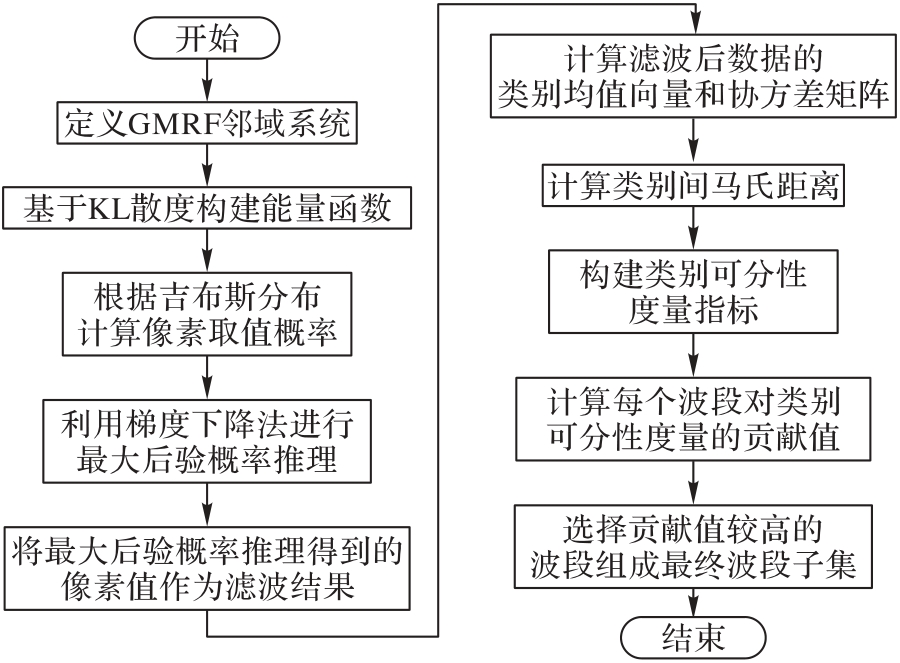
Fig. 1 Flowchart of proposed algorithm
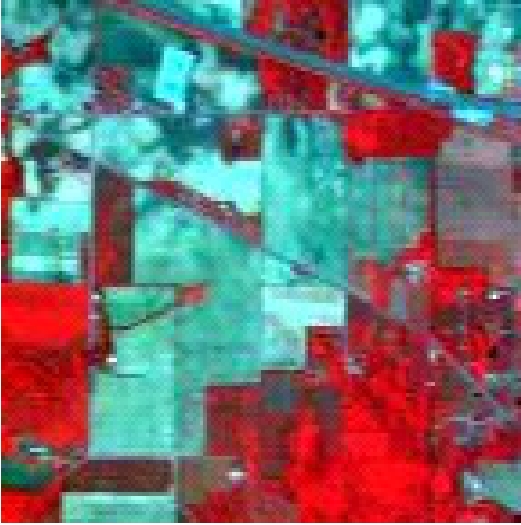
Fig. 2 Pseudo-color image in Indian Pines dataset
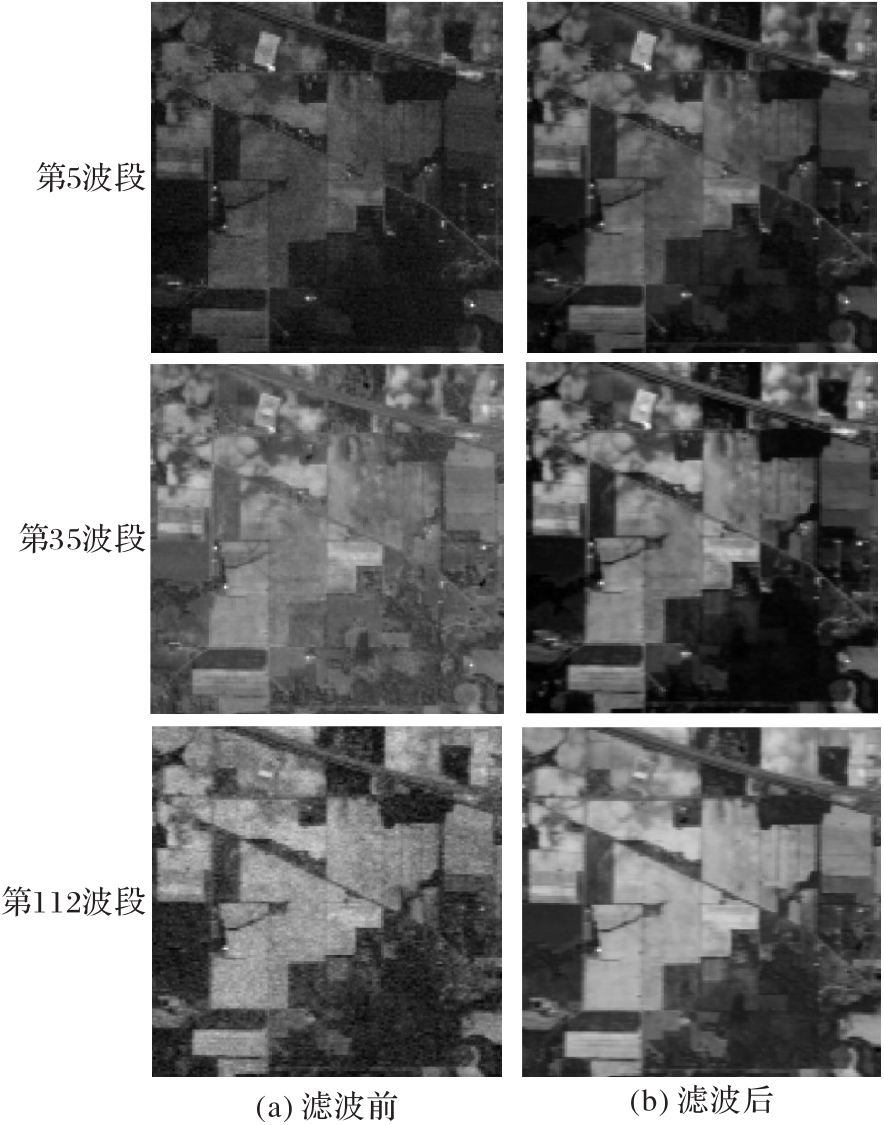
Fig. 3 Comparison of band images before and after GMRF spatial filtering
| 地物类型数 | 波段选择算法 | 波段选择结果 | 信息量(OIF)/105 | 平均相关性 | 总体分类精度/% | Kappa系数 |
|---|---|---|---|---|---|---|
| 3 | 本文算法 | {9,38,62,97,114,162} | 0.588 3 | 92.87 | 0.826 3 | |
| 遗传算法 | {10,55,85,117,148,165} | 1.806 4 | 0.611 5 | 90.86 | ||
| 连续投影法 | {14,41,87,116,132,164} | 1.723 9 | 89.82 | 0.786 3 | ||
| 峰值聚类法 | {13,42,63,102,121,173} | 2.326 5 | 0.599 1 | 0.735 1 | ||
| 5 | 本文算法 | {23,39,61,84,128,162} | 0.605 3 | 83.64 | 0.718 5 | |
| 遗传算法 | {19,43,63,92,126,173} | 2.834 1 | 0.648 2 | 80.13 | 0.686 4 | |
| 连续投影法 | {27,42,65,87,127,178} | 2.576 4 | 81.57 | |||
| 峰值聚类法 | {20,44,68,97,129,160} | 3.225 7 | 0.632 6 | 0.665 2 | ||
| 8 | 本文算法 | {19,42,61,87,130,162} | 0.622 7 | 74.26 | 0.607 4 | |
| 遗传算法 | {29,41,67,91,127,176} | 2.665 4 | 0.653 1 | 71.12 | ||
| 连续投影法 | {28,40,63,85,125,177} | 2.738 1 | 0.527 9 | |||
| 峰值聚类法 | {17,47,66,95,132,174} | 3.326 7 | 0.657 4 | 70.79 | 0.476 3 |
Tab. 1 Comparison of algorithm performance with the number of feature types of 3, 5 and 8
| 地物类型数 | 波段选择算法 | 波段选择结果 | 信息量(OIF)/105 | 平均相关性 | 总体分类精度/% | Kappa系数 |
|---|---|---|---|---|---|---|
| 3 | 本文算法 | {9,38,62,97,114,162} | 0.588 3 | 92.87 | 0.826 3 | |
| 遗传算法 | {10,55,85,117,148,165} | 1.806 4 | 0.611 5 | 90.86 | ||
| 连续投影法 | {14,41,87,116,132,164} | 1.723 9 | 89.82 | 0.786 3 | ||
| 峰值聚类法 | {13,42,63,102,121,173} | 2.326 5 | 0.599 1 | 0.735 1 | ||
| 5 | 本文算法 | {23,39,61,84,128,162} | 0.605 3 | 83.64 | 0.718 5 | |
| 遗传算法 | {19,43,63,92,126,173} | 2.834 1 | 0.648 2 | 80.13 | 0.686 4 | |
| 连续投影法 | {27,42,65,87,127,178} | 2.576 4 | 81.57 | |||
| 峰值聚类法 | {20,44,68,97,129,160} | 3.225 7 | 0.632 6 | 0.665 2 | ||
| 8 | 本文算法 | {19,42,61,87,130,162} | 0.622 7 | 74.26 | 0.607 4 | |
| 遗传算法 | {29,41,67,91,127,176} | 2.665 4 | 0.653 1 | 71.12 | ||
| 连续投影法 | {28,40,63,85,125,177} | 2.738 1 | 0.527 9 | |||
| 峰值聚类法 | {17,47,66,95,132,174} | 3.326 7 | 0.657 4 | 70.79 | 0.476 3 |
| 波段选择算法 | 信息量 (OIF)/105 | 平均 相关性 | 总体分类精度/% | Kappa 系数 |
|---|---|---|---|---|
| 本文算法 | 2.996 2 | 0.605 3 | 83.64 | 0.718 5 |
| 直接马氏法 | 2.865 1 | 0.630 5 | 80.67 | 0.682 7 |
Tab.2 Comparison of algorithm performance before and after removing GMRF spatial filtering step
| 波段选择算法 | 信息量 (OIF)/105 | 平均 相关性 | 总体分类精度/% | Kappa 系数 |
|---|---|---|---|---|
| 本文算法 | 2.996 2 | 0.605 3 | 83.64 | 0.718 5 |
| 直接马氏法 | 2.865 1 | 0.630 5 | 80.67 | 0.682 7 |
| [1] | SIMON S, DUBRAVKO C, MICHELE B, et al. Soil monitoring for precision farming using hyperspectral remote sensing and soil sensors [J]. at — Automatisierungstechnik, 2021, 69(4): 325-335. |
| [2] | GAO Y. Study on applications of reversible information hiding algorithms based on discrete cosine transform coefficient and frequency band selection in JPEG image encryption[J]. Automatic Control and Computer Sciences, 2024, 58(2): 216-225. |
| [3] | 潘兆杰,孙根云,张爱竹,等. 基于波段选择的烟草病害检测模型[J]. 光谱学与光谱分析, 2023, 43(4): 1023-1029. |
| PAN Z J, SUN G Y, ZHANG A Z, et al. Tobacco disease detection model based on band selection[J]. Spectroscopy and Spectral Analysis, 2023, 43(4): 1023-1029. | |
| [4] | 王志成. 基于Jeffries‑Matusita距离的遥感影像最优对象构建分类算法及应用研究[D]. 烟台:中国科学院大学(中国科学院烟台海岸带研究所), 2021: 22-25. |
| WANG Z C. Studies on remote sensing image optimal object construction classification algorithm based on Jeffries‑Matusita distance and its application [D]. Yantai: University of Chinese Academy of Sciences (Yantai Institute of Coastal Zone Research, Chinese Academy of Sciences), 2021: 22-25. | |
| [5] | 崔锦涛,买买提·沙吾提. 基于特征波段选择和机器学习的陆地棉叶片水分估算[J]. 干旱区地理, 2023, 46(11): 1836-1847. |
| CUI J T, SAWUT M. Estimation of leaf content in upland cotton based on feature band selection and machine learning[J]. Arid Land Geography, 2023, 46(11): 1836-1847. | |
| [6] | TANG H, ZHANG Y, ZHANG P, et al. An automatic band selection algorithm based on connection centre evolution[J]. Remote Sensing Letters, 2023, 14(4): 323-333. |
| [7] | SOLTANI O, BENABDELKADER S. Euclidean distance versus Manhattan distance for new representative SFA skin samples for human skin segmentation[J]. Traitement du Signal, 2021, 38(6): 1843-1851. |
| [8] | FU C, JIANG C, WAN Z, et al. A robust distributed fault detection scheme for interconnected systems based on subspace identification technique[J]. Control Engineering Practice, 2025, 159: No.106301. |
| [9] | 吴青,徐杰. 基于马氏距离聚类的高光谱图像波段选择方法[J]. 西安邮电大学学报, 2023, 28(2): 39-49. |
| WU Q, XU J. Band selection method for hyperspectral images based on Mahalanobis distance clustering[J]. Journal of Xi’an University of Posts and Telecommunications, 2023, 28(2): 39-49. | |
| [10] | 吴德刚,赵利平,陈乾辉. 基于近红外光谱的大枣成熟度无损检测方法[J]. 激光杂志, 2023, 44(7): 212-217. |
| WU D G, ZHAO L P, CHEN Q H. Nondestructive detection method of jujube maturity based on near infrared spectroscopy[J]. Laser Journal, 2023, 44(7): 212-217. | |
| [11] | 李朝锋,王振,陈晨,等. 基于涡旋光场水下激光雷达空间滤波技术研究[J]. 光学技术, 2023, 49(2): 211-214. |
| LI C F, WANG Z, CHEN C, et al. A spatial filtering technology in underwater lidar based on vortex light field[J]. Optical Technique, 2023, 49(2): 211-214. | |
| [12] | LI T. Planting structure adjustment and layout optimization of feed grain and food grain in China based on productive potentials[J]. Land, 2023, 12(1): No.45. |
| [13] | 王春阳,张合兵,许志方,等. 矩阵因子和信息散度融合的高光谱波段选择方法[J]. 遥感信息, 2018, 33(2): 26-32. |
| WANG C Y, ZHANG H B, XU Z F, et al. A new band selection method for hyperspectral images based on matrix mode and spectral information divergence[J]. Remote Sensing Information, 2018, 33(2): 26-32. | |
| [14] | 高梦洁,陈方,王雷,等. 基于马尔科夫随机场的PLANET高分影像滑坡提取研究[J]. 遥感技术与应用, 2023, 38(5): 1180-1191. |
| GAO M J, CHEN F, WANG L, et al. Research on extraction of landslide from PLANET high spatial resolution remote sensing image based on Markov random field[J]. Remote Sensing Technology and Application, 2023, 38(5): 1180-1191. | |
| [15] | SPYROPOULOU M Z, BENTHAM J. Scaling priors for intrinsic Gaussian Markov random fields applied to blood pressure data[J]. Statistica Neerlandica, 2024, 78(3): 491-504. |
| [16] | DELL’APA A, PENNINO M G, BANGLEY C W, et al. A hierarchical Bayesian modeling approach for the habitat distribution of smooth dogfish by sex and season in inshore coastal waters of the U.S. northwest Atlantic[J]. Marine and Coastal Fisheries, 2018, 10(6): 590-605. |
| [17] | 于浩洋,董春,张辉. 融合空间信息和高光谱影像的四旁树自动提取方法[J]. 测绘通报, 2023(2):65-71. |
| YU H Y, DONG C, ZHANG H. Automatic extraction of four-side trees based on fusion of spatial information and hyperspectral image[J]. Bulletin of Surveying and Mapping, 2023(2): 65-71. | |
| [18] | MONTESINOS-LÓPEZ A, GUTIERREZ-PULIDO H, MONTESINOS-LÓPEZ O A, et al. Maximum a posteriori threshold genomic prediction model for ordinal traits[J]. G3: Genes|Genomes|Genetics, 2020, 10(11): 4083-4102. |
| [19] | CAI Z, FANG H, YANG J, et al. Application of hyperspectral band selection method based on deep reinforcement learning to low-value recyclable waste classification[J]. Process Safety and Environmental Protection, 2024, 192: 1138-1150. |
| [20] | ZHANG C, MA X, ZHANG A, et al. Novel discretized gravitational search algorithm for effective medical hyperspectral band selection[J]. Journal of the Franklin Institute, 2024, 361(18): No.107269. |
| [21] | 陈艳拢,王晓岚,李恩,等. CEM的波段选择方法研究及应用[J]. 光谱学与光谱分析, 2020, 40(12): 3778-3783. |
| CHEN Y L, WANG X L, LI E, et al. Research and application of band selection method based on CEM[J]. Spectroscopy and Spectral Analysis, 2020, 40(12): 3778-3783. | |
| [22] | KISHORE R K, SARADHI V G P, RAJYA L D. Spatial residual clustering and entropy based ranking for hyperspectral band selection[J]. European Journal of Remote Sensing, 2020, 53(S1): 82-92. |
| [23] | VAHIDI M, AGHAKHANI S, MARTÍN D, et al. Optimal band selection using evolutionary machine learning to improve the accuracy of hyper-spectral images classification: a novel migration-based particle swarm optimization[J]. Journal of Classification, 2023, 40(3): 552-587. |
| [24] | FENG L, TAN A H, LIM M H, et al. Band selection for hyperspectral images using probabilistic memetic algorithm[J]. Soft Computing, 2016, 20(12): 4685-4693. |
| [25] | LIU Y, ZHOU S, HAN W, et al. Convolutional neural network for hyperspectral data analysis and effective wavelengths selection[J]. Analytica Chimica Acta, 2019, 1086: 46-54. |
| [26] | TIAN H, LI M, WANG Y, et al. Optical wavelength selection for portable hemoglobin determination by near-infrared spectroscopy method[J]. Infrared Physics and Technology, 2017, 86: 98-102. |
| [27] | AGHAEE R, MOMENI M, MOALLEM P. A fusion-based approach to improve hyperspectral images’ classification using metaheuristic band selection[J]. Applied Soft Computing, 2023, 148: No.110753. |
| [28] | GIRI R N, JANGHEL R R, PANDEY S K. Band selection using hybridization of particle swarm optimization and crow search algorithm for hyperspectral data classification[J]. Multimedia Tools and Applications, 2024, 83(9): 26901-26927. |
| [29] | CHEN B, YANG J, TANG H, et al. Optimization of flexible rotor for ultrasonic motor based on response surface and genetic algorithm[J]. Micromachines, 2024, 16(1): No.54. |
| [30] | DOS SANTOS CANOVA L, VALLESE F D, PISTONESI M F, et al. An improved successive projections algorithm version to variable selection in multiple linear regression[J]. Analytica Chimica Acta, 2023, 1274: No.341560. |
| [31] | WANG H, LIU B, ZHAO H, et al. Improving density peak clustering on multi-dimensional time series: rediscover and subdivide[J]. Knowledge and Information Systems, 2025, 67(2): 1573-1596. |
| [1] | HUANG Gong, ZHAO Yongping, XIE Yunlong. Fault detection for turboshaft engine based on local density weighted one-class SVM algorithm [J]. Journal of Computer Applications, 2020, 40(3): 917-924. |
| [2] | ZHOU Zhiping, MIAO Minmin. Dynamic time warping gesture authentication algorithm based on improved Mahalanobis distance [J]. Journal of Computer Applications, 2015, 35(5): 1467-1470. |
| [3] | LI Feng WANG Zhengqun XU Chunlin ZHOU Zhongxia XUE Wei. Dimensionality reduction algorithm of local marginal Fisher analysis based on Mahalanobis distance [J]. Journal of Computer Applications, 2013, 33(07): 1930-1934. |
| [4] | ZHENG Xian-hua LUO Yan-min. Improved clonal selection algorithm for multi-class data classification [J]. Journal of Computer Applications, 2012, 32(11): 3201-3205. |
| [5] | Sheng JIANG. Credit scoring model of detecting illegal cash advance based on Logistic [J]. Journal of Computer Applications, 2009, 29(11): 3088-3091. |
| [6] | 刘星毅 LIU Xing-Yi. Improved kNN algorithm based on Mahalanobis distance and gray analysis [J]. Journal of Computer Applications, 2009, 29(09): 2502-2504. |
| [7] | Wei-Dong YIN. Covering framework and primary direction neural network [J]. Journal of Computer Applications, 2008, 28(8): 2077-2080. |
| [8] | Shi-tong WANG. Application of WMD Gaussian kernel in spectral partitioning [J]. Journal of Computer Applications, 2008, 28(7): 1738-1741. |
| [9] | . Statistical three-class user authentication approach based on user's keystroke patterns [J]. Journal of Computer Applications, 2007, 27(1): 139-142. |
| [10] | YANG Tao,LUO Jia-wei,WANG Yan,WU Jun-hao. Missing value estimation for gene expression data based on Mahalanobis distance [J]. Journal of Computer Applications, 2005, 25(12): 2868-2871. |
| Viewed | ||||||
|
Full text |
|
|||||
|
Abstract |
|
|||||
