


Journal of Computer Applications ›› 2026, Vol. 46 ›› Issue (11): 3407-3420.DOI: 10.11772/j.issn.1001-9081.2025101223
• Artificial intelligence •
Xiaoming ZHANG, Yupeng JIA, Huiyong WANG( )
Received:2025-10-17
Revised:2026-01-08
Accepted:2026-01-13
Online:2026-01-16
Published:2026-11-10
Contact:
Huiyong WANG
About author:ZHANG Xiaoming, born in 1975, Ph. D., professor. His research interests include knowledge graph, semantic computing.Supported by:
张晓明, 贾毓鹏, 王会勇()
通讯作者:
王会勇
作者简介:张晓明(1975—),男,河北黄骅人,教授,博士,CCF会员,主要研究方向:知识图谱、语义计算基金资助:CLC Number:
Xiaoming ZHANG, Yupeng JIA, Huiyong WANG. Learning recommendation combining large language models and multimodal knowledge graph neighborhood aggregation[J]. Journal of Computer Applications, 2026, 46(11): 3407-3420.
张晓明, 贾毓鹏, 王会勇. 结合大语言模型和多模态知识图谱邻域聚合的学习推荐[J]. 《计算机应用》唯一官方网站, 2026, 46(11): 3407-3420.
Add to citation manager EndNote|Ris|BibTeX
URL: https://www.joca.cn/EN/10.11772/j.issn.1001-9081.2025101223
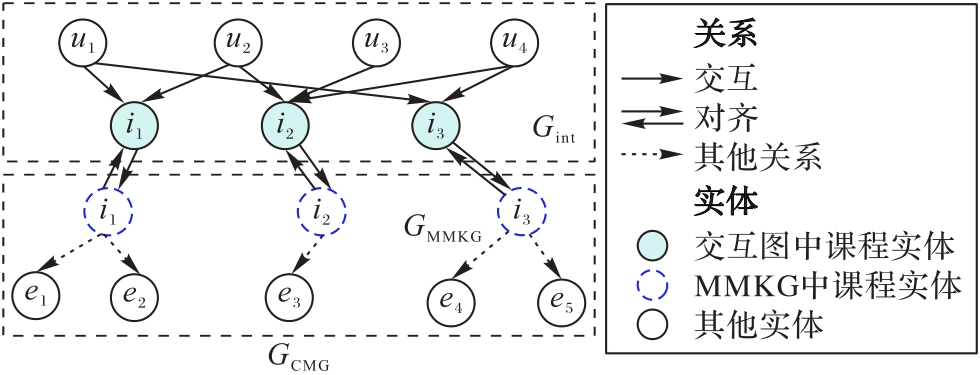
Fig. 1 Example of structure and alignment in collaborative MMKG
| 名称 | 定义 | 符号 |
|---|---|---|
| 语义表示 | 通过LLM对用户行为和课程内容语义建模得到的用户和课程向量 | |
| 增强课程表示 | 在GCN聚合前,通过LLM生成的语义表示融合课程多模态特征后得到的课程向量 | |
| 结构表示 | 通过GCN对MMKG中的结构信息进行聚合后得到的用户和课程向量 | |
| 混合表示 | 在GCN聚合后,通过LLM生成的语义表示与多模态特征和结构表示融合后得到的用户向量与课程向量 |
Tab. 1 Basic concepts and symbol definitions
| 名称 | 定义 | 符号 |
|---|---|---|
| 语义表示 | 通过LLM对用户行为和课程内容语义建模得到的用户和课程向量 | |
| 增强课程表示 | 在GCN聚合前,通过LLM生成的语义表示融合课程多模态特征后得到的课程向量 | |
| 结构表示 | 通过GCN对MMKG中的结构信息进行聚合后得到的用户和课程向量 | |
| 混合表示 | 在GCN聚合后,通过LLM生成的语义表示与多模态特征和结构表示融合后得到的用户向量与课程向量 |
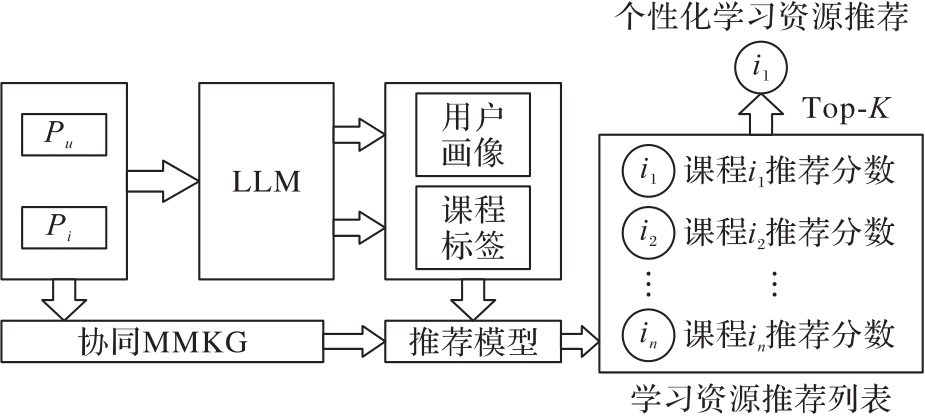
Fig. 2 Example of defining learning recommendation problem combining MMKG and LLM
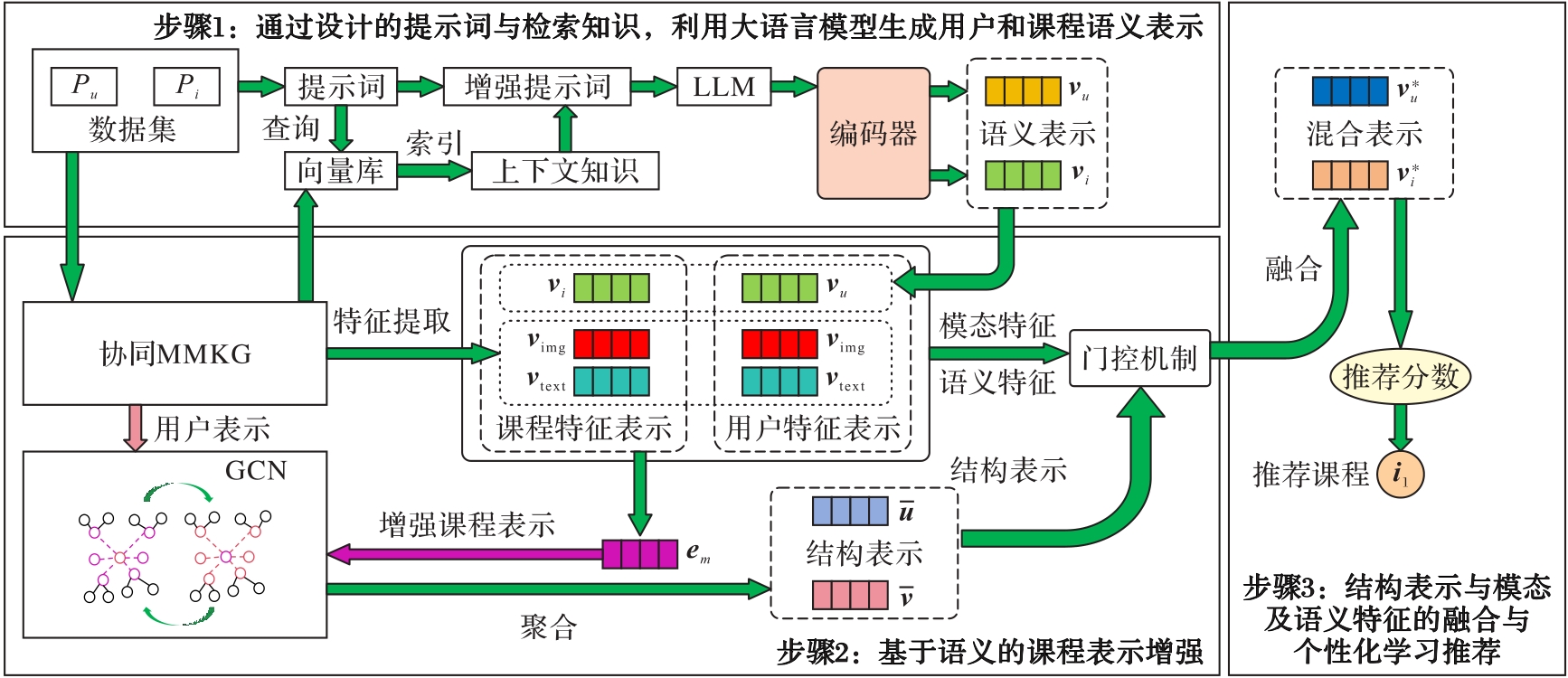
Fig. 3 Overall architecture of proposed recommendation method
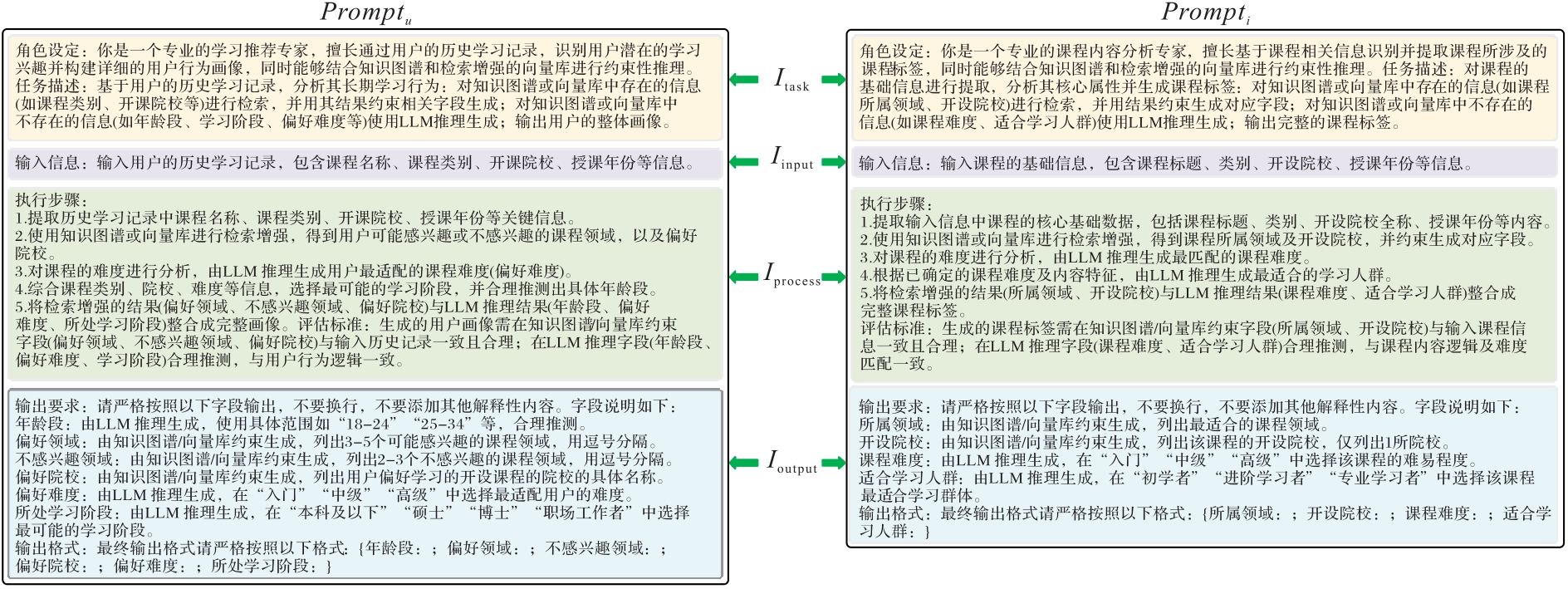
Fig. 4 Prompt templates for user portraits and courses generated by LLM
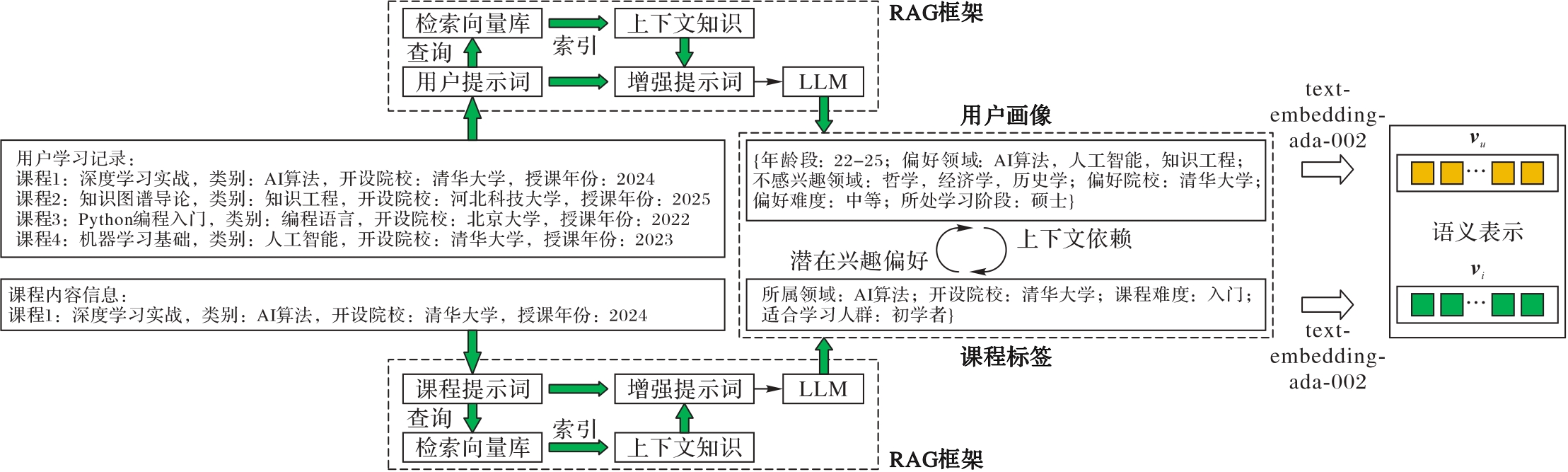
Fig. 5 Example of semantic representation generation
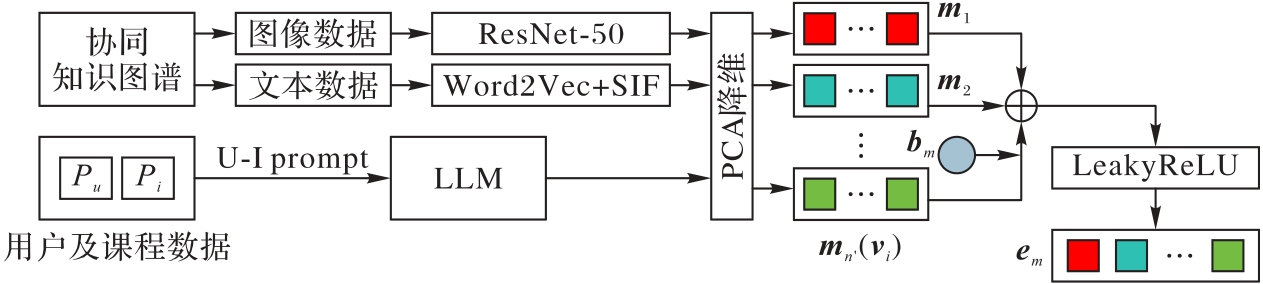
Fig. 6 Example of enhanced course representation generation
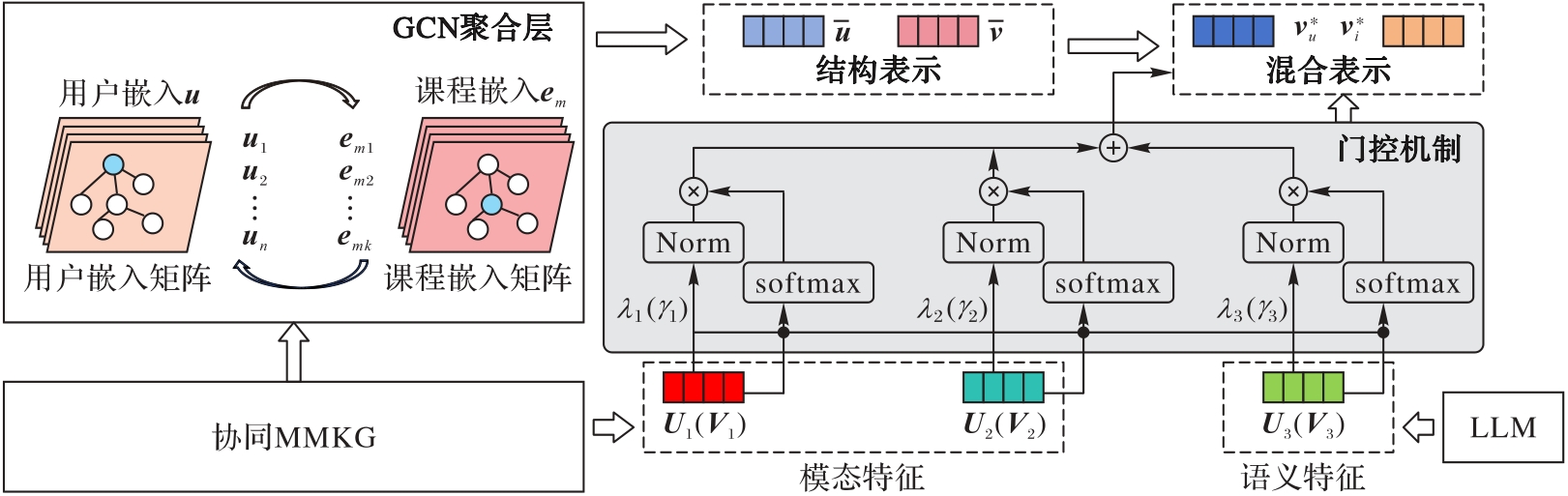
Fig. 7 Example of hybrid representation generation
| 方法 | Netflix | MOOCCube+Multimodal-Textbook(学习数据集) | ||||||||||
|---|---|---|---|---|---|---|---|---|---|---|---|---|
| RippleNet | 2.91 | 1.09 | 5.20 | 1.88 | 8.87 | 2.20 | 4.25 | 3.40 | 5.61 | 4.52 | 9.41 | 5.60 |
| MKGAT | 4.15 | 1.73 | 7.42 | 2.98 | 12.57 | 3.49 | 6.45 | 5.14 | 8.70 | 6.00 | 12.78 | 6.95 |
| MKGCN | 4.40 | 1.79 | 7.86 | 3.04 | 13.37 | 3.63 | 6.66 | 5.27 | 9.28 | 6.13 | 13.57 | 7.22 |
| LLMRec | 5.15 | 2.60 | 8.13 | 3.35 | 13.71 | 4.45 | 7.52 | 6.08 | 9.84 | 6.85 | 14.52 | 7.79 |
| LKPNR | 6.00 | 3.12 | 8.68 | 3.77 | 13.88 | 4.77 | 8.20 | 6.40 | 10.10 | 7.04 | 14.86 | 8.07 |
| CoLaKG | 6.57 | 3.42 | 9.76 | 3.69 | 14.33 | 5.15 | 8.59 | 6.73 | 11.03 | 7.57 | 15.86 | 8.96 |
| K-RagRec | 9.31 | |||||||||||
| 本文方法 | 7.52 | 3.95 | 10.43 | 4.69 | 16.30 | 5.85 | 9.30 | 7.33 | 12.15 | 8.25 | 16.38 | 9.30 |
Tab. 2 Performance comparison of proposed method and various baseline methods on Netflix and learning datasets
| 方法 | Netflix | MOOCCube+Multimodal-Textbook(学习数据集) | ||||||||||
|---|---|---|---|---|---|---|---|---|---|---|---|---|
| RippleNet | 2.91 | 1.09 | 5.20 | 1.88 | 8.87 | 2.20 | 4.25 | 3.40 | 5.61 | 4.52 | 9.41 | 5.60 |
| MKGAT | 4.15 | 1.73 | 7.42 | 2.98 | 12.57 | 3.49 | 6.45 | 5.14 | 8.70 | 6.00 | 12.78 | 6.95 |
| MKGCN | 4.40 | 1.79 | 7.86 | 3.04 | 13.37 | 3.63 | 6.66 | 5.27 | 9.28 | 6.13 | 13.57 | 7.22 |
| LLMRec | 5.15 | 2.60 | 8.13 | 3.35 | 13.71 | 4.45 | 7.52 | 6.08 | 9.84 | 6.85 | 14.52 | 7.79 |
| LKPNR | 6.00 | 3.12 | 8.68 | 3.77 | 13.88 | 4.77 | 8.20 | 6.40 | 10.10 | 7.04 | 14.86 | 8.07 |
| CoLaKG | 6.57 | 3.42 | 9.76 | 3.69 | 14.33 | 5.15 | 8.59 | 6.73 | 11.03 | 7.57 | 15.86 | 8.96 |
| K-RagRec | 9.31 | |||||||||||
| 本文方法 | 7.52 | 3.95 | 10.43 | 4.69 | 16.30 | 5.85 | 9.30 | 7.33 | 12.15 | 8.25 | 16.38 | 9.30 |
| 方法 | ||||||
|---|---|---|---|---|---|---|
| Local-Llama | ||||||
| API-GPT | 9.30 | 7.33 | 12.15 | 8.25 | 16.38 | 9.30 |
Tab. 3 Impact of LLM deployment method on recommendation performance (learning dataset)
| 方法 | ||||||
|---|---|---|---|---|---|---|
| Local-Llama | ||||||
| API-GPT | 9.30 | 7.33 | 12.15 | 8.25 | 16.38 | 9.30 |
| 方法 | 10% sample | 30% sample | 50% sample | |||
|---|---|---|---|---|---|---|
| CoLaKG | 1.74 | 0.97 | 5.37 | 3.04 | 7.13 | 4.30 |
| K-RagRec | ||||||
| 本文方法 | 2.05 | 1.15 | 6.14 | 3.61 | 8.20 | 5.12 |
Tab. 4 Impact of data size on recommendation performance (learning dataset)
| 方法 | 10% sample | 30% sample | 50% sample | |||
|---|---|---|---|---|---|---|
| CoLaKG | 1.74 | 0.97 | 5.37 | 3.04 | 7.13 | 4.30 |
| K-RagRec | ||||||
| 本文方法 | 2.05 | 1.15 | 6.14 | 3.61 | 8.20 | 5.12 |
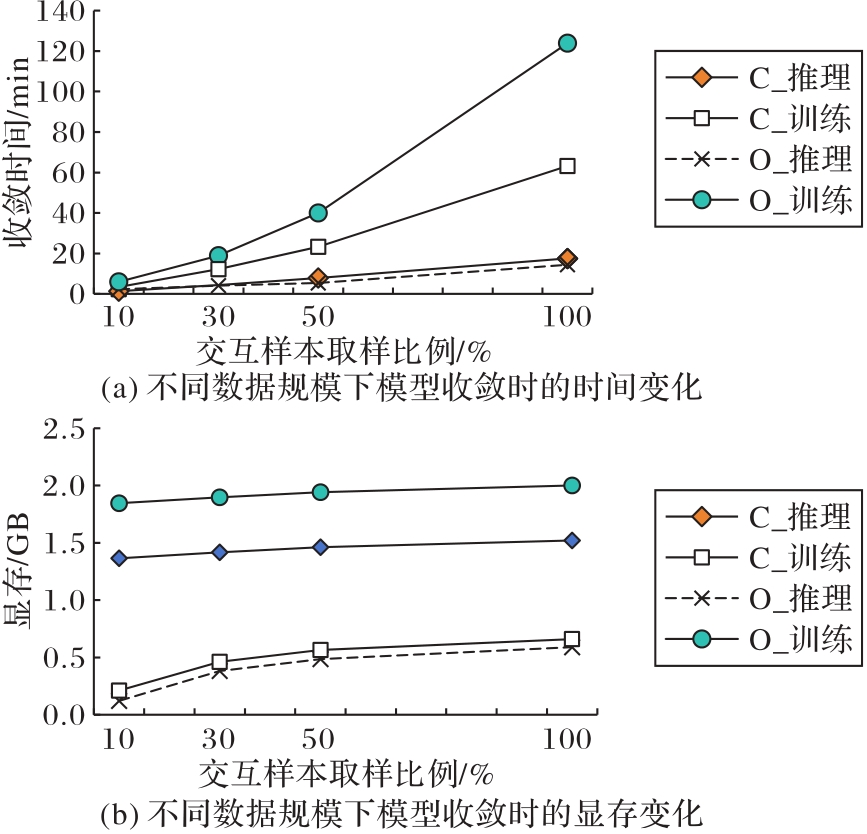
Fig. 8 Variations in model convergence time and GPU memory usage during convergence under different data sizes
| 方法 | ||||||
|---|---|---|---|---|---|---|
| w/o LLM | 7.18 | 5.37 | 8.48 | 5.63 | 13.03 | 7.17 |
| w/o MMKG | 7.80 | 5.96 | 9.15 | 6.36 | 14.56 | 7.91 |
| w/o RAG | ||||||
| 本文方法 | 9.30 | 7.33 | 12.15 | 8.25 | 16.38 | 9.30 |
Tab. 5 Impact of auxiliary information on recommendation performance (learning dataset)
| 方法 | ||||||
|---|---|---|---|---|---|---|
| w/o LLM | 7.18 | 5.37 | 8.48 | 5.63 | 13.03 | 7.17 |
| w/o MMKG | 7.80 | 5.96 | 9.15 | 6.36 | 14.56 | 7.91 |
| w/o RAG | ||||||
| 本文方法 | 9.30 | 7.33 | 12.15 | 8.25 | 16.38 | 9.30 |
| 方法 | ||||||
|---|---|---|---|---|---|---|
| w/o Course Fusion+V3 | 7.16 | 5.35 | 9.29 | 6.02 | 12.70 | 6.87 |
| w/o Course Fusion+U3 | 7.75 | 6.00 | 10.12 | 6.74 | 13.65 | 7.62 |
| w/o Course Fusion | 8.26 | 6.32 | 10.84 | 7.14 | 14.79 | 8.14 |
| w/o Structure Fusion | ||||||
| 本文方法 | 9.30 | 7.33 | 12.15 | 8.25 | 16.38 | 9.30 |
Tab. 6 Impact of LLM fusion mechanism on recommendation performance (learning dataset)
| 方法 | ||||||
|---|---|---|---|---|---|---|
| w/o Course Fusion+V3 | 7.16 | 5.35 | 9.29 | 6.02 | 12.70 | 6.87 |
| w/o Course Fusion+U3 | 7.75 | 6.00 | 10.12 | 6.74 | 13.65 | 7.62 |
| w/o Course Fusion | 8.26 | 6.32 | 10.84 | 7.14 | 14.79 | 8.14 |
| w/o Structure Fusion | ||||||
| 本文方法 | 9.30 | 7.33 | 12.15 | 8.25 | 16.38 | 9.30 |
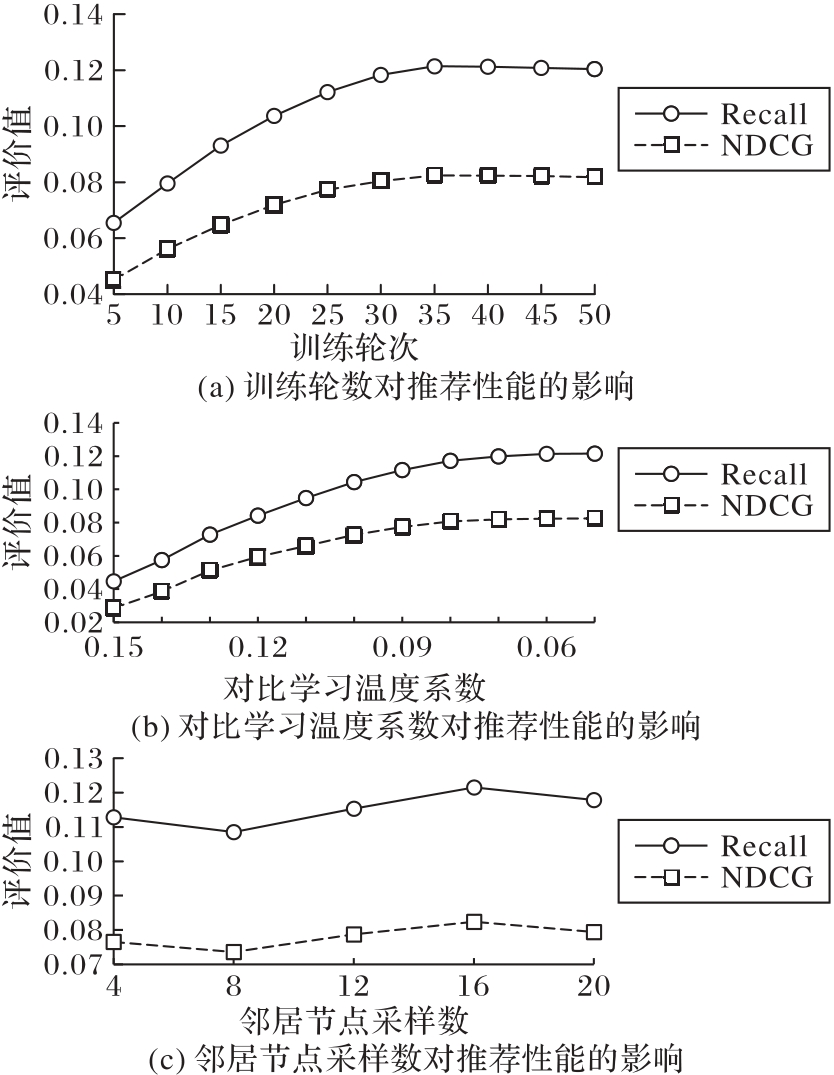
Fig. 9 Impact of different parameter changes on recommendation performance
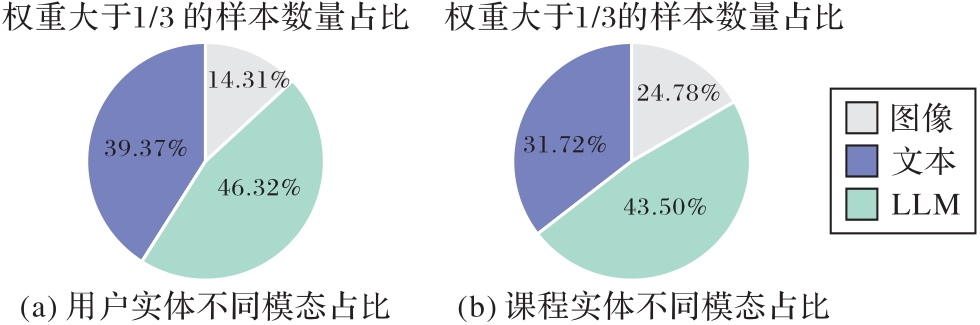
Fig. 10 Distribution of modal weights for user entities and course entities
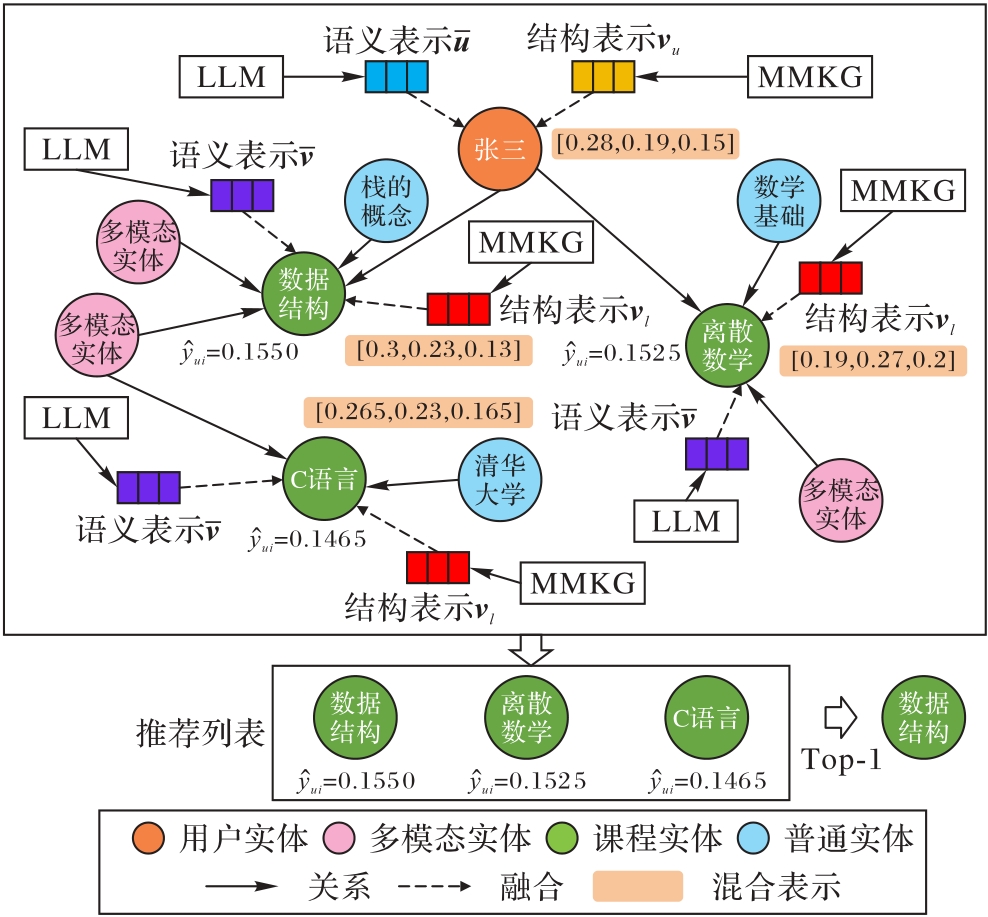
Fig. 11 Case study on user learning recommendation scenario
| [1] | Acharya A, Singh B, Onoe N. LLM-based generation of item description for recommendation systems[C]// RecSys 2023. New York: ACM, 2023: 1204-1207. |
| [2] | Shokrzadeh Z, Feizi-Derakhshi M R, Balafar M A, et al. Knowledge graph-based recommendation system enhanced by neural collaborative filtering and knowledge graph embedding[J]. Ain Shams Engineering Journal, 2024, 15(1): No.102263. |
| [3] | Wei W, Ren X, Tang J, et al. LLMRec: large language models with graph augmentation for recommendation[C]// WSDM 2024. New York: ACM, 2024: 806-815. |
| [4] | Cai R, Wang C, Cai Q, et al. Boosting knowledge graph-based recommendations through confidence-aware augmentation with large language models[PP/OL]. arXiv (2025-02-06) [2025-08-05].. |
| [5] | Chen H, Xie R, Cui X, et al. LKPNR: large language models and knowledge graph for personalized news recommendation framework[J]. Computers, Materials and Continua, 2024, 79(3): 4283-4296. |
| [6] | Xi Y, Liu W, Lin J, et al. Towards open-world recommendation with knowledge augmentation from large language models[C]// RecSys 2024. New York: ACM, 2024: 12-22. |
| [7] | Li L, Zhang Y, Chen L. Prompt distillation for efficient LLM-based recommendation[C]// CIKM 2023. New York: ACM, 2023: 1348-1357. |
| [8] | Hu J, Xia W, Zhang X, et al. Enhancing sequential recommendation via LLM-based semantic embedding learning[C]// WWW 2024. New York: ACM, 2024: 103-111. |
| [9] | Lin J, Shan R, Zhu C, et al. ReLLa: retrieval-enhanced large language models for lifelong sequential behavior comprehension in recommendation[C]// WWW 2024. New York: ACM, 2024: 3497-3508. |
| [10] | Chen X, Yin C, Chen H, et al. Course recommendation system based on course knowledge graph generated by large language models[C]// TALE 2024. Piscataway: IEEE, 2024: 1-8. |
| [11] | Zhang G, Li H, Li S, et al. MMKG-PAR: multi-modal knowledge graphs-based personalized attraction recommendation[J]. Sustainability, 2024, 16(5): No.2211. |
| [12] | Sun R, Cao X, Zhao Y, et al. Multi-modal knowledge graphs for recommender systems[C]// CIKM 2020. New York: ACM, 2020: 1405-1414. |
| [13] | Wei Y, Wang X, Nie L, et al. MMGCN: multi-modal graph convolution network for personalized recommendation of micro-video[C]// MM 2019. New York: ACM, 2019: 1437-1445. |
| [14] | Zheng S, Wang W, Qu J, et al. MMKGR: multi-hop multi-modal knowledge graph reasoning[C]// ICDE 2023. Piscataway: IEEE, 2023: 96-109. |
| [15] | Cui X, Qu X, Li D, et al. MKGCN: multi-modal knowledge graph convolutional network for music recommender systems[J]. Electronics, 2023, 12(12): No.2688. |
| [16] | Alcott Z. Enhancing recommendation systems through a multi-modal knowledge graph neural network model[J]. Transactions on Computational and Scientific Methods, 2024, 4(12): 1-9. |
| [17] | Zhang J, Hou Y, Xie R, et al. AgentCF: collaborative learning with autonomous language agents for recommender systems[C]// WWW 2024. New York: ACM, 2024: 3679-3689. |
| [18] | Li S, Guo H, Tang X, et al. Embedding compression in recommender systems: a survey[J]. ACM Computing Surveys, 2024, 56(5): No.130. |
| [19] | Chen W, Shen Z, Pan Y, et al. Applying machine learning algorithm to optimize personalized education recommendation system[J]. Journal of Theory and Practice of Engineering Science, 2024, 4(1): 101-108. |
| [20] | Zou D, Wei W, Mao X L, et al. Multi-level cross-view contrastive learning for knowledge-aware recommender system[C]// SIGIR 2022. New York: ACM, 2022: 1358-1368. |
| [21] | Tian Y, Zhang C, Guo Z, et al. Learning MLPs on graphs: a unified view of effectiveness, robustness, and efficiency[EB/OL]. (2023-03-01) [2025-08-06].. |
| [22] | Li J, Yang C, Ye G, et al. Graph neural networks with deep mutual learning for designing multi-modal recommendation systems[J]. Information Sciences, 2024, 654: No.119815. |
| [23] | Dhananjaya G M, Goudar R H, Kulkarni A A, et al. A digital recommendation system for personalized learning to enhance online education: a review[J]. IEEE Access, 2024, 12: 34019-34041. |
| [24] | Hasan M D R, Ferdous J. Dominance of AI and machine learning techniques in hybrid movie recommendation system applying text-to-number conversion and cosine similarity approaches[J]. Journal of Computer Science and Technology Studies, 2024, 6(1): 94-102. |
| [25] | Li L, Zhang Y, Liu D, et al. Large language models for generative recommendation: a survey and visionary discussions[C]// LREC-COLING 2024. [S.l.]: ELRA and ICCL, 2024: 10146-10159. |
| [26] | Ren X, Wei W, Xia L, et al. Representation learning with large language models for recommendation[C]// WWW 2024. New York: ACM, 2024: 3464-3475. |
| [27] | Zhang Y, Feng F, Zhang J, et al. CoLLM: integrating collaborative embeddings into large language models for recommendation[J]. IEEE Transactions on Knowledge and Data Engineering, 2025, 37(5): 2329-2340. |
| [28] | Wang Y, Chu Z, Ouyang X, et al. LLMRG: improving recommendations through large language model reasoning graphs[J]. Proceedings of the AAAI Conference on Artificial Intelligence, 2024, 38(17): 19189-19196. |
| [29] | Bao K, Zhang J, Zhang Y, et al. TALLRec: an effective and efficient tuning framework to align large language model with recommendation[C]// RecSys 2023. New York: ACM, 2023: 1007-1014. |
| [30] | Zhu L, Huang X, Sang J. A LLM-based controllable, scalable, human-involved user simulator framework for conversational recommender systems[C]// WWW 2025. New York: ACM, 2025: 4653-4661. |
| [31] | 吴晔,陆俊霖.大模型驱动的多模态信息生成与信息推荐[J].河南师范大学学报(自然科学版),2025,53(5):145-151. |
| Wu Ye, Lu Junlin. Multimodal information generation and recommendation system driven by large language models[J]. Journal of Henan Normal University (Natural Science Edition), 2025, 53(5): 145-151. | |
| [32] | 李洪军.融合µ2Net+(ViT-L/16)的多模态商品推荐系统[J]. 软件工程与应用,2025,14(3):723-735. |
| Li Hongjun. Research on multimodal commodity recommendation system incorporating µ2Net+(ViT-L/16)[J]. Software Engineering and Applications, 2025, 14(3): 723-735. | |
| [33] | Chen X, Wang Y, Yang J. Multi-modal recommendation based on knowledge graph[C]// ICCC 2023. Piscataway: IEEE, 2023: 2383-2388. |
| [34] | Liu X, Li X, Cao Y, et al. Mandari: multi-modal temporal knowledge graph-aware sub-graph embedding for next-POI recommendation[C]// ICME 2023. Piscataway: IEEE, 2023: 1529-1534. |
| [35] | Abu-Rasheed H, Weber C, Fathi M. Knowledge graphs as context sources for LLM-based explanations of learning recommendations[C]// EDUCON 2024. Piscataway: IEEE, 2024: 1-5. |
| [36] | Wang S, Fan W, Feng Y, et al. Knowledge graph retrieval-augmented generation for LLM-based recommendation[C]// ACL 2025 (Volume 1: Long Papers). Stroudsburg: ACL, 2025: 27152-27168. |
| [37] | Tian J, Wang Z, Zhao J, et al. MMREC: LLM-based multi-modal recommender system[C]// SMAP 2024. Piscataway: IEEE, 2024: 105-110. |
| [38] | 王敏,高晓影,汪诗蕊,等.基于知识图谱和大语言模型增强的推荐系统研究[J].大数据,2025,11(2):29-46. |
| Wang Min, Gao Xiaoying, Wang Shirui, et al. Research on recommendation system based on knowledge graph and large language model enhancement[J]. Big Data Research, 2025, 11(2): 29-46. | |
| [39] | 王应文,张伟,李志文.大语言模型增强的知识图谱推荐算法在电子商务中的应用与推广[J].电子商务评论,2025,14(11): 2640-2651. |
| Wang Yingwen, Zhang Wei, Li Zhiwen. Applications and deployment of large language model-enhanced knowledge graph recommender algorithm in e-commerce[J]. E-Commerce Letters, 2025, 14(11): 2640-2651. | |
| [40] | Wu Y, Liao L, Zhang G, et al. State graph reasoning for multimodal conversational recommendation[J]. IEEE Transactions on Multimedia, 2023, 25: 3113-3124. |
| [41] | Cui Z, Weng Y, Tang X, et al. Comprehending knowledge graphs with large language models for recommender systems[C]// SIGIR 2025. New York: ACM, 2025: 1229-1239. |
| [42] | Church K W. Word2Vec[J]. Natural Language Engineering, 2017, 23(1): 155-162. |
| [43] | Arora S, Liang Y, Ma T. A simple but tough-to-beat baseline for sentence embeddings[EB/OL]. (2023-05-06) [2025-01-05].. |
| [44] | He K, Zhang X, Ren S, et al. Deep residual learning for image recognition[C]// CVPR 2016. Piscataway: IEEE, 2016: 770-778. |
| [45] | Xu J, Li Z, Du B, et al. Reluplex made more practical: leaky ReLU[C]// ISCC 2020. Piscataway: IEEE, 2020: 1-7. |
| [46] | Hamilton W, Ying Z, Leskovec J. Inductive representation learning on large graphs[C]// NeurIPS 2017. Red Hook: Curran Associates Inc., 2017: 1024-1034. |
| [47] | Corso G, Cavalleri L, Beaini D, et al. Principal neighbourhood aggregation for graph nets[C]// NeurIPS 2020. Red Hook: Curran Associates Inc., 2020: 13260-13271. |
| [48] | Arevalo J, Solorio T, Montes-y-Gomez M, et al. Gated multimodal networks[J]. Neural Computing and Applications, 2020, 32(14): 10209-10228. |
| [49] | Yu J, Luo G, Xiao T, et al. MOOCCube: a large-scale data repository for NLP applications in MOOCs[C]// ACL 2020. Stroudsburg: ACL, 2020: 3135-3142. |
| [50] | Zhang W, Zhang H, Li X, et al. 2.5 years in class: a multimodal textbook for vision-language pretraining[C]// ICCV 2025. Piscataway: IEEE, 2025: 4647-4658. |
| [51] | Gomez-Uribe C A, Hunt N. The Netflix recommender system: Algorithms, business value, and innovation[J]. ACM Transactions on Management Information Systems, 2015, 6(4): No.13. |
| [52] | Wang H, Zhang F, Wang J, et al. RippleNet: propagating user preferences on the knowledge graph for recommender systems[C]// CIKM 2018. New York: ACM, 2018: 417-426. |
| [1] | Mengjiao YU, Min JIN, Xinhua LIU. Agile enhancement development framework driven by human-multi-agent collaboration [J]. Journal of Computer Applications, 2026, 46(9): 2938-2947. |
| [2] | Yun BIAN, Haiquan WANG, Yi CHEN, Zhe CUI. Construction method of software defect prediction dataset with explainability [J]. Journal of Computer Applications, 2026, 46(9): 2948-2958. |
| [3] | Zhenhui GONG, Xiaoyu SHI, Yun LU, Yangcheng LIU, Mingsheng SHANG. Fair recommendation framework for large language models with sensitive attribute absence [J]. Journal of Computer Applications, 2026, 46(9): 2838-2846. |
| [4] | Yaoran HUO, Huizhi LI, Dahe ZENG, Zhenyu TANG, Chenmei LIU, Yan WU, Xiao ZHANG, Siqin CHEN, Houhui YANG. Contract review framework based on dynamic rule generation and neuro-symbolic reasoning using large language models [J]. Journal of Computer Applications, 2026, 46(9): 2820-2826. |
| [5] | Yifan WANG, Hu HAN, Dong LI, Yating FAN, Lin LI. Heterogeneous enhancement and multi-source knowledge fusion for aspect-based sentiment analysis [J]. Journal of Computer Applications, 2026, 46(9): 2752-2760. |
| [6] | Xinliang LIU, Yushi XU, Dubai LI, Yanzhao REN. Survey of knowledge graph-based question answering methods [J]. Journal of Computer Applications, 2026, 46(8): 2394-2410. |
| [7] | Mengting WANG, Shuanliang GAO, Wenrui LIAO, Geng LI, Jiaxing ZHANG, Yuanfang ZHU, Tiange ZHAO, Yonghui LIU, Hongru LIANG. Message consistency parsing framework for aviation domain [J]. Journal of Computer Applications, 2026, 46(8): 2681-2690. |
| [8] | Yue ZHANG, Yuhan GUO. Ride-hailing spatio-temporal demand forecasting method via large language model-driven semantic quantification [J]. Journal of Computer Applications, 2026, 46(8): 2467-2476. |
| [9] | Musheng CHEN, Wenqing FU, Xiaohong QIU, Junhua WU, Qiang WEN. Aspect sentiment triplet extraction based on graph convolutional network and cross-domain data augmentation [J]. Journal of Computer Applications, 2026, 46(8): 2432-2439. |
| [10] | Huihui LYU, Zhaoman ZHONG, Yu ZHANG, Jidong FAN. Syntactically enhanced aspect-based sentiment analysis via mutual information maximization and contrastive learning [J]. Journal of Computer Applications, 2026, 46(8): 2440-2446. |
| [11] | Pengyu CHEN, Baojun TIAN, Lichang ZHAO, Jiandong FANG. Learning path recommendation model integrating multi-behavior modeling and reinforcement learning [J]. Journal of Computer Applications, 2026, 46(8): 2485-2493. |
| [12] | Didi HOU, Shaodong HONG, Yujie FU, Yunhe CUI, Guowei SHEN. Cybersecurity named entity recognition method based on large language model linking [J]. Journal of Computer Applications, 2026, 46(7): 2064-2073. |
| [13] | Yuqi WANG, Yangsen ZHANG, Pu WANG. High school English reading comprehension model integrating knowledge augmentation and contrastive learning [J]. Journal of Computer Applications, 2026, 46(7): 2096-2103. |
| [14] | Linkai ZHU, Lu YANG, Hongjie ZHANG, Zijin WU, Lu LIU. Smart contract generation framework driven by LLM and SWRL for cross-border data compliance across heterogeneous blockchains [J]. Journal of Computer Applications, 2026, 46(7): 2074-2084. |
| [15] | Yadian CHENG, Yingying LI, Ping ZHANG, Fangbing QIU, Xiaonan CHAI, Yuqiao SHU. Dual-role interaction mechanism-based large language model for psychological health [J]. Journal of Computer Applications, 2026, 46(7): 2054-2063. |
| Viewed | ||||||
|
Full text |
|
|||||
|
Abstract |
|
|||||
