


Journal of Computer Applications ›› 2026, Vol. 46 ›› Issue (11): 3421-3428.DOI: 10.11772/j.issn.1001-9081.2025081036
• Artificial intelligence • Previous Articles
Xiaoli LI, Qipeng DENG, Bo HANG( )
Received:2025-09-10
Revised:2025-09-16
Accepted:2025-09-24
Online:2026-11-27
Published:2026-11-10
Contact:
Bo HANG
About author:LI Xiaoli, born in 1986, Ph. D., associate professor. Her research interests include federated learning, edge computing.Supported by:
李晓丽, 邓启鹏, 杭波()
通讯作者:
杭波
作者简介:李晓丽(1986—),女,河北石家庄人,副教授,博士,CCF会员,主要研究方向:联邦学习、边缘计算基金资助:CLC Number:
Xiaoli LI, Qipeng DENG, Bo HANG. Service-defined federated learning client selection algorithm for dual heterogeneity[J]. Journal of Computer Applications, 2026, 46(11): 3421-3428.
李晓丽, 邓启鹏, 杭波. 面向双重异构性的服务定义联邦学习客户端选择算法[J]. 《计算机应用》唯一官方网站, 2026, 46(11): 3421-3428.
Add to citation manager EndNote|Ris|BibTeX
URL: https://www.joca.cn/EN/10.11772/j.issn.1001-9081.2025081036
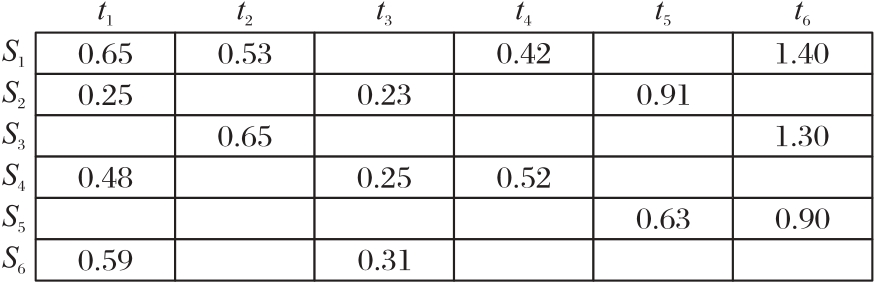
Fig. 1 “Service-time” QoS data matrix collected by server
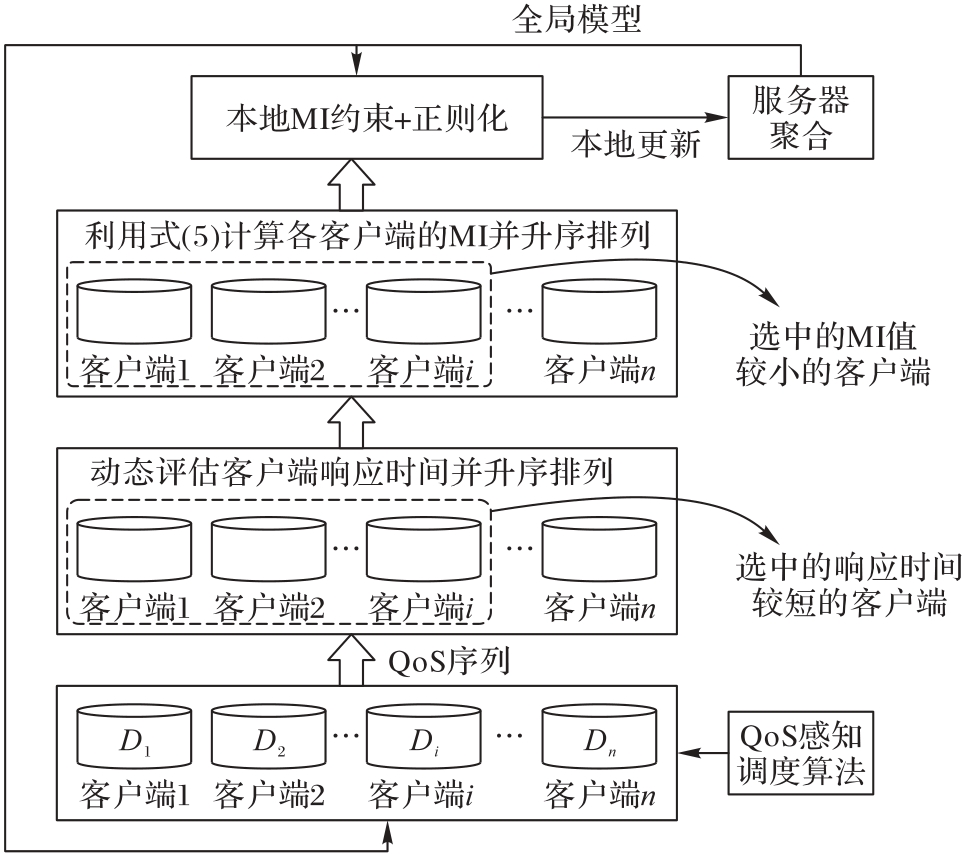
Fig. 2 Architecture of FedQos
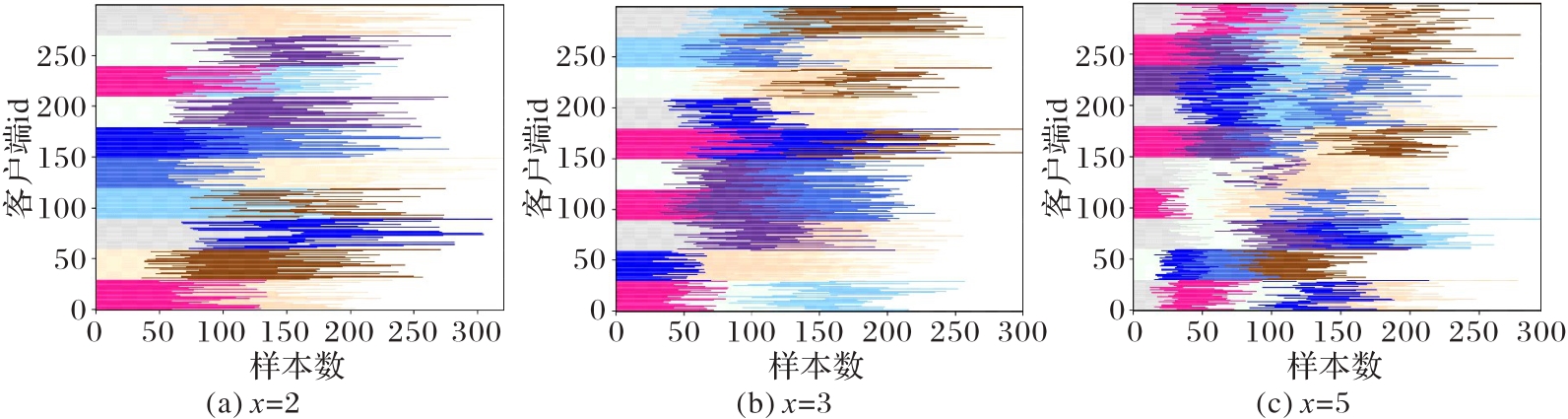
Fig. 3 Distribution of sample categories under Pathologically non-IID data
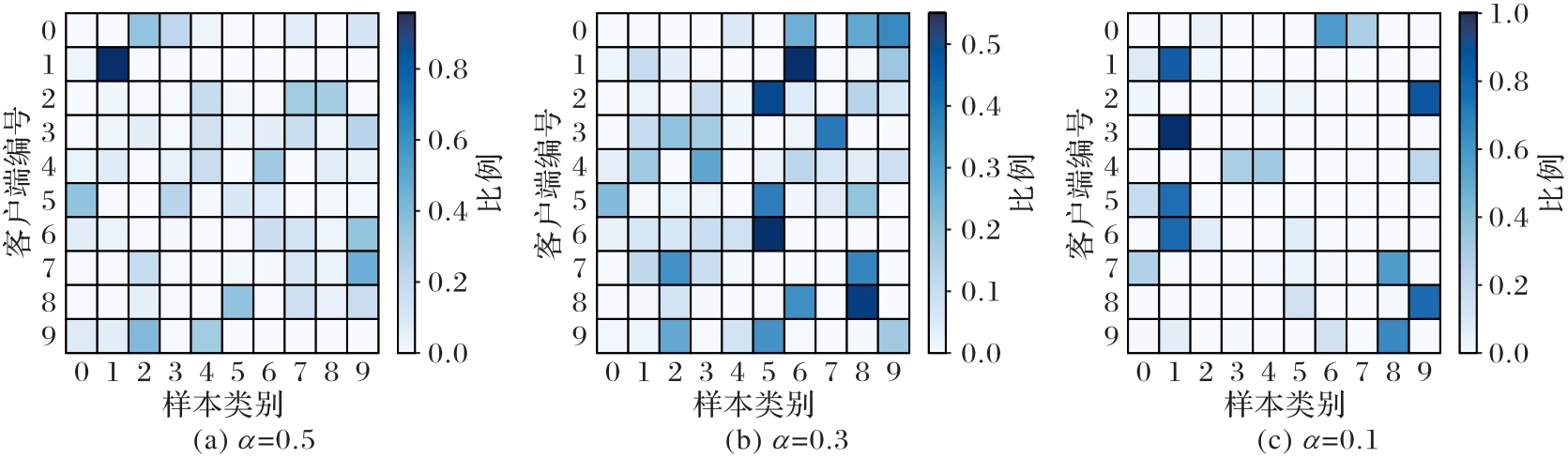
Fig. 4 Distribution of sample categories under Dirichlet non-IID data
客户端 选择算法 | Pathological Non-IID测试准确率/% | Dirichlet Non-IID测试准确率/% | ||||
|---|---|---|---|---|---|---|
| Cifar10-2 | Cifar10-3 | Cifar10-5 | ||||
| FedAvg | 48.62 | 55.94 | 53.73 | 51.65 | 55.57 | 57.10 |
| WS | 46.43 | 56.13 | 53.60 | 51.00 | 55.66 | 56.61 |
| DivFL | 45.46 | 55.21 | 52.35 | 50.56 | 55.28 | 55.11 |
| Pow-d | 48.73 | 56.73 | 53.69 | 50.96 | 55.84 | 57.18 |
| AFL | 46.43 | 54.69 | 51.39 | 51.00 | 55.55 | 56.28 |
| FedQos | 53.35 | 58.67 | 56.88 | 52.79 | 58.22 | 57.77 |
Tab. 1 Test accuracy comparison of different client selection algorithms
客户端 选择算法 | Pathological Non-IID测试准确率/% | Dirichlet Non-IID测试准确率/% | ||||
|---|---|---|---|---|---|---|
| Cifar10-2 | Cifar10-3 | Cifar10-5 | ||||
| FedAvg | 48.62 | 55.94 | 53.73 | 51.65 | 55.57 | 57.10 |
| WS | 46.43 | 56.13 | 53.60 | 51.00 | 55.66 | 56.61 |
| DivFL | 45.46 | 55.21 | 52.35 | 50.56 | 55.28 | 55.11 |
| Pow-d | 48.73 | 56.73 | 53.69 | 50.96 | 55.84 | 57.18 |
| AFL | 46.43 | 54.69 | 51.39 | 51.00 | 55.55 | 56.28 |
| FedQos | 53.35 | 58.67 | 56.88 | 52.79 | 58.22 | 57.77 |
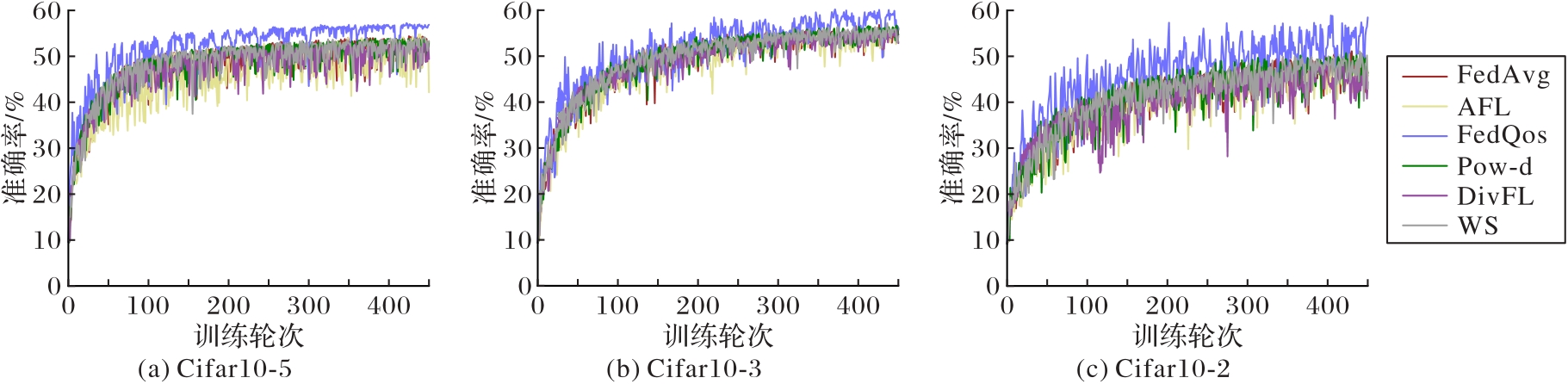
Fig. 5 Test accuracies of different algorithms being pathological non-IID
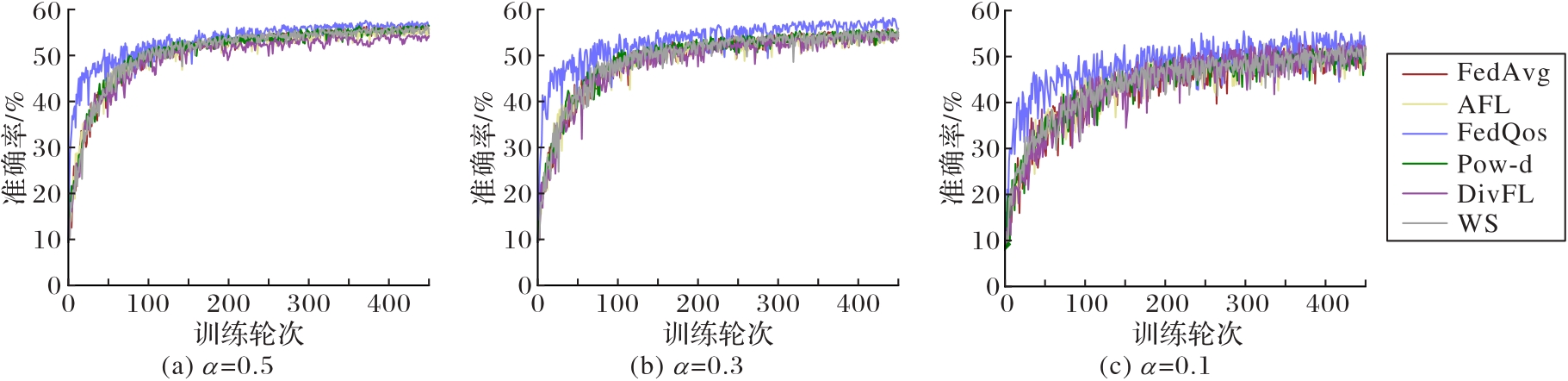
Fig. 6 Test accuracies of different algorithms being Dirichlet non-IID
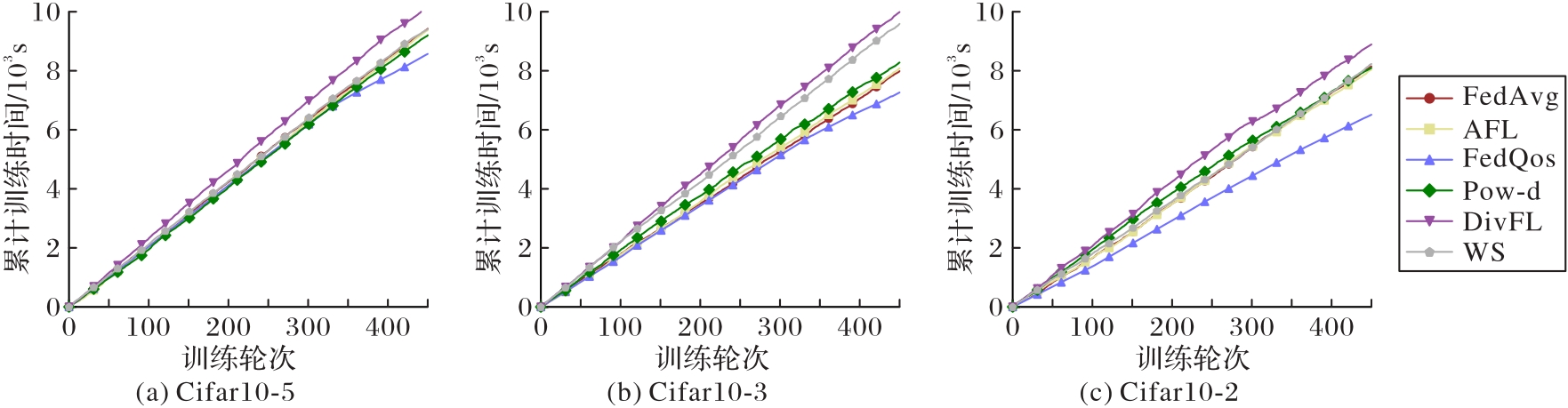
Fig. 7 Training time of different algorithms under pathological non-IID
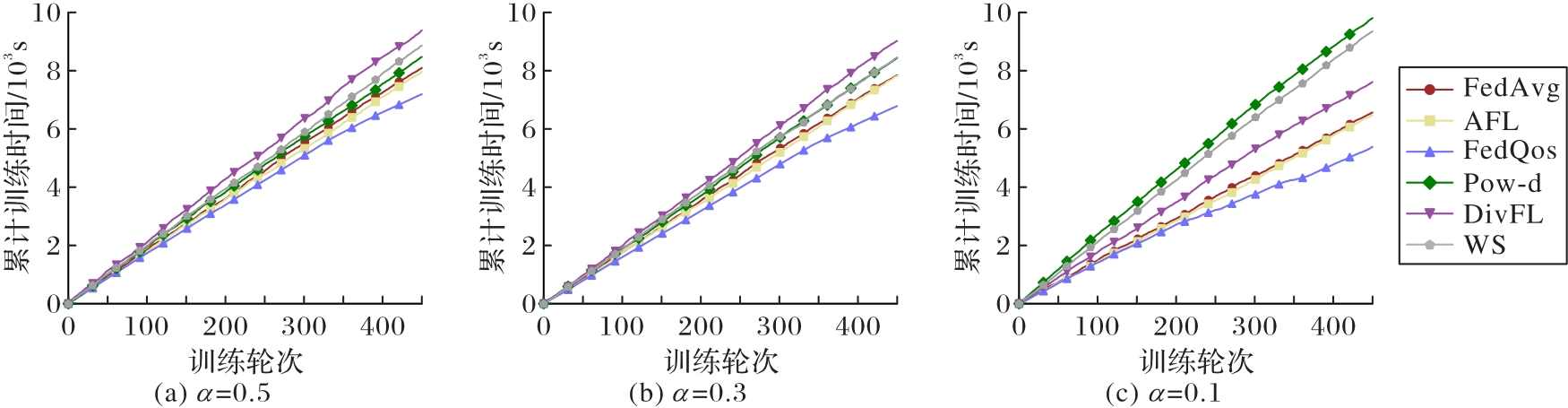
Fig. 8 Training time of different algorithms under Dirichlet non-IID
| [1] | McMahan H B, Moore E, Ramage D, et al. Communication-efficient learning of deep networks from decentralized data[J]. Proceedings of Machine Learning Research, 2017, 54: 1273-1282. |
| [2] | Fu L, Zhang H, Gao G, et al. Client selection in federated learning: principles, challenges, and opportunities[J]. IEEE Internet of Things Journal, 2023, 10(24): 21811-21819. |
| [3] | Xu J, Wang H. Client selection and bandwidth allocation in wireless federated learning networks: a long-term perspective[J]. IEEE Transactions on Wireless Communications, 2021, 20(2): 1188-1200. |
| [4] | Nishio T, Yonetani R. Client selection for federated learning with heterogeneous resources in mobile edge[C]// ICC 2019. Piscataway: IEEE, 2019: 1-7. |
| [5] | Zheng Z, Ma H, Lyu M R, et al. QoS-aware web service recommendation by collaborative filtering[J]. IEEE Transactions on Services Computing, 2011, 4(2): 140-152. |
| [6] | 葛丽娜,王明禹,田蕾.联邦学习的高效性研究综述[J].计算机应用,2025,45(8):2387-2398. |
| Ge Lina, Wang Mingyu, Tian Lei. Review of research on efficiency of federated learning[J]. Journal of Computer Applications, 2025, 45(8): 2387-2398. | |
| [7] | Wang J, Liu Q, Liang H, et al. Tackling the objective inconsistency problem in heterogeneous federated optimization[C]// NeurIPS 2020. Red Hook: Curran Associates Inc., 2020: 7611-7623. |
| [8] | Goetz J, Malik K, Bui D, et al. Active federated learning[PP/OL]. arXiv (2019-09-27) [2025-07-28].. |
| [9] | Cho Y J, Wang J, Joshi G. Client selection in federated learning: convergence analysis and power-of-choice selection strategies[PP/OL]. arXiv (2020-10-03) [2025-07-28].. |
| [10] | 赵泽华,梁美玉,薛哲,等. 基于数据质量评估的高效强化联邦学习节点动态采样优化[J]. 智能系统学报, 2024, 19(6): 1552-1561. |
| Zhao Zehua, Liang Meiyu, Xue Zhe, et al. Client dynamic sampling optimization of efficient reinforcement federated learning based on data quality assessment[J]. CAAI Transactions on Intelligent Systems, 2024, 19(6): 1552-1561. | |
| [11] | Wang L, Wang W, Li B. CMFL: mitigating communication overhead for federated learning[C]// ICDCS 2019. Piscataway: IEEE, 2019: 954-964. |
| [12] | Yi L, Gang W, Liu X. QSFL: a two-level uplink communication optimization framework for federated learning[J]. Proceedings of Machine Learning Research, 2022, 162: 25501-25513. |
| [13] | Chai Z, Ali A, Zawad S, et al. TiFL: a tier-based federated learning system[C]// HPDC 2020. New York: ACM, 2020: 125-136. |
| [14] | Balakrishnan R, Li T, Zhou T, et al. Diverse client selection for federated learning via submodular maximization[EB/OL]. (2023-02-14) [2025-07-28].. |
| [15] | Mao Y C, Shen L J, Wu J, et al. Federated dynamic client selection for fairness guarantee in heterogeneous edge computing[J]. Journal of Computer Science and Technology, 2024, 39(1): 139-158. |
| [16] | 李红娇,王宝金,王朝晖,等. 基于模型相似度与本地损失的双重客户端选择算法[J]. 计算机工程, 2024, 50(8): 153-164. |
| Li Hongjiao, Wang Baojin, Wang Zhaohui, et al. Dual-client selection algorithm based on model similarity and local loss[J]. Computer Engineering, 2024, 50(8): 153-164. | |
| [17] | Luo B, Xiao W, Wang S, et al. Tackling system and statistical heterogeneity for federated learning with adaptive client sampling[C]// IEEE INFOCOM 2022. Piscataway: IEEE, 2022: 1739-1748. |
| [18] | Sultana A, Haque M M, Chen L, et al. Eiffel: efficient and fair scheduling in adaptive federated learning[J]. IEEE Transactions on Parallel and Distributed Systems, 2022, 33(12): 4282-4294. |
| [19] | Zheng Z, Ma H, Lyu M R, et al. Collaborative web service QoS prediction via neighborhood integrated matrix factorization[J]. IEEE Transactions on Services Computing, 2012, 6(3): 289-299. |
| [20] | Zhang H, Li C, Kan N, et al. Improving generalization in federated learning with model-data mutual information regularization: a posterior inference approach[C]// NeurIPS 2024. Red Hook: Curran Associates Inc., 2024: 136646-136678. |
| [21] | Krizhevsky A. Learning multiple layers of features from tiny images[R/OL]. [2025-05-19]. . |
| [22] | Zheng Z, Li X, Tang M, et al. Web service QoS prediction via collaborative filtering: a survey[J]. IEEE Transactions on Services Computing, 2020, 15(4): 2455-2472. |
| [1] | Xingyao WANG, Xuebin CHEN. Federated learning algorithm based on prototype clustering and Fisher information matrix weighted fusion [J]. Journal of Computer Applications, 2026, 46(9): 2741-2751. |
| [2] | Yadong JIN, Jing FAN, Enkang XI, Hua DONG, Hao YU, Yihang SUN. Personalized federated learning intelligent edge aggregation method for space-air-ground integrated networks [J]. Journal of Computer Applications, 2026, 46(8): 2555-2566. |
| [3] | Huihui LYU, Zhaoman ZHONG, Yu ZHANG, Jidong FAN. Syntactically enhanced aspect-based sentiment analysis via mutual information maximization and contrastive learning [J]. Journal of Computer Applications, 2026, 46(8): 2440-2446. |
| [4] | Zhiqiang REN, Xuebin CHEN, Changsheng QU. Active defense framework against Byzantine attacks in federated learning [J]. Journal of Computer Applications, 2026, 46(7): 2196-2207. |
| [5] | Tianle SUN, Tengfei CAO. Quality-aware incentive mechanism based on Stackelberg game for federated learning in internet of vehicles [J]. Journal of Computer Applications, 2026, 46(7): 2229-2238. |
| [6] | Hao YU, Jing FAN, Enkang XI, Yadong JIN, Hua DONG, Yihang SUN. HEFSL: high-efficient federated split learning framework for edge heterogeneity [J]. Journal of Computer Applications, 2026, 46(5): 1397-1407. |
| [7] | Lei WANG, Wenxuan ZHOU, Ninghui JIA, Zhihao QU. Federated learning with two-pass communication compression for privacy-sensitive IoT data [J]. Journal of Computer Applications, 2026, 46(3): 887-898. |
| [8] | Hao YU, Jing FAN, Yihang SUN, Yadong JIN, Enkang XI, Hua DONG. Federated split learning optimization method under edge heterogeneity [J]. Journal of Computer Applications, 2026, 46(1): 33-42. |
| [9] | Yinlong JIAN, Xuebin CHEN, Zhongrui JING, Qi ZHONG, Zhenbo ZHANG. Data augmentation scheme based on conditional generative adversarial network in federated learning [J]. Journal of Computer Applications, 2026, 46(1): 21-32. |
| [10] | Kejia ZHANG, Zhijun FANG, Nanrun ZHOU, Zhicai SHI. Personalized federated learning method based on model pre-assignment and self-distillation [J]. Journal of Computer Applications, 2026, 46(1): 10-20. |
| [11] | Jintao SU, Lina GE, Liguang XIAO, Jing ZOU, Zhe WANG. Detection and defense scheme for backdoor attacks in federated learning [J]. Journal of Computer Applications, 2025, 45(8): 2399-2408. |
| [12] | Hongyang ZHANG, Shufen ZHANG, Zheng GU. Federated learning algorithm for personalization and fairness [J]. Journal of Computer Applications, 2025, 45(7): 2123-2131. |
| [13] | Yiming ZHANG, Tengfei CAO. Federated learning optimization algorithm based on local drift and diversity computing power [J]. Journal of Computer Applications, 2025, 45(5): 1447-1454. |
| [14] | Qingli CHEN, Yuanbo GUO, Chen FANG. Clustering federated learning algorithm for heterogeneous data [J]. Journal of Computer Applications, 2025, 45(4): 1086-1094. |
| [15] | Haili LIN, Jing LI. Lazy client identification method in federated learning based on proof-of-work [J]. Journal of Computer Applications, 2025, 45(3): 856-863. |
| Viewed | ||||||
|
Full text |
|
|||||
|
Abstract |
|
|||||
