


Journal of Computer Applications ›› 2026, Vol. 46 ›› Issue (6): 2016-2025.DOI: 10.11772/j.issn.1001-9081.2025050664
• Frontier and comprehensive applications • Previous Articles Next Articles
Maozu GUO1,2, Qingyu ZHANG1,2, Lingling ZHAO3( ), Yang DENG4,5
Received:2025-06-23
Revised:2025-11-27
Accepted:2025-12-01
Online:2025-12-15
Published:2026-06-10
Contact:
Lingling ZHAO
About author:GUO Maozu, born in 1966, Ph. D., professor. His research interests include intelligent construction, smart city.Supported by:
郭茂祖1,2, 张庆宇1,2, 赵玲玲3(), 邓扬4,5
通讯作者:
赵玲玲
作者简介:郭茂祖(1966—),男,山东夏津人,教授,博士,主要研究方向:智能建造、智慧城市基金资助:CLC Number:
Maozu GUO, Qingyu ZHANG, Lingling ZHAO, Yang DENG. Probabilistic structural damage identification based on hypersphere ring description[J]. Journal of Computer Applications, 2026, 46(6): 2016-2025.
郭茂祖, 张庆宇, 赵玲玲, 邓扬. 基于超球环描述的概率性结构损伤识别[J]. 《计算机应用》唯一官方网站, 2026, 46(6): 2016-2025.
Add to citation manager EndNote|Ris|BibTeX
URL: https://www.joca.cn/EN/10.11772/j.issn.1001-9081.2025050664
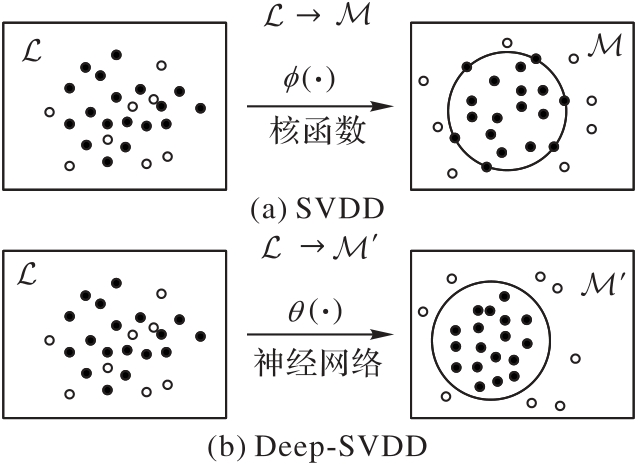
Fig.1 Schematic diagrams of SVDD and Deep-SVDD methods
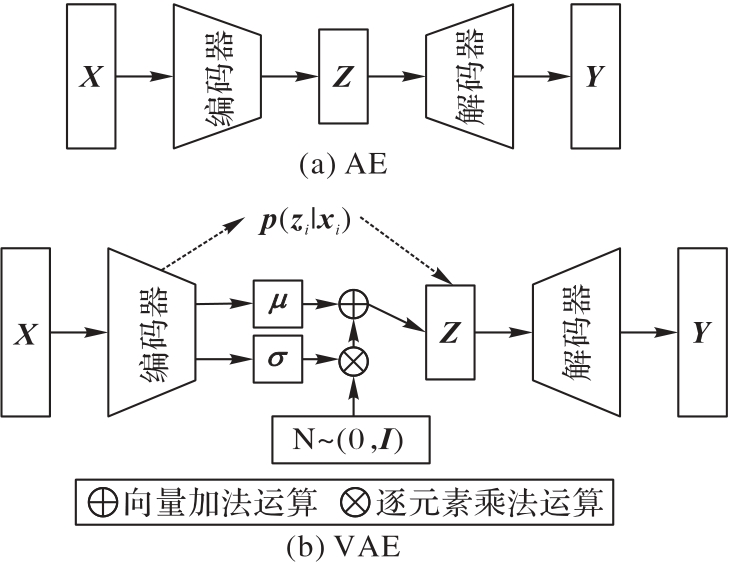
Fig. 2 Schematic diagrams of AE and VAE
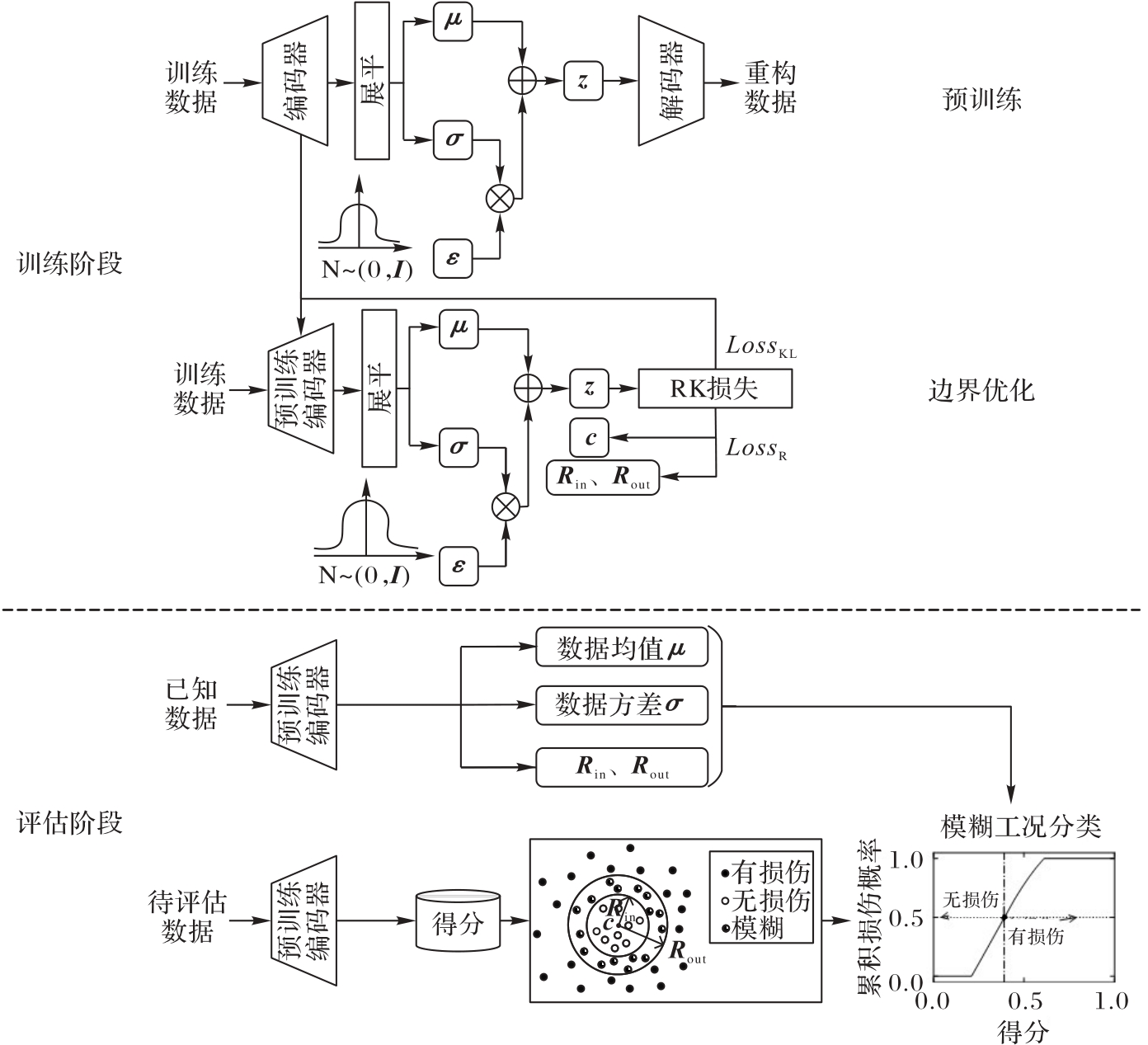
Fig.3 Probabilistic damage identification method based on hypersphere ring data description
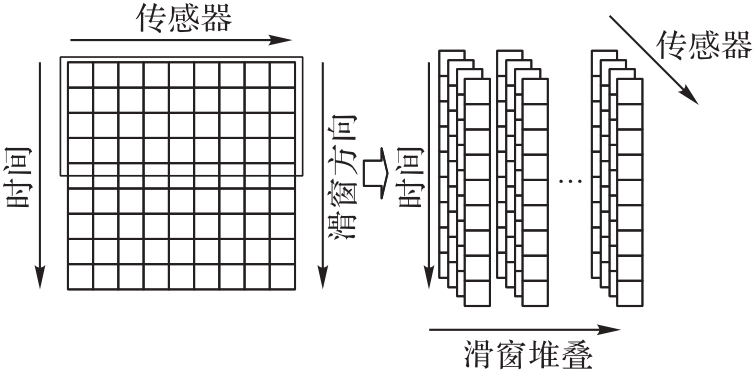
Fig. 4 Data preprocessing
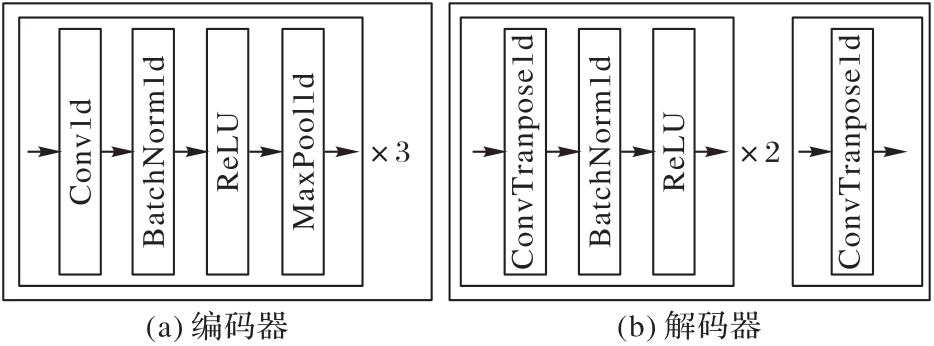
Fig. 5 Encoder and decoder structures
| 分类序号 | 工况 | 序列数 |
|---|---|---|
| 0 | 无损伤 | 1 282 |
| 1 | 桥墩沉降20 mm | 641 |
| 2 | 桥墩沉降40 mm | 641 |
| 3 | 桥墩沉降80 mm | 641 |
| 4 | 桥墩沉降95 mm | 641 |
| 5 | 基础沉降 | 641 |
| 6 | 参考测量 | 641 |
| 7 | 混凝土剥落(12 m2) | 641 |
| 8 | 混凝土剥落(24 m2) | 641 |
| 9 | 滑坡 | 641 |
| 10 | 桥墩混凝土铰失效 | 641 |
| 11 | 后张拉钢筋锚固失效(1 头) | 641 |
| 12 | 后张拉钢筋锚固失效(4 头) | 641 |
| 13 | 预应力筋断裂(2根) | 641 |
| 14 | 预应力筋断裂(4根) | 641 |
| 15 | 预应力筋断裂(6根) | 641 |
Tab. 1 Z24 bridge damage working conditions and data sizes of these working conditions
| 分类序号 | 工况 | 序列数 |
|---|---|---|
| 0 | 无损伤 | 1 282 |
| 1 | 桥墩沉降20 mm | 641 |
| 2 | 桥墩沉降40 mm | 641 |
| 3 | 桥墩沉降80 mm | 641 |
| 4 | 桥墩沉降95 mm | 641 |
| 5 | 基础沉降 | 641 |
| 6 | 参考测量 | 641 |
| 7 | 混凝土剥落(12 m2) | 641 |
| 8 | 混凝土剥落(24 m2) | 641 |
| 9 | 滑坡 | 641 |
| 10 | 桥墩混凝土铰失效 | 641 |
| 11 | 后张拉钢筋锚固失效(1 头) | 641 |
| 12 | 后张拉钢筋锚固失效(4 头) | 641 |
| 13 | 预应力筋断裂(2根) | 641 |
| 14 | 预应力筋断裂(4根) | 641 |
| 15 | 预应力筋断裂(6根) | 641 |
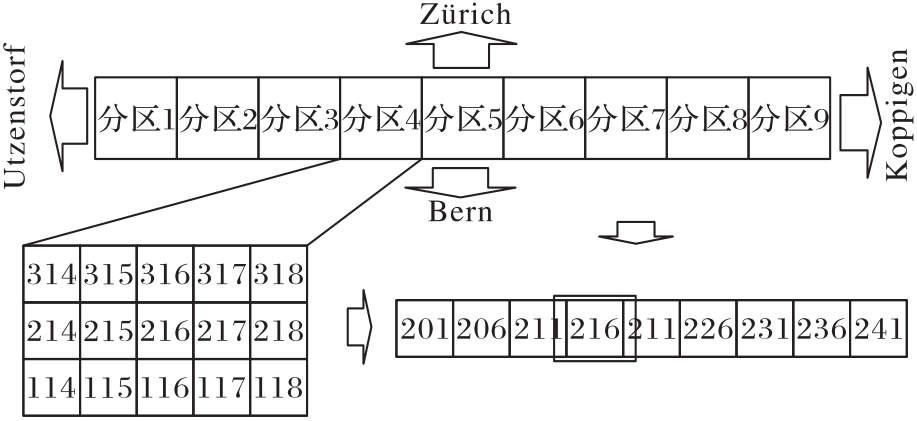
Fig. 6 Array sensor arrangement and sensor selection
| 方法 | Acc | Pre | Rec | F1s | AUC |
|---|---|---|---|---|---|
| AE | 87.7 | 100.0 | 87.4 | 93.3 | 96.8 |
| ImDiffusion | 95.1 | 97.4 | 97.6 | 97.5 | 65.5 |
| GPND | 87.9 | 100.0 | 87.6 | 93.4 | 99.9 |
| PNG | 97.4 | 97.4 | 100.0 | 98.7 | 98.7 |
| USVDD | 84.4 | 97.0 | 86.7 | 91.6 | 83.6 |
| VAE-SVDD | 94.9 | 100.0 | 94.8 | 97.3 | 97.4 |
| Deep-SVDD | 70.5 | 100.0 | 69.7 | 82.2 | 84.5 |
| VAEKL-SVDD | 98.1 | 100.0 | 98.1 | 99.0 | 99.0 |
| VAEKL-RDDP | 99.6 | 99.6 | 100.0 | 99.8 | 99.9 |
Tab. 2 Prediction performance comparison of methods on Z24 bridge
| 方法 | Acc | Pre | Rec | F1s | AUC |
|---|---|---|---|---|---|
| AE | 87.7 | 100.0 | 87.4 | 93.3 | 96.8 |
| ImDiffusion | 95.1 | 97.4 | 97.6 | 97.5 | 65.5 |
| GPND | 87.9 | 100.0 | 87.6 | 93.4 | 99.9 |
| PNG | 97.4 | 97.4 | 100.0 | 98.7 | 98.7 |
| USVDD | 84.4 | 97.0 | 86.7 | 91.6 | 83.6 |
| VAE-SVDD | 94.9 | 100.0 | 94.8 | 97.3 | 97.4 |
| Deep-SVDD | 70.5 | 100.0 | 69.7 | 82.2 | 84.5 |
| VAEKL-SVDD | 98.1 | 100.0 | 98.1 | 99.0 | 99.0 |
| VAEKL-RDDP | 99.6 | 99.6 | 100.0 | 99.8 | 99.9 |
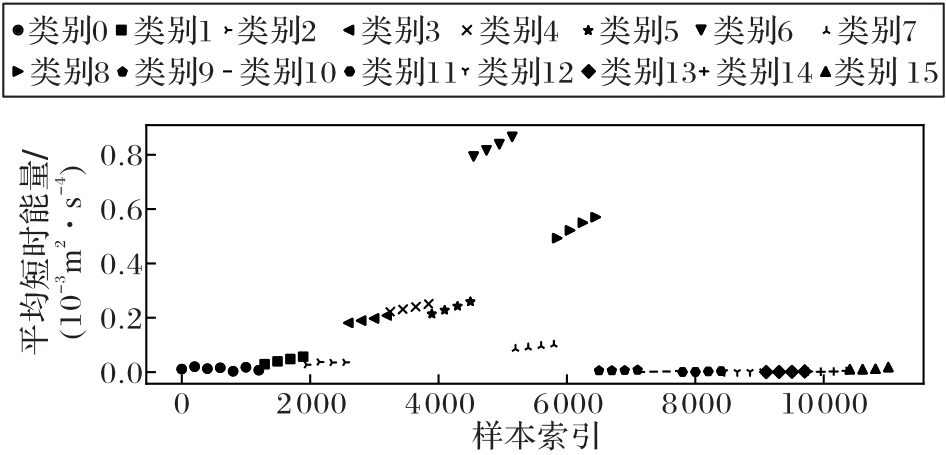
Fig.7 Average short-term energy of each category (average of data collected by 18 sensors)
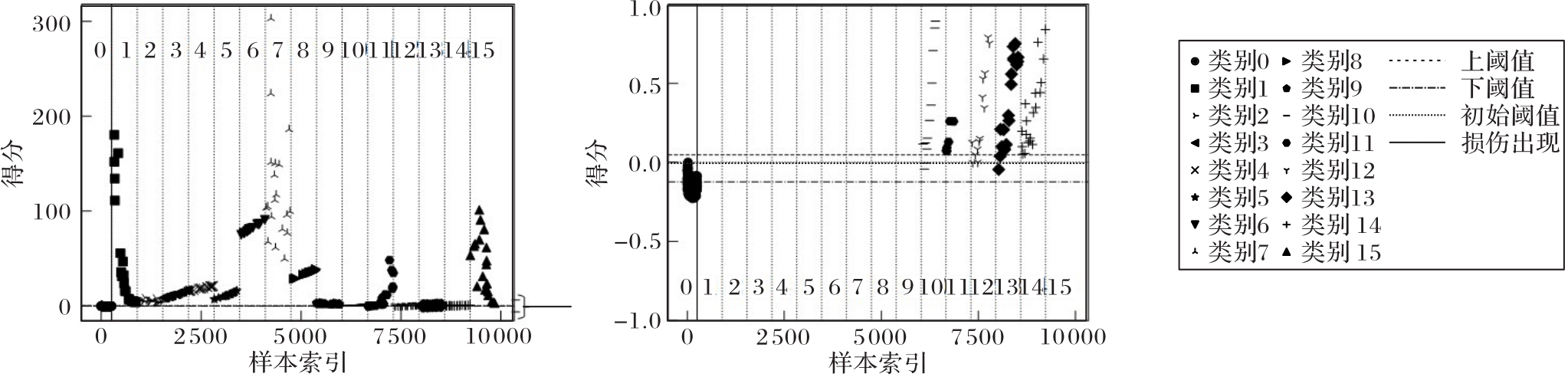
Fig. 8 Details of probabilistic evaluation of VAEKL-RDDP
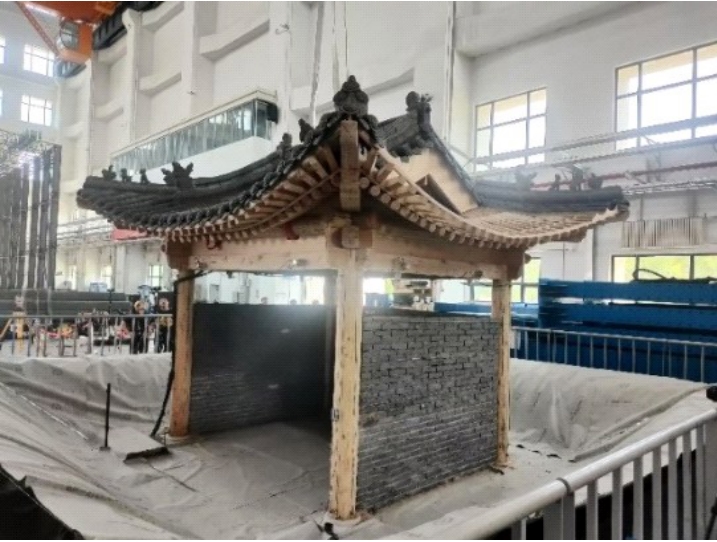
Fig. 9 Wooden pavilion vibration table experiment
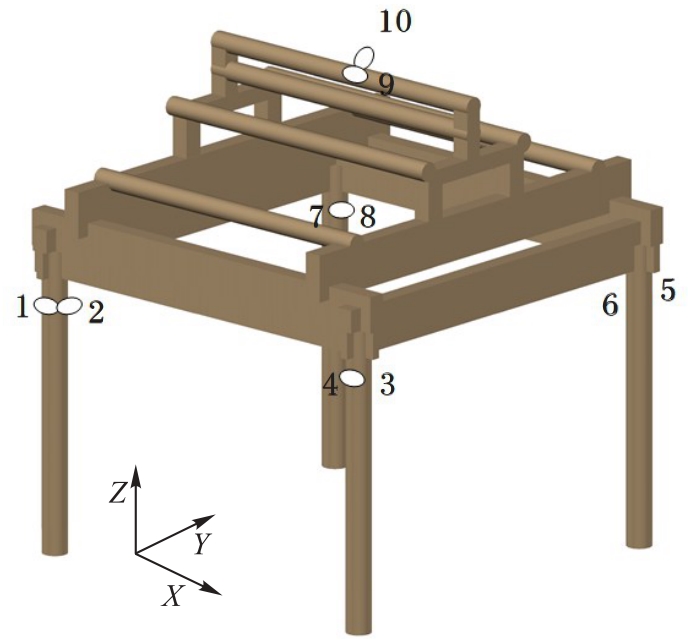
Fig. 10 Acceleration measurement points
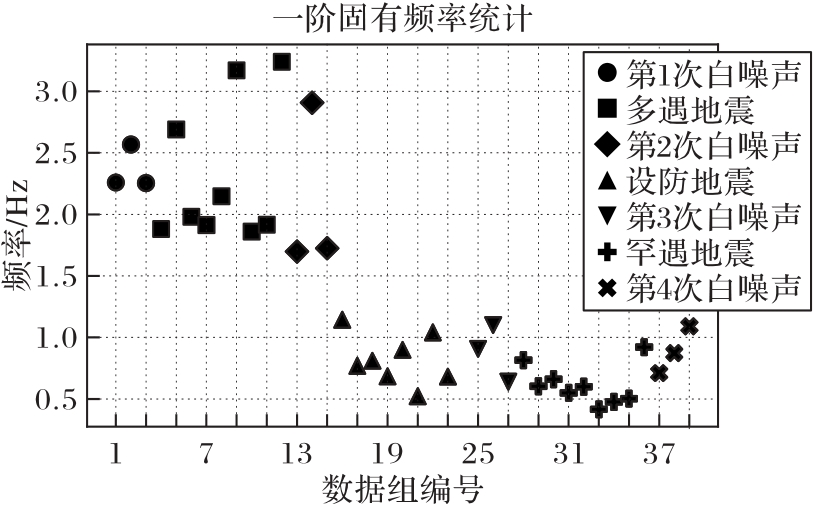
Fig. 11 Frequency statistics
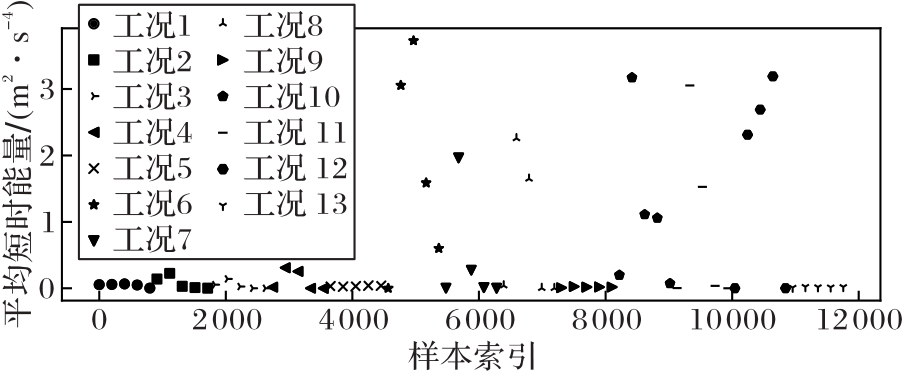
Fig. 12 Average short-term energy of each working condition (average value of data collected by ten sensors)
| 方法 | Acc | Pre | Rec | F1s | AUC |
|---|---|---|---|---|---|
| AE | 59.0 | 100.0 | 57.9 | 73.3 | 79.0 |
| ImDiffusion | 77.1 | 77.1 | 100.0 | 87.1 | 69.0 |
| GPND | 58.9 | 94.5 | 48.4 | 64.0 | 66.0 |
| PNG | 75.5 | 75.5 | 100.0 | 86.0 | 87.7 |
| USVDD | 39.0 | 72.0 | 31.3 | 43.7 | 32.7 |
| VAE-SVDD | 68.3 | 90.7 | 64.5 | 75.4 | 74.3 |
| Deep-SVDD | 64.1 | 91.4 | 57.8 | 70.8 | 78.4 |
| VAEKL-SVDD | 74.3 | 86.7 | 77.9 | 82.1 | 80.3 |
| VAEKL-RDDP | 80.4 | 83.6 | 92.1 | 87.7 | 85.4 |
Tab.3 Comparison of model prediction performance on wooden pavilion
| 方法 | Acc | Pre | Rec | F1s | AUC |
|---|---|---|---|---|---|
| AE | 59.0 | 100.0 | 57.9 | 73.3 | 79.0 |
| ImDiffusion | 77.1 | 77.1 | 100.0 | 87.1 | 69.0 |
| GPND | 58.9 | 94.5 | 48.4 | 64.0 | 66.0 |
| PNG | 75.5 | 75.5 | 100.0 | 86.0 | 87.7 |
| USVDD | 39.0 | 72.0 | 31.3 | 43.7 | 32.7 |
| VAE-SVDD | 68.3 | 90.7 | 64.5 | 75.4 | 74.3 |
| Deep-SVDD | 64.1 | 91.4 | 57.8 | 70.8 | 78.4 |
| VAEKL-SVDD | 74.3 | 86.7 | 77.9 | 82.1 | 80.3 |
| VAEKL-RDDP | 80.4 | 83.6 | 92.1 | 87.7 | 85.4 |
| 模型 | Acc | Pre | Rec | F1s | AUC |
|---|---|---|---|---|---|
| w/o VAE | 72.7 | 81.7 | 82.3 | 82.0 | 78.0 |
| w/o KL | 75.5 | 75.5 | 100.0 | 86.0 | 77.3 |
| w/o Ring | 74.3 | 86.7 | 77.9 | 82.1 | 80.3 |
| VAEKL-RDDP | 80.4 | 83.6 | 92.1 | 87.7 | 85.4 |
Tab. 4 Ablation experimental results
| 模型 | Acc | Pre | Rec | F1s | AUC |
|---|---|---|---|---|---|
| w/o VAE | 72.7 | 81.7 | 82.3 | 82.0 | 78.0 |
| w/o KL | 75.5 | 75.5 | 100.0 | 86.0 | 77.3 |
| w/o Ring | 74.3 | 86.7 | 77.9 | 82.1 | 80.3 |
| VAEKL-RDDP | 80.4 | 83.6 | 92.1 | 87.7 | 85.4 |
| [1] | 李爱群,丁幼亮,王浩,等. 桥梁健康监测海量数据分析与评估——“结构健康监测”研究进展[J]. 中国科学:技术科学, 2012, 42(8): 972-984. |
| LI A Q, DING Y L, WANG H, et al. Analysis and assessment of bridge health monitoring mass data: progress in research/development of “Structural Health Monitoring”[J]. SCIENTIA SINICA Technologica, 2012, 42(8): 972-984. | |
| [2] | JI X, ZHUANG Y, MIAO Z, et al. Vision‐based seismic damage detection and residual capacity assessment for an RC shaking table test structure[J]. Earthquake Engineering and Structural Dynamics, 2023, 52(3): 806-827. |
| [3] | JAHANGIRI M, NAJAFGHOLIPOUR M A, DEHGHAN S M, et al. The efficiency of a novel identification method for structural damage assessment using the first vibration mode data[J]. Journal of Sound and Vibration, 2019, 458: 1-16. |
| [4] | XIAO J L, NIE X, LIU Y F, et al. Structural performance assessment of RC flexural members through crack-based fibre beam-column model updating[J]. Computers and Structures, 2023, 281: No.107029. |
| [5] | 龙武剑,舒雨清,梅柳,等. 土木工程智能结构健康监测应用综述[J]. 结构工程师, 2024, 40(3): 203-216. |
| LONG W J, SHU Y Q, MEI L, et al. An overview of application of intelligent structural health monitoring in civil engineering[J]. Structural Engineers, 2024, 40(3): 203-216. | |
| [6] | HAMIDIA M, KABOODKHANI M, BAYESTEH H. Vision-oriented machine learning-assisted seismic energy dissipation estimation for damaged RC beam-column connections[J]. Engineering Structures, 2024, 301: No.117345. |
| [7] | CUSICANQUI J, KERLE N, NEX F. Usability of aerial video footage for 3-D scene reconstruction and structural damage assessment[J]. Natural Hazards and Earth System Sciences, 2018, 18(6): 1583-1598. |
| [8] | FERNANDEZ GALARRETA J, KERLE N, GERKE M. UAV-based urban structural damage assessment using object-based image analysis and semantic reasoning[J]. Natural Hazards and Earth System Sciences, 2015, 15(6): 1087-1101. |
| [9] | GAO H, LUO H, SHEN F, et al. Towards total online unsupervised anomaly detection and localization in industrial vision[EB/OL]. [2025-03-12].. |
| [10] | 陈飞圻,薛江,逯鹏,等. 基于机器视觉的钢结构工程运维关键技术研究现状[J]. 工业建筑, 2025, 55(7): 131-142. |
| CHEN F Q, XUE J, LU P, et al. Advances in key technologies for steel structure operation and maintenance based on machine vision[J]. Industrial Construction, 2025, 55(7): 131-142. | |
| [11] | LOMAZZI L, GIGLIO M, CADINI F. Towards a deep learning-based unified approach for structural damage detection, localisation and quantification[J]. Engineering Applications of Artificial Intelligence, 2023, 121: No.106003. |
| [12] | TENG S, CHEN G, YAN Z, et al. Vibration-based structural damage detection using 1-D convolutional neural network and transfer learning[J]. Structural Health Monitoring, 2023, 22(4): 2888-2909. |
| [13] | TENG S, CHEN X, CHEN G, et al. Structural damage detection based on transfer learning strategy using digital twins of bridges[J]. Mechanical Systems and Signal Processing, 2023, 191: No.110160. |
| [14] | 李雪艳,苏博,陈铭,等. 基于双向LSTM自动编码器的新型无监督深度学习结构损伤识别[J]. 计算力学学报, 2026, 43(1): 53-60. |
| LI X Y, SU B, CHEN M, et al. A novel unsupervised deep learning framework for structural damage identification based on bi-directional LSTM autoencoder[J]. Chinese Journal of Computational Mechanics, 2026, 43(1): 53-60. | |
| [15] | ELTOUNY K A, LIANG X. Uncertainty-aware structural damage warning system using deep variational composite neural networks[J]. Earthquake Engineering and Structural Dynamics, 2023, 52(11): 3345-3368. |
| [16] | SARWAR M Z, CANTERO D. Deep autoencoder architecture for bridge damage assessment using responses from several vehicles[J]. Engineering Structures, 2021, 246: No.113064. |
| [17] | YESSOUFOU F, YANG Y, ZHU J. Composite encoder-decoder network for rapid bridge damage assessment using long-term monitoring acceleration data[J]. Structural Health Monitoring, 2024, 23(6): 3387-3415. |
| [18] | 王梦倩,康帅,李传飞,等. 基于VMD-CAE的无监督结构损伤识别研究[J]. 振动与冲击, 2025, 44(11): 309-320. |
| WANG M Q, KANG S, LI C F, et al. Unsupervised structural damage identification based on VMD-CAE[J]. Journal of Vibration and Shock, 2025, 44(11): 309-320. | |
| [19] | XIONG Q, XIONG H, YUAN C, et al. Three-stage unsupervised learning approach fusing novel pseudo-label diffusion and math-physics translating for real-time structural damage detection[J]. Engineering Applications of Artificial Intelligence, 2024, 138(Pt B): No.109438. |
| [20] | ALVES V, CURY A. An automated vibration-based structural damage localization strategy using filter-type feature selection[J]. Mechanical Systems and Signal Processing, 2023, 190: No.110145. |
| [21] | SOLEIMANI-BABAKAMALI M H, SEPASDAR R, NASROLLAHZADEH K, et al. A system reliability approach to real-time unsupervised structural health monitoring without prior information[J]. Mechanical Systems and Signal Processing, 2022, 171: No.108913. |
| [22] | MEIXEDO A, SANTOS J, RIBEIRO D, et al. Online unsupervised detection of structural changes using train-induced dynamic responses[J]. Mechanical Systems and Signal Processing, 2022, 165: No.108268. |
| [23] | CHEN Y, ZHANG C, MA M, et al. ImDiffusion: imputed diffusion models for multivariate time series anomaly detection[J]. Proceedings of the VLDB Endowment, 2023, 17(3): 359-372. |
| [24] | SOLEIMANI-BABAKAMALI M H, SEPASDAR R, NASROLLAHZADEH K, et al. Toward a general unsupervised novelty detection framework in structural health monitoring[J]. Computer-Aided Civil and Infrastructure Engineering, 2022, 37(9): 1128-1145. |
| [25] | YONG B X, BRINTRUP A. Bayesian autoencoders with uncertainty quantification: towards trustworthy anomaly detection[J]. Expert Systems with Applications, 2022, 209: No.118196. |
| [26] | CHEN S, MIN H, FANG Y, et al. Uncertainty-aware sensor data anomaly detection for autonomous vehicles[C]// Proceedings of the 2024 IEEE Intelligent Vehicles Symposium (Ⅳ). Piscataway: IEEE, 2024: 478-483. |
| [27] | XU X, SHI C, REN Y, et al. Probabilistic anomaly detection considering multi-level uncertainties for cable-stayed bridges[J]. Structures, 2023, 58: No.105448. |
| [28] | PIDHORSKYI S, ALMOHSEN R, ADJEROH D A, et al. Generative probabilistic novelty detection with adversarial autoencoders[C]// Proceedings of the 32nd International Conference on Neural Information Processing Systems. Red Hook: Curran Associates Inc., 2018: 6823-6834. |
| [29] | HUANG C, SHI Y, ZHANG B, et al. Uncertainty-aware prototypical learning for anomaly detection in medical images[J]. Neural Networks, 2024, 175: No.106284. |
| [30] | YONG B X, PEARCE T, BRINTRUP A. Bayesian autoencoders: analysing and fixing the Bernoulli likelihood for out-of-distribution detection[EB/OL]. [2025-03-12].. |
| [31] | BLOKLAND W, RAJPUT K, SCHRAM M, et al. Uncertainty aware anomaly detection to predict errant beam pulses in the SNS accelerator[J]. Physical Review Accelerators and Beams, 2022, 25(12): No.122802. |
| [32] | PARK S, ADOSOGLOU G, PARDALOS P M. Interpreting rate-distortion of variational autoencoder and using model uncertainty for anomaly detection[J]. Annals of Mathematics and Artificial Intelligence, 2022, 90(7/8/9): 735-752. |
| [33] | TAX D M J, DUIN R P W. Support vector data description[J]. Machine Learning, 2004, 54(1): 45-66. |
| [34] | WANG Z, CHA Y J. An unsupervised deep auto-encoder with one-class support vector machine for damage detection[C]// Data Science in Engineering, Volume 9: Proceedings of the 39th IMAC, a Conference and Exposition on Structural Dynamics 2021, CPSEMS. Cham: Springer, 2022: 99-104. |
| [35] | ZHAO Y, ZHANG X, SHANG Z, et al. A novel hybrid method for KPI anomaly detection based on VAE and SVDD[J]. Symmetry, 2021, 13(11): No.2104. |
| [36] | LUO P, WANG B, LI T, et al. ADS-B anomaly data detection model based on VAE-SVDD[J]. Computers and Security, 2021, 104: No.102213. |
| [37] | GAO Z, NAKAYAMA R, HIZUKURI A, et al. Anomaly detection scheme for lung CT images using vector quantized variational auto-encoder with support vector data description[J]. Radiological Physics and Technology, 2025, 18(1): 17-26. |
| [38] | CHEN H, LYU Y, SHI J, et al. Robust support vector data description with truncated loss function for outliers depression[J]. Entropy, 2024, 26(8): No.628. |
| [39] | HE Z, LIU Q, SHAO H, et al. Uncertainty NVAE-SVDD based on Monte Carlo dropout for trustworthy detection of mechanical failures[J]. IEEE Transactions on Reliability, 2025, 74(4): 5544-5553. |
| [40] | CHEN G, ZHANG X, WANG Z J, et al. Robust support vector data description for outlier detection with noise or uncertain data[J]. Knowledge-Based Systems, 2015, 90: 129-137. |
| [41] | LIU B, XIAO Y, CAO L, et al. SVDD-based outlier detection on uncertain data[J]. Knowledge and Information Systems, 2013, 34(3): 597-618. |
| [42] | MA Z, ZHAO M, DAI X, et al. Anomaly detection for high-speed machining using hybrid regularized support vector data description[J]. Robotics and Computer-Integrated Manufacturing, 2025, 94: No.102962. |
| [43] | LIU B, LI X, XIAO Y, et al. Adaboost-based SVDD for anomaly detection with dictionary learning[J]. Expert Systems with Applications, 2024, 238(Pt C): No.121770. |
| [44] | LIANG J, LIU J. USVDD: a one-class outlier detection method with imprecisely-observed data[J]. Applied Soft Computing, 2025, 175: No.113065. |
| [45] | RUFF L, VANDERMEULEN R A, GÖRNITZ N, et al. Deep one-class classification[C]// Proceedings of the 35th International Conference on Machine Learning. New York: JMLR.org, 2018: 4393-4402. |
| [46] | WANG K, XIAO H. Ellipsoidal data description[J]. Neurocomputing, 2017, 238: 328-339. |
| [47] | CHEN Z, ZHAO K, SUN S, et al. DMVSVDD: multi-view data novelty detection with deep autoencoding support vector data description[J]. Expert Systems with Applications, 2024, 240: No.122443. |
| [48] | JIN H J, ZHAO Y P, WANG Z Q. A rotating stall warning method for aero-engine compressor based on DeepESVDD-CNN[J]. Aerospace Science and Technology, 2023, 139: No.108411. |
| [49] | SHI S, DU D, MERCAN O, et al. A novel unsupervised real‐time damage detection method for structural health monitoring using machine learning[J]. Structural Control and Health Monitoring, 2022, 29(10): No.e3042. |
| [50] | ZHOU Y, LIANG X, ZHANG W, et al. VAE-based deep SVDD for anomaly detection[J]. Neurocomputing, 2021, 453: 131-140. |
| [51] | CHAN J, HAN T, PAN E. Variational autoencoder-driven adversarial SVDD for power battery anomaly detection on real industrial data[J]. Journal of Energy Storage, 2024, 103(Pt B): No.114267. |
| [52] | HOJJATI H, ARMANFARD N. DASVDD: deep autoencoding support vector data descriptor for anomaly detection[J]. IEEE Transactions on Knowledge and Data Engineering, 2024, 36(8): 3739-3750. |
| [53] | XING H J, WU H N, ZHANG P P. Deep multi-sphere support vector data description based on disentangled representation learning[J]. Pattern Recognition, 2024, 156: No.110842. |
| [54] | YANG Y, ZHAO J, XU X, et al. Unsupervised anomaly detection for autonomous robots via Mahalanobis SVDD with audio-IMU fusion[EB/OL]. [2025-05-12].. |
| [55] | HUANG W, ZHANG B, ZHANG K, et al. Improved autoencoder with LSTM module and KL divergence for anomaly detection[J]. IEEE Transactions on Instrumentation and Measurement, 2024, 73: No.3534011. |
| [56] | ZHANG X X, WANG G Y, CHEN Y, et al. What type of distribution is more suitable for VAE: extraction and verification in time series anomaly detection [EB/OL]. [2025-03-12].. |
| [57] | LI Z, ZHAO Y, HU X, et al. ECOD: unsupervised outlier detection using empirical cumulative distribution functions[J]. IEEE Transactions on Knowledge and Data Engineering, 2023, 35(12): 12181-12193. |
| [58] | KINGMA D P, WELLING M. Auto-encoding variational Bayes[EB/OL]. [2025-03-12].. |
| [59] | AKKEM Y, BISWAS S K, VARANASI A. A comprehensive review of synthetic data generation in smart farming by using variational autoencoder and generative adversarial network[J]. Engineering Applications of Artificial Intelligence, 2024, 131: No.107881. |
| [60] | PEETERS B, DE ROECK G. One-year monitoring of the Z24‐Bridge: environmental effects versus damage events[J]. Earthquake Engineering and Structural Dynamics, 2001, 30(2): 149-171. |
| [61] | MAECK J, DE ROECK G. Description of Z24 benchmark[J]. Mechanical Systems and Signal Processing, 2003, 17(1): 127-131. |
| [62] | SWARTZ R A, LYNCH J P. Damage characterization of the Z24 bridge by transfer function pole migration[EB/OL]. [2025-03-12].. |
| [63] | GIGLIONI V, VENANZI I, POGGIONI V, et al. Autoencoders for unsupervised real‐time bridge health assessment[J]. Computer-Aided Civil and Infrastructure Engineering, 2023, 38(8): 959-974. |
| [1] | Xuechao LIAO, Rui CHEN. Prediction-evaluation framework for anomaly detection in electric vehicle lithium-ion battery [J]. Journal of Computer Applications, 2026, 46(5): 1614-1623. |
| [2] | Daoquan LI, Zheng XU, Sihui CHEN, Jiayu LIU. Network traffic classification model integrating variational autoencoder and AdaBoost-CNN [J]. Journal of Computer Applications, 2025, 45(6): 1841-1848. |
| [3] | Jiahao ZHANG, Qi WANG, Mingming LIU, Xiaofeng WANG, Biao HUANG, Pan LIU, Zhi YE. Prediction of drug-target interactions based on sequence and multi-view networks [J]. Journal of Computer Applications, 2025, 45(11): 3658-3665. |
| [4] | Yuhe XIA, Xiaodong WANG, Qixue HE. Time series anomaly detection based on frequency domain enhanced graph variational learning [J]. Journal of Computer Applications, 2025, 45(10): 3214-3220. |
| [5] | Zongyu LI, Siwei QIANG, Xiaobo GUO, Zhenfeng ZHU. Re-weighted adversarial variational autoencoder and its application in industrial causal effect estimation [J]. Journal of Computer Applications, 2024, 44(4): 1099-1106. |
| [6] | Qing JIA, Laihua WANG, Weisheng WANG. Anomaly detection in video via independently recurrent neural network and variational autoencoder network [J]. Journal of Computer Applications, 2023, 43(2): 507-513. |
| [7] | Xiancong CHEN, Weike PAN, Zhong MING. Staged variational autoencoder for heterogeneous one-class collaborative filtering [J]. Journal of Computer Applications, 2021, 41(12): 3499-3507. |
| [8] | HUANG Xiaoxiang, HU Yongmei, WU Dan, REN Lijie. Early identification and prediction of abnormal carotid arteries based on variational autoencoder [J]. Journal of Computer Applications, 2021, 41(10): 3082-3088. |
| Viewed | ||||||
|
Full text |
|
|||||
|
Abstract |
|
|||||
