


Journal of Computer Applications ›› 2026, Vol. 46 ›› Issue (1): 43-51.DOI: 10.11772/j.issn.1001-9081.2025010065
• Artificial intelligence • Previous Articles Next Articles
Fan HE1,2, Li LI1,2( ), Zhongxu YUAN1,2, Xiu YANG1,2, Dongxuan HAN1,2,3
Received:2025-01-15
Revised:2025-03-27
Accepted:2025-03-27
Online:2026-01-10
Published:2026-01-10
Contact:
Li LI
About author:HE Fan, born in 2001, M. S. candidate. His research interests include smart education, knowledge tracing.Supported by:
何凡1,2, 李理1,2(), 苑中旭1,2, 杨秀1,2, 韩东轩1,2,3
通讯作者:
李理
作者简介:何凡(2001—),男,四川绵阳人,硕士研究生, CCF会员,主要研究方向:智慧教育、知识追踪基金资助:CLC Number:
Fan HE, Li LI, Zhongxu YUAN, Xiu YANG, Dongxuan HAN. Knowledge tracking model based on concept association memory network with graph attention[J]. Journal of Computer Applications, 2026, 46(1): 43-51.
何凡, 李理, 苑中旭, 杨秀, 韩东轩. 融合图注意力的概念关联记忆网络知识追踪模型[J]. 《计算机应用》唯一官方网站, 2026, 46(1): 43-51.
Add to citation manager EndNote|Ris|BibTeX
URL: https://www.joca.cn/EN/10.11772/j.issn.1001-9081.2025010065

Fig. 1 Exercise thinking process

Fig. 2 Exercise-concept relationship graph example

Fig. 3 GAMKT architecture
| 数据集 | 学生数 | 问题数 | 概念数 | 总交互数 | 平均交互数 |
|---|---|---|---|---|---|
| Junyi | 10 000 | 568 | 399 | 136 163 | 13 |
| ASSIST09 | 4 217 | 26 688 | 123 | 401 756 | 95 |
| Static2011 | 333 | 300 | 1 223 | 194 947 | 69 |
Tab. 1 Dataset information
| 数据集 | 学生数 | 问题数 | 概念数 | 总交互数 | 平均交互数 |
|---|---|---|---|---|---|
| Junyi | 10 000 | 568 | 399 | 136 163 | 13 |
| ASSIST09 | 4 217 | 26 688 | 123 | 401 756 | 95 |
| Static2011 | 333 | 300 | 1 223 | 194 947 | 69 |
| 模型 | 图结构 | 特性 | 练习嵌入方法 | |
|---|---|---|---|---|
| 注意力 | 遗忘 | |||
| GKT[ | √ | GNN | ||
| DGMN[ | √ | √ | √ | Key-value Memory |
| Bi-CLKT[ | √ | √ | Contrastive Learning | |
| DTransformer[ | √ | Cognitive Diagnosis | ||
| IFKT[ | √ | √ | GCN | |
| CRKT[ | √ | Exercise Options | ||
| GKT-FM[ | √ | √ | Heterogeneous Relational Graph | |
| GAMKT | √ | √ | √ | Graphormer |
Tab. 2 Characteristics of seven benchmark models and GAMKT
| 模型 | 图结构 | 特性 | 练习嵌入方法 | |
|---|---|---|---|---|
| 注意力 | 遗忘 | |||
| GKT[ | √ | GNN | ||
| DGMN[ | √ | √ | √ | Key-value Memory |
| Bi-CLKT[ | √ | √ | Contrastive Learning | |
| DTransformer[ | √ | Cognitive Diagnosis | ||
| IFKT[ | √ | √ | GCN | |
| CRKT[ | √ | Exercise Options | ||
| GKT-FM[ | √ | √ | Heterogeneous Relational Graph | |
| GAMKT | √ | √ | √ | Graphormer |
| 数据 | 平均节点数 | 评价指标 | GKT | DGMN | Bi-CLKT | DTransformer | IFKT | CRKT | GKT-FM | GAMKT |
|---|---|---|---|---|---|---|---|---|---|---|
| Junyi | 10 | AUC/% | 77.4±0.03 | 83.1±0.04 | 82.3±0.01 | 84.3±0.02 | 82.6±0.03 | 84.2±0.03 | 86.4±0.02 | |
| ACC/% | 74.7±0.02 | 82.2±0.01 | 81.0±0.02 | 80.2±0.01 | 80.4±0.02 | 81.4±0.01 | 85.8±0.02 | |||
| RMSE | 0.463 | 0.441 | 0.423 | 0.383 | 0.387 | 0.395 | 0.371 | |||
| ASSIST09 | 5 | AUC/% | 72.3±0.01 | 83.3±0.04 | 81.4±0.03 | 84.5±0.02 | 85.7±0.02 | 84.1±0.02 | 86.1±0.01 | |
| ACC/% | 70.6±0.02 | 82.6±0.01 | 81.2±0.03 | 76.2±0.02 | 80.2±0.02 | 78.5±0.06 | 84.7±0.01 | |||
| RMSE | 0.474 | 0.458 | 0.401 | 0.453 | 0.404 | 0.401 | 0.392 | |||
| Static2011 | 15 | AUC/% | 76.9±0.01 | 85.4±0.01 | 85.6±0.01 | 83.7±0.02 | 84.8±0.01 | 85.3±0.04 | 87.1±0.01 | |
| ACC/% | 75.3±0.02 | 82.7±0.01 | 83.0±0.01 | 83.5±0.03 | 82.2±0.02 | 77.8±0.03 | 86.2±0.03 | |||
| RMSE | 0.419 | 0.388 | 0.367 | 0.370 | 0.365 | 0.368 | 0.360 |
Tab. 3 Comparison of performance in terms of ACC, AUC and RMSE on three real datasets
| 数据 | 平均节点数 | 评价指标 | GKT | DGMN | Bi-CLKT | DTransformer | IFKT | CRKT | GKT-FM | GAMKT |
|---|---|---|---|---|---|---|---|---|---|---|
| Junyi | 10 | AUC/% | 77.4±0.03 | 83.1±0.04 | 82.3±0.01 | 84.3±0.02 | 82.6±0.03 | 84.2±0.03 | 86.4±0.02 | |
| ACC/% | 74.7±0.02 | 82.2±0.01 | 81.0±0.02 | 80.2±0.01 | 80.4±0.02 | 81.4±0.01 | 85.8±0.02 | |||
| RMSE | 0.463 | 0.441 | 0.423 | 0.383 | 0.387 | 0.395 | 0.371 | |||
| ASSIST09 | 5 | AUC/% | 72.3±0.01 | 83.3±0.04 | 81.4±0.03 | 84.5±0.02 | 85.7±0.02 | 84.1±0.02 | 86.1±0.01 | |
| ACC/% | 70.6±0.02 | 82.6±0.01 | 81.2±0.03 | 76.2±0.02 | 80.2±0.02 | 78.5±0.06 | 84.7±0.01 | |||
| RMSE | 0.474 | 0.458 | 0.401 | 0.453 | 0.404 | 0.401 | 0.392 | |||
| Static2011 | 15 | AUC/% | 76.9±0.01 | 85.4±0.01 | 85.6±0.01 | 83.7±0.02 | 84.8±0.01 | 85.3±0.04 | 87.1±0.01 | |
| ACC/% | 75.3±0.02 | 82.7±0.01 | 83.0±0.01 | 83.5±0.03 | 82.2±0.02 | 77.8±0.03 | 86.2±0.03 | |||
| RMSE | 0.419 | 0.388 | 0.367 | 0.370 | 0.365 | 0.368 | 0.360 |
| 模型 | AUC/% | ||
|---|---|---|---|
| Junyi | ASSIST09 | Static2011 | |
| GAMKT-T | 79.2±0.03 | 83.1±0.02 | 81.1±0.04 |
| GAMKT-M | 83.4±0.01 | 83.2±0.03 | 84.2±0.04 |
| GAMKT-G | 85.3±0.01 | 85.2±0.01 | 86.3±0.01 |
| GAMKT | 86.4±0.01 | 86.1±0.01 | 87.1±0.01 |
Tab. 4 AUC performance of different modules of GAMKT on three datasets
| 模型 | AUC/% | ||
|---|---|---|---|
| Junyi | ASSIST09 | Static2011 | |
| GAMKT-T | 79.2±0.03 | 83.1±0.02 | 81.1±0.04 |
| GAMKT-M | 83.4±0.01 | 83.2±0.03 | 84.2±0.04 |
| GAMKT-G | 85.3±0.01 | 85.2±0.01 | 86.3±0.01 |
| GAMKT | 86.4±0.01 | 86.1±0.01 | 87.1±0.01 |

Fig. 4 Heatmaps of prediction probabilities of CRKT and GAMKT on Junyi dataset
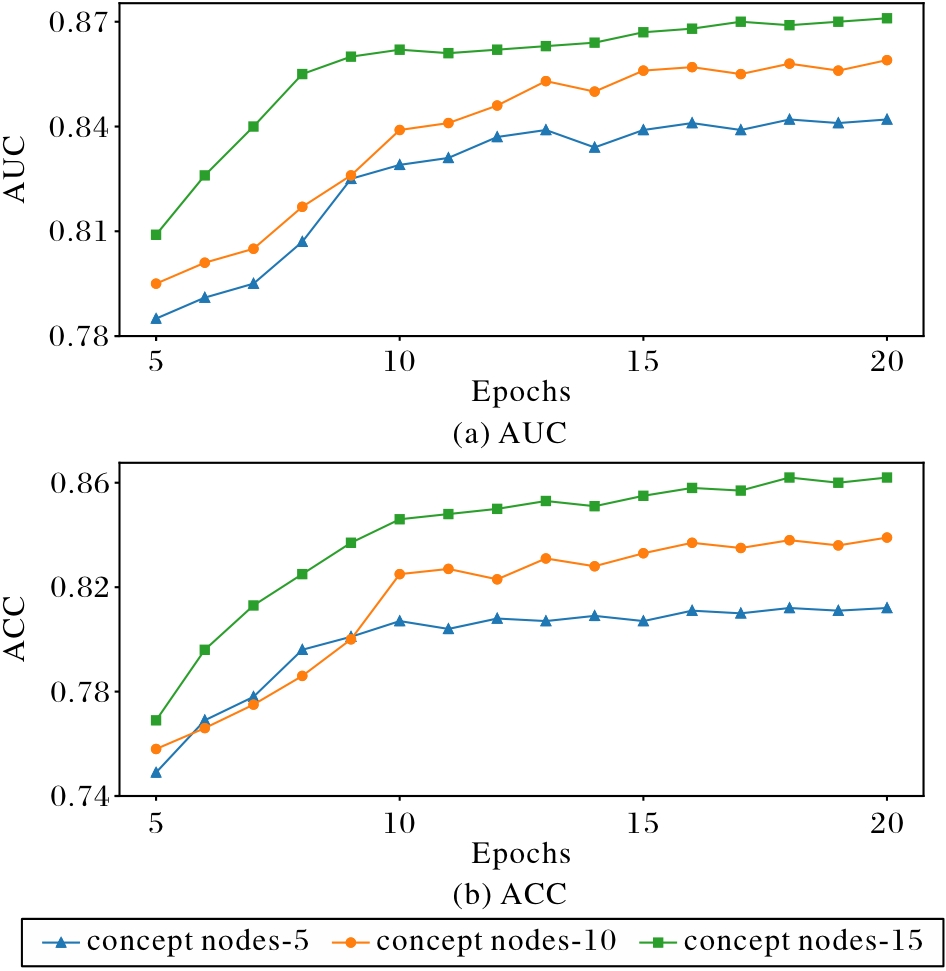
Fig. 5 Comparison of node count performance

Fig. 6 Visualization of concept node local and global attention
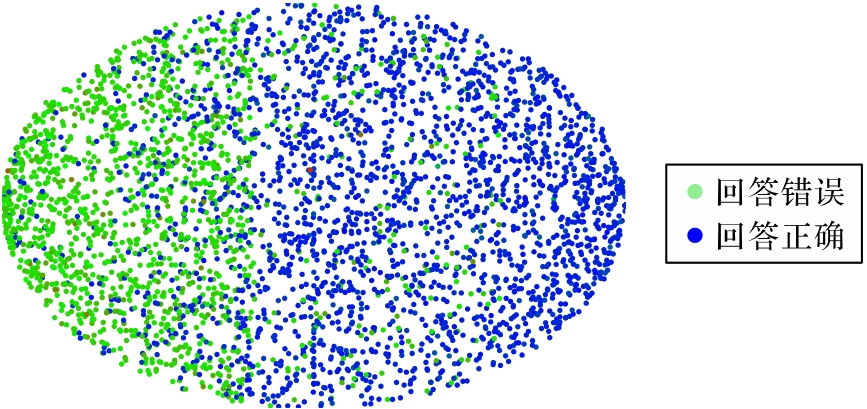
Fig. 7 Visualization of captured global dependency in exercise-concept graph
| [1] | 赵元棣,刘永欣,于槐松.智慧学习环境下的在线学习行为分析[J].科技风, 2025(3): 163-165. |
| ZHAO Y D, LIU Y X, YU H S. Online learning behavior analysis in intelligent learning environment [J]. Technology Wind, 2025(3): 163-165. | |
| [2] | HUO Y, WONG D F, NI L M, et al. Knowledge modeling via contextualized representations for LSTM-based personalized exercise recommendation [J]. Information Sciences, 2020, 523: 266-278. |
| [3] | 刘坤佳,李欣奕,唐九阳,等.可解释深度知识追踪模型[J].计算机研究与发展, 2021, 58(12): 2618-2629. |
| LIU K J, LI X Y, TANG J Y, et al. Interpretable deep knowledge tracing [J]. Journal of Computer Research and Development, 2021, 58(12): 2618-2629. | |
| [4] | CHEN P, LU Y, ZHENG V W, et al. Prerequisite-driven deep knowledge tracing [C]// Proceedings of the 2018 IEEE International Conference on Data Mining. Piscataway: IEEE, 2018: 39-48. |
| [5] | 熊余,张健,王盈,等.基于深度学习的演化知识追踪模型[J].电化教育研究, 2022, 43(11): 23-30. |
| XIONG Y, ZHANG J, WANG Y, et al. An evolutionary knowledge tracing model based on deep learning [J]. e-Education Research, 2022, 43(11): 23-30. | |
| [6] | SONG X, LI J, LEI Q, et al. Bi-CLKT: bi-graph contrastive learning based knowledge tracing [J]. Knowledge-Based Systems, 2022, 241: No.108274. |
| [7] | YIN Y, DAI L, HUANG Z, et al. Tracing knowledge instead of patterns: stable knowledge tracing with diagnostic Transformer [C]// Proceedings of the ACM Web Conference 2023. New York: ACM, 2023: 855-864. |
| [8] | PARK S, LEE D, PARK H. Enhancing knowledge tracing with concept map and response disentanglement [J]. Knowledge-Based Systems, 2024, 302: No.112346. |
| [9] | HAMILTON W L, YING Z, LESKOVEC J. Inductive representation learning on large graphs [C]// Proceedings of the 31st International Conference on Neural Information Processing Systems. Red Hook: Curran Associates Inc., 2017: 1025-1035. |
| [10] | ZHANG H, LU G, ZHAN M, et al. Semi-supervised classification of graph convolutional networks with Laplacian rank constraints [J]. Neural Processing Letters, 2022, 54(4): 2645-2656. |
| [11] | BECK M, PÖPPEL K, SPANRING M, et al. xLSTM: extended long short-term memory [C]// Proceedings of the 38th International Conference on Neural Information Processing Systems. Red Hook: Curran Associates Inc., 2024: 107547-107603. |
| [12] | ABDELRAHMAN G, WANG Q. Deep graph memory networks for forgetting-robust knowledge tracing [J]. IEEE Transactions on Knowledge and Data Engineering, 2023, 35(8): 7844-7855. |
| [13] | 郑浩东,马华,谢颖超,等.融合遗忘因素与记忆门的图神经网络知识追踪模型[J].计算机应用, 2023, 43(9): 2747-2752. |
| ZHENG H D, MA H, XIE Y C, et al. A graph neural network knowledge tracing model incorporating forgetting factors and memory gates [J]. Journal of Computer Applications, 2023, 43(9): 2747-2752. | |
| [14] | CHEN Z, SHAN Z, ZENG Y. Informative representations for forgetting-robust knowledge tracing [J]. User Modeling and User-Adapted Interaction, 2024, 34(4): 1227-1249. |
| [15] | DWIVEDI V P, BRESSON X. A generalization of Transformer networks to graphs [EB/OL]. [2021-06-24]. . |
| [16] | LeCUN Y, BENGIO Y, HINTON G. Deep learning [J]. Nature, 2015, 521(7553): 436-444. |
| [17] | CORBETT A T, ANDERSON J R. Knowledge tracing: modeling the acquisition of procedural knowledge [J]. User Modeling and User-Adapted Interaction, 1994, 4(4): 253-278. |
| [18] | KHAJAH M, WING R W, LINDSEY R V, et al. Integrating latent-factor and knowledge-tracing models to predict individual differences in learning [EB/OL]. [2024-06-30]. . |
| [19] | PIECH C, BASSEN J, HUANG J, et al. Deep knowledge tracing [C]// Proceedings of the 29th International Conference on Neural Information Processing Systems, Volume 1. Cambridge: MIT Press, 2015: 505-513. |
| [20] | PANDEY S, SRIVASTAVA J. RKT: relation-aware self-attention for knowledge tracing [C]// Proceedings of the 29th ACM International Conference on Information and Knowledge Management. New York: ACM, 2020: 1205-1214. |
| [21] | ZHANG J, SHI X, KING I, et al. Dynamic key-value memory networks for knowledge tracing [C]// Proceedings of the 26th International Conference on World Wide Web. Republic and Canton of Geneva: International World Wide Web Conferences Steering Committee, 2017: 765-774. |
| [22] | PANDEY S, KARYPIS G. A self-attentive model for knowledge tracing [EB/OL]. [2024-07-16]. . |
| [23] | SHIN D, SHIM Y, YU H, et al. SAINT+: integrating temporal features for EdNet correctness prediction [C]// Proceedings of the 11th International Learning Analytics and Knowledge Conference. New York: ACM, 2021: 490-496. |
| [24] | LU Y, WANG D, MENG Q, et al. Towards interpretable deep learning models for knowledge tracing [C]// Proceedings of the 2020 International Conference Artificial Intelligence in Education, LNCS 12164. Cham: Springer, 2020: 185-190. |
| [25] | LIU S, YU J, LI Q, et al. Ability boosted knowledge tracing [J]. Information Sciences, 2022, 596: 567-587. |
| [26] | CUI J, CHEN Z, ZHOU A, et al. Fine-grained interaction modeling with multi-relational transformer for knowledge tracing [J]. ACM Transactions on Information Systems, 2023, 41(4): No.104. |
| [27] | NAKAGAWA H, IWASAWA Y, MATSUO Y. Graph-based knowledge tracing: modeling student proficiency using graph neural network [C]// Proceedings of the 2019 International Conference on Web Intelligence. Piscataway: IEEE, 2019: 156-163. |
| [28] | YANG Y, SHEN J, QU Y, et al. GIKT: a graph-based interaction model for knowledge tracing [C]// Proceedings of the 2020 European Conference on Machine Learning and Knowledge Discovery in Databases, LNCS 12457. Cham: Springer, 2021: 299-315. |
| [29] | ZHAO Z, LIU Z, WANG B, et al. Research on deep knowledge tracing model integrating graph attention network [C]// Proceedings of the 2022 Conference on Prognostics and Health Management. Piscataway: IEEE, 2022: 389-394. |
| [30] | WU Z, HUANG L, HUANG Q, et al. SGKT: session graph-based knowledge tracing for student performance prediction [J]. Expert Systems with Applications, 2022, 206: No.117681. |
| [31] | CUI C, YAO Y, ZHANG C, et al. DGEKT: a dual graph ensemble learning method for knowledge tracing [J]. ACM Transactions on Information Systems, 2024, 42(3): No.78. |
| [32] | VELIČKOVIĆ P, CUCURULL G, CASANOVA A, et al. Graph attention networks [EB/OL]. [2025-02-04]. . |
| [33] | VASWANI A, SHAZEER N, PARMAR N, et al. Attention is all you need [C]// Proceedings of the 31st International Conference on Neural Information Processing Systems. Red Hook: Curran Associates Inc., 2017: 6000-6010. |
| [34] | CHANG H S, HSU H J, CHEN K T. Modeling exercise relationships in e-learning: a unified approach [EB/OL]. [2024-06-30]. . |
| [35] | FENG M, HEFFERNAN N, KOEDINGER K. Addressing the assessment challenge with an online system that tutors as it assesses [J]. User Modeling and User-Adapted Interaction, 2009, 19(3): 243-266. |
| [36] | KOEDINGER K R, BAKER R S J, CUNNINGHAM K, et al. A data repository for the EDM community: the PSLC DataShop [M]// ROMERO C, VENTURA S, PECHENIZKIY M, et al. Handbook of educational data mining. Boca Raton, FL: CRC Press, 2010: 43-56. |
| [37] | KINGMA D P, BA J L. Adam: a method for stochastic optimization [EB/OL]. [2024-06-30]. . |
| [1] | Wen LI, Kairong LI, Kai YANG. Subgraph-aware contrastive learning with data augmentation [J]. Journal of Computer Applications, 2026, 46(1): 1-9. |
| [2] | Xiang WANG, Zhixiang CHEN, Guojun MAO. Multivariate time series prediction method combining local and global correlation [J]. Journal of Computer Applications, 2025, 45(9): 2806-2816. |
| [3] | Wei ZHANG, Zhongwei GONG, Zhixin LI, Peihua LUO, Lingling SONG. Learning behavior boosted knowledge tracing model [J]. Journal of Computer Applications, 2025, 45(9): 2747-2754. |
| [4] | Yilin DENG, Fajiang YU. Pseudo random number generator based on LSTM and separable self-attention mechanism [J]. Journal of Computer Applications, 2025, 45(9): 2893-2901. |
| [5] | Chao LIU, Yanhua YU. Knowledge-aware recommendation model combining denoising strategy and multi-view contrastive learning [J]. Journal of Computer Applications, 2025, 45(9): 2827-2837. |
| [6] | Yi WANG, Yinglong MA. Multi-task social item recommendation method based on dynamic adaptive generation of item graph [J]. Journal of Computer Applications, 2025, 45(8): 2592-2599. |
| [7] | Yinchuan TU, Yong GUO, Heng MAO, Yi REN, Jianfeng ZHANG, Bao LI. Evaluation of training efficiency and training performance of graph neural network models based on distributed environment [J]. Journal of Computer Applications, 2025, 45(8): 2409-2420. |
| [8] | Chen LIANG, Yisen WANG, Qiang WEI, Jiang DU. Source code vulnerability detection method based on Transformer-GCN [J]. Journal of Computer Applications, 2025, 45(7): 2296-2303. |
| [9] | Zimo ZHANG, Xuezhuan ZHAO. Multi-scale sparse graph guided vision graph neural networks [J]. Journal of Computer Applications, 2025, 45(7): 2188-2194. |
| [10] | Danyang CHEN, Changlun ZHANG. Multi-scale decorrelation graph convolutional network model [J]. Journal of Computer Applications, 2025, 45(7): 2180-2187. |
| [11] | Yuelan ZHANG, Jing SU, Hangyu ZHAO, Baili YANG. Multi-view knowledge-aware and interactive distillation recommendation algorithm [J]. Journal of Computer Applications, 2025, 45(7): 2211-2220. |
| [12] | Xiaoqiang ZHAO, Yongyong LIU, Yongyong HUI, Kai LIU. Batch process quality prediction model using improved time-domain convolutional network with multi-head self-attention mechanism [J]. Journal of Computer Applications, 2025, 45(7): 2245-2252. |
| [13] | Mingfeng YU, Yongbin QIN, Ruizhang HUANG, Yanping CHEN, Chuan LIN. Multi-label text classification method based on contrastive learning enhanced dual-attention mechanism [J]. Journal of Computer Applications, 2025, 45(6): 1732-1740. |
| [14] | Hui LI, Bingzhi JIA, Chenxi WANG, Ziyu DONG, Jilong LI, Zhaoman ZHONG, Yanyan CHEN. Generative adversarial network underwater image enhancement model based on Swin Transformer [J]. Journal of Computer Applications, 2025, 45(5): 1439-1446. |
| [15] | Weichao DANG, Xinyu WEN, Gaimei GAO, Chunxia LIU. Multi-view and multi-scale contrastive learning for graph collaborative filtering [J]. Journal of Computer Applications, 2025, 45(4): 1061-1068. |
| Viewed | ||||||
|
Full text |
|
|||||
|
Abstract |
|
|||||
