


Journal of Computer Applications ›› 2026, Vol. 46 ›› Issue (5): 1397-1407.DOI: 10.11772/j.issn.1001-9081.2025050601
• Artificial intelligence • Previous Articles
Hao YU1,2,3, Jing FAN1,2,3( ), Enkang XI1,2,3, Yadong JIN1,2,3, Hua DONG1,2,3, Yihang SUN1,2,3
Received:2025-05-30
Revised:2025-08-20
Accepted:2025-08-28
Online:2025-09-05
Published:2026-05-10
Contact:
Jing FAN
About author:YU Hao, born in 2000, M. S. candidate. His research interests include federated learning, split learning, wireless edge intelligence.Supported by:
俞浩1,2,3, 范菁1,2,3(), 郗恩康1,2,3, 金亚东1,2,3, 董华1,2,3, 孙伊航1,2,3
通讯作者:
范菁
作者简介:俞浩(2000—),男,湖北咸宁人,硕士研究生,CCF会员,主要研究方向:联邦学习、分割学习、无线边缘智能基金资助:CLC Number:
Hao YU, Jing FAN, Enkang XI, Yadong JIN, Hua DONG, Yihang SUN. HEFSL: high-efficient federated split learning framework for edge heterogeneity[J]. Journal of Computer Applications, 2026, 46(5): 1397-1407.
俞浩, 范菁, 郗恩康, 金亚东, 董华, 孙伊航. 边缘异构下的高效联邦分割学习框架HEFSL[J]. 《计算机应用》唯一官方网站, 2026, 46(5): 1397-1407.
Add to citation manager EndNote|Ris|BibTeX
URL: https://www.joca.cn/EN/10.11772/j.issn.1001-9081.2025050601
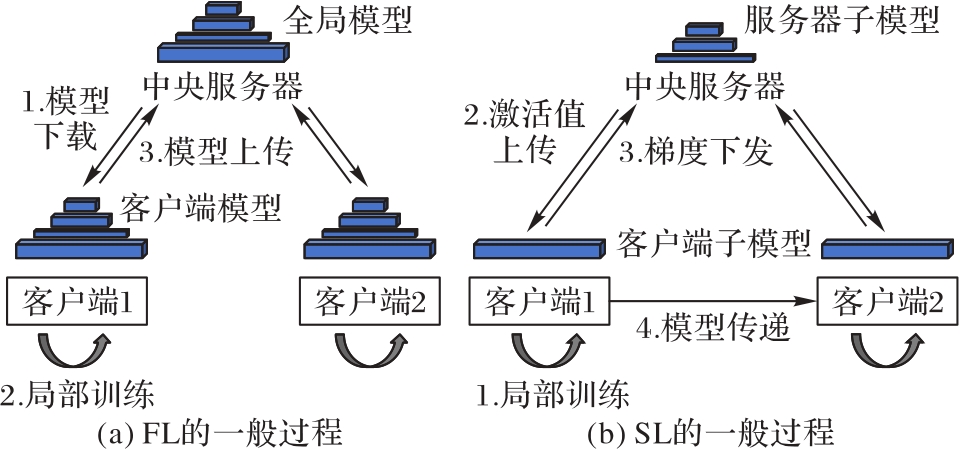
Fig. 1 General processes of federated learning and split learning
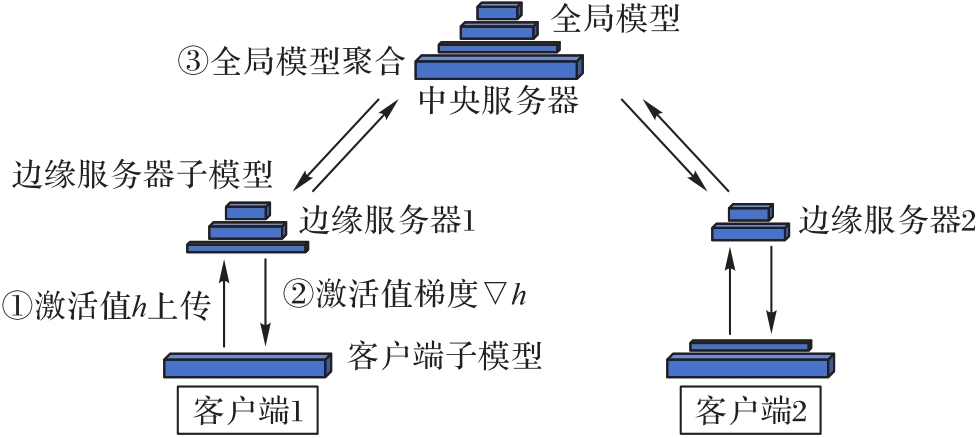
Fig. 2 General process of federated split learning
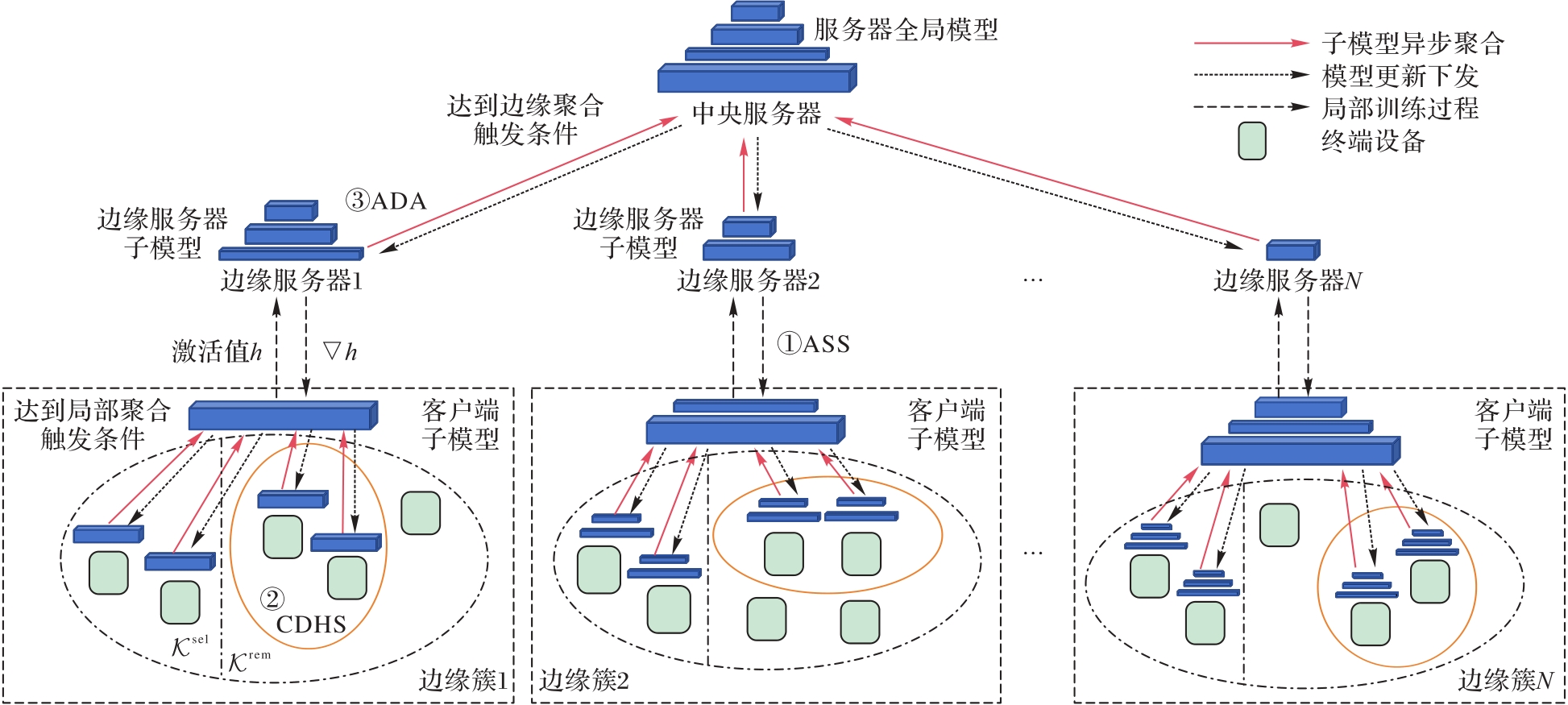
Fig. 3 Schematic diagram of HEFSL framework
| 符号 | 描述 | 符号 | 描述 | 符号 | 描述 |
|---|---|---|---|---|---|
| 客户端数量 | 客户端k的标签分布向量 | 所有边缘服务器子模型聚合后的模型 | |||
| 客户端k的计算能力 | 全局客户端参与率 | 客户端子模型聚合周期 | |||
| 完整的神经网络层数 | 启发式阶段随机客户端选择比例 | 边缘服务器子模型聚合周期 | |||
| 客户端k的负载系数 | 第t轮次边缘簇m待选择客户端集合 | 第T轮次全局损失 | |||
| 客户端k的模型切割点 | 第t轮边缘簇m已选择客户端集合 | 客户端k的权重 | |||
| 边缘服务器可用数量 | 客户端k的局部子模型 | 边缘服务器子模型冗余传播次数 | |||
| 第m个边缘簇 | 边缘簇m客户端聚合后客户端子模型 | ||||
| 第t轮边缘簇m客户端集合 | 边缘簇m的边缘服务器子模型 |
Tab. 1 Main symbols in this paper
| 符号 | 描述 | 符号 | 描述 | 符号 | 描述 |
|---|---|---|---|---|---|
| 客户端数量 | 客户端k的标签分布向量 | 所有边缘服务器子模型聚合后的模型 | |||
| 客户端k的计算能力 | 全局客户端参与率 | 客户端子模型聚合周期 | |||
| 完整的神经网络层数 | 启发式阶段随机客户端选择比例 | 边缘服务器子模型聚合周期 | |||
| 客户端k的负载系数 | 第t轮次边缘簇m待选择客户端集合 | 第T轮次全局损失 | |||
| 客户端k的模型切割点 | 第t轮边缘簇m已选择客户端集合 | 客户端k的权重 | |||
| 边缘服务器可用数量 | 客户端k的局部子模型 | 边缘服务器子模型冗余传播次数 | |||
| 第m个边缘簇 | 边缘簇m客户端聚合后客户端子模型 | ||||
| 第t轮边缘簇m客户端集合 | 边缘簇m的边缘服务器子模型 |
| 数据集 | 模型 | 学习率 | 衰减率 | 客户端类别数 |
|---|---|---|---|---|
| FMNIST | 2 conv +2 fc | 0.10 | 0.980 | 2 |
| CIFAR-10 | VGG-16 | 0.03 | 0.997 | 2 |
| CIFAR-100 | VGG-19 | 0.03 | 0.998 | 20 |
Tab. 2 Datasets and configurations used in experiments
| 数据集 | 模型 | 学习率 | 衰减率 | 客户端类别数 |
|---|---|---|---|---|
| FMNIST | 2 conv +2 fc | 0.10 | 0.980 | 2 |
| CIFAR-10 | VGG-16 | 0.03 | 0.997 | 2 |
| CIFAR-100 | VGG-19 | 0.03 | 0.998 | 20 |
| 方法 | FMNIST | CIFAR-10 | CIFAR-100 |
|---|---|---|---|
| FedAvg | 71.4 | 41.7 | 29.6 |
| FedProx | 73.6 | 51.6 | 38.8 |
| MOON | 74.8 | 54.1 | 42.3 |
| SplitFed | 74.1 | 67.8 | 28.3 |
| SplitMix | 70.8 | 54.3 | 32.7 |
| FedCRS | 83.8 | 72.3 | 41.1 |
| HEFSL | 88.1 | 82.8 | 46.4 |
Tab. 3 Accuracy comparison of various methods on different datasets
| 方法 | FMNIST | CIFAR-10 | CIFAR-100 |
|---|---|---|---|
| FedAvg | 71.4 | 41.7 | 29.6 |
| FedProx | 73.6 | 51.6 | 38.8 |
| MOON | 74.8 | 54.1 | 42.3 |
| SplitFed | 74.1 | 67.8 | 28.3 |
| SplitMix | 70.8 | 54.3 | 32.7 |
| FedCRS | 83.8 | 72.3 | 41.1 |
| HEFSL | 88.1 | 82.8 | 46.4 |
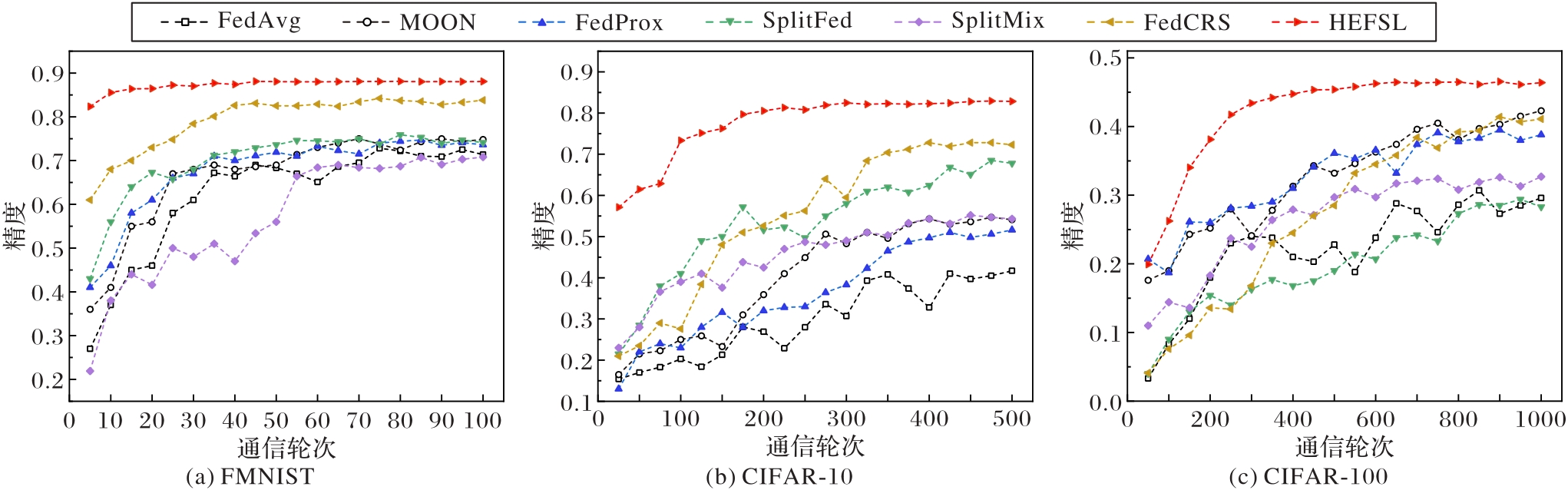
Fig. 4 Trend comparison of accuracies of various methods with training round count
| 方法 | 达到精度阈值的最低轮次 | ||
|---|---|---|---|
| FMNIST | CIFAR-10 | CIFAR-100 | |
| FedAvg | 72 | ≥500 | 983 |
| FedProx | 35 | 371 | 358 |
| MOON | 98 | 363 | 387 |
| SplitFed | 33 | 137 | 967 |
| SplitMix | 81 | 319 | 492 |
| FedCRS | 14 | 158 | 533 |
| HEFSL | 3 | 14 | 127 |
Tab. 4 Minimum communication rounds required to reach precision threshold
| 方法 | 达到精度阈值的最低轮次 | ||
|---|---|---|---|
| FMNIST | CIFAR-10 | CIFAR-100 | |
| FedAvg | 72 | ≥500 | 983 |
| FedProx | 35 | 371 | 358 |
| MOON | 98 | 363 | 387 |
| SplitFed | 33 | 137 | 967 |
| SplitMix | 81 | 319 | 492 |
| FedCRS | 14 | 158 | 533 |
| HEFSL | 3 | 14 | 127 |
| 方法 | FMNIST | CIFAR-10 | CIFAR-100 |
|---|---|---|---|
| SplitFed | 68.97 | 252.32 | 1 801.52 |
| SplitMix | 156.29 | 591.43 | 916.61 |
| FedCRS | 29.36 | 292.53 | 992.93 |
| HEFSL | 7.27 | 25.76 | 236.60 |
Tab. 5 Running time comparison to reach target precision
| 方法 | FMNIST | CIFAR-10 | CIFAR-100 |
|---|---|---|---|
| SplitFed | 68.97 | 252.32 | 1 801.52 |
| SplitMix | 156.29 | 591.43 | 916.61 |
| FedCRS | 29.36 | 292.53 | 992.93 |
| HEFSL | 7.27 | 25.76 | 236.60 |
| 1 | 2 | 3 | 4 | 5 | 6 | 7 | 8 | |
|---|---|---|---|---|---|---|---|---|
| 1 | 0.881 2 | 0.878 7 | 0.865 4 | 0.860 5 | 0.857 1 | 0.850 7 | 0.846 3 | 0.843 4 |
| 2 | 0.886 2 | 0.881 2 | 0.868 5 | 0.864 0 | 0.861 1 | 0.846 6 | 0.844 9 | 0.840 3 |
| 3 | 0.892 5 | 0.878 7 | 0.871 3 | 0.863 7 | 0.849 3 | 0.858 8 | 0.849 6 | 0.842 7 |
| 4 | 0.893 9 | 0.879 3 | 0.873 1 | 0.865 0 | 0.850 0 | 0.843 5 | 0.843 2 | 0.834 3 |
| 5 | 0.889 9 | 0.881 9 | 0.868 6 | 0.863 6 | 0.861 2 | 0.842 0 | 0.843 3 | 0.838 1 |
| 6 | 0.890 4 | 0.884 6 | 0.872 5 | 0.862 5 | 0.861 9 | 0.853 2 | 0.848 4 | 0.844 1 |
| 7 | 0.889 9 | 0.879 1 | 0.866 5 | 0.864 9 | 0.848 3 | 0.850 5 | 0.844 5 | 0.842 4 |
| 8 | 0.892 2 | 0.878 1 | 0.873 2 | 0.867 3 | 0.858 0 | 0.840 5 | 0.852 0 | 0.838 7 |
Tab. 6 Precisions under different aggregation frequencies τ1 and τ2 on FMNIST dataset
| 1 | 2 | 3 | 4 | 5 | 6 | 7 | 8 | |
|---|---|---|---|---|---|---|---|---|
| 1 | 0.881 2 | 0.878 7 | 0.865 4 | 0.860 5 | 0.857 1 | 0.850 7 | 0.846 3 | 0.843 4 |
| 2 | 0.886 2 | 0.881 2 | 0.868 5 | 0.864 0 | 0.861 1 | 0.846 6 | 0.844 9 | 0.840 3 |
| 3 | 0.892 5 | 0.878 7 | 0.871 3 | 0.863 7 | 0.849 3 | 0.858 8 | 0.849 6 | 0.842 7 |
| 4 | 0.893 9 | 0.879 3 | 0.873 1 | 0.865 0 | 0.850 0 | 0.843 5 | 0.843 2 | 0.834 3 |
| 5 | 0.889 9 | 0.881 9 | 0.868 6 | 0.863 6 | 0.861 2 | 0.842 0 | 0.843 3 | 0.838 1 |
| 6 | 0.890 4 | 0.884 6 | 0.872 5 | 0.862 5 | 0.861 9 | 0.853 2 | 0.848 4 | 0.844 1 |
| 7 | 0.889 9 | 0.879 1 | 0.866 5 | 0.864 9 | 0.848 3 | 0.850 5 | 0.844 5 | 0.842 4 |
| 8 | 0.892 2 | 0.878 1 | 0.873 2 | 0.867 3 | 0.858 0 | 0.840 5 | 0.852 0 | 0.838 7 |
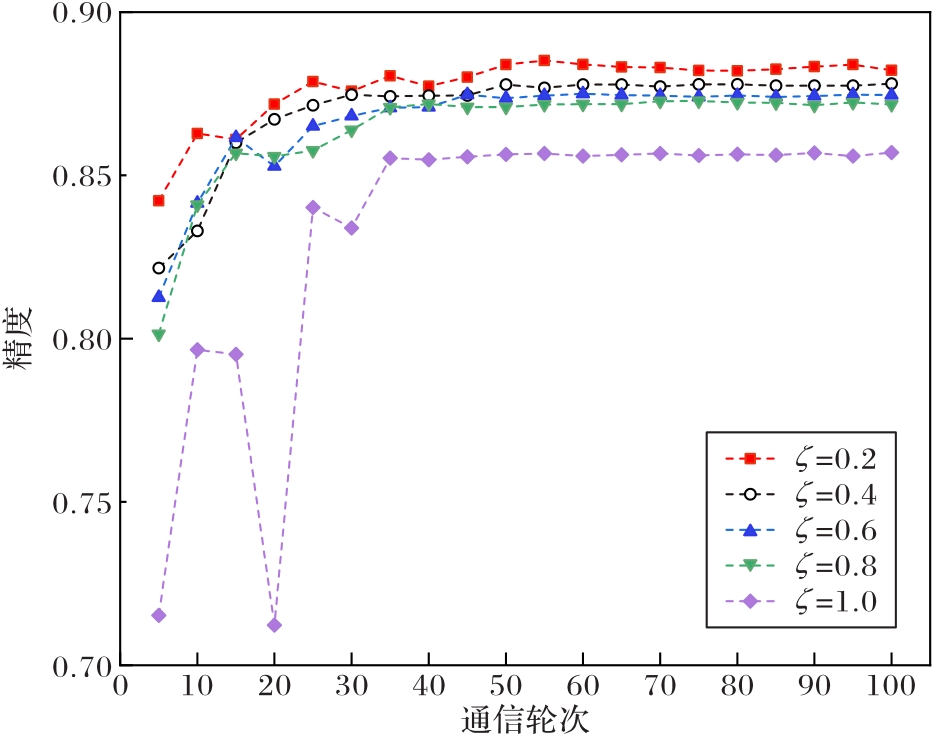
Fig. 5 Precision variation under different random selection ratios ζ on FMNIST dataset
| [1] | LI Q, WEN Z Y, WU Z M, et al., A survey on federated learning systems: vision, hype and reality for data privacy and protection[J], IEEE Transactions on Knowledge and Data Engineering, 2023, 35(4): 3347-3366. |
| [2] | CUSTERS B, SEARS A M, DECHESNE F, et al. EU personal data protection in policy and practice[M]. The Hague, The Netherlands: TMC Asser Press, 2019. |
| [3] | KONEČNÝ J, McMAHAN H B, RAMAGE D, et al. Federated optimization: distributed machine learning for on-device intelligence[EB/OL]. [2024-09-08]. . |
| [4] | 俞浩,范菁,孙伊航,等.联邦学习统计异质性综述[J].计算机应用,2025,45(9):2737-2746. |
| YU H, FAN J, SUN Y H, et al. Survey of statistical heterogeneity in federated learning[J]. Journal of Computer Applications, 2025, 45(9): 2737-2746. | |
| [5] | LI T, SAHU A K, ZAHEER M, et al. Federated optimization in heterogeneous networks[C]// Proceedings of the 3rd Conference on Machine Learning and Systems. [S.l.]: mlsys.org, 2020, 2: 429-450. |
| [6] | KARIMIREDDY S P, KALE S, MOHRI M, et al. SCAFFOLD: stochastic controlled averaging for on-device federated learning [EB/OL]. [2024-09-09]. . |
| [7] | JIA Y, ZHANG N. Research and implementation of asynchronous transmission and update strategy for federated learning[C]// Proceedings of the 2022 IEEE 8th International Conference on Computer and Communications. Piscataway: IEEE, 2022: 1281-1286. |
| [8] | NGUYEN J, MALIK K, ZHAN H, et al. Federated learning with buffered asynchronous aggregation[C]// Proceedings of the 25th International Conference on Artificial Intelligence and Statistics. [S.l.]: PMLR, 2022: 3581-3607. |
| [9] | TANG M, NING X, WANG Y, et al. FedCor: correlation-based active client selection strategy for heterogeneous federated learning[C]// Proceedings of the 2022 IEEE/CVF Conference on Computer Vision and Pattern Recognition. Piscataway: IEEE, 2022: 10092-10101. |
| [10] | 唐伦,汪智平,蒲昊,等.基于自适应梯度压缩的高效联邦学习通信机制研究[J].电子与信息学报,2023,45(1):227-234. |
| TANG L, WANG Z P, PU H,et al.Research on efficient federated learning communication mechanism based on adaptive gradient compression[J]. Journal of Electronics & Information Technology, 2023, 45(1): 227-234. | |
| [11] | ZONG R, QIN Y, WU F, et al. FedCS: efficient communication scheduling in decentralized federated learning[J]. Information Fusion, 2024, 102: 102028. |
| [12] | LIN Z, QU G, CHEN X, et al. Split learning in 6G edge networks[J]. IEEE Wireless Communications, 2024.31(4):170-176. |
| [13] | YU X, WANG S H. Abnormality diagnosis in mammograms by transfer learning based on ResNet18[J]. Fundamenta Informaticae, 2019, 168(2/3/4): 219-230. |
| [14] | GUPTA O, RASKAR R. Distributed learning of deep neural network over multiple agents [J]. Journal of Network and Computer Applications, 2018, 116: 1-8. |
| [15] | THAPA C, CHAMIKARA M A P, CAMTEPE S, et al. SplitFed: when federated learning meets split learning[C]// Proceedings of the 36th AAAI Conference on Artificial Intelligence. Palo Alto, CA: AAAI Press, 2022: 8485-8493. |
| [16] | DACHILLE J, HUANG C, LIU X. The impact of cut layer selection in split federated learning [EB/OL]. [2025-05-26]. . |
| [17] | LIN Z, WEI W, CHEN Z, et al. Hierarchical split federated learning: convergence analysis and system optimization[J]. IEEE Transactions on Mobile Computing, 2025, 24(10): 9352-9367. |
| [18] | DIAO E, DING J, TAROKH V. HeteroFL: computation and communication efficient federated learning for heterogeneous clients[C/OL]// Proceedings of the 9th International Conference on Learning Representations. [S.l.]: ICRL, 2021 [2024-11-09]. . |
| [19] | PILLUTLA K, KAKADE S M, HARCHAOUI Z. Robust aggregation for federated learning[J]. IEEE Transactions on Signal Processing, 2022, 70: 1142-1154. |
| [20] | LI D, WANG J. FedMD: heterogenous federated learning via model distillation[EB/OL]. [2025-05-26]. . |
| [21] | GAO D, LIU Y, HUANG A, et al. Privacy-preserving heterogeneous federated transfer learning[C]// Proceedings of the 2019 IEEE International Conference on Big Data. Piscataway: IEEE,2019: 2552-2559. |
| [22] | ALAM S, LIU L, YAN M, et al. FedRolex: model-heterogeneous federated learning with rolling sub-model extraction[C]// Proceedings of the 36th Conference on Neural Information Processing Systems. Red Hook: Curran Associates Inc., 2022, 35: 29677-29690. |
| [23] | FANG X, YE M. Robust federated learning with noisy and heterogeneous clients[C]// Proceedings of the 2022 IEEE/CVF Conference on Computer Vision and Pattern Recognition. Piscataway: IEEE,2022: 10072-10081. |
| [24] | YE M, FANG X, DU B, et al. Heterogeneous federated learning: state-of-the-art and research challenges[J]. ACM Computing Surveys, 2023, 56(3): 1-44. |
| [25] | 张红艳,张玉,曹灿明.一种解决数据异构问题的联邦学习方法[J].计算机应用研究,2024,41(3):713-720. |
| ZHANG H Y, ZHANG Y, CAO C M. Effective method to solve problem of data heterogeneity in federated learning [J]. Application Research of Computers, 2024, 41(3): 713-720. | |
| [26] | HUANG T, LIN W, SHEN L, et al. Stochastic client selection for federated learning with volatile clients[J]. IEEE Internet of Things Journal, 2022, 9(20): 20055-20070. |
| [27] | CHO Y J, WANG J, JOSHI G. Client selection in federated learning: convergence analysis and power-of-choice selection strategies[C]// Proceedings of the 25th International Conference on Artificial Intelligence and Statistics. [S.l.]: PMLR, 2022: 151: 10351-10375. |
| [28] | HAN P, HUANG C, TIAN G, et al. Convergence analysis of split federated learning on heterogeneous data[C]// Proceedings of the 38th Conference on Neural Information Processing Systems. Red Hook: Curran Associates Inc., 2024: 103476-103544. |
| [29] | LI Q, HE B, SONG D. Model-contrastive federated learning[C]// Proceedings of the 2021 IEEE/CVF Conference on Computer Vision and Pattern Recognition. Piscataway: IEEE, 2021: 10713-10722. |
| [30] | HONG J, WANG H, WANG Z, et al. Efficient Split-Mix federated learning for on-demand and in-situ customization[C/OL]// Proceedings of the 10th International Conference on Learning Representations. [S.l.]: ICRL, 2022 [2025-03-07]. . |
| [31] | 俞浩,范菁,孙伊航,等.边缘异构下的联邦分割学习优化方法[J].计算机应用,2026,46(1):33-42. |
| YU H, FAN J, SUN Y H, et al. Federated split learning optimization method under edge heterogeneity [J]. Journal of Computer Applications, 2026, 46(1): 33-42. |
| [1] | Lei WANG, Wenxuan ZHOU, Ninghui JIA, Zhihao QU. Federated learning with two-pass communication compression for privacy-sensitive IoT data [J]. Journal of Computer Applications, 2026, 46(3): 887-898. |
| [2] | Kejia ZHANG, Zhijun FANG, Nanrun ZHOU, Zhicai SHI. Personalized federated learning method based on model pre-assignment and self-distillation [J]. Journal of Computer Applications, 2026, 46(1): 10-20. |
| [3] | Hao YU, Jing FAN, Yihang SUN, Yadong JIN, Enkang XI, Hua DONG. Federated split learning optimization method under edge heterogeneity [J]. Journal of Computer Applications, 2026, 46(1): 33-42. |
| [4] | Hao YU, Jing FAN, Yihang SUN, Hua DONG, Enkang XI. Survey of statistical heterogeneity in federated learning [J]. Journal of Computer Applications, 2025, 45(9): 2737-2746. |
| [5] | Jintao SU, Lina GE, Liguang XIAO, Jing ZOU, Zhe WANG. Detection and defense scheme for backdoor attacks in federated learning [J]. Journal of Computer Applications, 2025, 45(8): 2399-2408. |
| [6] | Yiming ZHANG, Tengfei CAO. Federated learning optimization algorithm based on local drift and diversity computing power [J]. Journal of Computer Applications, 2025, 45(5): 1447-1454. |
| [7] | Qingli CHEN, Yuanbo GUO, Chen FANG. Clustering federated learning algorithm for heterogeneous data [J]. Journal of Computer Applications, 2025, 45(4): 1086-1094. |
| [8] | Haili LIN, Jing LI. Lazy client identification method in federated learning based on proof-of-work [J]. Journal of Computer Applications, 2025, 45(3): 856-863. |
| [9] | Yan LI, Guanhua YE, Yawen LI, Meiyu LIANG. Enterprise ESG indicator prediction model based on richness coordination technology [J]. Journal of Computer Applications, 2025, 45(2): 670-676. |
| [10] | Ruilong CHEN, Peng YI, Tao HU, Youjun BU. Encrypted traffic classification method based on federated prototypical incremental learning [J]. Journal of Computer Applications, 2025, 45(12): 3888-3895. |
| [11] | Zhongrui JING, Xuebin CHEN, Yinlong JIAN, Qi ZHONG, Zhenbo ZHANG. Federated learning fairness algorithm based on personalized submodel and K-means clustering [J]. Journal of Computer Applications, 2025, 45(12): 3747-3756. |
| [12] | Shufen ZHANG, Hongyang ZHANG, Zhiqiang REN, Xuebin CHEN. Survey of fairness in federated learning [J]. Journal of Computer Applications, 2025, 45(1): 1-14. |
| [13] | Zheyuan SHEN, Keke YANG, Jing LI. Personalized federated learning method based on dual stream neural network [J]. Journal of Computer Applications, 2024, 44(8): 2319-2325. |
| [14] | Fengfeng WEI, Weineng CHEN. Distributed data-driven evolutionary computation for multi-constrained optimization [J]. Journal of Computer Applications, 2024, 44(5): 1393-1400. |
| [15] | Xiang LIU, Bei HUA, Fei LIN, Hongyuan WEI. Design and implementation of component-based development framework for deep learning applications [J]. Journal of Computer Applications, 2024, 44(2): 526-535. |
| Viewed | ||||||
|
Full text |
|
|||||
|
Abstract |
|
|||||
