


Journal of Computer Applications ›› 2026, Vol. 46 ›› Issue (7): 2334-2346.DOI: 10.11772/j.issn.1001-9081.2025060676
• Frontier and comprehensive applications • Previous Articles Next Articles
Li ZHU1, Lugema MI1( ), Chunqiang ZHU2,3, Wanru XU1, Jingkai GAO1, Jinqi QU1
Received:2025-06-19
Revised:2025-09-13
Accepted:2025-09-29
Online:2025-10-13
Published:2026-07-10
Contact:
Lugema MI
About author:ZHU Li, born in 1976, M. S., associate professor. Her research interests include intelligent information processing.Supported by:
朱莉1, 米路革麻1(), 朱春强2,3, 徐婉茹1, 高靖凯1, 屈锦琪1
通讯作者:
米路革麻
作者简介:朱莉(1976—),女,陕西宝鸡人,副教授,硕士,CCF会员,主要研究方向:智能信息处理基金资助:CLC Number:
Li ZHU, Lugema MI, Chunqiang ZHU, Wanru XU, Jingkai GAO, Jinqi QU. Short-term power load forecasting model based on dynamic convolution decomposition and multi-scale graph[J]. Journal of Computer Applications, 2026, 46(7): 2334-2346.
朱莉, 米路革麻, 朱春强, 徐婉茹, 高靖凯, 屈锦琪. 基于动态卷积分解和多尺度图的短期电力负荷预测模型[J]. 《计算机应用》唯一官方网站, 2026, 46(7): 2334-2346.
Add to citation manager EndNote|Ris|BibTeX
URL: https://www.joca.cn/EN/10.11772/j.issn.1001-9081.2025060676
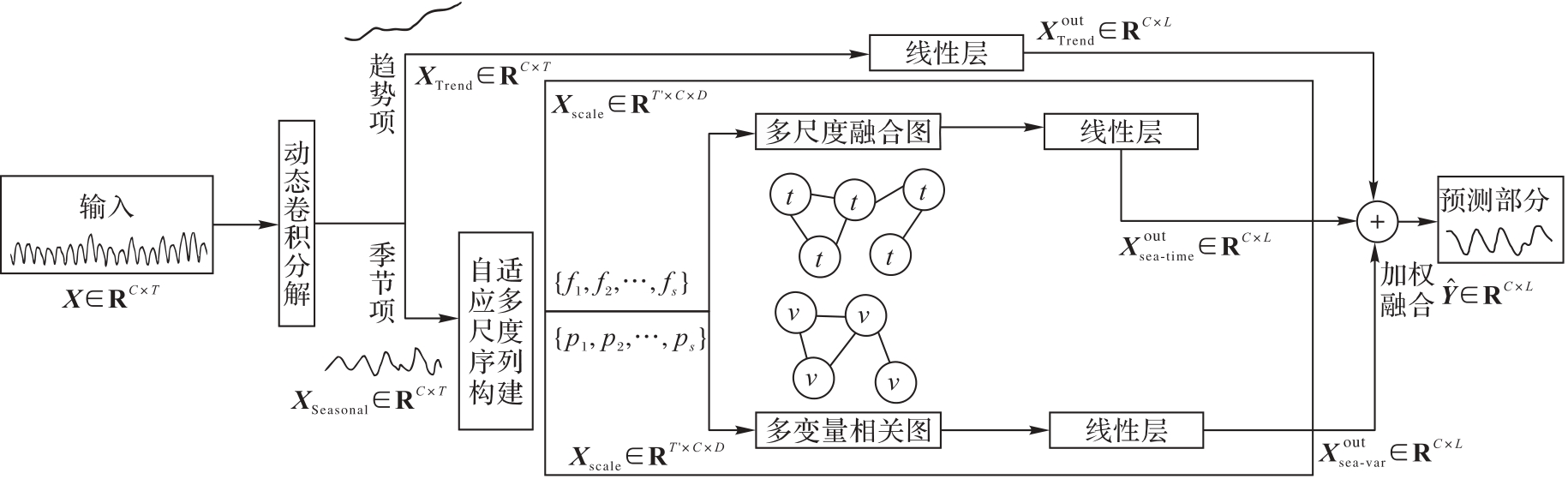
Fig. 1 Overall structure of DCDMSG
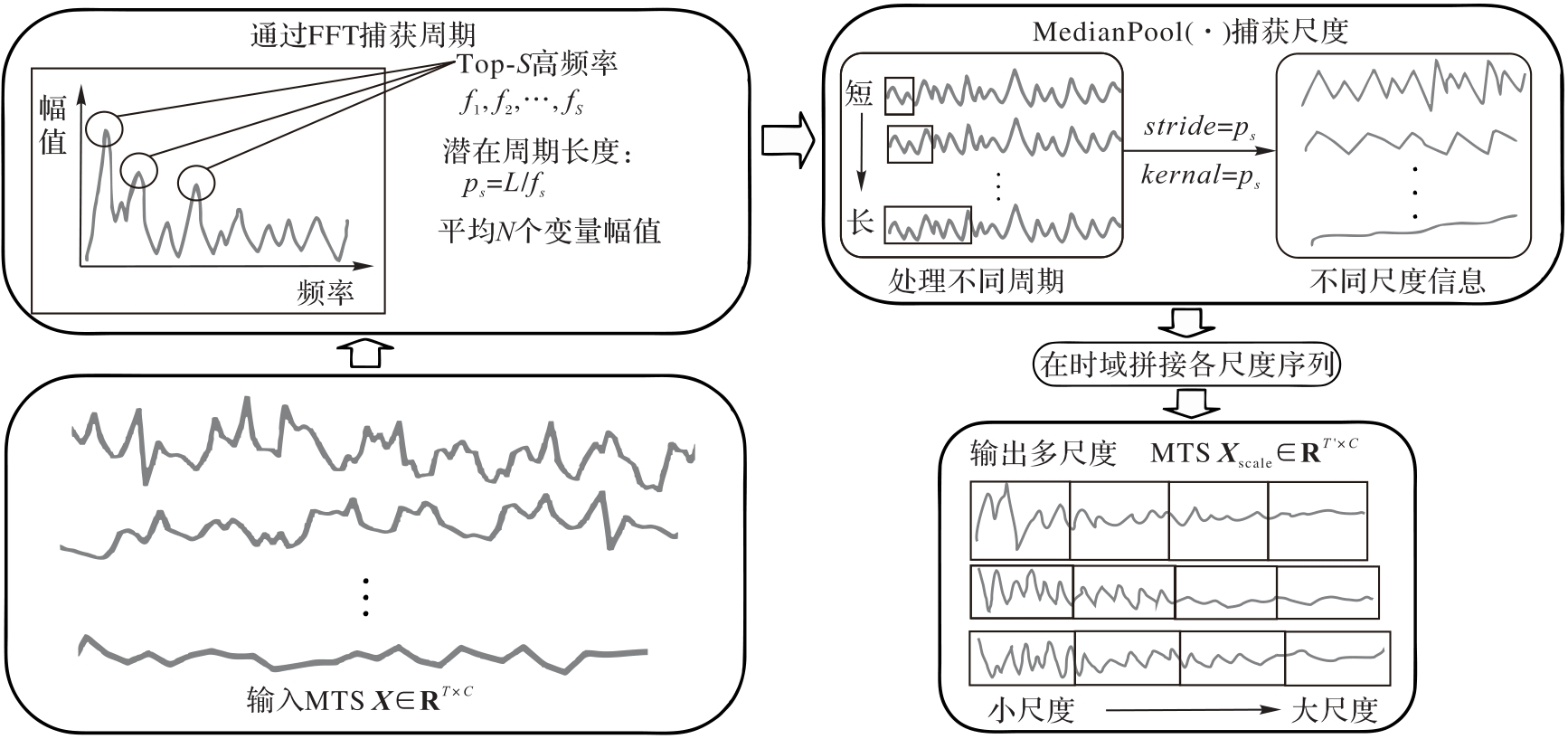
Fig. 2 Multi-scale sequence construction method
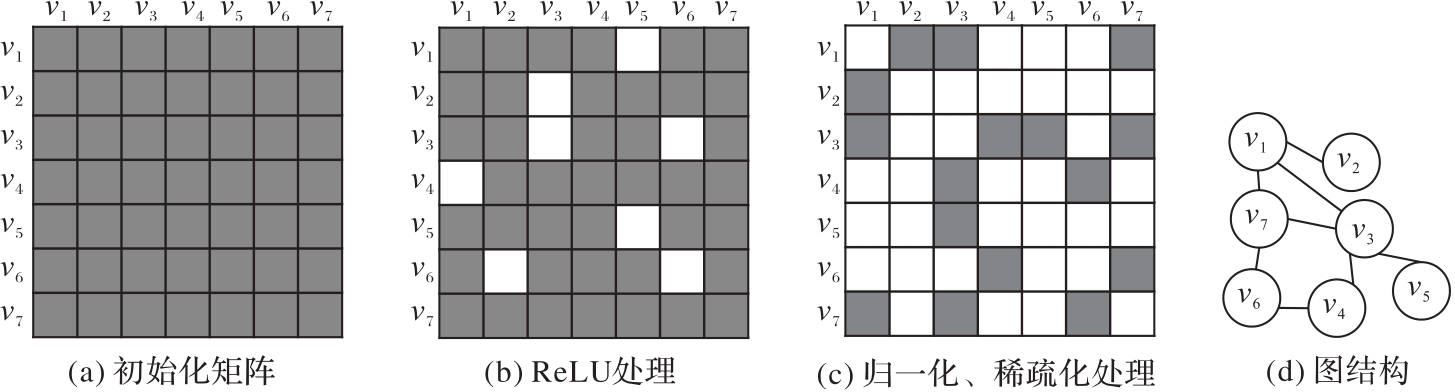
Fig. 3 Principle diagram of graph construction process
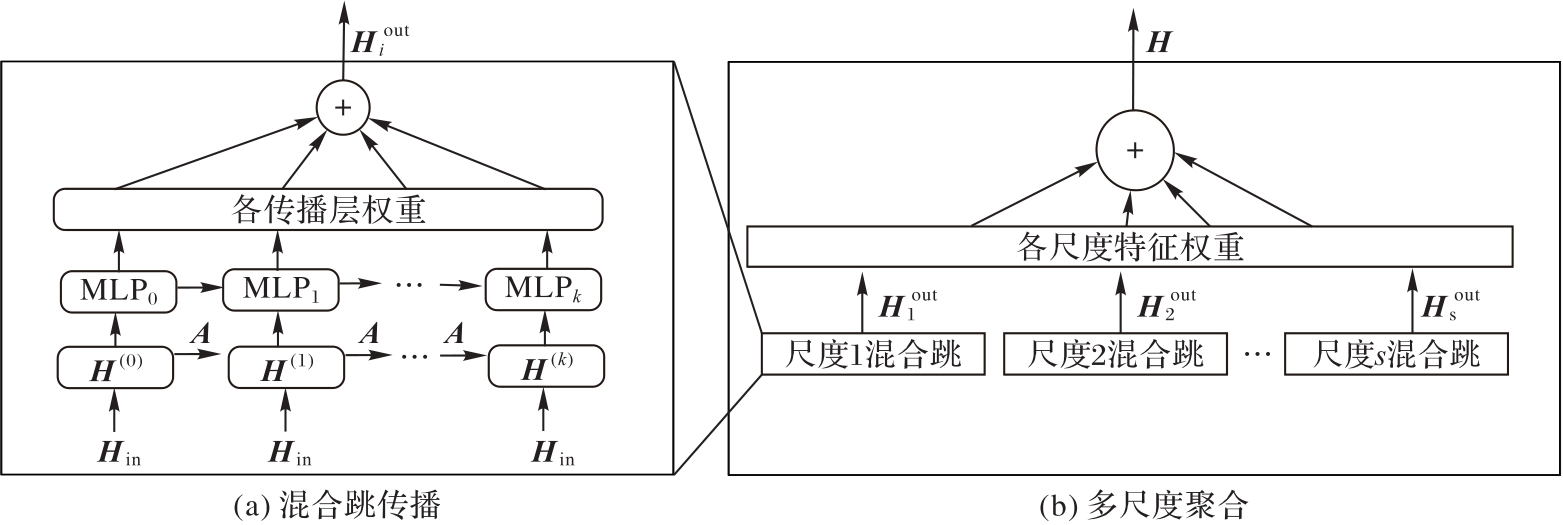
Fig. 4 Multi-scale mix-hop propagation
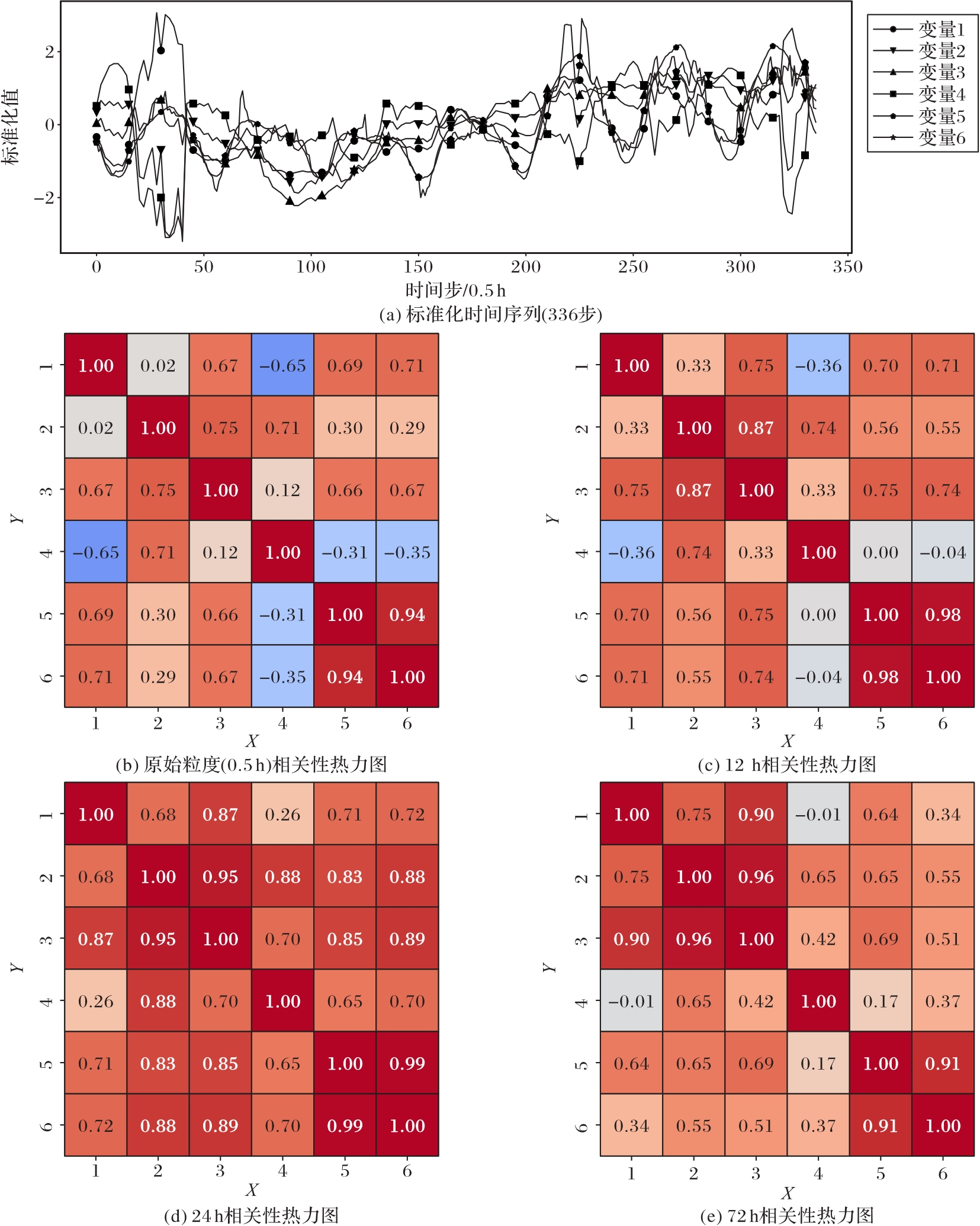
Fig. 5 Multi-scale inter-variable correlation
| 超参数 | 设置 |
|---|---|
| Batch size | 64 |
| Dimension of model | 512 |
| Learning rate | 0.000 1 |
| Dropout | 0.05 |
| Epochs | 25 |
| GCN depth | 5 |
| Activation function | GELU |
| Loss function | MSE |
Tab. 1 Model hyperparameter setting
| 超参数 | 设置 |
|---|---|
| Batch size | 64 |
| Dimension of model | 512 |
| Learning rate | 0.000 1 |
| Dropout | 0.05 |
| Epochs | 25 |
| GCN depth | 5 |
| Activation function | GELU |
| Loss function | MSE |
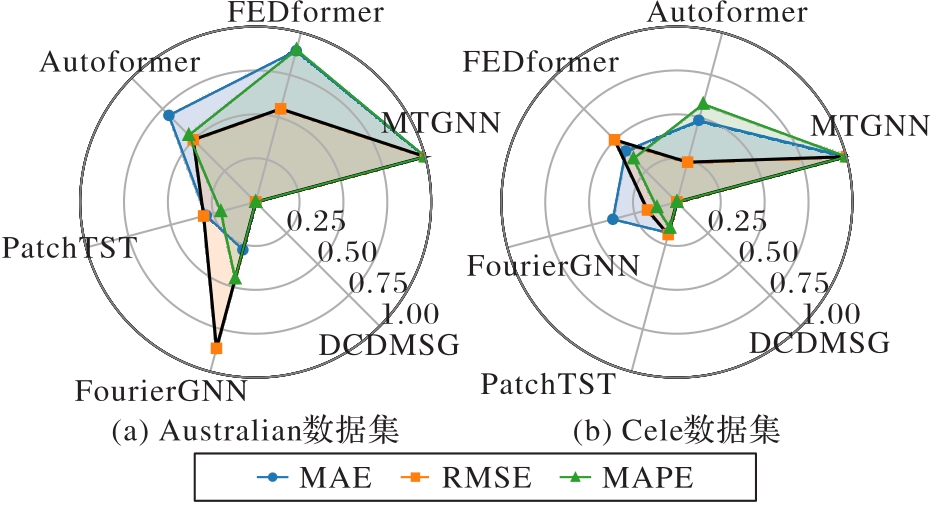
Fig. 6 Radar map of forecast error mean values
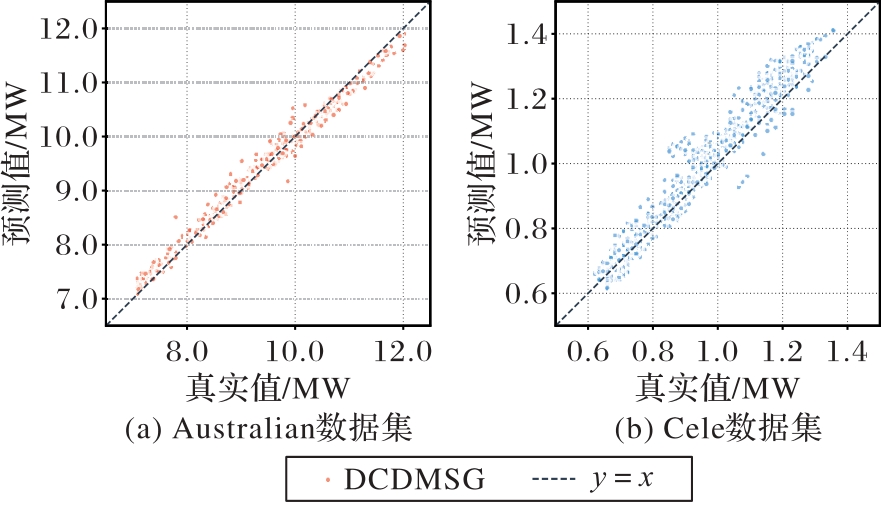
Fig. 7 Scatter plots of DCDMSG forecast results
| 模型 | MAE/MW | RMSE/MW | MAPE/% |
|---|---|---|---|
| DCDMSG | 0.379 | 0.529 | 2.643 |
| PatchTST | 0.409 | ||
| FEDformer | 0.471 | 0.633 | 3.643 |
| Autoformer | 0.451 | 0.624 | 3.243 |
| MTGNN | 0.482 | 0.718 | 3.756 |
| FourierGNN | 0.692 | 3.146 |
Tab. 2 Comparison of forecast accuracy of different models on Australian dataset
| 模型 | MAE/MW | RMSE/MW | MAPE/% |
|---|---|---|---|
| DCDMSG | 0.379 | 0.529 | 2.643 |
| PatchTST | 0.409 | ||
| FEDformer | 0.471 | 0.633 | 3.643 |
| Autoformer | 0.451 | 0.624 | 3.243 |
| MTGNN | 0.482 | 0.718 | 3.756 |
| FourierGNN | 0.692 | 3.146 |
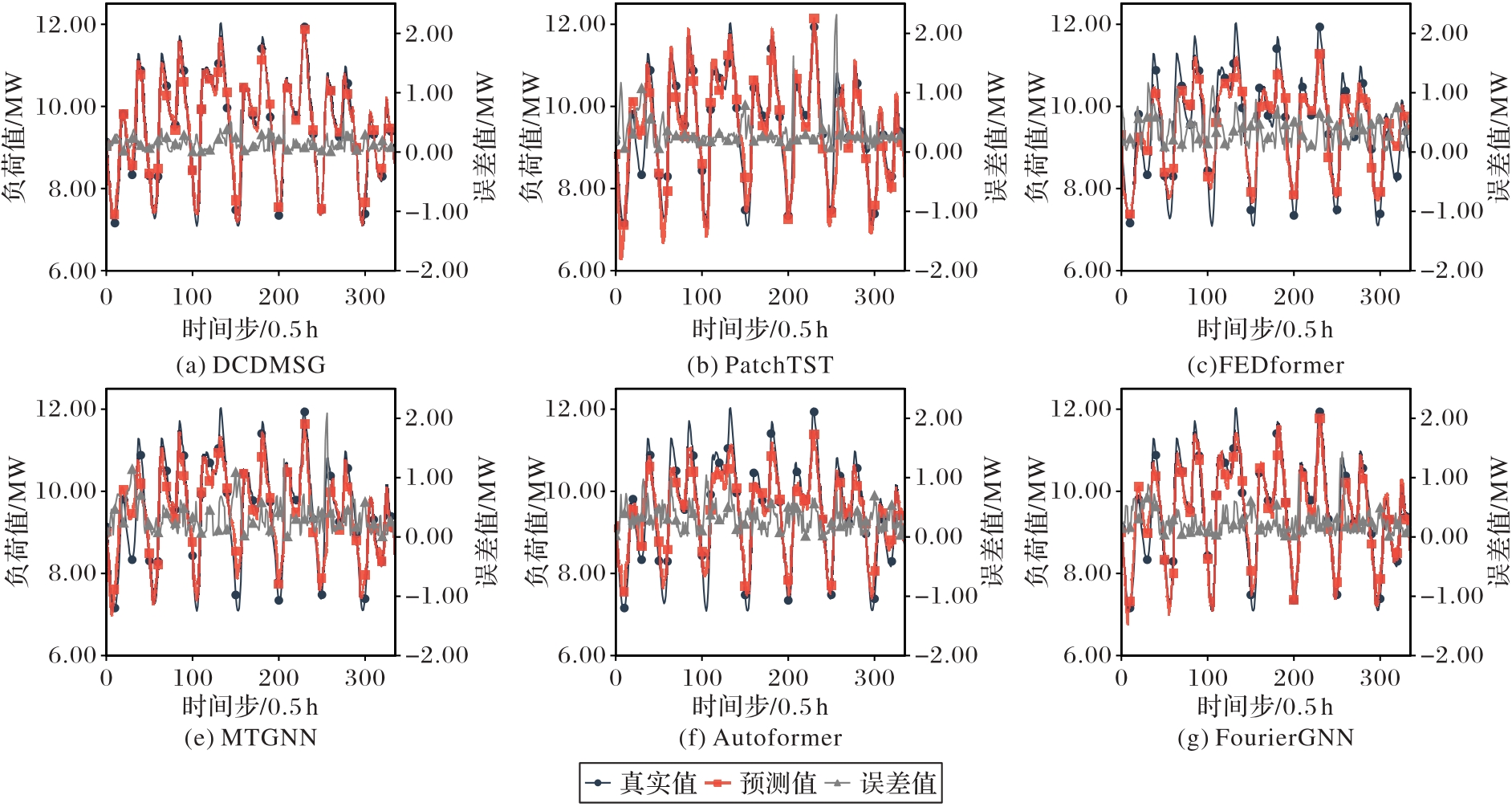
Fig. 8 Comparison of load forecasting curves of different models on Australian dataset
| 模型 | MAE/MW | RMSE/MW | MAPE/% |
|---|---|---|---|
| DCDMSG | 0.437 | 0.708 | 2.774 |
| PatchTST | 0.751 | 2.939 | |
| FEDformer | 0.496 | 0.821 | 3.151 |
| Autoformer | 0.506 | 0.761 | 3.397 |
| MTGNN | 0.580 | 0.933 | 3.851 |
| FourierGNN | 0.491 |
Tab. 3 Comparison of forecast accuracy of different models on Cele dataset
| 模型 | MAE/MW | RMSE/MW | MAPE/% |
|---|---|---|---|
| DCDMSG | 0.437 | 0.708 | 2.774 |
| PatchTST | 0.751 | 2.939 | |
| FEDformer | 0.496 | 0.821 | 3.151 |
| Autoformer | 0.506 | 0.761 | 3.397 |
| MTGNN | 0.580 | 0.933 | 3.851 |
| FourierGNN | 0.491 |

Fig. 9 Comparison of load forecasting curves of different models on Cele dataset
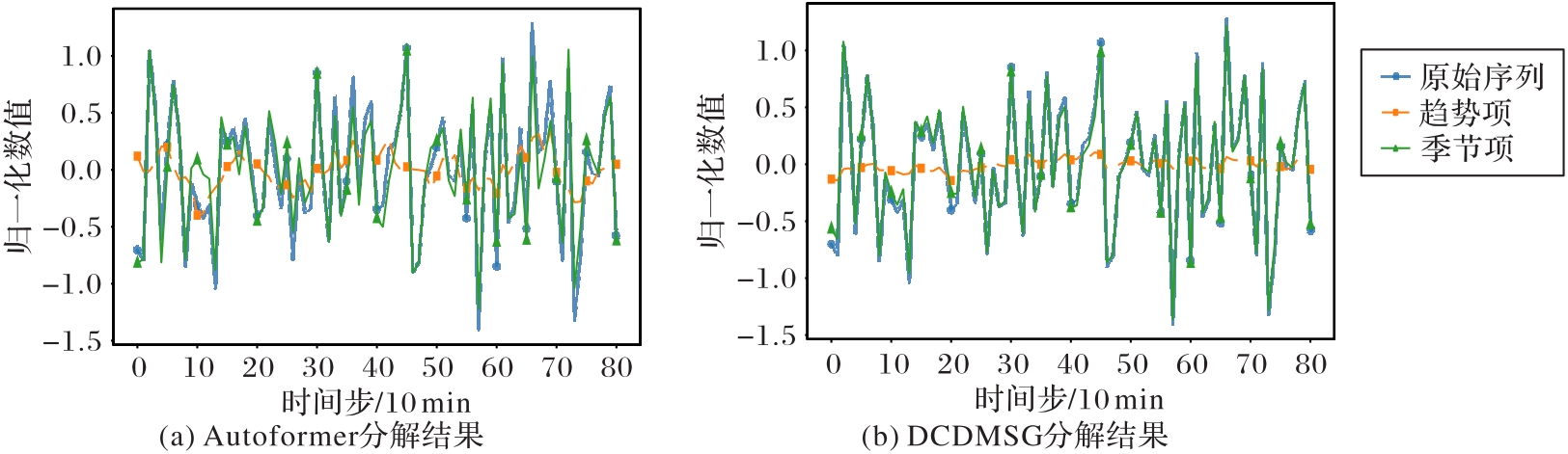
Fig. 10 Comparison of decomposition effects
| 卷积核组合 | MAE/MW | RMSE/MW | MAPE/% |
|---|---|---|---|
| 3,7,15,25 | 0.379 | 0.529 | 2.643 |
| 15,25 | 0.391 | 0.571 | 2.912 |
| 3,7 | 0.420 | 0.593 | 3.099 |
| 30 | 0.415 | 0.573 | 2.937 |
| 15 | 0.419 | 0.577 | 2.931 |
| 7 | 0.423 | 0.596 | 3.236 |
Tab. 4 Convolution kernel initialization setting
| 卷积核组合 | MAE/MW | RMSE/MW | MAPE/% |
|---|---|---|---|
| 3,7,15,25 | 0.379 | 0.529 | 2.643 |
| 15,25 | 0.391 | 0.571 | 2.912 |
| 3,7 | 0.420 | 0.593 | 3.099 |
| 30 | 0.415 | 0.573 | 2.937 |
| 15 | 0.419 | 0.577 | 2.931 |
| 7 | 0.423 | 0.596 | 3.236 |
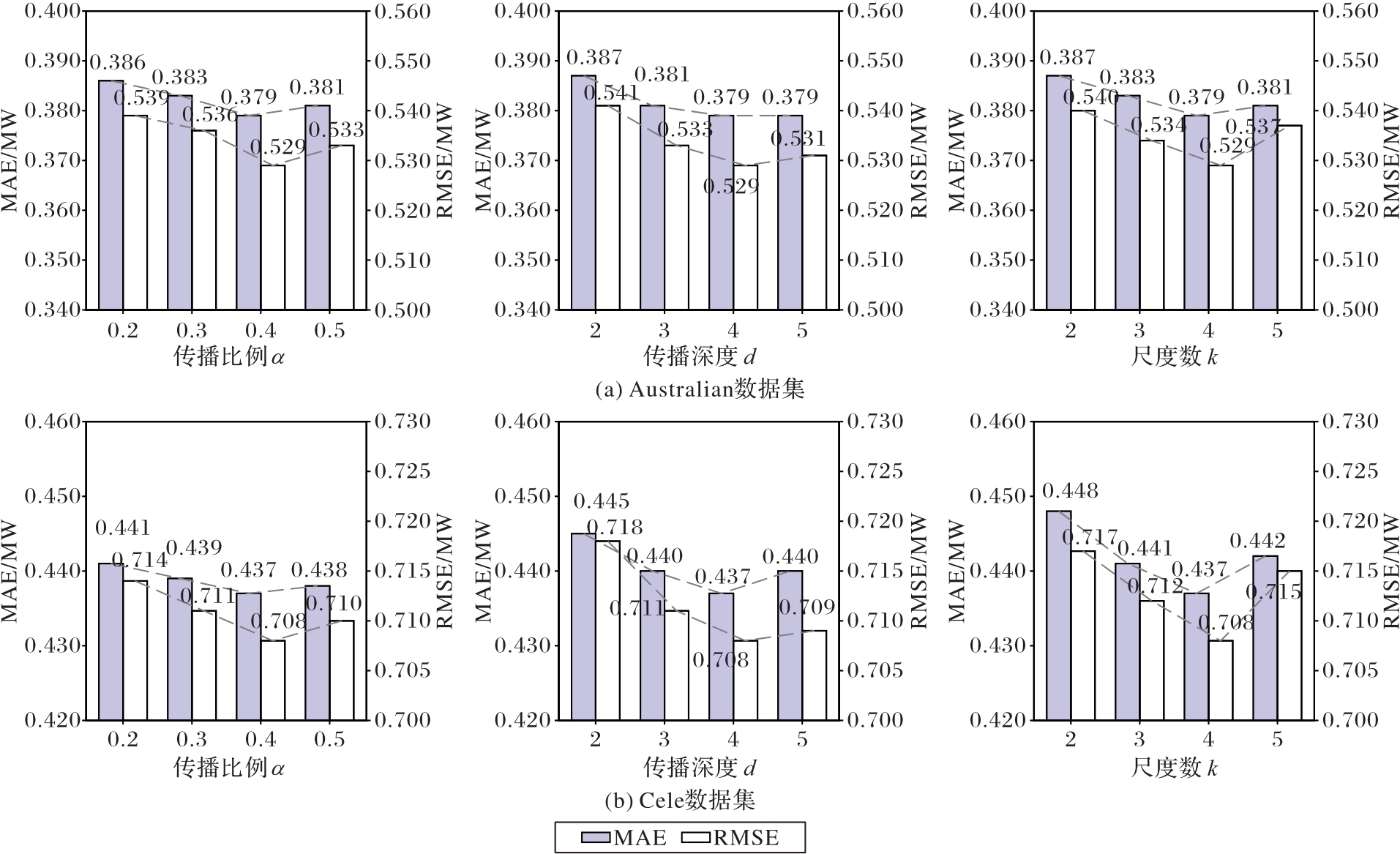
Fig. 11 Results of hyperparameter experiment
| 模型 | MAE/MW | RMSE/MW | MAPE/% |
|---|---|---|---|
| DCDMSG | 0.379 | 0.529 | 2.643 |
| w/o DCDF | 0.393 | 0.582 | 2.957 |
| w/o MSG | 0.428 | 0.607 | 3.195 |
| w/o Mmixhop | 0.415 | 0.579 | 2.824 |
Tab. 5 Ablation experimental results of components
| 模型 | MAE/MW | RMSE/MW | MAPE/% |
|---|---|---|---|
| DCDMSG | 0.379 | 0.529 | 2.643 |
| w/o DCDF | 0.393 | 0.582 | 2.957 |
| w/o MSG | 0.428 | 0.607 | 3.195 |
| w/o Mmixhop | 0.415 | 0.579 | 2.824 |
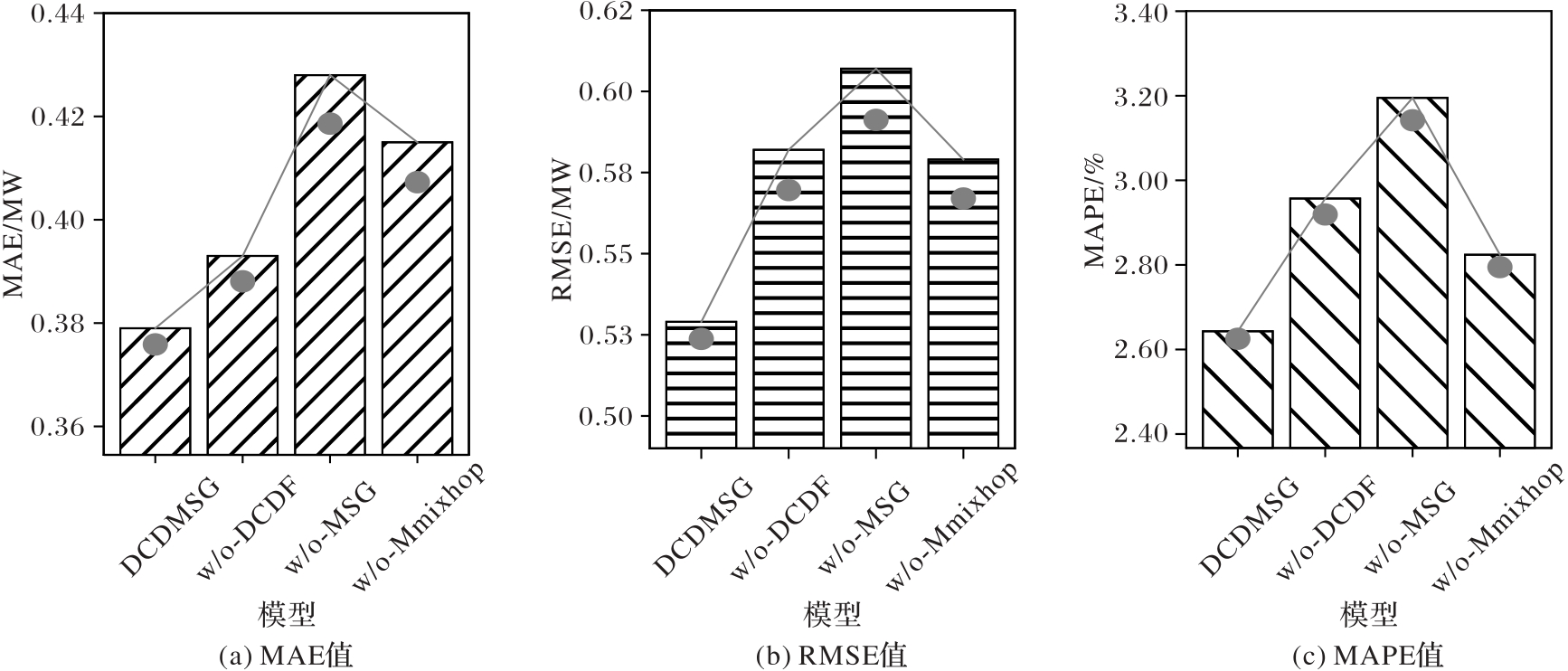
Fig. 12 Comparison of ablation experimental errors
| 模型 | MAE/MW | RMSE/MW | MAPE/% |
|---|---|---|---|
| ALL | 0.379 | 0.529 | 2.643 |
| Only DCDF | 0.431 | 0.732 | 4.032 |
| Only MSG | 0.408 | 0.697 | 3.776 |
| Only Mmixhop | 0.450 | 0.795 | 4.553 |
| Baseline | 0.469 | 1.353 | 5.637 |
Tab. 6 Ablation experimental results on fusion mechanism
| 模型 | MAE/MW | RMSE/MW | MAPE/% |
|---|---|---|---|
| ALL | 0.379 | 0.529 | 2.643 |
| Only DCDF | 0.431 | 0.732 | 4.032 |
| Only MSG | 0.408 | 0.697 | 3.776 |
| Only Mmixhop | 0.450 | 0.795 | 4.553 |
| Baseline | 0.469 | 1.353 | 5.637 |
| 模型 | MAE/MW | RMSE/MW | MAPE/% |
|---|---|---|---|
| 多尺度+多变量 | 0.379 | 0.529 | 2.643 |
| 多尺度+单变量 | 0.426 | 0.613 | 3.324 |
| 单尺度+多变量 | 0.428 | 0.607 | 3.195 |
| 单尺度+单变量 | 0.438 | 0.694 | 4.031 |
Tab. 7 Ablation experimental results on multi-scale and multi-variable combinations
| 模型 | MAE/MW | RMSE/MW | MAPE/% |
|---|---|---|---|
| 多尺度+多变量 | 0.379 | 0.529 | 2.643 |
| 多尺度+单变量 | 0.426 | 0.613 | 3.324 |
| 单尺度+多变量 | 0.428 | 0.607 | 3.195 |
| 单尺度+单变量 | 0.438 | 0.694 | 4.031 |
| 噪声环境 | 场景 | σ | µ |
|---|---|---|---|
| 弱噪声 | 1 | 0.05×std | 0.05 |
| 2 | 0.05×std | 0.10 | |
| 中噪声 | 3 | 0.10×std | 0.10 |
| 4 | 0.10×std | 0.20 | |
| 强噪声 | 5 | 0.20×std | 0.20 |
| 6 | 0.20×std | 0.30 |
Tab. 8 Noise environment setting
| 噪声环境 | 场景 | σ | µ |
|---|---|---|---|
| 弱噪声 | 1 | 0.05×std | 0.05 |
| 2 | 0.05×std | 0.10 | |
| 中噪声 | 3 | 0.10×std | 0.10 |
| 4 | 0.10×std | 0.20 | |
| 强噪声 | 5 | 0.20×std | 0.20 |
| 6 | 0.20×std | 0.30 |
| 噪声环境 | 场景 | DCDMSG | PatchTST | FourierGNN | |||
|---|---|---|---|---|---|---|---|
| MAE/MW | RMSE/MW | MAE/MW | RMSE/MW | MAE/MW | RMSE/MW | ||
| 弱 | 1 | 0.469 | 0.621 | 0.517 | 0.690 | 0.511 | 0.801 |
| 2 | 0.596 | 0.775 | 0.645 | 0.865 | 0.637 | 0.970 | |
| 中 | 3 | 0.594 | 0.773 | 0.644 | 0.866 | 0.636 | 0.970 |
| 4 | 0.749 | 1.055 | 0.784 | 1.116 | 0.780 | 1.221 | |
| 强 | 5 | 0.749 | 1.050 | 0.782 | 1.122 | 0.781 | 1.225 |
| 6 | 0.804 | 1.160 | 0.837 | 1.218 | 0.828 | 1.324 | |
Tab. 9 Experimental results under noise interference
| 噪声环境 | 场景 | DCDMSG | PatchTST | FourierGNN | |||
|---|---|---|---|---|---|---|---|
| MAE/MW | RMSE/MW | MAE/MW | RMSE/MW | MAE/MW | RMSE/MW | ||
| 弱 | 1 | 0.469 | 0.621 | 0.517 | 0.690 | 0.511 | 0.801 |
| 2 | 0.596 | 0.775 | 0.645 | 0.865 | 0.637 | 0.970 | |
| 中 | 3 | 0.594 | 0.773 | 0.644 | 0.866 | 0.636 | 0.970 |
| 4 | 0.749 | 1.055 | 0.784 | 1.116 | 0.780 | 1.221 | |
| 强 | 5 | 0.749 | 1.050 | 0.782 | 1.122 | 0.781 | 1.225 |
| 6 | 0.804 | 1.160 | 0.837 | 1.218 | 0.828 | 1.324 | |
| 模型 | 时间复杂度 | 空间复杂度 |
|---|---|---|
| DCDMSG | O(T) | O(T) |
| PatchTST | O(T2) | O(T2) |
| FEDformer | O(T) | O(T) |
| Autoformer | O(T log T) | O(T log T) |
| MTGNN | O(N2) | O(N2) |
| FourierGNN | O(N log N) | O(N2) |
Tab. 10 Complexity comparison of different models
| 模型 | 时间复杂度 | 空间复杂度 |
|---|---|---|
| DCDMSG | O(T) | O(T) |
| PatchTST | O(T2) | O(T2) |
| FEDformer | O(T) | O(T) |
| Autoformer | O(T log T) | O(T log T) |
| MTGNN | O(N2) | O(N2) |
| FourierGNN | O(N log N) | O(N2) |
| [1] | 杨佳泽,王灿,王增平.新型电力系统背景下的智能负荷预测算法研究综述[J].华北电力大学学报(自然科学版), 2025, 52(3): 54-67. |
| Yang Jiaze, Wang Can, Wang Zengping. Review on intelligent load forecasting algorithms for the new-type power system [J]. Journal of North China Electric Power University (Natural Science Edition), 2025, 52(3): 54-67. | |
| [2] | 史含笑,王雷春.结合LSTM和自注意力机制的图卷积网络短期电力负荷预测[J].计算机应用, 2024, 44(1): 311-317. |
| Shi Hanxiao, Wang Leichun. Short-term power load forecasting by graph convolutional network combining LSTM and self-attention mechanism [J]. Journal of Computer Applications, 2024, 44(1): 311-317. | |
| [3] | Zhou S, Li Y, Guo Y, et al. A load forecasting framework considering hybrid ensemble deep learning with two-stage load decomposition [J]. IEEE Transactions on Industry Applications, 2024, 60(3): 4568-4582. |
| [4] | Li J, Deng D, Zhao J, et al. A novel hybrid short-term load forecasting method of smart grid using MLR and LSTM neural network [J]. IEEE Transactions on Industrial Informatics, 2021, 17(4): 2443-2452. |
| [5] | 徐任超,阎威武,王国良,等.基于周期性建模的时间序列预测方法及电价预测研究[J].自动化学报, 2020, 46(6): 1136-1144. |
| Xu Renchao, Yan Weiwu, Wang Guoliang, et al. Time series forecasting based on seasonality modeling and its application to electricity price forecasting [J]. Acta Automatica Sinica, 2020, 46(6): 1136-1144. | |
| [6] | Peng H, Lou Y, Li F, et al. Decomposition framework for long term load forecasting on temperature insensitive area [J]. Energy Reports, 2024, 12: 5783-5792. |
| [7] | Hu S, Wang Y, Cai W, et al. A combined method for short-term load forecasting considering the characteristics of components of seasonal and trend decomposition using local regression [J]. Applied Sciences, 2024, 14(6): No.2286. |
| [8] | Karamolegkos S, Koulouriotis D E. Advancing short-term load forecasting with decomposed Fourier ARIMA: a case study on the Greek energy market [J]. Energy, 2025, 325: No.135854. |
| [9] | Wu H, Xu J, Wang J, et al. Autoformer: decomposition transformers with auto-correlation for long-term series forecasting [C]// NeurIPS 2021. Red Hook: Curran Associates Inc., 2021: 22419-22430. |
| [10] | Zhou T, Ma Z, Wen Q Q, et al. FEDformer: frequency enhanced decomposed transformer for long-term series forecasting [C]// ICML 2022. New York: JMLR.org, 2022: 27268-27286. |
| [11] | Zeng A, Chen M, Zhang L, et al. Are Transformers effective for time series forecasting [C]// AAAI 2023. Palo Alto: AAAI Press, 2023: 11121-11128. |
| [12] | Liu S, Yu H, Liao C, et al. Pyraformer: low-complexity pyramidal attention for long-range time series modeling and forecasting [EB/OL]. (2023-02-14) [2025-08-26]. . |
| [13] | Zhou H, Zhang S, Peng J, et al. Informer: beyond efficient transformer for long sequence time-series forecasting [C]// AAAI 2021. Palo Alto: AAAI Press, 2021: 11106-11115. |
| [14] | Ahmad M, Butt M H F, Mazzara M, et al. Pyramid hierarchical spatial-spectral transformer for hyperspectral image classification [J]. IEEE Journal of Selected Topics in Applied Earth Observations and Remote Sensing, 2024, 17: 17681-17689. |
| [15] | Chen P, Zhang Y, Cheng Y, et al. Pathformer: multi-scale transformers with adaptive pathways for time series forecasting [PP/OL]. V5. arXiv (2024-12-15) [2025-08-27]. . |
| [16] | Nie Y, Nguyen N H, Sinthong P, et al. A time series is worth 64 words: long-term forecasting with Transformers [PP/OL]. V2. arXiv (2023-03-04) [2025-08-27]. . |
| [17] | Zhang Y, Yan J. Crossformer: Transformer utilizing cross-dimension dependency for multivariate time series forecasting [EB/OL]. (2023-03-02) [2025-08-27]. . |
| [18] | Zhang Z, Meng L, Gu Y. SageFormer: series-aware framework for long-term multivariate time series forecasting [J]. IEEE Internet of Things Journal, 2024, 11(10): 18435-18448. |
| [19] | Jin M, Huan Y, Wen Q, et al. A survey on graph neural networks for time series: forecasting, classification, imputation, and anomaly detection [J]. IEEE Transactions on Pattern Analysis and Machine Intelligence, 2024, 46(12): 10466-10485. |
| [20] | 李晓寒,王俊,贾华丁,等.基于多重注意力机制的图神经网络股市波动预测方法[J].计算机应用, 2022, 42(7): 2265-2273. |
| Li Xiaohan, Wang Jun, Jia Huading, et al. Stock market volatility prediction method based on graph neural network with multi-attention mechanism [J]. Journal of Computer Applications, 2022, 42(7): 2265-2273. | |
| [21] | Cai W, Wang K, Wu H, et al. ForecastGrapher: redefining multivariate time series forecasting with graph neural networks [PP/OL]. arXiv (2024-05-28) [2025-08-27]. . |
| [22] | Cai W, Liang Y, Feng J, et al. MSGNet: learning multi-scale inter-series correlations for multivariate time series forecasting [C]// AAAI 2024. Palo Alto: AAAI Press, 2024: 11141-11149. |
| [23] | Sun C, Ning Y, Shen D, et al. Graph neural network-based short-term load forecasting with temporal convolution [J]. Data Science and Engineering, 2024, 9(2): 113-132. |
| [24] | Wu Z, Pan S, Long G, et al. Connecting the dots: multivariate time series forecasting with graph neural networks [C]// KDD 2020. New York: ACM, 2020: 753-763. |
| [25] | Cao D, Wang Y, Duan J, et al. Spectral temporal graph neural network for multivariate time-series forecasting [C]// NeurIPS 2020. Red Hook: Curran Associates Inc., 2020: 17766-17778. |
| [26] | Yi K, Zhang Q, Fan W, et al. FourierGNN: rethinking multivariate time series forecasting from a pure graph perspective [C]// NeurIPS 2023. Red Hook: Curran Associates Inc., 2023: 69638-69660. |
| [27] | Zhao X, Yu W, Zhang Y. MST-GNN: graph neural network with multi-granularity in space and time for traffic prediction [J]. GeoInformatica, 2025, 29(3): 377-401. |
| [28] | Luo X, Wang H, Han T, et al. FFT-Trans: enhancing robustness in mechanical fault diagnosis with Fourier transform-based transformer under noisy conditions [J]. IEEE Transactions on Instrumentation and Measurement, 2024, 73: No.2515112. |
| [29] | Liang A, Chai X, Sun Y, et al. GTformer: graph-based temporal-order-aware Transformer for long-term series forecasting [J]. IEEE Internet of Things Journal, 2024, 11(19): 31467-31478. |
| [1] | Xiangyi WU, Hailiang YE, Feilong CAO. Point cloud completion method based on smooth-sharpen graph convolution [J]. Journal of Computer Applications, 2026, 46(7): 2267-2276. |
| [2] | Yue ZHANG, Ying WANG. Scalable dynamic graph representation learning with neighborhood memory [J]. Journal of Computer Applications, 2026, 46(7): 2104-2110. |
| [3] | Min LU, Hui ZHOU. Airport gate assignment algorithm based on node prediction in conflict graph of assigned activities [J]. Journal of Computer Applications, 2026, 46(6): 1913-1921. |
| [4] | Chao LYU, Geyao MA. Lightweight human pose estimation network based on redundant feature suppression [J]. Journal of Computer Applications, 2026, 46(6): 1973-1980. |
| [5] | Hang QI, Tingting DONG, Yongqiang NAI, Xian MO. Contrastive collaborative filtering method based on graph diffusion generation and adaptive sampling [J]. Journal of Computer Applications, 2026, 46(6): 1818-1828. |
| [6] | Hongrui ZHANG, Weiming FENG, Luxia YANG, Yongjie MA. CSAF-YOLO: improved YOLO11 algorithm for underwater small object detection [J]. Journal of Computer Applications, 2026, 46(5): 1578-1585. |
| [7] | Minqi WU, Yuanhua YANG, Hang LI, Yaqin HU, Zhihao TANG, Teng MEI. Lightweight underwater small object detection based on graph Transformer and RT-DETR [J]. Journal of Computer Applications, 2026, 46(5): 1586-1595. |
| [8] | Kun FU, Haoyu WEI, Weijing LIU, Xing DANG, Zezheng LIU, Jianwei LI. Graph neural network framework for topology semantic dual-domain collaboration [J]. Journal of Computer Applications, 2026, 46(5): 1378-1387. |
| [9] | Fengwei CHENG, Bingqi ZHANG, Guohua XU, Wenjian WANG. Competitive loss-driven generative imbalanced node classification [J]. Journal of Computer Applications, 2026, 46(5): 1475-1481. |
| [10] | Xumeng DOU, Bin XIE, Zhaohui ZHANG, Zhengang ZHAO, Hanyu DUAN, Aolei GUO. Drug-target interaction prediction based on structure-network collaborative features and grid-attention enhanced Kolmogorov-Arnold network [J]. Journal of Computer Applications, 2026, 46(4): 1344-1353. |
| [11] | Xinyi YAN, Linglong ZHU, Yonghong ZHANG. CDC-DETR: multi-scale real-time human-vehicle detection method for complex traffic scenarios [J]. Journal of Computer Applications, 2026, 46(4): 1283-1291. |
| [12] | Hanqing LIU, Guoming SANG, Yijia ZHANG. Remote sensing image captioning model combining dense multi-scale feature fusion and feature knowledge-enhanced Transformer [J]. Journal of Computer Applications, 2026, 46(3): 741-749. |
| [13] | Rilong WANG, Zhenping LI, Xiaosong LI, Qiang GAO, Ya HE, Yong ZHONG, Yingxiao ZHAO. Multi-Agent collaborative knowledge reasoning framework [J]. Journal of Computer Applications, 2026, 46(3): 708-714. |
| [14] | Chunyong YIN, Bufan ZHANG. Multi-scale based multivariate time series anomaly detection model [J]. Journal of Computer Applications, 2026, 46(3): 790-797. |
| [15] | Jinjiao LIN, Canshun ZHANG, Shuya CHEN, Tianxin WANG, Jian LIAN, Yonghui XU. Vehicle insurance fraud detection method based on improved graph attention network [J]. Journal of Computer Applications, 2026, 46(2): 437-444. |
| Viewed | ||||||
|
Full text |
|
|||||
|
Abstract |
|
|||||
