


Journal of Computer Applications ›› 2026, Vol. 46 ›› Issue (5): 1370-1377.DOI: 10.11772/j.issn.1001-9081.2025050610
• Artificial intelligence • Previous Articles
Received:2025-06-04
Revised:2025-10-11
Accepted:2025-10-14
Online:2025-10-29
Published:2026-05-10
Contact:
Chaobo HE
About author:ZHENG Baoyuan, born in 2003, M. S. candidate. His research interests include graph data mining, graph neural networks.
Supported by:
郑宝源, 贺超波( )
)
通讯作者:
贺超波
作者简介:郑宝源(2003—),男,广东揭阳人,硕士研究生,主要研究方向:图数据挖掘、图神经网络
基金资助:CLC Number:
Baoyuan ZHENG, Chaobo HE. Graph convolutional network enhanced by graph diffusion and dual-view feature learning[J]. Journal of Computer Applications, 2026, 46(5): 1370-1377.
郑宝源, 贺超波. 图扩散与双视图特征学习增强的图卷积网络[J]. 《计算机应用》唯一官方网站, 2026, 46(5): 1370-1377.
Add to citation manager EndNote|Ris|BibTeX
URL: https://www.joca.cn/EN/10.11772/j.issn.1001-9081.2025050610
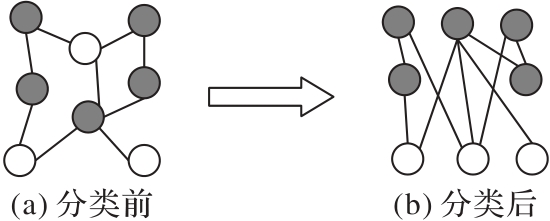
Fig. 1 Example of node classification task
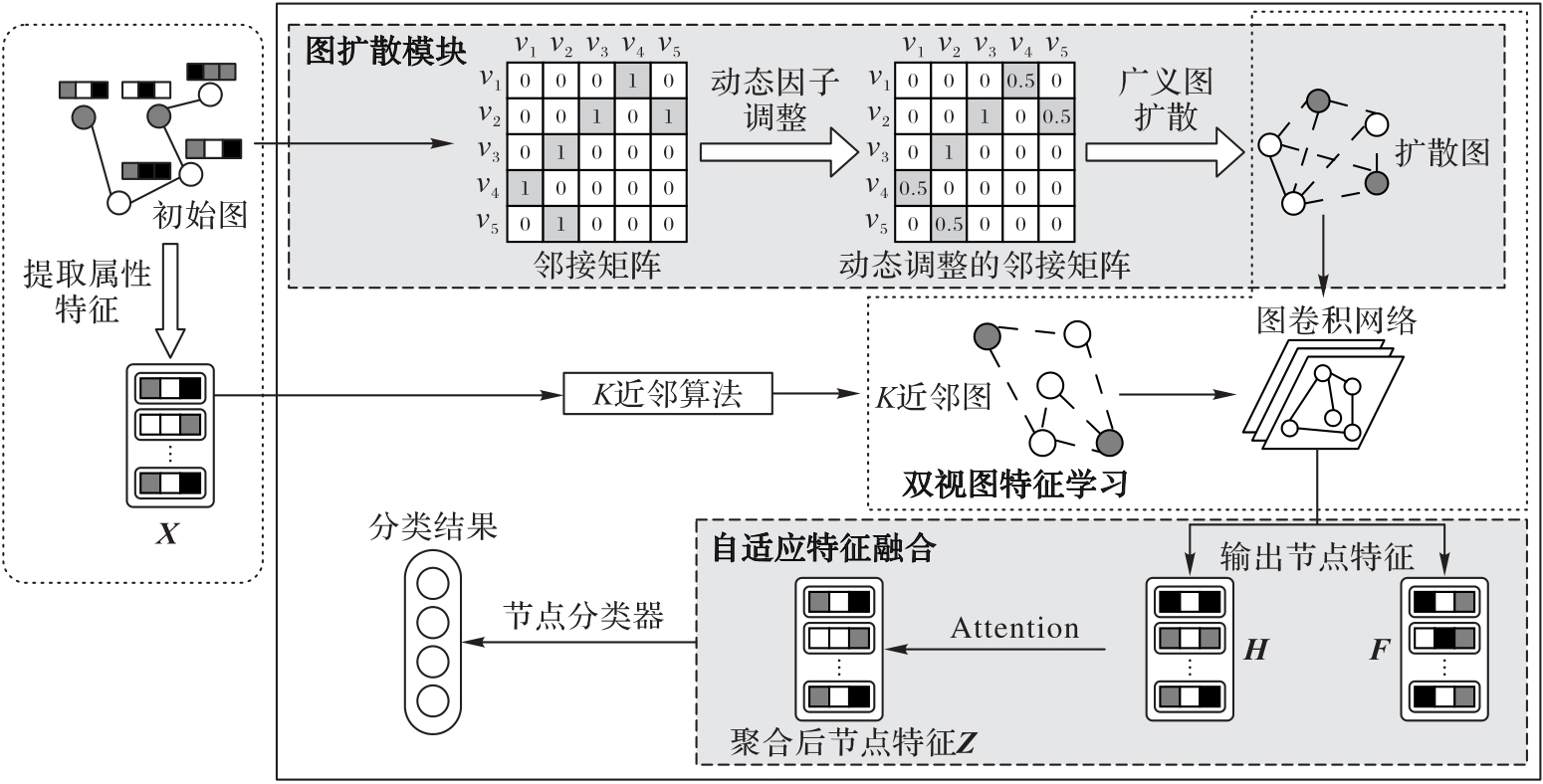
Fig. 2 Overall framework of GCN-GDDV model
Tab. 1 Dataset statistics?
| 模型 | Cora | PubMed | CiteSeer | ||||||
|---|---|---|---|---|---|---|---|---|---|
| 准确率 | Macro-F1 | Micro-F1 | 准确率 | Macro-F1 | Micro-F1 | 准确率 | Macro-F1 | Micro-F1 | |
| GCN | 0.801 0 | 0.789 0 | 0.793 0 | 0.773 0 | 0.765 0 | 0.762 0 | 0.721 0 | 0.719 0 | 0.707 0 |
| GAT | 0.803 0 | 0.793 0 | 0.788 0 | 0.762 0 | 0.758 0 | 0.755 0 | 0.692 0 | 0.688 0 | 0.684 0 |
| APPNP | 0.827 0 | 0.825 0 | 0.816 0 | 0.802 0 | 0.793 0 | 0.796 0 | 0.715 0 | 0.709 0 | 0.697 0 |
| GDC | 0.827 0 | 0.821 0 | 0.824 0 | 0.794 0 | 0.792 0 | 0.798 0 | 0.721 0 | 0.728 0 | |
| ADC | 0.825 0 | 0.819 0 | 0.788 0 | 0.770 0 | 0.776 0 | 0.705 0 | 0.716 0 | 0.709 0 | |
| AGMixup | 0.824 0 | 0.826 0 | 0.822 0 | 0.798 0 | 0.795 0 | 0.789 0 | 0.712 0 | 0.717 0 | 0.715 0 |
| NLGT | 0.825 0 | 0.822 0 | 0.801 0 | 0.796 0 | 0.798 0 | 0.714 0 | 0.708 0 | 0.712 0 | |
| HiD-Net | 0.831 0 | 0.821 0 | 0.792 0 | 0.717 0 | |||||
| GCN-GDDV | 0.843 0 | 0.839 0 | 0.833 0 | 0.814 0 | 0.808 0 | 0.742 0 | 0.739 0 | 0.728 0 | |
Tab. 2 Classification performance comparison of different methods
| 模型 | Cora | PubMed | CiteSeer | ||||||
|---|---|---|---|---|---|---|---|---|---|
| 准确率 | Macro-F1 | Micro-F1 | 准确率 | Macro-F1 | Micro-F1 | 准确率 | Macro-F1 | Micro-F1 | |
| GCN | 0.801 0 | 0.789 0 | 0.793 0 | 0.773 0 | 0.765 0 | 0.762 0 | 0.721 0 | 0.719 0 | 0.707 0 |
| GAT | 0.803 0 | 0.793 0 | 0.788 0 | 0.762 0 | 0.758 0 | 0.755 0 | 0.692 0 | 0.688 0 | 0.684 0 |
| APPNP | 0.827 0 | 0.825 0 | 0.816 0 | 0.802 0 | 0.793 0 | 0.796 0 | 0.715 0 | 0.709 0 | 0.697 0 |
| GDC | 0.827 0 | 0.821 0 | 0.824 0 | 0.794 0 | 0.792 0 | 0.798 0 | 0.721 0 | 0.728 0 | |
| ADC | 0.825 0 | 0.819 0 | 0.788 0 | 0.770 0 | 0.776 0 | 0.705 0 | 0.716 0 | 0.709 0 | |
| AGMixup | 0.824 0 | 0.826 0 | 0.822 0 | 0.798 0 | 0.795 0 | 0.789 0 | 0.712 0 | 0.717 0 | 0.715 0 |
| NLGT | 0.825 0 | 0.822 0 | 0.801 0 | 0.796 0 | 0.798 0 | 0.714 0 | 0.708 0 | 0.712 0 | |
| HiD-Net | 0.831 0 | 0.821 0 | 0.792 0 | 0.717 0 | |||||
| GCN-GDDV | 0.843 0 | 0.839 0 | 0.833 0 | 0.814 0 | 0.808 0 | 0.742 0 | 0.739 0 | 0.728 0 | |
| 数据集 | w/oDADM | w/oAM | GCN-GDDV | ||||||
|---|---|---|---|---|---|---|---|---|---|
| 准确率 | Macro-F1 | Micro-F1 | 准确率 | Macro-F1 | Micro-F1 | 准确率 | Macro-F1 | Micro-F1 | |
| Cora | 0.822 0 | 0.816 0 | 0.809 0 | 0.825 0 | 0.820 0 | 0.814 0 | 0.843 0 | 0.839 0 | 0.833 0 |
| PubMed | 0.799 0 | 0.786 0 | 0.778 0 | 0.793 0 | 0.781 0 | 0.773 0 | 0.814 0 | 0.808 0 | 0.796 0 |
| CiteSeer | 0.712 0 | 0.693 0 | 0.681 0 | 0.697 0 | 0.685 0 | 0.672 0 | 0.742 0 | 0.739 0 | 0.728 0 |
Tab. 3 Ablation study results?
| 数据集 | w/oDADM | w/oAM | GCN-GDDV | ||||||
|---|---|---|---|---|---|---|---|---|---|
| 准确率 | Macro-F1 | Micro-F1 | 准确率 | Macro-F1 | Micro-F1 | 准确率 | Macro-F1 | Micro-F1 | |
| Cora | 0.822 0 | 0.816 0 | 0.809 0 | 0.825 0 | 0.820 0 | 0.814 0 | 0.843 0 | 0.839 0 | 0.833 0 |
| PubMed | 0.799 0 | 0.786 0 | 0.778 0 | 0.793 0 | 0.781 0 | 0.773 0 | 0.814 0 | 0.808 0 | 0.796 0 |
| CiteSeer | 0.712 0 | 0.693 0 | 0.681 0 | 0.697 0 | 0.685 0 | 0.672 0 | 0.742 0 | 0.739 0 | 0.728 0 |
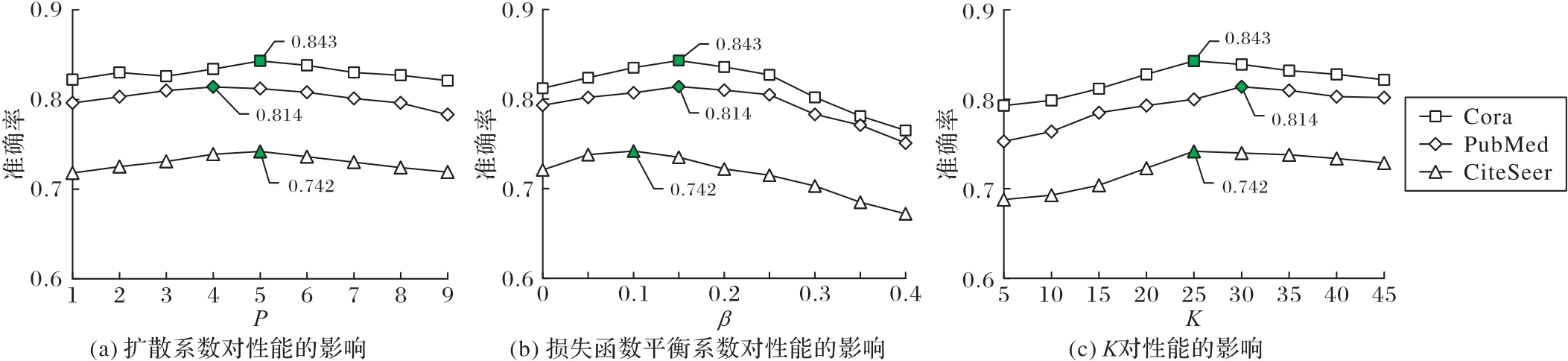
Fig. 3 Impact of model parameters on classification results
| 数据集 | GCN | GAT | APPNP | GDC | ADC | AGMixup | NLGT | HiD-Net | GCN-GDDV |
|---|---|---|---|---|---|---|---|---|---|
| CiteSeer | 78.1 | 90.3 | 83.9 | 111.0 | 119.0 | 108.0 | 135 | 84.7 | 133 |
| PubMed | 63.8 | 78.2 | 75.5 | 90.9 | 97.3 | 94.3 | 109 | 70.5 | 104 |
Tab. 4 Comparison of model training time?
| 数据集 | GCN | GAT | APPNP | GDC | ADC | AGMixup | NLGT | HiD-Net | GCN-GDDV |
|---|---|---|---|---|---|---|---|---|---|
| CiteSeer | 78.1 | 90.3 | 83.9 | 111.0 | 119.0 | 108.0 | 135 | 84.7 | 133 |
| PubMed | 63.8 | 78.2 | 75.5 | 90.9 | 97.3 | 94.3 | 109 | 70.5 | 104 |
| 节点编号 | 节点类别 | GCN | GAT | APPNP | GDC | ADC | AGMixup | NLGT | HiD-Net | GCN-GDDV |
|---|---|---|---|---|---|---|---|---|---|---|
| 1511 | PM | RL(×) | RL(×) | RL(×) | PM(√) | PM(√) | PM(√) | RL(×) | RL(×) | PM(√) |
| 2003 | PM | RL(×) | RL(×) | PM(√) | RL(×) | PM(√) | PM(×) | PM(√) | PM(√) | PM(√) |
| 2348 | PM | PM(√) | PM(√) | RL(×) | PM(√) | RL(×) | RL(×) | PM(√) | PM(√) | PM(√) |
Tab. 5 Comparison of case studies and forecast results
| 节点编号 | 节点类别 | GCN | GAT | APPNP | GDC | ADC | AGMixup | NLGT | HiD-Net | GCN-GDDV |
|---|---|---|---|---|---|---|---|---|---|---|
| 1511 | PM | RL(×) | RL(×) | RL(×) | PM(√) | PM(√) | PM(√) | RL(×) | RL(×) | PM(√) |
| 2003 | PM | RL(×) | RL(×) | PM(√) | RL(×) | PM(√) | PM(×) | PM(√) | PM(√) | PM(√) |
| 2348 | PM | PM(√) | PM(√) | RL(×) | PM(√) | RL(×) | RL(×) | PM(√) | PM(√) | PM(√) |
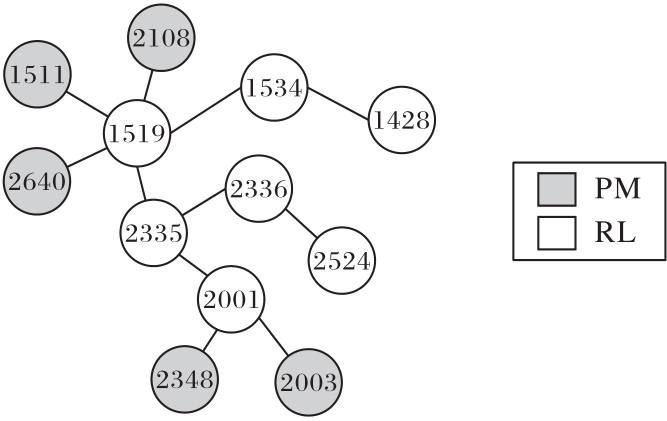
Fig. 4 Subgraph with nodes
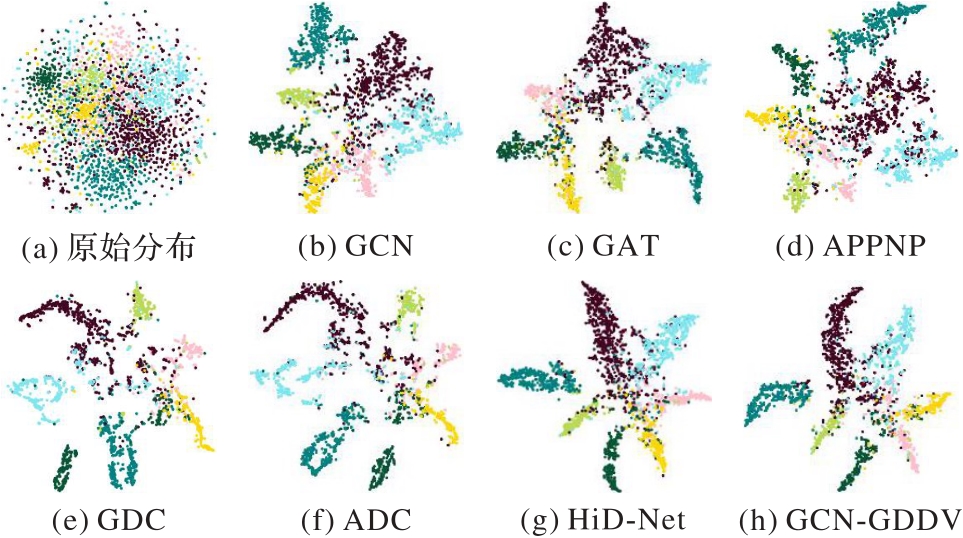
Fig. 5 Node visualization results?
| [1] | JIN M, KOH H Y, WEN Q, et al. A survey on graph neural networks for time series: forecasting, classification, imputation, and anomaly detection[J]. IEEE Transactions on Pattern Analysis and Machine Intelligence, 2024, 46(12): 10466-10485. |
| [2] | ZHU Y, FENG L, DENG Z, et al. Robust node classification on graph data with graph and label noise[C]// Proceedings of the 38th AAAI Conference on Artificial Intelligence. Palo Alto: AAAI Press, 2024: 17220-17227. |
| [3] | 李鑫,陆伟,马召祎,等. 基于图注意力和改进Transformer的节点分类方法[J]. 电子学报, 2024, 52(8): 2799-2810. |
| LI X, LU W, MA Z Y, et al. A node classification method based on graph attention and improved Transformer[J]. Acta Electronica Sinica, 2024, 52(8): 2799-2810. | |
| [4] | ZHAO T, ZHANG X, WANG S. Disambiguated node classification with graph neural networks[C]// Proceedings of the ACM Web Conference 2024. New York: ACM, 2024: 914-923. |
| [5] | NGUYEN T K, FANG Y. Diffusion-based negative sampling on graphs for link prediction[C]// Proceedings of the ACM Web Conference 2024, New York: ACM, 2024: 948-958. |
| [6] | KUMAR M, MISHRA S, SINGH S S, et al. Community-enhanced link prediction in dynamic networks[J]. ACM Transactions on the Web, 2024, 18(2): No.24. |
| [7] | YANG L, WU L, ZHANG C, et al. Research on node classification and link prediction of knowledge graph in complex network analysis[C]// Proceedings of the IEEE 2nd International Conference on Electrical, Automation and Computer Engineering. Piscataway: IEEE, 2024: 1691-1695. |
| [8] | 刘群,谭洪胜,张优敏,等.基于元路径的动态异质网络表示学习[J].电子学报,2022,50(8):1830-1839. |
| LIU Q, TAN H S, ZHANG Y M, et al. Dynamic heterogeneous network representation method based on meta-path[J]. Acta Electronica Sinica, 2022, 50(8): 1830-1839. | |
| [9] | KIPF T N, WELLING M. Semi-supervised classification with graph convolutional networks[EB/OL]. [2024-12-13].. |
| [10] | 徐冰冰,岑科廷,黄俊杰,等.图卷积神经网络综述[J].计算机学报,2020,43(5):755-780. |
| XU B B, CEN K T, HUANG J J, et al. A survey on graph convolutional neural network[J]. Chinese Journal of Computers, 2020, 43(5): 755-780. | |
| [11] | REN W, JIN N, OUYANG L. Phase space graph convolutional network for chaotic time series learning[J]. IEEE Transactions on Industrial Informatics, 2024, 20(5): 7576-7584. |
| [12] | VELIČKOVIĆ P, CUCURULL G, CASANOVA A, et al. Graph attention networks[EB/OL]. [2025-03-11].. |
| [13] | HAMILTON W L, YING R, LESKOVEC J. Inductive representation learning on large graphs[C]// Proceedings of the 31st International Conference on Neural Information Processing Systems. Red Hook: Curran Associates Inc., 2017: 1025-1035. |
| [14] | ABU-EL-HAIJA S, PEROZZI B, KAPOOR A, et al. MixHop: higher-order graph convolutional architectures via sparsified neighborhood mixing[C]// Proceedings of the 36th International Conference on Machine Learning. New York: JMLR.org, 2019: 21-29. |
| [15] | GASTEIGER J, WEIßENBERGER S, GÜNNEMANN S. Diffusion improves graph learning[C]// Proceedings of the 33rd International Conference on Neural Information Processing Systems. Red Hook: Curran Associates Inc, 2019: 13366-13378. |
| [16] | XU X, WANG T, YANG Y, et al. Radial graph convolutional network for visual question generation[J]. IEEE Transactions on Neural Networks and Learning Systems, 2021, 32(4): 1654-1667. |
| [17] | TAILOR S A, OPOLKA F L, LIÒ P, et al. Do we need isotropic graph neural networks?[EB/OL]. [2025-04-06].. |
| [18] | LIU K, GAO L, KHAN N M, et al. A multi-stream graph convolutional networks-hidden conditional random field model for skeleton-based action recognition[J]. IEEE Transactions on Multimedia, 2021, 23: 64-76. |
| [19] | 郭新超,张维玉,夏忠秀.双向数据增强图卷积网络[J].计算机工程与设计,2023,44(8):2345-2351. |
| GUO X C, ZHANG W Y, XIA Z X. Two-way data augmentation graph convolutional networks[J]. Computer Engineering and Design, 2023, 44(8): 2345-2351. | |
| [20] | 郭向星,周魏,杨正益,等. 基于自监督图卷积和注意力机制实现隐式反馈降噪的社交推荐[J]. 电子学报, 2025, 53(1): 151-162. |
| GUO X X, ZHOU W, YANG Z Y, et al. Denoising implicit feedback with self-supervised graph convolution network and attention mechanism for social recommendation[J]. Acta Electronica Sinica, 2025, 53(1): 151-162. | |
| [21] | HUANG J, DU L, CHEN X, et al. Robust mid-pass filtering graph convolutional networks[C]// Proceedings of the ACM Web Conference 2023. New York: ACM, 2023: 328-338. |
| [22] | 周俊,胡斌斌,张志强,等. MoGE:基于图上下文增强的多任务推荐算法[J]. 电子学报, 2023, 51(11): 3377-3387. |
| ZHOU J, HU B B, ZHANG Z Q, et al. MoGE: graph context enhanced multi-task recommendation method[J]. Acta Electronica Sinica, 2023, 51(11): 3377-3387. | |
| [23] | GASTEIGER J, BOJCHEVSKI A, GÜNNEMANN S. Predict then propagate: graph neural networks meet personalized PageRank[EB/OL]. [2025-02-01].. |
| [24] | CHAMBERLAIN B P, ROWBOTTOM J, GORINOVA M, et al. GRAND: graph neural diffusion[C]// Proceedings of the 38th International Conference on Machine Learning. New York: JMLR.org, 2021: 1407-1418. |
| [25] | LI Y, WANG X, LIU H, et al. A generalized neural diffusion framework on graphs[C]// Proceedings of the 38th AAAI Conference on Artificial Intelligence. Palo Alto: AAAI Press, 2024: 8707-8715. |
| [26] | MA Y, ZHAN K. Self-contrastive graph diffusion network[C]// Proceedings of the 31st ACM International Conference on Multimedia. New York: ACM, 2023: 3857-3865. |
| [27] | ZHAO J, DONG Y, DING M, et al. Adaptive diffusion in graph neural networks[C]// Proceedings of the 35th International Conference on Neural Information Processing Systems. Red Hook: Curran Associates Inc., 2021: 23321-23333. |
| [28] | LU W, GUAN Z, ZHAO W, et al. AGMixup: adaptive graph mixup for semi-supervised node classification[C]// Proceedings of the 39th AAAI Conference on Artificial Intelligence. Palo Alto: AAAI Press, 2025: 19143-19151. |
| [29] | XU X, ZHOU Y, XIANG H, et al. NLGT: neighborhood-based and label-enhanced graph Transformer framework for node classification[C]// Proceedings of the 39th AAAI Conference on Artificial Intelligence. Palo Alto: AAAI Press, 2025: 12954-12962. |
| [1] | Xiang BAI, Juchuan LI, Huimin WANG, Chao JING, Jian NIU, Xingzhong ZHANG, Yongqiang CHENG. Power image retrieval method based on improved Swin Transformer [J]. Journal of Computer Applications, 2026, 46(4): 1334-1343. |
| [2] | Chuandong QIN, Zhiqiang SUO. Skin cancer classification integrating improved ResNet50 with ensemble classifier [J]. Journal of Computer Applications, 2026, 46(4): 1354-1362. |
| [3] | Xumeng DOU, Bin XIE, Zhaohui ZHANG, Zhengang ZHAO, Hanyu DUAN, Aolei GUO. Drug-target interaction prediction based on structure-network collaborative features and grid-attention enhanced Kolmogorov-Arnold network [J]. Journal of Computer Applications, 2026, 46(4): 1344-1353. |
| [4] | Wenhao LI, Yinzhang GUO. Urban traffic flow prediction based on dual-layer multi-scale dynamic graph convolutional network model [J]. Journal of Computer Applications, 2026, 46(4): 1323-1333. |
| [5] | Huanxian LIU, Hongtao WANG, Xian’ao WANG, Hongmei WANG, Weifeng XU. Multimodal fact verification with cross-modal semantic association [J]. Journal of Computer Applications, 2026, 46(4): 1069-1076. |
| [6] | Peirong SHAO, Suzhen LIN, Yanbo WANG. Human-centric detail-enhanced virtual try-on method [J]. Journal of Computer Applications, 2026, 46(3): 915-923. |
| [7] | Zuxi ZHANG, Zhancheng ZHANG, Fuyuan HU. Local and long-range temporal complementary modeling for video action recognition [J]. Journal of Computer Applications, 2026, 46(3): 758-766. |
| [8] | Qianhui XU, Ke NIU, Shunzhe ZHU, Lin SHI, Jun LI. GAB3D-SEVSN: enhanced video steganography model via invertible neural network [J]. Journal of Computer Applications, 2026, 46(2): 467-474. |
| [9] | Hu LUO, Mingshu ZHANG. Rumor detection method based on cross-modal attention mechanism and contrastive learning [J]. Journal of Computer Applications, 2026, 46(2): 361-367. |
| [10] | Rifeng ZHANG, Guangming LI, Yurong OUYANG. Low-light image enhancement network guided by reflection prior map [J]. Journal of Computer Applications, 2026, 46(2): 546-554. |
| [11] | Junrui WU, Jiangchuan YANG, Haisheng YU, Sai ZOU, Wenyong WANG. Performance evaluation method for deterministic networks based on complex-enhanced attention graph neural network [J]. Journal of Computer Applications, 2026, 46(2): 505-517. |
| [12] | Jinjiao LIN, Canshun ZHANG, Shuya CHEN, Tianxin WANG, Jian LIAN, Yonghui XU. Vehicle insurance fraud detection method based on improved graph attention network [J]. Journal of Computer Applications, 2026, 46(2): 437-444. |
| [13] | Ming LI, Mengqi WANG, Aili ZHANG, Hua REN, Yuqiang DOU. Image steganography method based on conditional generative adversarial networks and hybrid attention mechanism [J]. Journal of Computer Applications, 2026, 46(2): 475-484. |
| [14] | Sizhong ZHANG, Jianyang LIU, Linfeng LI. Action quality assessment model based on trajectory-guided perceptual learning with X3D [J]. Journal of Computer Applications, 2026, 46(2): 555-563. |
| [15] | Lifang WANG, Wenjing REN, Xiaodong GUO, Rongguo ZHANG, Lihua HU. Trident generative adversarial network for low-dose CT image denoising [J]. Journal of Computer Applications, 2026, 46(1): 270-279. |
| Viewed | ||||||
|
Full text |
|
|||||
|
Abstract |
|
|||||
