


Journal of Computer Applications ›› 2026, Vol. 46 ›› Issue (9): 2977-2986.DOI: 10.11772/j.issn.1001-9081.2025081034
• Multimedia computing and computer simulation • Previous Articles
Yufeng OU1, Chia-Hung WANG1,2( )
)
Received:2025-09-08
Revised:2025-10-20
Accepted:2025-10-23
Online:2025-11-07
Published:2026-09-10
Contact:
Chia-Hung WANG
About author:OU Yufeng, born in 2000, M. S. candidate. His research interests include artificial intelligence, simulation optimization.Supported by:
欧宇枫1, 王嘉宏1,2()
通讯作者:
王嘉宏
作者简介:欧宇枫(2000—),男,福建福州人,硕士研究生,CCF会员,主要研究方向:人工智能、仿真优化基金资助:CLC Number:
Yufeng OU, Chia-Hung WANG. Small-object defect detection method for printed circuit boards based on dual-branch feature extraction[J]. Journal of Computer Applications, 2026, 46(9): 2977-2986.
欧宇枫, 王嘉宏. 基于双分支特征提取的印刷电路板小目标缺陷检测方法[J]. 《计算机应用》唯一官方网站, 2026, 46(9): 2977-2986.
Add to citation manager EndNote|Ris|BibTeX
URL: https://www.joca.cn/EN/10.11772/j.issn.1001-9081.2025081034
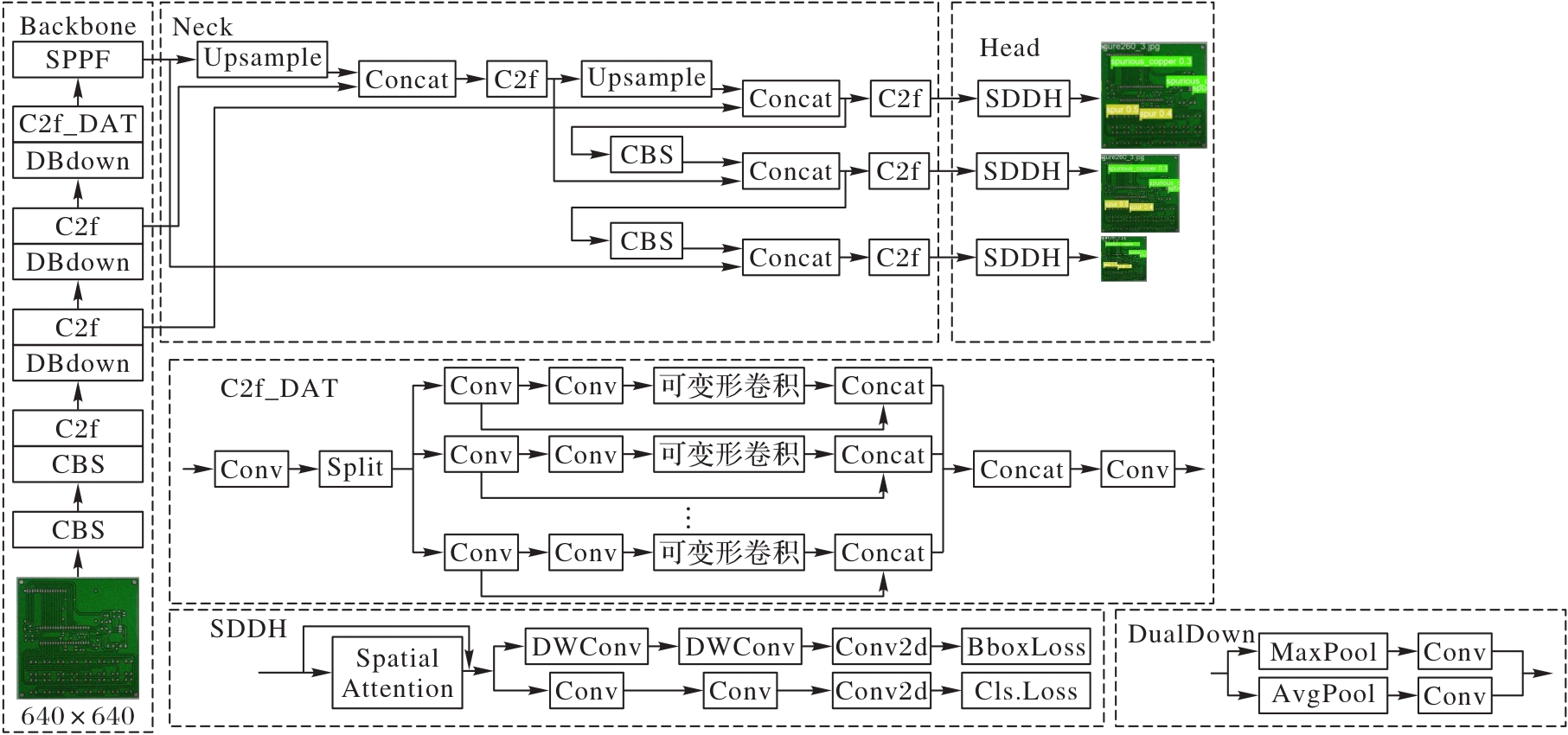
Fig. 1 Structure of DES-Det
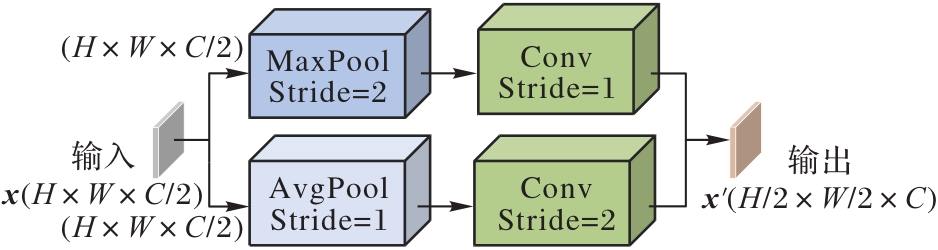
Fig. 2 Architecture of DBdown
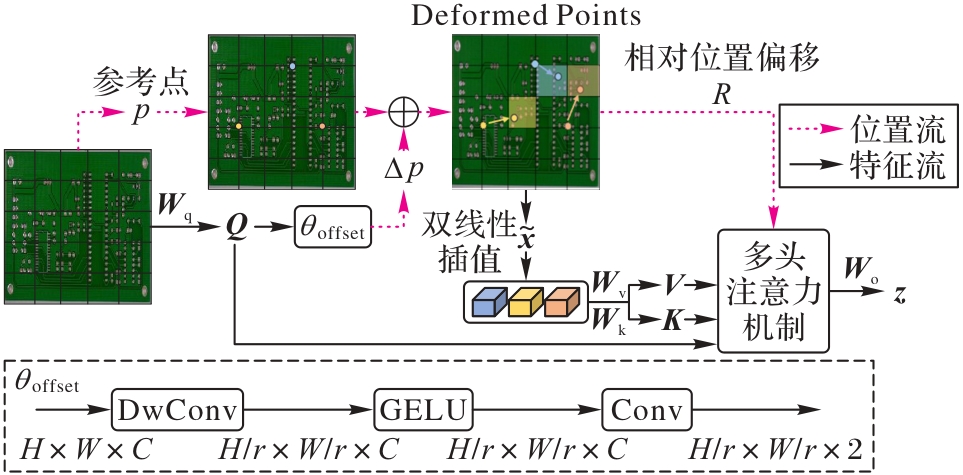
Fig. 3 Principle of DAT
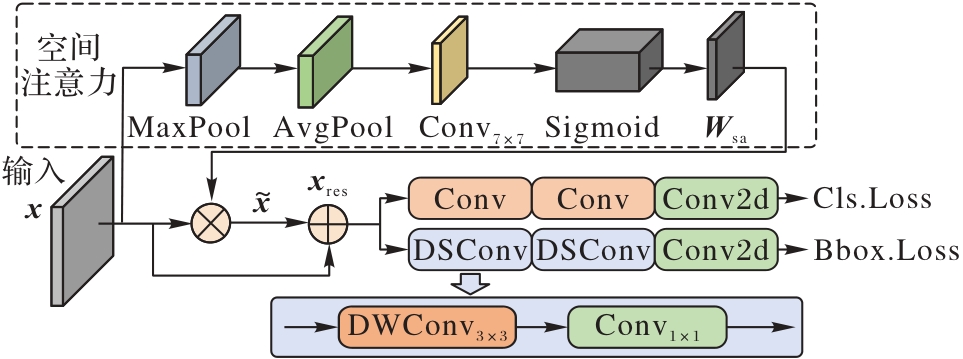
Fig. 4 Structure of SDDH module
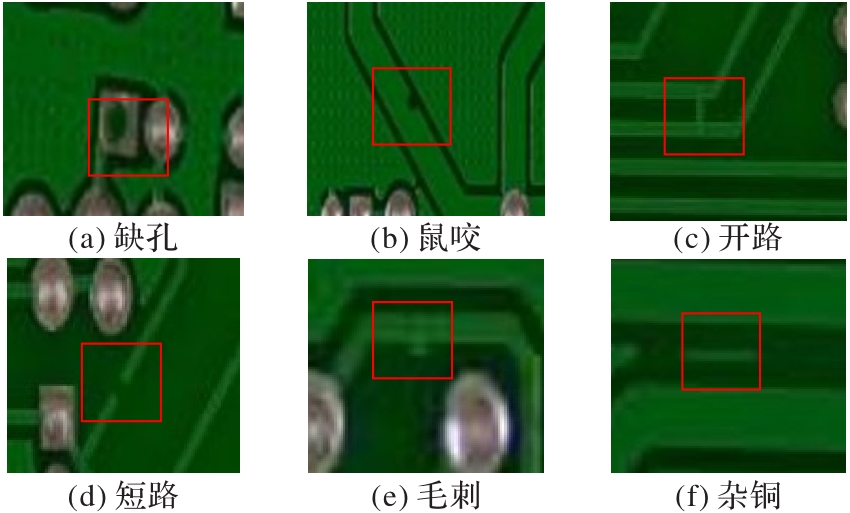
Fig. 5 PCB defect features in PKU-Market-PCB dataset
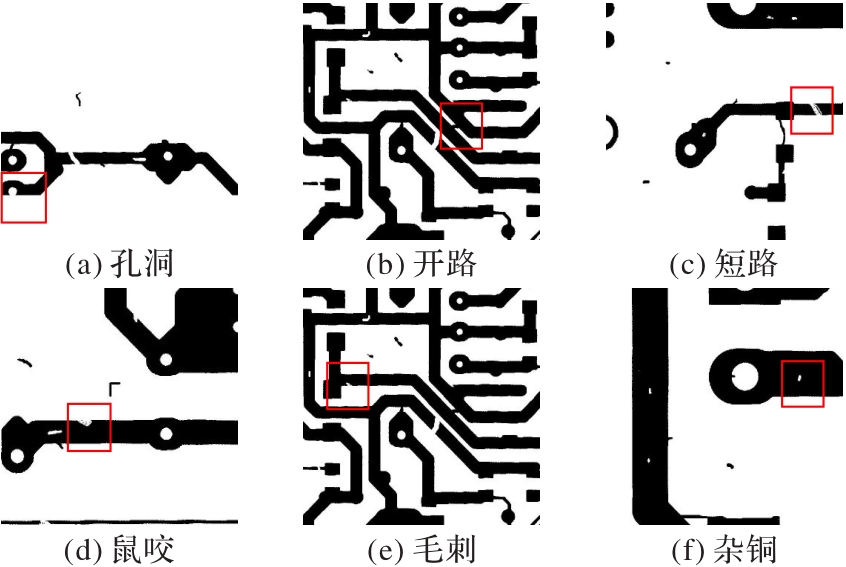
Fig. 6 PCB defect features in DeepPCB dataset
| 参数名称 | 参数设置 |
|---|---|
| 图片尺寸(Image Size) | 640×640 |
| 学习率(Learning Rate) | 1E-2 |
| 学习率衰减策略 | 随机梯度下降法 |
| 训练轮次(Train Epoch) | 200 |
| 优化器(Optimizer) | SGD |
| 权重衰减(Weight Delay) | 5E-4 |
| 批大小(Batch Size) | 16 |
| 数据加载的子进程数(Workers) | 8 |
| DBdown分支通道占比 | 50%∶50% |
| Deformable Attention的采集点个数 | 4 |
| Deformable Attention的注意力头数 | 8 |
Tab. 1 Experimental parameter setting
| 参数名称 | 参数设置 |
|---|---|
| 图片尺寸(Image Size) | 640×640 |
| 学习率(Learning Rate) | 1E-2 |
| 学习率衰减策略 | 随机梯度下降法 |
| 训练轮次(Train Epoch) | 200 |
| 优化器(Optimizer) | SGD |
| 权重衰减(Weight Delay) | 5E-4 |
| 批大小(Batch Size) | 16 |
| 数据加载的子进程数(Workers) | 8 |
| DBdown分支通道占比 | 50%∶50% |
| Deformable Attention的采集点个数 | 4 |
| Deformable Attention的注意力头数 | 8 |
| 损失函数 | P | F1 | mAP@0.5 |
|---|---|---|---|
| CIoU | 89.6 | 68.8 | 66.7 |
| EIoU | 91.3 | 72.1 | 71.8 |
| SIoU | 90.4 | 72.4 | 72.3 |
| NWD | 91.7 | 72.5 | 72.3 |
| WIoUv1 | 89.4 | 70.5 | 68.5 |
| WIoUv2 | 93.6 | 73.5 | 72.5 |
| WIoUv3 | 89.9 | 73.1 | 74.1 |
Tab. 2 Comparison of loss functions
| 损失函数 | P | F1 | mAP@0.5 |
|---|---|---|---|
| CIoU | 89.6 | 68.8 | 66.7 |
| EIoU | 91.3 | 72.1 | 71.8 |
| SIoU | 90.4 | 72.4 | 72.3 |
| NWD | 91.7 | 72.5 | 72.3 |
| WIoUv1 | 89.4 | 70.5 | 68.5 |
| WIoUv2 | 93.6 | 73.5 | 72.5 |
| WIoUv3 | 89.9 | 73.1 | 74.1 |
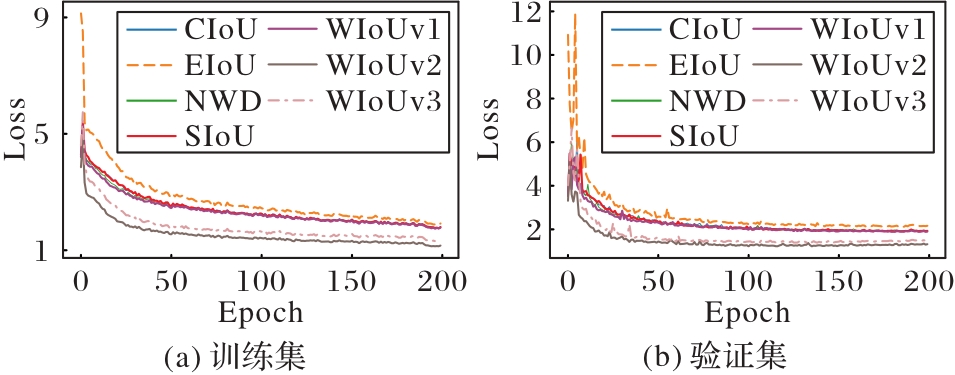
Fig. 7 Comparison of bounding box loss for loss functions on training set and validation set
| 模型 | P/% | F1/% | mAP@0.5/% | 参数量/106 | 浮点运算量/GFLOPs | 帧率/(frame·s-1) |
|---|---|---|---|---|---|---|
| YOLOv8(baseline) | 87.9 | 69.2 | 68.0 | 3.0 | 8.1 | 456.8 |
| YOLOv8+DBdown | 91.2 | 72.6 | 72.3 | 2.7 | 7.7 | 449.9 |
| YOLOv8+SDDH | 88.9 | 71.2 | 70.0 | 2.6 | 5.6 | 423.9 |
| YOLOv8+C2f_DAT | 92.2 | 72.9 | 71.7 | 3.1 | 8.1 | 439.4 |
| YOLOv8+ DBdown +C2f_DAT | 92.1 | 71.6 | 72.2 | 2.7 | 7.6 | 439.3 |
| YOLOv8+ DBdown + SDDH | 91.7 | 70.6 | 70.2 | 2.1 | 5.5 | 426.1 |
| YOLOv8+C2f_DAT+ SDDH | 90.2 | 72.3 | 71.3 | 2.4 | 5.7 | 434.9 |
| YOLOv8+ DBdown +C2f_DAT+ SDDH | 93.6 | 73.5 | 72.5 | 2.2 | 5.3 | 435.7 |
Tab. 3 Ablation experiment results
| 模型 | P/% | F1/% | mAP@0.5/% | 参数量/106 | 浮点运算量/GFLOPs | 帧率/(frame·s-1) |
|---|---|---|---|---|---|---|
| YOLOv8(baseline) | 87.9 | 69.2 | 68.0 | 3.0 | 8.1 | 456.8 |
| YOLOv8+DBdown | 91.2 | 72.6 | 72.3 | 2.7 | 7.7 | 449.9 |
| YOLOv8+SDDH | 88.9 | 71.2 | 70.0 | 2.6 | 5.6 | 423.9 |
| YOLOv8+C2f_DAT | 92.2 | 72.9 | 71.7 | 3.1 | 8.1 | 439.4 |
| YOLOv8+ DBdown +C2f_DAT | 92.1 | 71.6 | 72.2 | 2.7 | 7.6 | 439.3 |
| YOLOv8+ DBdown + SDDH | 91.7 | 70.6 | 70.2 | 2.1 | 5.5 | 426.1 |
| YOLOv8+C2f_DAT+ SDDH | 90.2 | 72.3 | 71.3 | 2.4 | 5.7 | 434.9 |
| YOLOv8+ DBdown +C2f_DAT+ SDDH | 93.6 | 73.5 | 72.5 | 2.2 | 5.3 | 435.7 |
| 模型 | P/% | F1/% | mAP@0.5/% | 不同缺陷类型的AP/% | 参数量/106 | 浮点运算量 /GFLOPs | 帧率/(frame·s-1) | |||||
|---|---|---|---|---|---|---|---|---|---|---|---|---|
| 缺孔 | 鼠咬 | 开路 | 短路 | 毛刺 | 杂铜 | |||||||
| RT-DETR | 72.4 | 59.1 | 52.6 | 86.6 | 67.2 | 64.7 | 74.2 | 75.5 | 66.3 | 284.5 | 100.6 | 40.3 |
| YOLOv8 | 87.9 | 69.2 | 68.0 | 95.8 | 87.1 | 89.9 | 87.1 | 87.8 | 79.5 | 3.0 | 8.1 | 456.8 |
| YOLOv9 | 90.2 | 69.4 | 66.8 | 94.5 | 84.3 | 94.0 | 89.7 | 83.2 | 95.4 | 2.1 | 7.6 | 328.2 |
| YOLOv10 | 86.7 | 66.9 | 65.5 | 91.0 | 80.6 | 89.2 | 89.3 | 84.8 | 85.3 | 2.5 | 8.2 | 358.8 |
| YOLOv11 | 91.3 | 67.3 | 65.1 | 89.0 | 86.6 | 95.6 | 91.6 | 97.6 | 87.4 | 2.5 | 6.3 | 339.1 |
| YOLOv12 | 90.2 | 68.5 | 63.4 | 86.9 | 90.1 | 91.5 | 88.7 | 94.7 | 89.0 | 2.5 | 6.3 | 217.5 |
| GhostNet-YOLO | 85.5 | 65.3 | 62.3 | 91.0 | 78.4 | 86.3 | 87.7 | 86.1 | 83.8 | 2.0 | 5.8 | 363.1 |
| Gold-YOLO | 88.3 | 68.9 | 66.4 | 93.9 | 82.3 | 87.4 | 88.8 | 89.7 | 87.6 | 5.9 | 10.2 | 309.0 |
| ConvNeXtV2 | 57.2 | 46.8 | 39.4 | 64.7 | 52.3 | 49.0 | 60.4 | 57.5 | 59.6 | 56.6 | 14.1 | 158.0 |
| YOLO-NAS | 86.3 | 69.1 | 66.5 | 93.6 | 79.7 | 91.3 | 84.7 | 90.7 | 78.4 | 2.4 | 6.6 | 423.5 |
| YOLO-RRL | 91.3 | 71.7 | 71.1 | 95.8 | 85.7 | 94.3 | 89.6 | 93.1 | 89.1 | 2.4 | 5.8 | 470.5 |
| YOLO-SSW | 90.8 | 73.3 | 73.7 | 94.5 | 89.3 | 89.7 | 93.3 | 89.5 | 88.4 | 4.3 | 11.2 | 218.1 |
| DES-Det | 93.6 | 73.5 | 72.5 | 96.7 | 91.3 | 96.1 | 90.7 | 94.1 | 92.9 | 2.2 | 5.3 | 435.7 |
Tab. 4 Performance comparison of different models on PKU-Market-PCB dataset
| 模型 | P/% | F1/% | mAP@0.5/% | 不同缺陷类型的AP/% | 参数量/106 | 浮点运算量 /GFLOPs | 帧率/(frame·s-1) | |||||
|---|---|---|---|---|---|---|---|---|---|---|---|---|
| 缺孔 | 鼠咬 | 开路 | 短路 | 毛刺 | 杂铜 | |||||||
| RT-DETR | 72.4 | 59.1 | 52.6 | 86.6 | 67.2 | 64.7 | 74.2 | 75.5 | 66.3 | 284.5 | 100.6 | 40.3 |
| YOLOv8 | 87.9 | 69.2 | 68.0 | 95.8 | 87.1 | 89.9 | 87.1 | 87.8 | 79.5 | 3.0 | 8.1 | 456.8 |
| YOLOv9 | 90.2 | 69.4 | 66.8 | 94.5 | 84.3 | 94.0 | 89.7 | 83.2 | 95.4 | 2.1 | 7.6 | 328.2 |
| YOLOv10 | 86.7 | 66.9 | 65.5 | 91.0 | 80.6 | 89.2 | 89.3 | 84.8 | 85.3 | 2.5 | 8.2 | 358.8 |
| YOLOv11 | 91.3 | 67.3 | 65.1 | 89.0 | 86.6 | 95.6 | 91.6 | 97.6 | 87.4 | 2.5 | 6.3 | 339.1 |
| YOLOv12 | 90.2 | 68.5 | 63.4 | 86.9 | 90.1 | 91.5 | 88.7 | 94.7 | 89.0 | 2.5 | 6.3 | 217.5 |
| GhostNet-YOLO | 85.5 | 65.3 | 62.3 | 91.0 | 78.4 | 86.3 | 87.7 | 86.1 | 83.8 | 2.0 | 5.8 | 363.1 |
| Gold-YOLO | 88.3 | 68.9 | 66.4 | 93.9 | 82.3 | 87.4 | 88.8 | 89.7 | 87.6 | 5.9 | 10.2 | 309.0 |
| ConvNeXtV2 | 57.2 | 46.8 | 39.4 | 64.7 | 52.3 | 49.0 | 60.4 | 57.5 | 59.6 | 56.6 | 14.1 | 158.0 |
| YOLO-NAS | 86.3 | 69.1 | 66.5 | 93.6 | 79.7 | 91.3 | 84.7 | 90.7 | 78.4 | 2.4 | 6.6 | 423.5 |
| YOLO-RRL | 91.3 | 71.7 | 71.1 | 95.8 | 85.7 | 94.3 | 89.6 | 93.1 | 89.1 | 2.4 | 5.8 | 470.5 |
| YOLO-SSW | 90.8 | 73.3 | 73.7 | 94.5 | 89.3 | 89.7 | 93.3 | 89.5 | 88.4 | 4.3 | 11.2 | 218.1 |
| DES-Det | 93.6 | 73.5 | 72.5 | 96.7 | 91.3 | 96.1 | 90.7 | 94.1 | 92.9 | 2.2 | 5.3 | 435.7 |
| 模型 | P/% | F1/% | mAP@0.5/% | 不同缺陷类型的AP/% | 帧率/(frame·s-1) | |||||
|---|---|---|---|---|---|---|---|---|---|---|
| 孔洞 | 开路 | 短路 | 鼠咬 | 毛刺 | 杂铜 | |||||
| RT-DETR | 92.0 | 90.3 | 94.9 | 91.3 | 91.2 | 94.3 | 92.4 | 90.8 | 92.1 | 45.1 |
| YOLOv8 | 97.0 | 95.9 | 98.4 | 96.9 | 94.5 | 97.3 | 97.5 | 99.3 | 96.5 | 467.2 |
| YOLOv9 | 97.5 | 96.4 | 98.5 | 97.6 | 97.1 | 97.9 | 97.3 | 97.7 | 97.2 | 301.7 |
| YOLOv10 | 96.6 | 95.5 | 98.1 | 96.2 | 95.1 | 97.4 | 96.7 | 97.2 | 96.9 | 389.3 |
| YOLOv11 | 96.6 | 96.0 | 98.1 | 96.1 | 96.4 | 97.6 | 95.9 | 96.9 | 96.8 | 342.9 |
| YOLOv12 | 95.5 | 94.9 | 97.6 | 96.5 | 93.9 | 95.9 | 93.5 | 97.4 | 96.0 | 233.8 |
| GhostNet-YOLO | 97.5 | 94.9 | 98.0 | 97.9 | 97.2 | 97.1 | 96.1 | 99.1 | 97.5 | 440.6 |
| Gold-YOLO | 96.1 | 95.2 | 98.2 | 97.7 | 96.3 | 97.1 | 97.2 | 99.0 | 89.2 | 302.0 |
| ConvNeXtV2 | 92.2 | 88.5 | 93.5 | 95.0 | 85.3 | 93.1 | 92.5 | 92.4 | 95.8 | 95.0 |
| YOLO-NAS | 90.7 | 93.6 | 96.7 | 91.5 | 89.2 | 90.3 | 91.1 | 89.2 | 93.3 | 98.5 |
| YOLO-RRL | 97.3 | 95.7 | 97.5 | 95.8 | 85.7 | 94.3 | 89.6 | 93.1 | 89.1 | 418.3 |
| YOLO-SSW | 97.4 | 96.4 | 98.4 | 94.5 | 89.3 | 89.7 | 93.3 | 89.5 | 88.4 | 235.6 |
| DES-Det | 98.4 | 97.4 | 98.7 | 98.7 | 97.6 | 99.0 | 98.4 | 99.2 | 97.8 | 446.8 |
Tab. 5 Performance comparison of different models on DeepPCB dataset
| 模型 | P/% | F1/% | mAP@0.5/% | 不同缺陷类型的AP/% | 帧率/(frame·s-1) | |||||
|---|---|---|---|---|---|---|---|---|---|---|
| 孔洞 | 开路 | 短路 | 鼠咬 | 毛刺 | 杂铜 | |||||
| RT-DETR | 92.0 | 90.3 | 94.9 | 91.3 | 91.2 | 94.3 | 92.4 | 90.8 | 92.1 | 45.1 |
| YOLOv8 | 97.0 | 95.9 | 98.4 | 96.9 | 94.5 | 97.3 | 97.5 | 99.3 | 96.5 | 467.2 |
| YOLOv9 | 97.5 | 96.4 | 98.5 | 97.6 | 97.1 | 97.9 | 97.3 | 97.7 | 97.2 | 301.7 |
| YOLOv10 | 96.6 | 95.5 | 98.1 | 96.2 | 95.1 | 97.4 | 96.7 | 97.2 | 96.9 | 389.3 |
| YOLOv11 | 96.6 | 96.0 | 98.1 | 96.1 | 96.4 | 97.6 | 95.9 | 96.9 | 96.8 | 342.9 |
| YOLOv12 | 95.5 | 94.9 | 97.6 | 96.5 | 93.9 | 95.9 | 93.5 | 97.4 | 96.0 | 233.8 |
| GhostNet-YOLO | 97.5 | 94.9 | 98.0 | 97.9 | 97.2 | 97.1 | 96.1 | 99.1 | 97.5 | 440.6 |
| Gold-YOLO | 96.1 | 95.2 | 98.2 | 97.7 | 96.3 | 97.1 | 97.2 | 99.0 | 89.2 | 302.0 |
| ConvNeXtV2 | 92.2 | 88.5 | 93.5 | 95.0 | 85.3 | 93.1 | 92.5 | 92.4 | 95.8 | 95.0 |
| YOLO-NAS | 90.7 | 93.6 | 96.7 | 91.5 | 89.2 | 90.3 | 91.1 | 89.2 | 93.3 | 98.5 |
| YOLO-RRL | 97.3 | 95.7 | 97.5 | 95.8 | 85.7 | 94.3 | 89.6 | 93.1 | 89.1 | 418.3 |
| YOLO-SSW | 97.4 | 96.4 | 98.4 | 94.5 | 89.3 | 89.7 | 93.3 | 89.5 | 88.4 | 235.6 |
| DES-Det | 98.4 | 97.4 | 98.7 | 98.7 | 97.6 | 99.0 | 98.4 | 99.2 | 97.8 | 446.8 |

Fig. 8 Actual detection results of various YOLO models on different datasets
| 数据集 | 模型 | P | R | F1 | mAP@0.5 |
|---|---|---|---|---|---|
| 实景拍摄PCB缺陷数据集 | YOLOv8 | 77.3±0.3 | 78.1±0.2 | 77.6±0.2 | 78.7±0.2 |
| GhostNet | 62.6±0.4 | 60.4±0.5 | 61.4±0.4 | 62.8±0.4 | |
| Gold-YOLO | 58.3±0.3 | 72.3±0.4 | 64.4±0.3 | 45.9±0.3 | |
| ConvNeXtV2 | 73.3±0.2 | 44.6±0.3 | 55.3±0.2 | 47.9±0.2 | |
| YOLO-NAS | 74.8±0.1 | 57.6±0.2 | 64.9±0.1 | 37.8±0.1 | |
| DES-Det | 77.6±0.2 | 80.4±0.1 | 80.0±0.2 | 79.6±0.2 | |
| 铝材缺陷数据集 | YOLOv8 | 75.2±0.3 | 85.9±0.2 | 80.2±0.2 | 70.1±0.2 |
| GhostNet | 70.0±0.3 | 53.2±0.4 | 60.5±0.4 | 58.4±0.4 | |
| Gold-YOLO | 74.4±0.2 | 57.4±0.1 | 62.9±0.1 | 62.8±0.2 | |
| ConvNeXtV2 | 67.4±0.3 | 59.0±0.2 | 62.9±0.2 | 61.1±0.3 | |
| YOLO-NAS | 71.1±0.2 | 55.8±0.1 | 62.5±0.1 | 61.3±0.1 | |
| DES-Det | 79.7±0.1 | 86.9±0.2 | 83.1±0.2 | 72.8±0.2 |
Tab. 6 Performance comparison of different models on generalization experimental datasets
| 数据集 | 模型 | P | R | F1 | mAP@0.5 |
|---|---|---|---|---|---|
| 实景拍摄PCB缺陷数据集 | YOLOv8 | 77.3±0.3 | 78.1±0.2 | 77.6±0.2 | 78.7±0.2 |
| GhostNet | 62.6±0.4 | 60.4±0.5 | 61.4±0.4 | 62.8±0.4 | |
| Gold-YOLO | 58.3±0.3 | 72.3±0.4 | 64.4±0.3 | 45.9±0.3 | |
| ConvNeXtV2 | 73.3±0.2 | 44.6±0.3 | 55.3±0.2 | 47.9±0.2 | |
| YOLO-NAS | 74.8±0.1 | 57.6±0.2 | 64.9±0.1 | 37.8±0.1 | |
| DES-Det | 77.6±0.2 | 80.4±0.1 | 80.0±0.2 | 79.6±0.2 | |
| 铝材缺陷数据集 | YOLOv8 | 75.2±0.3 | 85.9±0.2 | 80.2±0.2 | 70.1±0.2 |
| GhostNet | 70.0±0.3 | 53.2±0.4 | 60.5±0.4 | 58.4±0.4 | |
| Gold-YOLO | 74.4±0.2 | 57.4±0.1 | 62.9±0.1 | 62.8±0.2 | |
| ConvNeXtV2 | 67.4±0.3 | 59.0±0.2 | 62.9±0.2 | 61.1±0.3 | |
| YOLO-NAS | 71.1±0.2 | 55.8±0.1 | 62.5±0.1 | 61.3±0.1 | |
| DES-Det | 79.7±0.1 | 86.9±0.2 | 83.1±0.2 | 72.8±0.2 |
| [1] | 孙成路. 基于机器视觉的PCB异型插装元件AOI检测系统[D]. 武汉:武汉纺织大学, 2023: 1-76. |
| Sun Chenglu. An AOI inspection system for PCB irregular plug-in components based on machine vision [D]. Wuhan: Wuhan Textile University, 2023: 1-76. | |
| [2] | 杨思念,曹立佳,杨洋,等. 基于机器视觉的PCB缺陷检测算法研究综述[J]. 计算机科学与探索, 2025, 19(4): 901-915. |
| Yang Sinian, Cao Lijia, Yang Yang, et al. Review of PCB defect detection algorithm based on machine vision [J]. Journal of Frontiers of Computer Science and Technology, 2025, 19(4): 901-915. | |
| [3] | Hu B, Wang J. Detection of PCB surface defects with improved Faster-RCNN and feature pyramid network [J]. IEEE Access, 2020, 8: 108335-108345. |
| [4] | 龚陈博,南卓江,陶卫. 基于改进Faster RCNN的PCB表面缺陷检测研究[J]. 自动化仪表, 2024, 45(7): 99-103, 109. |
| Gong Chenbo, Zhuojiang Nan, Tao Wei. Research on PCB surface defect detection based on improved Faster RCNN [J]. Process Automation Instrumentation, 2024, 45(7): 99-103, 109. | |
| [5] | Li Q, Wu L, Xiao H, et al. PCB-DETR: a detection network of PCB surface defect with spatial attention offset module [J]. IEEE Access, 2024, 12: 158436-158445. |
| [6] | 王玲,王明慧,王鹏,等. 融合多尺度特征的知识蒸馏工业缺陷检测算法[J]. 计算机工程与应用, 2025, 61(21): 276-286. |
| Wang Ling, Wang Minghui, Wang Peng, et al. Industrial defect detection algorithm with knowledge distillation integrating multi-scale features [J]. Computer Engineering and Applications, 2025, 61(21): 276-286. | |
| [7] | 毛坤,朱学军,赖惠鸽,等. SGW-YOLO:多尺度融合优化的PCB缺陷检测算法[J/OL]. 激光与光电子学进展 (2025-02-13) [2025-03-10].. |
| Mao Kun, Zhu Xuejun, Lai Huige, et al. Multi scale fusion algorithm for PCB defect detection based on SGW-YOLO [J/OL]. Laser and Optoelectronics Progress (2025-02-13) [2025-03-10].. | |
| [8] | Tong Z, Chen Y, Xu Z, et al. Wise-IoU: bounding box regression loss with dynamic focusing mechanism [PP/OL]. V3. arXiv (2023-04-08) [2025-03-12].. |
| [9] | Bai L, Xu W H. Improved printed circuit board defect detection scheme [J]. Scientific Reports, 2025, 15: No.2389. |
| [10] | Yuan T, Jiao Z, Diao N. YOLO-SSW: an improved detection method for printed circuit board surface defects [J]. Mathematics, 2025, 13(3): No.435. |
| [11] | 王健,肖迪,冯李航,等. 基于改进YOLOv8s的PCB小目标缺陷检测模型[J]. 计算机工程与应用, 2025, 61(15): 288-297. |
| Wang Jian, Xiao Di, Feng Lihang, et al. PCB small object defect detection model based on improved YOLOv8s [J]. Computer Engineering and Applications, 2025, 61(15): 288-297. | |
| [12] | 李耀龙,陈晓林,林浩,等. DySnake-YOLO:改进的YOLOv9c电路板表面缺陷检测方法[J]. 计算机工程与应用, 2025, 61(3): 242-252. |
| Li Yaolong, Chen Xiaolin, Lin Hao, et al. DySnake-YOLO: improved detection of surface defects on YOLOv9c circuit board [J]. Computer Engineering and Applications, 2025, 61(3): 242-252. | |
| [13] | 郭艳,王智文,赵润星. YOLO-POD:基于多维注意力机制的高精度PCB微小缺陷检测算法[J]. 电子学报, 2024, 52(7): 2515-2528. |
| Guo Yan, Wang Zhiwen, Zhao Runxing. YOLO-POD: high-precision PCB tiny-defect detection algorithm based on multi-dimensional attention mechanism [J]. Acta Electronica Sinica, 2024, 52(7): 2515-2528. | |
| [14] | 王海群,王炳楠,葛超. 改进ESP-YOLO的PCB缺陷检测算法[J]. 计算机工程与科学, 2025, 47(2): 317-326. |
| Wang Haiqun, Wang Bingnan, Ge Chao. A PCB defect detection algorithm based on improved ESP-YOLO [J]. Computer Engineering and Science, 2025, 47(2): 317-326. | |
| [15] | 张淑卿,孟昊,葛超. 改进YOLOv8n的轻量级PCB缺陷检测算法[J].现代电子技术, 2024, 47(15): 115-121. |
| Zhang Shuqing, Meng Hao, Ge Chao. Lightweight PCB defect detection algorithm for improved YOLOv8n [J]. Modern Electronic Technique, 2024, 47(15): 115-121. | |
| [16] | Zhang T, Zhang J, Pan P, et al. YOLO-RRL: a lightweight algorithm for PCB surface defect detection [J]. Applied Sciences, 2024, 14(17): No.7460. |
| [17] | Nandal P, Mann P, Bohra N, et al. Tropical cyclone intensity estimation based on YOLO-NAS using satellite images in real time[J]. Alexandria Engineering Journal, 2025, 113: 227-241. |
| [18] | Ultralytics. YOLOv8[EB/OL]. [2024-07-01].. |
| [19] | Xia Z, Pan X, Song S, et al. Vision Transformer with deformable attention [C]// CVPR 2022. Piscataway: IEEE, 2022: 4794-4803. |
| [20] | Zheng Z, Wang P, Liu W, et al. Distance-IoU loss: faster and better learning for bounding box regression [J]. Proceedings of the AAAI Conference on Artificial Intelligence, 2020, 34(7): 12993-13000. |
| [21] | Zhang Y F, Ren W, Zhang Z, et al. Focal and efficient IOU loss for accurate bounding box regression [J]. Neurocomputing, 2022, 506: 146-157. |
| [22] | Govorgyan Z. SIoU loss: more powerful learning for bounding box regression [PP/OL]. arXiv (2022-05-25) [2025-03-24].. |
| [23] | Wang J, Xu C, Yang W, et al. A normalized Gaussian Wasserstein distance for tiny object detection [PP/OL]. V2. arXiv (2022-06-14) [2025-03-18].. |
| [24] | Zhao Y, Lv W, Xu S, et al. DETRs beat YOLOs on real-time object detection [C]// CVPR 2024. Piscataway: IEEE, 2024: 16965-16974. |
| [25] | Woo S, Debnath S, Hu R, et al. ConvNext V2: co-designing and scaling ConvNets with masked autoencoders [C]// CVPR 2023. Piscataway: IEEE, 2023: 16133-16142. |
| [26] | Wang C Y, Yeh I H, Mark Liao H Y. YOLOv9: learning what you want to learn using programmable gradient information [C]// ECCV 2024, LNCS 15089. Cham: Springer, 2025: 1-21. |
| [27] | Wang A, Chen H, Liu L, et al. YOLOv10: real-time end-to-end object detection [C]// NeurIPS 2024. Red Hook: Curran Associates Inc., 2024: 107984-108011. |
| [28] | Khanam R, Hussain M. YOLOv11: an overview of the key architectural enhancements[PP/OL]. arXiv (2024-10-23) [2025-03-14].. |
| [29] | Tian Y, Ye Q, Doermann D. YOLOv12: attention-centric real-time object detectors[PP/OL]. arXiv (2025-02-18) [2025-03-10].. |
| [30] | Liu Z, Hao Z, Han K, et al. GhostNetV3: exploring the training strategies for compact models [PP/OL]. V2. arXiv (2024-04-22) [2025-03-10].. |
| [31] | Wang C, He W, Nie Y, et al. Gold-YOLO: efficient object detector via gather-and-distribute mechanism [C]// NeurIPS 2023. Red Hook: Curran Associates Inc., 2023: 51094-51112. |
| [1] | Lixia XIE, Chaoyue CAO, Hongyu YANG. ADS-B attack detection method based on improved DeepLabV3+ [J]. Journal of Computer Applications, 2026, 46(9): 2867-2876. |
| [2] | Zhangjian JI, Siyuan WANG. Lightweight human pose estimation framework based on wavelet attention mechanism with enhanced low frequency [J]. Journal of Computer Applications, 2026, 46(9): 2787-2792. |
| [3] | Yifan WANG, Hu HAN, Dong LI, Yating FAN, Lin LI. Heterogeneous enhancement and multi-source knowledge fusion for aspect-based sentiment analysis [J]. Journal of Computer Applications, 2026, 46(9): 2752-2760. |
| [4] | Ming LIU, Dongqi SHEN, Ziyang MENG. Point cloud registration network with dual-branch multi-level feature fusion [J]. Journal of Computer Applications, 2026, 46(8): 2584-2593. |
| [5] | Fengchun LIU, Xinying SHAO, Chunying ZHANG, Liya WANG, Jing REN. FCMdepth: monocular depth estimation framework with multi-scale feature optimization [J]. Journal of Computer Applications, 2026, 46(8): 2603-2611. |
| [6] | Wei LIU, Weigang LI, Zhiqiang TIAN. Representation learning method of hierarchical rotation-invariant geometric structure for point cloud classification and segmentation [J]. Journal of Computer Applications, 2026, 46(8): 2594-2602. |
| [7] | Jielong BAI, Chenyun FANG, Zhiwei QIAO. Sparse CT artifact suppresion Transformer network based on multi-scale attention adaptive fusion [J]. Journal of Computer Applications, 2026, 46(8): 2660-2667. |
| [8] | Guanghui LI, Licheng QU. Dynamic dilated convolution and hierarchical local-global attention model based on improved Lite-Mono architecture [J]. Journal of Computer Applications, 2026, 46(8): 2567-2576. |
| [9] | Yuanhang HUANG, Na RONG. Model-free photovoltaic hosting capacity assessment method using attention mechanism and deep reinforcement learning [J]. Journal of Computer Applications, 2026, 46(8): 2708-2715. |
| [10] | Xiaojin GUO, Xuyang SUI, Kenan ZHOU. Channel estimation of STAR-RIS-assisted hybrid-field communication system based on deep learning [J]. Journal of Computer Applications, 2026, 46(8): 2548-2554. |
| [11] | Jianqiang YAN, Beibei DONG, Boting QU, Chen PENG. Bi-directional diffusion dynamic graph convolutional network with multi-source information fusion and graph-level attention for traffic flow prediction [J]. Journal of Computer Applications, 2026, 46(7): 2327-2333. |
| [12] | Wenling LIU, Yong LI, Jiahui LI, Houkang ZHANG. Unsupervised dehazing method for remote sensing images with non-uniform haze [J]. Journal of Computer Applications, 2026, 46(7): 2297-2306. |
| [13] | Xiuli DU, Xing GAO, Xiaoyu ZHANG, Chengsheng PAN, Qijie ZOU. Video snapshot compressive imaging reconstruction method based on dense spatio-temporal deformable attention [J]. Journal of Computer Applications, 2026, 46(7): 2288-2296. |
| [14] | Guoyou ZHANG, Hongyu NIE, Lihu PAN, Rundong LEI. Point-MLPBLS: point cloud semantic segmentation network based on MLP cascaded broad learning system [J]. Journal of Computer Applications, 2026, 46(7): 2259-2266. |
| [15] | Yasong ZHANG, Bihui CONG, Shuang XU. Graph neural network node classification model incorporating clustering coefficients [J]. Journal of Computer Applications, 2026, 46(6): 1855-1862. |
| Viewed | ||||||
|
Full text |
|
|||||
|
Abstract |
|
|||||
