


Journal of Computer Applications ›› 2026, Vol. 46 ›› Issue (8): 2584-2593.DOI: 10.11772/j.issn.1001-9081.2025070887
• Multimedia computing and computer simulation • Previous Articles Next Articles
Ming LIU1,2, Dongqi SHEN1,2( ), Ziyang MENG1,2
Received:2025-08-04
Revised:2025-09-29
Accepted:2025-10-10
Online:2025-11-05
Published:2026-08-10
Contact:
Dongqi SHEN
About author:LIU Ming, born in 1973, Ph. D., research fellow. His research interests include automatic control and navigation, robot SLAM algorithms.Supported by:
刘明1,2, 沈东奇1,2(), 孟子洋1,2
通讯作者:
沈东奇
作者简介:刘明(1973—),男,云南曲靖人,研究员,博士,主要研究方向:自动控制与导航、机器人SLAM算法基金资助:CLC Number:
Ming LIU, Dongqi SHEN, Ziyang MENG. Point cloud registration network with dual-branch multi-level feature fusion[J]. Journal of Computer Applications, 2026, 46(8): 2584-2593.
刘明, 沈东奇, 孟子洋. 双分支结构下多层次特征融合的点云配准网络[J]. 《计算机应用》唯一官方网站, 2026, 46(8): 2584-2593.
Add to citation manager EndNote|Ris|BibTeX
URL: https://www.joca.cn/EN/10.11772/j.issn.1001-9081.2025070887
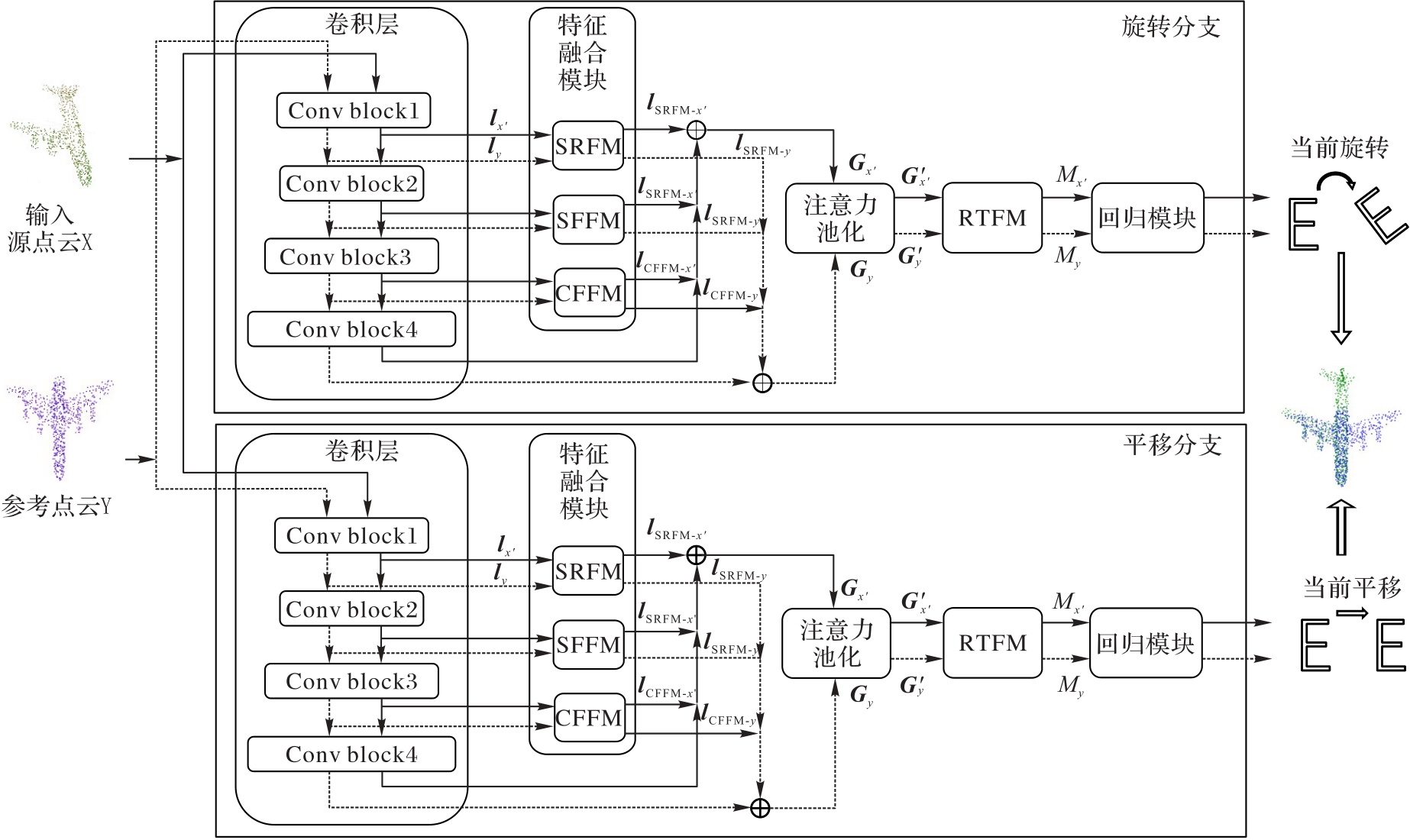
Fig. 1 Framework of DMFNet
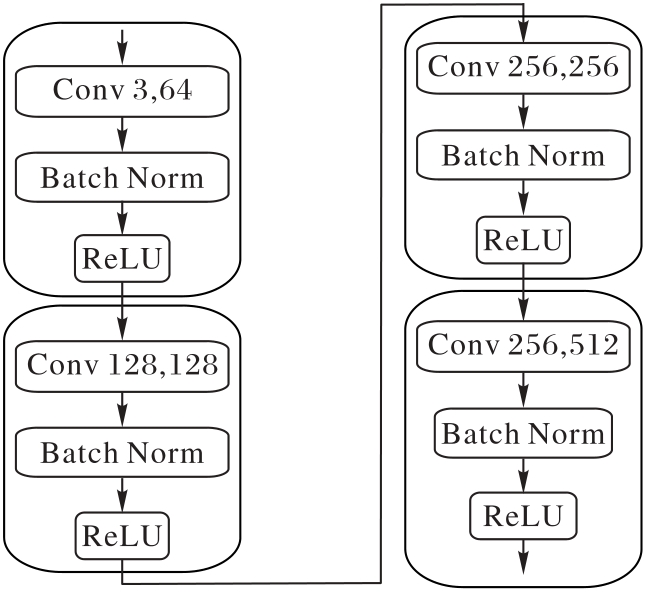
Fig. 2 Convolutional layer
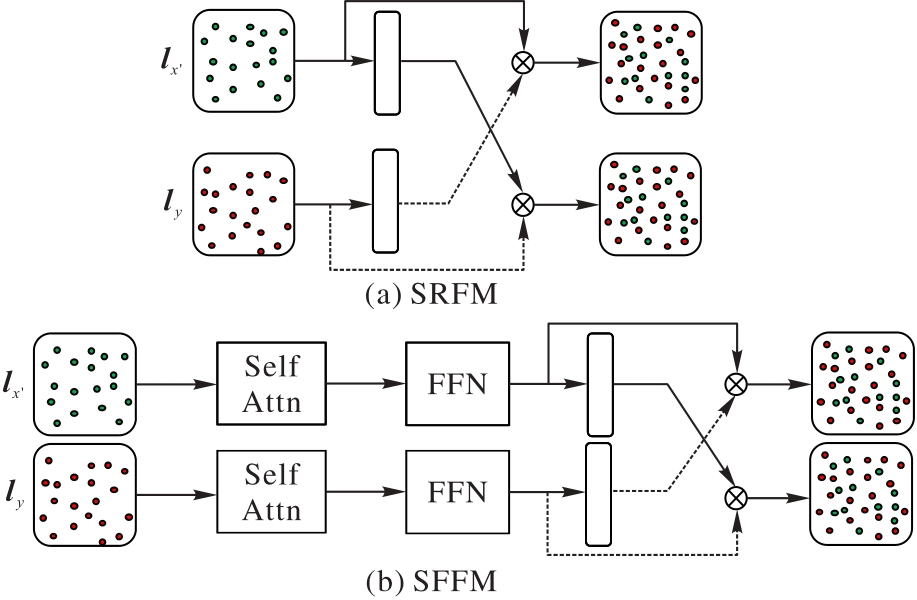
Fig. 3 SRFM and SFFM feature fusion modules
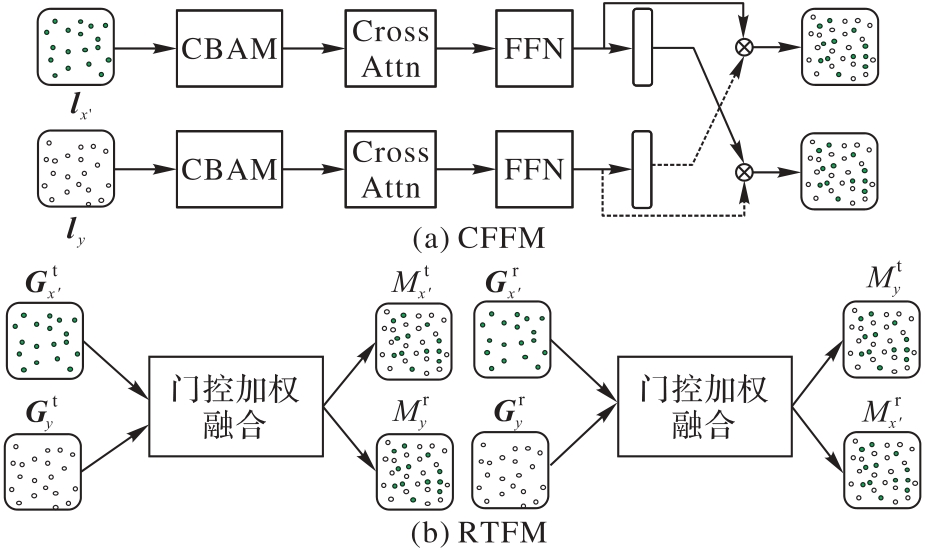
Fig. 4 CFFM and RTFM feature fusion modules

Fig. 5 Structure of regression module
| 方法 | RMSE(R) | RMSE(t) | MAE(R) | MAE(t) | Error(R) | Error(t) | ||||||
|---|---|---|---|---|---|---|---|---|---|---|---|---|
| OS | TS | OS | TS | OS | TS | OS | TS | OS | TS | OS | TS | |
| PointNetLK | 22.666 | 26.354 | 0.235 8 | 0.263 1 | 14.062 | 19.256 | 0.161 1 | 0.168 9 | 28.359 | 36.265 | 0.341 2 | 0.359 5 |
| DCP | 12.315 | 12.356 | 0.069 9 | 0.086 9 | 9.135 | 8.956 | 0.056 2 | 0.058 3 | 7.754 | 9.165 | 0.102 8 | 0.134 2 |
| RPMNet | 1.356 | 2.247 | 0.022 5 | 0.027 6 | 0.729 | 1.165 | 0.008 5 | 0.014 2 | 1.446 | 2.256 | 0.019 1 | 0.031 1 |
| RGM | 3.511 | 4.977 | 0.040 4 | 0.048 9 | 1.301 | 1.810 | 0.014 1 | 0.019 5 | 2.506 | 3.523 | 0.029 1 | 0.039 1 |
| OMNet | 0.773 | 1.391 | 0.015 2 | 0.023 1 | 0.271 | 0.569 | 0.005 6 | 0.009 5 | 0.556 | 1.121 | 0.012 1 | 0.019 7 |
| MAC | 0.761 | 0.985 | 0.013 3 | 0.020 3 | 0.248 | 0.487 | 0.005 1 | 0.009 0 | 0.485 | 0.956 | 0.010 3 | 0.017 1 |
| FINet | 0.735 | 1.288 | 0.011 5 | 0.019 5 | 0.231 | 0.357 | 0.003 5 | 0.006 1 | 0.497 | 0.710 | 0.008 1 | 0.014 9 |
| DMFNet | 0.731 | 0.823 | 0.011 2 | 0.019 2 | 0.228 | 0.356 | 0.003 1 | 0.006 9 | 0.452 | 0.703 | 0.007 9 | 0.014 1 |
Tab. 1 Experimental results on unseen point clouds
| 方法 | RMSE(R) | RMSE(t) | MAE(R) | MAE(t) | Error(R) | Error(t) | ||||||
|---|---|---|---|---|---|---|---|---|---|---|---|---|
| OS | TS | OS | TS | OS | TS | OS | TS | OS | TS | OS | TS | |
| PointNetLK | 22.666 | 26.354 | 0.235 8 | 0.263 1 | 14.062 | 19.256 | 0.161 1 | 0.168 9 | 28.359 | 36.265 | 0.341 2 | 0.359 5 |
| DCP | 12.315 | 12.356 | 0.069 9 | 0.086 9 | 9.135 | 8.956 | 0.056 2 | 0.058 3 | 7.754 | 9.165 | 0.102 8 | 0.134 2 |
| RPMNet | 1.356 | 2.247 | 0.022 5 | 0.027 6 | 0.729 | 1.165 | 0.008 5 | 0.014 2 | 1.446 | 2.256 | 0.019 1 | 0.031 1 |
| RGM | 3.511 | 4.977 | 0.040 4 | 0.048 9 | 1.301 | 1.810 | 0.014 1 | 0.019 5 | 2.506 | 3.523 | 0.029 1 | 0.039 1 |
| OMNet | 0.773 | 1.391 | 0.015 2 | 0.023 1 | 0.271 | 0.569 | 0.005 6 | 0.009 5 | 0.556 | 1.121 | 0.012 1 | 0.019 7 |
| MAC | 0.761 | 0.985 | 0.013 3 | 0.020 3 | 0.248 | 0.487 | 0.005 1 | 0.009 0 | 0.485 | 0.956 | 0.010 3 | 0.017 1 |
| FINet | 0.735 | 1.288 | 0.011 5 | 0.019 5 | 0.231 | 0.357 | 0.003 5 | 0.006 1 | 0.497 | 0.710 | 0.008 1 | 0.014 9 |
| DMFNet | 0.731 | 0.823 | 0.011 2 | 0.019 2 | 0.228 | 0.356 | 0.003 1 | 0.006 9 | 0.452 | 0.703 | 0.007 9 | 0.014 1 |
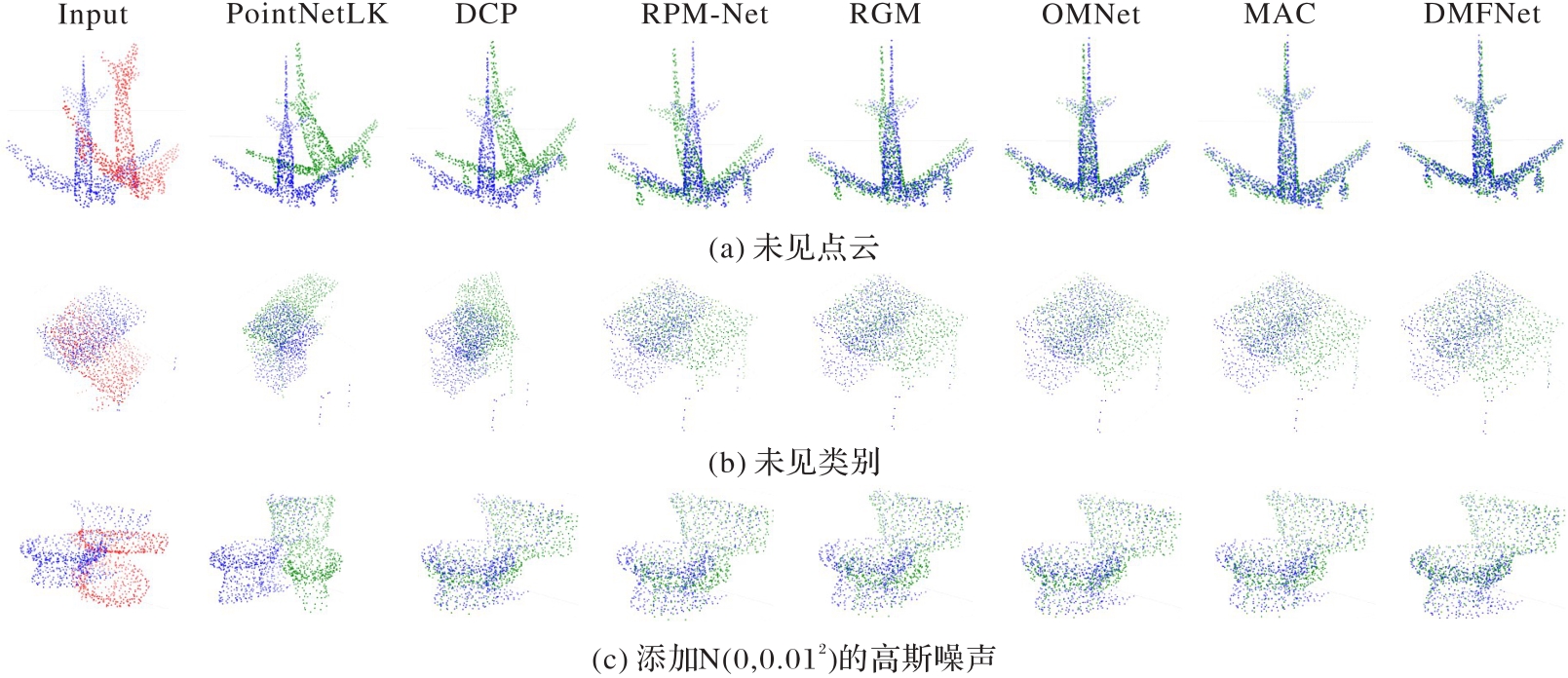
Fig. 6 Registration visualization results on ModelNet40 dataset
| 方法 | RMSE(R) | RMSE(t) | MAE(R) | MAE(t) | Error(R) | Error(t) | ||||||
|---|---|---|---|---|---|---|---|---|---|---|---|---|
| OS | TS | OS | TS | OS | TS | OS | TS | OS | TS | OS | TS | |
| PointNetLK | 26.911 | 45.265 | 0.252 5 | 0.356 2 | 18.658 | 28.456 | 0.175 3 | 0.231 5 | 36.748 | 53.514 | 0.367 5 | 0.461 2 |
| DCP | 13.521 | 12.956 | 0.082 5 | 0.111 2 | 10.221 | 9.512 | 0.059 6 | 0.075 1 | 12.543 | 11.212 | 0.122 5 | 0.151 1 |
| RPM-Net | 3.938 | 7.546 | 0.044 1 | 0.056 4 | 1.386 | 2.518 | 0.015 1 | 0.026 4 | 2.608 | 4.751 | 0.031 8 | 0.054 6 |
| RGM | 4.986 | 7.359 | 0.040 4 | 0.063 1 | 1.702 | 2.214 | 0.016 8 | 0.023 1 | 3.255 | 4.395 | 0.034 8 | 0.050 2 |
| OMNet | 3.722 | 4.164 | 0.040 3 | 0.042 2 | 1.327 | 1.702 | 0.016 1 | 0.018 1 | 2.666 | 3.258 | 0.033 0 | 0.038 8 |
| MAC | 3.624 | 4.561 | 0.036 8 | 0.038 4 | 1.275 | 1.538 | 0.014 9 | 0.016 8 | 2.586 | 2.914 | 0.031 2 | 0.036 6 |
| FINet | 3.641 | 4.123 | 0.036 4 | 0.041 1 | 1.287 | 1.421 | 0.013 5 | 0.015 7 | 2.514 | 2.697 | 0.029 4 | 0.036 3 |
| DMFNet | 3.361 | 3.845 | 0.032 9 | 0.034 1 | 1.251 | 1.395 | 0.012 8 | 0.015 5 | 2.462 | 2.687 | 0.028 8 | 0.033 0 |
Tab. 2 Experimental results on unseen categories
| 方法 | RMSE(R) | RMSE(t) | MAE(R) | MAE(t) | Error(R) | Error(t) | ||||||
|---|---|---|---|---|---|---|---|---|---|---|---|---|
| OS | TS | OS | TS | OS | TS | OS | TS | OS | TS | OS | TS | |
| PointNetLK | 26.911 | 45.265 | 0.252 5 | 0.356 2 | 18.658 | 28.456 | 0.175 3 | 0.231 5 | 36.748 | 53.514 | 0.367 5 | 0.461 2 |
| DCP | 13.521 | 12.956 | 0.082 5 | 0.111 2 | 10.221 | 9.512 | 0.059 6 | 0.075 1 | 12.543 | 11.212 | 0.122 5 | 0.151 1 |
| RPM-Net | 3.938 | 7.546 | 0.044 1 | 0.056 4 | 1.386 | 2.518 | 0.015 1 | 0.026 4 | 2.608 | 4.751 | 0.031 8 | 0.054 6 |
| RGM | 4.986 | 7.359 | 0.040 4 | 0.063 1 | 1.702 | 2.214 | 0.016 8 | 0.023 1 | 3.255 | 4.395 | 0.034 8 | 0.050 2 |
| OMNet | 3.722 | 4.164 | 0.040 3 | 0.042 2 | 1.327 | 1.702 | 0.016 1 | 0.018 1 | 2.666 | 3.258 | 0.033 0 | 0.038 8 |
| MAC | 3.624 | 4.561 | 0.036 8 | 0.038 4 | 1.275 | 1.538 | 0.014 9 | 0.016 8 | 2.586 | 2.914 | 0.031 2 | 0.036 6 |
| FINet | 3.641 | 4.123 | 0.036 4 | 0.041 1 | 1.287 | 1.421 | 0.013 5 | 0.015 7 | 2.514 | 2.697 | 0.029 4 | 0.036 3 |
| DMFNet | 3.361 | 3.845 | 0.032 9 | 0.034 1 | 1.251 | 1.395 | 0.012 8 | 0.015 5 | 2.462 | 2.687 | 0.028 8 | 0.033 0 |
| 方法 | RMSE(R) | MAE(R) | RMSE(t) | MAE(t) | Error(R) | Error(t) | ||||||
|---|---|---|---|---|---|---|---|---|---|---|---|---|
| OS | TS | OS | TS | OS | TS | OS | TS | OS | TS | OS | TS | |
| PointNetLK | 25.482 | 28.654 | 19.299 | 21.456 | 0.256 2 | 0.256 2 | 0.186 6 | 0.195 4 | 37.699 | 42.564 | 0.385 5 | 0.395 6 |
| DCP | 13.956 | 12.546 | 10.256 | 9.852 | 0.079 8 | 0.101 2 | 0.061 5 | 0.078 4 | 12.021 | 12.425 | 0.125 6 | 0.154 5 |
| RPMNet | 4.117 | 6.212 | 1.589 | 2.412 | 0.047 1 | 0.064 2 | 0.018 1 | 0.028 6 | 2.985 | 4.985 | 0.038 8 | 0.054 6 |
| RGM | 5.968 | 6.452 | 2.459 | 3.123 | 0.057 9 | 0.065 4 | 0.025 0 | 0.031 2 | 4.769 | 6.523 | 0.051 6 | 0.062 3 |
| OMNet | 3.571 | 4.414 | 1.580 | 1.952 | 0.039 1 | 0.048 8 | 0.017 7 | 0.022 2 | 3.072 | 3.845 | 0.035 3 | 0.043 2 |
| MAC | 3.501 | 4.121 | 1.426 | 1.812 | 0.036 6 | 0.046 9 | 0.017 2 | 0.019 8 | 2.885 | 3.688 | 0.033 1 | 0.040 2 |
| FINet | 3.754 | 3.956 | 1.395 | 1.691 | 0.034 0 | 0.037 4 | 0.014 9 | 0.017 6 | 2.771 | 3.264 | 0.031 6 | 0.036 6 |
| DMFNet | 3.415 | 3.741 | 1.369 | 1.689 | 0.033 9 | 0.036 9 | 0.015 9 | 0.017 9 | 2.662 | 3.154 | 0.030 0 | 0.035 5 |
Tab. 3 Experimental results with adding Gaussian noise
| 方法 | RMSE(R) | MAE(R) | RMSE(t) | MAE(t) | Error(R) | Error(t) | ||||||
|---|---|---|---|---|---|---|---|---|---|---|---|---|
| OS | TS | OS | TS | OS | TS | OS | TS | OS | TS | OS | TS | |
| PointNetLK | 25.482 | 28.654 | 19.299 | 21.456 | 0.256 2 | 0.256 2 | 0.186 6 | 0.195 4 | 37.699 | 42.564 | 0.385 5 | 0.395 6 |
| DCP | 13.956 | 12.546 | 10.256 | 9.852 | 0.079 8 | 0.101 2 | 0.061 5 | 0.078 4 | 12.021 | 12.425 | 0.125 6 | 0.154 5 |
| RPMNet | 4.117 | 6.212 | 1.589 | 2.412 | 0.047 1 | 0.064 2 | 0.018 1 | 0.028 6 | 2.985 | 4.985 | 0.038 8 | 0.054 6 |
| RGM | 5.968 | 6.452 | 2.459 | 3.123 | 0.057 9 | 0.065 4 | 0.025 0 | 0.031 2 | 4.769 | 6.523 | 0.051 6 | 0.062 3 |
| OMNet | 3.571 | 4.414 | 1.580 | 1.952 | 0.039 1 | 0.048 8 | 0.017 7 | 0.022 2 | 3.072 | 3.845 | 0.035 3 | 0.043 2 |
| MAC | 3.501 | 4.121 | 1.426 | 1.812 | 0.036 6 | 0.046 9 | 0.017 2 | 0.019 8 | 2.885 | 3.688 | 0.033 1 | 0.040 2 |
| FINet | 3.754 | 3.956 | 1.395 | 1.691 | 0.034 0 | 0.037 4 | 0.014 9 | 0.017 6 | 2.771 | 3.264 | 0.031 6 | 0.036 6 |
| DMFNet | 3.415 | 3.741 | 1.369 | 1.689 | 0.033 9 | 0.036 9 | 0.015 9 | 0.017 9 | 2.662 | 3.154 | 0.030 0 | 0.035 5 |
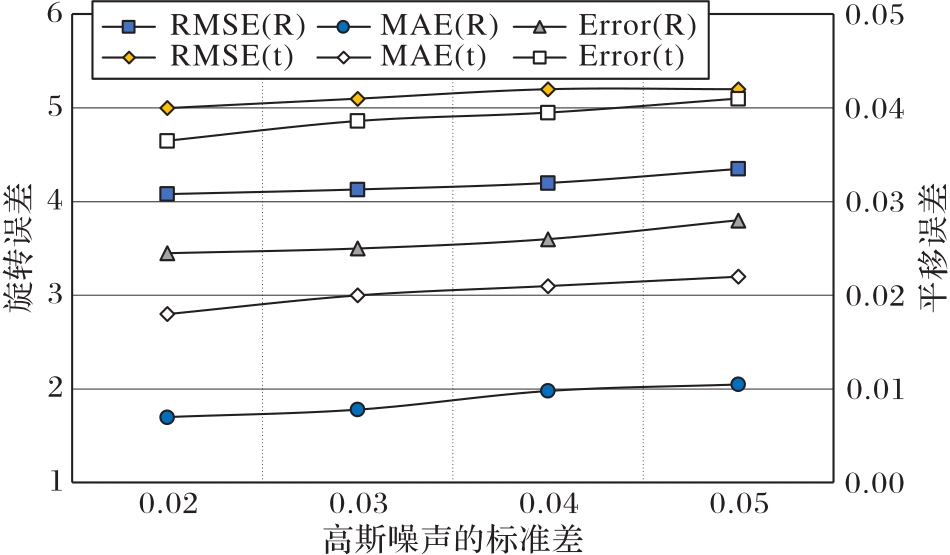
Fig. 7 Experimental results under different levels of Gaussian noise
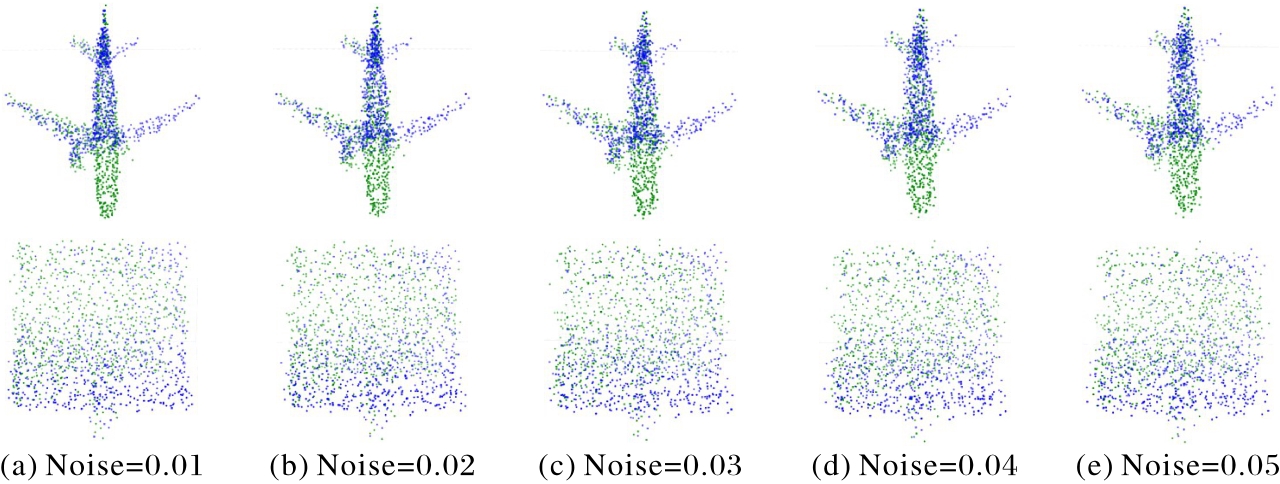
Fig. 8 Visualization results under different levels of Gaussian noise
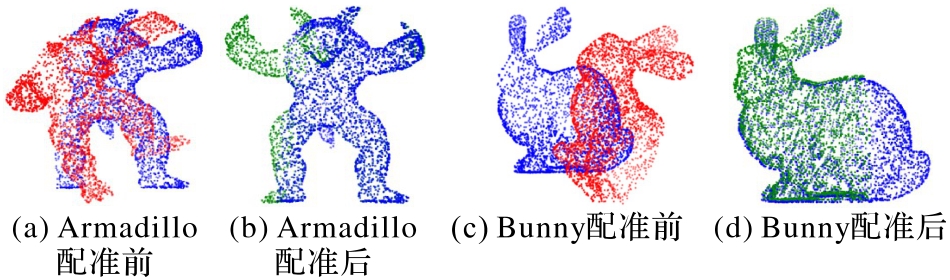
Fig. 9 Registration visualization results on Stanford dataset
| 模型 | RMSE(R) | RMSE(t) | MAE(R) | MAE(t) | Error(R) | Error(t) |
|---|---|---|---|---|---|---|
| Armadillo | 1.445 | 0.008 8 | 0.438 | 0.011 1 | 1.322 | 0.009 5 |
| Bunny | 1.429 | 0.008 5 | 0.420 | 0.010 9 | 1.317 | 0.009 3 |
Tab. 4 Experimental results on Stanford dataset
| 模型 | RMSE(R) | RMSE(t) | MAE(R) | MAE(t) | Error(R) | Error(t) |
|---|---|---|---|---|---|---|
| Armadillo | 1.445 | 0.008 8 | 0.438 | 0.011 1 | 1.322 | 0.009 5 |
| Bunny | 1.429 | 0.008 5 | 0.420 | 0.010 9 | 1.317 | 0.009 3 |
| Branch | RMSE(R) | RMSE(t) | Error(R) | Error(t) |
|---|---|---|---|---|
| Single Branch | 5.323 | 0.054 8 | 5.174 | 0.072 5 |
| Dual Branches | 5.135 | 0.052 2 | 4.943 | 0.071 1 |
Tab. 5 Branch ablation experiment results
| Branch | RMSE(R) | RMSE(t) | Error(R) | Error(t) |
|---|---|---|---|---|
| Single Branch | 5.323 | 0.054 8 | 5.174 | 0.072 5 |
| Dual Branches | 5.135 | 0.052 2 | 4.943 | 0.071 1 |
| 序号 | SRFM | SFFM | CFFM | RTFM | Lpose | Ltriplet | Ldropout | RMSE(R) | RMSE(t) | Error(R) | Error(t) |
|---|---|---|---|---|---|---|---|---|---|---|---|
| 1 | 5.135 | 0.052 2 | 4.943 | 0.071 1 | |||||||
| 2 | √ | 4.911 | 0.049 8 | 4.661 | 0.068 6 | ||||||
| 3 | √ | √ | 4.394 | 0.046 2 | 4.134 | 0.057 6 | |||||
| 4 | √ | √ | √ | 3.965 | 0.040 9 | 3.435 | 0.045 1 | ||||
| 5 | √ | √ | √ | √ | 3.518 | 0.036 2 | 2.913 | 0.036 5 | |||
| 6 | √ | √ | √ | √ | √ | 3.484 | 0.035 7 | 2.806 | 0.034 8 | ||
| 7 | √ | √ | √ | √ | √ | √ | 3.429 | 0.034 8 | 2.701 | 0.031 5 | |
| 8 | √ | √ | √ | √ | √ | √ | √ | 3.415 | 0.033 9 | 2.662 | 0.030 0 |
Tab. 6 Ablation experiment results of feature fusion module and loss function
| 序号 | SRFM | SFFM | CFFM | RTFM | Lpose | Ltriplet | Ldropout | RMSE(R) | RMSE(t) | Error(R) | Error(t) |
|---|---|---|---|---|---|---|---|---|---|---|---|
| 1 | 5.135 | 0.052 2 | 4.943 | 0.071 1 | |||||||
| 2 | √ | 4.911 | 0.049 8 | 4.661 | 0.068 6 | ||||||
| 3 | √ | √ | 4.394 | 0.046 2 | 4.134 | 0.057 6 | |||||
| 4 | √ | √ | √ | 3.965 | 0.040 9 | 3.435 | 0.045 1 | ||||
| 5 | √ | √ | √ | √ | 3.518 | 0.036 2 | 2.913 | 0.036 5 | |||
| 6 | √ | √ | √ | √ | √ | 3.484 | 0.035 7 | 2.806 | 0.034 8 | ||
| 7 | √ | √ | √ | √ | √ | √ | 3.429 | 0.034 8 | 2.701 | 0.031 5 | |
| 8 | √ | √ | √ | √ | √ | √ | √ | 3.415 | 0.033 9 | 2.662 | 0.030 0 |
| [1] | Chen X, Ma H, Wan J, et al. Multi-view 3D object detection network for autonomous driving[C]// CVPR 2017. Piscataway: IEEE, 2017: 6526-6534. |
| [2] | Geiger A, Lenz P, Urtasun R. Are we ready for autonomous driving? the KITTI vision benchmark suite[C]// CVPR 2012. Piscataway: IEEE, 2012: 3354-3361. |
| [3] | Yurtsever E, Lambert J, Carballo A, et al. A survey of autonomous driving: common practices and emerging technologies [J]. IEEE Access, 2020, 8: 58443-58469. |
| [4] | 单明亮,叶俊,严鹏,等. MSC-Net:基于多尺度一致性的点云配准网络[J]. 激光与光电子学进展, 2025, 62(14): No.1428003. |
| Shan Mingliang, Ye Jun, Yan Peng, et al. MSC-Net: multi-scale coherence-based point cloud registration network[J]. Laser and Optoelectronics Progress, 2025, 62(14): No.1428003. | |
| [5] | 谭耀昌,杨俊伟,李昆洋,等. 基于角度约束和极大团的点云配准算法[J]. 激光与光电子学进展, 2025, 62(12): No.1215012. |
| Tan Yaochang, Yang Junwei, Li Kunyang, et al. Point cloud registration algorithm based on angle constraint and maximal clique[J]. Laser and Optoelectronics Progress, 2025, 62(12): No.1215012. | |
| [6] | Izadinia H, Seitz S M. Scene recomposition by learning-based ICP[C]// CVPR 2020. Piscataway: IEEE, 2020: 927-936. |
| [7] | Rusinkiewicz S, Levoy M. Efficient variants of the ICP algorithm[C]// 3DIM 2001. Piscataway: IEEE, 2001: 145-152. |
| [8] | Yang J, Li H, Campbell D, et al. Go-ICP: a globally optimal solution to 3D ICP point-set registration[J]. IEEE Transactions on Pattern Analysis and Machine Intelligence, 2016, 38(11): 2241-2254. |
| [9] | Wang Y, Sun Y, Liu Z, et al. Dynamic graph CNN for learning on point clouds[J]. ACM Transactions on Graphics, 2019, 38(5): No.146. |
| [10] | Aoki Y, Goforth H, Srivatsan R A, et al. PointNetLK: robust and efficient point cloud registration using PointNet[C]// CVPR 2019. Piscataway: IEEE, 2019: 7156-7165. |
| [11] | Qi C R, Su H, Mo K, et al. PointNet: deep learning on point sets for 3D classification and segmentation[C]// CVPR 2017. Piscataway: IEEE, 2017: 77-85. |
| [12] | Yuan W, Eckart B, Kim K, et al. DeepGMR: learning latent gaussian mixture models for registration[C]// ECCV 2020, LNCS 12350. Cham: Springer, 2020: 733-750. |
| [13] | 秦庭威,赵鹏程,秦品乐,等. 基于残差注意力机制的点云配准算法[J]. 计算机应用, 2022, 42(7): 2184-2191. |
| Qin Tingwei, Zhao Pengcheng, Qin Pinle, et al. Point cloud registration algorithm based on residual attention mechanism[J]. Journal of Computer Applications, 2022, 42(7): 2184-2191. | |
| [14] | 梁杰涛,罗兵,付兰慧,等. 基于坐标几何采样的点云配准方法[J]. 计算机应用, 2025, 45(1): 214-222. |
| Liang Jietao, Luo Bing, Fu Lanhui, et al. Point cloud registration method based on coordinate geometric sampling[J]. Journal of Computer Applications, 2025, 45(1): 214-222. | |
| [15] | Yew Z J, Lee G H. RPM-Net: robust point matching using learned features[C]// CVPR 2020. Piscataway: IEEE, 2020: 11821-11830. |
| [16] | Sarode V, Li X, Goforth H, et al. PCRNet: point cloud registration network using PointNet encoding[PP/OL]. V2. arXiv (2019-11-04) [2025-09-22].. |
| [17] | Wang Y, Solomon J. PRNet: self-supervised learning for partial-to-partial registration[C]// NeurIPS 2019. Red Hook: Curran Associates Inc., 2019: 8714-8826. |
| [18] | Vaswani A, Shazeer N, Parmar N, et al. Attention is all you need[C]// NeurIPS 2017. Red Hook: Curran Associates Inc., 2017: 6000-6010. |
| [19] | Mei G, Tang H, Huang X, et al. Unsupervised deep probabilistic approach for partial point cloud registration[C]// CVPR 2023. Piscataway: IEEE, 2023: 13611-13620. |
| [20] | Wang Y, Solomon J. Deep closest point: learning representations for point cloud registration[C]// ICCV 2019. Piscataway: IEEE, 2019: 3522-3531. |
| [21] | Shi C, Chen X, Huang K, et al. Keypoint matching for point cloud registration using multiplex dynamic graph attention networks[J]. IEEE Robotics and Automation Letters, 2021, 6(4): 8221-8228. |
| [22] | Fu K, Liu S, Luo X, et al. Robust point cloud registration framework based on deep graph matching[C]// CVPR 2021. Piscataway: IEEE, 2021: 8889-8898. |
| [23] | Yew Z J, Lee G H. REGTR: end-to-end point cloud correspondences with Transformers[C]// CVPR 2022. Piscataway: IEEE, 2022: 6667-6676. |
| [24] | Zhang X, Yang J, Zhang S, et al. 3D registration with maximal cliques[C]// CVPR 2023. Piscataway: IEEE, 2023: 17745-17754. |
| [25] | 喇孝伟,胡立华,胡建华,等. 融合位置编码和重叠掩模的低重叠点云配准网络[J]. 计算机应用, 2026, 46(2): 536-545. |
| Xiaowei La, Hu Lihua, Hu Jianwei, et al. Low-overlap point cloud registration network integrating position encoding and overlapping masks[J]. Journal of Computer Applications, 2026, 46(2): 536-545. | |
| [26] | Li Y, Bu R, Sun M, et al. PointCNN: convolution on X-transformed points[C]// NeurIPS 2018. Red Hook: Curran Associates Inc., 2018: 828-838. |
| [27] | Xu H, Ye N, Liu G, et al. FINet: dual branches feature interaction for partial-to-partial point cloud registration[J]. Proceedings of the AAAI Conference on Artificial Intelligence, 2022, 36(3): 2848-2856. |
| [28] | Woo S H, Park J, Lee J Y, et al. CBAM: convolutional block attention module[C]// ECCV 2018, LNCS 11211. Cham: Springer, 2018: 3-19. |
| [29] | Shoemake K. Animating rotation with quaternion curves[C]// SIGGRAPH 1985. New York: ACM, 1985: 245-254. |
| [30] | Kingma D P, Ba J L. Adam: a method for stochastic optimization[PP/OL]. V9. arXiv (2017-01-30) [2026-06-20].. |
| [31] | Wu Z, Song S, Khosla A, et al. 3D ShapeNets: a deep representation for volumetric shapes[C]// CVPR 2015. Piscataway: IEEE, 2015: 1912-1920. |
| [32] | Curless B, Levoy M. A volumetric method for building complex models from range images[C]// SIGGRAPH 1996. New York: ACM, 1996: 303-312. |
| [1] | Guanghui LI, Licheng QU. Dynamic dilated convolution and hierarchical local-global attention model based on improved Lite-Mono architecture [J]. Journal of Computer Applications, 2026, 46(8): 2567-2576. |
| [2] | Xiaojin GUO, Xuyang SUI, Kenan ZHOU. Channel estimation of STAR-RIS-assisted hybrid-field communication system based on deep learning [J]. Journal of Computer Applications, 2026, 46(8): 2548-2554. |
| [3] | Jing LIU, Shaoze ZHAO, Xingang LIU, Haozhe NIU, Haipeng JI. Cross-condition microstructure data generation method for titanium alloys based on improved CGAN [J]. Journal of Computer Applications, 2026, 46(7): 2373-2382. |
| [4] | Miaogen LING, Rui JING, Wei FANG. Survey of research on applications of explainable deep learning in tropical cyclone forecasting [J]. Journal of Computer Applications, 2026, 46(7): 2318-2326. |
| [5] | Jianqiang YAN, Beibei DONG, Boting QU, Chen PENG. Bi-directional diffusion dynamic graph convolutional network with multi-source information fusion and graph-level attention for traffic flow prediction [J]. Journal of Computer Applications, 2026, 46(7): 2327-2333. |
| [6] | Xiuli DU, Xing GAO, Xiaoyu ZHANG, Chengsheng PAN, Qijie ZOU. Video snapshot compressive imaging reconstruction method based on dense spatio-temporal deformable attention [J]. Journal of Computer Applications, 2026, 46(7): 2288-2296. |
| [7] | Guoyou ZHANG, Hongyu NIE, Lihu PAN, Rundong LEI. Point-MLPBLS: point cloud semantic segmentation network based on MLP cascaded broad learning system [J]. Journal of Computer Applications, 2026, 46(7): 2259-2266. |
| [8] | Xiangyi WU, Hailiang YE, Feilong CAO. Point cloud completion method based on smooth-sharpen graph convolution [J]. Journal of Computer Applications, 2026, 46(7): 2267-2276. |
| [9] | Wenling LIU, Yong LI, Jiahui LI, Houkang ZHANG. Unsupervised dehazing method for remote sensing images with non-uniform haze [J]. Journal of Computer Applications, 2026, 46(7): 2297-2306. |
| [10] | Jun QIN, Xintao JIAO, Biqing ZENG. Non-intrusive load monitoring method combining BiLSTM-Transformer and Kolmogorov-Arnold network [J]. Journal of Computer Applications, 2026, 46(6): 2026-2033. |
| [11] | Songhao ZHU, Zhiyun ZHAO, Mengling WANG. Low-light image enhancement network based on lightweight residual and brightness-aware dynamic feature fusion [J]. Journal of Computer Applications, 2026, 46(6): 1936-1946. |
| [12] | Chao LYU, Geyao MA. Lightweight human pose estimation network based on redundant feature suppression [J]. Journal of Computer Applications, 2026, 46(6): 1973-1980. |
| [13] | Jinxiao ZHANG, Chenglong LI, Xinyan GAO, Ming ZHANG. 3D human pose estimation model based on temporal-spatial feature pyramid network and multi-hypothesis interaction mechanism [J]. Journal of Computer Applications, 2026, 46(6): 1965-1972. |
| [14] | Yunping HE, Leichun WANG, Ruirui SONG, Xiangfeng LU, Jinxiang WEI, Xiaomeng LIU. Dual-channel multimodal sentiment analysis model based on contrast invariance and reinforcement specificity [J]. Journal of Computer Applications, 2026, 46(6): 1767-1775. |
| [15] | Liwan YAO, Hailong LIU, Zhangfan ZENG. Frequency-domain driven and diffusion-based fusion for sonar image enhancement algorithm [J]. Journal of Computer Applications, 2026, 46(6): 1947-1955. |
| Viewed | ||||||
|
Full text |
|
|||||
|
Abstract |
|
|||||
