


Journal of Computer Applications ›› 2026, Vol. 46 ›› Issue (10): 3117-3123.DOI: 10.11772/j.issn.1001-9081.2025080945
• Artificial intelligence • Previous Articles
Bing GAO1, Jinzhuo LIN1, Qijie ZOU1( ), Yongqiang YAO2
Received:2025-08-19
Revised:2025-10-07
Accepted:2025-10-16
Online:2025-11-18
Published:2026-10-10
Contact:
Qijie ZOU
About author:GAO Bing, born in 1976, Ph. D., associate professor. His research interests include data mining, big data analysis.Supported by:
高兵1, 林锦卓1, 邹启杰1(), 姚永强2
通讯作者:
邹启杰
作者简介:高兵(1976—),男,黑龙江哈尔滨人,副教授,博士,CCF会员,主要研究方向:数据挖掘、大数据分析基金资助:CLC Number:
Bing GAO, Jinzhuo LIN, Qijie ZOU, Yongqiang YAO. Zero-shot knowledge graph relation prediction method via dual-channel embedding fusion[J]. Journal of Computer Applications, 2026, 46(10): 3117-3123.
高兵, 林锦卓, 邹启杰, 姚永强. 基于双通道嵌入融合的零样本知识图谱关系预测方法[J]. 《计算机应用》唯一官方网站, 2026, 46(10): 3117-3123.
Add to citation manager EndNote|Ris|BibTeX
URL: https://www.joca.cn/EN/10.11772/j.issn.1001-9081.2025080945

Fig. 1 Overall structure of proposed method
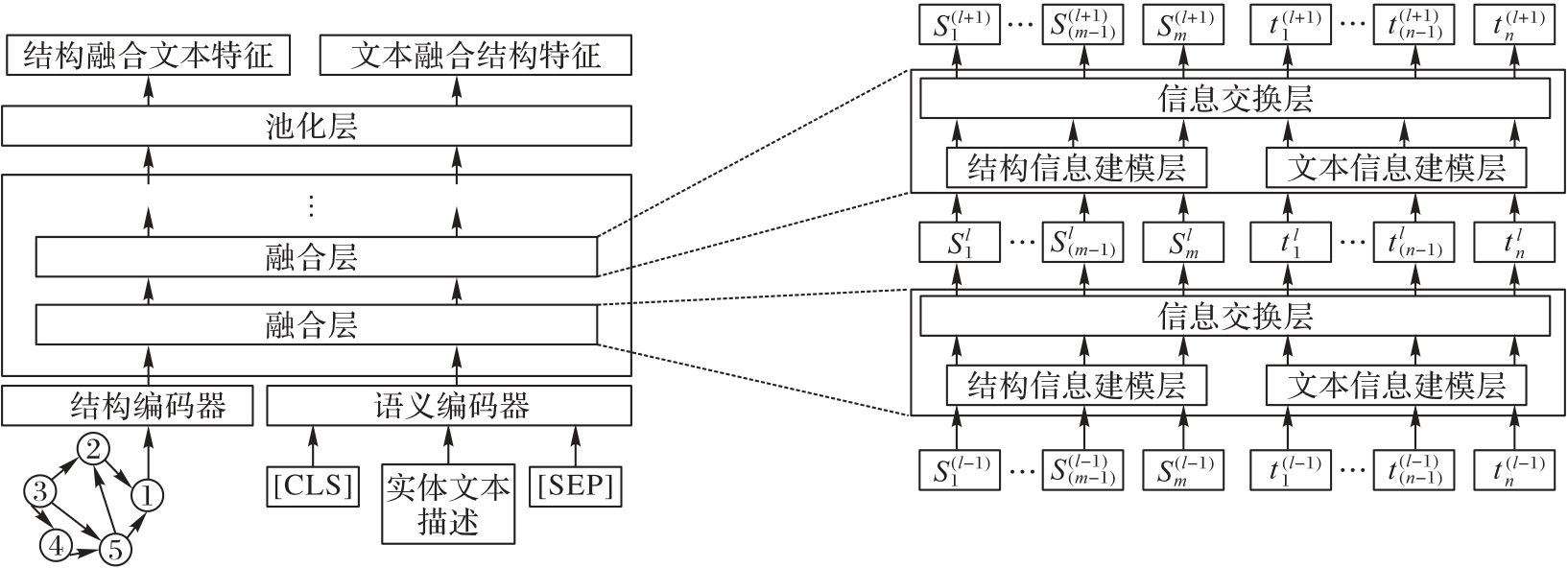
Fig. 2 Dual-channel entity multimodal information fusion module generating multimodal information features of entities
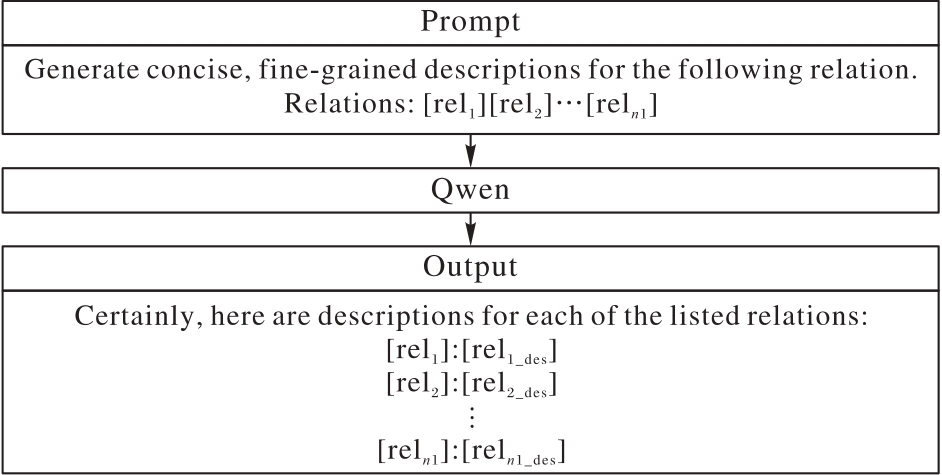
Fig. 3 Prompt for generating enhanced relation descriptions in Qwen model
| 关系 | 增强关系描述 |
|---|---|
member of domain usage | Indicates that a lexical unit (specific word form or expression) is conventionally employed within a pragmatic or linguistic context, such as register (e.g., colloquialism, jargon), grammatical form (e.g., pluralization), or socio-linguistic category (e.g., trademark, archaic term). This relation anchors the usage trait of the term to a functional domain, emphasizing its contextual appropriateness or linguistic convention rather than conceptual taxonomy. |
member of domain region | The relation member of domain region indicates that a specific term, concept, or entity (such as a plant, term, or practice) is associated with or originates from a particular geographical or political region. This relation connects the region to items that are characteristic, native, or commonly found within that area. |
Tab. 1 Examples of enhanced relation descriptions
| 关系 | 增强关系描述 |
|---|---|
member of domain usage | Indicates that a lexical unit (specific word form or expression) is conventionally employed within a pragmatic or linguistic context, such as register (e.g., colloquialism, jargon), grammatical form (e.g., pluralization), or socio-linguistic category (e.g., trademark, archaic term). This relation anchors the usage trait of the term to a functional domain, emphasizing its contextual appropriateness or linguistic convention rather than conceptual taxonomy. |
member of domain region | The relation member of domain region indicates that a specific term, concept, or entity (such as a plant, term, or practice) is associated with or originates from a particular geographical or political region. This relation connects the region to items that are characteristic, native, or commonly found within that area. |
| 数据集 | 实体数 | 三元组数 | 关系数 |
|---|---|---|---|
| NELL_ZS | 65 567 | 188 392 | 139/10/32 |
| WN18RR_ZSL | 40 943 | 87 667 | 6/2/3 |
Tab. 2 Statistics of datasets
| 数据集 | 实体数 | 三元组数 | 关系数 |
|---|---|---|---|
| NELL_ZS | 65 567 | 188 392 | 139/10/32 |
| WN18RR_ZSL | 40 943 | 87 667 | 6/2/3 |
| 方法 | NELL_ZS | WN18RR_ZSL | ||||||
|---|---|---|---|---|---|---|---|---|
| MRR | Hit@10/% | Hit@5/% | Hit@1/% | MRR | Hit@10/% | Hit@5/% | Hit@1/% | |
| ZS_TransE | 0.097 | 20.3 | 14.7 | 4.3 | 0.043 | 10.2 | 6.1 | 0.8 |
| ZS_DistMult | 0.235 | 32.6 | 28.4 | 18.5 | 0.109 | 17.6 | 10.1 | 5.3 |
| ZS_ComplEx | 0.216 | 31.6 | 26.7 | 16.0 | 0.098 | 14.0 | 8.6 | 3.3 |
| StAR | 0.192 | 37.2 | 26.6 | 10.9 | 0.271 | 47.9 | 37.4 | 16.7 |
| ZSGAN | 0.253 | 37.6 | 31.6 | 19.4 | 0.149 | 28.3 | 20.6 | 8.4 |
| Onto-ZSL | 0.256 | 38.5 | 31.8 | 18.8 | — | — | — | — |
| 本文方法(TransE) | 0.343 | 49.4 | 41.1 | 26.6 | 0.337 | 48.7 | 41.3 | 25.9 |
| 本文方法(DistMult) | 0.340 | 49.7 | 41.3 | 25.8 | 0.303 | 47.4 | 38.9 | 21.6 |
Tab. 3 Comparison of results of different methods on NELL_ZS and WN18RR_ZSL datasets
| 方法 | NELL_ZS | WN18RR_ZSL | ||||||
|---|---|---|---|---|---|---|---|---|
| MRR | Hit@10/% | Hit@5/% | Hit@1/% | MRR | Hit@10/% | Hit@5/% | Hit@1/% | |
| ZS_TransE | 0.097 | 20.3 | 14.7 | 4.3 | 0.043 | 10.2 | 6.1 | 0.8 |
| ZS_DistMult | 0.235 | 32.6 | 28.4 | 18.5 | 0.109 | 17.6 | 10.1 | 5.3 |
| ZS_ComplEx | 0.216 | 31.6 | 26.7 | 16.0 | 0.098 | 14.0 | 8.6 | 3.3 |
| StAR | 0.192 | 37.2 | 26.6 | 10.9 | 0.271 | 47.9 | 37.4 | 16.7 |
| ZSGAN | 0.253 | 37.6 | 31.6 | 19.4 | 0.149 | 28.3 | 20.6 | 8.4 |
| Onto-ZSL | 0.256 | 38.5 | 31.8 | 18.8 | — | — | — | — |
| 本文方法(TransE) | 0.343 | 49.4 | 41.1 | 26.6 | 0.337 | 48.7 | 41.3 | 25.9 |
| 本文方法(DistMult) | 0.340 | 49.7 | 41.3 | 25.8 | 0.303 | 47.4 | 38.9 | 21.6 |
| 数据集 | Fusion | LLM | MRR | Hit@10/% | Hit@5/% | Hit@1/% |
|---|---|---|---|---|---|---|
| NELL_ZS | √ | 0.325 | 47.9 | 40.2 | 24.5 | |
| √ | 0.301 | 45.2 | 37.2 | 22.5 | ||
| √ | √ | 0.343 | 49.4 | 41.1 | 26.6 | |
| WN18RR_ZSL | √ | 0.254 | 37.0 | 31.6 | 19.0 | |
| √ | 0.256 | 42.1 | 33.9 | 16.7 | ||
| √ | √ | 0.337 | 48.7 | 41.3 | 25.9 |
Tab. 4 Ablation experimental results
| 数据集 | Fusion | LLM | MRR | Hit@10/% | Hit@5/% | Hit@1/% |
|---|---|---|---|---|---|---|
| NELL_ZS | √ | 0.325 | 47.9 | 40.2 | 24.5 | |
| √ | 0.301 | 45.2 | 37.2 | 22.5 | ||
| √ | √ | 0.343 | 49.4 | 41.1 | 26.6 | |
| WN18RR_ZSL | √ | 0.254 | 37.0 | 31.6 | 19.0 | |
| √ | 0.256 | 42.1 | 33.9 | 16.7 | ||
| √ | √ | 0.337 | 48.7 | 41.3 | 25.9 |
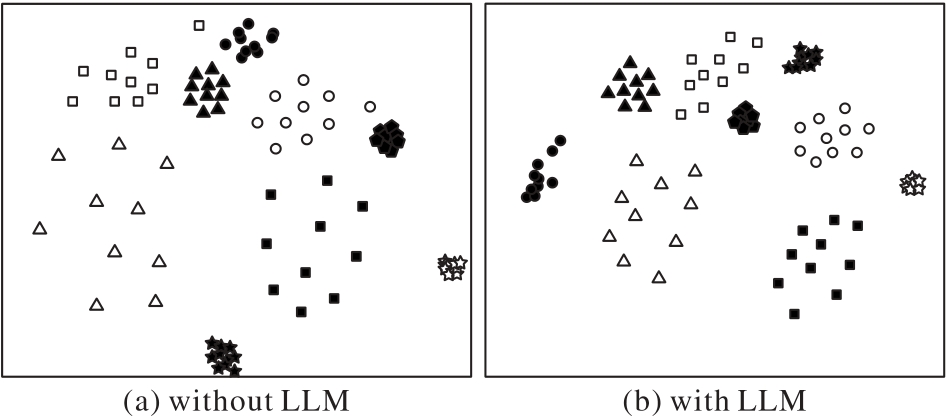
Fig. 4 t-SNE visualization comparison with/without LLM-enhanced relation text representation module on WN18RR_ZSL dataset
| 数据集 | 模型 | MRR | Hit@10/% | Hit@5/% | Hit@1/% |
|---|---|---|---|---|---|
| NELL_ZS | Qwen-MAX | 0.343 | 49.4 | 41.1 | 26.6 |
| Qwen3-30B | 0.320 | 46.7 | 39.1 | 24.4 | |
| WN18RR_ZSL | Qwen-MAX | 0.337 | 48.7 | 41.3 | 25.9 |
| Qwen3-30B | 0.293 | 46.9 | 37.3 | 20.9 |
Tab. 5 Experimental results of enhanced relation text representation generated by LLMs with different parameter scales
| 数据集 | 模型 | MRR | Hit@10/% | Hit@5/% | Hit@1/% |
|---|---|---|---|---|---|
| NELL_ZS | Qwen-MAX | 0.343 | 49.4 | 41.1 | 26.6 |
| Qwen3-30B | 0.320 | 46.7 | 39.1 | 24.4 | |
| WN18RR_ZSL | Qwen-MAX | 0.337 | 48.7 | 41.3 | 25.9 |
| Qwen3-30B | 0.293 | 46.9 | 37.3 | 20.9 |
| [1] | Bollacker K, Evans C, Paritosh P, et al. Freebase: a collaboratively created graph database for structuring human knowledge[C]// SIGMOD 2008. New York: ACM, 2008: 1247-1250. |
| [2] | Suchanek F M, Kasneci G, Weikum G. YAGO: a core of semantic knowledge[C]// WWW 2007. New York: ACM, 2007: 697-706. |
| [3] | Mitchell T, Cohen W, Hruschka E, et al. Never-ending learning[J]. Communications of the ACM, 2018, 61(5): 103-115. |
| [4] | Vrandečić D, Krötzsch M. Wikidata: a free collaborative knowledgebase[J]. Communications of the ACM, 2014, 57(10): 78-85. |
| [5] | Fdez-Díaz M, Quevedo J R, Montañés E. Target inductive methods for zero-shot regression[J]. Information Sciences, 2022, 599: 44-63. |
| [6] | Hao Y, Cao X, Fang Y, et al. Inductive link prediction for nodes having only attribute information[C]// IJCAI 2020. California: IJCAI, 2020: 1209-1215. |
| [7] | 郑修林,周鹏,李培培,等. 知识图谱补全技术及应用[J]. 软件学报, 2025, 36(12): 5599-5628. |
| Zheng Xiulin, Zhou Peng, Li Peipei, et al. Knowledge graph completion: techniques and applications[J]. Journal of Software, 2025, 36(12): 5599-5628. | |
| [8] | Qin P, Wang X, Chen W, et al. Generative adversarial zero-shot relational learning for knowledge graphs[J]. Proceedings of the AAAI Conference on Artificial Intelligence, 2020, 34(5): 8673-8680. |
| [9] | Goodfellow I J, Pouget-Abadie J, Mirza M, et al. Generative adversarial nets[C]// NeurIPS 2014. Cambridge: MIT Press, 2014: 2672-2680. |
| [10] | Geng Y, Chen J, Chen Z, et al. OntoZSL: ontology-enhanced zero-shot learning[C]// WWW 2021. New York: ACM, 2021: 3325-3336. |
| [11] | Yang Y, Hospedales T M. A unified perspective on multi-domain and multi-task learning[PP/OL]. V2. arXiv (2015-03-26) [2025-12-23].. |
| [12] | Ba J L, Swersky K, Fidler S. Predicting deep zero-shot convolutional neural networks using textual descriptions[C]// ICCV 2015. Piscataway: IEEE, 2015: 4247-4255. |
| [13] | Geng Y, Chen J, Zhang W, et al. Disentangled ontology embedding for zero-shot learning[C]// KDD 2022. New York: ACM, 2022: 443-453. |
| [14] | Schlichtkrull M, Kipf T N, Bloem P, et al. Modeling relational data with graph convolutional networks[C]// ESWC 2018, LNCS 10843. Cham: Springer, 2018: 593-607. |
| [15] | Wei Y, Huang Q, Kwok J T, et al. KICGPT: large language model with knowledge in context for knowledge graph completion[C]// Findings of the Association for Computational Linguistics: EMNLP 2023. Stroudsburg: ACL, 2023: 8667-8683. |
| [16] | Bordes A, Usunier N, Garcia-Durán A, et al. Translating embeddings for modeling multi-relational data[C]// NeurIPS 2013. Cambridge: MIT Press, 2013: 2787-2795. |
| [17] | Yang B, Yih W T, He X, et al. Embedding entities and relations for learning and inference in knowledge bases[PP/OL]. V4. arXiv (2015-08-29) [2025-12-20].. |
| [18] | Trouillon T, Welbl J, Riedel S, et al. Complex embeddings for simple link prediction[J]. Proceedings of Machine Learning Research, 2016, 48: 2071-2080. |
| [19] | Wang B, Shen T, Long G, et al. Structure-augmented text representation learning for efficient knowledge graph completion[C]// WWW 2021. New York: ACM, 2021: 1737-1748. |
| [20] | Hinton G E, Roweis S. Stochastic neighbor embedding[C]// NeurIPS 2002. Cambridge: MIT Press, 2002: 857-864. |
| [1] | Xuan CUI, Bo LIU. Unsupervised face attribute editing method based on dynamic convolutional autoencoder [J]. Journal of Computer Applications, 2026, 46(4): 1300-1308. |
| [2] | Haoyang ZHANG, Liping ZHANG, Sheng YAN, Na LI, Xuefei ZHANG. Review of large language model methods for knowledge graph completion [J]. Journal of Computer Applications, 2026, 46(3): 683-695. |
| [3] | Min CHEN, Xiaolin QIN, Shaohan LI, Hao YANG, Taohong LI. Review of deep learning applications in severe convective weather prediction [J]. Journal of Computer Applications, 2026, 46(3): 980-992. |
| [4] | Fei WANG, Ye TAO, Jiawang LIU, Wei LI, Xiugong QIN, Ning ZHANG. Bimodal fusion method for constructing spatio-temporal knowledge graph in smart home space [J]. Journal of Computer Applications, 2026, 46(1): 52-59. |
| [5] | Na FAN, Chuang LUO, Zehui ZHANG, Mengyao ZHANG, Ding MU. Semantic privacy protection mechanism of vehicle trajectory based on improved generative adversarial network [J]. Journal of Computer Applications, 2026, 46(1): 169-180. |
| [6] | Lifang WANG, Wenjing REN, Xiaodong GUO, Rongguo ZHANG, Lihua HU. Trident generative adversarial network for low-dose CT image denoising [J]. Journal of Computer Applications, 2026, 46(1): 270-279. |
| [7] | Yinlong JIAN, Xuebin CHEN, Zhongrui JING, Qi ZHONG, Zhenbo ZHANG. Data augmentation scheme based on conditional generative adversarial network in federated learning [J]. Journal of Computer Applications, 2026, 46(1): 21-32. |
| [8] | Yanan LI, Mengyang GUO, Guojun DENG, Yunfeng CHEN, Jianji REN, Yongliang YUAN. Method for life prediction of parallel branching engine based on multi-modal fusion features [J]. Journal of Computer Applications, 2026, 46(1): 305-313. |
| [9] | Yilin DENG, Fajiang YU. Pseudo random number generator based on LSTM and separable self-attention mechanism [J]. Journal of Computer Applications, 2025, 45(9): 2893-2901. |
| [10] | Jin ZHOU, Yuzhi LI, Xu ZHANG, Shuo GAO, Li ZHANG, Jiachuan SHENG. Modulation recognition network for complex electromagnetic environments [J]. Journal of Computer Applications, 2025, 45(8): 2672-2682. |
| [11] | Ying HUANG, Shengmei GAO, Guang CHEN, Su LIU. Low-light image enhancement network combining signal-to-noise ratio guided dual-branch structure and histogram equalization [J]. Journal of Computer Applications, 2025, 45(6): 1971-1979. |
| [12] | Hui LI, Bingzhi JIA, Chenxi WANG, Ziyu DONG, Jilong LI, Zhaoman ZHONG, Yanyan CHEN. Generative adversarial network underwater image enhancement model based on Swin Transformer [J]. Journal of Computer Applications, 2025, 45(5): 1439-1446. |
| [13] | Sheping ZHAI, Qing YANG, Yan HUANG, Rui YANG. Knowledge graph completion using hierarchical attention fusing directed relationships and relational paths [J]. Journal of Computer Applications, 2025, 45(4): 1148-1156. |
| [14] | Lihu PAN, Shouxin PENG, Rui ZHANG, Zhiyang XUE, Xuzhen MAO. Video anomaly detection for moving foreground regions [J]. Journal of Computer Applications, 2025, 45(4): 1300-1309. |
| [15] | Hong SHANGGUAN, Huiying REN, Xiong ZHANG, Xinglong HAN, Zhiguo GUI, Yanling WANG. Low-dose CT denoising model based on dual encoder-decoder generative adversarial network [J]. Journal of Computer Applications, 2025, 45(2): 624-632. |
| Viewed | ||||||
|
Full text |
|
|||||
|
Abstract |
|
|||||
