


Journal of Computer Applications ›› 2026, Vol. 46 ›› Issue (11): 3448-3456.DOI: 10.11772/j.issn.1001-9081.2025081023
• Artificial intelligence • Previous Articles
Guoliang YANG1, Weijun LI1,2( ), Zhangyou XIONG1, Xiaojuan ZHU1, Xinyu MA1
Received:2025-09-08
Revised:2025-11-11
Accepted:2025-11-26
Online:2025-12-09
Published:2026-11-10
Contact:
Weijun LI
About author:YANG Guoliang, born in 1999, M. S. candidate. His research interests include traffic flow prediction.Supported by:
杨国梁1, 李卫军1,2(), 熊章友1, 朱晓娟1, 马馨瑜1
通讯作者:
李卫军
作者简介:杨国梁(1999—),男,宁夏中卫人,硕士研究生,CCF会员,主要研究方向:交通流量预测基金资助:CLC Number:
Guoliang YANG, Weijun LI, Zhangyou XIONG, Xiaojuan ZHU, Xinyu MA. Traffic flow prediction model based on spatio-temporal attention with decoupled dynamic residual graph convolution[J]. Journal of Computer Applications, 2026, 46(11): 3448-3456.
杨国梁, 李卫军, 熊章友, 朱晓娟, 马馨瑜. 基于时空注意力与解耦动态残差图卷积的交通流量预测模型[J]. 《计算机应用》唯一官方网站, 2026, 46(11): 3448-3456.
Add to citation manager EndNote|Ris|BibTeX
URL: https://www.joca.cn/EN/10.11772/j.issn.1001-9081.2025081023
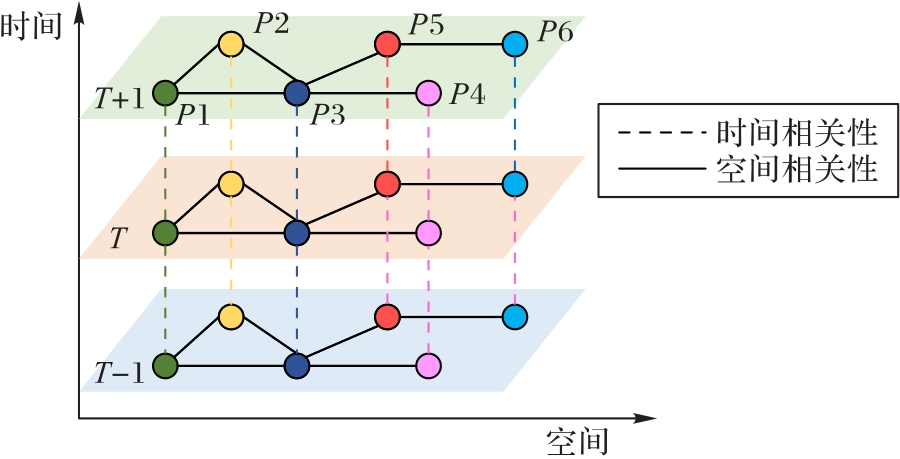
Fig. 1 Complex spatio-temporal correlations
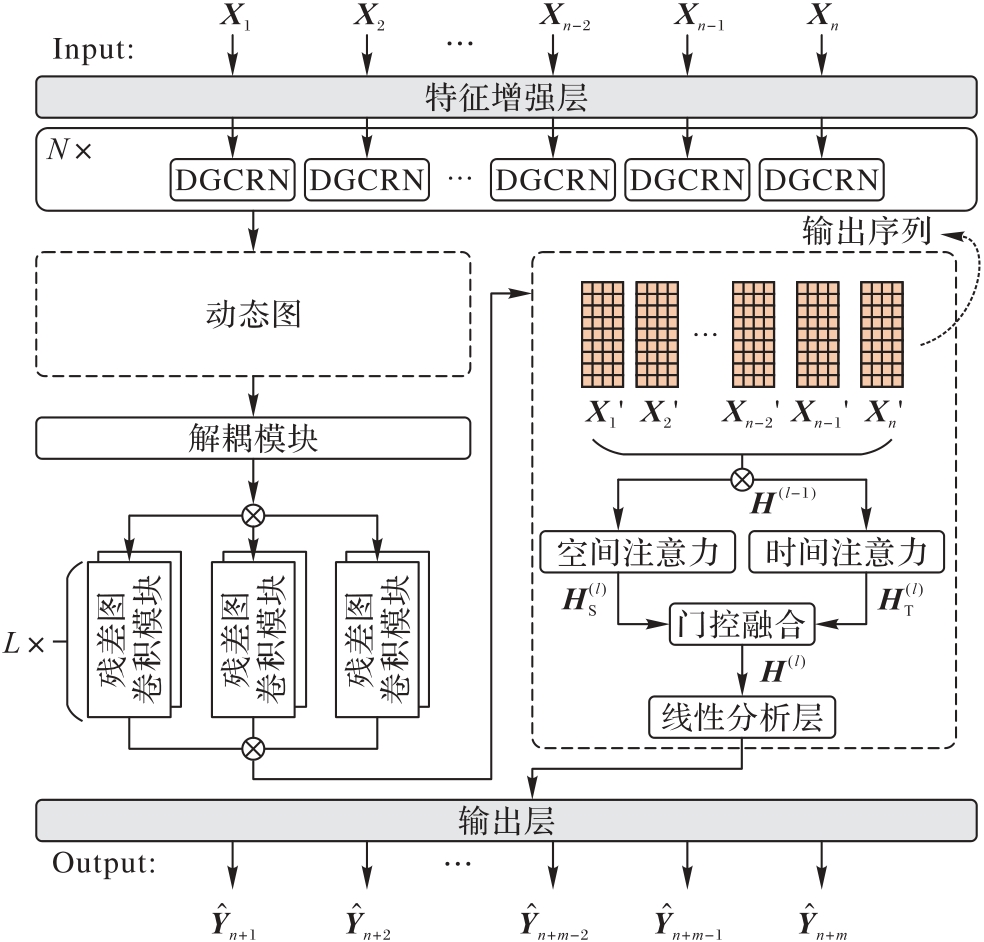
Fig. 2 Structure of STA-DDRGC model
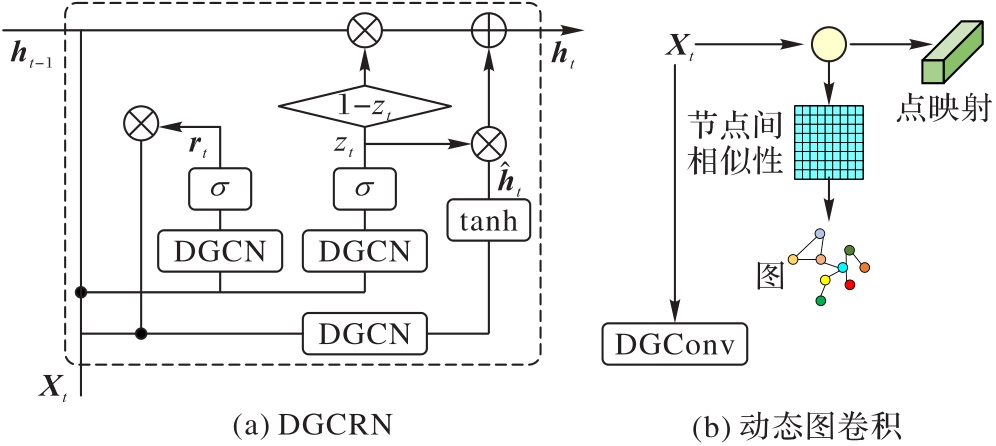
Fig. 3 Structure of DGCRN model
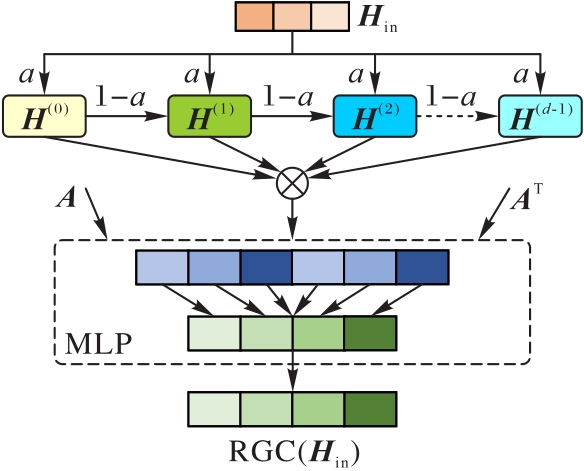
Fig. 4 Structure of RGC module
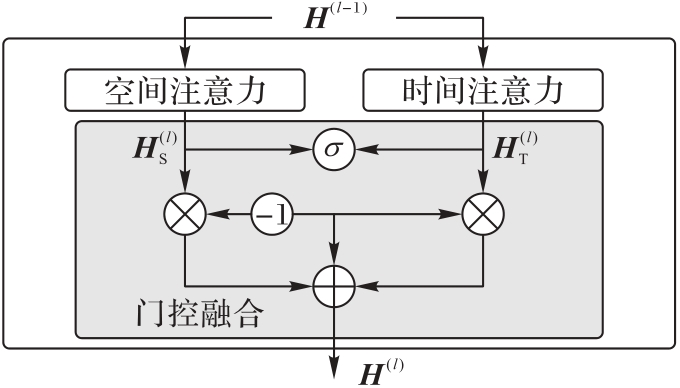
Fig. 5 Spatio-temporal attention module
| 数据集 | 传感器数量 | 时间范围 | 数据量 |
|---|---|---|---|
| PEMS03 | 358 | 2018-09-01—2018-11-30 | 26 208 |
| PEMS04 | 307 | 2018-01-01—2018-02-28 | 16 992 |
| PEMS08 | 170 | 2016-07-01—2016-08-31 | 17 856 |
Tab. 1 Statistics of datasets
| 数据集 | 传感器数量 | 时间范围 | 数据量 |
|---|---|---|---|
| PEMS03 | 358 | 2018-09-01—2018-11-30 | 26 208 |
| PEMS04 | 307 | 2018-01-01—2018-02-28 | 16 992 |
| PEMS08 | 170 | 2016-07-01—2016-08-31 | 17 856 |
| 模 型 | PEMS03 | PEMS04 | PEMS08 | ||||||
|---|---|---|---|---|---|---|---|---|---|
| MAE | RMSE | MAPE/% | MAE | RMSE | MAPE/% | MAE | RMSE | MAPE/% | |
| HA[ | 31.58 | 52.39 | 33.78 | 38.03 | 59.24 | 27.88 | 34.86 | 59.24 | 27.88 |
| VAR[ | 23.65 | 38.26 | 24.51 | 24.54 | 38.61 | 17.24 | 19.19 | 29.81 | 13.10 |
| ARIMA[ | 35.41 | 47.59 | 33.78 | 33.73 | 48.80 | 24.18 | 31.09 | 44.32 | 22.73 |
| Seq2Seq[ | 21.33 | 35.11 | 23.33 | 26.77 | 40.65 | 18.23 | 23.09 | 35.17 | 14.99 |
| DCRNN[ | 17.99 | 30.31 | 18.34 | 21.22 | 33.44 | 14.17 | 16.82 | 26.36 | 10.92 |
| STGCN[ | 17.55 | 30.42 | 17.34 | 21.16 | 34.89 | 13.83 | 17.50 | 27.09 | 11.29 |
| GWNET[ | 19.12 | 32.77 | 18.89 | 24.89 | 39.66 | 17.29 | 18.28 | 30.05 | 12.15 |
| ASTGNN[ | 17.34 | 29.56 | 17.21 | 22.92 | 35.22 | 16.56 | 18.25 | 28.06 | 11.64 |
| LSGCN[ | 17.94 | 29.85 | 16.98 | 21.53 | 33.86 | 13.18 | 17.73 | 26.76 | 11.20 |
| STSGCN[ | 17.48 | 29.21 | 16.78 | 21.19 | 33.65 | 13.90 | 17.13 | 26.80 | 10.96 |
| STFGNN[ | 16.77 | 28.34 | 16.30 | 20.48 | 32.51 | 16.77 | 16.94 | 26.25 | 10.60 |
| STGODE[ | 16.50 | 27.84 | 16.69 | 20.84 | 32.82 | 13.77 | 16.81 | 25.97 | 10.62 |
| AGCRN[ | 15.98 | 28.25 | 15.23 | 19.83 | 32.26 | 12.97 | 15.95 | 25.22 | 10.09 |
| STG-NCDE[ | 15.57 | 27.09 | 15.06 | 19.21 | 31.09 | 12.76 | 15.45 | 24.81 | 9.92 |
| DSTAGNN[ | 15.57 | 27.21 | 14.68 | 19.30 | 31.46 | 12.70 | 15.67 | 24.77 | 9.94 |
| ST-AE[ | 15.44 | 26.29 | 15.20 | 19.74 | 31.14 | 12.40 | 15.96 | 25.03 | 10.34 |
| DDGCRN[ | 25.07 | 18.45 | 30.51 | 12.29 | 14.40 | 23.75 | 9.40 | ||
| SFADNet[ | 14.66 | 15.04 | |||||||
| STA-DDRGC | 14.60 | 24.39 | 14.12 | 18.10 | 30.06 | 11.90 | 13.49 | 23.08 | 8.76 |
Tab. 2 Performance comparison of STA-DDRGC and benchmark models on three datasets
| 模 型 | PEMS03 | PEMS04 | PEMS08 | ||||||
|---|---|---|---|---|---|---|---|---|---|
| MAE | RMSE | MAPE/% | MAE | RMSE | MAPE/% | MAE | RMSE | MAPE/% | |
| HA[ | 31.58 | 52.39 | 33.78 | 38.03 | 59.24 | 27.88 | 34.86 | 59.24 | 27.88 |
| VAR[ | 23.65 | 38.26 | 24.51 | 24.54 | 38.61 | 17.24 | 19.19 | 29.81 | 13.10 |
| ARIMA[ | 35.41 | 47.59 | 33.78 | 33.73 | 48.80 | 24.18 | 31.09 | 44.32 | 22.73 |
| Seq2Seq[ | 21.33 | 35.11 | 23.33 | 26.77 | 40.65 | 18.23 | 23.09 | 35.17 | 14.99 |
| DCRNN[ | 17.99 | 30.31 | 18.34 | 21.22 | 33.44 | 14.17 | 16.82 | 26.36 | 10.92 |
| STGCN[ | 17.55 | 30.42 | 17.34 | 21.16 | 34.89 | 13.83 | 17.50 | 27.09 | 11.29 |
| GWNET[ | 19.12 | 32.77 | 18.89 | 24.89 | 39.66 | 17.29 | 18.28 | 30.05 | 12.15 |
| ASTGNN[ | 17.34 | 29.56 | 17.21 | 22.92 | 35.22 | 16.56 | 18.25 | 28.06 | 11.64 |
| LSGCN[ | 17.94 | 29.85 | 16.98 | 21.53 | 33.86 | 13.18 | 17.73 | 26.76 | 11.20 |
| STSGCN[ | 17.48 | 29.21 | 16.78 | 21.19 | 33.65 | 13.90 | 17.13 | 26.80 | 10.96 |
| STFGNN[ | 16.77 | 28.34 | 16.30 | 20.48 | 32.51 | 16.77 | 16.94 | 26.25 | 10.60 |
| STGODE[ | 16.50 | 27.84 | 16.69 | 20.84 | 32.82 | 13.77 | 16.81 | 25.97 | 10.62 |
| AGCRN[ | 15.98 | 28.25 | 15.23 | 19.83 | 32.26 | 12.97 | 15.95 | 25.22 | 10.09 |
| STG-NCDE[ | 15.57 | 27.09 | 15.06 | 19.21 | 31.09 | 12.76 | 15.45 | 24.81 | 9.92 |
| DSTAGNN[ | 15.57 | 27.21 | 14.68 | 19.30 | 31.46 | 12.70 | 15.67 | 24.77 | 9.94 |
| ST-AE[ | 15.44 | 26.29 | 15.20 | 19.74 | 31.14 | 12.40 | 15.96 | 25.03 | 10.34 |
| DDGCRN[ | 25.07 | 18.45 | 30.51 | 12.29 | 14.40 | 23.75 | 9.40 | ||
| SFADNet[ | 14.66 | 15.04 | |||||||
| STA-DDRGC | 14.60 | 24.39 | 14.12 | 18.10 | 30.06 | 11.90 | 13.49 | 23.08 | 8.76 |
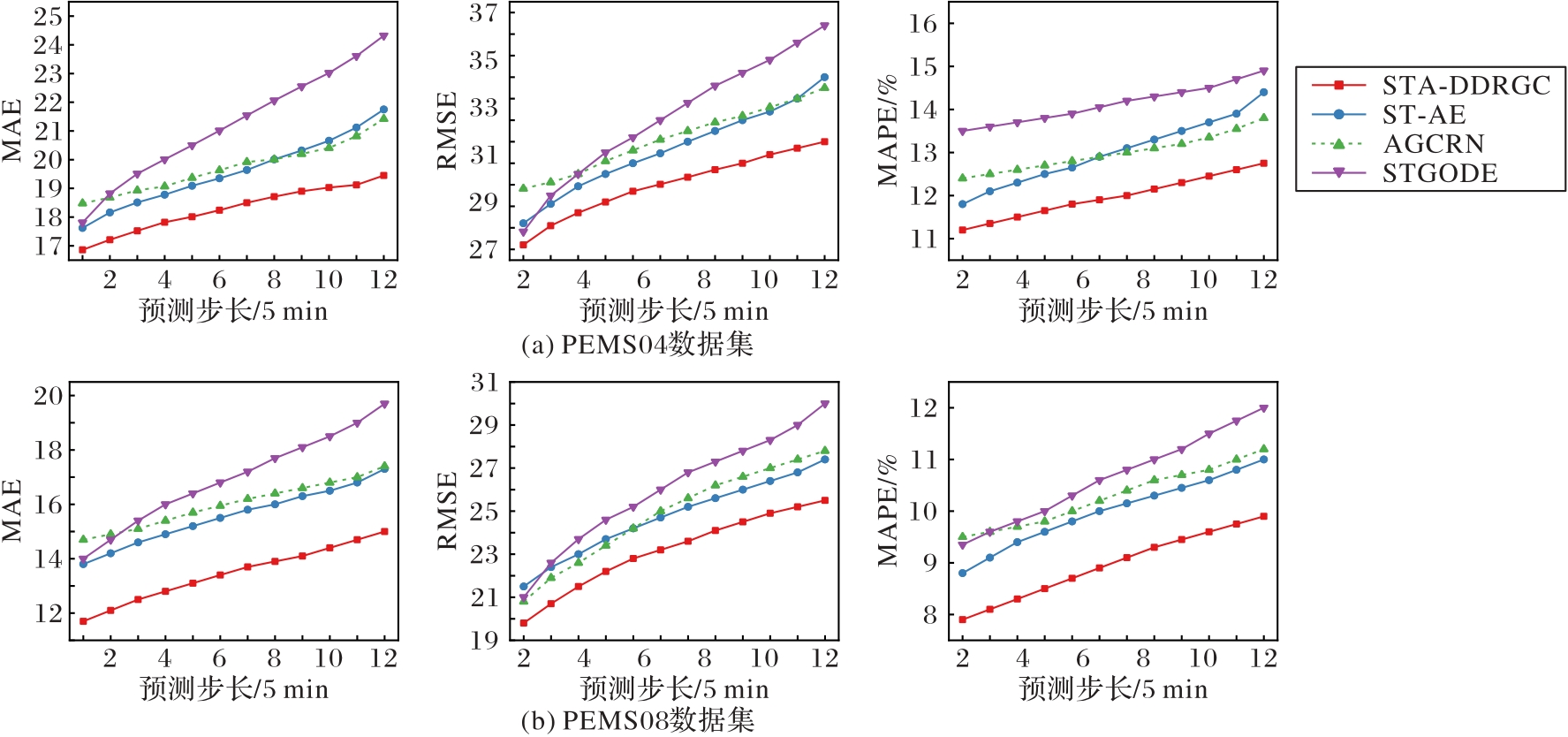
Fig. 6 Prediction errors of different models on PEMS04 and PEMS08 datasets at different layers
| 模型 | PEMS04 | PEMS08 | ||||
|---|---|---|---|---|---|---|
| MAE | RMSE | MAPE/% | MAE | RMSE | MAPE/% | |
| DGCRN | 19.82 | 32.23 | 12.97 | 15.95 | 25.22 | 10.09 |
| DGCRN with STA | 19.32 | 31.87 | 12.79 | 15.53 | 24.91 | 10.01 |
STA-DDRGC w/o FAL | 19.11 | 31.65 | 12.67 | 15.35 | 24.49 | 9.98 |
STA-DDRGC w/o DM | 18.75 | 30.41 | 12.79 | 14.68 | 23.97 | 9.58 |
| STA‑DDRGC | 18.10 | 30.06 | 11.90 | 13.49 | 23.08 | 8.76 |
Tab. 3 Ablation experimental results on PEMS04 and PEMS08 datasets
| 模型 | PEMS04 | PEMS08 | ||||
|---|---|---|---|---|---|---|
| MAE | RMSE | MAPE/% | MAE | RMSE | MAPE/% | |
| DGCRN | 19.82 | 32.23 | 12.97 | 15.95 | 25.22 | 10.09 |
| DGCRN with STA | 19.32 | 31.87 | 12.79 | 15.53 | 24.91 | 10.01 |
STA-DDRGC w/o FAL | 19.11 | 31.65 | 12.67 | 15.35 | 24.49 | 9.98 |
STA-DDRGC w/o DM | 18.75 | 30.41 | 12.79 | 14.68 | 23.97 | 9.58 |
| STA‑DDRGC | 18.10 | 30.06 | 11.90 | 13.49 | 23.08 | 8.76 |
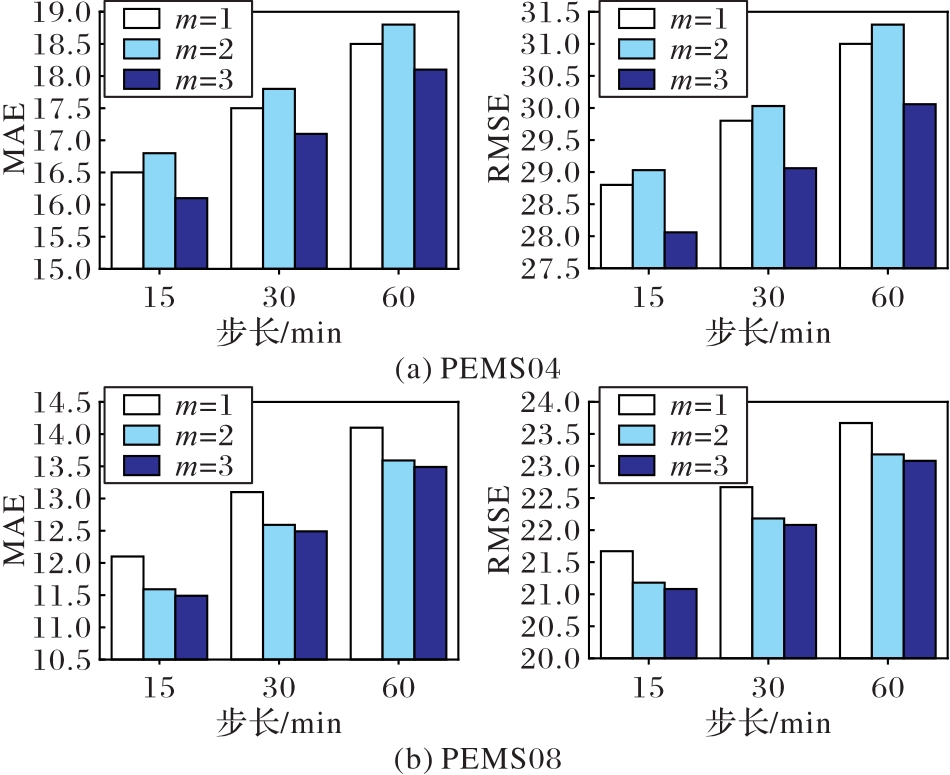
Fig. 7 Impact of parameters on prediction performance
| 模型 | 参数量 | 训练时间/ (epoch·s-1) | 推理时间/s | RMSE |
|---|---|---|---|---|
| DSTAGNN | 3 579 728 | 134.72 | 14.94 | 31.46 |
| STG-NCDE | 322 588 | 92.04 | 10.94 | 31.09 |
| STGODE | 714 504 | 57.38 | 7.27 | 32.82 |
| AGCRN | 748 810 | 21.68 | 2.88 | 32.26 |
| STA-DDRGC | 527 534 | 25.06 | 2.59 | 30.06 |
Tab. 4 Comparison of computational costs of different models on PEMS04 dataset
| 模型 | 参数量 | 训练时间/ (epoch·s-1) | 推理时间/s | RMSE |
|---|---|---|---|---|
| DSTAGNN | 3 579 728 | 134.72 | 14.94 | 31.46 |
| STG-NCDE | 322 588 | 92.04 | 10.94 | 31.09 |
| STGODE | 714 504 | 57.38 | 7.27 | 32.82 |
| AGCRN | 748 810 | 21.68 | 2.88 | 32.26 |
| STA-DDRGC | 527 534 | 25.06 | 2.59 | 30.06 |
| [1] | 闫佳和,李红辉,孙婧,等.面向交通流预测的时空图神经网络发展综述[J].计算机工程与应用,2025,61(22):1-19. |
| Yan Jiahe, Li Honghui, Sun Jing, et al. Review on development of spatio-temporal graph neural networks for traffic flow prediction[J]. Computer Engineering and Applications, 2025, 61(22): 1-19. | |
| [2] | 吴永庆,姜正宇. 基于解耦动态时空卷积循环网络的交通流预测[J]. 计算机工程, 2026, 52(5): 160-171. |
| Wu Yongqing, Jiang Zhengyu. Traffic flow prediction based on decoupled dynamic spatio-temporal convolutional recurrent network[J]. Computer Engineering, 2026, 52(5): 160-171. | |
| [3] | Cai Y, Cheng P, Ding M, et al. Spatiotemporal Gaussian process Kalman filter for mobile traffic prediction[C]// PIMRC 2020. Piscataway: IEEE, 2020: 1-6. |
| [4] | Hochreiter S, Schmidhuber J. Long short-term memory[J]. Neural Computation, 1997, 9(8): 1735-1780. |
| [5] | Ye B L, Zhu S, Li L, et al. Short-term traffic flow prediction at isolated intersections based on parallel multi-task learning[J]. Systems Science and Control Engineering, 2024, 12(1): No.2316160. |
| [6] | Vijayalakshmi B, Ramar K, Jhanjhi N Z, et al. An attention‐based deep learning model for traffic flow prediction using spatiotemporal features towards sustainable smart city[J]. International Journal of Communication Systems, 2021, 34(3): No.e4609. |
| [7] | Yu B, Yin H, Zhu Z. Spatio-temporal graph convolutional networks: a deep learning framework for traffic forecasting[C]// IJCAI 2018. California: IJCAI, 2018: 3634-3640. |
| [8] | 史昕,曹凤腾,纪艺,等.基于多尺度时空特征与软注意力机制的交通流预测方法[J].计算机工程,2024,50(12):346-357. |
| Shi Xin, Cao Fengteng, Ji Yi, et al. Traffic flow prediction method based on multi-scale spatio-temporal features and soft attention mechanism[J]. Computer Engineering, 2024, 50(12): 346-357. | |
| [9] | Hamilton J D. Time series analysis[M]. Princeton: Princeton University Press, 1994. |
| [10] | Kumar S V, Vanajakshi L. Short-term traffic flow prediction using seasonal ARIMA model with limited input data[J]. European Transport Research Review, 2015, 7: No.21. |
| [11] | Sutskever I, Vinyals O, Le Q V. Sequence to sequence learning with neural networks[C]// NeurIPS 2014 — Volume 2. Cambridge: MIT Press, 2014: 3104-3112. |
| [12] | Li Y, Yu R, Shahabi C, et al. Diffusion convolutional recurrent neural network: data-driven traffic forecasting[PP/OL]. V3. arXiv (2018-02-22) [2025-07-14].. |
| [13] | Bai L, Yao L, Li C, et al. Adaptive graph convolutional recurrent network for traffic forecasting[C]// NeurIPS 2020. Red Hook: Curran Associates Inc., 2020: 17804-17815. |
| [14] | Guo S, Lin Y, Wan H, et al. Learning dynamics and heterogeneity of spatial-temporal graph data for traffic forecasting[J]. IEEE Transactions on Knowledge and Data Engineering, 2022, 34(11): 5415-5428. |
| [15] | Vonitsanos G, Panagiotakopoulos T, Kameas A. Comparative analysis of time series and machine learning models for air quality prediction utilizing IoT data[C]// AIAI 2024, IFIPAICT 715. Cham: Springer, 2024: 221-235. |
| [16] | Song C, Lin Y, Guo S, et al. Spatial-temporal synchronous graph convolutional networks: a new framework for spatial-temporal network data forecasting[J]. Proceedings of the AAAI Conference on Artificial Intelligence, 2020, 34(1): 914-921. |
| [17] | Li M, Zhu Z. Spatial-temporal fusion graph neural networks for traffic flow forecasting[J]. Proceedings of the AAAI Conference on Artificial Intelligence, 2021, 35(5): 4189-4196. |
| [18] | Fang Z, Long Q, Song G, et al. Spatial-temporal graph ode networks for traffic flow forecasting[C]// KDD 2021. New York: ACM, 2021: 364-373. |
| [19] | Choi J, Choi H, Hwang J, et al. Graph neural controlled differential equations for traffic forecasting[J]. Proceedings of the AAAI Conference on Artificial Intelligence, 2022, 36(6): 6367-6374. |
| [20] | Lan S, Ma Y, Huang W, et al. DSTAGNN: dynamic spatial-temporal aware graph neural network for traffic flow forecasting[J]. Proceedings of Machine Learning Research, 2022, 162: 11906-11917. |
| [21] | Peng H, Du B, Liu M, et al. Dynamic graph convolutional network for long-term traffic flow prediction with reinforcement learning[J]. Information Sciences, 2021, 578: 401-416. |
| [22] | Liu Y, Shao Z, Hoffmann N. Global attention mechanism: retain information to enhance channel-spatial interactions[PP/OL]. arXiv (2021-12-10) [2025-07-14].. |
| [23] | Wu Z, Pan S, Long G, et al. Connecting the dots: multivariate time series forecasting with graph neural networks[C]// KDD 2020. New York: ACM, 2020: 753-763. |
| [24] | Wu Z, Pan S, Long G, et al. Graph WaveNet for deep spatial-temporal graph modeling[C]// IJCAI 2019. California: IJCAI, 2019: 1907-1913. |
| [25] | Huang R, Huang C, Liu Y, et al. LSGCN: long short-term traffic prediction with graph convolutional networks[C]// IJCAI 2020. California: IJCAI, 2020: 2355-2361. |
| [26] | Yan J, Yang Y, Naqvi S M. Object detection oriented privacy-preserving frame-level video anomaly detection[C]// ICASSP 2024. Piscataway: IEEE, 2024: 7640-7644. |
| [27] | Weng W, Fan J, Wu H, et al. A decomposition dynamic graph convolutional recurrent network for traffic forecasting[J]. Pattern Recognition, 2023, 142: No.109670. |
| [28] | Wu M, Weng W, Li J, et al. SFADNet: spatio-temporal fused graph based on attention decoupling network for traffic prediction[C]// ICASSP 2025. Piscataway: IEEE, 2025: 1-5. |
| [1] | Jianqiang YAN, Beibei DONG, Boting QU, Chen PENG. Bi-directional diffusion dynamic graph convolutional network with multi-source information fusion and graph-level attention for traffic flow prediction [J]. Journal of Computer Applications, 2026, 46(7): 2327-2333. |
| [2] | Wenhao LI, Yinzhang GUO. Urban traffic flow prediction based on dual-layer multi-scale dynamic graph convolutional network model [J]. Journal of Computer Applications, 2026, 46(4): 1323-1333. |
| [3] | Jinxiang WEI, Leichun WANG, Xiangfeng LU, Ruirui SONG, Yunping HE, Xiaomeng LIU. Traffic flow prediction model with spatial-temporal awareness and self-supervised Transformer [J]. Journal of Computer Applications, 2026, 46(10): 3171-3179. |
| [4] | Quan WANG, Qixiang LU, Pei SHI. Multi-graph diffusion attention network for traffic flow prediction [J]. Journal of Computer Applications, 2025, 45(5): 1472-1479. |
| [5] | Lihu PAN, Menglin ZHANG, Guangrui FAN, Linliang ZHANG, Rui ZHANG. Wavelet decomposition-based enhanced time delay awareness for traffic flow prediction [J]. Journal of Computer Applications, 2025, 45(11): 3649-3657. |
| [6] | Guixiang XUE, Hui WANG, Weifeng ZHOU, Yu LIU, Yan LI. Port traffic flow prediction based on knowledge graph and spatio-temporal diffusion graph convolutional network [J]. Journal of Computer Applications, 2024, 44(9): 2952-2957. |
| [7] | Xin YANG, Xueni CHEN, Chunjiang WU, Shijie ZHOU. Short-term traffic flow prediction of urban highway based on variant residual model and Transformer [J]. Journal of Computer Applications, 2024, 44(9): 2947-2951. |
| [8] | Jin XIA, Zhengqun WANG, Shiming ZHU. Traffic flow prediction model based on time series decomposition [J]. Journal of Computer Applications, 2023, 43(4): 1129-1135. |
| [9] | Chun GAO, Mengling WANG. Highway traffic flow prediction based on feature fusion graph attention network [J]. Journal of Computer Applications, 2023, 43(10): 3114-3120. |
| [10] | Haiqi WANG, Zhihai WANG, Liuke LI, Haoran KONG, Qiong WANG, Jianbo XU. Spatial-temporal prediction model of urban short-term traffic flow based on grid division [J]. Journal of Computer Applications, 2022, 42(7): 2274-2280. |
| [11] | Jiachen GUO, Yushen YANG, Yan WANG, Shilong MAO, Lijun SUN. Refined short-term traffic flow prediction model and migration deployment scheme [J]. Journal of Computer Applications, 2022, 42(6): 1748-1755. |
| [12] | Yinxin BAO, Yang CAO, Quan SHI. Improved spatio-temporal residual convolutional neural network for urban road network short-term traffic flow prediction [J]. Journal of Computer Applications, 2022, 42(1): 258-264. |
| [13] | CAO Yu, WANG Cheng, WANG Xin, GAO Yueer. Urban road short-term traffic flow prediction based on spatio-temporal node selection and deep learning [J]. Journal of Computer Applications, 2020, 40(5): 1488-1493. |
| [14] | . Research of traffic application based on travel time detection system [J]. Journal of Computer Applications, 2007, 27(11): 2634-2636. |
| Viewed | ||||||
|
Full text |
|
|||||
|
Abstract |
|
|||||
