


Journal of Computer Applications ›› 2026, Vol. 46 ›› Issue (11): 3699-3707.DOI: 10.11772/j.issn.1001-9081.2025091191
• Frontier and comprehensive applications • Previous Articles
Wensheng TANG, Lu XIONG, Ming CHEN, Hua MA( )
Received:2025-10-14
Revised:2025-12-11
Accepted:2025-12-12
Online:2025-12-26
Published:2026-11-10
Contact:
Hua MA
About author:TANG Wensheng, born in 1970, Ph. D., professor. His research interests include distributed computing, personalized learning.Supported by:
唐文胜, 熊露, 陈明, 马华()
通讯作者:
马华
作者简介:唐文胜(1970—),男,湖南永州人,教授,博士,主要研究方向:分布式计算、个性化学习基金资助:CLC Number:
Wensheng TANG, Lu XIONG, Ming CHEN, Hua MA. Intelligent rating framework for computer undergraduate graduation theses via LLM and multi-agent collaboration[J]. Journal of Computer Applications, 2026, 46(11): 3699-3707.
唐文胜, 熊露, 陈明, 马华. LLM与多智能体协同的计算机类本科毕业论文智能评级框架[J]. 《计算机应用》唯一官方网站, 2026, 46(11): 3699-3707.
Add to citation manager EndNote|Ris|BibTeX
URL: https://www.joca.cn/EN/10.11772/j.issn.1001-9081.2025091191
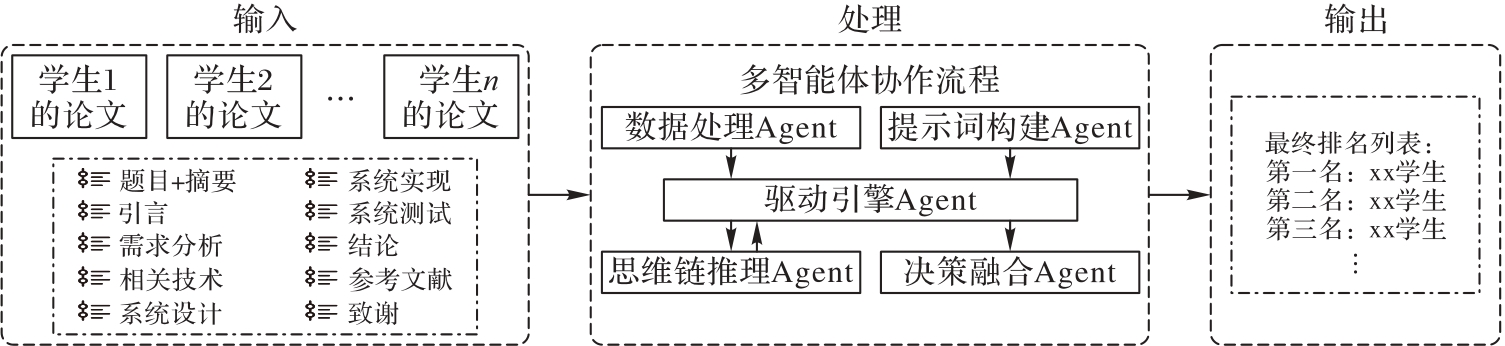
Fig. 1 Problem description of intelligent rating for undergraduate graduation theses
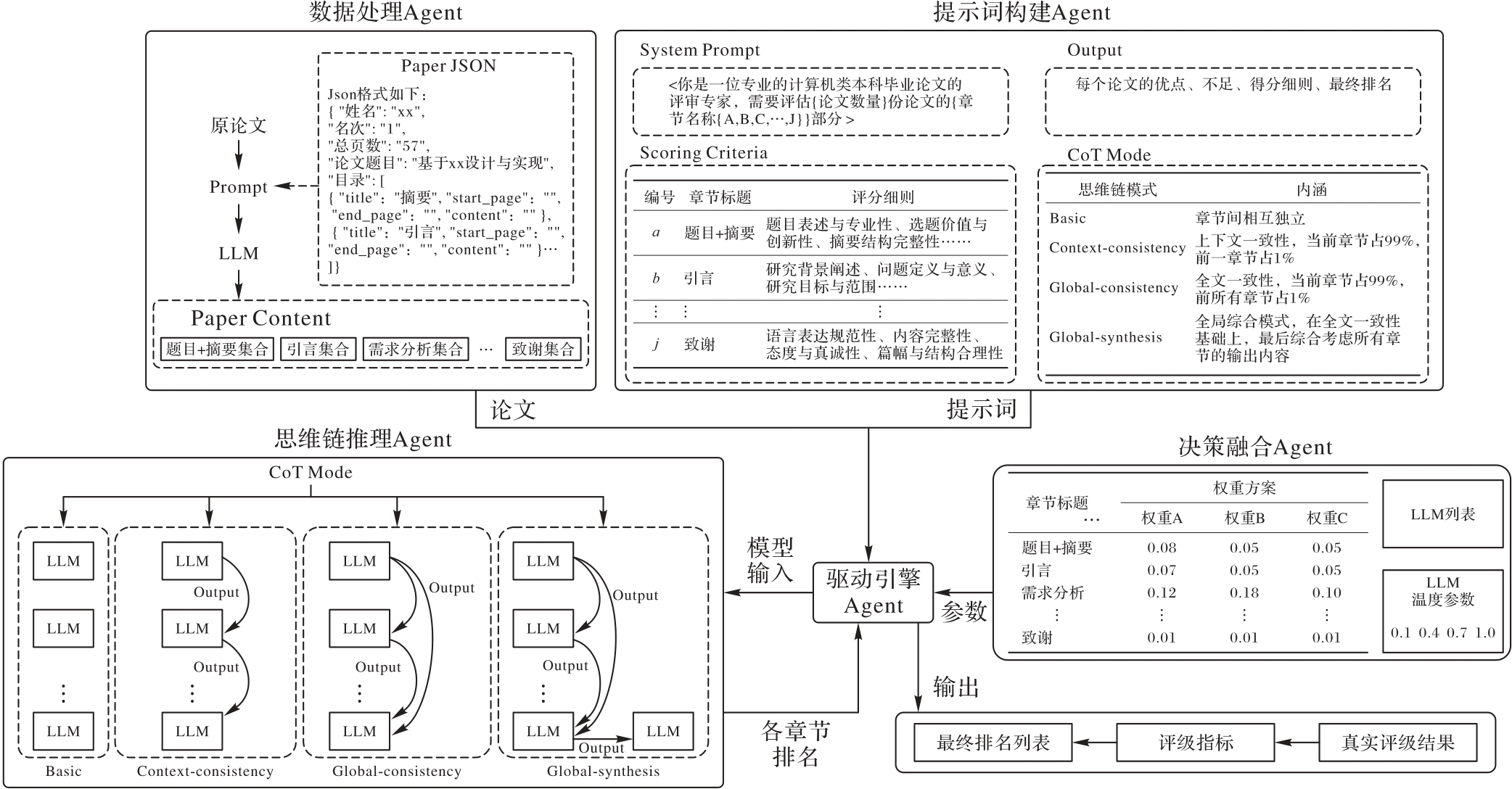
Fig. 2 Intelligent rating framework via LLM and multi-agent collaboration
| 提示词 | 内容 |
|---|---|
| System Prompt | 您是一位评估本科毕业论文的评审专家,需要评估{论文数量}份论文的{A,B,C,…,J}集合}部分(Paper Content) |
| Scoring Criteria | {a,b,c,…,j}集合的章节标题评分标准 |
| CoT Mode | Basic/Context-consistency/Global-consistency/Global-synthesis |
| Output | 输出要求和格式要求,包括论文的优点、不足、各项得分、总得分 |
Tab. 1 Complete prompt template
| 提示词 | 内容 |
|---|---|
| System Prompt | 您是一位评估本科毕业论文的评审专家,需要评估{论文数量}份论文的{A,B,C,…,J}集合}部分(Paper Content) |
| Scoring Criteria | {a,b,c,…,j}集合的章节标题评分标准 |
| CoT Mode | Basic/Context-consistency/Global-consistency/Global-synthesis |
| Output | 输出要求和格式要求,包括论文的优点、不足、各项得分、总得分 |
| 编号 | 章节标题 | 评分细则 |
|---|---|---|
| a | 题目+摘要 | 题目表述与专业性、选题价值与创新性、摘要结构完整性、研究方法描述、关键成果呈现、摘要语言表达、软件工程专业要素 |
| b | 引言 | 研究背景阐述、问题定义与意义、研究目标与范围、创新点与贡献、相关工作述评、研究方法概述、论文结构说明 |
| c | 需求分析 | 需求获取方法、需求分类与组织、需求完整性、需求建模与分析、需求验证与确认、需求文档规范性、专业工具应用 |
| d | 相关技术 | 相关工作文献综述、技术选型合理性、技术原理阐述、技术前沿性、技术描述准确性 |
| e | 系统设计 | 计算机科学基础应用、软件工程专业知识应用、软件系统分析与设计能力、方法选择合理性、图表描述规范性、图表引用合理性、软件工程文档规范、专业术语一致性 |
| f | 系统实现 | 代码结构与组织、编程规范与风格、设计模式应用、数据结构与算法、错误处理与异常管理、接口设计与实现、性能优化措施、安全性与可靠性、实现过程规范性、技术文档完整性 |
| g | 系统测试 | 测试策略与计划、测试用例设计、功能测试完整性、非功能测试全面性、测试工具与自动化、测试执行与报告、测试结果分析 |
| h | 结论 | 逻辑结构清晰性、语言表达规范性、成果总结全面性、问题与不足分析、工程价值评估、未来工作展望、研究目标回顾 |
| i | 参考文献 | 文献覆盖广度、文献质量与权威性、文献相关性、文献时效性、前沿技术了解程度、文献引用规范性、引用分布合理性 |
| j | 致谢 | 语言表达规范性、内容完整性、态度与真诚性、篇幅与结构合理性 |
Tab. 2 Rating rules for each chapter
| 编号 | 章节标题 | 评分细则 |
|---|---|---|
| a | 题目+摘要 | 题目表述与专业性、选题价值与创新性、摘要结构完整性、研究方法描述、关键成果呈现、摘要语言表达、软件工程专业要素 |
| b | 引言 | 研究背景阐述、问题定义与意义、研究目标与范围、创新点与贡献、相关工作述评、研究方法概述、论文结构说明 |
| c | 需求分析 | 需求获取方法、需求分类与组织、需求完整性、需求建模与分析、需求验证与确认、需求文档规范性、专业工具应用 |
| d | 相关技术 | 相关工作文献综述、技术选型合理性、技术原理阐述、技术前沿性、技术描述准确性 |
| e | 系统设计 | 计算机科学基础应用、软件工程专业知识应用、软件系统分析与设计能力、方法选择合理性、图表描述规范性、图表引用合理性、软件工程文档规范、专业术语一致性 |
| f | 系统实现 | 代码结构与组织、编程规范与风格、设计模式应用、数据结构与算法、错误处理与异常管理、接口设计与实现、性能优化措施、安全性与可靠性、实现过程规范性、技术文档完整性 |
| g | 系统测试 | 测试策略与计划、测试用例设计、功能测试完整性、非功能测试全面性、测试工具与自动化、测试执行与报告、测试结果分析 |
| h | 结论 | 逻辑结构清晰性、语言表达规范性、成果总结全面性、问题与不足分析、工程价值评估、未来工作展望、研究目标回顾 |
| i | 参考文献 | 文献覆盖广度、文献质量与权威性、文献相关性、文献时效性、前沿技术了解程度、文献引用规范性、引用分布合理性 |
| j | 致谢 | 语言表达规范性、内容完整性、态度与真诚性、篇幅与结构合理性 |
| 模式类型 | 提示词模板 |
|---|---|
| Basic | 分析论文内容 对照评分标准 计算总分 排名决策 请按照以上步骤逐步思考 #### Paper Content: {{A,B,C,…,J}集合} |
Context- consistency | 1. 独立分析阶段 2. 章节特定评估 3. 轻微一致性考量(仅在完成独立分析后) 4. 排名决策 请按照以上步骤逐步思考 #### Paper Content: {{A,B,C,…,J}集合} #### 前一个章节的Output |
Global- consistency | 1. 独立分析阶段 2. 章节特定评估 3. 有限的全局一致性考量(仅在完成独立分析后) 4. 排名决策与说明 请按照以上步骤逐步思考 #### Paper Content: {{A,B,C,…,J}集合} #### 前一个章节的Output |
Global- synthesis | 1. 综合分析:回顾之前所有章节的评估结果,考虑每篇论文在不同章节的表现。 2. 强弱点识别:为每篇论文识别主要优势和不足,特别关注可能影响整体质量的关键部分。 3. 权重考量:思考不同章节对论文整体质量的影响程度,考虑各章节的权重设置是否合理。 4. 一致性评估:评估论文在各个章节表现的一致性,是否存在某些章节与整体水平差异较大的情况。 5. 整体质量判断:结合所有章节评估,形成对每篇论文整体质量的综合判断。 6. 最终排名决策:基于综合分析解释最终排名,明确说明为什么某篇论文整体上应该排在另一篇之前。请按照以上步骤逐步思考 #### Paper Content: {{A,B,C,…,J}集合} #### 所有章节的Output |
Tab. 3 Chain of thought prompt templates
| 模式类型 | 提示词模板 |
|---|---|
| Basic | 分析论文内容 对照评分标准 计算总分 排名决策 请按照以上步骤逐步思考 #### Paper Content: {{A,B,C,…,J}集合} |
Context- consistency | 1. 独立分析阶段 2. 章节特定评估 3. 轻微一致性考量(仅在完成独立分析后) 4. 排名决策 请按照以上步骤逐步思考 #### Paper Content: {{A,B,C,…,J}集合} #### 前一个章节的Output |
Global- consistency | 1. 独立分析阶段 2. 章节特定评估 3. 有限的全局一致性考量(仅在完成独立分析后) 4. 排名决策与说明 请按照以上步骤逐步思考 #### Paper Content: {{A,B,C,…,J}集合} #### 前一个章节的Output |
Global- synthesis | 1. 综合分析:回顾之前所有章节的评估结果,考虑每篇论文在不同章节的表现。 2. 强弱点识别:为每篇论文识别主要优势和不足,特别关注可能影响整体质量的关键部分。 3. 权重考量:思考不同章节对论文整体质量的影响程度,考虑各章节的权重设置是否合理。 4. 一致性评估:评估论文在各个章节表现的一致性,是否存在某些章节与整体水平差异较大的情况。 5. 整体质量判断:结合所有章节评估,形成对每篇论文整体质量的综合判断。 6. 最终排名决策:基于综合分析解释最终排名,明确说明为什么某篇论文整体上应该排在另一篇之前。请按照以上步骤逐步思考 #### Paper Content: {{A,B,C,…,J}集合} #### 所有章节的Output |
| 章节标题 | 不同方案的权重设置 | ||
|---|---|---|---|
| 方案A | 方案B | 方案C | |
| 摘要+题目 | 0.08 | 0.05 | 0.05 |
| 引言 | 0.07 | 0.05 | 0.05 |
| 需求分析 | 0.12 | 0.18 | 0.10 |
| 相关技术 | 0.10 | 0.12 | 0.10 |
| 系统设计 | 0.20 | 0.25 | 0.20 |
| 系统实现 | 0.20 | 0.17 | 0.25 |
| 系统测试 | 0.15 | 0.10 | 0.18 |
| 结论 | 0.05 | 0.05 | 0.04 |
| 参考文献 | 0.02 | 0.02 | 0.02 |
| 致谢 | 0.01 | 0.01 | 0.01 |
Tab. 4 Chapter weighting scheme settings
| 章节标题 | 不同方案的权重设置 | ||
|---|---|---|---|
| 方案A | 方案B | 方案C | |
| 摘要+题目 | 0.08 | 0.05 | 0.05 |
| 引言 | 0.07 | 0.05 | 0.05 |
| 需求分析 | 0.12 | 0.18 | 0.10 |
| 相关技术 | 0.10 | 0.12 | 0.10 |
| 系统设计 | 0.20 | 0.25 | 0.20 |
| 系统实现 | 0.20 | 0.17 | 0.25 |
| 系统测试 | 0.15 | 0.10 | 0.18 |
| 结论 | 0.05 | 0.05 | 0.04 |
| 参考文献 | 0.02 | 0.02 | 0.02 |
| 致谢 | 0.01 | 0.01 | 0.01 |
| 答辩小组 | 论文数 | 答辩小组 | 论文数 |
|---|---|---|---|
| 1 | 12 | 4 | 12 |
| 2 | 13 | 5 | 13 |
| 3 | 14 |
Tab. 5 Statistics on number of theses by defense group
| 答辩小组 | 论文数 | 答辩小组 | 论文数 |
|---|---|---|---|
| 1 | 12 | 4 | 12 |
| 2 | 13 | 5 | 13 |
| 3 | 14 |
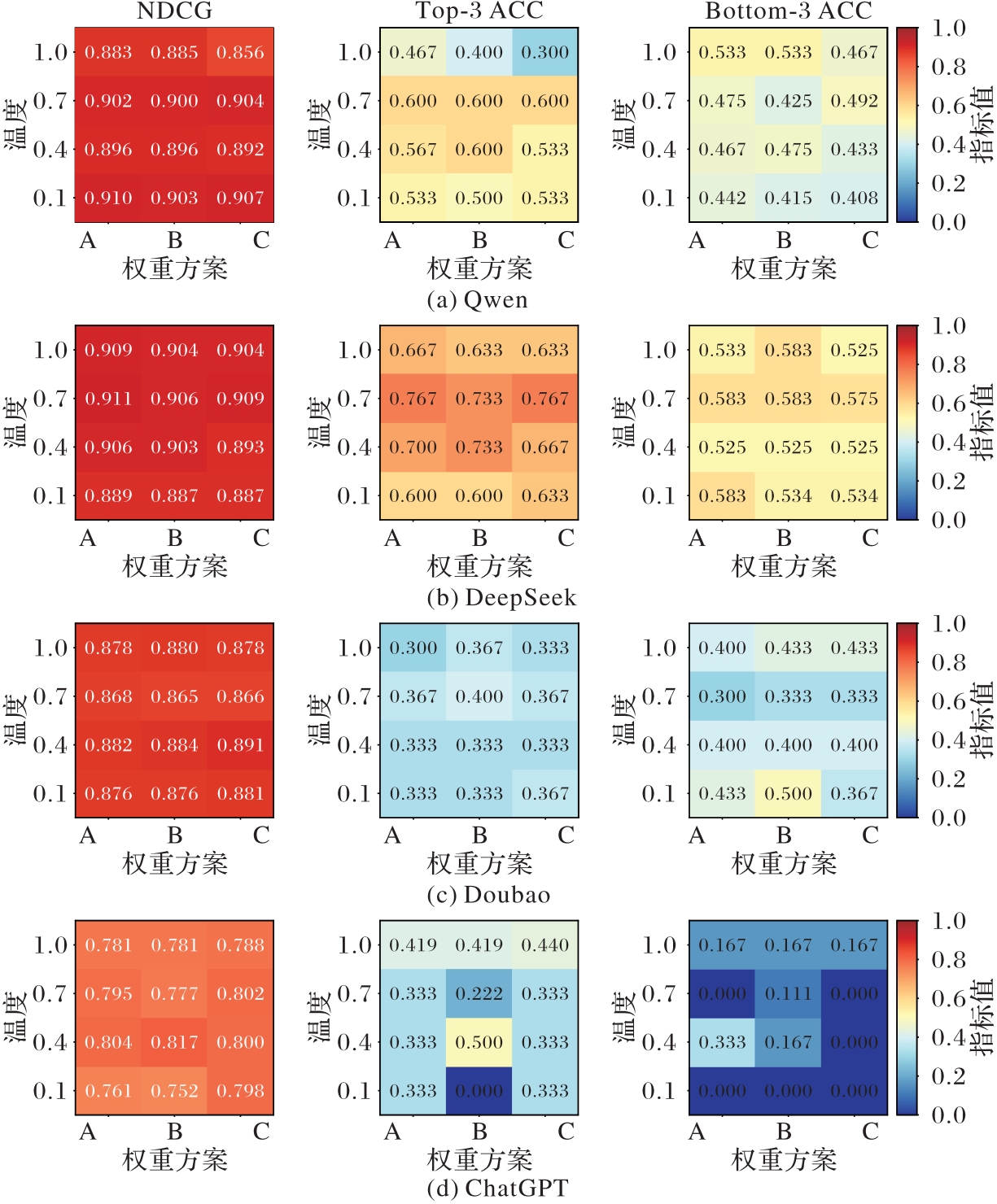
Fig. 3 Heatmaps of four mainstream LLMs' indexes
| LLM | NDCG | Top-3 ACC | Bottom-3 ACC |
|---|---|---|---|
| Qwen | 0.904 5 | 0.600 0 | 0.491 7 |
| DeepSeek | 0.911 3 | 0.766 7 | 0.583 4 |
| Doubao | 0.891 5 | 0.333 3 | 0.400 0 |
| ChatGPT | 0.817 3 | 0.500 0 | 0.166 6 |
Tab. 6 Comparison of rating results of different LLMs
| LLM | NDCG | Top-3 ACC | Bottom-3 ACC |
|---|---|---|---|
| Qwen | 0.904 5 | 0.600 0 | 0.491 7 |
| DeepSeek | 0.911 3 | 0.766 7 | 0.583 4 |
| Doubao | 0.891 5 | 0.333 3 | 0.400 0 |
| ChatGPT | 0.817 3 | 0.500 0 | 0.166 6 |
| 模型 | CoT模式 | NDCG | Top-3 ACC | Bottom-3 ACC |
|---|---|---|---|---|
| Qwen | Basic | 0.933 8 | 0.666 7 | 0.650 0 |
| C-consistency | 0.920 4 | 0.466 7 | 0.266 7 | |
| G-consistency | 0.923 8 | 0.400 0 | 0.400 0 | |
| G-synthesis | 0.930 3 | 0.466 7 | 0.266 7 | |
| DeepSeek | Basic | 0.968 2 | 1.000 0 | 0.550 0 |
| C-consistency | 0.922 9 | 0.533 3 | 0.266 7 | |
| G-consistency | 0.931 1 | 0.400 0 | 0.066 7 | |
| G-synthesis | 0.915 6 | 0.444 4 | 0.000 0 | |
| Doubao | Basic | 0.916 9 | 0.400 0 | 0.333 3 |
| C-consistency | 0.898 5 | 0.333 3 | 0.266 7 | |
| G-consistency | 0.906 0 | 0.333 3 | 0.400 0 | |
| G-synthesis | 0.889 5 | 0.333 3 | 0.400 0 |
Tab. 7 Rating results of three LLMs using different CoT modes
| 模型 | CoT模式 | NDCG | Top-3 ACC | Bottom-3 ACC |
|---|---|---|---|---|
| Qwen | Basic | 0.933 8 | 0.666 7 | 0.650 0 |
| C-consistency | 0.920 4 | 0.466 7 | 0.266 7 | |
| G-consistency | 0.923 8 | 0.400 0 | 0.400 0 | |
| G-synthesis | 0.930 3 | 0.466 7 | 0.266 7 | |
| DeepSeek | Basic | 0.968 2 | 1.000 0 | 0.550 0 |
| C-consistency | 0.922 9 | 0.533 3 | 0.266 7 | |
| G-consistency | 0.931 1 | 0.400 0 | 0.066 7 | |
| G-synthesis | 0.915 6 | 0.444 4 | 0.000 0 | |
| Doubao | Basic | 0.916 9 | 0.400 0 | 0.333 3 |
| C-consistency | 0.898 5 | 0.333 3 | 0.266 7 | |
| G-consistency | 0.906 0 | 0.333 3 | 0.400 0 | |
| G-synthesis | 0.889 5 | 0.333 3 | 0.400 0 |
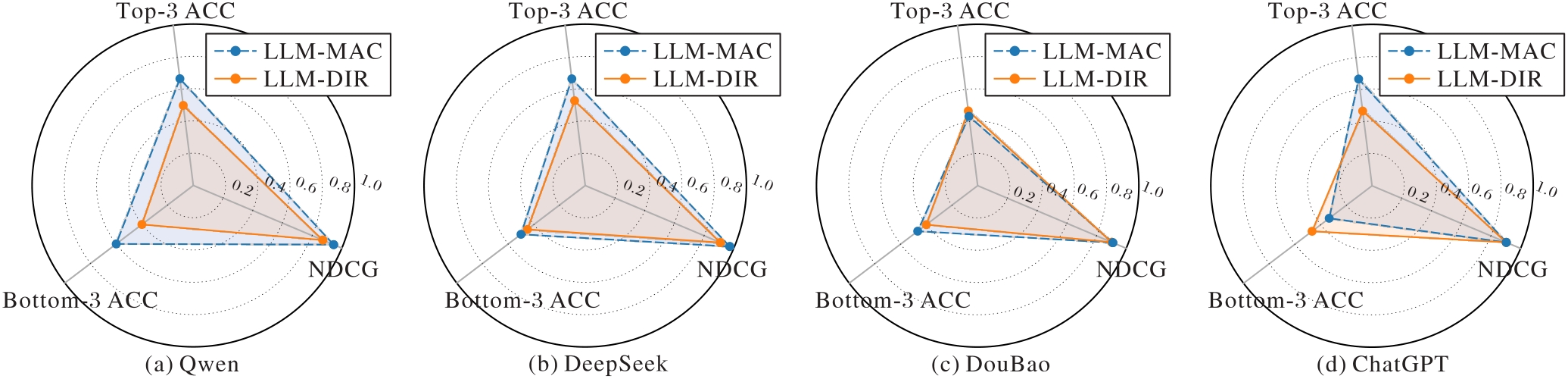
Fig. 4 Comparison results using four basic LLMs
| [1] | 中华人民共和国教育部. 2024年全国教育事业发展统计公报[EB/OL]. (2025-06-11) [2025-12-09].. |
| Ministry of Education of the People's Republic of China. Statistical bulletin on national education development in 2024[EB/OL]. (2025-06-11) [2025-12-09].. | |
| [2] | 《人民日报》.本科毕业论文将每年抽检[EB/OL]. (2021-01-08) [2025-12-09].. |
| Daily People's. Undergraduate thesis will be sampled annually[EB/OL]. (2021-01-08) [2025-12-09].. | |
| [3] | Sun J, Song T, Peng W, et al. A survey of automated essay scoring: challenges, advances, and future[J]. Neurocomputing, 2025, 650: No.130916. |
| [4] | Zhuang Z, Chen J, Xu H, et al. Large language models for automated scholarly paper review: a survey[J]. Information Fusion, 2025, 124: No.103332. |
| [5] | 吴永和,姜元昊,陈圆圆,等.大语言模型支持的多智能体:技术路径、教育应用与未来展望[J].开放教育研究,2024,30(5):63-75. |
| Wu Yonghe, Jiang Yuanhao, Chen Yuanyuan, et al. Multi-agent systems supported by large language model: technical path, educational application, and future prospect[J]. Open Education Research, 2024, 30(5): 63-75. | |
| [6] | 王路桥,周洋涛,李青山,等.基于大语言模型的多智能体协作代码评审人推荐[J].软件学报,2025,36(6):2558-2575. |
| Wang Luqiao, Zhou Yangtao, Li Qingshan, et al. Multi-agent collaborative code reviewer recommendation based on large language model[J]. Journal of Software, 2025, 36(6): 2558-2575. | |
| [7] | 姚世斌,彭宇霞,潘艳,等.基于学术规范的本科毕业论文质量评价体系建设[J].高教探索,2016(): 98-99. |
| Yao Shibin, Peng Yuxia, Pan Yan, et al. Construction of undergraduate graduation thesis quality evaluation system based on academic norms[J]. Higher Education Exploration, 2016(S1): 98-99. | |
| [8] | 王洁,周宽久,侯刚.本科毕业论文文献质量评价方法和工具研究[J].实验室研究与探索,2015,34(2):160-162. |
| Wang Jie, Zhou Kuanjiu, Hou Gang, et al. Research on method and tool in quality evaluation of undergraduate thesis references[J]. Research and Exploration in Laboratory, 2015, 34(2): 160-162. | |
| [9] | 曾桂生,罗胜联,童永芬,等.理工类本科毕业论文的质量困境与提升策略——以南昌航空大学应用化学专业为例[J].大学教育科学,2017(6):57-62. |
| Zeng Guisheng, Luo Shenglian, Tong Yongfen, et al. Quality dilemma and improvement exploration of undergraduate graduation theses at ordinary science and engineering colleges[J]. University Education Science, 2017(6): 57-62. | |
| [10] | 陈心想,董书昊.本科生毕业论文写作质量影响因素分析[J]. 中国大学教学,2022(3):77-84. |
| Chen Xinxiang, Dong Shuhao. Analysis of influencing factors of undergraduate graduation thesis writing quality[J]. China University Teaching, 2022(3): 77-84. | |
| [11] | 陈晓竹, Kaskenpalo P, Hitchcock L. 中外本科教育中“毕业设计”评价指标的比较——以中国计量大学与奥克兰理工大学合作办学项目为例[J]. 高等工程教育研究, 2019(1): 152-157. |
| Chen Xiaozhu, Kaskenpalo P, Hitchcock L. A comparative study of the evaluation index of graduation project in China and overseas universities[J]. Research in Higher Education of Engineering, 2019(1): 152-157. | |
| [12] | Li W, Liu H. Applying large language models for automated essay scoring for non-native Japanese[J]. Humanities and Social Sciences Communications, 2024, 11: No.723. |
| [13] | Stahl M, Biermann L, Nehring A, et al. Exploring LLM prompting strategies for joint essay scoring and feedback generation[C]// BEA 2024. Stroudsburg: ACL, 2024: 283-298. |
| [14] | Tang X, Chen H, Lin D, et al. Harnessing LLMs for multi-dimensional writing assessment: reliability and alignment with human judgments[J]. Heliyon, 2024, 10(14): No.e34262. |
| [15] | 李启正,胡崴琳.ChatGPT用于学术论文编校的能力分析、交互方式和应用场景[J].编辑学报,2024,36():111-116. |
| Li Qizheng, Hu Weilin. The ability analysis, interaction mode and application scenarios of ChatGPT for academic paper editing and proofreading[J]. Acta Editologica, 2024, 36(S2): 111-116. | |
| [16] | 胡蝶,林立涛,刘浏,等.基于大语言模型的人文社会科学学术论文学科分类研究[J].图书馆杂志,2025,44(4):110-122. |
| Hu Die, Lin Litao, Liu Liu, et al. Discipline classification of humanities and social sciences academic papers based on large language models[J]. Library Journal, 2025, 44(4): 110-122. | |
| [17] | Zhang Y, Sun R, Chen Y, et al. Chain of agents: large language models collaborating on long-context tasks[C]// NeurIPS 2024. Red Hook: Curran Associates Inc., 2024: 132208-132237. |
| [18] | Zhou Z, Li C, Chen X, et al. LLM×MapReduce: simplified long-sequence processing using large language models[C]// ACL 2025 (Volume 1: Long Papers). Stroudsburg: ACL, 2025: 27664-27678. |
| [19] | Han S, Xia P, Zhang R, et al. MDocAgent: a multi-modal multi-agent framework for document understanding[PP/OL]. arXiv (2025-03-18) [2025-08-13]. . |
| [20] | 沈锡宾,刘红霞,王红剑,等.生成式人工智能技术在科技期刊论文关键信息提取与总结中的应用[J].中国科技期刊研究, 2025, 36(1): 37-43. |
| Shen Xibin, Liu Hongxia, Wang Hongjian, et al. Application of generative artificial intelligence technology in extraction and summary of key information in scientific journal papers[J]. Chinese Journal of Scientific and Technical Periodicals, 2025, 36(1): 37-43. | |
| [21] | Liu C, Zhang X, Zhao H, et al. LMCBert: an automatic academic paper rating model based on large language models and contrastive learning[J]. IEEE Transactions on Cybernetics, 2025, 55(6): 2970-2979. |
| [22] | Sahoo P, Singh A K, Saha S, et al. A systematic survey of prompt engineering in large language models: techniques and applications[PP/OL]. V2. arXiv (2025-03-16) [2025-08-13].. |
| [23] | Wei J, Wang X, Schuurmans D, et al. Chain-of-thought prompting elicits reasoning in large language models[C]// NeurIPS 2022. Red Hook: Curran Associates Inc., 2022: 24824-24837. |
| [24] | Jeunen O, Potapov I, Ustimenko A. On (normalised) discounted cumulative gain as an off-policy evaluation metric for top-n recommendation[C]// KDD 2024. New York: ACM, 2024: 1222-1233. |
| [1] | Mengjiao YU, Min JIN, Xinhua LIU. Agile enhancement development framework driven by human-multi-agent collaboration [J]. Journal of Computer Applications, 2026, 46(9): 2938-2947. |
| [2] | Yun BIAN, Haiquan WANG, Yi CHEN, Zhe CUI. Construction method of software defect prediction dataset with explainability [J]. Journal of Computer Applications, 2026, 46(9): 2948-2958. |
| [3] | Zhenhui GONG, Xiaoyu SHI, Yun LU, Yangcheng LIU, Mingsheng SHANG. Fair recommendation framework for large language models with sensitive attribute absence [J]. Journal of Computer Applications, 2026, 46(9): 2838-2846. |
| [4] | Yaoran HUO, Huizhi LI, Dahe ZENG, Zhenyu TANG, Chenmei LIU, Yan WU, Xiao ZHANG, Siqin CHEN, Houhui YANG. Contract review framework based on dynamic rule generation and neuro-symbolic reasoning using large language models [J]. Journal of Computer Applications, 2026, 46(9): 2820-2826. |
| [5] | Mengting WANG, Shuanliang GAO, Wenrui LIAO, Geng LI, Jiaxing ZHANG, Yuanfang ZHU, Tiange ZHAO, Yonghui LIU, Hongru LIANG. Message consistency parsing framework for aviation domain [J]. Journal of Computer Applications, 2026, 46(8): 2681-2690. |
| [6] | Xinliang LIU, Yushi XU, Dubai LI, Yanzhao REN. Survey of knowledge graph-based question answering methods [J]. Journal of Computer Applications, 2026, 46(8): 2394-2410. |
| [7] | Yue ZHANG, Yuhan GUO. Ride-hailing spatio-temporal demand forecasting method via large language model-driven semantic quantification [J]. Journal of Computer Applications, 2026, 46(8): 2467-2476. |
| [8] | Didi HOU, Shaodong HONG, Yujie FU, Yunhe CUI, Guowei SHEN. Cybersecurity named entity recognition method based on large language model linking [J]. Journal of Computer Applications, 2026, 46(7): 2064-2073. |
| [9] | Yuqi WANG, Yangsen ZHANG, Pu WANG. High school English reading comprehension model integrating knowledge augmentation and contrastive learning [J]. Journal of Computer Applications, 2026, 46(7): 2096-2103. |
| [10] | Linkai ZHU, Lu YANG, Hongjie ZHANG, Zijin WU, Lu LIU. Smart contract generation framework driven by LLM and SWRL for cross-border data compliance across heterogeneous blockchains [J]. Journal of Computer Applications, 2026, 46(7): 2074-2084. |
| [11] | Yadian CHENG, Yingying LI, Ping ZHANG, Fangbing QIU, Xiaonan CHAI, Yuqiao SHU. Dual-role interaction mechanism-based large language model for psychological health [J]. Journal of Computer Applications, 2026, 46(7): 2054-2063. |
| [12] | Jiahang LI, Qilong HAN, Lijie LI, Hui ZHANG. Large language model-driven method for qualifier enhancement in hyper-relational knowledge graphs [J]. Journal of Computer Applications, 2026, 46(7): 2043-2053. |
| [13] | Jintao WANG, Zhilin GAO, Qixiang MENG, Fanliang BU. Legal case retrieval method via case information reformulation using large language model [J]. Journal of Computer Applications, 2026, 46(6): 1785-1792. |
| [14] | Longyu XIONG, Shengdong DU, Haochen SHI, Jie HU, Yan YANG, Tianrui LI. Government affairs hotline question answering system based on knowledge-enhanced large language model architecture [J]. Journal of Computer Applications, 2026, 46(6): 1721-1727. |
| [15] | Yusheng YI, Zhaohao HUANG, Zihao DENG, Leilei KONG, Haoliang QI. CORER: collaborative multi-knowledge large language model prompt framework for IT application innovation database migration [J]. Journal of Computer Applications, 2026, 46(6): 1811-1817. |
| Viewed | ||||||
|
Full text |
|
|||||
|
Abstract |
|
|||||
