


Journal of Computer Applications ›› 2026, Vol. 46 ›› Issue (2): 378-385.DOI: 10.11772/j.issn.1001-9081.2025020228
• Artificial intelligence • Previous Articles
Hongjian WEN1, Ruijiao HU1, Baowen WU1, Jiaxing SUN2, Huan LI1, Qing ZHANG2, Jie LIU2,3( )
)
Received:2025-03-10
Revised:2025-06-06
Accepted:2025-06-10
Online:2025-08-08
Published:2026-02-10
Contact:
Jie LIU
About author:WEN Hongjian, born in 1982, M. S., lecturer. His research interests include natural language processing.Supported by:
文洪建1, 胡瑞娇1, 吴保文1, 孙家兴2, 李环1, 张晴2, 刘杰2,3()
通讯作者:
刘杰
作者简介:文洪建(1982—),男,四川岳池人,讲师,硕士,主要研究方向:自然语言处理基金资助:CLC Number:
Hongjian WEN, Ruijiao HU, Baowen WU, Jiaxing SUN, Huan LI, Qing ZHANG, Jie LIU. Chinese automated essay scoring based on joint learning of multi-scale features using graph neural network[J]. Journal of Computer Applications, 2026, 46(2): 378-385.
文洪建, 胡瑞娇, 吴保文, 孙家兴, 李环, 张晴, 刘杰. 基于图神经网络实现多尺度特征联合学习的中文作文自动评分[J]. 《计算机应用》唯一官方网站, 2026, 46(2): 378-385.
Add to citation manager EndNote|Ris|BibTeX
URL: https://www.joca.cn/EN/10.11772/j.issn.1001-9081.2025020228
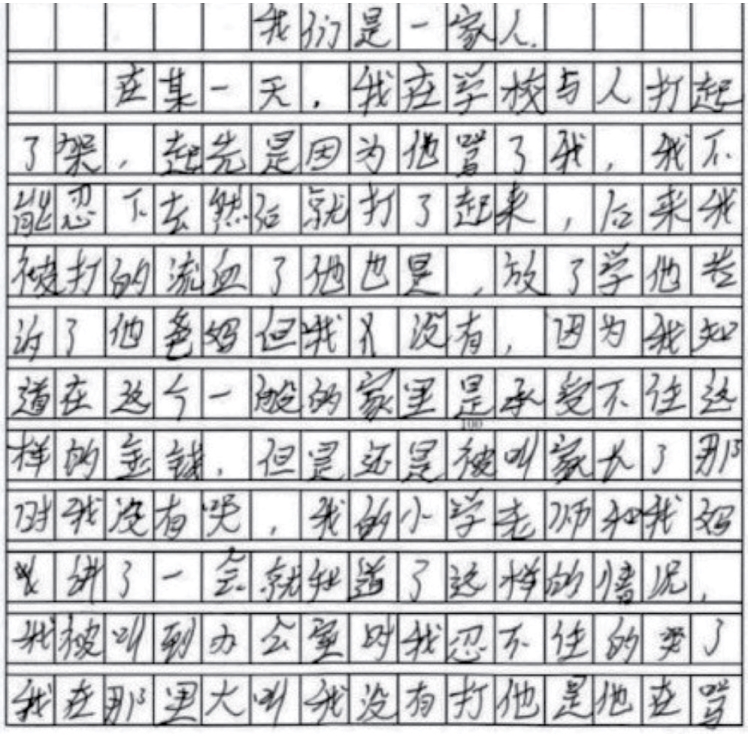
Fig. 1 Example of original essay data
| 题目 | 年级 | 分数范围 | 样本数 | 作文平均长度 |
|---|---|---|---|---|
| 我们是一家人 | 初一 | 5~34 | 587 | 845 |
| 在尝试中成长 | 初一 | 5~35 | 589 | 598 |
| 被误解之后 | 初二 | 2~32 | 527 | 603 |
| 谢谢你,使我成为更好的自己 | 初二 | 5~32 | 522 | 598 |
| 发光 | 初三 | 3~50 | 448 | 628 |
| 读书与成长 | 初三 | 6~50 | 478 | 634 |
Tab. 1 Information of CED essay dataset
| 题目 | 年级 | 分数范围 | 样本数 | 作文平均长度 |
|---|---|---|---|---|
| 我们是一家人 | 初一 | 5~34 | 587 | 845 |
| 在尝试中成长 | 初一 | 5~35 | 589 | 598 |
| 被误解之后 | 初二 | 2~32 | 527 | 603 |
| 谢谢你,使我成为更好的自己 | 初二 | 5~32 | 522 | 598 |
| 发光 | 初三 | 3~50 | 448 | 628 |
| 读书与成长 | 初三 | 6~50 | 478 | 634 |
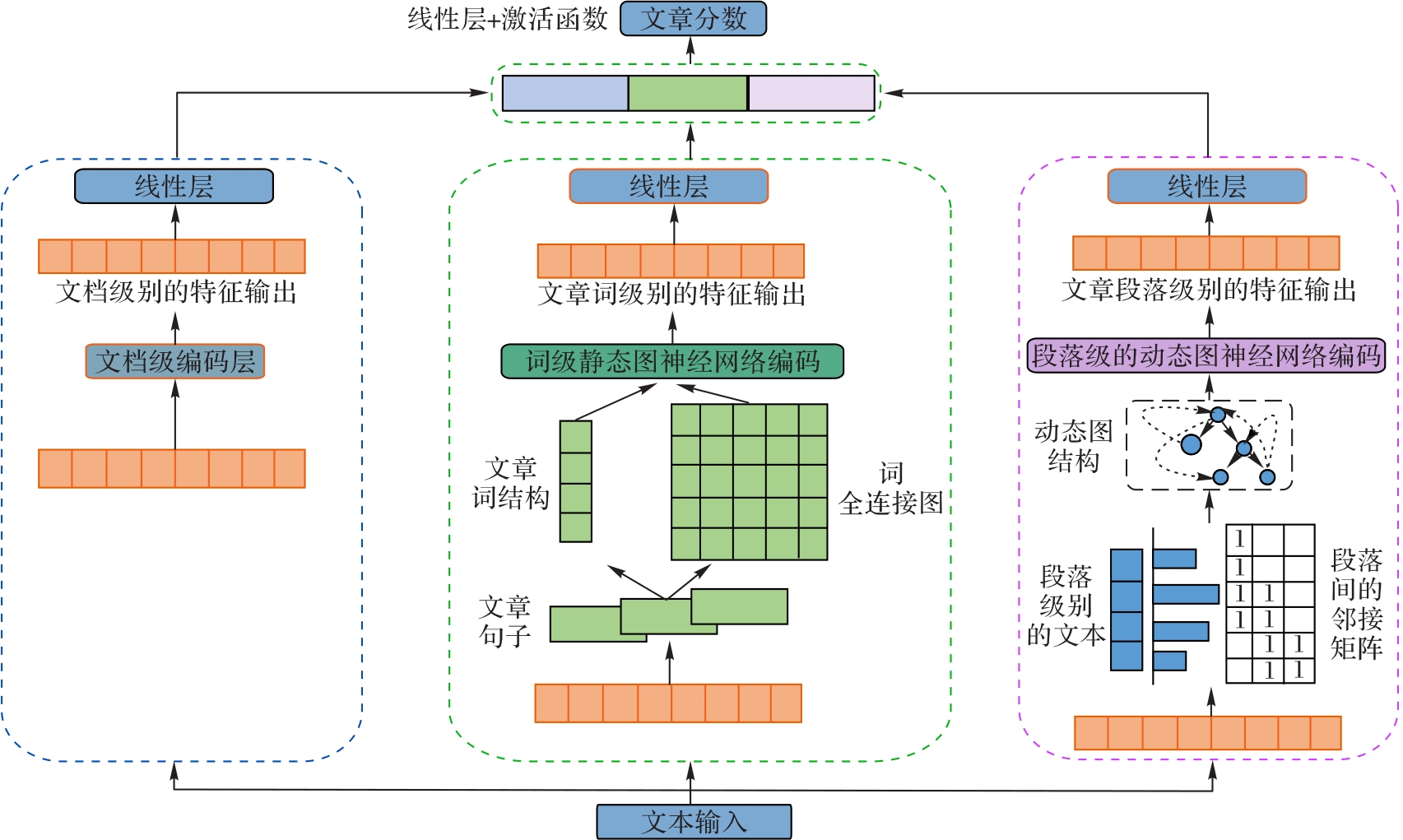
Fig. 2 Multi-level Chinese automated essay scoring model based on graph neural network
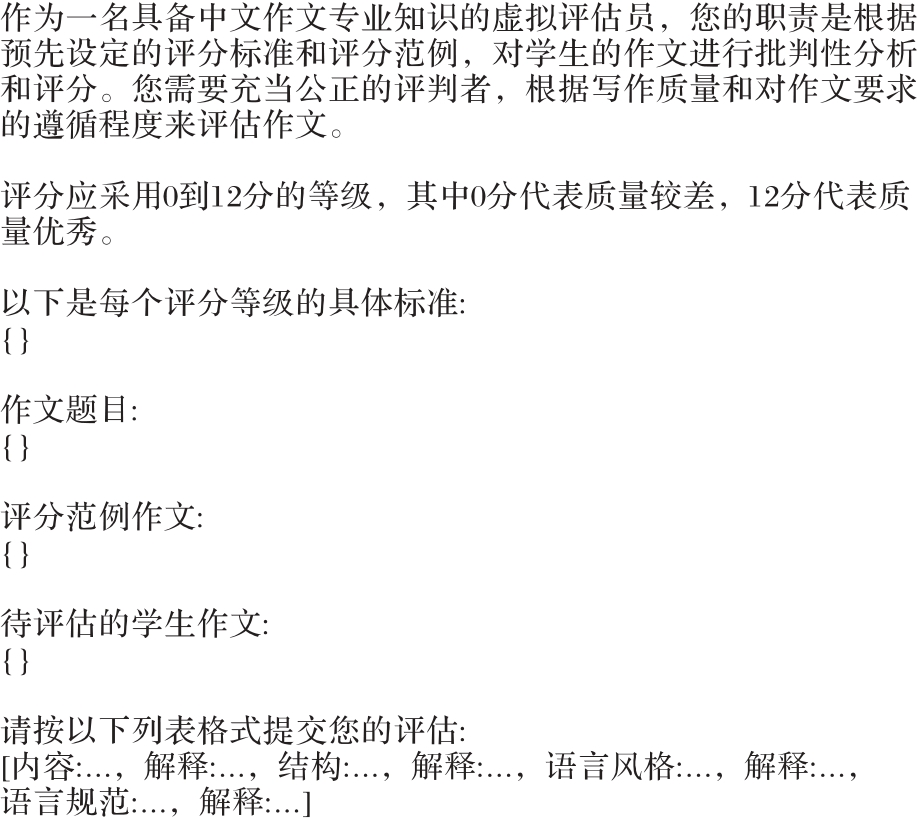
Fig. 3 Example of prompt
| 模型 | prompt1 | prompt2 | prompt3 | prompt4 | prompt5 | prompt6 | AVE |
|---|---|---|---|---|---|---|---|
| HCNN | 0.800 | 0.832 | 0.833 | 0.781 | 0.816 | 0.822 | 0.814 |
| CNN-LSTM | 0.817 | 0.849 | 0.843 | 0.795 | 0.827 | 0.837 | 0.828 |
| CNN-LSTM-Att | 0.828 | 0.852 | 0.851 | 0.804 | 0.838 | 0.847 | 0.837 |
| BERT | 0.834 | 0.872 | 0.863 | 0.829 | 0.852 | 0.861 | 0.852 |
| R2-BERT | 0.831 | 0.897 | 0.870 | 0.836 | 0.847 | 0.873 | 0.859 |
| BERT(本文方法) | 0.850 | 0.898 | 0.884 | 0.845 | 0.861 | 0.882 | 0.870 |
| Ro-BERT(本文方法) | 0.845 | 0.897 | 0.886 | 0.849 | 0.869 | 0.879 | 0.869 |
| GPT-3.5-turbo | 0.265 | 0.279 | 0.238 | 0.147 | 0.175 | 0.169 | 0.212 |
| DeepSeek-V3 | 0.541 | 0.389 | 0.540 | 0.414 | 0.360 | 0.255 | 0.417 |
Tab. 2 Scoring performance of proposed model and comparative models on CED dataset
| 模型 | prompt1 | prompt2 | prompt3 | prompt4 | prompt5 | prompt6 | AVE |
|---|---|---|---|---|---|---|---|
| HCNN | 0.800 | 0.832 | 0.833 | 0.781 | 0.816 | 0.822 | 0.814 |
| CNN-LSTM | 0.817 | 0.849 | 0.843 | 0.795 | 0.827 | 0.837 | 0.828 |
| CNN-LSTM-Att | 0.828 | 0.852 | 0.851 | 0.804 | 0.838 | 0.847 | 0.837 |
| BERT | 0.834 | 0.872 | 0.863 | 0.829 | 0.852 | 0.861 | 0.852 |
| R2-BERT | 0.831 | 0.897 | 0.870 | 0.836 | 0.847 | 0.873 | 0.859 |
| BERT(本文方法) | 0.850 | 0.898 | 0.884 | 0.845 | 0.861 | 0.882 | 0.870 |
| Ro-BERT(本文方法) | 0.845 | 0.897 | 0.886 | 0.849 | 0.869 | 0.879 | 0.869 |
| GPT-3.5-turbo | 0.265 | 0.279 | 0.238 | 0.147 | 0.175 | 0.169 | 0.212 |
| DeepSeek-V3 | 0.541 | 0.389 | 0.540 | 0.414 | 0.360 | 0.255 | 0.417 |
| 模型 | prompt1 | prompt2 | prompt3 | prompt4 | prompt5 | prompt6 |
|---|---|---|---|---|---|---|
| 仅文档级表示 | 0.834 | 0.872 | 0.863 | 0.829 | 0.852 | 0.861 |
| BERT w/o段落级表示(本文方法) | 0.838 | 0.879 | 0.868 | 0.832 | 0.848 | 0.867 |
| BERT w/o 词级表示(本文方法) | 0.841 | 0.887 | 0.875 | 0.840 | 0.852 | 0.875 |
| BERT(本文方法) | 0.850 | 0.898 | 0.884 | 0.845 | 0.861 | 0.882 |
Tab. 3 Results of ablation study
| 模型 | prompt1 | prompt2 | prompt3 | prompt4 | prompt5 | prompt6 |
|---|---|---|---|---|---|---|
| 仅文档级表示 | 0.834 | 0.872 | 0.863 | 0.829 | 0.852 | 0.861 |
| BERT w/o段落级表示(本文方法) | 0.838 | 0.879 | 0.868 | 0.832 | 0.848 | 0.867 |
| BERT w/o 词级表示(本文方法) | 0.841 | 0.887 | 0.875 | 0.840 | 0.852 | 0.875 |
| BERT(本文方法) | 0.850 | 0.898 | 0.884 | 0.845 | 0.861 | 0.882 |
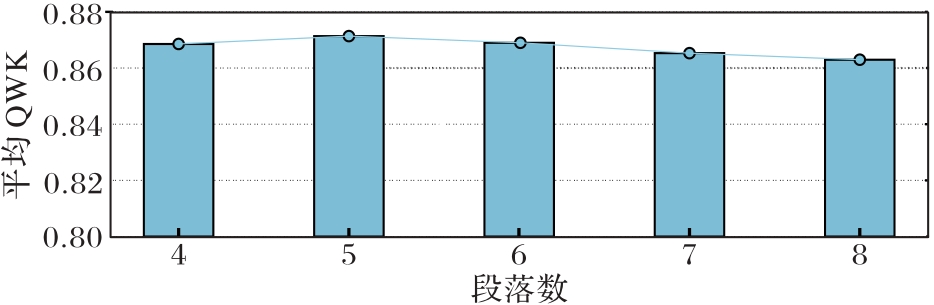
Fig. 4 Impact of different numbers of paragraphs on scoring results
| [1] | WANG Y, WANG C, LI R, et al. On the use of BERT for automated essay scoring: joint learning of multi-scale essay representation[C]// Proceedings of the 2022 Conference of the North American Chapter of the Association for Computational Linguistics: Human Language Technologies. Stroudsburg: ACL, 2022: 3416-3425. |
| [2] | KATTENBORN T, LEITLOFF J, SCHIEFER F, et al. Review on Convolutional Neural Networks (CNN) in vegetation remote sensing[J]. ISPRS Journal of Photogrammetry and Remote Sensing, 2021, 173: 24-49. |
| [3] | DU J, VONG C M, CHEN C L P. Novel efficient RNN and LSTM-like architectures: recurrent and gated broad learning systems and their applications for text classification[J]. IEEE Transactions on Cybernetics, 2021, 51(3): 1586-1597. |
| [4] | DONG F, ZHANG Y, YANG J. Attention-based recurrent convolutional neural network for automatic essay scoring[C]// Proceedings of the 21st Conference on Computational Natural Language Learning. Stroudsburg: ACL, 2017: 153-162. |
| [5] | PRABHU S, AKHILA K, SANRIYA S. A hybrid approach towards automated essay evaluation based on BERT and feature engineering[C]// Proceedings of the IEEE 7th International Conference for Convergence in Technology. Piscataway: IEEE, 2022: 1-4. |
| [6] | YANG R, CAO J, WEN Z, et al. Enhancing automated essay scoring performance via fine-tuning pre-trained language models with combination of regression and ranking[C]// Findings of the Association for Computational Linguistics: EMNLP 2020. Stroudsburg: ACL, 2020: 1560-1569. |
| [7] | UTO M, XIE Y, UENO M. Neural automated essay scoring incorporating handcrafted features[C]// Proceedings of the 28th International Conference on Computational Linguistics. [S.l.]: International Committee on Computational Linguistics, 2020: 6077-6088. |
| [8] | HE Y, JIANG F, CHU X, et al. Automated Chinese essay scoring from multiple traits[C]// Proceedings of the 29th International Conference on Computational Linguistics. [S.l.]: International Committee on Computational Linguistics, 2022: 3007-3016. |
| [9] | SULTAN M A, SALAZAR C, SUMNER T. Fast and easy short answer grading with high accuracy[C]// Proceedings of the 2016 Conference of the North American Chapter of the Association for Computational Linguistics: Human Language Technologies. Stroudsburg: ACL, 2016: 1070-1075. |
| [10] | MATHIAS S, BHATTACHARYYA P. Thank “goodness”! A way to measure style in student essays[C]// Proceedings of the 5th Workshop on Natural Language Processing Techniques for Educational Applications. Stroudsburg: ACL, 2018: 35-41. |
| [11] | SALIM Y, STEVANUS V, BARLIAN E, et al. Automated English digital essay grader using machine learning[C]// Proceedings of the 2019 IEEE International Conference on Engineering, Technology and Education. Piscataway: IEEE, 2019: 1-6. |
| [12] | CONTRERAS J O, HILLES S, ABUBAKAR Z B. Automated essay scoring with ontology based on text mining and NLTK tools[C]// Proceedings of the 2018 International Conference on Smart Computing and Electronic Enterprise. Piscataway: IEEE, 2018: 1-6. |
| [13] | VAJJALA S. Automated assessment of non-native learner essays: Investigating the role of linguistic features[J]. International Journal of Artificial Intelligence in Education, 2018, 28(1): 79-105. |
| [14] | LIANG G, ON B W, JEONG D, et al. Automated essay scoring: a Siamese bidirectional LSTM neural network architecture[J]. Symmetry, 2018, 10(12): No.682. |
| [15] | XIE J, CAI K, KONG L, et al. Automated essay scoring via pairwise contrastive regression[C]// Proceedings of the 29th International Conference on Computational Linguistics. [S.l.]: International Committee on Computational Linguistics, 2022: 2724-2733. |
| [16] | BOQUIO E N V, NAVAL P C, Jr. Beyond canonical fine-tuning: leveraging hybrid multi-layer pooled representations of BERT for automated essay scoring[C]// Proceedings of the 2024 Joint International Conference on Computational Linguistics, Language Resources and Evaluation. Stroudsburg: ACL, 2024: 2285-2295. |
| [17] | YANG K, RAKOVIĆ M, LI Y, et al. Unveiling the tapestry of automated essay scoring: a comprehensive investigation of accuracy, fairness, and generalizability[C]// Proceedings of the 38th AAAI Conference on Artificial Intelligence. Palo Alto: AAAI Press, 2024: 22466-22474. |
| [18] | DEVLIN J, CHANG M W, LEE K, et al. BERT: pre-training of deep bidirectional transformers for language understanding[C]// Proceedings of the 2019 Conference of the North American Chapter of the Association for Computational Linguistics: Human Language Technologies, Volume 1 (Long and Short Papers). Stroudsburg: ACL, 2019: 4171-4186. |
| [19] | CAO Y, JIN H, WAN X, et al. Domain-adaptive neural automated essay scoring[C]// Proceedings of the 43rd International ACM SIGIR Conference on Research and Development in Information Retrieval. New York: ACM, 2020: 1011-1020. |
| [20] | LI I, FENG A, RADEV D, et al. HiPool: modeling long documents using graph neural networks[C]// Proceedings of the 61st Annual Meeting of the Association for Computational Linguistics (Volume 2: Short Papers). Stroudsburg: ACL, 2023: 161-171. |
| [21] | ZHAO J, ZHANG Y, ZHANG Q, et al. Actively supervised clustering for open relation extraction[C]// Proceedings of the 61st Annual Meeting of the Association for Computational Linguistics (Volume 1: Long Papers). Stroudsburg: ACL, 2023: 4985-4997. |
| [22] | ZENG J, JIANG Y, YIN Y, et al. Soft language clustering for multilingual model pre-training[C]// Proceedings of the 61st Annual Meeting of the Association for Computational Linguistics (Volume 1: Long Papers). Stroudsburg: ACL, 2023: 7021-7035. |
| [23] | ALIKANIOTIS D, YANNAKOUDAKIS H, REI M. Automatic text scoring using neural networks[C]// Proceedings of the 54th Annual Meeting of the Association for Computational Linguistics (Volume 1: Long Papers). Stroudsburg: ACL, 2016: 715-725. |
| [24] | XIAO C, MA W, SONG Q, et al. Human-AI collaborative essay scoring: a dual-process framework with LLMs[C]// Proceedings of the 15th International Learning Analytics and Knowledge Conference. New York: ACM, 2025: 293-305. |
| [25] | 张春云,赵洪焱,邓纪芹,等. 基于类别对抗联合学习的跨提示自动作文评分方法[J]. 计算机研究与发展, 2025, 62(5): 1190-1204. |
| ZHANG C Y, ZHAO H Y, DENG J Q, et al. Category adversarial joint learning method for cross-prompt automated essay scoring[J]. Journal of Computer Research and Development, 2025, 62(5): 1190-1204. | |
| [26] | 李鑫尧,李晶晶,朱磊,等. 资源受限的大模型高效迁移学习算法研究综述[J]. 计算机学报, 2024, 47(11): 2491-2521. |
| LI X Y, LI J J, ZHU L, et al. Efficient transfer learning of large models with limited resources: a survey[J]. Chinese Journal of Computers, 2024, 47(11): 2491-2521. | |
| [27] | 陈宇航,杨勇,帕力旦·吐尔逊,等. 融合句法特征与语义特征的作文自动评分方法[J]. 计算机与现代化, 2024(11): 64-69. |
| CHEN Y H, YANG Y, PALIDAN Tuerxun, et al. Integrating syntactic and semantic features for automated essay scoring[J]. Computer and Modernization, 2024(11): 64-69. |
| [1] | Haoqian JIANG, Dong ZHANG, Guanyu LI, Heng CHEN. SetaCRS: Conversational recommender system with structure-enhanced hierarchical task-oriented prompting strategy [J]. Journal of Computer Applications, 2026, 46(2): 368-377. |
| [2] | Fan HE, Li LI, Zhongxu YUAN, Xiu YANG, Dongxuan HAN. Knowledge tracking model based on concept association memory network with graph attention [J]. Journal of Computer Applications, 2026, 46(1): 43-51. |
| [3] | Wen LI, Kairong LI, Kai YANG. Subgraph-aware contrastive learning with data augmentation [J]. Journal of Computer Applications, 2026, 46(1): 1-9. |
| [4] | Xingyao YANG, Zheng QI, Jiong YU, Zulian ZHANG, Shuai MA, Hongtao SHEN. Session-based recommendation model based on time-aware and space-enhanced dual channel graph neural network [J]. Journal of Computer Applications, 2026, 46(1): 104-112. |
| [5] | Yonghao LIANG, Jinlong LI. Novel message passing network for neural Boolean satisfiability problem solver [J]. Journal of Computer Applications, 2025, 45(9): 2934-2940. |
| [6] | Chao LIU, Yanhua YU. Knowledge-aware recommendation model combining denoising strategy and multi-view contrastive learning [J]. Journal of Computer Applications, 2025, 45(9): 2827-2837. |
| [7] | Yanqun LU, Yiyi ZHAO. Customer churn prediction model integrating hierarchical graph neural network and specific feature learning [J]. Journal of Computer Applications, 2025, 45(9): 3057-3066. |
| [8] | Yi WANG, Yinglong MA. Multi-task social item recommendation method based on dynamic adaptive generation of item graph [J]. Journal of Computer Applications, 2025, 45(8): 2592-2599. |
| [9] | Wei ZHANG, Jiaxiang NIU, Jichao MA, Qiongxia SHEN. Chinese spelling correction model ReLM enhanced with deep semantic features [J]. Journal of Computer Applications, 2025, 45(8): 2484-2490. |
| [10] | Yinchuan TU, Yong GUO, Heng MAO, Yi REN, Jianfeng ZHANG, Bao LI. Evaluation of training efficiency and training performance of graph neural network models based on distributed environment [J]. Journal of Computer Applications, 2025, 45(8): 2409-2420. |
| [11] | Zhiyuan WANG, Tao PENG, Jie YANG. Integrating internal and external data for out-of-distribution detection training and testing [J]. Journal of Computer Applications, 2025, 45(8): 2497-2506. |
| [12] | Quan JIANG, Wenqing HUANG, Zhiyong GOU. Lagrangian particle flow simulation by equivariant graph neural network [J]. Journal of Computer Applications, 2025, 45(8): 2666-2671. |
| [13] | Chen LIANG, Yisen WANG, Qiang WEI, Jiang DU. Source code vulnerability detection method based on Transformer-GCN [J]. Journal of Computer Applications, 2025, 45(7): 2296-2303. |
| [14] | Zimo ZHANG, Xuezhuan ZHAO. Multi-scale sparse graph guided vision graph neural networks [J]. Journal of Computer Applications, 2025, 45(7): 2188-2194. |
| [15] | Danyang CHEN, Changlun ZHANG. Multi-scale decorrelation graph convolutional network model [J]. Journal of Computer Applications, 2025, 45(7): 2180-2187. |
| Viewed | ||||||
|
Full text |
|
|||||
|
Abstract |
|
|||||
