


Journal of Computer Applications ›› 2026, Vol. 46 ›› Issue (2): 354-360.DOI: 10.11772/j.issn.1001-9081.2025020238
• Artificial intelligence • Previous Articles
Jindong HE1,2, Yuxuan JI1, Tianci CHEN1, Hengming XU3, Ji GENG1, Mingsheng CAO1( ), Yuanning LIANG4
Received:2025-03-20
Revised:2025-04-22
Accepted:2025-04-28
Online:2025-05-16
Published:2026-02-10
Contact:
Mingsheng CAO
About author:HE Jindong, born in 1982, Ph. D. candidate, senior engineer. His research interests include network security.Supported by:
何金栋1,2, 及宇轩1, 陈天赐1, 许恒铭3, 耿技1, 曹明生1(), 梁员宁4
通讯作者:
曹明生
作者简介:何金栋(1982—),男,福建福州人,正高级工程师,博士研究生,主要研究方向:网络安全基金资助:CLC Number:
Jindong HE, Yuxuan JI, Tianci CHEN, Hengming XU, Ji GENG, Mingsheng CAO, Yuanning LIANG. Entity discovery method for non-intelligent sensors by integrating knowledge graph and large models[J]. Journal of Computer Applications, 2026, 46(2): 354-360.
何金栋, 及宇轩, 陈天赐, 许恒铭, 耿技, 曹明生, 梁员宁. 基于知识图谱和大模型的非智能传感器的实体发现方法[J]. 《计算机应用》唯一官方网站, 2026, 46(2): 354-360.
Add to citation manager EndNote|Ris|BibTeX
URL: https://www.joca.cn/EN/10.11772/j.issn.1001-9081.2025020238
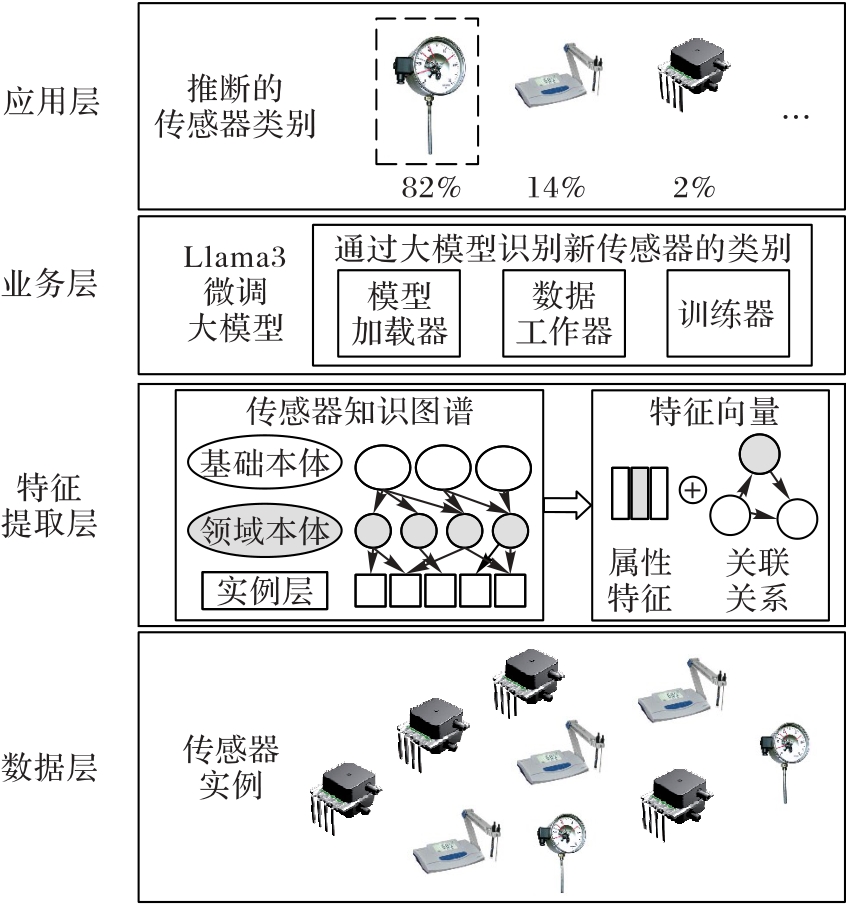
Fig. 1 Overall architecture of proposed method

Fig. 2 Knowledge graph of non-intelligent sensors
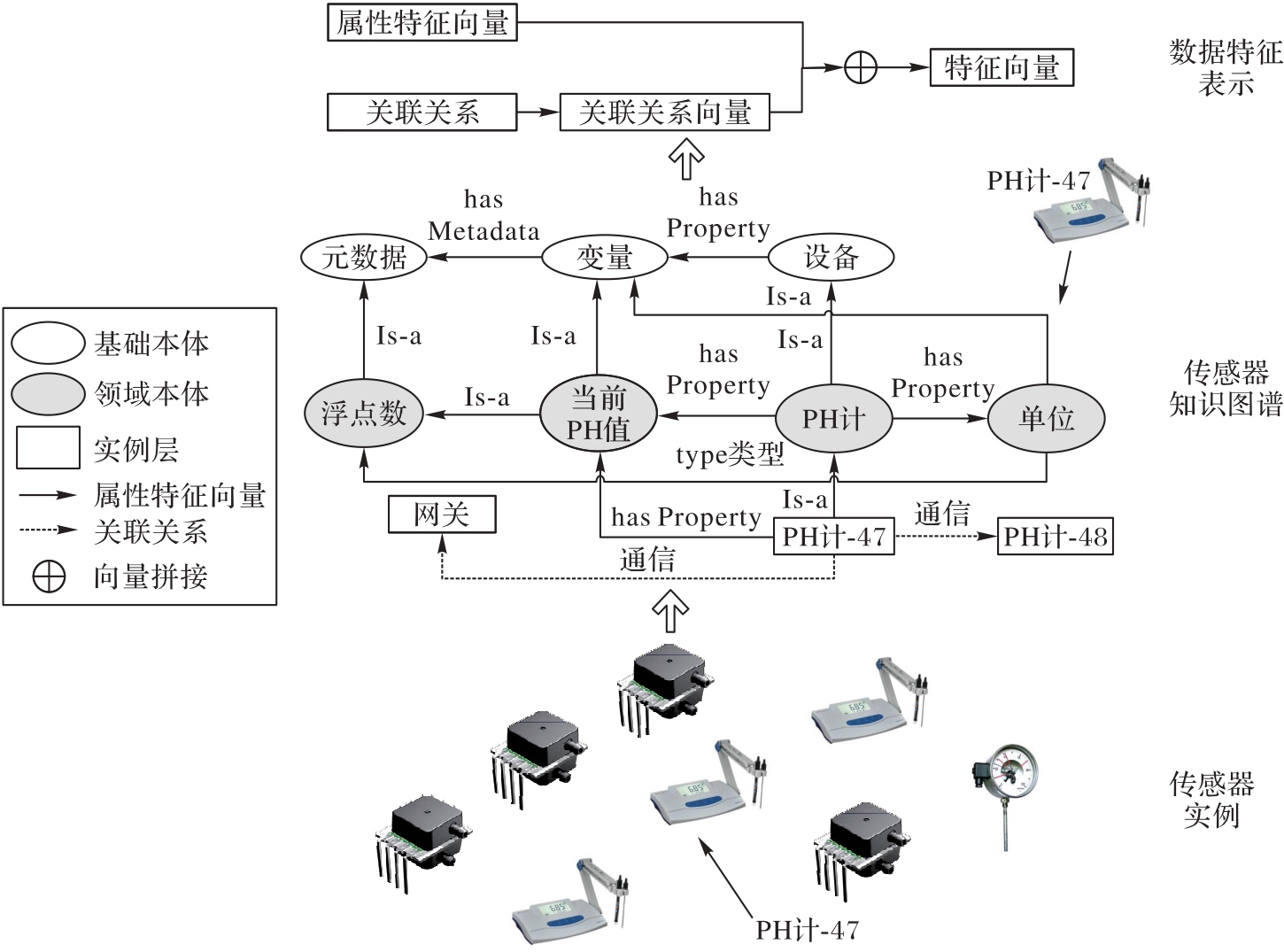
Fig. 3 Sensor data feature representation process
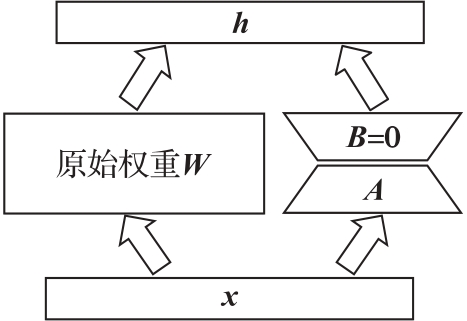
Fig. 4 LoRA fine-tuning principle
| 方法 | F1分数 | 精确率 | 召回率 | 准确率 |
|---|---|---|---|---|
| SVM | 0.758 | 0.818 | 0.718 | 0.718 |
| KNN | 0.445 | 0.824 | 0.312 | 0.343 |
| DT | 0.765 | 0.812 | 0.719 | 0.735 |
| RF | 0.788 | 0.852 | 0.733 | 0.742 |
| HGAT | 0.868 | 0.873 | 0.852 | 0.876 |
| fastGTN | 0.860 | 0.876 | 0.845 | 0.862 |
| MAGNN | 0.858 | 0.869 | 0.848 | 0.872 |
| 本文方法 | 0.947 | 0.961 | 0.934 | 0.962 |
Tab. 1 Performance comparison of experimental methods
| 方法 | F1分数 | 精确率 | 召回率 | 准确率 |
|---|---|---|---|---|
| SVM | 0.758 | 0.818 | 0.718 | 0.718 |
| KNN | 0.445 | 0.824 | 0.312 | 0.343 |
| DT | 0.765 | 0.812 | 0.719 | 0.735 |
| RF | 0.788 | 0.852 | 0.733 | 0.742 |
| HGAT | 0.868 | 0.873 | 0.852 | 0.876 |
| fastGTN | 0.860 | 0.876 | 0.845 | 0.862 |
| MAGNN | 0.858 | 0.869 | 0.848 | 0.872 |
| 本文方法 | 0.947 | 0.961 | 0.934 | 0.962 |
| 参数 | 值 |
|---|---|
| epoch | 13 |
| cutoff_len | 2 048 |
| learning_rate | 5E-5 |
| batch_size | 1 |
| gradient_accumulation | 4/8 |
Tab. 2 Parameter setting
| 参数 | 值 |
|---|---|
| epoch | 13 |
| cutoff_len | 2 048 |
| learning_rate | 5E-5 |
| batch_size | 1 |
| gradient_accumulation | 4/8 |
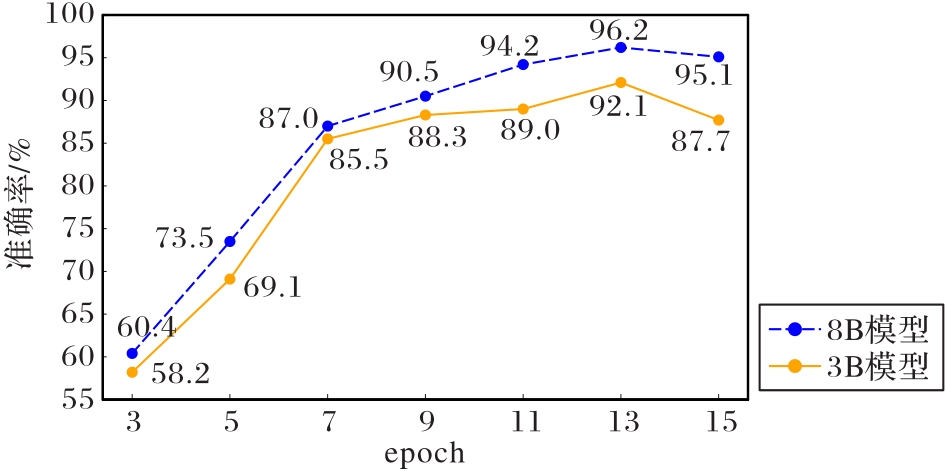
Fig. 5 Relationship between training epoch and accuracy
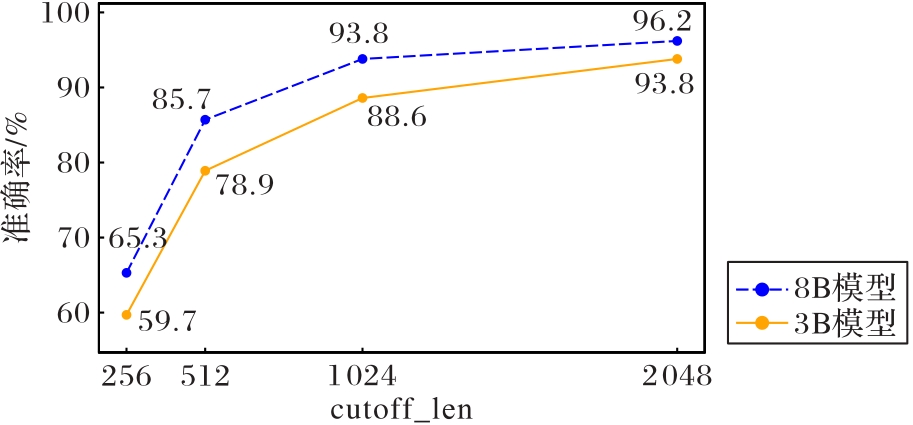
Fig. 6 Relationship between cutoff length and average accuracy
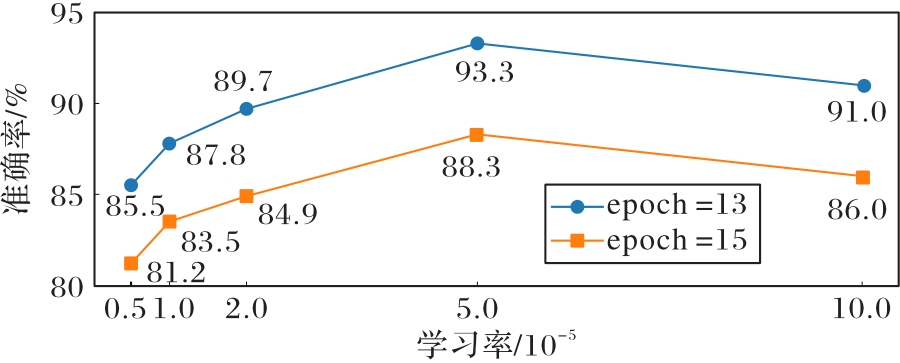
Fig. 7 Relationship between learning rate and average accuracy
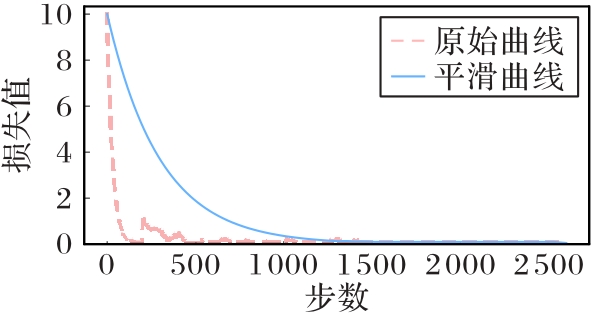
Fig. 8 Model’s LoRA fine-tuning loss
| [1] | 张普宁,亢旭源,刘宇哲,等. 相似度自适应估计的物联网实体高效搜索方法[J]. 电子与信息学报, 2020, 42(7): 1702-1709. |
| ZHANG P N, KANG X Y, LIU Y Z, et al. Efficient search method for IoT entities with similarity adaptive estimation[J]. Journal of Electronics and Information Technology, 2020, 42(7):1702-1709. | |
| [2] | 蒋栋年,李炜,王君,等. 基于故障可诊断性量化评价的传感器优化配置方法研究[J]. 自动化学报, 2018, 44(6): 1128-1137. |
| JIANG D N, LI W, WANG J, et al. Research on sensor optimal placement method using quantitative evaluation of fault diagnosability[J]. Acta Automatica Sinica, 2018, 44(6): 1128-1137. | |
| [3] | 何曙光,石枚弘. 考虑生产任务的制造设备关键部件的机会维修优化[J]. 控制与决策, 2023, 38(3): 715-720. |
| HE S G, SHI M H. Opportunistic maintenance optimization for key components of manufacturing equipment considering production tasks[J]. Control and Decision, 2023, 38(3): 715-720. | |
| [4] | 伊德尔昆,孙锴,王滨,等. 无线传感器网络时钟同步中节点之间的延时分布[J]. 计算机应用, 2020, 40(S2): 85-89. |
| YI D E K, SUN K, WANG B, et al. Delay distribution between nodes in clock synchronization of wireless sensor networks[J]. Journal of Computer Applications, 2020, 40(S2): 85-89. | |
| [5] | CHEN D, ZHAO Z, QIN X, et al. MAGLeak: a learning-based side-channel attack for password recognition with multiple sensors in IIoT environment[J]. IEEE Transactions on Industrial Informatics, 2022, 18(1): 467-476. |
| [6] | 袁牧,张兰,姚云昊,等. 面向智能物联网的资源高效模型推理综述[J]. 计算机学报, 2024, 47(10): 2247-2273. |
| YUAN M, ZHANG L, YAO Y H, et al. Resource-efficient model inference for AIoT: a survey[J]. Chinese Journal of Computers, 2024, 47(10): 2247-2273. | |
| [7] | DENG H, HUANG J, LIU Q, et al. BGSD: a SBERT and GAT-based service discovery framework for heterogeneous distributed IoT[J]. Computer Networks, 2023, 220: No.109488. |
| [8] | 李鸣,许善智,尹雨晴,等. WiFi与ZigBee双向移动跨网通信方法研究[J]. 电子学报, 2024, 52(11): 3858-3864. |
| LI M, XU S Z, YIN Y Q, et al. Research on bidirectional mobile cross-technology communication method between WiFi and ZigBee[J]. Acta Electronica Sinica, 2024, 52(11): 3858-3864. | |
| [9] | 何蓉,方旭明. 蓝牙Ad hoc网络形成算法的性能评价[J]. 计算机应用, 2005, 25(5): 1173-1176. |
| HE R, FANG X M. Performance evaluation of Bluetooth Ad hoc network formation algorithms[J]. Journal of Computer Applications, 2005, 25(5): 1173-1176. | |
| [10] | GÖRGÜ L, KROON B, O’GRADY M J, et al. Sensor discovery in ambient IoT ecosystems[J]. Journal of Ambient Intelligence and Humanized Computing, 2018, 9(2): 447-458. |
| [11] | 韩蓓,盛戈皞,江秀臣,等. 基于ZigBee无线传感网络的导线接头在线测温系统[J]. 电力系统自动化, 2008, 32(16): 72-77. |
| HAN B, SHENG G H, JIANG X C, et al. An online thermal condition monitoring system with wireless sensor network based on ZigBee technology for transmission line joints[J]. Automation of Electric Power Systems, 2008, 32(16): 72-77. | |
| [12] | AMIN S I, KHALED Y Y, AHMED H, et al. Adaptive aggregation based IoT traffic patterns for optimizing smart city network performance[J]. Alexandria Engineering Journal, 2022, 61(12): 9553-9568. |
| [13] | SAGAR S, MAHMOOD A, WANG K, et al. Trust⁃SIoT: toward trustworthy object classification in the social internet of things[J]. IEEE Transactions on Network and Service Management, 2023, 20(2): 1210-1223. |
| [14] | RODRIGUEZ-MIER P, PEDRINACI C, LAMA M, et al. An integrated semantic web service discovery and composition framework[J]. IEEE Transactions on Services Computing, 2016, 9(4): 537-550. |
| [15] | WAN Y, XU K, WANG F, et al. IoTAthena: unveiling IoT device activities from network traffic[J]. IEEE Transactions on Wireless Communications, 2022, 21(1): 651-664. |
| [16] | 秦臻,庄添铭,朱国淞,等. 面向人工智能模型的安全攻击和防御策略综述[J]. 计算机研究与发展, 2024, 61(10): 2627-2648. |
| QIN Z, ZHUANG T M, ZHU G S, et al. Survey of security attack and defense strategies for artificial intelligence model[J]. Journal of Computer Research and Development, 2024, 61(10): 2627-2648. | |
| [17] | 田玲,张谨川,张晋豪,等. 知识图谱综述:表示、构建、推理与知识超图理论[J]. 计算机应用, 2021, 41(8): 2161-2186. |
| TIAN L, ZHANG J C, ZHANG J H, et al. Knowledge graph survey: representation, construction, reasoning and knowledge hypergraph theory[J]. Journal of Computer Applications, 2021, 41(8): 2161-2186. | |
| [18] | 焦守龙,段友祥,孙歧峰,等. 融合实体描述信息和邻居节点特征的知识表示学习方法[J]. 计算机应用, 2022, 42(4): 1050-1056. |
| JIAO S L, DUAN Y X, SUN Q F, et al. Knowledge representation learning method incorporating entity description information and neighbor node features[J]. Journal of Computer Applications, 2022, 42(4): 1050-1056. | |
| [19] | XIE C, YU B, ZENG Z, et al. Multilayer Internet-of-Things middleware based on knowledge graph[J]. IEEE Internet of Things Journal, 2021, 8(4): 2635-2648. |
| [20] | ZENG Z, XIE C, TAO W, et al. Knowledge-graph-based IoTs entity discovery middleware for nonsmart sensor[J]. IEEE Transactions on Industrial Informatics, 2024, 20(2): 2551-2563. |
| [21] | KHOKHLOV I, REZNIK L. Knowledge graph in data quality evaluation for IoT applications[C]// Proceedings of the 2020 IEEE 6th World Forum on Internet of Things (WF-IoT). Piscataway: IEEE, 2020: 1-6. |
| [22] | YIM H J, SON Y H, LEE K C. A data distribution service quality of services policy configuration for data/events/services in the internet of things[J]. Advanced Science Letters, 2016, 22(11): 3612-3617. |
| [23] | ZHANG N, SHANG F, LI X. Knowledge graph construction method for mobile IOT management platform device anomaly[C]// Proceedings of the 2023 12th International Conference of Information and Communication Technology (ICTech). Piscataway: IEEE, 2023: 376-382. |
| [24] | HUANG Y, XUE X, JIANG C. Semantic integration of sensor knowledge on artificial Internet of things[J]. Wireless Communications and Mobile Computing, 2020, 25: 1-8. |
| [25] | LU Y, WANG H, XU X. ManuService ontology: a product data model for service-oriented business interactions in a cloud manufacturing environment[J]. Journal of Intelligent Manufacturing, 2019, 30(1): 317-334. |
| [26] | LIU J, LI T, JI S, et al. Urban flow pattern mining based on multi-source heterogeneous data fusion and knowledge graph embedding[J]. IEEE Transactions on Knowledge and Data Engineering, 2023, 35(2): 2133-2146. |
| [27] | VELIČKOVIĆ P, CUCURULL G, CASANOVA A, et al. Graph attention networks[EB/OL]. [2024-12-15].. |
| [28] | justZZY. Model data sensor of knowledge graph based adaptive IoTs middleware[EB/OL]. [2024-12-15].. |
| [29] | YANG T, HU L, SHI C, et al. HGAT: heterogeneous graph attention networks for semi-supervised short text classification[J]. ACM Transactions on Information Systems, 2021, 39(3): No.32. |
| [30] | YUN S, JEONG M, YOO S, et al. Graph Transformer networks: learning meta-path graphs to improve GNNs[J]. Neural Networks, 2022, 153: 104-119. |
| [31] | CHEN J, SHI L, CHEN B. RSEA-MVGNN: multi-view graph neural network with reliable structural enhancement and aggregation[J]. Information Fusion, 2025, 121: No.103143. |
| [1] | Xue WANG, Liping ZHANG, Sheng YAN, Na LI, Xuefei ZHANG. Review of multi-modal knowledge graph completion methods [J]. Journal of Computer Applications, 2026, 46(2): 341-353. |
| [2] | Fei WANG, Ye TAO, Jiawang LIU, Wei LI, Xiugong QIN, Ning ZHANG. Bimodal fusion method for constructing spatio-temporal knowledge graph in smart home space [J]. Journal of Computer Applications, 2026, 46(1): 52-59. |
| [3] | Sheping ZHAI, Pengju ZHU, Rui YANG, Jiayiteng LIU. Blockchain-based identity management system for internet of things [J]. Journal of Computer Applications, 2025, 45(9): 2873-2881. |
| [4] | Chao LIU, Yanhua YU. Knowledge-aware recommendation model combining denoising strategy and multi-view contrastive learning [J]. Journal of Computer Applications, 2025, 45(9): 2827-2837. |
| [5] | Xiaoyang ZHAO, Xinzheng XU, Zhongnian LI. Research review on explainable artificial intelligence in internet of things applications [J]. Journal of Computer Applications, 2025, 45(7): 2169-2179. |
| [6] | Lixiao ZHANG, Yao MA, Yuli YANG, Dan YU, Yongle CHEN. Large-scale IoT binary component identification based on named entity recognition [J]. Journal of Computer Applications, 2025, 45(7): 2288-2295. |
| [7] | Shuang LIU, Daqing LIU, Jiana MENG, Di ZHAO. Hyper-relational knowledge graph completion method fusing noise filtering [J]. Journal of Computer Applications, 2025, 45(6): 1817-1826. |
| [8] | Sheping ZHAI, Qing YANG, Yan HUANG, Rui YANG. Knowledge graph completion using hierarchical attention fusing directed relationships and relational paths [J]. Journal of Computer Applications, 2025, 45(4): 1148-1156. |
| [9] | Liqin WANG, Zhilei GENG, Yingshuang LI, Yongfeng DONG, Meng BIAN. Open-world knowledge reasoning model based on path and enhanced triplet text [J]. Journal of Computer Applications, 2025, 45(4): 1177-1183. |
| [10] | Zixin XU, Xiuwen YI, Jie BAO, Tianrui LI, Junbo ZHANG, Yu ZHENG. Construction and application of knowledge graph for epidemiological investigation [J]. Journal of Computer Applications, 2025, 45(4): 1340-1348. |
| [11] | Chun XU, Shuangyan JI, Huan MA, Enwei SUN, Mengmeng WANG, Mingyu SU. Consultation recommendation method based on knowledge graph and dialogue structure [J]. Journal of Computer Applications, 2025, 45(4): 1157-1168. |
| [12] | Yiheng SUN, Maofu LIU. Tender information extraction method based on prompt tuning of knowledge [J]. Journal of Computer Applications, 2025, 45(4): 1169-1176. |
| [13] | Peng CAO, Guangqi WEN, Jinzhu YANG, Gang CHEN, Xinyi LIU, Xuechun JI. Efficient fine-tuning method of large language models for test case generation [J]. Journal of Computer Applications, 2025, 45(3): 725-731. |
| [14] | Yan YANG, Feng YE, Dong XU, Xuejie ZHANG, Jin XU. Construction of digital twin water conservancy knowledge graph integrating large language model and prompt learning [J]. Journal of Computer Applications, 2025, 45(3): 785-793. |
| [15] | Chengzhe YUAN, Guohua CHEN, Dingding LI, Yuan ZHU, Ronghua LIN, Hao ZHONG, Yong TANG. ScholatGPT: a large language model for academic social networks and its intelligent applications [J]. Journal of Computer Applications, 2025, 45(3): 755-764. |
| Viewed | ||||||
|
Full text |
|
|||||
|
Abstract |
|
|||||
