


Journal of Computer Applications ›› 2026, Vol. 46 ›› Issue (5): 1614-1623.DOI: 10.11772/j.issn.1001-9081.2025050574
• Frontier and comprehensive applications • Previous Articles
Xuechao LIAO1,2( ), Rui CHEN1,2
Received:2025-05-28
Revised:2025-08-07
Accepted:2025-08-20
Online:2025-08-28
Published:2026-05-10
Contact:
Xuechao LIAO
About author:CHEN Rui, born in 2001, M. S. candidate. His research interests include fault detection.
Supported by:
廖雪超1,2(), 陈睿1,2
通讯作者:
廖雪超
作者简介:陈睿(2001—),男,湖北黄冈人,硕士研究生,主要研究方向:故障检测。
基金资助:CLC Number:
Xuechao LIAO, Rui CHEN. Prediction-evaluation framework for anomaly detection in electric vehicle lithium-ion battery[J]. Journal of Computer Applications, 2026, 46(5): 1614-1623.
廖雪超, 陈睿. 电动汽车锂离子电池预测-评估故障检测框架[J]. 《计算机应用》唯一官方网站, 2026, 46(5): 1614-1623.
Add to citation manager EndNote|Ris|BibTeX
URL: https://www.joca.cn/EN/10.11772/j.issn.1001-9081.2025050574
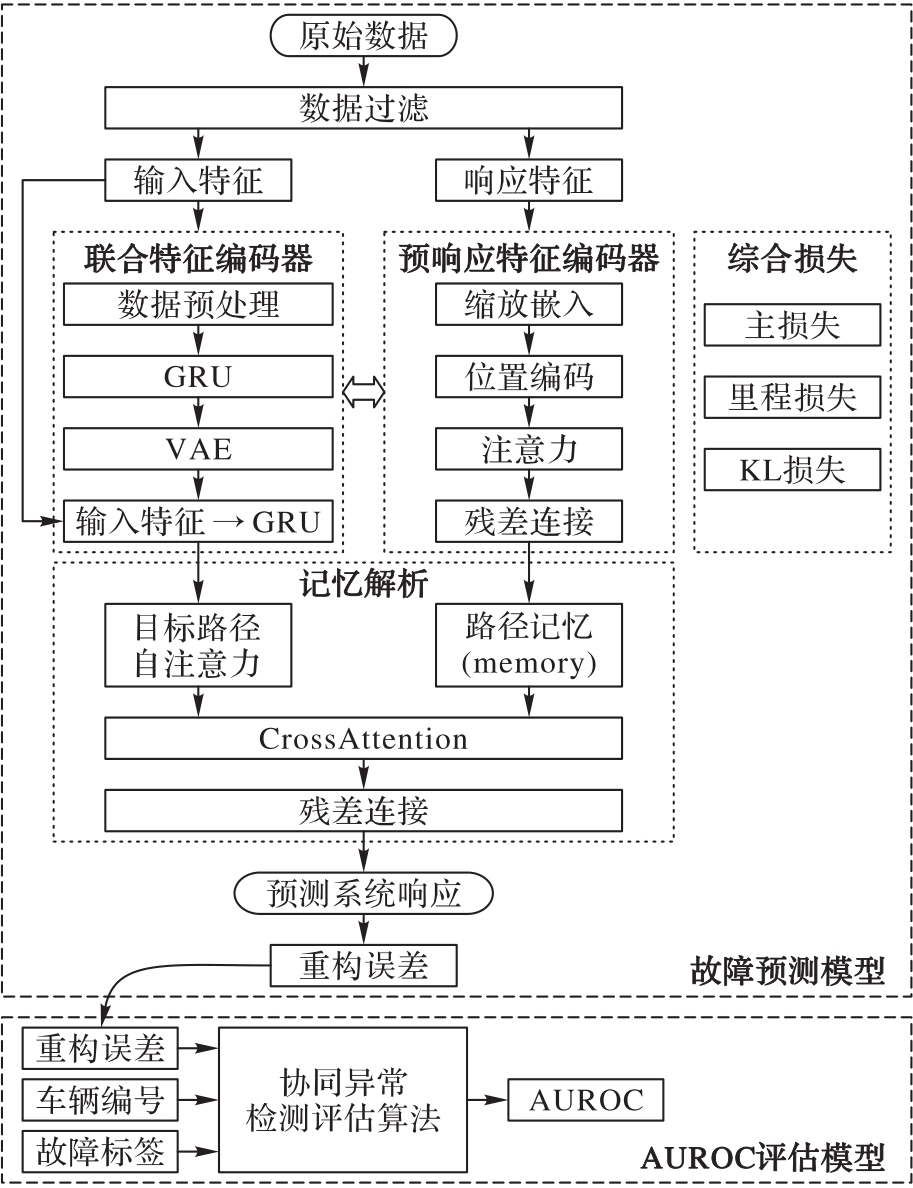
Fig. 1 Prediction-evaluation framework
| 训练函数 | 定义 | 计算公式 |
|---|---|---|
| MseLoss | 均方误差 | |
| MaeLoss | 平均绝对误差 | |
| SmoothLoss | 光滑损失 |
Tab. 1 Three types of loss functions
| 训练函数 | 定义 | 计算公式 |
|---|---|---|
| MseLoss | 均方误差 | |
| MaeLoss | 平均绝对误差 | |
| SmoothLoss | 光滑损失 |
| 特征 | 英文 | 中文 | 特征 |
|---|---|---|---|
| X1 | SoC | 剩余电池电量 | 输入特征 |
| X2 | current | 电流 | 输入特征 |
| Y1 | Min_temp | 最小温度 | 响应特征 |
| Y2 | Max_single_volt | 最大单体电压 | 响应特征 |
| Y3 | Max_temp | 最大温度 | 响应特征 |
| Y4 | Min_single_volt | 最小单体电压 | 响应特征 |
| Y5 | volt | 电压 | 响应特征 |
| Y6 | mileage | 里程 | 弱监督特征 |
Tab. 2 Feature mapping
| 特征 | 英文 | 中文 | 特征 |
|---|---|---|---|
| X1 | SoC | 剩余电池电量 | 输入特征 |
| X2 | current | 电流 | 输入特征 |
| Y1 | Min_temp | 最小温度 | 响应特征 |
| Y2 | Max_single_volt | 最大单体电压 | 响应特征 |
| Y3 | Max_temp | 最大温度 | 响应特征 |
| Y4 | Min_single_volt | 最小单体电压 | 响应特征 |
| Y5 | volt | 电压 | 响应特征 |
| Y6 | mileage | 里程 | 弱监督特征 |
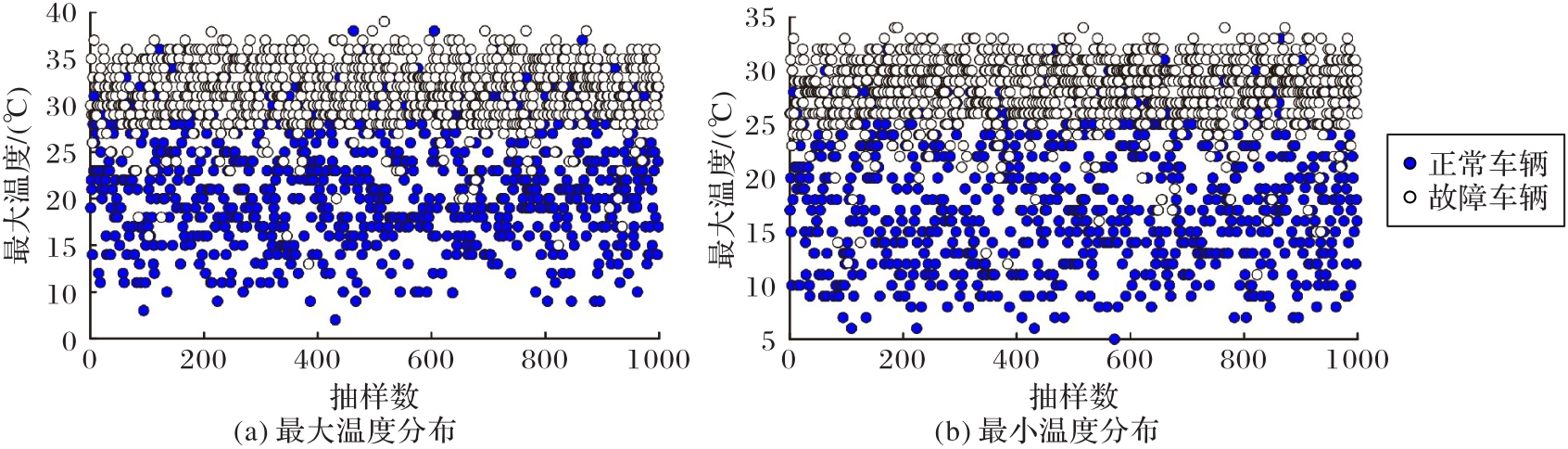
Fig. 2 Random sampling results of temperature distribution
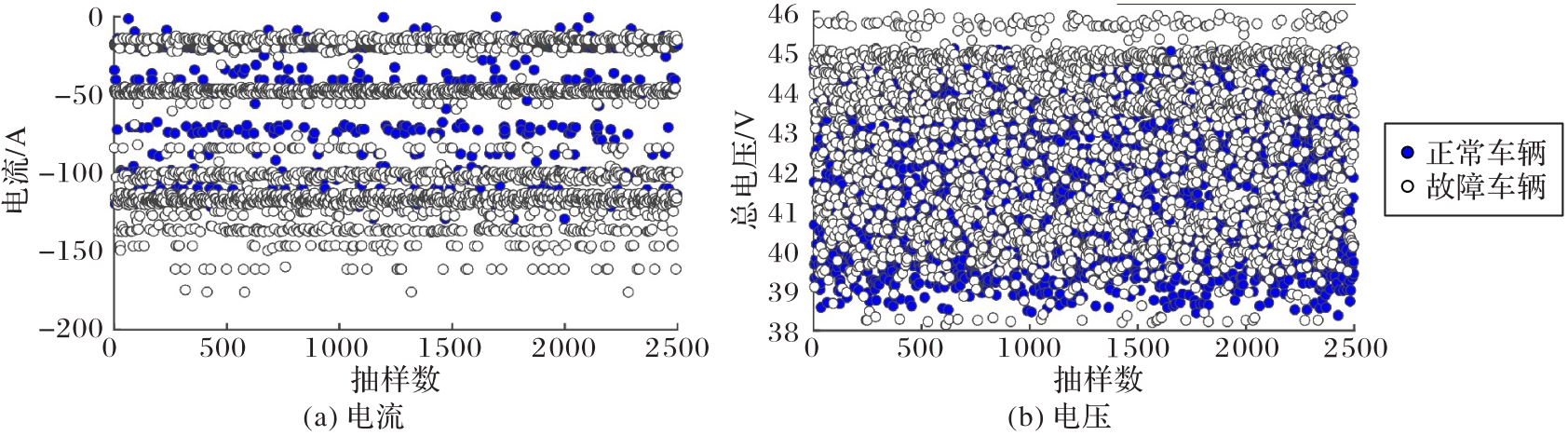
Fig. 3 Sampling results of charging time slices
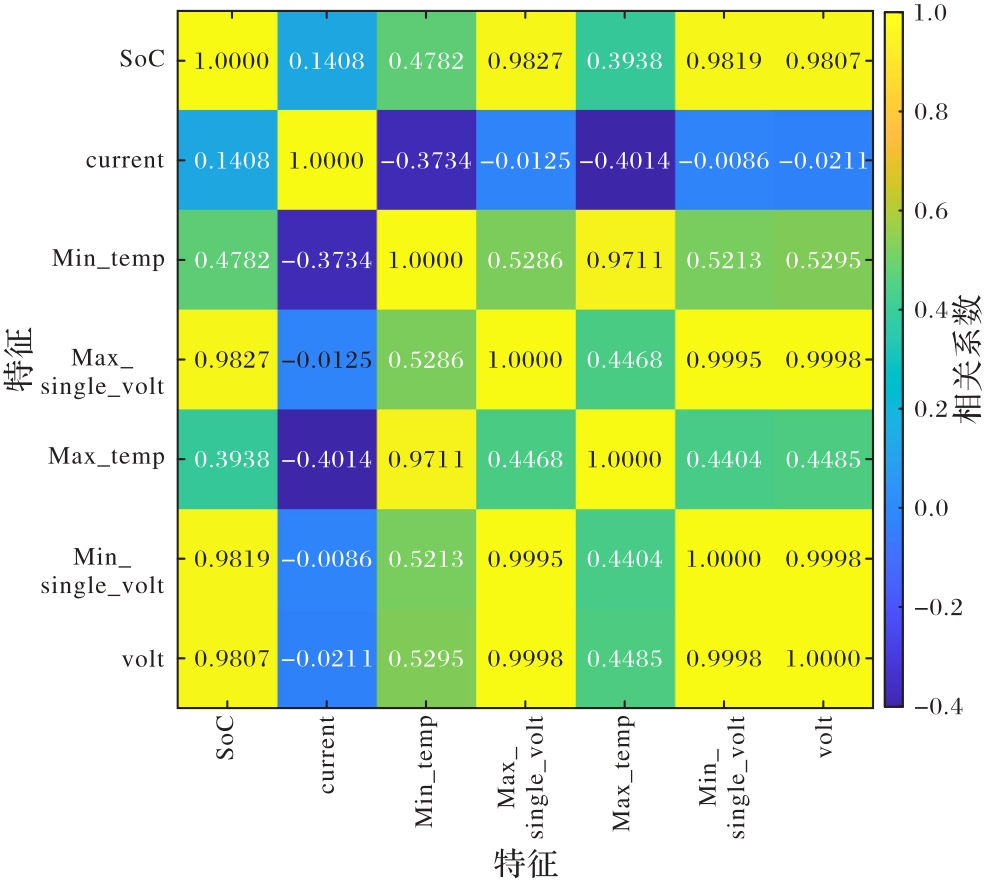
Fig. 4 Feature correlation coefficient matrix
| 模型设置 | 参数设置 | 模型设置 | 参数设置 |
|---|---|---|---|
| 优化器 | AdamW | 隐藏层大小 | 128 |
| 优化器参数 | 0.1 | VAE特征维度 | 16 |
| 学习率 | 0.01 | 噪声比例 | 0.01 |
| 训练轮数 | 20 | dropout | 0.1 |
| w3 | 0.1 | 多头头数 | 5 |
| 批次大小 | 128 | 前馈网络层数 | 1 024 |
| RNN网络类型 | 双向GRU | 潜在空间层数 | 16 |
| w1 | 10 | w2 | 0.001 |
Tab. 3 Model parameter settings
| 模型设置 | 参数设置 | 模型设置 | 参数设置 |
|---|---|---|---|
| 优化器 | AdamW | 隐藏层大小 | 128 |
| 优化器参数 | 0.1 | VAE特征维度 | 16 |
| 学习率 | 0.01 | 噪声比例 | 0.01 |
| 训练轮数 | 20 | dropout | 0.1 |
| w3 | 0.1 | 多头头数 | 5 |
| 批次大小 | 128 | 前馈网络层数 | 1 024 |
| RNN网络类型 | 双向GRU | 潜在空间层数 | 16 |
| w1 | 10 | w2 | 0.001 |
| 模型 | MseLoss | MaeLoss | SmoothLoss |
|---|---|---|---|
| AE | 0.134 47 | 0.274 87 | 0.066 63 |
| DeepSVDD | 1.958 68 | 2.058 92 | 1.985 98 |
| DyAD | 0.075 50 | 0.426 73 | 0.034 20 |
| DTAD | 0.092 13 | 0.470 81 | 0.033 44 |
| DMAD | 0.073 71 | 0.389 50 | 0.037 10 |
| DTMAD | 0.069 96 | 0.499 19 | 0.029 25 |
Tab. 4 Average training losses of different loss functions
| 模型 | MseLoss | MaeLoss | SmoothLoss |
|---|---|---|---|
| AE | 0.134 47 | 0.274 87 | 0.066 63 |
| DeepSVDD | 1.958 68 | 2.058 92 | 1.985 98 |
| DyAD | 0.075 50 | 0.426 73 | 0.034 20 |
| DTAD | 0.092 13 | 0.470 81 | 0.033 44 |
| DMAD | 0.073 71 | 0.389 50 | 0.037 10 |
| DTMAD | 0.069 96 | 0.499 19 | 0.029 25 |
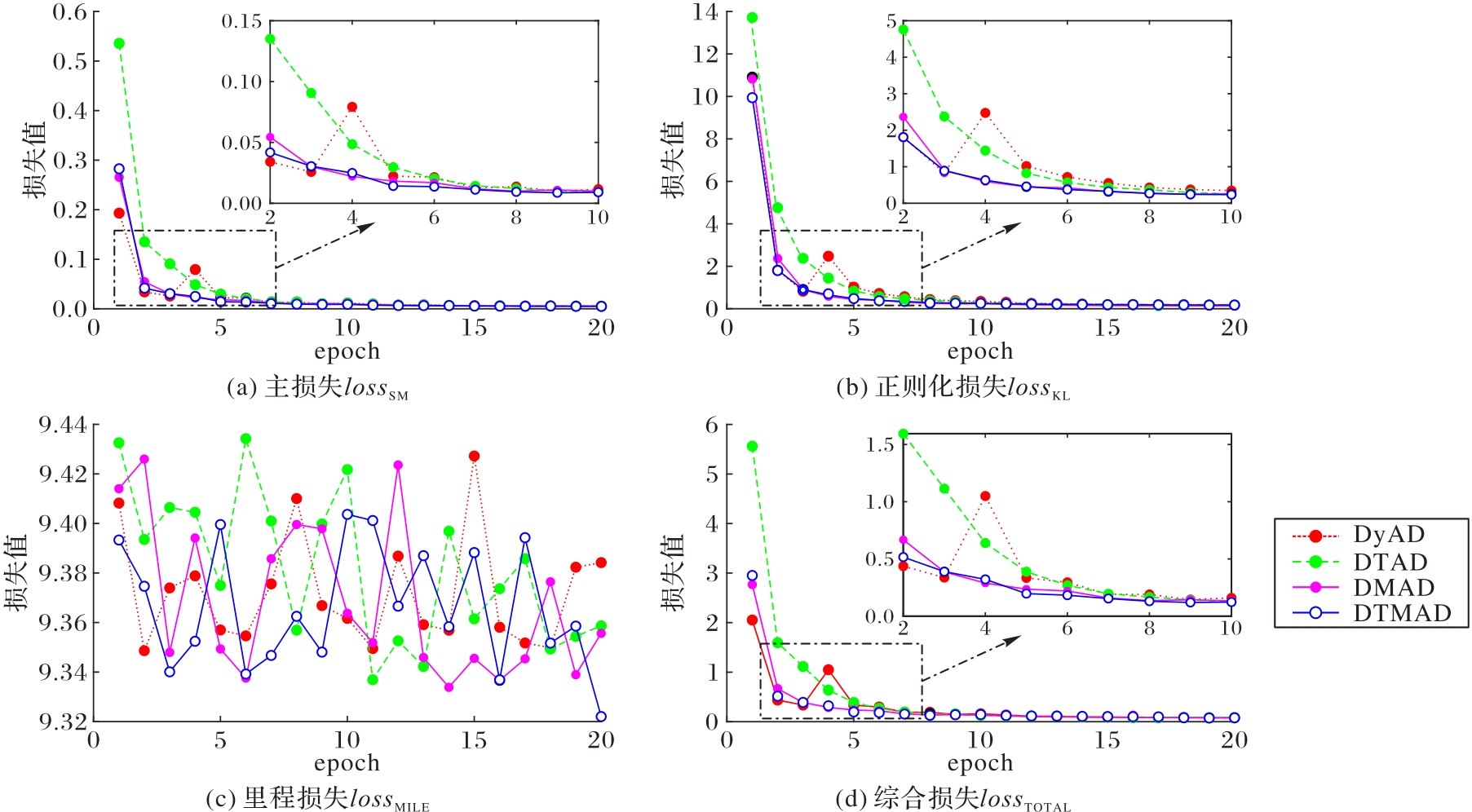
Fig. 5 Training process of multi-dimensional losses
| 模型 | 主损失 | 正则化损失 | 里程损失 | 综合损失 |
|---|---|---|---|---|
| DyAD | 0.005 31 | 0.168 99 | 9.384 19 | 0.079 45 |
| DTAD | 0.005 56 | 0.155 06 | 9.358 67 | 0.080 48 |
| DMAD | 0.005 46 | 0.146 05 | 9.355 63 | 0.078 61 |
| DTMAD | 0.004 92 | 0.154 87 | 9.322 03 | 0.074 02 |
Tab. 5 Total loss comparison of each model
| 模型 | 主损失 | 正则化损失 | 里程损失 | 综合损失 |
|---|---|---|---|---|
| DyAD | 0.005 31 | 0.168 99 | 9.384 19 | 0.079 45 |
| DTAD | 0.005 56 | 0.155 06 | 9.358 67 | 0.080 48 |
| DMAD | 0.005 46 | 0.146 05 | 9.355 63 | 0.078 61 |
| DTMAD | 0.004 92 | 0.154 87 | 9.322 03 | 0.074 02 |
| 隐藏层大小 | 综合损失 | AUROC | 批次大小 | 综合损失 | AUROC |
|---|---|---|---|---|---|
| 32 | 0.100 6 | 0.847 | 32 | 0.114 8 | 0.826 |
| 64 | 0.096 1 | 0.841 | 64 | 0.107 9 | 0.861 |
| 128 | 0.075 6 | 0.913 | 128 | 0.075 6 | 0.913 |
| 256 | 0.094 1 | 0.909 | 256 | 0.091 9 | 0.888 |
Tab. 6 Model performance under different hyperparameters
| 隐藏层大小 | 综合损失 | AUROC | 批次大小 | 综合损失 | AUROC |
|---|---|---|---|---|---|
| 32 | 0.100 6 | 0.847 | 32 | 0.114 8 | 0.826 |
| 64 | 0.096 1 | 0.841 | 64 | 0.107 9 | 0.861 |
| 128 | 0.075 6 | 0.913 | 128 | 0.075 6 | 0.913 |
| 256 | 0.094 1 | 0.909 | 256 | 0.091 9 | 0.888 |
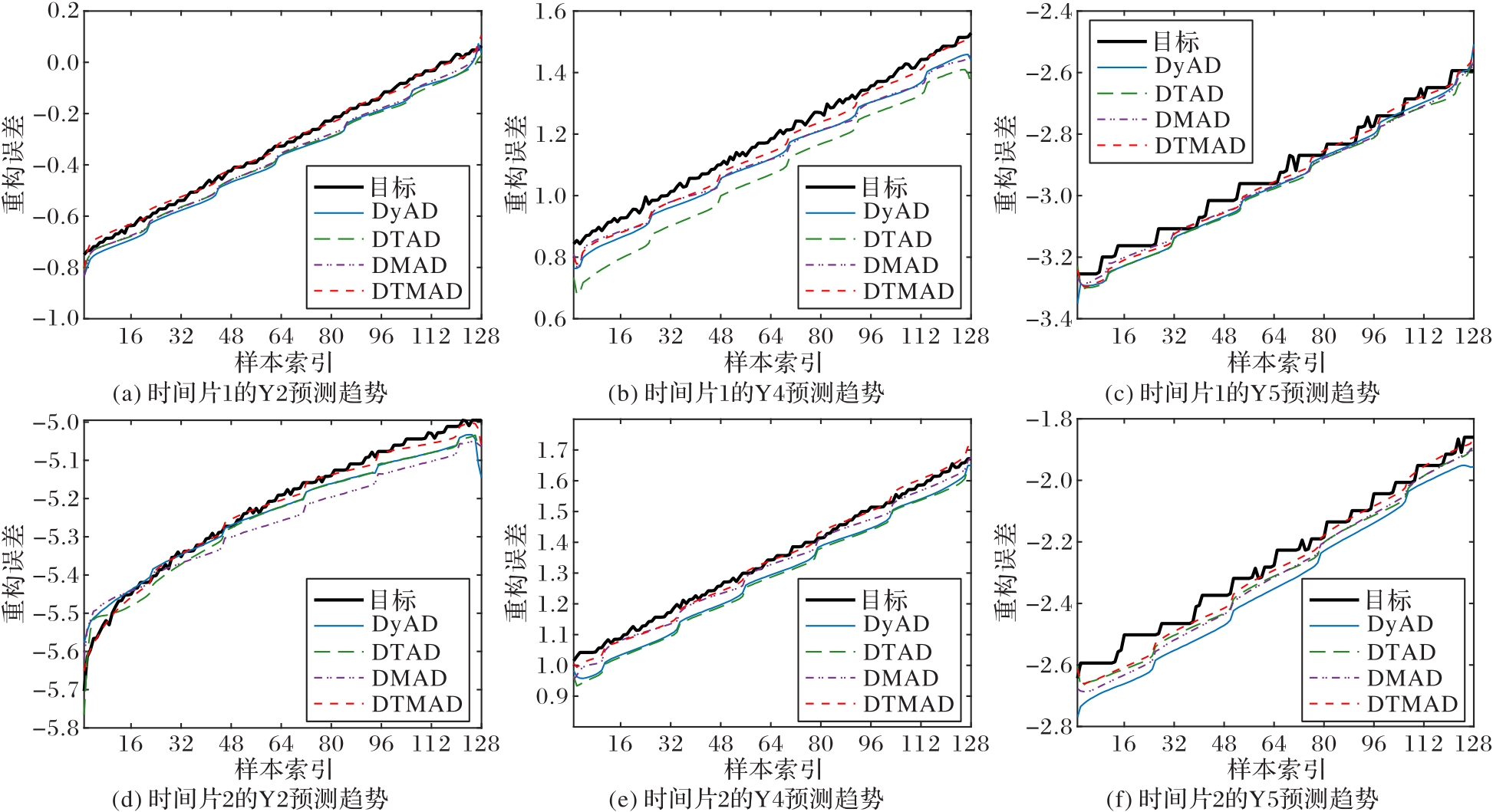
Fig. 6 Comparison of predicted trends for different target features
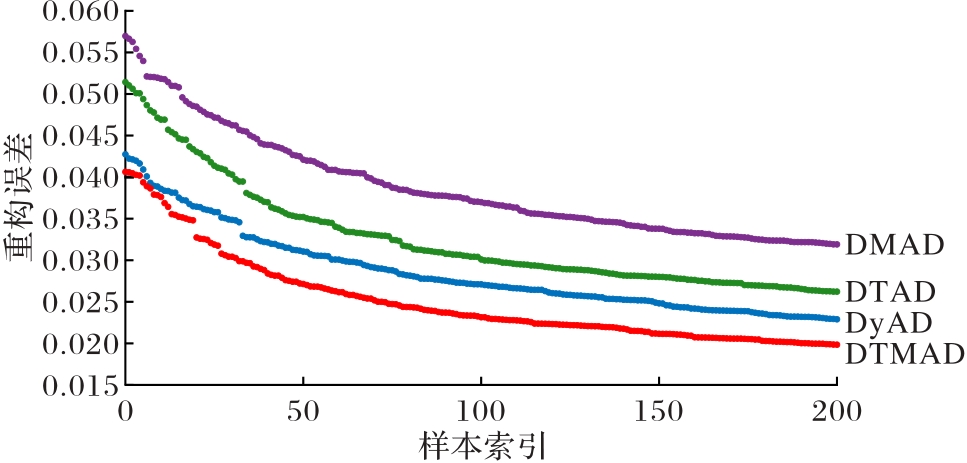
Fig. 7 Comparison of reconstruction error
| 模型 | 第1次 | 第2次 | 第3次 | 第4次 | 平均耗时 |
|---|---|---|---|---|---|
| DyAD | 708.7 | 709.4 | 716.4 | 680.9 | 703.875 |
| DTAD | 687.5 | 662.7 | 770.5 | 746.9 | 716.900 |
| DMAD | 781.6 | 752.1 | 779.3 | 770.8 | 770.925 |
| DTMAD | 772.2 | 802.9 | 750.4 | 794.6 | 780.025 |
Tab. 7 Comparison of total time consumption
| 模型 | 第1次 | 第2次 | 第3次 | 第4次 | 平均耗时 |
|---|---|---|---|---|---|
| DyAD | 708.7 | 709.4 | 716.4 | 680.9 | 703.875 |
| DTAD | 687.5 | 662.7 | 770.5 | 746.9 | 716.900 |
| DMAD | 781.6 | 752.1 | 779.3 | 770.8 | 770.925 |
| DTMAD | 772.2 | 802.9 | 750.4 | 794.6 | 780.025 |
| 真实值 | 预测为正 | 预测为负 |
|---|---|---|
| 实际正例 | TP | FN |
| 实际负例 | FP | TN |
Tab. 8 Confusion matrix
| 真实值 | 预测为正 | 预测为负 |
|---|---|---|
| 实际正例 | TP | FN |
| 实际负例 | FP | TN |
| 特征 | AUROC | 特征 | AUROC | 特征 | AUROC |
|---|---|---|---|---|---|
| Y1 | 0.865 | Y12 | 0.869 | Y123 | 0.872 |
| Y2 | 0.901 | Y13 | 0.871 | Y124 | 0.914 |
| Y3 | 0.871 | Y14 | 0.924 | Y125 | 0.895 |
| Y4 | 0.922 | Y15 | 0.872 | Y134 | 0.890 |
| Y5 | 0.880 | Y23 | 0.869 | Y135 | 0.874 |
| Y2345 | 0.923 | Y24 | 0.884 | Y145 | 0.884 |
| Y1345 | 0.905 | Y25 | 0.914 | Y234 | 0.907 |
| Y1245 | 0.906 | Y34 | 0.897 | Y235 | 0.865 |
| Y1235 | 0.909 | Y35 | 0.869 | Y245 | 0.884 |
| Y1234 | 0.895 | Y45 | 0.881 | Y345 | 0.885 |
Tab. 9 AUROC comparison under different combinations of response features
| 特征 | AUROC | 特征 | AUROC | 特征 | AUROC |
|---|---|---|---|---|---|
| Y1 | 0.865 | Y12 | 0.869 | Y123 | 0.872 |
| Y2 | 0.901 | Y13 | 0.871 | Y124 | 0.914 |
| Y3 | 0.871 | Y14 | 0.924 | Y125 | 0.895 |
| Y4 | 0.922 | Y15 | 0.872 | Y134 | 0.890 |
| Y5 | 0.880 | Y23 | 0.869 | Y135 | 0.874 |
| Y2345 | 0.923 | Y24 | 0.884 | Y145 | 0.884 |
| Y1345 | 0.905 | Y25 | 0.914 | Y234 | 0.907 |
| Y1245 | 0.906 | Y34 | 0.897 | Y235 | 0.865 |
| Y1235 | 0.909 | Y35 | 0.869 | Y245 | 0.884 |
| Y1234 | 0.895 | Y45 | 0.881 | Y345 | 0.885 |
| 模型 | AUROC | 模型 | AUROC |
|---|---|---|---|
| AE | 0.668 6 | DyAD | 0.869 1±0.029 1 |
| DeepSVDD | 0.684 1 | DTAD | 0.887 3±0.031 4 |
| GDN | 0.801 8 | DMAD | 0.885 9±0.036 7 |
| GP | 0.706 3 | DTMAD | 0.900 8±0.026 1 |
Tab. 10 AUROC comparison of models
| 模型 | AUROC | 模型 | AUROC |
|---|---|---|---|
| AE | 0.668 6 | DyAD | 0.869 1±0.029 1 |
| DeepSVDD | 0.684 1 | DTAD | 0.887 3±0.031 4 |
| GDN | 0.801 8 | DMAD | 0.885 9±0.036 7 |
| GP | 0.706 3 | DTMAD | 0.900 8±0.026 1 |
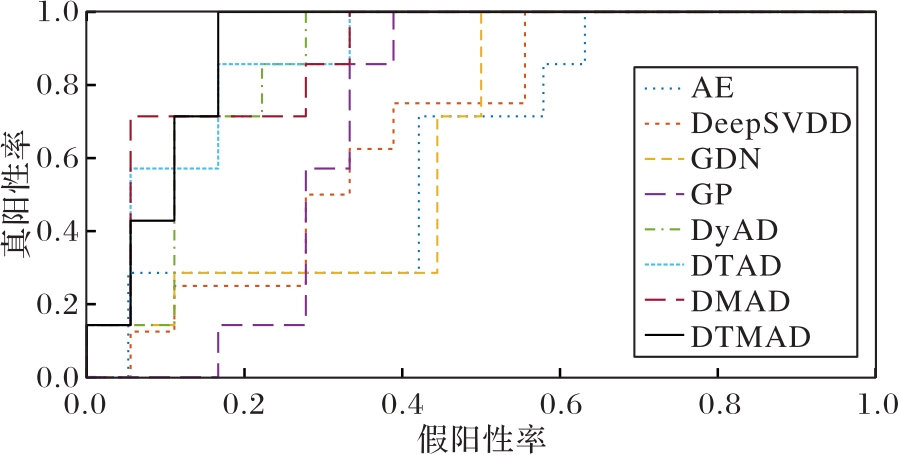
Fig. 8 Comparison of AUROC
| [1] | WASEEM M, AHMAD M, PARVEEN A, et al. Battery technologies and functionality of battery management system for EVs: current status, key challenges, and future prospectives[J]. Journal of Power Sources, 2023, 580: No.233349. |
| [2] | HUANG L, LIU L, LU L, et al. A review of the internal short circuit mechanism in lithium-ion batteries: inducement, detection and prevention[J]. International Journal of Energy Research, 2021, 45(11): 15797-15831. |
| [3] | KONG D, LV H, PING P, et al. A review of early warning methods of thermal runaway of lithium ion batteries[J]. Journal of Energy Storage, 2023, 64: No.107073. |
| [4] | TANG T, YANG X, LI M, et al. Deep learning model-based real-time state-of-health estimation of lithium-ion batteries under dynamic operating conditions[J]. Energy, 2025, 317: No.134697. |
| [5] | YIN Y, XU G, XIE Y, et al. Utilizing deep learning for crystal system classification in lithium-ion batteries[J]. Journal of Theory and Practice of Engineering Science, 2024, 4(3): 199-206. |
| [6] | NIU D, SONG D. Model-based robust fault diagnosis of incipient ITSC for PMSM in elevator traction system[J]. IEEE Transactions on Instrumentation and Measurement, 2023, 72: No.3533512. |
| [7] | MASOUMI Z, MOAVENI B, GAZAFRUDI S M M, et al. Signal-model-based fault diagnosis in windings of synchronous generator[J]. IEEE Transactions on Industrial Informatics, 2023, 19(3): 2942-2951. |
| [8] | PURBOWASKITO W, LAN C Y, FUH K. The potentiality of integrating model-based residuals and machine-learning classifiers: an induction motor fault diagnosis case[J]. IEEE Transactions on Industrial Informatics, 2024, 20(2): 2822-2832. |
| [9] | LIU Y, CHEN Z, WEI L, et al. Braking sensor and actuator fault diagnosis with combined model-based and data-driven pressure estimation methods[J]. IEEE Transactions on Industrial Electronics, 2023, 70(11): 11639-11648. |
| [10] | CEN J, YANG Z, LIU X, et al. A review of data-driven machinery fault diagnosis using machine learning algorithms[J]. Journal of Vibration Engineering and Technologies, 2022, 10(7): 2481-2507. |
| [11] | GUNERKAR R S, JALAN A K, BELGAMWAR S U. Fault diagnosis of rolling element bearing based on artificial neural network[J]. Journal of Mechanical Science and Technology, 2019, 33(2): 505-511. |
| [12] | 陈鑫,肖明清,文斌成,等.基于变分模态分解和混沌麻雀搜索算法优化支持向量机的滚动轴承故障诊断[J].计算机应用,2021,41(S2):118-123. |
| CHEN X, XIAO M Q, WEN B C, et al. Rolling bearing fault diagnosis based on variational mode decomposition, chaotic sparrow search algorithm and support vector machine[J]. Journal of Computer Applications, 2021, 41(S2): 118-123. | |
| [13] | CHEN Z, ZHOU D, ZIO E, et al. Adaptive transfer learning for multimode process monitoring and unsupervised anomaly detection in steam turbines[J]. Reliability Engineering and System Safety, 2023, 234: No.109162. |
| [14] | MACULOTTI G, GENTA G, QUAGLIOTTI D, et al. Gaussian process regression‐based detection and correction of disturbances in surface topography measurements[J]. Quality and Reliability Engineering International, 2022, 38(3): 1501-1518. |
| [15] | ZHANG Z, DENG X. Anomaly detection using improved deep SVDD model with data structure preservation[J]. Pattern Recognition Letters, 2021, 148: 1-6. |
| [16] | DENG A, HOOI B. Graph neural network-based anomaly detection in multivariate time series[C]// Proceedings of the 35th AAAI Conference on Artificial Intelligence. Palo Alto: AAAI Press, 2021: 4027-4035. |
| [17] | TANG C, XU L, YANG B, et al. GRU-based interpretable multivariate time series anomaly detection in industrial control system[J]. Computers and Security, 2023, 127: No.103094. |
| [18] | ZHANG X, LIU P, LIN N, et al. A novel battery abnormality detection method using interpretable Autoencoder[J]. Applied Energy, 2023, 330(Pt B): No.120312. |
| [19] | ZHANG Y, WANG J, CHEN Y, et al. Adaptive memory networks with self-supervised learning for unsupervised anomaly detection[J]. IEEE Transactions on Knowledge and Data Engineering, 2023, 35(12): 12068-12080. |
| [20] | SUN C, HE Z, LIN H, et al. Anomaly detection of power battery pack using gated recurrent units based variational autoencoder[J]. Applied Soft Computing, 2023, 132: No.109903. |
| [21] | ZHANG J, WANG Y, JIANG B, et al. Realistic fault detection of li-ion battery via dynamical deep learning[J]. Nature Communications, 2023, 14: No.5940. |
| [22] | LI Y, CHEN W, CHEN B, et al. Prototype-oriented unsupervised anomaly detection for multivariate time series[C]// Proceedings of the 40th International Conference on Machine Learning. New York: JMLR.org, 2023: 19407-19424. |
| [23] | XU J, WU H, WANG J, et al. Anomaly Transformer: time series anomaly detection with association discrepancy[EB/OL]. [2024-03-22].. |
| [24] | 郭秋亚,张兆功,胡本然,等. 数据融合在能源互联网故障诊断中的应用[J]. 计算机应用, 2024, 44(S2): 309-315. |
| GUO Q Y, ZHANG Z G, HU B R, et al. Application of data fusion in fault diagnosis of energy Internet[J]. Journal of Computer Applications, 2024, 44(S2): 309-315. | |
| [25] | TULI S, CASALE G, JENNINGS N R. TranAD: deep Transformer networks for anomaly detection in multivariate time series data[EB/OL]. [2024-03-22].. |
| [26] | YU X, ZHANG K, LIU Y, et al. Adversarial Transformer-based anomaly detection for multivariate time series[J]. IEEE Transactions on Industrial Informatics, 2025, 21(3): 2471-2480. |
| [27] | YANG Y, ZHANG C, ZHOU T, et al. DCdetector: dual attention contrastive representation learning for time series anomaly detection[C]// Proceedings of the 29th ACM SIGKDD Conference on Knowledge Discovery and Data Mining. New York: ACM, 2023: 3033-3045. |
| [1] | Yuqian HUANG, Hui HUANG, Yongbin QIN, Ruizhang HUANG, Yanping CHEN, Yulin ZHOU, Qian SUN. Judicial element extraction method by integrating global and local semantics [J]. Journal of Computer Applications, 2026, 46(5): 1460-1467. |
| [2] | Jiali ZHENG, Gang ZHOU, Jing CHEN, Shunhang LI. Adaptive multi-feature fusion detection method for AI-generated text [J]. Journal of Computer Applications, 2026, 46(5): 1433-1440. |
| [3] | Wenchao MING, Suzhen LIN, Zanxia JIN. Multi-band image captioning method based on scene concept-guided feature fusion [J]. Journal of Computer Applications, 2026, 46(5): 1560-1567. |
| [4] | Minqi WU, Yuanhua YANG, Hang LI, Yaqin HU, Zhihao TANG, Teng MEI. Lightweight underwater small object detection based on graph Transformer and RT-DETR [J]. Journal of Computer Applications, 2026, 46(5): 1586-1595. |
| [5] | Hongrui ZHANG, Weiming FENG, Luxia YANG, Yongjie MA. CSAF-YOLO: improved YOLO11 algorithm for underwater small object detection [J]. Journal of Computer Applications, 2026, 46(5): 1578-1585. |
| [6] | Xinyi YAN, Linglong ZHU, Yonghong ZHANG. CDC-DETR: multi-scale real-time human-vehicle detection method for complex traffic scenarios [J]. Journal of Computer Applications, 2026, 46(4): 1283-1291. |
| [7] | Wenhao LI, Yinzhang GUO. Urban traffic flow prediction based on dual-layer multi-scale dynamic graph convolutional network model [J]. Journal of Computer Applications, 2026, 46(4): 1323-1333. |
| [8] | Huanxian LIU, Hongtao WANG, Xian’ao WANG, Hongmei WANG, Weifeng XU. Multimodal fact verification with cross-modal semantic association [J]. Journal of Computer Applications, 2026, 46(4): 1069-1076. |
| [9] | Shuai HE, Chunhua DENG. Object detection algorithm with few-shot learning based on YOLO-World [J]. Journal of Computer Applications, 2026, 46(4): 1275-1282. |
| [10] | Hanqing LIU, Guoming SANG, Yijia ZHANG. Remote sensing image captioning model combining dense multi-scale feature fusion and feature knowledge-enhanced Transformer [J]. Journal of Computer Applications, 2026, 46(3): 741-749. |
| [11] | Jincheng FU, Shiyou YANG. Short-term wind power prediction using hybrid model based on Bayesian optimization and feature fusion [J]. Journal of Computer Applications, 2026, 46(2): 652-658. |
| [12] | Feng HAN, Yongfeng BU, Haoxiang LIANG, Shuwen HUANG, Zhaoyang ZHANG, Shijie SUN. Vehicle trajectory anomaly detection based on multi-level spatio-temporal interaction dependency [J]. Journal of Computer Applications, 2026, 46(2): 604-612. |
| [13] | Jinyu LIANG, Hongjuan GAO, Xiaofei DU. 3D face generation method based on latent feature enhancement for disentanglement [J]. Journal of Computer Applications, 2026, 46(1): 216-223. |
| [14] | Zhihui ZAN, Yajing WANG, Ke LI, Zhixiang YANG, Guangyu YANG. Multi-feature fusion speech emotion recognition method based on SAA-CNN-BiLSTM network [J]. Journal of Computer Applications, 2026, 46(1): 69-76. |
| [15] | Ning CAO, Xin WEN, Yanrong HAO, Rui CAO. Lightweight motor imagery electroencephalogram decoding neural network with multi-domain feature fusion [J]. Journal of Computer Applications, 2026, 46(1): 289-296. |
| Viewed | ||||||
|
Full text |
|
|||||
|
Abstract |
|
|||||
