


《计算机应用》唯一官方网站 ›› 2026, Vol. 46 ›› Issue (4): 1344-1353.DOI: 10.11772/j.issn.1001-9081.2025040505
• 前沿与综合应用 • 上一篇
豆旭梦1, 解滨1,2,3( ), 张朝晖1,2,3, 赵振刚1, 段菡煜1, 郭澳磊1
收稿日期:2025-05-08
修回日期:2025-08-08
接受日期:2025-08-11
发布日期:2025-08-15
出版日期:2026-04-10
通讯作者:
解滨
作者简介:豆旭梦(2001—),女,河北邯郸人,硕士研究生,主要研究方向:机器学习、生物信息学基金资助:
Xumeng DOU1, Bin XIE1,2,3(), Zhaohui ZHANG1,2,3, Zhengang ZHAO1, Hanyu DUAN1, Aolei GUO1
Received:2025-05-08
Revised:2025-08-08
Accepted:2025-08-11
Online:2025-08-15
Published:2026-04-10
Contact:
Bin XIE
About author:DOU Xumeng, born in 2001, M. S. candidate. Her research interests include machine learning, bioinformatics.Supported by:摘要:
药物?靶标相互作用(DTI)预测是药物发现与再利用的关键任务,它的难点是融合多源异构特征以全面表征药物与靶标间的复杂关联。针对传统方法依赖单一数据源的问题和建模复杂非线性关系方面的不足,提出一种基于结构?网络协同特征与网格注意力增强的KAN(Kolmogorov-Arnold Network)的DTI预测方法(SNKDTI)。首先,设计结构与网络协同的特征提取策略:在药物表示方面,融合分子指纹与图嵌入方法以量化化学结构;在靶标表示方面,结合传统物理化学编码与预训练模型提取序列特征;同时,引入药物?疾病关联和蛋白质相互作用等异构网络,基于重启随机游走(RWR)算法提取网络的拓扑特征,并利用去噪自编码器(DAE)压缩特征,从而融合药物与靶标的结构与网络信息;其次,构建异质生物信息网络(HBIN),使用图卷积网络(GCN)传播特征,并提出一种网格注意力增强的KAN(GA-KAN),以通过引入多组可学习的B样条基函数网格与注意力机制,实现多个非线性映射模块的自适应组合,从而增强模型的表达能力与输入适应性;最后,使用梯度提升决策树(GBDT)构建端到端预测框架。在公开数据集上的对比实验结果表明,SNKDTI的特征曲线下面积(AUC)、精确度?召回率曲线下面积(AUPR)和F1-score相较于对应指标的最优基准方法分别提升了0.81%、1.36%和3.29%。以上验证了SNKDTI在准确性、鲁棒性和泛化能力方面均有显著提升,可为新药靶标筛选提供高效工具。
中图分类号:
豆旭梦, 解滨, 张朝晖, 赵振刚, 段菡煜, 郭澳磊. 基于结构‒网络协同特征与网格注意力增强KAN的药物靶标相互作用预测[J]. 计算机应用, 2026, 46(4): 1344-1353.
Xumeng DOU, Bin XIE, Zhaohui ZHANG, Zhengang ZHAO, Hanyu DUAN, Aolei GUO. Drug-target interaction prediction based on structure-network collaborative features and grid-attention enhanced Kolmogorov-Arnold network[J]. Journal of Computer Applications, 2026, 46(4): 1344-1353.
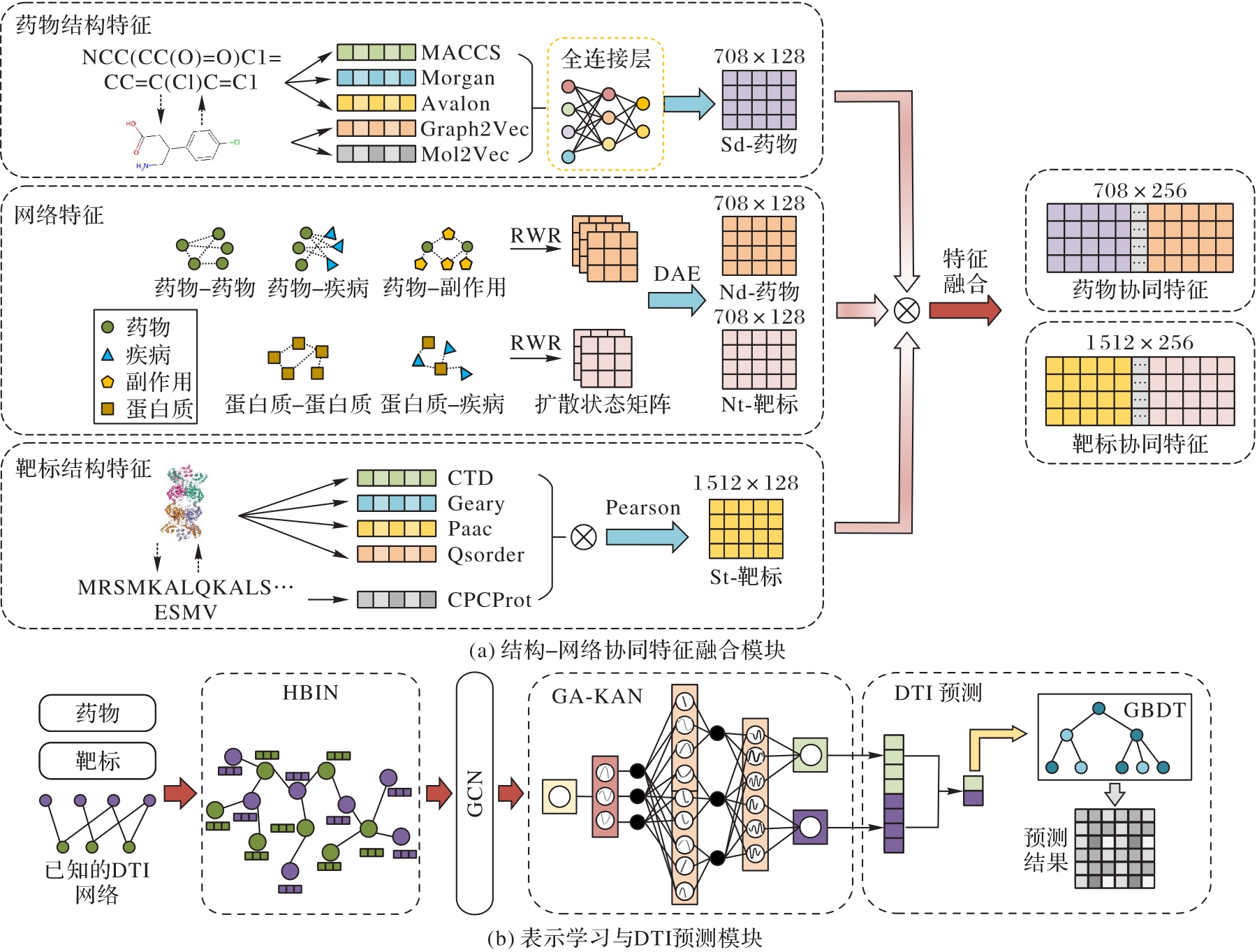
图1 SNKDTI的结构
Fig. 1 Structure of SNKDTI
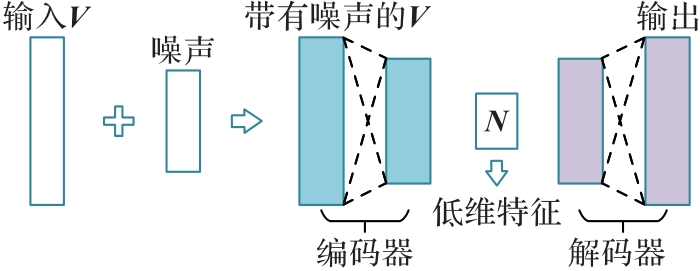
图2 去噪自编码器的结构
Fig. 2 Structure of denoising autoencoder
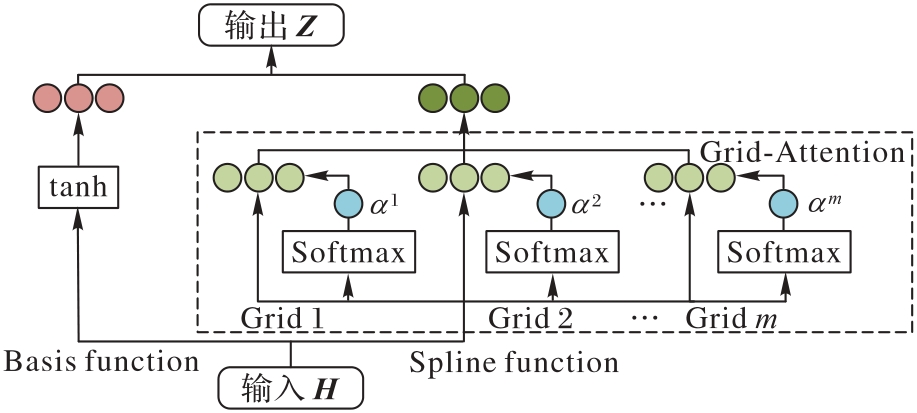
图3 GA-KAN模块的计算示意图
Fig. 3 Computational schematic diagram of GA-KAN module
| 数据集 | 数据来源地址 | 节点类型 | 节点数 | 相关节点类型 | 相关节点数 | 关联关系条数 |
|---|---|---|---|---|---|---|
| DrugBank | https://go.drugbank.com/ | 药物 | 708 | 药物 | 708 | 10 036 |
| 708 | 蛋白质 | 1 512 | 1 923 | |||
| CTD | http://ctdbase.org/ | 疾病 | 5 603 | 药物 | 708 | 199 214 |
| 5 603 | 蛋白质 | 1 512 | 1 596 745 | |||
| SIDER | http://sideeffects.embl.de/ | 副作用 | 4 192 | 药物 | 708 | 80 163 |
| HPRD | http://www.hprd.org/ | 蛋白质 | 1 512 | 蛋白质 | 1 512 | 7 363 |
表1 实验数据集的统计信息
Tab. 1 Statistical information of experimental datasets
| 数据集 | 数据来源地址 | 节点类型 | 节点数 | 相关节点类型 | 相关节点数 | 关联关系条数 |
|---|---|---|---|---|---|---|
| DrugBank | https://go.drugbank.com/ | 药物 | 708 | 药物 | 708 | 10 036 |
| 708 | 蛋白质 | 1 512 | 1 923 | |||
| CTD | http://ctdbase.org/ | 疾病 | 5 603 | 药物 | 708 | 199 214 |
| 5 603 | 蛋白质 | 1 512 | 1 596 745 | |||
| SIDER | http://sideeffects.embl.de/ | 副作用 | 4 192 | 药物 | 708 | 80 163 |
| HPRD | http://www.hprd.org/ | 蛋白质 | 1 512 | 蛋白质 | 1 512 | 7 363 |
| 网格数M | AUC | AUPR | F1-score |
|---|---|---|---|
| 2 | 0.974 5 | 0.979 3 | 0.925 4 |
| 3 | 0.986 2 | 0.986 9 | 0.939 8 |
| 4 | 0.985 9 | 0.986 0 | 0.938 3 |
| 5 | 0.985 2 | 0.984 8 | 0.937 5 |
表2 网格数M对GA-KAN性能的影响
Tab. 2 Impact of grid count M on GA-KAN performance
| 网格数M | AUC | AUPR | F1-score |
|---|---|---|---|
| 2 | 0.974 5 | 0.979 3 | 0.925 4 |
| 3 | 0.986 2 | 0.986 9 | 0.939 8 |
| 4 | 0.985 9 | 0.986 0 | 0.938 3 |
| 5 | 0.985 2 | 0.984 8 | 0.937 5 |
| GBDT树深 | AUC | AUPR | F1-score |
|---|---|---|---|
| 3 | 0.979 6 | 0.980 1 | 0.931 1 |
| 5 | 0.986 2 | 0.986 9 | 0.939 8 |
| 7 | 0.984 0 | 0.983 4 | 0.936 0 |
| 9 | 0.982 1 | 0.981 5 | 0.932 8 |
表3 GBDT深度对模型性能的影响
Tab. 3 Impact of GBDT depth on model performance
| GBDT树深 | AUC | AUPR | F1-score |
|---|---|---|---|
| 3 | 0.979 6 | 0.980 1 | 0.931 1 |
| 5 | 0.986 2 | 0.986 9 | 0.939 8 |
| 7 | 0.984 0 | 0.983 4 | 0.936 0 |
| 9 | 0.982 1 | 0.981 5 | 0.932 8 |
| 方法 | AUC | AUPR | F1-score |
|---|---|---|---|
| DTINet | 0.903 0±0.022 | 0.918 7±0.017 | 0.796 7±0.020 |
| EEG-DTI | 0.953 1±0.022 | 0.964 2±0.021 | 0.813 4±0.015 |
| IMCHGAN | 0.954 4±0.019 | 0.920 3±0.017 | 0.891 2±0.025 |
| SATS | 0.943 2±0.018 | 0.454 1±0.013 | 0.801 1±0.008 |
| DTI-MGNN | 0.966 5±0.026 | 0.968 3±0.025 | 0.841 8±0.021 |
| CCL-DTI | 0.964 3±0.051 | 0.860 4±0.021 | |
| KRN-DTI | 0.970 6±0.016 | ||
| SNKDTI | 0.986 2±0.010 | 0.986 9±0.005 | 0.939 8±0.009 |
表4 正负样本比例为1∶1时不同方法的实验结果对比
Tab. 4 Experimental results comparison of different methods under 1∶1 positive-to-negative sample ratio
| 方法 | AUC | AUPR | F1-score |
|---|---|---|---|
| DTINet | 0.903 0±0.022 | 0.918 7±0.017 | 0.796 7±0.020 |
| EEG-DTI | 0.953 1±0.022 | 0.964 2±0.021 | 0.813 4±0.015 |
| IMCHGAN | 0.954 4±0.019 | 0.920 3±0.017 | 0.891 2±0.025 |
| SATS | 0.943 2±0.018 | 0.454 1±0.013 | 0.801 1±0.008 |
| DTI-MGNN | 0.966 5±0.026 | 0.968 3±0.025 | 0.841 8±0.021 |
| CCL-DTI | 0.964 3±0.051 | 0.860 4±0.021 | |
| KRN-DTI | 0.970 6±0.016 | ||
| SNKDTI | 0.986 2±0.010 | 0.986 9±0.005 | 0.939 8±0.009 |
| 方法 | AUC | AUPR | F1-score |
|---|---|---|---|
| SNKDTI-S | 0.929 5 | 0.934 5 | 0.854 7 |
| SNKDTI-N | 0.954 4 | 0.954 8 | 0.880 1 |
| SNKDTI-M | 0.978 5 | 0.979 8 | 0.916 2 |
| SNKDTI-K | 0.983 8 | 0.983 2 | 0.938 0 |
| SNKDTI | 0.986 2 | 0.986 9 | 0.939 8 |
表5 SNKDTI变体的实验结果
Tab. 5 Experimental results of SNKDTI variants
| 方法 | AUC | AUPR | F1-score |
|---|---|---|---|
| SNKDTI-S | 0.929 5 | 0.934 5 | 0.854 7 |
| SNKDTI-N | 0.954 4 | 0.954 8 | 0.880 1 |
| SNKDTI-M | 0.978 5 | 0.979 8 | 0.916 2 |
| SNKDTI-K | 0.983 8 | 0.983 2 | 0.938 0 |
| SNKDTI | 0.986 2 | 0.986 9 | 0.939 8 |
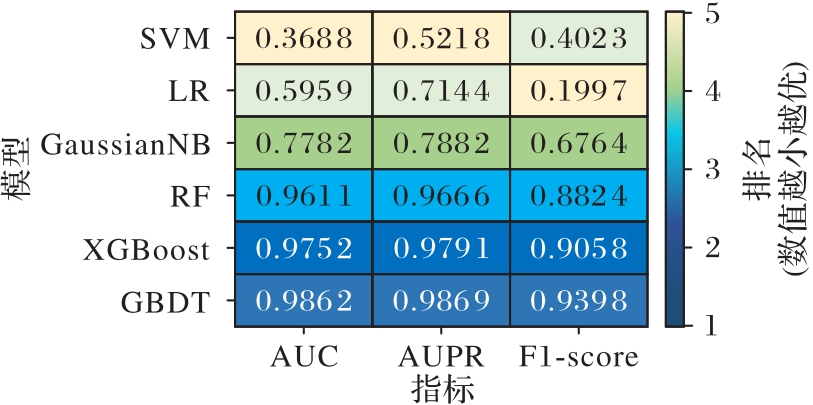
图4 不同分类器的性能比较
Fig. 4 Performance comparison of different classifiers
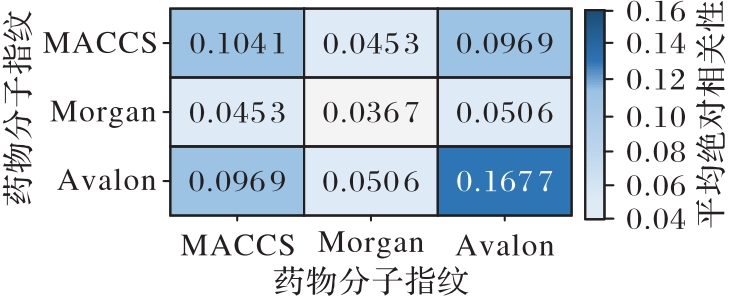
图5 指纹特征的平均绝对相关性分析
Fig. 5 Analysis of mean absolute correlations of fingerprint features
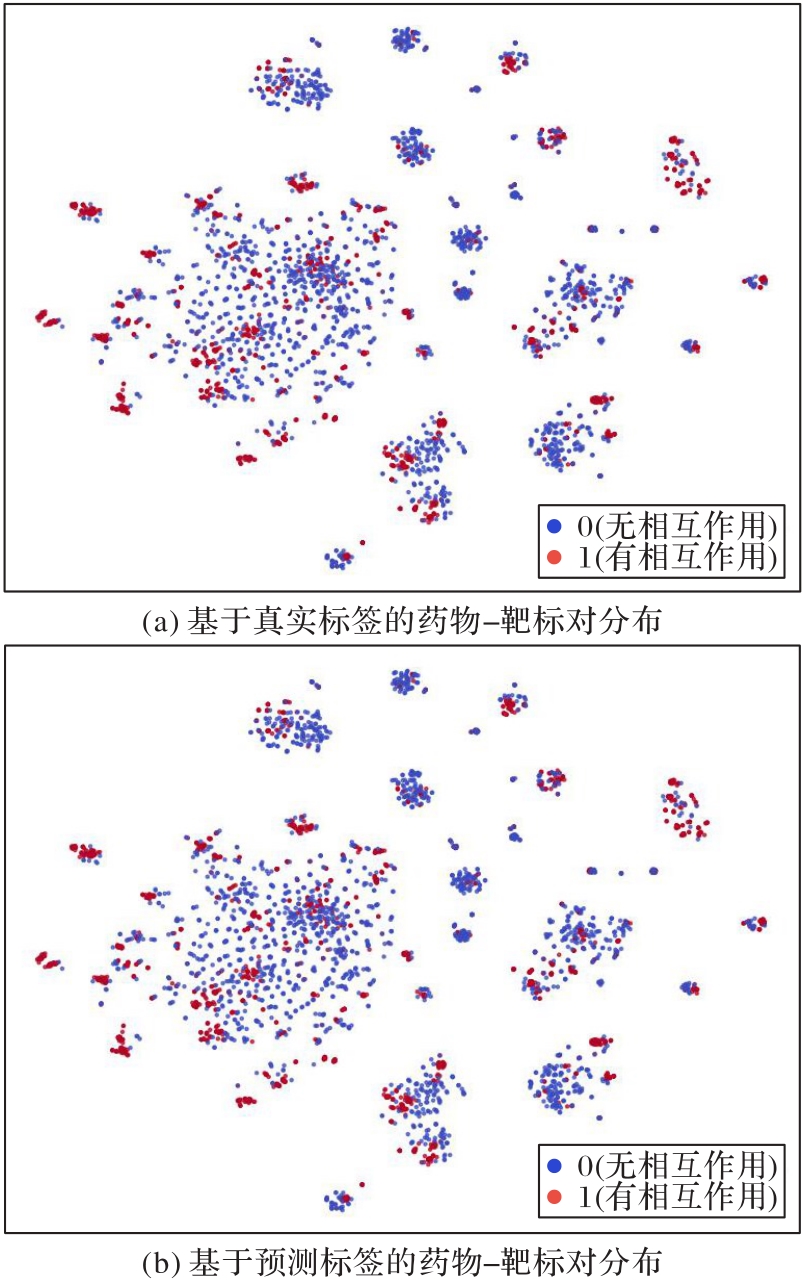
图6 SNKDTI输出节点嵌入的t-SNE的二维可视化
Fig. 6 t-SNE 2D visualization of output node embeddings of SNKDTI
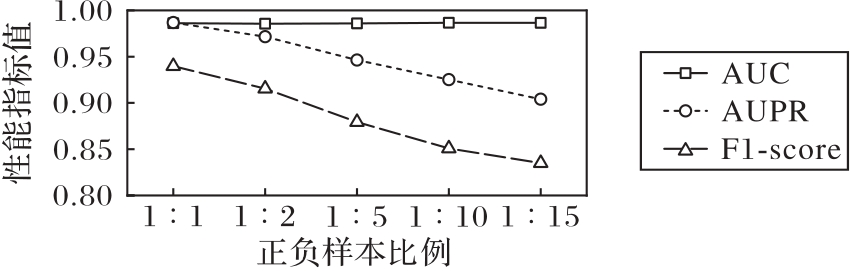
图7 不同正负样本比例下的AUC、AUPR和F1-score曲线
Fig. 7 AUC, AUPR, and F1-score curves under different positive-to-negative sample ratios
| M | S | 总参数量/106 | 单轮训练时间/s | CPU内存峰值/MB |
|---|---|---|---|---|
| 2 | 3 | 1.10 | 167.2 | 508.16 |
| 3 | 3 | 1.68 | 166.4 | 820.15 |
| 4 | 3 | 2.15 | 163.1 | 1 022.46 |
| 5 | 3 | 2.67 | 155.0 | 1 148.23 |
表6 不同网格数M下GA-KAN模块的计算资源开销统计
Tab. 6 Computational resource usage statistics of GA-KAN module under different grid count M
| M | S | 总参数量/106 | 单轮训练时间/s | CPU内存峰值/MB |
|---|---|---|---|---|
| 2 | 3 | 1.10 | 167.2 | 508.16 |
| 3 | 3 | 1.68 | 166.4 | 820.15 |
| 4 | 3 | 2.15 | 163.1 | 1 022.46 |
| 5 | 3 | 2.67 | 155.0 | 1 148.23 |
| 药物 | 相关蛋白质 | 预测结果 | 准确率/% |
|---|---|---|---|
DB00248: Cabergoline | P35626:ADRBK2 | True | 93.3 |
| P13631:RARG | True | ||
| P05089:ARG1 | True | ||
| P08913:ADRA2A | True | ||
| P25098:ADRBK1 | True | ||
| P23945:FSHR | True | ||
| P60880:SNAP25 | True | ||
| Q9UIC8:LCMT1 | True | ||
| O14646:CHD1 | False | ||
| P08559:PDHA1 | True | ||
| O43772:SLC25A20 | True | ||
| P00390:GSR | True | ||
| P01589:IL2RA | True | ||
| P49448:GLUD2 | True | ||
| P14867:GABRA1 | True | ||
DB00186: Lorazepam | P31937:HIBADH | True | 100.0 |
| Q16739:UGCG | True | ||
| P40394:ADH7 | True | ||
| P09601:HMOX1 | True | ||
| P04150:NR3C1 | True | ||
| Q14832:GRM3 | True | ||
| P18505:GABRB1 | True | ||
| P28472:GABRB3 | True | ||
| P30532:CHRNA5 | False | ||
| P18507:GABRG2 | True | ||
| Q8N1C3:GABRG1 | True | ||
| Q99928:GABRG3 | True | ||
| P28476:GABRR2 | True |
表7 药物的Cabergoline和Lorazepam的预测结果
Tab. 7 Prediction results of drug Cabergoline and Lorazepam
| 药物 | 相关蛋白质 | 预测结果 | 准确率/% |
|---|---|---|---|
DB00248: Cabergoline | P35626:ADRBK2 | True | 93.3 |
| P13631:RARG | True | ||
| P05089:ARG1 | True | ||
| P08913:ADRA2A | True | ||
| P25098:ADRBK1 | True | ||
| P23945:FSHR | True | ||
| P60880:SNAP25 | True | ||
| Q9UIC8:LCMT1 | True | ||
| O14646:CHD1 | False | ||
| P08559:PDHA1 | True | ||
| O43772:SLC25A20 | True | ||
| P00390:GSR | True | ||
| P01589:IL2RA | True | ||
| P49448:GLUD2 | True | ||
| P14867:GABRA1 | True | ||
DB00186: Lorazepam | P31937:HIBADH | True | 100.0 |
| Q16739:UGCG | True | ||
| P40394:ADH7 | True | ||
| P09601:HMOX1 | True | ||
| P04150:NR3C1 | True | ||
| Q14832:GRM3 | True | ||
| P18505:GABRB1 | True | ||
| P28472:GABRB3 | True | ||
| P30532:CHRNA5 | False | ||
| P18507:GABRG2 | True | ||
| Q8N1C3:GABRG1 | True | ||
| Q99928:GABRG3 | True | ||
| P28476:GABRR2 | True |
| 靶标 | 相关药物 | 预测结果 | 准确率/% |
|---|---|---|---|
| P03372:ESR1 | DB00364:Sucralfate | True | 100.0 |
| DB00395:Carisoprodol | True | ||
| DB00480:Lenalidomide | True | ||
| DB00538:Gadoversetamide | True | ||
| DB00602:Ivermectin | True | ||
| DB00674:Galantamine | True | ||
| DB00782:Propantheline | True | ||
| DB01182:Propafenone | True | ||
| DB01184:Domperidone | False | ||
| DB01195:Flecainide | True | ||
| DB01400:Neostigmine | True | ||
P08588: ADRB1 | DB00186:Lorazepam | True | 93.7 |
| DB00193:Tramadol | True | ||
| DB00263:Sulfisoxazole | True | ||
| DB00334:Olanzapine | True | ||
| DB00367:Levonorgestrel | True | ||
| DB00371:Meprobamate | True | ||
| DB00486:Nabilone | True | ||
| DB00520:Caspofungin | False | ||
| DB00567:Cephalexin | True | ||
| DB00595:Oxytetracycline | True | ||
| DB00611:Butorphanol | True | ||
| DB00665:Nilutamide | True | ||
| DB00839:Tolazamide | True | ||
| DB00959:Methylprednisolone | True | ||
| DB01062:Oxybutynin | True | ||
| DB01117:Atovaquone | True |
表8 靶标ADRB1和ESR1的预测结果
Tab. 8 Prediction results of the target ADRB1 and ESR1
| 靶标 | 相关药物 | 预测结果 | 准确率/% |
|---|---|---|---|
| P03372:ESR1 | DB00364:Sucralfate | True | 100.0 |
| DB00395:Carisoprodol | True | ||
| DB00480:Lenalidomide | True | ||
| DB00538:Gadoversetamide | True | ||
| DB00602:Ivermectin | True | ||
| DB00674:Galantamine | True | ||
| DB00782:Propantheline | True | ||
| DB01182:Propafenone | True | ||
| DB01184:Domperidone | False | ||
| DB01195:Flecainide | True | ||
| DB01400:Neostigmine | True | ||
P08588: ADRB1 | DB00186:Lorazepam | True | 93.7 |
| DB00193:Tramadol | True | ||
| DB00263:Sulfisoxazole | True | ||
| DB00334:Olanzapine | True | ||
| DB00367:Levonorgestrel | True | ||
| DB00371:Meprobamate | True | ||
| DB00486:Nabilone | True | ||
| DB00520:Caspofungin | False | ||
| DB00567:Cephalexin | True | ||
| DB00595:Oxytetracycline | True | ||
| DB00611:Butorphanol | True | ||
| DB00665:Nilutamide | True | ||
| DB00839:Tolazamide | True | ||
| DB00959:Methylprednisolone | True | ||
| DB01062:Oxybutynin | True | ||
| DB01117:Atovaquone | True |
| [1] | 刘一迪,温自豪,任富香,等. 自适应球形演化的药物‒靶标相互作用预测方法[J]. 计算机应用, 2024, 44(3): 989-994. |
| LIU Y D, WEN Z H, REN F X, et al. Self-adaptive spherical evolution for prediction of drug target interaction[J]. Journal of Computer Applications, 2024, 44(3): 989-994. | |
| [2] | MAROUA A, TIAN G, WANG R, et al. TriCvT-DTI: predicting drug-target interactions using trimodal representations and convolutional vision Transformers[J]. IEEE Journal of Biomedical and Health Informatics, 2025, 29(6): 4585-4592. |
| [3] | 刘晓光,李梅. 基于深度学习的药物‒靶标相互作用预测研究综述[J]. 智能系统学报, 2024, 19(3): 494-524. |
| LIU X G, LI M. A survey of deep learning-based drug-target interaction prediction[J]. CAAI Transactions on Intelligence Systems, 2024, 19(3): 494-524. | |
| [4] | YU D, LIU H, YAO S. Drug-target interaction prediction based on improved heterogeneous graph representation learning and feature projection classification[J]. Expert Systems with Applications, 2024, 252(Pt B): No.124289. |
| [5] | CUI S, YU S, HUANG H Y, et al. miRTarBase 2025: updates to the collection of experimentally validated microRNA-target interactions[J]. Nucleic Acids Research, 2025, 53(D1): D147-D156. |
| [6] | ZHANG Z, CHEN L, ZHONG F, et al. Graph neural network approaches for drug-target interactions[J]. Current Opinion in Structural Biology, 2022, 73: No.102327. |
| [7] | ZHAO W, YU Y, LIU G, et al. MSI-DTI: predicting drug-target interaction based on multi-source information and multi-head self-attention[J]. Briefings in Bioinformatics, 2024, 25(3): No.bbae238. |
| [8] | ZHU Z, ZHENG X, QI G, et al. Drug-target binding affinity prediction model based on multi-scale diffusion and interactive learning[J]. Expert Systems with Applications, 2024, 255(Pt B): No.124647. |
| [9] | BLEAKLEY K, YAMANISHI Y. Supervised prediction of drug-target interactions using bipartite local models[J]. Bioinformatics, 2009, 25(18): 2397-2403. |
| [10] | PERLMAN L, GOTTLIEB A, ATIAS N, et al. Combining drug and gene similarity measures for drug-target elucidation[J]. Journal of Computational Biology, 2011, 18(2): 133-145. |
| [11] | LUO Y, ZHAO X, ZHOU J, et al. A network integration approach for drug-target interaction prediction and computational drug repositioning from heterogeneous information[J]. Nature Communications, 2017, 8: No.573. |
| [12] | WAN F, HONG L, XIAO A, et al. NeoDTI: neural integration of neighbor information from a heterogeneous network for discovering new drug-target interactions[J]. Bioinformatics, 2019, 35(1): 104-111. |
| [13] | 张家豪,王琪,刘明铭,等. 基于序列和多视角网络的药物‒靶标相互作用预测[J]. 计算机应用, 2025, 45(11): 3658-3665. |
| ZHANG J H, WANG Q, LIU M M, et al. Prediction of drug-target interactions based on sequence and multi-view networks[J]. Journal of Computer Applications, 2025, 45(11): 3658-3665. | |
| [14] | WEININGER D. SMILES, a chemical language and information system. 1. Introduction to methodology and encoding rules[J]. Journal of Chemical Information and Computer Sciences, 1988, 28(1): 31-36. |
| [15] | ROGERS D, HAHN M. Extended-connectivity fingerprints[J]. Journal of Chemical Information and Modeling, 2010, 50(5): 742-754. |
| [16] | SHERVASHIDZE N, SCHWEITZER P, VAN LEEUWEN E J, et al. Weisfeiler-Lehman graph kernels[J]. Journal of Machine Learning Research, 2011, 12: 2539-2561. |
| [17] | TONG H, FALOUTSOS C, PAN J Y. Random walk with restart: fast solutions and applications[J]. Knowledge and Information Systems, 2008, 14(3): 327-346. |
| [18] | XIE Y, WANG X, WANG P, et al. A pseudo-label supervised graph fusion attention network for drug-target interaction prediction[J]. Expert Systems with Applications, 2025, 259: No.125264. |
| [19] | LI Y, QIAO G, WANG K, et al. Drug-target interaction predication via multi-channel graph neural networks[J]. Briefings in Bioinformatics, 2022, 23(1): No.bbab346. |
| [20] | LIU Z, WANG Y, VAIDYA S, et al. KAN: Kolmogorov-Arnold networks[EB/OL]. [2025-06-13].. |
| [21] | FRIEDMAN J H. Greedy function approximation: a gradient boosting machine[J]. The Annals of Statistics, 2001, 29(5): 1189-1232. |
| [22] | KNOX C, LAW V, JEWISON T, et al. DrugBank 3.0: a comprehensive resource for “omics” research on drugs[J]. Nucleic Acids Research, 2011, 39(S1): D1035-D1041. |
| [23] | PRASAD T S K, GOEL R, KANDASAMY K, et al. Human Protein Reference Database — 2009 update[J]. Nucleic Acids Research, 2009, 37(S1): D767-D772. |
| [24] | DAVIS A P, GRONDIN C J, JOHNSON R J, et al. Comparative Toxicogenomics Database (CTD): update 2021[J]. Nucleic Acids Research, 2021, 49(D1): D1138-D1143. |
| [25] | KUHN M, LETUNIC I, JENSEN L J, et al. The SIDER database of drugs and side effects[J]. Nucleic Acids Research, 2016, 44(D1): D1075-D1079. |
| [26] | LIANG Z, ZHOU Y, SESIA M. Conformal inference is (almost) free for neural networks trained with early stopping[C]// Proceedings of the 40th International Conference on Machine Learning. New York: JMLR.org, 2023: 20810-20851. |
| [27] | PENG J, WANG Y, GUAN J, et al. An end-to-end heterogeneous graph representation learning-based framework for drug-target interaction prediction[J]. Briefings in Bioinformatics, 2021, 22(5): No.bbaa430. |
| [28] | LI J, WANG J, LV H, et al. IMCHGAN: inductive matrix completion with heterogeneous graph attention networks for drug-target interactions prediction[J]. IEEE/ACM Transactions on Computational Biology and Bioinformatics, 2022, 19(2): 655-665. |
| [29] | TANG R, SUN C, HUANG J, et al. Predicting drug-protein interactions by self-adaptively adjusting the topological structure of the heterogeneous network[J]. IEEE Journal of Biomedical and Health Informatics, 2023, 27(11): 5675-5684. |
| [30] | DEHGHAN A, ABBASI K, RAZZAGHI P, et al. CCL-DTI: contributing the contrastive loss in drug-target interaction prediction[J]. BMC Bioinformatics, 2024, 25: No.48. |
| [31] | LI Z, HUANG J, LIU X, et al. KRN-DTI: towards accurate drug-target interaction prediction with Kolmogorov-Arnold and residual networks[J]. Methods, 2025, 240: 137-144. |
| [32] | BREIMAN L. Random forests[J]. Machine Learning, 2001, 45(1): 5-32. |
| [33] | CORTES C, VAPNIK V. Support-vector networks[J]. Machine Learning, 1995, 20(3): 273-297. |
| [34] | PEDREGOSA F, VAROQUAUX G, GRAMFORT A, et al. Scikit‑learn: machine learning in Python[J]. Journal of Machine Learning Research, 2011, 12: 2825-2830. |
| [35] | HOSMER D W, LEMESHOW S, STURDIVANT R X. Applied logistic regression[M]. 3rd ed. New York: John Wiley & Sons, Inc., 2013: 8-19. |
| [36] | CHEN T, GUESTRIN C. XGBoost: a scalable tree boosting system[C]// Proceedings of the 22nd ACM SIGKDD International Conference on Knowledge Discovery and Data Mining. New York: ACM, 2016: 785-794. |
| [1] | 刘欢娴, 王洪涛, 王宪奥, 王洪梅, 徐伟峰. 跨模态语义关联的多模态事实验证[J]. 《计算机应用》唯一官方网站, 2026, 46(4): 1069-1076. |
| [2] | 白翔, 李巨川, 王慧民, 景超, 钮键, 张兴忠, 程永强. 基于改进Swin Transformer的电力图像检索方法[J]. 《计算机应用》唯一官方网站, 2026, 46(4): 1334-1343. |
| [3] | 姜志, 陈学斌, 罗长银, 甄子业. 联邦学习中改进Kolmogorov-Arnold网络的混合优化框架[J]. 《计算机应用》唯一官方网站, 2026, 46(4): 1023-1033. |
| [4] | 王日龙, 李振平, 李晓松, 高强, 何亚, 钟勇, 赵英潇. 多Agent协作的知识推理框架[J]. 《计算机应用》唯一官方网站, 2026, 46(3): 708-714. |
| [5] | 邵培荣, 蔺素珍, 王彦博. 以人为中心的细节增强虚拟试衣方法[J]. 《计算机应用》唯一官方网站, 2026, 46(3): 915-923. |
| [6] | 张祖习, 张战成, 胡伏原. 局部与长程时序互补建模的视频动作识别[J]. 《计算机应用》唯一官方网站, 2026, 46(3): 758-766. |
| [7] | 吴俊锐, 杨江川, 喻海生, 邹赛, 汪文勇. 基于复增强注意力机制图神经网络的确定性网络性能评估方法[J]. 《计算机应用》唯一官方网站, 2026, 46(2): 505-517. |
| [8] | 文洪建, 胡瑞娇, 吴保文, 孙家兴, 李环, 张晴, 刘杰. 基于图神经网络实现多尺度特征联合学习的中文作文自动评分[J]. 《计算机应用》唯一官方网站, 2026, 46(2): 378-385. |
| [9] | 张日丰, 李广明, 欧阳裕荣. 反射先验图引导的低光图像增强网络[J]. 《计算机应用》唯一官方网站, 2026, 46(2): 546-554. |
| [10] | 徐千惠, 钮可, 朱顺哲, 石林, 李军. 增强型可逆神经网络视频隐写网络GAB3D-SEVSN[J]. 《计算机应用》唯一官方网站, 2026, 46(2): 467-474. |
| [11] | 姜皓骞, 张东, 李冠宇, 陈恒. 基于结构增强的层次化任务导向提示策略的对话推荐系统SetaCRS[J]. 《计算机应用》唯一官方网站, 2026, 46(2): 368-377. |
| [12] | 林金娇, 张灿舜, 陈淑娅, 王天鑫, 连剑, 徐庸辉. 基于改进图注意力网络的车险欺诈检测方法[J]. 《计算机应用》唯一官方网站, 2026, 46(2): 437-444. |
| [13] | 李名, 王孟齐, 张爱丽, 任花, 窦育强. 基于条件生成对抗网络和混合注意力机制的图像隐写方法[J]. 《计算机应用》唯一官方网站, 2026, 46(2): 475-484. |
| [14] | 张四中, 刘建阳, 李林峰. 基于X3D的轨迹引导感知学习的动作质量评估模型[J]. 《计算机应用》唯一官方网站, 2026, 46(2): 555-563. |
| [15] | 罗虎, 张明书. 基于跨模态注意力机制与对比学习的谣言检测方法[J]. 《计算机应用》唯一官方网站, 2026, 46(2): 361-367. |
| 阅读次数 | ||||||
|
全文 |
|
|||||
|
摘要 |
|
|||||
