


《计算机应用》唯一官方网站 ›› 2026, Vol. 46 ›› Issue (3): 696-707.DOI: 10.11772/j.issn.1001-9081.2025030288
黄奕明1, 邹喜华1( ), 邓果2, 郑狄1
收稿日期:2025-03-24
修回日期:2025-05-15
接受日期:2025-05-19
发布日期:2025-06-03
出版日期:2026-03-10
通讯作者:
邹喜华
作者简介:黄奕明(2000—),男,四川广元人,硕士研究生,主要研究方向:自然语言处理、大语言模型基金资助:
Yiming HUANG1, Xihua ZOU1(), Guo DENG2, Di ZHENG1
Received:2025-03-24
Revised:2025-05-15
Accepted:2025-05-19
Online:2025-06-03
Published:2026-03-10
Contact:
Xihua ZOU
About author:HUANG Yiming, born in 2000, M. S. candidate. His research interests include natural language processing, large language models.Supported by:摘要:
现有的检索增强生成(RAG)问答系统在特定领域应用时,存在检索路径单一、用户潜在意图覆盖不足和召回文段质量低导致的系统回答准确性低与不全面的问题。因此,提出一种双阶段优化方法——预回答与召回过滤(PARF)。首先,通过结合领域知识图谱与提示工程技术,引导大语言模型(LLM)生成预回答,构建“原始查询→预回答→相关文段”的多向检索路径,从而扩展原始查询的语义空间;其次,利用BERT(Bidirectional Encoder Representations from Transformers)模型对召回文段进行相关性评分与过滤,实现检索与生成阶段的协同优化,提升有效信息的密度。实验结果表明,相较于基线方法DPR-LLM(Dense Passage Retrieval with LLM)构建的RAG问答系统,PARF方法构建的RAG问答系统的一致性指标F1和ROUGE-L(Recall-Oriented Understudy for Gisting Evaluation-L)在轨道交通问答数据集上分别提升19.8和41.5个百分点,在医药问答数据集上分别提升16.1和17.6个百分点,效果指标正确率分别提升10.2和8.8个百分点。
中图分类号:
黄奕明, 邹喜华, 邓果, 郑狄. 预回答与召回过滤:双阶段RAG问答系统优化方法[J]. 计算机应用, 2026, 46(3): 696-707.
Yiming HUANG, Xihua ZOU, Guo DENG, Di ZHENG. Pre-answering and retrieval filtering: dual-stage optimization method for RAG-based question-answering systems[J]. Journal of Computer Applications, 2026, 46(3): 696-707.
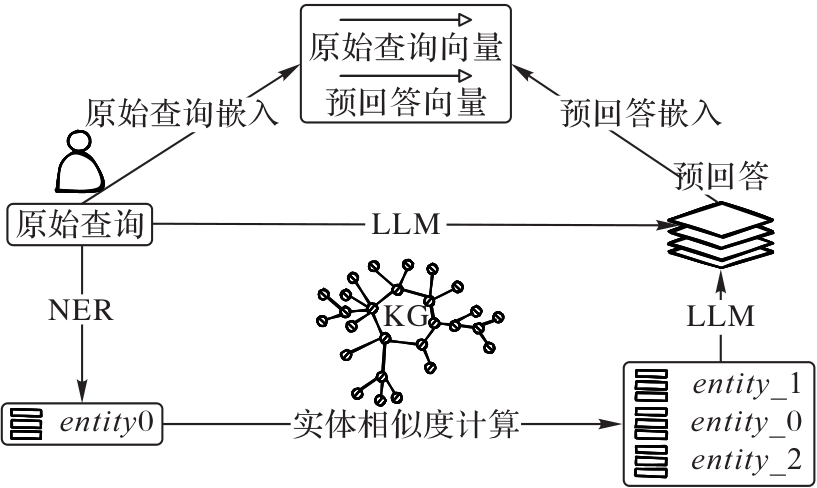
图1 系统预回答的流程
Fig. 1 Flow of system pre-answering
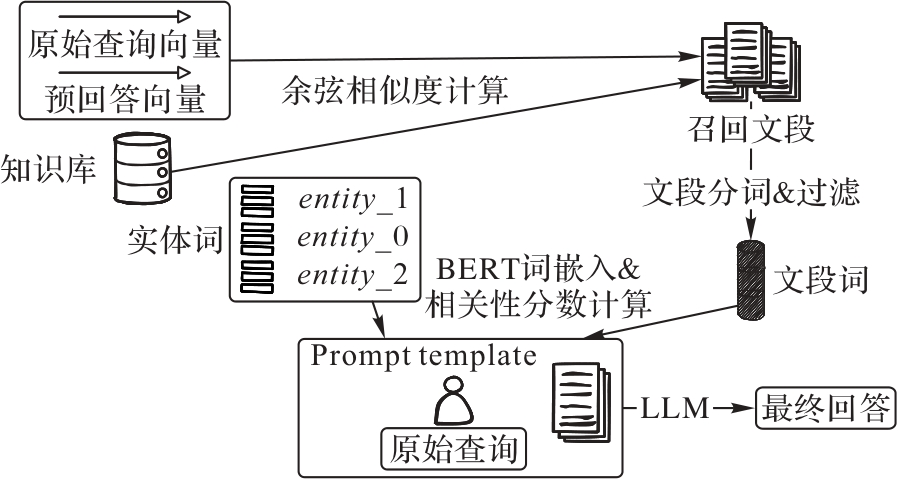
图2 系统召回过滤的流程
Fig. 2 Process of system retrieval filtering
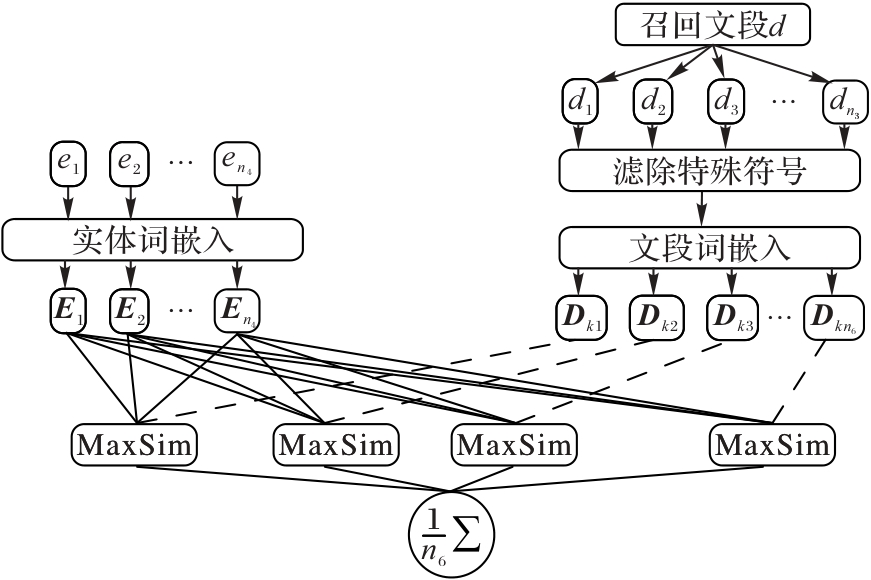
图3 相关性分数的计算流程
Fig. 3 Process of relevance score calculation
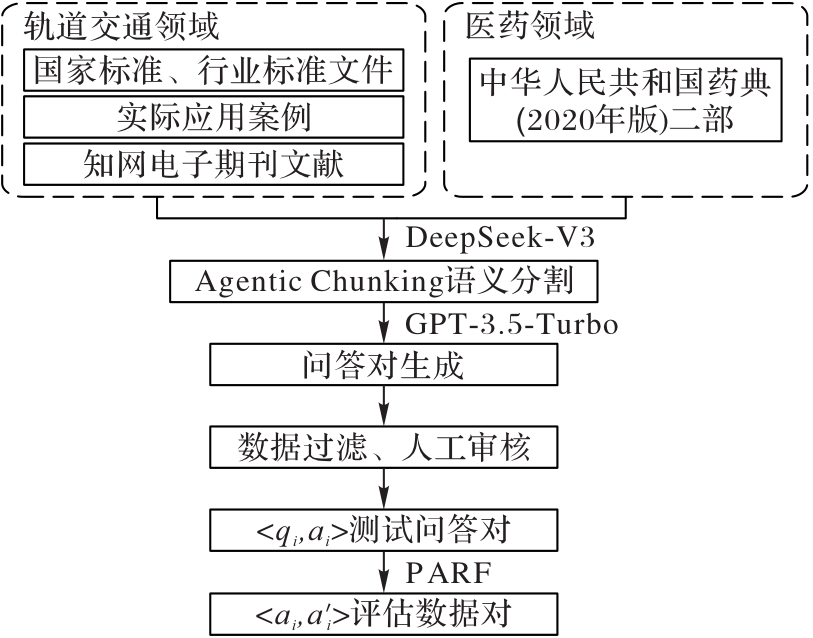
图4 数据集的构建流程
Fig. 4 Process of dataset construction
| 数据集 | 分割 文段数 | 平均问答对 字数 | 问答对数 | 问答对 类型 | 分布/% |
|---|---|---|---|---|---|
轨道交通 问答数据集 | 7 105 | 70.16 | 635 | 事实型 | 52.3 |
| 解释型 | 31.8 | ||||
| 推理型 | 12.1 | ||||
| 其他 | 3.8 | ||||
医药问答 数据集 | 5 326 | 78.54 | 875 | 事实型 | 61.4 |
| 解释型 | 25.6 | ||||
| 推理型 | 10.5 | ||||
| 其他 | 2.5 |
表1 数据集统计信息
Tab. 1 Dataset statistical information
| 数据集 | 分割 文段数 | 平均问答对 字数 | 问答对数 | 问答对 类型 | 分布/% |
|---|---|---|---|---|---|
轨道交通 问答数据集 | 7 105 | 70.16 | 635 | 事实型 | 52.3 |
| 解释型 | 31.8 | ||||
| 推理型 | 12.1 | ||||
| 其他 | 3.8 | ||||
医药问答 数据集 | 5 326 | 78.54 | 875 | 事实型 | 61.4 |
| 解释型 | 25.6 | ||||
| 推理型 | 10.5 | ||||
| 其他 | 2.5 |
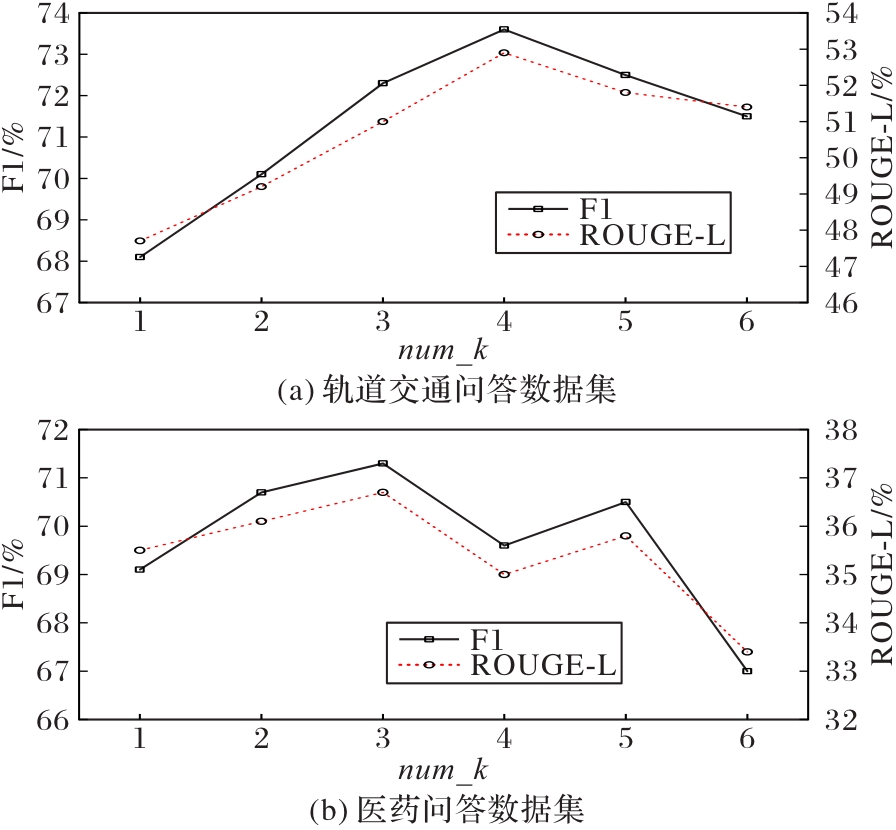
图5 不同预回答数下的问答系统在2个数据集上的性能
Fig. 5 Performance of question-answering system on two datasets with different numbers of preliminary answers
| 数据集 | P/% | R/% | F1/% | ROUGE-L/% | |
|---|---|---|---|---|---|
轨道交通 问答数据集 | 0.40 | 75.2 | 76.4 | 75.8 | 62.8 |
| 0.50 | 78.1 | 79.0 | 78.5 | 65.1 | |
| 0.55 | 79.5 | 78.9 | 79.2 | 68.4 | |
| 0.60 | 80.7 | 80.1 | 80.4 | 69.0 | |
| 0.65 | 78.5 | 79.3 | 78.9 | 66.8 | |
| 0.70 | 75.9 | 77.2 | 76.5 | 65.9 | |
| 0.80 | 74.4 | 75.9 | 75.1 | 63.5 | |
医药问答 数据集 | 0.50 | 68.5 | 71.6 | 70.2 | 37.6 |
| 0.60 | 71.5 | 73.9 | 72.3 | 41.3 | |
| 0.65 | 74.0 | 75.5 | 74.7 | 42.0 | |
| 0.70 | 75.6 | 78.0 | 76.8 | 43.1 | |
| 0.75 | 72.1 | 75.0 | 73.5 | 40.4 | |
| 0.80 | 67.5 | 66.9 | 67.2 | 33.8 | |
| 0.90 | 56.2 | 60.7 | 58.4 | 22.4 |
表2 不同过滤阈值下的问答系统在2个数据集上的性能
Tab. 2 Performance of question-answering system on two datasets with different filtering thresholds
| 数据集 | P/% | R/% | F1/% | ROUGE-L/% | |
|---|---|---|---|---|---|
轨道交通 问答数据集 | 0.40 | 75.2 | 76.4 | 75.8 | 62.8 |
| 0.50 | 78.1 | 79.0 | 78.5 | 65.1 | |
| 0.55 | 79.5 | 78.9 | 79.2 | 68.4 | |
| 0.60 | 80.7 | 80.1 | 80.4 | 69.0 | |
| 0.65 | 78.5 | 79.3 | 78.9 | 66.8 | |
| 0.70 | 75.9 | 77.2 | 76.5 | 65.9 | |
| 0.80 | 74.4 | 75.9 | 75.1 | 63.5 | |
医药问答 数据集 | 0.50 | 68.5 | 71.6 | 70.2 | 37.6 |
| 0.60 | 71.5 | 73.9 | 72.3 | 41.3 | |
| 0.65 | 74.0 | 75.5 | 74.7 | 42.0 | |
| 0.70 | 75.6 | 78.0 | 76.8 | 43.1 | |
| 0.75 | 72.1 | 75.0 | 73.5 | 40.4 | |
| 0.80 | 67.5 | 66.9 | 67.2 | 33.8 | |
| 0.90 | 56.2 | 60.7 | 58.4 | 22.4 |
| 数据集 | 方法 | P | R | F1 | ROUGE-L | C |
|---|---|---|---|---|---|---|
轨道交通 问答数据集 | DPLM | 55.1 | 59.4 | 57.2 | 19.2 | 65.4 |
| DPR-LLM | 60.3 | 61.0 | 60.6 | 27.5 | 73.7 | |
| HyDE | 69.7 | 71.3 | 70.5 | 48.2 | 76.5 | |
| RAG-Fusion | 72.6 | 74.4 | 73.5 | 55.7 | 79.2 | |
| GraphRAG | ||||||
| PARF | 80.7 | 80.1 | 80.4 | 69.0 | 83.9 | |
医药问答 数据集 | DPLM | 50.4 | 54.1 | 52.2 | 15.2 | 62.1 |
| DPR-LLM | 59.7 | 61.8 | 60.7 | 25.5 | 71.5 | |
| HyDE | 65.5 | 67.2 | 66.3 | 32.4 | 73.8 | |
| RAG-Fusion | 67.6 | 70.2 | 68.9 | 35.7 | 75.3 | |
| GraphRAG | ||||||
| PARF | 75.6 | 78.0 | 76.8 | 43.1 | 80.3 |
表3 系统性能评估 (%)
Tab. 3 Performance evaluation of system
| 数据集 | 方法 | P | R | F1 | ROUGE-L | C |
|---|---|---|---|---|---|---|
轨道交通 问答数据集 | DPLM | 55.1 | 59.4 | 57.2 | 19.2 | 65.4 |
| DPR-LLM | 60.3 | 61.0 | 60.6 | 27.5 | 73.7 | |
| HyDE | 69.7 | 71.3 | 70.5 | 48.2 | 76.5 | |
| RAG-Fusion | 72.6 | 74.4 | 73.5 | 55.7 | 79.2 | |
| GraphRAG | ||||||
| PARF | 80.7 | 80.1 | 80.4 | 69.0 | 83.9 | |
医药问答 数据集 | DPLM | 50.4 | 54.1 | 52.2 | 15.2 | 62.1 |
| DPR-LLM | 59.7 | 61.8 | 60.7 | 25.5 | 71.5 | |
| HyDE | 65.5 | 67.2 | 66.3 | 32.4 | 73.8 | |
| RAG-Fusion | 67.6 | 70.2 | 68.9 | 35.7 | 75.3 | |
| GraphRAG | ||||||
| PARF | 75.6 | 78.0 | 76.8 | 43.1 | 80.3 |
| 数据集 | 方法 | P | R | F1 | ROUGE-L | C |
|---|---|---|---|---|---|---|
轨道交通 问答数据集 | PARF | 80.7 | 80.1 | 80.4 | 69.0 | 83.9 |
| RAG&预回答 | ||||||
| RAG&召回过滤 | 67.7 | 67.3 | 67.5 | 32.6 | 75.4 | |
医药问答 数据集 | PARF | 75.6 | 78.0 | 76.8 | 43.1 | 80.3 |
| RAG&预回答 | ||||||
| RAG&召回过滤 | 65.1 | 68.4 | 66.7 | 30.8 | 74.2 |
表4 消融实验结果 (%)
Tab. 4 Results of ablation experiments
| 数据集 | 方法 | P | R | F1 | ROUGE-L | C |
|---|---|---|---|---|---|---|
轨道交通 问答数据集 | PARF | 80.7 | 80.1 | 80.4 | 69.0 | 83.9 |
| RAG&预回答 | ||||||
| RAG&召回过滤 | 67.7 | 67.3 | 67.5 | 32.6 | 75.4 | |
医药问答 数据集 | PARF | 75.6 | 78.0 | 76.8 | 43.1 | 80.3 |
| RAG&预回答 | ||||||
| RAG&召回过滤 | 65.1 | 68.4 | 66.7 | 30.8 | 74.2 |
| 数据集 | 方法 | P | R | F1 | ROUGE-L | C |
|---|---|---|---|---|---|---|
轨道交通 问答数据集 | 召回过滤 | 80.7 | 80.1 | 80.4 | 69.0 | 83.9 |
| 重排序 | 77.4 | 79.0 | 78.2 | 65.8 | 81.7 | |
医药问答 数据集 | 召回过滤 | 75.6 | 78.0 | 76.8 | 43.1 | 80.3 |
| 重排序 | 73.8 | 75.2 | 74.5 | 41.4 | 77.8 |
表5 不同召回过滤与重排序方法的性能对比 ( %)
Tab. 5 Performance comparison of different retrieval filtering and re-ranking methods
| 数据集 | 方法 | P | R | F1 | ROUGE-L | C |
|---|---|---|---|---|---|---|
轨道交通 问答数据集 | 召回过滤 | 80.7 | 80.1 | 80.4 | 69.0 | 83.9 |
| 重排序 | 77.4 | 79.0 | 78.2 | 65.8 | 81.7 | |
医药问答 数据集 | 召回过滤 | 75.6 | 78.0 | 76.8 | 43.1 | 80.3 |
| 重排序 | 73.8 | 75.2 | 74.5 | 41.4 | 77.8 |
| 数据集 | 图谱情况 | P | R | F1 | ROUGE-L | C |
|---|---|---|---|---|---|---|
轨道交通 问答数据集 | 完整图谱 | 80.7 | 80.1 | 80.4 | 69.0 | 83.9 |
| 删减图谱 | 76.9 | 79.1 | 78.0 | 66.8 | 82.1 | |
医药问答 数据集 | 完整图谱 | 75.6 | 78.0 | 76.8 | 43.1 | 80.3 |
| 删减图谱 | 71.4 | 75.1 | 73.2 | 41.3 | 78.8 |
表6 知识谱图完整性对性能的影响 (%)
Tab. 6 Impact of knowledge graph completeness on performance
| 数据集 | 图谱情况 | P | R | F1 | ROUGE-L | C |
|---|---|---|---|---|---|---|
轨道交通 问答数据集 | 完整图谱 | 80.7 | 80.1 | 80.4 | 69.0 | 83.9 |
| 删减图谱 | 76.9 | 79.1 | 78.0 | 66.8 | 82.1 | |
医药问答 数据集 | 完整图谱 | 75.6 | 78.0 | 76.8 | 43.1 | 80.3 |
| 删减图谱 | 71.4 | 75.1 | 73.2 | 41.3 | 78.8 |
| 数据集 | 分割策略 | L | F1/% | ROUGE-L/% | C/% |
|---|---|---|---|---|---|
轨道交通 问答数据集 | 固定长度 | 128 | 75.1 | 61.4 | 78.3 |
| 256 | 78.2 | 65.9 | 82.0 | ||
| 512 | 76.5 | 63.2 | 81.1 | ||
| Agentic Chunking | 256 | 80.4 | 69.0 | 83.9 | |
医药问答 数据集 | 固定长度 | 128 | 70.3 | 39.5 | 75.6 |
| 256 | 73.2 | 41.2 | 79.2 | ||
| 512 | 71.9 | 40.1 | 78.5 | ||
| Agentic Chunking | 256 | 76.8 | 43.1 | 80.3 |
表7 文段长度对系统性能的影响
Tab. 7 Impact of segment length on system performance
| 数据集 | 分割策略 | L | F1/% | ROUGE-L/% | C/% |
|---|---|---|---|---|---|
轨道交通 问答数据集 | 固定长度 | 128 | 75.1 | 61.4 | 78.3 |
| 256 | 78.2 | 65.9 | 82.0 | ||
| 512 | 76.5 | 63.2 | 81.1 | ||
| Agentic Chunking | 256 | 80.4 | 69.0 | 83.9 | |
医药问答 数据集 | 固定长度 | 128 | 70.3 | 39.5 | 75.6 |
| 256 | 73.2 | 41.2 | 79.2 | ||
| 512 | 71.9 | 40.1 | 78.5 | ||
| Agentic Chunking | 256 | 76.8 | 43.1 | 80.3 |
| 数据集 | 模型 | 模型 规模/109 | F1/% | ROUGE-L/% | C/% |
|---|---|---|---|---|---|
轨道交通 问答数据集 | DeepSeek-R1-Distill-Qwen | 7 | 74.2 | 64.1 | 80.3 |
| 14 | 77.9 | 66.8 | 81.6 | ||
| 32 | 80.4 | 69.0 | 83.9 | ||
| Qwen2.5-Instruct | 32 | 75.6 | 63.3 | 81.4 | |
医药问答 数据集 | DeepSeek-R1-Distill-Qwen | 7 | 70.5 | 37.1 | 76.0 |
| 14 | 72.8 | 41.9 | 78.5 | ||
| 32 | 76.8 | 43.1 | 80.3 | ||
| Qwen2.5-Instruct | 32 | 69.8 | 38.5 | 75.8 |
表8 不同基座LLM的性能对比
Tab. 8 Performance comparison of different base LLMs
| 数据集 | 模型 | 模型 规模/109 | F1/% | ROUGE-L/% | C/% |
|---|---|---|---|---|---|
轨道交通 问答数据集 | DeepSeek-R1-Distill-Qwen | 7 | 74.2 | 64.1 | 80.3 |
| 14 | 77.9 | 66.8 | 81.6 | ||
| 32 | 80.4 | 69.0 | 83.9 | ||
| Qwen2.5-Instruct | 32 | 75.6 | 63.3 | 81.4 | |
医药问答 数据集 | DeepSeek-R1-Distill-Qwen | 7 | 70.5 | 37.1 | 76.0 |
| 14 | 72.8 | 41.9 | 78.5 | ||
| 32 | 76.8 | 43.1 | 80.3 | ||
| Qwen2.5-Instruct | 32 | 69.8 | 38.5 | 75.8 |
| 序号 | 问题 | 方法 | 回答 |
|---|---|---|---|
| 1 | 压电式加速度传感器的原理是什么? | PARF | 压电式加速度传感器利用某些材料(如石英晶体)的压电效应。当加速度传感器承受振动时,质量块作用于压电元件的压力随之变化。若被测振动频率远低于传感器的固有频率,压力的变化与被测加速度成正比关系。 |
| DPR-LLM | 压电式加速度传感器的工作原理基于牛顿第二定律,即力等于质量乘以加速度。通过测量作用在质量块上的力,并已知质量块的质量,就可以计算出加速度。按测量原理分类:有压电式、压阻式…… | ||
| HyDE | 压电式加速度传感器基于材料的压电效应,当传感器受到振动时,石英晶体内部的正负电荷中心发生偏移,产生与振动方向相反的极化电压。此外,其响应特性与电磁感应结合,可通过霍尔元件…… | ||
| RAG-Fusion | 压电式加速度传感器的原理基于压电效应,某些晶体材料,如石英、压电陶瓷等,在受到外力作用而发生机械变形时,其内部会产生极化现象…… | ||
| GraphRAG | 压电式加速度传感器的工作机制依托于部分物质(像石英晶体)所具备的压电效应。在实际运作中,一旦加速度计遭遇振动,原本施加于压电元件之上的质量块所产生的力,会因振动而同步改变。这里存在一个关键条件…… | ||
| 标准答案 | 压电式加速度传感器利用某些物质如石英晶体的压电效应,在加速度计受振时,质量块加在压电元件上的力也随之变化,当被测振动频率远低于加速度计的固有频率时,力的变化与被测加速度成正比。 | ||
| 2 | 硫唑嘌呤的性状是怎样的? | PARF | 硫唑嘌呤为淡黄色结晶性粉末。无臭,味微苦。在乙醇中极微溶解,在水中几乎不溶;在氨试液中易溶。 |
| DPR-LLM | 硫唑嘌呤是一种无臭的结晶性粉末,常用于肾移植、肝移植等器官移植术后,可预防器官排斥反应…… | ||
| HyDE | 硫唑嘌呤呈淡黄色粉末状,无臭,味微苦。在乙醇中部分溶解,在酸性溶液中易分解生成6-巯基嘌呤…… | ||
| RAG-Fusion | 硫唑嘌呤是一种无臭微苦的淡黄色粉末。化学分子式为…… | ||
| GraphRAG | 硫唑嘌呤是一种淡黄色粉末,无臭,味微苦。在水中几乎不溶,易溶于氨试液。在人体内分解为6-巯基嘌呤…… | ||
| 标准答案 | 淡黄色粉末或结晶性粉末;无臭,味微苦。在乙醇中极微溶解,在水中几乎不溶;在氨试液中易溶。 | ||
| 3 | 如何测量轨道波电阻或波阻抗? | PARF | 测量轨道波电阻需采用直流开路短路法:1.在受电端开路条件下测量轨面电压 |
| DPR-LLM | 根据已知信息无法回答。 | ||
| HyDE | 首先需要准确测量轨道的几何参数,如轨道的半径、间距等,以及确定周围介质的相对介电常数和磁导率等参数。然后测量开路和短路状态下的电压与电流,根据传输线理论的相关公式,代入测量得到的参数,计算出轨道在特定频率下的波阻抗。例如,对于平行双导线轨道…… | ||
| RAG-Fusion | 准备工作:确保轨道处于断电且安全的状态,避免在测量过程中发生触电等危险。……测量开路电压 | ||
| GraphRAG | 1.直流法:测量开路与短路轨面电压 | ||
| 标准答案 | 测量轨道波电阻或波阻抗需要使用不同的测量方法:直流开路短路法,需要首先测量受电端开路和短路时的轨面电压 | ||
| 4 | 硫唑嘌呤与别嘌醇联合用药时需要注意哪些风险? | PARF | 别嘌醇是一种抑制黄嘌呤氧化酶的药物,常用于治疗因尿酸合成过多引起的高尿酸血症;硫唑嘌呤是一类免疫抑制剂,其药效与嘌呤代谢有关,并且在体内的代谢也需要黄嘌呤氧化酶的参与。如果这两种药物同时使用,由于别嘌醇抑制了黄嘌呤氧化酶,会导致硫唑嘌呤在体内代谢受阻,从而引起药物蓄积,增加毒副作用的风险。患者可能因此出现白细胞和血小板减少等血液系统异常,同时也可能伴有恶心、腹泻等胃肠道不适症状。 |
| DPR-LLM | 硫唑嘌呤与别嘌醇联合使用时可能存在相互作用,需谨慎调整剂量。建议咨询临床药师并定期检查血常规。 | ||
| HyDE | 硫唑嘌呤与别嘌醇联合用药时,骨髓抑制风险增加,硫唑嘌呤本身可能导致骨髓抑制,引起白细胞、血小板减少等。别嘌醇也有一定的血液系统不良反应,二者合用时,骨髓抑制作用可能会叠加,使血细胞减少的风险显著增加。 | ||
| RAG-Fusion | 硫唑嘌呤与别嘌醇二者均需要经过肝脏代谢,联合使用时肝脏负担加重,肝损伤的风险也相应增加。可能出现肝功能指标异常,如谷丙转氨酶、谷草转氨酶、胆红素升高等,患者可能伴有乏力、食欲减退、黄疸等症状。 | ||
| GraphRAG | 别嘌醇是一种黄嘌呤氧化酶抑制剂,会影响硫唑嘌呤的代谢,从而可能导致其在体内浓度升高,增加毒性反应的风险。常见的不良反应包括白细胞减少、血小板减少等血液系统异常,以及恶心、腹泻等胃肠道反应。因此,联合用药时通常需要减少硫唑嘌呤的剂量,并密切监测血象变化。 | ||
| 标准答案 | 别嘌醇和硫唑嘌呤合用时,可能会引起严重的不良反应。别嘌醇是一种黄嘌呤氧化酶抑制剂,主要用于治疗因尿酸生成过多所致的高尿酸血症。而硫唑嘌呤是一种免疫抑制药,具有拮抗嘌呤代谢的作用,其在体内的代谢依赖于黄嘌呤氧化酶。若与别嘌醇合用,因后者抑制黄嘌呤氧化酶,可能会导致硫唑嘌呤在人体内蓄积,增加毒性反应风险。可能出现白细胞、血小板等全血细胞计数下降的情况。此外,合用也可能导致消化系统不适,如恶心、腹泻等症状。 |
表9 各方法构建问答系统的回答实例分析
Tab. 9 Analysis of answer examples in question-answering systems constructed by various methods
| 序号 | 问题 | 方法 | 回答 |
|---|---|---|---|
| 1 | 压电式加速度传感器的原理是什么? | PARF | 压电式加速度传感器利用某些材料(如石英晶体)的压电效应。当加速度传感器承受振动时,质量块作用于压电元件的压力随之变化。若被测振动频率远低于传感器的固有频率,压力的变化与被测加速度成正比关系。 |
| DPR-LLM | 压电式加速度传感器的工作原理基于牛顿第二定律,即力等于质量乘以加速度。通过测量作用在质量块上的力,并已知质量块的质量,就可以计算出加速度。按测量原理分类:有压电式、压阻式…… | ||
| HyDE | 压电式加速度传感器基于材料的压电效应,当传感器受到振动时,石英晶体内部的正负电荷中心发生偏移,产生与振动方向相反的极化电压。此外,其响应特性与电磁感应结合,可通过霍尔元件…… | ||
| RAG-Fusion | 压电式加速度传感器的原理基于压电效应,某些晶体材料,如石英、压电陶瓷等,在受到外力作用而发生机械变形时,其内部会产生极化现象…… | ||
| GraphRAG | 压电式加速度传感器的工作机制依托于部分物质(像石英晶体)所具备的压电效应。在实际运作中,一旦加速度计遭遇振动,原本施加于压电元件之上的质量块所产生的力,会因振动而同步改变。这里存在一个关键条件…… | ||
| 标准答案 | 压电式加速度传感器利用某些物质如石英晶体的压电效应,在加速度计受振时,质量块加在压电元件上的力也随之变化,当被测振动频率远低于加速度计的固有频率时,力的变化与被测加速度成正比。 | ||
| 2 | 硫唑嘌呤的性状是怎样的? | PARF | 硫唑嘌呤为淡黄色结晶性粉末。无臭,味微苦。在乙醇中极微溶解,在水中几乎不溶;在氨试液中易溶。 |
| DPR-LLM | 硫唑嘌呤是一种无臭的结晶性粉末,常用于肾移植、肝移植等器官移植术后,可预防器官排斥反应…… | ||
| HyDE | 硫唑嘌呤呈淡黄色粉末状,无臭,味微苦。在乙醇中部分溶解,在酸性溶液中易分解生成6-巯基嘌呤…… | ||
| RAG-Fusion | 硫唑嘌呤是一种无臭微苦的淡黄色粉末。化学分子式为…… | ||
| GraphRAG | 硫唑嘌呤是一种淡黄色粉末,无臭,味微苦。在水中几乎不溶,易溶于氨试液。在人体内分解为6-巯基嘌呤…… | ||
| 标准答案 | 淡黄色粉末或结晶性粉末;无臭,味微苦。在乙醇中极微溶解,在水中几乎不溶;在氨试液中易溶。 | ||
| 3 | 如何测量轨道波电阻或波阻抗? | PARF | 测量轨道波电阻需采用直流开路短路法:1.在受电端开路条件下测量轨面电压 |
| DPR-LLM | 根据已知信息无法回答。 | ||
| HyDE | 首先需要准确测量轨道的几何参数,如轨道的半径、间距等,以及确定周围介质的相对介电常数和磁导率等参数。然后测量开路和短路状态下的电压与电流,根据传输线理论的相关公式,代入测量得到的参数,计算出轨道在特定频率下的波阻抗。例如,对于平行双导线轨道…… | ||
| RAG-Fusion | 准备工作:确保轨道处于断电且安全的状态,避免在测量过程中发生触电等危险。……测量开路电压 | ||
| GraphRAG | 1.直流法:测量开路与短路轨面电压 | ||
| 标准答案 | 测量轨道波电阻或波阻抗需要使用不同的测量方法:直流开路短路法,需要首先测量受电端开路和短路时的轨面电压 | ||
| 4 | 硫唑嘌呤与别嘌醇联合用药时需要注意哪些风险? | PARF | 别嘌醇是一种抑制黄嘌呤氧化酶的药物,常用于治疗因尿酸合成过多引起的高尿酸血症;硫唑嘌呤是一类免疫抑制剂,其药效与嘌呤代谢有关,并且在体内的代谢也需要黄嘌呤氧化酶的参与。如果这两种药物同时使用,由于别嘌醇抑制了黄嘌呤氧化酶,会导致硫唑嘌呤在体内代谢受阻,从而引起药物蓄积,增加毒副作用的风险。患者可能因此出现白细胞和血小板减少等血液系统异常,同时也可能伴有恶心、腹泻等胃肠道不适症状。 |
| DPR-LLM | 硫唑嘌呤与别嘌醇联合使用时可能存在相互作用,需谨慎调整剂量。建议咨询临床药师并定期检查血常规。 | ||
| HyDE | 硫唑嘌呤与别嘌醇联合用药时,骨髓抑制风险增加,硫唑嘌呤本身可能导致骨髓抑制,引起白细胞、血小板减少等。别嘌醇也有一定的血液系统不良反应,二者合用时,骨髓抑制作用可能会叠加,使血细胞减少的风险显著增加。 | ||
| RAG-Fusion | 硫唑嘌呤与别嘌醇二者均需要经过肝脏代谢,联合使用时肝脏负担加重,肝损伤的风险也相应增加。可能出现肝功能指标异常,如谷丙转氨酶、谷草转氨酶、胆红素升高等,患者可能伴有乏力、食欲减退、黄疸等症状。 | ||
| GraphRAG | 别嘌醇是一种黄嘌呤氧化酶抑制剂,会影响硫唑嘌呤的代谢,从而可能导致其在体内浓度升高,增加毒性反应的风险。常见的不良反应包括白细胞减少、血小板减少等血液系统异常,以及恶心、腹泻等胃肠道反应。因此,联合用药时通常需要减少硫唑嘌呤的剂量,并密切监测血象变化。 | ||
| 标准答案 | 别嘌醇和硫唑嘌呤合用时,可能会引起严重的不良反应。别嘌醇是一种黄嘌呤氧化酶抑制剂,主要用于治疗因尿酸生成过多所致的高尿酸血症。而硫唑嘌呤是一种免疫抑制药,具有拮抗嘌呤代谢的作用,其在体内的代谢依赖于黄嘌呤氧化酶。若与别嘌醇合用,因后者抑制黄嘌呤氧化酶,可能会导致硫唑嘌呤在人体内蓄积,增加毒性反应风险。可能出现白细胞、血小板等全血细胞计数下降的情况。此外,合用也可能导致消化系统不适,如恶心、腹泻等症状。 |
| [1] | SARROUTI M, OUATIK EL ALAOUI S. SemBioNLQA: a semantic biomedical question answering system for retrieving exact and ideal answers to natural language questions [J]. Artificial Intelligence in Medicine, 2020, 102: No.101767. |
| [2] | CAO Y G, CIMINO J, ELY J, et al. Automatically extracting information needs from complex clinical questions [J]. Journal of Biomedical Informatics, 2010, 43(6): 962-971. |
| [3] | TIAN D, LI M C, REN Q, et al. Intelligent question answering method for construction safety hazard knowledge based on deep semantic mining [J]. Automation in Construction, 2023, 145: No.104670. |
| [4] | AHMED S, AHMAD M, SWAMI B L, et al. A review on plants extract mediated synthesis of silver nanoparticles for antimicrobial applications: a green expertise [J]. Journal of Advanced Research, 2016, 7(1): 17-28. |
| [5] | 乔少杰,杨国平,于泳,等. QA-KGNet:一种语言模型驱动的知识图谱问答模型[J]. 软件学报, 2023, 34(10): 4584-4600. |
| QIAO S J, YANG G P, YU Y, et al. QA-KGNet: language model-driven knowledge graph question-answering model [J]. Journal of Software, 2023, 34(10): 4584-4600. | |
| [6] | LI D, YAN L, ZHANG X, et al. EventKGE: event knowledge graph embedding with event causal transfer [J]. Knowledge-Based Systems, 2023, 278: No.110917. |
| [7] | DO P, PHAM P. W-KG2Vec: a weighted text-enhanced meta-path-based knowledge graph embedding for similarity search [J]. Neural Computing and Applications, 2021, 33(23): 16533-16555. |
| [8] | FU Y, PENG H, OU L, et al. Specializing smaller language models towards multi-step reasoning [C]// Proceedings of the 40th International Conference on Machine Learning. New York: JMLR.org, 2023: 10421-10430. |
| [9] | LEWIS P, PEREZ E, PIKTUS A, et al. Retrieval-augmented generation for knowledge-intensive NLP tasks [C]// Proceedings of the 34th International Conference on Neural Information Processing Systems. Red Hook: Curran Associates Inc., 2020: 9459-9474. |
| [10] | ZHANG T Y, KISHORE V, WU F, et al. BERTScore: evaluating text generation with BERT [EB/OL]. [2024-05-22]. . |
| [11] | GUPTA S, RANJAN R, SINGH S N. A comprehensive survey of Retrieval-Augmented Generation (RAG): evolution, current landscape and future directions [J]. International Journal of Innovative Research in Science, Engineering and Technology, 2025, 14(3): 1926-1937. |
| [12] | ZHAO P, ZHANG H, YU Q, et al. Retrieval-augmented generation for AI-generated content: a survey [EB/OL]. [2024-02-29]. . |
| [13] | FAN W, DING Y, NING L, et al. A survey on RAG meeting LLMs: towards retrieval-augmented large language models [C]// Proceedings of the 30th ACM SIGKDD International Conference on Knowledge Discovery and Data Mining. New York: ACM, 2024: 6491-6501. |
| [14] | GAO Y, XIONG Y, WANG M, et al. Modular RAG: transforming RAG systems into LEGO-like reconfigurable frameworks [EB/OL]. [2024-07-26].. |
| [15] | THAKUR N, REIMERS N, RÜCKLÉ A, et al. BEIR: a heterogeneous benchmark for zero-shot evaluation of information retrieval models [EB/OL]. [2024-10-20]. . |
| [16] | MA X, GONG Y, HE P, et al. Query rewriting in retrieval-augmented large language models [C]// Proceedings of the 2023 Conference on Empirical Methods in Natural Language Processing. Stroudsburg: ACL, 2023: 5303-5315. |
| [17] | GAO L, MA X, LIN J, et al. Precise zero-shot dense retrieval without relevance labels [C]// Proceedings of the 61th Annual Meeting of the Association for Computational Linguistics (Volume 1: Long Papers). Stroudsburg: ACL, 2023: 1762-1777. |
| [18] | RACKAUCKAS Z. RAG-Fusion: a new take on retrieval-augmented generation [J]. International Journal on Natural Language Computing, 2024, 13(1): 37-47. |
| [19] | CHANG R C, ZHANG J. CommunityKG-RAG: leveraging community structures in knowledge graphs for advanced retrieval-augmented generation in fact-checking [EB/OL]. [2024-08-16].. |
| [20] | EDGE D, TRINH H, CHENG N, et al. From local to global: a graph RAG approach to query-focused summarization [EB/OL]. [2024-04-24].. |
| [21] | REIMERS N, GUREVYCH I. Sentence-BERT: sentence embeddings using Siamese BERT-networks [C]// Proceedings of the 2019 Conference on Empirical Methods in Natural Language Processing and the 9th International Joint Conference on Natural Language Processing. Stroudsburg: ACL, 2019: 3982-3992. |
| [22] | ZHAO W, CHEN Q, YOU J. LlmRe: a zero-shot entity relation extraction method based on the large language model [C]// Proceedings of the 7th International Conference on Electronic Information Technology and Computer Engineering. New York: ACM, 2023: 475-480. |
| [23] | WADHWA S, AMIR S, WALLACE B C. Revisiting relation extraction in the era of large language models [C]// Proceedings of the 61st Annual Meeting of the Association for Computational Linguistics (Volume 1: Long Papers). Stroudsburg: ACL, 2023: 15566-15589. |
| [24] | WAN Z, CHENG F, MAO Z, et al. GPT-RE: in-context learning for relation extraction using large language models [C]// Proceedings of the 2023 Conference on Empirical Methods in Natural Language Processing. Stroudsburg: ACL, 2023: 3534-3547. |
| [25] | MA Z, AN S, LIN Z, et al. Dehallucinating parallel context extension for retrieval-augmented generation [EB/OL]. [2024-12-19]. . |
| [26] | JUVEKAR K, PURWAR A. Introducing a new hyper-parameter for RAG: context window utilization [EB/OL]. [2024-07-29].. |
| [27] | LIN C Y. ROUGE: a package for automatic evaluation of summaries [C]// Proceedings of the ACL-04 Workshop: Text Summarization Branches Out. Stroudsburg: ACL, 2004: 74-81. |
| [28] | BROWN T B, MANN B, RYDER N, et al. Language models are few-shot learners [C]// Proceedings of the 34th International Conference on Neural Information Processing Systems. Red Hook: Curran Associates Inc., 2020: 1877-1901. |
| [29] | KARPUKHIN V, OGUZ B, MIN S, et al. Dense passage retrieval for open-domain question answering [C]// Proceedings of the 2020 Conference on Empirical Methods in Natural Language Processing. Stroudsburg: ACL, 2020: 6769-6781. |
| [1] | 郗恩康, 范菁, 金亚东, 董华, 俞浩, 孙伊航. 联邦学习在隐私安全领域面临的威胁综述[J]. 《计算机应用》唯一官方网站, 2026, 46(3): 798-808. |
| [2] | 沈斌, 陈晓宁, 程华, 房一泉, 王慧锋. 基于大语言模型的本科教学评估智能系统[J]. 《计算机应用》唯一官方网站, 2026, 46(3): 993-1003. |
| [3] | 张昊洋, 张丽萍, 闫盛, 李娜, 张学飞. 面向知识图谱补全的大模型方法综述[J]. 《计算机应用》唯一官方网站, 2026, 46(3): 683-695. |
| [4] | 吴定佳, 崔喆. 增强模式链接与多生成器协同的SQL生成框架MG-SQL[J]. 《计算机应用》唯一官方网站, 2026, 46(3): 723-731. |
| [5] | 王日龙, 李振平, 李晓松, 高强, 何亚, 钟勇, 赵英潇. 多Agent协作的知识推理框架[J]. 《计算机应用》唯一官方网站, 2026, 46(3): 708-714. |
| [6] | 刘宜欣, 刘祥根, 刘文, 邓洪波, 张子野, 穆骅. 面向长文档检索增强生成的基准数据集[J]. 《计算机应用》唯一官方网站, 2026, 46(2): 386-394. |
| [7] | 王雪, 张丽萍, 闫盛, 李娜, 张学飞. 多模态知识图谱补全方法综述[J]. 《计算机应用》唯一官方网站, 2026, 46(2): 341-353. |
| [8] | 何金栋, 及宇轩, 陈天赐, 许恒铭, 耿技, 曹明生, 梁员宁. 基于知识图谱和大模型的非智能传感器的实体发现方法[J]. 《计算机应用》唯一官方网站, 2026, 46(2): 354-360. |
| [9] | 高飞, 陈董, 边帝行, 范文强, 刘起东, 吕培, 张朝阳, 徐明亮. 面向学科撤销后科研人员重分配的多阶段耦合决策框架[J]. 《计算机应用》唯一官方网站, 2026, 46(2): 416-426. |
| [10] | 谢欣冉, 崔喆, 陈睿, 彭泰来, 林德坤. 基于层次过滤与标签语义扩展的大模型零样本重排序方法[J]. 《计算机应用》唯一官方网站, 2026, 46(1): 60-68. |
| [11] | 王菲, 陶冶, 刘家旺, 李伟, 秦修功, 张宁. 面向智慧家庭空间的时空知识图谱的双模态融合构建方法[J]. 《计算机应用》唯一官方网站, 2026, 46(1): 52-59. |
| [12] | 林怡, 夏冰, 王永, 孟顺达, 刘居宠, 张书钦. 基于AI智能体的隐藏RESTful API识别与漏洞检测方法[J]. 《计算机应用》唯一官方网站, 2026, 46(1): 135-143. |
| [13] | 张滨滨, 秦永彬, 黄瑞章, 陈艳平. 结合大语言模型与动态提示的裁判文书摘要方法[J]. 《计算机应用》唯一官方网站, 2025, 45(9): 2783-2789. |
| [14] | 刘超, 余岩化. 融合降噪策略与多视图对比学习的知识感知推荐模型[J]. 《计算机应用》唯一官方网站, 2025, 45(9): 2827-2837. |
| [15] | 张伟, 牛家祥, 马继超, 沈琼霞. 深层语义特征增强的ReLM中文拼写纠错模型[J]. 《计算机应用》唯一官方网站, 2025, 45(8): 2484-2490. |
| 阅读次数 | ||||||
|
全文 |
|
|||||
|
摘要 |
|
|||||
