


Journal of Computer Applications ›› 2026, Vol. 46 ›› Issue (9): 3025-3034.DOI: 10.11772/j.issn.1001-9081.2025070908
• Frontier and comprehensive applications • Previous Articles
Siyu DONG1, Xin JIA2, Mi ZHANG2, Xinwen CHEN1, Xinying SUN1( ), Fangxiao CHENG2()
Received:2025-08-11
Revised:2025-09-08
Accepted:2025-09-11
Online:2025-11-05
Published:2026-09-10
Contact:
Xinying SUN, Fangxiao CHENG
About author:DONG Siyu, born in 2001, Ph. D. candidate. Her research interests include health big data mining, medical artificial intelligence.Supported by:
董思语1, 贾鑫2, 张密2, 陈新文1, 孙昕霙1(), 程方骁2()
通讯作者:
孙昕霙,程方骁
作者简介:董思语(2001—),女,山东济宁人,博士研究生,主要研究方向:医疗大数据挖掘、医学人工智能基金资助:CLC Number:
Siyu DONG, Xin JIA, Mi ZHANG, Xinwen CHEN, Xinying SUN, Fangxiao CHENG. CNN-Transformer encoder-based model for depressive state recognition with multidimensional EEG feature fusion[J]. Journal of Computer Applications, 2026, 46(9): 3025-3034.
董思语, 贾鑫, 张密, 陈新文, 孙昕霙, 程方骁. 基于CNN-Transformer编码器和多维脑电特征融合的抑郁状态识别模型[J]. 《计算机应用》唯一官方网站, 2026, 46(9): 3025-3034.
Add to citation manager EndNote|Ris|BibTeX
URL: https://www.joca.cn/EN/10.11772/j.issn.1001-9081.2025070908
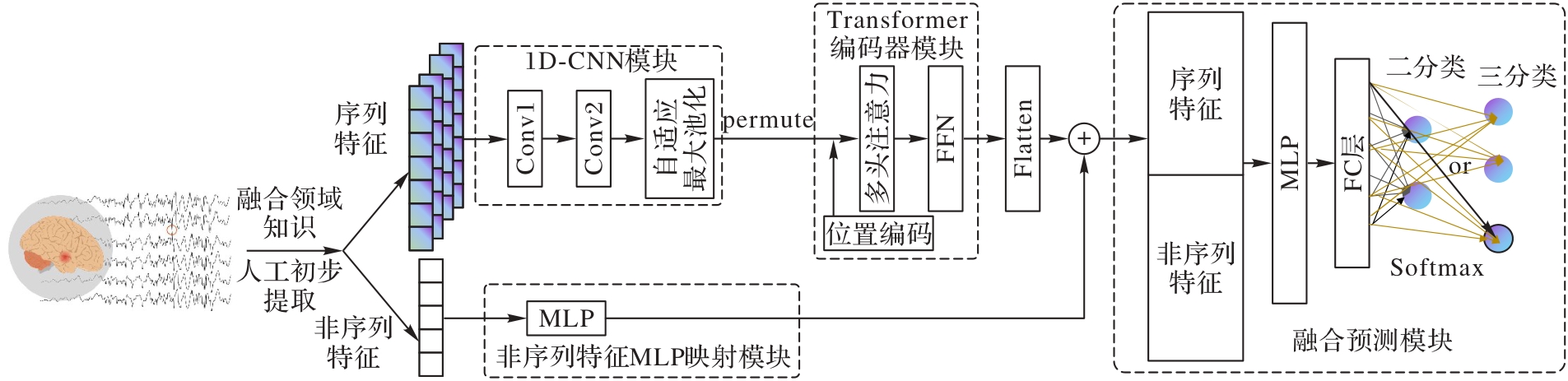
Fig. 1 Overall architecture of CTE-DSR

Fig. 2 Structure of 1D-CNN module
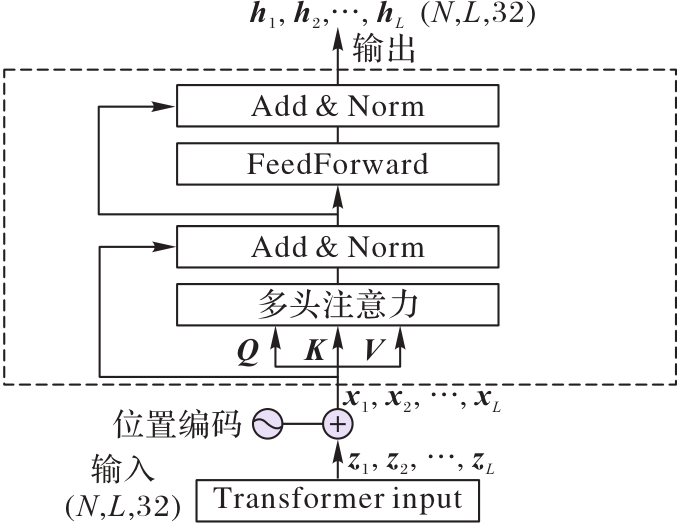
Fig. 3 Structure of Transformer encoder module
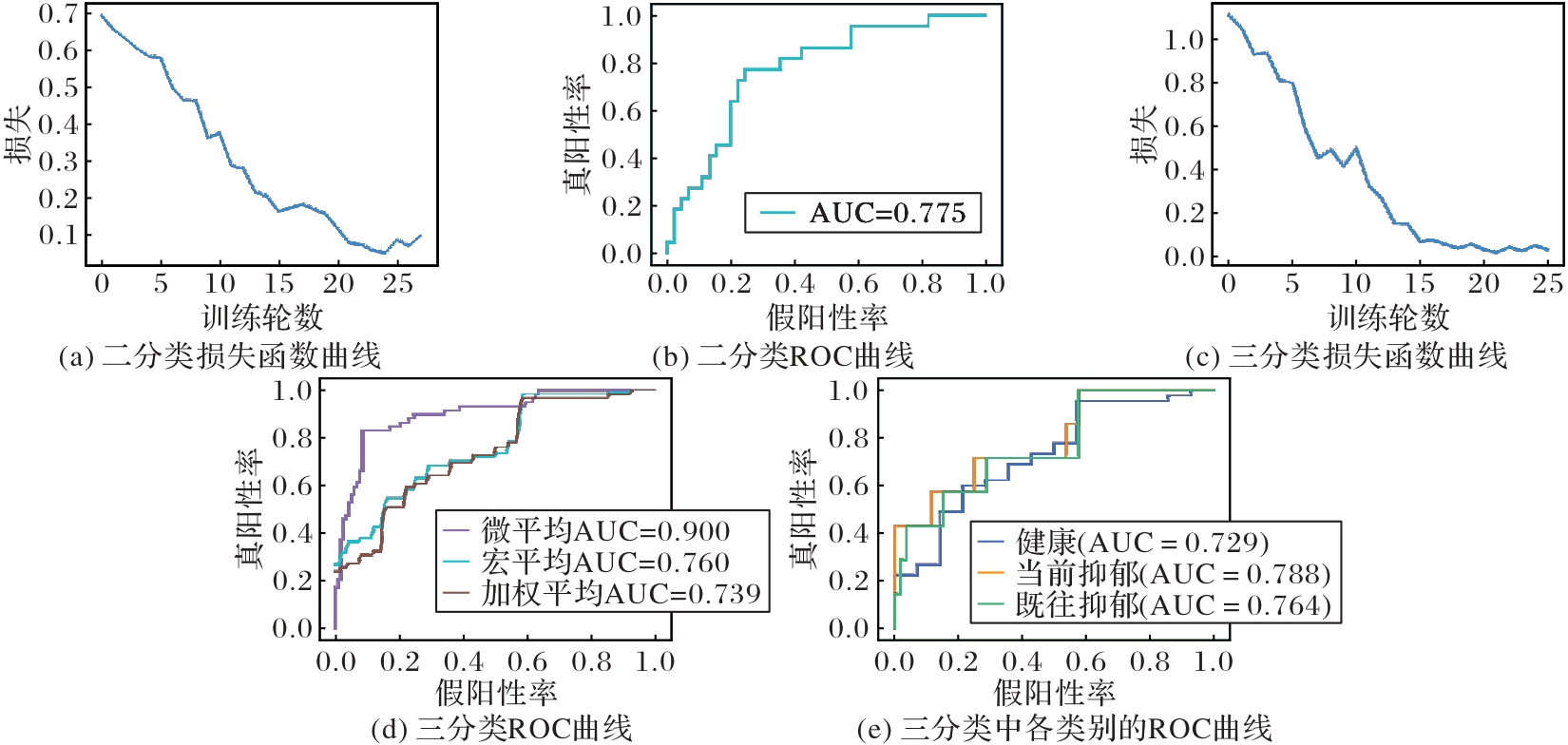
Fig. 4 Binary and ternary classification results of CTE-DSR
| 模型 | 二分类 | 三分类 | ||||||||||
|---|---|---|---|---|---|---|---|---|---|---|---|---|
| Acc | Prec | Rec | F1 | AUC | Acc | Prec | Rec | F1 | Mac_AUC | Mic_AUC | Wt_AUC | |
| CTE-DSR | 0.761 | 0.615 | 0.727 | 0.667 | 0.775 | 0.831 | 0.814 | 0.604 | 0.665 | 0.760 | 0.900 | 0.739 |
| SVM | 0.687 | 0.522 | 0.545 | 0.533 | 0.702 | 0.763 | 0.254 | 0.333 | 0.288 | 0.741 | 0.891 | 0.727 |
| RF | 0.582 | 0.406 | 0.591 | 0.481 | 0.674 | 0.780 | 0.592 | 0.381 | 0.375 | 0.728 | 0.891 | 0.726 |
| AdaBoost | 0.522 | 0.361 | 0.591 | 0.448 | 0.509 | 0.678 | 0.538 | 0.618 | 0.562 | 0.752 | 0.849 | 0.763 |
| XGB | 0.642 | 0.450 | 0.409 | 0.429 | 0.692 | 0.763 | 0.483 | 0.414 | 0.420 | 0.721 | 0.888 | 0.734 |
| LGB | 0.672 | 0.500 | 0.545 | 0.522 | 0.721 | 0.712 | 0.364 | 0.351 | 0.343 | 0.705 | 0.884 | 0.706 |
| CNN-RNN | 0.657 | 0.481 | 0.591 | 0.531 | 0.671 | 0.746 | 0.585 | 0.567 | 0.575 | 0.677 | 0.840 | 0.681 |
| CNN-LSTM | 0.731 | 0.643 | 0.409 | 0.500 | 0.726 | 0.712 | 0.486 | 0.472 | 0.463 | 0.739 | 0.867 | 0.736 |
Tab. 1 Comparison of classification performance of CTE-DSR, classical machine learning and deep learning models
| 模型 | 二分类 | 三分类 | ||||||||||
|---|---|---|---|---|---|---|---|---|---|---|---|---|
| Acc | Prec | Rec | F1 | AUC | Acc | Prec | Rec | F1 | Mac_AUC | Mic_AUC | Wt_AUC | |
| CTE-DSR | 0.761 | 0.615 | 0.727 | 0.667 | 0.775 | 0.831 | 0.814 | 0.604 | 0.665 | 0.760 | 0.900 | 0.739 |
| SVM | 0.687 | 0.522 | 0.545 | 0.533 | 0.702 | 0.763 | 0.254 | 0.333 | 0.288 | 0.741 | 0.891 | 0.727 |
| RF | 0.582 | 0.406 | 0.591 | 0.481 | 0.674 | 0.780 | 0.592 | 0.381 | 0.375 | 0.728 | 0.891 | 0.726 |
| AdaBoost | 0.522 | 0.361 | 0.591 | 0.448 | 0.509 | 0.678 | 0.538 | 0.618 | 0.562 | 0.752 | 0.849 | 0.763 |
| XGB | 0.642 | 0.450 | 0.409 | 0.429 | 0.692 | 0.763 | 0.483 | 0.414 | 0.420 | 0.721 | 0.888 | 0.734 |
| LGB | 0.672 | 0.500 | 0.545 | 0.522 | 0.721 | 0.712 | 0.364 | 0.351 | 0.343 | 0.705 | 0.884 | 0.706 |
| CNN-RNN | 0.657 | 0.481 | 0.591 | 0.531 | 0.671 | 0.746 | 0.585 | 0.567 | 0.575 | 0.677 | 0.840 | 0.681 |
| CNN-LSTM | 0.731 | 0.643 | 0.409 | 0.500 | 0.726 | 0.712 | 0.486 | 0.472 | 0.463 | 0.739 | 0.867 | 0.736 |
| 模型 | 平衡化方式 | 二分类 | 三分类 | ||||||||||
|---|---|---|---|---|---|---|---|---|---|---|---|---|---|
| Acc | Prec | Rec | F1 | AUC | Acc | Prec | Rec | F1 | Mac_AUC | Mic_AUC | Wt_AUC | ||
| CTE-DSR | None | 0.687 | 0.667 | 0.091 | 0.160 | 0.552 | 0.797 | 0.692 | 0.589 | 0.615 | 0.756 | 0.900 | 0.743 |
| SMOTE | 0.687 | 0.524 | 0.500 | 0.512 | 0.707 | 0.780 | 0.636 | 0.502 | 0.529 | 0.791 | 0.915 | 0.794 | |
| Weighted | 0.761 | 0.615 | 0.727 | 0.667 | 0.775 | 0.831 | 0.814 | 0.604 | 0.665 | 0.760 | 0.900 | 0.739 | |
| XGB | None | 0.687 | 0.533 | 0.364 | 0.432 | 0.550 | 0.763 | 0.429 | 0.374 | 0.365 | 0.739 | 0.894 | 0.768 |
| SMOTE | 0.672 | 0.500 | 0.500 | 0.500 | 0.674 | 0.746 | 0.518 | 0.447 | 0.467 | 0.722 | 0.878 | 0.705 | |
| Weighted | 0.642 | 0.450 | 0.409 | 0.429 | 0.692 | 0.763 | 0.483 | 0.414 | 0.420 | 0.721 | 0.888 | 0.734 | |
| RNN | None | 0.672 | 0.500 | 0.136 | 0.214 | 0.668 | 0.724 | 0.374 | 0.359 | 0.356 | 0.704 | 0.875 | 0.708 |
| SMOTE | 0.657 | 0.481 | 0.591 | 0.531 | 0.671 | 0.712 | 0.551 | 0.512 | 0.527 | 0.727 | 0.848 | 0.697 | |
| Weighted | 0.642 | 0.450 | 0.409 | 0.429 | 0.600 | 0.746 | 0.585 | 0.567 | 0.575 | 0.677 | 0.840 | 0.681 | |
Tab. 2 Comparison of classification performance of models under different balancing strategies
| 模型 | 平衡化方式 | 二分类 | 三分类 | ||||||||||
|---|---|---|---|---|---|---|---|---|---|---|---|---|---|
| Acc | Prec | Rec | F1 | AUC | Acc | Prec | Rec | F1 | Mac_AUC | Mic_AUC | Wt_AUC | ||
| CTE-DSR | None | 0.687 | 0.667 | 0.091 | 0.160 | 0.552 | 0.797 | 0.692 | 0.589 | 0.615 | 0.756 | 0.900 | 0.743 |
| SMOTE | 0.687 | 0.524 | 0.500 | 0.512 | 0.707 | 0.780 | 0.636 | 0.502 | 0.529 | 0.791 | 0.915 | 0.794 | |
| Weighted | 0.761 | 0.615 | 0.727 | 0.667 | 0.775 | 0.831 | 0.814 | 0.604 | 0.665 | 0.760 | 0.900 | 0.739 | |
| XGB | None | 0.687 | 0.533 | 0.364 | 0.432 | 0.550 | 0.763 | 0.429 | 0.374 | 0.365 | 0.739 | 0.894 | 0.768 |
| SMOTE | 0.672 | 0.500 | 0.500 | 0.500 | 0.674 | 0.746 | 0.518 | 0.447 | 0.467 | 0.722 | 0.878 | 0.705 | |
| Weighted | 0.642 | 0.450 | 0.409 | 0.429 | 0.692 | 0.763 | 0.483 | 0.414 | 0.420 | 0.721 | 0.888 | 0.734 | |
| RNN | None | 0.672 | 0.500 | 0.136 | 0.214 | 0.668 | 0.724 | 0.374 | 0.359 | 0.356 | 0.704 | 0.875 | 0.708 |
| SMOTE | 0.657 | 0.481 | 0.591 | 0.531 | 0.671 | 0.712 | 0.551 | 0.512 | 0.527 | 0.727 | 0.848 | 0.697 | |
| Weighted | 0.642 | 0.450 | 0.409 | 0.429 | 0.600 | 0.746 | 0.585 | 0.567 | 0.575 | 0.677 | 0.840 | 0.681 | |
| 模型 | Acc | Prec | Rec | F1 | Mac_AUC | Mic_AUC | Wt_AUC |
|---|---|---|---|---|---|---|---|
| CTE-DSR | 0.831 | 0.814 | 0.604 | 0.665 | 0.760 | 0.900 | 0.739 |
| -CNN | 0.627 | 0.360 | 0.395 | 0.369 | 0.614 | 0.791 | 0.629 |
| -Transformer | 0.644 | 0.468 | 0.523 | 0.483 | 0.763 | 0.857 | 0.718 |
| -Positional Encoding | 0.763 | 0.592 | 0.575 | 0.582 | 0.669 | 0.855 | 0.674 |
| -Lowdim MLP | 0.695 | 0.458 | 0.424 | 0.428 | 0.616 | 0.837 | 0.604 |
Tab. 3 Comparison of performance between complete model and ablated models
| 模型 | Acc | Prec | Rec | F1 | Mac_AUC | Mic_AUC | Wt_AUC |
|---|---|---|---|---|---|---|---|
| CTE-DSR | 0.831 | 0.814 | 0.604 | 0.665 | 0.760 | 0.900 | 0.739 |
| -CNN | 0.627 | 0.360 | 0.395 | 0.369 | 0.614 | 0.791 | 0.629 |
| -Transformer | 0.644 | 0.468 | 0.523 | 0.483 | 0.763 | 0.857 | 0.718 |
| -Positional Encoding | 0.763 | 0.592 | 0.575 | 0.582 | 0.669 | 0.855 | 0.674 |
| -Lowdim MLP | 0.695 | 0.458 | 0.424 | 0.428 | 0.616 | 0.837 | 0.604 |
| [1] | 吴炳鑫,周易,韩思博,等. “疏肝调神”针刺对脂多糖诱导抑郁模型小鼠海马TLR4/NF-κB通路的影响[J].中医杂志, 2025, 66(5): 526-531. |
| Wu Bingxin, Zhou Yi, Han Sibo, et al. Effect of acupuncture with the method of soothing the liver and regulating the mind on the TLR4/NF-κB pathway in the hippocampus of lipopolysaccharide-induced depression model mice [J]. Journal of Traditional Chinese Medicine, 2025, 66(5): 526-531. | |
| [2] | Liu Z, Kuai M. The global burden of depression in adolescents and young adults, 1990-2021: systematic analysis of the global burden of disease study [J]. BMC Psychiatry, 2025, 25: No.767. |
| [3] | 傅小兰,张侃,陈雪峰,等.心理健康蓝皮书:中国国民心理健康发展报告(2021~2022) [M].北京:社会科学文献出版社, 2023. |
| Fu Xiaolan, Zhang Kan, Chen Xuefeng, et al. Blue book on mental health: report on national mental health development in China (2021-2022) [M]. Beijing: Social Sciences Academic Press (China), 2023. | |
| [4] | Zimmerman M, Martinez J H, Young D, et al. Severity classification on the Hamilton depression rating scale [J]. Journal of Affective Disorders, 2013, 150(2): 384-388. |
| [5] | Katz I R, Liebmann E P, Resnick S G, et al. Performance of the PHQ-9 across conditions and comorbidities: findings from the Veterans Outcome Assessment survey [J]. Journal of Affective Disorders, 2021, 294: 864-867. |
| [6] | Zigler C K, Coles T. Clinical outcome assessments are never “validated” [J]. Value in Health, 2024, 27(11): 1494-1496. |
| [7] | 黄恋.基于多任务情绪刺激声学特征的抑郁倾向识别[D].贵阳:贵州师范大学, 2025: 2-3. |
| Huang Lian. Depression tendency identification based on multitask emotional stimulus acoustic features [D]. Guiyang: Guizhou Normal University, 2025: 2-3. | |
| [8] | Acharya U R, Oh S L, Hagiwara Y, et al. Automated EEG-based screening of depression using deep convolutional neural network [J]. Computer Methods and Programs in Biomedicine, 2018, 161: 103-113. |
| [9] | Ksibi A, Zakariah M, Menzli L J, et al. Electroencephalography-based depression detection using multiple machine learning techniques [J]. Diagnostics, 2023, 13(10): No.1779. |
| [10] | Badr Y, Tariq U, Al-Shargie F, et al. A review on evaluating mental stress by deep learning using EEG signals [J]. Neural Computing and Applications, 2024, 36(21): 12629-12654. |
| [11] | Kang M, Kang S, Lee Y. Prediction of Beck depression inventory score in EEG: application of deep-asymmetry method [J]. Applied Sciences, 2021, 11(19): No.9218. |
| [12] | Hosseinifard B, Moradi M H, Rostami R. Classifying depression patients and normal subjects using machine learning techniques and nonlinear features from EEG signal [J]. Computer Methods and Programs in Biomedicine, 2013, 109(3): 339-345. |
| [13] | Elnaggar K, El-Gayar M M, Elmogy M. Depression detection and diagnosis based on ElectroencEphaloGram (EEG) analysis: a systematic review [J]. Diagnostics, 2025, 15(2): No.210. |
| [14] | Liu W, Zheng W L, Lu B L. Emotion recognition using multimodal deep learning [C]// ICONIP 2016. Cham: Springer, 2016: 521-529. |
| [15] | Chang J, Choi Y. Depression diagnosis based on electroencephalography power ratios [J]. Brain and Behavior, 2023, 13(8): No.e3173. |
| [16] | Boby K, Veerasingam S. Depression diagnosis: EEG-based cognitive biomarkers and machine learning [J]. Behavioural Brain Research, 2025, 478: No.115325. |
| [17] | Huang W, Chang W, Yan G, et al. Spatio-spectral feature classification combining 3D-convolutional neural networks with long short-term memory for motor movement/imagery [J]. Engineering Applications of Artificial Intelligence, 2023, 120: No.105862. |
| [18] | Prabhakar S K, Lee S W. Improved sparse representation based robust hybrid feature extraction models with transfer and deep learning for EEG classification [J]. Expert Systems with Applications, 2022, 198: No.116783. |
| [19] | Monroe S M, Harkness K L. Major depression and its recurrences: life course matters [J]. Annual Review of Clinical Psychology, 2022, 18: 329-357. |
| [20] | Lee P F, Kan D P X, Croarkin P, et al. Neurophysiological correlates of depressive symptoms in young adults: a quantitative EEG study [J]. Journal of Clinical Neuroscience, 2018, 47: 315-322. |
| [21] | Movahed R A, Jahromi G P, Shahyad S, et al. A major depressive disorder diagnosis approach based on EEG signals using dictionary learning and functional connectivity features [J]. Physical and Engineering Sciences in Medicine, 2022, 45(3): 705-719. |
| [22] | Khadidos A O, Alyoubi K H, Mahato S, et al. Machine learning and electroencephalogram signal based diagnosis of depression [J]. Neuroscience Letters, 2023, 809: No.137313. |
| [23] | Lee K S, Ham B J. Machine learning on early diagnosis of depression [J]. Psychiatry Investigation, 2022, 19(8): 597-605. |
| [24] | Zhu T, Luo W, Yu F. Convolution-and attention-based neural network for automated sleep stage classification [J]. International Journal of Environmental Research and Public Health, 2020, 17(11): No.4152. |
| [25] | Ke H, Cai C, Wang F, et al. Interpretation of frequency channel-based CNN on depression identification [J]. Frontiers in Computational Neuroscience, 2021, 15: No.773147. |
| [26] | Zheng X, Chen W. An attention-based bi-LSTM method for visual object classification via EEG [J]. Biomedical Signal Processing and Control, 2021, 63: No.102174. |
| [27] | Masuda N, Yairi I E. Multi-input CNN-LSTM deep learning model for fear level classification based on EEG and peripheral physiological signals [J]. Frontiers in Psychology, 2023, 14: No.1141801. |
| [28] | Zeynali M, Seyedarabi H, Afrouzian R. Classification of EEG signals using Transformer based deep learning and ensemble models [J]. Biomedical Signal Processing and Control, 2023, 86(Pt A): No.105130. |
| [29] | Zhu J, Li Y, Yang C, et al. Transformer-based fusion model for mild depression recognition with EEG and pupil area signals [J]. Medical and Biological Engineering and Computing, 2025, 63(7): 2011-2027. |
| [30] | Xie W, Wang C, Lin Z, et al. Multimodal fusion diagnosis of depression and anxiety based on CNN-LSTM model [J]. Computerized Medical Imaging and Graphics, 2022, 102: No.102128. |
| [31] | Zhang W, Mao K, Chen J. A multimodal approach for detection and assessment of depression using text, audio and video [J]. Phenomics, 2024, 4(3): 234-249. |
| [32] | Zhou Y, Han W, Yao X, et al. Developing a machine learning model for detecting depression, anxiety, and apathy in older adults with mild cognitive impairment using speech and facial expressions: a cross-sectional observational study [J]. International Journal of Nursing Studies, 2023, 146: No.104562. |
| [33] | Tigga N P, Garg S. Efficacy of novel attention-based gated recurrent units Transformer for depression detection using electroencephalogram signals [J]. Health Information Science and Systems, 2022, 11: No.1. |
| [34] | Rawat K, Sharma T. An enhanced CNN-Bi-transformer based framework for detection of neurological illnesses through neurocardiac data fusion [J]. Scientific Reports, 2025, 15: No.11379. |
| [35] | Maggi G, D'Iorio A, Aiello E N, et al. Psychometrics and diagnostics of the Italian version of the Beck Depression Inventory-Ⅱ (BDI-Ⅱ) in Parkinson's disease [J]. Neurological Sciences, 2023, 44(5): 1607-1612. |
| [36] | Mumtaz W, Qayyum A. A deep learning framework for automatic diagnosis of unipolar depression [J]. International Journal of Medical Informatics, 2019, 132: No.103983. |
| [37] | Shivcharan M, Boby K, Sridevi V. EEG based machine learning models for automated depression detection [C]// IEEE CONECCT 2023. Piscataway: IEEE, 2023: 1-6. |
| [38] | Cavanagh J F. EEG: depression rest [DS/OL]. (2021-01-18) [2025-08-19]. . |
| [39] | Cavanagh J F, Bismark A W, Frank M J, et al. Multiple dissociations between comorbid depression and anxiety on reward and punishment processing: evidence from computationally informed EEG [J]. Computational Psychiatry, 2019, 3: 1-17. |
| [40] | Zhang X S, Roy R J, Jensen E W. EEG complexity as a measure of depth of anesthesia for patients [J]. IEEE Transactions on Biomedical Engineering, 2001, 48(12): 1424-1433. |
| [41] | Richman J S, Moorman J R. Physiological time-series analysis using approximate entropy and sample entropy [J]. American Journal of Physiology-Heart and Circulatory Physiology, 2000, 278(6): H2039-H2049. |
| [42] | Bandt C, Pompe B. Permutation entropy: a natural complexity measure for time series [J]. Physical Review Letters, 2002, 88(17): No.174102. |
| [43] | Younesi A, Ansari M, Fazli M, et al. A comprehensive survey of convolutions in deep learning: applications, challenges, and future trends [J]. IEEE Access, 2024, 12: 41180-41218. |
| [44] | Li Y, Shen Y, Fan X, et al. A novel EEG-based major depressive disorder detection framework with two-stage feature selection [J]. BMC Medical Informatics and Decision Making, 2022, 22: No.209. |
| [45] | Roh S C, Kim J S, Kim S, et al. Frontal alpha asymmetry moderated by suicidal ideation in patients with major depressive disorder: a comparison with healthy individuals [J]. Clinical Psychopharmacology and Neuroscience, 2020, 18(1): 58-66. |
| [46] | Whitton A E, Deccy S, Ironside M L, et al. Electroencephalography source functional connectivity reveals abnormal high-frequency communication among large-scale functional networks in depression [J]. Biological Psychiatry: Cognitive Neuroscience and Neuroimaging, 2018, 3(1): 50-58. |
| [47] | Benschop L, Poppa T, Medani T, et al. Electrophysiological scarring in remitted depressed patients: elevated EEG functional connectivity between the posterior cingulate cortex and the subgenual prefrontal cortex as a neural marker for rumination [J]. Journal of Affective Disorders, 2021, 281: 493-501. |
| [1] | Dingli YANG, Yuanfang WEI, Wenrui HU, Liyang KONG, Yinshan YU. Spatio-temporal modeling and hierarchical feature enhancement for person re-identification [J]. Journal of Computer Applications, 2026, 46(9): 2776-2786. |
| [2] | Kan HE, Hongfeng MA, Xuejun ZONG, Hongyan SHI, Lian LIAN, Bowei NING. DCSFFuzzer: dual-channel semantic feature fusion-based fuzz testing method for industrial control protocols [J]. Journal of Computer Applications, 2026, 46(9): 2877-2888. |
| [3] | Yixin ZHANG, Lin JIANG, Yuancheng LI, Chen JI. CNN pruning and quantization compression method for reconfigurable structures [J]. Journal of Computer Applications, 2026, 46(9): 2732-2740. |
| [4] | Jiangyan CHEN, Yandan WANG, Yihu LIU, Yinglong MA. Collaborative query optimization-based framework for long-tailed object detection [J]. Journal of Computer Applications, 2026, 46(9): 2769-2775. |
| [5] | Lin HUANG, Yingshun LI, Weiyan TONG, Shuyuan ZHANG, Zihan WANG. Remote sensing image object detection algorithm based on improved real-time detection Transformer [J]. Journal of Computer Applications, 2026, 46(8): 2652-2659. |
| [6] | Ming LIU, Dongqi SHEN, Ziyang MENG. Point cloud registration network with dual-branch multi-level feature fusion [J]. Journal of Computer Applications, 2026, 46(8): 2584-2593. |
| [7] | Jiangyu YAN, Shiqian WANG, Hong WANG. Electricity theft detection method based on improved Wasserstein generative adversarial network with gradient penalty and time-frequency feature fusion [J]. Journal of Computer Applications, 2026, 46(8): 2691-2698. |
| [8] | Guoyou ZHANG, Hongyu NIE, Lihu PAN, Rundong LEI. Point-MLPBLS: point cloud semantic segmentation network based on MLP cascaded broad learning system [J]. Journal of Computer Applications, 2026, 46(7): 2259-2266. |
| [9] | Chao LYU, Geyao MA. Lightweight human pose estimation network based on redundant feature suppression [J]. Journal of Computer Applications, 2026, 46(6): 1973-1980. |
| [10] | Songhao ZHU, Zhiyun ZHAO, Mengling WANG. Low-light image enhancement network based on lightweight residual and brightness-aware dynamic feature fusion [J]. Journal of Computer Applications, 2026, 46(6): 1936-1946. |
| [11] | Xuechao LIAO, Rui CHEN. Prediction-evaluation framework for anomaly detection in electric vehicle lithium-ion battery [J]. Journal of Computer Applications, 2026, 46(5): 1614-1623. |
| [12] | Hongrui ZHANG, Weiming FENG, Luxia YANG, Yongjie MA. CSAF-YOLO: improved YOLO11 algorithm for underwater small object detection [J]. Journal of Computer Applications, 2026, 46(5): 1578-1585. |
| [13] | Yuqian HUANG, Hui HUANG, Yongbin QIN, Ruizhang HUANG, Yanping CHEN, Yulin ZHOU, Qian SUN. Judicial element extraction method by integrating global and local semantics [J]. Journal of Computer Applications, 2026, 46(5): 1460-1467. |
| [14] | Xinyao LIU, Jun LIANG, Jiahao LONG, Renliang YAN. Fine-grained Chinese herbal medicine image classification based on feature fusion and channel information compensation [J]. Journal of Computer Applications, 2026, 46(5): 1677-1683. |
| [15] | Jiali ZHENG, Gang ZHOU, Jing CHEN, Shunhang LI. Adaptive multi-feature fusion detection method for AI-generated text [J]. Journal of Computer Applications, 2026, 46(5): 1433-1440. |
| Viewed | ||||||
|
Full text |
|
|||||
|
Abstract |
|
|||||
