


Journal of Computer Applications ›› 2026, Vol. 46 ›› Issue (10): 3133-3142.DOI: 10.11772/j.issn.1001-9081.2025081057
• Artificial intelligence • Previous Articles
Congcong LI1,2, Guandong GAO2,3( ), Ke XIAO1, Bowei SHEN2,3
Received:2025-09-12
Revised:2025-12-18
Accepted:2026-01-04
Online:2026-10-21
Published:2026-10-10
Contact:
Guandong GAO
About author:LI Congcong, born in 2001, M. S. candidate. His research interests include natural language processing, criminal psychology.Supported by:
李聪聪1,2, 高冠东2,3(), 肖珂1, 沈伯玮2,3
通讯作者:
高冠东
作者简介:李聪聪(2001—),男,河北邯郸人,硕士研究生,主要研究方向:自然语言处理、犯罪心理基金资助:CLC Number:
Congcong LI, Guandong GAO, Ke XIAO, Bowei SHEN. Criminal psychological attribution classification model based on TF-Chi probability features and hybrid prompt learning[J]. Journal of Computer Applications, 2026, 46(10): 3133-3142.
李聪聪, 高冠东, 肖珂, 沈伯玮. 基于TF-Chi概率特征和混合提示学习的犯罪心理归因模型[J]. 《计算机应用》唯一官方网站, 2026, 46(10): 3133-3142.
Add to citation manager EndNote|Ris|BibTeX
URL: https://www.joca.cn/EN/10.11772/j.issn.1001-9081.2025081057
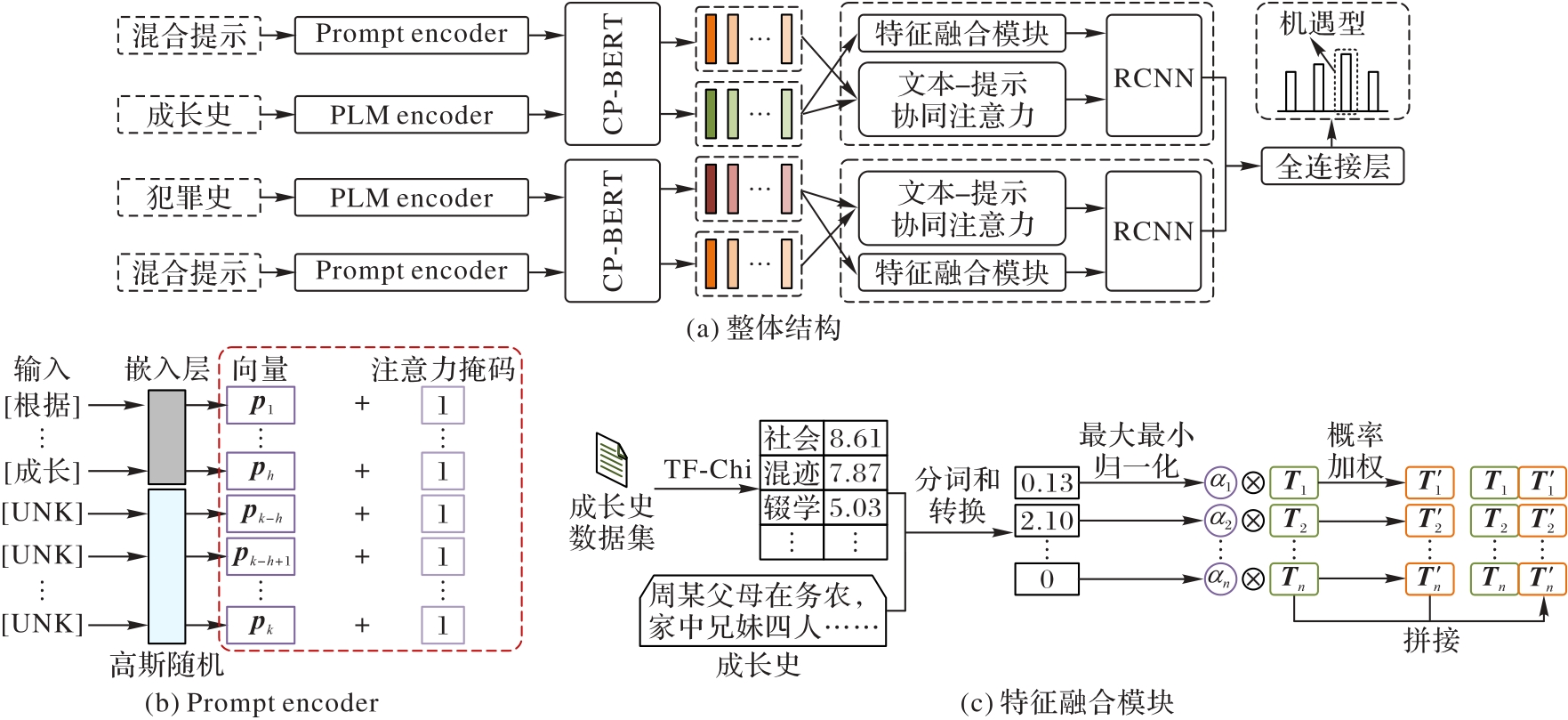
Fig. 1 Overall framework of criminal psychological attribution classification model
| 类型 | 训练集样本数 | 测试集样本数 | 总计 |
|---|---|---|---|
| 总计 | 2 788 | 696 | 3 484 |
| 原发型 | 1 413 | 353 | 1 766 |
| 继发型 | 765 | 189 | 954 |
| 突变型 | 326 | 82 | 408 |
| 机遇型 | 284 | 72 | 356 |
Tab. 1 Division of datasets
| 类型 | 训练集样本数 | 测试集样本数 | 总计 |
|---|---|---|---|
| 总计 | 2 788 | 696 | 3 484 |
| 原发型 | 1 413 | 353 | 1 766 |
| 继发型 | 765 | 189 | 954 |
| 突变型 | 326 | 82 | 408 |
| 机遇型 | 284 | 72 | 356 |
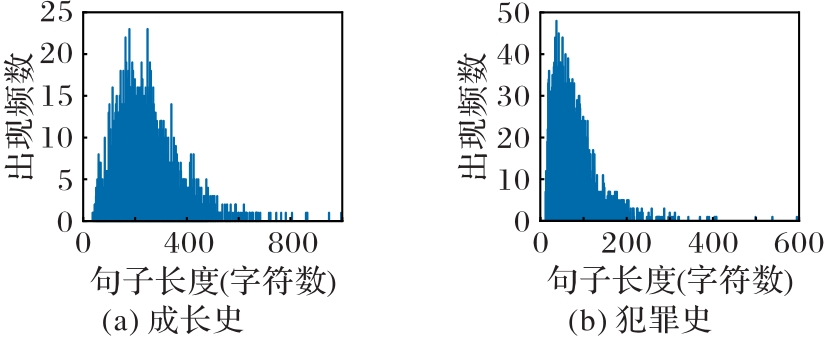
Fig. 2 Sentence lengths and frequencies of their occurrence
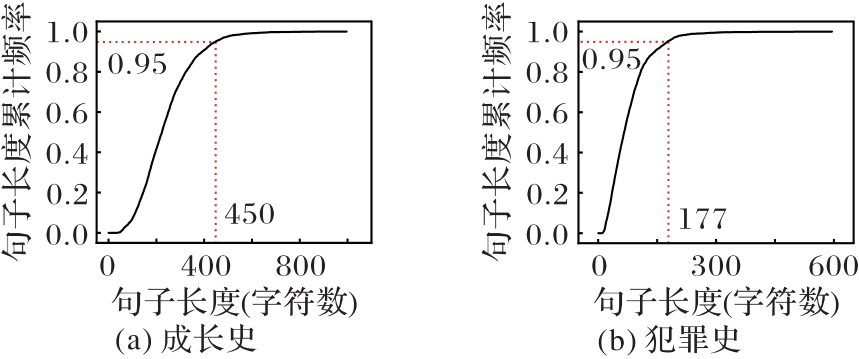
Fig. 3 Functions of cumulative distribution of sentence lengths
| 参数 | 参数值 | 参数 | 参数值 |
|---|---|---|---|
| 词嵌入维度 | 768 | 优化器 | Adam |
| LSTM隐藏单元数 | 256 | 学习率 | 0.001 |
| LSTM层数 | 1 | 轮次 | 20 |
| 卷积核尺寸 | 3 | 批处理大小(Batch size) | 32 |
| 卷积核数量 | 100 | 随机种子 | 42 |
Tab. 2 Setting of model parameters
| 参数 | 参数值 | 参数 | 参数值 |
|---|---|---|---|
| 词嵌入维度 | 768 | 优化器 | Adam |
| LSTM隐藏单元数 | 256 | 学习率 | 0.001 |
| LSTM层数 | 1 | 轮次 | 20 |
| 卷积核尺寸 | 3 | 批处理大小(Batch size) | 32 |
| 卷积核数量 | 100 | 随机种子 | 42 |
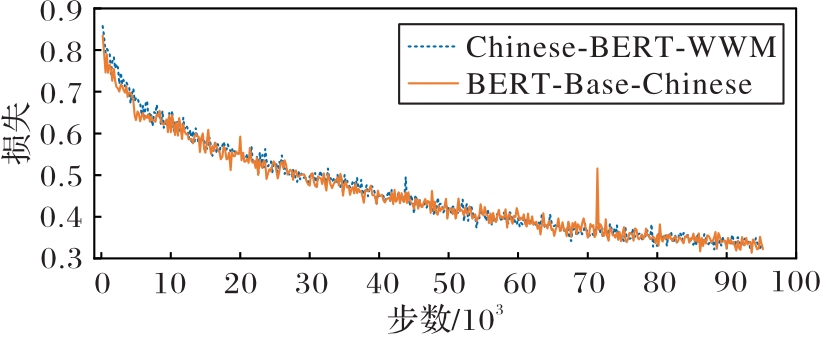
Fig. 4 Loss curves for domain-adaptive training
| 方法 | Acc/% | p值(Acc) | P/% | p值(P) | R/% | p值(R) | F1/% | p值(F1) |
|---|---|---|---|---|---|---|---|---|
| KNN | 70.10 | 8.92E-11 | 75.08 | 1.05E-10 | 63.54 | 1.99E-12 | 65.74 | 1.59E-12 |
| GNB | 70.24 | 9.16E-11 | 69.80 | 3.52E-11 | 74.09 | 1.34E-11 | 70.86 | 3.86E-12 |
| BNB | 75.11 | 2.63E-10 | 83.62 | 1.79E-09 | 64.98 | 2.46E-12 | 68.05 | 7.69E-10 |
| DT | 75.25 | 2.72E-10 | 75.06 | 1.04E-10 | 75.83 | 2.06E-11 | 75.44 | 1.05E-11 |
| RF | 78.11 | 5.98E-10 | 84.74 | 3.19E-09 | 70.48 | 6.29E-12 | 74.09 | 7.61E-12 |
| MNB | 80.26 | 1.22E-09 | 86.63 | 1.08E-08 | 75.24 | 1.77E-11 | 78.87 | 2.73E-11 |
| SVM | 84.69 | 9.62E-09 | 86.56 | 1.03E-08 | 85.01 | 7.54E-10 | 85.74 | 6.17E-10 |
| LR | 85.12 | 1.26E-09 | 85.98 | 6.83E-09 | 86.05 | 1.55E-09 | 86.00 | 7.41E-10 |
| XGBoost | 87.27 | 7.08E-08 | 88.16 | 4.28E-08 | 87.69 | 6.94E-09 | 87.87 | 3.82E-09 |
| 本文方法 | 91.25 | 0 | 91.90 | 0 | 91.34 | 0 | 91.56 | 0 |
Tab. 3 Comparative experimental results of proposed method and machine learning method
| 方法 | Acc/% | p值(Acc) | P/% | p值(P) | R/% | p值(R) | F1/% | p值(F1) |
|---|---|---|---|---|---|---|---|---|
| KNN | 70.10 | 8.92E-11 | 75.08 | 1.05E-10 | 63.54 | 1.99E-12 | 65.74 | 1.59E-12 |
| GNB | 70.24 | 9.16E-11 | 69.80 | 3.52E-11 | 74.09 | 1.34E-11 | 70.86 | 3.86E-12 |
| BNB | 75.11 | 2.63E-10 | 83.62 | 1.79E-09 | 64.98 | 2.46E-12 | 68.05 | 7.69E-10 |
| DT | 75.25 | 2.72E-10 | 75.06 | 1.04E-10 | 75.83 | 2.06E-11 | 75.44 | 1.05E-11 |
| RF | 78.11 | 5.98E-10 | 84.74 | 3.19E-09 | 70.48 | 6.29E-12 | 74.09 | 7.61E-12 |
| MNB | 80.26 | 1.22E-09 | 86.63 | 1.08E-08 | 75.24 | 1.77E-11 | 78.87 | 2.73E-11 |
| SVM | 84.69 | 9.62E-09 | 86.56 | 1.03E-08 | 85.01 | 7.54E-10 | 85.74 | 6.17E-10 |
| LR | 85.12 | 1.26E-09 | 85.98 | 6.83E-09 | 86.05 | 1.55E-09 | 86.00 | 7.41E-10 |
| XGBoost | 87.27 | 7.08E-08 | 88.16 | 4.28E-08 | 87.69 | 6.94E-09 | 87.87 | 3.82E-09 |
| 本文方法 | 91.25 | 0 | 91.90 | 0 | 91.34 | 0 | 91.56 | 0 |
| 模型 | Acc/% | p值(Acc) | P/% | p值(P) | R/% | p值(R) | F1/% | p值(F1) |
|---|---|---|---|---|---|---|---|---|
| CNN-BiLSTM | 87.62 | 1.70E-06 | 87.51 | 3.90E-07 | 87.62 | 9.20E-07 | 87.44 | 6.87E-07 |
| TextConvoNet_4 | 84.42 | 1.46E-08 | 86.54 | 1.10E-08 | 84.56 | 3.64E-09 | 85.50 | 1.96E-10 |
| TextConvoNet_6 | 85.34 | 8.02E-09 | 88.29 | 1.12E-07 | 84.82 | 4.27E-09 | 86.17 | 2.53E-09 |
| RoBERTa | 81.99 | 1.06E-09 | 82.92 | 6.31E-10 | 81.99 | 5.62E-08 | 80.78 | 1.50E-11 |
| LLaMA | 89.89 | 8.32E-06 | 90.10 | 8.90E-07 | 90.01 | 3.75E-06 | 90.04 | 1.03E-07 |
| ChatGLM | 90.08 | 1.56E-04 | 90.24 | 1.66E-05 | 90.20 | 6.42E-05 | 90.18 | 4.48E-06 |
| DeepSeek | 90.26 | 4.61E-05 | 90.34 | 3.67E-06 | 90.34 | 2.71E-05 | 90.24 | 6.20E-07 |
| 本文模型 | 91.25 | 0 | 91.90 | 0 | 91.34 | 0 | 91.56 | 0 |
Tab. 4 Comparative experimental results of proposed model and baseline models
| 模型 | Acc/% | p值(Acc) | P/% | p值(P) | R/% | p值(R) | F1/% | p值(F1) |
|---|---|---|---|---|---|---|---|---|
| CNN-BiLSTM | 87.62 | 1.70E-06 | 87.51 | 3.90E-07 | 87.62 | 9.20E-07 | 87.44 | 6.87E-07 |
| TextConvoNet_4 | 84.42 | 1.46E-08 | 86.54 | 1.10E-08 | 84.56 | 3.64E-09 | 85.50 | 1.96E-10 |
| TextConvoNet_6 | 85.34 | 8.02E-09 | 88.29 | 1.12E-07 | 84.82 | 4.27E-09 | 86.17 | 2.53E-09 |
| RoBERTa | 81.99 | 1.06E-09 | 82.92 | 6.31E-10 | 81.99 | 5.62E-08 | 80.78 | 1.50E-11 |
| LLaMA | 89.89 | 8.32E-06 | 90.10 | 8.90E-07 | 90.01 | 3.75E-06 | 90.04 | 1.03E-07 |
| ChatGLM | 90.08 | 1.56E-04 | 90.24 | 1.66E-05 | 90.20 | 6.42E-05 | 90.18 | 4.48E-06 |
| DeepSeek | 90.26 | 4.61E-05 | 90.34 | 3.67E-06 | 90.34 | 2.71E-05 | 90.24 | 6.20E-07 |
| 本文模型 | 91.25 | 0 | 91.90 | 0 | 91.34 | 0 | 91.56 | 0 |
| 模型 | Acc/% | p值(Acc) | P/% | p值(P) | R/% | p值(R) | F1/% | p值(F1) |
|---|---|---|---|---|---|---|---|---|
| 无CP-BERT | 89.21 | 3.67E-08 | 89.70 | 4.37E-08 | 90.01 | 1.84E-07 | 89.80 | 7.58E-08 |
| 无Hybrid Prompt | 88.81 | 2.74E-06 | 89.16 | 1.35E-06 | 89.94 | 1.30E-05 | 89.47 | 5.88E-07 |
| 无关联概率特征方法 | 90.08 | 9.73E-07 | 91.30 | 2.33E-05 | 90.59 | 2.78E-05 | 90.90 | 3.26E-06 |
| 无双通道结构 | 90.41 | 1.13E-05 | 90.60 | 7.19E-07 | 91.75 | 2.01E-04 | 91.11 | 1.06E-05 |
| 本文模型 | 91.25 | 0 | 91.90 | 0 | 91.34 | 0 | 91.56 | 0 |
Tab. 5 Ablation experimental results of different models
| 模型 | Acc/% | p值(Acc) | P/% | p值(P) | R/% | p值(R) | F1/% | p值(F1) |
|---|---|---|---|---|---|---|---|---|
| 无CP-BERT | 89.21 | 3.67E-08 | 89.70 | 4.37E-08 | 90.01 | 1.84E-07 | 89.80 | 7.58E-08 |
| 无Hybrid Prompt | 88.81 | 2.74E-06 | 89.16 | 1.35E-06 | 89.94 | 1.30E-05 | 89.47 | 5.88E-07 |
| 无关联概率特征方法 | 90.08 | 9.73E-07 | 91.30 | 2.33E-05 | 90.59 | 2.78E-05 | 90.90 | 3.26E-06 |
| 无双通道结构 | 90.41 | 1.13E-05 | 90.60 | 7.19E-07 | 91.75 | 2.01E-04 | 91.11 | 1.06E-05 |
| 本文模型 | 91.25 | 0 | 91.90 | 0 | 91.34 | 0 | 91.56 | 0 |
| 方法 | 初始化 | token数 | Acc/% | P/% | R/% | F1/% |
|---|---|---|---|---|---|---|
| Hard Prompt_1 | 根据成长史,分析案例 | 10 | 89.13 | 89.25 | 89.13 | 88.93 |
| Hard Prompt_2 | 根据成长史,分析这个案例 | 12 | 89.73 | 90.24 | 91.61 | 90.80 |
| Hard Prompt_3 | 根据成长史的内容,分析案例 | 13 | 89.43 | 90.12 | 90.90 | 90.33 |
| Hard Prompt_4 | 根据成长史的内容,分析这个案例 | 15 | 88.83 | 89.92 | 90.33 | 89.83 |
| Hard Prompt_5 | 根据成长史的内容,分析这个案例的类型 | 18 | 88.98 | 89.24 | 90.97 | 89.94 |
Tab. 6 Texts,token lengths and experimental results corresponding to Hard Prompt
| 方法 | 初始化 | token数 | Acc/% | P/% | R/% | F1/% |
|---|---|---|---|---|---|---|
| Hard Prompt_1 | 根据成长史,分析案例 | 10 | 89.13 | 89.25 | 89.13 | 88.93 |
| Hard Prompt_2 | 根据成长史,分析这个案例 | 12 | 89.73 | 90.24 | 91.61 | 90.80 |
| Hard Prompt_3 | 根据成长史的内容,分析案例 | 13 | 89.43 | 90.12 | 90.90 | 90.33 |
| Hard Prompt_4 | 根据成长史的内容,分析这个案例 | 15 | 88.83 | 89.92 | 90.33 | 89.83 |
| Hard Prompt_5 | 根据成长史的内容,分析这个案例的类型 | 18 | 88.98 | 89.24 | 90.97 | 89.94 |
| 方法 | token数 | Acc/% | P/% | R/% | F1/% |
|---|---|---|---|---|---|
| Soft Prompt_1 | 5 | 89.58 | 89.19 | 91.29 | 90.08 |
| Soft Prompt_2 | 10 | 89.43 | 89.41 | 91.19 | 90.18 |
| Soft Prompt_3 | 15 | 89.73 | 89.96 | 90.87 | 90.33 |
| Soft Prompt_4 | 20 | 89.13 | 89.62 | 91.08 | 90.23 |
| Soft Prompt_5 | 25 | 90.47 | 91.49 | 91.52 | 91.44 |
| Soft Prompt_6 | 30 | 89.88 | 90.82 | 90.49 | 90.32 |
| Soft Prompt_7 | 35 | 90.47 | 90.66 | 91.81 | 91.16 |
| Soft Prompt_8 | 40 | 90.02 | 90.63 | 90.48 | 90.38 |
| 本文方法 | 24 | 91.25 | 91.90 | 91.34 | 91.56 |
Tab. 7 Soft Prompt of different lengths and their experimental results
| 方法 | token数 | Acc/% | P/% | R/% | F1/% |
|---|---|---|---|---|---|
| Soft Prompt_1 | 5 | 89.58 | 89.19 | 91.29 | 90.08 |
| Soft Prompt_2 | 10 | 89.43 | 89.41 | 91.19 | 90.18 |
| Soft Prompt_3 | 15 | 89.73 | 89.96 | 90.87 | 90.33 |
| Soft Prompt_4 | 20 | 89.13 | 89.62 | 91.08 | 90.23 |
| Soft Prompt_5 | 25 | 90.47 | 91.49 | 91.52 | 91.44 |
| Soft Prompt_6 | 30 | 89.88 | 90.82 | 90.49 | 90.32 |
| Soft Prompt_7 | 35 | 90.47 | 90.66 | 91.81 | 91.16 |
| Soft Prompt_8 | 40 | 90.02 | 90.63 | 90.48 | 90.38 |
| 本文方法 | 24 | 91.25 | 91.90 | 91.34 | 91.56 |
| 方法 | Soft Prompt 长度 | token 数 | Acc/% | P/% | R/% | F1/% |
|---|---|---|---|---|---|---|
| Hybrid Prompt_1 | 0 | 12 | 90.62 | 91.38 | 91.36 | 91.28 |
| Hybrid Prompt_2 | 4 | 16 | 90.47 | 90.94 | 91.49 | 91.07 |
| Hybrid Prompt_3 | 8 | 20 | 89.21 | 89.40 | 89.21 | 89.13 |
| Hybrid Prompt_4 | 12 | 24 | 89.88 | 91.40 | 90.18 | 90.63 |
| Hybrid Prompt_5 | 16 | 28 | 90.17 | 91.01 | 90.99 | 90.80 |
| Hybrid Prompt_6 | 20 | 32 | 91.04 | 91.53 | 91.96 | 91.67 |
| Hybrid Prompt_7 | 24 | 36 | 91.22 | 91.93 | 91.38 | 91.59 |
| Hybrid Prompt_8 | 28 | 40 | 90.77 | 91.79 | 91.02 | 91.34 |
Tab. 8 Experimental results on proportion of Hybrid Prompt (with Hard Prompt_2 length set to 12)
| 方法 | Soft Prompt 长度 | token 数 | Acc/% | P/% | R/% | F1/% |
|---|---|---|---|---|---|---|
| Hybrid Prompt_1 | 0 | 12 | 90.62 | 91.38 | 91.36 | 91.28 |
| Hybrid Prompt_2 | 4 | 16 | 90.47 | 90.94 | 91.49 | 91.07 |
| Hybrid Prompt_3 | 8 | 20 | 89.21 | 89.40 | 89.21 | 89.13 |
| Hybrid Prompt_4 | 12 | 24 | 89.88 | 91.40 | 90.18 | 90.63 |
| Hybrid Prompt_5 | 16 | 28 | 90.17 | 91.01 | 90.99 | 90.80 |
| Hybrid Prompt_6 | 20 | 32 | 91.04 | 91.53 | 91.96 | 91.67 |
| Hybrid Prompt_7 | 24 | 36 | 91.22 | 91.93 | 91.38 | 91.59 |
| Hybrid Prompt_8 | 28 | 40 | 90.77 | 91.79 | 91.02 | 91.34 |
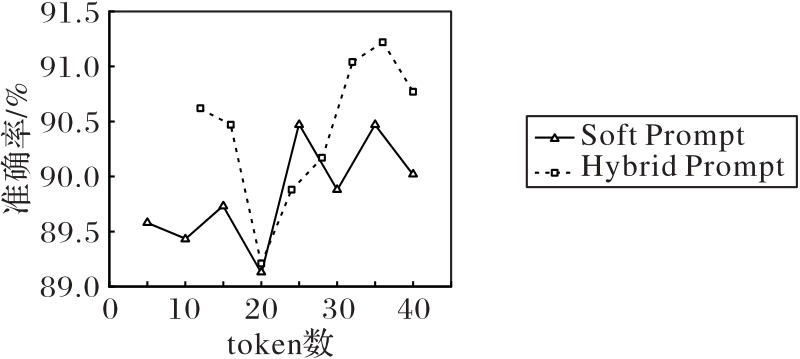
Fig. 5 Accuracies for different parameters
| 统计项 | 统计值 |
|---|---|
| 训练集案例 | 120 473 |
| 测试集案例 | 30 441 |
| 罪名数 | 191 |
Tab. 9 Statistics of CAIL-small dataset
| 统计项 | 统计值 |
|---|---|
| 训练集案例 | 120 473 |
| 测试集案例 | 30 441 |
| 罪名数 | 191 |
| 方法 | Acc | P | R | F1 |
|---|---|---|---|---|
| Few-Shot[ | 83.65 | 80.84 | 82.01 | 81.55 |
| CTM[ | 87.03 | 77.85 | 76.61 | 75.64 |
| NeurJudge[ | 83.92 | 82.76 | 81.85 | 81.96 |
| CEEN[ | 86.83 | 85.61 | 86.86 | 86.22 |
| GJudge[ | 87.87 | 86.64 | 87.38 | 87.01 |
| 本文模型 | 87.52 | 88.90 | 87.59 | 87.33 |
Tab. 10 Comparison of experimental results on CAIL-small dataset
| 方法 | Acc | P | R | F1 |
|---|---|---|---|---|
| Few-Shot[ | 83.65 | 80.84 | 82.01 | 81.55 |
| CTM[ | 87.03 | 77.85 | 76.61 | 75.64 |
| NeurJudge[ | 83.92 | 82.76 | 81.85 | 81.96 |
| CEEN[ | 86.83 | 85.61 | 86.86 | 86.22 |
| GJudge[ | 87.87 | 86.64 | 87.38 | 87.01 |
| 本文模型 | 87.52 | 88.90 | 87.59 | 87.33 |
真实 类型 | 罪犯电子信息记录 | 归因权重 | 归因 类型 | ||||
|---|---|---|---|---|---|---|---|
| 成长史 | 犯罪史 | 原发型 | 继发型 | 突变型 | 机遇型 | ||
| 原发型 | 因 | 胡某 | 0.475 1 | 0.175 0 | 0.174 9 | 0.174 9 | 原发型 |
| 继发型 | 徐某 毕业后就读 在父母安排下结婚生子…… | 为筹赌资向亲友借贷,最终因 入狱…… | 0.174 9 | 0.475 2 | 0.174 9 | 0.174 9 | 继发型 |
| 突变型 | 陈某 | 1999年9月,陈某在 被害人及其母亲,致被害人死亡…… | 0.175 3 | 0.176 6 | 0.472 7 | 0.175 2 | 突变型 |
| 机遇型 | 邓某 成绩优异,但因为家里 放弃自己的 | 邓某夜晚 面包车的 发现车内背包后将其破坏,随后离开…… | 0.175 0 | 0.175 2 | 0.186 5 | 0.463 3 | 机遇型 |
Tab. 11 Case analysis in test dataset
真实 类型 | 罪犯电子信息记录 | 归因权重 | 归因 类型 | ||||
|---|---|---|---|---|---|---|---|
| 成长史 | 犯罪史 | 原发型 | 继发型 | 突变型 | 机遇型 | ||
| 原发型 | 因 | 胡某 | 0.475 1 | 0.175 0 | 0.174 9 | 0.174 9 | 原发型 |
| 继发型 | 徐某 毕业后就读 在父母安排下结婚生子…… | 为筹赌资向亲友借贷,最终因 入狱…… | 0.174 9 | 0.475 2 | 0.174 9 | 0.174 9 | 继发型 |
| 突变型 | 陈某 | 1999年9月,陈某在 被害人及其母亲,致被害人死亡…… | 0.175 3 | 0.176 6 | 0.472 7 | 0.175 2 | 突变型 |
| 机遇型 | 邓某 成绩优异,但因为家里 放弃自己的 | 邓某夜晚 面包车的 发现车内背包后将其破坏,随后离开…… | 0.175 0 | 0.175 2 | 0.186 5 | 0.463 3 | 机遇型 |
| [1] | Wang Y. A study on criminal psychology of juvenile violent murderers[C]// ICMHHE 2021. Dordrecht: Atlantis Press, 2021: 299-305. |
| [2] | Verona E, Fox B. Pathways to crime and antisocial behavior: a critical analysis of psychological research and a call for broader ecological perspectives[J]. Annual Review of Clinical Psychology, 2025, 21: 439-464. |
| [3] | Aubrey O, Jones K A, Paddock E. Self-reported impulsivity, aggression and childhood trauma in the general population: a United-Kingdom-based online survey[J]. Journal of Criminal Psychology, 2025, 15(3): 350-368. |
| [4] | Jones E E, Harris V A. The attribution of attitudes[J]. Journal of Experimental Social Psychology, 1967, 3(1): 1-24. |
| [5] | 罗大华. 犯罪心理学[M]. 5版. 北京: 中国政法大学出版社, 2007: 99-101. |
| Luo Dahua. Criminal psychology[M]. 5th ed. Beijing: China University of Political Science and Law Press, 2007: 99-101. | |
| [6] | 张玉. 论犯罪心理形成的相关因素[J]. 求实, 2009(): 80-82. |
| Zhang Yu. On the related factors of criminal psychology formation[J]. Truth Seeking, 2009(S2): 80-82. | |
| [7] | Koolschijn M, Janković M, Bogaerts S. The impact of childhood maltreatment on aggression, criminal risk factors, and treatment trajectories in forensic psychiatric patients[J]. Frontiers in Psychiatry, 2023, 14: No.1128020. |
| [8] | Spytska L. Psychological profile and prerequisites for the formation of the killer’s personality[J]. Social and Legal Studios, 2023, 6(1): 41-48. |
| [9] | 常皓. 李征琴虐待养子案的心理分析[J]. 湖南警察学院学报, 2016, 28(2): 52-57. |
| Chang Hao. Psychoanalysis case of LI Zheng-qin abused foster child[J]. Journal of Hunan Police Academy, 2016, 28(2): 52-57. | |
| [10] | 邵晓顺. 犯罪个案概念化在罪犯心理矫治工作中的应用研究[J]. 中国监狱学刊, 2023, 38(2): 100-106. |
| Shao Xiaoshun. Application of criminal case conceptualization in offender psychological correction work[J]. China Prison Journal, 2023, 38(2): 100-106. | |
| [11] | Oberlader V, Verschuere B. Bias is persistent: sequencing case information does not protect against contextual bias in criminal risk assessment[J]. Legal and Criminological Psychology, 2025, 30(1): 143-158. |
| [12] | 马皑,宋业臻. 情感计算技术如何推动犯罪风险评估工具的发展?[J]. 心理科学, 2021, 44(1): 52-59. |
| Ma Ai, Song Yezhen. How does emotional computing technology promote the development of crime risk assessment tools?[J]. Journal of Psychological Science, 2021, 44(1): 52-59. | |
| [13] | de Vasconcelos Dos Santos R, Junior, Coelho J V V, Cacho N A A, et al. A criminal macrocause classification model: an enhancement for violent crime analysis considering an unbalanced dataset[J]. Expert Systems with Applications, 2024, 238(Pt A): No.121702. |
| [14] | Markkandeyan S, Selvam L, Tamizharasu K, et al. Experimental analysis of the machine learning algorithms for crime web page classification[J]. IETE Journal of Research, 2024, 70(5): 4890-4902. |
| [15] | 杨涵天,周景. 基于提示增强的少样本法律判决预测方法[J]. 计算机应用, 2025, 45(): 49-55. |
| Yang Hantian, Zhou Jing. Few-shot legal judgment prediction method based on prompt enhancement[J]. Journal of Computer Applications, 2025, 45(S1): 49-55. | |
| [16] | 詹力林,秦永彬,黄瑞章,等. 融合时序行为链与事件类型的类案检索方法[J]. 计算机应用, 2025, 45(6): 1741-1747. |
| Zhan Lilin, Qin Yongbin, Huang Ruizhang, et al. Legal case retrieval method integrating temporal behavior chain and event type[J]. Journal of Computer Applications, 2025, 45(6): 1741-1747. | |
| [17] | 张家伟,高冠东,肖珂,等. 基于改进分层注意网络和TextCNN联合建模的暴力犯罪分级算法[J]. 计算机应用, 2024, 44(2): 403-410. |
| Zhang Jiawei, Gao Guandong, Xiao Ke, et al. Violent crime hierarchy algorithm by joint modeling of improved hierarchical attention network and TextCNN[J]. Journal of Computer Applications, 2024, 44(2): 403-410. | |
| [18] | Gao G, Xiao K, Li H, et al. An intelligent assessment method of criminal psychological attribution based on unbalance data[J]. Computers in Human Behavior, 2024, 158: No.108286. |
| [19] | Licari D, Comandè G. ITALIAN-LEGAL-BERT models for improving natural language processing tasks in the Italian legal domain[J]. Computer Law and Security Review, 2024, 52: No.105908. |
| [20] | Tagarelli A, Simeri A. Unsupervised law article mining based on deep pre-trained language representation models with application to the Italian Civil Code[J]. Artificial Intelligence and Law, 2022, 30(3): 417-473. |
| [21] | Chalkidis I, Fergadiotis E, Malakasiotis P, et al. Large-scale multi-label text classification on EU legislation[C]// ACL 2019. Stroudsburg: ACL, 2019: 6314-6322. |
| [22] | Gui J, Zhou Y, Yu K, et al. PSC-BERT: a spam identification and classification algorithm via prompt learning and spell check[J]. Knowledge-Based Systems, 2024, 301: No.112266. |
| [23] | Sun S, Pan X, Qi S, et al. Knowledge enhanced prompt learning framework for financial news recommendation[J]. Pattern Recognition, 2025, 163: No.111461. |
| [24] | Wang Y, Zhou L, Zhang W, et al. A soft prompt learning method for medical text classification with simulated human cognitive capabilities[J]. Artificial Intelligence Review, 2025, 58(4): No.118. |
| [25] | Liu X, Wang S, Lu S, et al. Adapting feature selection algorithms for the classification of Chinese texts[J]. Systems, 2023, 11(9): No.483. |
| [26] | Sun G, Cheng Y, Zhang Z, et al. Text classification with improved word embedding and adaptive segmentation[J]. Expert Systems with Applications, 2024, 238(Pt B): No.121852. |
| [27] | Botelle R, Bhavsar V, Kadra-Scalzo G, et al. Can natural language processing models extract and classify instances of interpersonal violence in mental healthcare electronic records: an applied evaluative study[J]. BMJ Open, 2022, 12(2): No.e052911. |
| [28] | Liu Q, Liu H. Criminal psychological emotion recognition based on deep learning and EEG signals[J]. Neural Computing and Applications, 2021, 33(1): 433-447. |
| [29] | Fan Y. Criminal psychology trend prediction based on deep learning algorithm and three-dimensional convolutional neural network[J]. Journal of Psychology in Africa, 2021, 31(3): 292-297. |
| [30] | Li T, Mi L, Meng X, et al. Addressing long-tailed distribution in judicial text for criminal motive classification: a balanced contrastive learning approach[J]. EPJ Data Science, 2025, 14: No.14. |
| [31] | Breve B, Cimino G, Deufemia V. Hybrid prompt learning for generating justifications of security risks in automation rules[J]. ACM Transactions on Intelligent Systems and Technology, 2024, 15(5): No.103. |
| [32] | Hadi Z, Suryadi E, Akbar A, et al. Cyber bullying sentiment analysis based on social categories using the Chi-Square test[J]. Journal Computer and Technology, 2024, 2(1): 1-9. |
| [33] | Rupapara V, Rustam F, Ishaq A, et al. Chi-Square and PCA based feature selection for diabetes detection with ensemble classifier[J]. Intelligent Automation and Soft Computing, 2023, 36(2): 1931-1949. |
| [34] | Cui Y, Che W, Liu T, et al. Pre-training with whole word masking for Chinese BERT[J]. IEEE/ACM Transactions on Audio, Speech, and Language Processing, 2021, 29: 3504-3514. |
| [35] | Ahmad S, Asghar M Z, Alotaibi F M, et al. A hybrid CNN+BILSTM deep learning-based DSS for efficient prediction of judicial case decisions[J]. Expert Systems with Applications, 2022, 209: No.118318. |
| [36] | Soni S, Chouhan S S, Rathore S S, et al. TextConvoNet: a convolutional neural network based architecture for text classification[J]. Applied Intelligence, 2023, 53(11): 14249-14268. |
| [37] | Jamjoom A A, Karamti H, Umer M, et al. RoBERTaNET: enhanced RoBERTa Transformer based model for cyberbullying detection with GloVe features[J]. IEEE Access, 2024, 12: 58950-58959. |
| [38] | Touvron H, Lavril T, Izacard G, et al. LLaMA: open and efficient foundation language models[PP/OL]. arXiv(2023-02-27) [2025-03-10].. |
| [39] | Team GLM. ChatGLM: a family of large language models from GLM-130B to GLM-4 all tools[PP/OL]. V2. arXiv(2024-07-30) [2025-11-20].. |
| [40] | Guo D, Yang D, Zhang H, et al. DeepSeek-R1 incentivizes reasoning in LLMs through reinforcement learning[J]. Nature, 2025, 645(8081): 633-638. |
| [41] | Hu Z, Li X, Tu C, et al. Few-shot charge prediction with discriminative legal attributes[C]// COLING 2018. Stroudsburg: ACL, 2018: 487-498. |
| [42] | Liu D, Du W, Li L, et al. Augmenting legal judgment prediction with contrastive case relations[C]// COLING 2022. [S.l.]: International Committee on Computational Linguistics, 2022: 2658-2667. |
| [43] | Yue L, Liu Q, Jin B, et al. NeurJudge: a circumstance-aware neural framework for legal judgment prediction[C]// SIGIR 2021. New York: ACM, 2021: 973-982. |
| [44] | Lyu Y, Wang Z, Ren Z, et al. Improving legal judgment prediction through reinforced criminal element extraction[J]. Information Processing and Management, 2022, 59(1): No.102780. |
| [45] | Tong S, Yuan J, Zhang P, et al. Legal judgment prediction via graph boosting with constraints[J]. Information Processing and Management, 2024, 61(3): No.103663. |
| [1] | Xiaocui XU, Bo LI, Yutong ZOU. EEG decoding model based on dual-branch representation fusion and cross-modal alignment [J]. Journal of Computer Applications, 2026, 46(9): 3035-3042. |
| [2] | Jiangyan CHEN, Yandan WANG, Yihu LIU, Yinglong MA. Collaborative query optimization-based framework for long-tailed object detection [J]. Journal of Computer Applications, 2026, 46(9): 2769-2775. |
| [3] | Shang LIU, Zhaosen TANG, Hongyue LIU, Linfang DONG, Jin ZHOU. Multimodal sentiment analysis model for missing modalities under shared semantic conditions [J]. Journal of Computer Applications, 2026, 46(9): 2761-2768. |
| [4] | Siyu DONG, Xin JIA, Mi ZHANG, Xinwen CHEN, Xinying SUN, Fangxiao CHENG. CNN-Transformer encoder-based model for depressive state recognition with multidimensional EEG feature fusion [J]. Journal of Computer Applications, 2026, 46(9): 3025-3034. |
| [5] | Kan HE, Hongfeng MA, Xuejun ZONG, Hongyan SHI, Lian LIAN, Bowei NING. DCSFFuzzer: dual-channel semantic feature fusion-based fuzz testing method for industrial control protocols [J]. Journal of Computer Applications, 2026, 46(9): 2877-2888. |
| [6] | Yimin ZHOU, Wenhui FU, Jie LUO, Juan WANG. End‑to‑end robust video watermarking against screen‑recapturing attacks based on spatio-temporal feature enhancement network [J]. Journal of Computer Applications, 2026, 46(9): 2889-2897. |
| [7] | Dingli YANG, Yuanfang WEI, Wenrui HU, Liyang KONG, Yinshan YU. Spatio-temporal modeling and hierarchical feature enhancement for person re-identification [J]. Journal of Computer Applications, 2026, 46(9): 2776-2786. |
| [8] | Wei CUI, Ping ZHANG, Zhuoling XIAO, Zhuohang CHEN. Incremental semantic mapping system based on visual SLAM [J]. Journal of Computer Applications, 2026, 46(9): 2800-2808. |
| [9] | Xinliang LIU, Yushi XU, Dubai LI, Yanzhao REN. Survey of knowledge graph-based question answering methods [J]. Journal of Computer Applications, 2026, 46(8): 2394-2410. |
| [10] | Jiangyu YAN, Shiqian WANG, Hong WANG. Electricity theft detection method based on improved Wasserstein generative adversarial network with gradient penalty and time-frequency feature fusion [J]. Journal of Computer Applications, 2026, 46(8): 2691-2698. |
| [11] | Ming LIU, Dongqi SHEN, Ziyang MENG. Point cloud registration network with dual-branch multi-level feature fusion [J]. Journal of Computer Applications, 2026, 46(8): 2584-2593. |
| [12] | Fengchun LIU, Xinying SHAO, Chunying ZHANG, Liya WANG, Jing REN. FCMdepth: monocular depth estimation framework with multi-scale feature optimization [J]. Journal of Computer Applications, 2026, 46(8): 2603-2611. |
| [13] | Wei LIU, Weigang LI, Zhiqiang TIAN. Representation learning method of hierarchical rotation-invariant geometric structure for point cloud classification and segmentation [J]. Journal of Computer Applications, 2026, 46(8): 2594-2602. |
| [14] | Lin HUANG, Yingshun LI, Weiyan TONG, Shuyuan ZHANG, Zihan WANG. Remote sensing image object detection algorithm based on improved real-time detection Transformer [J]. Journal of Computer Applications, 2026, 46(8): 2652-2659. |
| [15] | Xiaojin GUO, Xuyang SUI, Kenan ZHOU. Channel estimation of STAR-RIS-assisted hybrid-field communication system based on deep learning [J]. Journal of Computer Applications, 2026, 46(8): 2548-2554. |
| Viewed | ||||||
|
Full text |
|
|||||
|
Abstract |
|
|||||
