


Journal of Computer Applications ›› 2026, Vol. 46 ›› Issue (10): 3233-3241.DOI: 10.11772/j.issn.1001-9081.2025091091
• Cyber security • Previous Articles
Huaijin LI1,2, Shibin ZHANG1,2, Min YANG1,2( )
)
Received:2025-09-23
Revised:2025-12-02
Accepted:2025-12-05
Online:2025-12-22
Published:2026-10-10
Contact:
Min YANG
About author:LI Huaijin, born in 2000, M. S. candidate. His research interests include quantum deep learning, network traffic detection.Supported by:
李怀金1,2, 张仕斌1,2, 杨敏1,2()
通讯作者:
杨敏
作者简介:李怀金(2000—),男,河南信阳人,硕士研究生,主要研究方向:量子深度学习、网络流量检测基金资助:CLC Number:
Huaijin LI, Shibin ZHANG, Min YANG. DDoS attack detection method based on DeepInsight and hybrid quantum convolutional neural network[J]. Journal of Computer Applications, 2026, 46(10): 3233-3241.
李怀金, 张仕斌, 杨敏. 基于DeepInsight和混合量子卷积神经网络的DDoS攻击检测方法[J]. 《计算机应用》唯一官方网站, 2026, 46(10): 3233-3241.
Add to citation manager EndNote|Ris|BibTeX
URL: https://www.joca.cn/EN/10.11772/j.issn.1001-9081.2025091091
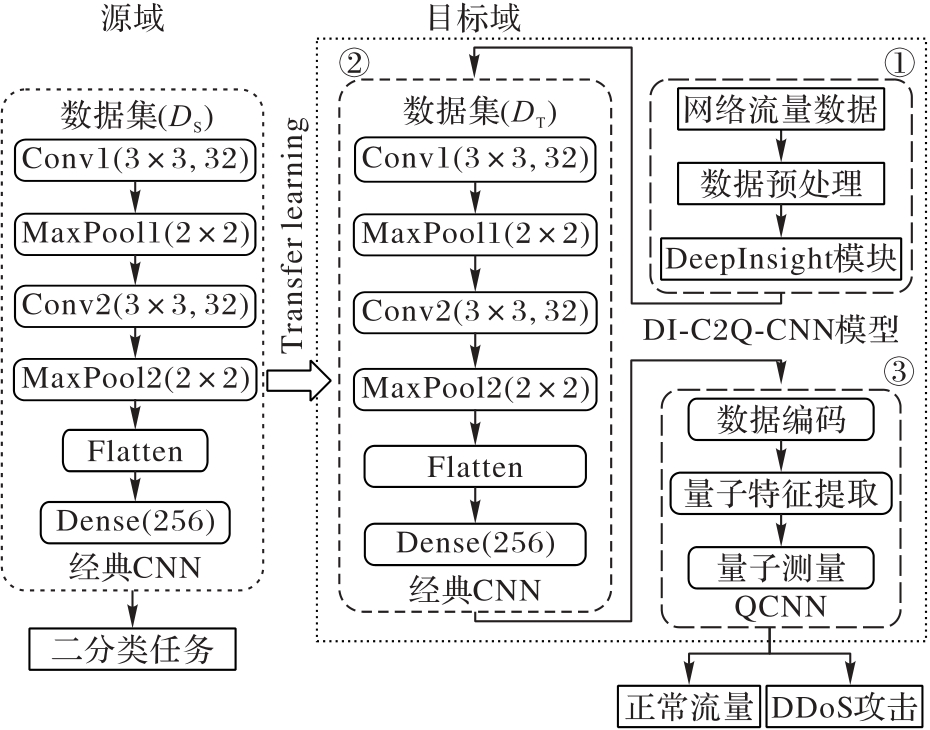
Fig. 1 Overall architecture of DDoS attack detection method based on DI-C2Q-CNN model
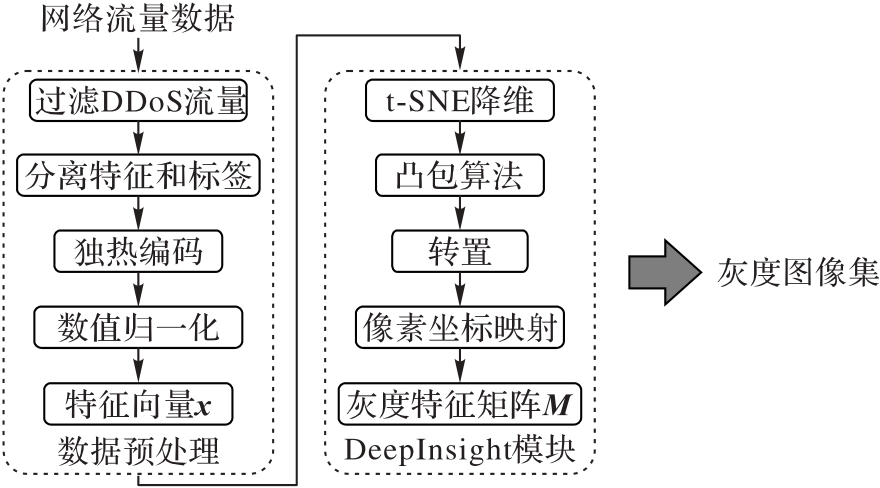
Fig. 2 Flow of network traffic data preprocessing and DeepInsight image transformation
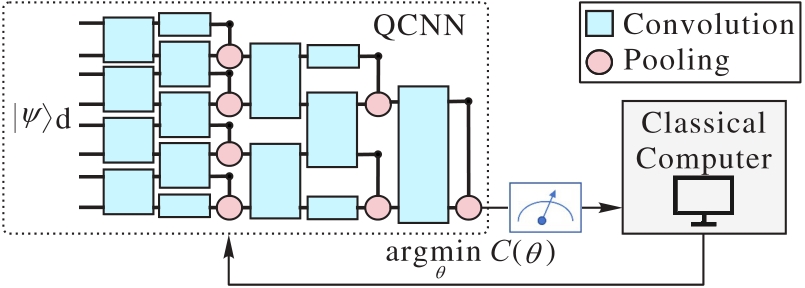
Fig. 3 Framework of QCNN

Fig. 4 Quantum convolution layer circuit diagram
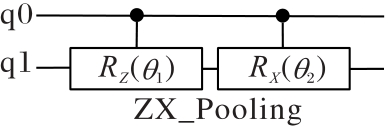
Fig. 5 Quantum pooling layer circuit diagram
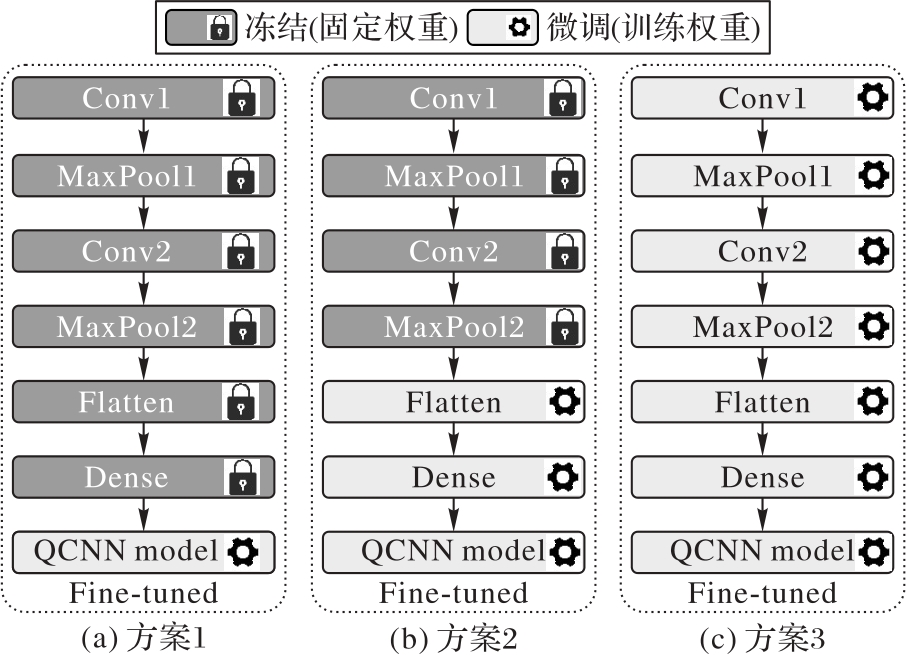
Fig. 6 Three transfer learning solutions
| 类型 | 数据集A样本数 | 数据集B样本数 | ||
|---|---|---|---|---|
| 训练集A | 测试集A | 训练集B | 测试集B | |
| 总计 | 3 000 | 1 500 | 2 500 | 1 250 |
| 正常 | 2 000 | 1 000 | 2 000 | 1 000 |
| 攻击 | 1 000 | 500 | 500 | 250 |
Tab. 1 UNSW-NB15 dataset used in experiments
| 类型 | 数据集A样本数 | 数据集B样本数 | ||
|---|---|---|---|---|
| 训练集A | 测试集A | 训练集B | 测试集B | |
| 总计 | 3 000 | 1 500 | 2 500 | 1 250 |
| 正常 | 2 000 | 1 000 | 2 000 | 1 000 |
| 攻击 | 1 000 | 500 | 500 | 250 |
| 参数 | 批量大小 | 训练轮数 | 学习率 | 参数量 | 优化器 |
|---|---|---|---|---|---|
| 预训练CNN | 64 | 20 | 0.001 | 821 899 | Adam |
| QCNN | 64 | 100 | 0.01 | 51 | Adam |
Tab. 2 Training parameters for DI-C2Q-CNN model
| 参数 | 批量大小 | 训练轮数 | 学习率 | 参数量 | 优化器 |
|---|---|---|---|---|---|
| 预训练CNN | 64 | 20 | 0.001 | 821 899 | Adam |
| QCNN | 64 | 100 | 0.01 | 51 | Adam |
| 方案 | 准确率 | 召回率 | 精确率 | F1分数 |
|---|---|---|---|---|
| 方案1 | 89.33 | 93.00 | 91.17 | 92.07 |
| 方案2 | 93.06 | 95.70 | 94.00 | 94.84 |
| 方案3 | 96.06 | 98.70 | 95.54 | 97.09 |
Tab. 3 Test results for three transfer learning solutions
| 方案 | 准确率 | 召回率 | 精确率 | F1分数 |
|---|---|---|---|---|
| 方案1 | 89.33 | 93.00 | 91.17 | 92.07 |
| 方案2 | 93.06 | 95.70 | 94.00 | 94.84 |
| 方案3 | 96.06 | 98.70 | 95.54 | 97.09 |
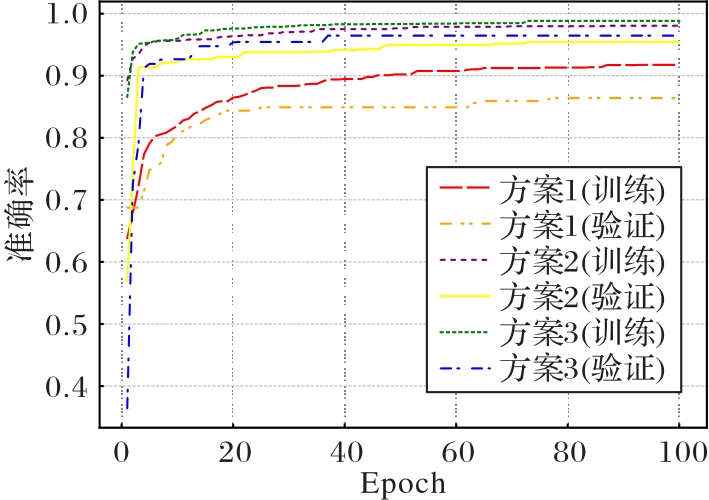
Fig. 7 Accuracy comparison of three transfer learning solutions
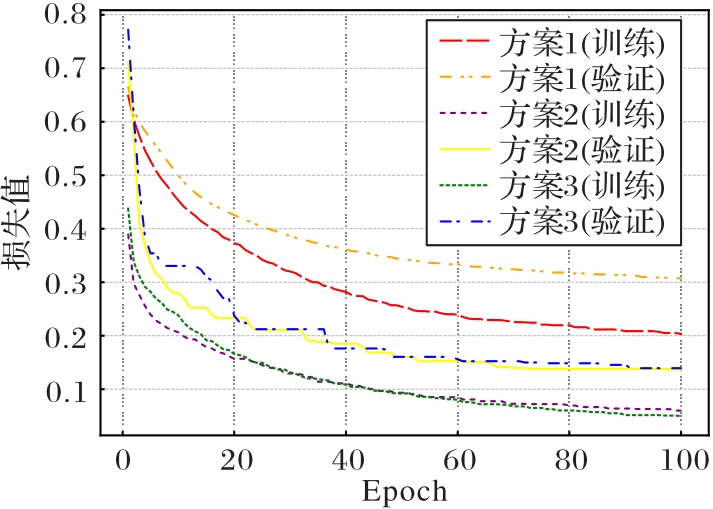
Fig. 8 Loss value comparison of three transfer learning solutions
| 数据集 | 准确率 | 召回率 | 精确率 | F1分数 |
|---|---|---|---|---|
| 数据集A | 96.06 | 98.70 | 95.54 | 97.09 |
| 数据集B | 94.00 | 99.80 | 93.18 | 96.37 |
Tab. 4 Performance comparison of DI-C2Q-CNN on different datasets
| 数据集 | 准确率 | 召回率 | 精确率 | F1分数 |
|---|---|---|---|---|
| 数据集A | 96.06 | 98.70 | 95.54 | 97.09 |
| 数据集B | 94.00 | 99.80 | 93.18 | 96.37 |
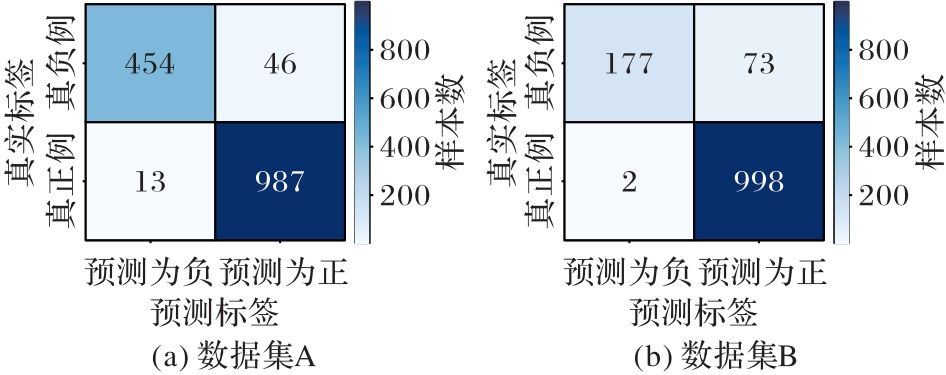
Fig. 9 Confusion matrices for datasets A and B
| 方法 | 准确率 | 召回率 | 精确率 | F1分数 |
|---|---|---|---|---|
| 方法A | 94.47 | 97.03 | 94.60 | 95.80 |
| 方法B | 85.80 | 86.00 | 94.00 | 89.92 |
| 方法C | 94.73 | 89.79 | 95.00 | 92.32 |
| 方法D | 94.07 | 95.23 | 95.90 | 95.57 |
| 方法E | 96.06 | 98.70 | 95.54 | 97.09 |
Tab. 5 Impact of modules on DDoS detection with limited data
| 方法 | 准确率 | 召回率 | 精确率 | F1分数 |
|---|---|---|---|---|
| 方法A | 94.47 | 97.03 | 94.60 | 95.80 |
| 方法B | 85.80 | 86.00 | 94.00 | 89.92 |
| 方法C | 94.73 | 89.79 | 95.00 | 92.32 |
| 方法D | 94.07 | 95.23 | 95.90 | 95.57 |
| 方法E | 96.06 | 98.70 | 95.54 | 97.09 |
| 方法 | 准确率 | 召回率 | 精确率 | F1分数 |
|---|---|---|---|---|
| SVM | 91.73 | 94.20 | 93.45 | 93.82 |
| RF | 93.60 | 96.10 | 94.40 | 95.24 |
| KNN | 93.73 | 94.50 | 96.04 | 95.26 |
| CNN | 94.40 | 95.00 | 96.54 | 95.77 |
| XGBoost | 95.20 | 97.50 | 95.40 | 96.44 |
| DNN | 95.33 | 96.40 | 96.59 | 96.50 |
| CNN-LSTM | 95.13 | 97.54 | 95.10 | 96.30 |
| CNN-BiLSTM[ | 94.80 | 98.90 | 94.01 | 96.38 |
| MHHPN[ | 95.02 | 95.50 | 96.20 | 95.85 |
| DI-C2Q-CNN | 96.06 | 98.70 | 95.54 | 97.09 |
Tab. 6 Performance comparison of different DDoS attack detection methods
| 方法 | 准确率 | 召回率 | 精确率 | F1分数 |
|---|---|---|---|---|
| SVM | 91.73 | 94.20 | 93.45 | 93.82 |
| RF | 93.60 | 96.10 | 94.40 | 95.24 |
| KNN | 93.73 | 94.50 | 96.04 | 95.26 |
| CNN | 94.40 | 95.00 | 96.54 | 95.77 |
| XGBoost | 95.20 | 97.50 | 95.40 | 96.44 |
| DNN | 95.33 | 96.40 | 96.59 | 96.50 |
| CNN-LSTM | 95.13 | 97.54 | 95.10 | 96.30 |
| CNN-BiLSTM[ | 94.80 | 98.90 | 94.01 | 96.38 |
| MHHPN[ | 95.02 | 95.50 | 96.20 | 95.85 |
| DI-C2Q-CNN | 96.06 | 98.70 | 95.54 | 97.09 |
| [1] | Setitra M A, Fan M, Benkhaddra I, et al. DoS/DDoS attacks in software defined networks: current situation, challenges and future directions[J]. Computer Communications, 2024, 222: 77-96. |
| [2] | Cloudflare. DDoS threat report for 2025 Q1[R/OL]. (2025-04-29) [2025-11-22].. |
| [3] | Pakmehr A, AßMuth A, Taheri N, et al. DDoS attack detection techniques in IoT networks: a survey[J]. Cluster Computing, 2024, 27(10): 14637-14668. |
| [4] | Farooq M, Khan M H. Signature-based intrusion detection system in wireless 6G IoT networks[J]. Journal on Internet of Things, 2022, 4(3): 155-168. |
| [5] | Yerriswamy T, Murtugudde G. Signature-based traffic classification for DDoS attack detection and analysis of mitigation for DDoS attacks using programmable commodity switches[J]. International Journal of Performability Engineering, 2022, 18(7): 529-536. |
| [6] | Golduzian A. Predict and prevent DDoS attacks using machine learning and statistical algorithms[PP/OL]. arXiv (2023-08-30) [2025-11-22].. |
| [7] | Babbar H, Rani S, Driss M. Effective DDoS attack detection in software-defined vehicular networks using statistical flow analysis and machine learning[J]. PLoS ONE, 2024, 19(12): No.e0314695. |
| [8] | Hassan A I, El Reheem E A, Guirguis S K. An entropy and machine learning based approach for DDoS attacks detection in software defined networks[J]. Scientific Reports, 2024, 14: No.18159. |
| [9] | Zhang L, Bai Y, Xue T, et al. EfficientSTNet: a deep learning approach for multi-class DDoS detection[J]. IEEE Access, 2025, 13: 157587-157599. |
| [10] | Aktar S, Nur A Y. Towards DDoS attack detection using deep learning approach[J]. Computers and Security, 2023, 129: No.103251. |
| [11] | Alfatemi A, Rahouti M, Amin R, et al. Advancing DDoS attack detection: a synergistic approach using deep residual neural networks and synthetic oversampling[PP/OL]. arXiv (2024-01-06) [2025-11-22].. |
| [12] | Sharma A, Vans E, Shigemizu D, et al. DeepInsight: a methodology to transform a non-image data to an image for convolution neural network architecture[J]. Scientific Reports, 2019, 9: No.11399. |
| [13] | Alchieri L, Badalotti D, Bonardi P, et al. An introduction to quantum machine learning: from quantum logic to quantum deep learning[J]. Quantum Machine Intelligence, 2021, 3: No.28. |
| [14] | Hdaib M, Rajasegarar S, Pan L, et al. Quantum deep learning-based anomaly detection for enhanced network security[J]. Quantum Machine Intelligence, 2024, 6: No.26. |
| [15] | Koutný D, Ginés L, Moczała-Dusanowska M, et al. Deep learning of quantum entanglement from incomplete measurements[J]. Science Advances, 2023, 9(29): No.eadd7131. |
| [16] | Cong I, Choi S, Lukin M D, et al. Quantum convolutional neural networks[J]. Nature Physics, 2019, 15(12): 1273-1278. |
| [17] | Mehedi S T, Anwar A, Rahman Z, et al. Dependable intrusion detection system for IoT: a deep transfer learning based approach[J]. IEEE Transactions on Industrial Informatics, 2023, 19(1): 1006-1017. |
| [18] | Yang L, Shami A. A transfer learning and optimized CNN based intrusion detection system for Internet of Vehicles[C]// ICC 2022. Piscataway: IEEE, 2022: 2774-2779. |
| [19] | Wang S, Balarezo J F, Kandeepan S, et al. Machine learning in network anomaly detection: a survey[J]. IEEE Access, 2021, 9: 152379-152396. |
| [20] | Dong S, Sarem M. DDoS attack detection method based on improved KNN with the degree of DDoS attack in software-defined networks[J]. IEEE Access, 2020, 8: 5039-5048. |
| [21] | Cao Y, Jiang H, Deng Y, et al. Detecting and mitigating DDoS attacks in SDN using spatial-temporal graph convolutional network[J]. IEEE Transactions on Dependable and Secure Computing, 2022, 19(6): 3855-3872. |
| [22] | Bårli E M, Yazidi A, Viedma E H, et al. DoS and DDoS mitigation using variational autoencoders[J]. Computer Networks, 2021, 199: No.108399. |
| [23] | Li C, Yan Y, Lin W, et al. Enhancing cancer subtype classification through convolutional neural networks: a DeepInsight analysis of TCGA gene expression data[J]. Health Information Science and Systems, 2025, 13: No.33. |
| [24] | Kawahara D, Kishi M, Kadooka Y, et al. Integrating radiomics and gene expression by mapping on the image with improved DeepInsight for clear cell renal cell carcinoma[J]. Cancer Genetics, 2025, 292/293: 100-105. |
| [25] | Latif S, Boulila W, Koubaa A, et al. DTL-IDS: an optimized intrusion detection framework using deep transfer learning and genetic algorithm[J]. Journal of Network and Computer Applications, 2024, 221: No.103784. |
| [26] | Hur T, Kim L, Park D K. Quantum convolutional neural network for classical data classification[J]. Quantum Machine Intelligence, 2022, 4: No.3. |
| [27] | LeCun Y, Bottou L, Bengio Y, et al. Gradient-based learning applied to document recognition[J]. Proceedings of the IEEE, 1998, 86(11): 2278-2324. |
| [28] | Moustafa N, Slay J. UNSW-NB15: a comprehensive data set for network intrusion detection systems (UNSW-NB15 network data set)[C]// MilCIS 2015. Piscataway: IEEE, 2015: 1-6. |
| [29] | Ben Said R, Sabir Z, Askerzade I. CNN-BiLSTM: a hybrid deep learning approach for network intrusion detection system in software-defined networking with hybrid feature selection[J]. IEEE Access, 2023, 11: 138732-138747. |
| [30] | Al-Khayyat A T K, Ucan O N. A multi-branched hybrid perceptron network for DDoS attack detection using dynamic feature adaptation and multi-instance learning[J]. IEEE Access, 2024, 12: 192618-192638. |
| [1] | Jing LIU, Shaoze ZHAO, Xingang LIU, Haozhe NIU, Haipeng JI. Cross-condition microstructure data generation method for titanium alloys based on improved CGAN [J]. Journal of Computer Applications, 2026, 46(7): 2373-2382. |
| [2] | Zhige HE, Chang LIU, Junrui WU, Haoran LUO, Shuisong HU, Wenyong WANG. Review of DDoS attack defense technology [J]. Journal of Computer Applications, 2026, 46(4): 1139-1157. |
| [3] | Kaiguang MA, Xuebin CHEN, Yinlong JIAN, Liu WANG, Yuan GAO. Network intrusion detection based on hybrid sequence model and federated class balance algorithm [J]. Journal of Computer Applications, 2026, 46(3): 857-866. |
| [4] | Jie CAO, Lingfeng XIE, Bingjin WANG, Changhe ZHANG, Zidong YU, Chao DENG. Adolescent scoliosis screening method considering class imbalance and background diversity [J]. Journal of Computer Applications, 2026, 46(2): 630-639. |
| [5] | Chuang WANG, Lu YU, Jianwei CHEN, Cheng PAN, Wenbo DU. Review of open set domain adaptation [J]. Journal of Computer Applications, 2025, 45(9): 2727-2736. |
| [6] | Fang WANG, Jing HU, Rui ZHANG, Wenting FAN. Medical image segmentation network with content-guided multi-angle feature fusion [J]. Journal of Computer Applications, 2025, 45(9): 3017-3025. |
| [7] | Jiaxiang ZHANG, Xiaoming LI, Jiahui ZHANG. Few-shot object detection algorithm based on new category feature enhancement and metric mechanism [J]. Journal of Computer Applications, 2025, 45(9): 2984-2992. |
| [8] | Yuyang SUN, Minjie ZHANG, Jie HU. Zero-shot dialogue state tracking domain transfer model based on semantic prefix-tuning [J]. Journal of Computer Applications, 2025, 45(7): 2221-2228. |
| [9] | Bo FENG, Haizheng YU, Hong BIAN. Domain adaptive semantic segmentation based on masking enhanced self-training [J]. Journal of Computer Applications, 2025, 45(7): 2132-2137. |
| [10] | Meirong DING, Jinxin ZHUO, Yuwu LU, Qinglong LIU, Jicong LANG. Domain adaptation integrating environment label smoothing and nuclear norm discrepancy [J]. Journal of Computer Applications, 2025, 45(4): 1130-1138. |
| [11] | Mei TANG, Wunan WAN, Shibin ZHANG, Jinquan ZHANG. Survey of DDoS protection research based on blockchain [J]. Journal of Computer Applications, 2025, 45(11): 3416-3423. |
| [12] | Lixia XIE, Jiamin WANG, Hongyu YANG, Ze HU, Xiang CHENG. Low-latency DDoS attack detection based on hybrid feature selection [J]. Journal of Computer Applications, 2025, 45(10): 3231-3240. |
| [13] | Hong ZHANG, Kangkang XIE, Xia NING, Wanying SONG. Few-shot insulator defect detection method based on transfer learning [J]. Journal of Computer Applications, 2025, 45(10): 3363-3370. |
| [14] | Chunxia LIU, Hanying XU, Gaimei GAO, Weichao DANG, Zilu LI. Smart contract vulnerability detection method based on echo state network [J]. Journal of Computer Applications, 2025, 45(1): 153-161. |
| [15] | Feiyu ZHAI, Handa MA. Hybrid classical-quantum classification model based on DenseNet [J]. Journal of Computer Applications, 2024, 44(6): 1905-1910. |
| Viewed | ||||||
|
Full text |
|
|||||
|
Abstract |
|
|||||
