


Journal of Computer Applications ›› 2026, Vol. 46 ›› Issue (1): 252-259.DOI: 10.11772/j.issn.1001-9081.2025010078
• Multimedia computing and computer simulation • Previous Articles Next Articles
Xiaoyong BIAN1,2,3( ), Peiyang YUAN1, Qiren HU1
Received:2025-01-21
Revised:2025-03-11
Accepted:2025-03-11
Online:2026-01-10
Published:2026-01-10
Contact:
Xiaoyong BIAN
About author:YUAN Peiyang, born in 2000, M. S. candidate. His research interests include small target detection.
边小勇1,2,3(), 袁培洋1, 胡其仁1
通讯作者:
边小勇
作者简介:袁培洋(2000—),男,河南汝州人,硕士研究生,主要研究方向:小目标检测CLC Number:
Xiaoyong BIAN, Peiyang YUAN, Qiren HU. Dual-coding space-frequency mixing method for infrared small target detection[J]. Journal of Computer Applications, 2026, 46(1): 252-259.
边小勇, 袁培洋, 胡其仁. 双编码空频混合的红外小目标检测方法[J]. 《计算机应用》唯一官方网站, 2026, 46(1): 252-259.
Add to citation manager EndNote|Ris|BibTeX
URL: https://www.joca.cn/EN/10.11772/j.issn.1001-9081.2025010078

Fig. 1 Framework of dual-coding space-frequency mixing U-shaped network

Fig. 2 Structure of MSCA module

Fig. 3 Structure of FDIA module
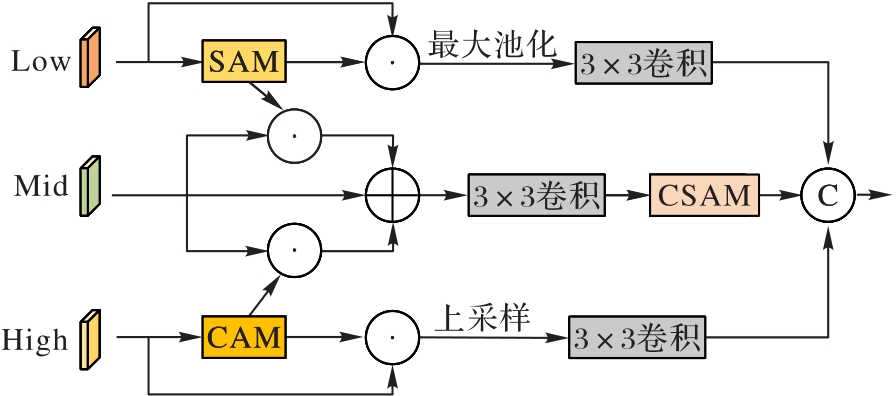
Fig. 4 Structure of CLFG module
| 方法 | NUAA-SIRST | IRSTD-1k | 参数量/106 | 浮点运算量/GFLOPs | ||||||
|---|---|---|---|---|---|---|---|---|---|---|
| IoU/% | nIoU/% | Pd/% | Fa/10-6 | IoU/% | nIoU/% | Pd/% | Fa/10-6 | |||
| IPI[ | 25.67 | 24.57 | 85.55 | 11.47 | 27.92 | 20.46 | 81.37 | 16.18 | — | — |
| RIPT[ | 11.05 | 10.15 | 79.08 | 22.61 | 14.11 | 8.09 | 77.55 | 28.31 | — | — |
| MDvsFA[ | 60.30 | 58.26 | 89.35 | 56.35 | 49.50 | 47.41 | 82.11 | 80.33 | 3.59 | 230.14 |
| ALCNet[ | 74.31 | 73.12 | 97.34 | 20.21 | 62.05 | 59.58 | 92.19 | 31.56 | 8.56 | 14.52 |
| DNANet[ | 76.06 | 98.10 | 2.51 | 67.54 | 91.92 | 4.69 | 56.34 | |||
| AMFUNet[ | 75.86 | 73.74 | 100.00 | 67.85 | 64.98 | 89.90 | 15.98 | 23.80 | ||
| AGPCNet[ | 69.09 | 73.37 | 93.94 | 50.00 | 62.39 | 61.80 | 90.91 | 21.29 | 11.79 | 40.22 |
| Dim2Clear[13] | 77.20 | 75.20 | 99.10 | 6.72 | 66.30 | 64.20 | 20.90 | — | — | |
| DCFR-Net[ | 76.23 | 74.69 | 99.08 | 6.52 | 65.41 | 65.45 | 93.60 | 7.35 | — | — |
| MSHNet[ | 76.93 | 74.08 | 99.10 | 66.03 | 91.91 | 17.63 | 4.07 | 24.43 | ||
| 本文方法 | 78.11 | 100.00 | 9.58 | 69.08 | 66.34 | 93.94 | 13.55 | 0.86 | ||
Tab. 1 Infrared small target detection results of different methods on NUAA-SIRST and IRSTD-1k datasets
| 方法 | NUAA-SIRST | IRSTD-1k | 参数量/106 | 浮点运算量/GFLOPs | ||||||
|---|---|---|---|---|---|---|---|---|---|---|
| IoU/% | nIoU/% | Pd/% | Fa/10-6 | IoU/% | nIoU/% | Pd/% | Fa/10-6 | |||
| IPI[ | 25.67 | 24.57 | 85.55 | 11.47 | 27.92 | 20.46 | 81.37 | 16.18 | — | — |
| RIPT[ | 11.05 | 10.15 | 79.08 | 22.61 | 14.11 | 8.09 | 77.55 | 28.31 | — | — |
| MDvsFA[ | 60.30 | 58.26 | 89.35 | 56.35 | 49.50 | 47.41 | 82.11 | 80.33 | 3.59 | 230.14 |
| ALCNet[ | 74.31 | 73.12 | 97.34 | 20.21 | 62.05 | 59.58 | 92.19 | 31.56 | 8.56 | 14.52 |
| DNANet[ | 76.06 | 98.10 | 2.51 | 67.54 | 91.92 | 4.69 | 56.34 | |||
| AMFUNet[ | 75.86 | 73.74 | 100.00 | 67.85 | 64.98 | 89.90 | 15.98 | 23.80 | ||
| AGPCNet[ | 69.09 | 73.37 | 93.94 | 50.00 | 62.39 | 61.80 | 90.91 | 21.29 | 11.79 | 40.22 |
| Dim2Clear[13] | 77.20 | 75.20 | 99.10 | 6.72 | 66.30 | 64.20 | 20.90 | — | — | |
| DCFR-Net[ | 76.23 | 74.69 | 99.08 | 6.52 | 65.41 | 65.45 | 93.60 | 7.35 | — | — |
| MSHNet[ | 76.93 | 74.08 | 99.10 | 66.03 | 91.91 | 17.63 | 4.07 | 24.43 | ||
| 本文方法 | 78.11 | 100.00 | 9.58 | 69.08 | 66.34 | 93.94 | 13.55 | 0.86 | ||

Fig. 5 ROC curves of different methods on IRSTD-1k dataset (1k, without rhombus) and NUAA-SIRST dataset (NS, with rhombus)
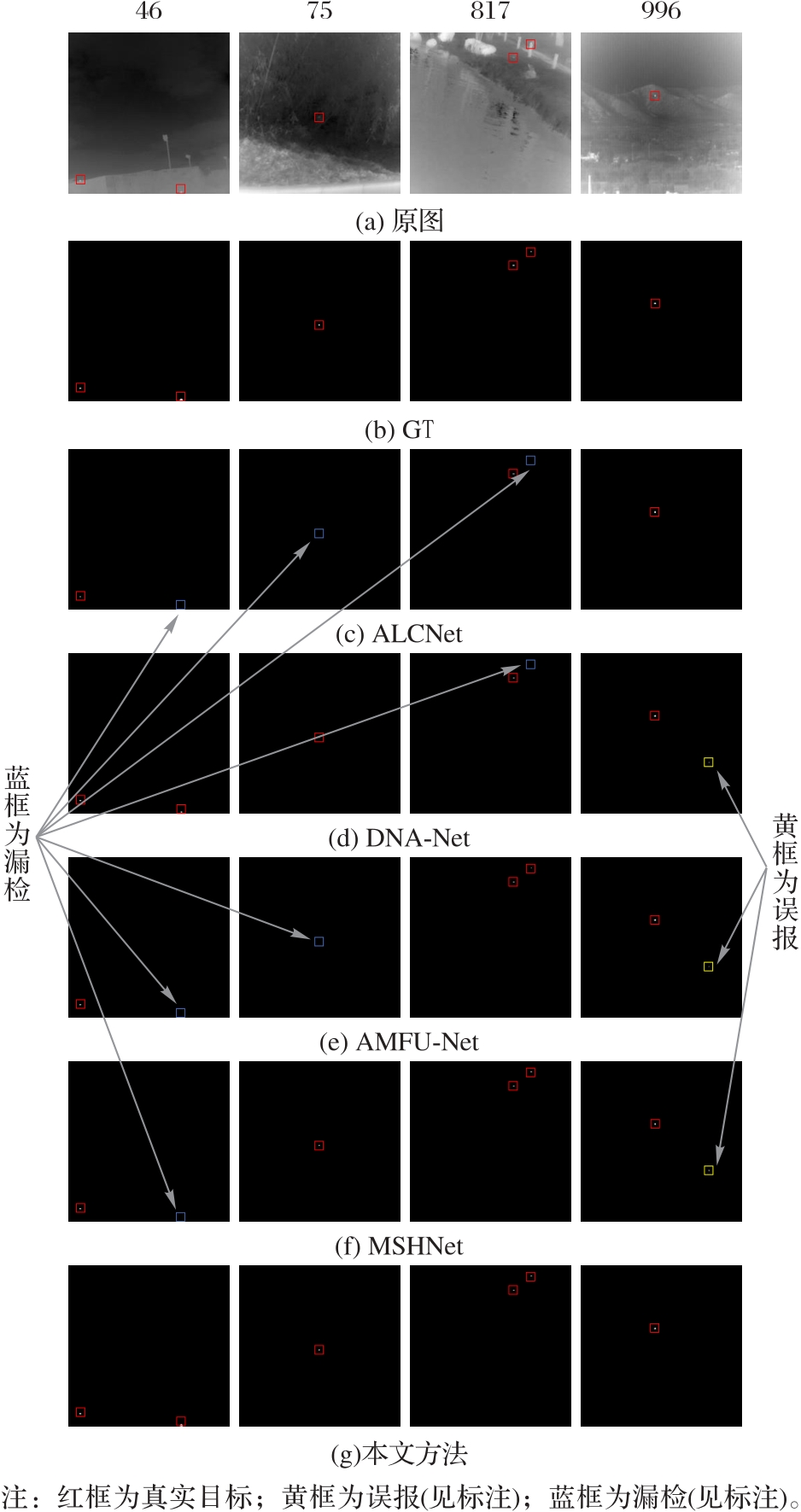
Fig. 6 Visualization of detection results of different methods on IRSTD-1k dataset
| 方法 | NUAA-SIRST | IRSTD-1k | |||||||||
|---|---|---|---|---|---|---|---|---|---|---|---|
| Baseline | CLFG | MSCA | FDIA | IoU/% | nIoU/% | Pd/% | Fa/10-6 | IoU/% | nIoU/% | Pd/% | Fa/10-6 |
| √ | 74.05 | 72.37 | 99.08 | 23.24 | 65.29 | 62.16 | 90.90 | 19.81 | |||
| √ | √ | 75.24 | 72.46 | 99.08 | 18.99 | 66.08 | 65.18 | 91.25 | 16.36 | ||
| √ | √ | √ | 77.60 | 74.82 | 100.00 | 10.47 | 68.41 | 64.23 | 93.27 | 17.50 | |
| √ | √ | √ | √ | 78.11 | 75.44 | 100.00 | 9.58 | 69.08 | 66.34 | 93.94 | 13.55 |
Tab. 2 Results of ablation experiments
| 方法 | NUAA-SIRST | IRSTD-1k | |||||||||
|---|---|---|---|---|---|---|---|---|---|---|---|
| Baseline | CLFG | MSCA | FDIA | IoU/% | nIoU/% | Pd/% | Fa/10-6 | IoU/% | nIoU/% | Pd/% | Fa/10-6 |
| √ | 74.05 | 72.37 | 99.08 | 23.24 | 65.29 | 62.16 | 90.90 | 19.81 | |||
| √ | √ | 75.24 | 72.46 | 99.08 | 18.99 | 66.08 | 65.18 | 91.25 | 16.36 | ||
| √ | √ | √ | 77.60 | 74.82 | 100.00 | 10.47 | 68.41 | 64.23 | 93.27 | 17.50 | |
| √ | √ | √ | √ | 78.11 | 75.44 | 100.00 | 9.58 | 69.08 | 66.34 | 93.94 | 13.55 |

Fig. 7 Feature visualization and signal-to-clutter ratio results

Fig. 8 U-shaped network structures

Fig. 9 Feature visualization of CLFG
| 方法 | NUAA-SIRST训练+IRSTD-1k测试 | IRSTD-1k训练+NUAA-SIRST测试 | ||||||
|---|---|---|---|---|---|---|---|---|
| IoU/% | nIoU/% | Pd/% | Fa/10-6 | IoU/% | nIoU/% | Pd/% | Fa/10-6 | |
| DNANet[ | 51.38 | 58.91 | 89.23 | 99.20 | 60.89 | 71.85 | 95.41 | 88.18 |
| AMFUNet[ | 57.58 | 57.76 | 90.24 | 29.65 | 62.24 | 67.87 | 90.83 | 61.92 |
| MSHNet[ | 55.89 | 59.60 | 90.24 | 29.95 | 65.67 | 70.51 | 94.50 | 31.05 |
| 本文方法 | 58.96 | 60.86 | 90.91 | 21.71 | 70.42 | 69.96 | 93.58 | 22.00 |
Tab. 3 Generalization experimental results
| 方法 | NUAA-SIRST训练+IRSTD-1k测试 | IRSTD-1k训练+NUAA-SIRST测试 | ||||||
|---|---|---|---|---|---|---|---|---|
| IoU/% | nIoU/% | Pd/% | Fa/10-6 | IoU/% | nIoU/% | Pd/% | Fa/10-6 | |
| DNANet[ | 51.38 | 58.91 | 89.23 | 99.20 | 60.89 | 71.85 | 95.41 | 88.18 |
| AMFUNet[ | 57.58 | 57.76 | 90.24 | 29.65 | 62.24 | 67.87 | 90.83 | 61.92 |
| MSHNet[ | 55.89 | 59.60 | 90.24 | 29.95 | 65.67 | 70.51 | 94.50 | 31.05 |
| 本文方法 | 58.96 | 60.86 | 90.91 | 21.71 | 70.42 | 69.96 | 93.58 | 22.00 |
| [1] | BAI X, ZHOU F. Analysis of new top-hat transformation and the application for infrared dim small target detection [J]. Pattern Recognition, 2010, 43(6): 2145-2156. |
| [2] | CHEN C L P, LI H, WEI Y, et al. A local contrast method for small infrared target detection [J]. IEEE Transactions on Geoscience and Remote Sensing, 2014, 52(1): 574-581. |
| [3] | GAO C, MENG D, YANG Y, et al. Infrared patch-image model for small target detection in a single image [J]. IEEE Transactions on Image Processing, 2013, 22(12): 4996-5009. |
| [4] | DAI Y, WU Y. Reweighted infrared patch-tensor model with both nonlocal and local priors for single-frame small target detection [J]. IEEE Journal of Selected Topics in Applied Earth Observations and Remote Sensing, 2017, 10(8): 3752-3767. |
| [5] | DAI Y, LI X, ZHOU F, et al. One-stage cascade refinement networks for infrared small target detection [J]. IEEE Transactions on Geoscience and Remote Sensing, 2023, 61: No.5000917. |
| [6] | McINTOSH B, VENKATARAMANAN S, MAHALANOBIS A. Infrared target detection in cluttered environments by maximization of a Target to Clutter Ratio (TCR) metric using a convolutional neural network [J]. IEEE Transactions on Aerospace and Electronic Systems, 2021, 57(1): 485-496. |
| [7] | WANG H, ZHOU L, WANG L. Miss detection vs. false alarm: adversarial learning for small object segmentation in infrared images [C]// Proceedings of the 2019 IEEE/CVF International Conference on Computer Vision. Piscataway: IEEE, 2019: 8508-8517. |
| [8] | DAI Y, WU Y, ZHOU F, et al. Attentional local contrast networks for infrared small target detection [J]. IEEE Transactions on Geoscience and Remote Sensing, 2021, 59(11): 9813-9824. |
| [9] | LI B, XIAO C, WANG L, et al. Dense nested attention network for infrared small target detection [J]. IEEE Transactions on Image Processing, 2023, 32: 1745-1758. |
| [10] | WU X, HONG D, CHANUSSOT J. UIU-Net: U-Net in U-Net for infrared small object detection [J]. IEEE Transactions on Image Processing, 2023, 32: 364-376. |
| [11] | CHUNG W Y, LEE I H, PARK C G. Lightweight infrared small target detection network using full-scale skip connection U-Net [J]. IEEE Geoscience and Remote Sensing Letters, 2023, 20: No.7000705. |
| [12] | ZHANG T, LI L, CAO S, et al. Attention-guided pyramid context networks for detecting infrared small target under complex background [J]. IEEE Transactions on Aerospace and Electronic Systems, 2023, 59(4): 4250-4261. |
| [13] | ZHANG M, ZHANG R, ZHANG J, et al. Dim2Clear network for infrared small target detection [J]. IEEE Transactions on Geoscience and Remote Sensing, 2023, 61: No.5001714. |
| [14] | ZHANG M, ZHANG R, YANG Y, et al. ISNet: shape matters for infrared small target detection [C]// Proceedings of the 2022 IEEE/CVF Conference on Computer Vision and Pattern Recognition. Piscataway: IEEE, 2022: 867-876. |
| [15] | 刘奎,唐慧萍,苏本跃.门控卷积和高频特征融合的红外小目标检测[J].计算机工程与应用, 2025, 61(7): 306-314. |
| LIU K, TANG H P, SU B Y. Gated convolution and high-frequency feature fusion for infrared small target detection [J]. Computer Engineering and Applications, 2025, 61(7): 306-314. | |
| [16] | ZHANG M, YANG H, GUO J, et al. IRPruneDet: efficient infrared small target detection via wavelet structure-regularized soft channel pruning [C]// Proceedings of the 38th AAAI Conference on Artificial Intelligence. Palo Alto: AAAI Press, 2024: 7224-7232. |
| [17] | 代少升,刘科生,黄炼,等.基于视觉Transformer和双解码器的红外小目标检测方法[J].红外技术, 2024, 46(9): 1070-1080. |
| DAI S S, LIU K S, HUANG L, et al. Infrared small target detection method with Vision Transformer and dual decoder [J]. Infrared Technology, 2024, 46(9): 1070-1080. | |
| [18] | FAN L, WANG Y, HU G, et al. Diffusion-based continuous feature representation for infrared small-dim target detection [J]. IEEE Transactions on Geoscience and Remote Sensing, 2024, 62: No.5003617. |
| [19] | YANG H, MU T, DONG Z, et al. PBT: progressive background-aware transformer for infrared small target detection [J]. IEEE Transactions on Geoscience and Remote Sensing, 2024, 62: No.5004513. |
| [20] | HUANG Y, ZHI X, HU J, et al. FDDBA-NET: frequency domain decoupling bidirectional interactive attention network for infrared small target detection [J]. IEEE Transactions on Geoscience and Remote Sensing, 2024, 62: No.5004416. |
| [21] | LIU Q, LIU R, ZHENG B, et al. Infrared small target detection with scale and location sensitivity [C]// Proceedings of the 2024 IEEE/CVF Conference on Computer Vision and Pattern Recognition. Piscataway: IEEE, 2024: 17490-17499. |
| [22] | GUO T, ZHOU B, LUO F, et al. DMFNet: dual-encoder multistage feature fusion network for infrared small target detection [J]. IEEE Transactions on Geoscience and Remote Sensing, 2024, 62: No.5614214. |
| [23] | PENG S, JI L, CHEN S, et al. Moving infrared dim and small target detection by mixed spatio-temporal encoding [J]. Engineering Applications of Artificial Intelligence, 2025, 144: No.110100. |
| [1] | Zhihui ZAN, Yajing WANG, Ke LI, Zhixiang YANG, Guangyu YANG. Multi-feature fusion speech emotion recognition method based on SAA-CNN-BiLSTM network [J]. Journal of Computer Applications, 2026, 46(1): 69-76. |
| [2] | Hongjun ZHANG, Gaojun PAN, Hao YE, Yubin LU, Yiheng MIAO. Multi-source heterogeneous data analysis method combining deep learning and tensor decomposition [J]. Journal of Computer Applications, 2025, 45(9): 2838-2847. |
| [3] | Jin LI, Liqun LIU. SAR and visible image fusion based on residual Swin Transformer [J]. Journal of Computer Applications, 2025, 45(9): 2949-2956. |
| [4] | Bing YIN, Zhenhua LING, Yin LIN, Changfeng XI, Ying LIU. Emotion recognition method compatible with missing modal reasoning [J]. Journal of Computer Applications, 2025, 45(9): 2764-2772. |
| [5] | Weigang LI, Jiale SHAO, Zhiqiang TIAN. Point cloud classification and segmentation network based on dual attention mechanism and multi-scale fusion [J]. Journal of Computer Applications, 2025, 45(9): 3003-3010. |
| [6] | Zhixiong XU, Bo LI, Xiaoyong BIAN, Qiren HU. Adversarial sample embedded attention U-Net for 3D medical image segmentation [J]. Journal of Computer Applications, 2025, 45(9): 3011-3016. |
| [7] | Panfeng JING, Yudong LIANG, Chaowei LI, Junru GUO, Jinyu GUO. Semi-supervised image dehazing algorithm based on teacher-student learning [J]. Journal of Computer Applications, 2025, 45(9): 2975-2983. |
| [8] | Yanhua LIAO, Yuanxia YAN, Wenlin PAN. Multi-target detection algorithm for traffic intersection images based on YOLOv9 [J]. Journal of Computer Applications, 2025, 45(8): 2555-2565. |
| [9] | Peng PENG, Ziting CAI, Wenling LIU, Caihua CHEN, Wei ZENG, Baolai HUANG. Speech emotion recognition method based on hybrid Siamese network with CNN and bidirectional GRU [J]. Journal of Computer Applications, 2025, 45(8): 2515-2521. |
| [10] | Shuo ZHANG, Guokai SUN, Yuan ZHUANG, Xiaoyu FENG, Jingzhi WANG. Dynamic detection method of eclipse attacks for blockchain node analysis [J]. Journal of Computer Applications, 2025, 45(8): 2428-2436. |
| [11] | Lina GE, Mingyu WANG, Lei TIAN. Review of research on efficiency of federated learning [J]. Journal of Computer Applications, 2025, 45(8): 2387-2398. |
| [12] | Jinxian SUO, Liping ZHANG, Sheng YAN, Dongqi WANG, Yawen ZHANG. Review of interpretable deep knowledge tracing methods [J]. Journal of Computer Applications, 2025, 45(7): 2043-2055. |
| [13] | Zhenzhou WANG, Fangfang GUO, Jingfang SU, He SU, Jianchao WANG. Robustness optimization method of visual model for intelligent inspection [J]. Journal of Computer Applications, 2025, 45(7): 2361-2368. |
| [14] | Qiaoling QI, Xiaoxiao WANG, Qianqian ZHANG, Peng WANG, Yongfeng DONG. Label noise adaptive learning algorithm based on meta-learning [J]. Journal of Computer Applications, 2025, 45(7): 2113-2122. |
| [15] | Xiaoyang ZHAO, Xinzheng XU, Zhongnian LI. Research review on explainable artificial intelligence in internet of things applications [J]. Journal of Computer Applications, 2025, 45(7): 2169-2179. |
| Viewed | ||||||
|
Full text |
|
|||||
|
Abstract |
|
|||||
