


Journal of Computer Applications ›› 2026, Vol. 46 ›› Issue (11): 3651-3657.DOI: 10.11772/j.issn.1001-9081.2025091174
• Multimedia computing and computer simulation • Previous Articles
Qing YE( ), Tao YANG, Yongmei ZHANG
Received:2025-10-11
Revised:2026-01-12
Accepted:2026-01-14
Online:2026-03-16
Published:2026-11-10
Contact:
Qing YE
About author:YANG Tao, born in 2002, M. S. candidate. His research interests include image processing, pattern recognition.Supported by:
叶青(), 杨涛, 张永梅
通讯作者:
叶青
作者简介:杨涛(2002—),男,河北廊坊人,硕士研究生,主要研究方向:图像处理、模式识别基金资助:CLC Number:
Qing YE, Tao YANG, Yongmei ZHANG. Human-object interaction detection method based on class decoupling feature enhancement[J]. Journal of Computer Applications, 2026, 46(11): 3651-3657.
叶青, 杨涛, 张永梅. 基于类解耦特征增强的人物交互检测方法[J]. 《计算机应用》唯一官方网站, 2026, 46(11): 3651-3657.
Add to citation manager EndNote|Ris|BibTeX
URL: https://www.joca.cn/EN/10.11772/j.issn.1001-9081.2025091174

Fig. 1 Architecture of proposed method
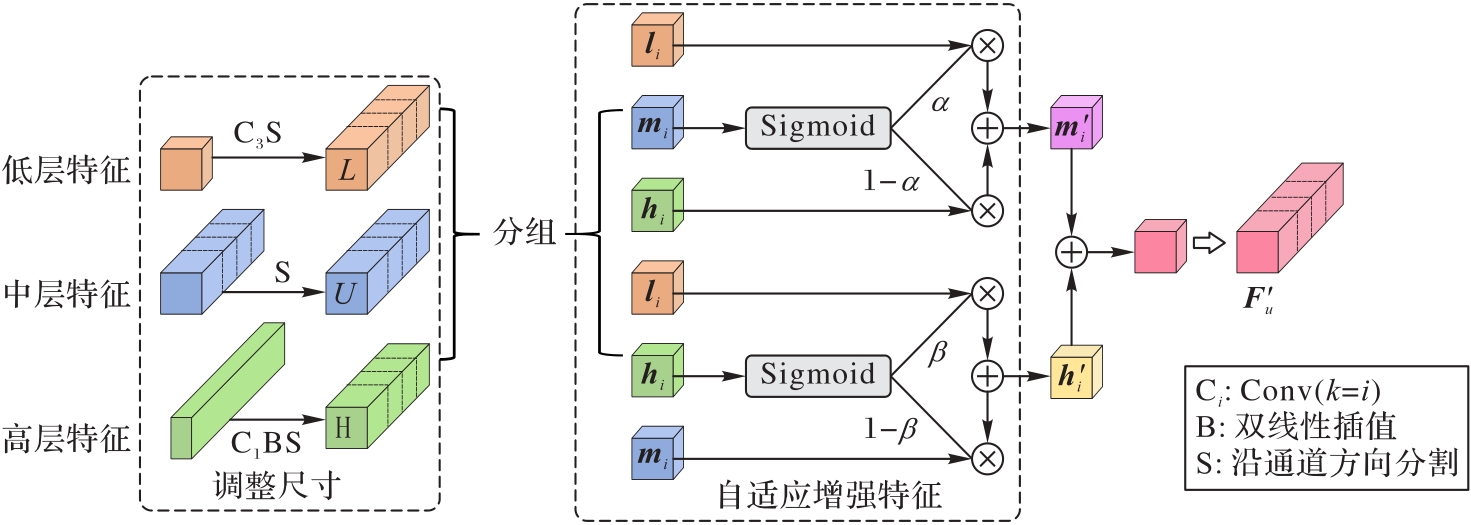
Fig. 2 Structure of FDFENet
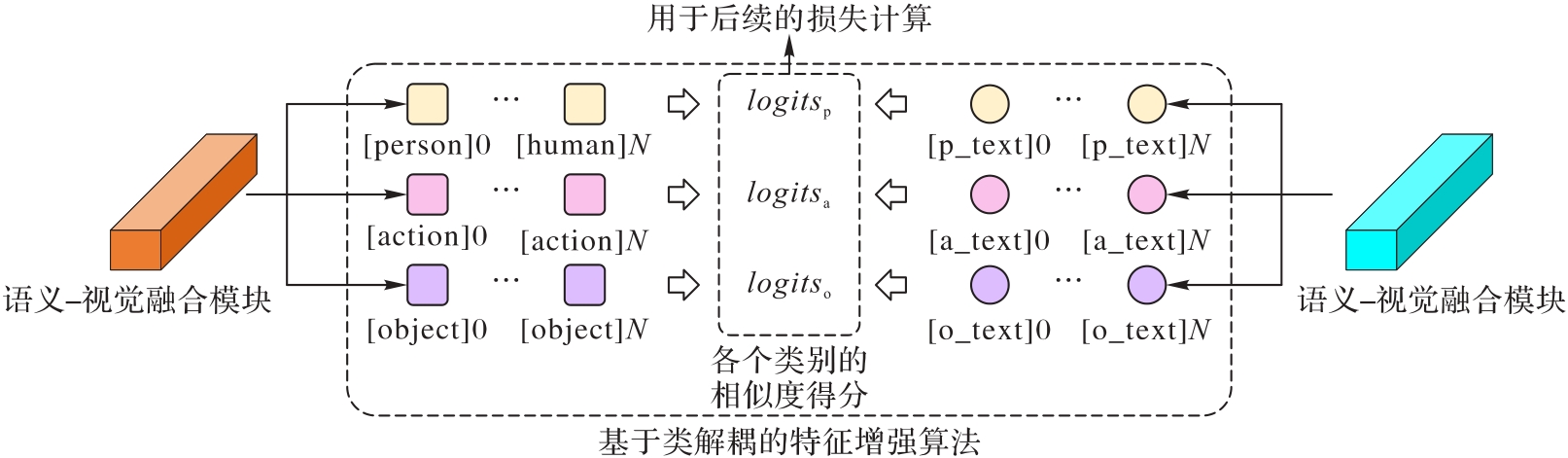
Fig.3 Structure of FEACD
| 方法 | mAProle /% | epochs | |
|---|---|---|---|
| Scenario 1 | Scenario 2 | ||
| PMFNet[ | 52.0 | — | — |
| HOTR[ | 55.2 | 64.4 | 100 |
| QPIC[ | 58.8 | 61.0 | 150 |
| DSSF[ | 52.7 | — | — |
| R3ViT[ | 56.8 | 61.0 | 300 |
| FO-KHOE[ | 53.3 | 59.5 | — |
| SGPT[ | 59.3 | 62.2 | 90 |
| ADA-CM[ | 56.1 | 61.5 | — |
| HOI Transformer[ | 52.9 | — | 250 |
| GIFGA[ | 54.9 | — | 100 |
| EHOI[ | 50.8 | 56.3 | — |
| VSD-HOI[ | 58.3 | 60.3 | 100 |
| 本文方法 | 58.6 | 63.2 | 100 |
Tab.1 Interaction recognition results of different methods on V-COCO dataset
| 方法 | mAProle /% | epochs | |
|---|---|---|---|
| Scenario 1 | Scenario 2 | ||
| PMFNet[ | 52.0 | — | — |
| HOTR[ | 55.2 | 64.4 | 100 |
| QPIC[ | 58.8 | 61.0 | 150 |
| DSSF[ | 52.7 | — | — |
| R3ViT[ | 56.8 | 61.0 | 300 |
| FO-KHOE[ | 53.3 | 59.5 | — |
| SGPT[ | 59.3 | 62.2 | 90 |
| ADA-CM[ | 56.1 | 61.5 | — |
| HOI Transformer[ | 52.9 | — | 250 |
| GIFGA[ | 54.9 | — | 100 |
| EHOI[ | 50.8 | 56.3 | — |
| VSD-HOI[ | 58.3 | 60.3 | 100 |
| 本文方法 | 58.6 | 63.2 | 100 |
| 方法 | mAProle/% | |||||
|---|---|---|---|---|---|---|
| Default | Known Object | |||||
| Full | Rare | Non-Rare | Full | Rare | Non-Rare | |
| TIN[ | 20.93 | 18.95 | 21.32 | 23.02 | 20.96 | 23.42 |
| PMFNet[ | 17.46 | 15.65 | 18.00 | 20.34 | 17.47 | 21.20 |
| PFNet [ | 20.05 | 16.66 | 21.07 | 24.01 | 21.09 | 24.89 |
| HOTR[ | 25.10 | 17.34 | 27.42 | — | — | — |
| PST[ | 23.93 | 14.98 | 26.60 | 26.42 | 17.16 | 29.05 |
| HOI Transformer[ | 26.61 | 19.15 | 28.84 | 29.13 | 20.98 | 31.57 |
| DSSF[ | 25.23 | 18.72 | 27.17 | 28.53 | 21.68 | 30.57 |
| FO-KHOE[ | 25.21 | 20.35 | 26.49 | 28.37 | 23.46 | 29.52 |
| GIFGA[ | 24.85 | 18.47 | 26.36 | 28.03 | 22.12 | 28.69 |
| EHOI[ | 24.53 | 19.26 | 26.09 | 27.64 | 22.70 | 29.12 |
| VSD-HOI[ | 25.91 | 19.68 | 27.64 | 28.83 | 22.94 | 29.98 |
| 本文方法 | 26.76 | 21.20 | 27.89 | 30.76 | 25.02 | 31.85 |
Tab.2 Interaction recognition results of different methods on HICO-DET dataset
| 方法 | mAProle/% | |||||
|---|---|---|---|---|---|---|
| Default | Known Object | |||||
| Full | Rare | Non-Rare | Full | Rare | Non-Rare | |
| TIN[ | 20.93 | 18.95 | 21.32 | 23.02 | 20.96 | 23.42 |
| PMFNet[ | 17.46 | 15.65 | 18.00 | 20.34 | 17.47 | 21.20 |
| PFNet [ | 20.05 | 16.66 | 21.07 | 24.01 | 21.09 | 24.89 |
| HOTR[ | 25.10 | 17.34 | 27.42 | — | — | — |
| PST[ | 23.93 | 14.98 | 26.60 | 26.42 | 17.16 | 29.05 |
| HOI Transformer[ | 26.61 | 19.15 | 28.84 | 29.13 | 20.98 | 31.57 |
| DSSF[ | 25.23 | 18.72 | 27.17 | 28.53 | 21.68 | 30.57 |
| FO-KHOE[ | 25.21 | 20.35 | 26.49 | 28.37 | 23.46 | 29.52 |
| GIFGA[ | 24.85 | 18.47 | 26.36 | 28.03 | 22.12 | 28.69 |
| EHOI[ | 24.53 | 19.26 | 26.09 | 27.64 | 22.70 | 29.12 |
| VSD-HOI[ | 25.91 | 19.68 | 27.64 | 28.83 | 22.94 | 29.98 |
| 本文方法 | 26.76 | 21.20 | 27.89 | 30.76 | 25.02 | 31.85 |
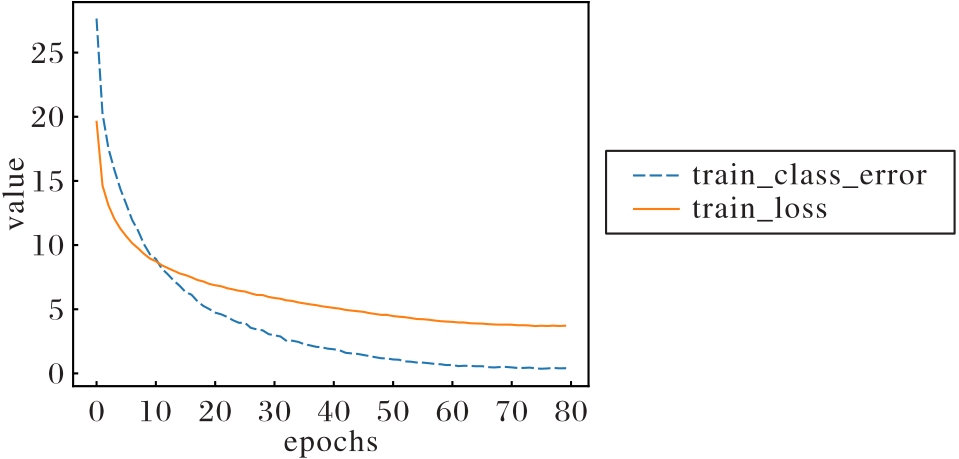
Fig.4 Classification loss and total loss on HICO-DET dataset
交互行为 类别 | AProle (Scenario 1)/% | 交互行为 类别 | AProle (Scenario 1)/% | ||||||
|---|---|---|---|---|---|---|---|---|---|
| VS-GATs[ | 文献[ | VSD-HOI[ | 本文方法 | VS-GATs[ | 文献[ | VSD-HOI[ | 本文方法 | ||
| carry | 43.06 | 40.4 | 41.9 | 43.03 | lay | 25.64 | 28.5 | 28.8 | 31.25 |
| catch | 46.14 | 46.3 | 47.3 | 48.70 | look | 41.89 | 40.9 | 43.9 | 45.74 |
| cut_instr | 41.22 | 67.4 | 50.3 | 60.97 | read | 67.39 | 40.5 | 44.8 | 67.96 |
| cut_obj | 39.41 | 49.0 | 38.0 | 47.28 | ride | 32.23 | 62.7 | 62.7 | 61.31 |
| drink | 42.71 | 46.6 | 54.2 | 55.45 | sit | 28.85 | 29.2 | 27.6 | 31.73 |
| eat_instr | 5.81 | 26.4 | 24.9 | 29.58 | skateboard | 86.58 | 88.5 | 84.1 | 85.62 |
| eat_obj | 44.02 | 56.9 | 52.9 | 58.37 | ski | 47.98 | 46.1 | 55.4 | 56.28 |
| hit_instr | 76.95 | 86.3 | 84.0 | 84.57 | snowboard | 77.87 | 77.7 | 79.3 | 79.70 |
| hit_obj | 52.77 | 74.6 | 76.0 | 77.43 | surf | 79.18 | 81.4 | 88.5 | 89.07 |
| hold | 42.92 | 42.7 | 47.3 | 47.73 | talk_on_ phone | 52.75 | 65.1 | 62.2 | 67.24 |
| jump | 50.74 | 50.5 | 57.1 | 53.80 | throw | 52.72 | 47.0 | 47.9 | 50.10 |
| kick | 74.25 | 77.8 | 75.5 | 79.26 | work_on_ computer | 61.70 | 66.3 | 58.9 | 69.79 |
Tab. 3 Recognition results of different interaction categories on V-COCO dataset
交互行为 类别 | AProle (Scenario 1)/% | 交互行为 类别 | AProle (Scenario 1)/% | ||||||
|---|---|---|---|---|---|---|---|---|---|
| VS-GATs[ | 文献[ | VSD-HOI[ | 本文方法 | VS-GATs[ | 文献[ | VSD-HOI[ | 本文方法 | ||
| carry | 43.06 | 40.4 | 41.9 | 43.03 | lay | 25.64 | 28.5 | 28.8 | 31.25 |
| catch | 46.14 | 46.3 | 47.3 | 48.70 | look | 41.89 | 40.9 | 43.9 | 45.74 |
| cut_instr | 41.22 | 67.4 | 50.3 | 60.97 | read | 67.39 | 40.5 | 44.8 | 67.96 |
| cut_obj | 39.41 | 49.0 | 38.0 | 47.28 | ride | 32.23 | 62.7 | 62.7 | 61.31 |
| drink | 42.71 | 46.6 | 54.2 | 55.45 | sit | 28.85 | 29.2 | 27.6 | 31.73 |
| eat_instr | 5.81 | 26.4 | 24.9 | 29.58 | skateboard | 86.58 | 88.5 | 84.1 | 85.62 |
| eat_obj | 44.02 | 56.9 | 52.9 | 58.37 | ski | 47.98 | 46.1 | 55.4 | 56.28 |
| hit_instr | 76.95 | 86.3 | 84.0 | 84.57 | snowboard | 77.87 | 77.7 | 79.3 | 79.70 |
| hit_obj | 52.77 | 74.6 | 76.0 | 77.43 | surf | 79.18 | 81.4 | 88.5 | 89.07 |
| hold | 42.92 | 42.7 | 47.3 | 47.73 | talk_on_ phone | 52.75 | 65.1 | 62.2 | 67.24 |
| jump | 50.74 | 50.5 | 57.1 | 53.80 | throw | 52.72 | 47.0 | 47.9 | 50.10 |
| kick | 74.25 | 77.8 | 75.5 | 79.26 | work_on_ computer | 61.70 | 66.3 | 58.9 | 69.79 |
| 模型构成 | mAProle/% | |
|---|---|---|
| Scenario 1 | Scenario 2 | |
| Darknet+FC | 40.6 | 44.3 |
| Darknet+FDFENet+FC | 55.9 | 60.6 |
| Darknet+FDFENet+FEACD | 58.6 | 63.2 |
Tab. 4 Ablation experimental result of proposed method on V-COCO dataset
| 模型构成 | mAProle/% | |
|---|---|---|
| Scenario 1 | Scenario 2 | |
| Darknet+FC | 40.6 | 44.3 |
| Darknet+FDFENet+FC | 55.9 | 60.6 |
| Darknet+FDFENet+FEACD | 58.6 | 63.2 |
| 损失函数配置 | mAProle/% |
|---|---|
| 仅交叉熵 | 57.8 |
| 仅焦点损失 | 56.8 |
| 交叉熵+焦点损失(本文方法) | 58.6 |
Tab. 5 Ablation experiment results of loss functions with different configurations
| 损失函数配置 | mAProle/% |
|---|---|
| 仅交叉熵 | 57.8 |
| 仅焦点损失 | 56.8 |
| 交叉熵+焦点损失(本文方法) | 58.6 |
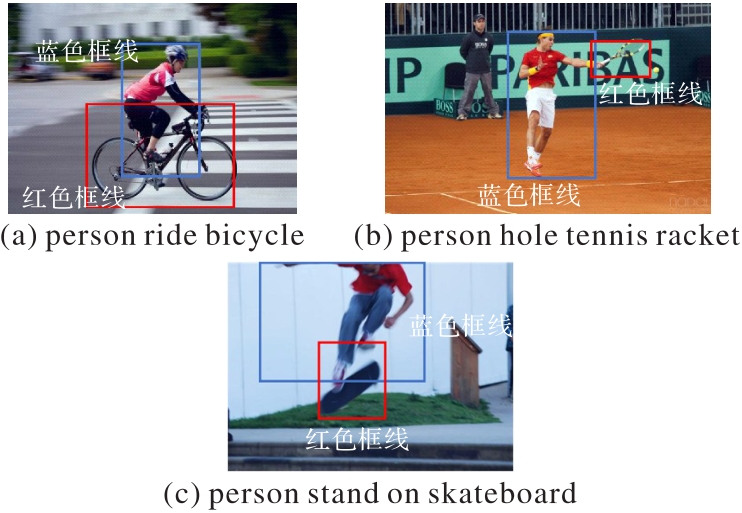
Fig. 5 Visualization results on HICO-DET dataset
| [1] | 龚勋,张志莹,刘璐,等.人物交互检测研究进展综述[J]. 西南交通大学学报,2021,57(4):693-704. |
| Gong Xun, Zhang Zhiying, Liu Lu, et al. A survey of human-object interaction detection[J]. Journal of Southwest Jiaotong University, 2022, 57(4): 693-704. | |
| [2] | Chao Y W, Liu Y, Liu X, et al. Learning to detect human-object interactions[C]// WACV 2018. Piscataway: IEEE, 2018: 381-389. |
| [3] | Zaidi S S A, Ansari M S, Aslam A, et al. A survey of modern deep learning based object detection models[J]. Digital Signal Processing, 2022, 126: No.103514. |
| [4] | Ahmed K, El-Henawy I M, Mahmoud H A. Action recognition technique based on fast HOG3D of integral foreground snippets and random forest[C]// ISCV 2017. Piscataway: IEEE, 2017: 1-7. |
| [5] | Ma S, Wang Y, Wang S, et al. FGAHOI: fine-grained anchors for human-object interaction detection[J]. IEEE Transactions on Pattern Analysis and Machine Intelligence, 2024, 46(4): 2415-2429. |
| [6] | Bansal A, Rambhatla S S, Shrivastava A, et al. Detecting human-object interactions via functional generalization[J]. Proceedings of the AAAI Conference on Artificial Intelligence, 2020, 34(7): 10460-10469. |
| [7] | Quan H, Lai H, Gao G, et al. Pairwise CNN-Transformer features for human-object interaction detection[J]. Entropy, 2024, 26(3): No.205. |
| [8] | 樊跃波,陈明轩,汤显,等.基于多维频域特征融合的人物交互检测[J].计算机应用,2026,46(2):580-586. |
| Fan Yuebo, Chen Mingxuan, Tang Xian, et al. Multi-dimensional frequency domain feature fusion for human-object interaction detection[J]. Journal of Computer Applications, 2026, 46(2): 580-586. | |
| [9] | Xia L, Xiao Q. Comprehensive context learning for two-stage human-object interaction detection[J]. The Journal of Supercomputing, 2025, 81(7): No.823. |
| [10] | Jiang W, Ren W, Tian J, et al. Interaction-aware Transformer network for human-object interaction detection[J]. IEEE Transactions on Cybernetics, 2025, 55(9): 4361-4373. |
| [11] | 陈妍,高永彬. 基于知识检索的多模态人物交互检测[J]. 北京化工大学学报(自然科学版), 2025, 52(1): 113-121. |
| Chen Yan, Gao Yongbin. Multimodal human-object interaction detection based on knowledge retrieval[J]. Journal of Beijing University of Chemical Technology (Natural Science Edition), 2025, 52(1): 113-121. | |
| [12] | Wu M, Gu J, Shen Y, et al. End-to-end zero-shot HOI detection via vision and language knowledge distillation[J]. Proceedings of the AAAI Conference on Artificial Intelligence, 2023, 37(3): 2839-2846. |
| [13] | Ning S, Qiu L, Liu Y, et al. HOICLIP: efficient knowledge transfer for hoi detection with vision-language models[C]// CVPR 2023. Piscataway: IEEE, 2023: 23507-23517. |
| [14] | Yang D, Zou Y, Li Z, et al. Learning human-object interaction via interactive semantic reasoning[J]. IEEE Transactions on Image Processing, 2021, 30: 9294-9305. |
| [15] | Wang H, Jiao L, Liu F, et al. IPGN: Interactiveness Proposal Graph Network for human-object interaction detection[J]. IEEE Transactions on Image Processing, 2021, 30: 6583-6593. |
| [16] | Liu S, Guo B, Zhang F, et al. Prompt guidance query with cascaded constraint decoders for human-object interaction detection[J]. IET Computer Vision, 2024, 18(6): 772-787. |
| [17] | Ye Q, Wang X, Li R, et al. Human object interaction detection based on feature optimization and key human-object enhancement[J]. Journal of Visual Communication and Image Representation, 2023, 93: No.103824. |
| [18] | Hou Z, Yu B, Qiao Y, et al. Detecting human-object interaction via fabricated compositional learning[C]// CVPR 2021. Piscataway: IEEE, 2021: 14641-14650. |
| [19] | Su Z, Yang H. A novel part refinement tandem transformer for human-object interaction detection[J]. Sensors, 2024, 24(13): No.4278. |
| [20] | Gupta S, Malik J. Visual semantic role labeling[PP/OL]. arXiv (2015-05-17) [2025-06-24].. |
| [21] | Wan B, Zhou D, Liu Y, et al. Pose-aware multi-level feature network for human object interaction detection[C]// ICCV 2019. Piscataway: IEEE, 2019: 9468-9477. |
| [22] | Kim B, Lee J, Kang J, et al. HOTR: end-to-end human-object interaction detection with Transformers[C]// CVPR 2021. Piscataway: IEEE, 2021: 74-83. |
| [23] | Tamura M, Ohashi H, Yoshinaga T. QPIC: query-based pairwise human-object interaction detection with image-wide contextual information[C]// CVPR 2021. Piscataway: IEEE, 2021: 10405-10414. |
| [24] | Gu D, Ma S, Cai S. DSSF: dynamic semantic sampling and fusion for one-stage human-object interaction detection[J]. IEEE Transactions on Instrumentation and Measurement, 2022, 71: No.5012913. |
| [25] | Cheng Y, Zhao Z, Wang Z, et al. Rethinking Vision Transformer through human-object interaction detection[J]. Engineering Applications of Artificial Intelligence, 2023, 122: No. 106123. |
| [26] | Chan S, Wang W, Shao Z, et al. SGPT: the secondary path guides the primary path in transformers for hoi detection[C]// ICRA 2023. Piscataway: IEEE, 2023: 7583-7590. |
| [27] | Lei T, Caba F, Chen Q, et al. Efficient adaptive human-object interaction detection with concept-guided memory[C]// ICCV 2023. Piscataway: IEEE, 2023: 6457-6467. |
| [28] | Zou C, Wang B, Hu Y, et al. End-to-end human object interaction detection with HOI Transformer[C]// CVPR 2021. Piscataway: IEEE, 2021: 11820-11829. |
| [29] | Ye Q, Xu X, Li R, et al. Human-object interaction detection algorithm based on graph structure and improved cascade pyramid network[J]. Computer Vision and Image Understanding, 2024, 249: No.104162. |
| [30] | Yang T, Wang Y C, Wei C, et al. Efficient Human-Object-Interaction (EHOI) detection via interaction label coding and conditional decision[J]. Computer Vision and Image Understanding, 2025, 258: No.104390. |
| [31] | Ye Q, Deng G, Xu X, et al. Human-object interaction detection algorithm based on visual-semantic interaction perception[J]. Signal, Image and Video Processing, 2025, 19(14): No.1212. |
| [32] | Li Y L, Zhou S, Huang X, et al. Transferable interactiveness knowledge for human-object interaction detection[C]// CVPR 2019. Piscataway: IEEE, 2019: 3580-3589. |
| [33] | Liu H, Mu T J, Huang X. Detecting human-object interaction with multi-level pairwise feature network[J]. Computational Visual Media, 2021, 7(2): 229-239. |
| [34] | Dong Q, Tu Z, Liao H, et al. Visual relationship detection using part-and-sum transformers with composite queries[C]// ICCV 2021. Piscataway: IEEE, 2021: 3530-3539. |
| [35] | Liang Z, Liu J, Guan Y, et al. Visual-semantic graph attention networks for human-object interaction detection[C]// ROBIO 2021. IEEE, 2021: 1441-1447. |
| [36] | Simonyan K, Zisserman A. Very deep convolutional networks for large-scale image recognition[PP/OL]. V6. arXiv (2015-04-10) [2025-05-14].. |
| [37] | Zhang A, Liao Y, Liu S, et al. Mining the benefits of two-stage and one-stage HOI detection[C]// NeurIPS 2021. Red Hook: Curran Associates Inc., 2021: 17209-17220. |
| [1] | Yue MA, Huicheng LAI, Di JIANG, Liejun WANG. Zero-shot human-object interaction detection method via multimodal collaborative prompt optimization [J]. Journal of Computer Applications, 2026, 46(7): 2277-2287. |
| [2] | Yuebo FAN, Mingxuan CHEN, Xian TANG, Yongbin GAO, Wenchao LI. Multi-dimensional frequency domain feature fusion for human-object interaction detection [J]. Journal of Computer Applications, 2026, 46(2): 580-586. |
| [3] | Yiming LIANG, Jing FAN, Wenze CHAI. Multi-scale feature fusion sentiment classification based on bidirectional cross attention [J]. Journal of Computer Applications, 2025, 45(9): 2773-2782. |
| [4] | Hao ZHOU, Chao WANG, Guoheng CUI, Tingjin LUO. Visual question answering model based on association and fusion of multiple semantic features [J]. Journal of Computer Applications, 2025, 45(3): 739-745. |
| [5] | Junyi LIN, Mingxuan CHEN, Yongbin GAO. Human-object interaction detection algorithm by fusing local feature enhanced perception [J]. Journal of Computer Applications, 2025, 45(11): 3713-3720. |
| [6] | Yuan TANG, Yanping CHEN, Ying HU, Ruizhang HUANG, Yongbin QIN. Relation extraction model based on multi-scale hybrid attention convolutional neural networks [J]. Journal of Computer Applications, 2024, 44(7): 2011-2017. |
| [7] | Lei GUO, Zhen JIA, Tianrui LI. Relational and interactive graph attention network for aspect-level sentiment analysis [J]. Journal of Computer Applications, 2024, 44(3): 696-701. |
| [8] | Hongbin WANG, Xiao FANG, Hong JIANG. Commonsense reasoning and question answering method with three-dimensional semantic features [J]. Journal of Computer Applications, 2024, 44(1): 138-144. |
| [9] | Zhuoran LI, Zhonglin YE, Haixing ZHAO, Jingjing LIN. Graph convolutional network method based on hybrid feature modeling [J]. Journal of Computer Applications, 2022, 42(11): 3354-3363. |
| [10] | ZHOU Xianbing, FAN Xiaochao, REN Ge, YANG Yong. Automated English essay scoring method based on multi-level semantic features [J]. Journal of Computer Applications, 2021, 41(8): 2205-2211. |
| [11] | Yu DENG, Xiaoyu LI, Jian CUI, Qi LIU. Multi-head attention memory network for short text sentiment classification [J]. Journal of Computer Applications, 2021, 41(11): 3132-3138. |
| [12] | TAN Jinyuan, DIAO Yufeng, QI Ruihua, LIN Hongfei. Automatic summary generation of Chinese news text based on BERT-PGN model [J]. Journal of Computer Applications, 2021, 41(1): 127-132. |
| [13] | WU Yuxin, CAI Ting, ZHANG Dabin. Automatic smart contract classification model based on hierarchical attention mechanism and bidirectional long short-term memory neural network [J]. Journal of Computer Applications, 2020, 40(4): 978-984. |
| [14] | ZHANG Zhancheng, ZHANG Dalong, LUO Xiaoqing. Pulmonary nodule detection method with semantic feature score [J]. Journal of Computer Applications, 2020, 40(3): 925-930. |
| [15] | ZHAO Hong, WANG Le, WANG Weijie. Text sentiment analysis based on serial hybrid model of bi-directional long short-term memory and convolutional neural network [J]. Journal of Computer Applications, 2020, 40(1): 16-22. |
| Viewed | ||||||
|
Full text |
|
|||||
|
Abstract |
|
|||||
