


Journal of Computer Applications ›› 2026, Vol. 46 ›› Issue (3): 959-968.DOI: 10.11772/j.issn.1001-9081.2025030361
• Multimedia computing and computer simulation • Previous Articles Next Articles
Songsen YU( ), Huang HE, Guopeng XUE, Hengtuo CUI
Received:2025-04-08
Revised:2025-05-29
Accepted:2025-06-03
Online:2025-06-16
Published:2026-03-10
Contact:
Songsen YU
About author:HE Huang, born in 1999, M. S. candidate. His research interests include computer vision.Supported by:
余松森(), 何皇, 薛国鹏, 崔恒拓
通讯作者:
余松森
作者简介:何皇(1999—),男,江西抚州人,硕士研究生,主要研究方向:计算机视觉基金资助:CLC Number:
Songsen YU, Huang HE, Guopeng XUE, Hengtuo CUI. Quantitation and grading method for ceramic tile chromatic aberration based on improved fractal encoding network[J]. Journal of Computer Applications, 2026, 46(3): 959-968.
余松森, 何皇, 薛国鹏, 崔恒拓. 基于改进FENet的瓷砖色差量化分级方法[J]. 《计算机应用》唯一官方网站, 2026, 46(3): 959-968.
Add to citation manager EndNote|Ris|BibTeX
URL: https://www.joca.cn/EN/10.11772/j.issn.1001-9081.2025030361
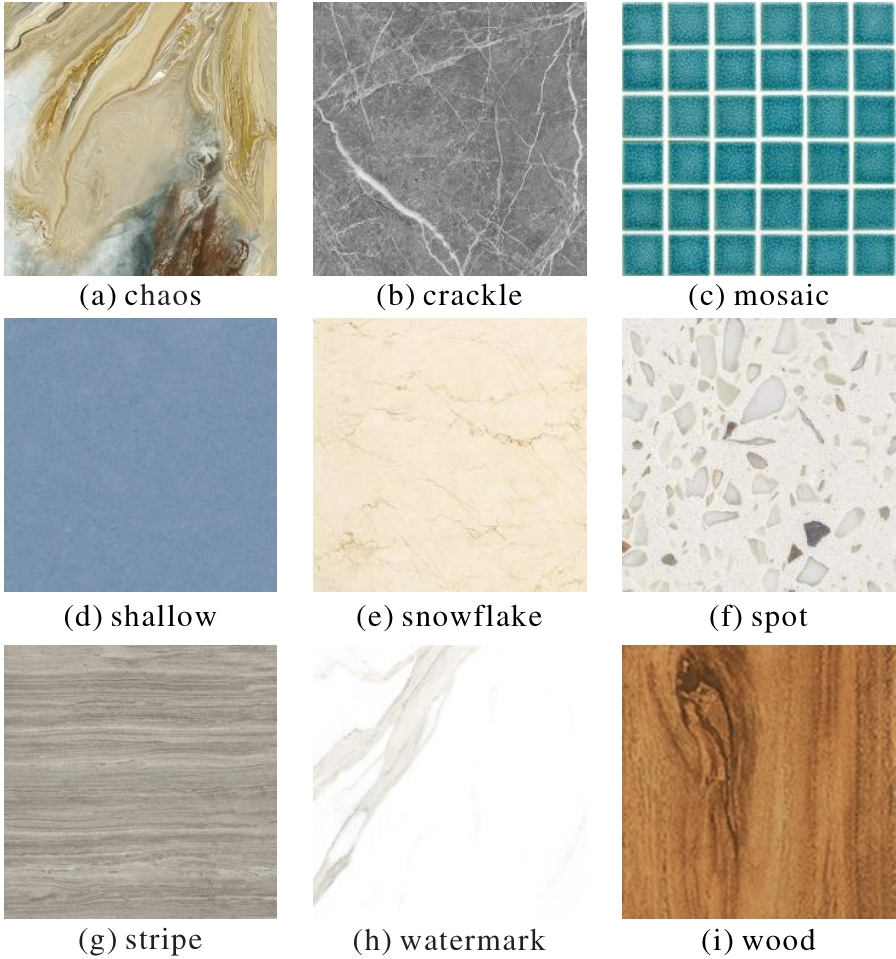
Fig. 1 Examples of TILE-TCR dataset
| 纹理类型 | 训练集样本数 | 测试集样本数 |
|---|---|---|
| chaos(混乱纹理) | 666 | 86 |
| crackle(裂纹纹理) | 535 | 62 |
| mosaic(马赛克纹理) | 190 | 30 |
| shallow(浅表纹理) | 689 | 71 |
| snowflake(雪花纹理) | 396 | 50 |
| spot(斑点纹理) | 881 | 96 |
| stripe(条纹纹理) | 1 149 | 119 |
| watermark(水印纹理) | 325 | 40 |
| wood(木质纹理) | 693 | 78 |
Tab. 1 Statistics of ceramic tile texture classification dataset
| 纹理类型 | 训练集样本数 | 测试集样本数 |
|---|---|---|
| chaos(混乱纹理) | 666 | 86 |
| crackle(裂纹纹理) | 535 | 62 |
| mosaic(马赛克纹理) | 190 | 30 |
| shallow(浅表纹理) | 689 | 71 |
| snowflake(雪花纹理) | 396 | 50 |
| spot(斑点纹理) | 881 | 96 |
| stripe(条纹纹理) | 1 149 | 119 |
| watermark(水印纹理) | 325 | 40 |
| wood(木质纹理) | 693 | 78 |
| 颜色类型 | 训练集样本数 | 测试集样本数 |
|---|---|---|
| 0(白色) | 621 | 49 |
| 1(浅灰色) | 784 | 66 |
| 2(深棕色) | 314 | 22 |
| 3(浅蓝色) | 656 | 90 |
| 4(红色) | 132 | 32 |
| 5(黑色) | 105 | 5 |
| 6(木纹色) | 268 | 30 |
| 7(深灰色) | 542 | 50 |
| 8(黄色) | 127 | 29 |
| 9(米色) | 879 | 96 |
| 10(深褐色) | 363 | 40 |
| 11(浅褐色) | 733 | 123 |
Tab. 2 Sample numbers of images in ceramic tile color classification dataset
| 颜色类型 | 训练集样本数 | 测试集样本数 |
|---|---|---|
| 0(白色) | 621 | 49 |
| 1(浅灰色) | 784 | 66 |
| 2(深棕色) | 314 | 22 |
| 3(浅蓝色) | 656 | 90 |
| 4(红色) | 132 | 32 |
| 5(黑色) | 105 | 5 |
| 6(木纹色) | 268 | 30 |
| 7(深灰色) | 542 | 50 |
| 8(黄色) | 127 | 29 |
| 9(米色) | 879 | 96 |
| 10(深褐色) | 363 | 40 |
| 11(浅褐色) | 733 | 123 |
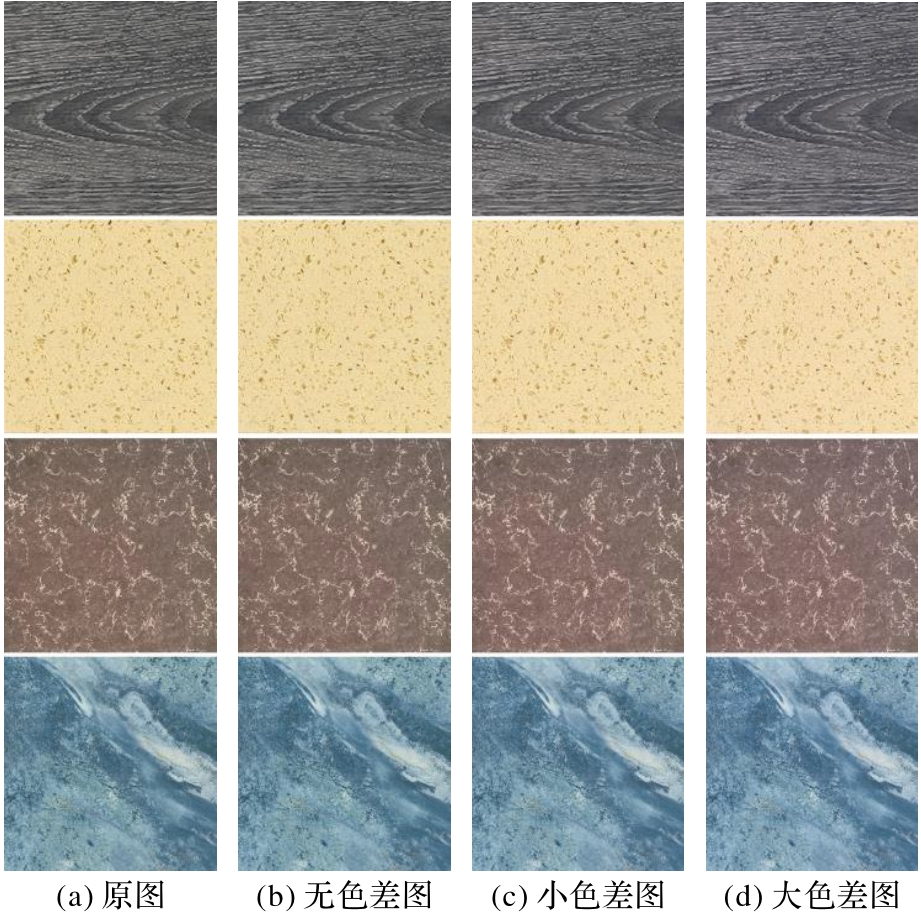
Fig. 2 Partial examples of TILE-CAG dataset
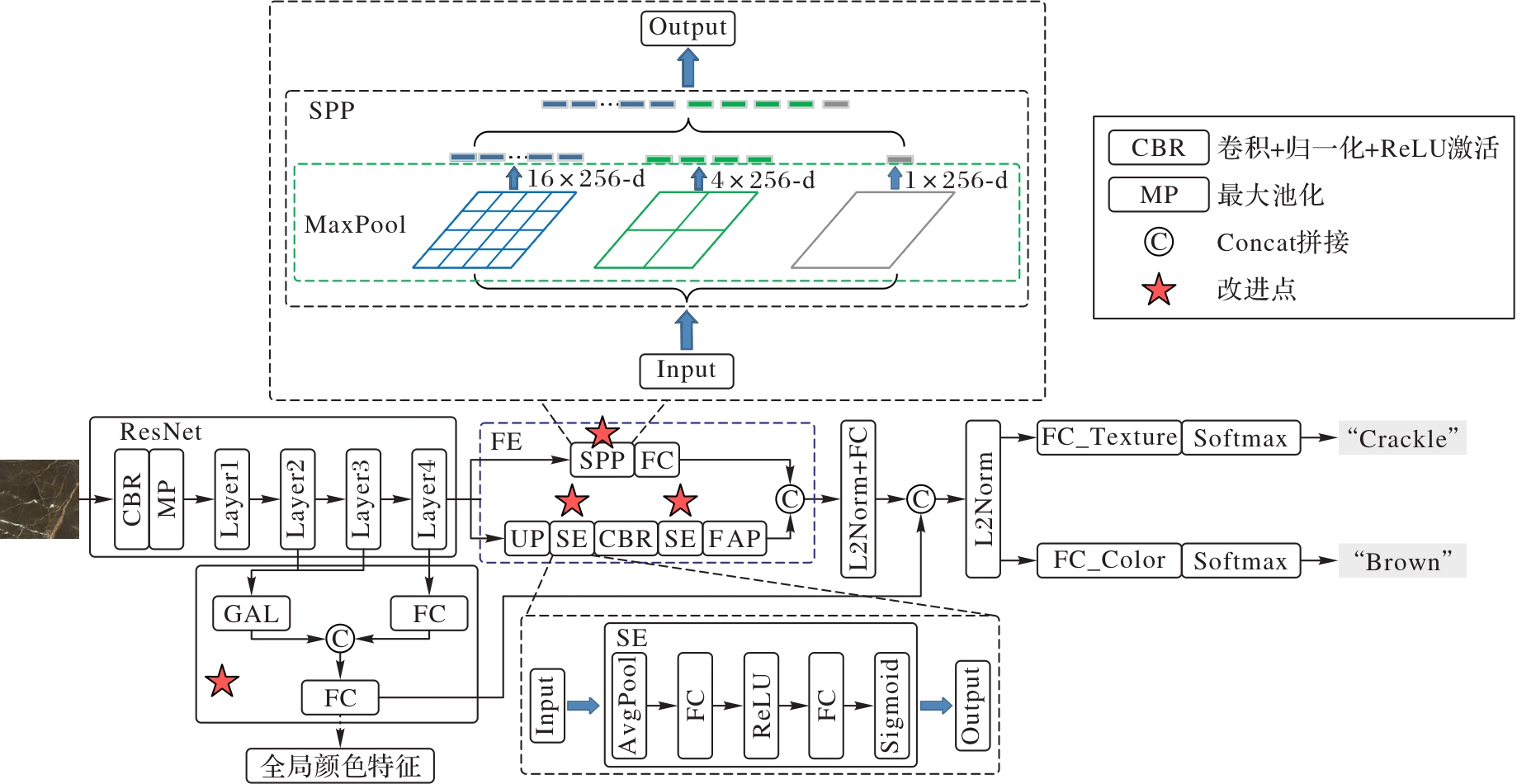
Fig. 3 Architecture of FENet-SE-SPP-Color
| 模块 | 输入尺寸 | 输出尺寸 | 参数量说明 |
|---|---|---|---|
| ResNet-Conv1 | 224×224×3 | 112×112×64 | 卷积核7×7,stride=2 |
| ResNet-Layer4 | 14×14×1 024 | 7×7×2 048 | Bottleneck结构 |
| GAL | — | 512 | 注意力加权融合 |
| GlobalPool+SubLinear | 7×7×2 048→1×1×2 048 | 256 | GAP+FC |
| Upsample+SE | 7×7×2 048 | 28×28×256 | 转置卷积核4×4 |
| SPP | 7×7×2 048 | 1 024 | 1×1+2×2+4×4池化 |
| FAP | 128通道 | 3维 | 每通道分形维度提取 |
| Final Linear(纹理) | 256 | n | n类纹理等级 |
| Final Linear(颜色) | 256 | m | m类颜色等级 |
Tab. 3 Description of main module parameters of FENet-SE-SPP-Color
| 模块 | 输入尺寸 | 输出尺寸 | 参数量说明 |
|---|---|---|---|
| ResNet-Conv1 | 224×224×3 | 112×112×64 | 卷积核7×7,stride=2 |
| ResNet-Layer4 | 14×14×1 024 | 7×7×2 048 | Bottleneck结构 |
| GAL | — | 512 | 注意力加权融合 |
| GlobalPool+SubLinear | 7×7×2 048→1×1×2 048 | 256 | GAP+FC |
| Upsample+SE | 7×7×2 048 | 28×28×256 | 转置卷积核4×4 |
| SPP | 7×7×2 048 | 1 024 | 1×1+2×2+4×4池化 |
| FAP | 128通道 | 3维 | 每通道分形维度提取 |
| Final Linear(纹理) | 256 | n | n类纹理等级 |
| Final Linear(颜色) | 256 | m | m类颜色等级 |
| 骨干网络 | A | B | C | 最大准确率/% | 平均准确率/% | 标准差(±Std)/% | p-value值(对比基准模型) |
|---|---|---|---|---|---|---|---|
| FENet18 | 90.66 | 89.746 | 0.633 0 | 0.000 0 | |||
| √ | 90.66 | 89.794 | 0.490 9 | 0.872 0 | |||
| √ | 90.82 | 90.127 | 0.399 5 | 0.217 3 | |||
| √ | 91.30 | 89.907 | 0.560 5 | 0.565 8 | |||
| √ | √ | 90.82 | 89.905 | 0.555 2 | 0.331 9 | ||
| √ | √ | 91.46 | 89.904 | 0.964 9 | 0.740 4 | ||
| √ | √ | 91.61 | 90.332 | 0.610 1 | 0.104 3 | ||
| √ | √ | √ | 92.41 | 90.363 | 0.888 1 | 0.135 9 | |
| FENet50 | 90.98 | 90.085 | 0.497 6 | 0.000 0 | |||
| √ | 91.46 | 90.181 | 0.600 0 | 0.705 6 | |||
| √ | 91.30 | 90.270 | 0.686 1 | 0.405 4 | |||
| √ | 91.61 | 90.678 | 0.477 0 | 0.028 8 | |||
| √ | √ | 92.56 | 90.695 | 0.851 3 | 0.131 7 | ||
| √ | √ | 91.93 | 90.743 | 0.820 5 | 0.127 2 | ||
| √ | √ | 91.72 | 90.483 | 0.706 4 | 0.225 9 | ||
| √ | √ | √ | 92.82 | 91.099 | 0.828 1 | 0.029 6 |
Tab. 4 Ablation experimental results
| 骨干网络 | A | B | C | 最大准确率/% | 平均准确率/% | 标准差(±Std)/% | p-value值(对比基准模型) |
|---|---|---|---|---|---|---|---|
| FENet18 | 90.66 | 89.746 | 0.633 0 | 0.000 0 | |||
| √ | 90.66 | 89.794 | 0.490 9 | 0.872 0 | |||
| √ | 90.82 | 90.127 | 0.399 5 | 0.217 3 | |||
| √ | 91.30 | 89.907 | 0.560 5 | 0.565 8 | |||
| √ | √ | 90.82 | 89.905 | 0.555 2 | 0.331 9 | ||
| √ | √ | 91.46 | 89.904 | 0.964 9 | 0.740 4 | ||
| √ | √ | 91.61 | 90.332 | 0.610 1 | 0.104 3 | ||
| √ | √ | √ | 92.41 | 90.363 | 0.888 1 | 0.135 9 | |
| FENet50 | 90.98 | 90.085 | 0.497 6 | 0.000 0 | |||
| √ | 91.46 | 90.181 | 0.600 0 | 0.705 6 | |||
| √ | 91.30 | 90.270 | 0.686 1 | 0.405 4 | |||
| √ | 91.61 | 90.678 | 0.477 0 | 0.028 8 | |||
| √ | √ | 92.56 | 90.695 | 0.851 3 | 0.131 7 | ||
| √ | √ | 91.93 | 90.743 | 0.820 5 | 0.127 2 | ||
| √ | √ | 91.72 | 90.483 | 0.706 4 | 0.225 9 | ||
| √ | √ | √ | 92.82 | 91.099 | 0.828 1 | 0.029 6 |
| 方法 | 骨干网络 | DTD | FMD | MINC-2500 | GTOS-M | TILE-TCR |
|---|---|---|---|---|---|---|
| DeepTEN | ResNet18 | 64.60 | 68.0 | 77.79 | 72.12 | 87.50 |
| DEPNet | 67.80 | 76.1 | 78.28 | 79.18 | 88.26 | |
| HistNet | 69.89 | 83.0 | 80.57 | 82.95 | 88.83 | |
| FENet | 70.85 | 81.0 | 80.45 | 80.53 | 90.66 | |
| FENet-SE-SPP-Color | 73.30 | 84.0 | 82.59 | 82.16 | 92.41 | |
| DeepTEN | ResNet50 | 69.60 | 80.6 | 80.40 | 74.20 | 87.28 |
| DEPNet | 73.20 | 82.0 | 82.00 | 76.07 | 89.87 | |
| HistNet | 72.78 | 82.0 | 83.22 | 82.74 | 90.19 | |
| FENet | 74.04 | 86.0 | 82.83 | 83.33 | 90.98 | |
| FENet-SE-SPP-Color | 73.46 | 87.0 | 83.25 | 84.27 | 92.82 |
Tab. 5 Comparison of texture classification accuracy using different methods
| 方法 | 骨干网络 | DTD | FMD | MINC-2500 | GTOS-M | TILE-TCR |
|---|---|---|---|---|---|---|
| DeepTEN | ResNet18 | 64.60 | 68.0 | 77.79 | 72.12 | 87.50 |
| DEPNet | 67.80 | 76.1 | 78.28 | 79.18 | 88.26 | |
| HistNet | 69.89 | 83.0 | 80.57 | 82.95 | 88.83 | |
| FENet | 70.85 | 81.0 | 80.45 | 80.53 | 90.66 | |
| FENet-SE-SPP-Color | 73.30 | 84.0 | 82.59 | 82.16 | 92.41 | |
| DeepTEN | ResNet50 | 69.60 | 80.6 | 80.40 | 74.20 | 87.28 |
| DEPNet | 73.20 | 82.0 | 82.00 | 76.07 | 89.87 | |
| HistNet | 72.78 | 82.0 | 83.22 | 82.74 | 90.19 | |
| FENet | 74.04 | 86.0 | 82.83 | 83.33 | 90.98 | |
| FENet-SE-SPP-Color | 73.46 | 87.0 | 83.25 | 84.27 | 92.82 |
纹理任务 权重 | 颜色任务 权重 | 纹理识别 准确率/% | 颜色识别 准确率/% | 总体平均 准确率/% |
|---|---|---|---|---|
| 0.9 | 0.1 | 89.40 | 77.85 | 83.62 |
| 0.8 | 0.2 | 90.19 | 78.32 | 84.26 |
| 0.7 | 0.3 | 90.03 | 78.96 | 84.49 |
| 0.6 | 0.4 | 88.77 | 82.75 | 85.76 |
| 0.5 | 0.5 | 88.77 | 81.49 | 85.13 |
| 0.4 | 0.6 | 88.92 | 81.01 | 84.97 |
| 0.3 | 0.7 | 88.29 | 81.01 | 84.65 |
| 0.2 | 0.8 | 85.92 | 83.07 | 84.49 |
| 0.1 | 0.9 | 76.74 | 84.18 | 80.46 |
Tab. 6 Experimental results of multi-task recognition
纹理任务 权重 | 颜色任务 权重 | 纹理识别 准确率/% | 颜色识别 准确率/% | 总体平均 准确率/% |
|---|---|---|---|---|
| 0.9 | 0.1 | 89.40 | 77.85 | 83.62 |
| 0.8 | 0.2 | 90.19 | 78.32 | 84.26 |
| 0.7 | 0.3 | 90.03 | 78.96 | 84.49 |
| 0.6 | 0.4 | 88.77 | 82.75 | 85.76 |
| 0.5 | 0.5 | 88.77 | 81.49 | 85.13 |
| 0.4 | 0.6 | 88.92 | 81.01 | 84.97 |
| 0.3 | 0.7 | 88.29 | 81.01 | 84.65 |
| 0.2 | 0.8 | 85.92 | 83.07 | 84.49 |
| 0.1 | 0.9 | 76.74 | 84.18 | 80.46 |
| 纹理类别 | 小色差对照组 | 大色差对照组 | ||||||
|---|---|---|---|---|---|---|---|---|
| 纹理差异均值(DT1) | 颜色差异均值(DC1) | D1 | 纹理差异均值(DT2) | 颜色差异均值(DC2) | D2 | |||
| chaos | 0.165 5 | 1.121 9 | 0.643 7 | 0.616 2 | 0.436 8 | 2.760 5 | 1.598 6 | 1.604 4 |
| crackle | 0.129 3 | 1.002 8 | 0.566 0 | 0.572 6 | 0.284 5 | 2.558 5 | 1.421 5 | 1.463 4 |
| mosaic | 0.052 5 | 0.570 4 | 0.311 5 | 0.271 3 | 0.123 7 | 1.226 2 | 0.674 9 | 0.744 4 |
| shallow | 0.252 1 | 1.340 4 | 0.796 2 | 0.705 6 | 0.481 3 | 3.172 6 | 1.826 9 | 1.904 8 |
| snowflake | 0.250 5 | 1.209 8 | 0.730 1 | 0.627 1 | 0.529 1 | 2.812 8 | 1.671 0 | 1.676 6 |
| spot | 0.113 4 | 1.229 0 | 0.671 2 | 0.624 6 | 0.285 8 | 2.923 0 | 1.604 4 | 1.741 7 |
| stripe | 0.151 5 | 1.267 7 | 0.709 6 | 0.619 3 | 0.360 1 | 3.060 6 | 1.710 3 | 1.603 6 |
| watermark | 0.156 6 | 1.158 3 | 0.657 4 | 0.493 9 | 0.267 6 | 2.318 2 | 1.292 9 | 1.575 3 |
| wood | 0.122 3 | 1.266 5 | 0.694 4 | 0.653 7 | 0.366 7 | 3.261 1 | 1.813 9 | 1.712 9 |
Tab. 7 Experimental results of color difference grading threshold
| 纹理类别 | 小色差对照组 | 大色差对照组 | ||||||
|---|---|---|---|---|---|---|---|---|
| 纹理差异均值(DT1) | 颜色差异均值(DC1) | D1 | 纹理差异均值(DT2) | 颜色差异均值(DC2) | D2 | |||
| chaos | 0.165 5 | 1.121 9 | 0.643 7 | 0.616 2 | 0.436 8 | 2.760 5 | 1.598 6 | 1.604 4 |
| crackle | 0.129 3 | 1.002 8 | 0.566 0 | 0.572 6 | 0.284 5 | 2.558 5 | 1.421 5 | 1.463 4 |
| mosaic | 0.052 5 | 0.570 4 | 0.311 5 | 0.271 3 | 0.123 7 | 1.226 2 | 0.674 9 | 0.744 4 |
| shallow | 0.252 1 | 1.340 4 | 0.796 2 | 0.705 6 | 0.481 3 | 3.172 6 | 1.826 9 | 1.904 8 |
| snowflake | 0.250 5 | 1.209 8 | 0.730 1 | 0.627 1 | 0.529 1 | 2.812 8 | 1.671 0 | 1.676 6 |
| spot | 0.113 4 | 1.229 0 | 0.671 2 | 0.624 6 | 0.285 8 | 2.923 0 | 1.604 4 | 1.741 7 |
| stripe | 0.151 5 | 1.267 7 | 0.709 6 | 0.619 3 | 0.360 1 | 3.060 6 | 1.710 3 | 1.603 6 |
| watermark | 0.156 6 | 1.158 3 | 0.657 4 | 0.493 9 | 0.267 6 | 2.318 2 | 1.292 9 | 1.575 3 |
| wood | 0.122 3 | 1.266 5 | 0.694 4 | 0.653 7 | 0.366 7 | 3.261 1 | 1.813 9 | 1.712 9 |
| 类别 | 真实样本数 | 预测正确数 | 预测错误数 | 准确率/% | 精确率/% | 召回率/% | F1-score/% |
|---|---|---|---|---|---|---|---|
| 总体 | 800 | 741 | 59 | 92.6 | 92.0 | 92.6 | 92.3 |
| 无色差(I类) | 250 | 235 | 15 | 94.0 | 92.5 | 94.0 | 93.2 |
| 小色差(Ⅱ类) | 300 | 276 | 24 | 92.0 | 90.8 | 92.0 | 91.4 |
| 大色差(Ⅲ类) | 250 | 230 | 20 | 92.0 | 92.7 | 92.0 | 92.3 |
Tab. 8 Experimental results of color difference grading
| 类别 | 真实样本数 | 预测正确数 | 预测错误数 | 准确率/% | 精确率/% | 召回率/% | F1-score/% |
|---|---|---|---|---|---|---|---|
| 总体 | 800 | 741 | 59 | 92.6 | 92.0 | 92.6 | 92.3 |
| 无色差(I类) | 250 | 235 | 15 | 94.0 | 92.5 | 94.0 | 93.2 |
| 小色差(Ⅱ类) | 300 | 276 | 24 | 92.0 | 90.8 | 92.0 | 91.4 |
| 大色差(Ⅲ类) | 250 | 230 | 20 | 92.0 | 92.7 | 92.0 | 92.3 |
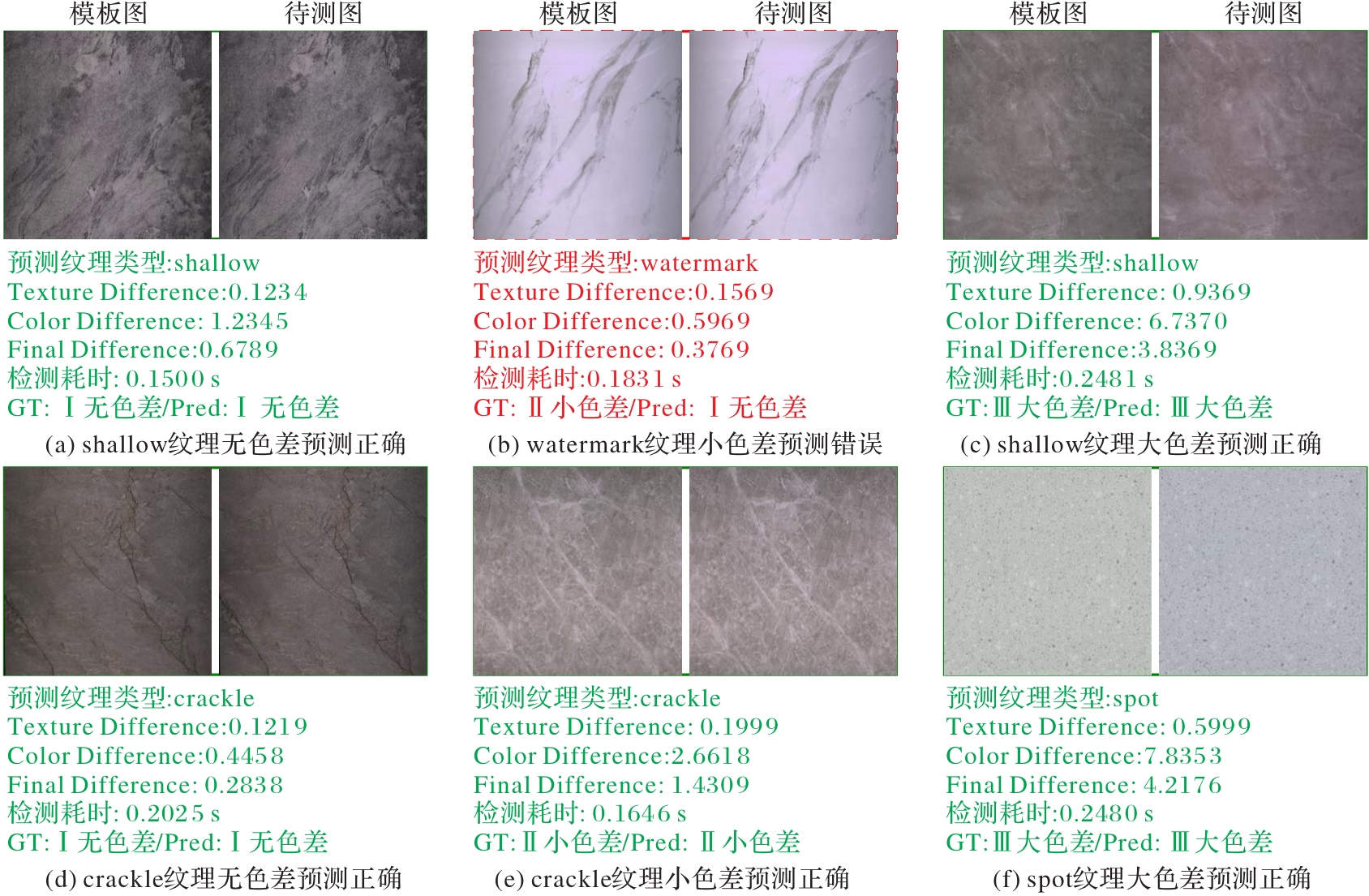
Fig. 4 Visualization of color difference detection grading results
瓷砖尺寸 (mm×mm) | 最大 检测时间/ms | 平均 检测时间/ms | 标准差(±Std)/ms |
|---|---|---|---|
| 600×600 | 898.2 | 830.53 | 35.94 |
| 800×800 | 1 099.8 | 964.81 | 76.05 |
| 750×1 500 | 1 269.1 | 1 077.31 | 94.35 |
Tab. 9 Color difference detection time analysis in industrial deployment
瓷砖尺寸 (mm×mm) | 最大 检测时间/ms | 平均 检测时间/ms | 标准差(±Std)/ms |
|---|---|---|---|
| 600×600 | 898.2 | 830.53 | 35.94 |
| 800×800 | 1 099.8 | 964.81 | 76.05 |
| 750×1 500 | 1 269.1 | 1 077.31 | 94.35 |
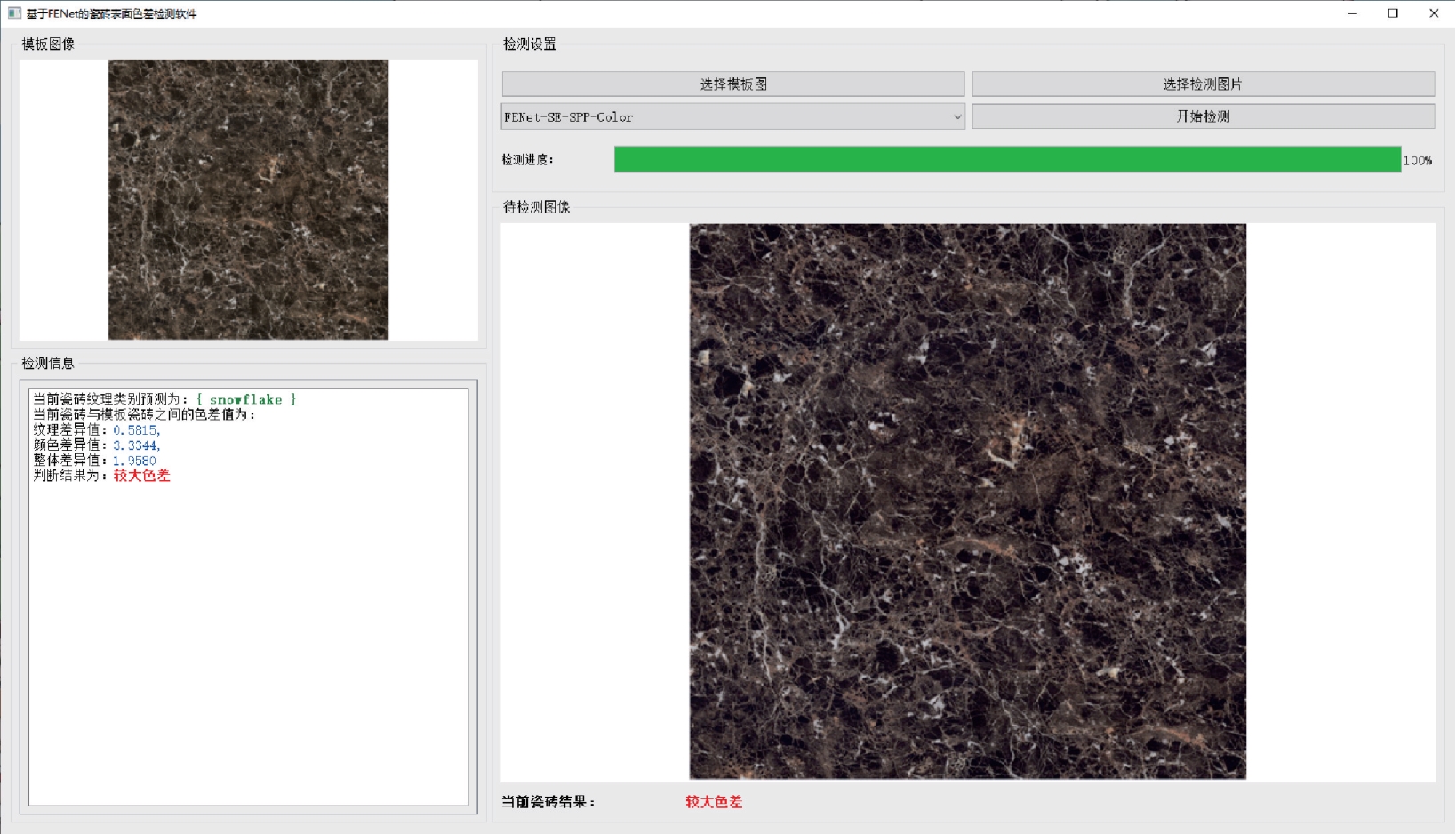
Fig. 5 Color difference detection system
| [1] | 刘策,刘公言,林振国,等. 手持式色差仪测定不同观赏动物的被毛的色差值[J]. 当代畜牧, 2020(4): 24-26. |
| LIU C, LIU G Y, LIN Z G, et al. Measurement of the chromatic values of the coats of different ornamental animals by hand-held colorimeter[J]. Contemporary Animal Husbandry, 2020(4): 24-26. | |
| [2] | BERNS R S, BILLMEYER JR P F W, SALTZMAN M. Billmeyer and Saltzman’s principles of color technology [M]. 4th ed. New Jersey: John Wiley & Sons, Inc., 2019. |
| [3] | 杨坤. 基于CCD的瓷砖色差与尺寸检测研究[D]. 武汉:华中科技大学, 2007. |
| YANG K. Research of color difference and dimension measurement of ceramic tile based on CCD [D]. Wuhan: Huazhong University of Science and Technology, 2007. | |
| [4] | 刘利. 基于图像处理的瓷砖色差在线检测方法研究[D]. 长春:长春理工大学, 2019. |
| LIU L. Research on online detection method of ceramic tile color difference based on image processing[D]. Changchun: Changchun University of Science and Technology, 2019. | |
| [5] | QIAN W, YU X, XIE W, et al. Color-separation framework for ceramic-tiles based on few labeled data by HSV and SVM [J]. Journal of Physics: Conference Series, 2021, 2044: No.012105. |
| [6] | 吴庆涛,曹再辉,施进发. 基于改进颜色直方图和灰度共生矩阵的图像检索[J]. 图学学报, 2017, 38(4): 543-548. |
| WU Q T, CAO Z H, SHI J F. Image retrieval based on improved color histogram and gray level co-occurrence matrix [J]. Journal of Graphics, 2017, 38(4): 543-548. | |
| [7] | 唐海艳. 基于颜色直方图特征的印刷品颜色缺陷检测[D]. 昆明:昆明理工大学, 2020. |
| TANG H Y. Detection on prints color difference based on color histogram features [D]. Kunming: Kunming University of Science and Technology, 2020. | |
| [8] | NADLER E O, DARRAGH-FORD E, DESIKAN B S, et al. Divergences in color perception between deep neural networks and humans [J]. Cognition, 2023, 241: No.105621. |
| [9] | CHEN H, WANG Z, YANG Y, et al. Learning a deep color difference metric for photographic images [C]// Proceedings of the 2023 IEEE/CVF Conference on Computer Vision and Pattern Recognition. Piscataway: IEEE, 2023: 22242-22251. |
| [10] | REN J, HU X, ZHU L, et al. Deep texture-aware features for camouflaged object detection [J]. IEEE Transactions on Circuits and Systems for Video Technology, 2023, 33(3): 1157-1167. |
| [11] | WU Q, FANG Z, SONG Z, et al. A color extraction algorithm by segmentation [J]. Scientific Reports, 2023, 13: No.21261. |
| [12] | QIANG H, ZHANG X, HOU J. Attention-based color difference perception for photographic images [J]. Applied Sciences, 2025, 15(5): No.2704. |
| [13] | XU Y, LI F, CHEN Z, et al. Encoding spatial distribution of convolutional features for texture representation [C]// Proceedings of the 35th International Conference on Neural Information Processing Systems. Red Hook: Curran Associates Inc., 2021: 22732-22744. |
| [14] | HE K, ZHANG X, REN S, et al. Spatial pyramid pooling in deep convolutional networks for visual recognition [J]. IEEE Transactions on Pattern Analysis and Machine Intelligence, 2015, 37(9): 1904-1916. |
| [15] | HU J, SHEN L, SUN G. Squeeze-and-excitation networks [C]// Proceedings of the 2018 IEEE/CVF Conference on Computer Vision and Pattern Recognition. Piscataway: IEEE, 2018: 7132-7141. |
| [16] | MO H, XU B, OUYANG W, et al. Color segmentation of multi-colored fabrics using self-organizing-map based clustering algorithm [J]. Textile Research Journal, 2016, 87(3): 369-380. |
| [17] | DAI Z M, LI D S, XIE H. The analysis for evaluation of ceramic tile’s color difference based on CIELAB color space [J]. Advanced Materials Research, 2012, 490/491/492/493/494/495: 3726-3732. |
| [18] | International Organization for Standardization. . Graphic technology — process control for the production of half-tone colour separations, proof and production prints part 2: offset lithographic processes [S]. Geneva: ISO, 2013. |
| [19] | XUE J, ZHANG H, DANA K. Deep texture manifold for ground terrain recognition [C]// Proceedings of the 2018 IEEE/CVF Conference on Computer Vision and Pattern Recognition. Piscataway: IEEE, 2018: 558-567. |
| [20] | BELL S, UPCHURCH P, SNAVELY N, et al. Material recognition in the wild with the materials in context database [C]// Proceedings of the 2015 IEEE Conference on Computer Vision and Pattern Recognition. Piscataway: IEEE, 2015: 3479-3487. |
| [21] | CIMPOI M, MAJI S, KOKKINOS I, et al. Describing textures in the wild [C]// Proceedings of the 2014 IEEE Conference on Computer Vision and Pattern Recognition. Piscataway: IEEE, 2014: 3606-3613. |
| [22] | SHARAN L, ROSENHOLTZ R, ADELSON E. Material perception: What can you see in a brief glance? [J]. Journal of Vision, 2009, 9(8): No.784. |
| [23] | ZHANG H, XUE J, DANA K. Deep TEN: texture encoding network [C]// Proceedings of the 2017 IEEE Conference on Computer Vision and Pattern Recognition. Piscataway: IEEE, 2017: 2896-2905. |
| [24] | PEEPLES J, XU W, ZARE A. Histogram layers for texture analysis [J]. IEEE Transactions on Artificial Intelligence, 2022, 3(4): 541-552. |
| [1] | Min CHEN, Xiaolin QIN, Shaohan LI, Hao YANG, Taohong LI. Review of deep learning applications in severe convective weather prediction [J]. Journal of Computer Applications, 2026, 46(3): 980-992. |
| [2] | Jian ZHANG, Jianbo YU, Jian TANG. Municipal solid waste incineration state recognition method based on multilayer preprocessing [J]. Journal of Computer Applications, 2026, 46(3): 940-949. |
| [3] | Yongwei JIANG, Xiaoqing CHEN, Linjie FU. Elastic medical image registration model with high-frequency preservation based on spectrum decomposition [J]. Journal of Computer Applications, 2026, 46(3): 924-932. |
| [4] | Haoqian JIANG, Dong ZHANG, Guanyu LI, Heng CHEN. SetaCRS: Conversational recommender system with structure-enhanced hierarchical task-oriented prompting strategy [J]. Journal of Computer Applications, 2026, 46(2): 368-377. |
| [5] | Jincheng FU, Shiyou YANG. Short-term wind power prediction using hybrid model based on Bayesian optimization and feature fusion [J]. Journal of Computer Applications, 2026, 46(2): 652-658. |
| [6] | Ming LI, Mengqi WANG, Aili ZHANG, Hua REN, Yuqiang DOU. Image steganography method based on conditional generative adversarial networks and hybrid attention mechanism [J]. Journal of Computer Applications, 2026, 46(2): 475-484. |
| [7] | Jie CAO, Lingfeng XIE, Bingjin WANG, Changhe ZHANG, Zidong YU, Chao DENG. Adolescent scoliosis screening method considering class imbalance and background diversity [J]. Journal of Computer Applications, 2026, 46(2): 630-639. |
| [8] | Zeyi GUO, Fenglian LI, Lichun XU. Double decision mechanism-based deep symbolic regression algorithm [J]. Journal of Computer Applications, 2026, 46(2): 406-415. |
| [9] | Xiaolei CHEN, Zhiwei ZHENG, Xue HUANG, Zhenbin QU. Panoramic video super-resolution network combining spherical alignment and adaptive geometric correction [J]. Journal of Computer Applications, 2026, 46(2): 528-535. |
| [10] | Quanjie LIU, Zhaoyi GU, Chunyuan WANG. Unsafe driving behavior detection under complex lighting conditions [J]. Journal of Computer Applications, 2026, 46(2): 613-619. |
| [11] | Jinjiao LIN, Canshun ZHANG, Shuya CHEN, Tianxin WANG, Jian LIAN, Yonghui XU. Vehicle insurance fraud detection method based on improved graph attention network [J]. Journal of Computer Applications, 2026, 46(2): 437-444. |
| [12] | Feng HAN, Yongfeng BU, Haoxiang LIANG, Shuwen HUANG, Zhaoyang ZHANG, Shijie SUN. Vehicle trajectory anomaly detection based on multi-level spatio-temporal interaction dependency [J]. Journal of Computer Applications, 2026, 46(2): 604-612. |
| [13] | Kejian CUI, Zhiming WANG, Zhaowen QIU. Method for retinal vessel segmentation and coronary artery disease prediction using optical coherence tomography angiography [J]. Journal of Computer Applications, 2026, 46(2): 640-651. |
| [14] | Xiaoyong BIAN, Peiyang YUAN, Qiren HU. Dual-coding space-frequency mixing method for infrared small target detection [J]. Journal of Computer Applications, 2026, 46(1): 252-259. |
| [15] | Zhihui ZAN, Yajing WANG, Ke LI, Zhixiang YANG, Guangyu YANG. Multi-feature fusion speech emotion recognition method based on SAA-CNN-BiLSTM network [J]. Journal of Computer Applications, 2026, 46(1): 69-76. |
| Viewed | ||||||
|
Full text |
|
|||||
|
Abstract |
|
|||||
