


Journal of Computer Applications ›› 2025, Vol. 45 ›› Issue (12): 4064-4072.DOI: 10.11772/j.issn.1001-9081.2024111698
• Frontier and comprehensive applications • Previous Articles
Min HE1,2, Tianjian LUO1,2( )
)
Received:2024-12-04
Revised:2025-04-15
Accepted:2025-04-16
Online:2025-04-22
Published:2025-12-10
Contact:
Tianjian LUO
About author:HE Min, born in 1999, M. S. candidate. His research interests include brain-computer interface, pattern recognition, EEG signal analysis.
Supported by:
何敏1,2, 罗天健1,2()
通讯作者:
罗天健
作者简介:何敏(1999—),男,福建南平人,硕士研究生,主要研究方向:脑机接口、模式识别、脑电(EEG)信号分析基金资助:CLC Number:
Min HE, Tianjian LUO. Multi-stage distribution adaptation model for cross-subject motor imagery EEG decoding[J]. Journal of Computer Applications, 2025, 45(12): 4064-4072.
何敏, 罗天健. 多阶段分布适应的跨被试运动想象脑电解码模型[J]. 《计算机应用》唯一官方网站, 2025, 45(12): 4064-4072.
Add to citation manager EndNote|Ris|BibTeX
URL: https://www.joca.cn/EN/10.11772/j.issn.1001-9081.2024111698
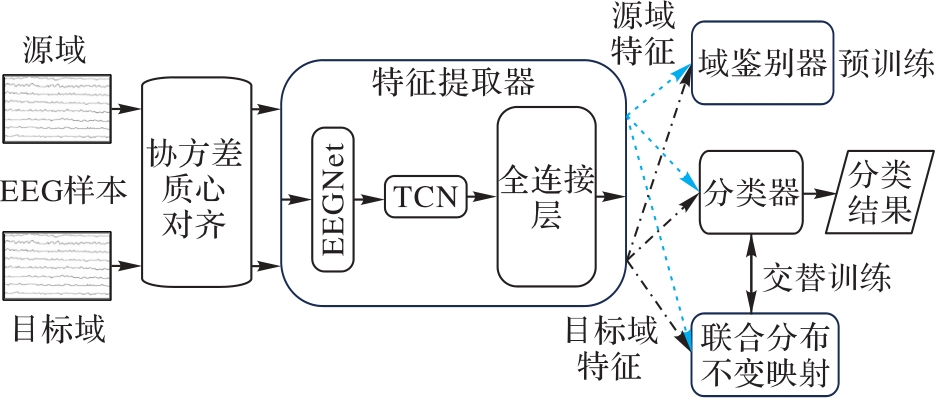
Fig. 1 Overall architecture of MSDA model
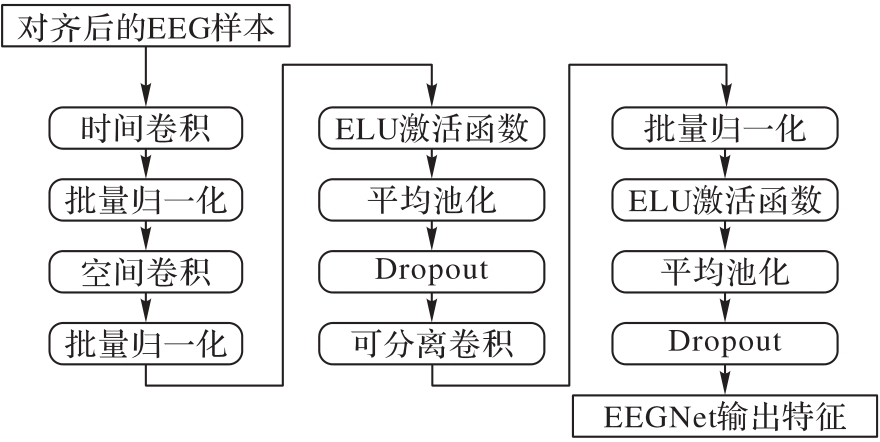
Fig. 2 Architecture of EEGNet module
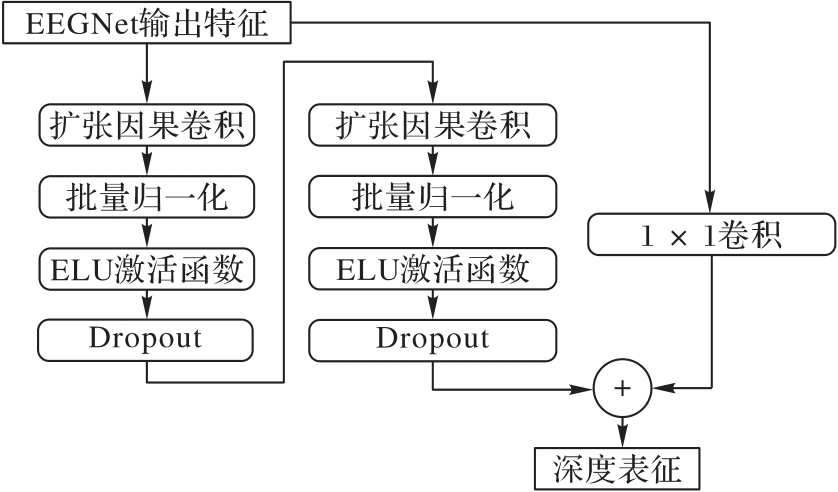
Fig. 3 Residual block in TCN module
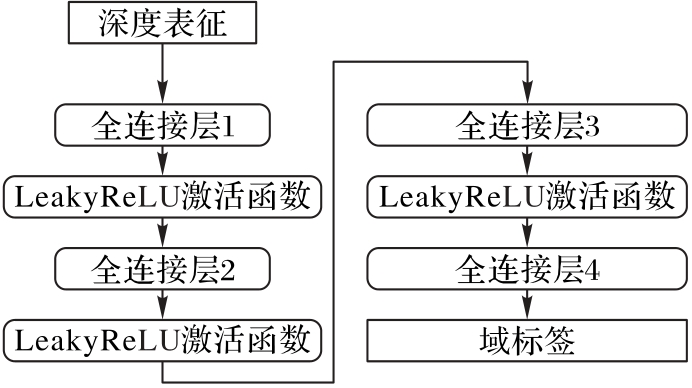
Fig. 4 Architecture of domain discriminator
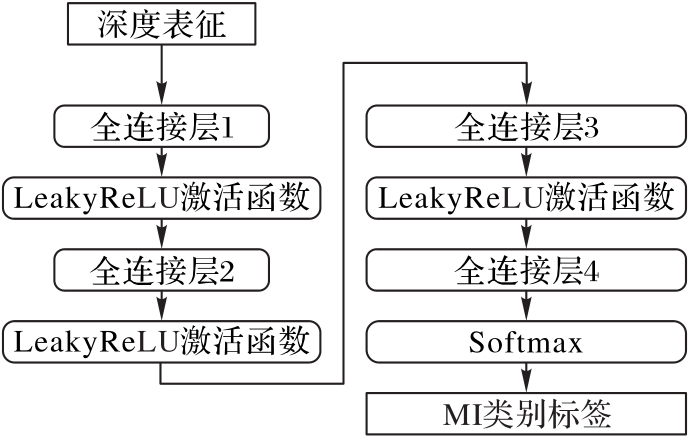
Fig. 5 Architecture of classifier
| 数据集 | 被试者数 | MI 类别数 | EEG 通道数 | 采样点 数 | 源域 样本数 | 目标域训练 样本数 | 目标 测试集 样本数 |
|---|---|---|---|---|---|---|---|
| BCIIV 2a | 9 | 4 | 22 | 1 000 | 4 608 | 288 | 288 |
| BCIIV 2b | 9 | 2 | 3 | 1 000 | 5 800 | 400 | 320 |
Tab. 1 Statistics of two MI-EEG datasets
| 数据集 | 被试者数 | MI 类别数 | EEG 通道数 | 采样点 数 | 源域 样本数 | 目标域训练 样本数 | 目标 测试集 样本数 |
|---|---|---|---|---|---|---|---|
| BCIIV 2a | 9 | 4 | 22 | 1 000 | 4 608 | 288 | 288 |
| BCIIV 2b | 9 | 2 | 3 | 1 000 | 5 800 | 400 | 320 |
| 方法 | 准确率/% | 平均准确率±标准差/ % | Kappa | ||||||||
|---|---|---|---|---|---|---|---|---|---|---|---|
| A01 | A02 | A03 | A04 | A05 | A06 | A07 | A08 | A09 | |||
| DRDA | 83.19 | 55.14 | 87.43 | 75.28 | 62.29 | 57.15 | 86.18 | 83.61 | 82.00 | 74.70±12.96 | 0.663 |
| CutCat | 82.64 | 60.76 | 94.79 | 47.22 | 89.58 | 82.56 | 78.13 | 76.03±14.97 | 0.678 | ||
| DAFS | 81.94 | 64.58 | 88.89 | 73.61 | 70.49 | 56.60 | 85.42 | 79.51 | 81.60 | 75.85±10.47 | 0.678 |
| CAT | 90.62 | 54.51 | 91.32 | 72.57 | 63.19 | 62.85 | 87.15 | 85.07 | 84.03 | 76.81±13.80 | 0.690 |
| DABAN | 88.54 | 55.56 | 91.32 | 77.43 | 60.42 | 58.68 | 87.15 | 83.68 | 82.64 | 76.16±14.06 | 0.676 |
| IWDAN | 83.29 | 63.97 | 90.30 | 76.94 | 69.34 | 60.08 | 89.31 | 82.35 | 82.81 | 77.60±10.85 | 0.695 |
| DAGSC | 61.46 | 76.39 | 71.18 | 60.76 | 84.38 | 83.68 | 79.63±12.99 | 0.728 | |||
| DJDAN | 86.46 | 68.75 | 93.06 | 85.42 | 63.54 | 95.49 | 83.68 | — | |||
| DMDAN | 84.75 | 61.11 | 92.36 | 69.44 | 62.85 | 57.64 | 88.89 | 85.42 | 86.11 | 76.50±13.57 | 0.687 |
| MSDA | 86.56 | 93.44 | 75.31 | 82.19 | 69.38 | 91.25 | 88.13 | 81.77±9.69 | 0.754 | ||
Tab.2 Comparison of cross-subject MI-EEG decoding accuracies and Kappa coefficients on BCIIV-2a dataset
| 方法 | 准确率/% | 平均准确率±标准差/ % | Kappa | ||||||||
|---|---|---|---|---|---|---|---|---|---|---|---|
| A01 | A02 | A03 | A04 | A05 | A06 | A07 | A08 | A09 | |||
| DRDA | 83.19 | 55.14 | 87.43 | 75.28 | 62.29 | 57.15 | 86.18 | 83.61 | 82.00 | 74.70±12.96 | 0.663 |
| CutCat | 82.64 | 60.76 | 94.79 | 47.22 | 89.58 | 82.56 | 78.13 | 76.03±14.97 | 0.678 | ||
| DAFS | 81.94 | 64.58 | 88.89 | 73.61 | 70.49 | 56.60 | 85.42 | 79.51 | 81.60 | 75.85±10.47 | 0.678 |
| CAT | 90.62 | 54.51 | 91.32 | 72.57 | 63.19 | 62.85 | 87.15 | 85.07 | 84.03 | 76.81±13.80 | 0.690 |
| DABAN | 88.54 | 55.56 | 91.32 | 77.43 | 60.42 | 58.68 | 87.15 | 83.68 | 82.64 | 76.16±14.06 | 0.676 |
| IWDAN | 83.29 | 63.97 | 90.30 | 76.94 | 69.34 | 60.08 | 89.31 | 82.35 | 82.81 | 77.60±10.85 | 0.695 |
| DAGSC | 61.46 | 76.39 | 71.18 | 60.76 | 84.38 | 83.68 | 79.63±12.99 | 0.728 | |||
| DJDAN | 86.46 | 68.75 | 93.06 | 85.42 | 63.54 | 95.49 | 83.68 | — | |||
| DMDAN | 84.75 | 61.11 | 92.36 | 69.44 | 62.85 | 57.64 | 88.89 | 85.42 | 86.11 | 76.50±13.57 | 0.687 |
| MSDA | 86.56 | 93.44 | 75.31 | 82.19 | 69.38 | 91.25 | 88.13 | 81.77±9.69 | 0.754 | ||
| 方法 | 准确率/% | 平均准确率±标准差/ % | Kappa | ||||||||
|---|---|---|---|---|---|---|---|---|---|---|---|
| B01 | B02 | B03 | B04 | B05 | B06 | B07 | B08 | B09 | |||
| DRDA | 81.37 | 62.86 | 63.63 | 95.94 | 93.56 | 88.19 | 85.00 | 95.25 | 90.00 | 83.98±12.67 | 0.680 |
| CutCat | 75.31 | 60.00 | 60.31 | 97.19 | 82.81 | 82.50 | 74.69 | 88.13 | 85.00 | 78.44±12.33 | 0.569 |
| DAFS | 70.31 | 73.57 | 80.31 | 94.69 | 95.00 | 83.75 | 95.00 | 75.31 | 84.63±10.20 | 0.733 | |
| CAT | 65.97 | 61.46 | 93.75 | 89.24 | 86.11 | 85.28±12.93 | 0.706 | ||||
| DABAN | 84.03 | 63.43 | 62.50 | 98.61 | 94.44 | 88.19 | 86.81 | 94.79 | 90.63 | 84.83±13.17 | 0.684 |
| IWDAN | 84.66 | 66.57 | 68.04 | 96.78 | 94.32 | 82.61 | 88.47 | 93.96 | 90.10 | 85.06±11.05 | 0.740 |
| DAGSC | 86.88 | 63.13 | 63.75 | 98.75 | 95.63 | 87.50 | 95.93 | 91.25 | 85.76±13.28 | 0.710 | |
| DJDAN | 83.44 | 58.57 | 59.06 | 98.13 | 96.56 | 84.38 | 86.25 | 92.81 | 87.81 | 83.00±14.64 | — |
| DMDAN | 76.56 | 73.57 | 95.94 | 83.13 | 91.56 | 95.00 | 82.50 | ||||
| MSDA | 80.94 | 85.94 | 97.50 | 98.13 | 82.19 | 94.06 | 88.44 | 88.09±9.35 | 0.764 | ||
Tab. 3 Comparison of cross-subject MI-EEG decoding accuracies and Kappa coefficients on BCIIV-2b dataset
| 方法 | 准确率/% | 平均准确率±标准差/ % | Kappa | ||||||||
|---|---|---|---|---|---|---|---|---|---|---|---|
| B01 | B02 | B03 | B04 | B05 | B06 | B07 | B08 | B09 | |||
| DRDA | 81.37 | 62.86 | 63.63 | 95.94 | 93.56 | 88.19 | 85.00 | 95.25 | 90.00 | 83.98±12.67 | 0.680 |
| CutCat | 75.31 | 60.00 | 60.31 | 97.19 | 82.81 | 82.50 | 74.69 | 88.13 | 85.00 | 78.44±12.33 | 0.569 |
| DAFS | 70.31 | 73.57 | 80.31 | 94.69 | 95.00 | 83.75 | 95.00 | 75.31 | 84.63±10.20 | 0.733 | |
| CAT | 65.97 | 61.46 | 93.75 | 89.24 | 86.11 | 85.28±12.93 | 0.706 | ||||
| DABAN | 84.03 | 63.43 | 62.50 | 98.61 | 94.44 | 88.19 | 86.81 | 94.79 | 90.63 | 84.83±13.17 | 0.684 |
| IWDAN | 84.66 | 66.57 | 68.04 | 96.78 | 94.32 | 82.61 | 88.47 | 93.96 | 90.10 | 85.06±11.05 | 0.740 |
| DAGSC | 86.88 | 63.13 | 63.75 | 98.75 | 95.63 | 87.50 | 95.93 | 91.25 | 85.76±13.28 | 0.710 | |
| DJDAN | 83.44 | 58.57 | 59.06 | 98.13 | 96.56 | 84.38 | 86.25 | 92.81 | 87.81 | 83.00±14.64 | — |
| DMDAN | 76.56 | 73.57 | 95.94 | 83.13 | 91.56 | 95.00 | 82.50 | ||||
| MSDA | 80.94 | 85.94 | 97.50 | 98.13 | 82.19 | 94.06 | 88.44 | 88.09±9.35 | 0.764 | ||
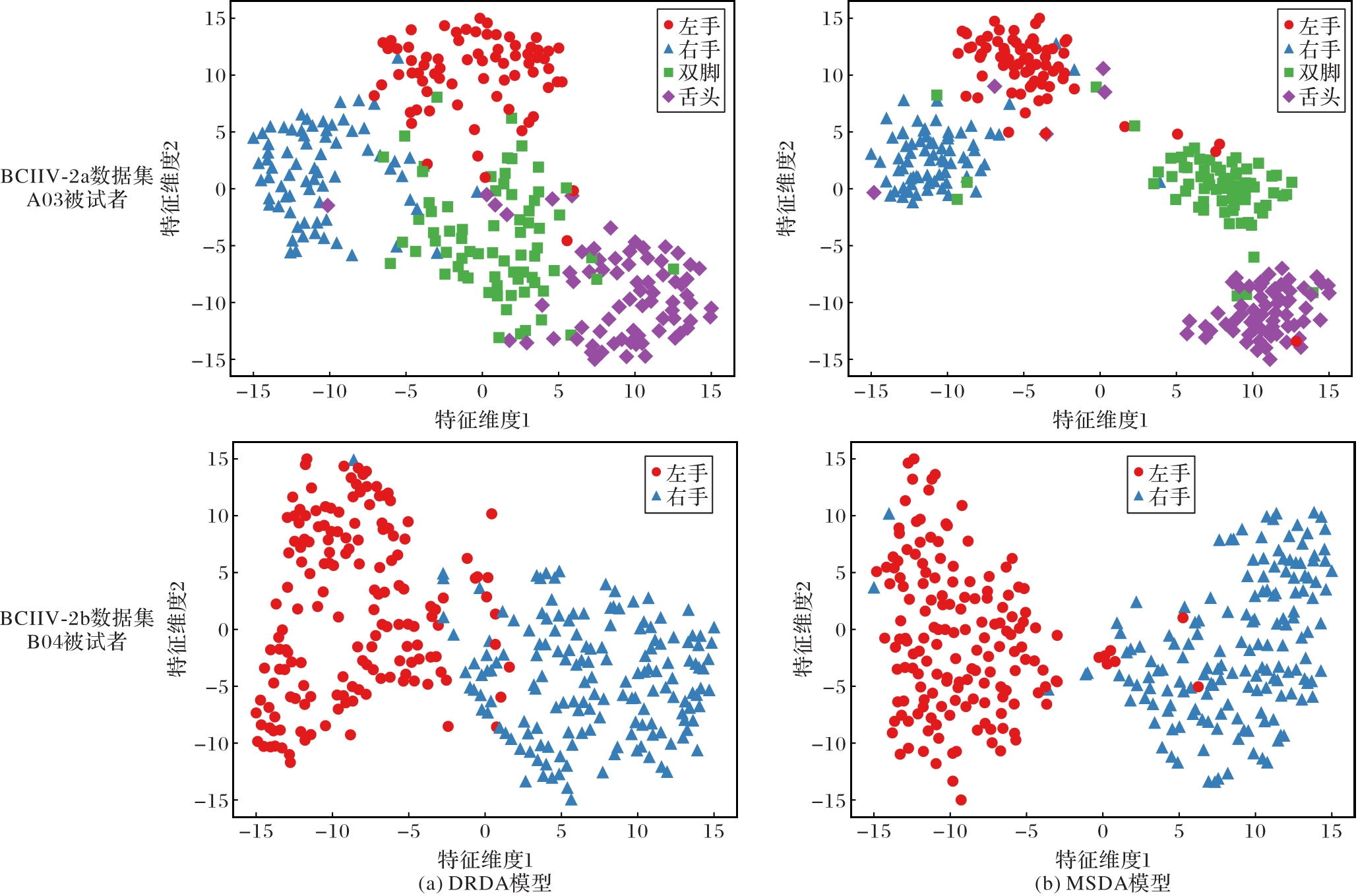
Fig. 6 Each MI category feature visualization of different datasets and subjects
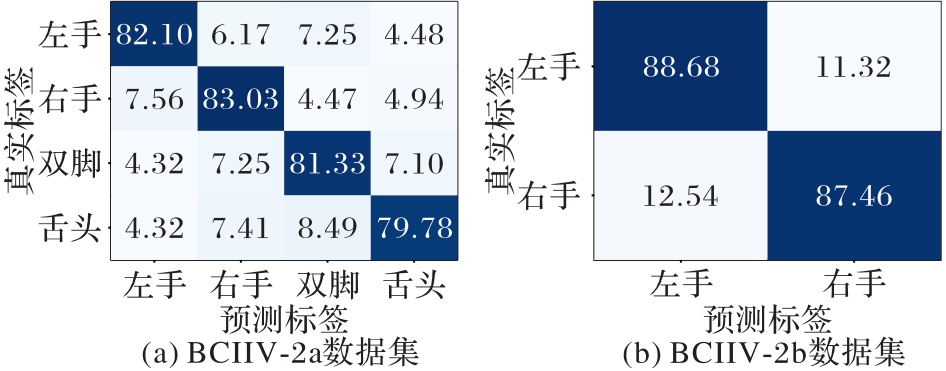
Fig. 7 Average confusion matrix of each MI category classification
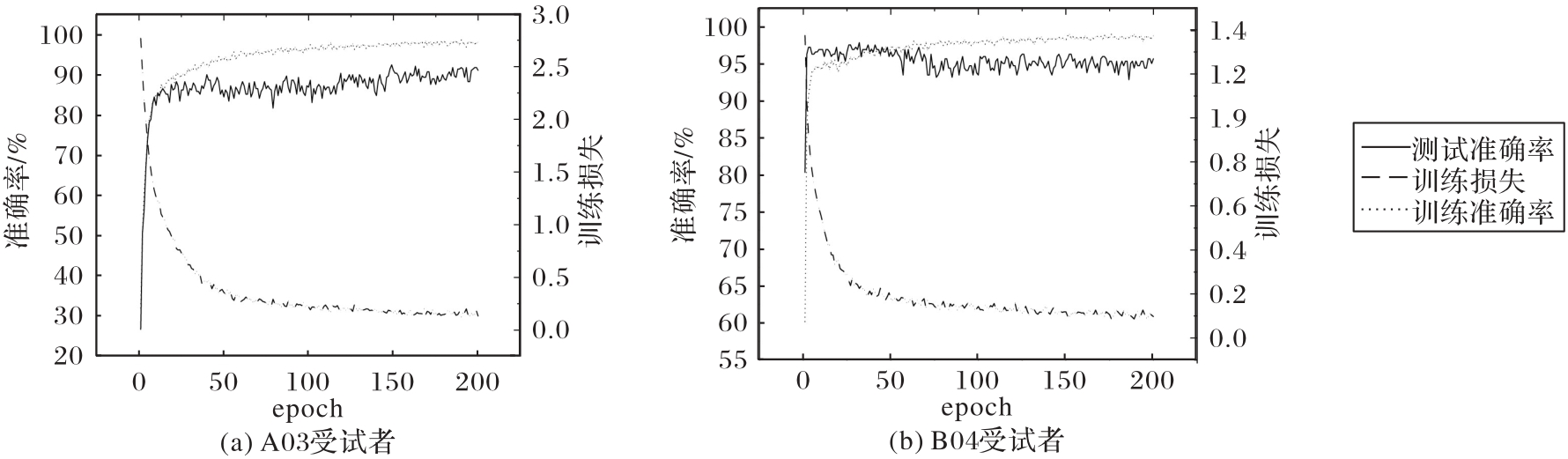
Fig. 8 Convergence process in adversarial training stage of domain discriminator
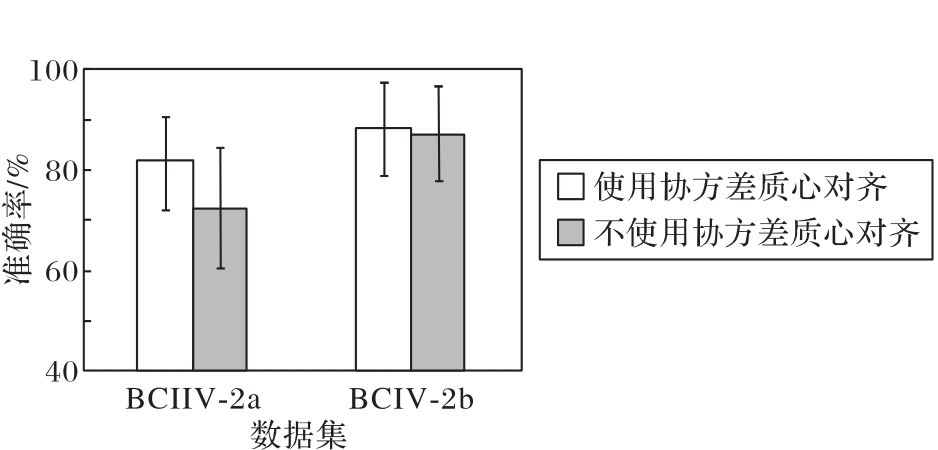
Fig.9 Ablation experimental results of covariance centroid alignment
| 消融条件 | 平均准确率±标准差/% | Kappa | |||
|---|---|---|---|---|---|
TCN 模块 | 对抗 预训练 | BCIIV-2a | BCIIV-2b | BCIIV-2a | BCIIV-2b |
| √ | √ | 81.77±9.69 | 88.09±9.35 | 0.754 | 0.764 |
| × | √ | 77.50±8.29 | 86.76±9.22 | 0.702 | 0.733 |
| √ | × | 78.54±10.03 | 87.43±9.66 | 0.714 | 0.747 |
Tab. 4 Ablation experimental results of deep representation and adversarial pre-training
| 消融条件 | 平均准确率±标准差/% | Kappa | |||
|---|---|---|---|---|---|
TCN 模块 | 对抗 预训练 | BCIIV-2a | BCIIV-2b | BCIIV-2a | BCIIV-2b |
| √ | √ | 81.77±9.69 | 88.09±9.35 | 0.754 | 0.764 |
| × | √ | 77.50±8.29 | 86.76±9.22 | 0.702 | 0.733 |
| √ | × | 78.54±10.03 | 87.43±9.66 | 0.714 | 0.747 |
| 消融情形 | 平均准确率±标准差/% | Kappa | ||
|---|---|---|---|---|
| BCIIV-2a | BCIIV-2b | BCIIV-2a | BCIIV-2b | |
| 情形1) | 79.28±11.24 | 87.78±9.14 | 0.724 | 0.756 |
| 情形2) | 79.93±10.16 | 87.14±9.70 | 0.731 | 0.743 |
| 情形3) | 81.77±9.69 | 88.09±9.35 | 0.754 | 0.764 |
Tab. 5 Ablation results of joint distribution invariant projection
| 消融情形 | 平均准确率±标准差/% | Kappa | ||
|---|---|---|---|---|
| BCIIV-2a | BCIIV-2b | BCIIV-2a | BCIIV-2b | |
| 情形1) | 79.28±11.24 | 87.78±9.14 | 0.724 | 0.756 |
| 情形2) | 79.93±10.16 | 87.14±9.70 | 0.731 | 0.743 |
| 情形3) | 81.77±9.69 | 88.09±9.35 | 0.754 | 0.764 |
| [1] | 肖晓琳,辛风然,梅杰,等. 自适应脑机接口研究综述[J]. 电子与信息学报, 2023, 45(7): 2386-2394. |
| XIAO X L, XIN F R, MEI J, et al. A review of adaptive brain-computer interface research[J]. Journal of Electronics and Information Technology, 2023, 45(7): 2386-2394. | |
| [2] | 陆蓉蓉,高天昊,胡义茜,等. 基于运动想象的脑机接口系统联合不同末端效应器对慢性期脑卒中患者上肢运动功能改善的初步研究[J]. 中国康复医学杂志, 2024, 39(8): 1104-1110. |
| LU R R, GAO T H, HU Y Q, et al. Improving upper limb motor function in chronic stroke patients using a brain-computer interface system based on motor imagery combined with different end effectors: a preliminary study[J]. Chinese Journal of Rehabilitation Medicine, 2024, 39(8): 1104-1110. | |
| [3] | 杨帮华. 运动想象脑机接口在神经系统疾病康复中的应用[J]. 康复学报, 2023, 33(6): 477-485. |
| YANG B H. Application of motor imagination brain-computer interface in rehabilitation of neurological diseases[J]. Rehabilitation Medicine, 2023, 33(6): 477-485. | |
| [4] | 申佳华,代成龙,李光辉. AFBCNet:一种基于自适应滤波器组的运动想象卷积神经网络[J]. 传感技术学报, 2023, 36(11): 1714-1723. |
| SHEN J H, DAI C L, LI G H. AFBCNet: a convolutional neural network for motor imagery EEG based on adaptive filter bank[J]. Chinese Journal of Sensors and Actuators, 2023, 36(11): 1714-1723. | |
| [5] | 胡莹,刘燕,程晨晨,等. 基于自适应时频共空间模式结合卷积神经网络的多任务运动想象脑电分类[J]. 生物医学工程学杂志, 2022, 39(6): 1065-1073, 1081. |
| HU Y, LIU Y, CHENG C C, et al. Multi-task motor imagery electroencephalogram classification based on adaptive time-frequency common spatial pattern combined with convolutional neural network[J]. Journal of Biomedical Engineering, 2022, 39(6): 1065-1073, 1081. | |
| [6] | 徐慧,何宏,张慧敏,等. 黎曼流形切平面空间中运动想象脑电信号的迁移学习[J]. 中国生物医学工程学报, 2023, 42(6): 659-667. |
| XU H, HE H, ZHANG H M, et al. Transfer learning of motor imagery EEG signals in Riemannian manifold tangent space[J]. Chinese Journal of Biomedical Engineering, 2023, 42(6): 659-667. | |
| [7] | 蒋云良,周阳,张雄涛,等. 基于域间Mixup微调策略的跨被试运动想象脑电信号分类算法[J]. 智能系统学报, 2024, 19(4): 909-919. |
| JIANG Y L, ZHOU Y, ZHANG X T, et al. Cross-subject motor imagery EEG classification based on inter-domain Mixup fine-tuning strategy[J]. CAAI Transactions of Intelligent Systems, 2024, 19(4): 909-919. | |
| [8] | 高云园,薛云峰,张聪睿,等. 基于集成式张量域自适应的运动想象脑电分类[J]. 中国生物医学工程学报, 2024, 43(4): 399-407. |
| GAO Y Y, XUE Y F, ZHANG C R, et al. MI-EEG classification based on ensemble tensor domain adaptation[J]. Chinese Journal of Biomedical Engineering, 2024, 43(4): 399-407. | |
| [9] | ZHANG L, GAO X. Transfer adaptation learning: a decade survey[J]. IEEE Transactions on Neural Networks and Learning Systems, 2022, 35(1): 23-44. |
| [10] | ZHAO H, ZHENG Q, MA K, et al. Deep representation-based domain adaptation for nonstationary EEG classification[J]. IEEE Transactions on Neural Networks and Learning Systems, 2020, 32(2): 535-545. |
| [11] | HONG X, ZHENG Q, LIU L, et al. Dynamic joint domain adaptation network for motor imagery classification[J]. IEEE Transactions on Neural Systems and Rehabilitation Engineering, 2021, 29: 556-565. |
| [12] | 曹铉,罗天健. 运动想象脑电信号的跨被试动态多域对抗学习方法[J]. 计算机应用, 2024, 44(2): 645-653. |
| CAO X, LUO T J. Dynamic multi-domain adversarial learning method for cross-subject motor imagery EEG signals[J]. Journal of Computer Applications, 2024, 44(2): 645-653. | |
| [13] | SHE Q, CHEN T, FANG F, et al. Improved domain adaptation network based on Wasserstein distance for motor imagery EEG classification[J]. IEEE Transactions on Neural Systems and Rehabilitation Engineering, 2023, 31: 1137-1148. |
| [14] | PHUNRUANGSAKAO C, ACHANCCARAY D, HAYASHIBE M. Deep adversarial domain adaptation with few-shot learning for motor-imagery brain-computer interface [J]. IEEE Access, 2022, 10: 57255-57265. |
| [15] | LI H, ZHANG D, XIE J. MI-DABAN: a dual-attention-based adversarial network for motor imagery classification[J]. Computers in Biology and Medicine, 2023, 152: No.106420. |
| [16] | ZHANG D, LI H, XIE J. MI-CAT: a Transformer-based domain adaptation network for motor imagery classification[J]. Neural Networks, 2023, 165: 451-462. |
| [17] | ZHANG D, LI H, XIE J, et al. MI-DAGSC: a domain adaptation approach incorporating comprehensive information from MI-EEG signals[J]. Neural Networks, 2023, 167: 183-198. |
| [18] | AL-SAEGH A, DAWWD S A, ABDUL-JABBAR J M. CutCat: an augmentation method for EEG classification[J]. Neural Networks, 2021, 141: 433-443. |
| [19] | ALTAHERI H, MUHAMMAD G, ALSULAIMAN M. Physics-informed attention temporal convolutional network for EEG-based motor imagery classification [J]. IEEE Transactions on Industrial Informatics, 2022, 19(2): 2249-2258. |
| [20] | TANG X, LI X, LI W, et al. Transfer learning: rotation alignment with Riemannian mean for brain-computer interfaces and wheelchair control[J]. IEEE Transactions on Cognitive and Developmental Systems, 2021, 15(2): 487-498. |
| [21] | CHEN S, HARANDI M, JIN X, et al. Domain adaptation by joint distribution invariant projections[J]. IEEE Transactions on Image Processing, 2020, 29: 8264-8277. |
| [22] | QUANZ B, HUAN J, MISHRA M. Knowledge transfer with low-quality data: a feature extraction issue[J]. IEEE Transactions on Knowledge and Data Engineering, 2012, 24(10): 1789-1802. |
| [23] | KANAMORI T, HIDO S, SUGIYAMA M. A least-squares approach to direct importance estimation [J]. Journal of Machine Learning Research, 2009, 10: 1391-1445. |
| [24] | BICKEL S, BOGOJESKA J, LENGUAUER T, et al. Multi-task learning for HIV therapy screening[C]// Proceedings of the 25th International Conference on Machine Learning. New York: ACM, 2008: 56-63. |
| [25] | GONG M, ZHANG K, LIU T, et al. Domain adaptation with conditional transferable components[C]// Proceedings of the 33rd International Conference on Machine Learning. New York: JMLR.org, 2016: 2839-2848. |
| [1] | Yu SANG, Tong GONG, Chen ZHAO, Bowen YU, Siman LI. Domain-adaptive nighttime object detection method with photometric alignment [J]. Journal of Computer Applications, 2026, 46(1): 242-251. |
| [2] | Ning CAO, Xin WEN, Yanrong HAO, Rui CAO. Lightweight motor imagery electroencephalogram decoding neural network with multi-domain feature fusion [J]. Journal of Computer Applications, 2026, 46(1): 289-296. |
| [3] | Chuang WANG, Lu YU, Jianwei CHEN, Cheng PAN, Wenbo DU. Review of open set domain adaptation [J]. Journal of Computer Applications, 2025, 45(9): 2727-2736. |
| [4] | Bo FENG, Haizheng YU, Hong BIAN. Domain adaptive semantic segmentation based on masking enhanced self-training [J]. Journal of Computer Applications, 2025, 45(7): 2132-2137. |
| [5] | Meirong DING, Jinxin ZHUO, Yuwu LU, Qinglong LIU, Jicong LANG. Domain adaptation integrating environment label smoothing and nuclear norm discrepancy [J]. Journal of Computer Applications, 2025, 45(4): 1130-1138. |
| [6] | Xuan CAO, Tianjian LUO. Dynamic multi-domain adversarial learning method for cross-subject motor imagery EEG signals [J]. Journal of Computer Applications, 2024, 44(2): 645-653. |
| [7] | Siqi YANG, Tianjian LUO, Xuanhui YAN, Guangju YANG. Transfer kernel learning method based on spatial features for motor imagery EEG [J]. Journal of Computer Applications, 2024, 44(11): 3354-3363. |
| [8] | Yang WANG, Hongliang FU, Huawei TAO, Jing YANG, Yue XIE, Li ZHAO. Cross-corpus speech emotion recognition based on decision boundary optimized domain adaptation [J]. Journal of Computer Applications, 2023, 43(2): 374-379. |
| [9] | Daili CHEN, Guoliang XU. Cross-domain person re-identification method based on attention mechanism with learning intra-domain variance [J]. Journal of Computer Applications, 2022, 42(5): 1391-1397. |
| [10] | Xiaolong LIU, Shitong WANG. Open set fuzzy domain adaptation algorithm via progressive separation [J]. Journal of Computer Applications, 2021, 41(11): 3127-3131. |
| [11] | YUAN Yuan, WU Wen, WAN Yi. Single image shadow detection method based on entropy driven domain adaptive learning [J]. Journal of Computer Applications, 2020, 40(7): 2131-2136. |
| [12] | XIAO He, LIU Zhiqin, WANG Qingfeng, HUANG Jun, ZHOU Ying, LIU Qiyu, XU Weiyun. Mass and calcification classification method in mammogram based on multi-view transfer learning [J]. Journal of Computer Applications, 2020, 40(5): 1460-1464. |
| [13] | Fei LUO, Pengfei LIU, Yuan LUO, Simeng ZHU. Motor imagery EEG feature extraction method based on multi-feature fusion [J]. Journal of Computer Applications, 2020, 40(2): 616-620. |
| [14] | ZHENG Zongsheng, HU Chenyu, JIANG Xiaoyi. Deep transfer adaptation network based on improved maximum mean discrepancy algorithm [J]. Journal of Computer Applications, 2020, 40(11): 3107-3112. |
| [15] | TAN Yao, RAO Wenbi. Heterogeneous compound transfer learning method for video content annotation [J]. Journal of Computer Applications, 2018, 38(6): 1547-1553. |
| Viewed | ||||||
|
Full text |
|
|||||
|
Abstract |
|
|||||
