


Journal of Computer Applications ›› 2026, Vol. 46 ›› Issue (2): 485-496.DOI: 10.11772/j.issn.1001-9081.2025020215
• Advanced computing • Previous Articles
Chunyu ZHANG1,2, Jianchang LIU1,2( ), Yuanchao LIU1,2, Wei ZHANG1,2
Received:2025-03-07
Revised:2025-03-24
Accepted:2025-04-14
Online:2025-04-24
Published:2026-02-10
Contact:
Jianchang LIU
About author:ZHANG Chunyu, born in 2001, M. S. candidate. His research interests include multi-objective optimization.Supported by:
张春雨1,2, 刘建昌1,2(), 刘圆超1,2, 张伟1,2
通讯作者:
刘建昌
作者简介:张春雨(2001—),男,山西阳泉人,硕士研究生,主要研究方向:多目标优化基金资助:CLC Number:
Chunyu ZHANG, Jianchang LIU, Yuanchao LIU, Wei ZHANG. Two-stage infill sampling-based expensive multi-objective evolutionary algorithm[J]. Journal of Computer Applications, 2026, 46(2): 485-496.
张春雨, 刘建昌, 刘圆超, 张伟. 基于两阶段填充采样的昂贵多目标进化算法[J]. 《计算机应用》唯一官方网站, 2026, 46(2): 485-496.
Add to citation manager EndNote|Ris|BibTeX
URL: https://www.joca.cn/EN/10.11772/j.issn.1001-9081.2025020215
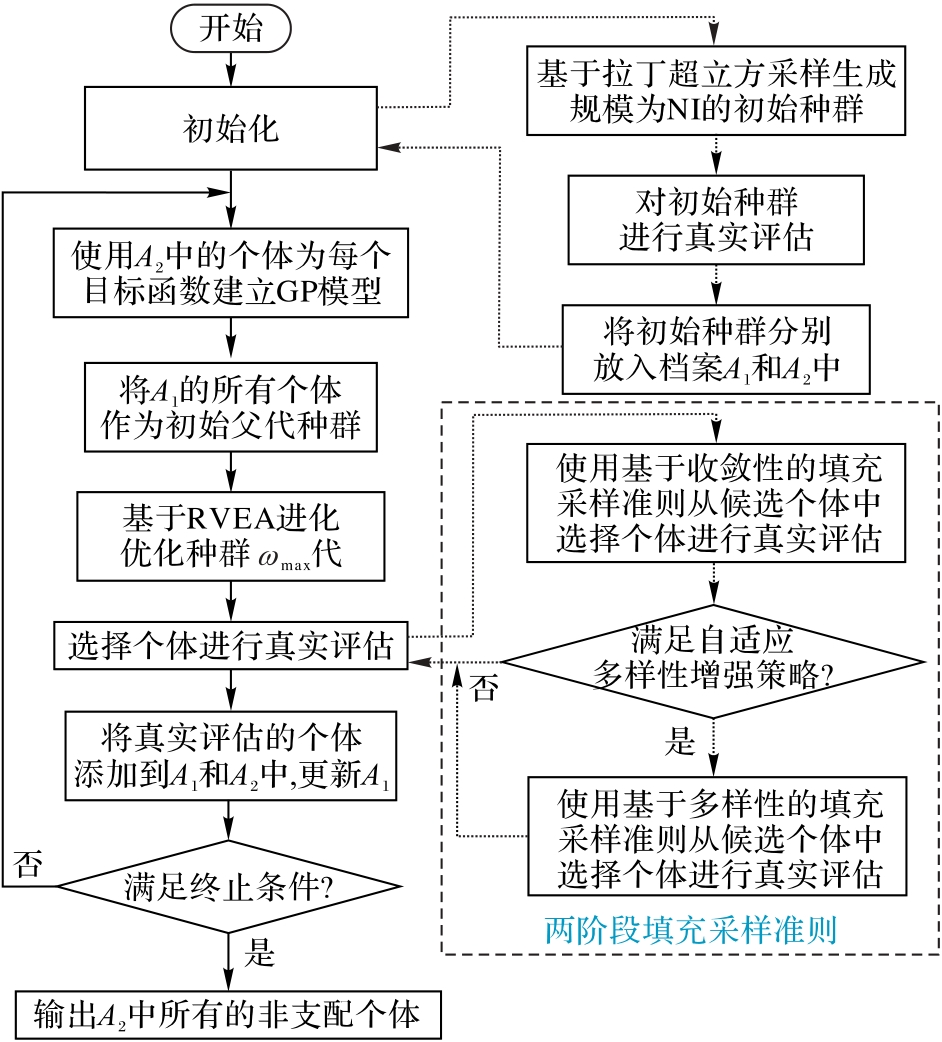
Fig. 1 Overall framework of TISEMOEA
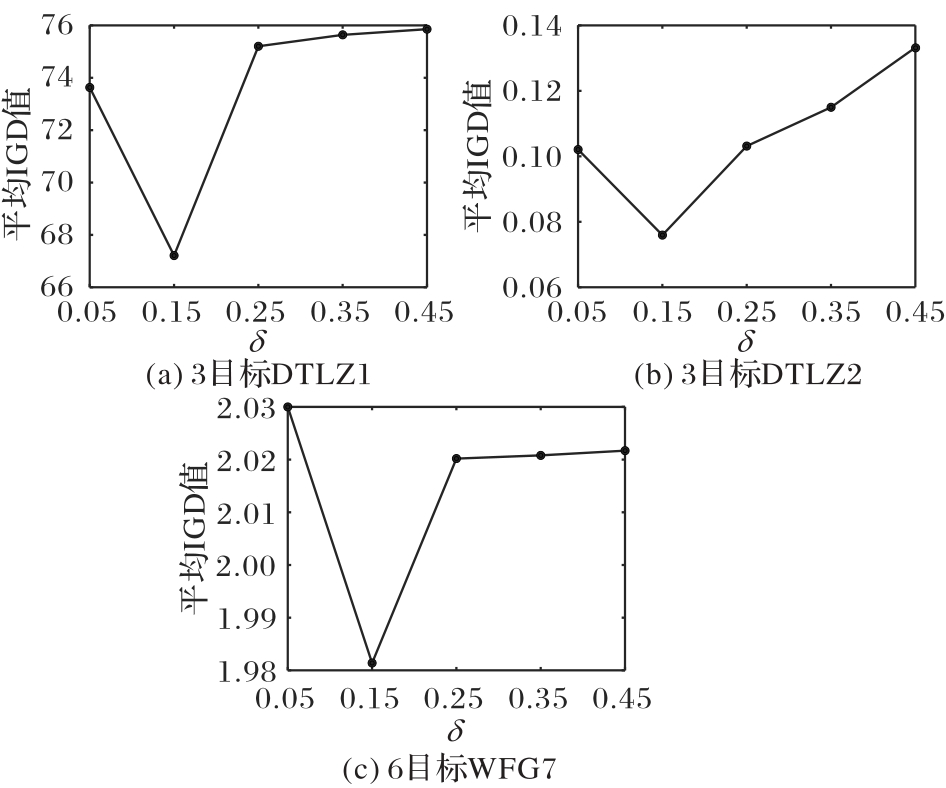
Fig. 2 Average IGD values obtained under different δ on various test problems
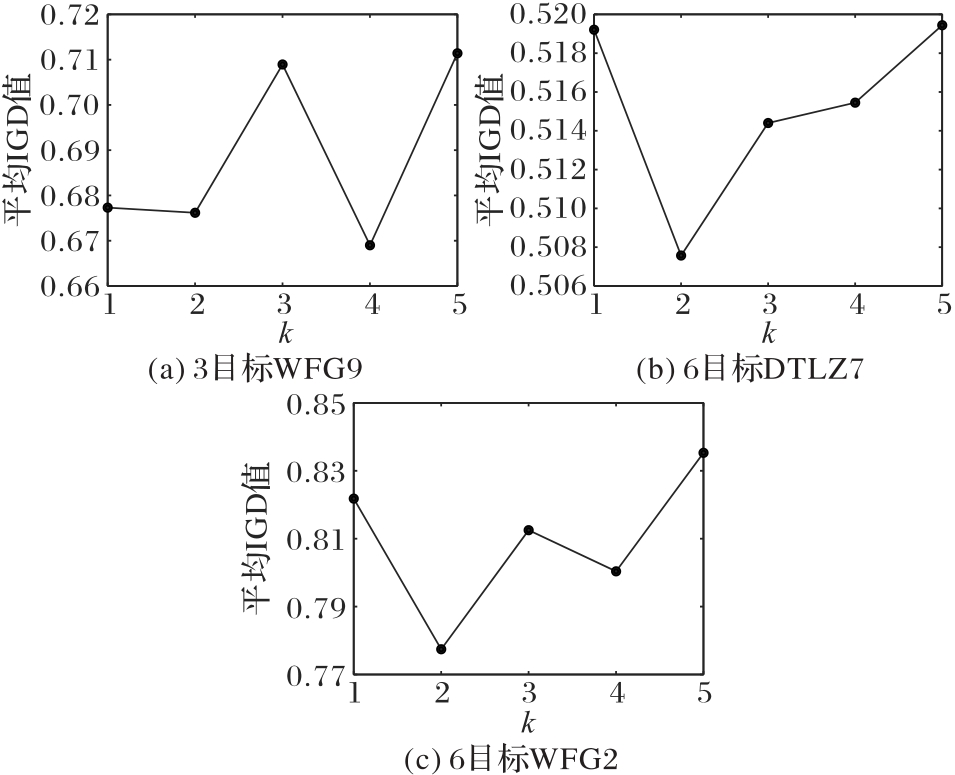
Fig. 3 Average IGD values obtained under different k on various test problems
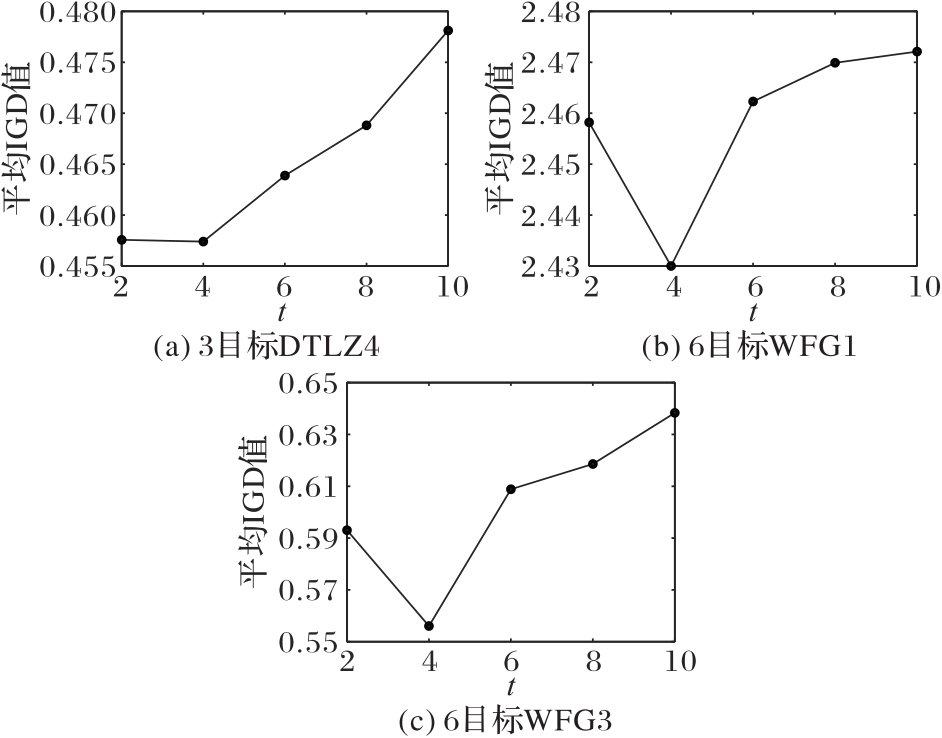
Fig. 4 Average IGD values obtained under different t on various test problems
| Problem | M | MOEA/D-EGO | HeE-MOEA | TISS-EMOA | PCSAEA | SFA/DE | TISEMOEA |
|---|---|---|---|---|---|---|---|
| DTLZ1 | 3 | 8.073 9E+1(1.29E+1) - | 9.808 4E+1 (1.65E+1) - | 6.429 5E+1(1.52E+1) = | 8.136 8E+1(2.44E+1) = | 6.971 6E+1(8.20E+0) = | 6.434 7E+1 (1.41E+1) |
| 4 | 6.270 1E+1(8.01E+0) = | 7.517 8E+1 (1.21E+1) - | 5.861 4E+1(1.50E+1) = | 7.797 4E+1 (1.23E+1) - | 6.534 0E+1(8.14E+0) = | 5.866 6E+1 (1.87E+1) | |
| 6 | 3.508 9E+1(7.10E+0) - | 2.981 9E+1 (7.85E+0)- | 3.093 5E+1(6.70E+0) - | 2.990 3E+1 (9.56E+0) - | 3.517 0E+1 (7.28E+0) - | 2.036 0E+1(8.09E+0) | |
| 10 | 4.466 6E-1 (1.48E-1) = | 3.985 2E-1 (1.06E-1) = | 5.094 5E-1(1.56E-1) - | 3.496 6E-1(7.32E-2) = | 4.096 5E-1 (1.04E-1) = | 3.500 2E-1 (1.08E-1) | |
| DTLZ2 | 3 | 3.495 3E-1 (1.76E-2) - | 1.784 7E-1 (1.57E-2) - | 7.783 8E-2(1.26E-2) = | 2.889 7E-1 (2.10E-2) - | 1.495 1E-1 (1.22E-2) - | 7.449 9E-2(2.67E-3) |
| 4 | 3.858 5E-1 (1.45E-2) - | 2.491 9E-1 (1.55E-2) - | 1.821 2E-1(1.69E-2) - | 3.293 6E-1 (2.12E-2) - | 2.699 3E-1 (1.92E-2) - | 1.404 0E-1(1.06E-2) | |
| 6 | 4.707 9E-1 (1.24E-2) - | 4.236 9E-1 (2.00E-2) - | 3.571 5E-1(2.25E-2) - | 4.361 3E-1 (1.46E-2) - | 4.264 9E-1 (3.08E-2) - | 2.919 4E-1(1.25E-2) | |
| 10 | 5.442 5E-1 (2.89E-2) - | 6.443 3E-1 (2.19E-2) - | 4.917 1E-1(3.00E-2) - | 6.097 9E-1 (2.27E-2) - | 6.406 1E-1 (4.68E-2) - | 4.382 7E-1(1.32E-2) | |
| DTLZ3 | 3 | 1.949 7E+2(2.04E+1) = | 2.811 8E+2 (7.75E+1)- | 2.269 9E+2(5.04E+1) - | 2.325 8E+2 (5.91E+1) - | 1.772 8E+2(1.09E+1) = | 1.776 9E+2 (5.40E+1) |
| 4 | 1.587 6E+2(1.54E+1) - | 2.142 6E+2 (4.38E+1) - | 1.499 1E+2(3.93E+1) = | 2.115 0E+2 (3.61E+1) - | 1.494 9E+2(1.81E+1) = | 1.390 4E+2(2.92E+1) | |
| 6 | 9.211 6E+1(1.83E+1) - | 1.061 3E+2 (3.95E+1) - | 1.009 1E+2(2.36E+1) - | 1.053 7E+2 (3.38E+1) - | 9.425 3E+1 (2.25E+1) - | 6.601 6E+1(2.29E+1) | |
| 10 | 1.252 1E+0(2.65E-1)= | 1.269 9E+0 (3.17E-1) - | 1.427 3E+0(3.39E-1) - | 1.139 5E+0 (2.22E-1) = | 1.591 6E+0 (4.56E-1) - | 1.100 5E+0(2.60E-1) | |
| DTLZ4 | 3 | 6.092 6E-1 (6.50E-2) - | 7.364 1E-1 (1.12E-1) - | 3.748 9E-1(1.21E-1) + | 5.129 3E-1 (7.22E-2) = | 6.465 8E-1 (1.53E-1) - | 4.574 0E-1 (9.99E-2) |
| 4 | 6.839 5E-1 (6.86E-2) - | 7.915 7E-1 (1.07E-1) - | 4.505 8E-1(9.98E-2) = | 5.787 0E-1 (4.34E-2) - | 6.924 5E-1 (1.44E-1) - | 4.782 5E-1 (9.15E-2) | |
| 6 | 6.754 3E-1 (1.96E-2) - | 8.771 9E-1 (4.56E-2) - | 5.463 8E-1(8.40E-2) = | 6.741 0E-1 (3.55E-2) - | 5.784 3E-1 (4.59E-2) - | 5.174 0E-1(6.63E-2) | |
| 10 | 6.477 6E-1 (9.91E-3) - | 7.864 0E-1 (3.13E-2) - | 5.992 4E-1(2.71E-2) = | 6.507 9E-1 (2.11E-2) - | 6.005 1E-1 (2.13E-2) = | 5.985 2E-1(3.28E-2) | |
| DTLZ5 | 3 | 2.659 6E-1 (2.24E-2) - | 1.247 9E-1 (1.15E-2) - | 4.764 9E-2(5.43E-2) - | 2.079 0E-1 (3.22E-2) - | 4.144 9E-2 (7.47E-3) = | 4.127 5E-2(1.05E-2) |
| 4 | 2.271 2E-1 (3.19E-2) - | 1.089 1E-1 (1.37E-2) - | 7.023 2E-2(1.09E-2) - | 1.781 3E-1 (3.07E-2) - | 4.780 1E-2 (5.29E-3) - | 3.346 9E-2(5.42E-3) | |
| 6 | 1.454 9E-1 (1.93E-2) - | 8.098 2E-2 (9.58E-3) - | 6.270 8E-2(8.72E-3) - | 1.131 3E-1 (1.37E-2) - | 3.624 8E-2 (8.06E-3) - | 2.759 8E-2(7.88E-3) | |
| 10 | 1.862 4E-2 (2.37E-3) - | 1.292 2E-2 (1.78E-3) = | 1.455 2E-2(1.60E-3) - | 1.432 2E-2 (1.94E-3) = | 1.771 2E-2 (3.18E-3) - | 1.273 7E-2(2.46E-3) | |
| DTLZ6 | 3 | 2.272 8E+0(5.04E-1) + | 6.626 4E+0 (1.54E-1) - | 2.238 1E+0(4.34E-1) + | 5.951 5E+0 (2.87E-1) - | 1.728 1E+0(7.05E-1) + | 3.082 1E+0 (6.53E-1) |
| 4 | 1.741 7E+0(6.00E-1) + | 5.799 0E+0 (1.46E-1) - | 1.867 3E+0(2.72E-1) + | 5.248 2E+0 (1.71E-1) - | 1.492 7E+0(6.36E-1) + | 2.416 2E+0 (4.46E-1) | |
| 6 | 1.155 7E+0(4.48E-1) = | 4.048 4E+0 (1.45E-1) - | 1.350 3E+0(3.13E-1) = | 3.643 0E+0 (2.24E-1) - | 6.978 4E-1(4.00E-1) + | 1.427 0E+0 (4.64E-1) | |
| 10 | 1.771 5E-1(7.13E-2) - | 7.082 8E-1 (2.99E-2) - | 6.158 4E-2(2.63E-2) - | 3.868 8E-1 (1.60E-1) - | 2.013 2E-1 (9.65E-2) - | 4.352 6E-2(1.65E-2) | |
| DTLZ7 | 3 | 2.783 2E-1 (7.49E-2) - | 5.255 8E+0 (4.39E-1) - | 2.226 1E-1(4.77E-2) - | 5.130 1E+0 (1.03E+0)- | 2.428 3E-1 (7.33E-2) - | 7.787 3E-2(3.54E-3) |
| 4 | 4.942 1E-1 (6.14E-2) - | 7.400 6E+0 (8.59e-1) - | 3.842 2E-1(5.89E-2) - | 6.202 2E+0 (9.50E-1) - | 5.537 6E-1 (1.22E-1) - | 1.924 8E-1(1.49E-2) | |
| 6 | 9.081 5E-1 (7.14E-2) - | 9.452 1E+0 (1.86E+0)- | 6.617 4E-1(6.19E-2) - | 7.460 6E+0 (2.04E+0) - | 8.593 1E-1 (8.81E-2) - | 5.540 6E-1(5.48E-2) | |
| 10 | 1.253 3E+0 (4.70E-2) - | 2.180 9E+0 (3.50E-1) - | 1.098 6E+0(4.71E-2) = | 1.751 7E+0 (2.31E-1) - | 1.313 5E+0 (5.62E-2) - | 1.095 9E+0(3.68E-2) | |
| +/-/= | 2/21/5 | 0/26/2 | 3/16/9 | 0/23/5 | 3/18/7 | ||
Tab. 1 Statistical results of IGD values obtained by various algorithms on DTLZ test problems
| Problem | M | MOEA/D-EGO | HeE-MOEA | TISS-EMOA | PCSAEA | SFA/DE | TISEMOEA |
|---|---|---|---|---|---|---|---|
| DTLZ1 | 3 | 8.073 9E+1(1.29E+1) - | 9.808 4E+1 (1.65E+1) - | 6.429 5E+1(1.52E+1) = | 8.136 8E+1(2.44E+1) = | 6.971 6E+1(8.20E+0) = | 6.434 7E+1 (1.41E+1) |
| 4 | 6.270 1E+1(8.01E+0) = | 7.517 8E+1 (1.21E+1) - | 5.861 4E+1(1.50E+1) = | 7.797 4E+1 (1.23E+1) - | 6.534 0E+1(8.14E+0) = | 5.866 6E+1 (1.87E+1) | |
| 6 | 3.508 9E+1(7.10E+0) - | 2.981 9E+1 (7.85E+0)- | 3.093 5E+1(6.70E+0) - | 2.990 3E+1 (9.56E+0) - | 3.517 0E+1 (7.28E+0) - | 2.036 0E+1(8.09E+0) | |
| 10 | 4.466 6E-1 (1.48E-1) = | 3.985 2E-1 (1.06E-1) = | 5.094 5E-1(1.56E-1) - | 3.496 6E-1(7.32E-2) = | 4.096 5E-1 (1.04E-1) = | 3.500 2E-1 (1.08E-1) | |
| DTLZ2 | 3 | 3.495 3E-1 (1.76E-2) - | 1.784 7E-1 (1.57E-2) - | 7.783 8E-2(1.26E-2) = | 2.889 7E-1 (2.10E-2) - | 1.495 1E-1 (1.22E-2) - | 7.449 9E-2(2.67E-3) |
| 4 | 3.858 5E-1 (1.45E-2) - | 2.491 9E-1 (1.55E-2) - | 1.821 2E-1(1.69E-2) - | 3.293 6E-1 (2.12E-2) - | 2.699 3E-1 (1.92E-2) - | 1.404 0E-1(1.06E-2) | |
| 6 | 4.707 9E-1 (1.24E-2) - | 4.236 9E-1 (2.00E-2) - | 3.571 5E-1(2.25E-2) - | 4.361 3E-1 (1.46E-2) - | 4.264 9E-1 (3.08E-2) - | 2.919 4E-1(1.25E-2) | |
| 10 | 5.442 5E-1 (2.89E-2) - | 6.443 3E-1 (2.19E-2) - | 4.917 1E-1(3.00E-2) - | 6.097 9E-1 (2.27E-2) - | 6.406 1E-1 (4.68E-2) - | 4.382 7E-1(1.32E-2) | |
| DTLZ3 | 3 | 1.949 7E+2(2.04E+1) = | 2.811 8E+2 (7.75E+1)- | 2.269 9E+2(5.04E+1) - | 2.325 8E+2 (5.91E+1) - | 1.772 8E+2(1.09E+1) = | 1.776 9E+2 (5.40E+1) |
| 4 | 1.587 6E+2(1.54E+1) - | 2.142 6E+2 (4.38E+1) - | 1.499 1E+2(3.93E+1) = | 2.115 0E+2 (3.61E+1) - | 1.494 9E+2(1.81E+1) = | 1.390 4E+2(2.92E+1) | |
| 6 | 9.211 6E+1(1.83E+1) - | 1.061 3E+2 (3.95E+1) - | 1.009 1E+2(2.36E+1) - | 1.053 7E+2 (3.38E+1) - | 9.425 3E+1 (2.25E+1) - | 6.601 6E+1(2.29E+1) | |
| 10 | 1.252 1E+0(2.65E-1)= | 1.269 9E+0 (3.17E-1) - | 1.427 3E+0(3.39E-1) - | 1.139 5E+0 (2.22E-1) = | 1.591 6E+0 (4.56E-1) - | 1.100 5E+0(2.60E-1) | |
| DTLZ4 | 3 | 6.092 6E-1 (6.50E-2) - | 7.364 1E-1 (1.12E-1) - | 3.748 9E-1(1.21E-1) + | 5.129 3E-1 (7.22E-2) = | 6.465 8E-1 (1.53E-1) - | 4.574 0E-1 (9.99E-2) |
| 4 | 6.839 5E-1 (6.86E-2) - | 7.915 7E-1 (1.07E-1) - | 4.505 8E-1(9.98E-2) = | 5.787 0E-1 (4.34E-2) - | 6.924 5E-1 (1.44E-1) - | 4.782 5E-1 (9.15E-2) | |
| 6 | 6.754 3E-1 (1.96E-2) - | 8.771 9E-1 (4.56E-2) - | 5.463 8E-1(8.40E-2) = | 6.741 0E-1 (3.55E-2) - | 5.784 3E-1 (4.59E-2) - | 5.174 0E-1(6.63E-2) | |
| 10 | 6.477 6E-1 (9.91E-3) - | 7.864 0E-1 (3.13E-2) - | 5.992 4E-1(2.71E-2) = | 6.507 9E-1 (2.11E-2) - | 6.005 1E-1 (2.13E-2) = | 5.985 2E-1(3.28E-2) | |
| DTLZ5 | 3 | 2.659 6E-1 (2.24E-2) - | 1.247 9E-1 (1.15E-2) - | 4.764 9E-2(5.43E-2) - | 2.079 0E-1 (3.22E-2) - | 4.144 9E-2 (7.47E-3) = | 4.127 5E-2(1.05E-2) |
| 4 | 2.271 2E-1 (3.19E-2) - | 1.089 1E-1 (1.37E-2) - | 7.023 2E-2(1.09E-2) - | 1.781 3E-1 (3.07E-2) - | 4.780 1E-2 (5.29E-3) - | 3.346 9E-2(5.42E-3) | |
| 6 | 1.454 9E-1 (1.93E-2) - | 8.098 2E-2 (9.58E-3) - | 6.270 8E-2(8.72E-3) - | 1.131 3E-1 (1.37E-2) - | 3.624 8E-2 (8.06E-3) - | 2.759 8E-2(7.88E-3) | |
| 10 | 1.862 4E-2 (2.37E-3) - | 1.292 2E-2 (1.78E-3) = | 1.455 2E-2(1.60E-3) - | 1.432 2E-2 (1.94E-3) = | 1.771 2E-2 (3.18E-3) - | 1.273 7E-2(2.46E-3) | |
| DTLZ6 | 3 | 2.272 8E+0(5.04E-1) + | 6.626 4E+0 (1.54E-1) - | 2.238 1E+0(4.34E-1) + | 5.951 5E+0 (2.87E-1) - | 1.728 1E+0(7.05E-1) + | 3.082 1E+0 (6.53E-1) |
| 4 | 1.741 7E+0(6.00E-1) + | 5.799 0E+0 (1.46E-1) - | 1.867 3E+0(2.72E-1) + | 5.248 2E+0 (1.71E-1) - | 1.492 7E+0(6.36E-1) + | 2.416 2E+0 (4.46E-1) | |
| 6 | 1.155 7E+0(4.48E-1) = | 4.048 4E+0 (1.45E-1) - | 1.350 3E+0(3.13E-1) = | 3.643 0E+0 (2.24E-1) - | 6.978 4E-1(4.00E-1) + | 1.427 0E+0 (4.64E-1) | |
| 10 | 1.771 5E-1(7.13E-2) - | 7.082 8E-1 (2.99E-2) - | 6.158 4E-2(2.63E-2) - | 3.868 8E-1 (1.60E-1) - | 2.013 2E-1 (9.65E-2) - | 4.352 6E-2(1.65E-2) | |
| DTLZ7 | 3 | 2.783 2E-1 (7.49E-2) - | 5.255 8E+0 (4.39E-1) - | 2.226 1E-1(4.77E-2) - | 5.130 1E+0 (1.03E+0)- | 2.428 3E-1 (7.33E-2) - | 7.787 3E-2(3.54E-3) |
| 4 | 4.942 1E-1 (6.14E-2) - | 7.400 6E+0 (8.59e-1) - | 3.842 2E-1(5.89E-2) - | 6.202 2E+0 (9.50E-1) - | 5.537 6E-1 (1.22E-1) - | 1.924 8E-1(1.49E-2) | |
| 6 | 9.081 5E-1 (7.14E-2) - | 9.452 1E+0 (1.86E+0)- | 6.617 4E-1(6.19E-2) - | 7.460 6E+0 (2.04E+0) - | 8.593 1E-1 (8.81E-2) - | 5.540 6E-1(5.48E-2) | |
| 10 | 1.253 3E+0 (4.70E-2) - | 2.180 9E+0 (3.50E-1) - | 1.098 6E+0(4.71E-2) = | 1.751 7E+0 (2.31E-1) - | 1.313 5E+0 (5.62E-2) - | 1.095 9E+0(3.68E-2) | |
| +/-/= | 2/21/5 | 0/26/2 | 3/16/9 | 0/23/5 | 3/18/7 | ||
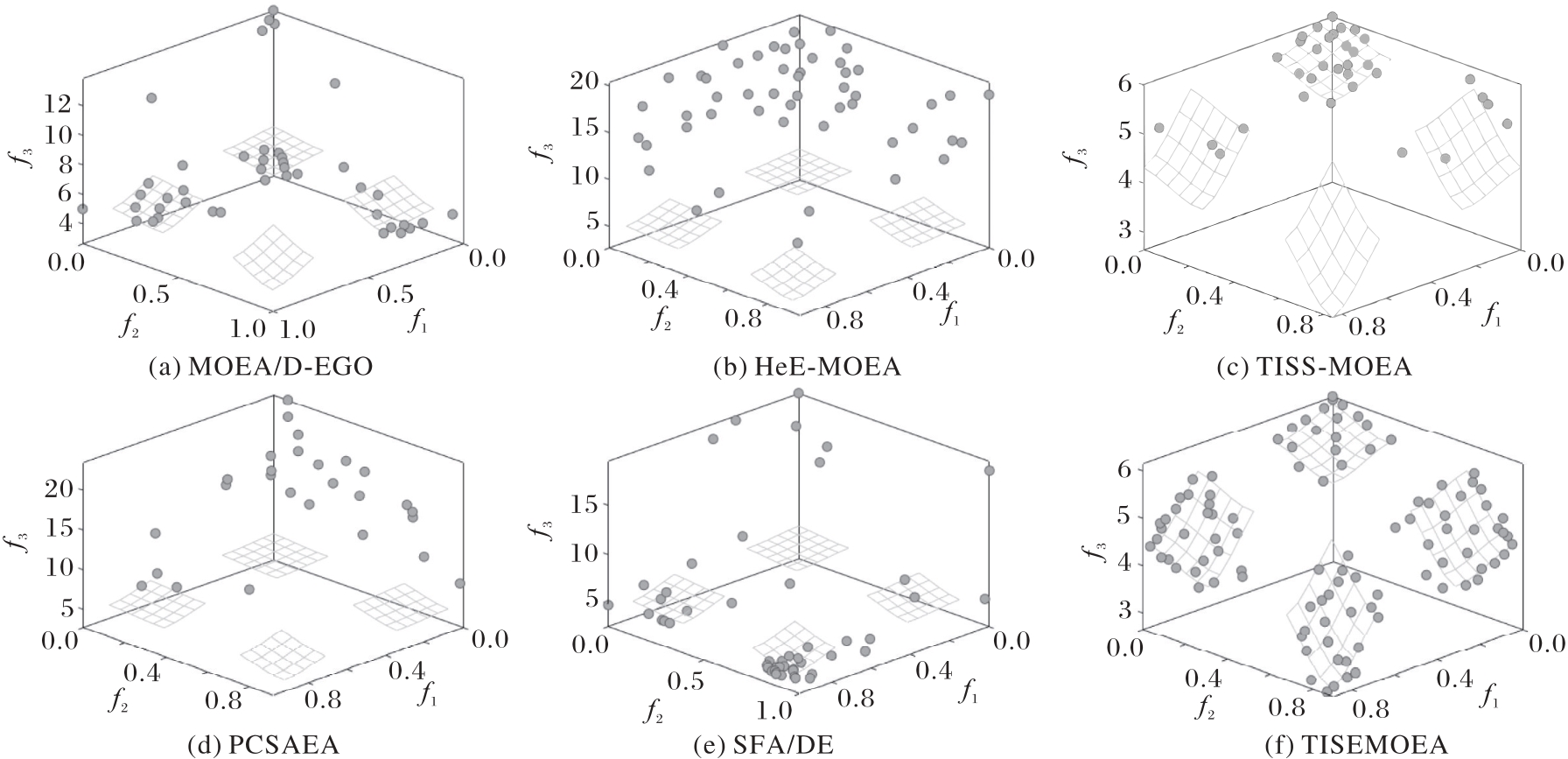
Fig. 5 Non-dominant frontiers obtained by various algorithms on 3-objective DTLZ7 problem
| Problem | M | MOEA/D-EGO | HeE-MOEA | TISS-EMOA | PCSAEA | SFA/DE | TISEMOEA |
|---|---|---|---|---|---|---|---|
| WFG1 | 3 | 2.1160E+0 (8.32E-2) - | 2.3497E+0 (5.81E-2) - | 1.9006E+0(8.96E-2)- | 2.1063E+0 (8.45E-2) - | 1.8147E+0 (8.46E-2)= | 1.7996E+0(7.67E-2) |
| 6 | 2.7449E+0 (6.44E-2) - | 2.8572E+0 (5.04E-2) - | 2.6565E+0(4.25E-2)- | 2.7137E+0 (4.88E-2) - | 2.4903E+0 (8.80E-2)= | 2.4300E+0(6.67E-2) | |
| 10 | 3.4344E+0 (4.31E-2) - | 3.4193E+0 (1.28E-1) - | 3.3104E+0(5.05E-2) - | 3.3214E+0 (1.38E-1) - | 3.1046E+0 (2.33E-1)= | 3.0764E+0(2.28E-1) | |
| WFG2 | 3 | 6.6446E-1 (3.90E-2) - | 8.5195E-1 (1.01E-1) - | 3.5589E-1(3.65E-2) = | 6.3939E-1 (5.25E-2) - | 7.5646E-1 (8.36E-2) - | 3.4742E-1(7.08E-2) |
| 6 | 1.4404E+0 (1.86E-1) - | 2.1940E+0 (3.10E-1) - | 7.2033E-1(9.86E-2) + | 1.6118E+0 (1.71E-1) - | 1.6119E+0 (2.90E-1) - | 8.5178E-1 (1.10E-1) | |
| 10 | 2.4801E+0 (4.14E-1) - | 4.1487E+0 (7.25E-1) - | 1.5349E+0(1.66E-1) - | 3.0304E+0 (4.11E-1) - | 3.5114E+0 (6.83E-1) - | 1.2865E+0 (1.31E-1) | |
| WFG3 | 3 | 6.4869E-1 (2.57E-2) - | 4.3951E-1 (3.24E-2) - | 4.2232E-1(2.79E-2) - | 5.7104eE1 (4.39E-2) - | 6.2551E-1 (2.73E-2) - | 2.0847E-1 (2.44E-2) |
| 6 | 9.9590E-1 (4.63E-2) - | 6.8147E-1 (3.45E-2) - | 6.3934E-1(6.42E-2) - | 9.1548E-1 (6.37E-2) - | 9.0002E-1 (6.87E-2) - | 5.5606E-1 (1.06E-1) | |
| 10 | 9.1831E-1 (1.02E-1) - | 7.2191E-1 (1.01E-1) = | 7.5627E-1(9.67E-2) - | 8.1595E-1 (5.89E-2) - | 6.8723E-1 (1.30E-1) = | 6.9298E-1 (1.52E-1) | |
| WFG4 | 3 | 5.6595E-1 (4.01E-2) - | 7.4607E-1 (5.80E-2) - | 5.1771E-1(2.61E-2) - | 5.2022E-1 (4.20E-2) - | 5.8126E-1 (2.36E-2) - | 4.6740E-1 (2.28E-2) |
| 6 | 2.1731E+0 (1.29E-1) - | 3.9468E+0 (2.88E-1) - | 1.7791E+0(6.15E-2) + | 3.0473E+0 (2.66E-1) - | 2.2190E+0 (4.85E-2) - | 1.9288E+0 (8.23E-2) | |
| 10 | 5.5540E+0 (5.23E-1)= | 1.0247E+1 (5.92E-1) - | 5.2580E+0(5.30E-1) = | 9.0753E+0 (4.38E-1) - | 5.2776E+0 (1.87E-1) = | 5.6805E+0 (6.28E-1) | |
| WFG5 | 3 | 5.9467E-1 (3.63E-2) - | 7.5246E-1 (1.40E-2) - | 4.6999E-1(4.80E-2) = | 6.5404E-1 (2.68E-2) - | 4.5886E-1 (2.44E-2) = | 4.8116E-1 (6.78E-2) |
| 6 | 2.2977E+0 (1.64E-1) - | 2.2809E+0 (3.91E-2) - | 1.8518E+0(6.77E-2) = | 2.4628E+0 (1.33E-1) - | 2.3393E+0 (1.69E-1) - | 1.9152E+0 (6.14E-2) | |
| 10 | 7.0750E+0 (3.69E-1) - | 5.6557E+0 (2.74E-1) - | 5.2592E+0(4.65E-1) - | 6.8376E+0 (3.07E-1) - | 6.9880E+0 (4.34E-1) - | 4.9052E+0 (3.78E-1) | |
| WFG6 | 3 | 8.0786E-1 (4.59E-2) - | 8.0264E-1 (3.82E-2) - | 5.6320E-1(9.50E-2) + | 7.7146E-1 (3.11E-2) - | 7.5612E-1 (7.13E-2) - | 6.2532E-1 (6.13E-2) |
| 6 | 2.2756E+0 (6.83E-2) - | 3.1154E+0 (1.31E-1) - | 2.1811E+0(9.14E-2) - | 2.6360E+0 (9.84E-2) - | 2.1908E+0 (8.09E-2) - | 2.1507E+0 (4.63E-2) | |
| 10 | 5.9259E+0 (5.78E-1) - | 8.1081E+0 (3.45E-1) - | 4.5309E+0(8.23E-2) + | 7.2440E+0 (3.71E-1) - | 6.5392E+0 (6.24E-1) - | 5.1309E+0 (1.69E-1) | |
| WFG7 | 3 | 6.6194E-1 (2.92E-2) - | 6.1873E-1 (2.35E-2) = | 5.9182E-1(2.91E-2) = | 5.9423E-1 (3.70E-2) = | 6.9085E-1 (3.58E-2) - | 6.0329E-1 (3.83E-2) |
| 6 | 2.7352E+0 (3.22E-1) - | 3.1360E+0 (1.45E-1) - | 1.8612E+0(5.48E-2) + | 2.6828E+0 (1.81E-1) - | 2.3128E+0 (1.26E-1) - | 2.0134E+0 (7.98E-2) | |
| 10 | 8.0734E+0 (8.16E-1) - | 8.8432E+0 (3.30E-1) - | 5.8561E+0(3.40E-1) = | 7.4808E+0 (2.90E-1) - | 7.4287E+0 (8.23E-1) - | 5.8487E+0 (5.28E-1) | |
| WFG8 | 3 | 8.4030E-1 (2.68E-2) - | 8.7729E-1 (3.38E-2) - | 6.4901E-1(8.23E-2) - | 8.1062E-1 (3.92E-2) - | 8.4916E-1 (5.20E-2) - | 6.2737E-1 (2.33E-2) |
| 6 | 2.6321E+0 (1.26E-1) - | 3.3276E+0 (1.52E-1) - | 2.4466E-1(1.40E-1) - | 2.8597E+0 (1.73E-1) - | 2.4963E+0 (1.38E-1) - | 2.3649E+0 (9.59E-2) | |
| 10 | 6.6036E+0 (4.86E-1) - | 8.5413E+0 (3.60E-1) - | 6.3620E+0(2.93E-1) - | 7.4797E+0 (2.99E-1) - | 7.2390E+0 (5.63E-1) - | 5.7510E+0 (2.53E-1) | |
| WFG9 | 3 | 8.0287E-1 (6.50E-2) - | 6.9721E-1 (4.77E-2) = | 6.5615E-1(7.45E-2) = | 6.6366E-1 (5.76E-2) = | 7.4226E-1 (5.01E-2) = | 6.9265E-1 (8.55E-2) |
| 6 | 2.8751E+0 (2.00E-1) - | 2.6678E+0 (1.26E-1) - | 2.4569E+0(4.33E-1) = | 2.7695E+0 (1.63E-1) - | 2.9123E+0 (1.59E-1) - | 2.4513E+0 (2.73E-1) | |
| 10 | 7.4068E+0 (6.65E-1) - | 6.9338E+0 (3.59E-1) = | 7.4962E+0(6.09E-1) - | 7.4547E+0 (4.99E-1) - | 7.5610E+0 (6.20E-1) - | 6.7589E+0 (6.26E-1) | |
| +/-/= | 0/26/1 | 0/23/4 | 5/14/8 | 0/25/2 | 0/20/7 | ||
Tab. 2 Statistical results of IGD values obtained by various algorithms on WFG test problems
| Problem | M | MOEA/D-EGO | HeE-MOEA | TISS-EMOA | PCSAEA | SFA/DE | TISEMOEA |
|---|---|---|---|---|---|---|---|
| WFG1 | 3 | 2.1160E+0 (8.32E-2) - | 2.3497E+0 (5.81E-2) - | 1.9006E+0(8.96E-2)- | 2.1063E+0 (8.45E-2) - | 1.8147E+0 (8.46E-2)= | 1.7996E+0(7.67E-2) |
| 6 | 2.7449E+0 (6.44E-2) - | 2.8572E+0 (5.04E-2) - | 2.6565E+0(4.25E-2)- | 2.7137E+0 (4.88E-2) - | 2.4903E+0 (8.80E-2)= | 2.4300E+0(6.67E-2) | |
| 10 | 3.4344E+0 (4.31E-2) - | 3.4193E+0 (1.28E-1) - | 3.3104E+0(5.05E-2) - | 3.3214E+0 (1.38E-1) - | 3.1046E+0 (2.33E-1)= | 3.0764E+0(2.28E-1) | |
| WFG2 | 3 | 6.6446E-1 (3.90E-2) - | 8.5195E-1 (1.01E-1) - | 3.5589E-1(3.65E-2) = | 6.3939E-1 (5.25E-2) - | 7.5646E-1 (8.36E-2) - | 3.4742E-1(7.08E-2) |
| 6 | 1.4404E+0 (1.86E-1) - | 2.1940E+0 (3.10E-1) - | 7.2033E-1(9.86E-2) + | 1.6118E+0 (1.71E-1) - | 1.6119E+0 (2.90E-1) - | 8.5178E-1 (1.10E-1) | |
| 10 | 2.4801E+0 (4.14E-1) - | 4.1487E+0 (7.25E-1) - | 1.5349E+0(1.66E-1) - | 3.0304E+0 (4.11E-1) - | 3.5114E+0 (6.83E-1) - | 1.2865E+0 (1.31E-1) | |
| WFG3 | 3 | 6.4869E-1 (2.57E-2) - | 4.3951E-1 (3.24E-2) - | 4.2232E-1(2.79E-2) - | 5.7104eE1 (4.39E-2) - | 6.2551E-1 (2.73E-2) - | 2.0847E-1 (2.44E-2) |
| 6 | 9.9590E-1 (4.63E-2) - | 6.8147E-1 (3.45E-2) - | 6.3934E-1(6.42E-2) - | 9.1548E-1 (6.37E-2) - | 9.0002E-1 (6.87E-2) - | 5.5606E-1 (1.06E-1) | |
| 10 | 9.1831E-1 (1.02E-1) - | 7.2191E-1 (1.01E-1) = | 7.5627E-1(9.67E-2) - | 8.1595E-1 (5.89E-2) - | 6.8723E-1 (1.30E-1) = | 6.9298E-1 (1.52E-1) | |
| WFG4 | 3 | 5.6595E-1 (4.01E-2) - | 7.4607E-1 (5.80E-2) - | 5.1771E-1(2.61E-2) - | 5.2022E-1 (4.20E-2) - | 5.8126E-1 (2.36E-2) - | 4.6740E-1 (2.28E-2) |
| 6 | 2.1731E+0 (1.29E-1) - | 3.9468E+0 (2.88E-1) - | 1.7791E+0(6.15E-2) + | 3.0473E+0 (2.66E-1) - | 2.2190E+0 (4.85E-2) - | 1.9288E+0 (8.23E-2) | |
| 10 | 5.5540E+0 (5.23E-1)= | 1.0247E+1 (5.92E-1) - | 5.2580E+0(5.30E-1) = | 9.0753E+0 (4.38E-1) - | 5.2776E+0 (1.87E-1) = | 5.6805E+0 (6.28E-1) | |
| WFG5 | 3 | 5.9467E-1 (3.63E-2) - | 7.5246E-1 (1.40E-2) - | 4.6999E-1(4.80E-2) = | 6.5404E-1 (2.68E-2) - | 4.5886E-1 (2.44E-2) = | 4.8116E-1 (6.78E-2) |
| 6 | 2.2977E+0 (1.64E-1) - | 2.2809E+0 (3.91E-2) - | 1.8518E+0(6.77E-2) = | 2.4628E+0 (1.33E-1) - | 2.3393E+0 (1.69E-1) - | 1.9152E+0 (6.14E-2) | |
| 10 | 7.0750E+0 (3.69E-1) - | 5.6557E+0 (2.74E-1) - | 5.2592E+0(4.65E-1) - | 6.8376E+0 (3.07E-1) - | 6.9880E+0 (4.34E-1) - | 4.9052E+0 (3.78E-1) | |
| WFG6 | 3 | 8.0786E-1 (4.59E-2) - | 8.0264E-1 (3.82E-2) - | 5.6320E-1(9.50E-2) + | 7.7146E-1 (3.11E-2) - | 7.5612E-1 (7.13E-2) - | 6.2532E-1 (6.13E-2) |
| 6 | 2.2756E+0 (6.83E-2) - | 3.1154E+0 (1.31E-1) - | 2.1811E+0(9.14E-2) - | 2.6360E+0 (9.84E-2) - | 2.1908E+0 (8.09E-2) - | 2.1507E+0 (4.63E-2) | |
| 10 | 5.9259E+0 (5.78E-1) - | 8.1081E+0 (3.45E-1) - | 4.5309E+0(8.23E-2) + | 7.2440E+0 (3.71E-1) - | 6.5392E+0 (6.24E-1) - | 5.1309E+0 (1.69E-1) | |
| WFG7 | 3 | 6.6194E-1 (2.92E-2) - | 6.1873E-1 (2.35E-2) = | 5.9182E-1(2.91E-2) = | 5.9423E-1 (3.70E-2) = | 6.9085E-1 (3.58E-2) - | 6.0329E-1 (3.83E-2) |
| 6 | 2.7352E+0 (3.22E-1) - | 3.1360E+0 (1.45E-1) - | 1.8612E+0(5.48E-2) + | 2.6828E+0 (1.81E-1) - | 2.3128E+0 (1.26E-1) - | 2.0134E+0 (7.98E-2) | |
| 10 | 8.0734E+0 (8.16E-1) - | 8.8432E+0 (3.30E-1) - | 5.8561E+0(3.40E-1) = | 7.4808E+0 (2.90E-1) - | 7.4287E+0 (8.23E-1) - | 5.8487E+0 (5.28E-1) | |
| WFG8 | 3 | 8.4030E-1 (2.68E-2) - | 8.7729E-1 (3.38E-2) - | 6.4901E-1(8.23E-2) - | 8.1062E-1 (3.92E-2) - | 8.4916E-1 (5.20E-2) - | 6.2737E-1 (2.33E-2) |
| 6 | 2.6321E+0 (1.26E-1) - | 3.3276E+0 (1.52E-1) - | 2.4466E-1(1.40E-1) - | 2.8597E+0 (1.73E-1) - | 2.4963E+0 (1.38E-1) - | 2.3649E+0 (9.59E-2) | |
| 10 | 6.6036E+0 (4.86E-1) - | 8.5413E+0 (3.60E-1) - | 6.3620E+0(2.93E-1) - | 7.4797E+0 (2.99E-1) - | 7.2390E+0 (5.63E-1) - | 5.7510E+0 (2.53E-1) | |
| WFG9 | 3 | 8.0287E-1 (6.50E-2) - | 6.9721E-1 (4.77E-2) = | 6.5615E-1(7.45E-2) = | 6.6366E-1 (5.76E-2) = | 7.4226E-1 (5.01E-2) = | 6.9265E-1 (8.55E-2) |
| 6 | 2.8751E+0 (2.00E-1) - | 2.6678E+0 (1.26E-1) - | 2.4569E+0(4.33E-1) = | 2.7695E+0 (1.63E-1) - | 2.9123E+0 (1.59E-1) - | 2.4513E+0 (2.73E-1) | |
| 10 | 7.4068E+0 (6.65E-1) - | 6.9338E+0 (3.59E-1) = | 7.4962E+0(6.09E-1) - | 7.4547E+0 (4.99E-1) - | 7.5610E+0 (6.20E-1) - | 6.7589E+0 (6.26E-1) | |
| +/-/= | 0/26/1 | 0/23/4 | 5/14/8 | 0/25/2 | 0/20/7 | ||
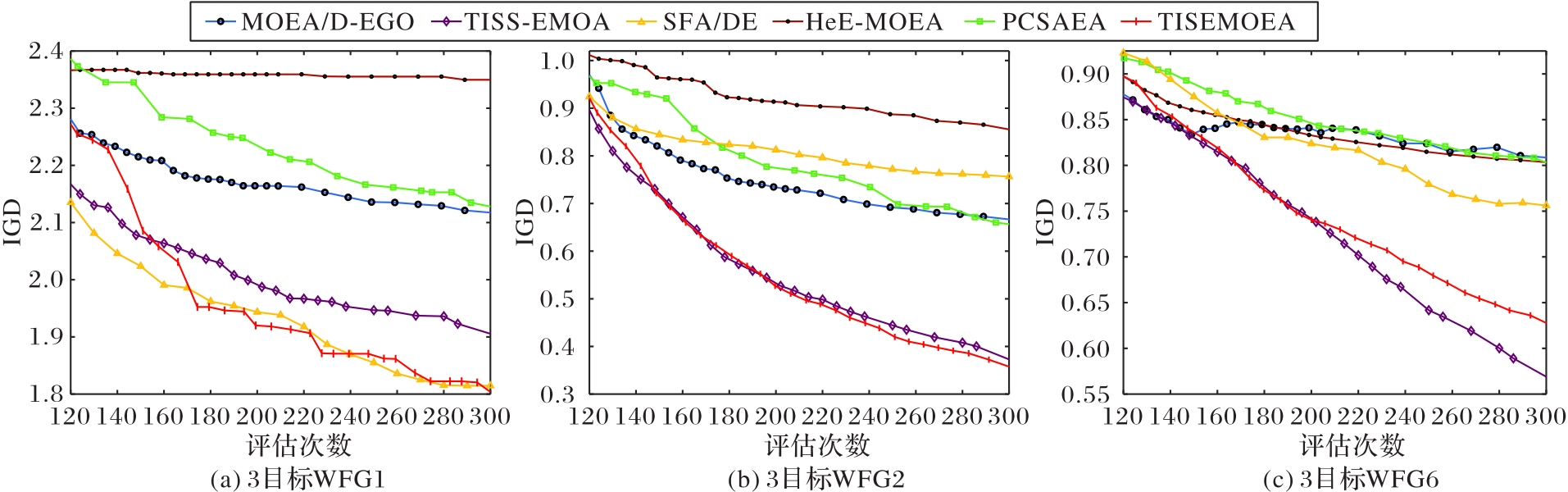
Fig. 6 Changes in average IGD values of various algorithms when solving 3-objective WFG1, WFG2, and WFG6 problems
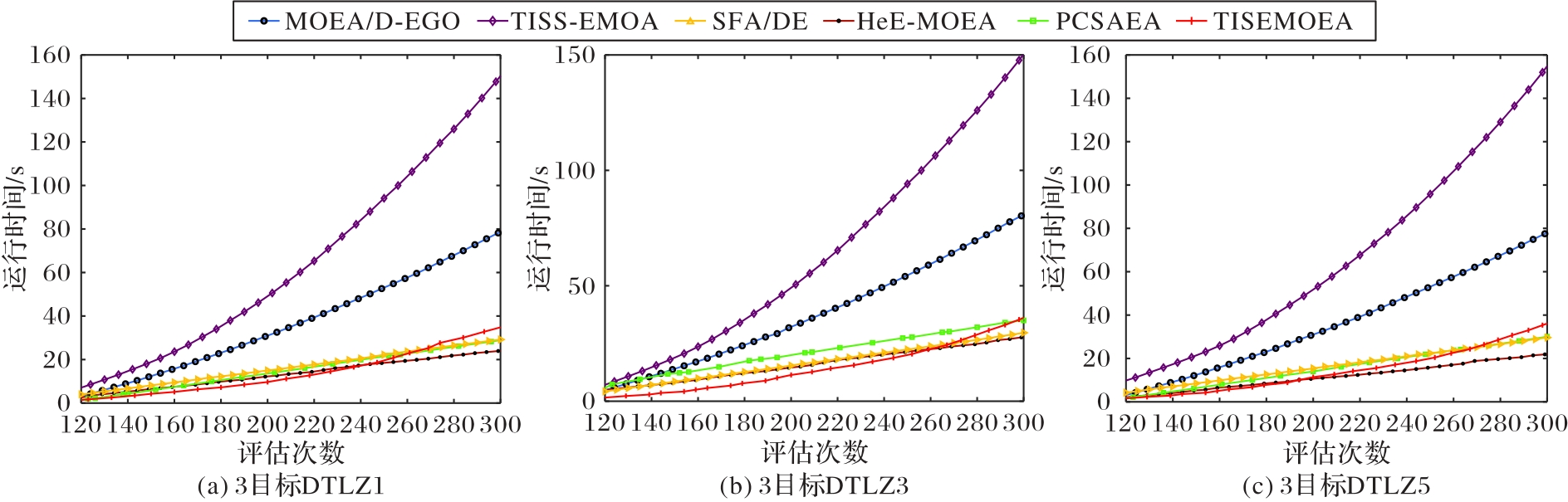
Fig. 7 Comparison of running time of various algorithms on 3-objective DTLZ1, DTLZ3, DTLZ5 problems
| Problem | M | TISEMOEA-ND | TISEMOEA-Un | TISEMOEA-CD | TISEMOEA |
|---|---|---|---|---|---|
| DTLZ1 | 3 | 8.824 9E+1 (1.64E+1) - | 8.040 8E+1 (2.42E+1) = | 7.745 8E+1 (2.06E+1) = | 6.434 7E+1 (1.41E+1) |
| DTLZ2 | 3 | 8.700 3E-2 (8.03E-3) - | 7.587 2E-2 (2.52E-3) = | 9.056 2E-2 (1.20E-2) - | 7.449 9E-2 (2.67E-3) |
| DTLZ3 | 3 | 2.239 3E+2 (4.76E+1) - | 1.900 5E+2 (5.45E+1) = | 1.905 8E+2 (5.60E+1) = | 1.776 9E+2 (5.40E+1) |
| DTLZ4 | 3 | 4.039 1E-1 (8.86E-2) = | 4.797 5E-1 (1.23E-1) = | 4.405 0E-1 (1.29E-1) = | 4.574 0E-1 (9.99E-2) |
| DTLZ5 | 3 | 4.694 2E-2 (8.62E-3) - | 7.461 6E-2 (1.17E-2) - | 4.943 6E-2 (1.63E-2) = | 4.127 5E-2 (1.05E-2) |
| DTLZ6 | 3 | 2.883 3E+0 (4.67E-1) = | 3.261 6E+0 (4.78E-1) = | 2.947 6E+0 (5.17E-1) = | 3.082 1E+0 (6.53E-1) |
| DTLZ7 | 3 | 8.607 8E-2 (4.17E-3) - | 8.593 5E-2 (3.09E-3) - | 8.204 7E-2 (3.31E-3) - | 7.787 3E-2 (3.54E-3) |
| WFG1 | 3 | 1.830 4E+0 (8.25E-2) = | 1.838 9E+0 (1.10E-1) = | 1.816 8E+0 (1.06E-1) = | 1.799 6E+0 (7.67E-2) |
| WFG2 | 3 | 3.339 2E-1 (6.13E-2) + | 4.168 6E-1 (6.64E-2) - | 4.064 1E-1 (8.53E-2) = | 3.474 2E-1 (7.08E-2) |
| WFG3 | 3 | 2.977 7E-1 (5.27E-2) - | 2.185 6E-1 (4.50E-2) = | 2.528 7E-1 (5.10E-2) - | 2.084 7E-1 (2.44E-2) |
| WFG4 | 3 | 4.705 1E-1 (3.15E-2) = | 4.748 6E-1 (2.52E-2) = | 4.878 2E-1 (2.66E-2) - | 4.674 0E-1 (2.28E-2) |
| WFG5 | 3 | 3.686 8E-1 (8.08E-2) + | 4.835 2E-1 (5.66E-2) = | 3.838 6E-1 (5.46E-2) + | 4.811 6E-1 (6.78E-2) |
| WFG6 | 3 | 6.518 0E-1 (7.47E-2) = | 6.766 9E-1 (5.57E-2) - | 6.824 7E-1 (6.09E-2) - | 6.253 2E-1 (6.13E-2) |
| WFG7 | 3 | 5.825 1E-1 (3.99E-2) = | 6.055 4E-1 (4.00E-2) = | 6.219 1E-1 (3.77E-2) = | 6.032 9E-1 (3.83E-2) |
| WFG8 | 3 | 5.945 6E-1 (3.39E-2) = | 6.333 0E-1 (3.07E-2) = | 6.242 7E-1 (3.27E-2) = | 6.273 7E-1 (2.33E-2) |
| WFG9 | 3 | 6.780 7E-1 (9.18E-2) = | 7.247 3E-1 (8.84E-2) = | 7.221 7E-1 (4.79E-2) = | 6.926 5E-1 (8.55E-2) |
| +/-/= | 2/6/8 | 0/5/11 | 1/7/8 | ||
Tab. 3 Statistical results of IGD values obtained by TISEMOEA with its variant algorithms on different test problems
| Problem | M | TISEMOEA-ND | TISEMOEA-Un | TISEMOEA-CD | TISEMOEA |
|---|---|---|---|---|---|
| DTLZ1 | 3 | 8.824 9E+1 (1.64E+1) - | 8.040 8E+1 (2.42E+1) = | 7.745 8E+1 (2.06E+1) = | 6.434 7E+1 (1.41E+1) |
| DTLZ2 | 3 | 8.700 3E-2 (8.03E-3) - | 7.587 2E-2 (2.52E-3) = | 9.056 2E-2 (1.20E-2) - | 7.449 9E-2 (2.67E-3) |
| DTLZ3 | 3 | 2.239 3E+2 (4.76E+1) - | 1.900 5E+2 (5.45E+1) = | 1.905 8E+2 (5.60E+1) = | 1.776 9E+2 (5.40E+1) |
| DTLZ4 | 3 | 4.039 1E-1 (8.86E-2) = | 4.797 5E-1 (1.23E-1) = | 4.405 0E-1 (1.29E-1) = | 4.574 0E-1 (9.99E-2) |
| DTLZ5 | 3 | 4.694 2E-2 (8.62E-3) - | 7.461 6E-2 (1.17E-2) - | 4.943 6E-2 (1.63E-2) = | 4.127 5E-2 (1.05E-2) |
| DTLZ6 | 3 | 2.883 3E+0 (4.67E-1) = | 3.261 6E+0 (4.78E-1) = | 2.947 6E+0 (5.17E-1) = | 3.082 1E+0 (6.53E-1) |
| DTLZ7 | 3 | 8.607 8E-2 (4.17E-3) - | 8.593 5E-2 (3.09E-3) - | 8.204 7E-2 (3.31E-3) - | 7.787 3E-2 (3.54E-3) |
| WFG1 | 3 | 1.830 4E+0 (8.25E-2) = | 1.838 9E+0 (1.10E-1) = | 1.816 8E+0 (1.06E-1) = | 1.799 6E+0 (7.67E-2) |
| WFG2 | 3 | 3.339 2E-1 (6.13E-2) + | 4.168 6E-1 (6.64E-2) - | 4.064 1E-1 (8.53E-2) = | 3.474 2E-1 (7.08E-2) |
| WFG3 | 3 | 2.977 7E-1 (5.27E-2) - | 2.185 6E-1 (4.50E-2) = | 2.528 7E-1 (5.10E-2) - | 2.084 7E-1 (2.44E-2) |
| WFG4 | 3 | 4.705 1E-1 (3.15E-2) = | 4.748 6E-1 (2.52E-2) = | 4.878 2E-1 (2.66E-2) - | 4.674 0E-1 (2.28E-2) |
| WFG5 | 3 | 3.686 8E-1 (8.08E-2) + | 4.835 2E-1 (5.66E-2) = | 3.838 6E-1 (5.46E-2) + | 4.811 6E-1 (6.78E-2) |
| WFG6 | 3 | 6.518 0E-1 (7.47E-2) = | 6.766 9E-1 (5.57E-2) - | 6.824 7E-1 (6.09E-2) - | 6.253 2E-1 (6.13E-2) |
| WFG7 | 3 | 5.825 1E-1 (3.99E-2) = | 6.055 4E-1 (4.00E-2) = | 6.219 1E-1 (3.77E-2) = | 6.032 9E-1 (3.83E-2) |
| WFG8 | 3 | 5.945 6E-1 (3.39E-2) = | 6.333 0E-1 (3.07E-2) = | 6.242 7E-1 (3.27E-2) = | 6.273 7E-1 (2.33E-2) |
| WFG9 | 3 | 6.780 7E-1 (9.18E-2) = | 7.247 3E-1 (8.84E-2) = | 7.221 7E-1 (4.79E-2) = | 6.926 5E-1 (8.55E-2) |
| +/-/= | 2/6/8 | 0/5/11 | 1/7/8 | ||
| [1] | DEB K, GUPTA S, DAUM D, et al. Reliability-based optimization using evolutionary algorithms[J]. IEEE Transactions on Evolutionary Computation, 2009, 13(5): 1054-1074. |
| [2] | DONG H, WANG P, FU C, et al. Kriging-assisted Teaching-Learning-Based Optimization (KTLBO) to solve computationally expensive constrained problems[J]. Information Sciences, 2021, 556: 404-435. |
| [3] | CHUGH T, SINDHYA K, MIETTINEN K, et al. Surrogate-assisted evolutionary multiobjective shape optimization of an air intake ventilation system[C]// Proceedings of the 2017 IEEE Congress on Evolutionary Computation. Piscataway: IEEE, 2017: 1541-1548. |
| [4] | ZHANG W, LIU J, TAN S, et al. A decomposition-rotation dominance based evolutionary algorithm with reference point adaption for many-objective optimization[J]. Expert Systems with Applications, 2023, 215: No.119424. |
| [5] | DEB K, PRATAP A, AGARWAL S, et al. A fast and elitist multiobjective genetic algorithm: NSGA-Ⅱ[J]. IEEE Transactions on Evolutionary Computation, 2002, 6(2): 182-197. |
| [6] | QASIM S Z, ISMAIL M A. Rode: Ranking-dominance-based algorithm for many-objective optimization with opposition-based differential evolution[J]. Arabian Journal for Science and Engineering, 2020, 45(12): 10079-10096. |
| [7] | DAI C, LEI X, HE X. A decomposition-based evolutionary algorithm with adaptive weight adjustment for many-objective problems[J]. Soft Computing, 2020, 24(14): 10597-10609. |
| [8] | MA X, YU Y, LI X, et al. A survey of weight vector adjustment methods for decomposition-based multiobjective evolutionary algorithms[J]. IEEE Transactions on Evolutionary Computation, 2020, 24(4): 634-649. |
| [9] | BRINGMANN K, FRIEDRICH T. Approximation quality of the hypervolume indicator[J]. Artificial Intelligence, 2013,195: 265-290. |
| [10] | BEUME N, NAUJOKS B, EMMERICH M.SMS-EMOA: multiobjective selection based on dominated hypervolume[J].European Journal of Operational Research, 2007, 181(3):1653-1669. |
| [11] | RASHIDI S, RANJITKAR P. Bus dwell time modeling using gene expression programming[J]. Computer-Aided Civil and Infrastructure Engineering, 2015, 30(6): 478-489. |
| [12] | KOZIEL S, LEIFSSON L. Multi-level CFD-based airfoil shape optimization with automated low-fidelity model selection[J]. Procedia Computer Science, 2013, 18(1): 889-898. |
| [13] | CHUGH T, CHAKRABORTI N, SINDHYA K, et al. A data-driven surrogate-assisted evolutionary algorithm applied to a many-objective blast furnace optimization problem[J]. Materials and Manufacturing Processes, 2017, 32(10): 1172-1178. |
| [14] | ISLAM N N, HANNAN M A, SHAREEF H, et al. An application of backtracking search algorithm in designing power system stabilizers for large multi-machine system[J]. Neurocomputing, 2017, 237: 175-184. |
| [15] | JIN Y. Surrogate-assisted evolutionary computation: recent advances and future challenges[J]. Swarm and Evolutionary Computation, 2011, 1(2): 61-70. |
| [16] | SONG Z, WANG H, HE C, et al. A kriging-assisted two-archive evolutionary algorithm for expensive many-objective optimization[J]. IEEE Transactions on Evolutionary Computation, 2021, 25(6): 1013-1027. |
| [17] | WANG X, JIN Y, SCHMITT S, et al. An adaptive Bayesian approach to surrogate-assisted evolutionary multi-objective optimization[J]. Information Sciences, 2020, 519: 317-331. |
| [18] | LIM D, JIN Y, ONG Y S, et al. Generalizing surrogate-assisted evolutionary computation[J]. IEEE Transactions on Evolutionary Computation, 2009, 14(3): 329-355. |
| [19] | LIN J, HE C, CHENG R. Adaptive dropout for high-dimensional expensive multiobjective optimization[J]. Complex and Intelligent Systems, 2022, 8(1): 271-285. |
| [20] | LI J, WANG P, DONG H, et al. Multi/many-objective evolutionary algorithm assisted by radial basis function models for expensive optimization[J]. Applied Soft Computing, 2022, 122: 108798. |
| [21] | SONODA T, NAKATA M. Multiple classifiers-assisted evolutionary algorithm based on decomposition for high-dimensional multiobjective problems[J]. IEEE Transactions on Evolutionary Computation, 2022, 26(6): 1581-1595. |
| [22] | PAN L Q, HE C, TIAN Y, et al. A classification-based surrogate-assisted evolutionary algorithm for expensive many-objective optimization[J]. IEEE Transactions on Evolutionary Computation, 2019, 23(1): 74-88. |
| [23] | ZHANG Q, LIU W, TSANG E, et al. Expensive multiobjective optimization by MOEA/D with Gaussian process model[J]. IEEE Transactions on Evolutionary Computation, 2010, 14(3): 456-474. |
| [24] | CHUGH T, JIN Y C, MIETTINEN K, et al. A surrogate-assisted reference vector guided evolutionary algorithm for computationally expensive many-objective optimization[J]. IEEE Transactions on Evolutionary Computation, 2018, 22(1): 129-142. |
| [25] | 刘建昌,赵阳杰,李飞,等. 基于R2指标的昂贵多目标进化算法[J]. 控制与决策, 2020, 35(4): 823-832. |
| LIU J C, ZHAO Y J, LI F, et al. Expensive multi-objective optimization algorithm based on R2 indicator[J]. Control and Decision, 2020, 35(4): 823-832. | |
| [26] | 顾清华,周煜丰,李学现,等. 基于径向空间划分的昂贵多目标进化算法[J]. 自动化学报, 2022, 48(10): 2564-2584. |
| GU Q H, ZHOU Y F, LI X X, et al. Expensive many-objective evolutionary algorithm based on radial space division[J]. Acta Automatica Sinica, 2022, 48(10):2564-2584. | |
| [27] | 黎建宇,詹志辉. 基于多目标数据生成的昂贵多目标进化算法[J]. 计算机学报, 2023, 46(5): 896-908. |
| LI J Y, ZHAN Z H. Expensive multi-objective evolutionary algorithm with multi-objective data generation[J]. Chinese Journal of Computers, 2023, 46(5): 896-908. | |
| [28] | LI F, GAO L, GARG A, et al. Two infill criteria driven surrogate assisted multi-objective evolutionary algorithms for computationally expensive problems with medium dimensions[J]. Swarm and Evolutionary Computation, 2021, 60: No.100774. |
| [29] | 秦淑芬,孙超利. 双阶段填充采样辅助的昂贵多目标优化[J]. 计算机工程与设计, 2024, 45(8): 2492-2502. |
| QIN S F, SUN C L. Expensive multi-objective optimization assisted by two-stage infill sampling[J]. Computer Engineering and Design, 2024, 45(8): 2492-2502. | |
| [30] | LI J, WANG P, DONG H, et al. A Two-Stage Surrogate-Assisted Evolutionary Algorithm (TS-SAEA) for expensive multi/many-objective optimization[J]. Swarm and Evolutionary Computation, 2022, 73: No.101107. |
| [31] | GUO D, JIN Y, DING J, et al. Heterogeneous ensemble-based infill criterion for evolutionary multiobjective optimization of expensive problems[J]. IEEE Transactions on Cybernetics, 2019, 49(3): 1012-1025. |
| [32] | YAN Z, ZHOU Y, WU W, et al. An ensemble dual model assisted MOEA/D for tackling medium scale expensive multiobjective optimization[J]. Information Sciences, 2024, 679: No.121079. |
| [33] | ZHAO Y, SUN C, ZENG J, et al. A surrogate-ensemble assisted expensive many-objective optimization[J]. Knowledge-Based Systems, 2021, 211: No.106520. |
| [34] | LIU Y, LIU J, TAN S, et al. A bagging-based surrogate-assisted evolutionary algorithm for expensive multi-objective optimization[J]. Neural Computing and Applications, 2022, 34(14): 12097-12118. |
| [35] | 谭瑛,任新宇,孙超利,等. 两阶段填充采样的半监督昂贵多目标优化算法[J]. 计算机应用, 2025, 45(5): 1605-1612. |
| TAN Y, REN X Y, SUN C L, et al. Two-stage infill sampling-based semi-supervised expensive multi-objective optimization algorithm[J]. Journal of Computer Applications, 2025, 45(5): 1605-1612. | |
| [36] | ZHAO Y, ZHAO J, ZENG J, et al. A two-stage infill strategy and surrogate-ensemble assisted expensive many-objective optimization[J]. Complex and Intelligent Systems, 2022, 8(6): 5047-5063. |
| [37] | 于坤杰,杨振宇,乔康加,等. 自适应两阶段大规模约束多目标进化算法[J]. 郑州大学学报(工学版), 2023, 44(5): 1-9. |
| YU K J, YANG Z Y, QIAO K J, et al. Adaptive two-stage large-scale constrained multi-objective evolutionary algorithm[J]. Journal of Zhengzhou University (Engineering Science), 2023, 44(5): 1-9. | |
| [38] | WEI F F, CHEN W N, MAO W, et al. An efficient two-stage surrogate-assisted differential evolution for expensive inequality constrained optimization[J]. IEEE Transactions on Systems, Man, and Cybernetics: Systems, 2023, 53(12): 7769-7782. |
| [39] | WANG W, DONG H, WANG P, et al. Bi-indicator driven surrogate-assisted multi-objective evolutionary algorithms for computationally expensive problems[J]. Complex and Intelligent Systems, 2023, 9(4): 4673-4704. |
| [40] | HORAGUCHI Y, NISHIHARA K, NAKATA M. Evolutionary multiobjective optimization assisted by scalarization function approximation for high-dimensional expensive problems[J]. Swarm and Evolutionary Computation, 2024, 86: No.101516. |
| [41] | SHEN J, WANG P, TIAN Y, et al. A dual surrogate assisted evolutionary algorithm based on parallel search for expensive multi/many-objective optimization[J]. Applied Soft Computing, 2023, 148: No.110879. |
| [42] | HAO H, ZHOU A, QIAN H, et al. Expensive multiobjective optimization by relation learning and prediction[J]. IEEE Transactions on Evolutionary Computation, 2022, 26(5): 1157-1170. |
| [43] | ZHU Q, KANG G, WU X, et al. A Kriging-assisted evolutionary algorithm with multiple infill sampling for expensive many-objective optimization[J]. Engineering Applications of Artificial Intelligence, 2024, 135: No.108505. |
| [44] | CHENG R, JIN Y, OLHOFER M, et al. A reference vector guided evolutionary algorithm for many-objective optimization[J]. IEEE Transactions on Evolutionary Computation, 2016, 20(5): 773-791. |
| [45] | STEIN M. Large sample properties of simulations using Latin hypercube sampling[J]. Technometrics, 1987, 29(2): 143-151. |
| [46] | QIN S, SUN C, AKHTAR F, et al. Expensive many-objective evolutionary optimization guided by two individual infill criteria[J]. Memetic Computing, 2024, 16(1): 55-69. |
| [47] | DEB K, THIELE L, LAUMANNS M, et al. Scalable multi-objective optimization test problems[C]// Proceedings of the 2002 Congress on Evolutionary Computation. Piscataway: IEEE, 2002: 825-830. |
| [48] | HUBAND S, HINGSTON P, BARONE L, et al. A review of multiobjective test problems and a scalable test problem toolkit[J]. IEEE Transactions on Evolutionary Computation, 2006, 10(5): 477-506. |
| [49] | SUN Y, YEN G G, YI Z. IGD indicator-based evolutionary algorithm for many-objective optimization problems[J]. IEEE Transactions on Evolutionary Computation, 2019, 23(2): 173-187. |
| [50] | TIAN Y, CHENG R, ZHANG X Y, et al. PlatEMO: a Matlab platform for evolutionary multi-objective optimization educational forum[J]. IEEE Computational Intelligence Magazine, 2017, 12(4): 73-87. |
| [51] | WILCOXON F. Individual comparisons by ranking methods[J]. Biometrics Bulletin, 1945, 1(6): 80-83. |
| [52] | TIAN Y, HU J, HE C, et al. A pairwise comparison based surrogate-assisted evolutionary algorithm for expensive multi-objective optimization[J]. Swarm and Evolutionary Computation, 2023, 80: No.101323. |
| [1] | Qianlong XIONG, Jin QIN. Neural network architecture search algorithm guided by hybrid heuristic information [J]. Journal of Computer Applications, 2026, 46(2): 395-405. |
| [2] | Zhichao YUAN, Lei YANG, Jinglin TIAN, Xiaowei WEI, Kangshun LI. Dual-population dual-stage evolutionary algorithm for complex constrained multi-objective optimization problems [J]. Journal of Computer Applications, 2025, 45(8): 2656-2665. |
| [3] | Hansong ZHANG, Yichao HE, Fei SUN, Guoxin CHEN, Ju CHEN. Improved ring theory-based evolutionary algorithm with new repair optimization operator for solving multi-dimensional knapsack problem [J]. Journal of Computer Applications, 2025, 45(5): 1595-1604. |
| [4] | Ying TAN, Xinyu REN, Chaoli SUN, Sisi WANG. Two-stage infill sampling-based semi-supervised expensive multi-objective optimization algorithm [J]. Journal of Computer Applications, 2025, 45(5): 1605-1612. |
| [5] | Kaiwen ZHAO, Peng WANG, Xiangrong TONG. Two-stage search-based constrained evolutionary multitasking optimization algorithm [J]. Journal of Computer Applications, 2024, 44(5): 1415-1422. |
| [6] | Maojiang TIAN, Mingke CHEN, Wei DU, Wenli DU. Two-stage differential grouping method for large-scale overlapping problems [J]. Journal of Computer Applications, 2024, 44(5): 1348-1354. |
| [7] | Wanting ZHANG, Wenli DU, Wei DU. Multi-timescale cooperative evolutionary algorithm for large-scale crude oil scheduling [J]. Journal of Computer Applications, 2024, 44(5): 1355-1363. |
| [8] | Jiawei ZHAO, Xuefeng CHEN, Liang FENG, Yaqing HOU, Zexuan ZHU, Yew‑Soon Ong. Review of evolutionary multitasking from the perspective of optimization scenarios [J]. Journal of Computer Applications, 2024, 44(5): 1325-1337. |
| [9] | Ye TIAN, Jinjin CHEN, Xingyi ZHANG. Hybrid optimizer combining evolutionary computation and gradient descent for constrained multi-objective optimization [J]. Journal of Computer Applications, 2024, 44(5): 1386-1392. |
| [10] | Sunjie YU, Hui ZENG, Shiyu XIONG, Hongzhou SHI. Incentive mechanism for federated learning based on generative adversarial network [J]. Journal of Computer Applications, 2024, 44(2): 344-352. |
| [11] | Qiaoling HUANG, Bochuan ZHENG, Zicheng DING, Zedong WU. Improved image inpainting network incorporating supervised attention module and cross-stage feature fusion [J]. Journal of Computer Applications, 2024, 44(2): 572-579. |
| [12] | Jie HUANG, Ruizi WU, Junli LI. Efficient adaptive robustness optimization algorithm for complex networks [J]. Journal of Computer Applications, 2024, 44(11): 3530-3539. |
| [13] | Yongjian MA, Xuhua SHI, Peiyao WANG. Constrained multi-objective evolutionary algorithm based on two-stage search and dynamic resource allocation [J]. Journal of Computer Applications, 2024, 44(1): 269-277. |
| [14] | Maozu GUO, Yazhe ZHANG, Lingling ZHAO. Electric vehicle charging station siting method based on spatial semantics and individual activities [J]. Journal of Computer Applications, 2023, 43(9): 2819-2827. |
| [15] | Saijuan XU, Zhenyu PEI, Jiawei LIN, Genggeng LIU. Constrained multi-objective evolutionary algorithm based on multi-stage search [J]. Journal of Computer Applications, 2023, 43(8): 2345-2351. |
| Viewed | ||||||
|
Full text |
|
|||||
|
Abstract |
|
|||||
