


Journal of Computer Applications ›› 2026, Vol. 46 ›› Issue (4): 1344-1353.DOI: 10.11772/j.issn.1001-9081.2025040505
• Frontier and comprehensive applications • Previous Articles
Xumeng DOU1, Bin XIE1,2,3( ), Zhaohui ZHANG1,2,3, Zhengang ZHAO1, Hanyu DUAN1, Aolei GUO1
Received:2025-05-08
Revised:2025-08-08
Accepted:2025-08-11
Online:2025-08-15
Published:2026-04-10
Contact:
Bin XIE
About author:DOU Xumeng, born in 2001, M. S. candidate. Her research interests include machine learning, bioinformatics.Supported by:
豆旭梦1, 解滨1,2,3(), 张朝晖1,2,3, 赵振刚1, 段菡煜1, 郭澳磊1
通讯作者:
解滨
作者简介:豆旭梦(2001—),女,河北邯郸人,硕士研究生,主要研究方向:机器学习、生物信息学基金资助:CLC Number:
Xumeng DOU, Bin XIE, Zhaohui ZHANG, Zhengang ZHAO, Hanyu DUAN, Aolei GUO. Drug-target interaction prediction based on structure-network collaborative features and grid-attention enhanced Kolmogorov-Arnold network[J]. Journal of Computer Applications, 2026, 46(4): 1344-1353.
豆旭梦, 解滨, 张朝晖, 赵振刚, 段菡煜, 郭澳磊. 基于结构‒网络协同特征与网格注意力增强KAN的药物靶标相互作用预测[J]. 《计算机应用》唯一官方网站, 2026, 46(4): 1344-1353.
Add to citation manager EndNote|Ris|BibTeX
URL: https://www.joca.cn/EN/10.11772/j.issn.1001-9081.2025040505
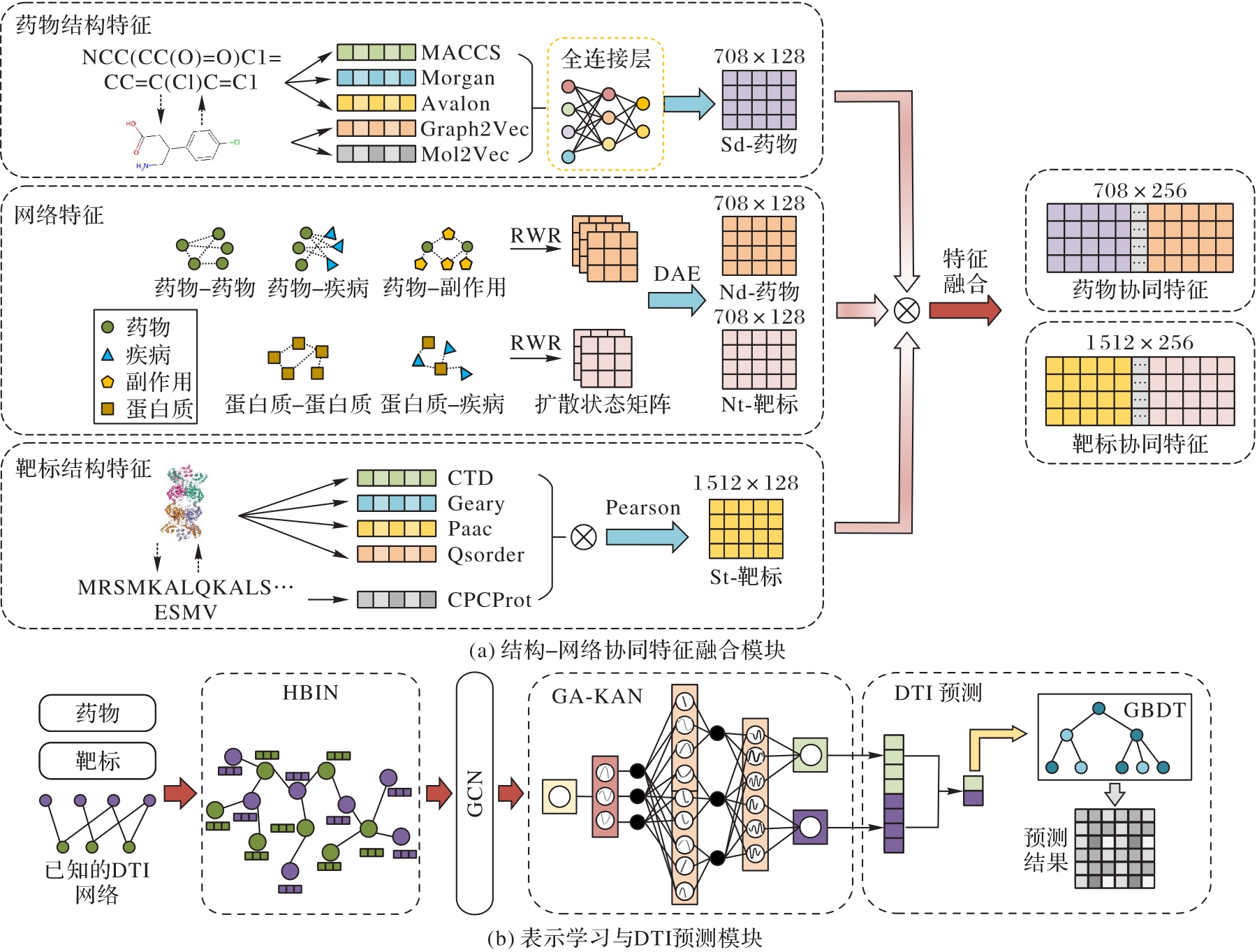
Fig. 1 Structure of SNKDTI
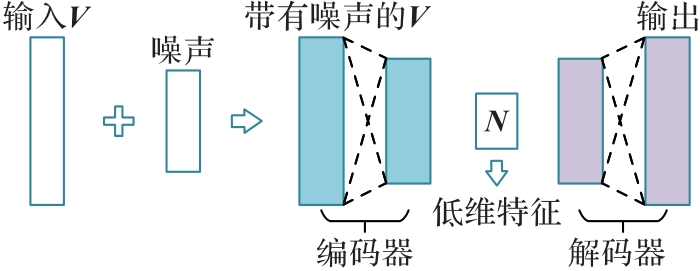
Fig. 2 Structure of denoising autoencoder
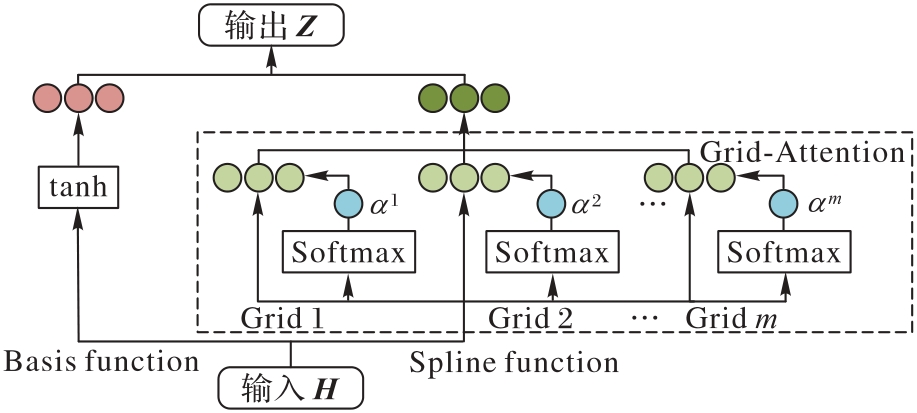
Fig. 3 Computational schematic diagram of GA-KAN module
| 数据集 | 数据来源地址 | 节点类型 | 节点数 | 相关节点类型 | 相关节点数 | 关联关系条数 |
|---|---|---|---|---|---|---|
| DrugBank | https://go.drugbank.com/ | 药物 | 708 | 药物 | 708 | 10 036 |
| 708 | 蛋白质 | 1 512 | 1 923 | |||
| CTD | http://ctdbase.org/ | 疾病 | 5 603 | 药物 | 708 | 199 214 |
| 5 603 | 蛋白质 | 1 512 | 1 596 745 | |||
| SIDER | http://sideeffects.embl.de/ | 副作用 | 4 192 | 药物 | 708 | 80 163 |
| HPRD | http://www.hprd.org/ | 蛋白质 | 1 512 | 蛋白质 | 1 512 | 7 363 |
Tab. 1 Statistical information of experimental datasets
| 数据集 | 数据来源地址 | 节点类型 | 节点数 | 相关节点类型 | 相关节点数 | 关联关系条数 |
|---|---|---|---|---|---|---|
| DrugBank | https://go.drugbank.com/ | 药物 | 708 | 药物 | 708 | 10 036 |
| 708 | 蛋白质 | 1 512 | 1 923 | |||
| CTD | http://ctdbase.org/ | 疾病 | 5 603 | 药物 | 708 | 199 214 |
| 5 603 | 蛋白质 | 1 512 | 1 596 745 | |||
| SIDER | http://sideeffects.embl.de/ | 副作用 | 4 192 | 药物 | 708 | 80 163 |
| HPRD | http://www.hprd.org/ | 蛋白质 | 1 512 | 蛋白质 | 1 512 | 7 363 |
| 网格数M | AUC | AUPR | F1-score |
|---|---|---|---|
| 2 | 0.974 5 | 0.979 3 | 0.925 4 |
| 3 | 0.986 2 | 0.986 9 | 0.939 8 |
| 4 | 0.985 9 | 0.986 0 | 0.938 3 |
| 5 | 0.985 2 | 0.984 8 | 0.937 5 |
Tab. 2 Impact of grid count M on GA-KAN performance
| 网格数M | AUC | AUPR | F1-score |
|---|---|---|---|
| 2 | 0.974 5 | 0.979 3 | 0.925 4 |
| 3 | 0.986 2 | 0.986 9 | 0.939 8 |
| 4 | 0.985 9 | 0.986 0 | 0.938 3 |
| 5 | 0.985 2 | 0.984 8 | 0.937 5 |
| GBDT树深 | AUC | AUPR | F1-score |
|---|---|---|---|
| 3 | 0.979 6 | 0.980 1 | 0.931 1 |
| 5 | 0.986 2 | 0.986 9 | 0.939 8 |
| 7 | 0.984 0 | 0.983 4 | 0.936 0 |
| 9 | 0.982 1 | 0.981 5 | 0.932 8 |
Tab. 3 Impact of GBDT depth on model performance
| GBDT树深 | AUC | AUPR | F1-score |
|---|---|---|---|
| 3 | 0.979 6 | 0.980 1 | 0.931 1 |
| 5 | 0.986 2 | 0.986 9 | 0.939 8 |
| 7 | 0.984 0 | 0.983 4 | 0.936 0 |
| 9 | 0.982 1 | 0.981 5 | 0.932 8 |
| 方法 | AUC | AUPR | F1-score |
|---|---|---|---|
| DTINet | 0.903 0±0.022 | 0.918 7±0.017 | 0.796 7±0.020 |
| EEG-DTI | 0.953 1±0.022 | 0.964 2±0.021 | 0.813 4±0.015 |
| IMCHGAN | 0.954 4±0.019 | 0.920 3±0.017 | 0.891 2±0.025 |
| SATS | 0.943 2±0.018 | 0.454 1±0.013 | 0.801 1±0.008 |
| DTI-MGNN | 0.966 5±0.026 | 0.968 3±0.025 | 0.841 8±0.021 |
| CCL-DTI | 0.964 3±0.051 | 0.860 4±0.021 | |
| KRN-DTI | 0.970 6±0.016 | ||
| SNKDTI | 0.986 2±0.010 | 0.986 9±0.005 | 0.939 8±0.009 |
Tab. 4 Experimental results comparison of different methods under 1∶1 positive-to-negative sample ratio
| 方法 | AUC | AUPR | F1-score |
|---|---|---|---|
| DTINet | 0.903 0±0.022 | 0.918 7±0.017 | 0.796 7±0.020 |
| EEG-DTI | 0.953 1±0.022 | 0.964 2±0.021 | 0.813 4±0.015 |
| IMCHGAN | 0.954 4±0.019 | 0.920 3±0.017 | 0.891 2±0.025 |
| SATS | 0.943 2±0.018 | 0.454 1±0.013 | 0.801 1±0.008 |
| DTI-MGNN | 0.966 5±0.026 | 0.968 3±0.025 | 0.841 8±0.021 |
| CCL-DTI | 0.964 3±0.051 | 0.860 4±0.021 | |
| KRN-DTI | 0.970 6±0.016 | ||
| SNKDTI | 0.986 2±0.010 | 0.986 9±0.005 | 0.939 8±0.009 |
| 方法 | AUC | AUPR | F1-score |
|---|---|---|---|
| SNKDTI-S | 0.929 5 | 0.934 5 | 0.854 7 |
| SNKDTI-N | 0.954 4 | 0.954 8 | 0.880 1 |
| SNKDTI-M | 0.978 5 | 0.979 8 | 0.916 2 |
| SNKDTI-K | 0.983 8 | 0.983 2 | 0.938 0 |
| SNKDTI | 0.986 2 | 0.986 9 | 0.939 8 |
Tab. 5 Experimental results of SNKDTI variants
| 方法 | AUC | AUPR | F1-score |
|---|---|---|---|
| SNKDTI-S | 0.929 5 | 0.934 5 | 0.854 7 |
| SNKDTI-N | 0.954 4 | 0.954 8 | 0.880 1 |
| SNKDTI-M | 0.978 5 | 0.979 8 | 0.916 2 |
| SNKDTI-K | 0.983 8 | 0.983 2 | 0.938 0 |
| SNKDTI | 0.986 2 | 0.986 9 | 0.939 8 |
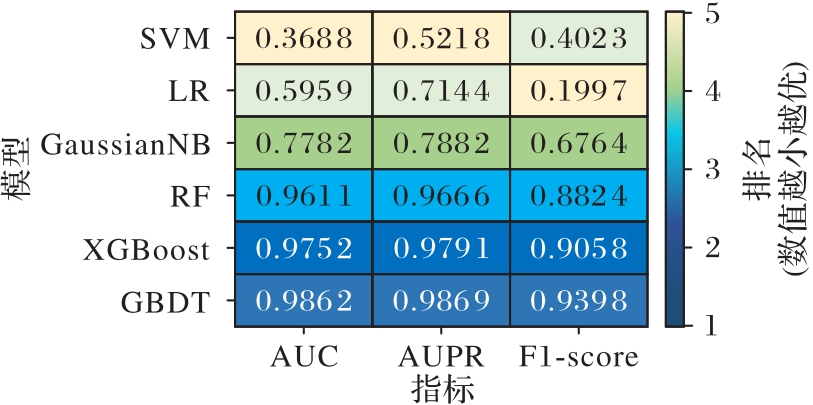
Fig. 4 Performance comparison of different classifiers
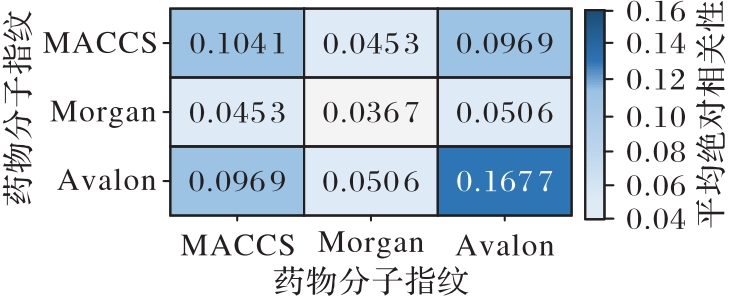
Fig. 5 Analysis of mean absolute correlations of fingerprint features
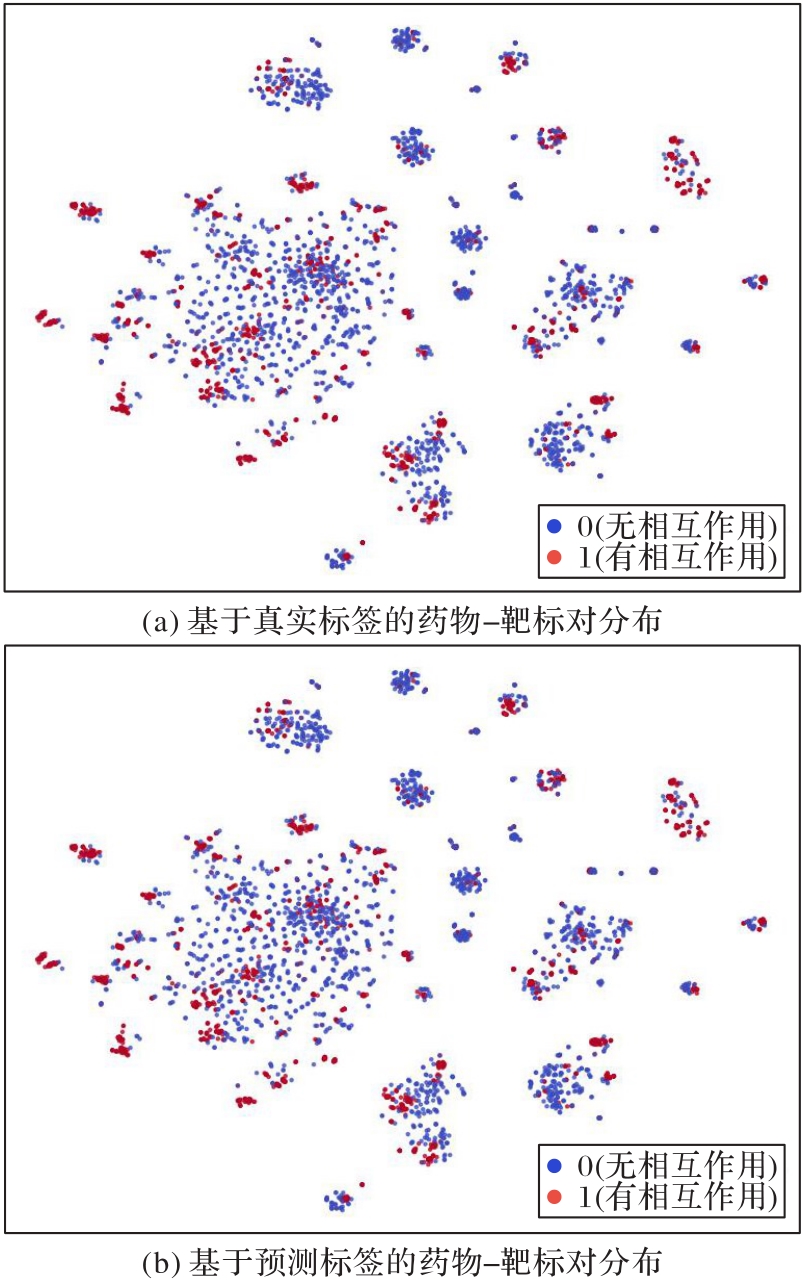
Fig. 6 t-SNE 2D visualization of output node embeddings of SNKDTI
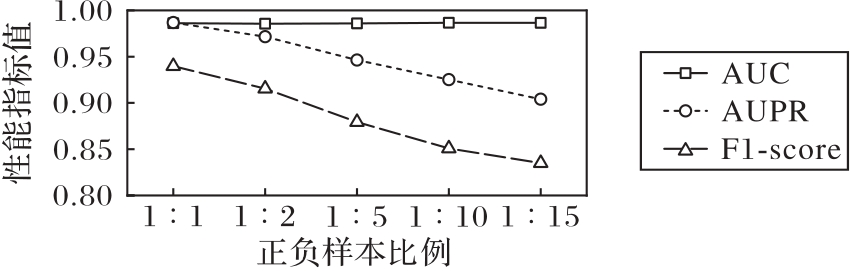
Fig. 7 AUC, AUPR, and F1-score curves under different positive-to-negative sample ratios
| M | S | 总参数量/106 | 单轮训练时间/s | CPU内存峰值/MB |
|---|---|---|---|---|
| 2 | 3 | 1.10 | 167.2 | 508.16 |
| 3 | 3 | 1.68 | 166.4 | 820.15 |
| 4 | 3 | 2.15 | 163.1 | 1 022.46 |
| 5 | 3 | 2.67 | 155.0 | 1 148.23 |
Tab. 6 Computational resource usage statistics of GA-KAN module under different grid count M
| M | S | 总参数量/106 | 单轮训练时间/s | CPU内存峰值/MB |
|---|---|---|---|---|
| 2 | 3 | 1.10 | 167.2 | 508.16 |
| 3 | 3 | 1.68 | 166.4 | 820.15 |
| 4 | 3 | 2.15 | 163.1 | 1 022.46 |
| 5 | 3 | 2.67 | 155.0 | 1 148.23 |
| 药物 | 相关蛋白质 | 预测结果 | 准确率/% |
|---|---|---|---|
DB00248: Cabergoline | P35626:ADRBK2 | True | 93.3 |
| P13631:RARG | True | ||
| P05089:ARG1 | True | ||
| P08913:ADRA2A | True | ||
| P25098:ADRBK1 | True | ||
| P23945:FSHR | True | ||
| P60880:SNAP25 | True | ||
| Q9UIC8:LCMT1 | True | ||
| O14646:CHD1 | False | ||
| P08559:PDHA1 | True | ||
| O43772:SLC25A20 | True | ||
| P00390:GSR | True | ||
| P01589:IL2RA | True | ||
| P49448:GLUD2 | True | ||
| P14867:GABRA1 | True | ||
DB00186: Lorazepam | P31937:HIBADH | True | 100.0 |
| Q16739:UGCG | True | ||
| P40394:ADH7 | True | ||
| P09601:HMOX1 | True | ||
| P04150:NR3C1 | True | ||
| Q14832:GRM3 | True | ||
| P18505:GABRB1 | True | ||
| P28472:GABRB3 | True | ||
| P30532:CHRNA5 | False | ||
| P18507:GABRG2 | True | ||
| Q8N1C3:GABRG1 | True | ||
| Q99928:GABRG3 | True | ||
| P28476:GABRR2 | True |
Tab. 7 Prediction results of drug Cabergoline and Lorazepam
| 药物 | 相关蛋白质 | 预测结果 | 准确率/% |
|---|---|---|---|
DB00248: Cabergoline | P35626:ADRBK2 | True | 93.3 |
| P13631:RARG | True | ||
| P05089:ARG1 | True | ||
| P08913:ADRA2A | True | ||
| P25098:ADRBK1 | True | ||
| P23945:FSHR | True | ||
| P60880:SNAP25 | True | ||
| Q9UIC8:LCMT1 | True | ||
| O14646:CHD1 | False | ||
| P08559:PDHA1 | True | ||
| O43772:SLC25A20 | True | ||
| P00390:GSR | True | ||
| P01589:IL2RA | True | ||
| P49448:GLUD2 | True | ||
| P14867:GABRA1 | True | ||
DB00186: Lorazepam | P31937:HIBADH | True | 100.0 |
| Q16739:UGCG | True | ||
| P40394:ADH7 | True | ||
| P09601:HMOX1 | True | ||
| P04150:NR3C1 | True | ||
| Q14832:GRM3 | True | ||
| P18505:GABRB1 | True | ||
| P28472:GABRB3 | True | ||
| P30532:CHRNA5 | False | ||
| P18507:GABRG2 | True | ||
| Q8N1C3:GABRG1 | True | ||
| Q99928:GABRG3 | True | ||
| P28476:GABRR2 | True |
| 靶标 | 相关药物 | 预测结果 | 准确率/% |
|---|---|---|---|
| P03372:ESR1 | DB00364:Sucralfate | True | 100.0 |
| DB00395:Carisoprodol | True | ||
| DB00480:Lenalidomide | True | ||
| DB00538:Gadoversetamide | True | ||
| DB00602:Ivermectin | True | ||
| DB00674:Galantamine | True | ||
| DB00782:Propantheline | True | ||
| DB01182:Propafenone | True | ||
| DB01184:Domperidone | False | ||
| DB01195:Flecainide | True | ||
| DB01400:Neostigmine | True | ||
P08588: ADRB1 | DB00186:Lorazepam | True | 93.7 |
| DB00193:Tramadol | True | ||
| DB00263:Sulfisoxazole | True | ||
| DB00334:Olanzapine | True | ||
| DB00367:Levonorgestrel | True | ||
| DB00371:Meprobamate | True | ||
| DB00486:Nabilone | True | ||
| DB00520:Caspofungin | False | ||
| DB00567:Cephalexin | True | ||
| DB00595:Oxytetracycline | True | ||
| DB00611:Butorphanol | True | ||
| DB00665:Nilutamide | True | ||
| DB00839:Tolazamide | True | ||
| DB00959:Methylprednisolone | True | ||
| DB01062:Oxybutynin | True | ||
| DB01117:Atovaquone | True |
Tab. 8 Prediction results of the target ADRB1 and ESR1
| 靶标 | 相关药物 | 预测结果 | 准确率/% |
|---|---|---|---|
| P03372:ESR1 | DB00364:Sucralfate | True | 100.0 |
| DB00395:Carisoprodol | True | ||
| DB00480:Lenalidomide | True | ||
| DB00538:Gadoversetamide | True | ||
| DB00602:Ivermectin | True | ||
| DB00674:Galantamine | True | ||
| DB00782:Propantheline | True | ||
| DB01182:Propafenone | True | ||
| DB01184:Domperidone | False | ||
| DB01195:Flecainide | True | ||
| DB01400:Neostigmine | True | ||
P08588: ADRB1 | DB00186:Lorazepam | True | 93.7 |
| DB00193:Tramadol | True | ||
| DB00263:Sulfisoxazole | True | ||
| DB00334:Olanzapine | True | ||
| DB00367:Levonorgestrel | True | ||
| DB00371:Meprobamate | True | ||
| DB00486:Nabilone | True | ||
| DB00520:Caspofungin | False | ||
| DB00567:Cephalexin | True | ||
| DB00595:Oxytetracycline | True | ||
| DB00611:Butorphanol | True | ||
| DB00665:Nilutamide | True | ||
| DB00839:Tolazamide | True | ||
| DB00959:Methylprednisolone | True | ||
| DB01062:Oxybutynin | True | ||
| DB01117:Atovaquone | True |
| [1] | 刘一迪,温自豪,任富香,等. 自适应球形演化的药物‒靶标相互作用预测方法[J]. 计算机应用, 2024, 44(3): 989-994. |
| LIU Y D, WEN Z H, REN F X, et al. Self-adaptive spherical evolution for prediction of drug target interaction[J]. Journal of Computer Applications, 2024, 44(3): 989-994. | |
| [2] | MAROUA A, TIAN G, WANG R, et al. TriCvT-DTI: predicting drug-target interactions using trimodal representations and convolutional vision Transformers[J]. IEEE Journal of Biomedical and Health Informatics, 2025, 29(6): 4585-4592. |
| [3] | 刘晓光,李梅. 基于深度学习的药物‒靶标相互作用预测研究综述[J]. 智能系统学报, 2024, 19(3): 494-524. |
| LIU X G, LI M. A survey of deep learning-based drug-target interaction prediction[J]. CAAI Transactions on Intelligence Systems, 2024, 19(3): 494-524. | |
| [4] | YU D, LIU H, YAO S. Drug-target interaction prediction based on improved heterogeneous graph representation learning and feature projection classification[J]. Expert Systems with Applications, 2024, 252(Pt B): No.124289. |
| [5] | CUI S, YU S, HUANG H Y, et al. miRTarBase 2025: updates to the collection of experimentally validated microRNA-target interactions[J]. Nucleic Acids Research, 2025, 53(D1): D147-D156. |
| [6] | ZHANG Z, CHEN L, ZHONG F, et al. Graph neural network approaches for drug-target interactions[J]. Current Opinion in Structural Biology, 2022, 73: No.102327. |
| [7] | ZHAO W, YU Y, LIU G, et al. MSI-DTI: predicting drug-target interaction based on multi-source information and multi-head self-attention[J]. Briefings in Bioinformatics, 2024, 25(3): No.bbae238. |
| [8] | ZHU Z, ZHENG X, QI G, et al. Drug-target binding affinity prediction model based on multi-scale diffusion and interactive learning[J]. Expert Systems with Applications, 2024, 255(Pt B): No.124647. |
| [9] | BLEAKLEY K, YAMANISHI Y. Supervised prediction of drug-target interactions using bipartite local models[J]. Bioinformatics, 2009, 25(18): 2397-2403. |
| [10] | PERLMAN L, GOTTLIEB A, ATIAS N, et al. Combining drug and gene similarity measures for drug-target elucidation[J]. Journal of Computational Biology, 2011, 18(2): 133-145. |
| [11] | LUO Y, ZHAO X, ZHOU J, et al. A network integration approach for drug-target interaction prediction and computational drug repositioning from heterogeneous information[J]. Nature Communications, 2017, 8: No.573. |
| [12] | WAN F, HONG L, XIAO A, et al. NeoDTI: neural integration of neighbor information from a heterogeneous network for discovering new drug-target interactions[J]. Bioinformatics, 2019, 35(1): 104-111. |
| [13] | 张家豪,王琪,刘明铭,等. 基于序列和多视角网络的药物‒靶标相互作用预测[J]. 计算机应用, 2025, 45(11): 3658-3665. |
| ZHANG J H, WANG Q, LIU M M, et al. Prediction of drug-target interactions based on sequence and multi-view networks[J]. Journal of Computer Applications, 2025, 45(11): 3658-3665. | |
| [14] | WEININGER D. SMILES, a chemical language and information system. 1. Introduction to methodology and encoding rules[J]. Journal of Chemical Information and Computer Sciences, 1988, 28(1): 31-36. |
| [15] | ROGERS D, HAHN M. Extended-connectivity fingerprints[J]. Journal of Chemical Information and Modeling, 2010, 50(5): 742-754. |
| [16] | SHERVASHIDZE N, SCHWEITZER P, VAN LEEUWEN E J, et al. Weisfeiler-Lehman graph kernels[J]. Journal of Machine Learning Research, 2011, 12: 2539-2561. |
| [17] | TONG H, FALOUTSOS C, PAN J Y. Random walk with restart: fast solutions and applications[J]. Knowledge and Information Systems, 2008, 14(3): 327-346. |
| [18] | XIE Y, WANG X, WANG P, et al. A pseudo-label supervised graph fusion attention network for drug-target interaction prediction[J]. Expert Systems with Applications, 2025, 259: No.125264. |
| [19] | LI Y, QIAO G, WANG K, et al. Drug-target interaction predication via multi-channel graph neural networks[J]. Briefings in Bioinformatics, 2022, 23(1): No.bbab346. |
| [20] | LIU Z, WANG Y, VAIDYA S, et al. KAN: Kolmogorov-Arnold networks[EB/OL]. [2025-06-13].. |
| [21] | FRIEDMAN J H. Greedy function approximation: a gradient boosting machine[J]. The Annals of Statistics, 2001, 29(5): 1189-1232. |
| [22] | KNOX C, LAW V, JEWISON T, et al. DrugBank 3.0: a comprehensive resource for “omics” research on drugs[J]. Nucleic Acids Research, 2011, 39(S1): D1035-D1041. |
| [23] | PRASAD T S K, GOEL R, KANDASAMY K, et al. Human Protein Reference Database — 2009 update[J]. Nucleic Acids Research, 2009, 37(S1): D767-D772. |
| [24] | DAVIS A P, GRONDIN C J, JOHNSON R J, et al. Comparative Toxicogenomics Database (CTD): update 2021[J]. Nucleic Acids Research, 2021, 49(D1): D1138-D1143. |
| [25] | KUHN M, LETUNIC I, JENSEN L J, et al. The SIDER database of drugs and side effects[J]. Nucleic Acids Research, 2016, 44(D1): D1075-D1079. |
| [26] | LIANG Z, ZHOU Y, SESIA M. Conformal inference is (almost) free for neural networks trained with early stopping[C]// Proceedings of the 40th International Conference on Machine Learning. New York: JMLR.org, 2023: 20810-20851. |
| [27] | PENG J, WANG Y, GUAN J, et al. An end-to-end heterogeneous graph representation learning-based framework for drug-target interaction prediction[J]. Briefings in Bioinformatics, 2021, 22(5): No.bbaa430. |
| [28] | LI J, WANG J, LV H, et al. IMCHGAN: inductive matrix completion with heterogeneous graph attention networks for drug-target interactions prediction[J]. IEEE/ACM Transactions on Computational Biology and Bioinformatics, 2022, 19(2): 655-665. |
| [29] | TANG R, SUN C, HUANG J, et al. Predicting drug-protein interactions by self-adaptively adjusting the topological structure of the heterogeneous network[J]. IEEE Journal of Biomedical and Health Informatics, 2023, 27(11): 5675-5684. |
| [30] | DEHGHAN A, ABBASI K, RAZZAGHI P, et al. CCL-DTI: contributing the contrastive loss in drug-target interaction prediction[J]. BMC Bioinformatics, 2024, 25: No.48. |
| [31] | LI Z, HUANG J, LIU X, et al. KRN-DTI: towards accurate drug-target interaction prediction with Kolmogorov-Arnold and residual networks[J]. Methods, 2025, 240: 137-144. |
| [32] | BREIMAN L. Random forests[J]. Machine Learning, 2001, 45(1): 5-32. |
| [33] | CORTES C, VAPNIK V. Support-vector networks[J]. Machine Learning, 1995, 20(3): 273-297. |
| [34] | PEDREGOSA F, VAROQUAUX G, GRAMFORT A, et al. Scikit‑learn: machine learning in Python[J]. Journal of Machine Learning Research, 2011, 12: 2825-2830. |
| [35] | HOSMER D W, LEMESHOW S, STURDIVANT R X. Applied logistic regression[M]. 3rd ed. New York: John Wiley & Sons, Inc., 2013: 8-19. |
| [36] | CHEN T, GUESTRIN C. XGBoost: a scalable tree boosting system[C]// Proceedings of the 22nd ACM SIGKDD International Conference on Knowledge Discovery and Data Mining. New York: ACM, 2016: 785-794. |
| [1] | Xiang BAI, Juchuan LI, Huimin WANG, Chao JING, Jian NIU, Xingzhong ZHANG, Yongqiang CHENG. Power image retrieval method based on improved Swin Transformer [J]. Journal of Computer Applications, 2026, 46(4): 1334-1343. |
| [2] | Huanxian LIU, Hongtao WANG, Xian’ao WANG, Hongmei WANG, Weifeng XU. Multimodal fact verification with cross-modal semantic association [J]. Journal of Computer Applications, 2026, 46(4): 1069-1076. |
| [3] | Peirong SHAO, Suzhen LIN, Yanbo WANG. Human-centric detail-enhanced virtual try-on method [J]. Journal of Computer Applications, 2026, 46(3): 915-923. |
| [4] | Rilong WANG, Zhenping LI, Xiaosong LI, Qiang GAO, Ya HE, Yong ZHONG, Yingxiao ZHAO. Multi-Agent collaborative knowledge reasoning framework [J]. Journal of Computer Applications, 2026, 46(3): 708-714. |
| [5] | Zuxi ZHANG, Zhancheng ZHANG, Fuyuan HU. Local and long-range temporal complementary modeling for video action recognition [J]. Journal of Computer Applications, 2026, 46(3): 758-766. |
| [6] | Rifeng ZHANG, Guangming LI, Yurong OUYANG. Low-light image enhancement network guided by reflection prior map [J]. Journal of Computer Applications, 2026, 46(2): 546-554. |
| [7] | Qianhui XU, Ke NIU, Shunzhe ZHU, Lin SHI, Jun LI. GAB3D-SEVSN: enhanced video steganography model via invertible neural network [J]. Journal of Computer Applications, 2026, 46(2): 467-474. |
| [8] | Jinjiao LIN, Canshun ZHANG, Shuya CHEN, Tianxin WANG, Jian LIAN, Yonghui XU. Vehicle insurance fraud detection method based on improved graph attention network [J]. Journal of Computer Applications, 2026, 46(2): 437-444. |
| [9] | Junrui WU, Jiangchuan YANG, Haisheng YU, Sai ZOU, Wenyong WANG. Performance evaluation method for deterministic networks based on complex-enhanced attention graph neural network [J]. Journal of Computer Applications, 2026, 46(2): 505-517. |
| [10] | Ming LI, Mengqi WANG, Aili ZHANG, Hua REN, Yuqiang DOU. Image steganography method based on conditional generative adversarial networks and hybrid attention mechanism [J]. Journal of Computer Applications, 2026, 46(2): 475-484. |
| [11] | Sizhong ZHANG, Jianyang LIU, Linfeng LI. Action quality assessment model based on trajectory-guided perceptual learning with X3D [J]. Journal of Computer Applications, 2026, 46(2): 555-563. |
| [12] | Hu LUO, Mingshu ZHANG. Rumor detection method based on cross-modal attention mechanism and contrastive learning [J]. Journal of Computer Applications, 2026, 46(2): 361-367. |
| [13] | Lifang WANG, Wenjing REN, Xiaodong GUO, Rongguo ZHANG, Lihua HU. Trident generative adversarial network for low-dose CT image denoising [J]. Journal of Computer Applications, 2026, 46(1): 270-279. |
| [14] | Wen LI, Kairong LI, Kai YANG. Subgraph-aware contrastive learning with data augmentation [J]. Journal of Computer Applications, 2026, 46(1): 1-9. |
| [15] | Yingjie MA, Jingying QIN, Geng ZHAO, Jing XIAO. Deep compressive sensing network for IoT images and its chaotic encryption protection method [J]. Journal of Computer Applications, 2026, 46(1): 144-151. |
| Viewed | ||||||
|
Full text |
|
|||||
|
Abstract |
|
|||||
