


Journal of Computer Applications ›› 2026, Vol. 46 ›› Issue (1): 135-143.DOI: 10.11772/j.issn.1001-9081.2025070909
• Cyber security • Previous Articles Next Articles
Yi LIN1, Bing XIA1( ), Yong WANG2, Shunda MENG1, Juchong LIU2, Shuqin ZHANG3
Received:2025-08-11
Revised:2025-09-11
Accepted:2025-09-12
Online:2026-01-10
Published:2026-01-10
Contact:
Bing XIA
About author:LIN Yi, born in 2000, M. S. candidate. His research interests include network security.Supported by:
林怡1, 夏冰1(), 王永2, 孟顺达1, 刘居宠2, 张书钦3
通讯作者:
夏冰
作者简介:林怡(2000—),男,福建漳州人,硕士研究生,主要研究方向:网络安全基金资助:CLC Number:
Yi LIN, Bing XIA, Yong WANG, Shunda MENG, Juchong LIU, Shuqin ZHANG. AI-Agent based method for hidden RESTful API discovery and vulnerability detection[J]. Journal of Computer Applications, 2026, 46(1): 135-143.
林怡, 夏冰, 王永, 孟顺达, 刘居宠, 张书钦. 基于AI智能体的隐藏RESTful API识别与漏洞检测方法[J]. 《计算机应用》唯一官方网站, 2026, 46(1): 135-143.
Add to citation manager EndNote|Ris|BibTeX
URL: https://www.joca.cn/EN/10.11772/j.issn.1001-9081.2025070909
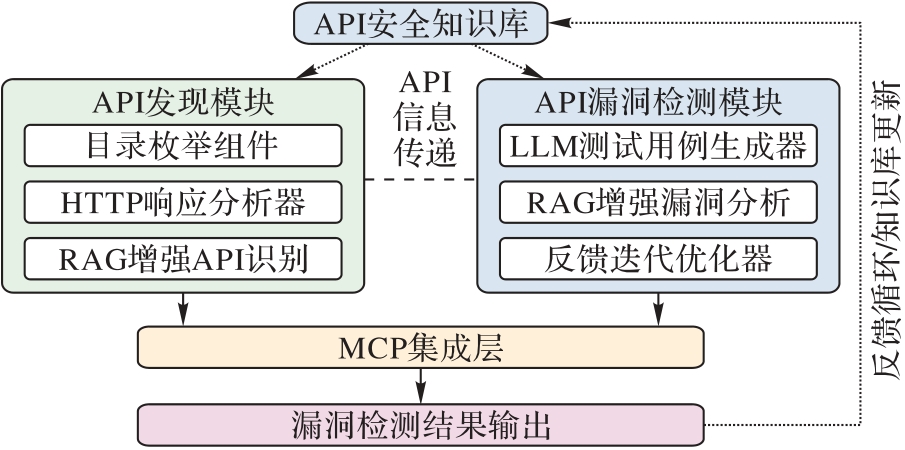
Fig. 1 Framework of agent system A2A
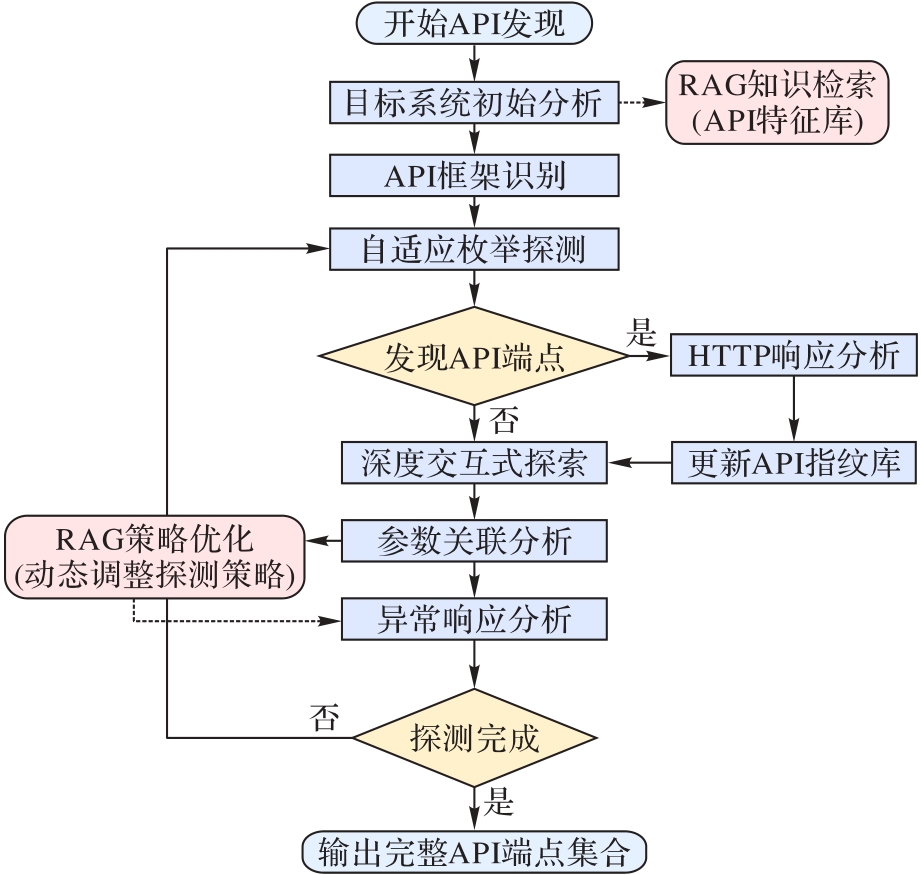
Fig. 2 Framework of API discovery module
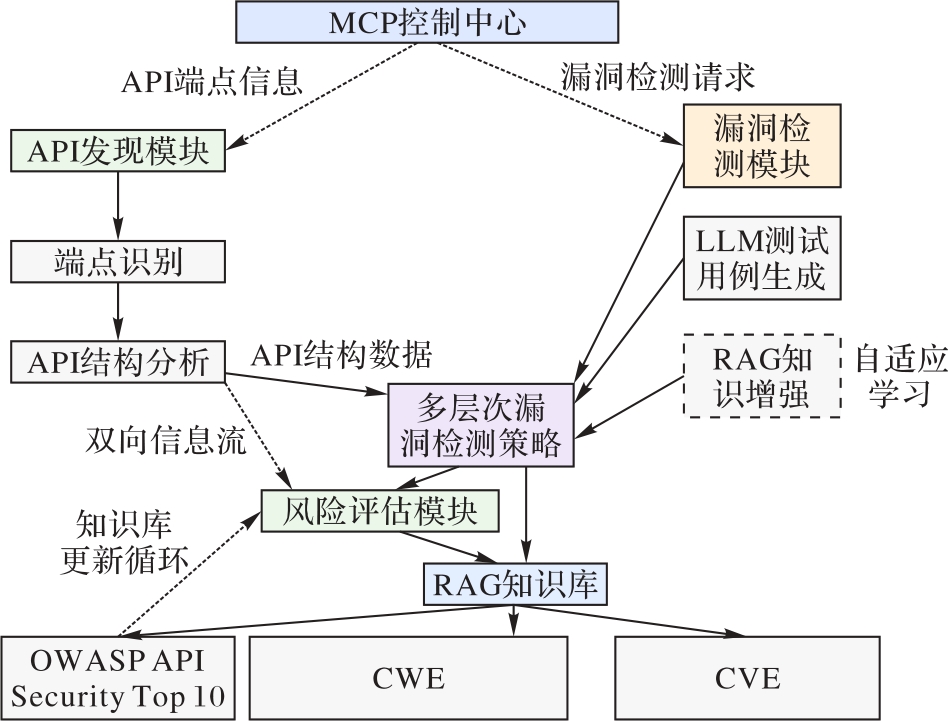
Fig. 3 Framework of API vulnerability detection module
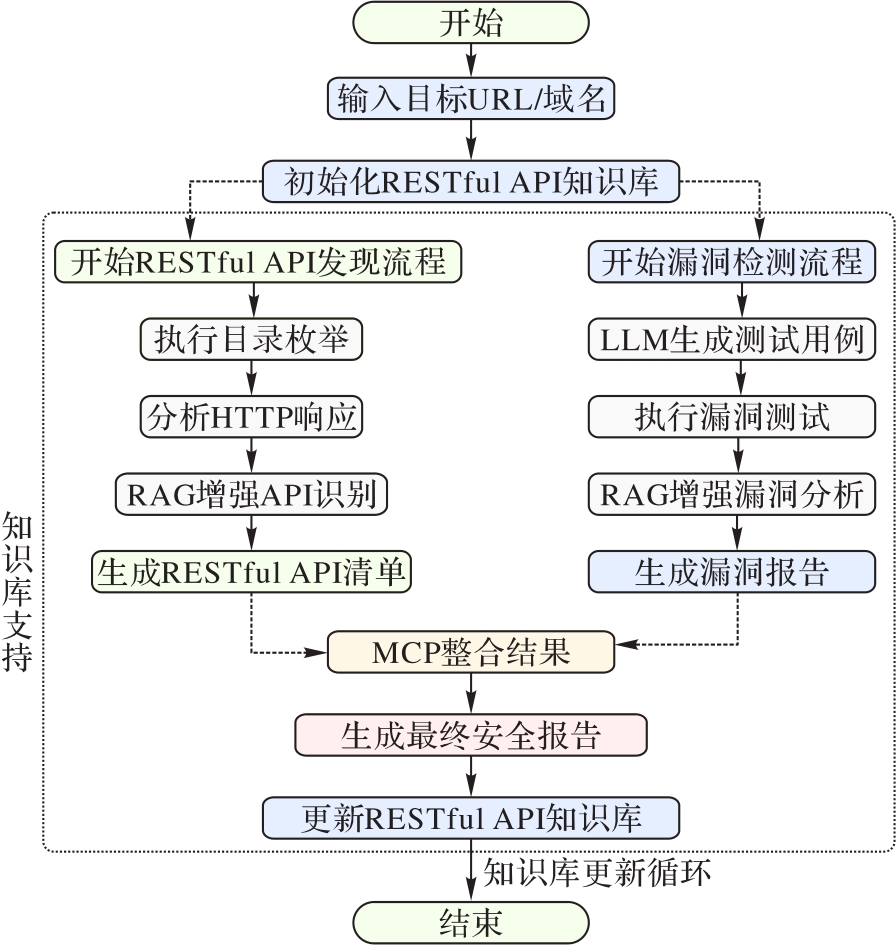
Fig. 4 A2A workflow
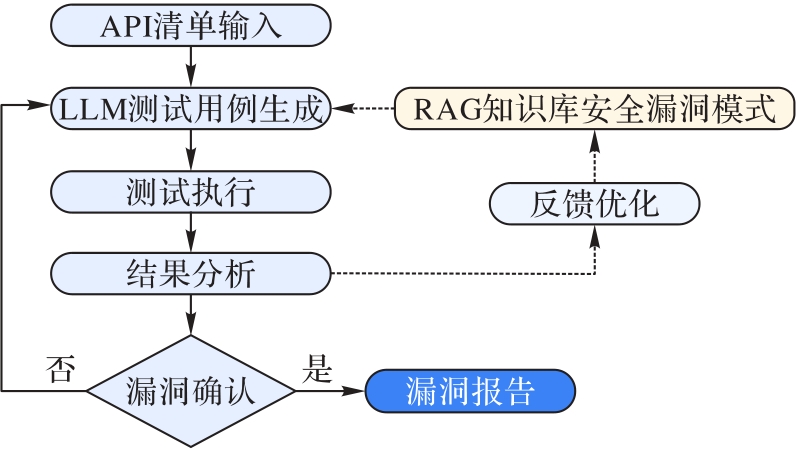
Fig. 5 Flow of RAG knowledge enhancement module
| 应用 | 总端点数 | 公开文档端点数 | API 版本 | 主要功能领域 |
|---|---|---|---|---|
| GitHub | 358 | 320 | v3 | 代码管理、问题跟踪、用户管理 |
| GitLab | 486 | 412 | v4 | 项目管理、CI/CD、仓库操作 |
| Appwrite | 245 | 231 | v1 | 用户认证、数据库、存储、函数 |
| OWASP | 173 | 125 | — | 安全测试、漏洞演示 |
Tab. 1 Benchmark applications
| 应用 | 总端点数 | 公开文档端点数 | API 版本 | 主要功能领域 |
|---|---|---|---|---|
| GitHub | 358 | 320 | v3 | 代码管理、问题跟踪、用户管理 |
| GitLab | 486 | 412 | v4 | 项目管理、CI/CD、仓库操作 |
| Appwrite | 245 | 231 | v1 | 用户认证、数据库、存储、函数 |
| OWASP | 173 | 125 | — | 安全测试、漏洞演示 |
| 工具 | GitHub | GitLab | Appwrite | OWASP | 平均值 |
|---|---|---|---|---|---|
| A2A | 93.5 | 89.7 | 91.8 | 92.5 | 91.9 |
| ZAP | 78.2 | 72.1 | 79.8 | 76.3 | 76.6 |
| Burp Suite Professional | 84.1 | 79.5 | 83.6 | 83.7 | 82.7 |
Tab. 2 ACR comparison
| 工具 | GitHub | GitLab | Appwrite | OWASP | 平均值 |
|---|---|---|---|---|---|
| A2A | 93.5 | 89.7 | 91.8 | 92.5 | 91.9 |
| ZAP | 78.2 | 72.1 | 79.8 | 76.3 | 76.6 |
| Burp Suite Professional | 84.1 | 79.5 | 83.6 | 83.7 | 82.7 |
| 应用 | 漏洞类型 | 多端点 | A2A | A2A (无RAG) | VOAPI | MoREST | Restler | ZAP |
|---|---|---|---|---|---|---|---|---|
| Github | 单端点SQL注入 | × | √ | √ | √ | √ | √ | √ |
| 多端点SQL注入 | √ | √ | × | √ | × | × | × | |
| 反射型XSS | √ | √ | √ | √ | × | × | × | |
| 目录遍历 | × | √ | √ | √ | × | × | × | |
| SSRF | × | √ | √ | √ | √ | × | × | |
| Gitlab | SSRF | √ | √ | √ | √ | × | × | √ |
| 多端点SQL注入 | √ | √ | √ | × | × | × | √ | |
| 单端点SQL注入 | × | √ | × | √ | √ | √ | √ | |
| Appwrite | 目录遍历 | × | √ | √ | √ | × | × | × |
| 越权访问 | × | √ | √ | √ | √ | √ | √ | |
| 远程命令执行 | √ | √ | √ | × | × | × | × | |
| 单端点SQL注入 | × | √ | √ | √ | √ | √ | √ | |
| OWASP | 目录遍历 | × | √ | √ | √ | × | × | √ |
| 文件上传 | √ | √ | √ | √ | × | × | × | |
| 单端点SQL注入 | × | √ | √ | √ | √ | √ | √ | |
| 远程命令执行 | √ | √ | √ | √ | √ | × | × | |
| Kubernetes | 越权访问 | × | √ | √ | × | × | × | × |
| 远程命令执行 | √ | √ | × | × | × | × | × |
Tab. 3 Comparison of vulnerability detection results (by vulnerability types and target applications)
| 应用 | 漏洞类型 | 多端点 | A2A | A2A (无RAG) | VOAPI | MoREST | Restler | ZAP |
|---|---|---|---|---|---|---|---|---|
| Github | 单端点SQL注入 | × | √ | √ | √ | √ | √ | √ |
| 多端点SQL注入 | √ | √ | × | √ | × | × | × | |
| 反射型XSS | √ | √ | √ | √ | × | × | × | |
| 目录遍历 | × | √ | √ | √ | × | × | × | |
| SSRF | × | √ | √ | √ | √ | × | × | |
| Gitlab | SSRF | √ | √ | √ | √ | × | × | √ |
| 多端点SQL注入 | √ | √ | √ | × | × | × | √ | |
| 单端点SQL注入 | × | √ | × | √ | √ | √ | √ | |
| Appwrite | 目录遍历 | × | √ | √ | √ | × | × | × |
| 越权访问 | × | √ | √ | √ | √ | √ | √ | |
| 远程命令执行 | √ | √ | √ | × | × | × | × | |
| 单端点SQL注入 | × | √ | √ | √ | √ | √ | √ | |
| OWASP | 目录遍历 | × | √ | √ | √ | × | × | √ |
| 文件上传 | √ | √ | √ | √ | × | × | × | |
| 单端点SQL注入 | × | √ | √ | √ | √ | √ | √ | |
| 远程命令执行 | √ | √ | √ | √ | √ | × | × | |
| Kubernetes | 越权访问 | × | √ | √ | × | × | × | × |
| 远程命令执行 | √ | √ | × | × | × | × | × |
| 工具 | 总告警数 | 真阳性 | 假阳性 | 假发现率/% | 精确率/% | 召回率/% | F1分数/% |
|---|---|---|---|---|---|---|---|
| A2A (带RAG) | 283 | 261 | 22 | 7.8 | 92.2(261/283) | 86.1 (261/303) | 89.0 |
| A2A (无RAG) | 305 | 236 | 69 | 22.6 | 77.4(236/305) | 77.9 (236/303) | 77.6 |
| RESTler | 346 | 207 | 139 | 40.2 | 59.8(207/346) | 68.3 (207/303) | 63.8 |
| MoREST | 325 | 215 | 110 | 33.8 | 66.2(215/325) | 71.0 (215/303) | 68.5 |
| VOAPI | 352 | 218 | 134 | 38.1 | 61.9(218/352) | 71.9 (218/303) | 66.5 |
| ZAP | 374 | 212 | 162 | 43.3 | 56.7(212/374) | 69.9 (212/303) | 62.6 |
Tab. 4 Comparison of false discovery rate and other metrics in vulnerability detection
| 工具 | 总告警数 | 真阳性 | 假阳性 | 假发现率/% | 精确率/% | 召回率/% | F1分数/% |
|---|---|---|---|---|---|---|---|
| A2A (带RAG) | 283 | 261 | 22 | 7.8 | 92.2(261/283) | 86.1 (261/303) | 89.0 |
| A2A (无RAG) | 305 | 236 | 69 | 22.6 | 77.4(236/305) | 77.9 (236/303) | 77.6 |
| RESTler | 346 | 207 | 139 | 40.2 | 59.8(207/346) | 68.3 (207/303) | 63.8 |
| MoREST | 325 | 215 | 110 | 33.8 | 66.2(215/325) | 71.0 (215/303) | 68.5 |
| VOAPI | 352 | 218 | 134 | 38.1 | 61.9(218/352) | 71.9 (218/303) | 66.5 |
| ZAP | 374 | 212 | 162 | 43.3 | 56.7(212/374) | 69.9 (212/303) | 62.6 |
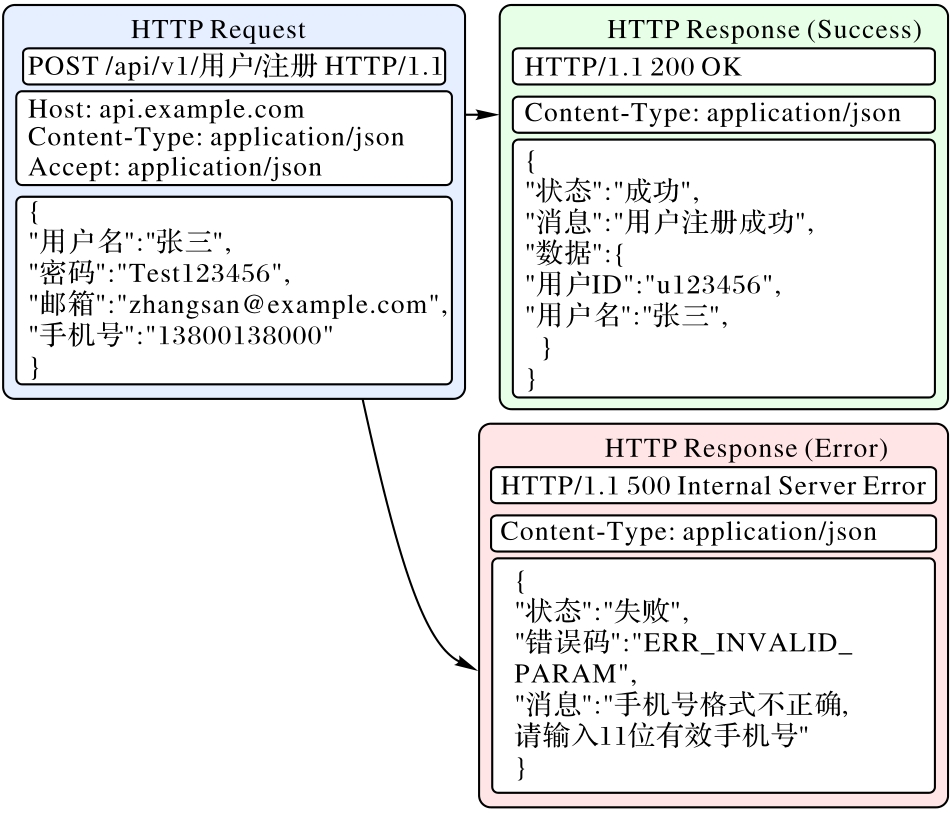
Fig. 6 Flow of non-English test case request
| 工具 | API文档语种 | 平均 | ||||
|---|---|---|---|---|---|---|
| 中文 | 日文 | 阿拉伯文 | 俄文 | 希伯来文 | ||
| A2A | 92.3 | 88.7 | 87.5 | 90.2 | 85.4 | 88.8 |
| RESTler | 52.8 | 48.3 | 45.2 | 50.7 | 42.1 | 47.8 |
| MoREST | 58.4 | 53.7 | 49.5 | 55.8 | 47.3 | 52.9 |
| VOAPI | 61.2 | 57.5 | 52.8 | 58.3 | 51.7 | 56.3 |
| ZAP | 57.9 | 54.2 | 48.6 | 53.5 | 46.8 | 52.2 |
Tab. 5 Comparison of success rates for non-English API endpoints
| 工具 | API文档语种 | 平均 | ||||
|---|---|---|---|---|---|---|
| 中文 | 日文 | 阿拉伯文 | 俄文 | 希伯来文 | ||
| A2A | 92.3 | 88.7 | 87.5 | 90.2 | 85.4 | 88.8 |
| RESTler | 52.8 | 48.3 | 45.2 | 50.7 | 42.1 | 47.8 |
| MoREST | 58.4 | 53.7 | 49.5 | 55.8 | 47.3 | 52.9 |
| VOAPI | 61.2 | 57.5 | 52.8 | 58.3 | 51.7 | 56.3 |
| ZAP | 57.9 | 54.2 | 48.6 | 53.5 | 46.8 | 52.2 |
| [1] | CLARK M J, RAJABION L. A strategic approach to IoT security by working towards a secure IoT future [J]. International Journal of Hyperconnectivity and the Internet of Things, 2023, 7(1): 1-18. |
| [2] | 张毅.基于约束的RESTful API模糊测试框架研究[D].成都:电子科技大学, 2024. |
| ZHANG Y. Constraint-based RESTful API fuzz testing framework research [D]. Chengdu: University of Electronic Science and Technology of China, 2024. | |
| [3] | FU Y, LIANG P, TAHIR A, et al. Security weaknesses of Copilot-generated code in GitHub projects: an empirical study [J]. ACM Transactions on Software Engineering and Methodology, 2025, 34(8): No.218. |
| [4] | BASAK S K, PARDESHI T, REAVES B, et al. RiskHarvester: a risk-based tool to prioritize secret removal efforts in software artifacts [EB/OL]. [2025-03-20]. . |
| [5] | 刘涛. RESTful与GraphQL API模糊测试技术研究[D].杭州:杭州电子科技大学, 2024. |
| LIU T. Research on RESTful and GraphQL API fuzz testing technology [D]. Hangzhou: Hangzhou Dianzi University, 2024. | |
| [6] | FOLEY M, MAFFEIS S. APIRL: deep reinforcement learning for REST API fuzzing [C]// Proceedings of the 39th AAAI Conference on Artificial Intelligence. Palo Alto: AAAI Press, 2025: 191-199. |
| [7] | KIM M, SINHA S, ORSO A. LlamaRestTest: effective REST API testing with small language models [J]. Proceedings of the ACM on Software Engineering, 2025, 2(FSE): 465-488. |
| [8] | DENG G, ZHANG Z, LI Y, et al. NAUTILUS: automated RESTful API vulnerability detection [C]// Proceedings of the 32nd USENIX Conference on Security Symposium. Berkeley: USENIX Association, 2023: 5594-5609. |
| [9] | DU W, LI J, WANG Y, et al. Vulnerability-oriented testing for RESTful APIs [C]// Proceedings of the 33rd USENIX Security Symposium. Berkeley: USENIX Association, 2024: 739-755. |
| [10] | NOOYENS R, BARDAKCI T, BEYAZIT M, et al. Test amplification for REST APIs via single and multi-agent LLM systems [EB/OL]. [2025-06-05]. . |
| [11] | WEYSSOW M, YANG C, CHEN J, et al. R2 Vul: learning to reason about software vulnerabilities with reinforcement learning and structured reasoning distillation [EB/OL]. [2025-04-28]. . |
| [12] | ROBRE, NOBLE N, BASULI S. ScriptHunter: tool to find JavaScript files on websites [EB/OL]. [2025-03-10]. . |
| [13] | COSGROVE J, ZEJNILOVIC S. Introducing Cloudflare's 2024 API security and management report [EB/OL]. [2025-03-05]. . |
| [14] | ATLIDAKIS V, GODEFROID P, POLISHCHUK M. RESTler: stateful REST API fuzzing [C]// Proceedings of the IEEE/ACM 41st International Conference on Software Engineering. Piscataway: IEEE, 2019: 748-758. |
| [15] | CHAROENWET W, THONGTANUNAM P, PHAM V T, et al. An empirical study of static analysis tools for secure code review [C]// Proceedings of the 33rd ACM SIGSOFT International Symposium on Software Testing and Analysis. New York: ACM, 2016: 691-703. |
| [16] | ZHANG M, ARCURI A. Open problems in fuzzing RESTful APIs: a comparison of tools [J]. ACM Transactions on Software Engineering and Methodology, 2023, 32(6): No.144. |
| [17] | ARCURI A. RESTful API automated test case generation with EvoMaster [J]. ACM Transactions on Software Engineering and Methodology, 2019, 28(1): No.3. |
| [18] | DHARMAADI I P A, ATHANASOPOULOS E, TURKMEN F. Fuzzing frameworks for server-side web applications: a survey [J]. International Journal of Information Security, 2025, 24: No.73. |
| [19] | YANG R, LAU W C, CHEN J, et al. Vetting single sign-on SDK implementations via symbolic reasoning [C]// Proceedings of the 27th USENIX Security Symposium. Berkeley: USENIX Association, 2018: 1459-1474. |
| [20] | REN X, YE X, XING Z, et al. API-misuse detection driven by fine-grained API-constraint knowledge graph [C]// Proceedings of the 35th IEEE/ACM International Conference on Automated Software Engineering. New York: ACM, 2020: 461-472. |
| [21] | PEARCE H, TAN B, AHMAD B, et al. Examining zero-shot vulnerability repair with large language models [C]// Proceedings of the 2023 IEEE Symposium on Security and Privacy. Piscataway: IEEE, 2023: 2339-2356. |
| [22] | MA X, LUO L, ZENG Q. From one thousand pages of specification to unveiling hidden bugs: large language model assisted fuzzing of Matter IoT devices [C]// Proceedings of the 33rd USENIX Security Symposium. Berkeley: USENIX Association, 2024: 4783-4800. |
| [23] | LEWIS P, PEREZ E, PIKTUS A, et al. Retrieval-augmented generation for knowledge-intensive NLP tasks [C]// Proceedings of the 34th International Conference on Neural Information Processing Systems. Red Hook: Curran Associates Inc., 2020: 9459-9474. |
| [24] | RAHMAN M, PIRYANI K O, SANCHEZ A M, et al. Retrieval augmented generation for robust cyber defense: PNNL-36792 [R/OL]. [2025-03-05]. . |
| [25] | HUANG L, YU W, MA W, et al. A survey on hallucination in large language models: principles, taxonomy, challenges, and open questions [J]. ACM Transactions on Information Systems, 2025, 43(3): No.42. |
| [26] | SIDDIQ M L, SILVA SANTOS J C DA, TANVIR R H, et al. Using large language models to generate JUnit tests: an empirical study [C]// Proceedings of the 28th International Conference on Evaluation and Assessment in Software Engineering. New York: ACM, 2024: 313-322. |
| [27] | SOLTANI M, KHAJAVI K, SIAVOSHANI M J, et al. A multi-agent adaptive deep learning framework for online intrusion detection [J]. Cybersecurity, 2024, 7: No.9. |
| [28] | REN S, JIN J, NIU G, et al. ARCS: adaptive reinforcement learning framework for automated cybersecurity incident response strategy optimization [J]. Applied Sciences, 2025, 15(2): No.951. |
| [1] | Xinran XIE, Zhe CUI, Rui CHEN, Tailai PENG, Dekun LIN. Zero-shot re-ranking method by large language model with hierarchical filtering and label semantic extension [J]. Journal of Computer Applications, 2026, 46(1): 60-68. |
| [2] | Binbin ZHANG, Yongbin QIN, Ruizhang HUANG, Yanping CHEN. Judgment document summarization method combining large language model and dynamic prompts [J]. Journal of Computer Applications, 2025, 45(9): 2783-2789. |
| [3] | Tao FENG, Chen LIU. Dual-stage prompt tuning method for automated preference alignment [J]. Journal of Computer Applications, 2025, 45(8): 2442-2447. |
| [4] | Chen LIANG, Yisen WANG, Qiang WEI, Jiang DU. Source code vulnerability detection method based on Transformer-GCN [J]. Journal of Computer Applications, 2025, 45(7): 2296-2303. |
| [5] | Yiheng SUN, Maofu LIU. Tender information extraction method based on prompt tuning of knowledge [J]. Journal of Computer Applications, 2025, 45(4): 1169-1176. |
| [6] | Jing HE, Yang SHEN, Runfeng XIE. Recognition and optimization of hallucination phenomena in large language models [J]. Journal of Computer Applications, 2025, 45(3): 709-714. |
| [7] | Peng CAO, Guangqi WEN, Jinzhu YANG, Gang CHEN, Xinyi LIU, Xuechun JI. Efficient fine-tuning method of large language models for test case generation [J]. Journal of Computer Applications, 2025, 45(3): 725-731. |
| [8] | Yanping ZHANG, Meifang CHEN, Changhai TIAN, Zibo YI, Wenpeng HU, Wei LUO, Zhunchen LUO. Multi-strategy retrieval-augmented generation method for military domain knowledge question answering systems [J]. Journal of Computer Applications, 2025, 45(3): 746-754. |
| [9] | Xiaolin QIN, Xu GU, Dicheng LI, Haiwen XU. Survey and prospect of large language models [J]. Journal of Computer Applications, 2025, 45(3): 685-696. |
| [10] | Chengzhe YUAN, Guohua CHEN, Dingding LI, Yuan ZHU, Ronghua LIN, Hao ZHONG, Yong TANG. ScholatGPT: a large language model for academic social networks and its intelligent applications [J]. Journal of Computer Applications, 2025, 45(3): 755-764. |
| [11] | Yuemei XU, Yuqi YE, Xueyi HE. Bias challenges of large language models: identification, evaluation, and mitigation [J]. Journal of Computer Applications, 2025, 45(3): 697-708. |
| [12] | Yan YANG, Feng YE, Dong XU, Xuejie ZHANG, Jin XU. Construction of digital twin water conservancy knowledge graph integrating large language model and prompt learning [J]. Journal of Computer Applications, 2025, 45(3): 785-793. |
| [13] | Xuefei ZHANG, Liping ZHANG, Sheng YAN, Min HOU, Yubo ZHAO. Personalized learning recommendation in collaboration of knowledge graph and large language model [J]. Journal of Computer Applications, 2025, 45(3): 773-784. |
| [14] | Chenwei SUN, Junli HOU, Xianggen LIU, Jiancheng LYU. Large language model prompt generation method for engineering drawing understanding [J]. Journal of Computer Applications, 2025, 45(3): 801-807. |
| [15] | Yanmin DONG, Jiajia LIN, Zheng ZHANG, Cheng CHENG, Jinze WU, Shijin WANG, Zhenya HUANG, Qi LIU, Enhong CHEN. Design and practice of intelligent tutoring algorithm based on personalized student capability perception [J]. Journal of Computer Applications, 2025, 45(3): 765-772. |
| Viewed | ||||||
|
Full text |
|
|||||
|
Abstract |
|
|||||
