


《计算机应用》唯一官方网站 ›› 2026, Vol. 46 ›› Issue (6): 1936-1946.DOI: 10.11772/j.issn.1001-9081.2025050653
朱松浩1, 赵芝芸1( ), 王梦灵1,2
收稿日期:2025-06-13
修回日期:2025-07-31
接受日期:2025-08-26
发布日期:2025-09-15
出版日期:2026-06-10
通讯作者:
赵芝芸
作者简介:朱松浩(2000—),男,河南许昌人,硕士研究生,主要研究方向:计算机视觉、嵌入式系统基金资助:
Songhao ZHU1, Zhiyun ZHAO1(), Mengling WANG1,2
Received:2025-06-13
Revised:2025-07-31
Accepted:2025-08-26
Online:2025-09-15
Published:2026-06-10
Contact:
Zhiyun ZHAO
About author:ZHU Songhao, born in 2000, M. S. candidate. His research interests include computer vision, embedded systems.Supported by:摘要:
针对低光图像常存在亮度不足、噪声大、细节丢失和颜色失真等问题,进而显著降低视觉质量,阻碍后续视觉任务的执行的事实,提出一种基于轻量残差与亮度感知动态特征融合的低光图像增强(LLIE)网络(LRBDU-Net)。首先,在编码阶段,设计一种基于轻量残差结构的特征提取(LRFE)模块,以缓解下采样过程造成的特征信息丢失,并提高对低光图像特征的提取能力;其次,在编解码过渡阶段,设计一种基于亮度感知的深层语义特征处理(BDSP)模块,以增强网络对低光图像亮度分布的感知和恢复能力;再次,在解码阶段,采用轻量级动态特征融合(DFF)机制,提升跳跃连接特征与上采样特征的融合效果,从而提高网络对低光图像的噪声抑制和细节恢复能力;继次,提出一种基于感知-颜色的混合损失函数(PCH),从而进一步提高LLIE的结构一致性与色彩还原度;最后,采用分组卷积与Ghost卷积的组合结构(GpGh)对网络进行轻量化设计,从而在保证LLIE质量的同时降低网络复杂度。实验结果表明,所提网络在LOL (LOw-Light)系列数据集(LOL-v1、LOL-v2-real和LOL-v2-syn)上的峰值信噪比(PSNR)分别达到了23.71 dB、21.46 dB和24.80 dB,结构相似性指数(SSIM)分别达到了0.852、0.863和0.933。整体上,该网络采用纯卷积算子架构与轻量化设计,与轻量级深度曲线估计方法——零参考深度曲线估计(Zero-DCE)网络相比,在LLIE质量方面实现了显著的提升;与基于注意力机制的LLIE生成对抗网络EnGAN(Enlighten Generative Adversarial Network)和基于Transformer架构的LLIE方法LLFormer(Low-Light Transformer)相比,在保证LLIE性能的同时大幅降低了网络复杂度和推理计算开销。可见,所提网络能够在亮度提升、噪声抑制、细节恢复、结构完整性和色彩还原程度等LLIE性能与网络计算效率之间实现良好平衡。
中图分类号:
朱松浩, 赵芝芸, 王梦灵. 基于轻量残差与亮度感知动态特征融合的低光图像增强网络[J]. 计算机应用, 2026, 46(6): 1936-1946.
Songhao ZHU, Zhiyun ZHAO, Mengling WANG. Low-light image enhancement network based on lightweight residual and brightness-aware dynamic feature fusion[J]. Journal of Computer Applications, 2026, 46(6): 1936-1946.
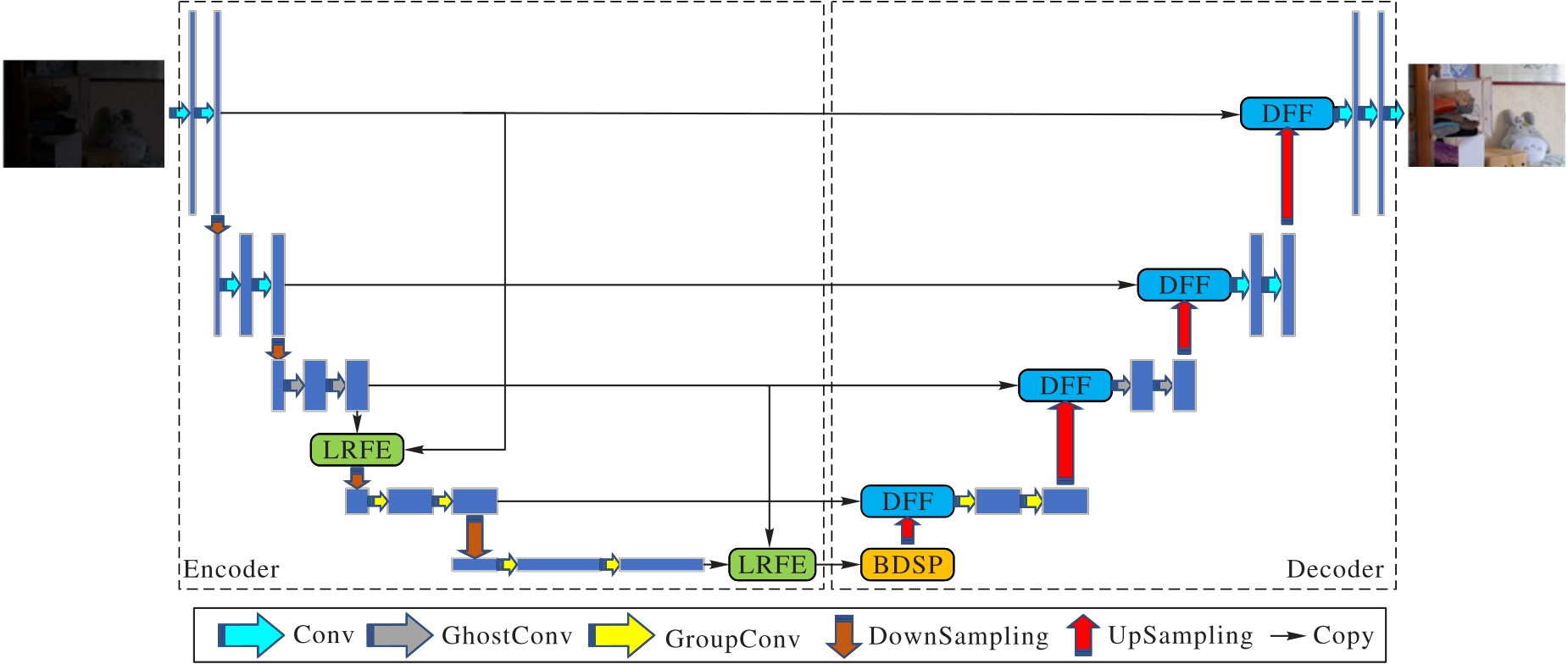
图1 LRBDU-Net的整体结构
Fig. 1 Overall Structure of LRBDU-Net
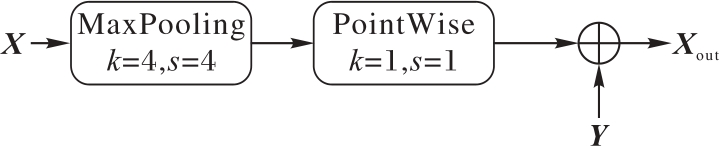
图2 LRFE模块的结构
Fig. 2 Structure of LRFE module
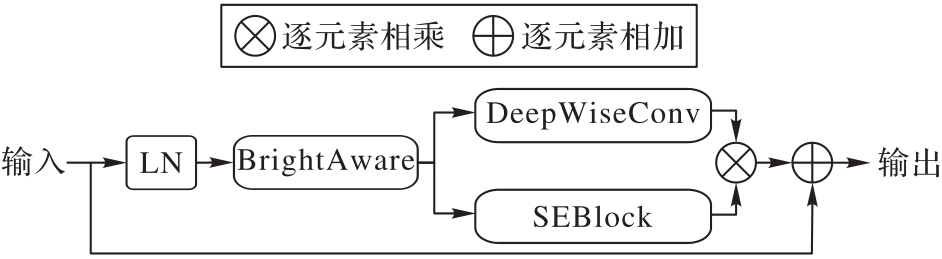
图3 BSDP模块的结构
Fig. 3 Structure of BDSP module
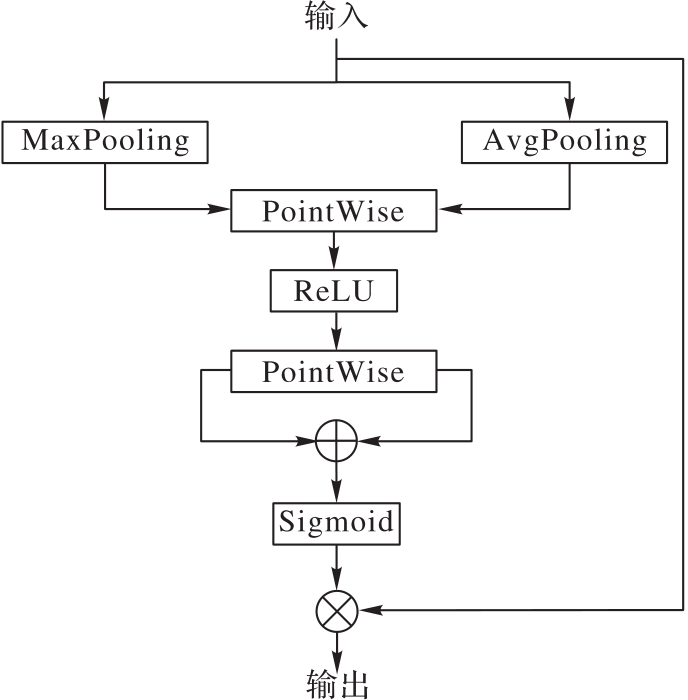
图4 亮度感知机制的结构
Fig. 4 Structure of brightness-aware mechanism
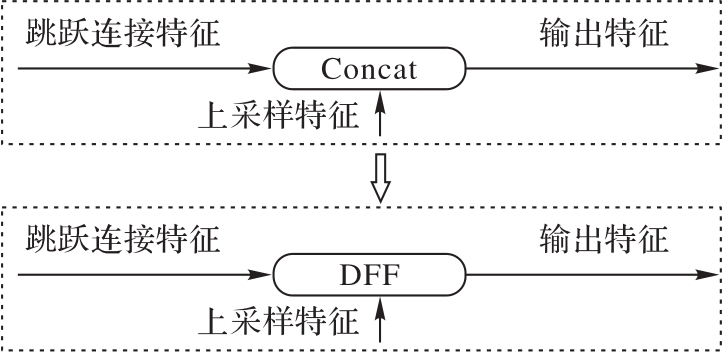
图5 解码阶段的特征融合
Fig. 5 Feature fusion during decoding stage

图6 DFF模块的结构
Fig. 6 Structure of DFF module
| 类型 | 参数 |
|---|---|
| 操作系统 | Ubuntu20.04 |
| CPU | Intel Core i9-12900K 32 GB |
| GPU | NVIDIA GeForce RTX 3080 10 GB |
| Python | 3.8.10 |
| PyTorch | 1.12.0 |
| CUDA | 11.6 |
| 优化器 | Adam |
| 训练轮次 | 2 000 |
| 初始学习率 | 10-4 |
| 调度策略 | Cosine Annealing |
| 批次大小 | 1 |
| 权重衰减 | 5×10⁻⁴ |
表1 实验环境与参数设置
Tab. 1 Experimental environment and parameter setting
| 类型 | 参数 |
|---|---|
| 操作系统 | Ubuntu20.04 |
| CPU | Intel Core i9-12900K 32 GB |
| GPU | NVIDIA GeForce RTX 3080 10 GB |
| Python | 3.8.10 |
| PyTorch | 1.12.0 |
| CUDA | 11.6 |
| 优化器 | Adam |
| 训练轮次 | 2 000 |
| 初始学习率 | 10-4 |
| 调度策略 | Cosine Annealing |
| 批次大小 | 1 |
| 权重衰减 | 5×10⁻⁴ |
| 方法类型 | 方法 | 模型复杂度 | LOL-v1 | LOL-v2-real | LOL-v2-syn | ||||
|---|---|---|---|---|---|---|---|---|---|
| FLOPs/109 | Params/106 | PSNR/dB | SSIM | PSNR/dB | SSIM | PSNR/dB | SSIM | ||
| 监督学习方法 | SID[ | 13.73 | 7.76 | 14.35 | 0.436 | 13.24 | 0.442 | 15.04 | 0.610 |
| DeepUPE[ | 21.10 | 1.02 | 14.38 | 0.446 | 13.27 | 0.452 | 15.08 | 0.623 | |
| RetinexNet[ | 584.47 | 0.84 | 16.79 | 0.419 | 16.11 | 0.401 | 17.14 | 0.762 | |
| KinD[ | 34.99 | 8.02 | 17.68 | 0.775 | 14.74 | 0.641 | 13.29 | 0.578 | |
| LEDNet[ | 35.92 | 7.07 | 15.77 | 0.707 | 18.74 | 0.724 | 18.61 | 0.778 | |
| LLFlow[ | 358.40 | 17.42 | 21.16 | 0.853 | 17.46 | 23.42 | 0.933 | ||
| LLFormer[ | 22.52 | 24.55 | 0.816 | 0.792 | |||||
| 本文方法 | 9.27 | 7.08 | 23.71 | 21.46 | 0.863 | 24.80 | 0.933 | ||
| 半监督学习方法 | Sparse[ | 53.26 | 2.33 | 17.20 | 0.640 | 20.06 | 0.816 | 22.05 | 0.905 |
| 无监督学习方法 | Zero-DCE[ | 4.83 | 0.076 | 14.81 | 0.557 | 18.00 | 0.572 | 17.71 | 0.815 |
| SCI[ | 0.03 | 0.000 2 | 14.78 | 0.522 | 17.30 | 0.534 | 15.43 | 0.748 | |
| RUAS[ | 16.41 | 0.499 | 15.32 | 0.488 | 13.40 | 0.644 | |||
| EnGAN[ | 61.01 | 114.35 | 17.47 | 0.651 | 18.67 | 0.676 | 16.57 | 0.775 | |
| PairLIE[ | 20.81 | 0.33 | 19.51 | 0.736 | 19.89 | 0.778 | 19.07 | 0.797 | |
| ZERO-IG[ | 30.19 | 0.083 | 22.18 | 0.772 | 18.13 | 0.746 | 15.78 | 0.762 | |
表2 配对数据集上的定量对比结果
Tab. 2 Quantitative comparison results on paired datasets
| 方法类型 | 方法 | 模型复杂度 | LOL-v1 | LOL-v2-real | LOL-v2-syn | ||||
|---|---|---|---|---|---|---|---|---|---|
| FLOPs/109 | Params/106 | PSNR/dB | SSIM | PSNR/dB | SSIM | PSNR/dB | SSIM | ||
| 监督学习方法 | SID[ | 13.73 | 7.76 | 14.35 | 0.436 | 13.24 | 0.442 | 15.04 | 0.610 |
| DeepUPE[ | 21.10 | 1.02 | 14.38 | 0.446 | 13.27 | 0.452 | 15.08 | 0.623 | |
| RetinexNet[ | 584.47 | 0.84 | 16.79 | 0.419 | 16.11 | 0.401 | 17.14 | 0.762 | |
| KinD[ | 34.99 | 8.02 | 17.68 | 0.775 | 14.74 | 0.641 | 13.29 | 0.578 | |
| LEDNet[ | 35.92 | 7.07 | 15.77 | 0.707 | 18.74 | 0.724 | 18.61 | 0.778 | |
| LLFlow[ | 358.40 | 17.42 | 21.16 | 0.853 | 17.46 | 23.42 | 0.933 | ||
| LLFormer[ | 22.52 | 24.55 | 0.816 | 0.792 | |||||
| 本文方法 | 9.27 | 7.08 | 23.71 | 21.46 | 0.863 | 24.80 | 0.933 | ||
| 半监督学习方法 | Sparse[ | 53.26 | 2.33 | 17.20 | 0.640 | 20.06 | 0.816 | 22.05 | 0.905 |
| 无监督学习方法 | Zero-DCE[ | 4.83 | 0.076 | 14.81 | 0.557 | 18.00 | 0.572 | 17.71 | 0.815 |
| SCI[ | 0.03 | 0.000 2 | 14.78 | 0.522 | 17.30 | 0.534 | 15.43 | 0.748 | |
| RUAS[ | 16.41 | 0.499 | 15.32 | 0.488 | 13.40 | 0.644 | |||
| EnGAN[ | 61.01 | 114.35 | 17.47 | 0.651 | 18.67 | 0.676 | 16.57 | 0.775 | |
| PairLIE[ | 20.81 | 0.33 | 19.51 | 0.736 | 19.89 | 0.778 | 19.07 | 0.797 | |
| ZERO-IG[ | 30.19 | 0.083 | 22.18 | 0.772 | 18.13 | 0.746 | 15.78 | 0.762 | |
| 方法 | DICM | LIME | MEF | NPE | VV | |||||
|---|---|---|---|---|---|---|---|---|---|---|
| BRISQUE | NIQE | BRISQUE | NIQE | BRISQUE | NIQE | BRISQUE | NIQE | BRISQUE | NIQE | |
| RetinexNet[ | 24.42 | 3.94 | 28.62 | 4.40 | 30.80 | 4.32 | 21.69 | 4.26 | 26.36 | 3.43 |
| KinD[ | 30.57 | 3.76 | 32.74 | 4.03 | 46.65 | 4.60 | 24.72 | 3.61 | 28.91 | 3.31 |
| RUAS[ | 43.66 | 5.13 | 31.56 | 5.06 | 41.59 | 5.73 | 45.41 | 5.22 | 51.63 | 5.02 |
| LLFlow[ | 22.24 | 32.61 | 4.48 | 36.61 | 4.20 | 24.43 | 3.67 | 25.84 | ||
| ZERO-IG[ | 30.96 | 3.65 | 31.28 | 35.78 | 3.96 | 31.09 | 4.11 | 33.48 | 3.27 | |
| LLFormer[ | 3.56 | 4.24 | 16.97 | 14.72 | 3.42 | |||||
| 本文方法 | 17.95 | 3.12 | 18.97 | 3.85 | 21.04 | 3.52 | 3.24 | 3.00 | ||
表3 未配对数据集上的定量对比结果
Tab. 3 Quantitative comparison results on unpaired datasets
| 方法 | DICM | LIME | MEF | NPE | VV | |||||
|---|---|---|---|---|---|---|---|---|---|---|
| BRISQUE | NIQE | BRISQUE | NIQE | BRISQUE | NIQE | BRISQUE | NIQE | BRISQUE | NIQE | |
| RetinexNet[ | 24.42 | 3.94 | 28.62 | 4.40 | 30.80 | 4.32 | 21.69 | 4.26 | 26.36 | 3.43 |
| KinD[ | 30.57 | 3.76 | 32.74 | 4.03 | 46.65 | 4.60 | 24.72 | 3.61 | 28.91 | 3.31 |
| RUAS[ | 43.66 | 5.13 | 31.56 | 5.06 | 41.59 | 5.73 | 45.41 | 5.22 | 51.63 | 5.02 |
| LLFlow[ | 22.24 | 32.61 | 4.48 | 36.61 | 4.20 | 24.43 | 3.67 | 25.84 | ||
| ZERO-IG[ | 30.96 | 3.65 | 31.28 | 35.78 | 3.96 | 31.09 | 4.11 | 33.48 | 3.27 | |
| LLFormer[ | 3.56 | 4.24 | 16.97 | 14.72 | 3.42 | |||||
| 本文方法 | 17.95 | 3.12 | 18.97 | 3.85 | 21.04 | 3.52 | 3.24 | 3.00 | ||
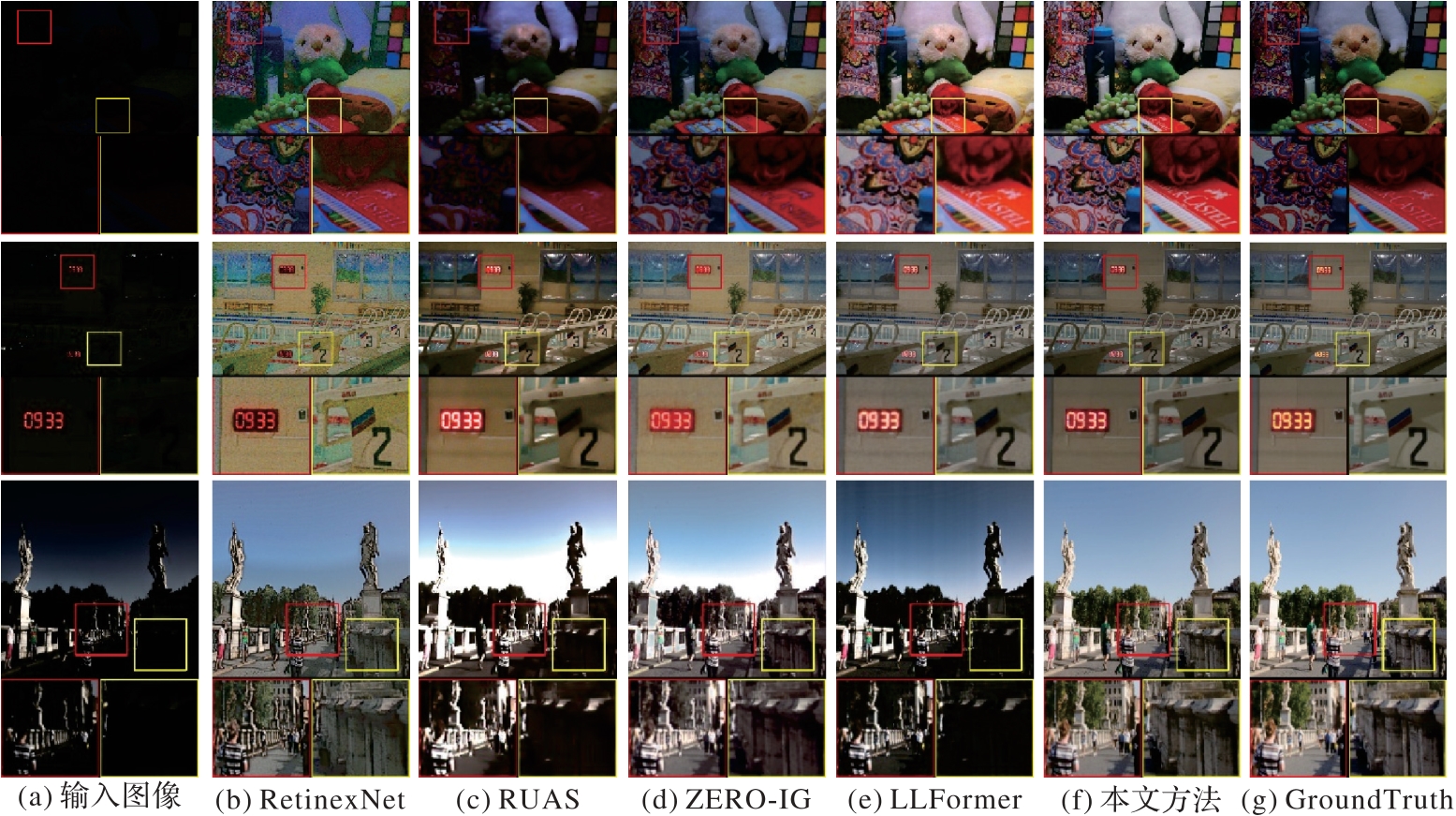
图7 不同方法在LOL配对数据集上的视觉比较
Fig. 7 Visual comparison of different methods on LOL paired datasets
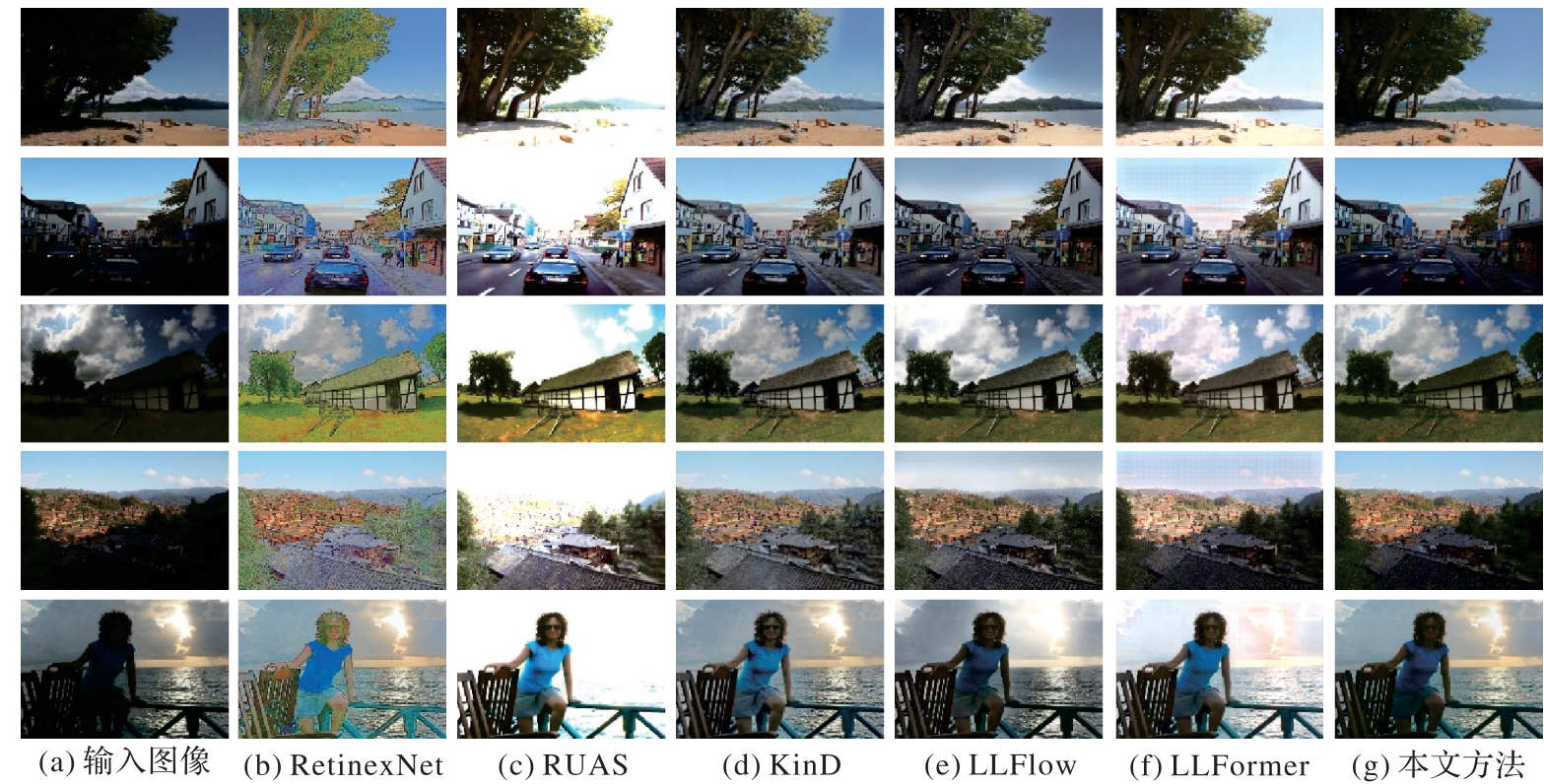
图8 不同方法在未配对数据集上的视觉比较
Fig. 8 Visual comparison of different methods on unpaired datasets
| LREF | BDSP | DFF | GpGh | PCHLoss | PSNR/ dB | SSIM | Params/106 | FLOPs/109 |
|---|---|---|---|---|---|---|---|---|
| × | × | × | × | × | 21.70 | 0.841 | 7.40 | 12.75 |
| × | √ | × | × | √ | 22.79 | 0.840 | 7.72 | 12.81 |
| √ | × | √ | × | √ | 22.74 | 0.842 | 7.22 | 11.04 |
| × | × | × | √ | √ | 23.25 | 10.38 | ||
| × | √ | × | √ | √ | 0.844 | 7.13 | 10.44 | |
| √ | × | √ | √ | √ | 23.16 | 0.842 | 6.76 | 9.21 |
| √ | √ | √ | × | √ | 23.16 | 0.848 | 7.54 | 11.11 |
| √ | √ | √ | √ | × | 22.90 | 0.835 | 7.08 | |
| √ | √ | √ | √ | √ | 23.71 | 0.852 | 7.08 |
表4 消融实验结果
Tab. 4 Results of the ablation study
| LREF | BDSP | DFF | GpGh | PCHLoss | PSNR/ dB | SSIM | Params/106 | FLOPs/109 |
|---|---|---|---|---|---|---|---|---|
| × | × | × | × | × | 21.70 | 0.841 | 7.40 | 12.75 |
| × | √ | × | × | √ | 22.79 | 0.840 | 7.72 | 12.81 |
| √ | × | √ | × | √ | 22.74 | 0.842 | 7.22 | 11.04 |
| × | × | × | √ | √ | 23.25 | 10.38 | ||
| × | √ | × | √ | √ | 0.844 | 7.13 | 10.44 | |
| √ | × | √ | √ | √ | 23.16 | 0.842 | 6.76 | 9.21 |
| √ | √ | √ | × | √ | 23.16 | 0.848 | 7.54 | 11.11 |
| √ | √ | √ | √ | × | 22.90 | 0.835 | 7.08 | |
| √ | √ | √ | √ | √ | 23.71 | 0.852 | 7.08 |
| 间隔次数 | PSNR/dB | SSIM | Params/106 | FLOPs/109 |
|---|---|---|---|---|
| 1 | 23.59 | 0.852 | 7.18 | 9.37 |
| 2 | 23.71 | 0.852 | 7.08 | 9.27 |
| 3 | 22.97 | 0.844 | 7.05 | 9.27 |
表5 不同残差间隔策略的消融实验结果
Tab. 5 Ablation study results of different residual interval strategies
| 间隔次数 | PSNR/dB | SSIM | Params/106 | FLOPs/109 |
|---|---|---|---|---|
| 1 | 23.59 | 0.852 | 7.18 | 9.37 |
| 2 | 23.71 | 0.852 | 7.08 | 9.27 |
| 3 | 22.97 | 0.844 | 7.05 | 9.27 |
| 模块类型 | PSNR/dB | SSIM | Params/106 | FLOPs/109 |
|---|---|---|---|---|
| 全连接层FC | 23.28 | 0.847 | 7.08 | 9.27 |
| 1×1点卷积 | 23.71 | 0.852 | 7.08 | 9.27 |
表6 CBAM通道注意力结构替换的消融实验分析
Tab. 6 Ablation study analysis of replacing channel attention structure in CBAM
| 模块类型 | PSNR/dB | SSIM | Params/106 | FLOPs/109 |
|---|---|---|---|---|
| 全连接层FC | 23.28 | 0.847 | 7.08 | 9.27 |
| 1×1点卷积 | 23.71 | 0.852 | 7.08 | 9.27 |
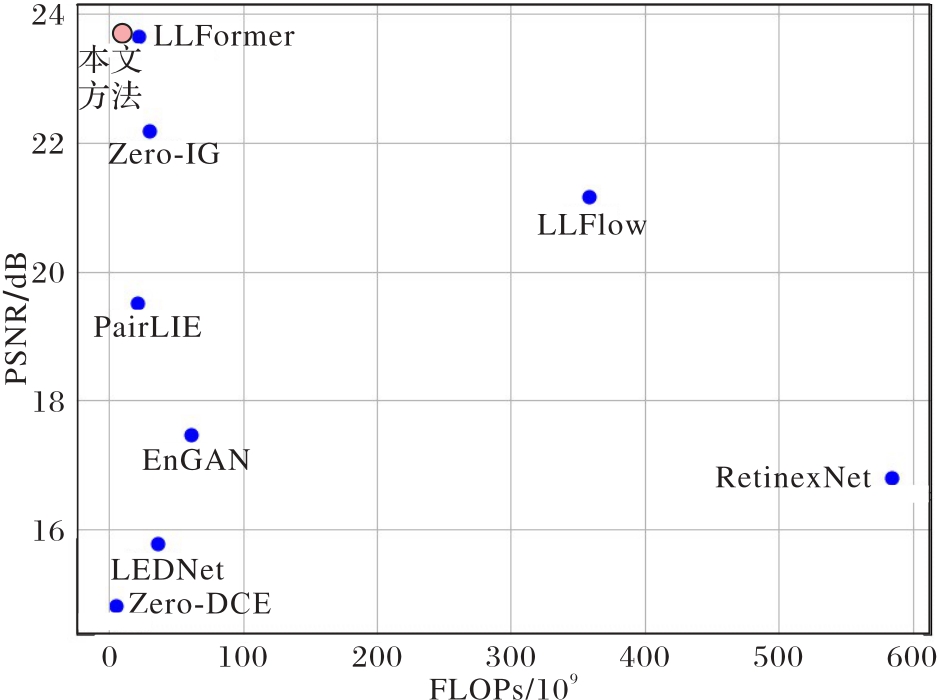
图9 不同方法的性能-复杂度对比
Fig. 9 Performance-complexity comparison of different methods
| [1] | 汪书民,李生林,周香伶. 基于特征融合的低光照场景下的自适应人脸识别[J]. 计算机应用, 2025, 45(10): 3320-3327. |
| WANG S M, LI S L, ZHOU X L. Adaptive face recognition in low light scenes based on feature fusion[J]. Journal of Computer Applications, 2025, 45(10): 3320-3327. | |
| [2] | 吕宗旺,牛贺杰,孙福艳,等. 低照度图像增强算法研究综述[J]. 红外技术, 2025, 47(2): 165-178. |
| LYU Z W, NIU H J, SUN F Y, et al. Review of research on low-light image enhancement algorithms[J]. Infrared Technology, 2025, 47(2): 165-178. | |
| [3] | 郭永坤,朱彦陈,刘莉萍,等. 空频域图像增强方法研究综述[J]. 计算机工程与应用, 2022, 58(11): 23-32. |
| GUO Y K, ZHU Y C, LIU L P, et al. Research review of space-frequency domain image enhancement methods[J]. Computer Engineering and Applications, 2022, 58(11): 23-32. | |
| [4] | 谭碰,欧博. 基于自适应直方图均衡化的医学图像可逆对比度增强算法[J]. 计算机科学, 2024, 51(6A): No.230700124. |
| TAN P, OU B. Medical image reversible contrast enhancement based on adaptive histogram equalization[J]. Computer Science, 2024, 51(6A): No.230700124. | |
| [5] | 刘家军,钟鸣睿,秦梓轩. 基于对比度受限直方图均衡化的夜间接触网支柱号牌识别方法研究[J]. 电气工程学报, 2021, 16(3): 70-76. |
| LIU J J, ZHONG M R, QIN Z X. Research on identification method of OCS pillar number plate at night based on contrast limited histogram equalization[J]. Journal of Electrical Engineering, 2021, 16(3): 70-76. | |
| [6] | LAND E H. The retinex theory of color vision[J]. Scientific American, 1977, 237(6): 108-129. |
| [7] | JOBSON D J, RAHMAN Z, WOODELL G A. Properties and performance of a center/surround retinex [J]. IEEE Transactions on Image Processing, 1997, 6(3): 451-462. |
| [8] | JOBSON D J, RAHMAN Z, WOODELL G A. A multiscale retinex for bridging the gap between color images and the human observation of scenes[J]. IEEE Transactions on Image Processing, 1997, 6(7): 965-976. |
| [9] | LORE K G, AKINTAYO A, SARKAR S. LLNet: a deep autoencoder approach to natural low-light image enhancement[J]. Pattern Recognition, 2017, 61: 650-662. |
| [10] | WEI C, WANG W, YANG W, et al. Deep Retinex decomposition for low-light enhancement[C]// Proceedings of the 2018 British Machine Vision Conference. Durham: BMVA Press, 2018: No.451. |
| [11] | GUO C, LI C, GUO J, et al. Zero-reference deep curve estimation for low-light image enhancement[C]// Proceedings of the 2020 IEEE/CVF Conference on Computer Vision and Pattern Recognition. Piscataway: IEEE, 2020: 1777-1786.) |
| [12] | JIANG Y, GONG X, LIU D, et al. EnlightenGAN: deep light enhancement without paired supervision[J]. IEEE Transactions on Image Processing, 2021, 30: 2340-2349. |
| [13] | WANG T, ZHANG K, SHEN T, et al. Ultra-high-definition low-light image enhancement: a benchmark and Transformer-based method[C]// Proceedings of the 37th AAAI Conference on Artificial Intelligence. Palo Alto: AAAI Press, 2023: 2654-2662. |
| [14] | RONNEBERGER O, FISCHER P, BROX T. U-Net: convolutional networks for biomedical image segmentation[C]// Proceedings of the 2015 International Conference on Medical Image Computing and Computer-Assisted Intervention, LNCS 9351. Cham: Springer, 2015: 234-241. |
| [15] | YANG J, QIU P, ZHANG Y, et al. D-Net: dynamic large kernel with dynamic feature fusion for volumetric medical image segmentation[J]. Biomedical Signal Processing and Control, 2026, 113(Pt B): No.108837. |
| [16] | KRIZHEVSKY A, SUTSKEVER I, HINTON G E. ImageNet classification with deep convolutional neural networks[C]// Proceedings of the 25th International Conference on Neural Information Processing Systems — Volume 1. Red Hook: Curran Associates Inc., 2012: 1097-1105. |
| [17] | HAN K, WANG Y, TIAN Q, et al. GhostNet: more features from cheap operations[C]// Proceedings of the 2020 IEEE/CVF Conference on Computer Vision and Pattern Recognition. Piscataway: IEEE, 2020: 1577-1586. |
| [18] | WOO S, PARK J, LEE J Y, et al. CBAM: convolutional block attention module[C]// Proceedings of the 2018 European Conference on Computer Vision, LNCS 11211. Cham: Springer, 2018: 3-19. |
| [19] | HOWARD A G, ZHU M, CHEN B, et al. MobileNets: efficient convolutional neural networks for mobile vision applications[EB/OL]. [2025-03-22].. |
| [20] | HU J, SHEN L, SUN G. Squeeze-and-excitation networks[C]// Proceedings of the 2018 IEEE/CVF Conference on Computer Vision and Pattern Recognition. Piscataway: IEEE, 2018: 7132-7141. |
| [21] | PASZKE A, GROSS S, MASSA F, et al. PyTorch: an imperative style, high-performance deep learning library[C]// Proceedings of the 33rd International Conference on Neural Information Processing Systems. Red Hook: Curran Associates Inc., 2019: 8026-8037. |
| [22] | YANG W, WANG W, HUANG H, et al. Sparse gradient regularized deep retinex network for robust low-light image enhancement[J]. IEEE Transactions on Image Processing, 2021, 30: 2072-2086. |
| [23] | LEE C, LEE C, KIM C S. Contrast enhancement based on layered difference representation of 2D histograms[J]. IEEE Transactions on Image Processing, 2013, 22(12): 5372-5384. |
| [24] | GUO X, LI Y, LING H. LIME: low-light image enhancement via illumination map estimation[J]. IEEE Transactions on Image Processing, 2017, 26(2): 982-993. |
| [25] | MA K, ZENG K, WANG Z. Perceptual quality assessment for multi-exposure image fusion[J]. IEEE Transactions on Image Processing, 2015, 24(11): 3345-3356. |
| [26] | WANG S, ZHENG J, HU H M, et al. Naturalness preserved enhancement algorithm for non-uniform illumination images[J]. IEEE Transactions on Image Processing, 2013, 22(9): 3538-3548. |
| [27] | VONIKAKIS V, KOUSKOURIDAS R, GASTERATOS A. On the evaluation of illumination compensation algorithms[J]. Multimedia Tools and Applications, 2018, 77(8): 9211-9231. |
| [28] | CHEN C, CHEN Q, DO M, et al. Seeing motion in the dark[C]// Proceedings of the 2019 IEEE/CVF International Conference on Computer Vision. Piscataway: IEEE, 2019: 3184-3193. |
| [29] | WANG R, ZHANG Q, FU C W, et al. Underexposed photo enhancement using deep illumination estimation[C]// Proceedings of the 2019 IEEE/CVF Conference on Computer Vision and Pattern Recognition. Piscataway: IEEE, 2019: 6842-6850. |
| [30] | ZHANG Y, ZHANG J, GUO X. Kindling the darkness: a practical low-light image enhancer[C]// Proceedings of the 27th ACM International Conference on Multimedia. New York: ACM, 2019: 1632-1640. |
| [31] | ZHOU S, LI C, LOY C C. LEDNet: joint low-light enhancement and deblurring in the dark[C]// Proceedings of the 2022 European Conference on Computer Vision, LNCS 13666. Cham: Springer, 2022: 573-589. |
| [32] | WANG Y, WAN R, YANG W, et al. Low-light image enhancement with normalizing flow[C]// Proceedings of the 36th AAAI Conference on Artificial Intelligence. Palo Alto: AAAI Press, 2022: 2604-2612. |
| [33] | MA L, MA T, LIU R, et al. Toward fast, flexible, and robust low-light image enhancement[C]// Proceedings of the 2022 IEEE/CVF Conference on Computer Vision and Pattern Recognition. Piscataway: IEEE, 2022: 5627-5636. |
| [34] | LIU R, MA L, ZHANG J, et al. Retinex-inspired unrolling with cooperative prior architecture search for low-light image enhancement[C]// Proceedings of the 2021 IEEE/CVF Conference on Computer Vision and Pattern Recognition. Piscataway: IEEE, 2021: 10556-10565. |
| [35] | FU Z, YANG Y, TU X, et al. Learning a simple low-light image enhancer from paired low-light instances[C]// Proceedings of the 2023 IEEE/CVF Conference on Computer Vision and Pattern Recognition. 2023: 22252-22261. |
| [36] | SHI Y, LIU D, ZHANG L, et al. ZERO-IG: zero-shot illumination-guided joint denoising and adaptive enhancement for low-light images[C]// Proceedings of the 2024 IEEE/CVF Conference on Computer Vision and Pattern Recognition. Piscataway: IEEE, 2024: 3015-3024. |
| [1] | 张日丰, 李广明, 欧阳裕荣. 反射先验图引导的低光图像增强网络[J]. 《计算机应用》唯一官方网站, 2026, 46(2): 546-554. |
| [2] | 梁一鸣, 范菁, 柴汶泽. 基于双向交叉注意力的多尺度特征融合情感分类[J]. 《计算机应用》唯一官方网站, 2025, 45(9): 2773-2782. |
| [3] | 陈志, 李歆, 林丽燕, 钟婧, 时鹏. 引入门控轴向自注意力的多通道病理图像分割[J]. 《计算机应用》唯一官方网站, 2023, 43(4): 1269-1277. |
| [4] | 王素玉, 杨静, 李越. 基于双注意力机制信息蒸馏网络的图像超分辨率复原算法[J]. 《计算机应用》唯一官方网站, 2022, 42(1): 239-244. |
| 阅读次数 | ||||||
|
全文 |
|
|||||
|
摘要 |
|
|||||
