


《计算机应用》唯一官方网站 ›› 2026, Vol. 46 ›› Issue (10): 3233-3241.DOI: 10.11772/j.issn.1001-9081.2025091091
• 网络空间安全 • 上一篇
李怀金1,2, 张仕斌1,2, 杨敏1,2( )
收稿日期:2025-09-23
修回日期:2025-12-02
接受日期:2025-12-05
发布日期:2025-12-22
出版日期:2026-10-10
通讯作者:
杨敏
作者简介:李怀金(2000—),男,河南信阳人,硕士研究生,主要研究方向:量子深度学习、网络流量检测基金资助:
Huaijin LI1,2, Shibin ZHANG1,2, Min YANG1,2()
Received:2025-09-23
Revised:2025-12-02
Accepted:2025-12-05
Online:2025-12-22
Published:2026-10-10
Contact:
Min YANG
About author:LI Huaijin, born in 2000, M. S. candidate. His research interests include quantum deep learning, network traffic detection.Supported by:摘要:
分布式拒绝服务(DDoS)攻击因隐蔽性强、形式多变,仍是现代网络面临的主要威胁之一。随着物联网与云计算的发展,DDoS流量呈现突发性、异构性和快速演化等特点,导致传统检测方法在复杂攻击识别与样本不均衡等方面面临挑战。为了克服这些局限性,提出一种基于DeepInsight与经典?量子卷积神经网络(DI-C2Q-CNN)的DDoS攻击检测方法。首先,利用DeepInsight技术将多维时间序列网络流量数据智能映射为结构化灰度图像,通过显式重构特征间的空间关系,有助于提升攻击模式的可识别性。其次,构建融合经典卷积神经网络(CNN)与量子卷积模块的经典?量子卷积神经网络(C2Q-CNN)混合架构,结合量子叠加态的表征能力与高维特征映射能力,增强对图像特征的高阶表征以及复杂模式的学习能力,从而提升识别复杂网络攻击模式的能力。此外,为了缓解小样本和类别不平衡造成的训练瓶颈,引入迁移学习策略,提高模型的适应性和鲁棒性。实验结果表明,所提方法在UNSW-NB15数据集上即使在极端样本压缩和类别失衡条件下,仍优于支持向量机(SVM)和CNN-LSTM等主流模型,在DDoS攻击检测任务中展现出良好的性能与应用潜力。
中图分类号:
李怀金, 张仕斌, 杨敏. 基于DeepInsight和混合量子卷积神经网络的DDoS攻击检测方法[J]. 计算机应用, 2026, 46(10): 3233-3241.
Huaijin LI, Shibin ZHANG, Min YANG. DDoS attack detection method based on DeepInsight and hybrid quantum convolutional neural network[J]. Journal of Computer Applications, 2026, 46(10): 3233-3241.
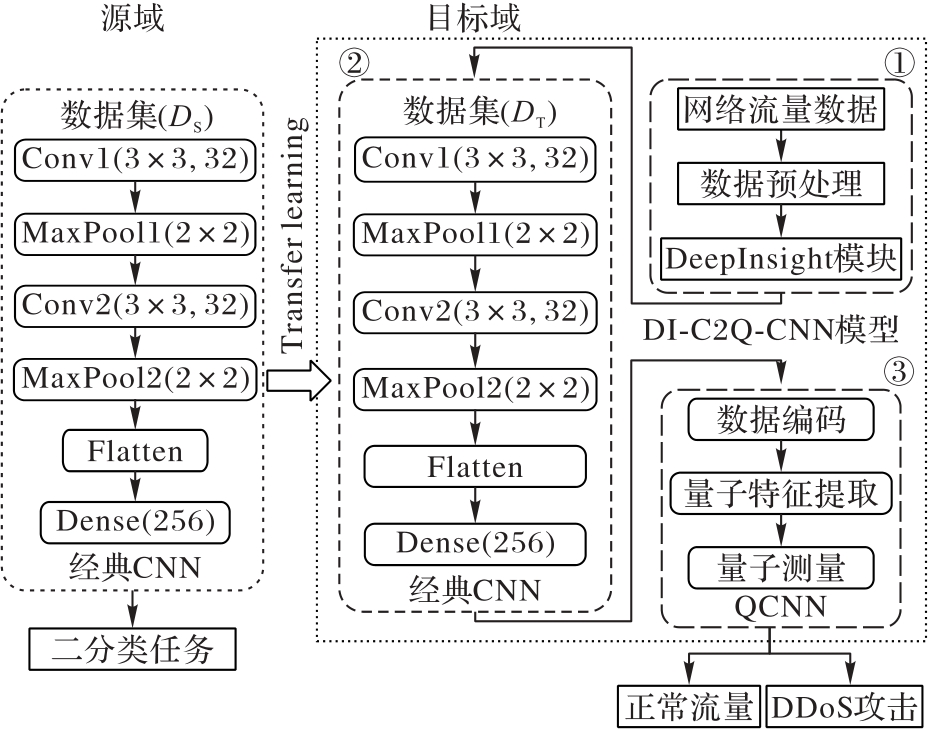
图1 基于DI-C2Q-CNN模型的DDoS攻击检测方法的整体架构
Fig. 1 Overall architecture of DDoS attack detection method based on DI-C2Q-CNN model
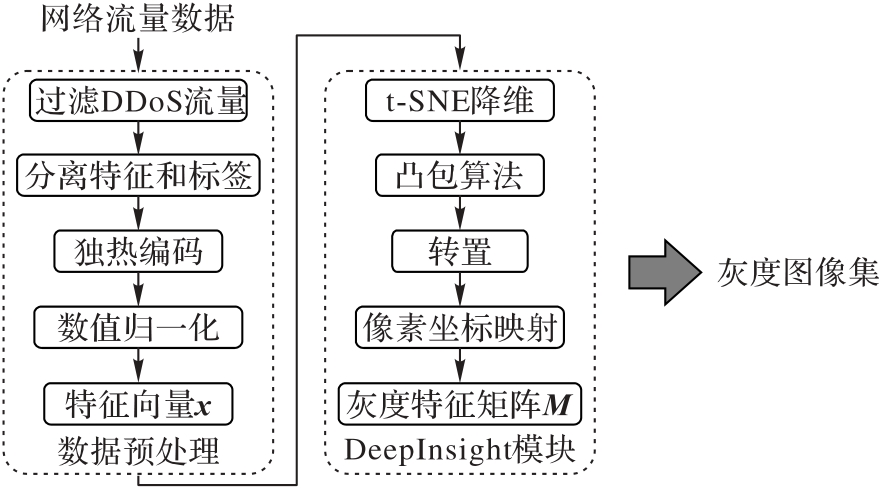
图2 网络流量数据预处理与DeepInsight图像转换的流程
Fig. 2 Flow of network traffic data preprocessing and DeepInsight image transformation
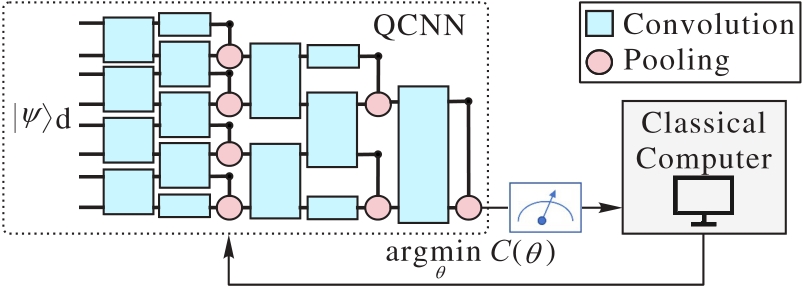
图3 QCNN的框架
Fig. 3 Framework of QCNN

图4 量子卷积层电路图
Fig. 4 Quantum convolution layer circuit diagram
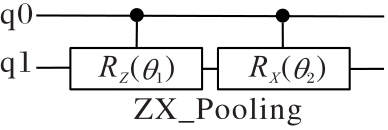
图 5 量子池化层电路图
Fig. 5 Quantum pooling layer circuit diagram
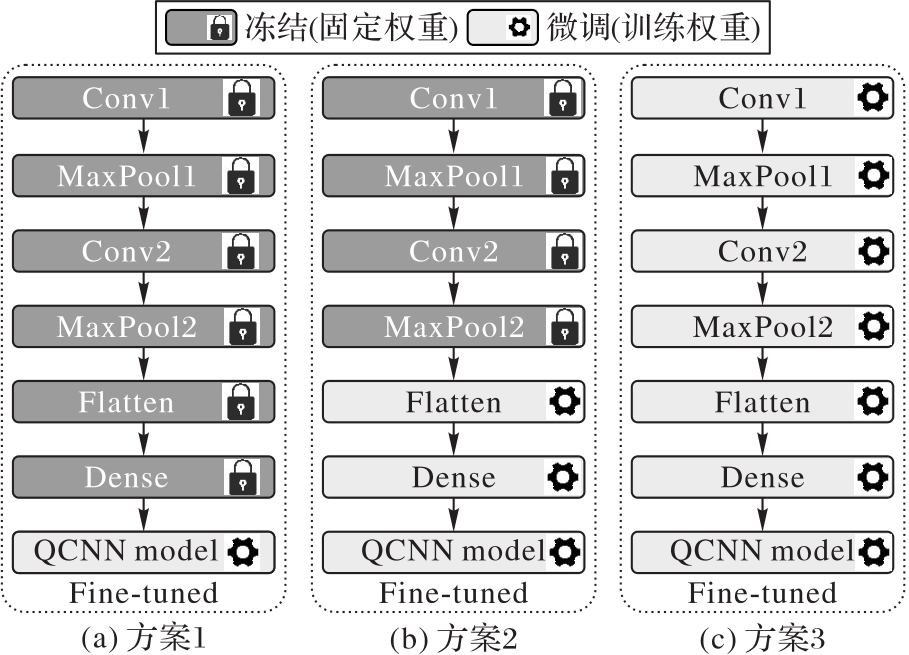
图6 3种迁移学习方案
Fig. 6 Three transfer learning solutions
| 类型 | 数据集A样本数 | 数据集B样本数 | ||
|---|---|---|---|---|
| 训练集A | 测试集A | 训练集B | 测试集B | |
| 总计 | 3 000 | 1 500 | 2 500 | 1 250 |
| 正常 | 2 000 | 1 000 | 2 000 | 1 000 |
| 攻击 | 1 000 | 500 | 500 | 250 |
表1 实验中使用的UNSW-NB15数据集
Tab. 1 UNSW-NB15 dataset used in experiments
| 类型 | 数据集A样本数 | 数据集B样本数 | ||
|---|---|---|---|---|
| 训练集A | 测试集A | 训练集B | 测试集B | |
| 总计 | 3 000 | 1 500 | 2 500 | 1 250 |
| 正常 | 2 000 | 1 000 | 2 000 | 1 000 |
| 攻击 | 1 000 | 500 | 500 | 250 |
| 参数 | 批量大小 | 训练轮数 | 学习率 | 参数量 | 优化器 |
|---|---|---|---|---|---|
| 预训练CNN | 64 | 20 | 0.001 | 821 899 | Adam |
| QCNN | 64 | 100 | 0.01 | 51 | Adam |
表2 DI-C2Q-CNN模型的训练参数
Tab. 2 Training parameters for DI-C2Q-CNN model
| 参数 | 批量大小 | 训练轮数 | 学习率 | 参数量 | 优化器 |
|---|---|---|---|---|---|
| 预训练CNN | 64 | 20 | 0.001 | 821 899 | Adam |
| QCNN | 64 | 100 | 0.01 | 51 | Adam |
| 方案 | 准确率 | 召回率 | 精确率 | F1分数 |
|---|---|---|---|---|
| 方案1 | 89.33 | 93.00 | 91.17 | 92.07 |
| 方案2 | 93.06 | 95.70 | 94.00 | 94.84 |
| 方案3 | 96.06 | 98.70 | 95.54 | 97.09 |
表3 3种迁移学习方案的检测结果 (%)
Tab. 3 Test results for three transfer learning solutions
| 方案 | 准确率 | 召回率 | 精确率 | F1分数 |
|---|---|---|---|---|
| 方案1 | 89.33 | 93.00 | 91.17 | 92.07 |
| 方案2 | 93.06 | 95.70 | 94.00 | 94.84 |
| 方案3 | 96.06 | 98.70 | 95.54 | 97.09 |
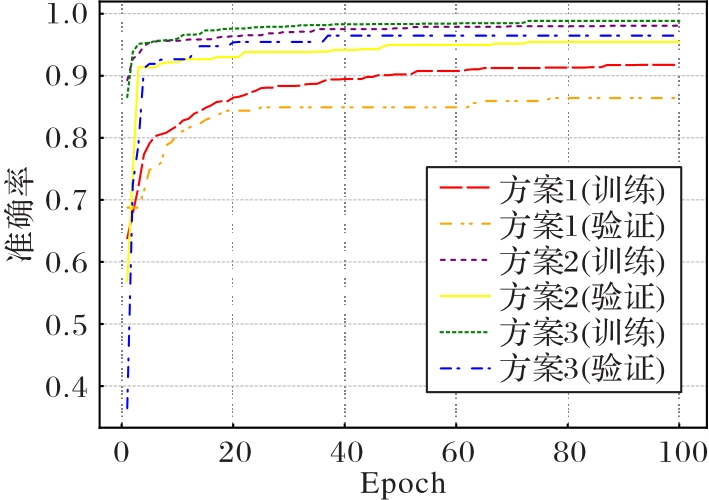
图7 3种迁移学习方案的准确率比较
Fig. 7 Accuracy comparison of three transfer learning solutions
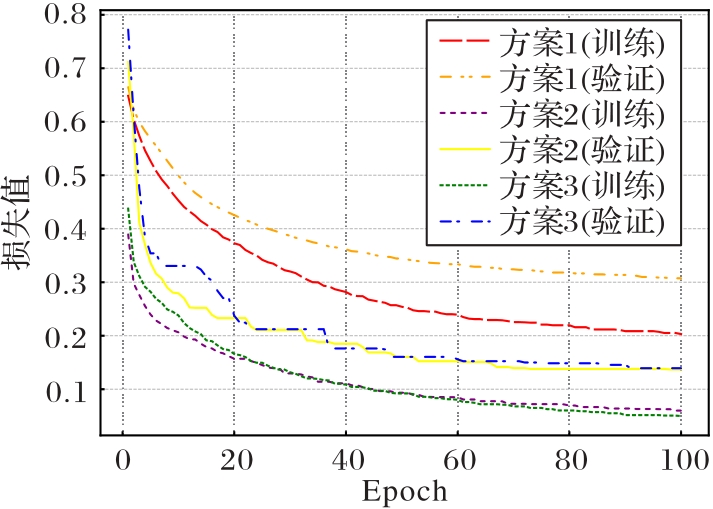
图8 3种迁移学习方案的损失值比较
Fig. 8 Loss value comparison of three transfer learning solutions
| 数据集 | 准确率 | 召回率 | 精确率 | F1分数 |
|---|---|---|---|---|
| 数据集A | 96.06 | 98.70 | 95.54 | 97.09 |
| 数据集B | 94.00 | 99.80 | 93.18 | 96.37 |
表4 DI-C2Q-CNN在不同数据集上的性能比较 (%)
Tab. 4 Performance comparison of DI-C2Q-CNN on different datasets
| 数据集 | 准确率 | 召回率 | 精确率 | F1分数 |
|---|---|---|---|---|
| 数据集A | 96.06 | 98.70 | 95.54 | 97.09 |
| 数据集B | 94.00 | 99.80 | 93.18 | 96.37 |
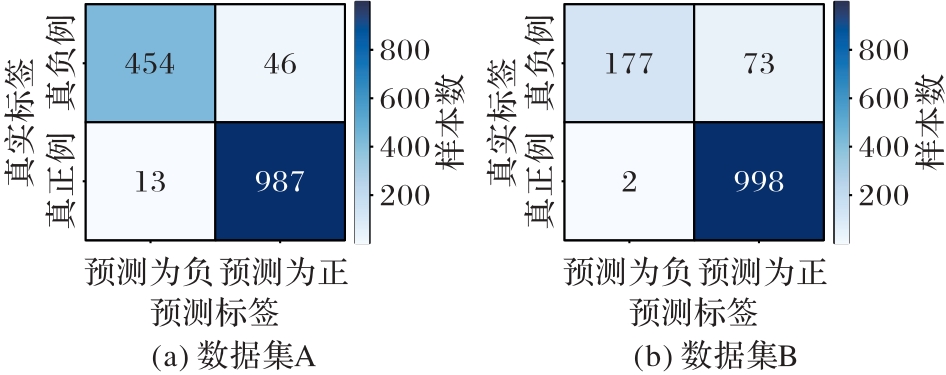
图9 数据集A和B的混淆矩阵
Fig. 9 Confusion matrices for datasets A and B
| 方法 | 准确率 | 召回率 | 精确率 | F1分数 |
|---|---|---|---|---|
| 方法A | 94.47 | 97.03 | 94.60 | 95.80 |
| 方法B | 85.80 | 86.00 | 94.00 | 89.92 |
| 方法C | 94.73 | 89.79 | 95.00 | 92.32 |
| 方法D | 94.07 | 95.23 | 95.90 | 95.57 |
| 方法E | 96.06 | 98.70 | 95.54 | 97.09 |
表5 模块对有限数据下DDoS检测的影响 (%)
Tab. 5 Impact of modules on DDoS detection with limited data
| 方法 | 准确率 | 召回率 | 精确率 | F1分数 |
|---|---|---|---|---|
| 方法A | 94.47 | 97.03 | 94.60 | 95.80 |
| 方法B | 85.80 | 86.00 | 94.00 | 89.92 |
| 方法C | 94.73 | 89.79 | 95.00 | 92.32 |
| 方法D | 94.07 | 95.23 | 95.90 | 95.57 |
| 方法E | 96.06 | 98.70 | 95.54 | 97.09 |
| 方法 | 准确率 | 召回率 | 精确率 | F1分数 |
|---|---|---|---|---|
| SVM | 91.73 | 94.20 | 93.45 | 93.82 |
| RF | 93.60 | 96.10 | 94.40 | 95.24 |
| KNN | 93.73 | 94.50 | 96.04 | 95.26 |
| CNN | 94.40 | 95.00 | 96.54 | 95.77 |
| XGBoost | 95.20 | 97.50 | 95.40 | 96.44 |
| DNN | 95.33 | 96.40 | 96.59 | 96.50 |
| CNN-LSTM | 95.13 | 97.54 | 95.10 | 96.30 |
| CNN-BiLSTM[ | 94.80 | 98.90 | 94.01 | 96.38 |
| MHHPN[ | 95.02 | 95.50 | 96.20 | 95.85 |
| DI-C2Q-CNN | 96.06 | 98.70 | 95.54 | 97.09 |
表6 不同DDoS攻击检测方法的性能比较 (%)
Tab. 6 Performance comparison of different DDoS attack detection methods
| 方法 | 准确率 | 召回率 | 精确率 | F1分数 |
|---|---|---|---|---|
| SVM | 91.73 | 94.20 | 93.45 | 93.82 |
| RF | 93.60 | 96.10 | 94.40 | 95.24 |
| KNN | 93.73 | 94.50 | 96.04 | 95.26 |
| CNN | 94.40 | 95.00 | 96.54 | 95.77 |
| XGBoost | 95.20 | 97.50 | 95.40 | 96.44 |
| DNN | 95.33 | 96.40 | 96.59 | 96.50 |
| CNN-LSTM | 95.13 | 97.54 | 95.10 | 96.30 |
| CNN-BiLSTM[ | 94.80 | 98.90 | 94.01 | 96.38 |
| MHHPN[ | 95.02 | 95.50 | 96.20 | 95.85 |
| DI-C2Q-CNN | 96.06 | 98.70 | 95.54 | 97.09 |
| [1] | Setitra M A, Fan M, Benkhaddra I, et al. DoS/DDoS attacks in software defined networks: current situation, challenges and future directions[J]. Computer Communications, 2024, 222: 77-96. |
| [2] | Cloudflare. DDoS threat report for 2025 Q1[R/OL]. (2025-04-29) [2025-11-22].. |
| [3] | Pakmehr A, AßMuth A, Taheri N, et al. DDoS attack detection techniques in IoT networks: a survey[J]. Cluster Computing, 2024, 27(10): 14637-14668. |
| [4] | Farooq M, Khan M H. Signature-based intrusion detection system in wireless 6G IoT networks[J]. Journal on Internet of Things, 2022, 4(3): 155-168. |
| [5] | Yerriswamy T, Murtugudde G. Signature-based traffic classification for DDoS attack detection and analysis of mitigation for DDoS attacks using programmable commodity switches[J]. International Journal of Performability Engineering, 2022, 18(7): 529-536. |
| [6] | Golduzian A. Predict and prevent DDoS attacks using machine learning and statistical algorithms[PP/OL]. arXiv (2023-08-30) [2025-11-22].. |
| [7] | Babbar H, Rani S, Driss M. Effective DDoS attack detection in software-defined vehicular networks using statistical flow analysis and machine learning[J]. PLoS ONE, 2024, 19(12): No.e0314695. |
| [8] | Hassan A I, El Reheem E A, Guirguis S K. An entropy and machine learning based approach for DDoS attacks detection in software defined networks[J]. Scientific Reports, 2024, 14: No.18159. |
| [9] | Zhang L, Bai Y, Xue T, et al. EfficientSTNet: a deep learning approach for multi-class DDoS detection[J]. IEEE Access, 2025, 13: 157587-157599. |
| [10] | Aktar S, Nur A Y. Towards DDoS attack detection using deep learning approach[J]. Computers and Security, 2023, 129: No.103251. |
| [11] | Alfatemi A, Rahouti M, Amin R, et al. Advancing DDoS attack detection: a synergistic approach using deep residual neural networks and synthetic oversampling[PP/OL]. arXiv (2024-01-06) [2025-11-22].. |
| [12] | Sharma A, Vans E, Shigemizu D, et al. DeepInsight: a methodology to transform a non-image data to an image for convolution neural network architecture[J]. Scientific Reports, 2019, 9: No.11399. |
| [13] | Alchieri L, Badalotti D, Bonardi P, et al. An introduction to quantum machine learning: from quantum logic to quantum deep learning[J]. Quantum Machine Intelligence, 2021, 3: No.28. |
| [14] | Hdaib M, Rajasegarar S, Pan L, et al. Quantum deep learning-based anomaly detection for enhanced network security[J]. Quantum Machine Intelligence, 2024, 6: No.26. |
| [15] | Koutný D, Ginés L, Moczała-Dusanowska M, et al. Deep learning of quantum entanglement from incomplete measurements[J]. Science Advances, 2023, 9(29): No.eadd7131. |
| [16] | Cong I, Choi S, Lukin M D, et al. Quantum convolutional neural networks[J]. Nature Physics, 2019, 15(12): 1273-1278. |
| [17] | Mehedi S T, Anwar A, Rahman Z, et al. Dependable intrusion detection system for IoT: a deep transfer learning based approach[J]. IEEE Transactions on Industrial Informatics, 2023, 19(1): 1006-1017. |
| [18] | Yang L, Shami A. A transfer learning and optimized CNN based intrusion detection system for Internet of Vehicles[C]// ICC 2022. Piscataway: IEEE, 2022: 2774-2779. |
| [19] | Wang S, Balarezo J F, Kandeepan S, et al. Machine learning in network anomaly detection: a survey[J]. IEEE Access, 2021, 9: 152379-152396. |
| [20] | Dong S, Sarem M. DDoS attack detection method based on improved KNN with the degree of DDoS attack in software-defined networks[J]. IEEE Access, 2020, 8: 5039-5048. |
| [21] | Cao Y, Jiang H, Deng Y, et al. Detecting and mitigating DDoS attacks in SDN using spatial-temporal graph convolutional network[J]. IEEE Transactions on Dependable and Secure Computing, 2022, 19(6): 3855-3872. |
| [22] | Bårli E M, Yazidi A, Viedma E H, et al. DoS and DDoS mitigation using variational autoencoders[J]. Computer Networks, 2021, 199: No.108399. |
| [23] | Li C, Yan Y, Lin W, et al. Enhancing cancer subtype classification through convolutional neural networks: a DeepInsight analysis of TCGA gene expression data[J]. Health Information Science and Systems, 2025, 13: No.33. |
| [24] | Kawahara D, Kishi M, Kadooka Y, et al. Integrating radiomics and gene expression by mapping on the image with improved DeepInsight for clear cell renal cell carcinoma[J]. Cancer Genetics, 2025, 292/293: 100-105. |
| [25] | Latif S, Boulila W, Koubaa A, et al. DTL-IDS: an optimized intrusion detection framework using deep transfer learning and genetic algorithm[J]. Journal of Network and Computer Applications, 2024, 221: No.103784. |
| [26] | Hur T, Kim L, Park D K. Quantum convolutional neural network for classical data classification[J]. Quantum Machine Intelligence, 2022, 4: No.3. |
| [27] | LeCun Y, Bottou L, Bengio Y, et al. Gradient-based learning applied to document recognition[J]. Proceedings of the IEEE, 1998, 86(11): 2278-2324. |
| [28] | Moustafa N, Slay J. UNSW-NB15: a comprehensive data set for network intrusion detection systems (UNSW-NB15 network data set)[C]// MilCIS 2015. Piscataway: IEEE, 2015: 1-6. |
| [29] | Ben Said R, Sabir Z, Askerzade I. CNN-BiLSTM: a hybrid deep learning approach for network intrusion detection system in software-defined networking with hybrid feature selection[J]. IEEE Access, 2023, 11: 138732-138747. |
| [30] | Al-Khayyat A T K, Ucan O N. A multi-branched hybrid perceptron network for DDoS attack detection using dynamic feature adaptation and multi-instance learning[J]. IEEE Access, 2024, 12: 192618-192638. |
| [1] | 刘晶, 赵邵泽, 刘鑫刚, 牛浩哲, 季海鹏. 跨工况下基于改进CGAN的钛合金显微组织数据生成方法[J]. 《计算机应用》唯一官方网站, 2026, 46(7): 2373-2382. |
| [2] | 何止戈, 刘畅, 吴俊锐, 罗昊然, 胡水松, 汪文勇. DDoS攻击防御技术综述[J]. 《计算机应用》唯一官方网站, 2026, 46(4): 1139-1157. |
| [3] | 王芳, 胡静, 张睿, 范文婷. 内容引导下多角度特征融合医学图像分割网络[J]. 《计算机应用》唯一官方网站, 2025, 45(9): 3017-3025. |
| [4] | 张嘉祥, 李晓明, 张佳慧. 结合新类特征增强与度量机制的小样本目标检测算法[J]. 《计算机应用》唯一官方网站, 2025, 45(9): 2984-2992. |
| [5] | 王闯, 俞璐, 陈健威, 潘成, 杜文博. 开集域适应综述[J]. 《计算机应用》唯一官方网站, 2025, 45(9): 2727-2736. |
| [6] | 冯博, 于海征, 边红. 基于掩码增强自训练的域适应语义分割[J]. 《计算机应用》唯一官方网站, 2025, 45(7): 2132-2137. |
| [7] | 孙雨阳, 张敏婕, 胡婕. 基于语义前缀微调的零样本对话状态跟踪领域迁移模型[J]. 《计算机应用》唯一官方网站, 2025, 45(7): 2221-2228. |
| [8] | 丁美荣, 卓金鑫, 陆玉武, 刘庆龙, 郎济聪. 融合环境标签平滑与核范数差异的领域自适应[J]. 《计算机应用》唯一官方网站, 2025, 45(4): 1130-1138. |
| [9] | 唐梅, 万武南, 张仕斌, 张金全. 基于区块链的DDoS防护研究综述[J]. 《计算机应用》唯一官方网站, 2025, 45(11): 3416-3423. |
| [10] | 张红, 谢慷慷, 宁霞, 宋婉莹. 基于迁移学习的小样本绝缘子缺陷检测方法[J]. 《计算机应用》唯一官方网站, 2025, 45(10): 3363-3370. |
| [11] | 谢丽霞, 王嘉敏, 杨宏宇, 胡泽, 成翔. 基于混合特征选择的低延时DDoS攻击检测[J]. 《计算机应用》唯一官方网站, 2025, 45(10): 3231-3240. |
| [12] | 刘春霞, 徐晗颖, 高改梅, 党伟超, 李子路. 基于回声状态网络的智能合约漏洞检测方法[J]. 《计算机应用》唯一官方网站, 2025, 45(1): 153-161. |
| [13] | 翟飞宇, 马汉达. 基于DenseNet的经典-量子混合分类模型[J]. 《计算机应用》唯一官方网站, 2024, 44(6): 1905-1910. |
| [14] | 时旺军, 王晶, 宁晓军, 林友芳. 小样本场景下的元迁移学习睡眠分期模型[J]. 《计算机应用》唯一官方网站, 2024, 44(5): 1445-1451. |
| [15] | 李鸿天, 史鑫昊, 潘卫国, 徐成, 徐冰心, 袁家政. 融合多尺度和注意力机制的小样本目标检测[J]. 《计算机应用》唯一官方网站, 2024, 44(5): 1437-1444. |
| 阅读次数 | ||||||
|
全文 |
|
|||||
|
摘要 |
|
|||||
