


Journal of Computer Applications ›› 2026, Vol. 46 ›› Issue (10): 3375-3383.DOI: 10.11772/j.issn.1001-9081.2025081062
• Frontier and comprehensive applications • Previous Articles
Rong JI1,2, Tianyu HUANG1,2( ), Yanlei GE3, Xingbin LI1,2, Bo SUN1,2, Yingqi LI1,2
Received:2025-09-15
Revised:2025-12-05
Accepted:2025-12-11
Online:2025-12-15
Published:2026-10-10
Contact:
Tianyu HUANG
About author:JI Rong, born in 1998, M. S. candidate. His research interests include WiFi vital sign sensing.Supported by:
纪荣1,2, 黄天宇1,2(), 戈艳蕾3, 李兴彬1,2, 孙博1,2, 李莹琦1,2
通讯作者:
黄天宇
作者简介:纪荣(1998—),男,山西大同人,硕士研究生,主要研究方向:WiFi生命体感知基金资助:CLC Number:
Rong JI, Tianyu HUANG, Yanlei GE, Xingbin LI, Bo SUN, Yingqi LI. SiamGAN-CNNBiLSTM: respiratory state classification system with WiFi signal-based data augmentation[J]. Journal of Computer Applications, 2026, 46(10): 3375-3383.
纪荣, 黄天宇, 戈艳蕾, 李兴彬, 孙博, 李莹琦. 基于WiFi信号的数据增强呼吸状态分类系统SiamGAN-CNNBiLSTM[J]. 《计算机应用》唯一官方网站, 2026, 46(10): 3375-3383.
Add to citation manager EndNote|Ris|BibTeX
URL: https://www.joca.cn/EN/10.11772/j.issn.1001-9081.2025081062
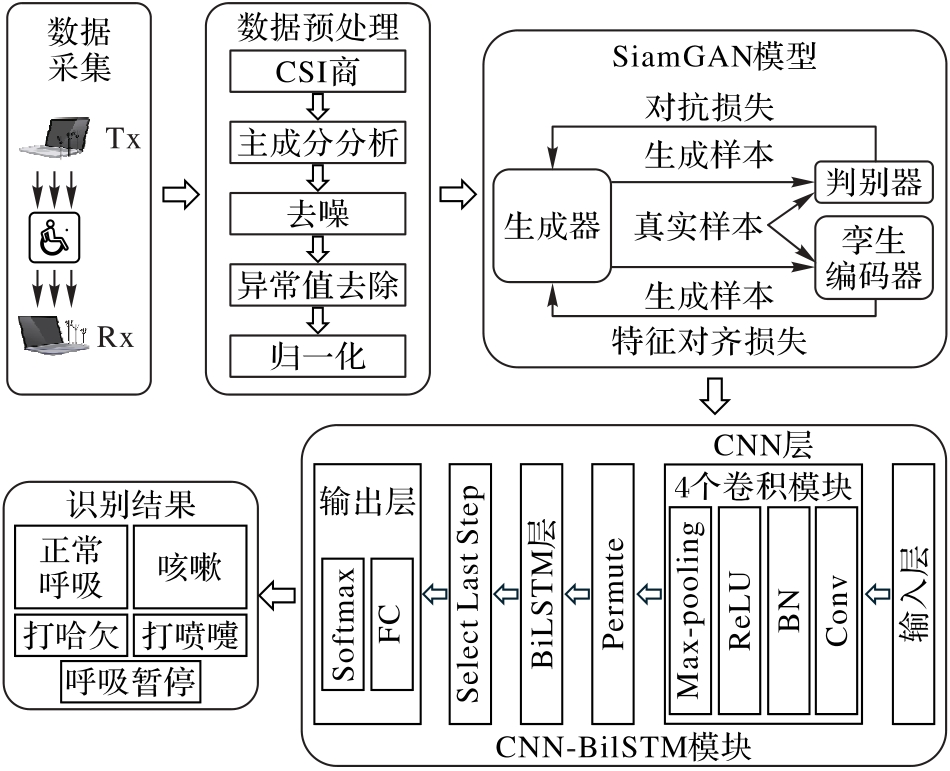
Fig. 1 Overall system architecture of SiamGAN-CNNBiLSTM
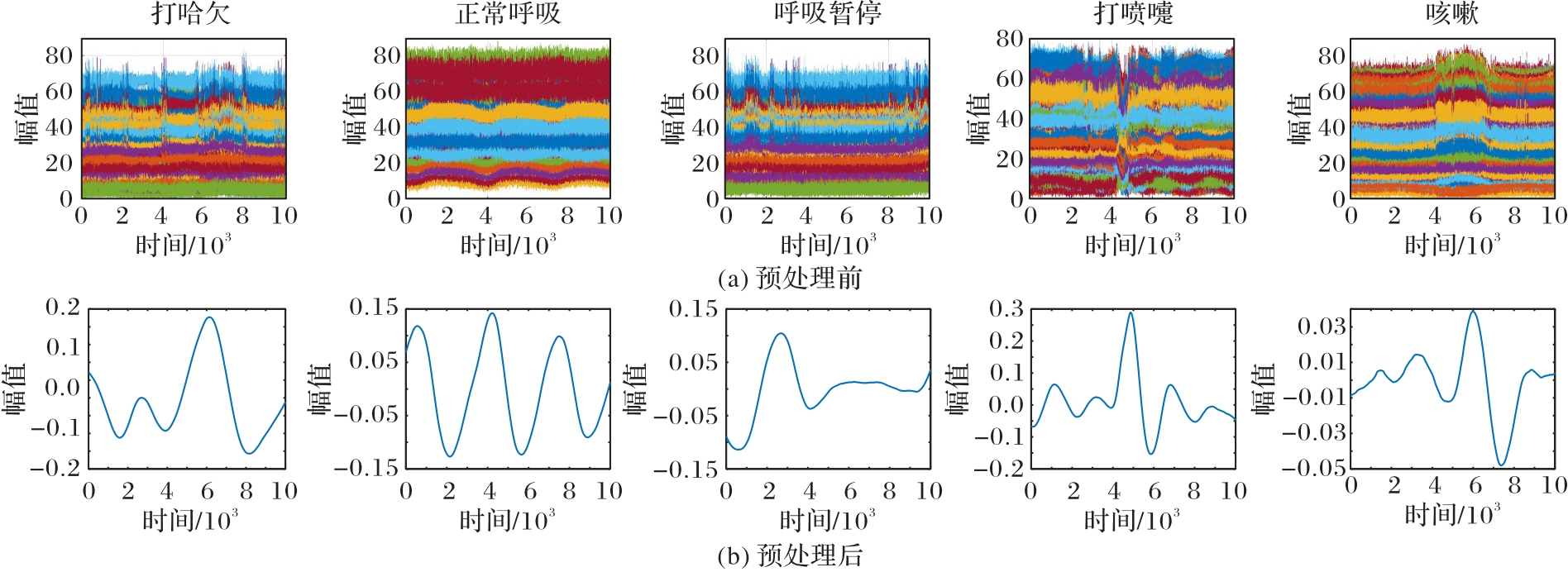
Fig. 2 Comparison of five respiratory signals before and after preprocessing
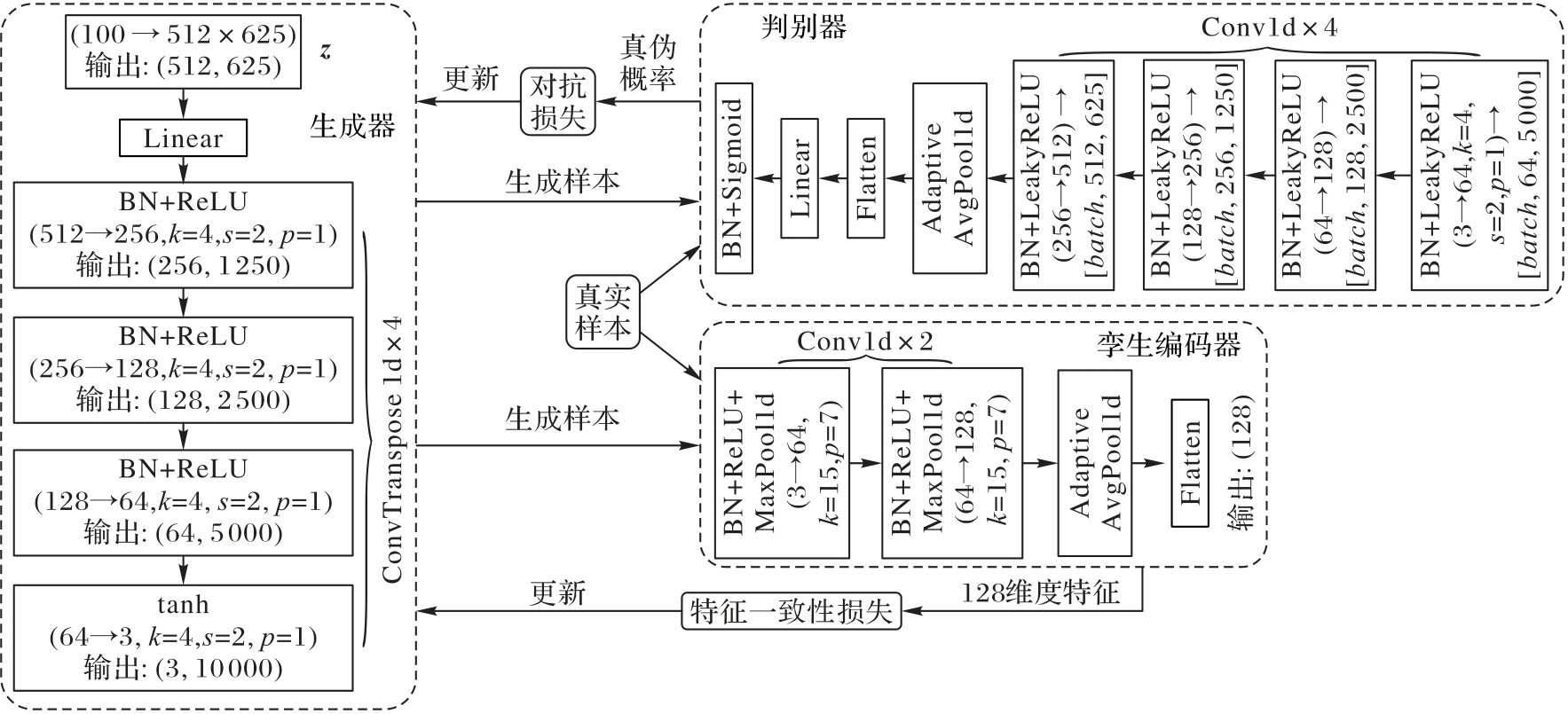
Fig. 3 Core framework of SiamGAN
| 参数 | 参数备选值 |
|---|---|
| 卷积层的卷积核大小 | {200,250,300} |
| 卷积层的卷积核数 | {64,96,128,256,512} |
| BiLSTM隐藏单元数 | {100,128,150} |
Tab. 1 Model parameter setting
| 参数 | 参数备选值 |
|---|---|
| 卷积层的卷积核大小 | {200,250,300} |
| 卷积层的卷积核数 | {64,96,128,256,512} |
| BiLSTM隐藏单元数 | {100,128,150} |
| 类别 | 人数N | 年龄 | 身高/cm | 体重/kg | BMI/(kg·m-2) | ||||
|---|---|---|---|---|---|---|---|---|---|
| 均值±标准差 | 范围 | 均值±标准差 | 范围 | 均值±标准差 | 范围 | 均值±标准差 | 范围 | ||
| 合计/平均 | 20 | 23.4±2.4 | 18~27 | 175.5±9.4 | 158~188 | 71.8±15.0 | 48.5~102.0 | 23.12±3.35 | 17.19~31.48 |
| 男 | 15 | 24.3±1.4 | 22~27 | 179.3±7.0 | 166~188 | 78.0±11.8 | 62.5~102.0 | 24.22±3.04 | 17.19~31.48 |
| 女 | 5 | 20.8±2.9 | 18~24 | 164.0±5.5 | 158~168 | 53.2±3.8 | 48.5~57.5 | 19.81±1.62 | 17.19~21.63 |
Tab. 2 Demographic and anthropometric characteristics of subjects
| 类别 | 人数N | 年龄 | 身高/cm | 体重/kg | BMI/(kg·m-2) | ||||
|---|---|---|---|---|---|---|---|---|---|
| 均值±标准差 | 范围 | 均值±标准差 | 范围 | 均值±标准差 | 范围 | 均值±标准差 | 范围 | ||
| 合计/平均 | 20 | 23.4±2.4 | 18~27 | 175.5±9.4 | 158~188 | 71.8±15.0 | 48.5~102.0 | 23.12±3.35 | 17.19~31.48 |
| 男 | 15 | 24.3±1.4 | 22~27 | 179.3±7.0 | 166~188 | 78.0±11.8 | 62.5~102.0 | 24.22±3.04 | 17.19~31.48 |
| 女 | 5 | 20.8±2.9 | 18~24 | 164.0±5.5 | 158~168 | 53.2±3.8 | 48.5~57.5 | 19.81±1.62 | 17.19~21.63 |
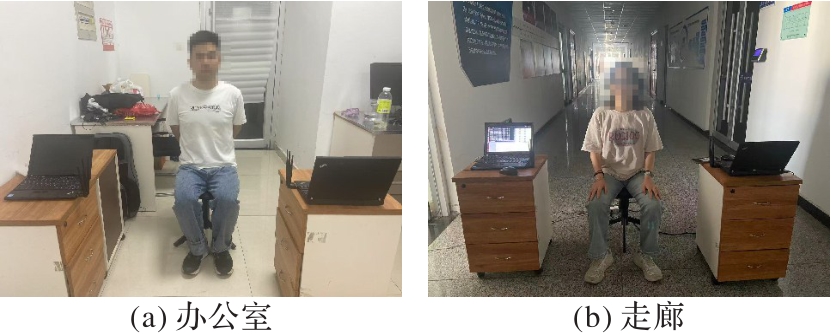
Fig. 4 Data collection scenarios
| 模型 | 准确率 | 精确率 | 召回率 | F1分数 |
|---|---|---|---|---|
| CNN-BiLSTM | 96.1 | 96.0 | 96.0 | 96.0 |
| CNN-BiLSTM+GAN | 97.2 | 97.0 | 97.0 | 97.0 |
| SiamGAN-CNNBiLSTM | 98.3 | 98.3 | 98.3 | 98.3 |
Tab. 3 Ablation experimental results
| 模型 | 准确率 | 精确率 | 召回率 | F1分数 |
|---|---|---|---|---|
| CNN-BiLSTM | 96.1 | 96.0 | 96.0 | 96.0 |
| CNN-BiLSTM+GAN | 97.2 | 97.0 | 97.0 | 97.0 |
| SiamGAN-CNNBiLSTM | 98.3 | 98.3 | 98.3 | 98.3 |
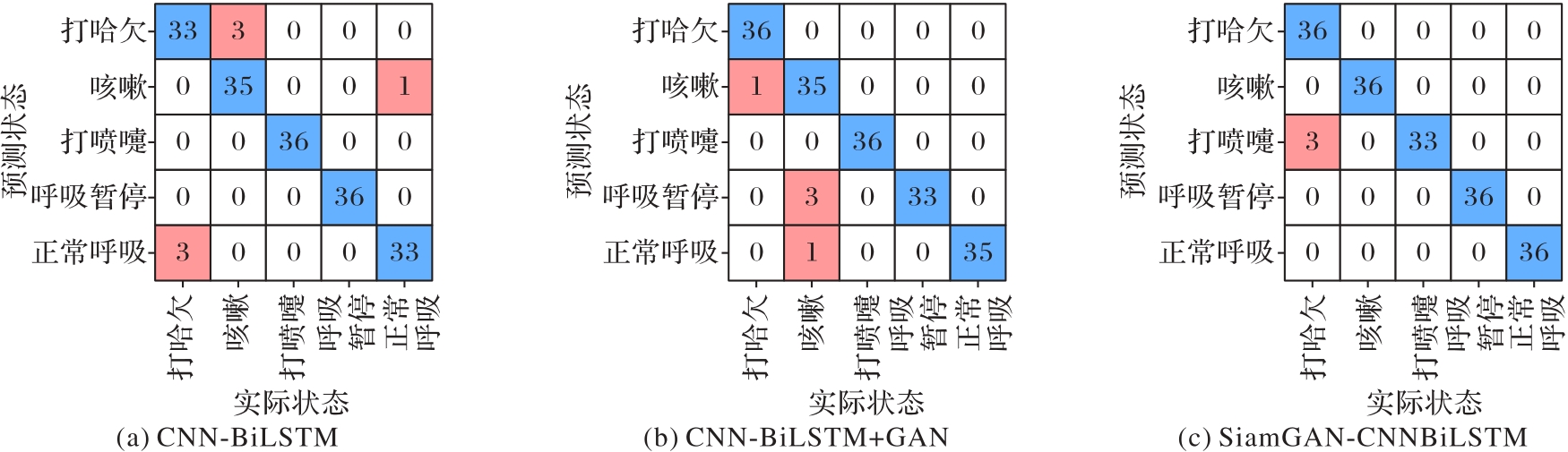
Fig. 5 Confusion matrices of different models
| 模型 | 准确率 | 精确率 | 召回率 | F1分数 |
|---|---|---|---|---|
| CNN-LSTM[ | 61.6 | 61.6 | 61.6 | 61.6 |
| ResNet-18 | 72.8 | 73.0 | 72.8 | 72.7 |
| TCN | 81.1 | 82.0 | 81.1 | 80.7 |
| Transformer | 90.0 | 90.1 | 90.0 | 90.0 |
| CNN-BiLSTM | 96.1 | 96.0 | 96.0 | 96.0 |
| SiamGAN-CNNBiLSTM | 98.3 | 98.3 | 98.3 | 98.3 |
Tab. 4 Performance comparison of different models
| 模型 | 准确率 | 精确率 | 召回率 | F1分数 |
|---|---|---|---|---|
| CNN-LSTM[ | 61.6 | 61.6 | 61.6 | 61.6 |
| ResNet-18 | 72.8 | 73.0 | 72.8 | 72.7 |
| TCN | 81.1 | 82.0 | 81.1 | 80.7 |
| Transformer | 90.0 | 90.1 | 90.0 | 90.0 |
| CNN-BiLSTM | 96.1 | 96.0 | 96.0 | 96.0 |
| SiamGAN-CNNBiLSTM | 98.3 | 98.3 | 98.3 | 98.3 |
| 环境 | 准确率 | 精确率 | 召回率 | F1分数 |
|---|---|---|---|---|
| 走廊 | 96.7 | 96.8 | 96.8 | 96.8 |
| 办公室 | 98.3 | 98.3 | 98.3 | 98.3 |
Tab. 5 Performance comparison in different environments
| 环境 | 准确率 | 精确率 | 召回率 | F1分数 |
|---|---|---|---|---|
| 走廊 | 96.7 | 96.8 | 96.8 | 96.8 |
| 办公室 | 98.3 | 98.3 | 98.3 | 98.3 |
| [1] | 郭政鑫,戴余豪,桂林卿,等. 基于IR-UWB的睡眠状态下人体呼吸波形检测方法[J]. 软件学报, 2024, 35(9): 4346-4364. |
| Guo Zhengxin, Dai Yuhao, Gui Linqing, et al. Detection method of human respiration waveform in sleep based on IR-UWB[J]. Journal of Software, 2024, 35(9): 4346-4364. | |
| [2] | Soto J C H, Galdino I, Caballero E, et al. A survey on vital signs monitoring based on Wi-Fi CSI data[J]. Computer Communications, 2022, 195: 99-110. |
| [3] | Wang Y, Hu M, Zhou Y, et al. Unobtrusive and automatic classification of multiple people’s abnormal respiratory patterns in real time using deep neural network and depth camera[J]. IEEE Internet of Things Journal, 2020, 7(9): 8559-8571. |
| [4] | Kaleeswari P, Ramalakshmi R, Arun Prasath T, et al. DABiG: breath pattern classification using the hybrid deep learning with optimal feature selection[J]. Technology and Health Care, 2025, 33(4): 1612-1625. |
| [5] | 林逸群,邱杰凡,张锦鸿,等. 面向动态场景的WiFi呼吸监测范围扩大方法[J]. 计算机研究与发展, 2025, 62(4): 1075-1089. |
| Lin Yiqun, Qiu Jiefan, Zhang Jinhong, et al. Range expansion method for WiFi-based respiration monitoring under dynamic scenes[J]. Journal of Computer Research and Development, 2025, 62(4): 1075-1089. | |
| [6] | Saeed U, Abbasi Q H, Shah S A. AI-driven lightweight real-time SDR sensing system for anomalous respiration identification using ensemble learning[J]. CCF Transactions on Pervasive Computing and Interaction, 2022, 4(4): 381-392. |
| [7] | Zheng L, Bi S, Wang S, et al. ResMon: domain-adaptive wireless respiration state monitoring via few-shot Bayesian deep learning[J]. IEEE Internet of Things Journal, 2023, 10(23): 20914-20927. |
| [8] | Khan S, Alzaabi A, Ratnarajah T, et al. Novel statistical time series data augmentation and machine learning based classification of unobtrusive respiration data for respiration Digital Twin model[J]. Computers in Biology and Medicine, 2024, 168: No.107825. |
| [9] | Zhang J, Wu F, Wei B, et al. Data augmentation and dense-LSTM for human activity recognition using WiFi signal[J]. IEEE Internet of Things Journal, 2021, 8(6): 4628-4641. |
| [10] | Huang H, Lin S. WiDet: Wi-Fi based device-free passive person detection with deep convolutional neural networks[C]// MSWIM 2018. New York: ACM, 2018: 53-60. |
| [11] | Serbetci O G, Lee J H, Burghal D, et al. Simple and effective augmentation methods for CSI based indoor localization[C]// GLOBECOM 2023. Piscataway: IEEE, 2023: 3947-3952. |
| [12] | Alnujaim I, Oh D, Kim Y. Generative adversarial networks for classification of micro-Doppler signatures of human activity[J]. IEEE Geoscience and Remote Sensing Letters, 2020, 17(3): 396-400. |
| [13] | Liang Y, Li H, Wu W, et al. MaP-SGAN: multi-anchor point Siamese GAN for Wi-Fi CSI-based cross-domain gait recognition[J]. Expert Systems with Applications, 2024, 251: No.124083. |
| [14] | Luo C, Li Q, Zhong Y. Human action recognition in small-sample scenarios based on improved DCGAN and CNN models[J]. Progress in Electromagnetics Research C, 2025, 154: 257-266. |
| [15] | Kontou P, Smida S B, Anagnostou D E. Contactless respiration monitoring using Wi-Fi and artificial neural network detection method[J]. IEEE Journal of Biomedical and Health Informatics, 2024, 28(3): 1297-1308. |
| [16] | Guo Z, Yuan W, Gui L, et al. BreatheBand: a fine-grained and robust respiration monitor system using WiFi signals[J]. ACM Transactions on Sensor Networks, 2023, 19(4): No.82. |
| [17] | Wu D, Zhang D, Xu C, et al. Device-free WiFi human sensing: from pattern-based to model-based approaches[J]. IEEE Communications Magazine, 2017, 55(10): 91-97. |
| [18] | Chen C, Han Y, Chen Y, et al. Multi-person breathing rate estimation using time-reversal on WiFi platforms[C]// GlobalSIP 2016. Piscataway: IEEE, 2016: 1059-1063. |
| [19] | Zeng Y, Wu D, Xiong J, et al. FarSense: pushing the range limit of WiFi-based respiration sensing with CSI ratio of two antennas[J]. Proceedings of the ACM on Interactive, Mobile, Wearable and Ubiquitous Technologies, 2019, 3(3): No.121. |
| [20] | Zhang F, Wu C, Wang B, et al. SMARS: sleep monitoring via ambient radio signals[J]. IEEE Transactions on Mobile Computing, 2021, 20(1): 217-231. |
| [21] | Li F, Valero M, Shahriar H, et al. Wi-COVID: a COVID-19 symptom detection and patient monitoring framework using WiFi[J]. Smart Health, 2021, 19: No.100147. |
| [22] | Guan L, Zhang Z, Yang X, et al. Multi-person breathing detection with switching antenna array based on WiFi signal[J]. IEEE Journal of Translational Engineering in Health and Medicine, 2023, 11: 23-31. |
| [23] | Xie W, Gan L, Huang L, et al. A real-time respiration monitoring system using WiFi sensing based on the concentric circle model[J]. IEEE Transactions on Biomedical Circuits and Systems, 2023, 17(2): 157-168. |
| [24] | Zhuo H, Wu X, Zhong Q, et al. Position-free breath detection during sleep via commodity WiFi[J]. IEEE Sensors Journal, 2023, 23(20): 24874-24884. |
| [25] | Nirmal I, Khamis A, Hassan M, et al. Deep learning for radio-based human sensing: recent advances and future directions[J]. IEEE Communications Surveys and Tutorials, 2021, 23(2): 995-1019. |
| [26] | Yang J, Chen X, Zou H, et al. SenseFi: a library and benchmark on deep-learning-empowered WiFi human sensing[J]. Patterns, 2023, 4(3): No.100703. |
| [27] | Yu B, Wang Y, Niu K, et al. WiFi-Sleep: sleep stage monitoring using commodity Wi-Fi devices[J]. IEEE Internet of Things Journal, 2021, 8(18): 13900-13913. |
| [28] | Fan D, Yang X, Zhao N, et al. A contactless breathing pattern recognition system using deep learning and WiFi signal[J]. IEEE Internet of Things Journal, 2024, 11(13): 23820-23834. |
| [29] | Hu J, Yang J, Ong J B, et al. ResFi: WiFi-enabled device-free respiration detection based on deep learning[C]// ICCA 2022. Piscataway: IEEE, 2022: 510-515. |
| [30] | Zhang L, Bao R, Chen J, et al. Smart city healthcare: non-contact human respiratory monitoring with WiFi-CSI[J]. IEEE Transactions on Consumer Electronics, 2024, 70(3): 5960-5968. |
| [31] | Hao Z, Zhang D, Duan Y, et al. Indoor sneezing and coughing detection based on COTS wireless device[C]// ICPADS 2021. Piscataway: IEEE, 2021: 763-772. |
| [1] | Siyu DONG, Xin JIA, Mi ZHANG, Xinwen CHEN, Xinying SUN, Fangxiao CHENG. CNN-Transformer encoder-based model for depressive state recognition with multidimensional EEG feature fusion [J]. Journal of Computer Applications, 2026, 46(9): 3025-3034. |
| [2] | Kan HE, Hongfeng MA, Xuejun ZONG, Hongyan SHI, Lian LIAN, Bowei NING. DCSFFuzzer: dual-channel semantic feature fusion-based fuzz testing method for industrial control protocols [J]. Journal of Computer Applications, 2026, 46(9): 2877-2888. |
| [3] | Yixin ZHANG, Lin JIANG, Yuancheng LI, Chen JI. CNN pruning and quantization compression method for reconfigurable structures [J]. Journal of Computer Applications, 2026, 46(9): 2732-2740. |
| [4] | Musheng CHEN, Wenqing FU, Xiaohong QIU, Junhua WU, Qiang WEN. Aspect sentiment triplet extraction based on graph convolutional network and cross-domain data augmentation [J]. Journal of Computer Applications, 2026, 46(8): 2432-2439. |
| [5] | Jiangyu YAN, Shiqian WANG, Hong WANG. Electricity theft detection method based on improved Wasserstein generative adversarial network with gradient penalty and time-frequency feature fusion [J]. Journal of Computer Applications, 2026, 46(8): 2691-2698. |
| [6] | Yue ZHANG, Yuhan GUO. Ride-hailing spatio-temporal demand forecasting method via large language model-driven semantic quantification [J]. Journal of Computer Applications, 2026, 46(8): 2467-2476. |
| [7] | Jun QIN, Xintao JIAO, Biqing ZENG. Non-intrusive load monitoring method combining BiLSTM-Transformer and Kolmogorov-Arnold network [J]. Journal of Computer Applications, 2026, 46(6): 2026-2033. |
| [8] | Xuan CUI, Bo LIU. Unsupervised face attribute editing method based on dynamic convolutional autoencoder [J]. Journal of Computer Applications, 2026, 46(4): 1300-1308. |
| [9] | Huihui CHEN, Hongtao SUN, Boliang GUAN, Zhongqing HENG. Chinese character image retrieval algorithm in ancient books based on NetVLAD feature encoding [J]. Journal of Computer Applications, 2026, 46(3): 750-757. |
| [10] | Min CHEN, Xiaolin QIN, Shaohan LI, Hao YANG, Taohong LI. Review of deep learning applications in severe convective weather prediction [J]. Journal of Computer Applications, 2026, 46(3): 980-992. |
| [11] | Long CHEN, Xinmin HOU. Graph convolutional recommender system integrating contrastive learning and global graph data augmentation [J]. Journal of Computer Applications, 2026, 46(10): 3076-3082. |
| [12] | Yuqing NIU, Zhiyong ZHANG, Zhongya ZHANG, Hang ZHANG. Fault-tolerant method for industrial IoT edge computing based on sparse graph attention [J]. Journal of Computer Applications, 2026, 46(10): 3242-3249. |
| [13] | Bing GAO, Jinzhuo LIN, Qijie ZOU, Yongqiang YAO. Zero-shot knowledge graph relation prediction method via dual-channel embedding fusion [J]. Journal of Computer Applications, 2026, 46(10): 3117-3123. |
| [14] | Wen LI, Kairong LI, Kai YANG. Subgraph-aware contrastive learning with data augmentation [J]. Journal of Computer Applications, 2026, 46(1): 1-9. |
| [15] | Na FAN, Chuang LUO, Zehui ZHANG, Mengyao ZHANG, Ding MU. Semantic privacy protection mechanism of vehicle trajectory based on improved generative adversarial network [J]. Journal of Computer Applications, 2026, 46(1): 169-180. |
| Viewed | ||||||
|
Full text |
|
|||||
|
Abstract |
|
|||||
