


Journal of Computer Applications ›› 2026, Vol. 46 ›› Issue (5): 1568-1577.DOI: 10.11772/j.issn.1001-9081.2025050598
• Multimedia computing and computer simulation • Previous Articles
Jiaxin DUAN, Jing HU, Wu WEN, Zhenxia YU( ), Yongjun ZHANG
Received:2025-06-04
Revised:2025-07-25
Accepted:2025-08-27
Online:2025-11-07
Published:2026-05-10
Contact:
Zhenxia YU
About author:DUAN Jiaxin, born in 2000, M. S. candidate. His research interests include remote sensing image fusion.Supported by:
段佳欣, 胡靖, 文武, 余贞侠(), 张永俊
通讯作者:
余贞侠
作者简介:段佳欣(2000—),男,四川南充人,硕士研究生,CCF会员,主要研究方向:遥感图像融合基金资助:CLC Number:
Jiaxin DUAN, Jing HU, Wu WEN, Zhenxia YU, Yongjun ZHANG. Pansharpening based on two-stage collaborative optimization[J]. Journal of Computer Applications, 2026, 46(5): 1568-1577.
段佳欣, 胡靖, 文武, 余贞侠, 张永俊. 基于两阶段协同优化的全色锐化[J]. 《计算机应用》唯一官方网站, 2026, 46(5): 1568-1577.
Add to citation manager EndNote|Ris|BibTeX
URL: https://www.joca.cn/EN/10.11772/j.issn.1001-9081.2025050598
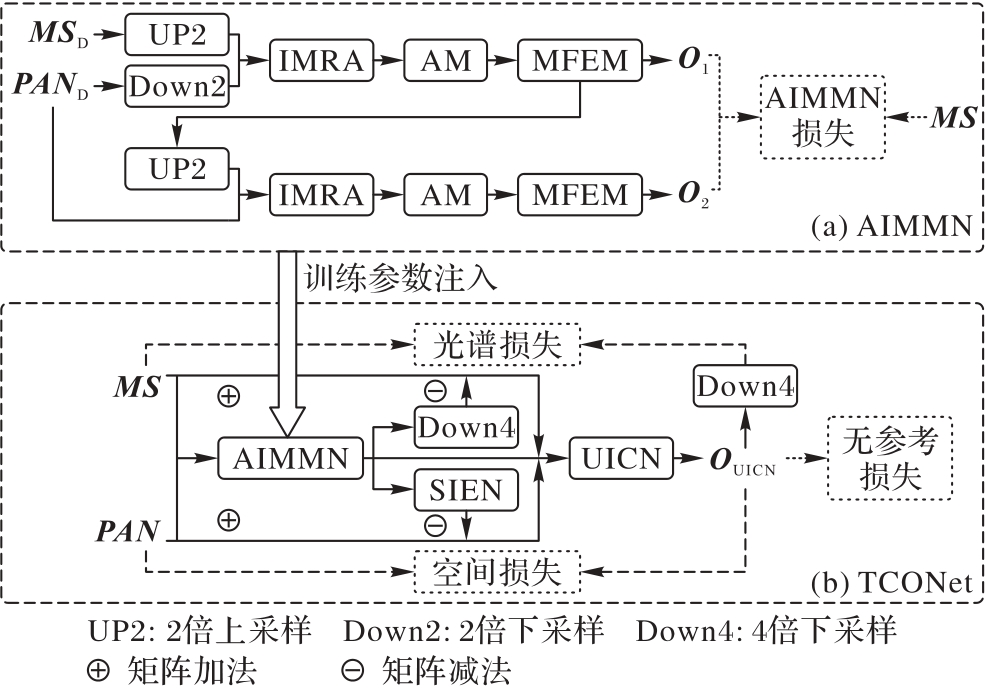
Fig. 1 TCONet structure
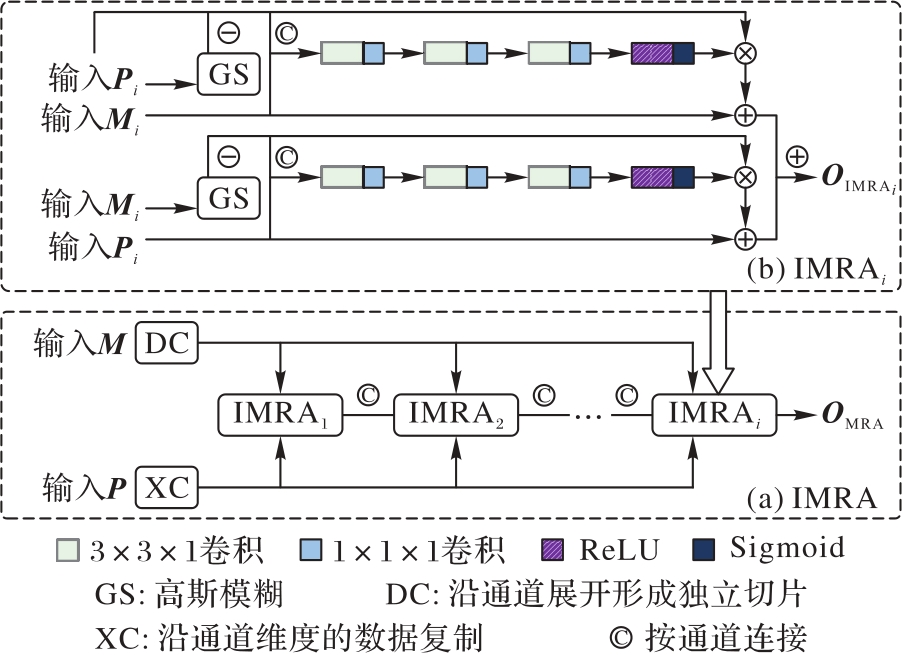
Fig. 2 IMRA structure

Fig. 3 AM structure

Fig. 4 MFEM structure
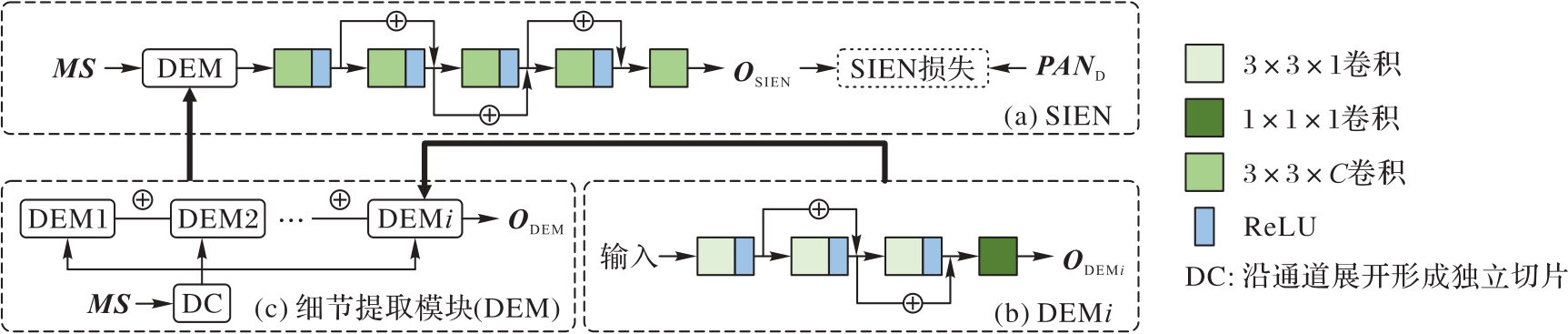
Fig. 5 SIEN structure

Fig. 6 UICN structure
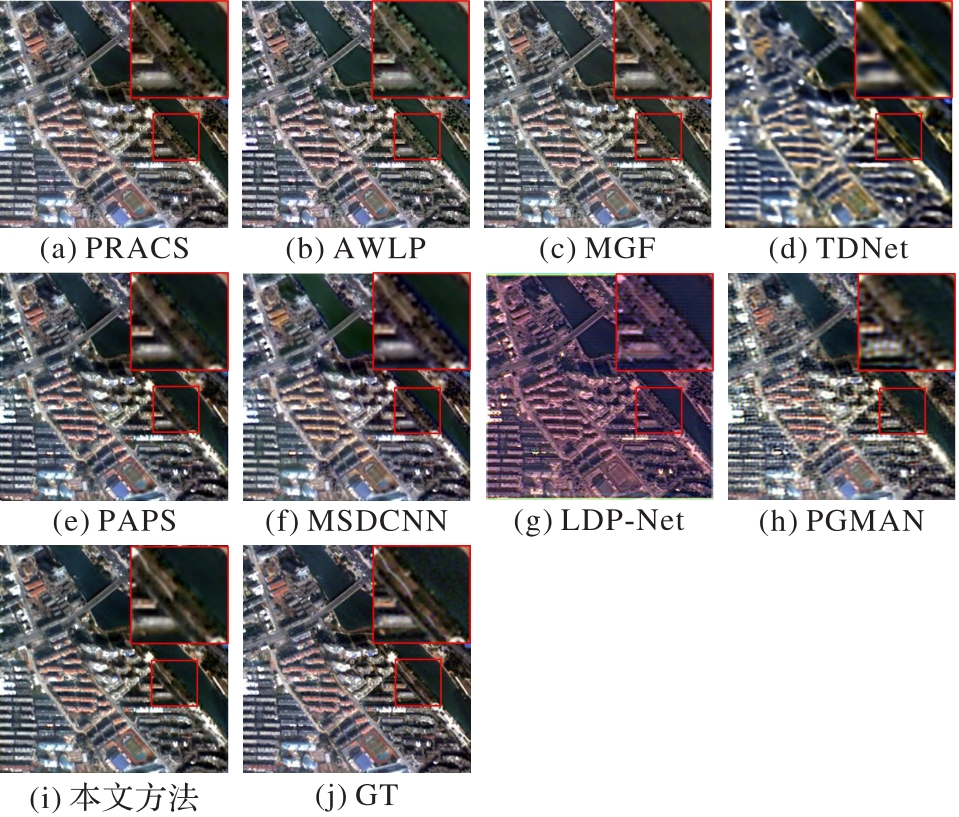
Fig. 7 Fusion results on QB dataset at reduced resolution conditions
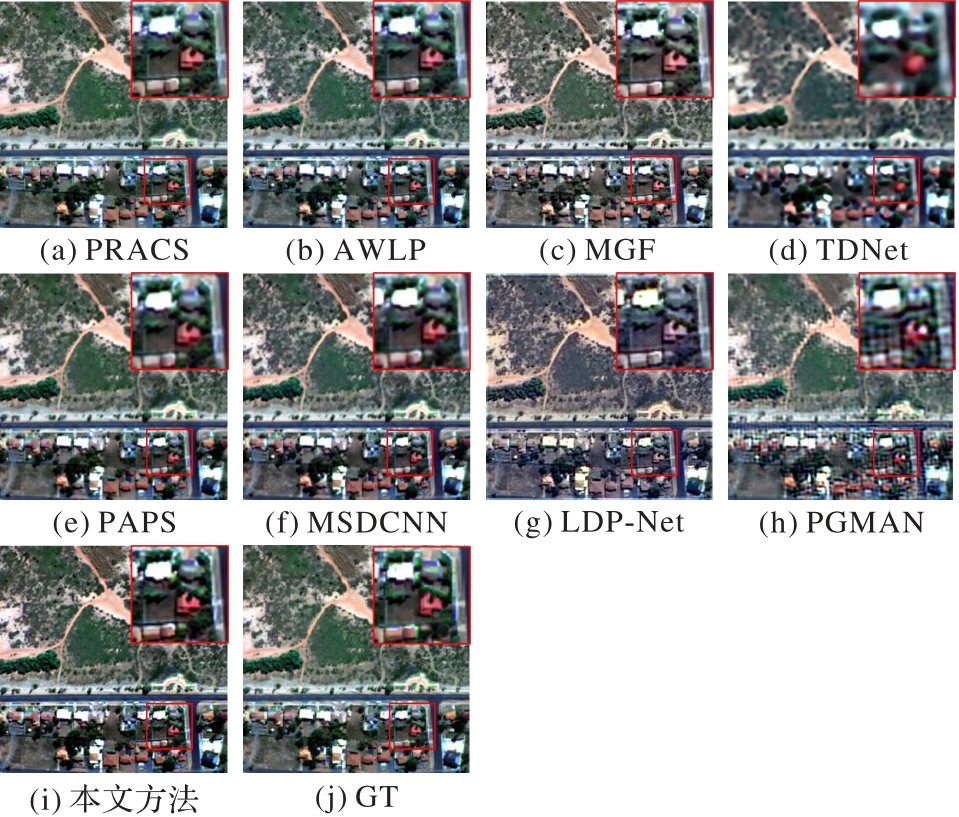
Fig. 8 Fusion results on WV-4 dataset at reduced resolution conditions
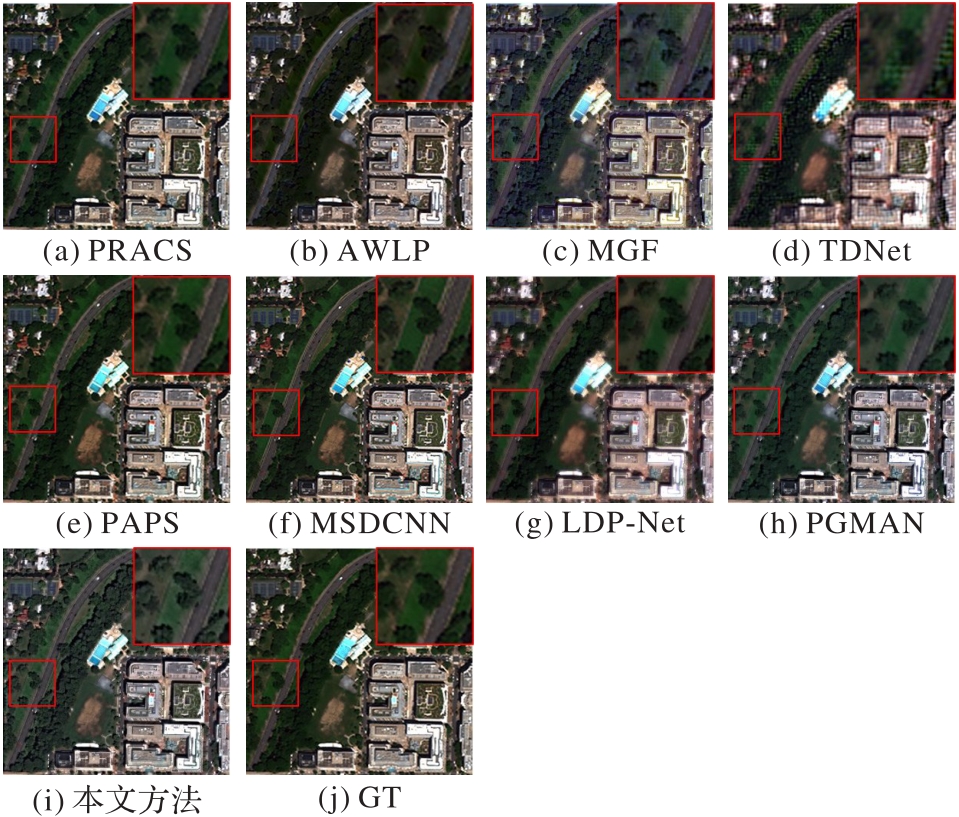
Fig. 9 Fusion results on WV-2 dataset at reduced resolution conditions
| 数据集 | 指标 | PRACS | AWLP | MGF | TDNet | PAPS | MSDCNN | LDP-Net | PGMAN | TCONet | 理想值 |
|---|---|---|---|---|---|---|---|---|---|---|---|
| QB | SSIM | 0.985 7 | 0.950 6 | 0.976 4 | 0.967 5 | 0.986 0 | 0.676 9 | 0.964 6 | 0.993 2 | 1 | |
| PSNR/dB | 47.499 1 | 47.002 6 | 44.765 0 | 47.881 8 | 47.860 4 | 31.122 0 | 46.138 3 | 50.613 7 | +∞ | ||
| SAM | 0.948 7 | 0.954 6 | 1.220 0 | 1.288 3 | 0.942 2 | 2.411 9 | 1.308 2 | 0.712 9 | 0 | ||
| ERGAS | 0.665 5 | 0.772 2 | 0.991 9 | 1.053 2 | 0.668 6 | 3.397 8 | 1.063 6 | 0.465 0 | 0 | ||
| CC | 0.993 8 | 0.994 2 | 0.990 7 | 0.990 0 | 0.994 6 | 0.970 8 | 0.988 4 | 0.997 0 | 1 | ||
| WV-4 | SSIM | 0.959 4 | 0.949 4 | 0.954 1 | 0.948 5 | 0.965 0 | 0.781 8 | 0.941 5 | 0.978 7 | 1 | |
| PSNR/dB | 43.237 5 | 42.383 0 | 40.899 3 | 42.227 8 | 42.518 9 | 31.679 2 | 42.549 6 | 44.981 4 | +∞ | ||
| SAM | 2.082 6 | 2.975 0 | 2.483 1 | 1.964 5 | 1.790 9 | 3.357 2 | 2.235 7 | 1.521 9 | 0 | ||
| ERGAS | 1.679 2 | 2.215 4 | 2.110 7 | 2.029 3 | 1.702 9 | 4.154 1 | 2.040 0 | 1.252 3 | 0 | ||
| CC | 0.992 2 | 0.980 9 | 0.990 1 | 0.991 9 | 0.994 0 | 0.982 3 | 0.988 5 | 0.995 5 | 1 | ||
| WV-2 | SSIM | 0.860 0 | 0.910 3 | 0.914 2 | 0.944 4 | 0.948 1 | 0.822 9 | 0.825 4 | 0.966 0 | 1 | |
| PSNR/dB | 31.708 9 | 32.283 6 | 32.431 3 | 33.891 4 | 33.894 6 | 28.842 2 | 30.278 9 | 36.113 4 | +∞ | ||
| SAM | 6.299 1 | 7.051 2 | 6.403 1 | 5.041 8 | 5.203 1 | 8.190 3 | 6.658 0 | 4.155 8 | 0 | ||
| ERGAS | 4.955 8 | 4.738 6 | 4.464 8 | 3.435 3 | 3.685 0 | 5.827 6 | 5.729 3 | 2.751 5 | 0 | ||
| CC | 0.905 8 | 0.898 0 | 0.918 1 | 0.942 2 | 0.939 9 | 0.872 4 | 0.894 4 | 0.958 5 | 1 |
Tab. 1 Quantitative evaluation at reduced resolution conditions
| 数据集 | 指标 | PRACS | AWLP | MGF | TDNet | PAPS | MSDCNN | LDP-Net | PGMAN | TCONet | 理想值 |
|---|---|---|---|---|---|---|---|---|---|---|---|
| QB | SSIM | 0.985 7 | 0.950 6 | 0.976 4 | 0.967 5 | 0.986 0 | 0.676 9 | 0.964 6 | 0.993 2 | 1 | |
| PSNR/dB | 47.499 1 | 47.002 6 | 44.765 0 | 47.881 8 | 47.860 4 | 31.122 0 | 46.138 3 | 50.613 7 | +∞ | ||
| SAM | 0.948 7 | 0.954 6 | 1.220 0 | 1.288 3 | 0.942 2 | 2.411 9 | 1.308 2 | 0.712 9 | 0 | ||
| ERGAS | 0.665 5 | 0.772 2 | 0.991 9 | 1.053 2 | 0.668 6 | 3.397 8 | 1.063 6 | 0.465 0 | 0 | ||
| CC | 0.993 8 | 0.994 2 | 0.990 7 | 0.990 0 | 0.994 6 | 0.970 8 | 0.988 4 | 0.997 0 | 1 | ||
| WV-4 | SSIM | 0.959 4 | 0.949 4 | 0.954 1 | 0.948 5 | 0.965 0 | 0.781 8 | 0.941 5 | 0.978 7 | 1 | |
| PSNR/dB | 43.237 5 | 42.383 0 | 40.899 3 | 42.227 8 | 42.518 9 | 31.679 2 | 42.549 6 | 44.981 4 | +∞ | ||
| SAM | 2.082 6 | 2.975 0 | 2.483 1 | 1.964 5 | 1.790 9 | 3.357 2 | 2.235 7 | 1.521 9 | 0 | ||
| ERGAS | 1.679 2 | 2.215 4 | 2.110 7 | 2.029 3 | 1.702 9 | 4.154 1 | 2.040 0 | 1.252 3 | 0 | ||
| CC | 0.992 2 | 0.980 9 | 0.990 1 | 0.991 9 | 0.994 0 | 0.982 3 | 0.988 5 | 0.995 5 | 1 | ||
| WV-2 | SSIM | 0.860 0 | 0.910 3 | 0.914 2 | 0.944 4 | 0.948 1 | 0.822 9 | 0.825 4 | 0.966 0 | 1 | |
| PSNR/dB | 31.708 9 | 32.283 6 | 32.431 3 | 33.891 4 | 33.894 6 | 28.842 2 | 30.278 9 | 36.113 4 | +∞ | ||
| SAM | 6.299 1 | 7.051 2 | 6.403 1 | 5.041 8 | 5.203 1 | 8.190 3 | 6.658 0 | 4.155 8 | 0 | ||
| ERGAS | 4.955 8 | 4.738 6 | 4.464 8 | 3.435 3 | 3.685 0 | 5.827 6 | 5.729 3 | 2.751 5 | 0 | ||
| CC | 0.905 8 | 0.898 0 | 0.918 1 | 0.942 2 | 0.939 9 | 0.872 4 | 0.894 4 | 0.958 5 | 1 |
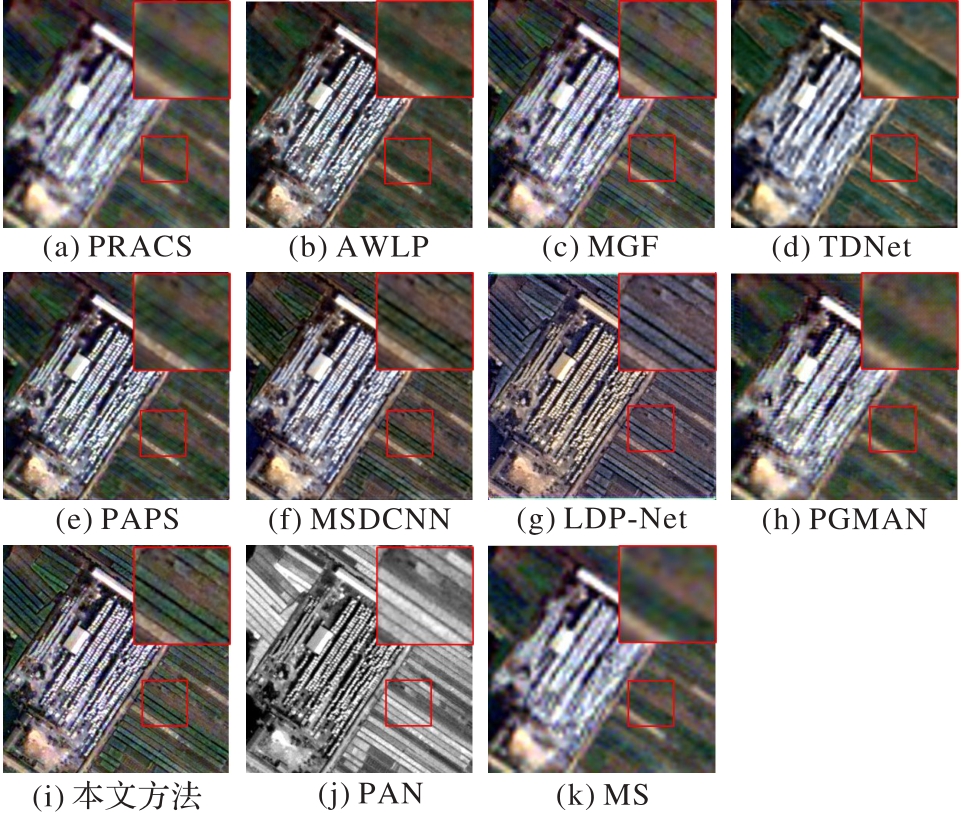
Fig. 10 Fusion results on QB dataset at full resolution conditions
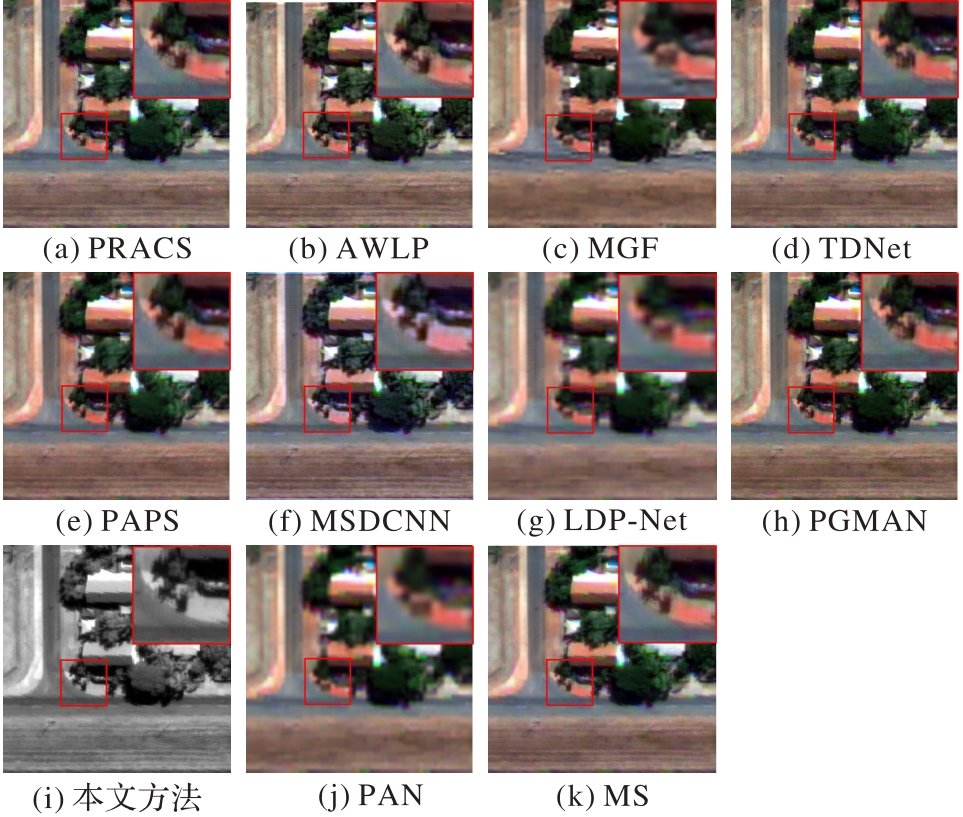
Fig. 11 Fusion results on WV-4 dataset at full resolution conditions
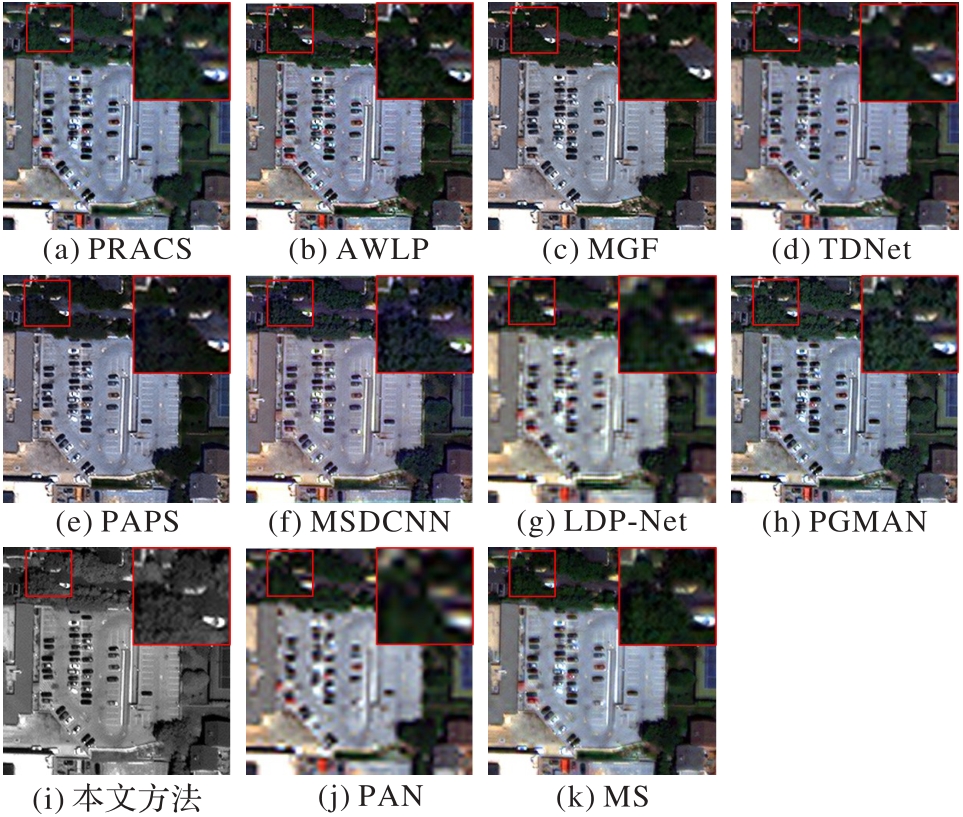
Fig. 12 Fusion results on WV-2 dataset at full resolution conditions
| 卫星 | 指标 | PRACS | AWLP | MGF | TDNet | PAPS | MSDCNN | LDP-Net | PGMAN | TCONet | 理想值 |
|---|---|---|---|---|---|---|---|---|---|---|---|
| QB | Dλ | 0.015 6 | 0.050 2 | 0.027 4 | 0.034 2 | 0.028 3 | 0.032 0 | 0.029 3 | 0.001 7 | 0 | |
| Ds | 0.023 8 | 0.061 7 | 0.031 9 | 0.031 8 | 0.048 9 | 0.029 3 | 0.090 8 | 0.007 7 | 0 | ||
| QNR | 0.960 9 | 0.892 0 | 0.941 7 | 0.935 0 | 0.924 3 | 0.939 5 | 0.723 2 | 0.982 2 | 1 | ||
| WV-4 | Dλ | 0.012 5 | 0.032 3 | 0.023 7 | 0.022 6 | 0.033 0 | 0.026 0 | 0.093 4 | 0.002 5 | 0 | |
| Ds | 0.023 2 | 0.042 9 | 0.039 3 | 0.026 3 | 0.050 0 | 0.049 0 | 0.081 3 | 0.011 6 | 0 | ||
| QNR | 0.964 6 | 0.926 3 | 0.937 9 | 0.951 6 | 0.918 5 | 0.926 1 | 0.832 8 | 0.985 9 | 1 | ||
| WV-2 | Dλ | 0.059 6 | 0.043 1 | 0.026 3 | 0.035 0 | 0.041 9 | 0.033 2 | 0.003 4 | 0.019 1 | 0 | |
| Ds | 0.044 4 | 0.045 6 | 0.031 1 | 0.051 9 | 0.046 9 | 0.062 3 | 0.040 5 | 0.012 2 | 0 | ||
| QNR | 0.899 1 | 0.913 3 | 0.943 4 | 0.915 4 | 0.913 2 | 0.906 6 | 0.956 2 | 0.968 8 | 1 |
Tab. 2 Quantitative evaluation at full resolution conditions
| 卫星 | 指标 | PRACS | AWLP | MGF | TDNet | PAPS | MSDCNN | LDP-Net | PGMAN | TCONet | 理想值 |
|---|---|---|---|---|---|---|---|---|---|---|---|
| QB | Dλ | 0.015 6 | 0.050 2 | 0.027 4 | 0.034 2 | 0.028 3 | 0.032 0 | 0.029 3 | 0.001 7 | 0 | |
| Ds | 0.023 8 | 0.061 7 | 0.031 9 | 0.031 8 | 0.048 9 | 0.029 3 | 0.090 8 | 0.007 7 | 0 | ||
| QNR | 0.960 9 | 0.892 0 | 0.941 7 | 0.935 0 | 0.924 3 | 0.939 5 | 0.723 2 | 0.982 2 | 1 | ||
| WV-4 | Dλ | 0.012 5 | 0.032 3 | 0.023 7 | 0.022 6 | 0.033 0 | 0.026 0 | 0.093 4 | 0.002 5 | 0 | |
| Ds | 0.023 2 | 0.042 9 | 0.039 3 | 0.026 3 | 0.050 0 | 0.049 0 | 0.081 3 | 0.011 6 | 0 | ||
| QNR | 0.964 6 | 0.926 3 | 0.937 9 | 0.951 6 | 0.918 5 | 0.926 1 | 0.832 8 | 0.985 9 | 1 | ||
| WV-2 | Dλ | 0.059 6 | 0.043 1 | 0.026 3 | 0.035 0 | 0.041 9 | 0.033 2 | 0.003 4 | 0.019 1 | 0 | |
| Ds | 0.044 4 | 0.045 6 | 0.031 1 | 0.051 9 | 0.046 9 | 0.062 3 | 0.040 5 | 0.012 2 | 0 | ||
| QNR | 0.899 1 | 0.913 3 | 0.943 4 | 0.915 4 | 0.913 2 | 0.906 6 | 0.956 2 | 0.968 8 | 1 |
| 方法 | SSIM | PSNR/dB | SAM | ERGAS | CC | Dλ | Ds | QNR |
|---|---|---|---|---|---|---|---|---|
| TCONet | 0.993 2 | 50.613 7 | 0.712 9 | 0.465 0 | 0.997 0 | 0.010 0 | 0.007 7 | 0.982 2 |
| w/o IMRA | 47.420 0 | 1.097 2 | 0.713 7 | 0.994 5 | 0.018 8 | 0.017 7 | 0.963 8 | |
| w/o AM | 0.987 6 | 47.991 9 | 0.939 2 | 0.638 7 | 0.994 3 | 0.020 5 | ||
| w/o MFEM | 0.916 0 | 38.839 1 | 1.757 3 | 1.565 9 | 0.985 0 | 0.035 4 | 0.040 5 | 0.925 5 |
| w/o SIEN | 0.976 1 | 45.128 4 | 1.317 3 | 0.890 5 | 0.990 3 | 0.018 1 | 0.020 4 | 0.961 8 |
| PS | 0.979 4 | 46.117 8 | 1.196 8 | 0.813 7 | 0.991 1 | 0.022 8 | 0.964 0 | |
| AIMMN | 0.985 5 | 0.023 9 | 0.022 0 | 0.954 6 | ||||
| 理想值 | 1 | +∞ | 0 | 0 | 1 | 0 | 0 | 1 |
Tab. 3 Ablation study on different components
| 方法 | SSIM | PSNR/dB | SAM | ERGAS | CC | Dλ | Ds | QNR |
|---|---|---|---|---|---|---|---|---|
| TCONet | 0.993 2 | 50.613 7 | 0.712 9 | 0.465 0 | 0.997 0 | 0.010 0 | 0.007 7 | 0.982 2 |
| w/o IMRA | 47.420 0 | 1.097 2 | 0.713 7 | 0.994 5 | 0.018 8 | 0.017 7 | 0.963 8 | |
| w/o AM | 0.987 6 | 47.991 9 | 0.939 2 | 0.638 7 | 0.994 3 | 0.020 5 | ||
| w/o MFEM | 0.916 0 | 38.839 1 | 1.757 3 | 1.565 9 | 0.985 0 | 0.035 4 | 0.040 5 | 0.925 5 |
| w/o SIEN | 0.976 1 | 45.128 4 | 1.317 3 | 0.890 5 | 0.990 3 | 0.018 1 | 0.020 4 | 0.961 8 |
| PS | 0.979 4 | 46.117 8 | 1.196 8 | 0.813 7 | 0.991 1 | 0.022 8 | 0.964 0 | |
| AIMMN | 0.985 5 | 0.023 9 | 0.022 0 | 0.954 6 | ||||
| 理想值 | 1 | +∞ | 0 | 0 | 1 | 0 | 0 | 1 |
| [1] | 吴宗骏,吴炜,杨晓敏,等. 改进的基于稀疏表示的全色锐化算法[J]. 计算机应用, 2019, 39(2): 540-545. |
| WU Z J, WU W, YANG X M, et al. Improved panchromatic sharpening algorithm based on sparse representation[J]. Journal of Computer Applications, 2019, 39(2): 540-545. | |
| [2] | ZHANG K, ZHANG F, WAN W, et al. Panchromatic and multispectral image fusion for remote sensing and earth observation: concepts, taxonomy, literature review, evaluation methodologies and challenges ahead[J]. Information Fusion, 2023, 93: 227-242. |
| [3] | 路琨婷,费蓉蓉,张选德. 融合卷积神经网络的遥感图像全色锐化[J].计算机应用, 2023, 43(9): 2963-2969. |
| LU K T, FEI R R, ZHANG X D. Remote sensing image pansharpening by convolutional neural network[J]. Journal of Computer Applications, 2023, 43(9): 2963-2969. | |
| [4] | CHOI J, YU K, KIM Y. A new adaptive component-substitution-based satellite image fusion by using partial replacement[J]. IEEE Transactions on Geoscience and Remote Sensing, 2010, 49(1): 295-309. |
| [5] | OTAZU X, GONZÁLEZ-AUDÍCANA M, FORS O, et al. Introduction of sensor spectral response into image fusion methods. Application to wavelet-based methods[J]. IEEE Transactions on Geoscience and Remote Sensing, 2005, 43(10): 2376-2385. |
| [6] | BURT P J, ADELSON E H. The Laplacian pyramid as a compact image code[M]// FISCHLER M A, FIRSCHEIN O. Readings in computer vision: issues, problem, principles, and paradigms. San Francisco: Morgan Kaufmann Publishers Inc., 1987: 671-679. |
| [7] | AIAZZI B, ALPARONE L, BARONTI S, et al. MTF-tailored multiscale fusion of high-resolution MS and Pan imagery[J]. Photogrammetric Engineering and Remote Sensing, 2015, 72(5): 591-596. |
| [8] | VIVONE G, RESTAINO R, CHANUSSOT J. Full scale regression-based injection coefficients for panchromatic sharpening[J]. IEEE Transactions on Image Processing, 2018, 27(7): 3418-3431. |
| [9] | VIVONE G, DALLA MURA M, GARZELLI A, et al. A new benchmark based on recent advances in multispectral pansharpening: revisiting pansharpening with classical and emerging pansharpening methods[J]. IEEE Geoscience and Remote Sensing Magazine, 2021, 9(1): 53-81. |
| [10] | FASBENDER D, RADOUX J, BOGAERT P. Bayesian data fusion for adaptable image pansharpening[J]. IEEE Transactions on Geoscience and Remote Sensing, 2008, 46(6): 1847-1857. |
| [11] | ZHANG L, SHEN H, GONG W, et al. Adjustable model-based fusion method for multispectral and panchromatic images[J]. IEEE Transactions on Systems, Man, and Cybernetics, Part B (Cybernetics), 2012, 42(6): 1693-1704. |
| [12] | PALSSON F, SVEINSSON J R, ULFARSSON M O. A new pansharpening algorithm based on total variation[J]. IEEE Geoscience and Remote Sensing Letters, 2014, 11(1): 318-322. |
| [13] | CAO Q, DENG L J, WANG W, et al. Zero-shot semi-supervised learning for pansharpening[J]. Information Fusion, 2024, 101: No.102001. |
| [14] | DIAO W, ZHANG F, SUN J, et al. ZeRGAN: zero-reference GAN for fusion of multispectral and panchromatic images[J]. IEEE Transactions on Neural Networks and Learning Systems, 2023, 34(11): 8195-8209. |
| [15] | ZHOU H, LIU Q, WENG D, et al. Unsupervised cycle-consistent generative adversarial networks for pan sharpening[J]. IEEE Transactions on Geoscience and Remote Sensing, 2022, 60: No.5408814. |
| [16] | HE X, CONDAT L, BIOUCAS-DIAS J M, et al. A new pansharpening method based on spatial and spectral sparsity priors[J]. IEEE Transactions on Image Processing, 2014, 23(9): 4160-4174. |
| [17] | SERIFOGLU YILMAZ C, YILMAZ V, GUNGOR O, et al. Metaheuristic pansharpening based on symbiotic organisms search optimization[J]. ISPRS Journal of Photogrammetry and Remote Sensing, 2019, 158: 167-187. |
| [18] | ZHENG S, SHI W Z, LIU J, et al. Remote sensing image fusion using multiscale mapped LS-SVM[J]. IEEE Transactions on Geoscience and Remote Sensing, 2008, 46(5): 1313-1322. |
| [19] | XING Y, WANG M, YANG S, et al. Pansharpening with multiscale geometric support tensor machine[J]. IEEE Transactions on Geoscience and Remote Sensing, 2018, 56(5): 2503-2517. |
| [20] | RESTAINO R, VIVONE G, DALLA MURA M, et al. Fusion of multispectral and panchromatic images based on morphological operators[J]. IEEE Transactions on Image Processing, 2016, 25(6): 2882-2895. |
| [21] | ZHANG T J, DENG L J, HUANG T Z, et al. A triple-double convolutional neural network for panchromatic sharpening[J]. IEEE Transactions on Neural Networks and Learning Systems, 2023, 34(11): 9088-9101. |
| [22] | BRAUWERS G, FRASINCAR F. A general survey on attention mechanisms in deep learning[J]. IEEE Transactions on Knowledge and Data Engineering, 2023, 35(4): 3279-3298. |
| [23] | JADERBERG M, SIMONYAN K, ZISSERMAN A, et al. Spatial Transformer networks[C]// Proceedings of the 29th International Conference on Neural Information Processing Systems — Volume 2. Cambridge: MIT Press, 2015: 2017-2025. |
| [24] | HU J, SHEN L, SUN G. Squeeze-and-excitation networks[C]// Proceedings of the 2018 IEEE/CVF Conference on Computer Vision and Pattern Recognition. Piscataway: IEEE, 2018: 7132-7141. |
| [25] | WOO S, PARK J, LEE J Y, et al. CBAM: convolutional block attention module[C]// Proceedings of the 2018 European Conference on Computer Vision, LNCS 11211. Cham: Springer, 2018: 3-19. |
| [26] | HAN K, WANG Y, CHEN H, et al. A survey on Vision Transformer[J]. IEEE Transactions on Pattern Analysis and Machine Intelligence, 2023, 45(1): 87-110. |
| [27] | WALD L, RANCHIN T, MANGOLINI M. Fusion of satellite images of different spatial resolutions: assessing the quality of resulting images[J]. Photogrammetric Engineering and Remote Sensing, 1997, 63(6): 691-699. |
| [28] | MASI G, COZZOLINO D, VERDOLIVA L, et al. Pansharpening by convolutional neural networks[J]. Remote Sensing, 2016, 8(7): No.594. |
| [29] | YANG G, ZHOU M, YAN K, et al. Memory-augmented deep conditional unfolding network for pan-sharpening[C]// Proceedings of the 2022 IEEE/CVF Conference on Computer Vision and Pattern Recognition. Piscataway: IEEE, 2022: 1778-1787. |
| [30] | YANG J, FU X, HU Y, et al. PanNet: a deep network architecture for pan-sharpening[C]// Proceedings of the 2017 IEEE International Conference on Computer Vision. Piscataway: IEEE, 2017: 1753-1761. |
| [31] | JIA Y, HU Q, DIAN R, et al. PAPS: progressive attention-based pan-sharpening[J]. IEEE/CAA Journal of Automatica Sinica, 2024, 11(2): 391-404. |
| [32] | YUAN Q, WEI Y, MENG X, et al. A multiscale and multidepth convolutional neural network for remote sensing imagery pan-sharpening[J]. IEEE Journal of Selected Topics in Applied Earth Observations and Remote Sensing, 2018, 11(3): 978-989. |
| [33] | QU Y, LI B, HUANG J, et al. Training pansharpening networks at full resolution using degenerate invariance[C]// Proceedings of the 32nd ACM International Conference on Multimedia. New York: ACM, 2024: 176-185. |
| [34] | MA J, YU W, CHEN C, et al. Pan-GAN: an unsupervised pan-sharpening method for remote sensing image fusion[J]. Information Fusion, 2020, 62: 110-120. |
| [35] | JIN X, FENG Y, JIANG Q, et al. UPGAN: an unsupervised generative adversarial network based on U-shaped structure for pansharpening[J]. ISPRS International Journal of Geo-Information, 2024, 13(7): No.222. |
| [36] | HUANG B, LI X, ZHANG X. SWPanGAN: a hybrid generative adversarial network for pansharpening[J]. IET Image Processing, 2024, 18(8): 1950-1966. |
| [37] | LIU Q, MENG X, SHAO F, et al. Supervised-unsupervised combined deep convolutional neural networks for high-fidelity pansharpening[J]. Information Fusion, 2023, 89: 292-304. |
| [38] | ZHOU H, LIU Q, WANG Y. PGMAN: an unsupervised generative multiadversarial network for pansharpening[J]. IEEE Journal of Selected Topics in Applied Earth Observations and Remote Sensing, 2021, 14: 6316-6327. |
| [39] | NI J, SHAO Z, ZHANG Z, et al. LDP-Net: an unsupervised pansharpening network based on learnable degradation processes[J]. IEEE Journal of Selected Topics in Applied Earth Observations and Remote Sensing, 2022, 15: 5468-5479. |
| [40] | WANG W, DENG L J, VIVONE G. A general image fusion framework using multi-task semi-supervised learning[J]. Information Fusion, 2024, 108: No.102414. |
| [41] | ALPARONE L, AIAZZI B, BARONTI S, et al. Multispectral and panchromatic data fusion assessment without reference[J]. Photogrammetric Engineering and Remote Sensing, 2008, 74(2): 193-200. |
| [42] | WANG H, ZHANG H, TIAN X, et al. Zero-Sharpen: a universal pansharpening method across satellites for reducing scale-variance gap via zero-shot variation[J]. Information Fusion, 2024, 101: No.102003. |
| [1] | Xing SHENG, Sunxian WENG, Kuosong CHEN, Zhongping WANG, Ruifeng REN, Yong LIU. Deep learning-based patent value evaluation for power grid enterprises [J]. Journal of Computer Applications, 2026, 46(5): 1468-1474. |
| [2] | Yifan SUO, Songhua LIU, Qiuzhi HAO. Time series anomaly detection method based on high-order feature aggregation [J]. Journal of Computer Applications, 2026, 46(4): 1131-1138. |
| [3] | Jie HU, Pengcheng LI, Jun SUN, Jiaao ZHANG. Key phrase extraction model based on multi-perspective information enhancement and hierarchical weighting [J]. Journal of Computer Applications, 2026, 46(4): 1050-1057. |
| [4] | Chunyong YIN, Bufan ZHANG. Multi-scale based multivariate time series anomaly detection model [J]. Journal of Computer Applications, 2026, 46(3): 790-797. |
| [5] | Limei DONG, Yanzi LI, Jiayin LI, Li XU. Neighborhood-enhanced unsupervised graph anomaly detection [J]. Journal of Computer Applications, 2026, 46(2): 458-466. |
| [6] | Wen LI, Kairong LI, Kai YANG. Subgraph-aware contrastive learning with data augmentation [J]. Journal of Computer Applications, 2026, 46(1): 1-9. |
| [7] | Jin LI, Liqun LIU. SAR and visible image fusion based on residual Swin Transformer [J]. Journal of Computer Applications, 2025, 45(9): 2949-2956. |
| [8] | Panfeng JING, Yudong LIANG, Chaowei LI, Junru GUO, Jinyu GUO. Semi-supervised image dehazing algorithm based on teacher-student learning [J]. Journal of Computer Applications, 2025, 45(9): 2975-2983. |
| [9] | Chao LIU, Yanhua YU. Knowledge-aware recommendation model combining denoising strategy and multi-view contrastive learning [J]. Journal of Computer Applications, 2025, 45(9): 2827-2837. |
| [10] | Jin XIE, Surong CHU, Yan QIANG, Juanjuan ZHAO, Hua ZHANG, Yong GAO. Dual-branch distribution consistency contrastive learning model for hard negative sample identification in chest X-rays [J]. Journal of Computer Applications, 2025, 45(7): 2369-2377. |
| [11] | Yulin HE, Xu LI, Yingting HE, Laizhong CUI, Zhexue HUANG. Subspace Gaussian mixture model clustering ensemble algorithm based on maximum mean discrepancy [J]. Journal of Computer Applications, 2025, 45(6): 1712-1723. |
| [12] | Zonghang WU, Dong ZHANG, Guanyu LI. Multimodal fusion recommendation algorithm based on joint self-supervised learning [J]. Journal of Computer Applications, 2025, 45(6): 1858-1868. |
| [13] | Ying HUANG, Shengmei GAO, Guang CHEN, Su LIU. Low-light image enhancement network combining signal-to-noise ratio guided dual-branch structure and histogram equalization [J]. Journal of Computer Applications, 2025, 45(6): 1971-1979. |
| [14] | Pengyu CHEN, Xiushan NIE, Nanjun LI, Tuo LI. Semi-supervised video object segmentation method based on spatio-temporal decoupling and regional robustness enhancement [J]. Journal of Computer Applications, 2025, 45(5): 1379-1386. |
| [15] | Wenpeng WANG, Yinchang QIN, Wenxuan SHI. Review of unsupervised deep learning methods for industrial defect detection [J]. Journal of Computer Applications, 2025, 45(5): 1658-1670. |
| Viewed | ||||||
|
Full text |
|
|||||
|
Abstract |
|
|||||
