


《计算机应用》唯一官方网站 ›› 2026, Vol. 46 ›› Issue (8): 2691-2698.DOI: 10.11772/j.issn.1001-9081.2025070919
• 前沿与综合应用 • 上一篇
闫江毓, 王世乾, 王红( )
)
收稿日期:2025-08-11
修回日期:2025-10-15
接受日期:2025-10-17
发布日期:2025-11-05
出版日期:2026-08-10
通讯作者:
王红
作者简介:闫江毓(1979—),男,山西吕梁人,副教授,博士,主要研究方向:智能计算、电力大数据
Jiangyu YAN, Shiqian WANG, Hong WANG()
Received:2025-08-11
Revised:2025-10-15
Accepted:2025-10-17
Online:2025-11-05
Published:2026-08-10
Contact:
Hong WANG
About author:YAN Jiangyu, born in 1979, Ph. D., associate professor. His research interests include intelligent computing, electric power big data.摘要:
窃电行为导致的电网非技术性损失日益严重,现有检测方法面临数据类别不平衡和特征表征不足的双重挑战。为此,提出一种基于改进带梯度惩罚的Wasserstein生成对抗网络(WGAN-GP)和时频特征融合的窃电检测方法。首先,结合自适应梯度惩罚与WGAN,建模与增强原始窃电数据,缓解数据样本不平衡的问题;其次,构建时频特征融合窃电检测方法,通过带有注意力机制的特征提取模块,在时域维度中捕捉用户用电行为的全局特征与周期特征,在频域维度中通过傅里叶变换后提取频域特征,得到时频域特征的双重表征;最后,对高维特征进行融合与压缩,以实现精准的窃电检测。使用某电力公司真实用电数据集进行验证的结果表明,与合成少数过采样技术(SMOTE)和自适应合成采样(ADASYN)等传统方法相比,K-近邻(KNN)算法、长短期记忆(LSTM)网络、宽深度卷积神经网络(WDCNN)和Flowformer这4种对比模型经所提方法数据增强后的正确率均达到了90.00%以上,并且曲线下面积(AUC)均超过95.00%。在此基础上,时频特征融合窃电检测方法的正确率和F1分数分别达到95.54%和95.39%,较Flowformer模型分别提升了1.90和1.89个百分点,且在保持92.71%的高检出率的同时,将误检率控制在1.66%的低水平。可见,所提方法在窃电样本生成的真实性和窃电用户识别的准确性方面均优于对比方法,具有良好的适用性。
中图分类号:
闫江毓, 王世乾, 王红. 基于改进带梯度惩罚的Wasserstein生成对抗网络和时频特征融合的窃电检测方法[J]. 计算机应用, 2026, 46(8): 2691-2698.
Jiangyu YAN, Shiqian WANG, Hong WANG. Electricity theft detection method based on improved Wasserstein generative adversarial network with gradient penalty and time-frequency feature fusion[J]. Journal of Computer Applications, 2026, 46(8): 2691-2698.
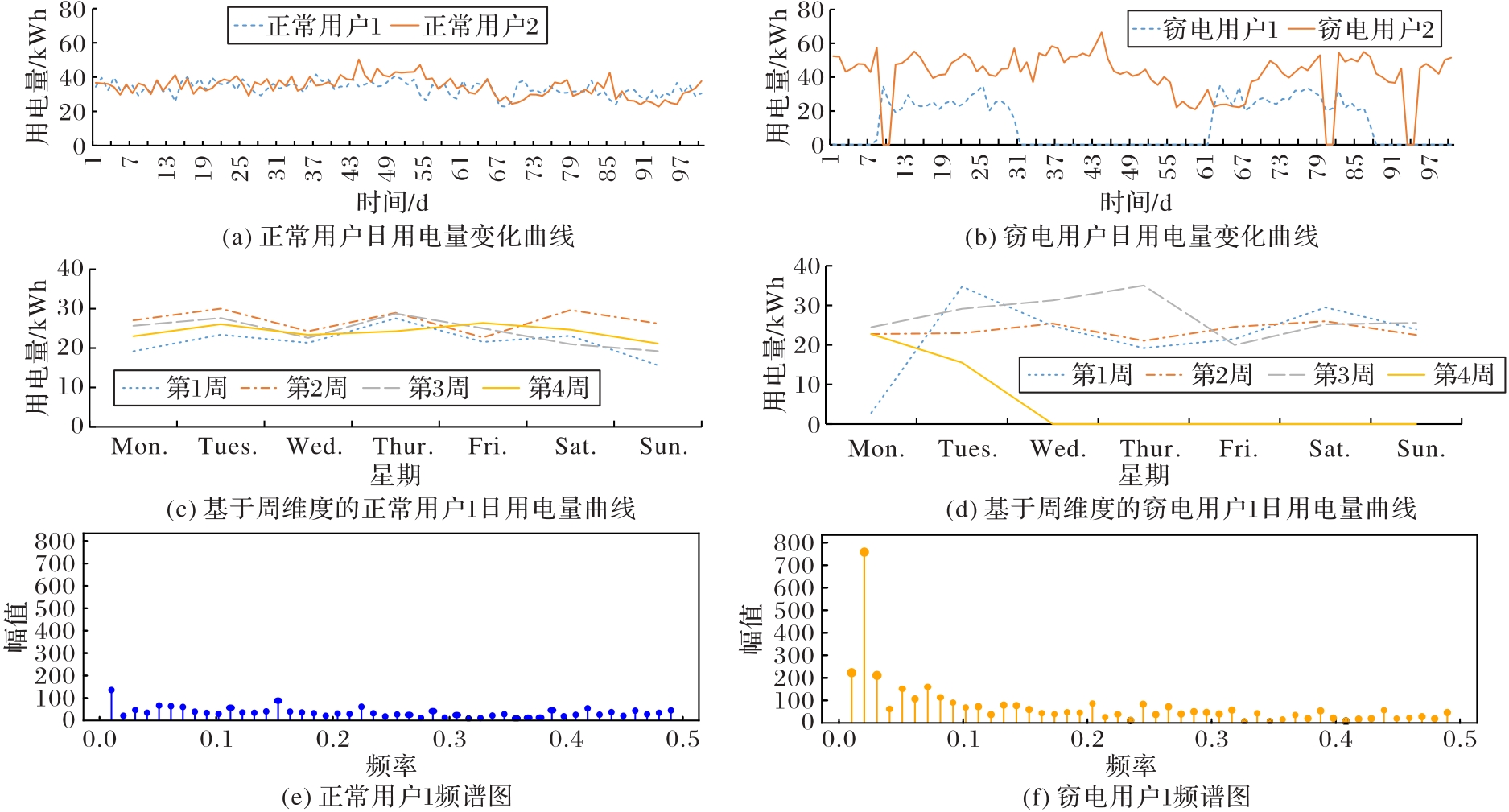
图1 用电负荷数据特征分析图
Fig. 1 Analysis charts of power load data characteristics
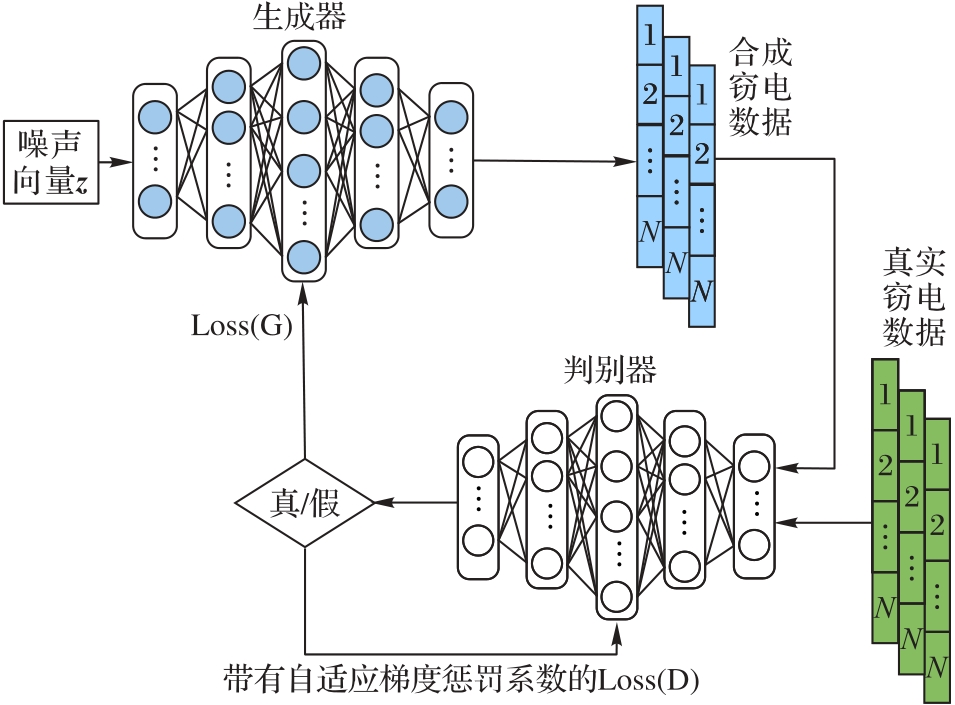
图2 基于改进WGAN-GP的数据增强方法
Fig. 2 Data augmentation method based on improved WGAN-GP
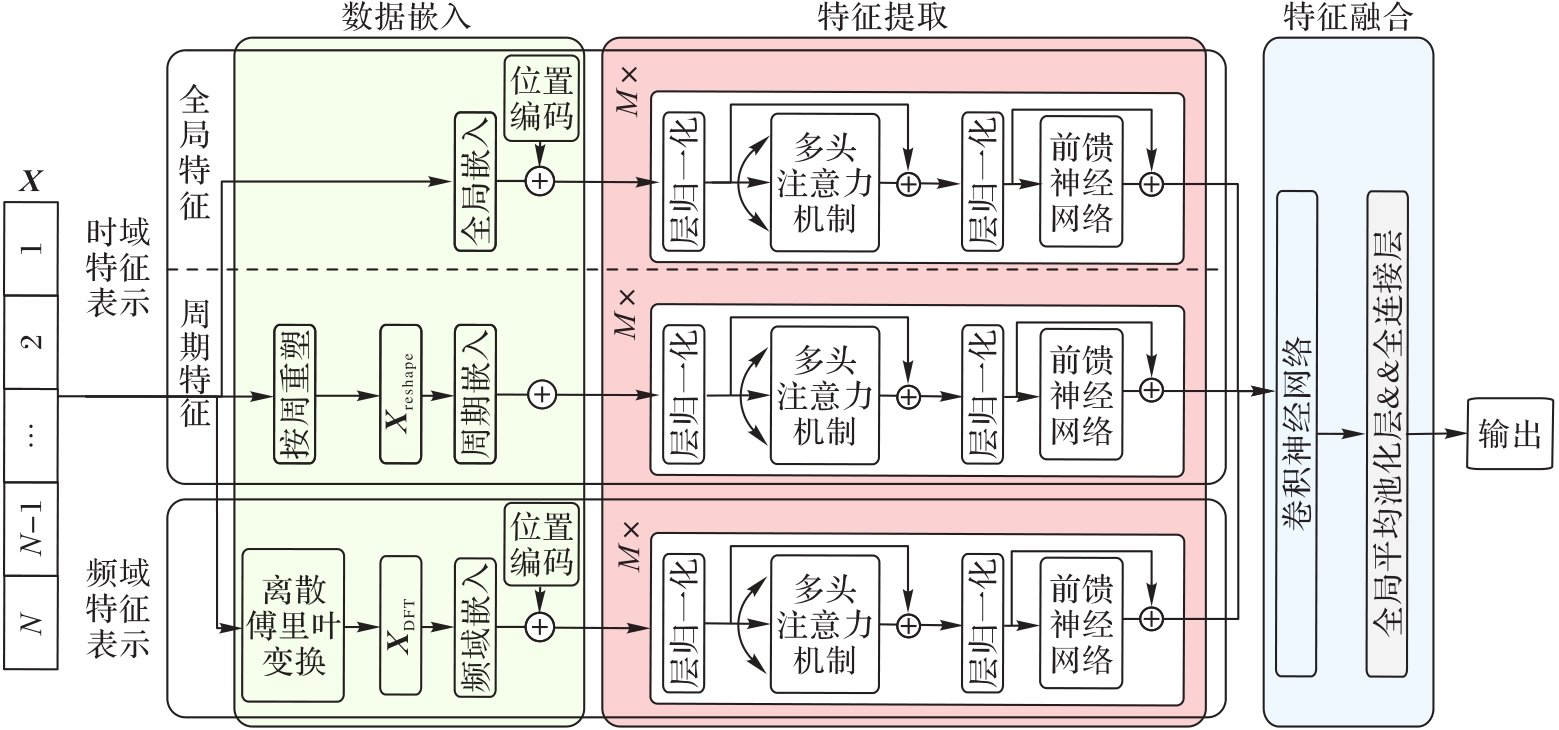
图3 时频特征融合窃电检测方法的架构
Fig. 3 Architecture of electricity theft detection method based on time-frequency domain feature fusion
| 类别 | 检测为窃电用户 | 检测为正常用户 |
|---|---|---|
| 窃电用户 | TP | FN |
| 正常用户 | FP | TN |
表1 混淆矩阵
Tab. 1 Confusion matrix
| 类别 | 检测为窃电用户 | 检测为正常用户 |
|---|---|---|
| 窃电用户 | TP | FN |
| 正常用户 | FP | TN |
| 数据集 | 正常样本数 | 窃电样本数 | 总计 |
|---|---|---|---|
| 原始数据集 | 38 757 | 3 615 | 42 372 |
| 增强数据集 | 38 757 | 38 757 | 77 514 |
表2 增强数据集与原始数据集的样本数对比
Tab. 2 Comparison of samples between augmented dataset and original dataset
| 数据集 | 正常样本数 | 窃电样本数 | 总计 |
|---|---|---|---|
| 原始数据集 | 38 757 | 3 615 | 42 372 |
| 增强数据集 | 38 757 | 38 757 | 77 514 |
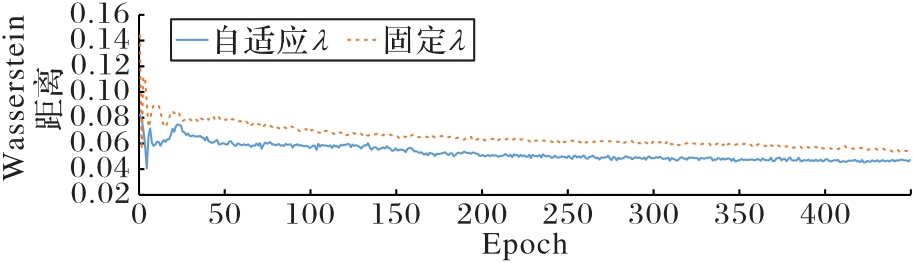
图4 Wasserstein距离在自适应λ与固定λ下的变化对比
Fig. 4 Comparison of Wasserstein distance under adaptive λ and fixed λ
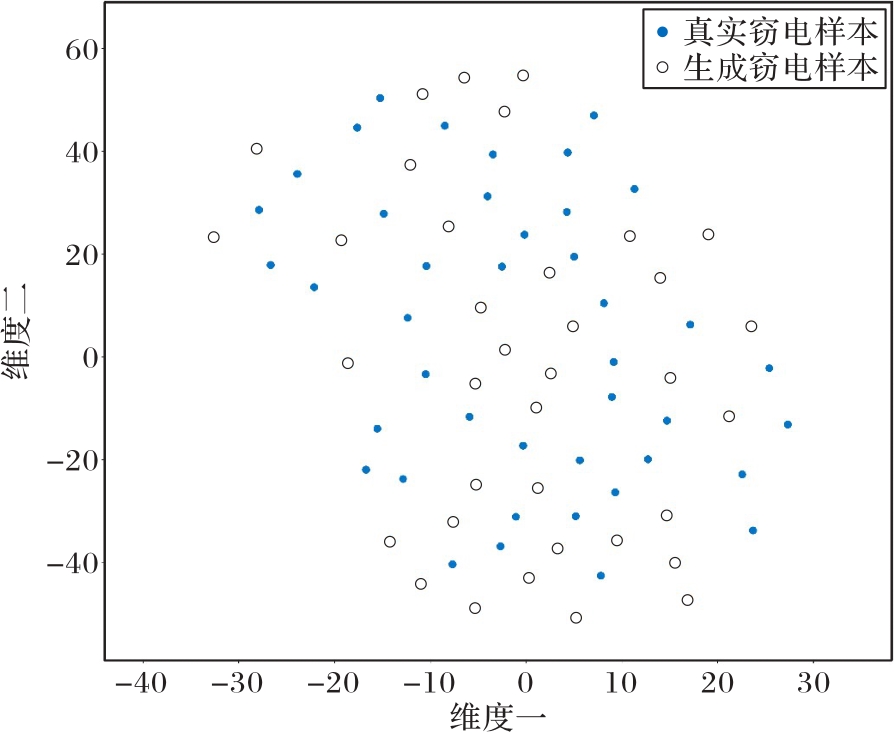
图5 t-SNE降维后的真实窃电样本与生成窃电样本的分布
Fig. 5 Distribution of real electricity theft samples and generated electricity theft samples after t-SNE dimensionality reduction
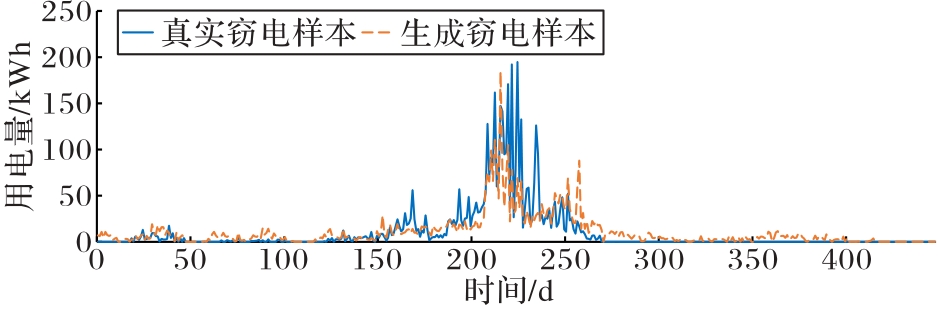
图6 真实窃电样本与生成窃电样本电力负荷曲线对比
Fig. 6 Comparison of power load curves between real electricity theft samples and generated electricity theft samples
| 模型 | 数据增强方式 | MACC | MTPR | MF1 | MFPR | MAUC |
|---|---|---|---|---|---|---|
| KNN | 原始数据集 | 91.62 | 0.00 | 0.00 | 0.00 | 56.40 |
| 随机过采样 | 65.79 | 54.66 | 61.53 | 23.06 | 72.49 | |
| SMOTE | 70.90 | 99.04 | 77.20 | 56.94 | 89.55 | |
| ADASYN | 71.36 | 99.08 | 77.61 | 56.47 | 88.76 | |
| 改进WGAN-GP | 90.61 | 86.83 | 90.24 | 5.61 | 95.49 | |
| LSTM | 原始数据集 | 91.68 | 5.05 | 9.42 | 0.20 | 67.88 |
| 随机过采样 | 74.28 | 66.15 | 72.00 | 17.59 | 82.15 | |
| SMOTE | 85.44 | 91.97 | 86.33 | 21.10 | 92.96 | |
| ADASYN | 85.54 | 90.99 | 86.27 | 19.90 | 92.99 | |
| 改进WGAN-GP | 92.24 | 86.53 | 91.77 | 2.05 | 95.92 | |
| WDCNN | 原始数据集 | 91.65 | 1.55 | 3.02 | 0.11 | 61.72 |
| 随机过采样 | 80.13 | 72.49 | 78.50 | 12.22 | 89.56 | |
| SMOTE | 88.21 | 89.00 | 88.25 | 12.58 | 95.26 | |
| ADASYN | 87.43 | 87.42 | 87.45 | 12.56 | 94.53 | |
| 改进WGAN-GP | 92.35 | 87.33 | 91.93 | 2.65 | 96.47 | |
| Flowformer | 原始数据集 | 91.80 | 10.73 | 18.71 | 0.38 | 75.75 |
| 随机过采样 | 84.24 | 82.54 | 84.02 | 14.04 | 92.28 | |
| SMOTE | 91.30 | 91.78 | 91.34 | 9.17 | 96.46 | |
| ADASYN | 92.71 | 92.14 | 92.63 | 6.72 | 96.98 | |
| 改进WGAN-GP | 93.64 | 91.94 | 93.50 | 4.68 | 97.12 |
表3 数据增强实验结果对比 (%)
Tab. 3 Comparison of experimental results for data augmentation
| 模型 | 数据增强方式 | MACC | MTPR | MF1 | MFPR | MAUC |
|---|---|---|---|---|---|---|
| KNN | 原始数据集 | 91.62 | 0.00 | 0.00 | 0.00 | 56.40 |
| 随机过采样 | 65.79 | 54.66 | 61.53 | 23.06 | 72.49 | |
| SMOTE | 70.90 | 99.04 | 77.20 | 56.94 | 89.55 | |
| ADASYN | 71.36 | 99.08 | 77.61 | 56.47 | 88.76 | |
| 改进WGAN-GP | 90.61 | 86.83 | 90.24 | 5.61 | 95.49 | |
| LSTM | 原始数据集 | 91.68 | 5.05 | 9.42 | 0.20 | 67.88 |
| 随机过采样 | 74.28 | 66.15 | 72.00 | 17.59 | 82.15 | |
| SMOTE | 85.44 | 91.97 | 86.33 | 21.10 | 92.96 | |
| ADASYN | 85.54 | 90.99 | 86.27 | 19.90 | 92.99 | |
| 改进WGAN-GP | 92.24 | 86.53 | 91.77 | 2.05 | 95.92 | |
| WDCNN | 原始数据集 | 91.65 | 1.55 | 3.02 | 0.11 | 61.72 |
| 随机过采样 | 80.13 | 72.49 | 78.50 | 12.22 | 89.56 | |
| SMOTE | 88.21 | 89.00 | 88.25 | 12.58 | 95.26 | |
| ADASYN | 87.43 | 87.42 | 87.45 | 12.56 | 94.53 | |
| 改进WGAN-GP | 92.35 | 87.33 | 91.93 | 2.65 | 96.47 | |
| Flowformer | 原始数据集 | 91.80 | 10.73 | 18.71 | 0.38 | 75.75 |
| 随机过采样 | 84.24 | 82.54 | 84.02 | 14.04 | 92.28 | |
| SMOTE | 91.30 | 91.78 | 91.34 | 9.17 | 96.46 | |
| ADASYN | 92.71 | 92.14 | 92.63 | 6.72 | 96.98 | |
| 改进WGAN-GP | 93.64 | 91.94 | 93.50 | 4.68 | 97.12 |
| 模型 | MACC | MTPR | MF1 | MFPR | MAUC |
|---|---|---|---|---|---|
| KNN | 90.61 | 86.83 | 90.24 | 5.61 | 95.49 |
| LSTM | 92.24 | 86.53 | 91.77 | 95.92 | |
| WDCNN | 92.35 | 87.33 | 91.93 | 2.65 | 96.47 |
| Flowformer | 4.68 | ||||
| 时频特征融合 | 95.54 | 92.71 | 95.39 | 1.66 | 98.73 |
表4 各模型的窃电检测实验结果对比 (%)
Tab. 4 Experimental results comparison ofdifferent electricity theft detection models
| 模型 | MACC | MTPR | MF1 | MFPR | MAUC |
|---|---|---|---|---|---|
| KNN | 90.61 | 86.83 | 90.24 | 5.61 | 95.49 |
| LSTM | 92.24 | 86.53 | 91.77 | 95.92 | |
| WDCNN | 92.35 | 87.33 | 91.93 | 2.65 | 96.47 |
| Flowformer | 4.68 | ||||
| 时频特征融合 | 95.54 | 92.71 | 95.39 | 1.66 | 98.73 |
| 模型 | MACC | MTPR | MF1 | MFPR | MAUC |
|---|---|---|---|---|---|
| 移除全局特征表示 | 92.88 | 91.17 | 92.73 | 5.41 | 95.56 |
| 移除周期特征表示 | 93.61 | 92.46 | 93.51 | 5.26 | 96.21 |
| 移除双时域特征表示 | 91.09 | 87.66 | 90.74 | 5.51 | 95.04 |
| 移除频域特征表示 | 94.15 | 94.03 | 4.35 | ||
| 移除特征融合模块 | 92.38 | 97.60 | |||
| 时频特征融合 | 95.54 | 92.71 | 95.39 | 1.66 | 98.73 |
表5 消融实验结果 (%)
Tab. 5 Ablation experimental results
| 模型 | MACC | MTPR | MF1 | MFPR | MAUC |
|---|---|---|---|---|---|
| 移除全局特征表示 | 92.88 | 91.17 | 92.73 | 5.41 | 95.56 |
| 移除周期特征表示 | 93.61 | 92.46 | 93.51 | 5.26 | 96.21 |
| 移除双时域特征表示 | 91.09 | 87.66 | 90.74 | 5.51 | 95.04 |
| 移除频域特征表示 | 94.15 | 94.03 | 4.35 | ||
| 移除特征融合模块 | 92.38 | 97.60 | |||
| 时频特征融合 | 95.54 | 92.71 | 95.39 | 1.66 | 98.73 |
| [1] | 周赣,华济民,李铭钧,等. 基于图转换和混合卷积神经网络的窃电检测方法[J]. 电力系统自动化, 2022, 46(19): 78-86. |
| Zhou Gan, Hua Jimin, Li Mingjun, et al. Electricity theft detection method based on graph transformation and hybrid convolutional neural network[J]. Automation of Electric Power Systems, 2022, 46(19): 78-86. | |
| [2] | Wang F, Zhou S, Wang C, et al. MSDM: multi-scale differencing modeling for cross-scenario electricity theft detection[J]. IEEE Transactions on Smart Grid, 2025, 16(2): 1629-1640. |
| [3] | Yan Z, Wen H. Performance analysis of electricity theft detection for the smart grid: an overview[J]. IEEE Transactions on Instrumentation and Measurement, 2022, 71: No.2502928. |
| [4] | 林振智,崔雪原,金伟超,等. 用户侧窃电检测关键技术[J]. 电力系统自动化, 2022, 46(5): 188-199. |
| Lin Zhenzhi, Cui Xueyuan, Jin Weichao, et al. Key technologies for electricity theft detection at consumer side[J]. Automation of Electric Power Systems, 2022, 46(5): 188-199. | |
| [5] | Li S, Meng W, Liu C, et al. Feature attention distillation defense for backdoor attack in artificial neural network-based electricity theft detection[J]. IEEE Internet of Things Journal, 2024, 11(24): 39880-39889. |
| [6] | Zhou W, Li B, Xiao H, et al. Electricity theft detection of residential users with correlation of water and electricity usage[J]. IEEE Transactions on Industrial Informatics, 2023, 20(4): 5339-5351. |
| [7] | 肖宇,叶志,黄瑞,等. 窃电行为检测方法研究综述[J]. 电力科学与技术学报, 2023, 38(4): 1-14. |
| Xiao Yu, Ye Zhi, Huang Rui, et al. Summary of research on electricity theft behavior detection methods[J]. Journal of Electric Power Science and Technology, 2023, 38(4): 1-14. | |
| [8] | 孔祥玉,马玉莹,李野,等. 基于限定记忆递推最小二乘算法的智能电表运行误差远程估计[J]. 中国电机工程学报, 2020, 40(7): 2143-2151. |
| Kong Xiangyu, Ma Yuying, Li Ye, et al. Remote estimation method for measurement error of smart meter based on limited memory recursive least squares algorithm[J]. Proceedings of the CSEE, 2020, 40(7): 2143-2151. | |
| [9] | Khan I U, Javaid N, Taylor C J, et al. Robust data driven analysis for electricity theft attack-resilient power grid[J]. IEEE Transactions on Power Systems, 2023, 38(1): 537-548. |
| [10] | 刘康,刘鑫,张蓬鹤,等. 基于负荷尖峰特征LSTM自编码器的窃电识别方法[J]. 电力系统自动化, 2023, 47(2): 96-104. |
| Liu Kang, Liu Xin, Zhang Penghe, et al. Identification method of electricity theft based on long short-term memory autoencoder with load peak features[J]. Automation of Electric Power Systems, 2023, 47(2): 96-104. | |
| [11] | 葛磊蛟,李京京. 面向先进计量基础设施的人工智能驱动窃电检测方法综述[J]. 中国电机工程学报, 2026, 46(10): 4086-4107. |
| Ge Leijiao, Li Jingjing. A review of artificial intelligence-driven electricity theft detection methods under advanced metering infrastructure[J]. Proceedings of the CSEE, 2026, 46(10): 4086-4107. | |
| [12] | 覃华勤,梁叶,钱奇,等. 基于典型窃电用户相似性检索的窃电行为检测方法[J]. 电力系统自动化, 2022, 46(6): 58-65. |
| Qin Huaqin, Liang Ye, Qian Qi, et al. Detection method of electricity theft behavior based on retrieval of similarity of typical users with electricity theft[J]. Automation of Electric Power Systems, 2022, 46(6): 58-65. | |
| [13] | 孔祥玉,马玉莹,赵鑫,等. 基于多阶段递推数据分析的低压台区窃电检测方法[J]. 中国电机工程学报, 2024, 44(15): 5921-5933. |
| Kong Xiangyu, Ma Yuying, Zhao Xin, et al. Detection method of electric theft in low voltage station area based on multi-stage recursive data analysis[J]. Proceedings of the CSEE, 2024, 44(15): 5921-5933. | |
| [14] | 梁宏涛,刘硕,杜军威,等. 深度学习应用于时序预测研究综述[J]. 计算机科学与探索, 2023, 17(6): 1285-1300. |
| Liang Hongtao, Liu Shuo, Du Junwei, et al. Review of deep learning applied to time series prediction[J]. Journal of Frontiers of Computer Science and Technology, 2023, 17(6): 1285-1300. | |
| [15] | Figueroa G, Chen Y S, Avila N, et al. Improved practices in machine learning algorithms for NTL detection with imbalanced data[C]// PESGM 2017. Piscataway: IEEE, 2017: 1-5. |
| [16] | 游文霞,梁皓,杨楠,等. 基于重采样和混合集成学习的不平衡窃电检测[J]. 电网技术, 2024, 48(2): 730-739. |
| You Wenxia, Liang Hao, Yang Nan, et al. Class imbalanced electricity theft detection based on resampling and hybrid ensemble learning[J]. Power System Technology, 2024, 48(2): 730-739. | |
| [17] | Saqib S M, Mazhar T, Iqbal M, et al. Enhancing electricity theft detection with ADASYN-enhanced machine learning models[J]. Electrical Engineering, 2025, 107(8): 10525-10542. |
| [18] | Mishra A K, Das B. A novel density based clustering approach for electricity theft detection[J]. IEEE Transactions on Industry Applications, 2025, 61(4): 5537-5548. |
| [19] | 刘康,李彬,薛阳,等. 基于传递熵密度聚类的用户窃电识别方法[J]. 中国电机工程学报, 2022, 42(20): 7535-7546. |
| Liu Kang, Li Bin, Xue Yang, et al. User electric theft detection method based on transfer entropy density clustering[J]. Proceedings of the CSEE, 2022, 42(20): 7535-7546. | |
| [20] | 靳海岗,谢振刚,任峰. 基于回归卷积神经网络和负荷混沌模型的窃电预测方法[J]. 电子器件, 2023, 46(1): 232-237. |
| Jin Haigang, Xie Zhengang, Ren Feng. Prediction method of power stealing based on regression convolutional neural network and load chaos model[J]. Chinese Journal of Electron Devices, 2023, 46(1): 232-237. | |
| [21] | 唐冬来,刘友波,熊智临,等. 基于时空关联矩阵的配电台区反窃电预警方法[J]. 电力系统自动化, 2020, 44(19): 168-176. |
| Tang Donglai, Liu Youbo, Xiong Zhilin, et al. Early warning method of electricity anti-theft in distribution station area based on spatiotemporal correlation matrix[J]. Automation of Electric Power Systems, 2020, 44(19): 168-176. | |
| [22] | Zheng Z, Yang Y, Niu X, et al. Wide and deep convolutional neural networks for electricity-theft detection to secure smart grids[J]. IEEE Transactions on Industrial Informatics, 2018, 14(4): 1606-1615. |
| [23] | 王路遥,龚钢军,杨佳轩,等. 面向用户用电行为检测的协同优化联邦学习框架、数据二维分解策略和隐私优化博弈模型[J]. 中国电机工程学报, 2026, 46(5): 1928-1942. |
| Wang Luyao, Gong Gangjun, Yang Jiaxuan, et al. Collaborative optimization federated learning framework, data two-dimensional decomposition strategy, and privacy optimization game model for user electricity behavior detection[J]. Proceedings of the CSEE, 2026, 46(5): 1928-1942. | |
| [24] | 金涛,王万豪,黄钦瑜,等. 一种利用轻量级多通道注意力融合网络的窃电检测边缘计算方法[J]. 中国电机工程学报, 2026, 46(6): 2420-2433. |
| Jin Tao, Wang Wanhao, Huang Qinyu, et al. Edge computing approach for electricity theft detection utilizing lightweight multi-channel attention fusion network[J]. Proceedings of the CSEE, 2026, 46(6): 2420-2433. | |
| [25] | Wang X, Xie H, Tang L, et al. Decentralized privacy-preserving electricity theft detection for distribution system operators[J]. IEEE Transactions on Smart Grid, 2024, 15(2): 2179-2190. |
| [26] | 陈启鑫,郑可迪,康重庆,等. 异常用电的检测方法:评述与展望[J]. 电力系统自动化, 2018, 42(17): 189-199. |
| Chen Qixin, Zheng Kedi, Kang Chongqing, et al. Detection methods of abnormal electricity consumption behaviors: review and prospect[J]. Automation of Electric Power Systems, 2018, 42(17): 189-199. | |
| [27] | 王德文,杨凯华. 基于生成式对抗网络的窃电检测数据生成方法[J]. 电网技术, 2020, 44(2): 775-782. |
| Wang Dewen, Yang Kaihua. A data generation method for electricity theft detection using generative adversarial network[J]. Power System Technology, 2020, 44(2): 775-782. | |
| [28] | 邹念,张颖,苏盛,等. 基于小时尺度周期特征自编码器的用户窃电识别方法[J]. 电网技术, 2023, 47(6): 2558-2567. |
| Zou Nian, Zhang Ying, Su Sheng, et al. User electric theft detection method based on hour scale periodic feature LSTM-Transformer[J]. Power System Technology, 2023, 47(6): 2558-2567. | |
| [29] | 李云峰,高云鹏,张蓬鹤,等. 多目标优化时域卷积神经网络的窃电行为高准确检测算法[J]. 电网技术, 2024, 48(8): 3449-3458. |
| Li Yunfeng, Gao Yunpeng, Zhang Penghe, et al. High-accuracy detection algorithm of electricity theft behavior based on multi-objective optimization time-domain convolutional neural network[J]. Power System Technology, 2024, 48(8): 3449-3458. | |
| [30] | Cui X, Liu S, Lin Z, et al. Two-step electricity theft detection strategy considering economic return based on convolutional autoencoder and improved regression algorithm[J]. IEEE Transactions on Power Systems, 2022, 37(3): 2346-2359. |
| [31] | Zhao Y, Wong L, Goh W W B. How to do quantile normalization correctly for gene expression data analyses[J]. Scientific Reports, 2020, 10: No.15534. |
| [32] | 谭建所,吴兴华,徐文光,等. 基于tSNE-LSTM算法的工业预测模型[J]. 现代电子技术, 2024, 47(12): 81-85. |
| Tan Jiansuo, Wu Xinghua, Xu Wenguang, et al. Industrial prediction model based on t-SNE-LSTM algorithm[J]. Modern Electronics Technique, 2024, 47(12): 81-85. | |
| [33] | Huang Z, Shi X, Zhang C, et al. FlowFormer: a Transformer architecture for optical flow[C]// ECCV 2022, LNCS 13677. Cham: Springer, 2022: 668-685. |
| [1] | 陈木生, 付文庆, 邱晓红, 吴俊华, 温强. 基于图卷积网络和跨领域数据增强的方面级情感三元组抽取[J]. 《计算机应用》唯一官方网站, 2026, 46(8): 2432-2439. |
| [2] | 张悦, 郭羽含. 大语言模型驱动的语义量化网约车时空需求预测方法[J]. 《计算机应用》唯一官方网站, 2026, 46(8): 2467-2476. |
| [3] | 菅银龙, 陈学斌, 景忠瑞, 钟琪, 张镇博. 联邦学习中基于条件生成对抗网络的数据增强方案[J]. 《计算机应用》唯一官方网站, 2026, 46(1): 21-32. |
| [4] | 李玟, 李开荣, 杨凯. 基于数据增强的子图感知对比学习[J]. 《计算机应用》唯一官方网站, 2026, 46(1): 1-9. |
| [5] | 李世伟, 周昱峰, 孙鹏飞, 刘伟松, 孟竹喧, 廉浩杰. 基于煤尘对激光雷达电磁波散射和吸收效应的点云数据增强方法[J]. 《计算机应用》唯一官方网站, 2026, 46(1): 331-340. |
| [6] | 昝志辉, 王雅静, 李珂, 杨智翔, 杨光宇. 基于SAA-CNN-BiLSTM网络的多特征融合语音情感识别方法[J]. 《计算机应用》唯一官方网站, 2026, 46(1): 69-76. |
| [7] | 王闯, 俞璐, 陈健威, 潘成, 杜文博. 开集域适应综述[J]. 《计算机应用》唯一官方网站, 2025, 45(9): 2727-2736. |
| [8] | 李莉, 宋涵, 刘培鹤, 陈汉林. 基于数据增强和残差网络的敏感信息命名实体识别[J]. 《计算机应用》唯一官方网站, 2025, 45(9): 2790-2797. |
| [9] | 梁一鸣, 范菁, 柴汶泽. 基于双向交叉注意力的多尺度特征融合情感分类[J]. 《计算机应用》唯一官方网站, 2025, 45(9): 2773-2782. |
| [10] | 姜超英, 李倩, 刘宁, 刘磊, 崔立真. 基于图对比学习的再入院预测模型[J]. 《计算机应用》唯一官方网站, 2025, 45(6): 1784-1792. |
| [11] | 李道全, 徐正, 陈思慧, 刘嘉宇. 融合变分自编码器与自适应增强卷积神经网络的网络流量分类模型[J]. 《计算机应用》唯一官方网站, 2025, 45(6): 1841-1848. |
| [12] | 李雪莹, 杨琨, 涂国庆, 刘树波. 基于局部增强的时序数据对抗样本生成方法[J]. 《计算机应用》唯一官方网站, 2025, 45(5): 1573-1581. |
| [13] | 田仁杰, 景明利, 焦龙, 王飞. 基于混合负采样的图对比学习推荐算法[J]. 《计算机应用》唯一官方网站, 2025, 45(4): 1053-1060. |
| [14] | 孙海涛, 林佳瑜, 梁祖红, 郭洁. 结合标签混淆的中文文本分类数据增强技术[J]. 《计算机应用》唯一官方网站, 2025, 45(4): 1113-1119. |
| [15] | 孙晨伟, 侯俊利, 刘祥根, 吕建成. 面向工程图纸理解的大语言模型提示生成方法[J]. 《计算机应用》唯一官方网站, 2025, 45(3): 801-807. |
| 阅读次数 | ||||||
|
全文 |
|
|||||
|
摘要 |
|
|||||
