


《计算机应用》唯一官方网站 ›› 2026, Vol. 46 ›› Issue (8): 2467-2476.DOI: 10.11772/j.issn.1001-9081.2025070885
张悦1, 郭羽含2( )
)
收稿日期:2025-08-04
修回日期:2025-10-14
接受日期:2025-10-15
发布日期:2025-11-05
出版日期:2026-08-10
通讯作者:
郭羽含
作者简介:张悦(2000—),女,河北保定人,硕士研究生,主要研究方向:智能算法、人工智能基金资助:Received:2025-08-04
Revised:2025-10-14
Accepted:2025-10-15
Online:2025-11-05
Published:2026-08-10
Contact:
Yuhan GUO
About author:ZHANG Yue, born in 2000, M. S. candidate. Her research interests include intelligent algorithm, artificial intelligence.
Supported by:摘要:
网约车需求预测的精度会直接影响城市运力资源配置的效率与交通运行的效能。现有的预测方法在应对非常规交通事件时,因缺乏对时间序列多模态模式的全局捕获能力及对异常流量的精细化建模机制而预测精度显著下降。针对该问题,提出基于Llama3模型的领域适配微调与事件信息语义融合的数据增强方法,并构建包含事件重要系数和拥堵影响系数等多维特征的量化表征体系,从而实现非结构化事件描述到结构化数值特征的转换。同时,融合Informer编码器的长时序全局建模能力与双向门控循环单元(GRU)的局部序列动态捕捉优势,设计InformerGRU (Informer with Gated Recurrent Unit)双路径协同架构,通过自适应特征融合层实现多尺度特征智能聚合。基于真实数据的实验结果表明,所提出的数据增强方法使异常流量场景下的模型均方误差(MSE)降低了71.44%,高流量峰值预测能力显著提升;相较于Informer,InformerGRU模型的平均绝对误差(MAE)降低了4.33%,方向准确度相对提升了2.68%。
中图分类号:
张悦, 郭羽含. 大语言模型驱动的语义量化网约车时空需求预测方法[J]. 计算机应用, 2026, 46(8): 2467-2476.
Yue ZHANG, Yuhan GUO. Ride-hailing spatio-temporal demand forecasting method via large language model-driven semantic quantification[J]. Journal of Computer Applications, 2026, 46(8): 2467-2476.
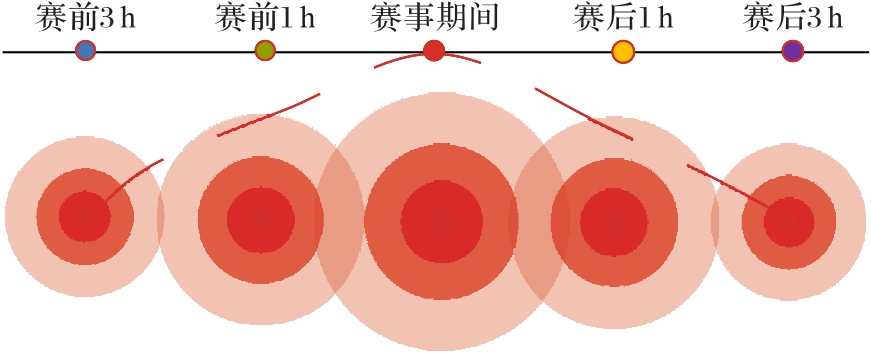
图1 典型突发事件的时空影响演化过程
Fig. 1 Spatio-temporal impact evolution process of typical emergencies
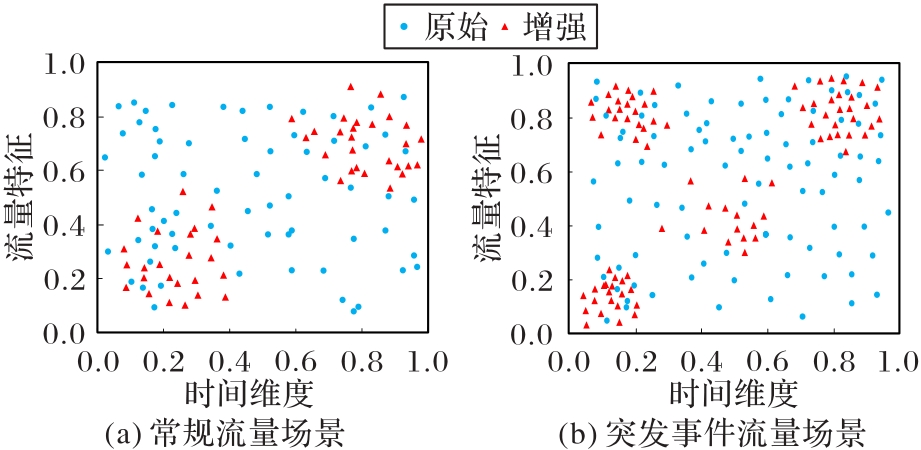
图2 特征扩展前后的数据分布对比
Fig. 2 Comparison of data distribution before and after feature expansion
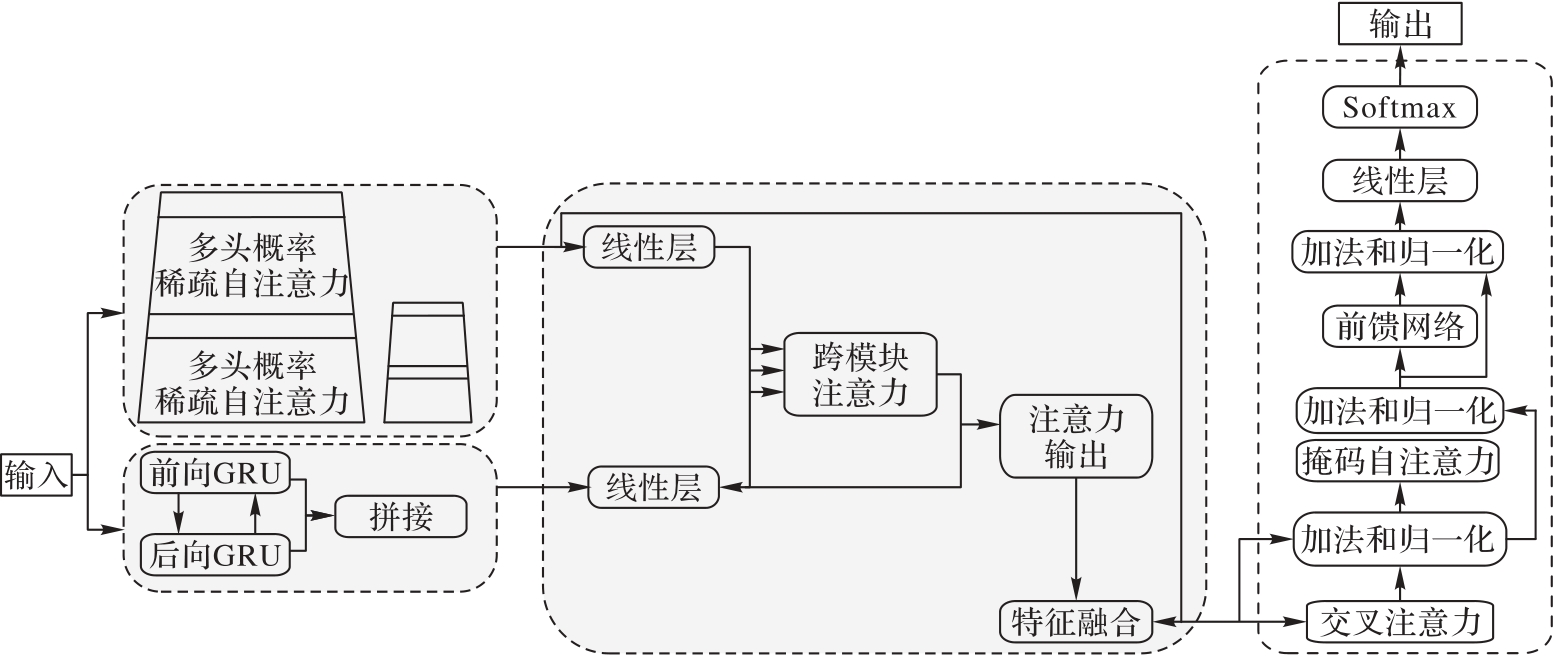
图3 InformerGRU模型的整体架构
Fig. 3 Overall architecture of InformerGRU model
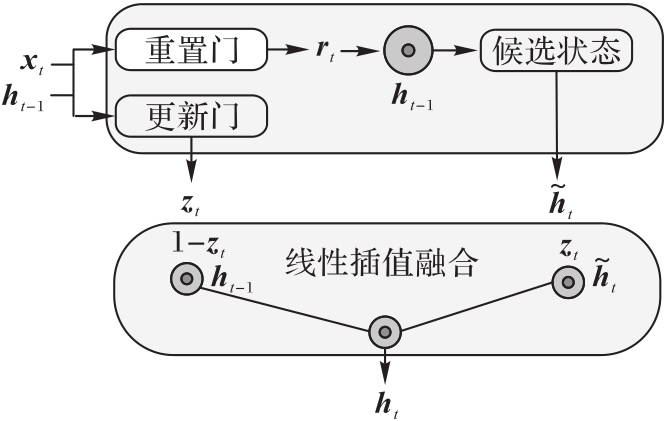
图4 GRU的内部结构
Fig. 4 Internal structure of GRU
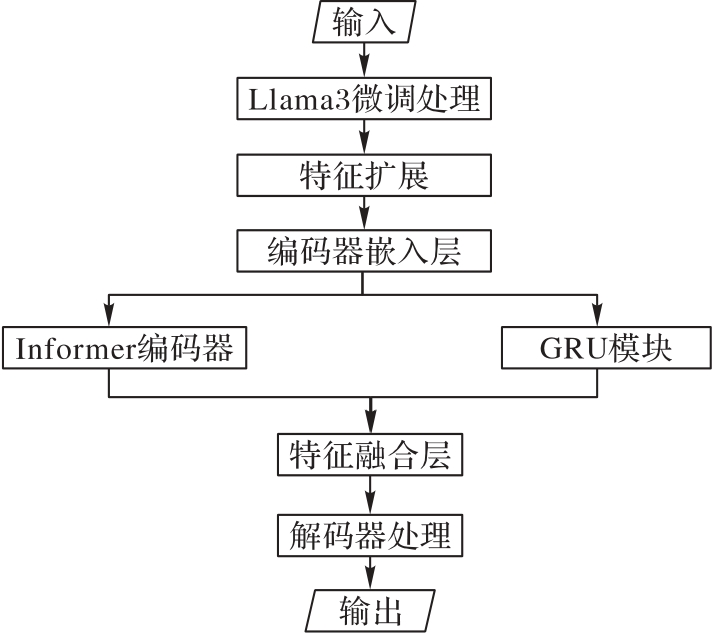
图5 InformerGRU前向传播算法的流程
Fig. 5 Flow of InformerGRU forward propagation algorithm
| 特征类别 | 特征名称 | 描述 |
|---|---|---|
| 时间特征 | date | 日期 |
| 位置特征 | row_id | 行 |
| col_id | 列 | |
| 气象特征 | Temperature | 温度 |
| WindSpeed | 风速 | |
| Weather | 天气 | |
| 事件特征 | Holiday | 节假日 |
| Inflow | 需求量 | |
| event_coefficient | 事件系数 | |
| congestion_coefficient | 拥堵系数 | |
| base_importance | 基础重要性 | |
| event_impact_factor | 事件影响因子 | |
| event_radius | 事件影响半径 | |
| event_duration | 事件持续时间 |
表1 实验数据集的特征描述
Tab. 1 Feature description of experimental dataset
| 特征类别 | 特征名称 | 描述 |
|---|---|---|
| 时间特征 | date | 日期 |
| 位置特征 | row_id | 行 |
| col_id | 列 | |
| 气象特征 | Temperature | 温度 |
| WindSpeed | 风速 | |
| Weather | 天气 | |
| 事件特征 | Holiday | 节假日 |
| Inflow | 需求量 | |
| event_coefficient | 事件系数 | |
| congestion_coefficient | 拥堵系数 | |
| base_importance | 基础重要性 | |
| event_impact_factor | 事件影响因子 | |
| event_radius | 事件影响半径 | |
| event_duration | 事件持续时间 |
| 模型 | TaxiBJ | TaxiBJ-E | ||||||||
|---|---|---|---|---|---|---|---|---|---|---|
| MSE | MAE | RMSE | R² | DA/% | MSE | MAE | RMSE | R² | DA/% | |
| GRU | 0.585 2 | 0.503 5 | 0.765 0 | 0.373 5 | 3.91 | 0.585 2 | 0.502 9 | 0.765 0 | 0.373 5 | 3.91 |
| LSTM | 0.585 5 | 0.503 5 | 0.765 2 | 0.373 2 | 3.88 | 0.586 2 | 0.504 5 | 0.812 4 | 0.383 1 | 4.37 |
| Transformer | 0.031 7 | 0.122 4 | 0.177 9 | 0.957 4 | 79.01 | 0.027 7 | 0.114 8 | 0.166 6 | 0.962 6 | 79.85 |
| Informer | 0.019 4 | 0.095 1 | 0.139 4 | 0.979 2 | 85.84 | 0.019 6 | 0.096 9 | 0.142 0 | 0.978 4 | 85.40 |
| Autoformer | 0.023 8 | 0.104 2 | 0.154 2 | 0.968 0 | 84.17 | 0.020 9 | 0.097 9 | 0.144 5 | 0.971 9 | 85.27 |
| TimesNet | 0.115 6 | 0.243 2 | 0.340 1 | 0.844 2 | 68.96 | 0.119 6 | 0.245 6 | 0.345 8 | 0.839 0 | 69.18 |
| iTransformer | 0.595 6 | 0.545 7 | 0.753 4 | 0.385 6 | 3.98 | 0.501 5 | 0.548 7 | 0.845 7 | 0.391 4 | 4.19 |
| Pathformer | 0.288 5 | 0.232 9 | 0.537 1 | 0.662 1 | 81.34 | 0.182 2 | 0.176 4 | 0.426 9 | 0.778 3 | 87.43 |
| InformerGRU | 0.017 8 | 0.090 2 | 0.133 5 | 0.980 9 | 87.15 | 0.019 5 | 0.092 7 | 0.139 6 | 0.979 2 | 87.69 |
表2 各模型在原始TaxiBJ和TaxiBJ-E数据集上的性能对比
Tab. 2 Performance comparison of various model on original TaxiBJ and TaxiBJ-E datasets
| 模型 | TaxiBJ | TaxiBJ-E | ||||||||
|---|---|---|---|---|---|---|---|---|---|---|
| MSE | MAE | RMSE | R² | DA/% | MSE | MAE | RMSE | R² | DA/% | |
| GRU | 0.585 2 | 0.503 5 | 0.765 0 | 0.373 5 | 3.91 | 0.585 2 | 0.502 9 | 0.765 0 | 0.373 5 | 3.91 |
| LSTM | 0.585 5 | 0.503 5 | 0.765 2 | 0.373 2 | 3.88 | 0.586 2 | 0.504 5 | 0.812 4 | 0.383 1 | 4.37 |
| Transformer | 0.031 7 | 0.122 4 | 0.177 9 | 0.957 4 | 79.01 | 0.027 7 | 0.114 8 | 0.166 6 | 0.962 6 | 79.85 |
| Informer | 0.019 4 | 0.095 1 | 0.139 4 | 0.979 2 | 85.84 | 0.019 6 | 0.096 9 | 0.142 0 | 0.978 4 | 85.40 |
| Autoformer | 0.023 8 | 0.104 2 | 0.154 2 | 0.968 0 | 84.17 | 0.020 9 | 0.097 9 | 0.144 5 | 0.971 9 | 85.27 |
| TimesNet | 0.115 6 | 0.243 2 | 0.340 1 | 0.844 2 | 68.96 | 0.119 6 | 0.245 6 | 0.345 8 | 0.839 0 | 69.18 |
| iTransformer | 0.595 6 | 0.545 7 | 0.753 4 | 0.385 6 | 3.98 | 0.501 5 | 0.548 7 | 0.845 7 | 0.391 4 | 4.19 |
| Pathformer | 0.288 5 | 0.232 9 | 0.537 1 | 0.662 1 | 81.34 | 0.182 2 | 0.176 4 | 0.426 9 | 0.778 3 | 87.43 |
| InformerGRU | 0.017 8 | 0.090 2 | 0.133 5 | 0.980 9 | 87.15 | 0.019 5 | 0.092 7 | 0.139 6 | 0.979 2 | 87.69 |
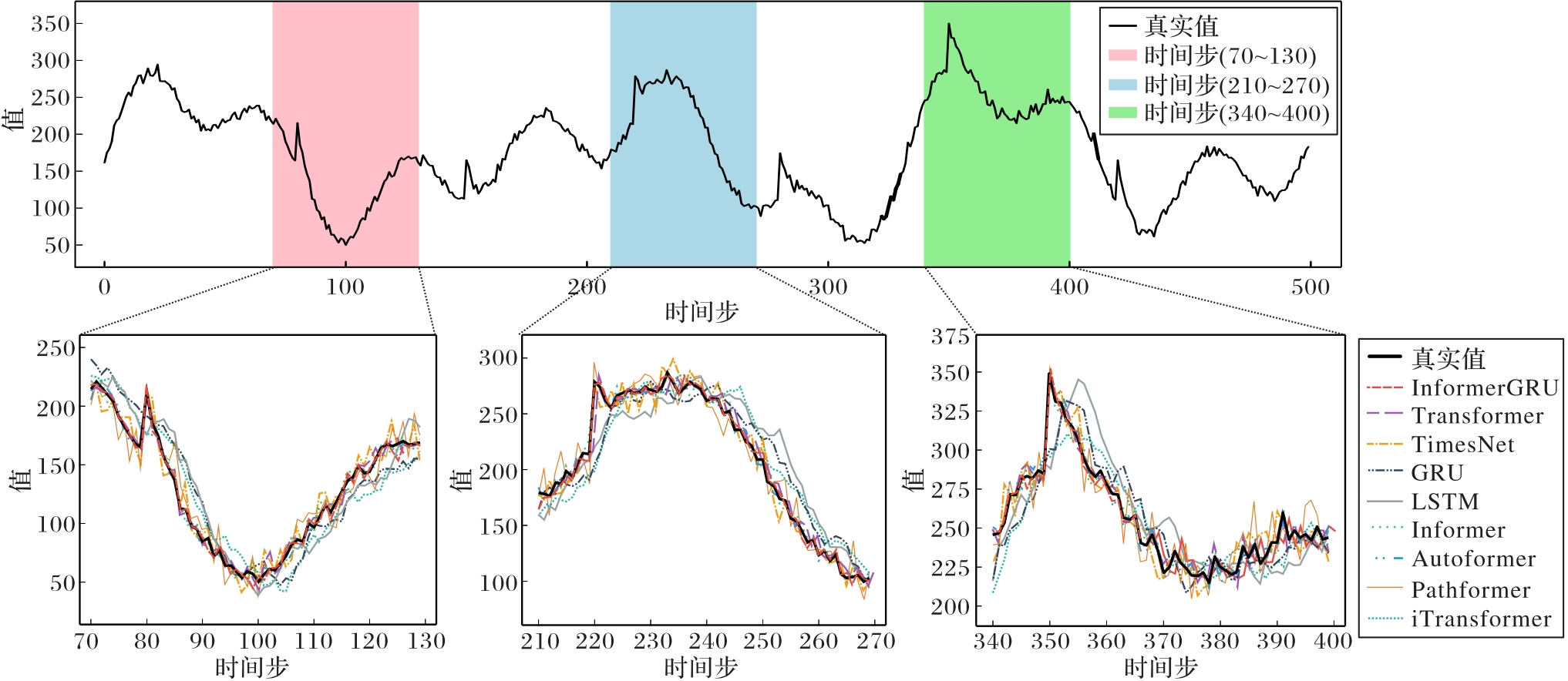
图6 各模型在不同时间步上的预测性能对比
Fig. 6 Prediction performance comparison of different models at various time steps
| 特征配置 | MSE | MAE | R² | 相关系数 | DA/% |
|---|---|---|---|---|---|
| 使用事件特征 | 987.14 | 25.34 | 0.936 3 | 0.984 5 | 91.25 |
| 不使用事件特征 | 3 456.91 | 50.01 | 0.776 8 | 0.893 2 | 76.83 |
表3 事件特征增强在异常流量场景下的效果
Tab. 3 Effect of event feature enhancement in abnormal traffic scenarios
| 特征配置 | MSE | MAE | R² | 相关系数 | DA/% |
|---|---|---|---|---|---|
| 使用事件特征 | 987.14 | 25.34 | 0.936 3 | 0.984 5 | 91.25 |
| 不使用事件特征 | 3 456.91 | 50.01 | 0.776 8 | 0.893 2 | 76.83 |
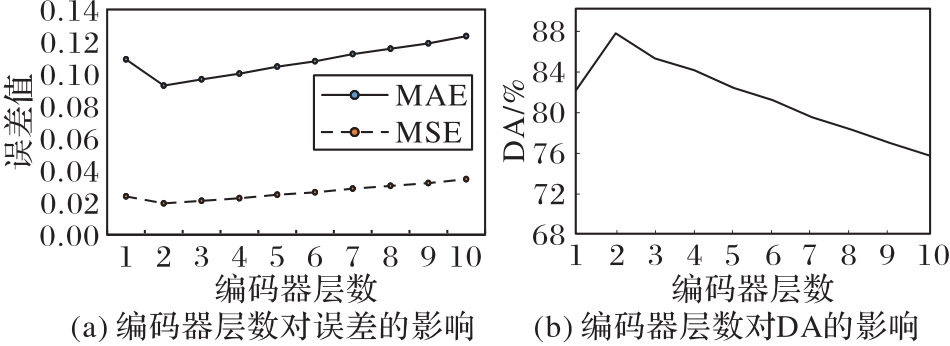
图7 编码器层数对误差和DA的影响
Fig. 7 Impact of encoder layers on error and DA
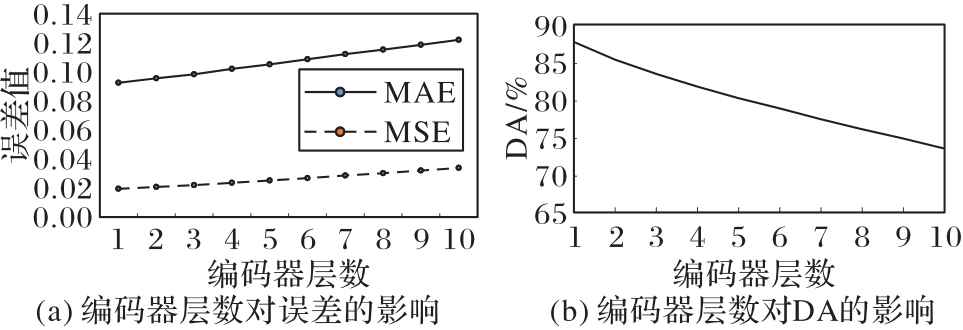
图8 解码器层数对误差和DA的影响
Fig. 8 Impact of decoder layers on error and DA
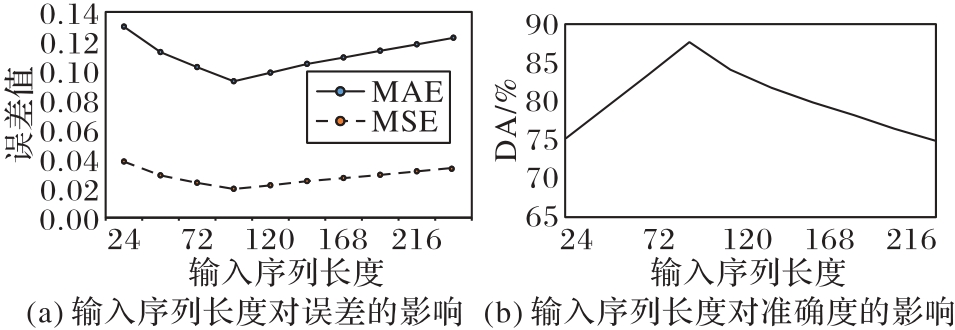
图9 输入序列长度对误差和DA的影响
Fig. 9 Impact of input sequence length on error and DA
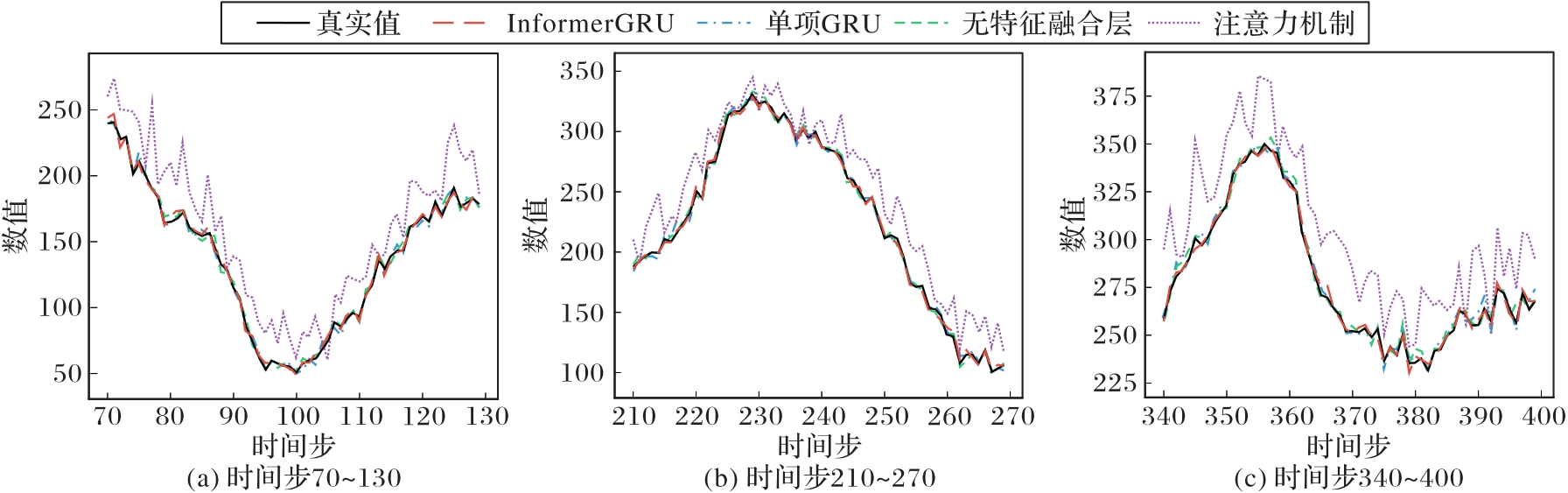
图10 InformerGRU模型的消融实验结果
Fig. 10 Ablation experiment results of InformerGRU model
| 模型 | MSE | MAE | RMSE | DA/% |
|---|---|---|---|---|
| InformerGRU | 0.017 8 | 0.092 7 | 0.139 6 | 87.69 |
| 单项GRU | 0.020 1 | 0.095 7 | 0.141 8 | 85.12 |
| 无特征融合层 | 0.022 0 | 0.098 4 | 0.148 4 | 81.47 |
| 注意力机制 | 1.089 7 | 0.769 8 | 1.043 9 | 24.10 |
表4 消融实验结果对比结果
Tab. 4 Comparison Results of Ablation Experiments
| 模型 | MSE | MAE | RMSE | DA/% |
|---|---|---|---|---|
| InformerGRU | 0.017 8 | 0.092 7 | 0.139 6 | 87.69 |
| 单项GRU | 0.020 1 | 0.095 7 | 0.141 8 | 85.12 |
| 无特征融合层 | 0.022 0 | 0.098 4 | 0.148 4 | 81.47 |
| 注意力机制 | 1.089 7 | 0.769 8 | 1.043 9 | 24.10 |
| [1] | 郭羽含,钱一炀,钱亚冠. 基于时空预测的多策略网约车调度算法[J]. 计算机应用研究, 2025, 42(4): 1034-1043. |
| Guo Yuhan, Qian Yiyang, Qian Yaguan. Multi-strategy ride-hailing dispatching algorithm based on spatio-temporal prediction[J]. Application Research of Computers, 2025, 42(4): 1034-1043. | |
| [2] | Vaswani A, Shazeer N, Parmar N, et al. Attention is all you need[C]// NeurIPS 2017. Red Hook: Curran Associates Inc., 2017: 6000-6010. |
| [3] | Zhou H, Zhang S, Peng J, et al. Informer: beyond efficient transformer for long sequence time-series forecasting[J]. Proceedings of the AAAI Conference on Artificial Intelligence, 2021, 35(12): 11106-11115. |
| [4] | Wu H, Xu J, Wang J, et al. Autoformer: decomposition transformers with auto-correlation for long-term series forecasting[C]// NeurIPS 2021. Red Hook: Curran Associates Inc., 2021: 22419-22430. |
| [5] | Zhou T, Ma Z, Wen Q, et al. FEDformer: frequency enhanced decomposed transformer for long-term series forecasting[J]. Proceedings of Machine Learning Research, 2022, 162: 27268-27286. |
| [6] | 陈志举,刘锴,王江波. 网约车出行分布时空模式及其时间序列模式识别[J]. 地球信息科学学报, 2024, 26(10): 2229-2242. |
| Chen Zhiju, Liu Kai, Wang Jiangbo. Time series variation pattern recognition of spatiotemporal distribution patterns of ride-hailing[J]. Journal of Geo-information Science, 2024, 26(10): 2229-2242. | |
| [7] | Wan J, Xia N, Yin Y, et al. TCDformer: a Transformer framework for non-stationary time series forecasting based on trend and change-point detection[J]. Neural Networks, 2024, 173: No.106196. |
| [8] | Luo D, Wang X. ModernTCN: a modern pure convolution structure for general time series analysis[EB/OL]. (2024-03-22) [2025-06-10].. |
| [9] | Wu H, Hu T, Liu Y, et al. TimesNet: temporal 2D-variation modeling for general time series analysis[PP/OL]. V3. arXiv (2023-04-12) [2025-06-10].. |
| [10] | Zhong S, Song S, Li G, et al. MSD-Mixer: a multi-scale decomposition MLP-mixer for time series analysis[C]// Proceedings of the 2024 IEEE International Conference on Acoustics, Speech and Signal Processing. Piscataway: IEEE, 2024: 8552-8556. |
| [11] | Cai W, Liang Y, Liu X, et al. MSGNet: learning multi-scale inter-series correlations for multivariate time series forecasting[J]. Proceedings of the AAAI Conference on Artificial Intelligence, 2024, 38(10): 11141-11149. |
| [12] | Xue W, Zhou T, Wen Q, et al. CARD: channel aligned robust blend transformer for time series forecasting[PP/OL]. V5. arXiv (2024-02-16) [2025-06-10].. |
| [13] | Goswami M, Szafer K, Choudhry A, et al. MOMENT: a family of open time-series foundation models[J]. Proceedings of Machine Learning Research, 2024, 235: 16115-16152. |
| [14] | Jin M, Wang S, Ma L, et al. Time-LLM: time series forecasting by reprogramming large language models[PP/OL]. V2. arXiv (2024-01-29) [2025-06-10].. |
| [15] | Liu Y, Hu T, Zhang H, et al. iTransformer: inverted Transformers are effective for time series forecasting[PP/OL]. V4. arXiv (2024-03-14) [2025-06-10].. |
| [16] | Cho K, van Merriënboer B, Gulcehre C, et al. Learning phrase representations using RNN encoder-decoder for statistical machine translation[C]// EMNLP 2014. Stroudsburg: ACL, 2014: 1724-1734. |
| [17] | 樊云阁,吕玉辉,韩红旗. 基于情境感知注意机制的出租车需求深度学习预测模型[J]. 计算机应用与软件, 2023, 40(7): 41-49, 96. |
| Fan Yunge, Yuhui Lyu, Han Hongqi. Deep learning prediction model of taxi demand based on context aware attention mechanism[J]. Computer Applications and Software, 2023, 40(7): 41-49, 96. | |
| [18] | Nie Y, Nguyen N H, Sinthong P, et al. A time series is worth 64 words: long-term forecasting with Transformers[PP/OL]. V2. arXiv (2023-03-04) [2025-06-10].. |
| [19] | Zhang Y, Ma L, Pal S, et al. Multi-resolution time-series transformer for long-term forecasting[J]. Proceedings of Machine Learning Research, 2024, 238: 4222-4230. |
| [20] | Chen P, Zhang Y, Cheng Y, et al. Pathformer: multi-scale Transformers with adaptive pathways for time series forecasting[PP/OL]. V5. arXiv (2024-09-15) [2025-06-10].. |
| [21] | Oreshkin B N, Carpov D, Chapados N, et al. N-BEATS: neural basis expansion analysis for interpretable time series forecasting[PP/OL]. V4. arXiv (2020-02-20) [2025-06-10].. |
| [22] | Chen J, Fan J, Liu Z, et al. Segformer: segment-based Transformer with decomposition for long-term series forecasting[C]// ICNN 2023. Piscataway: IEEE, 2023: 1-8. |
| [23] | Su H, Wang X, Qin Y, et al. A GCN-based adaptive graph self-attention for transformer long sequence time-series forecasting[C]// CIKM 2021. New York: ACM, 2021: 1774-1784. |
| [24] | 周云彤,熊卫华,姜明. 基于多图时空图卷积神经网络的网约车需求预测[J]. 计算机系统应用, 2021, 30(5): 214-218. |
| Zhou Yuntong, Xiong Weihua, Jiang Ming. Prediction of ride-hailing demand based on multi-graph spatial-temporal graph CNN[J]. Computer Systems and Applications, 2021, 30(5): 214-218. | |
| [25] | Fraikin A, Bennetot A, Allassonnière S. T-Rep: representation learning for time series using time-embeddings[PP/OL]. V3. arXiv (2024-03-09) [2025-06-10]. . |
| [26] | Wan S, Luo S, Zhu H. Causal probabilistic spatio-temporal fusion transformers in two-sided ride-hailing markets[EB/OL]. (2023-05-06) [2025-06-10].. |
| [27] | Wang N, Zheng L, Shen H, et al. Ride-hailing origin-destination demand prediction with spatiotemporal information fusion[J]. Transportation Safety and Environment, 2024, 6(2): No.tdad026. |
| [28] | 郭羽含,李文华,钱亚冠. 融合时空流差的网约车双模式混合调度算法[J]. 计算机工程, 2024, 50(6): 377-393. |
| Guo Yuhan, Li Wenhua, Qian Yaguan. Dual-mode hybrid scheduling algorithm for online car-hailing fusion spatiotemporal flow difference[J]. Computer Engineering, 2024, 50(6): 377-393. | |
| [29] | Zhang Y, Yan J. Crossformer: Transformer utilizing cross-dimension dependency for multivariate time series forecasting[EB/OL]. (2023-03-02) [2025-06-10].. |
| [30] | Xiao J, Liu R, Dyer E L. GAFormer: enhancing timeseries Transformers through group-aware embeddings[EB/OL]. (2024-04-17) [2025-06-10].. |
| [31] | Bahri O, Boubrahimi S F, Hamdi S M. Shapelet-based counterfactual explanations for multivariate time series[PP/OL]. V1. arXiv (2022-08-22) [2025-06-10].. |
| [32] | Sivill T, Flach P. LIMESegment: meaningful, realistic time series explanations[J]. Proceedings of Machine Learning Research, 2022, 151: 3418-3433. |
| [33] | Vielhaben J, Lapuschkin S, Montavon G, et al. Explainable AI for time series via virtual inspection layers[J]. Pattern Recognition, 2024, 150: No.110309. |
| [34] | Cheng Z, Yang Y, Wang W, et al. Time2Graph: revisiting time series modeling with dynamic shapelets[J]. Proceedings of the AAAI Conference on Artificial Intelligence, 2020, 34(4): 3517-3524. |
| [35] | Meng H, Wagner C, Triguero I. Explaining time series classifiers through meaningful perturbation and optimisation[J]. Information Sciences, 2023, 645: No.119334. |
| [36] | Hochreiter S, Schmidhuber J. Long short-term memory[J]. Neural Computation, 1997, 9(8): 1735-1780. |
| [1] | 陈木生, 付文庆, 邱晓红, 吴俊华, 温强. 基于图卷积网络和跨领域数据增强的方面级情感三元组抽取[J]. 《计算机应用》唯一官方网站, 2026, 46(8): 2432-2439. |
| [2] | 侯迪迪, 洪少东, 付玉杰, 崔允贺, 申国伟. 基于大语言模型链接的网络安全实体识别方法[J]. 《计算机应用》唯一官方网站, 2026, 46(7): 2064-2073. |
| [3] | 王昱麒, 张仰森, 王璞. 融合知识增强和对比学习的高中英语阅读理解模型[J]. 《计算机应用》唯一官方网站, 2026, 46(7): 2096-2103. |
| [4] | 程雅典, 李颖颖, 张平, 邱芳冰, 柴晓楠, 舒玉巧. 基于双角色交互机制的心理健康大语言模型[J]. 《计算机应用》唯一官方网站, 2026, 46(7): 2054-2063. |
| [5] | 朱林凯, 杨璐, 张弘杰, 吴子衿, 刘璐. LLM与SWRL驱动的跨境数据合规异构跨链智能合约生成框架[J]. 《计算机应用》唯一官方网站, 2026, 46(7): 2074-2084. |
| [6] | 李佳航, 韩启龙, 李丽洁, 张慧. 基于大语言模型的超关系知识图谱限定符增强方法[J]. 《计算机应用》唯一官方网站, 2026, 46(7): 2043-2053. |
| [7] | 王劲滔, 高志霖, 孟琪翔, 卜凡亮. 基于大语言模型重构案件信息的类案检索方法[J]. 《计算机应用》唯一官方网站, 2026, 46(6): 1785-1792. |
| [8] | 熊龙雨, 杜圣东, 史浩琛, 胡节, 杨燕, 李天瑞. 基于知识增强大语言模型架构的政务热线问答系统[J]. 《计算机应用》唯一官方网站, 2026, 46(6): 1721-1727. |
| [9] | 易宇声, 黄兆豪, 邓梓昊, 孔蕾蕾, 齐浩亮. 面向信创数据库迁移的多知识库协同大语言模型提示框架CORER[J]. 《计算机应用》唯一官方网站, 2026, 46(6): 1811-1817. |
| [10] | 蔡泰鑫, 魏凤凤. 面向多解旅行商问题的大语言模型增强蚁群优化算法[J]. 《计算机应用》唯一官方网站, 2026, 46(6): 1712-1720. |
| [11] | 郑嘉丽, 周刚, 陈静, 李顺航. 基于多特征自适应融合的智能生成文本检测方法[J]. 《计算机应用》唯一官方网站, 2026, 46(5): 1433-1440. |
| [12] | 盛兴, 翁孙贤, 陈扩松, 王忠平, 任芮锋, 刘勇. 基于深度学习的电网企业专利价值评估[J]. 《计算机应用》唯一官方网站, 2026, 46(5): 1468-1474. |
| [13] | 王倩飞, 李旸, 李德玉, 王素格. 基于大语言模型的双通道特征融合表示的短文本聚类方法[J]. 《计算机应用》唯一官方网站, 2026, 46(5): 1441-1449. |
| [14] | 陈浩轩, 叶培昌, 刘磊, 刘承明, 胡文华. 自动代码编辑推荐综述[J]. 《计算机应用》唯一官方网站, 2026, 46(4): 1227-1237. |
| [15] | 王晓宇, 李欣, 薛迪, 蒋章涛, 王威, 肖岩军. 基于大语言模型的视频监控网络安全漏洞分类框架[J]. 《计算机应用》唯一官方网站, 2026, 46(4): 1158-1170. |
| 阅读次数 | ||||||
|
全文 |
|
|||||
|
摘要 |
|
|||||
