


《计算机应用》唯一官方网站 ›› 2026, Vol. 46 ›› Issue (10): 3332-3341.DOI: 10.11772/j.issn.1001-9081.2025091148
• 多媒体计算与计算机仿真 • 上一篇
哈里旦木・阿布都克里木, 张耿荣, 梁宇涵, 魏安然, 阿布都克力木・阿布力孜( )
收稿日期:2025-09-28
修回日期:2025-12-19
接受日期:2025-12-24
发布日期:2026-01-21
出版日期:2026-10-10
通讯作者:
阿布都克力木?阿布力孜
作者简介:哈里旦木·阿布都克里木(1978—),女(维吾尔族),新疆伊宁人,教授,博士,CCF会员,主要研究方向:自然语言处理、农业人工智能基金资助:
Abudukelimu HALIDANMU, Gengrong ZHANG, Yuhan LIANG, Anran WEI, Abulizi ABUDUKELIMU()
Received:2025-09-28
Revised:2025-12-19
Accepted:2025-12-24
Online:2026-01-21
Published:2026-10-10
Contact:
Abulizi ABUDUKELIMU
About author:HALIDANMU Abudukelimu, born in 1978, Ph. D., professor. Her research interests include natural language processing, agricultural artificial intelligence.Supported by:摘要:
近年来农作物病害的智能治理已取得一定进展,但棉叶病害因目标尺度小、边界模糊仍面临重大挑战,且缺乏实现“识别?诊断?决策”一体化的模型。为解决上述问题,提出了棉叶病害智能诊断模型。首先,创建了包含1 320条数据的棉花种植问答数据集,为后续通义千问大语言模型的微调提供数据基础;其次,在YOLOv12n主干网络末端引入多尺度简单注意力模块(MSSimAM),以突出多尺度病害相关特征并抑制冗余信息;在检测头部采用自适应阈值焦点损失(ATFL)函数,以缓解难易样本不平衡问题,从而形成MN-YOLO模型;最后,集成MN-YOLO与微调后的通义千问大语言模型,基于检测结果生成病害防治方案。实验结果表明,MN-YOLO在保持较低参数量的情况下,交并比(IoU)阈值为0.5的平均精度均值(mAP50)达到96.9%,相较于YOLOv12n提升了2.0个百分点,精确率和召回率分别提升0.5和4.5个百分点。在不同数据集上的泛化实验中,所提模型也表现出较强的适应性和稳定性。该棉叶病害智能诊断模型集成了病害检测与防治方案推荐功能,在提升检测精度的同时,也为农业智能化提供了有效支撑。
中图分类号:
哈里旦木・阿布都克里木, 张耿荣, 梁宇涵, 魏安然, 阿布都克力木・阿布力孜. 面向小目标优化的棉叶病害智能诊断模型[J]. 计算机应用, 2026, 46(10): 3332-3341.
Abudukelimu HALIDANMU, Gengrong ZHANG, Yuhan LIANG, Anran WEI, Abulizi ABUDUKELIMU. Small-target-oriented intelligent diagnosis model for cotton leaf diseases[J]. Journal of Computer Applications, 2026, 46(10): 3332-3341.

图1 棉叶病害智能诊断模型的流程
Fig. 1 Flow of intelligent diagnosis model for cotton leaf diseases
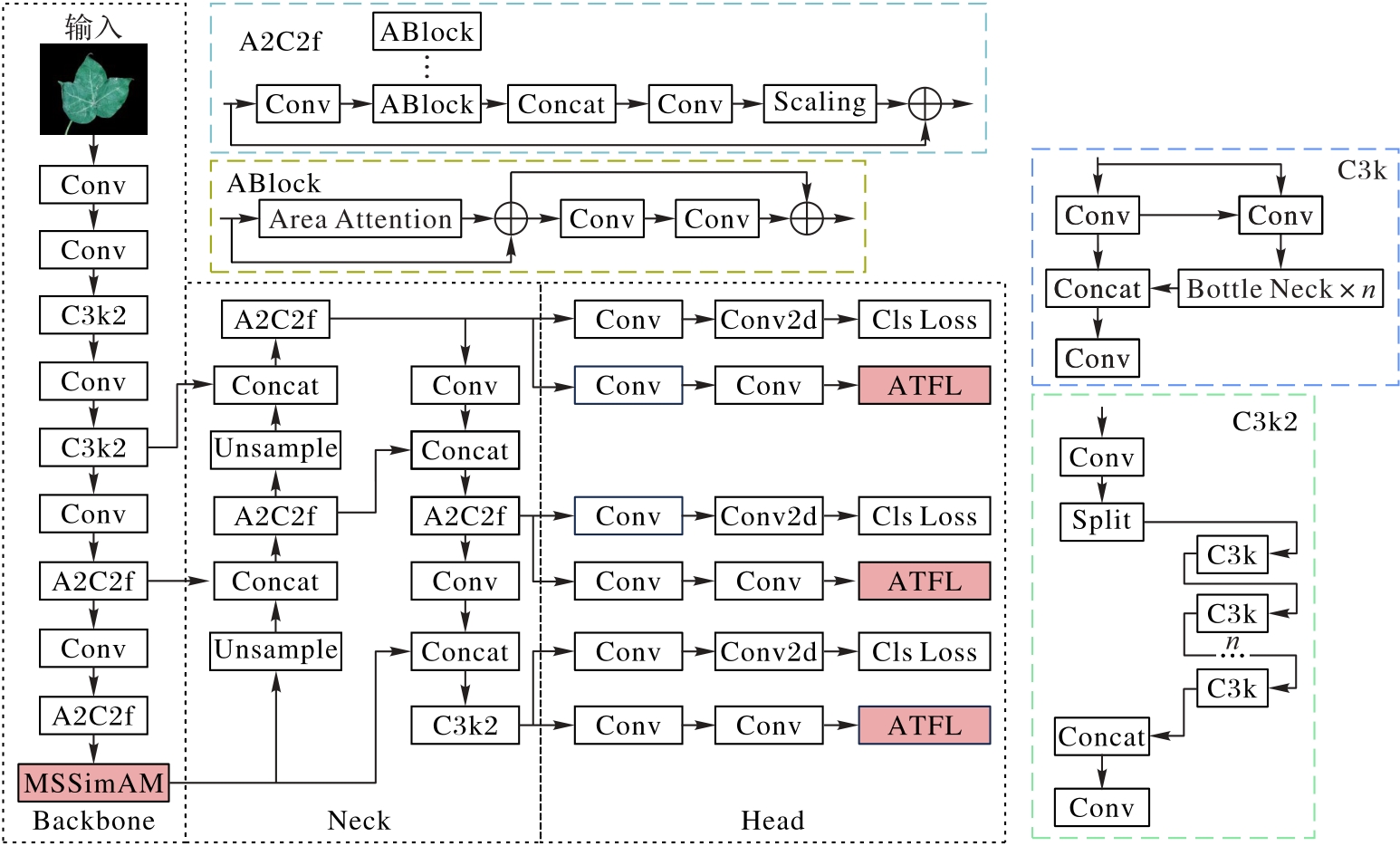
图2 MN-YOLO模型的架构
Fig. 2 MN-YOLO model architecture
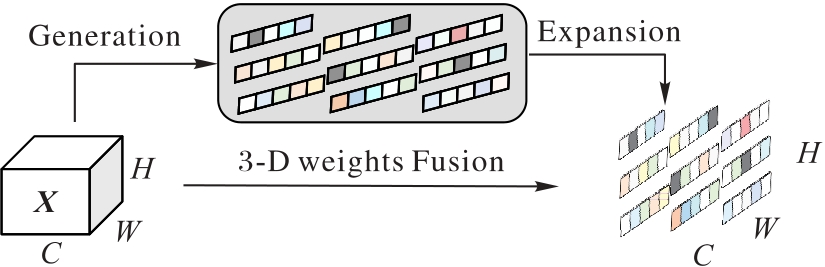
图3 单个尺度的注意力图的计算过程
Fig. 3 Calculation process of attention map at a single scale
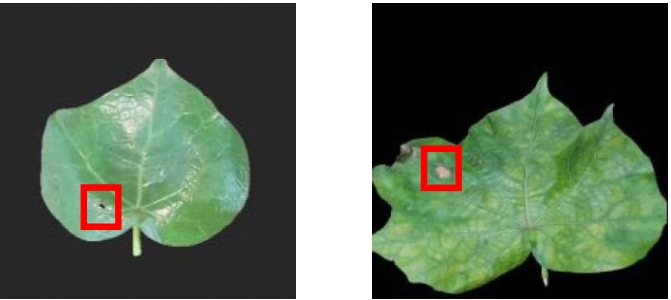
图4 小尺寸病斑的示例
Fig. 4 Examples of small-sized lesions
| 问题 | 回答 |
|---|---|
棉苗炭疽病的防治 方法是什么? | 防治棉苗炭疽病主要采取以下措施:通过合理轮作和精细整地改善种植环境;采用温汤浸种(55~60℃热水浸泡0.5 h) 有效杀灭种子表面病菌;苗期可选用多菌灵、甲基硫菌灵等药剂喷雾或浇灌根茎部;蕾铃期喷施多菌灵或代森锌进行 保护性防治。 |
金龟子的防治 方法是什么? | 金龟子防治需结合农业与化学措施:利用黑光灯诱杀成虫,人工捕捉假死个体,翻耕时拾杀蛴螬;化学防治选用辛硫磷、 丙溴磷等内吸性药剂喷雾;同时保护鸟类、步甲等天敌。重点控制成虫羽化期及幼虫危害期,减轻对棉苗根部的蛀食。 |
旱稗的分布与发生 规律是什么? | 旱稗是一年生禾本科恶性杂草,全国棉区均有分布,水旱轮作区危害尤重。株高50~130 cm,无叶舌,圆锥花序塔形。 幼苗第一片真叶无叶耳叶舌。适应性强,繁殖量大,是世界性难防杂草。 |
棉花缺钙的症状 表现在哪些部位? | 棉花缺钙的症状主要表现在植株的幼嫩部位,特别是嫩叶、茎尖和根系的生长点。缺钙会导致生长点受到抑制, 呈弯钩状,新叶的叶柄会下垂,同时叶片容易老化并提早脱落。 |
表1 棉花种植问答数据的示例
Tab. 1 Examples of question and answer data of cotton cultivation
| 问题 | 回答 |
|---|---|
棉苗炭疽病的防治 方法是什么? | 防治棉苗炭疽病主要采取以下措施:通过合理轮作和精细整地改善种植环境;采用温汤浸种(55~60℃热水浸泡0.5 h) 有效杀灭种子表面病菌;苗期可选用多菌灵、甲基硫菌灵等药剂喷雾或浇灌根茎部;蕾铃期喷施多菌灵或代森锌进行 保护性防治。 |
金龟子的防治 方法是什么? | 金龟子防治需结合农业与化学措施:利用黑光灯诱杀成虫,人工捕捉假死个体,翻耕时拾杀蛴螬;化学防治选用辛硫磷、 丙溴磷等内吸性药剂喷雾;同时保护鸟类、步甲等天敌。重点控制成虫羽化期及幼虫危害期,减轻对棉苗根部的蛀食。 |
旱稗的分布与发生 规律是什么? | 旱稗是一年生禾本科恶性杂草,全国棉区均有分布,水旱轮作区危害尤重。株高50~130 cm,无叶舌,圆锥花序塔形。 幼苗第一片真叶无叶耳叶舌。适应性强,繁殖量大,是世界性难防杂草。 |
棉花缺钙的症状 表现在哪些部位? | 棉花缺钙的症状主要表现在植株的幼嫩部位,特别是嫩叶、茎尖和根系的生长点。缺钙会导致生长点受到抑制, 呈弯钩状,新叶的叶柄会下垂,同时叶片容易老化并提早脱落。 |
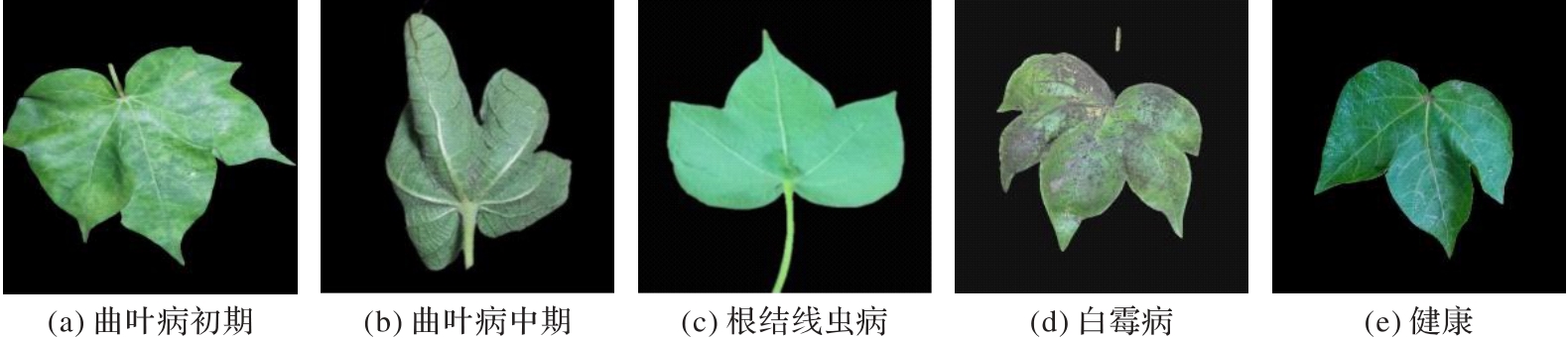
图5 棉叶图像
Fig. 5 Cotton leaf images
| 名称 | 配置 | 名称 | 配置 |
|---|---|---|---|
| 学习率 | 0.01 | BatchSize | 32 |
| 图像大小 | 640×640 | Epoch | 200 |
| 优化器 | SGD |
表2 超参数配置
Tab. 2 Hyperparameter configuration
| 名称 | 配置 | 名称 | 配置 |
|---|---|---|---|
| 学习率 | 0.01 | BatchSize | 32 |
| 图像大小 | 640×640 | Epoch | 200 |
| 优化器 | SGD |
| 模型 | 精确率/% | 召回率/% | mAP50 /% | mAP50-95 /% | Params | GFLOPs | 推理时延/ms | 能耗/J |
|---|---|---|---|---|---|---|---|---|
| Faster R-CNN[ | 71.9 | 72.7 | 78.8 | — | — | — | 55.6 | — |
| YOLOv3[ | 93.1 | 79.0 | 87.2 | 77.2 | 103 668 095 | 282.2 | 9.3 | 1.13 |
| YOLOv3-tiny[ | 86.3 | 78.9 | 84.3 | 66.1 | 12 130 234 | 18.9 | 1.2 | 0.08 |
| YOLOv5n | 85.0 | 81.9 | 87.5 | 57.2 | 2 503 919 | 7.1 | 0.9 | 0.03 |
| YOLOv6n[ | 81.1 | 72.8 | 78.9 | 49.8 | 4 234 239 | 11.8 | 0.9 | 0.05 |
| YOLOv7[ | 92.9 | 90.0 | 92.9 | 76.9 | 37 218 132 | 105.2 | 6.2 | 0.42 |
| YOLOv8n[ | 86.3 | 82.3 | 87.4 | 59.8 | 3 006 623 | 8.1 | 1.1 | 0.03 |
| YOLOv9t[ | 88.9 | 82.8 | 89.2 | 61.3 | 1 971 759 | 7.6 | 1.0 | 0.03 |
| YOLOv10n[ | 84.9 | 82.4 | 86.5 | 60.8 | 2 696 366 | 8.2 | 0.6 | 0.03 |
| Gold-YOLO[ | — | — | 88.2 | 58.8 | — | 12.1 | 7.1 | 0.05 |
| YOLO11n[ | 91.2 | 88.5 | 93.0 | 69.6 | 2 583 127 | 6.3 | 0.9 | 0.03 |
| YOLOv12n[ | 92.2 | 88.5 | 94.9 | 72.1 | 2 557 703 | 6.3 | 1.1 | 0.03 |
| YOLOv13n[ | 92.1 | 88.0 | 94.2 | 72.1 | 2 448 870 | 6.2 | 1.4 | 0.03 |
| RT-DETR[ | 87.3 | 83.0 | 86.3 | 63.4 | 31 994 015 | 103.5 | 11.6 | 0.41 |
| Hyper-YOLO[ | 90.5 | 86.2 | 90.8 | 65.0 | 3 943 039 | 10.8 | 1.8 | 0.04 |
| MN-YOLO | 92.7 | 93.0 | 96.9 | 76.7 | 2 539 271 | 6.3 | 1.5 | 0.03 |
表3 不同模型的对比实验结果
Tab. 3 Comparative experimental results of different models
| 模型 | 精确率/% | 召回率/% | mAP50 /% | mAP50-95 /% | Params | GFLOPs | 推理时延/ms | 能耗/J |
|---|---|---|---|---|---|---|---|---|
| Faster R-CNN[ | 71.9 | 72.7 | 78.8 | — | — | — | 55.6 | — |
| YOLOv3[ | 93.1 | 79.0 | 87.2 | 77.2 | 103 668 095 | 282.2 | 9.3 | 1.13 |
| YOLOv3-tiny[ | 86.3 | 78.9 | 84.3 | 66.1 | 12 130 234 | 18.9 | 1.2 | 0.08 |
| YOLOv5n | 85.0 | 81.9 | 87.5 | 57.2 | 2 503 919 | 7.1 | 0.9 | 0.03 |
| YOLOv6n[ | 81.1 | 72.8 | 78.9 | 49.8 | 4 234 239 | 11.8 | 0.9 | 0.05 |
| YOLOv7[ | 92.9 | 90.0 | 92.9 | 76.9 | 37 218 132 | 105.2 | 6.2 | 0.42 |
| YOLOv8n[ | 86.3 | 82.3 | 87.4 | 59.8 | 3 006 623 | 8.1 | 1.1 | 0.03 |
| YOLOv9t[ | 88.9 | 82.8 | 89.2 | 61.3 | 1 971 759 | 7.6 | 1.0 | 0.03 |
| YOLOv10n[ | 84.9 | 82.4 | 86.5 | 60.8 | 2 696 366 | 8.2 | 0.6 | 0.03 |
| Gold-YOLO[ | — | — | 88.2 | 58.8 | — | 12.1 | 7.1 | 0.05 |
| YOLO11n[ | 91.2 | 88.5 | 93.0 | 69.6 | 2 583 127 | 6.3 | 0.9 | 0.03 |
| YOLOv12n[ | 92.2 | 88.5 | 94.9 | 72.1 | 2 557 703 | 6.3 | 1.1 | 0.03 |
| YOLOv13n[ | 92.1 | 88.0 | 94.2 | 72.1 | 2 448 870 | 6.2 | 1.4 | 0.03 |
| RT-DETR[ | 87.3 | 83.0 | 86.3 | 63.4 | 31 994 015 | 103.5 | 11.6 | 0.41 |
| Hyper-YOLO[ | 90.5 | 86.2 | 90.8 | 65.0 | 3 943 039 | 10.8 | 1.8 | 0.04 |
| MN-YOLO | 92.7 | 93.0 | 96.9 | 76.7 | 2 539 271 | 6.3 | 1.5 | 0.03 |
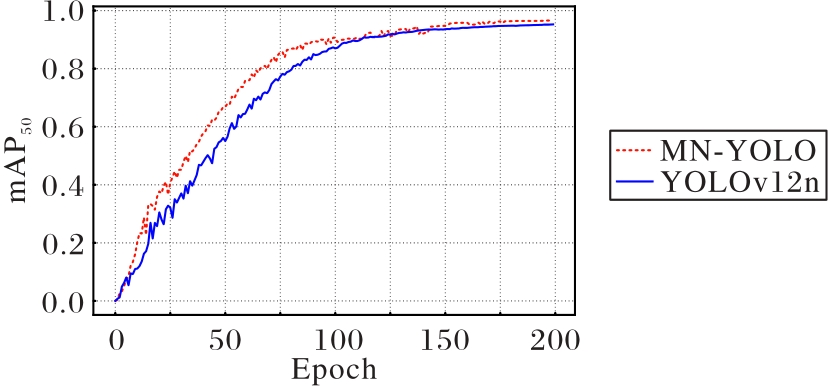
图6 MN-YOLO与YOLOv12n的性能对比
Fig. 6 Performance comparison between MN-YOLO and YOLOv12n
| YOLOv12n | MSSimAM | ATFL | 精确率/% | 召回率/% | mAP50 /% | mAP50-95 /% | Params | GFLOPs |
|---|---|---|---|---|---|---|---|---|
| √ | 92.2 | 88.5 | 94.9 | 72.1 | 2 557 703 | 6.3 | ||
| √ | √ | 93.1 | 92.4 | 96.5 | 76.2 | 2 539 271 | 6.3 | |
| √ | √ | 92.5 | 89.4 | 94.5 | 70.6 | 2 509 319 | 6.3 | |
| √ | √ | √ | 92.7 | 93.0 | 96.9 | 76.7 | 2 539 271 | 6.3 |
表4 消融实验结果
Tab. 4 Ablation experimental results
| YOLOv12n | MSSimAM | ATFL | 精确率/% | 召回率/% | mAP50 /% | mAP50-95 /% | Params | GFLOPs |
|---|---|---|---|---|---|---|---|---|
| √ | 92.2 | 88.5 | 94.9 | 72.1 | 2 557 703 | 6.3 | ||
| √ | √ | 93.1 | 92.4 | 96.5 | 76.2 | 2 539 271 | 6.3 | |
| √ | √ | 92.5 | 89.4 | 94.5 | 70.6 | 2 509 319 | 6.3 | |
| √ | √ | √ | 92.7 | 93.0 | 96.9 | 76.7 | 2 539 271 | 6.3 |
| 模块 | 精确率/% | 召回率/% | mAP50 /% | mAP50-95 /% | Params | GFLOPs |
|---|---|---|---|---|---|---|
| PPA[ | 87.7 | 81.4 | 87.9 | 62.4 | 4 710 511 | 7.9 |
| ECA[ | 90.5 | 97.6 | 92.9 | 68.8 | 2 539 274 | 6.3 |
| Shuffle Attention[ | 91.5 | 90.5 | 94.7 | 69.9 | 2 539 367 | 6.3 |
| SE[ | 91.3 | 89.1 | 94.0 | 70.0 | 2 539 783 | 6.3 |
| MCA[ | 92.6 | 80.0 | 93.7 | 69.5 | 2 539 281 | 6.3 |
| NAM[ | 91.4 | 89.7 | 94.3 | 71.9 | 2 539 783 | 6.3 |
| SimAM[ | 92.7 | 92.9 | 96.3 | 74.2 | 2 539 271 | 6.3 |
| MSSimAM | 92.7 | 93.0 | 96.9 | 76.7 | 2 539 271 | 6.3 |
表5 不同注意力机制的性能对比
Tab. 5 Performance comparison of different attention mechanisms
| 模块 | 精确率/% | 召回率/% | mAP50 /% | mAP50-95 /% | Params | GFLOPs |
|---|---|---|---|---|---|---|
| PPA[ | 87.7 | 81.4 | 87.9 | 62.4 | 4 710 511 | 7.9 |
| ECA[ | 90.5 | 97.6 | 92.9 | 68.8 | 2 539 274 | 6.3 |
| Shuffle Attention[ | 91.5 | 90.5 | 94.7 | 69.9 | 2 539 367 | 6.3 |
| SE[ | 91.3 | 89.1 | 94.0 | 70.0 | 2 539 783 | 6.3 |
| MCA[ | 92.6 | 80.0 | 93.7 | 69.5 | 2 539 281 | 6.3 |
| NAM[ | 91.4 | 89.7 | 94.3 | 71.9 | 2 539 783 | 6.3 |
| SimAM[ | 92.7 | 92.9 | 96.3 | 74.2 | 2 539 271 | 6.3 |
| MSSimAM | 92.7 | 93.0 | 96.9 | 76.7 | 2 539 271 | 6.3 |
| 损失函数 | 精确率 | 召回率 | mAP50 | mAP50-95 |
|---|---|---|---|---|
| CIoU[ | 93.1 | 92.4 | 96.5 | 76.2 |
| DIoU[ | 92.9 | 90.1 | 95.4 | 71.3 |
| GIoU[ | 91.8 | 89.0 | 94.7 | 71.9 |
| EIoU[ | 92.5 | 93.4 | 96.5 | 76.9 |
| NWD[ | 94.2 | 92.5 | 94.8 | 75.3 |
| ATFL[ | 92.7 | 93.0 | 96.9 | 76.7 |
表6 不同损失函数的性能对比 (%)
Tab. 6 Performance comparison of different loss functions
| 损失函数 | 精确率 | 召回率 | mAP50 | mAP50-95 |
|---|---|---|---|---|
| CIoU[ | 93.1 | 92.4 | 96.5 | 76.2 |
| DIoU[ | 92.9 | 90.1 | 95.4 | 71.3 |
| GIoU[ | 91.8 | 89.0 | 94.7 | 71.9 |
| EIoU[ | 92.5 | 93.4 | 96.5 | 76.9 |
| NWD[ | 94.2 | 92.5 | 94.8 | 75.3 |
| ATFL[ | 92.7 | 93.0 | 96.9 | 76.7 |
| 病害 | 精确率 | 召回率 | mAP50 | mAP50-95 |
|---|---|---|---|---|
| 曲叶病初期 | 86.3 | 88.8 | 92.8 | 70.2 |
| 曲叶病中期 | 91.6 | 92.1 | 95.8 | 76.3 |
| 根结线虫病 | 100.0 | 96.0 | 99.5 | 60.3 |
| 白霉病 | 92.4 | 94.9 | 97.5 | 79.3 |
| 健康 | 93.4 | 93.5 | 97.4 | 82.6 |
表7 不同类别病害的检测性能对比 (%)
Tab. 7 Detection performance comparison of different categories of diseases
| 病害 | 精确率 | 召回率 | mAP50 | mAP50-95 |
|---|---|---|---|---|
| 曲叶病初期 | 86.3 | 88.8 | 92.8 | 70.2 |
| 曲叶病中期 | 91.6 | 92.1 | 95.8 | 76.3 |
| 根结线虫病 | 100.0 | 96.0 | 99.5 | 60.3 |
| 白霉病 | 92.4 | 94.9 | 97.5 | 79.3 |
| 健康 | 93.4 | 93.5 | 97.4 | 82.6 |
| 模型 | 精确率/% | 召回率/% | mAP50 /% | mAP50-95 /% | Params | GFLOPs |
|---|---|---|---|---|---|---|
| YOLOv12n | 69.2 | 97.5 | 78.1 | 66.3 | 2 557 508 | 6.3 |
| MN-YOLO | 92.5 | 94.3 | 97.4 | 88.0 | 2 539 076 | 6.3 |
表8 泛化实验结果
Tab. 8 Generalization experimental results
| 模型 | 精确率/% | 召回率/% | mAP50 /% | mAP50-95 /% | Params | GFLOPs |
|---|---|---|---|---|---|---|
| YOLOv12n | 69.2 | 97.5 | 78.1 | 66.3 | 2 557 508 | 6.3 |
| MN-YOLO | 92.5 | 94.3 | 97.4 | 88.0 | 2 539 076 | 6.3 |
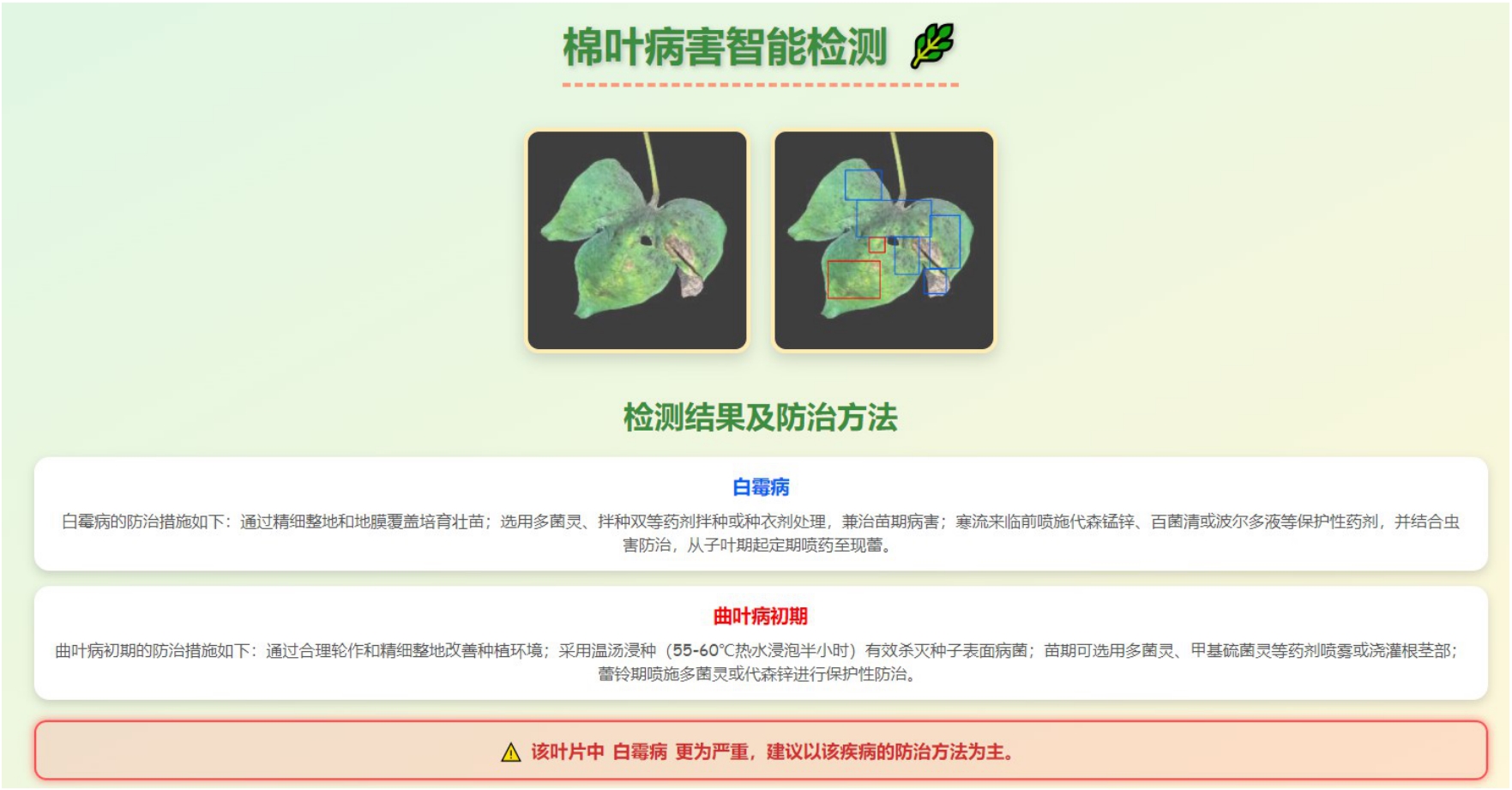
图7 棉叶病害智能诊断模型的可视化展示
Fig. 7 Visual display of intelligent diagnosis model for cotton leaf diseases
| [1] | Tlatlaa J S, Tryphone G M, Nassary E K. Unexplored agronomic, socioeconomic and policy domains for sustainable cotton production on small landholdings: a systematic review[J]. Frontiers in Agronomy, 2023, 5: No.1281043. |
| [2] | 国家统计局. 国家统计局关于2024年棉花产量的公告[EB/OL]. (2024-12-25) [2025-12-16].. |
| National Bureau of Statistics of China. Bulletin on the national cotton output in 2024 [EB/OL]. (2024-12-25) [2025-12-16].. | |
| [3] | Carneiro A A B, Patekar S, Goyal M, et al. Lignin-enabled silica hybrid nanoparticles from rice husk for improved biopesticide delivery and cotton bollworm control[J]. International Journal of Biological Macromolecules, 2025, 309(Pt 1): No.142589. |
| [4] | Kumar R, Batra S, Singh P K, et al. Implementation and evaluation of various deep learning models for the diagnosis of cotton leaf diseases[C]// IC3SE 2024. Piscataway: IEEE, 2024: 483-488. |
| [5] | Yin C, Wang Z, Lv X, et al. Reducing soil and leaf shadow interference in UAV imagery for cotton nitrogen monitoring[J]. Frontiers in Plant Science, 2024, 15: No.1380306. |
| [6] | Wang S, Xu D, Liang H, et al. Advances in deep learning applications for plant disease and pest detection: a review[J]. Remote Sensing, 2025, 17(4): No.698. |
| [7] | Zhang N, Zhang X, Shang P, et al. Detection of cotton verticillium wilt disease severity based on hyperspectrum and GWO-SVM[J]. Remote Sensing, 2023, 15(13): No.3373. |
| [8] | Li X, Yang C, Huang W, et al. Identification of cotton root rot by multifeature selection from Sentinel-2 images using random forest[J]. Remote Sensing, 2020, 12(21): No.3504. |
| [9] | Peyal H I, Pramanik M A H, Nahiduzzaman M, et al. Cotton leaf disease detection and classification using lightweight CNN architecture[C]// ICECE 2022. Piscataway: IEEE, 2022: 413-416. |
| [10] | Kanade A K, Potdar M P, Kumar A, et al. Weed detection in cotton farming by YOLOv5 and YOLOv8 object detectors[J]. European Journal of Agronomy, 2025, 168: No.127617. |
| [11] | Noon S K, Amjad M, Qureshi M A, et al. Handling severity levels of multiple co-occurring cotton plant diseases using improved YOLOX model[J]. IEEE Access, 2022, 10: 134811-134825. |
| [12] | Zhang Z, Yang Y, Xu X, et al. GVC-YOLO: a lightweight real-time detection method for cotton aphid-damaged leaves based on edge computing[J]. Remote Sensing, 2024, 16(16): No.3046. |
| [13] | Tian Y, Ye Q, Doermann D. YOLOv12: attention-centric real-time object detectors[PP/OL]. arXiv (2025-02-18) [2025-07-10].. |
| [14] | Yang B, Zhang X, Zhang J, et al. EFLNet: enhancing feature learning for infrared small target detection[J]. IEEE Transactions on Geoscience and Remote Sensing, 2024, 62: No.5906511. |
| [15] | Yang A, Li A, Yang B, et al. Qwen3 technical report[PP/OL]. arXiv (2025-05-14) [2025-07-10].. |
| [16] | Redmon J, Divvala S, Girshick R, et al. You only look once: unified, real-time object detection[C]// CVPR 2016. Piscataway: IEEE, 2016: 779-788. |
| [17] | Liu W, Anguelov D, Erhan D, et al. SSD: single shot multiBox detector[C]// ECCV 2016, LNCS 9905. Cham: Springer, 2016: 21-37. |
| [18] | Carion N, Massa F, Synnaeve G, et al. End-to-end object detection with Transformers[C]// ECCV 2020, LNCS 12346. Cham: Springer, 2020: 213-229. |
| [19] | Girshick R, Donahue J, Darrell T, et al. Rich feature hierarchies for accurate object detection and semantic segmentation[C]// CVPR 2014. Piscataway: IEEE, 2014: 580-587. |
| [20] | He K, Zhang X, Ren S, et al. Spatial pyramid pooling in deep convolutional networks for visual recognition[J]. IEEE Transactions on Pattern Analysis and Machine Intelligence, 2015, 37(9): 1904-1916. |
| [21] | Girshick R. Fast R-CNN[C]// ICCV 2015. Piscataway: IEEE, 2015: 1440-1448. |
| [22] | Ren S, He K, Girshick R, et al. Faster R-CNN: towards real-time object detection with region proposal networks[J]. IEEE Transactions on Pattern Analysis and Machine Intelligence, 2017, 39(6): 1137-1149. |
| [23] | 何青海,马本学,瞿端阳,等. 基于机器视觉棉叶螨自动监测与分级方法研究[J]. 农机化研究, 2013, 35(4): 152-155. |
| He Qinghai, Ma Benxue, Qu Duanyang, et al. Research of cotton spider mites automatic detection and classification which based on machine vision[J]. Journal of Agricultural Mechanization Research, 2013, 35(4): 152-155. | |
| [24] | 毕君涛. 基于深度学习的棉叶主要病虫害检测方法研究[D]. 阿拉尔:塔里木大学, 2023. |
| Bi Juntao. Research on the detection method of major diseases and pests in cotton leaves based on deep learning[D]. Alaer: Tarim University, 2023. | |
| [25] | Wang C Y, Bochkovskiy A, Mark Liao H Y. YOLOv7: trainable bag-of-freebies sets new state-of-the-art for real-time object detectors[C]// CVPR 2023. Piscataway: IEEE, 2023: 7464-7475. |
| [26] | Woo S, Park J, Lee J Y, et al. CBAM: convolutional block attention module[C]// ECCV 2018, LNCS 11211. Cham: Springer, 2018: 3-19. |
| [27] | Ganguly S, Jathin S, Mohak M, et al. Automated detection and classification of cotton leaf diseases: a computer vision approach[C]// AMATHE 2024. Piscataway: IEEE, 2024: 1-7. |
| [28] | Jayanthy S, Kiruthika G, Lakshana G, et al. Early cotton plant disease detection using drone monitoring and deep learning[C]// ICWITE 2024. Piscataway: IEEE, 2024: 625-630. |
| [29] | Li X, Gao J, Jin S, et al. Towards robust registration of heterogeneous multispectral UAV imagery: a two-stage approach for cotton leaf lesion grading[J]. Computers and Electronics in Agriculture, 2023, 212: No.108153. |
| [30] | Lu Y, Lu X, Zheng L, et al. Application of multimodal Transformer model in intelligent agricultural disease detection and question-answering systems[J]. Plants, 2024, 13(7): No.972. |
| [31] | Zheng Z, Wang P, Ren D, et al. Enhancing geometric factors in model learning and inference for object detection and instance segmentation[J]. IEEE Transactions on Cybernetics, 2022, 52(8): 8574-8586. |
| [32] | Yang L, Zhang R Y, Li L, et al. SimAM: a simple, parameter-free attention module for convolutional neural networks[J]. Proceedings of Machine Learning Research, 2021, 139: 11863-11874. |
| [33] | Serosh. Cotton dataset[DS/OL]. [2025-09-26].. |
| [34] | Redmon J, Farhadi A. YOLOv3: an incremental improvement[PP/OL]. arXiv (2018-04-08) [2025-09-26].. |
| [35] | Gong H, Li H, Xu K, et al. Object detection based on improved YOLOv3-tiny[C]// CAC 2019. Piscataway: IEEE, 2019: 3240-3245. |
| [36] | Li C, Li L, Jiang H, et al. YOLOv6: a single-stage object detection framework for industrial applications[PP/OL]. arXiv (2022-09-07) [2025-09-26].. |
| [37] | Ultralytics. Explore Ultralytics YOLOv8[EB/OL]. (2026-05-21) [2026-09-02]. . |
| [38] | Wang C Y, Yeh I H, Mark Liao H Y. YOLOv9: learning what you want to learn using programmable gradient information[C]// ECCV 2024, LNCS 15089. Cham: Springer, 2025: 1-21. |
| [39] | Wang A, Chen H, Liu L, et al. YOLOv10: real-time end-to-end object detection[C]// NeurIPS 2024. Red Hook: Curran Associates Inc., 2024: 107984-108011. |
| [40] | Wang C, He W, Nie Y, et al. Gold-YOLO: efficient object detector via gather-and-distribute mechanism[C]// NeurIPS 2023. Red Hook: Curran Associates Inc., 2023: 51094-51112. |
| [41] | Ultralytics. Ultralytics YOLO11[EB/OL]. (2026-05-21) [2026-09-02]. . |
| [42] | Lei M, Li S, Wu Y, et al. YOLOv13: real-time object detection with hypergraph-enhanced adaptive visual perception[PP/OL]. V2. arXiv (2025-09-05) [2025-09-26].. |
| [43] | Zhao Y, Lv W, Xu S, et al. DETRS beat YOLOs on real-time object detection[C]// CVPR 2024. Piscataway: IEEE, 2024: 16965-16974. |
| [44] | Feng Y, Huang J, Du S, et al. Hyper-YOLO: when visual object detection meets hypergraph computation[J]. IEEE Transactions on Pattern Analysis and Machine Intelligence, 2024, 47(4): 2388-2401. |
| [45] | Xu S, Zheng S, Xu W, et al. HCF-Net: hierarchical context fusion network for infrared small object detection[C]// ICME 2024. Piscataway: IEEE, 2024: 1-6. |
| [46] | Wang Q, Wu B, Zhu P, et al. ECA-Net: efficient channel attention for deep convolutional neural networks[C]// CVPR 2020. Piscataway: IEEE, 2020: 11531-11539. |
| [47] | Zhang Q L, Yang Y B. SA-Net: shuffle attention for deep convolutional neural networks[C]// ICASSP 2021. Piscataway: IEEE, 2021: 2235-2239. |
| [48] | Hu J, Shen L, Sun G. Squeeze-and-excitation networks[C]// CVPR 2018. Piscataway: IEEE, 2018: 7132-7141. |
| [49] | Shao H, Zeng Q S, Hou Q B, et al. MCANet: medical image segmentation with multi-scale cross-axis attention[J]. Machine Intelligence Research, 2025, 22(3): 437-451. |
| [50] | Liu Y, Shao Z, Teng Y, et al. NAM: normalization-based attention module[PP/OL]. arXiv (2021-11-24) [2025-07-10].. |
| [51] | Zheng Z, Wang P, Liu W, et al. Distance-IoU loss: faster and better learning for bounding box regression[J]. Proceedings of the AAAI Conference on Artificial Intelligence, 2020, 34(7): 12993-13000. |
| [52] | Rezatofighi H, Tsoi N, Gwak J, et al. Generalized intersection over union: a metric and a loss for bounding box regression[C]// CVPR 2019. Piscataway: IEEE, 2019: 658-666. |
| [53] | Zhang Y F, Ren W, Zhang Z, et al. Focal and efficient IOU loss for accurate bounding box regression[J]. Neurocomputing, 2022, 506: 146-157. |
| [54] | Wang J, Xu C, Yang W, et al. A normalized Gaussian Wasserstein distance for tiny object detection[PP/OL]. V2. arXiv (2022-06-14) [2025-08-10].. |
| [55] | Cottonleaf. Tomato leaf disease dataset[DS/OL]. [2025-08-10].. |
| [1] | 姚华, 杨高明, 李雪莲, 陆凯旋. 基于动态感知和交叉调制的遥感小目标检测[J]. 《计算机应用》唯一官方网站, 2026, 46(9): 2968-2976. |
| [2] | 吴闵奇, 杨元华, 李航, 胡雅琴, 汤智豪, 梅腾. 基于图Transformer和RT-DETR的轻量化水下小目标检测[J]. 《计算机应用》唯一官方网站, 2026, 46(5): 1586-1595. |
| [3] | 张红瑞, 冯威铭, 杨潞霞, 马永杰. 基于YOLO11改进的水下小目标检测算法CSAF-YOLO[J]. 《计算机应用》唯一官方网站, 2026, 46(5): 1578-1585. |
| [4] | 李雨希, 王雅莹, 田诗芹, 郑伯川. 基于分割引导和频域增强的轻量级谷穗计数网络[J]. 《计算机应用》唯一官方网站, 2026, 46(10): 3307-3316. |
| [5] | 边小勇, 袁培洋, 胡其仁. 双编码空频混合的红外小目标检测方法[J]. 《计算机应用》唯一官方网站, 2026, 46(1): 252-259. |
| [6] | 范博淦, 王淑青, 陈开元. 基于改进YOLOv8的航拍无人机小目标检测模型[J]. 《计算机应用》唯一官方网站, 2025, 45(7): 2342-2350. |
| [7] | 余松森, 林智凡, 薛国鹏, 徐建宇. 基于改进YOLOv8的轻量级大幅面瓷砖缺陷检测算法[J]. 《计算机应用》唯一官方网站, 2025, 45(2): 647-654. |
| [8] | 何秋润, 胡节, 彭博, 李天源. 基于上下文信息的多尺度特征融合织物疵点检测算法[J]. 《计算机应用》唯一官方网站, 2025, 45(2): 640-646. |
| [9] | 肖海林, 田波, 胡彬, 孔祥婷, 吴媛媛, 马仁煜, 张中山. 基于信道先验多尺度跨轴注意YOLO的无人机视角下多尺度小目标检测算法[J]. 《计算机应用》唯一官方网站, 2025, 45(12): 4021-4029. |
| [10] | 边小勇, 胡其仁. 多注意力对比学习的红外小目标检测[J]. 《计算机应用》唯一官方网站, 2025, 45(11): 3707-3712. |
| [11] | 刘赏, 周煜炜, 代娆, 董林芳, 刘猛. 融合注意力和上下文信息的遥感图像小目标检测算法[J]. 《计算机应用》唯一官方网站, 2025, 45(1): 292-300. |
| [12] | 李烨恒, 罗光圣, 苏前敏. 基于改进YOLOv5的Logo检测算法[J]. 《计算机应用》唯一官方网站, 2024, 44(8): 2580-2587. |
| [13] | 姬张建, 杜娜. 基于改进VariFocalNet的微小目标检测[J]. 《计算机应用》唯一官方网站, 2024, 44(7): 2200-2207. |
| [14] | 刘越, 刘芳, 武奥运, 柴秋月, 王天笑. 基于自注意力机制与图卷积的3D目标检测网络[J]. 《计算机应用》唯一官方网站, 2024, 44(6): 1972-1977. |
| [15] | 王林, 刘景亮, 王无为. 基于空洞卷积融合Transformer的无人机图像小目标检测方法[J]. 《计算机应用》唯一官方网站, 2024, 44(11): 3595-3602. |
| 阅读次数 | ||||||
|
全文 |
|
|||||
|
摘要 |
|
|||||
