


《计算机应用》唯一官方网站 ›› 2026, Vol. 46 ›› Issue (4): 1323-1333.DOI: 10.11772/j.issn.1001-9081.2025040522
• 前沿与综合应用 • 上一篇
李文浩, 郭银章( )
)
收稿日期:2025-05-14
修回日期:2025-08-04
接受日期:2025-08-07
发布日期:2025-08-22
出版日期:2026-04-10
通讯作者:
郭银章
作者简介:李文浩(2001—),女,河南南阳人,硕士研究生,主要研究方向:深度学习、交通流预测
基金资助:Received:2025-05-14
Revised:2025-08-04
Accepted:2025-08-07
Online:2025-08-22
Published:2026-04-10
Contact:
Yinzhang GUO
About author:LI Wenhao, born in 2001, M. S. candidate. Her research interests include deep learning, traffic flow prediction.
Supported by:摘要:
针对现有交通流量预测模型不能有效利用交通区域层特征与节点层特征的融合信息,以及缺乏对时空特征的动态表达的问题,提出一种用于城市交通预测的双层多尺度动态图卷积网络(DM-DGCN)模型。首先,采用双层网络架构融合区域与节点的时空特征,同时处理节点和区域的交通流量数据;其次,在空间维度上,构建空间动态图卷积网络(S-GCN)模块提取动态空间相关性;再次,在时间维度上,为了捕捉不同语义环境下的潜在时间依赖关系,设计多尺度时间卷积网络(MSTCN)模块,同时,为了将空间关系学习思想引入时间域,设计时间动态图卷积网络(T-GCN)模块,构建随时间动态变化的时间关系矩阵;最后,设计基于注意力机制的动态融合模块,整合区域层特征与节点层特征,通过融合层生成最终预测结果。在济南交通数据集和西安交通数据集上的实验结果表明,在60 min预测任务中:DM-DGCN模型在济南数据集上的平均绝对误差(MAE)和均方根误差(RMSE)相较于时空关键图神经网络(STPGNN)模型分别降低了5.79%和5.56%;在西安数据集上,相较于分层时空图常微分方程(HSTGODE)模型,所提模型在MAE和RMSE上分别降低了3.73%和4.19%。以上验证了DM-DGCN模型优于现有的基线模型,能有效挖掘交通数据中的动态多尺度时空依赖关系,并准确预测未来的交通流量。
中图分类号:
李文浩, 郭银章. 基于双层多尺度动态GCN模型的城市交通流量预测[J]. 计算机应用, 2026, 46(4): 1323-1333.
Wenhao LI, Yinzhang GUO. Urban traffic flow prediction based on dual-layer multi-scale dynamic graph convolutional network model[J]. Journal of Computer Applications, 2026, 46(4): 1323-1333.
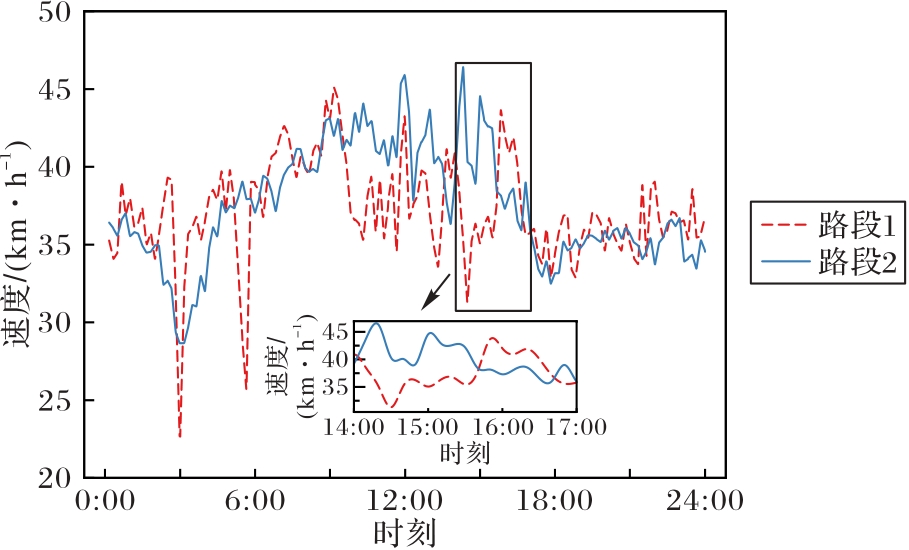
图1 不同节点间的时空相关性
Fig. 1 Spatio-temporal correlation between different nodes
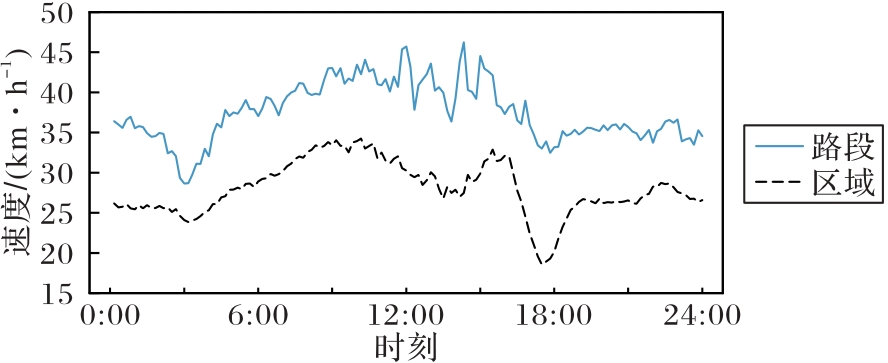
图2 区域和节点间的时空相关性
Fig. 2 Spatio-temporal correlation between regions and nodes
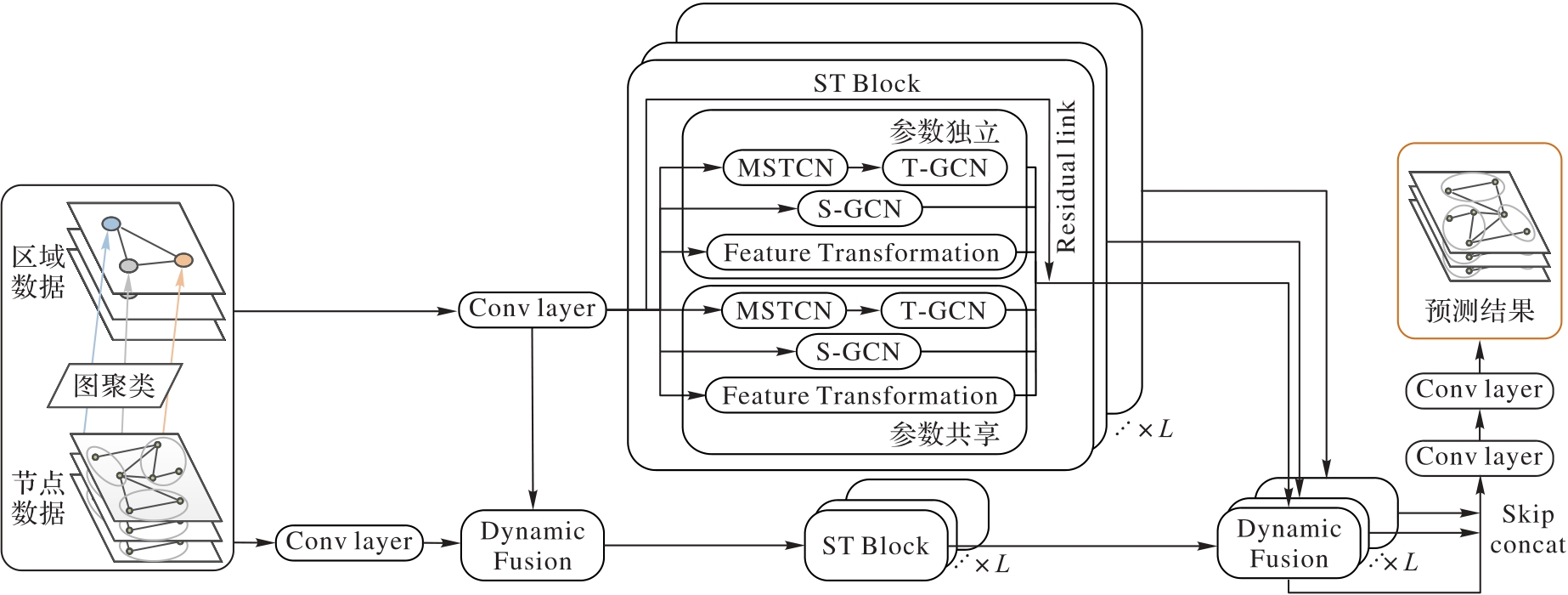
图3 DM-DGCN模型的整体结构
Fig. 3 Overall structure of DM-DGCN model
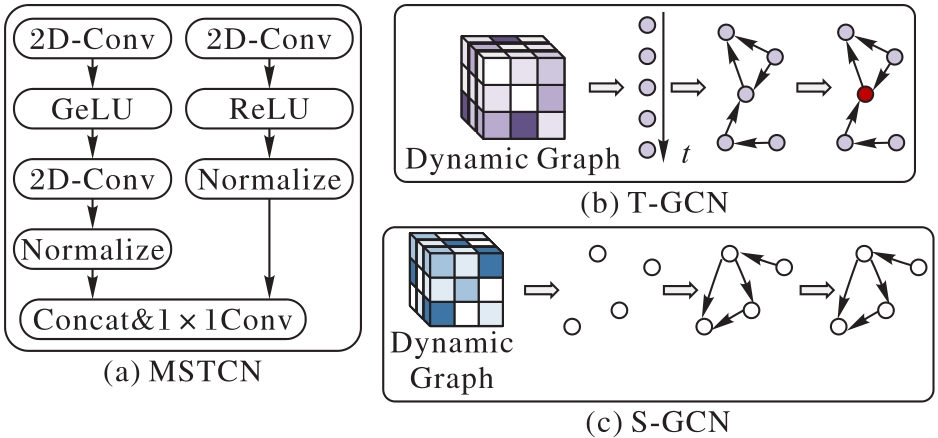
图4 ST Block的结构
Fig. 4 Structure of ST Block
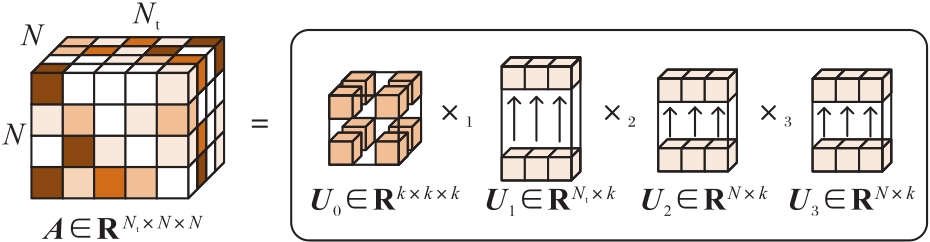
图5 动态图的构建
Fig. 5 Construction of dynamic graph
| 数据集 | 传感器数 | 每次采样间隔/min | 样本数 | 时间跨度/a |
|---|---|---|---|---|
| 西安 | 792 | 10 | 52 309 | 1 |
| 济南 | 561 | 10 | 52 309 | 1 |
表1 数据集介绍
Tab. 1 Dataset introduction
| 数据集 | 传感器数 | 每次采样间隔/min | 样本数 | 时间跨度/a |
|---|---|---|---|---|
| 西安 | 792 | 10 | 52 309 | 1 |
| 济南 | 561 | 10 | 52 309 | 1 |
| 模型 | 30 min预测任务 | 60 min预测任务 | 120 min预测任务 | ||||||
|---|---|---|---|---|---|---|---|---|---|
| MAE | RMSE | MAPE/% | MAE | RMSE | MAPE/% | MAE | RMSE | MAPE/% | |
| HA | — | — | — | — | — | — | 5.69 | 7.60 | 20.02 |
| ARIMA | 3.96 | 6.15 | 14.12 | 4.49 | 6.55 | 16.09 | 5.10 | 7.02 | 18.23 |
| Conv-LSTM | 3.21 | 4.85 | 12.82 | 3.67 | 5.48 | 14.90 | 4.30 | 6.26 | 17.42 |
| STGCN | 2.96 | 4.48 | 11.85 | 3.30 | 4.93 | 13.33 | 3.73 | 5.54 | 15.04 |
| AGCRN | 4.02 | 8.00 | 11.92 | 4.22 | 8.25 | 12.70 | 4.49 | 8.55 | 13.59 |
| GDGCN | 2.72 | 4.15 | 10.71 | 2.94 | 4.44 | 11.63 | 3.24 | 4.82 | 12.84 |
| DDGCRN | 3.96 | 7.93 | 11.27 | 4.24 | 8.30 | 12.20 | 4.67 | 8.84 | 13.44 |
| ST-WA | 3.51 | 6.01 | 12.82 | 3.65 | 6.17 | 13.35 | 3.82 | 6.31 | 14.01 |
| STG-NCDE | 4.14 | 7.96 | 12.64 | 4.36 | 8.26 | 12.89 | 4.65 | 8.60 | 13.87 |
| PDG2Seq | 4.04 | 8.18 | 11.86 | 4.36 | 8.61 | 12.94 | 4.79 | 9.18 | 14.24 |
| STPGNN | 2.85 | 4.34 | 11.40 | 3.11 | 4.68 | 13.00 | 3.44 | 5.06 | 13.73 |
| HSTGODE | 2.85 | 4.35 | 11.33 | 3.06 | 4.65 | 12.33 | 3.36 | 5.00 | 13.26 |
| DM-DGCN | 2.70 | 4.13 | 10.70 | 2.93 | 4.42 | 11.68 | 3.24 | 4.81 | 13.01 |
表2 不同模型在济南数据集上的性能比较
Tab. 2 Performance comparison of different models on Jinan dataset
| 模型 | 30 min预测任务 | 60 min预测任务 | 120 min预测任务 | ||||||
|---|---|---|---|---|---|---|---|---|---|
| MAE | RMSE | MAPE/% | MAE | RMSE | MAPE/% | MAE | RMSE | MAPE/% | |
| HA | — | — | — | — | — | — | 5.69 | 7.60 | 20.02 |
| ARIMA | 3.96 | 6.15 | 14.12 | 4.49 | 6.55 | 16.09 | 5.10 | 7.02 | 18.23 |
| Conv-LSTM | 3.21 | 4.85 | 12.82 | 3.67 | 5.48 | 14.90 | 4.30 | 6.26 | 17.42 |
| STGCN | 2.96 | 4.48 | 11.85 | 3.30 | 4.93 | 13.33 | 3.73 | 5.54 | 15.04 |
| AGCRN | 4.02 | 8.00 | 11.92 | 4.22 | 8.25 | 12.70 | 4.49 | 8.55 | 13.59 |
| GDGCN | 2.72 | 4.15 | 10.71 | 2.94 | 4.44 | 11.63 | 3.24 | 4.82 | 12.84 |
| DDGCRN | 3.96 | 7.93 | 11.27 | 4.24 | 8.30 | 12.20 | 4.67 | 8.84 | 13.44 |
| ST-WA | 3.51 | 6.01 | 12.82 | 3.65 | 6.17 | 13.35 | 3.82 | 6.31 | 14.01 |
| STG-NCDE | 4.14 | 7.96 | 12.64 | 4.36 | 8.26 | 12.89 | 4.65 | 8.60 | 13.87 |
| PDG2Seq | 4.04 | 8.18 | 11.86 | 4.36 | 8.61 | 12.94 | 4.79 | 9.18 | 14.24 |
| STPGNN | 2.85 | 4.34 | 11.40 | 3.11 | 4.68 | 13.00 | 3.44 | 5.06 | 13.73 |
| HSTGODE | 2.85 | 4.35 | 11.33 | 3.06 | 4.65 | 12.33 | 3.36 | 5.00 | 13.26 |
| DM-DGCN | 2.70 | 4.13 | 10.70 | 2.93 | 4.42 | 11.68 | 3.24 | 4.81 | 13.01 |
| 模型 | 30 min预测任务 | 60 min预测任务 | 120 min预测任务 | ||||||
|---|---|---|---|---|---|---|---|---|---|
| MAE | RMSE | MAPE/% | MAE | RMSE | MAPE/% | MAE | RMSE | MAPE/% | |
| HA | — | — | — | — | — | — | 6.06 | 8.16 | 21.78 |
| ARIMA | 3.70 | 6.04 | 12.96 | 4.25 | 6.57 | 15.29 | 5.03 | 6.51 | 17.41 |
| Conv-LSTM | 3.16 | 4.83 | 11.92 | 3.70 | 5.52 | 14.00 | 4.52 | 6.53 | 17.42 |
| STGCN | 2.88 | 4.46 | 11.03 | 3.24 | 4.93 | 12.72 | 3.74 | 5.58 | 14.93 |
| AGCRN | 3.54 | 7.51 | 10.39 | 3.74 | 7.75 | 11.24 | 4.00 | 8.03 | 12.31 |
| GDGCN | 2.62 | 4.08 | 9.87 | 2.85 | 4.40 | 11.03 | 3.18 | 4.84 | 12.55 |
| DDGCRN | 3.57 | 7.50 | 10.56 | 3.84 | 7.80 | 11.77 | 4.25 | 8.23 | 13.52 |
| ST-WA | 3.27 | 6.01 | 11.66 | 3.37 | 6.08 | 12.18 | 3.51 | 6.16 | 12.92 |
| STG-NCDE | 3.77 | 7.56 | 10.97 | 3.97 | 7.84 | 11.90 | 4.24 | 8.14 | 13.01 |
| PDG2Seq | 3.55 | 7.66 | 10.47 | 3.89 | 8.02 | 11.78 | 4.33 | 8.48 | 13.48 |
| STPGNN | 2.75 | 4.27 | 10.47 | 3.03 | 4.64 | 12.00 | 3.37 | 5.09 | 13.00 |
| HSTGODE | 2.73 | 4.24 | 10.33 | 2.95 | 4.54 | 11.40 | 3.21 | 4.86 | 12.48 |
| DM-DGCN | 2.60 | 4.05 | 9.75 | 2.84 | 4.35 | 10.82 | 3.23 | 4.84 | 12.57 |
表3 不同模型在西安数据集上的性能比较
Tab. 3 Performance comparison of different models on Xi’an dataset
| 模型 | 30 min预测任务 | 60 min预测任务 | 120 min预测任务 | ||||||
|---|---|---|---|---|---|---|---|---|---|
| MAE | RMSE | MAPE/% | MAE | RMSE | MAPE/% | MAE | RMSE | MAPE/% | |
| HA | — | — | — | — | — | — | 6.06 | 8.16 | 21.78 |
| ARIMA | 3.70 | 6.04 | 12.96 | 4.25 | 6.57 | 15.29 | 5.03 | 6.51 | 17.41 |
| Conv-LSTM | 3.16 | 4.83 | 11.92 | 3.70 | 5.52 | 14.00 | 4.52 | 6.53 | 17.42 |
| STGCN | 2.88 | 4.46 | 11.03 | 3.24 | 4.93 | 12.72 | 3.74 | 5.58 | 14.93 |
| AGCRN | 3.54 | 7.51 | 10.39 | 3.74 | 7.75 | 11.24 | 4.00 | 8.03 | 12.31 |
| GDGCN | 2.62 | 4.08 | 9.87 | 2.85 | 4.40 | 11.03 | 3.18 | 4.84 | 12.55 |
| DDGCRN | 3.57 | 7.50 | 10.56 | 3.84 | 7.80 | 11.77 | 4.25 | 8.23 | 13.52 |
| ST-WA | 3.27 | 6.01 | 11.66 | 3.37 | 6.08 | 12.18 | 3.51 | 6.16 | 12.92 |
| STG-NCDE | 3.77 | 7.56 | 10.97 | 3.97 | 7.84 | 11.90 | 4.24 | 8.14 | 13.01 |
| PDG2Seq | 3.55 | 7.66 | 10.47 | 3.89 | 8.02 | 11.78 | 4.33 | 8.48 | 13.48 |
| STPGNN | 2.75 | 4.27 | 10.47 | 3.03 | 4.64 | 12.00 | 3.37 | 5.09 | 13.00 |
| HSTGODE | 2.73 | 4.24 | 10.33 | 2.95 | 4.54 | 11.40 | 3.21 | 4.86 | 12.48 |
| DM-DGCN | 2.60 | 4.05 | 9.75 | 2.84 | 4.35 | 10.82 | 3.23 | 4.84 | 12.57 |
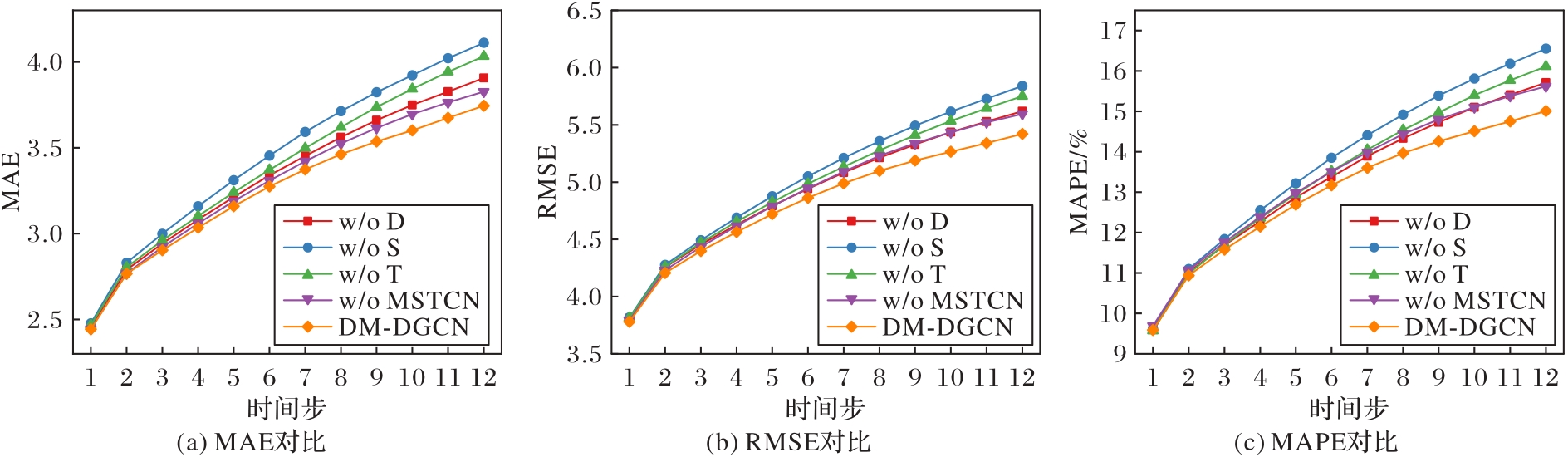
图6 济南数据集上的消融实验结果
Fig. 6 Ablation experimental results on Jinan dataset
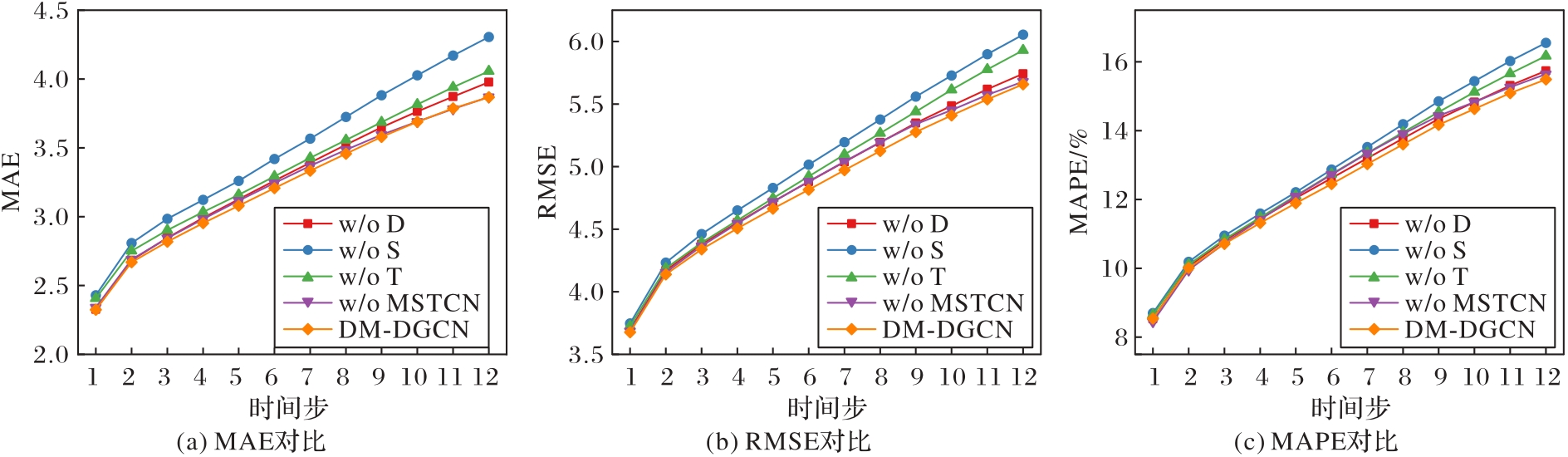
图7 西安数据集上的消融实验结果
Fig. 7 Ablation experimental results on Xi’an dataset
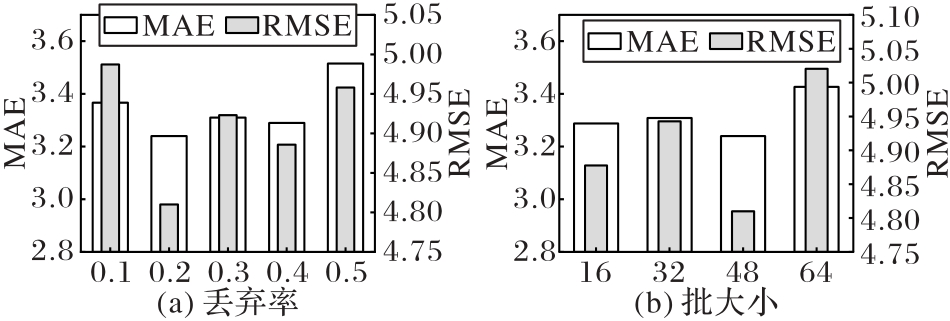
图8 济南数据集上超参数对模型性能的影响
Fig. 8 Impact of hyperparameters on model performance on Jinan dataset
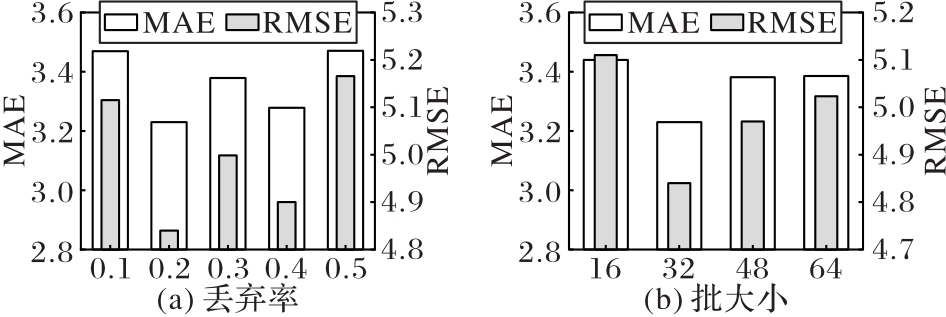
图9 西安数据集上超参数对模型性能的影响
Fig. 9 Impact of hyperparameters on model performance on Xi’an dataset
| 模型 | 每轮训练时间 | |
|---|---|---|
| 济南数据集 | 西安数据集 | |
| AGCRN | 31.7 | 36.3 |
| DDGCRN | 313.1 | 470.3 |
| GDGCN | 231.0 | 337.9 |
| ST-WA | 363.9 | 613.2 |
| DM-DGCN | 163.8 | 452.3 |
表4 不同模型的训练时间 (s)
Tab. 4 Training time of different models
| 模型 | 每轮训练时间 | |
|---|---|---|
| 济南数据集 | 西安数据集 | |
| AGCRN | 31.7 | 36.3 |
| DDGCRN | 313.1 | 470.3 |
| GDGCN | 231.0 | 337.9 |
| ST-WA | 363.9 | 613.2 |
| DM-DGCN | 163.8 | 452.3 |
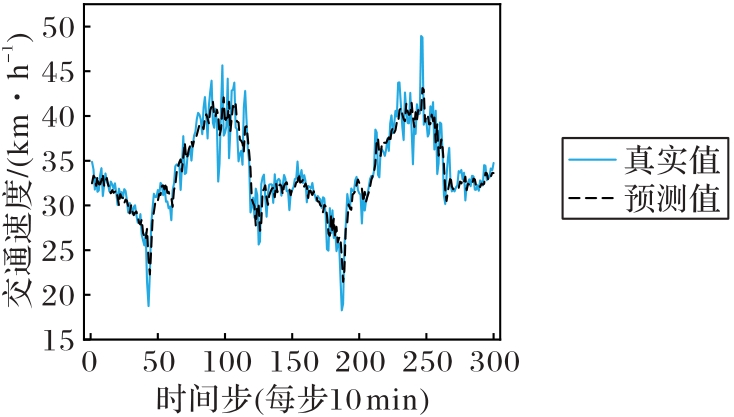
图10 济南数据集上的拟合性能
Fig. 10 Fitting performance on Jinan dataset
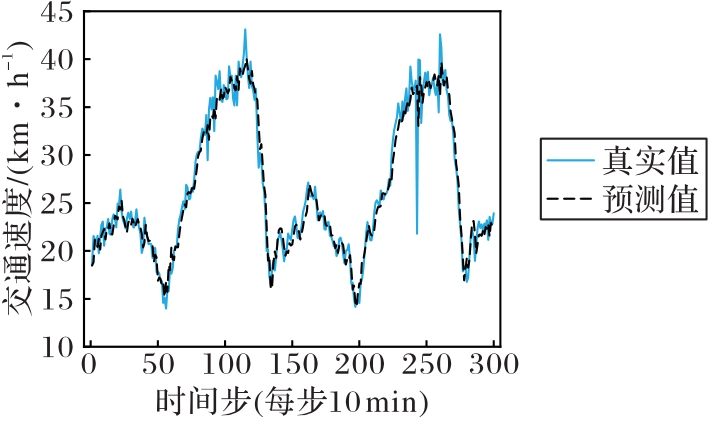
图11 西安数据集上的拟合性能
Fig. 11 Fitting performance on Xi’an dataset
| [1] | PU J, LIU Z, WANG Y, et al. Insight into traffic security: a correlation discovery of urban spatial features and traffic flow patterns[C]// Proceedings of the 51st Annual IEEE/IFIP International Conference on Dependable Systems and Networks Workshops. Piscataway: IEEE, 2021: 101-107. |
| [2] | XU T, DENG J, MA R, et al. Hierarchical spatio-temporal graph ODE networks for traffic forecasting[J]. Information Fusion, 2025, 113: No.102614. |
| [3] | MIAO Y, BAI X, CAO Y, et al. A novel short-term traffic prediction model based on SVD and ARIMA with blockchain in industrial internet of things[J]. IEEE Internet of Things Journal, 2023, 10(24): 21217-21226. |
| [4] | EMAMI A, SARVI M, ASADI BAGLOEE S. Using Kalman filter algorithm for short-term traffic flow prediction in a connected vehicle environment[J]. Journal of Modern Transportation, 2019, 27(3): 222-232. |
| [5] | 闫贺,朱丽,戚湧.基于改进SVM的城市道路短时交通状态预测[J].南京师大学报(自然科学版),2019,42(3):129-137. |
| YAN H, ZHU L, QI Y. Short-term traffic state prediction for urban roads based on improved SVM[J]. Journal of Nanjing Normal University (Natural Science Edition), 2019, 42(3): 129-137. | |
| [6] | RAMAKRISHNAN N, SONI T. Network traffic prediction using recurrent neural networks[C]// Proceedings of the 17th IEEE International Conference on Machine Learning and Applications. Piscataway: IEEE, 2018: 187-193. |
| [7] | DENG S, JIA S, CHEN J. Exploring spatial-temporal relations via deep convolutional neural networks for traffic flow prediction with incomplete data[J]. Applied Soft Computing, 2019, 78: 712-721. |
| [8] | SHI X, CHEN Z, WANG H, et al. Convolutional LSTM network: a machine learning approach for precipitation nowcasting[C]// Proceedings of the 29th International Conference on Neural Information Processing Systems — Volume 1. Cambridge: MIT Press, 2015: 802-810. |
| [9] | REN Y, ZHAO D, LUO D, et al. Global-local temporal convolutional network for traffic flow prediction[J]. IEEE Transactions on Intelligent Transportation Systems, 2022, 23(2): 1578-1584. |
| [10] | YU B, YIN H, ZHU Z. Spatial-temporal graph convolutional networks: a deep learning framework for traffic forecasting[C]// Proceedings of the 27th International Joint Conference on Artificial Intelligence. California: ijcai.org, 2018: 3634-3640. |
| [11] | GAO M, DU Z, QIN H, et al. Dynamic multi-scale spatial-temporal graph convolutional network for traffic flow prediction[J]. Knowledge-Based Systems, 2024, 305: No.112586. |
| [12] | KONG W, GUO Z, LIU Y. Spatio-temporal pivotal graph neural networks for traffic flow forecasting[C]// Proceedings of the 38th AAAI Conference on Artificial Intelligence. Palo Alto: AAAI Press, 2024: 8627-8635. |
| [13] | XU Y, HAN L, ZHU T, et al. Generic dynamic graph convolutional network for traffic flow forecasting[J]. Information Fusion, 2023, 100: No.101946. |
| [14] | ZHANG X, TIAN Z, SHI Y, et al. STFGCN: spatio-temporal fusion graph convolutional networks for subway traffic prediction[J]. IEEE Access, 2024, 12: 194449-194461. |
| [15] | LUO X, LI D, YANG Y, et al. Spatiotemporal traffic flow prediction with KNN and LSTM[J]. Journal of Advanced Transportation, 2019, 2019: No.4145353. |
| [16] | KONG J, FAN X, JIN X, et al. A variational Bayesian inference-based en-decoder framework for traffic flow prediction[J]. IEEE Transactions on Intelligent Transportation Systems, 2024, 25(3): 2966-2975. |
| [17] | LIU M, ZENG A, CHEN M, et al. SCINet: time series modeling and forecasting with sample convolution and interaction[C]// Proceedings of the 36th International Conference on Neural Information Processing Systems. Red Hook: Curran Associates Inc., 2022: 5816-5828. |
| [18] | ZHENG H, LIN F, FENG X, et al. A hybrid deep learning model with attention-based Conv-LSTM networks for short-term traffic flow prediction[J]. IEEE Transactions on Intelligent Transportation Systems, 2021, 22(11): 6910-6920. |
| [19] | SHU W, CAI K, XIONG N N. A short-term traffic flow prediction model based on an improved gate recurrent unit neural network[J]. IEEE Transactions on Intelligent Transportation Systems, 2022, 23(9): 16654-16665. |
| [20] | MA C, DAI G, ZHOU J. Short-term traffic flow prediction for urban road sections based on time series analysis and LSTM_BILSTM method[J]. IEEE Transactions on Intelligent Transportation Systems, 2022, 23(6): 5615-5624. |
| [21] | LUO Y, ZHENG J, WANG X, et al. GT-LSTM: a spatial-temporal ensemble network for traffic flow prediction[J]. Neural Networks, 2024, 171: 251-262. |
| [22] | ZHANG J, ZHENG Y, QI D. Deep spatio-temporal residual networks for citywide crowd flows prediction[C]// Proceedings of the 31st AAAI Conference on Artificial Intelligence. Palo Alto: AAAI Press, 2017: 1655-1661. |
| [23] | YAO H, TANG X, WEI H, et al. Revisiting spatial-temporal similarity: a deep learning framework for traffic prediction[C]// Proceedings of the 33rd AAAI Conference on Artificial Intelligence. Palo Alto: AAAI Press, 2019: 5668-5675. |
| [24] | SEO Y, DEFFERRARD M, VANDERGHEYNST P, et al. Structured sequence modeling with graph convolutional recurrent networks[C]// Proceedings of the 2018 International Conference on Neural Information Processing, LNCS 11301. Cham: Springer, 2018: 362-373. |
| [25] | BAI L, YAO L, LI C, et al. Adaptive graph convolutional recurrent network for traffic forecasting[C]// Proceedings of the 34th International Conference on Neural Information Processing Systems. Red Hook: Curran Associates Inc., 2020: 17804-17815. |
| [26] | WU Z, PAN S, LONG G, et al. Connecting the dots: multivariate time series forecasting with graph neural networks[C]// Proceedings of the 26th ACM SIGKDD International Conference on Knowledge Discovery and Data Mining. New York: ACM, 2020: 753-763. |
| [27] | WU Z, PAN S, LONG G, et al. Graph WaveNet for deep spatial-temporal graph modeling[C]// Proceedings of the 28th International Joint Conference on Artificial Intelligence. California: ijcai.org, 2019: 1907-1913. |
| [28] | CHEN M, HAN L, XU Y, et al. Temporal-aware structure-semantic-coupled graph network for traffic forecasting[J]. Information Fusion, 2024, 107: No.102339. |
| [29] | LIN W, ZHANG Z, REN G, et al. MGCN: Mamba-integrated spatiotemporal graph convolutional network for long-term traffic forecasting[J]. Knowledge-Based Systems, 2025, 309: No.112875. |
| [30] | LIU A, ZHANG Y. An efficient spatial-temporal Transformer with temporal aggregation and spatial memory for traffic forecasting[J]. Expert Systems with Applications, 2024, 250: No.123884. |
| [31] | ZHANG H, DING K, XIE J, et al. Flow prediction via adaptive dynamic graph with spatio-temporal correlations[J]. Expert Systems with Applications, 2025, 261: No.125474. |
| [32] | WANG L, GUO D, WU H, et al. TC-GCN: triple cross-attention and graph convolutional network for traffic forecasting[J]. Information Fusion, 2024, 105: No.102229. |
| [33] | WENG W, FAN J, WU H, et al. A decomposition dynamic graph convolutional recurrent network for traffic forecasting[J]. Pattern Recognition, 2023, 142: No.109670. |
| [34] | CIRSTEA R G, YANG B, GUO C, et al. Towards spatio-temporal aware traffic time series forecasting[C]// Proceedings of the IEEE 38th International Conference on Data Engineering. Piscataway: IEEE, 2022: 2900-2913. |
| [35] | CHOI J, CHOI H, HWANG J, et al. Graph neural controlled differential equations for traffic forecasting[C]// Proceedings of the 36th AAAI Conference on Artificial Intelligence. Palo Alto: AAAI Press, 2022: 6367-6374. |
| [36] | FAN J, WENG W, CHEN Q, et al. PDG2Seq: periodic dynamic graph to sequence model for traffic flow prediction[J]. Neural Networks, 2025, 183: No.106941. |
| [1] | 韦廷浒, 刘皓琰, 吴建宁. 图时空学习模型检测下肢不等长动态变化[J]. 《计算机应用》唯一官方网站, 2026, 46(2): 587-595. |
| [2] | 韩锋, 卜永丰, 梁浩翔, 黄舒雯, 张朝阳, 孙士杰. 基于多层次时空交互依赖的车辆轨迹异常检测[J]. 《计算机应用》唯一官方网站, 2026, 46(2): 604-612. |
| [3] | 石超, 周昱昕, 扶倩, 唐万宇, 何凌, 李元媛. 基于骨架和3D热图的注意缺陷多动障碍患者动作识别算法[J]. 《计算机应用》唯一官方网站, 2025, 45(9): 3036-3044. |
| [4] | 颜文婧, 王瑞东, 左敏, 张青川. 基于风味嵌入异构图层次学习的食谱推荐模型[J]. 《计算机应用》唯一官方网站, 2025, 45(6): 1869-1878. |
| [5] | 李自亮, 朱广丽, 张玉雷, 刘佳佳, 焦熠璇, 张顺香. 集成句法与情感知识的方面级情感分析模型[J]. 《计算机应用》唯一官方网站, 2025, 45(6): 1724-1731. |
| [6] | 王泉, 陆啟想, 施珮. 用于交通流量预测的多图扩散注意力网络[J]. 《计算机应用》唯一官方网站, 2025, 45(5): 1472-1479. |
| [7] | 陈满, 杨小军, 杨慧敏. 基于图卷积网络和终点诱导的行人轨迹预测[J]. 《计算机应用》唯一官方网站, 2025, 45(5): 1480-1487. |
| [8] | 党伟超, 宋楚君, 高改梅, 刘春霞. 基于级联残差图卷积网络的多行为推荐[J]. 《计算机应用》唯一官方网站, 2025, 45(4): 1223-1231. |
| [9] | 富坤, 应世聪, 郑婷婷, 屈佳捷, 崔静远, 李建伟. 面向小样本节点分类的图数据增强方法[J]. 《计算机应用》唯一官方网站, 2025, 45(2): 392-402. |
| [10] | 张正悦, 彭菊红, 丁子胥, 范馨予, 胡长玉. 融合情感词典的多视角语言特征方面情感三元组抽取模型[J]. 《计算机应用》唯一官方网站, 2025, 45(12): 3779-3785. |
| [11] | 张瑜琦, 沙灜. 基于层次信息增强的中文语义错误识别模型[J]. 《计算机应用》唯一官方网站, 2025, 45(12): 3771-3778. |
| [12] | 徐梦楠, 叶海良, 曹飞龙. 面向鲁棒点云配准的邻域关注和拓扑感知的图卷积方法[J]. 《计算机应用》唯一官方网站, 2025, 45(11): 3573-3582. |
| [13] | 潘理虎, 张梦麟, 樊光瑞, 张林梁, 张睿. 基于小波分解的增强时间延迟感知交通流量预测[J]. 《计算机应用》唯一官方网站, 2025, 45(11): 3649-3657. |
| [14] | 赵敬华, 张柱, 吕锡婷, 林慧丹. 基于超图神经网络的多尺度信息传播预测模型[J]. 《计算机应用》唯一官方网站, 2025, 45(11): 3529-3539. |
| [15] | 况世雄, 姚俊波, 陆佳炜, 王琪冰, 肖刚. 基于动态图卷积网络的电梯乘客异常行为数据增强方法[J]. 《计算机应用》唯一官方网站, 2025, 45(10): 3187-3194. |
| 阅读次数 | ||||||
|
全文 |
|
|||||
|
摘要 |
|
|||||
