


Journal of Computer Applications ›› 2026, Vol. 46 ›› Issue (7): 2119-2129.DOI: 10.11772/j.issn.1001-9081.2025060774
• Artificial intelligence • Previous Articles Next Articles
Xiaohong QIU1,2, Zixiang YU1( ), Yujie HU1
Received:2025-07-15
Revised:2025-09-15
Accepted:2025-09-19
Online:2025-09-28
Published:2026-07-10
Contact:
Zixiang YU
About author:QIU Xiaohong, born in 1967, Ph. D., professor. His research interests include intelligent computing, fault diagnosis.Supported by:
邱晓红1,2, 于子祥1(), 胡玉杰1
通讯作者:
于子祥
作者简介:邱晓红(1967—),男,江西南康人,教授,博士,主要研究方向:智能计算、故障诊断基金资助:CLC Number:
Xiaohong QIU, Zixiang YU, Yujie HU. Sample augmentation method for fault diagnosis with high-frequency guided diffusion model[J]. Journal of Computer Applications, 2026, 46(7): 2119-2129.
邱晓红, 于子祥, 胡玉杰. 高频引导的扩散模型故障诊断样本增广方法[J]. 《计算机应用》唯一官方网站, 2026, 46(7): 2119-2129.
Add to citation manager EndNote|Ris|BibTeX
URL: https://www.joca.cn/EN/10.11772/j.issn.1001-9081.2025060774
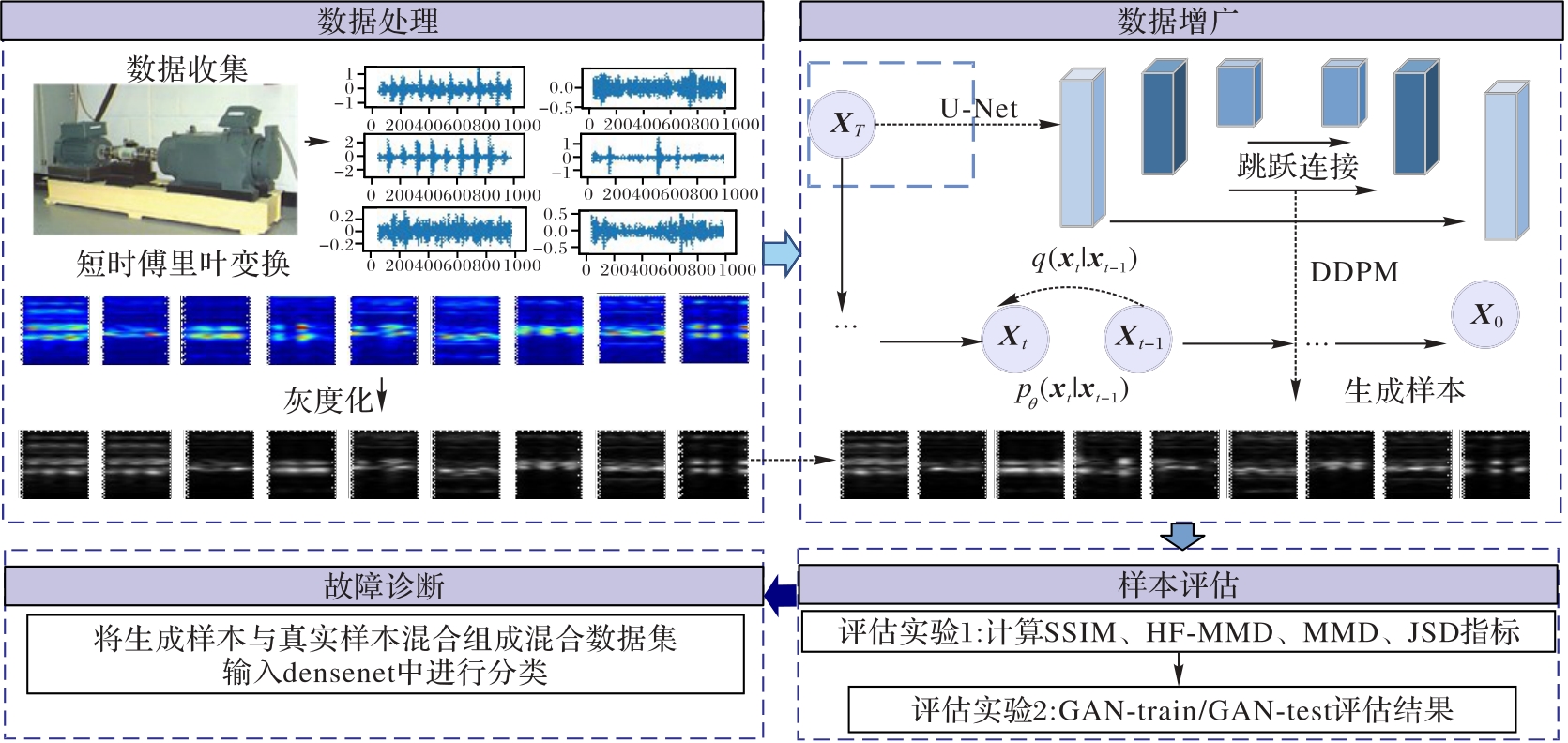
Fig. 1 Framework of diagnosis process
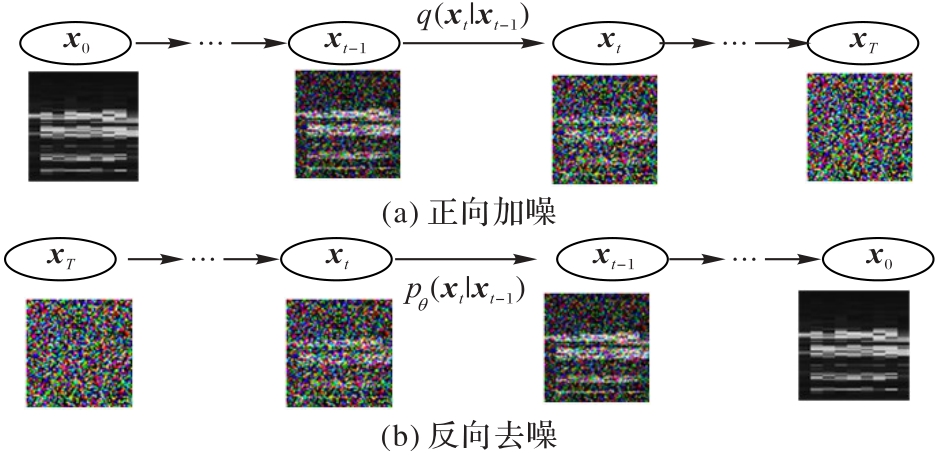
Fig. 2 Forward noise addition and backward denoising processes of diffusion model
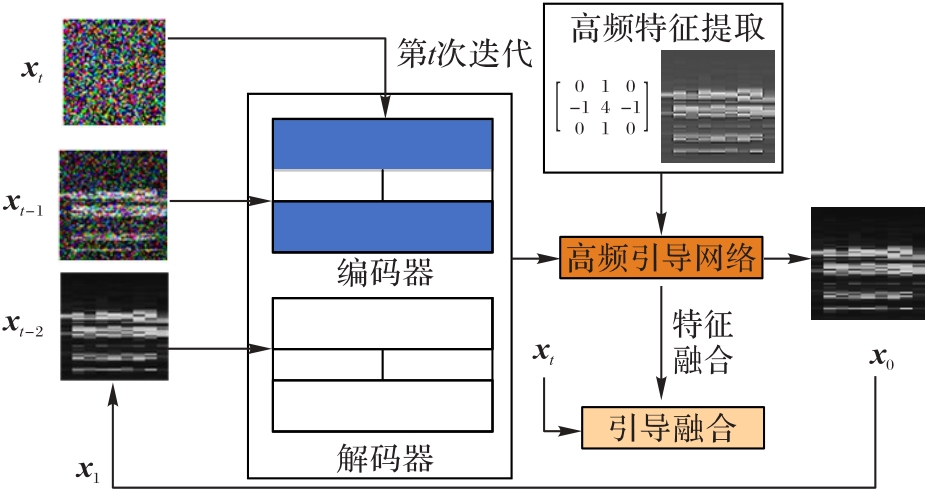
Fig. 3 Process of high-frequency guidance
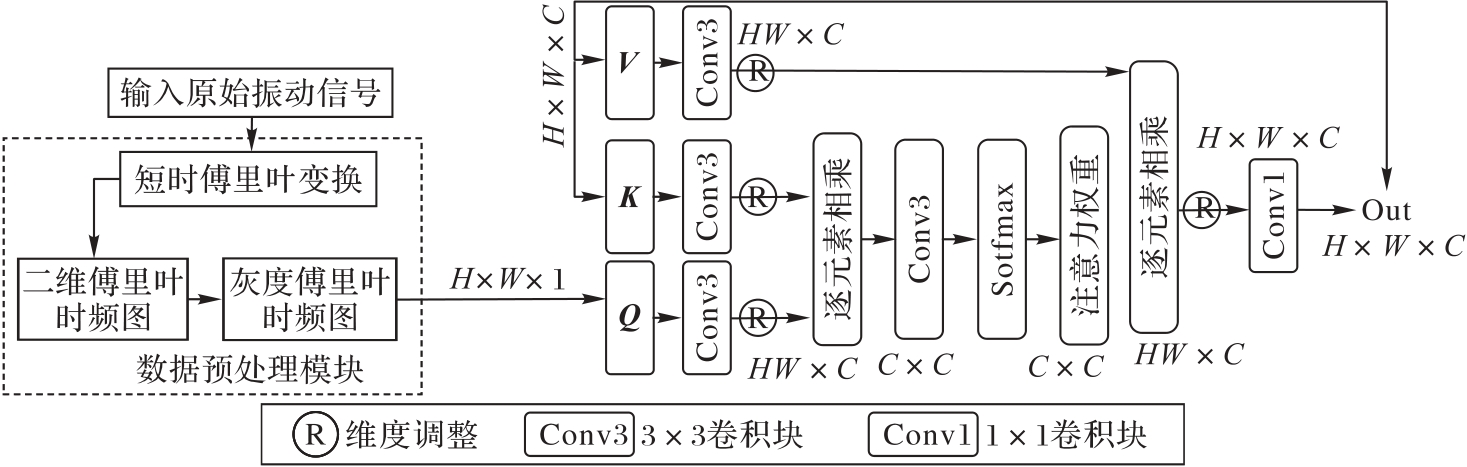
Fig. 4 Cross-attention mechanism
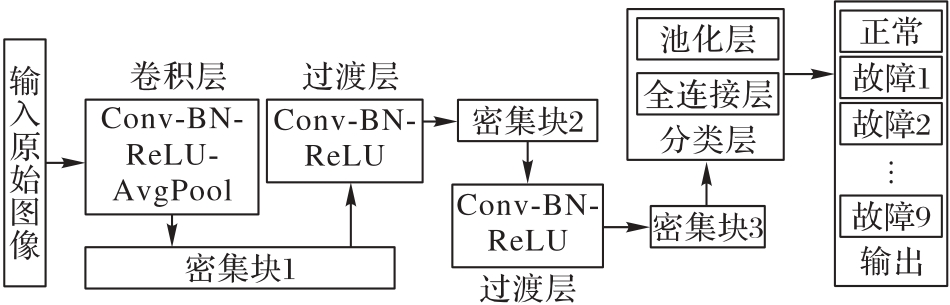
Fig. 5 Architecture of DenseNet
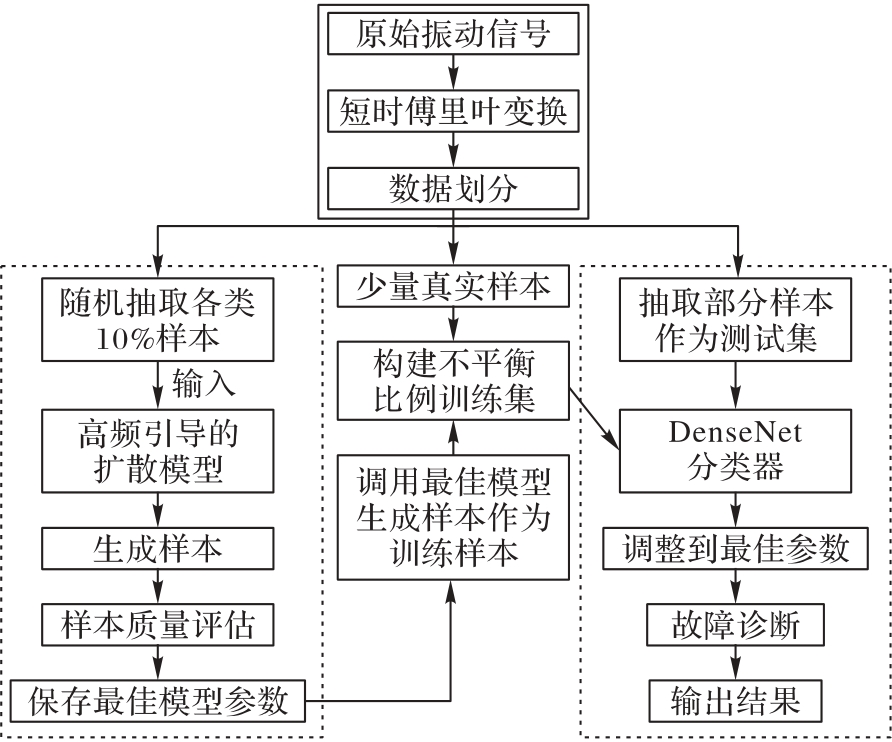
Fig. 6 Flow of fault diagnosis
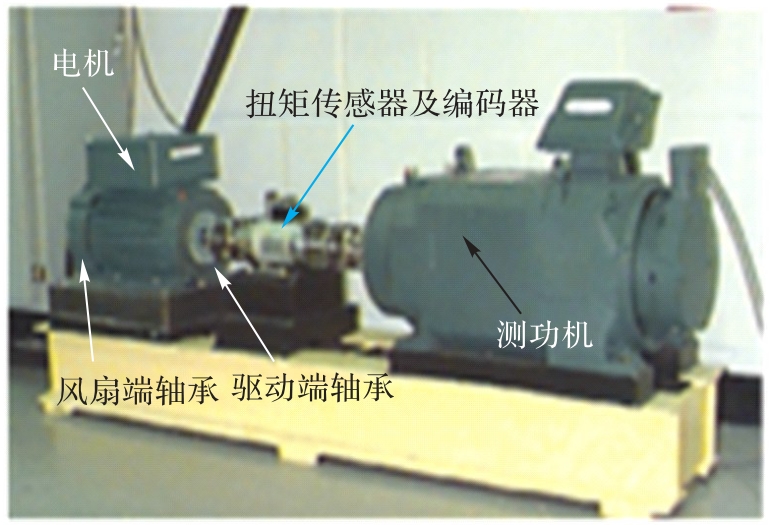
Fig. 7 CWRU data acquisition platform
| 故障类别 | 状态 | 尺寸/mil | 负载 | 转速/(r·min-1) | 样本数 |
|---|---|---|---|---|---|
| 1 | 正常 | 0 | 1 797 | 928 | |
| 2 | 内圈故障 | 7 | 0 | 1 797 | 928 |
| 3 | 内圈故障 | 14 | 0 | 1 797 | 928 |
| 4 | 内圈故障 | 21 | 0 | 1 797 | 928 |
| 5 | 外圈故障 | 7 | 0 | 1 797 | 928 |
| 6 | 外圈故障 | 14 | 0 | 1 797 | 928 |
| 7 | 外圈故障 | 21 | 0 | 1 797 | 928 |
| 8 | 滚动体故障 | 7 | 0 | 1 797 | 928 |
| 9 | 滚动体故障 | 14 | 0 | 1 797 | 928 |
| 10 | 滚动体故障 | 21 | 0 | 1 797 | 928 |
Tab. 1 Original distribution of CWRU dataset
| 故障类别 | 状态 | 尺寸/mil | 负载 | 转速/(r·min-1) | 样本数 |
|---|---|---|---|---|---|
| 1 | 正常 | 0 | 1 797 | 928 | |
| 2 | 内圈故障 | 7 | 0 | 1 797 | 928 |
| 3 | 内圈故障 | 14 | 0 | 1 797 | 928 |
| 4 | 内圈故障 | 21 | 0 | 1 797 | 928 |
| 5 | 外圈故障 | 7 | 0 | 1 797 | 928 |
| 6 | 外圈故障 | 14 | 0 | 1 797 | 928 |
| 7 | 外圈故障 | 21 | 0 | 1 797 | 928 |
| 8 | 滚动体故障 | 7 | 0 | 1 797 | 928 |
| 9 | 滚动体故障 | 14 | 0 | 1 797 | 928 |
| 10 | 滚动体故障 | 21 | 0 | 1 797 | 928 |
| 方法 | 训练轮次 | 批次大小 | 学习率 | 优化器 |
|---|---|---|---|---|
| ACGAN | 10 000 | 64 | 0.000 2 | Adam |
| WGAN-GP | 10 000 | 64 | 0.000 2 | Adam |
| VAE | 1 000 | 64 | 0.000 2 | Adam |
| DDIM | 500 | 32 | 0.001 0 | AdamW |
| IVQ-LDM | 2 000 | 20 | 0.001 0 | Adam |
| CDDPM | 300 | 64 | 0.000 1 | Adam |
| 本文方法 | 500 | 32 | 0.001 0 | AdamW |
Tab. 2 Experimental parameters for CWRU dataset
| 方法 | 训练轮次 | 批次大小 | 学习率 | 优化器 |
|---|---|---|---|---|
| ACGAN | 10 000 | 64 | 0.000 2 | Adam |
| WGAN-GP | 10 000 | 64 | 0.000 2 | Adam |
| VAE | 1 000 | 64 | 0.000 2 | Adam |
| DDIM | 500 | 32 | 0.001 0 | AdamW |
| IVQ-LDM | 2 000 | 20 | 0.001 0 | Adam |
| CDDPM | 300 | 64 | 0.000 1 | Adam |
| 本文方法 | 500 | 32 | 0.001 0 | AdamW |
| 指标 | 描述 |
|---|---|
| SSIM | 衡量2个样本之间的结构相似性。越接近于1,表明2个样本相似度越高 |
| HF-SSIM | 针对图像高频成分的结构相似性度量,能精确捕捉细节差异。越接近于1,表明图像高频成分信息越接近 |
| MMD | 衡量2个概率分布在核希尔伯特空间中的距离。越接近于0,表明二者相似度越高 |
| JSD | 在本文应用场景下用于衡量生成样本与真实样本在归一化时频能量分布上的差异。数值越接近于0,表示生成样本在时频结构上的物理意义越接近真实样本 |
Tab. 3 Description of evaluation indicators
| 指标 | 描述 |
|---|---|
| SSIM | 衡量2个样本之间的结构相似性。越接近于1,表明2个样本相似度越高 |
| HF-SSIM | 针对图像高频成分的结构相似性度量,能精确捕捉细节差异。越接近于1,表明图像高频成分信息越接近 |
| MMD | 衡量2个概率分布在核希尔伯特空间中的距离。越接近于0,表明二者相似度越高 |
| JSD | 在本文应用场景下用于衡量生成样本与真实样本在归一化时频能量分布上的差异。数值越接近于0,表示生成样本在时频结构上的物理意义越接近真实样本 |
| 方法 | SSIM | HF-SSIM | MMD | JSD |
|---|---|---|---|---|
| ACGAN | 0.296 | 0.165 | 2.144 | 0.403 |
| WGAN-GP | 1.405 | 0.223 | ||
| VAE | 0.307 | 0.149 | 2.013 | 0.387 |
| DDIM | 0.417 | 0.321 | 0.256 | |
| CDDPM | 0.391 | 0.315 | 1.458 | |
| IVQ-LDM | 0.364 | 0.279 | 1.770 | 0.284 |
| 本文方法 | 0.503 | 0.418 | 0.967 | 0.182 |
Tab. 4 Evaluation indicator results on CWRU dataset
| 方法 | SSIM | HF-SSIM | MMD | JSD |
|---|---|---|---|---|
| ACGAN | 0.296 | 0.165 | 2.144 | 0.403 |
| WGAN-GP | 1.405 | 0.223 | ||
| VAE | 0.307 | 0.149 | 2.013 | 0.387 |
| DDIM | 0.417 | 0.321 | 0.256 | |
| CDDPM | 0.391 | 0.315 | 1.458 | |
| IVQ-LDM | 0.364 | 0.279 | 1.770 | 0.284 |
| 本文方法 | 0.503 | 0.418 | 0.967 | 0.182 |
| 方法 | GAN-train | GAN-test |
|---|---|---|
| 原始数据 | 98.26±0.43 | |
| ACGAN | 81.16±1.09 | 85.27±1.69 |
| WGAN-GP | ||
| VAE | 84.30±0.65 | 82.39±1.01 |
| DDIM | 90.77±0.90 | 91.33±0.49 |
| CDDPM | 92.17±1.21 | 91.40±0.84 |
| IVQ-LDM | 88.67±1.12 | 88.42±0.87 |
| 本文方法 | 95.57±0.63 | 95.71±0.75 |
Tab. 5 GAN train/GAN test evaluation accuracy results on CWRU dataset
| 方法 | GAN-train | GAN-test |
|---|---|---|
| 原始数据 | 98.26±0.43 | |
| ACGAN | 81.16±1.09 | 85.27±1.69 |
| WGAN-GP | ||
| VAE | 84.30±0.65 | 82.39±1.01 |
| DDIM | 90.77±0.90 | 91.33±0.49 |
| CDDPM | 92.17±1.21 | 91.40±0.84 |
| IVQ-LDM | 88.67±1.12 | 88.42±0.87 |
| 本文方法 | 95.57±0.63 | 95.71±0.75 |
| 实验序号 | 故障样本 | 生成样本 | 正常样本 | 比例 |
|---|---|---|---|---|
| 1 | 4 | 0 | 400 | 1∶100 |
| 2 | 4 | 4 | 400 | 1∶50 |
| 3 | 4 | 36 | 400 | 1∶10 |
| 4 | 4 | 76 | 400 | 1∶5 |
| 5 | 4 | 196 | 400 | 1∶2 |
| 6 | 4 | 396 | 400 | 1∶1 |
Tab. 6 Proportions of diagnostic samples on CWRU dataset
| 实验序号 | 故障样本 | 生成样本 | 正常样本 | 比例 |
|---|---|---|---|---|
| 1 | 4 | 0 | 400 | 1∶100 |
| 2 | 4 | 4 | 400 | 1∶50 |
| 3 | 4 | 36 | 400 | 1∶10 |
| 4 | 4 | 76 | 400 | 1∶5 |
| 5 | 4 | 196 | 400 | 1∶2 |
| 6 | 4 | 396 | 400 | 1∶1 |
| 方法 | 不同样本比例下的诊断准确率/% | |||||
|---|---|---|---|---|---|---|
| 1∶100 | 1∶50 | 1∶10 | 1∶5 | 1∶2 | 1∶1 | |
| ACGAN | 58.83 | 71.39 | 73.66 | 81.53 | 83.82 | |
| WGAN-GP | 52.81 | 62.30 | 81.72 | 89.32 | ||
| VAE | 53.70 | 59.37 | 70.42 | 78.78 | 85.10 | 88.36 |
| DDIM | 51.97 | 61.39 | 75.04 | 84.21 | 90.76 | 94.12 |
| CDDPM | 53.13 | 80.07 | 91.80 | 94.48 | ||
| IVQ-LDM | 52.40 | 60.78 | 76.36 | 87.51 | 89.65 | 92.83 |
| 本文方法 | 52.23 | 69.58 | 90.61 | 94.49 | 97.41 | |
Tab. 7 Diagnosis accuracies of different methods on CWRU dataset
| 方法 | 不同样本比例下的诊断准确率/% | |||||
|---|---|---|---|---|---|---|
| 1∶100 | 1∶50 | 1∶10 | 1∶5 | 1∶2 | 1∶1 | |
| ACGAN | 58.83 | 71.39 | 73.66 | 81.53 | 83.82 | |
| WGAN-GP | 52.81 | 62.30 | 81.72 | 89.32 | ||
| VAE | 53.70 | 59.37 | 70.42 | 78.78 | 85.10 | 88.36 |
| DDIM | 51.97 | 61.39 | 75.04 | 84.21 | 90.76 | 94.12 |
| CDDPM | 53.13 | 80.07 | 91.80 | 94.48 | ||
| IVQ-LDM | 52.40 | 60.78 | 76.36 | 87.51 | 89.65 | 92.83 |
| 本文方法 | 52.23 | 69.58 | 90.61 | 94.49 | 97.41 | |
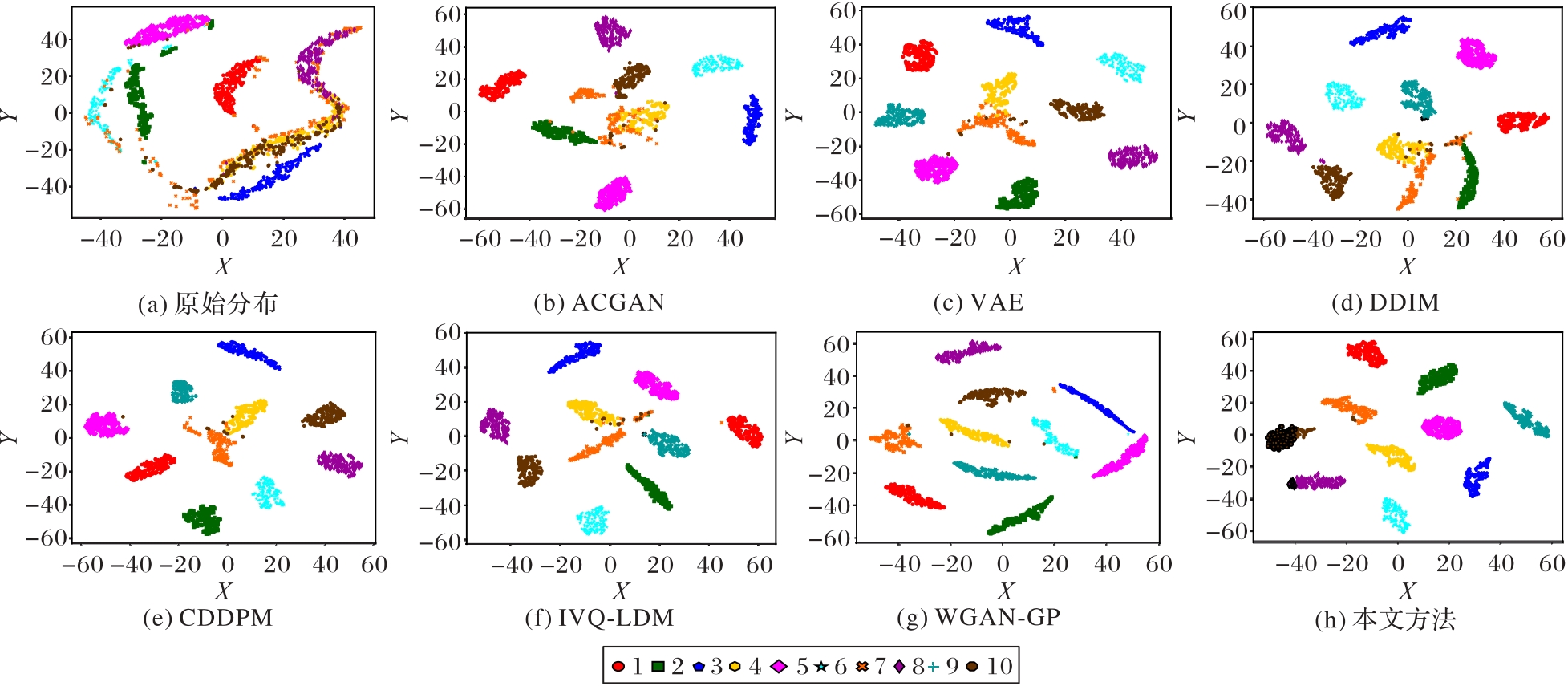
Fig. 8 t-SNE plots of different methods on CWRU dataset
| 故障类别 | 状态 | 转速/(r·min-1) | 样本数 |
|---|---|---|---|
| 1 | 正常 | 600 | 976 |
| 2 | 正常 | 1 000 | 976 |
| 3 | 内圈故障 | 600 | 976 |
| 4 | 内圈故障 | 1 000 | 976 |
| 5 | 外圈故障 | 600 | 976 |
| 6 | 外圈故障 | 1 000 | 976 |
| 7 | 滚动体故障 | 600 | 976 |
| 8 | 滚动体故障 | 1 000 | 976 |
Tab. 8 Original distribution of JNU dataset
| 故障类别 | 状态 | 转速/(r·min-1) | 样本数 |
|---|---|---|---|
| 1 | 正常 | 600 | 976 |
| 2 | 正常 | 1 000 | 976 |
| 3 | 内圈故障 | 600 | 976 |
| 4 | 内圈故障 | 1 000 | 976 |
| 5 | 外圈故障 | 600 | 976 |
| 6 | 外圈故障 | 1 000 | 976 |
| 7 | 滚动体故障 | 600 | 976 |
| 8 | 滚动体故障 | 1 000 | 976 |
| 方法 | SSIM | HF-SSIM | MMD | JSD |
|---|---|---|---|---|
| ACGAN | 0.248 | 0.217 | 2.410 | 0.473 |
| WGAN-GP | 0.391 | 0.339 | ||
| VAE | 0.271 | 0.157 | 2.235 | 0.350 |
| DDIM | 1.429 | 0.276 | ||
| SMOTEENN | 0.387 | 0.329 | 1.575 | 0.291 |
| IVQ-LDM | 0.363 | 0.309 | 1.813 | 0.285 |
| CDDPM | 0.389 | 0.327 | 1.307 | 0.270 |
| 本文方法 | 0.453 | 0.392 | 0.917 | 0.193 |
Tab. 9 Evaluation indicator results on JNU dataset
| 方法 | SSIM | HF-SSIM | MMD | JSD |
|---|---|---|---|---|
| ACGAN | 0.248 | 0.217 | 2.410 | 0.473 |
| WGAN-GP | 0.391 | 0.339 | ||
| VAE | 0.271 | 0.157 | 2.235 | 0.350 |
| DDIM | 1.429 | 0.276 | ||
| SMOTEENN | 0.387 | 0.329 | 1.575 | 0.291 |
| IVQ-LDM | 0.363 | 0.309 | 1.813 | 0.285 |
| CDDPM | 0.389 | 0.327 | 1.307 | 0.270 |
| 本文方法 | 0.453 | 0.392 | 0.917 | 0.193 |
| 方法 | GAN-train | GAN-test |
|---|---|---|
| 原始数据 | 97.60±0.29 | |
| ACGAN | 75.69±1.03 | 80.12±2.10 |
| WGAN-GP | 92.19±0.74 | 93.67±0.88 |
| VAE | 78.34±0.81 | 83.46±0.68 |
| DDIM | 91.73±0.94 | 91.33±0.72 |
| SMOTEENN | 90.39±1.00 | |
| CDDPM | 92.47±0.59 | |
| IVQ-LDM | 92.31±0.66 | 91.87±0.74 |
| 本文方法 | 96.23±0.49 | 95.59±0.53 |
Tab. 10 GAN train/GAN test evaluation accuracy results on JNU dataset
| 方法 | GAN-train | GAN-test |
|---|---|---|
| 原始数据 | 97.60±0.29 | |
| ACGAN | 75.69±1.03 | 80.12±2.10 |
| WGAN-GP | 92.19±0.74 | 93.67±0.88 |
| VAE | 78.34±0.81 | 83.46±0.68 |
| DDIM | 91.73±0.94 | 91.33±0.72 |
| SMOTEENN | 90.39±1.00 | |
| CDDPM | 92.47±0.59 | |
| IVQ-LDM | 92.31±0.66 | 91.87±0.74 |
| 本文方法 | 96.23±0.49 | 95.59±0.53 |
| 实验序号 | 故障样本 | 生成样本 | 正常样本 | 比例 |
|---|---|---|---|---|
| 1 | 5 | 0 | 400 | 1∶100 |
| 2 | 5 | 3 | 400 | 1∶50 |
| 3 | 5 | 35 | 400 | 1∶10 |
| 4 | 5 | 75 | 400 | 1∶5 |
| 5 | 5 | 195 | 400 | 1∶2 |
| 6 | 5 | 395 | 400 | 1∶1 |
Tab. 11 Proportions of diagnostic samples of JNU data
| 实验序号 | 故障样本 | 生成样本 | 正常样本 | 比例 |
|---|---|---|---|---|
| 1 | 5 | 0 | 400 | 1∶100 |
| 2 | 5 | 3 | 400 | 1∶50 |
| 3 | 5 | 35 | 400 | 1∶10 |
| 4 | 5 | 75 | 400 | 1∶5 |
| 5 | 5 | 195 | 400 | 1∶2 |
| 6 | 5 | 395 | 400 | 1∶1 |
| 方法 | 1∶100 | 1∶50 | 1∶10 | 1∶5 | 1∶2 | 1∶1 |
|---|---|---|---|---|---|---|
| ACGAN | 49.35 | 58.97 | 65.71 | 72.17 | 78.32 | 82.50 |
| WGAN-GP | 49.89 | 74.12 | 81.60 | 89.43 | 94.31 | |
| VAE | 48.47 | 59.33 | 63.80 | 75.47 | 80.68 | 85.16 |
| DDIM | 48.91 | 62.76 | 80.61 | 87.76 | 91.09 | |
| SMOTEENN | 49.10 | 61.69 | 74.37 | 82.26 | 88.13 | 92.16 |
| CDDPM | 48.61 | 63.58 | 74.41 | |||
| IVQ-LDM | 49.30 | 61.36 | 72.50 | 79.24 | 89.65 | 92.50 |
| 本文方法 | 66.42 | 76.83 | 85.47 | 92.59 | 96.66 |
Tab. 12 Diagnosis accuracies of different methods on JNU dataset
| 方法 | 1∶100 | 1∶50 | 1∶10 | 1∶5 | 1∶2 | 1∶1 |
|---|---|---|---|---|---|---|
| ACGAN | 49.35 | 58.97 | 65.71 | 72.17 | 78.32 | 82.50 |
| WGAN-GP | 49.89 | 74.12 | 81.60 | 89.43 | 94.31 | |
| VAE | 48.47 | 59.33 | 63.80 | 75.47 | 80.68 | 85.16 |
| DDIM | 48.91 | 62.76 | 80.61 | 87.76 | 91.09 | |
| SMOTEENN | 49.10 | 61.69 | 74.37 | 82.26 | 88.13 | 92.16 |
| CDDPM | 48.61 | 63.58 | 74.41 | |||
| IVQ-LDM | 49.30 | 61.36 | 72.50 | 79.24 | 89.65 | 92.50 |
| 本文方法 | 66.42 | 76.83 | 85.47 | 92.59 | 96.66 |
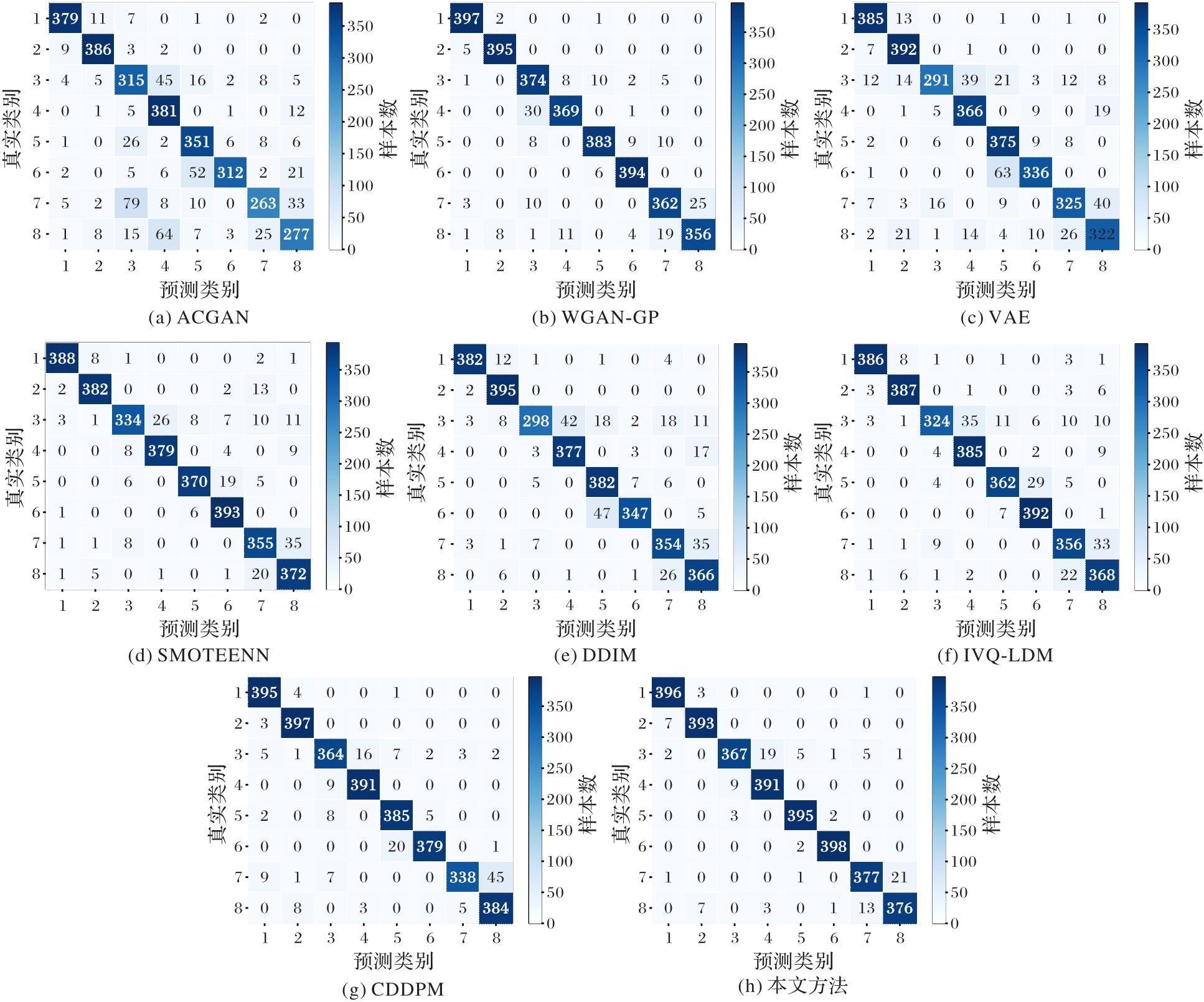
Fig. 9 Confusion matrices on JNU dataset
| 实验序号 | 灰度谱图 | 辅助分类器 | 高频引导模块 | SSIM | HF-SSIM | MMD | JSD |
|---|---|---|---|---|---|---|---|
| 1 | √ | × | × | 0.410 | 0.317 | 1.430 | 0.254 |
| 2 | √ | × | √ | ||||
| 3 | √ | √ | × | 0.429 | 0.341 | 1.253 | 0.221 |
| 4 | √ | √ | √ | 0.503 | 0.418 | 0.967 | 0.182 |
Tab. 13 Ablation experimental results of sample generation quality
| 实验序号 | 灰度谱图 | 辅助分类器 | 高频引导模块 | SSIM | HF-SSIM | MMD | JSD |
|---|---|---|---|---|---|---|---|
| 1 | √ | × | × | 0.410 | 0.317 | 1.430 | 0.254 |
| 2 | √ | × | √ | ||||
| 3 | √ | √ | × | 0.429 | 0.341 | 1.253 | 0.221 |
| 4 | √ | √ | √ | 0.503 | 0.418 | 0.967 | 0.182 |
| 实验序号 | 灰度谱图 | 辅助分类器 | 高频引导模块 | 训练时长/h | 准确率/% |
|---|---|---|---|---|---|
| 1 | × | × | × | 2.71 | 93.48 |
| 2 | × | √ | √ | 2.34 | 95.79 |
| 3 | × | √ | × | 2.30 | 93.67 |
| 4 | × | × | √ | 2.87 | 94.40 |
| 5 | √ | √ | × | 2.58 | 95.03 |
| 6 | √ | × | √ | 3.62 | |
| 7 | √ | √ | √ | 2.96 | 97.41 |
Tab. 14 Ablation experimental results on diagnostic efficacy
| 实验序号 | 灰度谱图 | 辅助分类器 | 高频引导模块 | 训练时长/h | 准确率/% |
|---|---|---|---|---|---|
| 1 | × | × | × | 2.71 | 93.48 |
| 2 | × | √ | √ | 2.34 | 95.79 |
| 3 | × | √ | × | 2.30 | 93.67 |
| 4 | × | × | √ | 2.87 | 94.40 |
| 5 | √ | √ | × | 2.58 | 95.03 |
| 6 | √ | × | √ | 3.62 | |
| 7 | √ | √ | √ | 2.96 | 97.41 |
| [1] | Ni Q, Ji J C, Halkon B, et al. Physics-Informed Residual Network (PIResNet) for rolling element bearing fault diagnostics [J]. Mechanical Systems and Signal Processing, 2023, 200: No.110544. |
| [2] | Xu Y, Li S, Yan X, et al. Multiattention-based feature aggregation convolutional networks with dual focal loss for fault diagnosis of rotating machinery under data imbalance conditions [J]. IEEE Transactions on Instrumentation and Measurement, 2024, 73: No.3506211. |
| [3] | Yang X, Ye T, Yuan X, et al. A novel data augmentation method based on denoising diffusion probabilistic model for fault diagnosis under imbalanced data [J]. IEEE Transactions on Industrial Informatics, 2024, 20(5): 7820-7831. |
| [4] | LeCun Y, Bengio Y, Hinton G. Deep learning [J]. Nature, 2015, 521(7553): 436-444. |
| [5] | Li H, Wu X, Liu T, et al. Rotating machinery fault diagnosis based on typical resonance demodulation methods: a review [J]. IEEE Sensors Journal, 2023, 23(7): 6439-6459. |
| [6] | 陈艳霞,李鑫明,王志勇,等.基于LSTM-CNN-Attention模型的电力设施非周期巡视决策方法[J].计算机应用, 2023, 43(): 291-297. |
| Chen Yanxia, Li Xinming, Wang Zhiyong, et al. Non-periodic inspection decision method of power facility based on LSTM-CNN-Attention model [J]. Journal of Computer Applications, 2023, 43(): 291-297. | |
| [7] | Gao B, Xu J, Zhang Z, et al. Marine diesel engine piston ring fault diagnosis based on LSTM and improved beluga whale optimization [J]. Alexandria Engineering Journal, 2024, 109: 213-228. |
| [8] | Wu G, Ji X, Yang G, et al. Signal-to-image: rolling bearing fault diagnosis using ResNet family deep-learning models [J]. Processes, 2023, 11(5): No.1527. |
| [9] | Zhang C, Wang F, Zhou D, et al. A CNN-based fault diagnosis method of multi-function integrated RF system using frequency domain scanning with Lasso regression [J]. Knowledge-Based Systems, 2025, 309: No.112836. |
| [10] | 王妍,王新发,王延峰,等.基于改进天鹰优化算法优化LSTM的滚动轴承故障诊断方法[J].振动与冲击, 2024, 43(23): 144-154. |
| Wang Yan, Wang Xinfa, Wang Yanfeng, et al. A rolling bearing fault diagnosis method based on improved Aquila optimization algorithm to optimize LSTM [J]. Journal of Vibration and Shock, 2024, 43(23): 144-154. | |
| [11] | Huang X, Xie T, Wu J, et al. Deep continuous convolutional networks for fault diagnosis [J]. Knowledge-Based Systems, 2024, 292: No.111623. |
| [12] | Wang Q, Sun Z, Zhu Y, et al. A fault diagnosis method based on an improved diffusion model under limited sample conditions [J]. PLoS ONE, 2024, 19(9): No.e0309714. |
| [13] | Liu H, Liu Z, Jia W, et al. A novel imbalanced data classification method based on weakly supervised learning for fault diagnosis [J]. IEEE Transactions on Industrial Informatics, 2022, 18(3): 1583-1593. |
| [14] | Zhang T, Chen J, Li F, et al. Intelligent fault diagnosis of machines with small & imbalanced data: a state-of-the-art review and possible extensions [J]. ISA Transactions, 2022, 119: 152-171. |
| [15] | Li X, Wu X, Wang T, et al. Fault diagnosis method for imbalanced data based on adaptive diffusion models and generative adversarial networks [J]. Engineering Applications of Artificial Intelligence, 2025, 147: No.110410. |
| [16] | Fu Z, Liu Z, Ping S, et al. TRA-ACGAN: a motor bearing fault diagnosis model based on an auxiliary classifier generative adversarial network and transformer network [J]. ISA Transactions, 2024, 149: 381-393. |
| [17] | 周建民,沈熙闻,刘露露.结合WGAN-GP与CNN-SVM的滚动轴承故障红外诊断[J].激光与红外, 2024, 54(3): 416-422. |
| Zhou Jianming, Shen Xiwen, Liu Lulu. Infrared diagnosis of rolling bearing faults combined with WGAN-GP and CNN-SVM [J]. Laser and Infrared, 2024, 54(3): 416-422. | |
| [18] | Wang Y, Li D, Li L, et al. A novel deep learning framework for rolling bearing fault diagnosis enhancement using VAE-augmented CNN model [J]. Heliyon, 2024, 10(15): No.e35407. |
| [19] | Li X, Xiao B, Chen X, et al. MSDF-VAE: a cloud-edge collaborative method for fault diagnosis based on transfer learning [J]. IEEE Internet of Things Journal, 2025, 12(12): 22393-22403. |
| [20] | Yan K, Su J, Huang J, et al. Chiller fault diagnosis based on VAE-enabled generative adversarial networks [J]. IEEE Transactions on Automation Science and Engineering, 2022, 19(1): 387-395. |
| [21] | Yang G, Zhong Y, Yang L, et al. Fault diagnosis of harmonic drive with imbalanced data using generative adversarial network [J]. IEEE Transactions on Instrumentation and Measurement, 2021, 70: No.3519911. |
| [22] | Ping Z, Wang D, Zhang Y, et al. Few-shot aero-engine bearing fault diagnosis with denoising diffusion based data augmentation [J]. Neurocomputing, 2025, 622: No.129327. |
| [23] | Sohl-Dickstein J, Weiss E, Maheswaranathan N, et al. Deep unsupervised learning using nonequilibrium thermodynamics [C]// ICML 2015. New York: JMLR.org, 2015: 2256-2265. |
| [24] | Mueller P N. Attention-enhanced conditional-diffusion-based data synthesis for data augmentation in machine fault diagnosis [J]. Engineering Applications of Artificial Intelligence, 2024, 131: No.107696. |
| [25] | 吴静远,舒启林,王耿,等.基于扩散模型的滚动轴承小样本故障诊断研究[J].组合机床与自动化加工技术, 2024(12): 117-122. |
| Wu Jingyuan, Shu Qilin, Wang Geng, et al. Research on small-sample fault diagnosis of rolling bearings based on diffusion model [J]. Modular Machine Tool and Automatic Manufacturing Technique, 2024(12): 117-122. | |
| [26] | Zhu J. Synthetic data generation by diffusion models [J]. National Science Review, 2024, 11(8): No.nwae276. |
| [27] | Zhao Y, Sheng T, Li D. Data augmentation fault diagnosis of rolling machinery using condition denoising diffusion probabilistic model and improved CNN [J]. IEEE Transactions on Instrumentation and Measurement, 2025, 74: No.3517712. |
| [28] | Ahsan M, Salah M M. Similarity index of the STFT-based health diagnosis of variable speed rotating machines [J]. Intelligent Systems with Applications, 2023, 20: No.200270. |
| [29] | 谢苗,孟庆爽,李博,等.融合短时傅里叶变换和卷积神经网络的托辊故障诊断方法[J].工程设计学报, 2024, 31(5): 565-574. |
| Xie Miao, Meng Qingshuang, Li Bo, et al. Idler fault diagnosis method fusing short-time Fourier transform and convolutional neural network [J]. Chinese Journal of Engineering Design, 2024, 31(5): 565-574. | |
| [30] | Huang G, Liu Z, van der Maaten L, et al. Densely connected convolutional networks [C]// CVPR 2017. Piscataway: IEEE, 2017: 2261-2269. |
| [31] | Smith W A, Randall R B. Rolling element bearing diagnostics using the Case Western Reserve University data: a benchmark study [J]. Mechanical Systems and Signal Processing, 2015, 64/65: 100-131. |
| [32] | Wang C, Huang C, Zhang L, et al. Denoising diffusion implicit model combined with TransNet for rolling bearing fault diagnosis under imbalanced data [J]. Sensors, 2024, 24(24): No.8009. |
| [33] | Zhang T, Lin J, Jiao J, et al. An interpretable latent denoising diffusion probabilistic model for fault diagnosis under limited data [J]. IEEE Transactions on Industrial Informatics, 2024, 20(8): 10354-10365. |
| [34] | Shmelkov K, Schmid C, Alahari K. How good is my GAN? [C]// ECCV 2018. Cham: Springer, 2018: 218-234. |
| [35] | Liu G, Wu L. Incremental bearing fault diagnosis method under imbalanced sample conditions [J]. Computers and Industrial Engineering, 2024, 192: No.110203. |
| [1] | Liwan YAO, Hailong LIU, Zhangfan ZENG. Frequency-domain driven and diffusion-based fusion for sonar image enhancement algorithm [J]. Journal of Computer Applications, 2026, 46(6): 1947-1955. |
| [2] | Ronghui ZHAO, Chao DENG, Zidong YU. Construction and application of knowledge graph for fault diagnosis of key components of aviation equipment [J]. Journal of Computer Applications, 2026, 46(5): 1604-1613. |
| [3] | Min CHEN, Xiaolin QIN, Shaohan LI, Hao YANG, Taohong LI. Review of deep learning applications in severe convective weather prediction [J]. Journal of Computer Applications, 2026, 46(3): 980-992. |
| [4] | Peirong SHAO, Suzhen LIN, Yanbo WANG. Human-centric detail-enhanced virtual try-on method [J]. Journal of Computer Applications, 2026, 46(3): 915-923. |
| [5] | Yan HU, Peng LI, Shuyan CHENG. Adversarial purification method based on directly guided diffusion model [J]. Journal of Computer Applications, 2026, 46(3): 821-829. |
| [6] | Yuan JIA, Deyu YUAN, Yuquan PAN, Anran WANG. Watermarking method for diffusion model output [J]. Journal of Computer Applications, 2026, 46(1): 161-168. |
| [7] | Xingjie FENG, Xingpeng BIAN, Xiaorong FENG, Xinglong WANG. Incremental missing value imputation algorithm for time series based on diffusion model [J]. Journal of Computer Applications, 2025, 45(8): 2582-2591. |
| [8] | Qiang LI, Shaoxiong BAI, Yuan XIONG, Wei YUAN. Privacy preserving localization of surveillance images based on large vision models [J]. Journal of Computer Applications, 2025, 45(3): 832-839. |
| [9] | Meng WANG, Daqian ZHANG, Bingyan ZHOU, Qianying MA, Jidong LYU. Fault diagnosis method for train control on-board interface equipment of CTCS-3 based on temporal knowledge graph completion [J]. Journal of Computer Applications, 2025, 45(2): 677-684. |
| [10] | Xinran XU, Shaobing ZHANG, Miao CHENG, Yang ZHANG, Shang ZENG. Bearings fault diagnosis method based on multi-pathed hierarchical mixture-of-experts model [J]. Journal of Computer Applications, 2025, 45(1): 59-68. |
| [11] | Jie WU, Ansi ZHANG, Maodong WU, Yizong ZHANG, Congbao WANG. Overview of research and application of knowledge graph in equipment fault diagnosis [J]. Journal of Computer Applications, 2024, 44(9): 2651-2659. |
| [12] | Chenyang LI, Long ZHANG, Qiusheng ZHENG, Shaohua QIAN. Multivariate controllable text generation based on diffusion sequences [J]. Journal of Computer Applications, 2024, 44(8): 2414-2420. |
| [13] | Jinsong XU, Ming ZHU, Zhiqiang LI, Shijie GUO. Location control method for generated objects by diffusion model with exciting and pooling attention [J]. Journal of Computer Applications, 2024, 44(4): 1093-1098. |
| [14] | Yusheng LIU, Xuezhong XIAO. High-fidelity image editing based on fine-tuning of diffusion model [J]. Journal of Computer Applications, 2024, 44(11): 3574-3580. |
| [15] | Jian ZHANG, Peiyuan CHENG, Siyu SHAO. Rotary machine fault diagnosis based on improved residual convolutional auto-encoding network and class adaptation [J]. Journal of Computer Applications, 2022, 42(8): 2440-2449. |
| Viewed | ||||||
|
Full text |
|
|||||
|
Abstract |
|
|||||
