


Journal of Computer Applications ›› 2026, Vol. 46 ›› Issue (10): 3317-3323.DOI: 10.11772/j.issn.1001-9081.2025091139
• Multimedia computing and computer simulation • Previous Articles
Jiawei JIANG, Jian GUO( ), Mingwei YUAN, Zhichun LI, Lijuan SUN
Received:2025-09-26
Revised:2025-11-21
Accepted:2025-11-24
Online:2025-12-02
Published:2026-10-10
Contact:
Jian GUO
About author:JIANG Jiawei, born in 2001, M. S. candidate. Her research interests include machine learning, gait recognition, behavior recognition.Supported by:
江嘉玮, 郭剑(), 袁铭蔚, 李智春, 孙力娟
通讯作者:
郭剑
作者简介:江嘉玮(2001—),女,江苏南通人,硕士研究生,主要研究方向:机器学习、步态识别、行为识别基金资助:CLC Number:
Jiawei JIANG, Jian GUO, Mingwei YUAN, Zhichun LI, Lijuan SUN. Gait recognition method based on multi-feature fusion using frequency-modulated continuous wave radar[J]. Journal of Computer Applications, 2026, 46(10): 3317-3323.
江嘉玮, 郭剑, 袁铭蔚, 李智春, 孙力娟. 基于多特征融合的调频连续波雷达步态识别方法[J]. 《计算机应用》唯一官方网站, 2026, 46(10): 3317-3323.
Add to citation manager EndNote|Ris|BibTeX
URL: https://www.joca.cn/EN/10.11772/j.issn.1001-9081.2025091139
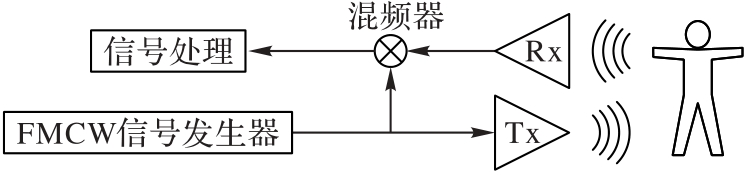
Fig. 1 Gait data acquisition using FMCW radar

Fig. 2 Flow of gait recognition method
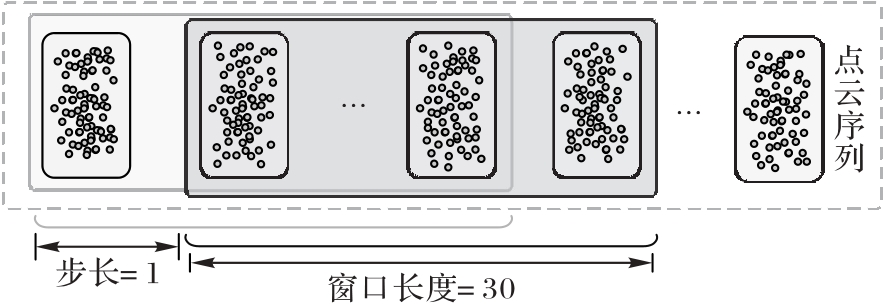
Fig. 3 Process of sliding window-based temporal subsequence generation
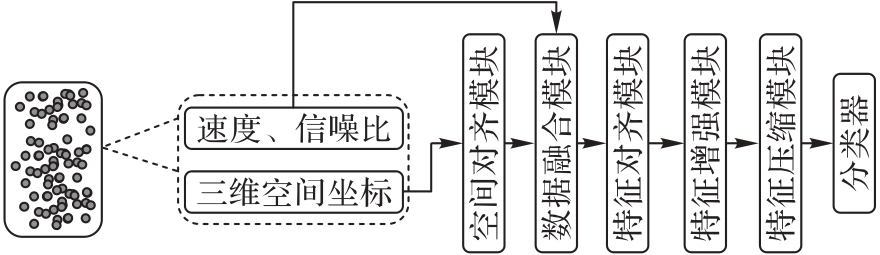
Fig. 4 Structure of gait recognition network

Fig. 5 Spatial alignment module
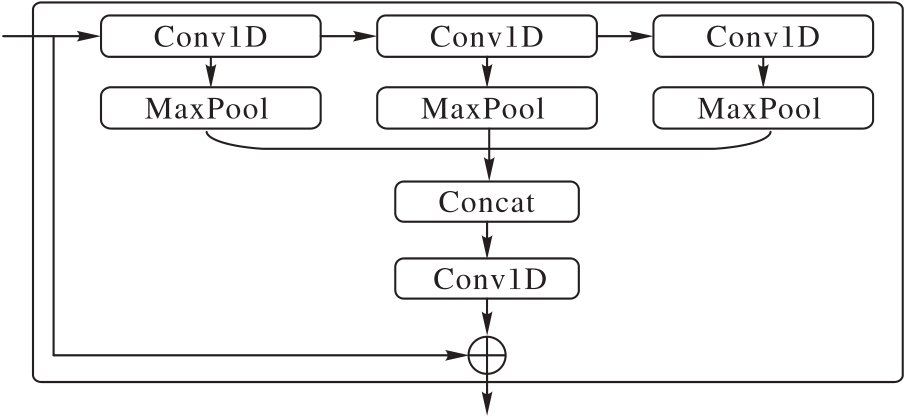
Fig. 6 Feature enhancement module

Fig. 7 Feature compression module
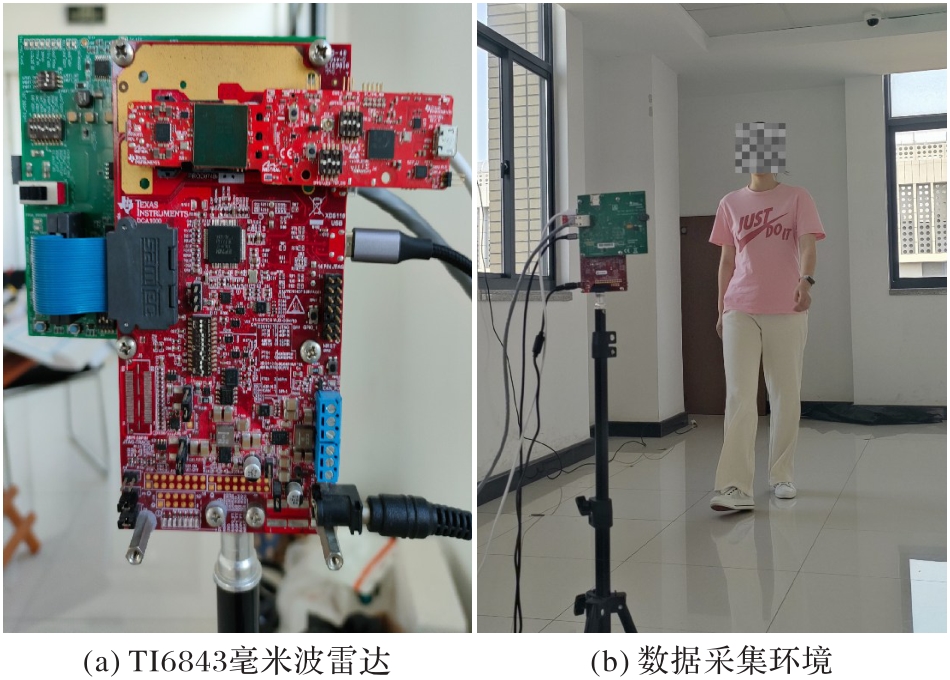
Fig. 8 TI6843 millimeter-wave radar used in experiments and data acquisition environment
| 数据集 | eps/m | 分类准确率 | |||
|---|---|---|---|---|---|
| minPts=5 | minPts=6 | minPts=7 | minPts=8 | ||
| Room1 | 0.3 | 0.881 | 0.879 | 0.859 | 0.868 |
| 0.4 | 0.899 | 0.903 | 0.863 | 0.877 | |
| 0.5 | 0.905 | 0.922 | 0.913 | 0.914 | |
| 0.6 | 0.896 | 0.850 | 0.884 | 0.847 | |
| Room2 | 0.3 | 0.726 | 0.762 | 0.770 | 0.730 |
| 0.4 | 0.736 | 0.793 | 0.758 | 0.750 | |
| 0.5 | 0.744 | 0.807 | 0.799 | 0.790 | |
| 0.6 | 0.717 | 0.775 | 0.730 | 0.799 | |
| STPointGCN | 0.3 | 0.581 | 0.703 | 0.752 | 0.603 |
| 0.4 | 0.604 | 0.737 | 0.790 | 0.631 | |
| 0.5 | 0.624 | 0.821 | 0.782 | 0.691 | |
| 0.6 | 0.576 | 0.735 | 0.640 | 0.599 | |
| Selfdata | 0.3 | 0.772 | 0.813 | 0.820 | 0.793 |
| 0.4 | 0.846 | 0.850 | 0.831 | 0.839 | |
| 0.5 | 0.868 | 0.901 | 0.869 | 0.862 | |
| 0.6 | 0.843 | 0.863 | 0.853 | 0.805 | |
Tab. 1 Impact of eps and minPts on classification accuracy
| 数据集 | eps/m | 分类准确率 | |||
|---|---|---|---|---|---|
| minPts=5 | minPts=6 | minPts=7 | minPts=8 | ||
| Room1 | 0.3 | 0.881 | 0.879 | 0.859 | 0.868 |
| 0.4 | 0.899 | 0.903 | 0.863 | 0.877 | |
| 0.5 | 0.905 | 0.922 | 0.913 | 0.914 | |
| 0.6 | 0.896 | 0.850 | 0.884 | 0.847 | |
| Room2 | 0.3 | 0.726 | 0.762 | 0.770 | 0.730 |
| 0.4 | 0.736 | 0.793 | 0.758 | 0.750 | |
| 0.5 | 0.744 | 0.807 | 0.799 | 0.790 | |
| 0.6 | 0.717 | 0.775 | 0.730 | 0.799 | |
| STPointGCN | 0.3 | 0.581 | 0.703 | 0.752 | 0.603 |
| 0.4 | 0.604 | 0.737 | 0.790 | 0.631 | |
| 0.5 | 0.624 | 0.821 | 0.782 | 0.691 | |
| 0.6 | 0.576 | 0.735 | 0.640 | 0.599 | |
| Selfdata | 0.3 | 0.772 | 0.813 | 0.820 | 0.793 |
| 0.4 | 0.846 | 0.850 | 0.831 | 0.839 | |
| 0.5 | 0.868 | 0.901 | 0.869 | 0.862 | |
| 0.6 | 0.843 | 0.863 | 0.853 | 0.805 | |
| 单帧点云中的点数 | 分类准确率 | |||
|---|---|---|---|---|
| Room1 | Room2 | STPointGCN | Selfdata | |
| 32 | 0.342 | 0.662 | 0.542 | 0.620 |
| 48 | 0.869 | 0.741 | 0.735 | 0.824 |
| 64 | 0.922 | 0.807 | 0.821 | 0.901 |
| 128 | 0.843 | 0.639 | 0.624 | 0.646 |
| 144 | 0.828 | 0.632 | 0.588 | 0.580 |
| 160 | 0.832 | 0.624 | 0.569 | 0.554 |
Tab. 2 Impact of number of points in single-frame point cloud on recognition
| 单帧点云中的点数 | 分类准确率 | |||
|---|---|---|---|---|
| Room1 | Room2 | STPointGCN | Selfdata | |
| 32 | 0.342 | 0.662 | 0.542 | 0.620 |
| 48 | 0.869 | 0.741 | 0.735 | 0.824 |
| 64 | 0.922 | 0.807 | 0.821 | 0.901 |
| 128 | 0.843 | 0.639 | 0.624 | 0.646 |
| 144 | 0.828 | 0.632 | 0.588 | 0.580 |
| 160 | 0.832 | 0.624 | 0.569 | 0.554 |
| 模型 | 模型组件 | 分类准确率 | ||||||
|---|---|---|---|---|---|---|---|---|
| 空间坐标 | 速度 | 信噪比 | 特征对齐模块 | Room1 | Room2 | STPointGCN | Selfdata | |
| Model1 | √ | 0.748 | 0.679 | 0.653 | 0.714 | |||
| Model2 | √ | √ | 0.823 | 0.735 | 0.781 | 0.893 | ||
| Model3 | √ | √ | 0.759 | 0.693 | 0.713 | 0.835 | ||
| Model4 | √ | √ | √ | 0.875 | 0.774 | 0.808 | 0.897 | |
| Model5 | √ | √ | √ | √ | 0.922 | 0.807 | 0.821 | 0.901 |
Tab. 3 Ablation study results
| 模型 | 模型组件 | 分类准确率 | ||||||
|---|---|---|---|---|---|---|---|---|
| 空间坐标 | 速度 | 信噪比 | 特征对齐模块 | Room1 | Room2 | STPointGCN | Selfdata | |
| Model1 | √ | 0.748 | 0.679 | 0.653 | 0.714 | |||
| Model2 | √ | √ | 0.823 | 0.735 | 0.781 | 0.893 | ||
| Model3 | √ | √ | 0.759 | 0.693 | 0.713 | 0.835 | ||
| Model4 | √ | √ | √ | 0.875 | 0.774 | 0.808 | 0.897 | |
| Model5 | √ | √ | √ | √ | 0.922 | 0.807 | 0.821 | 0.901 |
| 方法 | 准确率 | |||
|---|---|---|---|---|
| Room1 | Room2 | STPointGCN | Selfdata | |
| ResNet | 0.708 | 0.611 | 0.702 | 0.772 |
| DR | 0.773 | 0.680 | 0.752 | 0.791 |
| PointNet | 0.748 | 0.645 | 0.745 | 0.714 |
| MTPGait | 0.747 | 0.661 | 0.773 | 0.875 |
| mmGaitNet | 0.876 | 0.709 | 0.780 | 0.860 |
| PointMLP | 0.901 | 0.757 | 0.795 | 0.893 |
| Point-PN | 0.913 | 0.741 | 0.806 | 0.877 |
| 本文方法 | 0.922 | 0.807 | 0.821 | 0.901 |
Tab. 4 Comparison of accuracy of different methods
| 方法 | 准确率 | |||
|---|---|---|---|---|
| Room1 | Room2 | STPointGCN | Selfdata | |
| ResNet | 0.708 | 0.611 | 0.702 | 0.772 |
| DR | 0.773 | 0.680 | 0.752 | 0.791 |
| PointNet | 0.748 | 0.645 | 0.745 | 0.714 |
| MTPGait | 0.747 | 0.661 | 0.773 | 0.875 |
| mmGaitNet | 0.876 | 0.709 | 0.780 | 0.860 |
| PointMLP | 0.901 | 0.757 | 0.795 | 0.893 |
| Point-PN | 0.913 | 0.741 | 0.806 | 0.877 |
| 本文方法 | 0.922 | 0.807 | 0.821 | 0.901 |
| 方法 | F1值 | |||
|---|---|---|---|---|
| Room1 | Room2 | STPointGCN | Selfdata | |
| ResNet | 0.682 | 0.576 | 0.675 | 0.741 |
| DR | 0.751 | 0.650 | 0.732 | 0.772 |
| PointNet | 0.724 | 0.617 | 0.721 | 0.692 |
| MTPGait | 0.725 | 0.632 | 0.752 | 0.837 |
| mmGaitNet | 0.843 | 0.687 | 0.763 | 0.844 |
| PointMLP | 0.881 | 0.734 | 0.775 | 0.876 |
| Point-PN | 0.893 | 0.719 | 0.786 | 0.865 |
| 本文方法 | 0.903 | 0.778 | 0.799 | 0.883 |
Tab. 5 Comparison of F1 value of different methods
| 方法 | F1值 | |||
|---|---|---|---|---|
| Room1 | Room2 | STPointGCN | Selfdata | |
| ResNet | 0.682 | 0.576 | 0.675 | 0.741 |
| DR | 0.751 | 0.650 | 0.732 | 0.772 |
| PointNet | 0.724 | 0.617 | 0.721 | 0.692 |
| MTPGait | 0.725 | 0.632 | 0.752 | 0.837 |
| mmGaitNet | 0.843 | 0.687 | 0.763 | 0.844 |
| PointMLP | 0.881 | 0.734 | 0.775 | 0.876 |
| Point-PN | 0.893 | 0.719 | 0.786 | 0.865 |
| 本文方法 | 0.903 | 0.778 | 0.799 | 0.883 |
| 模型 | 参数量/106 | 推理时间/ms |
|---|---|---|
| DR | 0.690 | 13.72 |
| ResNet | 21.010 | 29.06 |
| PointNet | 1.600 | 94.51 |
| MTPGait | 5.370 | 22.81 |
| mmGaitNet | 1.330 | 31.03 |
| PointMLP | 13.230 | 1 546.67 |
| Point-PN | 0.906 | 1 703.26 |
| 本文方法 | 1.610 | 218.79 |
Tab. 6 Comparison of model parameter numbers and inference time
| 模型 | 参数量/106 | 推理时间/ms |
|---|---|---|
| DR | 0.690 | 13.72 |
| ResNet | 21.010 | 29.06 |
| PointNet | 1.600 | 94.51 |
| MTPGait | 5.370 | 22.81 |
| mmGaitNet | 1.330 | 31.03 |
| PointMLP | 13.230 | 1 546.67 |
| Point-PN | 0.906 | 1 703.26 |
| 本文方法 | 1.610 | 218.79 |
| 数据集 | Acc-Mean | Acc-Std | F1-Mean | F1-Std |
|---|---|---|---|---|
| Room1 | 0.917 | 0.003 | 0.899 | 0.002 |
| Room2 | 0.791 | 0.007 | 0.769 | 0.006 |
| STPointGCN | 0.813 | 0.006 | 0.792 | 0.004 |
| Selfdata | 0.895 | 0.004 | 0.879 | 0.003 |
Tab. 7 Repeated experimental results of proposed method on various datasets
| 数据集 | Acc-Mean | Acc-Std | F1-Mean | F1-Std |
|---|---|---|---|---|
| Room1 | 0.917 | 0.003 | 0.899 | 0.002 |
| Room2 | 0.791 | 0.007 | 0.769 | 0.006 |
| STPointGCN | 0.813 | 0.006 | 0.792 | 0.004 |
| Selfdata | 0.895 | 0.004 | 0.879 | 0.003 |
| [1] | Rani V, Kumar M. Human gait recognition: a systematic review[J]. Multimedia Tools and Applications, 2023, 82(24): 37003-37037. |
| [2] | 陈福仕,沈尧,周池春,等. 无监督学习步态识别综述[J]. 计算机科学与探索, 2024, 18(8): 2014-2033. |
| Chen Fushi, Shen Yao, Zhou Chichun, et al. Review of unsupervised learning gait recognition[J]. Journal of Frontiers of Computer Science and Technology, 2024, 18(8): 2014-2033. | |
| [3] | Chang Y, Wang L, Lin L, et al. Gait recognition of ME-SVM based on single accelerometer[J]. Journal of Mechanics in Medicine and Biology, 2023, 23(2): No.2350029. |
| [4] | Kim M J, Han J H, Shin W C, et al. Gait pattern identification using gait features[J]. Electronics, 2024, 13(10): No.1956. |
| [5] | Niculae A, Catruna A, Cosma A, et al. Gait recognition from highly compressed videos[C]// FG 2024. Piscataway: IEEE, 2024: 1-7. |
| [6] | Dang X, Tang Y, Hao Z, et al. PGGait: gait recognition based on millimeter-wave radar spatio-temporal sensing of multidimensional point clouds[J]. Sensors, 2024, 24(1): No.142. |
| [7] | Li J, Li B, Wang L, et al. Passive multiuser gait identification through micro-Doppler calibration using mmWave radar[J]. IEEE Internet of Things Journal, 2024, 11(4): 6868-6877. |
| [8] | Xue S, Du L, Shi Y, et al. Fine-grained spatial-temporal gait recognition network based on millimeter-wave radar point cloud[J]. IEEE Transactions on Geoscience and Remote Sensing, 2024, 62: No.5101316. |
| [9] | Huang Y, Wang Y, Shi K, et al. HDNet: hierarchical dynamic network for gait recognition using millimeter-wave radar[C]// ICASSP 2023. Piscataway: IEEE, 2023: 1-5. |
| [10] | 魏永超,谢卫鑫,张娅岚,等. 基于多尺度特征融合的跨视角点云步态识别[J]. 电子测量技术, 2025, 48(10): 109-116. |
| Wei Yongchao, Xie Weixin, Zhang Yalan, et al. Cross-view point cloud gait recognition based on multi-scale feature fusion[J]. Electronic Measurement Technology, 2025, 48(10): 109-116. | |
| [11] | Wu J, Wang J. PCA-based SVM for automatic recognition of gait patterns[J]. Journal of Applied Biomechanics, 2008, 24(1): 83-87. |
| [12] | Lu J, Zhang E. Gait recognition for human identification based on ICA and fuzzy SVM through multiple views fusion[J]. Pattern Recognition Letters, 2007, 28(16): 2401-2411. |
| [13] | Ni Z, Huang B. Open-set human identification based on gait radar micro-Doppler signatures[J]. IEEE Sensors Journal, 2021, 21(6): 8226-8233. |
| [14] | Ozturk M Z, Wu C, Wang B, et al. GaitCube: deep data cube learning for human recognition with millimeter-wave radio[J]. IEEE Internet of Things Journal, 2022, 9(1): 546-557. |
| [15] | Janakaraj P, Jakkala K, Bhuyan A, et al. STAR: simultaneous tracking and recognition through millimeter waves and deep learning[C]// WMNC 2019. Piscataway: IEEE, 2019: 211-218. |
| [16] | Li T, Cao X, Liu H, et al. MTPGait: multi-person gait recognition with spatio-temporal information via millimeter wave radar[C]// ICPADS 2021. Piscataway: IEEE, 2021: 660-666. |
| [17] | Zhao P, Lu C X, Wang J, et al. mID: tracking and identifying people with millimeter wave radar[C]// DCOSS 2019. Piscataway: IEEE, 2019: 33-40. |
| [18] | Meng Z, Fu S, Yan J, et al. Gait recognition for co-existing multiple people using millimeter wave sensing[J]. Proceedings of the AAAI Conference on Artificial Intelligence, 2020, 34(1): 849-856. |
| [19] | Wang C, Gong P, Zhang L. STPointGCN: spatial temporal graph convolutional network for multiple people recognition using millimeter-wave radar[C]// ICASSP 2022. Piscataway: IEEE, 2022: 3433-3437. |
| [20] | Piotrowsky L, Jaeschke T, Kueppers S, et al. Enabling high accuracy distance measurements with FMCW radar sensors[J]. IEEE Transactions on Microwave Theory and Techniques, 2019, 67(12): 5360-5371. |
| [21] | Ester M, Kriegel H P, Sander J, et al. A density-based algorithm for discovering clusters in large spatial databases with noise[C]// KDD 1996. Menlo Park, CA: AAAI Press, 1996: 226-231. |
| [22] | Qi C R, Su H, Mo K, et al. PointNet: deep learning on point sets for 3D classification and segmentation[C]// CVPR 2017. Piscataway: IEEE, 2017: 77-85. |
| [23] | He K, Zhang X, Ren S, et al. Deep residual learning for image recognition[C]// CVPR 2016. Piscataway: IEEE, 2016: 770-778. |
| [24] | Ma X, Qin C, You H, et al. Rethinking network design and local geometry in point cloud: a simple residual MLP framework[PP/OL]. V2. arXiv (2022-11-29) [2025-08-17].. |
| [25] | Zhang R, Wang L, Wang Y, et al. Starting from non-parametric networks for 3D point cloud analysis[C]// CVPR 2023. Piscataway: IEEE, 2023: 5344-5353. |
| [1] | Shang LIU, Zhaosen TANG, Hongyue LIU, Linfang DONG, Jin ZHOU. Multimodal sentiment analysis model for missing modalities under shared semantic conditions [J]. Journal of Computer Applications, 2026, 46(9): 2761-2768. |
| [2] | Yimin ZHOU, Wenhui FU, Jie LUO, Juan WANG. End‑to‑end robust video watermarking against screen‑recapturing attacks based on spatio-temporal feature enhancement network [J]. Journal of Computer Applications, 2026, 46(9): 2889-2897. |
| [3] | Wei CUI, Ping ZHANG, Zhuoling XIAO, Zhuohang CHEN. Incremental semantic mapping system based on visual SLAM [J]. Journal of Computer Applications, 2026, 46(9): 2800-2808. |
| [4] | Xinliang LIU, Yushi XU, Dubai LI, Yanzhao REN. Survey of knowledge graph-based question answering methods [J]. Journal of Computer Applications, 2026, 46(8): 2394-2410. |
| [5] | Ming LIU, Dongqi SHEN, Ziyang MENG. Point cloud registration network with dual-branch multi-level feature fusion [J]. Journal of Computer Applications, 2026, 46(8): 2584-2593. |
| [6] | Fengchun LIU, Xinying SHAO, Chunying ZHANG, Liya WANG, Jing REN. FCMdepth: monocular depth estimation framework with multi-scale feature optimization [J]. Journal of Computer Applications, 2026, 46(8): 2603-2611. |
| [7] | Wei LIU, Weigang LI, Zhiqiang TIAN. Representation learning method of hierarchical rotation-invariant geometric structure for point cloud classification and segmentation [J]. Journal of Computer Applications, 2026, 46(8): 2594-2602. |
| [8] | Xiaojin GUO, Xuyang SUI, Kenan ZHOU. Channel estimation of STAR-RIS-assisted hybrid-field communication system based on deep learning [J]. Journal of Computer Applications, 2026, 46(8): 2548-2554. |
| [9] | Jing LIU, Shaoze ZHAO, Xingang LIU, Haozhe NIU, Haipeng JI. Cross-condition microstructure data generation method for titanium alloys based on improved CGAN [J]. Journal of Computer Applications, 2026, 46(7): 2373-2382. |
| [10] | Miaogen LING, Rui JING, Wei FANG. Survey of research on applications of explainable deep learning in tropical cyclone forecasting [J]. Journal of Computer Applications, 2026, 46(7): 2318-2326. |
| [11] | Xiangyi WU, Hailiang YE, Feilong CAO. Point cloud completion method based on smooth-sharpen graph convolution [J]. Journal of Computer Applications, 2026, 46(7): 2267-2276. |
| [12] | Xiuli DU, Xing GAO, Xiaoyu ZHANG, Chengsheng PAN, Qijie ZOU. Video snapshot compressive imaging reconstruction method based on dense spatio-temporal deformable attention [J]. Journal of Computer Applications, 2026, 46(7): 2288-2296. |
| [13] | Guoyou ZHANG, Hongyu NIE, Lihu PAN, Rundong LEI. Point-MLPBLS: point cloud semantic segmentation network based on MLP cascaded broad learning system [J]. Journal of Computer Applications, 2026, 46(7): 2259-2266. |
| [14] | Zhenkai XIONG, Mengjun XU, Yinyin SUN, Xin WANG. Maritime ship detection algorithm under complex weather environments based on enhanced YOLOv8 [J]. Journal of Computer Applications, 2026, 46(6): 1998-2006. |
| [15] | Yi DU, Mingjin XU, Jiayi KONG, Liyao WANG, Chen ZHAO. Low-rank adaptive parameter-efficient fine-tuning algorithm based on YOLOv11 [J]. Journal of Computer Applications, 2026, 46(6): 1738-1745. |
| Viewed | ||||||
|
Full text |
|
|||||
|
Abstract |
|
|||||
