


《计算机应用》唯一官方网站 ›› 2026, Vol. 46 ›› Issue (10): 3093-3100.DOI: 10.11772/j.issn.1001-9081.2025091087
• 人工智能 • 上一篇
吴雨臻, 潘晨( ), 栗倩楠
收稿日期:2025-09-19
修回日期:2025-11-10
接受日期:2025-11-12
发布日期:2025-11-19
出版日期:2026-10-10
通讯作者:
潘晨
作者简介:吴雨臻(2001—),女,浙江温州人,硕士研究生,主要研究方向:机器视觉、人工智能、模式识别基金资助:
Yuzhen WU, Chen PAN(), Qiannan LI
Received:2025-09-19
Revised:2025-11-10
Accepted:2025-11-12
Online:2025-11-19
Published:2026-10-10
Contact:
Chen PAN
About author:WU Yuzhen, born in 2001, M. S. candidate. Her research interests include machine vision, artificial intelligence, pattern recognition.Supported by:摘要:
针对现有的持续学习方法在稳定性与可塑性之间通常难以兼顾的问题,提出一种基于筛选机制的多模型协同持续学习框架。该框架由主模型、辅助模型与学生模型组成:主模型着眼于预测输出高可信度结果,辅助模型记忆主模型难以学习的困难样本,学生模型则继承与整合主模型和辅助模型级联构成的教师模型的识别能力,三者在每一轮任务过程中协同优化。实验结果表明,在任务增量场景下,该框架在Fashion-MNIST和CIFAR-10数据集上的平均准确率(AAC)、BWT(BackWard Transfer)、FWT(ForWard Transfer)等指标均优于EWC(Elastic Weight Consolidation)、GEM(Gradient Episodic Memory)、iCaRL(incremental Classifier and Representation Learning)等典型方法,体现出更强的稳定记忆与灵活适应能力;在类增量场景下,无论是只有10类的Fashion-MNIST还是100类的CIFAR-100数据集,该框架均有良好的适用性,它的AAC亦显著高于对比方法。
中图分类号:
吴雨臻, 潘晨, 栗倩楠. 基于筛选机制的多模型协同持续学习框架[J]. 计算机应用, 2026, 46(10): 3093-3100.
Yuzhen WU, Chen PAN, Qiannan LI. Multi-model collaborative continual learning framework based on filtering mechanism[J]. Journal of Computer Applications, 2026, 46(10): 3093-3100.
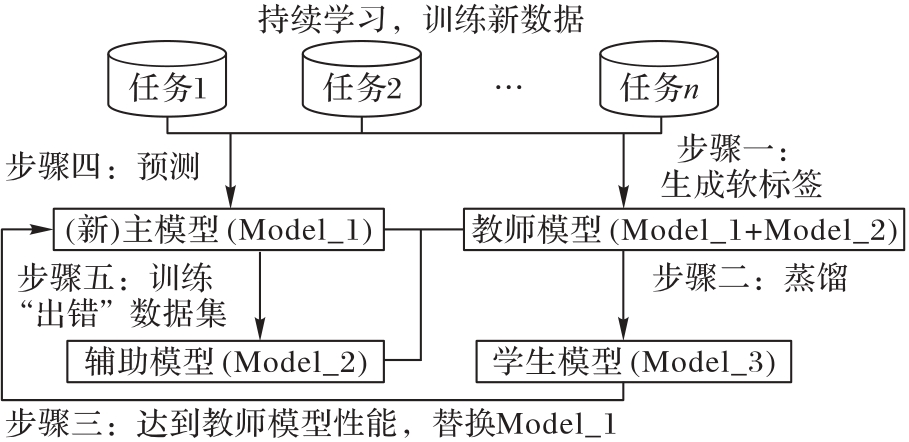
图1 三模型框架的持续学习流程
Fig. 1 Continuous learning flow of three-model framework
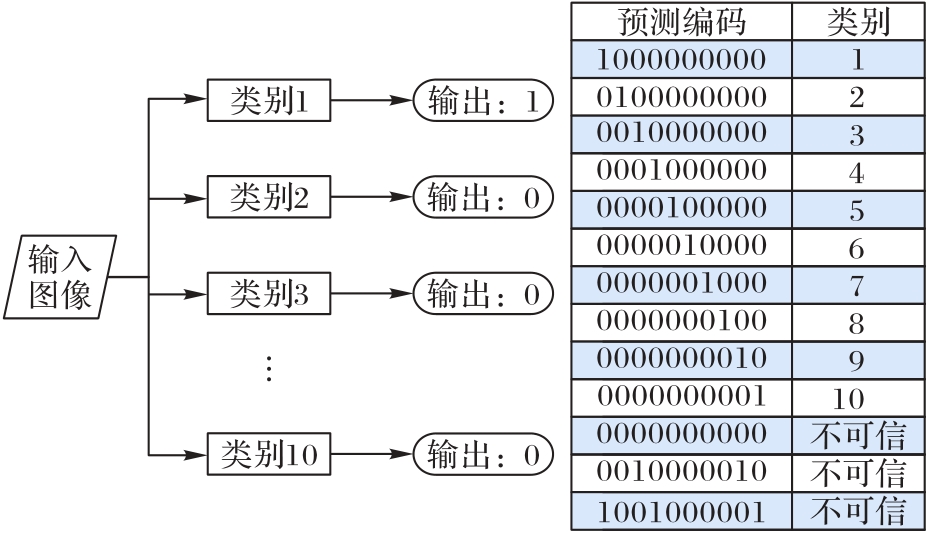
图2 辅助模型的输出编码及判别规则
Fig. 2 Output encoding and discriminative rules of auxiliary model
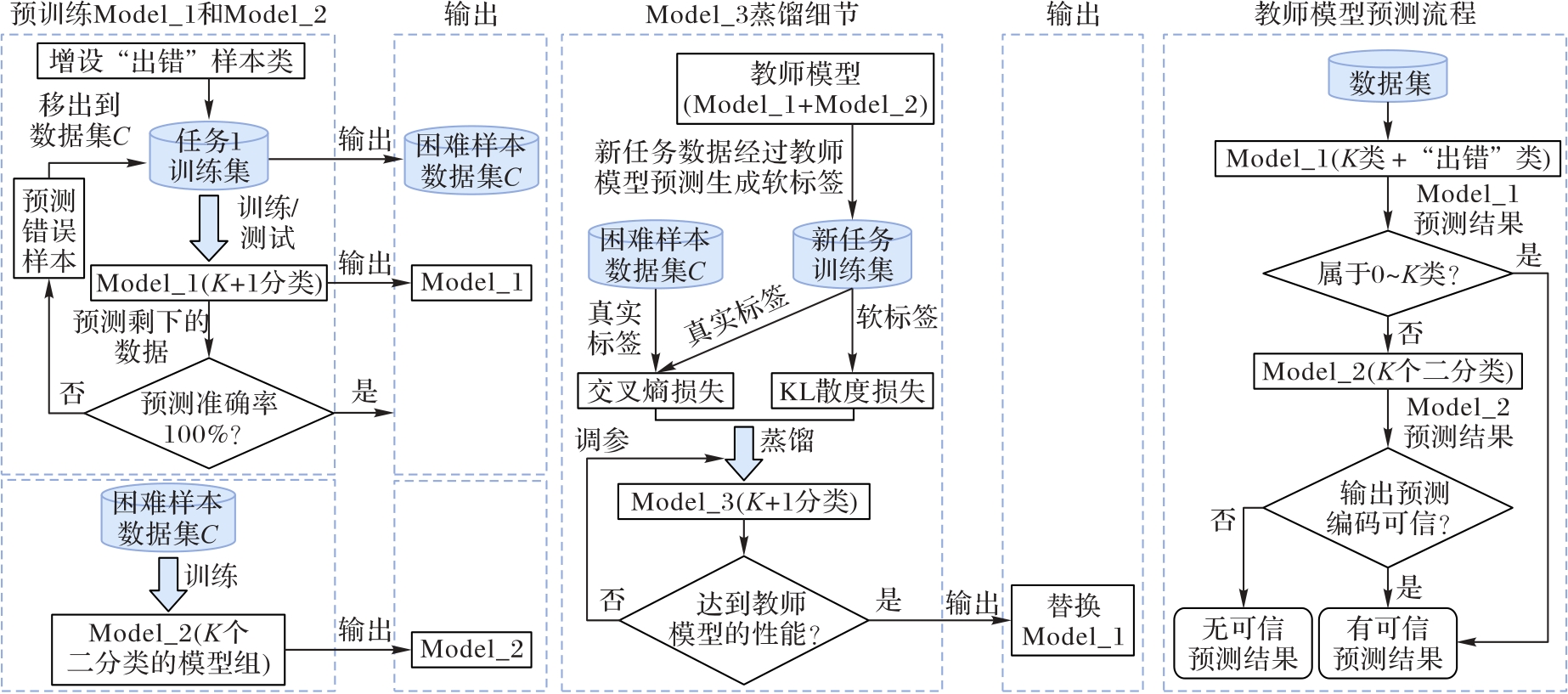
图3 3个模型的具体训练与预测流程
Fig. 3 Detailed training and predicting flows of three models
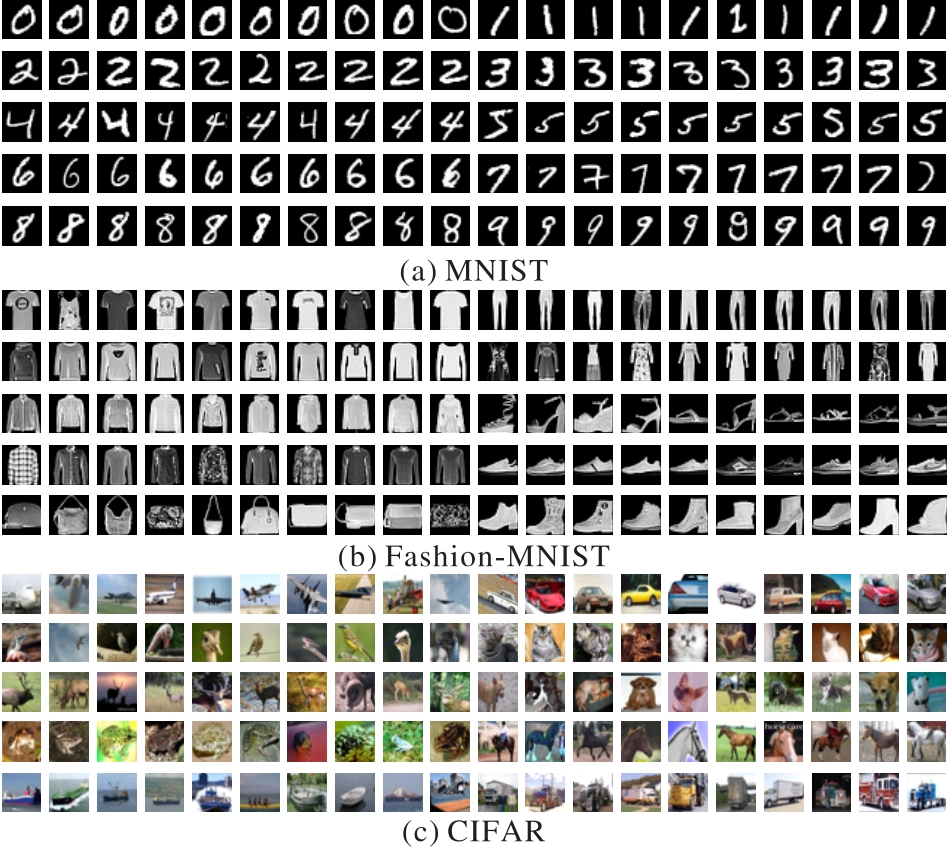
图4 数据集图像示例
Fig. 4 Dataset image examples
| 模型 | 10 000张测试样本上的准确率 | ||
|---|---|---|---|
| AlexNet | ResNet-18 | ResNet-50 | |
| Model_1 | 99.34 | 99.38 | 99.22 |
| Model_1+Model_2 | 99.49 | 99.55 | 99.39 |
| Model_3 | 99.55 | 99.53 | 99.50 |
| 新Model_1+新Model_2 | 99.67 | 99.56 | 99.58 |
表1 有效性实验结果比较 (%)
Tab. 1 Comparison of validity experimental results
| 模型 | 10 000张测试样本上的准确率 | ||
|---|---|---|---|
| AlexNet | ResNet-18 | ResNet-50 | |
| Model_1 | 99.34 | 99.38 | 99.22 |
| Model_1+Model_2 | 99.49 | 99.55 | 99.39 |
| Model_3 | 99.55 | 99.53 | 99.50 |
| 新Model_1+新Model_2 | 99.67 | 99.56 | 99.58 |
| 迭代轮数 | 训练数据规模/103 | 困难样本数据规模 | ||
|---|---|---|---|---|
| AlexNet | ResNet-18 | ResNet-50 | ||
| 第一轮 | 20 | 243 | 152 | 168 |
| 第二轮 | 30 | 62 | 8 | 48 |
表2 训练集规模和困难样本规模比较
Tab. 2 Comparison of training set sizes and hard sample sizes
| 迭代轮数 | 训练数据规模/103 | 困难样本数据规模 | ||
|---|---|---|---|---|
| AlexNet | ResNet-18 | ResNet-50 | ||
| 第一轮 | 20 | 243 | 152 | 168 |
| 第二轮 | 30 | 62 | 8 | 48 |
| 方法 | Fashion-MNIST | CIFAR-10 | ||||
|---|---|---|---|---|---|---|
| AAC | BWT | FWT | AAC | BWT | FWT | |
| EWC[ | 0.937 5 | -0.063 7 | 0.798 7 | 0.903 5 | -0.075 5 | 0.717 9 |
| GEM[ | -0.051 4 | 0.794 8 | 0.919 6 | 0.729 6 | ||
| iCaRL[ | 0.912 3 | -0.033 5 | 0.768 1 | 0.879 0 | -0.070 2 | 0.694 5 |
| DER[ | 0.950 9 | -0.054 1 | -0.070 5 | 0.749 8 | ||
| CBP[ | 0.942 4 | -0.064 0 | 0.794 7 | 0.909 6 | -0.071 6 | 0.720 5 |
| 本文框架 | 0.955 0 | 0.834 4 | 0.927 6 | -0.064 5 | ||
表3 不同方法在任务增量实验中的性能比较
Tab. 3 Performance comparison of different methods in task-increment experiments
| 方法 | Fashion-MNIST | CIFAR-10 | ||||
|---|---|---|---|---|---|---|
| AAC | BWT | FWT | AAC | BWT | FWT | |
| EWC[ | 0.937 5 | -0.063 7 | 0.798 7 | 0.903 5 | -0.075 5 | 0.717 9 |
| GEM[ | -0.051 4 | 0.794 8 | 0.919 6 | 0.729 6 | ||
| iCaRL[ | 0.912 3 | -0.033 5 | 0.768 1 | 0.879 0 | -0.070 2 | 0.694 5 |
| DER[ | 0.950 9 | -0.054 1 | -0.070 5 | 0.749 8 | ||
| CBP[ | 0.942 4 | -0.064 0 | 0.794 7 | 0.909 6 | -0.071 6 | 0.720 5 |
| 本文框架 | 0.955 0 | 0.834 4 | 0.927 6 | -0.064 5 | ||
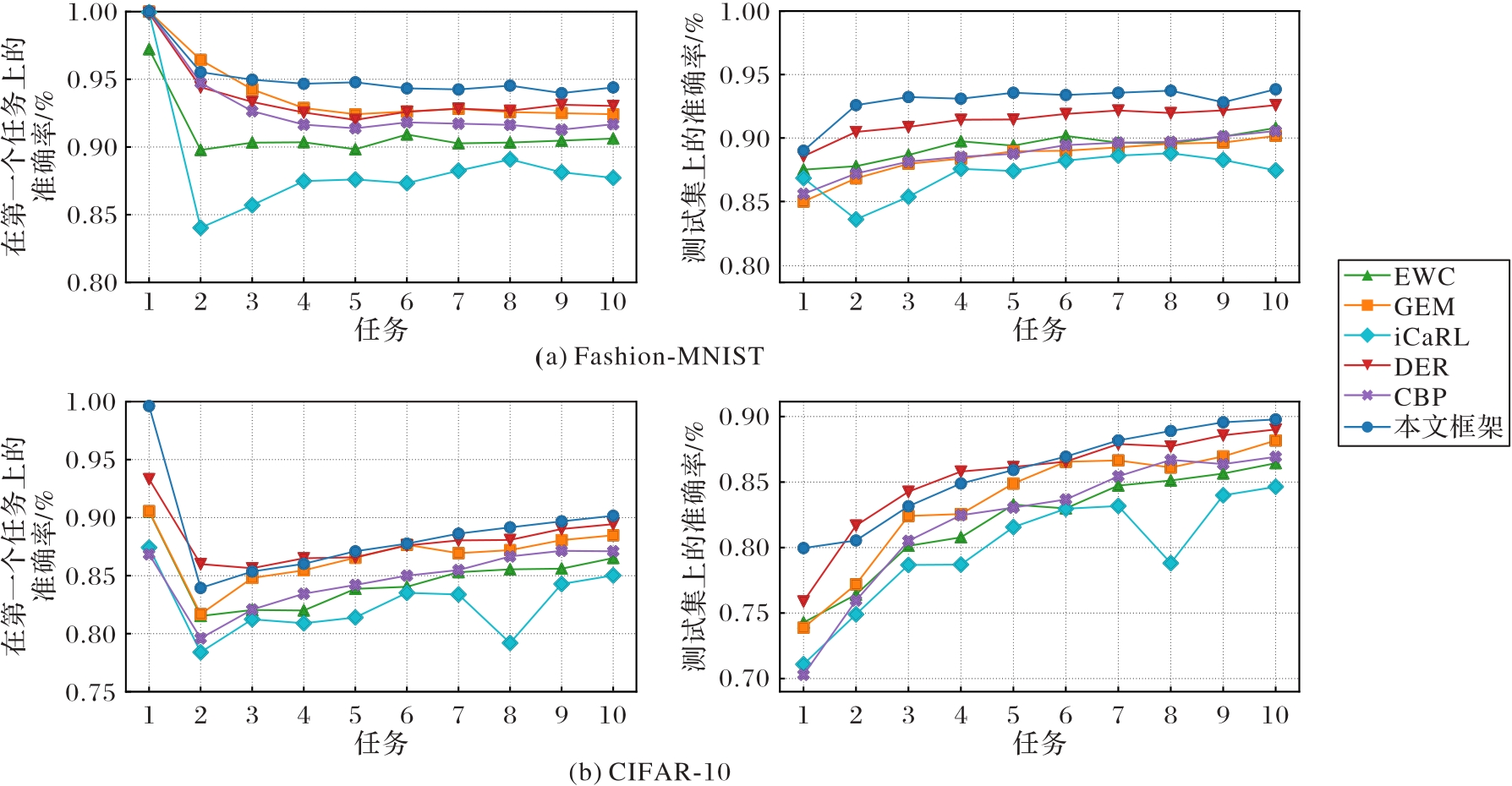
图5 不同方法在Fashion-MNIST和CIFAR-10数据集上的实验结果对比
Fig. 5 Comparison of experimental results of different methods on Fashion-MNIST and CIFAR-10 datasets
| 方法 | 参数量/104 | 训练时间/s | 所占内存/MB |
|---|---|---|---|
| EWC | 1 117 | 297.22 | 865.99 |
| GEM | 1 117 | 8 133.75 | 1 590.49 |
| iCaRL | 1 117 | 100.52 | 690.20 |
| DER | 1 117 | 317.52 | 690.26 |
| CBP | 1 117 | 257.10 | 690.73 |
| 本文框架 | 13 394 | 881.27 | 974.90 |
表4 不同方法的模型复杂度与资源开销统计
Tab. 4 Statistics of model complexity and resource overhead for different methods
| 方法 | 参数量/104 | 训练时间/s | 所占内存/MB |
|---|---|---|---|
| EWC | 1 117 | 297.22 | 865.99 |
| GEM | 1 117 | 8 133.75 | 1 590.49 |
| iCaRL | 1 117 | 100.52 | 690.20 |
| DER | 1 117 | 317.52 | 690.26 |
| CBP | 1 117 | 257.10 | 690.73 |
| 本文框架 | 13 394 | 881.27 | 974.90 |
| 方法 | AAC | 方法 | AAC |
|---|---|---|---|
| 基线方法 | 39.9 | DFCIL[ | |
| EWC[ | 39.9 | DFGR[ | 46.6 |
| LWF[ | 41.4 | 本文框架 | 70.1 |
| MFGR[ | 42.3 |
表5 Fashion-MNIST类增量实验中的方法性能比较 (%)
Tab. 5 Performance comparison of different methods in Fashion-MNIST class-incremental experiments
| 方法 | AAC | 方法 | AAC |
|---|---|---|---|
| 基线方法 | 39.9 | DFCIL[ | |
| EWC[ | 39.9 | DFGR[ | 46.6 |
| LWF[ | 41.4 | 本文框架 | 70.1 |
| MFGR[ | 42.3 |
| 方法 | 平均准确率 | 最终准确率 |
|---|---|---|
| DFCIL[ | 43.32 | 21.18 |
| PASS[ | 41.84 | 27.45 |
| IL2A[ | 40.54 | 21.15 |
| R-DFCIL[ | 49.74 | 31.46 |
| SSRE[ | 31.07 | 16.99 |
| FeTriL[ | 37.25 | 20.62 |
| SEED[ | 57.42 | 42.87 |
| DiffClass[ | 67.10 | |
| 本文框架 | 63.30 |
表6 CIFAR-100类增量实验中的方法性能比较 (%)
Tab. 6 Performance comparison of different methods in CIFAR-100 class-incremental experiments
| 方法 | 平均准确率 | 最终准确率 |
|---|---|---|
| DFCIL[ | 43.32 | 21.18 |
| PASS[ | 41.84 | 27.45 |
| IL2A[ | 40.54 | 21.15 |
| R-DFCIL[ | 49.74 | 31.46 |
| SSRE[ | 31.07 | 16.99 |
| FeTriL[ | 37.25 | 20.62 |
| SEED[ | 57.42 | 42.87 |
| DiffClass[ | 67.10 | |
| 本文框架 | 63.30 |
| ResNet-18 | 困难样本 筛选 | 辅助 模型 | 最后一个任务完成后的准确率 | |||
|---|---|---|---|---|---|---|
| Fashion-MNIST | CIFAR-10 | |||||
| 训练集 | 测试集 | 训练集 | 测试集 | |||
| √ | 93.98 | 91.83 | 90.04 | 87.34 | ||
| √ | √ | 93.92 | 91.65 | 90.05 | 86.88 | |
| √ | √ | 95.16 | 93.22 | 91.23 | 88.17 | |
| √ | √ | √ | 95.50 | 93.84 | 92.76 | 89.78 |
表7 消融实验结果 (%)
Tab. 7 Results of ablation experiments
| ResNet-18 | 困难样本 筛选 | 辅助 模型 | 最后一个任务完成后的准确率 | |||
|---|---|---|---|---|---|---|
| Fashion-MNIST | CIFAR-10 | |||||
| 训练集 | 测试集 | 训练集 | 测试集 | |||
| √ | 93.98 | 91.83 | 90.04 | 87.34 | ||
| √ | √ | 93.92 | 91.65 | 90.05 | 86.88 | |
| √ | √ | 95.16 | 93.22 | 91.23 | 88.17 | |
| √ | √ | √ | 95.50 | 93.84 | 92.76 | 89.78 |
| [1] | Wang L, Zhang X, Su H, et al. A comprehensive survey of continual learning: theory, method and application[J]. IEEE Transactions on Pattern Analysis and Machine Intelligence, 2024, 46(8): 5362-5383. |
| [2] | McCloskey M, Cohen N J. Catastrophic interference in connectionist networks: the sequential learning problem[J]. Psychology of Learning and Motivation, 1989, 24: 109-165. |
| [3] | Ganaie M A, Hu M, Malik A K, et al. Ensemble deep learning: a review[J]. Engineering Applications of Artificial Intelligence, 2022, 115: No.105151. |
| [4] | Parisi G I, Kemker R, Part J L, et al. Continual lifelong learning with neural networks: a review[J]. Neural Networks, 2019, 113: 54-71. |
| [5] | de Lange M, Aljundi R, Masana M, et al. A continual learning survey: defying forgetting in classification tasks[J]. IEEE Transactions on Pattern Analysis and Machine Intelligence, 2022, 44(7): 3366-3385. |
| [6] | Kirkpatrick J, Pascanu R, Rabinowitz N, et al. Overcoming catastrophic forgetting in neural networks[J]. Proceedings of the National Academy of Sciences of the United States of America, 2017, 114(13): 3521-3526. |
| [7] | Zenke F, Poole B, Ganguli S. Continual learning through synaptic intelligence[J]. Proceedings of Machine Learning Research, 2017, 70: 3987-3995. |
| [8] | Aljundi R, Babiloni F, Elhoseiny M, et al. Memory aware synapses: learning what (not) to forget[C]// ECCV 2018, LNCS 11207. Cham: Springer, 2018: 144-161. |
| [9] | Kumar S, Marklund H, van Roy B. Maintaining plasticity in continual learning via regenerative regularization[PP/OL]. V3. arXiv (2024-10-03) [2025-09-16].. |
| [10] | Rebuffi S A, Kolesnikov A, Sperl G, et al. iCaRL: Incremental classifier and representation learning[C]// CVPR 2017. Piscataway: IEEE, 2017: 5533-5542. |
| [11] | Lopez-Paz D, Ranzato M. Gradient episodic memory for continual learning[C]// NeurIPS 2017. Red Hook: Curran Associates Inc., 2017: 6470-6479. |
| [12] | Bellitto G, Salanitri F P, Pennisi M, et al. Saliency-driven experience replay for continual learning[C]// NeurIPS 2024. Red Hook: Curran Associates Inc., 2024: 103356-103383. |
| [13] | Smith J S, Valkov L, Halbe S, et al. Adaptive memory replay for continual learning[C]// CVPRW 2024. Piscataway: IEEE, 2024: 3605-3615. |
| [14] | Gou J, Yu B, Maybank S J, et al. Knowledge distillation: a survey[J]. International Journal of Computer Vision, 2021, 129(6): 1789-1819. |
| [15] | Li Z, Hoiem D. Learning without forgetting[J]. IEEE Transactions on Pattern Analysis and Machine Intelligence, 2018, 40(12): 2935-2947. |
| [16] | Heo B, Kim J, Yun S, et al. A comprehensive overhaul of feature distillation[C]// ICCV 2019. Piscataway: IEEE, 2019: 1921-1930. |
| [17] | Guo Z, Yan H, Li H, et al. Class attention transfer based knowledge distillation[C]// CVPR 2023. Piscataway: IEEE, 2023: 11868-11877. |
| [18] | Huang G. Dynamic neural networks: advantages and challenges[J]. National Science Review, 2024, 11(8): No.nwae088. |
| [19] | Mu S, Lin S. A comprehensive survey of mixture-of-experts: algorithms, theory, and applications[PP/OL]. V3. arXiv (2025-04-18) [2025-09-28].. |
| [20] | Hinton G, Vinyals O, Dean J. Distilling the knowledge in a neural network[PP/OL]. arXiv (2015-03-09) [2025-09-16].. |
| [21] | LeCun Y, Bottou L, Bengio Y, et al. Gradient-based learning applied to document recognition[J]. Proceedings of the IEEE, 1998, 86(11): 2278-2324. |
| [22] | Xiao H, Rasul K, Vollgraf R. Fashion-MNIST: a novel image dataset for benchmarking machine learning algorithms[PP/OL]. V2. arXiv (2017-09-15) [2025-09-16].. |
| [23] | Krizhevsky A. Learning multiple layers of features from tiny images[R/OL]. (2009-04-08) [2025-09-16].. |
| [24] | Krizhevsky A, Sutskever I, Hinton G E. ImageNet classification with deep convolutional neural networks[C]// NeurIPS 2012 — Volume 1. Red Hook: Curran Associates Inc., 2012: 1097-1105. |
| [25] | He K, Zhang X, Ren S, et al. Deep residual learning for image recognition[C]// CVPR 2016. Piscataway: IEEE, 2016: 770-778. |
| [26] | Buzzega P, Boschini M, Porrello A, et al. Dark experience for general continual learning: a strong, simple baseline[C]// NeurIPS 2020. Red Hook: Curran Associates Inc., 2020: 15920-15930. |
| [27] | Dohare S, Hernandez-Garcia J F, Lan Q, et al. Loss of plasticity in deep continual learning[J]. Nature, 2024, 632(8026): 768-774. |
| [28] | Younis S, Seeger B. Data-free generative replay for class-incremental learning on imbalanced data[PP/OL]. arXiv (2024-06-07) [2025-10-05].. |
| [29] | Xin X, Zhong Y, Hou Y, et al. Memory-free generative replay for class-incremental learning[PP/OL]. arXiv (2021-09-01) [2025-10-05].. |
| [30] | Smith J, Hsu Y C, Balloch J, et al. Always be dreaming: a new approach for data-free class-incremental learning[C]// ICCV 2021. Piscataway: IEEE, 2021: 9354-9364. |
| [31] | Zhu F, Zhang X Y, Wang C, et al. Prototype augmentation and self-supervision for incremental learning[C]// CVPR 2021. Piscataway: IEEE, 2021: 5867-5876. |
| [32] | Zhu F, Cheng Z, Zhang X Y, et al. Class-incremental learning via dual augmentation[C]// NeurIPS 2021. Red Hook: Curran Associates Inc., 2021: 14306-14318. |
| [33] | Gao Q, Zhao C, Ghanem B, et al. R-DFCIL: relation guided representation learning for data-free class incremental learning[C]// ECCV 2022, LNCS 13683. Cham: Springer, 2022: 423-439. |
| [34] | Zhu K, Zhai W, Cao Y, et al. Self-sustaining representation expansion for non-exemplar class-incremental learning[C]// CVPR 2022. Piscataway: IEEE, 2022: 9286-9295. |
| [35] | Petit G, Popescu A, Schindler H, et al. FeTriL: feature translation for exemplar-free class-incremental learning[C]// WACV 2023. Piscataway: IEEE, 2023: 3900-3909. |
| [36] | Rypeść G, Cygert S, Khan V, et al. Divide and not forget: ensemble of selectively trained experts in continual learning[PP/OL]. V3. arXiv (2024-03-19) [2025-09-28].. |
| [37] | Meng Z, Zhang J, Yang C, et al. DiffClass: diffusion-based class incremental learning[C]// ECCV 2024, LNCS 15145. Cham: Springer, 2025: 142-159. |
| [1] | 李锦昌, 贾伟, 赵雪芬. 双向协同蒸馏多实例学习的肺癌图像分类方法[J]. 《计算机应用》唯一官方网站, 2026, 46(9): 3005-3016. |
| [2] | 王美华, 黄杰, 温雯, 蔡瑞初, 黄沛杰, 徐禹洪, 林新龙. 基于梯度正交投影的动态知识图谱持续嵌入方法[J]. 《计算机应用》唯一官方网站, 2026, 46(6): 1776-1784. |
| [3] | 张悦岚, 苏静, 赵航宇, 杨白利. 基于知识感知与交互的多视图蒸馏推荐算法[J]. 《计算机应用》唯一官方网站, 2025, 45(7): 2211-2220. |
| [4] | 牛四杰, 刘昱良. 基于知识蒸馏双分支结构的视网膜病变辅助诊断方法[J]. 《计算机应用》唯一官方网站, 2025, 45(5): 1410-1414. |
| [5] | 杨晟, 李岩. 面向目标检测的对比知识蒸馏方法[J]. 《计算机应用》唯一官方网站, 2025, 45(2): 354-361. |
| [6] | 王虎, 王晓峰, 李可, 马云洁. 融合多头自注意力的标签语义嵌入联邦类增量学习方法[J]. 《计算机应用》唯一官方网站, 2025, 45(10): 3083-3090. |
| [7] | 贾洁茹, 杨建超, 张硕蕊, 闫涛, 陈斌. 基于自蒸馏视觉Transformer的无监督行人重识别[J]. 《计算机应用》唯一官方网站, 2024, 44(9): 2893-2902. |
| [8] | 赵宇博, 张丽萍, 闫盛, 侯敏, 高茂. 基于改进分段卷积神经网络和知识蒸馏的学科知识实体间关系抽取[J]. 《计算机应用》唯一官方网站, 2024, 44(8): 2421-2429. |
| [9] | 李雪, 姚光乐, 王洪辉, 李军, 周皓然, 叶绍泽. 基于样本增量学习的遥感影像分类[J]. 《计算机应用》唯一官方网站, 2024, 44(3): 732-736. |
| [10] | 黄雨鑫, 黄贻望, 黄辉. 基于浅层网络预测的元标签校正方法[J]. 《计算机应用》唯一官方网站, 2024, 44(11): 3364-3370. |
| [11] | 赵旭剑, 李杭霖. 基于混合机制的深度神经网络压缩算法[J]. 《计算机应用》唯一官方网站, 2023, 43(9): 2686-2691. |
| [12] | 张钟元, 戴炜, 李光昱, 陈小庆, 邓启波. 基于改进人工势场和一致性协议的协同避障算法[J]. 《计算机应用》唯一官方网站, 2023, 43(8): 2644-2650. |
| [13] | 姬张建, 张明, 王子龙. 基于改进VarifocalNet的高精度目标检测算法[J]. 《计算机应用》唯一官方网站, 2023, 43(7): 2147-2154. |
| [14] | 陈一驰, 陈斌. 计算机视觉中的终身学习综述[J]. 《计算机应用》唯一官方网站, 2023, 43(6): 1785-1795. |
| [15] | 李映岐, 姬伟峰, 翁江, 吴玄, 申秀雨, 孙岩. 异构备份网络的病毒传播模型及稳定性分析[J]. 《计算机应用》唯一官方网站, 2023, 43(4): 1176-1182. |
| 阅读次数 | ||||||
|
全文 |
|
|||||
|
摘要 |
|
|||||
